Logo

Tottenham sack Thomas Frank after eight months following dismal run of form

Thomas Frank joined as a head coach in June on a contract running until 2028, replacing Ange Postecoglou, who had ended the club’s 17-year trophy drought by winning the Europa League.

Statesman News Service | New Delhi |

Tottenham Hotspur have sacked head coach Thomas Frank less than eight months after his appointment following a poor run of form and a dismal 2-1 home defeat to Newcastle on Tuesday.

Frank joined as a head coach in June on a contract running until 2028, replacing Ange Postecoglou, who had ended the club’s 17-year trophy drought by winning the Europa League.

Spurs are currently 16th in the Premier League, just five points above the relegation zone, after a dreadful stretch of results. They are winless in their last eight league games, their longest run without a victory since October 2008, and have managed just two wins from their last 17 matches, collecting only 12 points during that period.

“The Club has taken the decision to make a change in the Men’s Head Coach position and Thomas Frank will leave today. Thomas was appointed in June 2025, and we have been determined to give him the time and support needed to build for the future together,” Tottenham said in a statement.

“However, results and performances have led the Board to conclude that a change at this point in the season is necessary. Throughout his time at the Club, Thomas has conducted himself with unwavering commitment, giving everything in his efforts to move the Club forward. We would like to thank him for his contribution and wish him every success in the future,” the statement added.

Despite their domestic struggles, Spurs have performed strongly in the Champions League, finishing fourth in the league phase to secure automatic qualification for the last 16.

The Danish coach brought extensive experience in English football, having joined Brentford in 2016 and becoming one of the Premier League’s longest-serving managers. During his tenure at Brentford, he transformed the club from a Championship side into an established Premier League outfit, consistently outperforming expectations.

Odisha rights panel awards Rs 10 lakh ex gratia to parents of police job aspirant who died during physical endurance test

24-year-old Harekrishna Sahu appeared in the recruitment process for appointment to the post of Constable in the 9th IR Battalion (Special) on 22 January 2017

Statesman News Service | BHUBANESWAR |

The Odisha Human Rights Commission has asked the state government to pay Rs 10 lakh ex-gratia to the parents of a man who died during the police constable recruitment and physical endurance test more than nine years back.

24-year-old Harekrishna Sahu appeared in the recruitment process for appointment to the post of Constable in the 9th IR Battalion (Special) on 22 January 2017. During the physical endurance test consisting of a 1600 meters run conducted at OSAP (6th Battalion) ground Cuttack, the candidate collapsed on the ground immediately after completing the run and died.

Considering the age of the deceased, the circumstances in which the death occurred, and prevailing judicial and human rights compensation standards, the Commission recommended that the government of Odisha shall pay a sum of Rs 10 lakh as compensation to the parents of the deceased. The amount shall be paid within eight weeks from the date of receipt of this order, together with interest at the rate of 6% per annum with effect from 23 January 2017 till the date of actual payment, and the daughter of the complainant may be considered for an employment in the police establishment on compassionate ground, the OHRC ordered.

It is also relevant to observe that the incident in question is not a solitary one. Such incidents have become recurring, taking the life of many employment aspirants during the course of physical tests. So, the government is further directed to ensure mandatory pre-medical fitness screening of candidates appearing in physical tests, deployment of ambulances with life-support facilities and qualified medical personnel at recruitment venues, framing and strict enforcement of standard operating procedures for medical emergencies, coordination with nearby Government hospitals, training and sensitization of recruitment staff, and fixation of accountability in cases of deviation from prescribed protocols, the rights panel further ordered.

The state government, through Home Department and the DG – cum- IG Police, Odisha, Cuttack shall submit a compliance-cum-action taken report before this Commission within three months, the OHRC concluded in the order.

2026 T20 WC: All eyes on Abhishek’s fitness as India face minnows Namibia

Abhishek Sharma’s hospitalisation due to a stomach infection and viral fever has cast a shadow over what should otherwise be a straightforward outing for the defending champions at the Feroz Shah Kotla on Thursday.

Tridib Baparnash | New Delhi |

India’s biggest concern ahead of their second Group A fixture at the ICC Men’s T20 World Cup isn’t their opponents Namibia, but the health of one of their most explosive batters.

Abhishek Sharma’s hospitalisation due to a stomach infection and viral fever has cast a shadow over what should otherwise be a straightforward outing for the defending champions at the Feroz Shah Kotla on Thursday.

Even if he is discharged in time, the team management is unlikely to rush him back, especially with the high-voltage clash against Pakistan looming on Sunday. Abhishek’s aggressive intent at the top remains a key component of India’s strategy in big games.

On paper, the contest against Namibia appears heavily one-sided. After an unconvincing batting effort on a sticky Wankhede surface against the USA, India’s line-up will welcome the truer Delhi pitch, which promises better stroke play and an opportunity to regain rhythm. The match offers the Indian batters valuable time in the middle rather than a stern examination.

Namibia, meanwhile, struggled for fluency in their previous outing at this venue against the Netherlands. The gulf in depth and experience between the two sides is significant, and containing a power-packed Indian batting order will require something extraordinary from the Associate nation.

For India, this game could serve multiple purposes. It presents a window to manage workloads, test combinations and perhaps give Sanju Samson an extended run. Samson, back in the mix as an injury replacement, has been working hard in training and is eager to make an impact.

Assistant coach Ryan ten Doeschate underlined his importance to the group, praising his attitude and preparation in the lead-up to the fixture.

With the ball, India possess a formidable arsenal. Jasprit Bumrah’s precision, Arshdeep Singh’s swing, Hardik Pandya’s versatility and Varun Chakravarthy’s mystery spin could make life particularly difficult for Namibia’s batting unit. The African side has limited exposure to bowlers of such variety and quality, and adapting quickly will be crucial if they are to compete.

ten Doeschate also hinted that Chakravarthy has been refining new variations, a sign that India may use this fixture to fine-tune their resources before sterner tests arrive later in the tournament.

From a broader perspective, India’s route through the group stage appears manageable. Barring the marquee Pakistan encounter, the remaining fixtures are against relatively weaker opposition. The real challenges are likely to emerge in the knockout phase, where consistency under pressure will matter far more than dominance in early rounds.

For now, though, the focus remains on sharpening execution, maintaining momentum and ensuring key players, especially Abhishek are fully fit for the battles that truly define World Cups. Namibia will hope to compete bravely against a marauding Indian outfit.

Squads:

India: Suryakumar Yadav (captain), Abhishek Sharma, Sanju Samson (wk), Ishan Kishan (wk), Tilak Varma, Hardik Pandya, Shivam Dube, Axar Patel, Kuldeep Yadav, Jasprit Bumrah, Arshdeep Singh, Mohd Siraj, Washington Sundar, Varun Chakravarthy, Rinku Singh.

Namibia: Gerhard Erasmus (captain), Jan Balt, Zane Green (wk), Malan Kruger, Dylan Leicher, Lauren Steenkamp, Jan Frylinck, Jan Nicol Loftie-Eaton, William Myburgh, JJ Smit, Jack Brassel, Max Heingo, Bernard Scholtz, Ben Shikongo, Ruben Trumpelmann.

Jutta Leerdam shatters Olympic record to claim 1,000m speed skating gold

Dutch speed skater Jutta Leerdam delivered a record-breaking performance to claim gold in the women’s 1000m event at the Milano 2026 Winter Olympics, edging past teammate Femke Kok in a thrilling final race.

Ishita Pandit | New Delhi | Updated :

Jutta Leerdam, the Dutch speed skating star etched her name in history as she clinched her first Olympic gold medal, setting a new world record at the 2026 Winter Olympic Games on February 9, 2026. She shattered the previous record set by Japan’s Miho Takagi in the women’s 1,000-metre long-track event of time 1:13.95, with a time of 1:12.31. The victory, thus opened the Netherlands’ medal tally at the Milano Cortina Games with a memorable moment.

Following her silver in the same race at the 2022 Beijing Olympics, she faced high expectations skating in the final pairing of the event. Aggressive right from the beginning, she gradually pulled ahead in the second half of the race and even overtook her teammate Femke Kok, who had briefly taken the Olympic record earlier in the competition, bolstering an epic finish.

Kok earned the silver medal with a time of 1:12.59, followed by the defending Olympic champion from 2022, Miho Takagi from Japan, securing a bronze with a time of 1:13.95.

Even after missing gold in Beijing four years earlier, Leerdam showed considerable determination, handling the pressure well enough to deliver a record-breaking performance highlighting both, her physical ability as well as her mental resilience. Her victory also emphasized the continued Dutch dominance in speed skating, a tradition that has consistently seen the Netherlands excel in ice racing events at the Winter Olympics.

Jake Paul’s Reaction

What particularly came as an emotional moment amidst all this was her fiancé Jake Paul’s reaction as he broke down in happy tears over Leerdam’s win. Taking to social media, the social media personality and professional boxer Jake Paul later shared his pride on social platforms, writing “Juttttttttttaaaaaaaa. I can’t stop crying. You did it my love. Olympic Gold. God is great and so are you.”

The pair connected via Instagram and went public with their relationship in 2023. Soon after which, they got engaged in March 2025, with a wedding soon to be announced.

PM Modi condoles deaths in shooting incident a school in Canada’s British Columbia

Modi conveyed his heartfelt condolences to his Canadian counterpart Mark Carney following the mass shooting in the North American country’s Tumbler Ridge area in British Columbia that left 10 dead, including the suspect.

Statesman News Service | New Delhi |

Expressing grief over the shooting incident at a school in Canada’s British Columbia, Prime Minister Narendra Modi on Wednesday offered his condolences to the families who lost their loved ones while wishing speedy recovery to those who were injured.

Modi conveyed his heartfelt condolences to his Canadian counterpart Mark Carney following the mass shooting in the North American country’s Tumbler Ridge area in British Columbia that left 10 dead, including the suspect.

In a post on X, PM Modi said, “Deeply shocked by the horrendous shooting in Canada. I extend my heartfelt condolences to the families who have lost their loved ones and wish a speedy recovery to the injured. India stands in solidarity with the people of Canada in this moment of profound grief.”

According to a release by the Royal Canadian Mounted Police (RCMP), a total of nine people were killed by the suspect, who was found dead in “what appears to be a self-inflicted injury.”

The police stated that the incident took place on Tuesday afternoon at Tumbler Ridge Secondary School.

Authorities confirmed that six victims were found dead inside the school, while another succumbed to injuries during transport.

The police stated that during the course of the investigation, a second site was found, suspected to be linked to the incident, where two more victims were found dead.

Two victims with serious or life-threatening injuries were airlifted to the hospital, while a total of 25 people were being evaluated and treated at the local medical centre for injuries that are not considered life-threatening.

Following the incident, Canadian Prime Minister Mark Carney voiced profound devastation over the horrific shootings, in one of the country’s most tragic incidents in recent years.

“I am devastated by today’s horrific shootings in Tumbler Ridge, B.C. My prayers and deepest condolences are with the families and friends who have lost loved ones to these horrific acts of violence,” Carney stated in a post on X.


UP budget historic, focused on welfare, good governance and prosperity: Pankaj Chaudhary

He said that this budget is the result of the able leadership of Prime Minister Narendra Modi and the commitment of Chief Minister Yogi Adityanath, who are continuously working towards making Uttar Pradesh a developed, self-reliant, and prosperous state.

Statesman News Service | Lucknow |

Uttar Pradesh BJP president and Union Minister of State for Finance, Pankaj Chaudhary, has welcomed the budget presented by the Yogi Adityanath government, calling it a historic budget dedicated to the aspirations of the people and realizing the resolve for public welfare, good governance, and prosperity.

He said that this budget is the result of the able leadership of Prime Minister Narendra Modi and the commitment of Chief Minister Yogi Adityanath, who are continuously working towards making Uttar Pradesh a developed, self-reliant, and prosperous state.

The state government has presented a massive budget of over ₹9.12 lakh crore, an increase of approximately 12.9 percent compared to last year.

This will accelerate the pace of development and public welfare schemes in the state. This budget is a strong reflection of the commitment of the state government to the model of development and trust it has established.

State BJP president said that this budget takes into account the needs and expectations of every section of society. Concrete provisions have been made to ensure the safety, respect, and self-reliance of women, empowering them economically and socially. This budget includes comprehensive plans to connect youth with education, skill development, startups, and employment opportunities, empowering them and making them self-reliant.

He stated that provisions for industrial development, promotion of MSMEs, infrastructure expansion, and investment promotion will ensure widespread employment generation in the state. This will strengthen the goal of providing employment to every hand and give new impetus to the state’s economy. Prioritizing agriculture and farmer welfare, the government has placed special emphasis on irrigation, storage, modern technology, and the development of agriculture-based industries. The increase in sugarcane prices by Rs. 30 per quintal is a welcome decision in the interest of farmers. This initiative will prove crucial in increasing farmers’ income and making them self-reliant.

Chaudhary stated that the Uttar Pradesh budget places significant emphasis on women’s empowerment, which will be implemented. Special skill development centers will be opened for women in the state, where women will be given modern and vocational training. In the budget, the government has made a provision of Rs 400 crore under the Rani Laxmibai Scooty Scheme for meritorious girl students. Many major decisions, including hostels for working women, new employment opportunities for youth, and a sports university, will prove to be a milestone in the empowerment of youth and women. Provision has also been made in the budget for the establishment of 14 new medical colleges in the state.

UP Budget proposes Rs 77,622 crore for basic education, model schools in every district

The budget proposals clearly indicate that the government is moving towards comprehensive reforms in the structure of primary and upper primary education.

Statesman News Service | Lucknow |

The Uttar Pradesh state budget for 2026-27, presented in the Legislative Assembly on Wednesday, places special emphasis on strengthening the state’s basic or primary education system.

The budget proposals clearly indicate that the government is moving towards comprehensive reforms in the structure of primary and upper primary education.

An unprecedented allocation of Rs 77,622 crore has been proposed for basic education. The funds will be used to strengthen the infrastructure of council-run schools, improve academic quality, and ensure the holistic development of students. Education Department officials believe these provisions will give new momentum to the state’s primary education system.

The most significant provision targets all students in council schools from Classes 1 to 8. An amount of Rs 650 crore has been proposed under the scheme to provide free uniforms, school bags, shoes, socks, and stationery. The objective is to ensure that no child is deprived of education due to lack of resources.

In addition, the government is working on a plan to establish two Chief Minister Model Composite Schools in every district. A total of 150 such schools are proposed across the state’s 75 districts, which will be equipped with modern facilities, digital classrooms, and advanced academic resources. There is also a proposal to set up one Chief Minister Abhyuday School in each district so that rural and urban students receive education of equal quality.

With a focus on girls’ education, Rs 580 crore has been allocated to establish new residential schools in development blocks where Kasturba Gandhi Balika Vidyalayas are not available. This initiative will provide girls from remote areas with access to safe and quality education.

The budget has made special provisions for teachers and staff. A cashless medical facility is proposed for teachers, non-teaching staff, and contractual as well as honorarium-based personnel of council schools. An amount of Rs 358 crore has been proposed for this, ensuring health security for education workers.

Under the Samagra Shiksha scheme, Rs 300 crore has been allocated to develop all primary schools into smart schools. Preparations are underway to connect children with new technology through digital boards, ICT equipment, and modern teaching materials.

Additionally, Rs 300 crore has been proposed for the maintenance and strengthening of aided non-government schools found to be substandard after security audits.

Responding to the budget announcements, state Basic Education Minister Sandeep Singh said that the government has given top priority to basic education in this budget.

According to the minister, the budget is not just a financial allocation, but a clear commitment to deliver quality, equal, and value-based education to every child. He said that ensuring social justice and equal opportunity through education is the government’s commitment, and the presented budget is a decisive step in that direction.

Aparshakti Khurana on Tamil debut ‘ROOT’: Acting is tough in a language you don’t think in

Aparshakti Khurana opens up about the difficulties of acting in an unfamiliar language as he makes his Tamil debut with ROOT.

Statesman News Service | New Delhi |

Bollywood actor Aparshakti Khurana is set to make his Tamil film debut with “ROOT: Running Out Of Time”, marking a new phase in his acting journey.

Also Read: Salman Khan and Sanjay Dutt’s surprise cameos steal the spotlight in ‘7 Dogs’ trailer

Opening up about the experience, Aparshakti admitted that working in a language he does not naturally think in was one of the biggest challenges of the project.

‘It affects your instincts as an actor’

Talking about the difficulty of performing in Tamil, the actor said acting becomes more complex when the language doesn’t come instinctively. “It’s difficult to enact in a language that you are not thinking in,” Aparshakti shared.

He explained that he would first think in English, mentally translate the lines, and then deliver his performance, a process that affected his spontaneity.

“It changes your impromptu behaviour and certain reflexes,” he said, adding that the language gap can slow down an actor’s natural responses on set.

Workshops helped ease the process

Despite the challenge, Aparshakti said the team made conscious efforts to prepare before shooting began. “Before hitting the floor, we did enough workshops to understand the language we were entering,” he explained.

These sessions helped him become more comfortable and confident while performing in a new linguistic space.

Why he said yes to ROOT

Aparshakti revealed that his decision to take up the film came after watching the work of director Sooriyaprathap S. “I saw the rushes of a web series that Sooriyaprathap sir had made, and it looked promising. That’s when I decided to collaborate with him,” he said.

He described working on ROOT as a “fine experience of filmmaking” and praised the dedication of the entire cast and crew.

On breaking language barriers in cinema

The actor also spoke about how audiences today are more open to films across languages, which has encouraged artistes to explore different industries.

“We all stay in India, and when audiences have started accepting all sorts of languages and cinema, why shouldn’t artistes from one world be cast in another? It’s a lot of fun for the actor, writer, director, and audience to see what comes out of it. I’m looking forward to working in different languages.”

More Tamil projects ahead?

Aparshakti revealed that ROOT wasn’t his first Tamil offer, but earlier projects didn’t materialise. “Before ROOT, there were a couple of Tamil scripts that came my way, but talks didn’t move forward,” he said.

Now, however, he seems keen to continue exploring the space. “It’s beautiful to work with such a talented cast and crew. We’ve made a film we’re all proud of. It’s very different from what I’ve done before, and I’m already reading another Tamil script,” he added.

About the film

Written and directed by Sooriyaprathap S, ROOT: Running Out Of Time stars Gautham Ram Karthik in a key role, along with Narain, Bhavya Trikha, Y Gee Mahendra, Pavni Reddy, Linga, and RJ Anandhi.

Also Read: Coffee with Jalan: Inside the legal battle between Karan Johar and CarryMinati over YouTube parody


Delhi govt clears three new corridors under Metro Phase V(A)

The Chief Minister informed that this ambitious project would develop three new corridors totaling 16 kilometers in length, including 13 metro stations.

Statesman News Service | New Delhi |

Taking a major step towards strengthening and modernising the national capital’s public transport system, Chief Minister Rekha Gupta-led Delhi government on Wednesday cleared three new corridors under Metro Phase V(A).

“The Cabinet, chaired by the Chief Minister, approved Metro Phase V(A),” the Chief Minister’s Office said.

The Chief Minister informed that this ambitious project would develop three new corridors totaling 16 kilometers in length, including 13 metro stations. The estimated cost of the entire project is Rs 12,014.91 crore, with the Delhi government’s budgetary share being Rs 2,940.46 crore. The project is targeted for completion in 2028.

She thanked Prime Minister Narendra Modi for his support and said the project is a significant step toward implementing his “7-C Vision” for transportation — Common, Connected, Convenient, Congestion-free, Charged, Clean, and Cutting-edge mobility. She emphasized that strengthening public transport is essential for achieving environmental protection and net-zero emission goals.

According to the Delhi Chief Minister, this metro expansion will play a crucial role in making Delhi cleaner, more efficient, and globally competitive. She also reaffirmed the government’s commitment to working closely with the Centre to build an integrated, citizen-focused transport system aligned with the vision of a “Viksit Bharat” (Developed India).

She described this decision as an investment in Delhi’s future, stating that the construction of these new corridors will not only reduce traffic congestion but also help control pollution. The three corridors include RK Ashram to Indraprastha (via Central Vista), Tughlakabad to Kalindi Kunj, and Aerocity to Indira Gandhi Domestic Terminal-1 (IGD T-1).

Of the 13 stations to be built, 10 will be underground and 3 will be elevated. This expansion will facilitate seamless interchange with the existing metro network and further improve connectivity between the airport, commercial centers, and residential areas. The government aims to provide citizens with a clean, efficient, and integrated transportation system by reducing dependence on private vehicles.

RK Ashram Marg to Indraprastha Corridor: The most significant corridor under Phase V(A) will run from RK Ashram Marg to Indraprastha, covering 9.913 kilometers with nine proposed stations. Passing through the Central Vista area, this corridor will directly connect Delhi’s key administrative, cultural, and historic zones to the metro network.

It will link major government offices and Kartavya Bhavan complexes, making daily commutes easier for thousands of government employees and visitors. An estimated 60,000 employees and nearly 2 lakh daily commuters are expected to benefit. By reducing reliance on petrol and diesel vehicles, the corridor will also contribute to lower emissions and improved air quality.

Major locations to be connected include RK Ashram Marg (under construction), Shivaji Stadium, Central Secretariat, CCS Buildings, India Gate, War Memorial–High Court, Baroda House, Bharat Mandapam, and Indraprastha. This corridor alone will cost Rs 9,570.40 crore, with Rs 2,337.24 crore to be contributed by the Delhi government.

Aerocity to Indira Gandhi Airport T-1 Corridor:

The second corridor will run from Aerocity to Indira Gandhi Domestic Airport Terminal-1 (IGD T-1). Stretching 2.26 kilometers, it will include one station. This short but strategic link will offer faster, direct metro access to the airport, reducing dependence on taxis and private cars. It is expected to significantly ease traffic congestion around the airport zone. The project cost is estimated at Rs 1,419.64 crore, of which Rs 351.86 crore will be funded by the Delhi government.

Tughlakabad to Kalindi Kunj Corridor:

The third corridor, from Tughlakabad to Kalindi Kunj, will span 3.9 kilometers and include three stations. This route will strengthen metro connectivity in South and South-East Delhi, making daily travel more convenient for residents of these areas. The corridor is estimated to cost Rs 1,024.87 crore, with the Delhi government contributing Rs 251.36 crore.

Metro Expansion Key to Delhi’s Overall Development: CM

Chief Minister Rekha Gupta said expanding the Delhi Metro is fundamental to the city’s holistic development. The existing network, along with the new Phase V(A) corridors, will make Delhi and the NCR’s transport ecosystem more efficient, safer, and environmentally sustainable. She added that the expansion will ensure smoother, more punctual travel, reduce pressure on roads, and significantly cut vehicular pollution. With a clear focus on transforming Delhi into a world-class city, the government continues to strengthen public transport — and this latest metro expansion marks another decisive step in that direction.

UP Budget: Rs 400 cr for e-buses, Rs 150 cr for modern bus stands: Transport minister

He claimed that this provision will give a new direction to Uttar Pradesh’s public transport system.

Statesman News Service | Lucknow |

Uttar Pradesh Transport Minister Dayashankar Singh has described the priority given to the Transport Department in the 2026-27 budget as historic.

He claimed that this provision will give a new direction to Uttar Pradesh’s public transport system. Expressing gratitude to Chief Minister Yogi Adityanath and Finance Minister Suresh Khanna, he said the government is committed to developing a safe, accessible, and environmentally friendly travel system in the state.

Singh stated here on Wednesday that e-buses will be purchased at a cost of ₹400 crore to strengthen the bus fleet. This will provide comfortable and pollution-free travel to passengers and improve air quality in urban areas.

He said that ₹150 crore has been allocated for the construction and upgradation of modern bus stands in the state. These bus stands will be equipped with digital information systems, improved waiting rooms, and sanitation facilities. Furthermore, the government is committed to road safety.

Under the “Chief Minister’s Road Safety Vision Scheme,” an amount of ₹50 crore has been allocated, which will strengthen accident prevention, awareness campaigns, and emergency response systems.

The Transport Minister stated that ₹50 crore has also been allocated for the establishment of charging stations for electric vehicles at bus stands.

The Minister stated that this initiative will strengthen the green transport policy and move the state forward towards sustainable development.

Dayashankar Singh directed officials to ensure the timely implementation of approved projects without compromising on quality. He stated that this budget will set new standards for infrastructure strengthening, technological advancement, and road safety in the transport sector.

Mahoba Surya Mahotsav opens with devotion, culture, and blend of tradition and modernity

The seven-day festival, being held on the concept of the theme of the seven colours (VIBGYOR) reflected by the Sun from February 11 to February 17, the Mahotsav symbolises energy, heritage, and the timeless valour of the region.

Statesman News Service | Mahoba |

Mahoba, where history speaks through ancient stones and bravery lives on in folklore, once again witnessed a vibrant celebration of its glorious past. The land of the mighty Chandela rulers and legendary warriors Alha and Udal came alive.

On the occasion of Mahoba’s Foundation Day, the ‘Mahoba Surya Mahotsav’, earlier known as ‘Mahoba Mahotsav’, has commenced through a collaboration of the state Tourism and Culture Department along with the district administration to promote the historical and cultural significance of Mahoba’s iconic Raheliya Surya Temple.

The seven-day festival, being held on the concept of the theme of the seven colours (VIBGYOR) reflected by the Sun from February 11 to February 17, the Mahotsav symbolises energy, heritage, and the timeless valour of the region.

Commenting on the celebration, state Tourism and Culture Minister Jaiveer Singh said, “Under the vision of PM Modi and the leadership of CM Yogi, the state government is committed to promoting the historical and cultural heritage of Bundelkhand, including Mahoba. The Raheliya Surya Temple reflects the architectural excellence of the Chandela dynasty, while the legacy of brave warriors Alha and Udal continues to inspire generations. Mahoba Surya Mahotsav is a step towards preserving this heritage, strengthening cultural tourism, and connecting youth with Bundelkhand’s proud history”.

The festival commenced at 5 A.M. at the Raheliya Sagar coast near the Surya Temple with the chanting of Vedic mantras and the aarti of Lord Surya at the Surya Temple, in which a huge number of devotees participated to have the experience of this devotional scene. This was followed by a grand Shobha Yatra, which proceeded from the Surya Temple to Modi Ground, marking the formal inauguration of the celebrations.

A major highlight of the Mahotsav was the first-ever Planetarium Exhibition (Taramandal Pradarshani) at the Raheliya Surya Temple, open from February 11 to 14 (9 AM to 8 PM). Visitors experienced planet viewing through telescopes, virtual reality (VR), and Surya Darshan with a special solar filter. Entry was free for students, while tickets for others were priced at ₹250. A Book Fair was also inaugurated for the first time at Modi Ground, open from February 11 to 17 (9 AM to 10 PM), aiming to provide affordable books to local residents and students, particularly government job aspirants from the nearby Kirat Sagar area.

On the other side, on the opening day, Uttar Pradesh Tourism organised a Chiteri Art Workshop to revive this traditional art form and pass it on to future generations, continuing till February 12. A Photography and Reel Making Competitions were also held, which will run till February 16, and saw enthusiastic participation from youth. Tagline Making and Jingle Making Competitions will also be organised, for which entries must be submitted by February 12.

The Mahotsav will feature several other key programmes, including a Tourism Department Convention on February 14 at Gorakhgiri Mountain, where a special camp will host discussions on tourism and history, and Tourism Policy 2022, along with a Veer Ras Poetry Conference. A Kite Festival is scheduled for February 15, followed by the inauguration of 40 ISRO Space Labs with the collaboration of ISRO on February 16. The week-long celebration will conclude on February 17 with the distribution of prizes to competition winners.

In the evening, the festival grounds came alive with folk melodies and vibrant performances. Cultural programmes, including Alha Gayan, Lok Gayan, Bundeli Band Mashup, and Bhajan Gayan, presented by artists such as Uma Shankar Sen, Abodh Soni, and others, captivated the audience and reflected the rich cultural spirit of Bundelkhand and the valour of Mahoba. Similar cultural performances will continue to be organised throughout the seven-day Mahotsav.

Female labour force participation rises to 34.9%; Unemployment rate declines in Q3FY26

The overall Labour Force Participation Rate (LFPR) for persons aged 15 years and above increased to 55.8 per cent during October–December 2025, up from 55.1 per cent in the previous quarter.

Statesman News Service | New Delhi |

India’s labour market showed positive momentum in the October–December 2025 quarter, with a rise in female labour force participation, an increase in overall workforce participation, and a decline in unemployment rates, according to government data released on Wednesday.

The overall Labour Force Participation Rate (LFPR) for persons aged 15 years and above increased to 55.8 per cent during October–December 2025, up from 55.1 per cent in the previous quarter. Rural LFPR rose to 58.4 per cent, while urban participation remained broadly stable during the period, said the latest Quarterly Bulletin of the Periodic Labour Force Survey (PLFS) released by the National Statistics Office (NSO), Ministry of Statistics and Programme Implementation.

Female LFPR recorded a notable rise, climbing to 34.9 per cent in October–December 2025 from 33.7 per cent in July–September 2025. The increase was largely driven by rural women’s participation, which rose from 37.5 per cent to 39.4 per cent during the same period, while urban female LFPR remained steady.

The Worker Population Ratio (WPR) for persons aged 15 years and above improved to 53.1 per cent in the October–December quarter from 52.2 per cent in the previous quarter. The overall WPR rise was primarily attributed to increased workforce engagement in rural areas.

The Unemployment Rate (UR) for persons aged 15 years and above declined in both rural and urban areas.

In rural areas, the UR dropped to 4.0 per cent from 4.4 per cent in the previous quarter. In urban areas, unemployment eased to 6.7 per cent, compared to 6.9 per cent earlier, mainly due to a reduction in male unemployment.

Self-employment saw a modest increase. In rural areas, the share of self-employed workers rose to 63.2per cent in October–December 2025 from 62.8 per cent in the previous quarter. In urban areas, the proportion increased slightly to 39.7 per cent.
Agriculture continued to dominate rural employment, accounting for 58.5 per cent of employed persons aged 15 years and above during October–December 2025, up from 57.7 per cent in the previous quarter. In urban areas, the tertiary sector remained the leading employer, engaging 61.9 per cent of workers.

The estimated number of employed persons aged 15 years and above rose from 56.2 crore in July–September 2025 to 57.4 crore in October–December 2025. Of the total employed in the latest quarter, 40.2 crore were males and 17.2 crore were females.

The quarterly estimates are based on a survey of 561,108 people across rural and urban India.

The PLFS, which was revamped from January 2025 to provide monthly and quarterly estimates for both rural and urban areas under the Current Weekly Status framework, continues to serve as the country’s primary source of employment and unemployment data.

‘Farewell budget’: Akhilesh said Yogi govt’s budget fell short of public expectations

Terming it a “farewell budget”, alluding to the ruling party’s prospects in the assembly elections due in the state, he said the budget, projected to be of the size of over ₹9 lakh crore, failed to meet public expectations.

Statesman News Service | Lucknow |

Samajwadi Party National President Akhilesh Yadav, in a scathing attack on the Yogi government for its 10th budget presented in the Uttar Pradesh Assembly on Wednesday, said it falls short of expectations.

Terming it a “farewell budget”, alluding to the ruling party’s prospects in the assembly elections due in the state, he said the budget, projected to be of the size of over ₹9 lakh crore, failed to meet public expectations.

During a press conference held at the Samajwadi Party’s state headquarters here on Wednesday, Akhilesh Yadav said, “Whenever you speak, you speak ill. This is a farewell budget, and now the BJP’s departure is certain.” The budget size naturally increases every year. So, simply increasing the amount cannot be considered an achievement. The real question is why previous budgets were not fully and effectively utilized. He alleged that the government failed to effectively spend more than 50 percent of the funds, which reflects administrative incompetence.

The SP chief said if Uttar Pradesh aims to become a $ 1 trillion economy, the state’s gross domestic product (GSDP) should be around ₹90 lakh crore. There is a significant gap between current claims and actual figures, raising questions about the government’s preparedness and intentions.

Raising the issue of the MSME sector, he said there are approximately 9.2 million units in the state, of which 8.2 million are still unregistered. He asked why such a large number of units remained unregistered in a decade. He argued that international trade agreements and policy changes will directly impact MSMEs and farmers, but the budget lacks a concrete strategy for these issues.

Akhilesh Yadav also criticized the government on issues such as youth employment, investment claims, healthcare, and law and order. He alleged that only about 57 percent of the budget allocation was spent on agriculture, 58 percent on health, and about 62 percent on basic education.

He asked how the public could truly benefit from new, larger budget announcements when the allocated funds for previous schemes hadn’t been fully utilized. Finally, he urged the public to understand the difference between budget promises and actual implementation.

UP Budget : No major sops announced except for scootys for meritorious girl students and hike in poor girl marriage subsidy

This budget of ₹9.12 lakh crore is 12% more than last year’s budget. It focused specifically on education, health, employment, women, and infrastructure.

Manoj Bhadra | Lucknow |

The Yogi Adityanath government on Wedneday tabled a tax-free budget in the state assembly with over Rs 9.12-lakh crore proposals for 2026-27.

The budget, the last before the 2027 assembly elections, was not at all populist even though announcement of some sops, including scooty for meritorious girl students, hike in subsidy for marriage of poor and SC/ ST and OBC girls, funds for one district, one cuisine and hike in funds on social welfare schemes, were made.

This budget of ₹9.12 lakh crore is 12% more than last year’s budget. It focused specifically on education, health, employment, women, and infrastructure.

This is the 10th budget of the Chief Minister Yogi Adityanath government. The government presented the budget of over Rs 8.7 lakh crore for the financial year 2025-26.

In his budget speech, Finance Minister Suresh Khanna said that the budget reflects the government’s commitment to the state’s holistic, balanced, and infrastructure-led development. He informed the house that Uttar Pradesh has secured the first position among the country’s landlocked states in the Export Preparedness Index-2024 released by NITI Aayog in January 2026, which is a testament to the state’s export potential and industrial progress.

The finance minister announced the launch of new schemes worth ₹43,000 crore.

Though the government claimed that it was a revenue surplus budget of Rs 64,457.57 crore, the closing balance is estimated to be minus of Rs 55,059.58 crores.While the total receipts estimated for the next fiscal would be Rs 8,48,233.18 crore but the expenditure would be Rs 9,12,269.35 crore.

The fiscal deficit in 2026-27 is estimated at Rs 1,18,480.59 crore, 2.98% of the GSDP.

In a press conference ,Chief minister Yogi Adityanath claimed that in the past nine years, perception has changed with unlimited potential against paralysed polices before 2017. No other CM had tabled 10 budgets in the past when the budget size has been tripled in nine years. He said in the past nine year, the government did not impose any tax on the people but increased its revenue to many folds.

According to the budget, instead of Rs 51,000, Rs 1 lakh will be given for daughters’ marriages while 10 lakh youth will be provided employment. Under the CM Youth Entrepreneur Scheme, loans up to ₹5 lakh are available without interest and without guarantee.

There are 60 medical colleges in the state, and 16 more will be opened while 3 specialised universities will also be established. Like the Central government, the state government will develop seven cities as smart cities.

The budget says Scootys will be distributed to meritorious students at a cost of ₹400 crore. Meanwhile, the Uttar Pradesh Housing Development Council will launch a new residential scheme to provide housing for the middle class. The North-East Corridor will be built with ₹34,000 crore. It will run from Gorakhpur to Saharanpur via the Nepal border. Jewar International Airport will now have 5 runways instead of 2.

The budget has allocated 25% to infrastructure. Agriculture has received 12%, higher and basic education 12.50 to 15%, and health 6-8%.
The government has allocated ₹225 crore for AI, or artificial intelligence while ₹100 crore each will be allocated for the development of Ayodhya and Naimisharanya. Additionally, ₹800 crore will be allocated for the development of Meerut, Mathura-Vrindavan, and Kanpur Development Authority.

Besides, Rs 2,374 crore will be distributed to students for free tablets and smartphones. A budget of 2,000 crore rupees is proposed for the maintenance of stray cattle.

Referring to the agricultural sector, finance minister said that Uttar Pradesh is the country’s leading agricultural producer. The state contributes the most to the national production of wheat, paddy, sugarcane, potatoes, bananas, mangoes, guavas, amla, and mint.

Highlighting the expansion of irrigation facilities, the Finance Minister stated that while the irrigated area was 21.6 million hectares in 2016-2017, it will increase by 6 million hectares in 2024-2025. Crop intensity has also increased from 162.7 percent in 2016-2017 to 193.7 percent in 2024-2025.

Referring to the achievements in the energy sector, he said compared to 5,878 MW of thermal power generation capacity in 2016-2017, a thermal power generation capacity of 9,120 MW has been achieved in the financial year 2025-2026 (till December 2025), with an increase of 55.16 percent.

The state government is also paying special attention to the development of green and clean energy sources. So far, 2,815 MW of solar power projects have been installed in the state.

The Finance Minister informed that according to the quick estimates for the year 2024-2025, the state’s GSDP is estimated at ₹30.25 lakh crore, which represents an increase of 13.4 percent compared to the previous year. He stated that the state’s per capita income has been estimated at ₹109,844, which is more than double the per capita income of ₹54,564 in 2016-2017. Per capita income is projected to reach ₹120,000 in 2025-2026.

He claimed that the state government has succeeded in lifting approximately 60 million people out of multidimensional poverty and the unemployment rate has declined to 2.24 percent.

Khanna stated that Uttar Pradesh’s ranking in the SDG India Index has improved from 29th in 2018-2019 to 18th in 2023-2024.
Highlighting achievements in the field of industrial investment, the Finance Minister stated that MoUs worth approximately ₹50 lakh crore have been signed so far at the fourth Global Investors Summit held in February 2024, which are expected to create approximately 1 million jobs. Of these, four groundbreaking ceremonies have been held for over 16,000 projects involving investments worth approximately ₹15 lakh crore.

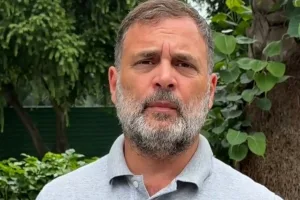
BJP to move Privilege Motion against Rahul Gandhi for ‘misleading the House’: Rijiju

In his fiery Lok Sabha speech, Rahul Gandhi accused Prime Minister Narendra Modi of “compromising” India’s interests while signing the trade agreement with the United States.

Statesman News Service | NEW DELHI |

Union Parliamentary Affairs Minister Kiren Rijiju on Wednesday said that the ruling BJP will move a privilege motion against Congress MP and Leader of Opposition in Lok Sabha, Rahul Gandhi, accusing him of misleading the house and making baseless statements, even as the Congress leader asserted that he was ready to authenticate his claims.

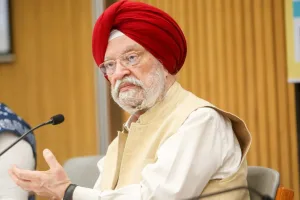
“Rahul Gandhi has made useless and false allegations against the government, against the Prime Minister, saying that the Prime Minister has sold India and Indian interests. On what basis? He has made a serious allegation against Hardeep Singh Puri without giving any notice,” Rijiju said.

The Union Parliamentary Affairs Minister further added, “We are going to file a privilege notice against Rahul Gandhi… There are very clear-cut rules of procedure and conduct of business in the Lok Sabha and Rajya Sabha. When a member intends to make serious charges against another member, then you have to give notice and also substantiate the allegation.”

However, when Rijiju raised this in the House, Rahul Gandhi had offered to authenticate his assertions, but BJP MP Jagdambika Pal, who was in the Speaker’s chair, told him that he had not yet been asked to do so by the Chair.

During his speech earlier today, Rahul accused Prime Minister Narendra Modi of “compromising” India’s interests while signing the trade agreement with the United States. “Have you no shame in what you are doing? It is as though you have sold ‘Bharat Mata’,” said Rahul Gandhi.

However, Rijiju countered his allegations, saying the LoP’s speech was “full of lies and allegations”.

“While giving a speech on the budget, Rahul Gandhi is making allegations without any argument, without any evidence, and without giving any notice. His entire speech, whatever wrong things he has said, everything will be removed, and whatever unparliamentary words he has used should also be removed, especially whatever lies he has said, wrong things, allegations he has made, all of them should be removed,” he said.

BJP MP Ravi Shankar Prasad also slammed the Congress leader, saying that he “should remember one thing that in the leadership of PM Modi, India will not bow down before anyone.” Prasad claimed that Rahul violated the rules of the House.

BJP Spokesperson Sudhanshu Dwivedi also launched a scathing attack on the Gandhi scion. He said that the Leader of the Opposition seems to believe in “spreading venomous lies”.

“His behaviour during parliamentary proceedings has been lethargic… The behaviour of the Congress party in the House has been no better than what one might witness on the roadside. Such conduct is unbecoming in a parliamentary setting… We saw how women were used as a shield as people moved towards the treasury bench, holding banners, recalls the memories of Shaheen Bagh…,” Trivedi charged.
NIMHANS-2 will continue to focus on research in field of mental healthcare

The Union Budget 2026-2027 announced the setting up of a second National Institute of Mental Health and Neuro Sciences (NIMHANS-2) in northern India.

Statesman News Service | New Delhi |

The Union Budget 2026-27 represents a meaningful advancement in India’s mental health landscape and reinforces the government’s long-standing efforts to build an inclusive, accessible, and equitable system of care.

The Union Budget 2026-2027 announced the setting up of a second National Institute of Mental Health and Neuro Sciences (NIMHANS-2) in northern India.

The NIMHANS-2 will be modeled on the existing NIMHANS in Bengaluru, and will continue to focus on high-quality treatment, training, and research in the field of neurosciences and mental healthcare.

The Union Budget 2026-2027 announced the upgradation of premier mental health institutions at Ranchi and Tezpur into Regional Apex Institutions.

“By announcing the establishment of NIMHANS-2 in North India and upgrading key institutes in Ranchi and Tezpur, the Budget directly addresses critical regional gaps, strengthens specialised infrastructure, workforce training, and trauma care support,” the government said on Wednesday.

These targeted measures build on a solid foundation laid over decades. Collectively, these initiatives signal a sustained commitment to reducing stigma, bridging treatment gaps, and prioritising mental well-being as essential to national productivity, youth empowerment, and inclusive growth.

Continued implementation and monitoring will be key to translating this momentum into tangible improvements for millions across the country.

The Union Budget 2026-27 marks a decisive shift in India’s mental health policy by placing institutional expansion and regional equity at the centre of public health planning. By strengthening mental health and trauma care infrastructure, the budget advances the Government of India’s vision of inclusive development, under “Sabka Sath, Sabka Vikas” and the vision of a Viksit Bharat.

Addressing the long-standing absence of national-level mental health institutions in North India and the growing demand for specialised services, the Budget elevates mental health to a core public health priority. Its focus on targeted interventions, workforce capacity-building, and trauma care support is aimed at reducing the disproportionate burden borne by vulnerable families. This signals a clear and sustained commitment to equitable access to mental health and trauma care.

Mental health is the state of well-being in which a person can cope with the normal stresses of life. It allows one to learn, work well, and contribute to the community. Good mental health includes emotional, psychological, and social well-being. Poor mental health can lead to disorders like anxiety, depression, and other severe disorders, with far-reaching consequences for physical health, relationships, and overall functioning. In India, rising stress levels, rapid urbanisation, and post-pandemic challenges have increased the demand for mental health care. Timely access to support and treatment helps prevent crises and improves quality of life. Recognising this, the government increasingly views mental health as central to inclusive development, social stability, and productivity.

Samajwadi Party MLAs protest before Budget, says PM ‘compromised’

Party leaders stated that the central government’s policies are being determined under external pressure, which will impact the economy of the country and the state.

Statesman News Service | Lucknow |

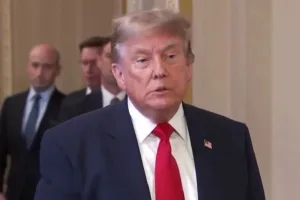
Samajwadi Party MLAs staged a strong protest over issues related to the budget and trade policies ahead of the budget presentation in the Uttar Pradesh Assembly on Wednesday. During the protest, the SP MLAs wore masks of Prime Minister Narendra Modi and US President Donald Trump to register their protest.

Party leaders stated that the central government’s policies are being determined under external pressure, which will impact the economy of the country and the state.

Samajwadi Party MLA Atul Pradhan alleged that Prime Minister Narendra Modi has “compromised” the interests of the country and that trade deals were allegedly made under pressure from the Epstein Files.

He said that such agreements will cause significant harm to Indian farmers. Atul Pradhan also said that the Prime Minister is working under pressure from Trump.

SP MLAs demanded that the interests of farmers, youth, and the general public be prioritised in the budget, and that national interests be given primacy before any international deals.

During the demonstration, tight security arrangements were in place at the Assembly premises to keep the situation under control.