Logo

Connect, don’t confiscate for children’s digital safety

The recent tragedy involving three minor sisters who stepped off a ninth-floor balcony together in an act of collective despair has forced a harrowing reckoning with a new, endemic form of addiction.

ANANTHA PADMANABHAN | New Delhi |

The recent tragedy involving three minor sisters who stepped off a ninth-floor balcony together in an act of collective despair has forced a harrowing reckoning with a new, endemic form of addiction. These children had lived almost entirely within a gaming world for months – reportedly insulated from reality and withdrawn from school. When their access was abruptly severed to break the cycle, the resulting “void” proved too much to bear. Their final message was a chilling testament to their displaced reality: “The game is our life, our world.”

This is no longer a peripheral issue of teenage rebellion. Across modern India, the pattern is repeating with devastating frequency. Not long ago, a 13-year-old boy reportedly took his life after being reprimanded for excessive gaming. For him, the scolding was not merely a lecture; it was a perceived threat to the only domain where he felt a sense of achievement and agency. These cases underscore a terrifying reality: when the “digital tether” is snapped by force, the resulting panic is not a tantrum – it is a clinical withdrawal. The scale of this crisis is now empirically undeniable. Globally, gaming addiction affects approximately 3 to 4 per cent of the world’s three billion gamers, with adolescent rates surging to 8.6 per cent.

India has become a central focus of this shift. With over 568 million active gamers-the world’s largest user base-the nation sees addiction rates between 3.5 and 7.2 per cent among its youth. This equates to millions of young Indians struggling with “Gaming Disorder,” a condition the World Health Organisation (WHO) officially recognised. To address this, we must move past the label of “bad behaviour” and understand the mechanics of capture. Expert analysis has highlighted how children are caught in “Ludic Loops” – repetitive cycles of challenge and rewards meticulously designed by software engineers to be inescapable. This is often driven by predatory monetisation like loot boxes, which mimic the neurological triggers of gambling.

When a child enters this state, they become what experts call a “Digital Ghost.” They remain physically present at the dinner table but are emotionally and psychologically absent. Their brain’s reward system has been rewired; the nuanced pace of the physical world cannot compete with the high-speed chemical rush of the screen. In this state, the child is responding to a deep chemical dependence where “unplugging” feels like physical suffocation. However, this biological capture does not occur in a vacuum; it is facilitated by a disappearing physical reality. As we emerge as a global digital powerhouse, the question before us is whether our physical “Third Spaces” for youth are vanishing under the weight of urban congestion and high costs.

In many developed nations, researchers argue that Gen Z is the most closely monitored generation in history. With the privatisation of public areas and the use of smartphones as tracking devices, the digital world often remains the last “unmediated” space where a teenager can experience true autonomy. Modern India presents a similar paradox. Our urban landscapes are increasingly designed for mobility and commerce rather than play. In congested cities, where public parks are either locked, priced out, or repurposed for housing, the smartphone becomes a spatial necessity. For many, games are not just traps; they are sanctuaries from a world defined by hyper-competitive academic pressure and constant surveillance.

In these virtual landscapes, they find the agency that reality – marked by traffic, pollution, and a lack of hang-out spots-has increasingly denied them. This retreat from the physical world has reached a scale that threatens the nation’s future stability. The urgency is further underscored by the Economic Survey 2025-26, which officially labels digital addiction as a major threat to national productivity. It warns that this crisis is eroding the “Demographic Dividend,” converting it into a liability through reduced cognitive capacity. The survey specifically highlights “Sleep Debt” – the chronic lack of rest due to “vampiring” (staying up all night on devices) – as a primary reason for reduced national efficiency.

This report marks a historic turning point, as the state finally acknowledges that the “mental infrastructure” of our youth is as vital to GDP as physical roads. For the first time, national policy is pivoting from a singular focus on “Digital Access” to a necessary mandate for “Digital Wellness,” evidenced by the decent implementation of the Online Gaming (Regulation) Act to mandate stricter safeguards. While the state prepares structural interventions, the first line of defence remains the home. Preventing these tragedies requires guardians to identify the subtle shifts that signal a child is migrating from healthy play into a terminal virtual void.

This “Social Recessional” begins when a child stops participating in family traditions because the physical world has lost its “colour.” It is followed by a “Vigilance Response,” characterised by an extreme, physical guarding of devices. Soon, “Dopamine Exhaustion” sets in – a flat mood or hollow irritability when offline – culminating in a “Biological Blackout,” where basic hygiene and sleep patterns are totally abandoned. When a crisis is identified, the instinctive response of “pulling the plug” can be life -threatening. Ev id enc e shows t hat su dde n disconnection for a rewired brain feels like physical pain. To bridge the gap, families ought to adopt a structured “re- entry” strategy: gradually reducing screen time, replacing digital switch non-judgmental physical hobbies, and restoring biological rhythms through shared meals and strict sleep hygiene.

Instead of reactive bans, we must advocate for “Safety by Design” rather than punishment. The rising number of tragedies suggests that a shift in perspective is no longer optional. We must realise the need for parental vigilance with the responsibility to build a physical world worth inhabiting. This is a complex challenge involving biological, psychological, and systemic factors. Addressing it successfully will require moving away from reactive discipline toward stable, policy-driven solutions. Ultimately, the goal is to ensure technology remains a tool for growth rather than a source of entrapment. By recognising digital addiction as a health issue rather than a behavioural one, society can better support the next generation. It is time to transform digital despair into real-world connection by replacing force with empathy and systemic reform.

(The writer is an independent author and researcher.)
US-Israel-Iran War LIVE Updates: Iran launches 21st wave of strikes as conflict escalates

Washington intensifies strikes under Operation Epic Fury while Tehran retaliates. Embassy operations halt in Kuwait and India tracks oil supply risks as the Middle East conflict widens.

Statesman News Service | New Delhi |

A week after US-Israel strikes inside Iran triggered a dramatic escalation in West Asia, the war rhetoric is only getting sharper. Washington says its campaign is degrading Iran’s missile capability while urging Tehran’s forces to surrender.

The fallout is spreading beyond the battlefield. The US has suspended operations at its embassy in Kuwait, energy markets are on edge, and India is closely watching oil supplies as the Strait of Hormuz faces disruption.

Live updates

Oil shock buffer: US gives India 30-day waiver to buy Russian crude as Gulf crisis rattles Hormuz

India says its energy supplies remain stable despite tensions in West Asia, with officials reviewing the situation twice daily and maintaining adequate oil stocks through diversified sourcing.

Statesman News Service | New Delhi |

The United States has granted India a temporary 30-day waiver to continue purchasing Russian oil, a move aimed at stabilising global energy flows as the crisis in the Gulf disrupts shipping routes through the Strait of Hormuz.

The move comes at a time when tensions in West Asia are putting key energy routes under strain. Much of the world’s oil travels through the narrow Strait of Hormuz, so even a small disruption there can unsettle global markets.

India, which relies heavily on crude imports, is closely watching the situation as regional instability raises concerns over supplies.

US Treasury Secretary Scott Bessent said the waiver was designed as a short-term step to keep oil moving in international markets.

“President Trump’s energy agenda has resulted in oil and gas production reaching the highest levels ever recorded. To enable oil to keep flowing into the global market, the Treasury Department is issuing a temporary 30-day waiver to allow Indian refiners to purchase Russian oil,” Bessent said.

He added that the measure would be strictly limited. According to him, the waiver only covers oil shipments that are already stranded at sea and therefore would not provide significant financial gains to the Russian government.

Bessent also described India as an important partner for Washington and said the US expects New Delhi to increase purchases of American oil in the future. The temporary relaxation, he said, would help ease pressure created by what he called Iran’s attempts to disrupt global energy flows.

India monitoring energy supplies as West Asia tensions rise

The waiver comes at a time when the region is witnessing heightened tensions after a joint US-Israel strike on Iranian territory on February 28, which reportedly led to the death of Iran’s Supreme Leader Ayatollah Ali Khamenei along with several senior figures.

The developments have raised fears of wider instability across the Gulf, a region that supplies nearly 40 per cent of India’s crude oil imports, much of it transported through the Strait of Hormuz.

News agency ANI mentioned sources as saying that India is assessing its energy situation two times a day to keep track of the evolving situation.

Officials say the country currently has comfortable reserves and that stocks are being replenished daily. Sources also indicated that there is no shortage of LPG, LNG, or crude oil globally at the moment.

India has also remained in contact with multiple energy suppliers as a precaution. Authorities say the government is closely monitoring developments in the region and remains confident that diversified sourcing and adequate inventory will help manage any disruption.

India continues to import Russian crude under existing contracts, while the government keeps watch on global energy markets to ensure that supplies remain uninterrupted.

Reset in ties

When Prime Minister Narendra Modi welcomed Canadian Prime Minister Mark Carney to New Delhi this week, the symbolism extended far beyond diplomatic protocol.

Statesman News Service | New Delhi |

When Prime Minister Narendra Modi welcomed Canadian Prime Minister Mark Carney to New Delhi this week, the symbolism extended far beyond diplomatic protocol. The two governments were not merely signing agreements; they were attempting to redraw the political boundaries of a cyclical relationship that had, until recently, appeared fractured beyond repair. At the heart of the reset lies a 10-year civil nuclear energy arrangement. Canada, home to some of the world’s largest uranium reserves, will supply fuel to India while exploring collaboration on small modular and advanced reactors. This is not a minor commercial understanding.

For India, which faces soaring electricity demand as it pushes industrial expansion and electrification, reliable nuclear fuel is a strategic necessity. For Canada, access to a rapidly growing energy market strengthens its global economic relevance at a time when trade diversification has become urgent. But the nuclear agreement is only one pillar of a broader recalibration. The commitment to conclude a comprehensive economic partnership by 2026 signals recognition on both sides that geopolitical volatility demands new alignments. The United States’ increasingly unpredictable tariff policies have unsettled traditional trade assumptions.

Ottawa is seeking to reduce overdependence on its southern neighbour. New Delhi, for its part, is working to widen its economic partnerships while reducing exposure to single-source vulnerabilities in energy and technology. This rapprochement unfolds under the long shadow of the 2023 killing of Hardeep Singh Nijjar in Canada, an episode that triggered expulsions of diplomats and a near-freeze in visa services. The legal process surrounding that case continues. Domestic political debate within Canada ~ particularly among members of the Sikh diaspora and some parliamentarians ~ has not vanished. What has changed is the calculation of cost. Confrontation has yielded diminishing returns; engagement promises measurable gains. There is a hard-edged realism in this shift. Neither government has pretended that mistrust evaporates overnight.

Instead, both appear to have concluded that structured cooperation in areas such as critical minerals, semiconductors, artificial intelligence, and defence serves national interest more effectively than prolonged diplomatic estrangement. The deeper question is whether this reset can mature into resilience. Strategic partnerships are tested not in moments of ceremony but in those of crisis. If fresh allegations surface or domestic political pressures intensify, will institutional mechanisms withstand strain? That will determine whether the current thaw represents tactical convenience or durable transformation.

For now, the message from New Delhi is clear: economic statecraft has overtaken political grievance. India and Canada are choosing interdependence over isolation, energy security over rhetoric, and negotiated trade expansion over symbolic confrontation. In a fractured global order, that may be less about reconciliation and more about survival – and that is precisely why it matters.

Strait Shock

Wars in West Asia are often measured in missiles and maps. This one may ultimately be measured in barrels and basis points.

Statesman News Service | New Delhi |

Wars in West Asia are often measured in missiles and maps. This one may ultimately be measured in barrels and basis points. The US-Israeli strikes on Iran and Tehran’s retaliation have done more than redraw military red lines. They have reintroduced a familiar but deeply destabilising variable into the global economy: energy insecurity. The immediate surge in Brent crude and liquefied natural gas prices is not merely a trader’s reflex.

It is a reminder that the Strait of Hormuz remains the narrow hinge on which global growth swings. Roughly a fifth of the world’s oil and a significant share of LNG exports transit that corridor. When Iranian commanders warn vessels away, when tankers anchor rather than sail, when insurers quietly recalculate risk premiums, the shock travels far beyond the Gulf. It reaches Frankfurt bond desks, London trading floors, and petrol pumps in Mumbai. The market reaction so far has been sharp but not panicked. That distinction matters. Prices have spiked, then partially retreated, signalling that traders believe disruption is possible but not yet systemic. Oil infrastructure has not been comprehensively destroyed. Production in Saudi Arabia and Qatar has not collapsed. Opec+ has indicated willingness to increase output modestly. But the danger lies in duration, not drama. If elevated prices persist for weeks rather than days, central banks such as the Bank of England and the US Federal Reserve will confront an unwelcome complication. Inflation, which had been easing after aggressive tightening cycles, could reaccelerate through fuel, freight, and food costs.

A delayed rate cut here, a postponed easing there, and suddenly the global recovery narrative frays. For emerging economies, the pressure is more immediate. Higher crude prices widen trade deficits and weaken currencies. Governments must choose between absorbing fuel subsidies or passing costs to consumers. Either option carries political risk. India, heavily dependent on imported energy, is particularly exposed to volatility in the Gulf transit routes. The strategic irony is striking. Washington’s stated objective was to constrain Iran’s nuclear trajectory and degrade its deterrent capacity. Yet the most immediate leverage Tehran retains may be economic rather than military. It does not need to close the Strait of Hormuz outright; it merely needs to keep uncertainty alive. Markets price fear faster than governments can calm it.

History offers caution. The oil shocks of the 1970s were not solely about physical scarcity. They were about confidence evaporating. Today’s global economy is more diversified and more energy-efficient, but it remains psychologically vulnerable to chokepoints. The decisive question is not whether oil briefly touches $90 or even $100. It is whether shipping lanes normalise quickly or become semi-permanent theatres of contestation. If the Strait becomes a bargaining chip in a prolonged confrontation between Washington, Tel Aviv and Tehran, the economic aftershocks will outlast the initial exchange of fire. In modern geopolitics, escalation is transmitted as much through markets as through missiles. President Trump and Prime Minister Netanyahu have opened a Pandora’s Box.

Opening the floodgates

The Forest (Conservation) Act, 1980 was amended in 2023 to name it as the Van (Sanrakshan Evam Samvardhan) Adhiniyan.
B K SINGH | New Delhi |

The Forest (Conservation) Act, 1980 was amended in 2023 to name it as the Van (Sanrakshan Evam Samvardhan) Adhiniyan. One of the provisions of the amended law is to promote plantation works on forest lands by government and non-governmental agencies, within the framework of Working Plans of the State Forest Department. The intention of this provision is quite good, as it attracts investment on degraded forest land with a task to re-green it. In other words, afforestation and plantation activities could be carried out on forest land by any private agency after providing for growing compensatory afforestation and recovering the net present value of the forests.

On 2 January 2026, the Ministry of Environment, Forest and Climate Change issued a circular redefining how these activities on forest lands are exempted from long standing environmental safeguards like compensatory afforestation and recovery of net present value of the forests. Recovering the cost of compensatory afforestation and net present value of the forests required for diversion had been considered as barriers that prohibited big industries from investing in degraded forests.

The circular makes way for pulp and paper and rayon industries to grab the opportunity and use degraded forest land for growing short rotation tree species for the raw material that the industries need. The country is importing newsprint, and this move is said to take us towards ‘Atmnirbharata’. Let me examine in this piece what are the economic and environmental costs associated with it. In addition to opening forest lands for private players, the amended law has some more loopholes. The newly inserted section 1A(1) in the 2023 amendment can make way for the exploitation of the unclassed forests. Around 90 per cent of the forests in the north eastern states are unclassed and successive reports published by the ‘Forest Survey of India’ have shown that these forests are shrinking. It is evident from the bi-annual reports published by the said agency that the country lost 11,743 square km of unclassed forests between 1997 and 2019.

A group of retired Indian Forest Service officers have challenged the amendment in the Supreme Court. The petitioners agitated that the Apex Court’s 1996 rulings in the Gadvarman case with regard to definition of ‘forests’ has been diluted in the amendment and an extent of 1.97 lakh square km forest land in the country stands excluded from the applicability of the original 1980 Act. In February last year, the Court passed an interim order saying when there are exigencies to divert forest lands for any urgent need including strategic requirements on the country’s border, alternative land must be provided for compensatory afforestation. The forests closer to the habitation are subjected to heavy anthropogenic pressures and consequent degradation.

Livestock grazing, removal of bamboo, non-timber forest products and small timber for bona-fide requirements as well as grabbing of forest land for cultivation etc. are the reasons for degradation. Communities residing in the neighborhood and the persons accompanying livestock set fires for easy access to non-timber forest products and regeneration of palatable grasses and foliage. There have been very few success stories, when degraded forests are rehabilitated with native species. We have succeeded only when we planted the monoculture of exotics. There are hardly any evaluation and monitoring reports indicating the success of compensatory afforestation on degraded forest lands and also on non-forest lands.

A central scheme named ‘Rehabilitation of degraded forests’ was in vogue during the 1990s and 2000s. The main work under the scheme was planting native tree species in the gaps created due to degradation. The newly planted saplings faced root competition from the hidden root stock in the soil. Usually the young plantations are provided with rigid protection and watch and ward. Often the area used to become green due to regeneration of old root stocks and the artificially grown sapling used to fail. However, the forest Corporations in many states used to bulldoze and rip the area, and plant short rotation tree species like Populus, Casurina, Eucalyptus and Acacia-auriculiformis. The purpose was to supply the raw materials to industries.

Such projects were also economically viable, but it was at a huge environmental cost. We ended up converting a biodiverse forest to the monoculture of exotic species. Natural forests have higher carbon sequestration potential than the plantation forests. Moreover, the plantations are harvested at the end of rotation. In the warming world we are facing climate related disruptions. The need is to let the natural forests be regenerated with native species and not diverted for plantations of monocultures. While this author was working in the Western Ghats as Deputy Conservator of Forests, Shivamogga, a joint venture of Birla’s Harihar Ployfibres and Government of Karnataka named Karnataka Pulp-wood Ltd. was incorporated in 1985.

Its functionaries bulldozed and ripped a Reserved Forest area in Thirthahalli taluk, deep inside Western Ghats, for growing above exotics. In the process, they had damaged valuable natural tree species including sandalwood. An IFS officer Kisan Singh Sugara in charge of the area had booked a case, arrested the persons and seized the bulldozer. Though the Court initially took cognizance of the case, the government’s notification of a joint venture bailed them out. Activists moved the Supreme Court arguing that the plantations raised by joint ventures on forest lands without the approval of the Central government, were in contravention of the Forest (Conservation) Act, 1980.

Karnataka government failed to justify its incorporation and had to dissolve it, duly handing over the assets to the State Forest Corporation. After about four decades of Karnataka allowing investments from private players on forest land and then rolling it back within two-three years, we have come full circle and MoEEFCC has again moved on the same track. Forests, even after degradation, have potential to regenerate, if only we protect them from the entry of humans and livestock. Growing raw materials for wood based industries is also a necessity. Let that be done on degraded lands other than notified forests.

The writer is the former Head of Forest Force, Karnataka

Congress & Akali Dal ruined Punjab, we’re now bringing it back on track: CM Bhagwant Singh Mann

Taking a swipe at Shiromani Akali Dal (SAD) leader Sukhbir Singh Badal, the Chief Minister said the Akali leadership has lost touch with the realities of Punjab and should stop daydreaming about returning to power.

Statesman News Service | New Delhi |

Punjab Chief Minister Bhagwant Singh Mann on Thursday said the upcoming Budget of the Punjab Government will introduce several new pro-people initiatives aimed at accelerating economic growth while strengthening welfare measures for the people.

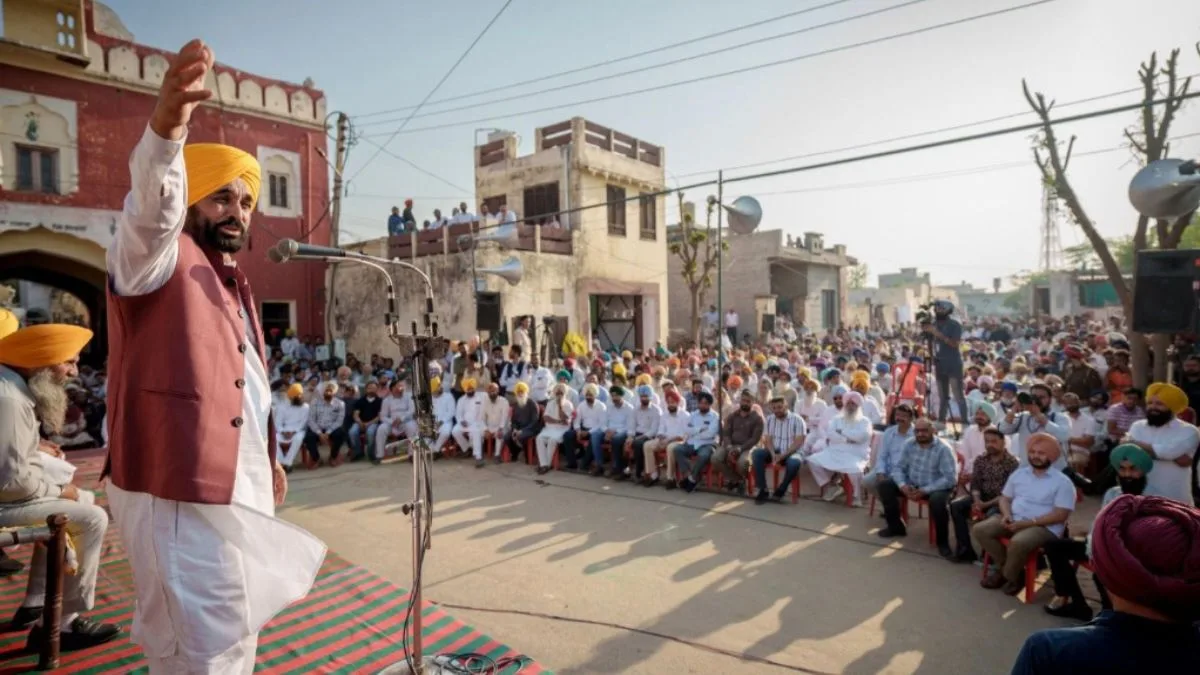
Addressing a gathering during a Lok Milni in District Sangrur and later speaking to the media, the Chief Minister said the Punjab Government has utilised public money responsibly over the past four years, delivering free power to more than 90% households, establishing 881 Aam Aadmi Clinics, and providing over 63,000 government jobs without bribe or recommendation.

Taking a swipe at Shiromani Akali Dal (SAD) leader Sukhbir Singh Badal, the Chief Minister said the Akali leadership has lost touch with the realities of Punjab and should stop daydreaming about returning to power.

He remarked that while Punjab’s youth need employment opportunities, Sukhbir Singh Badal is busy talking about organising card tournaments in villages.

CM Bhagwant Singh Mann said traditional political parties burdened Punjab with debt and worked for their own interests, whereas the Punjab Government is using every rupee from the state exchequer for the welfare of the people.

He also criticised the Union Government for withholding Punjab’s rightful funds while simultaneously attempting to divide people through politics of polarisation.

Speaking to media persons on the sidelines of a Lok Milni programme, CM Bhagwant Singh Mann stated.

“The ensuing budget of the Punjab Government will introduce several pro-people initiatives besides propelling economic growth of Punjab. The Punjab Government has judiciously spent the taxpayers’ money in the last four years with a focus on the holistic growth of Punjab. The upcoming budget will also focus on citizen-centric initiatives so that the people can get major relief. For the first time in the history of Punjab, the budget will be presented on Sunday and it will further accelerate the economic development of Punjab.”

The Chief Minister emphasised that the Punjab Government is carefully utilising public funds for the welfare of the people. He highlighted that major initiatives such as free power and daytime electricity supply for farmers have brought significant relief to households and the farming community.

“The Punjab Government is judiciously utilising every single penny of the state exchequer for the well-being of the people. Today more than 90% households in Punjab are getting free power and farmers are receiving power during daytime, which has been unprecedented. At a time when the assets of the country are being handed over by the Union Government to their blue-eyed friends at throwaway prices, the Punjab Government has created history by purchasing a private thermal plant,” said CM Bhagwant Singh Mann.

Highlighting improvements in healthcare, the Chief Minister said that the Punjab Government has significantly strengthened public health infrastructure and expanded access to medical services.

“As many as 881 Aam Aadmi Clinics have been opened in Punjab to provide free healthcare to people and quality healthcare services are being ensured in government hospitals.”

The Chief Minister noted, “To provide comprehensive healthcare, the Punjab Government has launched the Mukh Mantri Sehat Yojna, a first-of-its-kind scheme in the country that provides cashless medical treatment up to ₹10 lakh for every resident family in Punjab. Punjab is the first Indian state to offer such comprehensive healthcare coverage, which has significantly reduced the financial burden on the public while ensuring quality health services.”

Speaking about the campaign against drugs, the Chief Minister said that the Punjab Government has launched an aggressive movement to eliminate the menace from Punjab.

“The Punjab Government has launched the ‘Yudh Nashean Virudh’ campaign under which the supply line of drugs has been snapped and drug smugglers involved in this heinous crime have been put behind bars. The menace of drugs is being wiped out at the micro level with the active support and cooperation of the people. This campaign has now become a mass movement with the help of the common masses,” said CM Bhagwant Singh Mann.

The Chief Minister said that the present financial situation of Punjab is the result of policies adopted by previous governments, which placed a heavy debt burden on the people.

“The previous regimes mounted huge debt on Punjab as those leaders never worried about the common man. In the last four years, the Punjab Government has reduced more than 35% of the debt of Punjab. Every government takes loans but those loans must be for productive purposes. Every single penny from the state exchequer is being utilised for the welfare of the people and the progress of Punjab,” said CM Bhagwant Singh Mann.

Criticising the BJP, the Chief Minister said that divisive politics is being used to polarise people instead of addressing genuine concerns.

“The BJP has always tried to divide the country on the basis of religion to push its agenda of hatred. The statement made by the Union Home Minister regarding religious conversion in Punjab is aimed at polarising people, which is the strategy of the BJP. Instead of indulging in such dirty politics, the Union Government should be generous in allocating funds to Punjab instead of withholding the legitimate share of Punjab,” he said.

The Chief Minister said that despite Punjab’s immense contribution to the nation, the Union Government has stalled key funds meant for the development of Punjab.

“Punjab has played a stellar role in the national freedom struggle, in making the country self-reliant in food production and in defending the borders of the nation. Despite this, the share of Punjab in RDF and other funds has been stalled by the Centre, which is hampering development. Rather than indulging in such cheap tactics, the Union Government should immediately release the funds so that the development of Punjab can be further accelerated,” said CM Bhagwant Singh Mann.

Referring to Punjabis stranded in the Gulf region amid the ongoing war, the Chief Minister said that the Punjab Government is actively coordinating with the Union Government to ensure their safe return.

“The Punjab Government has identified 370 Punjabis who are stranded in the Gulf region amidst the ongoing war. We have already taken up this issue with the Union Government and efforts are being made to bring them back. The Punjab Government is firmly committed to bringing back the Punjabis stuck in the Middle Eastern countries and no stone will be left unturned for this noble cause,” he said.

Earlier addressing the gathering during the Lok Milni programme, the Chief Minister said that such events are organised in village saths to ensure direct interaction with villagers and resolve issues at the grassroots level. “These programmes are organised in village saths to directly interact with people of the villages. Such places hold great importance in rural life as key decisions regarding development are taken here and disputes among villagers are resolved amicably,” said CM Bhagwant Singh Mann.

Taking a dig at Shiromani Akali Dal leader Sukhbir Singh Badal, the Chief Minister criticised the suggestion of organising card tournaments in villages. “Sukhbir Singh Badal says that they will organise card tournaments and the winning village will get a ₹10 lakh grant. Instead of making such statements, he should explain why he cannot promise jobs for the youth who play these cards. The former Deputy Chief Minister is unaware of ground realities because he studied in convent schools in hill stations or abroad,” he said.

The Chief Minister said that the people of Punjab have rejected traditional political parties due to their anti-people policies. “Sukhbir Singh Badal should stop daydreaming because the people of Punjab will never vote them back to power. The Punjab Government will complete four years of service to the people on March 16 and during this period several pro-people initiatives have been taken. Today more than 90% households in Punjab are getting free power and farmers are receiving power during daytime, which is unprecedented,” said CM Bhagwant Singh Mann.

Highlighting issues related to power generation and past decisions of previous governments, the Chief Minister said, “The supply of coal from the Pachwara coal mine in Jharkhand was stopped because Sukhbir Singh Badal wanted to benefit a firm close to him. The Akali leadership supplied solar power to Punjab at exorbitant prices by signing agreements with their own companies, which caused huge losses to the state exchequer. Earlier farmers had to spend nights in their fields waiting for electricity, but today they are receiving power during the daytime,” said CM Bhagwant Singh Mann.

The Chief Minister also spoke about improvements in irrigation and water management. “When the Punjab Government assumed office, only 21% of canal water was being used for irrigation. Today 68% canal water is being utilised for irrigation in Punjab. As many as 6,900 km of water channels and 18,349 water courses have been revived to ensure water reaches the tail ends, which has immensely benefited farmers,” said CM Bhagwant Singh Mann.

Highlighting employment and education reforms, the Chief Minister noted, “More than 63,000 government jobs have been given to the youth without any bribe or recommendation, which has brought satisfaction across all sections of society. In the education sector, Schools of Eminence have been established across Punjab to provide quality education to students. These schools have smart classrooms, modern laboratories and playgrounds for scientific learning,” said CM Bhagwant Singh Mann.

He further said that teachers and principals are being sent abroad for training to improve teaching standards. “Special programmes have been launched under which teachers and principals are sent abroad for training so that they can adopt modern teaching practices and prepare students for global competition. Punjab has ranked first in the National Achievement Survey conducted by the Government of India, surpassing even Kerala. Students are also being given specialised coaching for competitive examinations such as Armed Forces preparation, NEET, JEE, CLAT and NIFT,” stated CM Bhagwant Singh Mann.

The Chief Minister said that students from government schools have already begun achieving significant academic milestones. “Students from Schools of Eminence and other government schools have successfully qualified for JEE Mains, JEE Advanced and NEET examinations. The Akali leadership misused religion for political interests, which the people of Punjab will never forgive. Traditional political parties are unable to accept that the son of a common man is effectively governing Punjab,” said Bhagwant Singh Mann.

The Chief Minister said that the people of Punjab have rejected traditional parties because they prioritised family interests over public welfare. “The people of Punjab have lost faith in traditional political parties because of their anti-people and anti-Punjab approach. Previous rulers were more concerned about their families rather than Punjab and Punjabis, which is why people removed them from power. After assuming office, the Punjab Government has focused on the progress and prosperity of Punjab and its people,” he said.

Criticising the Akali leadership further, the Chief Minister said, “Those leaders who cannot even find 11 members to form a committee in their own party are dreaming of winning all 117 seats in Punjab. These leaders patronised gangsters in Punjab and injected drugs into the veins of youth by protecting drug smugglers,” he asserted.

The Chief Minister added that the people of Punjab will continue to reject the Akali leadership for its past actions. “Akali Dal has become a party of political deadwoods rejected by the people again and again. They may try to misuse religion, but Punjabis will not be misled by it. The Akali leadership is building castles in the air to mislead people, but Punjabis will teach them a befitting lesson again,” said CM Bhagwant Singh Mann.

Referring to past controversies, the Chief Minister said, “Sukhbir Singh Badal claims that all development in Punjab took place during their regime, but they turn a blind eye to sacrilege incidents such as Bargari and Behbal Kalan. By using religion for political interests, they have deeply hurt the sentiments of the people. The Akali leadership remains hand in glove with forces that are inimical to the Panth and Punjab,” said CM Bhagwant Singh Mann.

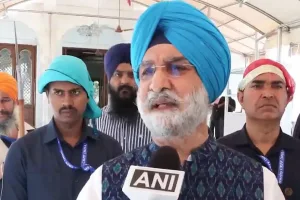
Who is Taranjit Singh Sandhu, former US envoy appointed as new Delhi LG?

Sandhu is a former Indian diplomat who served as India’s Ambassador to the United States from February 2020 to January 31, 2024.

Statesman News Service | New Delhi |

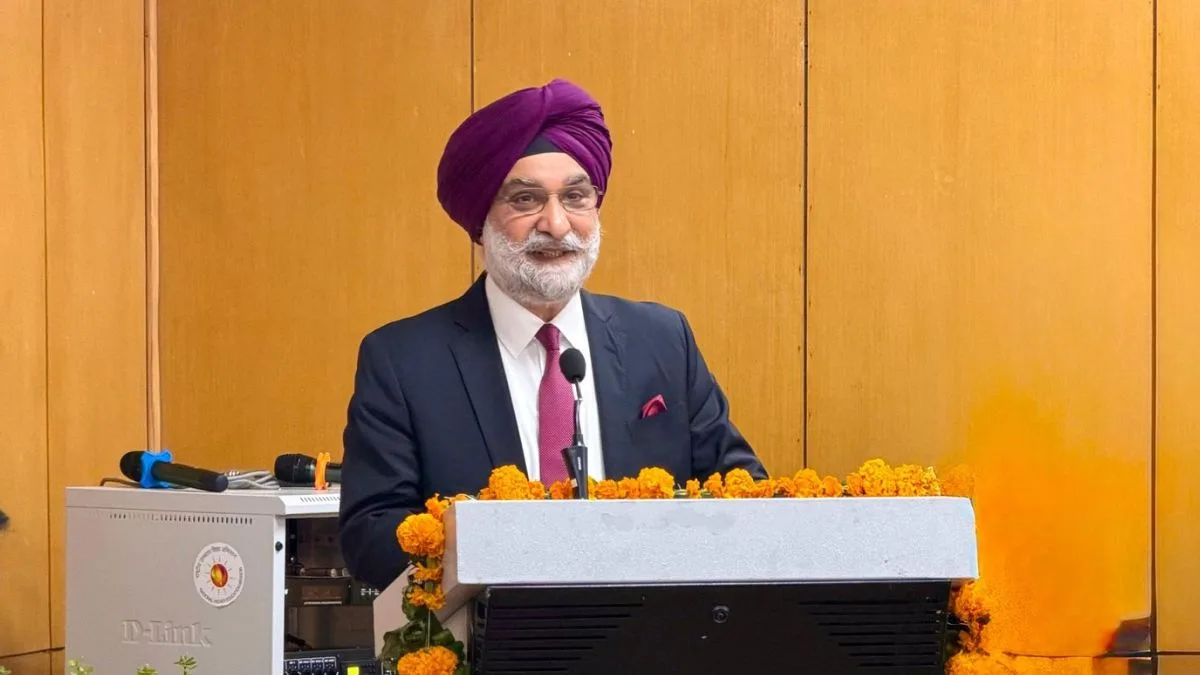
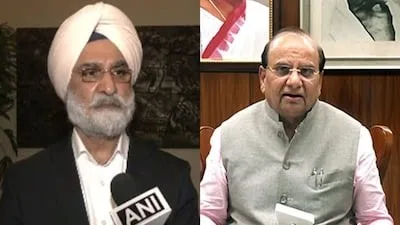
Former Indian Ambassador to the United States, Taranjit Singh Sandhu, will replace Vinai Kumar Saxena as the new Lieutenant Governor (LG) of Delhi, Rashtrapati Bhavan announced on Thursday.

According to the Rashtrapati Bhavan notification, Sandhu’s appointment as the next Delhi LG will take effect from the dates he will assume charge of their respective offices.

Who is Taranjit Singh Sandhu, the new Delhi LG?

Taranjit Singh Sandhu is a former Indian diplomat who served as India’s Ambassador to the United States from February 2020 to January 31, 2024.

Sandhu, who joined the Indian Foreign Service in 1988, is credited with playing a key role in opening the Indian embassy in Ukraine.

He served as the head of the political and administration wing at the Indian Embassy in Ukraine.

From serving as First Secretary at the Indian Embassy in Washington, to Consul General of India in Frankfurt, and Deputy Chief of Mission at the Embassy of India in Washington D.C., Sandhu held several key diplomatic assignments during his career spanning more than three and a half decades.

After retiring from the IFS, he joined the Bharatiya Janata Party months before the 2024 Lok Sabha elections. The BJP fielded him as its Lok Sabha candidate from Amritsar against Congress leader Gurjit Singh Aujla.

He graduated with a Bachelor of Arts (BA) from St. Stephen’s College, Delhi, and later completed his Master of Arts (MA) from Jawaharlal Nehru University (JNU), New Delhi.

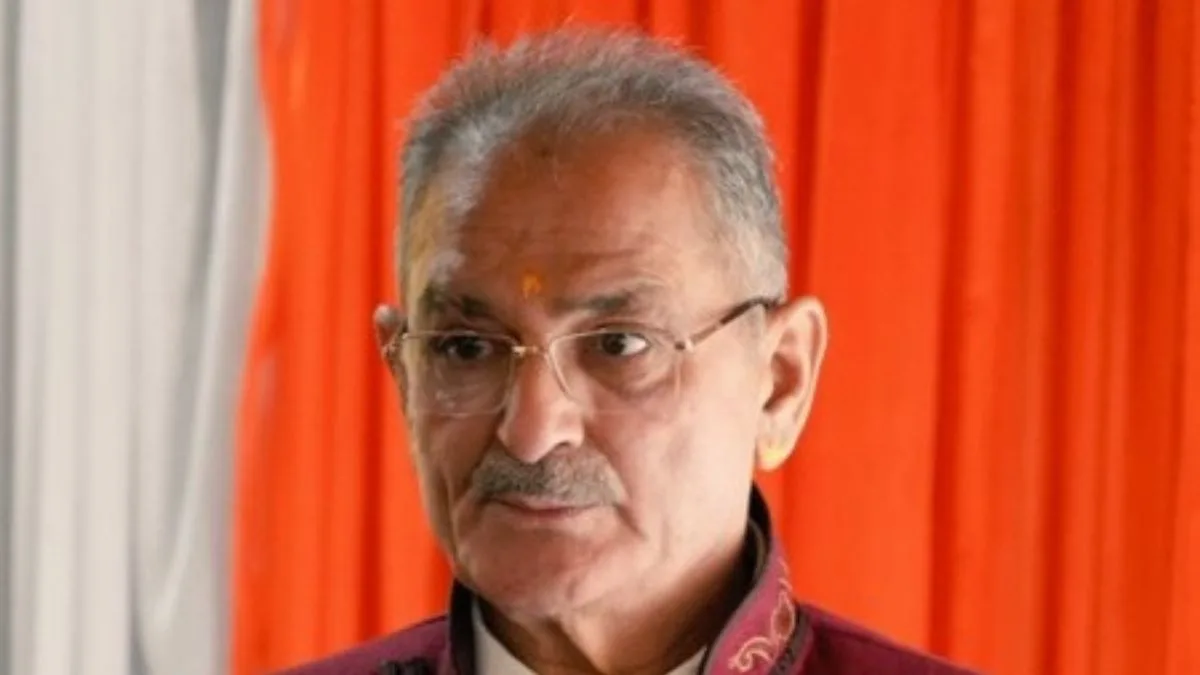
Former Indian Ambassador to US Taranjit Singh Sandhu appointed new Delhi LG; VK Saxena moved to Ladakh

Statesman News Service | New Delhi | Updated :

Former Indian Ambassador to the United States, Taranjit Singh Sandhu, was Thursday appointed as the new Lieutenant Governor of Delhi, replacing Vinai Kumar Saxena who has been serving at the post since May 26, 2022.

Gupta will take over as the lieutenant governor of Ladakh. The development comes shortly after Ladakh LG Kavinder Gupta tendered his resignation.

During his tenure as Delhi LG, Vinai Kumar Saxena made his role much more vocal than his predecessors.

With the Aam Aadmi Party (AAP) already in power when Saxena stepped in, his tenure was marred with constant political battles with the elected government, as he raised questions over the governance in the national capital.

Taranjit Singh Sandhu is a former Indian diplomat who served as India’s Ambassador to the United States from February 2020 to January 31, 2024.

After retiring from service, he joined the Bharatiya Janata Party months before the 2024 Lok Sabha Elections. The BJP fielded him as its Lok Sabha candidate from Amritsar against Congress leader Gurjit Singh Aujla.

Who is Taranjit Singh Sandhu? Click Here to read more

Besides Delhi and Ladakh, Governors of several other states, including West Bengal and Tamil Nadu, were also changed.

According to a notification from the Rashtrapati Bhavan, Shiv Pratap Shukla, Governor of Himachal Pradesh, has been appointed as Governor of Telangana.

Jishnu Dev Varma, the Governor of Telangana, has been appointed as Governor of Maharashtra. Lt. General (Retired) Syed Ata Hasnain will be new Governor of Bihar.

Tamil Nadu Governor RN Ravi has been moved to West Bengal after CV Ananda Bose tendered his resignation. Kerala Governor Rajendra Vishwanath Arlekar will discharge the functions of Tamil Nadu Governor.

Nand Kishore Yadav appointed as Governor of Nagaland.

Kavinder Gupta, who resigned as the Lt. Governor of Ladakh, has been appointed as Governor of Himachal Pradesh.

The above appointments will take effect from the dates they will assume charge of their respective offices, the release stated.

IAF Su-30 MKI fighter jet goes missing after take off from Assam’s Jorhat; search udnerway

Statesman News Service | New Delhi |

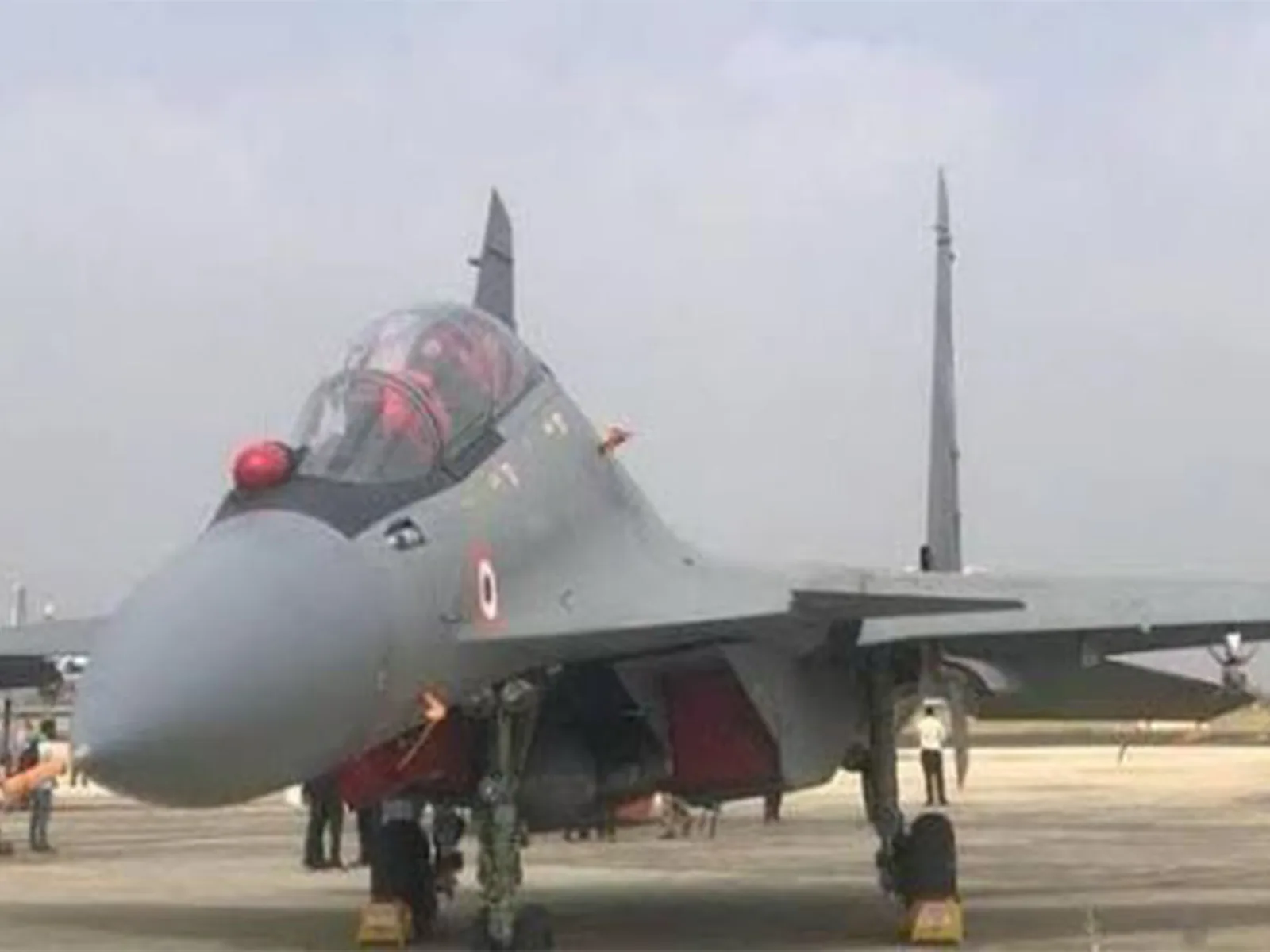
An Indian Air Force (IAF) Su-30 MKI fighter aircraft was reported missing from radar shortly after take off from Assam’s Jorhat on Thursday, prompting the IAF to launch a search and rescue mission.

According to the Defence PRO, Guwahati, the Su-30 MKI had taken off from.Jorhat in Assam and was

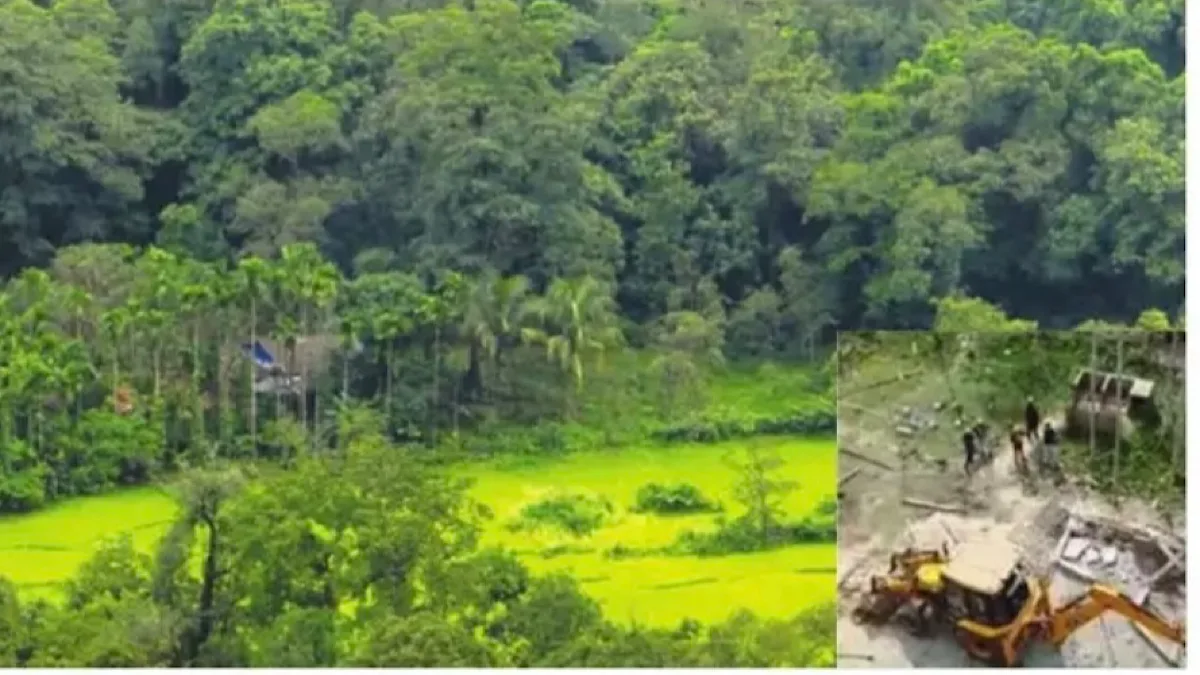
The aircraft had taken off from Jorhat in Assam and was last in contact at 7:42 pm. According to the Defence PRO, Guwahati, the Su-30 MKI reportedly lost radar contact in the Karbi Anglong district of Assam.

In a post on X, the Indian Air Force said, “An IAF Su-30 MKI is reported overdue. The aircraft had taken off from Jorhat, Assam and was last in contact at 7.42 pm. Further details are being ascertained. Search and Rescue mission has been initiated.”

According to preliminary reports, the aircraft was flying over the hilly terrain of Karbi Anglong district when communication with ground control was suddenly lost.

Search and rescue teams from the Air Force, along with personnel from the local administration and other security agencies, have been mobilised to locate the aircraft.

As the search operation was underway, reports indicated the area where the fighter jet lost contact with the radar consists largely of dense forests and mountainous terrain, making the search operation difficult.

In August 2019, an IAF Sukhoi-30MKI crashed in a paddy field near Tezpur in Assam during a routine training mission. Both pilots managed to eject safely and were later rescued.

Earlier in May 2015, another Sukhoi-30MKI aircraft crashed around 36 km south of Tezpur Air Force base shortly after take-off, with both pilots ejecting safely before the crash occurred.

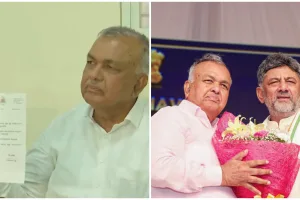
Bengal Guv CV Ananda Bose resigns; Mamata Banerjee ‘shocked’, says not consulted as RN Ravi set to replace him

The Bengal CM suggested pressure from the Union Home Ministry could be the reason behind Bose’s resignation.

Statesman News Service | New Delhi |

With Assembly elections in West Bengal around the corner, state Governor CV Ananda Bose has tendered his resignation from the post, a sudden decision Chief Minister Mamata Banerjee said has left her “shocked and deeply concerned”.

While there was no official confirmation from the West Bengal Lok Bhavan, Bose reportedly confirmed his resignation while speaking to a news agency. He, however, didn’t disclose the reason behind his decision.

“I am shocked and deeply concerned by the sudden news of the resignation of Shri C. V. Ananda Bose, the Governor of West Bengal. The reasons behind his resignation are not known to me at this moment,” CM Banerjee said on X.

The Bengal CM suggested pressure from the Union Home Ministry could be the reason behind Bose’s resignation.

“…Given the prevailing circumstances, I would not be surprised if the Governor has been subjected to some pressure from the Union Home Minister to serve certain political interests on the eve of the forthcoming State Assembly elections,” she said on X.

Banerjee further stated that she has been informed by the Home Minister that Tamil Nadu Governor RN Ravi would replace Bose as the new West Bengal Governor. However, the Chief Minister claimed she was not consulted on Ravi’s appointment.

“Union Home Minister just informed me that Shri R.N. Ravi is being appointed as Governor of West Bengal. He never consulted with me as per the established convention in this regard,” she said.

The Bengal CM said that such actions undermine the spirit of the Constitution and strike at the very foundation of India’s federal structure.

“The Centre must respect the principles of cooperative federalism and refrain from taking unilateral decisions that erode democratic conventions and the dignity of States,” she added.

Meanwhile, Lieutenant Governor of the Union Territory of Ladakh, Kavinder Gupta, has also tendered his resignation, reported news agency ANI.

Kavinder Gupta was appointed as the Lieutenant Governor of Ladakh on July 14, 2025, after President Droupadi Murmu accepted the resignation of his predecessor, Brig (Dr) BD Mishra (Retd).

60% turnout in Nepal’s high-stakes election; counting begins to decide post-Oli political future

Voters across Nepal queued from early morning to cast ballots in a largely peaceful election held under heavy security. Counting has begun for the direct seats, while results from the proportional system may take several more days.

Statesman News Service | Kathmandu |

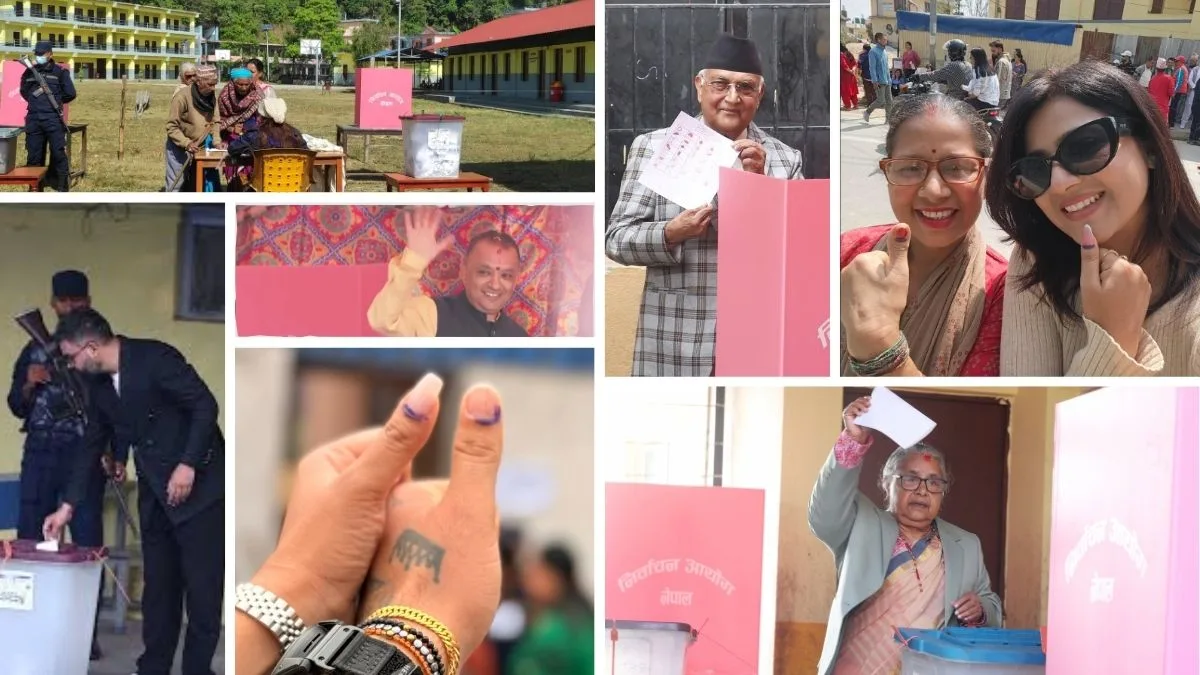
Nepal witnessed largely peaceful national election on March 5 with around 60 percent of eligible voters turning out to cast their ballots. Apart from a few scattered disputes reported in Dolakha, Sarlahi, Rautahat districts, overall voting process remained calm and orderly across the country.

People from different regions walked to polling stations early in the morning determined to participate in the democratic process. Many voters said they wanted to strengthen democracy and ensure stability in the country after months of political turmoil.

Also Read: Nepal awaits election results but Sushila Karki already wins the biggest political battle after guiding nation through Gen Z uprising

Officials reported that voters showed enthusiasm throughout the day.

Strong participation from youth

One of the most noticeable features of this election was the strong participation of young voters. Many of the youths who had earlier taken part in the Gen Z protests that toppled the government of KP Sharma Oli last September also turned out in large numbers to vote.

Those protests had shaken the country and forced major political changes. Now the same young generation appeared eager to influence political future through ballot box instead of the streets.

Observers said the high youth turnout reflected shift from protest to participation. Young voters expressed hope that new leadership would address corruption, inequality and economic challenges.

What happened today

The voting process began at 7:00 in the morning at polling stations across the country. Security forces were deployed to maintain order and ensure a safe voting environment.

Security arrangements included personnel from the Nepali Army, Nepali Police, election police in addition to officials from National Investigation Department.

After entering polling stations, voters received two ballot papers. One ballot was used for First-Past-the-Post (FPTP) system. Second ballot was for Proportional Representation (PR) system.

Through these ballots, voters chose candidates for 165 seats under the First-Past-the-Post system and 110 seats under the Proportional Representation system.

Counting of votes underway

Election officials said counting for the direct First-Past-the-Post votes began on the same day after polling ended. According to the election commission, results from these seats are expected within 24 hours once counting starts.

However, the counting of votes under the Proportional Representation system may take two to three additional days to complete.

Officials believe the process could move faster than previous elections if everything goes according to plan.

Nepal’s Federal Parliament System

Nepal follows a bicameral federal legislature system. The national parliament has two houses.

The upper house consists of 56 members elected through an electoral college. Three additional members are appointed by the President.

The lower house, known as the House of Representatives, has 275 members. These members are chosen directly by voters through mixed parallel election system. This combines First-Past-the-Post and Proportional Representation methods.

The election held today was mainly for selecting members of the House of Representatives, who will shape the country’s next government.

Interim government and promise of elections

Nepal has been governed by an interim administration led by former chief justice Sushila Karki. Her government came to power after the political crisis that followed the mass protests.

The interim leadership had promised to organise fresh elections and hand over authority to a newly elected government within six months. Today’s voting marked a crucial step toward fulfilling that promise.

Ruckus, forced adjournment, acrimony return to Raj assembly after five-day Holi recess

Opposition Congress members gathered in the well, shouted slogans in protest against the Chairperson’s directive to a member for concluding his speech and forced a brief adjournment of the House.

Statesman News Service | Jaipur |

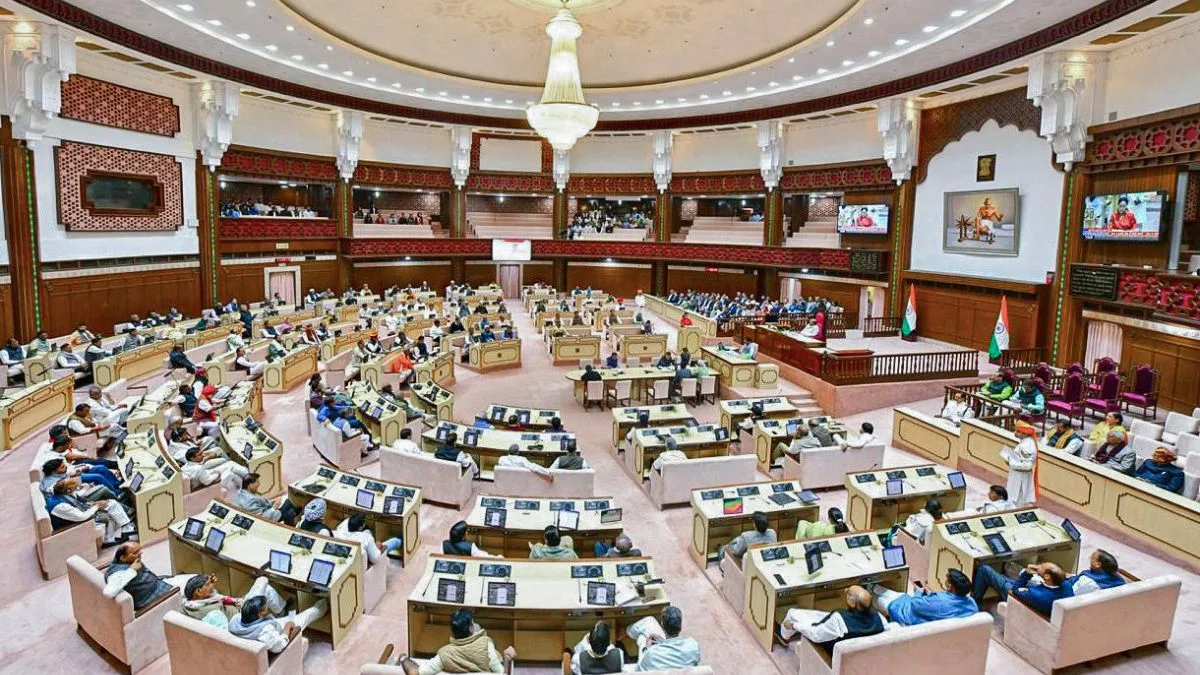
The Rajasthan assembly that reassembled on Thursday after a five-day Holi break witnessed stormy scenes, heated exchanges between the presiding officer in Chair and senior Congress MLA Govind Singh Dotasra, for almost an hour this evening.

Opposition Congress members gathered in the well, shouted slogans in protest against the Chairperson’s directive to a member for concluding his speech and forced a brief adjournment of the House.

The trouble erupted suddenly when senior Congress MLA Hari Mohan Sharma was speaking during the debate on the Rajasthan Shops and Commercial Establishments (Amendment) Bill, 2026. Chairman Sandeep Sharma asked the Bundi MLA to conclude fast as the time limit given for him is about to exhaust. Then soon after, the Chair sounded the alarm bell and asked Sharma to sit down.

This did not receive well by the Congress members, particularly senior MLA and the party state president Dotasra and the MLA in reference Hari Mohan Sharma. Dotasra strongly contested Chairman Sharma’s intervention saying ‘The member is speaking well on the topic why he is being stopped from completing his speech. He should not be interrupted by ringing the bell.

This broke agitated arguments and heated exchanges between Chairman Sharma and Dotasra in which both showed aggressive gestures and also used unparliamentary potshots.

Parliamentary Affairs Minister Joga Ram Patel, his cabinet colleagues Avinash Gehlot, Madan Dilawar and several members in the Treasury Benches also joined in the arguments to condemn Dotasra. This prompted Opposition Congress members to troop into the well and raise slogans.

Chairman Sharma said, “My privilege (right) of ringing the bell could not be challenged, you (Dotasra) are in the practice (habit) of causing disruptions on every occasion and disregarding the Chair.

Patel said that Chair’s ruling can not be challenged, Dotasra is a habitual violator of Chair’s directives. Minister Avinash Gehlot even urged for action against him.

At one point in time, some Congress MLAs even reached across the well near the seat of Parliamentary Affairs Minister Patel and Education Minister Dilawar was about to clash physically with Congress member Hakim Ali. However, the situation was saved somehow from taking an ugly turn and the House was adjourned for almost half an hour this evening by Arjun Lal Jingar who meanwhile had sat in the Chair to relieve Sharma.

On reassembly, Speaker Vasudev Devnani assured, “I shall deliver my ruling on the disruptions in the House, tomorrow after reviewing the telecast and recording of the proceedings. Right now, let the house discharge the business of the day and take up to pass the bill under consideration”.

Hence, the House passed by voice vote two Bills – The Rajasthan Jan Vishwas (Amendment of Provisions) Bill 2026 and “The Rajasthan Shops and Commercial Establishments (Amendment) Bill, 2026.

The Rajasthan Shops and Commercial Establishments (Amendment) Bill, 2026, notified on February 17, 2026, amends the 1958 Act to increase daily working hours from 9 to 10 hours and quarterly overtime limits from 50 to 144 hours.

It redefines “young persons” (14–18 years), increases the minimum apprentice age to 14, and allows greater operational flexibility for employers.

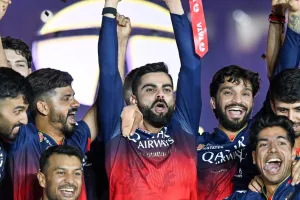
Samson blitz powers India to 253/7 against England in ICC T20 WC semifinal

Asked to bat on a placid surface at the Wankhede Stadium, Samson picked up from where he had left off at Eden Gardens and led the batting onslaught before the Indian middle order — Ishan Kishan (39 off 18), Shivam Dube (43 off 25), Hardik Pandya (27 off 12) and Tilak Varma (21 off 7) — joined a six-hitting spree to propel India to 253/7.

Tridib Baparnash | Mumbai |

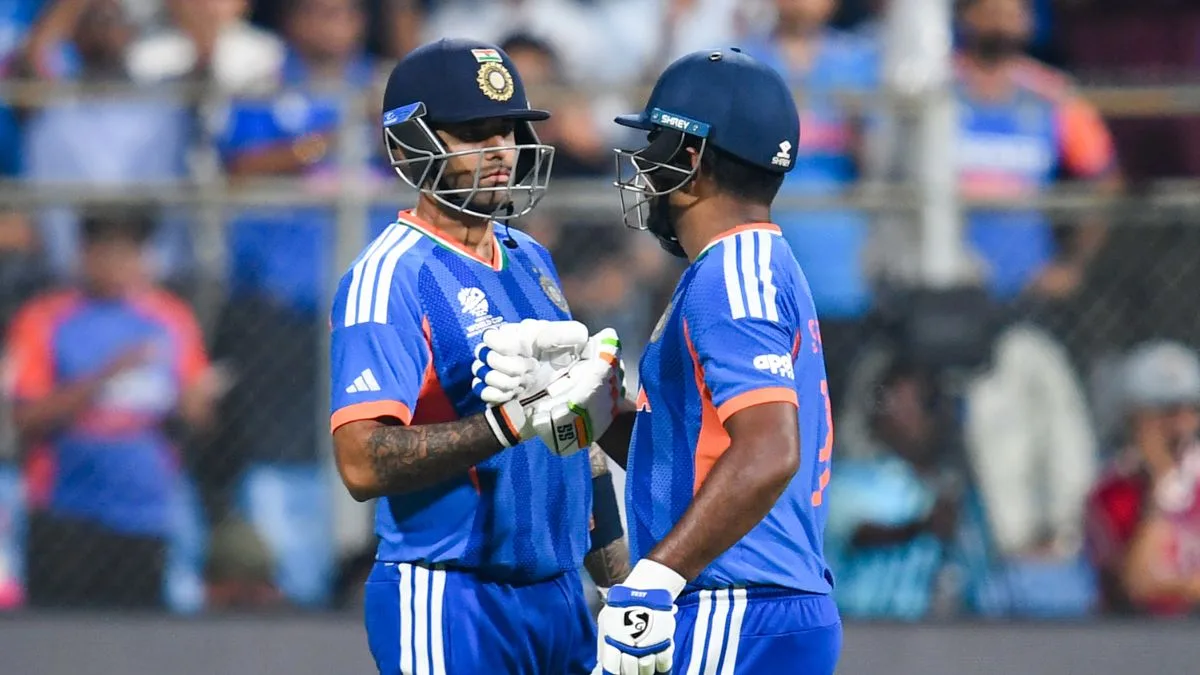
In a bilateral series earlier this year, Jofra Archer dismissed Sanju Samson three times in just 23 balls across five innings. That sequence did not appear to be a coincidence as the England quick almost created a similar opportunity on Thursday before skipper Harry Brook spilled a chance. For the next 10 overs, the Kerala wicketkeeper-batter made England pay dearly, unleashing carnage with a second successive half-century to help India post a mammoth 253/7 — the fourth-highest total in ICC Men’s T20 World Cup history.

Asked to bat on a placid surface at the Wankhede Stadium, Samson picked up from where he had left off at Eden Gardens and led the batting onslaught before the Indian middle order — Ishan Kishan (39 off 18), Shivam Dube (43 off 25), Hardik Pandya (27 off 12) and Tilak Varma (21 off 7) — joined a six-hitting spree to propel India to 253/7.

Samson never allowed England or Archer to recover from the dropped chance on 15. He rubbed salt into the wounds by plundering 74 runs off the next 35 deliveries, dominating his match-up against Archer. Continuing his purple patch in India Blues, Samson launched a couple of towering hits against the right-arm quick before nearly offering a chance. After the reprieve, however, he looked in complete control, smashing seven sixes and eight fours.

His unbeaten 97 against West Indies at Eden Gardens on Sunday had provided the trailer to Thursday’s main act, injecting him with the right amount of confidence ahead of the big semifinal. At the other end, Abhishek Sharma (9) failed to recreate his magic at Wankhede and fell to off-spinner Will Jacks. But the dismissal did little to slow Samson, who pulled Archer over midwicket first ball after Abhishek’s departure to set the tone for a 97-run second-wicket partnership with Kishan.

In the process, Samson replicated his Eden feat, racing to a second consecutive half-century off just 26 deliveries. He brought up the milestone by dispatching left-arm spinner Liam Dawson for a six over extra cover even as Kishan joined the party with a flat six over midwicket, helping India cross the 100-run mark inside nine overs.

With the Indian duo threatening to run away with the game, Brook turned to his experienced leg-spinner Adil Rashid, who responded by dismissing Kishan after the left-hander had struck four fours and two sixes.

Promoted to No.4 ahead of skipper Suryakumar Yadav, Shivam Dube showed little respect for the veteran, announcing himself with a couple of sixes off the leg-spinner. Playing at his home ground, Dube kept the momentum going from the other end even as Samson closed in on a sensational century. However, the return of Will Jacks for a second spell broke the flourishing 43-run stand for the third wicket as the off-spinner ended Samson’s 42-ball blitzkrieg with his first delivery.

Captain Suryakumar Yadav (11) added a brief 30-run stand with Dube before Hardik Pandya’s misjudged single resulted in Dube’s run-out, bringing an end to his 25-ball cameo.

Pandya, however, made his presence felt with three sixes and two fours, while Tilak Varma worsened Archer’s night with a couple of clean hits over the fence to propel India past the 250-run mark.

Brief Scores: India 253/7 in 20 overs (Sanju Samson 89, Shivam Dube 43, Ishan Kishan 39; Will Jacks 2-40, Adil Rashid 2-41) against England

Bengal Congress urges ECI to complete voter adjudication before assembly poll announcement ‎

‎Senior party leaders said a memorandum had been submitted to the Commission seeking the completion of the adjudication process for more than 60 lakh electors before the start of any election process in the state.

Statesman News Service | New Delhi |

The West Bengal unit of the Congress on Thursday urged the Election Commission of India (ECI) to complete the adjudication process of voters in the state before announcing the next round of elections, warning that millions of electors could otherwise face uncertainty over their voting status.

‎Senior party leaders said a memorandum had been submitted to the Commission seeking the completion of the adjudication process for more than 60 lakh electors before the start of any election process in the state.

‎Addressing a press conference in New Delhi, Congress general secretary in charge of West Bengal Ghulam Ahmad Mir, state party president Subhankar Sarkar, MP Isha Khan Choudhury, along with leaders Prasenjit Bose, Ashutosh Chatterjee, BP Singh and Munish Tamang said the electoral rolls published on February 28 pursuant to a direction of the Supreme Court of India include 7,04,59,284 electors.

Of these, they said, 60,06,675 voters — around 8.5 per cent — have been marked as “under adjudication”. According to the leaders, these electors fall under categories such as “logical discrepancy” and “unmapped,” with the majority concentrated in assembly constituencies in districts including Murshidabad, Malda, North 24 Parganas and South 24 Parganas.

“The scale of the issue is unprecedented. More than 60 lakh electors have been kept under adjudication. If elections are announced before this process is completed, it could create confusion and lead to large-scale disenfranchisement,” Mir said.

The Congress leaders pointed out that the apex court, in its February 24 order, had directed that supplementary lists be published on a continuous basis as and when the pending verification exercise is completed. Given the magnitude of the exercise and logistical constraints noted in the court’s order, they said the adjudication process could take several weeks.

Citing provisions of the Representation of the People Act, 1950, the party leaders noted that Section 24 allows electors who are excluded by Electoral Registration Officers to appeal before district election officers and the Chief Electoral Officer. However, they added that Section 23 bars any inclusion in the electoral roll after the last date for filing nominations in an election.

‎“In this situation, the Election Commission must clearly notify a deadline for completing the adjudication process in consultation with the higher judiciary and ensure that the election process begins only after this exercise is finished,” Sarkar said.

The party also sought clear guidelines for the appeal and re-enrolment process for eligible voters who may have been erroneously excluded from the rolls. The memorandum submitted to the Commission warned that without corrective measures, many eligible voters could lose their right to vote.

‎Raising concerns over the pattern of additions and deletions during the revision process, Congress leaders cited official data showing that while 9.64 lakh Form 6 and Form 6A applications seeking inclusion were received during the claims and objections period, only 1.82 lakh were admitted, implying that around 7.82 lakh applications were rejected.

‎At the same time, they said that although roughly 99,000 Form 7 applications for deletion were received during the same period, more than 5.46 lakh voters were deleted through Form 7, indicating that about 4.47 lakh additional deletion requests were accepted after the claims and objections period had already closed.

‎“Such discrepancies raise serious questions about the revision process. The Commission must undertake a re-verification of all Form 6 and Form 7 applications before finalising the rolls,” Choudhury said.

‎The Congress leaders also pointed out that similar special revision exercises conducted in states such as Bihar and Tamil Nadu recorded significantly higher additions than deletions, and argued that the pattern observed in West Bengal required closer scrutiny.

‎They urged the Election Commission to undertake a comprehensive re-verification of all additions and deletions in the electoral rolls to ensure that no eligible voter in the state is denied the right to participate in the democratic process.

Kavinder Gupta resigns as Ladakh LG within 9 months of taking oath

Sources said that the BJP high command might assign him some important assignment in the party setup during the assembly polls in West Bengal.

Statesman News Service | Jammu |

Ahead of the West Bengal assembly elections, Kavinder Gupta on Thursday resigned from the post of Lt. Governor of Ladakh. His resignation has come just about nine months after assuming office as the Lieutenant Governor of the Union territory of Ladakh. Gupta had taken the oath of LG on 18 July last year.

Sources said that the BJP high command might assign him some important assignment in the party setup during the assembly polls in West Bengal.

His tenure as the LG witnessed rising unrest in the region, where civil society groups and organisations such as the Leh Apex Body and Kargil Democratic Alliance were protesting for statehood, Sixth Schedule protections, and job reservations for locals.

During his tenure, Ladakh saw heightened protests in which four youths lost their lives in police firing in September 2025.

Meanwhile, efforts to contact Gupta on mobile phone remained futile.

Uttarakhand witnesses 50% more GSDP growth, reduced poverty with 8.2% annual growth projected

Sundaram said that the Report unveiled that poverty in the state has come down from 9.7 to 6.92 per cent by nearly 2.8 per cent in the same period. This, according to Sundar, was indicated in the Multidimensional Poverty Index (MPI) of the survey report statistics.

PRITHVIRAJ SINGH | Dehradun |

Uttarakhand has witnessed more than 50 per cent rise in GSDP growth as its annual growth rate is projected to be more than 8 per cent while poverty in the Himalayan state is down by 2.8 per cent in the last four four years. The annual growth projected for the state in 2026-27 will be 8.2 per cent.

Principal Secretary, Planning and Power, R Meenakshi Sundaram informed on Thursday that the Economic Survey Report, prepared in association with the National Council of Applied Economic Research (NCAER), revealed that the Gross State Domestic Product (GSDP) of Uttarakhand surged by nearly 54 per cent from ₹2.54 lakh crore in 2021-22 to around ₹3.90 crore in 2024-25.

Sundaram said that the Report unveiled that poverty in the state has come down from 9.7 to 6.92 per cent by nearly 2.8 per cent in the same period. This, according to Sundar, was indicated in the Multidimensional Poverty Index (MPI) of the survey report statistics.

Among other key social indicators, as shared by Sundaram, claimed that the state’s annual growth rate in the financial 2024-25 was around 7.23 per cent and is projected to continue with an increased pace of 8.2 per cent in the financial year 2026-27.

The Report further revealed that the Labor Force Participation Rate (LFPR) in the state Increased from nearly 60 per cent to 64 percent exhibiting more than four percent rise in employment growth. Human Development Index (HDI) improved in the same period from 0.718 in 2021-22 to 0.722 in 2024-25.

The state also underwent substantial Industrial Expansion and growth in startups in the last four years as claimed in the report. Sundaram stated that MSME units in the state grew from 59,798 to 79,394, with employment rising in this sector from 3.43 lakh to 4.56 lakh. Large Industrial units, on the other hand, grew from 107 to 128. The Sstate witnessed a great leap in the startups from zero units in 2017-18 to 1,750 in 2025-26.

According to the principal secretary, planning & infrastructure, connectivity growth too was remarkable in the state between 2021-22 to 2024-25. The network of roads expanded to 51,278 kilometers while the number of heliports increased from two to seven and the strength of helipads almost doubled from 60 to 118 in the last four years.

In the school education and skill development index, dropout rates in the primary school fell to 1.4 per cent, while the secondary school dropouts saw a sharp decline from 7.65 percent to 4.59 percent. In the higher education sector, degree colleges increased to 139 and engineering colleges both government and private grew from 20 to 52.

In health and sanitation, Infant Mortality Rate (IMR) has come down from 22 to 20 in the last four years while Maternal Mortality Rate (MMR) improved from 103 to 91.

It’s notable that the joint economic survey report by the Centre is likely to be unveiled in the coming budget session of the state assembly at gaistain starting from March 9.