Logo

Khamenei killing was no spur-of-the-moment strike; Israel minister says decision was taken last year

Israeli officials say the plan to eliminate Iran’s Supreme Leader was approved months earlier and later accelerated amid unrest, as Israel expands its air campaign across Tehran.

Statesman News Service | New Delhi |

Israel had decided months in advance to eliminate Iran’s Supreme Leader Ayatollah Ali Khamenei, with the plan first approved during a closed security meeting last November, Israeli Defence Minister Israel Katz has said.

The disclosure offers the clearest indication yet that the killing was not a sudden battlefield decision but part of a longer strategic calculation by Israel’s leadership. According to officials, the operation’s timeline was later brought forward amid rising tensions and internal unrest in Iran.

Speaking to N12 News on Thursday, Katz said Prime Minister Benjamin Netanyahu set the objective during a restricted security consultation late last year.

“Already in November we were convened with the prime minister in a very tight forum and the prime minister set the goal of eliminating Khamenei,” Katz said.

The operation had originally been planned for around mid-2026. However, according to The Jerusalem Post, Israel later moved the timeline forward after sharing its strategy with the United States earlier this year.

Katz said Israeli officials feared that pressure on Iran’s clerical leadership could trigger attacks on Israeli or American targets across the Middle East.

Also Read: US-Israel attack plan on Iran DECODED: From DECAPITATION of Khamenei to wider destruction

Strike carried out during opening phase of operations

The strike that killed Khamenei was conducted in the early hours of Operations Roaring Lion and Epic Fury, which began on Saturday.

The attack marked an unprecedented moment in modern conflict as it was the first time the top leader of a sovereign country was killed in an airstrike.

Israel has repeatedly argued that its military campaign is aimed at neutralising what it describes as an “existential threat” from Iran’s ballistic missile programme and nuclear ambitions. Israeli officials have also suggested that the military push may not stop at neutralising immediate threats. Some in the government believe sustained pressure could weaken the leadership in Tehran and potentially trigger wider political shifts inside the country.

Israel steps up airstrikes in Tehran

Following the initial strike, Israel expanded its operations with fresh air raids across Tehran. The military said the attacks were aimed at facilities linked to Iran’s security and defence network.

On Thursday, the Israel Defense Forces (IDF) said it had carried out its 12th round of strikes in the Iranian capital, targeting installations connected to the country’s military and internal security apparatus.

Among the sites targeted was the headquarters of a special internal security unit in Alborz province.

In a statement posted on X, the Israeli Air Force said the facility oversees special units across the region and directs the regime’s armed internal security forces.

The strikes also hit facilities linked to the Islamic Revolutionary Guard Corps (IRGC) and the Basij paramilitary force.

Israeli aircraft additionally struck a central command centre used by Iran’s internal armed security forces, along with multiple locations believed to store or manufacture weapons.

“The IDF continues to deepen the impact on all the mechanisms of the Iranian terror regime in Tehran,” the Israeli Air Force said.

Retaliation spreads across the region

The strikes come amid a rapidly widening conflict in the Middle East.

Following Khamenei’s death, Iran launched waves of drones and missiles targeting American bases and Israeli assets across several Arab countries.

The attacks marked one of the most direct retaliatory moves by Tehran in recent years and signalled the possibility of a wider regional escalation.
Training sortie turns tragic: IAF loses two pilots in Sukhoi Su-30MKI crash

Rescue teams from the Air Force and local authorities were rushed to Karbi Anglong after the aircraft disappeared from radar during a routine sortie, triggering a search operation in the hilly region.

Statesman News Service | New Delhi |

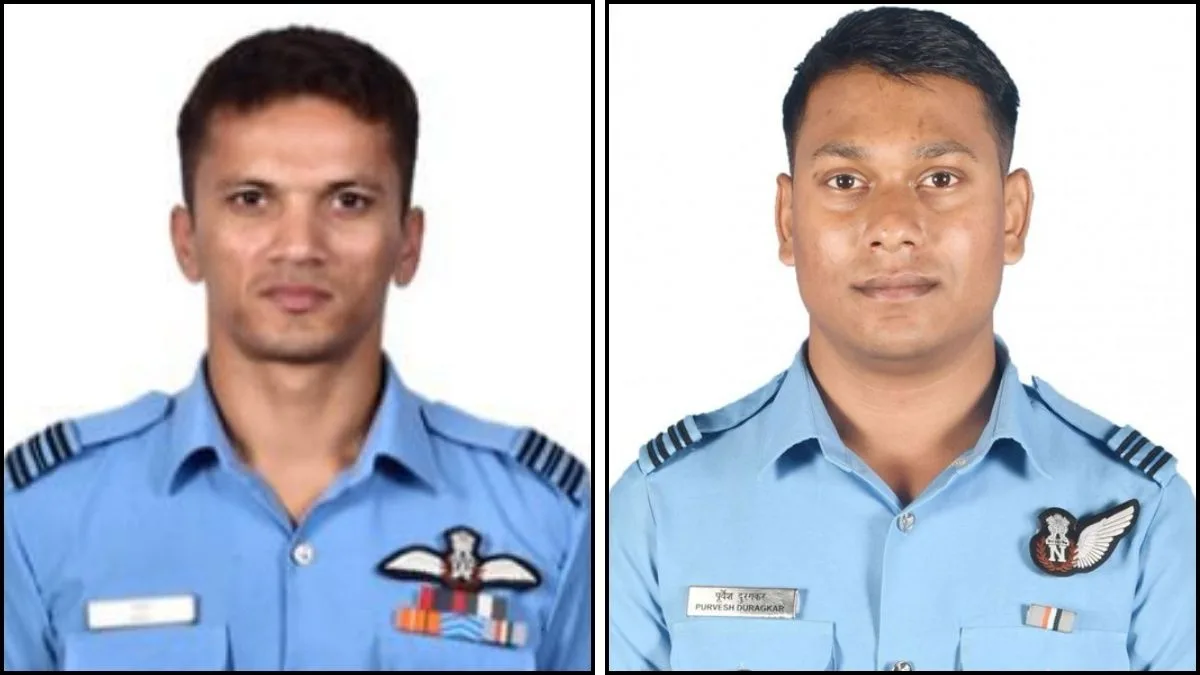
The Indian Air Force (IAF) on Friday said that two of its pilots died after a Sukhoi Su-30MKI fighter aircraft crashed during a training sortie in Assam’s Karbi Anglong district. The officers were identified as Squadron Leader Anuj and Flight Lieutenant Purvesh Duragkar.

The confirmation from the Air Force came a day after the aircraft lost contact with radar during a routine mission over the region. Rescue teams were sent to the area soon after the aircraft went missing.

In a message posted on X, the IAF acknowledged the deaths of the two officers and said the force stands with their families in this difficult time.

“IAF acknowledges the loss of Sqn Ldr Anuj and Flt Lt Purvesh Duragkar, who sustained fatal injuries in the Su-30 crash. All personnel of the IAF express sincere condolences, and stand firmly with the bereaved family in this time of grief,” the statement said.

Meanwhile, Defence Minister Rajnath Singh posted on X: “Deeply saddened by the loss of Sqn Ldr Anuj and Flt Lt Purvesh Duragkar in the tragic Su-30 crash. Their courage and service to the nation will always be remembered with pride and gratitude. My heartfelt condolences to the bereaved families. The nation stands firmly with them in this hour of grief.”

Aircraft lost radar contact during routine sortie

According to defence officials, the Sukhoi Su-30MKI had been on a regular training mission when it disappeared from radar over Karbi Anglong district, around 60 kilometres from Jorhat in Assam.

The Defence Public Relations Officer earlier said that Air Force teams were immediately deployed to determine what had happened. Personnel from local authorities and other security agencies also joined the effort to locate the aircraft.

Su-30MKI remains key fighter aircraft for the IAF

The Sukhoi Su-30MKI is one of the Indian Air Force’s main combat aircraft and plays an important role in the country’s air defence capability.

There have been a few incidents involving the aircraft in the past. In August 2019, a Su-30MKI crashed in a paddy field near Tezpur in Assam during a training sortie, though both pilots ejected safely.

In another incident in May 2015, a Sukhoi fighter jet went down around 36 kilometres south of the Tezpur Air Force base shortly after take-off. The pilots managed to eject before the aircraft crashed.

‘US forces aren’t holding back’: CENTCOM strikes Iranian ‘drone carrier’ as offensive enters seventh day

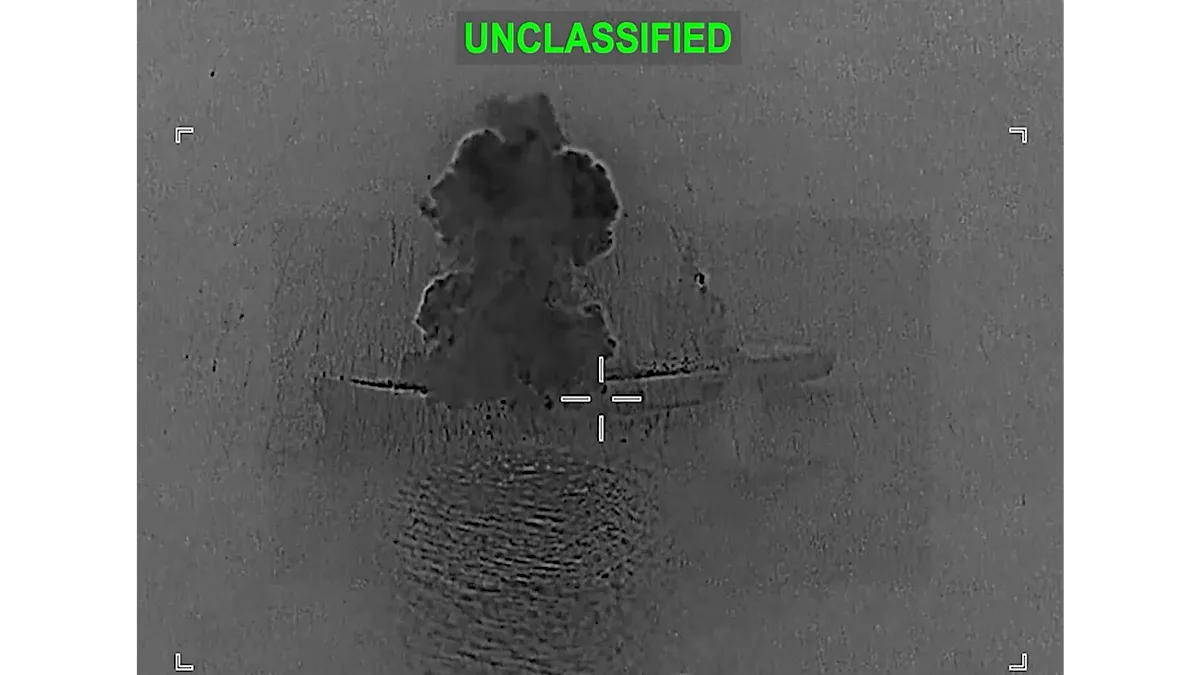
The United States military has targeted an Iranian ship, characterised as a “drone carrier”, which is reportedly “is now on fire” following a maritime engagement.

ANI | New Delhi |

The United States military has targeted an Iranian ship, characterised as a “drone carrier”, which is reportedly “is now on fire” following a maritime engagement.
The strike was confirmed by US Central Command (CENTCOM) through a statement on X, occurring as the combined US-Israeli military offensive against Iran reaches its seventh day.

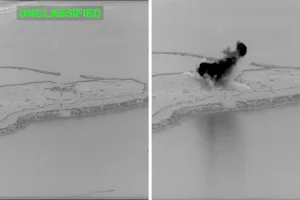
In its communication, CENTCOM asserted that “US forces aren’t holding back on the mission to sink the entire Iranian Navy.” The command further detailed the scale of the vessel, describing the targeted drone carrier as “roughly the size of a WWII aircraft carrier.”
While the exact location of the naval engagement was not specified in the official post, the military command released footage of the operation. The video provided by CENTCOM depicted the alleged Iranian ship being “engulfed in thick smoke” after sustaining a direct hit from US forces.
Complementing these naval strikes, CENTCOM commander Admiral Brad Cooper stated that America has struck nearly 200 targets inside Iran over the past 72 hours. He noted that these actions have significantly degraded Tehran’s missile and drone attack capabilities.
Speaking during a press conference on Thursday, Cooper detailed the scale of the ongoing military operation, titled ‘Operation Epic Fury’, which specifically targets Iranian missile launchers and infrastructure.

“In just the last 72 hours, America’s bomber force has struck nearly 200 targets deep inside of Iran. In just the last hour, U.S. B-2 Spirit bombers dropped dozens of 2,000lb Penetrator bombs targeting deeply buried ballistic missile launchers,” Cooper said.
According to the commander, these strikes have sharply reduced the scale of Iranian retaliatory attacks since the operation began. He noted that compared to the start of the mission, ballistic missile attacks have decreased by 90 per cent and drone attacks by 83 per cent, adding, “we’re now up over 30 ships [destroyed].”
Cooper also revealed that ‘Operation Epic Fury’ has expanded to target the long-term capacity of Iran’s missile programme, following instructions from US President Donald Trump.

“President Trump gave us another task to raze or level Iran’s ballistic missile industrial base,” he said. “We’re not just hitting what they have, we’re destroying their ability to rebuild. We will systemically dismantle Iran’s missile production capability for the future, and that’s absolutely in progress.”

The CENTCOM chief also highlighted a unique programme involving a captured Iranian drone design, named LUCAS, which has been reverse-engineered and redeployed by US forces.
“LUCAS — indispensable… This was an original Iranian drone design. We captured it, pulled the guts out, sent it back to America, put a little ‘Made in America’ on it, brought it back here, and we’re shooting it at the Iranians,” Cooper stated.
These remarks come amid escalating tensions in West Asia following a joint US-Israel military strike on February 28. That operation resulted in the death of Iran’s Supreme Leader, Ayatollah Ali Khamenei, and other senior figures, prompting a fierce response from Tehran.

In retaliation, Iran has launched waves of drone and missile attacks targeting American military bases across multiple Arab countries as the conflict enters its seventh day. Simultaneously, Israel is continuing its strikes on Tehran and widening the conflict to Lebanon, targeting Hezbollah.

‘Hope Iran will relent and let ships go through’: Shashi Tharoor as conflict affects trade through Strait of Hormuz

Congress MP Shashi Tharoor pushed for diplomacy and negotiated settlement as the West Asia Conflict continued to escalate, hampering the trade through the Strait of Hormuz.

Statesman News Service | New Delhi |

Congress MP Shashi Tharoor pushed for diplomacy and negotiated settlement as the West Asia Conflict continued to escalate, hampering the trade through the Strait of Hormuz.
Tharoor, noting that Iran has the capacity to close the Strait of Hormuz, hoped that it would relent and let the ships go through.

“It affects us too because there have been a lot of consequences already… The sooner this war ends, the better for everyone… The need for diplomacy and for a negotiated settlement is very urgent… We’d be stuck like everybody else is stuck because Iran has the capacity to close the straits. Eventually, we hope that Iran will relent and let ships go through. But at the moment, I don’t think India alone can do anything… India has already called for de-escalation and diplomacy, which are the only ways forward,” he said.
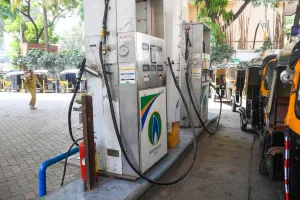
Meanwhile, the US said it has allowed a 30-day waiver for India to purchase Russian Oil to meet its energy requirements.

US Treasury Secretary Scott Bessent said, “President Trump’s energy agenda has resulted in oil and gas production reaching the highest levels ever recorded. To enable oil to keep flowing into the global market, the Treasury Department is issuing a temporary 30-day waiver to allow Indian refiners to purchase Russian oil.”

“This deliberately short-term measure will not provide significant financial benefit to the Russian government as it only authorises transactions involving oil already stranded at sea. India is an essential partner of the United States, and we fully anticipate that New Delhi will ramp up purchases of U.S. oil. This stop-gap measure will alleviate pressure caused by Iran’s attempt to take global energy hostage,” he added.

The waiver comes at a time when India continues to face potential risks linked to energy supply disruptions in the Middle East amid escalating tensions in West Asia after a joint US-Israel military strike on February 28 on Iranian territory resulted in the death of its Supreme Leader, Ayatollah Ali Khamenei and other senior figures.
India sources nearly 40 per cent of its oil imports from the region, with a significant portion transported through the strategically important Strait of Hormuz.

8th Central Pay Commission: Govt invites representations from stakeholders

The Eighth Central Pay Commission has invited representations from all stakeholders and their submissions would be received up to April 30, 2026, according to an official statement.

IANS | New Delhi |

The Eighth Central Pay Commission has invited representations from all stakeholders and their submissions would be received up to April 30, 2026, according to an official statement.

The Commission has provided an online structured format for inviting memorandum/representations from associations and unions of serving employees/pensioners, organizations/institutions as well as from employees, pensioners and interested individuals on its website.

“The structured format for submitting memorandum is also available at the MyGov.in portal (innovateindia.mygov.in),” according to Finance Ministry.

“The Commission has requested stakeholders to make submissions on the above portal only. Paper-based copies/emails/pdfs may not be considered by the Commission,” it further stated.

Over 1.1 crore central government employees and pensioners are looking for sign of an accelerated rollout of the 8th Pay Commission.

However, the full implementation of salary and pension hikes in FY27 remains unlikely.

The panel has been given an 18-month deadline to submit its report, which makes it unlikely that the salary and pension hike would be rolled out in FY27, according to earlier reports. In such a scenario, the panel may expedite its consultation with key stakeholders, and present its report way before the deadline that lapses in May 2027, the reports said.

Dearness allowance (DA) and dearness relief (DR) used to be reset to zero when a new pay commission’s recommendations are implemented and then they are then restored in stages.

Following the last revision in October, DA and DR stand at 58 per cent, the report said. The 7th Pay Commission had a fiscal impact of Rs 1.02 lakh crore, though the effective hike for employees was smaller after DA/DR adjustments, but the fiscal impact of 8th Pay Commission could be substantially larger at Rs 2.4-Rs 3.2 lakh crore due to a bigger workforce and more pensioners.

Engineering student arrest case: Maha ATS probe reveals Ayan Shaikh’s terror plan

According to the ATS, preliminary investigations revealed that Shaikh had been living in Mumbai for the past six months and was allegedly working as a sleeper operative for Jaish-e-Mohammed.

IANS | New Delhi |

A raid by the Maharashtra Anti-Terrorism Squad (ATS) in Mumbai aimed at exposing an online network of terrorist activities within the state, along with the arrest of engineering student Ayan Shaikh for alleged links to the Pakistan-based terrorist group Jaish-e-Mohammed (JeM) and the Islamic State (ISIS), has resulted in some significant disclosures on Friday.

According to the ATS, preliminary investigations revealed that Shaikh had been living in Mumbai for the past six months and was allegedly working as a sleeper operative for Jaish-e-Mohammed. The terror outfit had reportedly assigned him the task of radicalising and recruiting young men.

As part of this responsibility, he allegedly attempted to brainwash and influence two fellow students as well as several close friends to work for the organisation. Investigators said that Shaikh had influenced two of his friends to such an extent that they had even begun planning to leave the country and participate in terrorist activities.

The ATS has recorded the statements of both students as part of the ongoing investigation. Officials also revealed that Shaikh was allegedly receiving financial support from handlers based in Pakistan and Saudi Arabia to carry out these activities. The funds were reportedly transferred through cryptocurrency channels. Authorities are currently examining his bank accounts and financial records to trace the exact amount of money he may have received.

Investigators further stated that Jaish-e-Mohammed had allegedly planned to use Shaikh to facilitate potential terrorist activities in Mumbai. Following these revelations, the Mumbai Crime Branch has also been alerted and has begun questioning several individuals who may be linked to the network.

According to ATS officials, several audio and video recordings of JeM leaders, including Azhar Masood and Mohammad Hafiz, were recovered from Shaikh’s mobile phone. The accused was reportedly active on encrypted messaging platforms, including Telegram, where extremist propaganda was widely circulated. The agency has also recovered numerous chats suggesting attempts to promote radicalisation and recruit new members.

During the investigation, officials found that Shaikh had shared extremist content and tried to recruit others through online platforms. He allegedly attempted to influence two of his close friends by adding them to Telegram groups that circulated propaganda related to Jaish-e-Mohammed and ISIS. However, the ATS clarified that while the two young men had accessed some of the material shared by Shaikh, they were not actively involved in any terror-related activities.

During interrogation, Shaikh reportedly disclosed details of suspicious conversations with foreign handlers and individuals believed to be associated with banned terrorist organisations, including Jaish-e-Mohammed and ISIS.

The encrypted messaging groups and Telegram channels in which Shaikh was active allegedly included several foreign nationals, and facilitators believed to be part of sleeper networks and recruitment modules linked to these organisations. Investigators also found that several individuals from different states of India were members of these groups, where extremist content was regularly shared, and discussions on radicalisation and recruitment were held.

The ATS has shared these inputs with other security and intelligence agencies across the country. Officials said the investigation is ongoing, and more revelations are expected in the coming days.

Nepal election results: Early count shows Balendra Shah ahead of Oli in Jhapa-5; RSP off to strong start

Early trends from Nepal’s parliamentary elections indicate a surge for the Rastriya Swatantra Party, with preliminary vote counts suggesting a potential challenge to the country’s traditional political parties.

Statesman News Service | New Delhi |

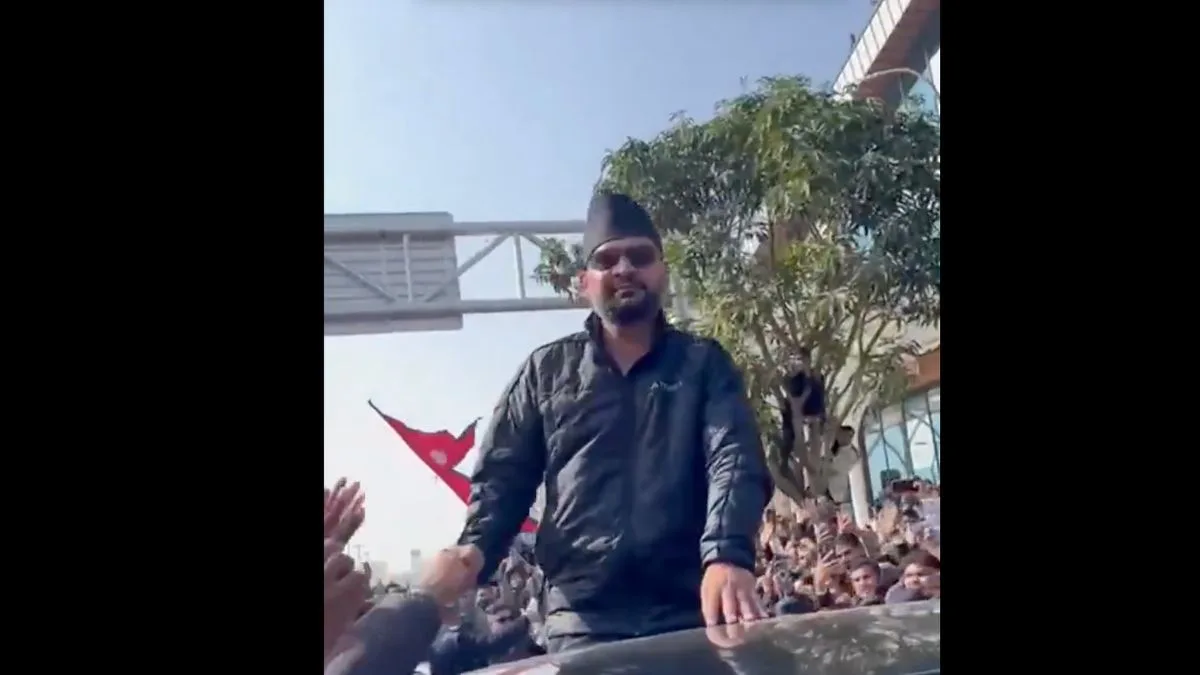
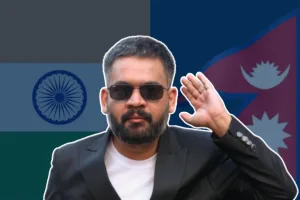
Kathmandu mayor-turned-politician Balendra Shah, aka Balen, has taken an early lead over former prime minister KP Sharma Oli in the closely watched Jhapa-5 constituency, according to preliminary counting in Nepal’s Parliamentary Elections.

The early trends also point to a strong showing by the Rastriya Swatantra Party (RSP), a relatively new political force that appears to be gaining ground against Nepal’s long-established parties. Initial numbers suggest the vote could reshape the country’s political landscape.

Preliminary figures published by the online portal Ekantipur show rapper-turned-politician Balen with 1,478 votes, while Oli has received 385 votes so far. Jhapa-5 is traditionally seen as an Oli stronghold, making the contest between the two prime ministerial aspirants one of the most closely watched battles of the election.
Early trends show strong start for RSP

Beyond the Jhapa contest, early counting indicates that the Rastriya Swatantra Party is leading in 39 constituencies. The Nepali Congress is ahead in three seats, while the Nepali Communist Party (NCP) leads in two constituencies. Oli’s Communist Party of Nepal (Unified Marxist–Leninist) has not yet taken the lead in any seat based on early counts.

Nepal elects 275 members to its House of Representatives through a mixed system. Of these, 165 lawmakers are chosen directly from constituencies, where the candidate with the highest number of votes wins. The other 110 members come through a proportional representation system, where parties are allotted seats based on their overall share of votes.

What the early numbers are showing is interesting. For years, Nepal’s politics has largely been shaped by three familiar players – the Nepali Congress, the CPN-UML, and the Nepal Communist Party. But the first round of counting suggests voters may be looking beyond these traditional parties this time.

Election comes after Gen Z protests

This election is Nepal’s first national vote since youth-led protests in September last year, which forced the collapse of the coalition government headed by then Prime Minister KP Sharma Oli.

Much of the anger on the streets last year came from younger Nepalis. Many said the country had been stuck for years under the same political faces and accused traditional parties of failing to bring real progress.

Now, barely six months after those protests, the mood appears to be showing up in the ballot boxes. Early trends suggest newer players like the RSP, led by former television presenter Rabi Lamichhane, are gaining traction among voters looking for a break from the old political order.

Four Trinamool, one BJP candidate file nominations for RS polls from Bengal

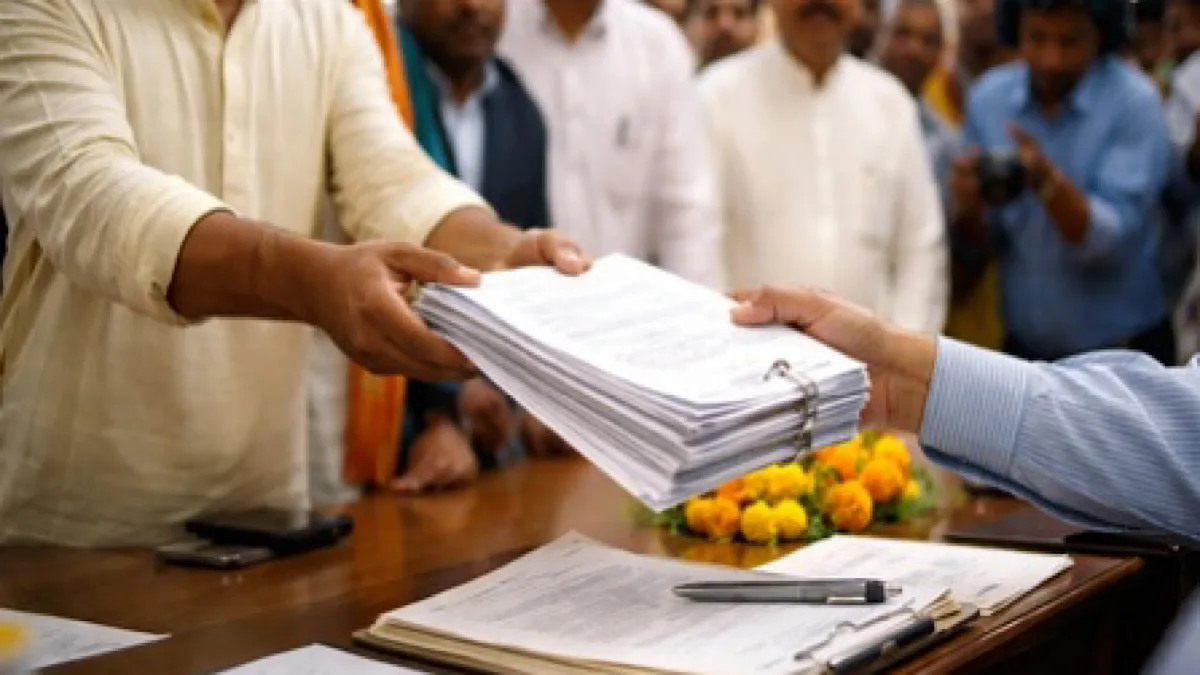
The process of filing nominations for four Trinamool Congress candidates and one Bharatiya Janata Party (BJP) candidate for election to the Rajya Sabha from West Bengal was completed at the state Assembly on Thursday.

IANS | Kolkata |

The process of filing nominations for four Trinamool Congress candidates and one Bharatiya Janata Party (BJP) candidate for election to the Rajya Sabha from West Bengal was completed at the state Assembly on Thursday.

Incidentally, the total number of Rajya Sabha seats from West Bengal going to polls this time is also five. As per the current numerical strength of the Trinamool Congress and the BJP in the Assembly, the ruling party is comfortably placed to secure four seats, while the opposition BJP is expected to win one.

In effect, it can be said that the five candidates — four from the Trinamool Congress and one from the BJP — who filed their nominations on Thursday afternoon are likely to be elected unopposed, unless any of the nominations are rejected during scrutiny or a candidate withdraws his or her nomination.
The scrutiny of nominations will take place on March 6, while the last date for withdrawal of candidature is March 9. Only after that will the candidates be formally declared elected unopposed.

The four Trinamool Congress candidates who filed their nominations on Thursday are former West Bengal Director General of Police Rajeev Kumar; current West Bengal Information Technology Minister and singer-actor-turned-politician Babul Supriyo; senior Supreme Court advocate Menaka Guruswamy, a prominent face of the country’s queer rights movement; and popular Bengali actress Koel Mallick.

The lone BJP candidate who filed his nomination on Thursday was the party’s former national secretary and former West Bengal state president Rahul Sinha.

Of the five Rajya Sabha seats, three have fallen vacant with the completion of the terms of sitting Trinamool Congress members Subrata Bakshi, Ritabrata Banerjee, and Saket Gokhale.

The fourth seat fell vacant after erstwhile Trinamool Congress MP Mausam Benazir Noor resigned from the Rajya Sabha and recently joined the Congress.

The term of CPI-M Rajya Sabha member and senior advocate Bikas Ranjan Bhattacharya is also coming to an end. Since the CPI(M) currently has no representation in the West Bengal Assembly, the BJP is expected to comfortably secure that seat.

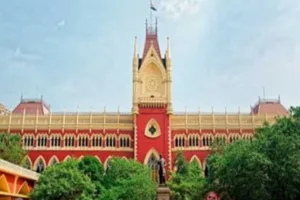
Calcutta HC asks petitioner to justify PIL on ‘Vande Mataram’ protocol

The division bench of Chief Justice Sujoy Paul and Justice Partha Sarathi Sen directed the petitioner to place before the court logical evidence to establish the admissibility of the PIL.

IANS | Kolkata |

A division bench of the Calcutta High Court on Thursday questioned the admissibility of a public interest litigation (PIL) challenging the comprehensive guidelines issued by the Central government on the official protocol for the rendition of the country’s national song ‘Vande Mataram’.

The division bench of Chief Justice Sujoy Paul and Justice Partha Sarathi Sen directed the petitioner to place before the court logical evidence to establish the admissibility of the PIL.

As the matter came up for hearing on Thursday afternoon, Additional Solicitor General Ashoke Chakraborty first raised the issue of admissibility of the PIL. He argued that the public interest litigation was entirely in the self-interest of the petitioner.

“The issues like the country’s sovereignty and national security are involved with the national song of the country. Can the matter really be adjudicated by the court? The petitioner should first prove the basis of this public interest litigation. Otherwise, he should face an exemplary penalty,” Chakraborty argued.

In his counter-argument, the petitioner’s counsel Bikas Ranjan Bhattacharya, senior advocate and CPI-M Rajya Sabha member, said the main contention of the PIL was against the Union government’s instructions issued on January 20 this year to chief secretaries of all states that the complete official version of ‘Vande Mataram’, comprising six stanzas and lasting approximately three minutes and 10 seconds, is to be performed or played during major state occasions.

“In 1937, some parts of this song were accepted as universally acceptable by the first Prime Minister of India, Jawaharlal Nehru, following the advice of Gurudev Rabindranath Tagore. Later, only that portion was accorded the status of the national song. Only two paragraphs of the entire song were accepted as the national song. It was reasoned that the words used in the remaining paragraphs could be against the communal harmony of the country. That is why Tagore suggested deleting the other paragraphs. Later, the Constituent Assembly adopted that proposal in the Indian Constitution,” Bhattacharya said in his counter-argument.

Thereafter, the division bench directed the petitioner’s counsel to present logical evidence before the court to establish the admissibility of the PIL.

The bench also observed that appropriate evidence should be placed before the court in support of the historical narratives based on which the public interest litigation was filed.

The next date of hearing in the matter has been fixed for March 23, and by that time the counsel should present the relevant evidence before the court, the bench ordered.

Centre to bring comprehensive package for north Bengal tea gardens soon: MoS Jitin Prasada

Union Minister of State for Commerce and Industry Jitin Prasada on Thursday said the central government will soon bring a “comprehensive package” for tea gardens in north Bengal.

IANS | Kolkata |

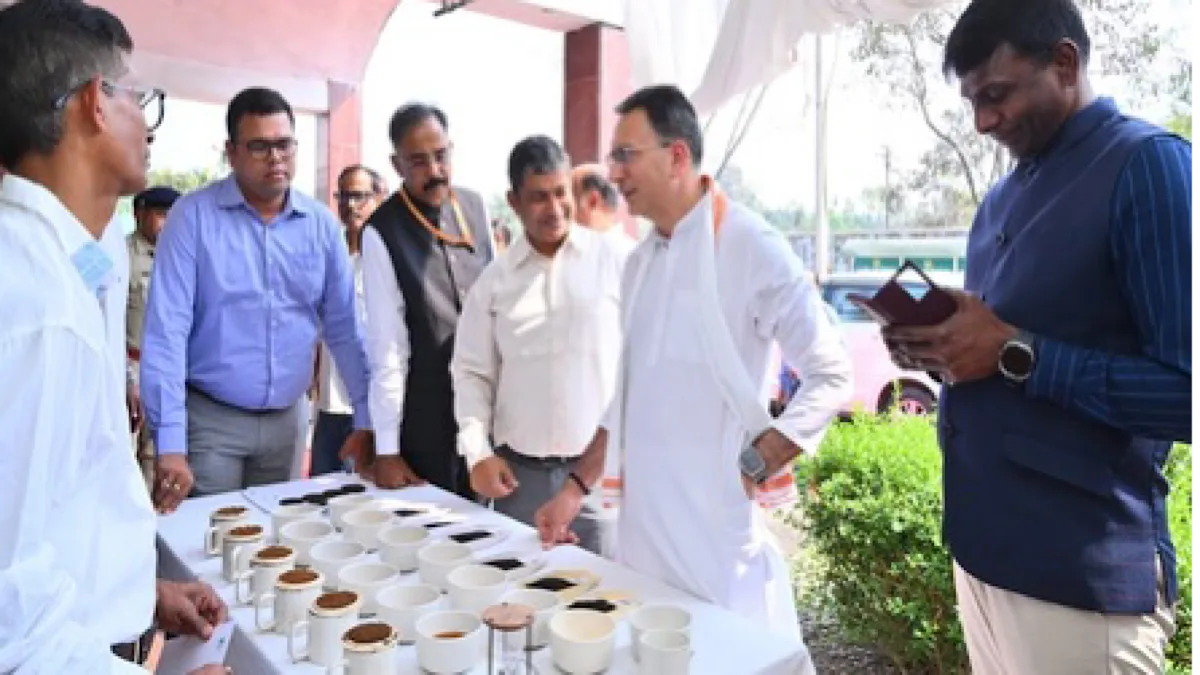
Union Minister of State for Commerce and Industry Jitin Prasada on Thursday said the central government will soon bring a “comprehensive package” for tea gardens in north Bengal. Jitin Prasada made the remarks after visiting tea gardens in Jalpaiguri earlier in the day.

“We have come to north Bengal to listen to the current problems of the tea industry. Discussions are underway on how to overcome these problems and how to address the issues faced by workers. There is a Tea Board under the Ministry of Commerce and Industry. We are also examining how we can expand tea exports abroad. There is a strong demand for tea in our country. Discussions are also taking place on how improving quality can help boost exports. The tea industry is our first priority,” the Minister said.

MoS Prasada also said: “Currently, weather patterns are changing, and the tea industry is facing challenges such as waterlogging in new plantations and labour-related issues. We are preparing a comprehensive package for the tea industry. It would be helpful if the state government cooperates with us. We are hopeful.”

It may be noted that the tea industry is the largest industry in north Bengal. However, due to various factors including weather-related issues, the region’s oldest and largest tea industry has been facing a decline. Tea garden owners have been demanding intervention from the central government to revive the sector.

On Thursday, Jitin Prasada visited the Denguajhar tea garden in Jalpaiguri district along with officials of the Tea Board.

Tea garden owners took the Union Minister to the tea processing unit, where he was briefed about the varieties of tea produced and the quality standards maintained at the estate.

Jitin Prasada began his political career in 2001 as a general secretary of the Indian Youth Congress. He was elected to the Lok Sabha for the first time in 2004 from Shahjahanpur in Uttar Pradesh, his home constituency, entering the 14th Lok Sabha.

During his first term in Parliament, he was inducted as Minister of State for Steel in April 2008, becoming one of the youngest members of the Union Council of Ministers at the time.

In the 2009 Lok Sabha elections, he contested from Dhaurahra after the Shahjahanpur seat ceased to exist following delimitation. He won the election and retained his place in Parliament.

In Parliament, he served on the Committee on Petitions and the Committee on Information Technology, and was also part of the consultative committees of the Ministries of Civil Aviation and Steel.

Ahead of the 2021 West Bengal Assembly elections, the Congress appointed him the party’s in-charge for the state.

Prasada joined the BJP on June 9, 2021. In the 2024 general elections, he was elected to the Lok Sabha from the Pilibhit constituency in Uttar Pradesh.

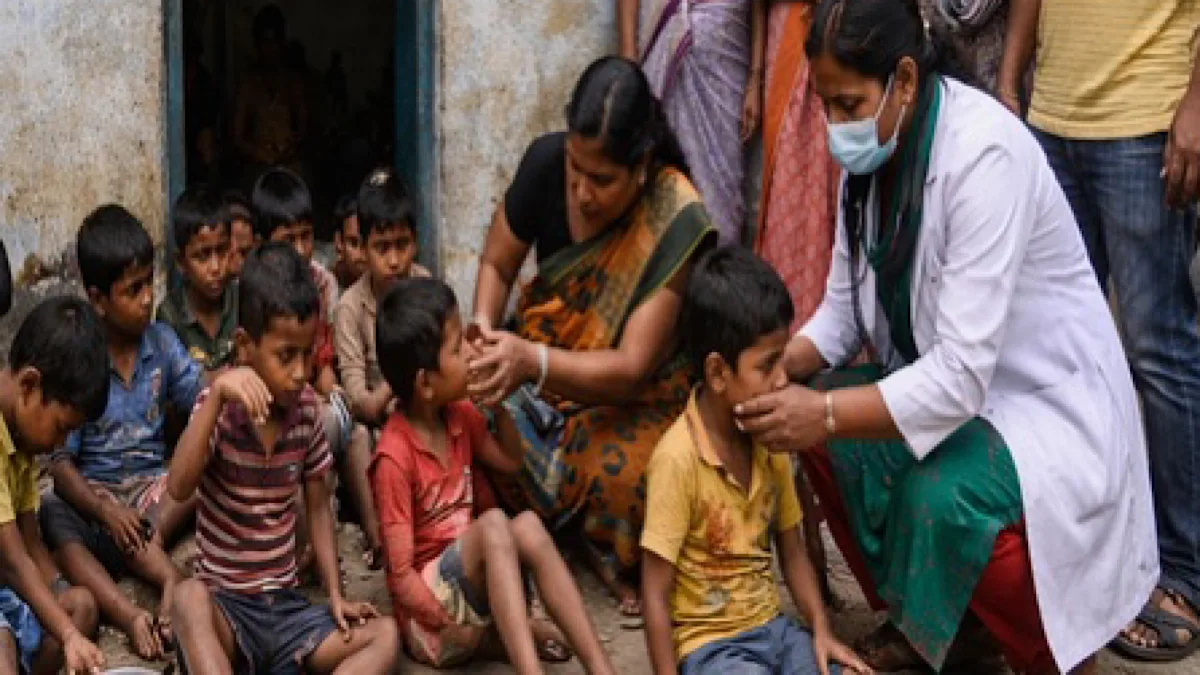
15 children fall sick after lizard found in food at ICDS centre in Bengal

Around 15 children fell sick at an Anganwadi centre in West Bengal on Thursday after a dead lizard was allegedly found in the cooked food served there.

IANS | Kolkata |

Around 15 children fell sick at an Anganwadi centre in West Bengal on Thursday after a dead lizard was allegedly found in the cooked food served there.

The incident took place at the Nagendrapur Uttarpara ICDS centre in Raidighi in South 24 Parganas district. All the 15 children who reportedly fell sick after consuming the contaminated food were admitted to Raidighi Rural Hospital.

According to local sources, lunch was being served to the children at the ICDS centre when the incident came to light. Allegedly, a dead lizard was first noticed on a child’s plate. However, by that time several children had already eaten the food.

Within a short time, a number of children began complaining of stomach pain and discomfort. Soon afterwards, some of them also started vomiting.

As news of the incident spread in the locality, parents rushed to the ICDS centre and panic gripped the area. Meanwhile, the number of children being brought to Raidighi Rural Hospital for treatment began to increase gradually.

Raidighi Trinamool Congress MLA Aloke Jaldata reached the hospital soon after receiving information about the incident. Jaldata, who is a doctor by profession, enquired about the health condition of the children and also supervised the treatment being provided to them.

Following instructions from the MLA, a special team of medical officers was sent to the area to assess the situation.

“The situation in the area is being monitored. We are also keeping watch to see if anyone else falls sick. Two ambulances are being kept ready in case of any emergency,” the MLA said.

He also asked officials of the district administration to immediately look into the matter and take necessary action.

The block administration has been directed to conduct a detailed investigation into how the dead lizard entered the cooked food served at the centre.

Meanwhile, angry parents of the affected children staged protests over the incident and demanded the removal of the cook responsible for preparing the meal.

They alleged that the lives of the children had been put at risk due to negligence in food preparation at the centre.

According to hospital sources, the children who fell ill have been kept under observation for the time being. However, their condition is reported to be stable.

Children writing ghost stories

There lived a happy family in the famous cottage called the Blackwood Manor.

Statesman News Service | Kolkata |

There lived a happy family in the famous cottage called the Blackwood Manor. The family consisted of Garry-the father, Mary-the mother, Timothy-eldest son, Tony as the middle child, and Rose the youngest one. Alan and Chloe were their great grandparents. When they died ve years earlier, Alan and Chloe had left creepy and grubby stuff on the bookshelf that was forbidden to touch. Something tragic happened when Rose had accidentally slipped on the stairs and died one night. It was a full moon night. Garry and Mary were shocked at the incidence of the accident.

A few weeks later, real ghostly events started taking place every night. The other two boys were very scared. They discovered the place had a horrifying past involving children who were burned in the replace few hundred years ago. Those children’s souls got trapped in that house. Their souls crept out of brightness into an eerie depth of darkness and negativity. The creepy objects were turning in to evil spirits!

Meanwhile, the neighbourhood was shaken by the news of the little girl’s death. The whole neighbourhood went into mourning. The familydecided to leave the Manor and take up another house in the nearby village. There were two young boys who lived nearby, Sam and Colby who were paranormal investigators. They requested the whole family to move out of the Manor so that they can investigate the haunted house. They went inside on a full

moon night.
The creepiness crept in around midnight. Suddenly, the lights went off and there was astrong wind which shook the nearby trees. The windows were creaking and clanking. The two boys kept themselves together with a Bible in Colby’s hand and a camera in Sam’s hands. They were sitting downstairs at the patio. When a large mirror fell out of no where and got shattered, they screamed, and the camera fell off Sam’s hands. The doors closed, and the beautiful portraits hung on the walls turned into evil spirits swiftly moving around the house. The two boys feared that it was their turn now to encounter this evil energy. They had to escape!

They ran and tried to scream their lungs out, but an invisible spirit was holding them back. They were hypnotized. Suddenly they realized the Bible was still in their hands. They started reading theverses with a cross in one hand. After about an hour, they found themselves near the door. The doors were opened by the villagers whom they had requested for supporting them before they entered the Manor. They escaped the Manor and were calmed down by everyone. The village council decided to honour their bravery. Within a few days, the Mayor of the town forbade everyone to go near the Blackwood Manor. Later, the village council barricaded the Manor, making a public offence if any one trespassed the Manor and its grounds. Since then, Blackwood Manor stands abandoned and deserted.

‘You’re being a little late’: Trump says Iran asking how to make a ‘deal’ after US-Israel strikes

The US President claimed Iran’s navy, air defences and missile launch systems have suffered heavy damage as Washington and Israel intensify military operations against Tehran.

Statesman News Service | New Delhi |

US President Donald Trump on Thursday said Iran had begun reaching out to Washington seeking negotiations, even as American and Israeli forces continue a sustained military campaign targeting Tehran’s missile and drone infrastructure.

The remarks came as tensions across West Asia escalated sharply following joint US–Israel strikes on Iranian territory. The conflict, now in its seventh day, has triggered retaliatory drone and missile attacks by Tehran and raised concerns about wider instability in the region.

Speaking at the White House during a ceremony honouring Major League Soccer champions Inter Miami, who were accompanied by club captain Lionel Messi, Trump said Iranian officials were trying to reopen talks after suffering significant military setbacks.

“They [Iran] are calling; they are saying, ‘How do we make a deal?’ I said, ‘You are being a little bit late.’ Now we want to fight more than they do.”

Also Read: Oil shock buffer: US gives India 30-day waiver to buy Russian crude as Gulf crisis rattles Hormuz

Trump claims major damage to Iran’s military capability

According to the US President, American forces working alongside Israeli partners were steadily dismantling Iran’s missile and drone capabilities under the ongoing military campaign known as Operation Epic Fury.

“The United States military, together with the wonderful Israeli partners, continues to demolish the enemy far ahead of schedule and at levels that people have never seen before. We are destroying more of Iran’s missiles and drone capability every single hour.”

Trump also claimed that large parts of Iran’s defence infrastructure had already been destroyed. He said around 60 per cent of Iran’s missile systems and 64 per cent of its launch platforms had been eliminated during the operation.

“They don’t know what is happening… Their Navy is gone, 24 ships in three days… Their anti-aircraft weapons are gone, so they have no Air Force… All of their aeroplanes are gone… their communications are gone, missiles are gone, launchers are gone, about 60 per cent and 64 per cent, respectively,” Trump said.

Trump urges Iranian forces to surrender, offers immunity

Trump also issued a warning to members of Iran’s Revolutionary Guard and other security forces, urging them to surrender and cooperate.

“I’m once again calling on all members of the Iranian Revolutionary Guard, the military, and the police to lay down their arms. They are only going to be killed. And now is the time to stand up for the Iranian people and help take back your country,” he said.

The US President said those who chose to cooperate would receive protection from Washington.

“Accept immunity; we will give you immunity, or you will face absolutely guaranteed death,” he warned.

Trump also appealed to Iranian diplomats stationed abroad to seek asylum and support what he described as a new future for the country.

“We urge Iranian diplomats around the world to request asylum and help us shape a new and better Iran with great potential,” he said.

Conflict widens after strikes on Iran

Trump’s comments come after joint US–Israel strikes on February 28 inside Iran, which reportedly killed the country’s Supreme Leader Ayatollah Ali Khamenei and several senior figures.

Iran responded with waves of drone and missile attacks targeting American military bases in multiple Arab countries as well as Israeli assets across the region.

Israel has continued hitting targets in Tehran while widening its military operations to Hezbollah positions in neighbouring Lebanon. The fighting is steadily spilling across borders and drawing in more players in the region.

The escalation is being closely watched around the world because of its potential to unsettle the Middle East and disrupt vital oil shipping routes through the Gulf.

Holistic dispute resolution needed for infra

There is a massive infrastructure boom in India. These large scale and complex projects involve multiple stakeholders, from government to private contractors and lenders.

Statesman News Service | New Delhi |

There is a massive infrastructure boom in India. These large scale and complex projects involve multiple stakeholders, from government to private contractors and lenders. This gives rise to high-value and technically complex disputes. India has been developing its dispute resolution framework, with significant reforms over the past decade to make the process faster, accessible, and more dependable. From the amendments of 2015, 2019, 2021, the proposed new amendment bill of 2024 to the Arbitration and Conciliation Act, 1996 and the enactment of the Commercial Courts Act, 2015 and related amendments, the evolution of India’s disp ute resolution framework is now heading towards mediation and away from arbitration.

Today, various government instrumentalities are facing huge debt on account of pending liabilities arising out of arbitral awards. National Highways Authority of India by March 2025 had liabilities of about INR 1.16 trillion arising out of only arbitration claims against it. It is because of increasing liabilities, concerns over prolonged proceedings (mostly at post arbitration stage) and inconsistent awards that the Government has slowly started to move away from arbitration for high-value disputes. In view of these growing uncertainties, the Ministry of Finance by an Office Memorandum No. F.1/2/2024-PPD dated 3 June 2024 advised ministries and other government bodies to only refer disputes below Rs 10 crore to arbitration and prefer mediation and conciliation instead for high value disputes.

Following these directions, several government and public authorities have revised their contracts to remove arbitration clauses. Very recently, the Ministry of Road Transport and Highways by its circular no. H-25011/02/2025-P&P (C. No 262142) dated 12 January 2026, has removed arbitration mechanism for disputes of value above Rs 10 crore and has prescribed arbitration by SAROD for disputes of value below Rs 10 crore. Such a systemic depar ture from the longstanding arbitration regime which is globally known for its independence, neutrality and party autonomy, is against the basic principles of the Arbitration Act and the dream of making India a preferred jurisdiction for arbitration.

The recent policies are couched upon the Mediation Act, 2023. However, amicable settlement by mediation depends on compromise by parties. In large scale projects with high value claims, where liabilities and technical issues are contested, parties are unlikely to agree to compromise and settlement without proper adjudication of claims and determination of rights. Mediation at present may thus only be useful as a pre-requisite step to arbitration. The Government may introduce any dispute resolution process, but ultimately such a process has to be effective. At present, in several disputes, it is seen that Dispute Resolution Board is not empowered to give binding decisions and authorities refuse to comply with DRB decisions.

Even where disputes are timely referred to the Conciliation Committee of Independent Experts by contractors, the authorities fail to allocate a CCIE panel and ultimately all these matters reach the stage of arbitration. The problem thus is not arbitration itself but also how it is conducted in infrastructure disputes. The true reasons that have undermined the efficacy of arbitration proceedings in India include absence of a robust institutional arbitration framework, ineffective contract management, excessive judicial intervention, prevalence of ad-hoc arbitration, routine challenge of arbitral awards and consequent delayed enforcement. Arbitration proceedings may get protracted due to voluminous documentation, lengthy pleadings, evidence, and adjudication. This leads to repeated adjournments and consequent extension of statutory time limits.

Dispute resolution mechanisms in large scale projects therefore need procedural discipline. MoRT&H has also attempted to resolve the issue of prolonged arbitrations by issuing a circular on 4 September 2025 whereby the time limit for passing of award can be extended only after approval from the higher competent authorities, however there can be misuse of the same. Therefore, the future of dispute resolution may not lie in choosing between arbitration, mediation or courts. Each mechanism is distinct and has its own role. While mediation and conciliation help protect business and commercial relationships by enabling settlements, arbitration gives technical adjudication and determination of rights and liabilities in a time bound manner.

Courts, although, may be competent to deal with such commercial disputes, however the adjudication process is a long-drawn battle and the question of specialization is still a grey area and depends on various factors. At this stage, policies should focus on building a holistic dispute resolution ecosystem suited to mega projects rather than shifting fully to one method and away from another. The focus should be on developing a systematically tiered, project-specific dispute resolution mechanism that ensures effective resolution of all disputes arising therefrom. Removing arbitration as a dispute resolution process will not significantly cut liabilities. If the contractor’s claims have merit, any adjudication process will lead to the same result. Blaming and removing arbitration as the dispute resolution mechanism cannot be the sole solution without taking appropriate steps at all stages, including pre- and post-contract stages.

(The writers are, respectively, Senior Partner, and Partner (Designate) at S&A Law Offices.)

Connect, don’t confiscate for children’s digital safety

The recent tragedy involving three minor sisters who stepped off a ninth-floor balcony together in an act of collective despair has forced a harrowing reckoning with a new, endemic form of addiction.

ANANTHA PADMANABHAN | New Delhi |

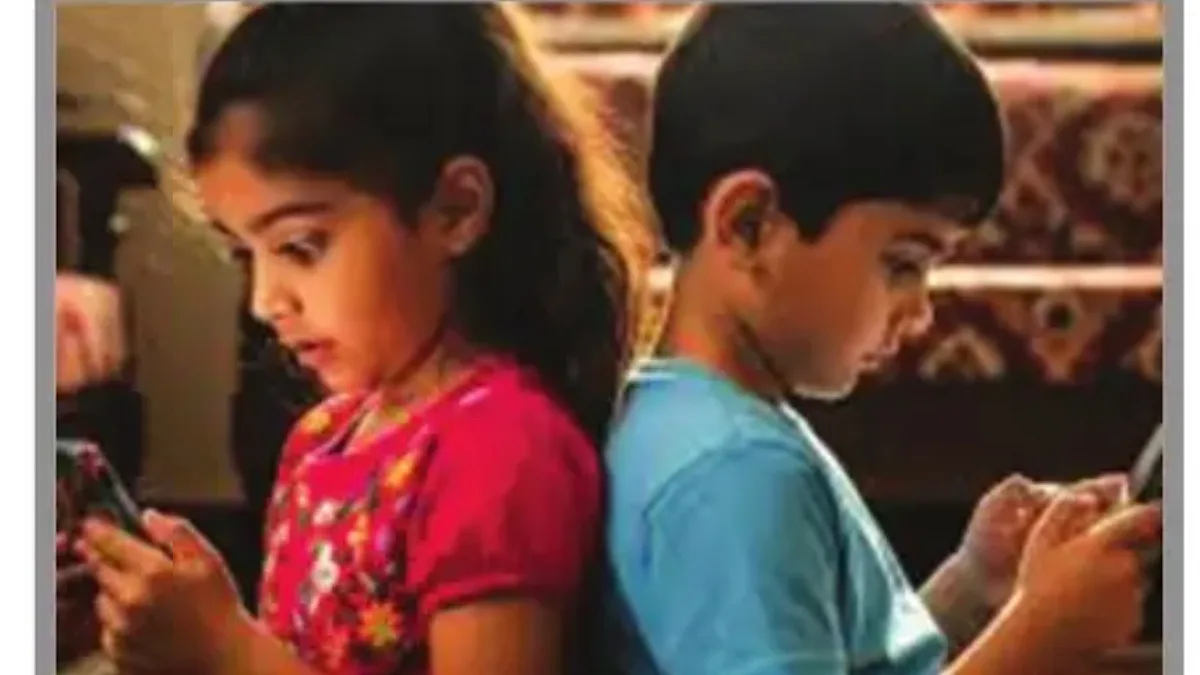
The recent tragedy involving three minor sisters who stepped off a ninth-floor balcony together in an act of collective despair has forced a harrowing reckoning with a new, endemic form of addiction. These children had lived almost entirely within a gaming world for months – reportedly insulated from reality and withdrawn from school. When their access was abruptly severed to break the cycle, the resulting “void” proved too much to bear. Their final message was a chilling testament to their displaced reality: “The game is our life, our world.”

This is no longer a peripheral issue of teenage rebellion. Across modern India, the pattern is repeating with devastating frequency. Not long ago, a 13-year-old boy reportedly took his life after being reprimanded for excessive gaming. For him, the scolding was not merely a lecture; it was a perceived threat to the only domain where he felt a sense of achievement and agency. These cases underscore a terrifying reality: when the “digital tether” is snapped by force, the resulting panic is not a tantrum – it is a clinical withdrawal. The scale of this crisis is now empirically undeniable. Globally, gaming addiction affects approximately 3 to 4 per cent of the world’s three billion gamers, with adolescent rates surging to 8.6 per cent.

India has become a central focus of this shift. With over 568 million active gamers-the world’s largest user base-the nation sees addiction rates between 3.5 and 7.2 per cent among its youth. This equates to millions of young Indians struggling with “Gaming Disorder,” a condition the World Health Organisation (WHO) officially recognised. To address this, we must move past the label of “bad behaviour” and understand the mechanics of capture. Expert analysis has highlighted how children are caught in “Ludic Loops” – repetitive cycles of challenge and rewards meticulously designed by software engineers to be inescapable. This is often driven by predatory monetisation like loot boxes, which mimic the neurological triggers of gambling.

When a child enters this state, they become what experts call a “Digital Ghost.” They remain physically present at the dinner table but are emotionally and psychologically absent. Their brain’s reward system has been rewired; the nuanced pace of the physical world cannot compete with the high-speed chemical rush of the screen. In this state, the child is responding to a deep chemical dependence where “unplugging” feels like physical suffocation. However, this biological capture does not occur in a vacuum; it is facilitated by a disappearing physical reality. As we emerge as a global digital powerhouse, the question before us is whether our physical “Third Spaces” for youth are vanishing under the weight of urban congestion and high costs.

In many developed nations, researchers argue that Gen Z is the most closely monitored generation in history. With the privatisation of public areas and the use of smartphones as tracking devices, the digital world often remains the last “unmediated” space where a teenager can experience true autonomy. Modern India presents a similar paradox. Our urban landscapes are increasingly designed for mobility and commerce rather than play. In congested cities, where public parks are either locked, priced out, or repurposed for housing, the smartphone becomes a spatial necessity. For many, games are not just traps; they are sanctuaries from a world defined by hyper-competitive academic pressure and constant surveillance.

In these virtual landscapes, they find the agency that reality – marked by traffic, pollution, and a lack of hang-out spots-has increasingly denied them. This retreat from the physical world has reached a scale that threatens the nation’s future stability. The urgency is further underscored by the Economic Survey 2025-26, which officially labels digital addiction as a major threat to national productivity. It warns that this crisis is eroding the “Demographic Dividend,” converting it into a liability through reduced cognitive capacity. The survey specifically highlights “Sleep Debt” – the chronic lack of rest due to “vampiring” (staying up all night on devices) – as a primary reason for reduced national efficiency.

This report marks a historic turning point, as the state finally acknowledges that the “mental infrastructure” of our youth is as vital to GDP as physical roads. For the first time, national policy is pivoting from a singular focus on “Digital Access” to a necessary mandate for “Digital Wellness,” evidenced by the decent implementation of the Online Gaming (Regulation) Act to mandate stricter safeguards. While the state prepares structural interventions, the first line of defence remains the home. Preventing these tragedies requires guardians to identify the subtle shifts that signal a child is migrating from healthy play into a terminal virtual void.

This “Social Recessional” begins when a child stops participating in family traditions because the physical world has lost its “colour.” It is followed by a “Vigilance Response,” characterised by an extreme, physical guarding of devices. Soon, “Dopamine Exhaustion” sets in – a flat mood or hollow irritability when offline – culminating in a “Biological Blackout,” where basic hygiene and sleep patterns are totally abandoned. When a crisis is identified, the instinctive response of “pulling the plug” can be life -threatening. Ev id enc e shows t hat su dde n disconnection for a rewired brain feels like physical pain. To bridge the gap, families ought to adopt a structured “re- entry” strategy: gradually reducing screen time, replacing digital switch non-judgmental physical hobbies, and restoring biological rhythms through shared meals and strict sleep hygiene.

Instead of reactive bans, we must advocate for “Safety by Design” rather than punishment. The rising number of tragedies suggests that a shift in perspective is no longer optional. We must realise the need for parental vigilance with the responsibility to build a physical world worth inhabiting. This is a complex challenge involving biological, psychological, and systemic factors. Addressing it successfully will require moving away from reactive discipline toward stable, policy-driven solutions. Ultimately, the goal is to ensure technology remains a tool for growth rather than a source of entrapment. By recognising digital addiction as a health issue rather than a behavioural one, society can better support the next generation. It is time to transform digital despair into real-world connection by replacing force with empathy and systemic reform.

(The writer is an independent author and researcher.)

US-Israel-Iran War LIVE Updates: Iran launches 21st wave of strikes as conflict escalates

Washington intensifies strikes under Operation Epic Fury while Tehran retaliates. Embassy operations halt in Kuwait and India tracks oil supply risks as the Middle East conflict widens.

Statesman News Service | New Delhi |

A week after US-Israel strikes inside Iran triggered a dramatic escalation in West Asia, the war rhetoric is only getting sharper. Washington says its campaign is degrading Iran’s missile capability while urging Tehran’s forces to surrender.

The fallout is spreading beyond the battlefield. The US has suspended operations at its embassy in Kuwait, energy markets are on edge, and India is closely watching oil supplies as the Strait of Hormuz faces disruption.

Live updates

Oil shock buffer: US gives India 30-day waiver to buy Russian crude as Gulf crisis rattles Hormuz

India says its energy supplies remain stable despite tensions in West Asia, with officials reviewing the situation twice daily and maintaining adequate oil stocks through diversified sourcing.

Statesman News Service | New Delhi |

The United States has granted India a temporary 30-day waiver to continue purchasing Russian oil, a move aimed at stabilising global energy flows as the crisis in the Gulf disrupts shipping routes through the Strait of Hormuz.

The move comes at a time when tensions in West Asia are putting key energy routes under strain. Much of the world’s oil travels through the narrow Strait of Hormuz, so even a small disruption there can unsettle global markets.

India, which relies heavily on crude imports, is closely watching the situation as regional instability raises concerns over supplies.

US Treasury Secretary Scott Bessent said the waiver was designed as a short-term step to keep oil moving in international markets.

“President Trump’s energy agenda has resulted in oil and gas production reaching the highest levels ever recorded. To enable oil to keep flowing into the global market, the Treasury Department is issuing a temporary 30-day waiver to allow Indian refiners to purchase Russian oil,” Bessent said.

He added that the measure would be strictly limited. According to him, the waiver only covers oil shipments that are already stranded at sea and therefore would not provide significant financial gains to the Russian government.

Bessent also described India as an important partner for Washington and said the US expects New Delhi to increase purchases of American oil in the future. The temporary relaxation, he said, would help ease pressure created by what he called Iran’s attempts to disrupt global energy flows.

India monitoring energy supplies as West Asia tensions rise

The waiver comes at a time when the region is witnessing heightened tensions after a joint US-Israel strike on Iranian territory on February 28, which reportedly led to the death of Iran’s Supreme Leader Ayatollah Ali Khamenei along with several senior figures.

The developments have raised fears of wider instability across the Gulf, a region that supplies nearly 40 per cent of India’s crude oil imports, much of it transported through the Strait of Hormuz.

News agency ANI mentioned sources as saying that India is assessing its energy situation two times a day to keep track of the evolving situation.

Officials say the country currently has comfortable reserves and that stocks are being replenished daily. Sources also indicated that there is no shortage of LPG, LNG, or crude oil globally at the moment.

India has also remained in contact with multiple energy suppliers as a precaution. Authorities say the government is closely monitoring developments in the region and remains confident that diversified sourcing and adequate inventory will help manage any disruption.

India continues to import Russian crude under existing contracts, while the government keeps watch on global energy markets to ensure that supplies remain uninterrupted.