Logo

Middle East escalation: Saudi Arabia foils drone attack on key Shaybah oil field

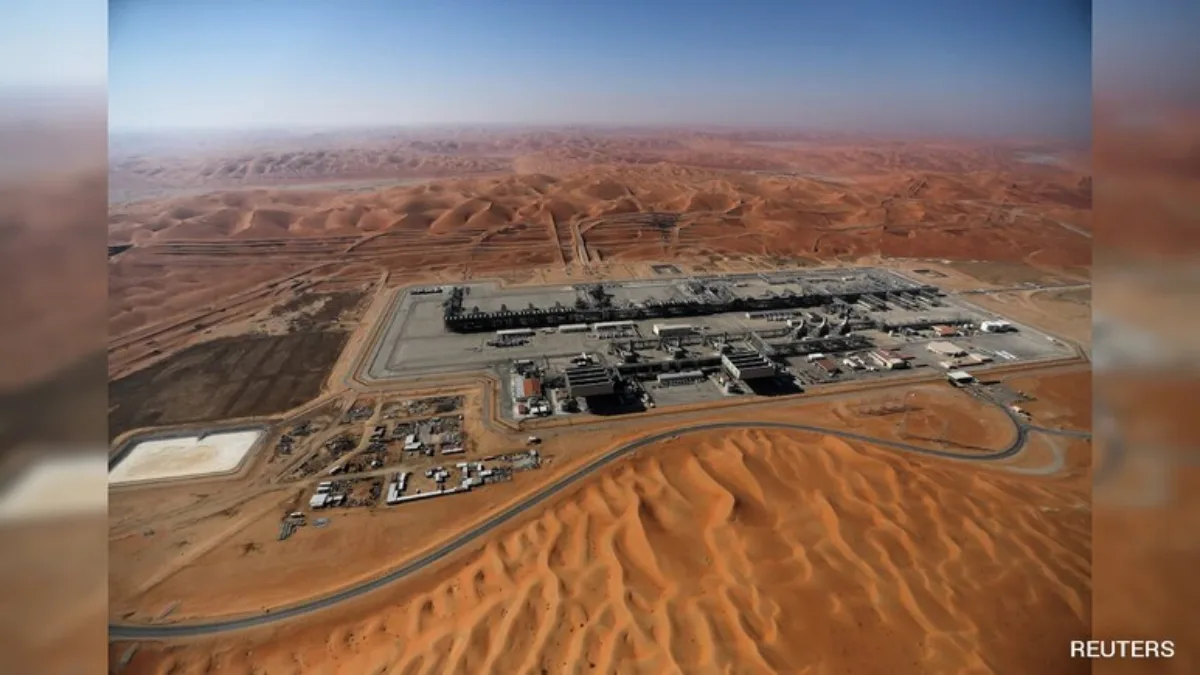
Two of the drones were intercepted over the Empty Quarter desert while reportedly heading toward the Shaybah oil field, one of Saudi Arabia’s key oil production sites.

Statesman News Service | New Delhi |

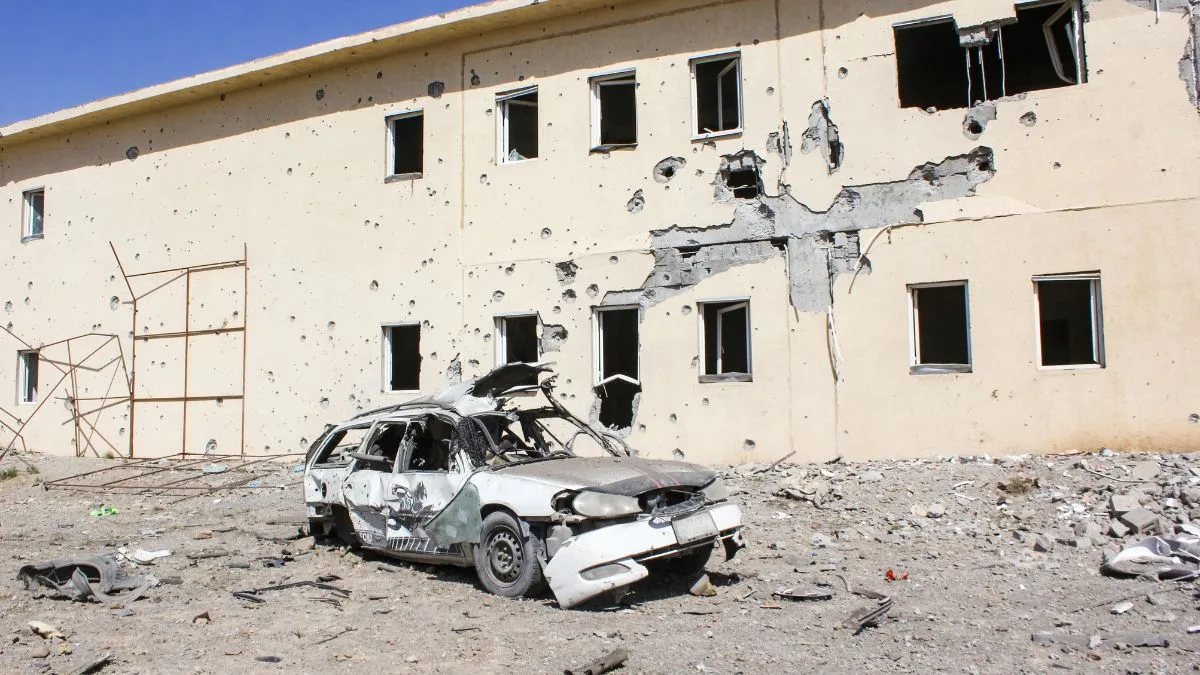
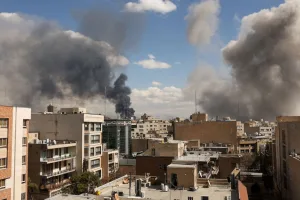
Amid rising tensions across West Asia, Saudi Arabia’s air defences intercepted multiple drones targeting the country’s energy infrastructure in the eastern region, the Ministry of Defence said.

In a series of updates on X, the ministry confirmed that Saudi forces had successfully neutralised three additional drone strikes after initially downing 18 unmanned aerial vehicles over the kingdom’s eastern territories.

Two of the drones were intercepted over the Empty Quarter desert while reportedly heading toward the Shaybah oil field, one of Saudi Arabia’s key oil production sites. Authorities later confirmed that two more drones were destroyed elsewhere in the eastern region.

The attempted strikes come as diplomatic efforts intensify to prevent further escalation in the Middle East. Russian Foreign Minister Sergey Lavrov held a telephone conversation with Saudi Foreign Minister Faisal bin Farhan, during which both sides stressed the need for coordinated international efforts to prevent the crisis from worsening. Russia’s foreign ministry said the two diplomats emphasised consolidating global efforts to stabilise the situation.

The diplomatic push followed a warning from Washington. US Secretary of War Pete Hegseth cautioned Russia against intervening in the ongoing West Asia conflict, which involves Iran, the United States and Israel.

Speaking at a Pentagon briefing, Hegseth referred to a recent call between US President Donald Trump and Russian President Vladimir Putin. While the conversation reportedly suggested an opportunity for progress on the Ukraine war, it also included a clear message that Russia should not become involved in the Iran conflict.

The Kremlin confirmed the discussion, with presidential aide Yuri Ushakov describing the exchange as “businesslike, open and constructive.” Reports indicated that Trump initiated the call to discuss the latest international developments, including the Iran crisis and the possibility of trilateral talks involving Washington, Moscow and Kyiv.

Following the conversation with the US president, Putin also held discussions with the Saudi Crown Prince and Prime Minister Mohammed bin Salman. According to the Kremlin, the two leaders discussed the ongoing escalation in the Middle East, which Moscow attributed to what it described as the United States’ and Israel’s “armed aggression” against Iran.

(With inputs from ANI)

Stock market extends losses, indices loss nearly 1%

The Nifty Midcap and Smallcap indices declined 0.4% and 0.7%, respectively.

Statesman News Service | New Delhi |

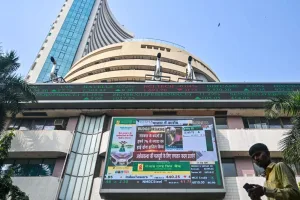
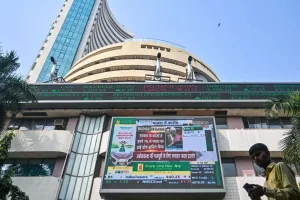
The Indian stock market on Thursday extended losses for the second consecutive session amid escalating geopolitical tensions. At close,
the Sensex was down 829.29 points or 1.08% at 76,034.42, and the Nifty was down 227.70 points or 0.95% at 23,639.15.

The Nifty Midcap and Smallcap indices declined 0.4% and 0.7%, respectively.

The overall market capitalisation of BSE-listed firms dropped to nearly Rs 436 lakh crore from nearly Rs 450 lakh crore.

The Indian rupee depreciated for the second consecutive session to hit a fresh record low of 92.36 against the US dollar. It settled at
92.19, down 16 paise from the previous close.

Amid the ongoing tensions in the Middle East, the shares of Coal India gained over 5% as escalating tensions threaten global energy supplies.

Shares of other energy majors such as Adani Enterprises, NTPC, and Power Grid Corp. of India also remained among the top gainers in the index, up 1.3%-2.8%.

Among the sectors, the key indices on the losing end were Auto index slipped more than 3%, FMCG index shed 1.7% and Private Bank index
declined 1.6%.

Further, the gainers were Power index that gained 2.5%, Energy index rose 2%, Oil & Gas, Metal, Capital Goods rose 0.5% each.

On Nifty, the key losers were Eicher Motors, M&M, Maruti Suzuki, Bajaj Finance, UltraTech Cement. While on the gaining side were Coal India, Jio Financial, Adani Enterprises, NTPC, Power Grid Corp.

More than 360 stocks touched their 52-week low on the BSE. These included Hexaware Technologies, Jubilant Foodworks, Five-Star Business, C E Info Systems, Varun Beverages, Jyothy Labs, Tata Motors Passenger Vehicles, ITC Hotels, Lemon Tree, Trent, KPIT Technologies, Jyoti CNC Auto, Swiggy, Colgate Palmolive, Cera Sanitary, Aegis Logistics, IRCTC, among others.

Globally, the MSCI All-World index edged down 0.3%. Asian markets also traded lower as the MSCI Asia Pacific Index declined 1.3%, while the MSCI Emerging Markets Index dropped 1.3%.

Complaint filed against Hardik Pandya over alleged Tricolour disrespect after World Cup triumph

The complaint was filed by Pune-based lawyer Wajed Khan Bidkar, who has sought appropriate action in the matter.

Statesman News Service | New Delhi |

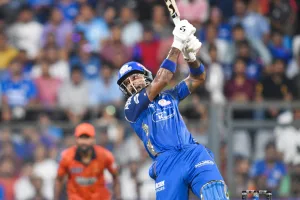
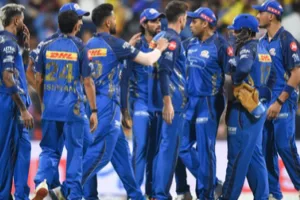
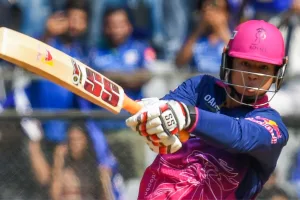
Fresh off India’s historic triumph in the ICC Men’s T20 World Cup, recent World Cup winner Hardik Pandya has found himself in potential trouble after a complaint was filed against him over alleged disrespect to the national flag during the team’s celebrations at the Narendra Modi Stadium in Ahmedabad.

The complaint was filed by Pune-based lawyer Wajed Khan Bidkar, who has sought appropriate action in the matter. Bidkar submitted a written application at the Shivajinagar Police Station requesting that authorities take action against the cricketer.

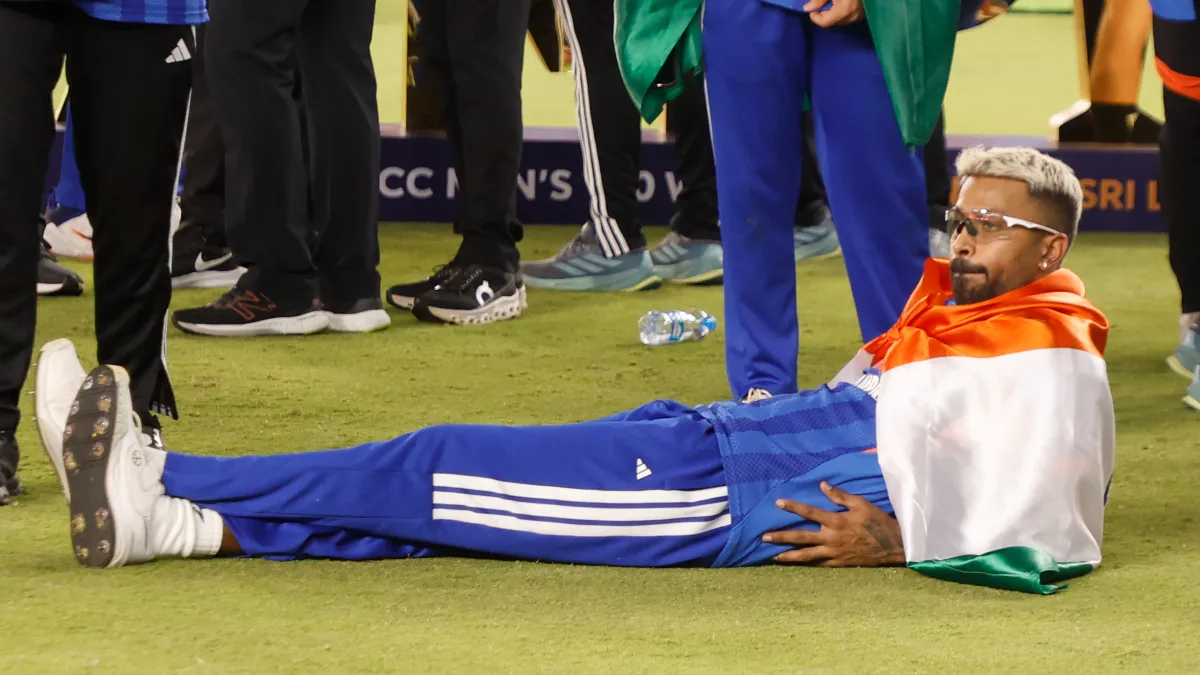
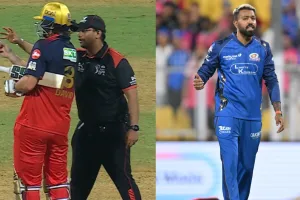
According to the complaint, several videos of the Indian team’s on-field celebrations after winning the tournament have gone viral on social media. In one such video, Pandya is seen celebrating while dancing and running on the field with the Tricolour draped over his shoulder.


The complainant alleged that during the celebrations, Pandya was later seen lying on the stage with his girlfriend while the national flag was still draped over his shoulder, which he claimed amounted to disrespect to the Tricolour.

“You must have seen the T20 World Cup here. Hardik Pandya was dancing with his girlfriend in celebration of his victory. The national flag was tied to his back. According to Section 2 of the National Flag Act, 1971, we should respect the dignity of the national flag. However, Hardik Pandya was so lost in celebration that he was lying with his girlfriend while wearing the national flag. I believe it is an insult to the national flag,” Bidkar said.

Bidkar further stated that when he initially went to file the complaint, police informed him that the incident had occurred elsewhere. However, he argued that the national flag represents the entire country and that the complaint could therefore be lodged at the Shivajinagar Police Station. The police subsequently accepted the complaint and provided him with a copy of the submission.

Meanwhile, the India national cricket team produced a dominant performance in the final of the ICC Men’s T20 World Cup, defeating the New Zealand national cricket team by 96 runs to successfully defend their title. The victory also made India the first team to win the T20 World Cup on home soil, the first to claim back-to-back titles after their 2024 triumph, and the first side to lift the trophy three times (2007, 2024, and 2026).

India rejects Islamabad’s charge of assisting Afghan attacks in Pakistan

India on Thursday rejected Islamabad’s charge of actively supporting Afghanistan in carrying out attacks on Pakistan soil.

Statesman News Service | New Delhi |

India on Thursday rejected Islamabad’s charge of actively supporting Afghanistan in carrying out attacks on Pakistan soil.

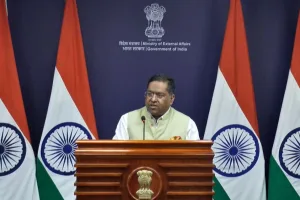
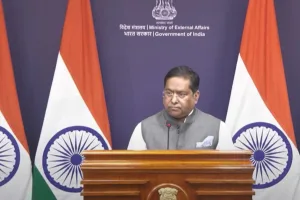
“We reject such baseless allegations. It has become second nature for Pakistan to blame India for its misdeeds. As a state sponsor of terrorism for decades, Pakistan has zero credibility when it comes to cross-border terrorism,’’ Ministry of External Affairs spokesperson Randhir Jaiswal said at a media briefing.

“No amount of story-telling is going to alter this reality, nor is anyone fooled by Pakistan’s assumed victimhood,’’ he added.

The spokesperson also dismissed Pakistan’s concerns over the recently-concluded uranium supply deal between India and Canada. India, he said, has an impeccable and credible non-proliferation record while reminding Islamabad of its own proliferation record.


Jaishankar discussed India’s energy security, safety of shipping with Iran FM, confirms MEA

Iran’s permission to the two Indian tankers to pass through the Strait of Hormuz is being seen as a step that ensures the secure passage of energy supplies to India amid heightened tensions in the region due to the ongoing war in West Asia.

Statesman News Service | New Delhi |

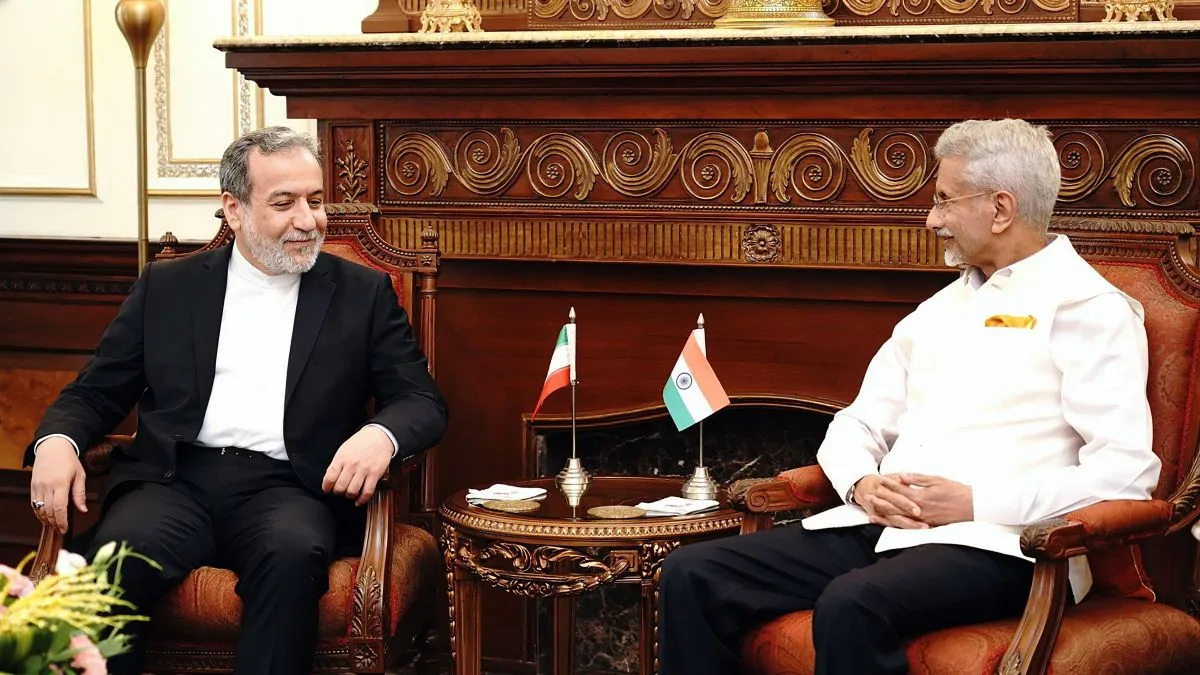
External affairs minister S Jaishankar has spoken to his Iranian counterpart Abbas Araghchi thrice in recent days to discuss the safety of shipping and India’s energy security, the Ministry of External Affairs said on Thursday amid reports that Tehran has permitted two Indian-flagged oil tankers, Pushpak and Parimal, to safely pass through the strategic Strait of Hormuz.

At a media briefing here, MEA spokesperson Randhir Jaiswal said the discussion between the two foreign ministers focused on ensuring the safe passage of ships and maintaining stable energy supplies through the region. “EAM (Jaishankar) and the FM of Iran have had three conversations in the last few days. The last one discussed issues pertaining to safety of shipping and India’s energy security. Beyond that, it would be premature for me to say anything,” the spokesperson added.

Iran’s permission to the two Indian tankers to pass through the Strait of Hormuz is being seen as a step that ensures the secure passage of energy supplies to India amid heightened tensions in the region due to the ongoing war in West Asia.

The spokesperson confirmed that around 9,000 Indian nationals, including students, seafarers, professionals, business people, and pilgrims, are currently in Iran and are being assisted by the Indian authorities amid concerns about their safety back home.

Jaiswal said several of these individuals, particularly students, have already left Iran and returned to India. Others, including students and pilgrims based in Tehran, have been shifted to safer locations and cities within the country.

“We’ve had about 9,000 Indian nationals who were there or who are there in Iran. These 9,000 Indian nationals comprise students, seafarers, business people, professionals and some pilgrims. Several Indian nationals, mostly students, left the country and reached home. We have shifted several Indian nationals, including students and pilgrims, who were based in Tehran to other safer locations and cities in the country,” he said.

“We are assisting Indian nationals who wish to travel to Azerbaijan and Armenia and from there take commercial flights to return home. We are providing help with visas and facilitating land border crossings,” Jaiswal said, adding that multiple Indians have approached the mission for help in crossing into neighbouring countries safely and have been successfully supported in doing so.

The MEA spokesperson urged all Indian nationals desiring to leave Iran via land routes to strictly follow the advisory issued by the Indian embassy.

Meanwhile, the Indian Embassy in Iraq confirmed a fatal maritime incident involving an international vessel, stating that “a US-owned crude oil tanker Safesea Vishnu, sailing under the Marshall Islands flag, was attacked near Basra, Iraq, in which one Indian crew member lost his life.

“In a series of posts on X shared on Thursday regarding the incident on March 11, the mission detailed the status of the remaining personnel following the strike. It confirmed that “the remaining 15 Indian crew have since been evacuated to a safe place” as regional waters continue to see heightened volatility.


Andhra Pradesh ‘Milk Murder’: 13 dead, 11 still critical after consuming adulterated milk

According to reports, the milk was supplied by Varalakshmi Milk Dairy in Narasapuram village in the Korukonda mandal region to over 100 families.

Statesman News Service | NEW DELHI |

Urea-laden adulterated milk has claimed 13 lives so far in Andhra Pradesh’s East Godavari district, while nearly a dozen more are seriously ill.

According to reports, the milk was supplied by Varalakshmi Milk Dairy in Narasapuram village in the Korukonda mandal region to over 100 families. The sickness broke on Feb 22 and since then 13 lives have been lost.

Officials have told the media that milk samples were sent for examination after the incident and epidemiological indicators pointed to adulteration of the milk, spiking blood urea levels that point to toxic exposure.

Medical examinations have revealed the presence of ethylene glycol a toxic chemical commonly used in coolants in the milk supply.

The vendor has been arrested and the dairy unit has been sealed, according to reports.

The incident came to light when over 20 people from Chowdeswaranagar and Swaroopanagar in Lalacheruvu developed similar symptoms that were later determined by doctors at the hospitals in Rajamahendravaram as acute renal dysfunction, urinary blockage, indicating severe kidney damage.

As per reports, the administration has set up emergency medical response teams on the ground comprising epidemiologists and nephrologists.

Uttarakhand govt to identify all cancer causing chemicals in processed food items

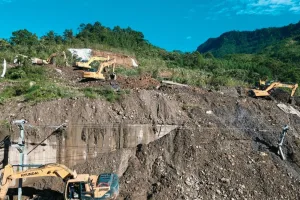
The Uttarakhand Health Department will engage IIT Roorkee in examining the feasibility of a part of half constructed Pithoragarh Medical College in light of recent landslide and land subsidence in the area.

Statesman News Service | Gairsain |

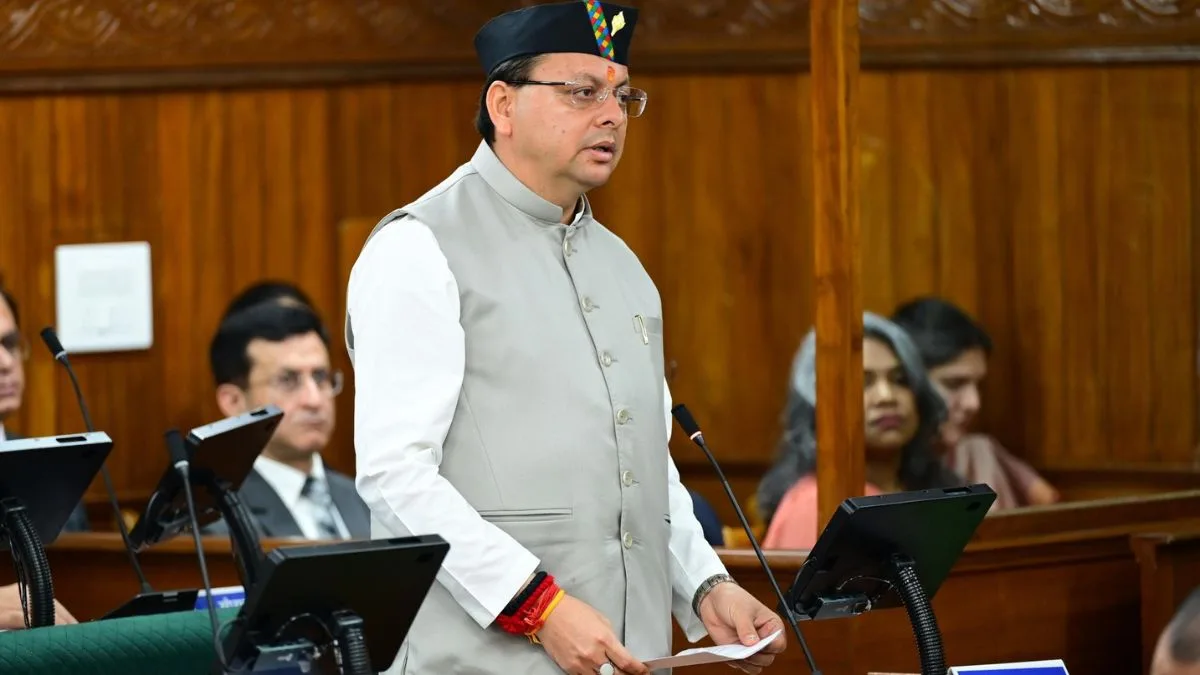
The Uttarakhand Health Department will identify the cancer-causing element in the packed food being sold in the market. It will also engage IIT Roorkee to examine feasibility of a part of half constructed Pithoragarh Medical College in light of recent landslide and land subsidence in the area.

Replying to the queries of the legislators in the assembly on Thursday, state Health Minister Dhan Singh Rawat stated that the government would identify the chemicals being used in all kinds of food items sold in the market and issue necessary guidelines in this direction as to consumption of these food items.

He said, “We will definitely identify the chemicals causing cancers in processed food items. A special manual and guideline will be issued in this regard in the coming days. Work is already going on to issue a notification and guideline on cancer in view of rising cases of the disease in the state.”

The Minister added that adequate action will be taken wherever it’s felt that chemicals used in processed food items will cause cancer.

He further said that a frequent sampling campaign of food items will be launched across the state inducing all countryside Haats organised periodically.

Dhan Singh Rawat was replying to a supplementary question from Congress MLA Sumeet Hridayesh, who asked him, “If you have assessed and whether the government has any plan to identify cancer causing chemicals used in the processed food items and come up with a policy in this regard?”

Replying to another question on Pithoragarh Medical College from local MLA Mayukh Mehar on recurring landslide and land subsidence at under construction Pithoragarh Medical College site in the house, the health minister said, “Landslides occurred at the location where a 50-bed critical care unit is being built at the cost of ₹25 crore. Although the landslide site was treated with a railing wall, it’s a sensitive matter. I want this site to be examined by the IIT. We will invite IIT to send its experts to examine the location. If IIT comes up with a recommendation of non feasibility of the unit we will relocate it.”

The Minister informed that around half of the work of ₹600 crore Pithoragarh Medical College is over.

Earlier, during question hour on the fourth day of the budget session, Mehar asked the minister what steps were being taken by the government to meet the challenge of persistent subsidence of land at Pithoragarh Medical College leading to landslide. Mehar alleged that it has risked the lives of patients coming to the hospital. Mehar also asked for action against the geologist who prepared a feasibility report for the selection of the Medical College site.

Kashmiri separatist leader Shabir Shah gets bail from SC in terror-funding case

Shah, in this case, has been accused of raising funds through the illegal channels of hawala and cross-border trade across the LoC in order to fund the raising of a separatist movement in the Valley.

Statesman News Service | NEW DELHI |

Notorious Kashmiri separatist leader Shabir Ahmed Shah was Thursday granted bail by the Supreme Court (SC) in a terror funding case wherein he was charged under the Unlawful Activities (Prevention) Act owing to an inexplicable delay in the trial.

A bench of Justices Vikram Nath and Sandeep Mehta passed the order.

Shah, in this case, has been accused of raising funds through the illegal channels of hawala and cross-border trade across the LoC in order to fund the raising of a separatist movement in the Valley.

He is also accused of funding the families of slain terrorists. Shah was arrested in June 2019.

Earlier, his bail pleas had been rejected consecutively by the special NIA court and thereafter by the high court, wherein he had challenged the former in July of 2023.

His argument has been that he was not named as an accused in the main and the first supplementary chargesheet, wherein a conspiracy had been alleged.

Shah, a prominent figure in the Kashmiri separatist movement, has spent decades in and out of jail. His last stint was seven years long.

Parliament rules apply to all, even PM: Om Birla

“Even the Prime Minister must obtain permission from the Speaker before delivering a speech,” Birla said, responding to accusations from Opposition members that the Chair had been partial in allowing discussions in the House.

Statesman News Service | New Delhi |

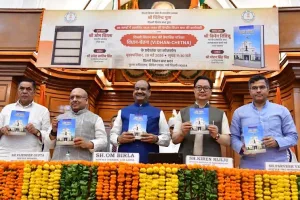
A day after a no-confidence motion against him was defeated in the Lok Sabha, Speaker Om Birla said the rules of Parliament apply to everyone, including the Prime Minister. “I stayed away from House proceedings on the day the Opposition gave notice of a motion seeking my removal as Speaker,” a solemn-looking Birla told members while chairing proceedings in the Lok Sabha.

“Even the Prime Minister must obtain permission from the Speaker before delivering a speech,” Birla said, responding to accusations from Opposition members that the Chair had been partial in allowing discussions in the House.

Birla said it was the responsibility of every member to maintain the decorum of the House and added that the rules governing proceedings were part of established parliamentary traditions and had not been devised by him. All members have the freedom to speak within the framework of rules and procedures, he said.

He added that as Speaker he has tried to ensure that all members get the opportunity to express their views in accordance with parliamentary procedures. India’s Parliament, he said, has a long tradition of both agreements and disagreements, which reflect the strength of democracy.

Thanking the members for participating in the debate, Birla said the discussion allowed representatives from across parties to raise their concerns. “Members of the House have strengthened its traditions and enhanced its prestige. I thank everyone for placing their trust in me. I assure you that I will always carry out my duties in an impartial and fair manner,” he said.

Birla also made a veiled reference to the Opposition’s demand to discuss an unpublished book by former Army chief M.M. Naravane on India’s face-off with China in the Galwan Valley in 2020. “Nobody has the special right to speak on any topic beyond the rules of the House,” he said, reminding that in the past lawmakers, including BJP’s former Prime Minister Atal Bihari Vajpayee, submitted documents to the Chair before raising them for discussion.

Uncertainty over IPL 2026 matches at Chinnaswamy Stadium as Karnataka panel set for inspection: Report

The Chinnaswamy stadium has not hosted any matches involving RCB since the tragic stampede near the venue last year, which occurred during celebrations of the franchise’s maiden IPL title.

Statesman News Service | New Delhi |

A cloud of uncertainty continues to hang over the home ground of defending champions Royal Challengers Bengaluru despite the Board of Control for Cricket in India (BCCI) including the venue in the first phase schedule of the Indian Premier League 2026, released on Wednesday.

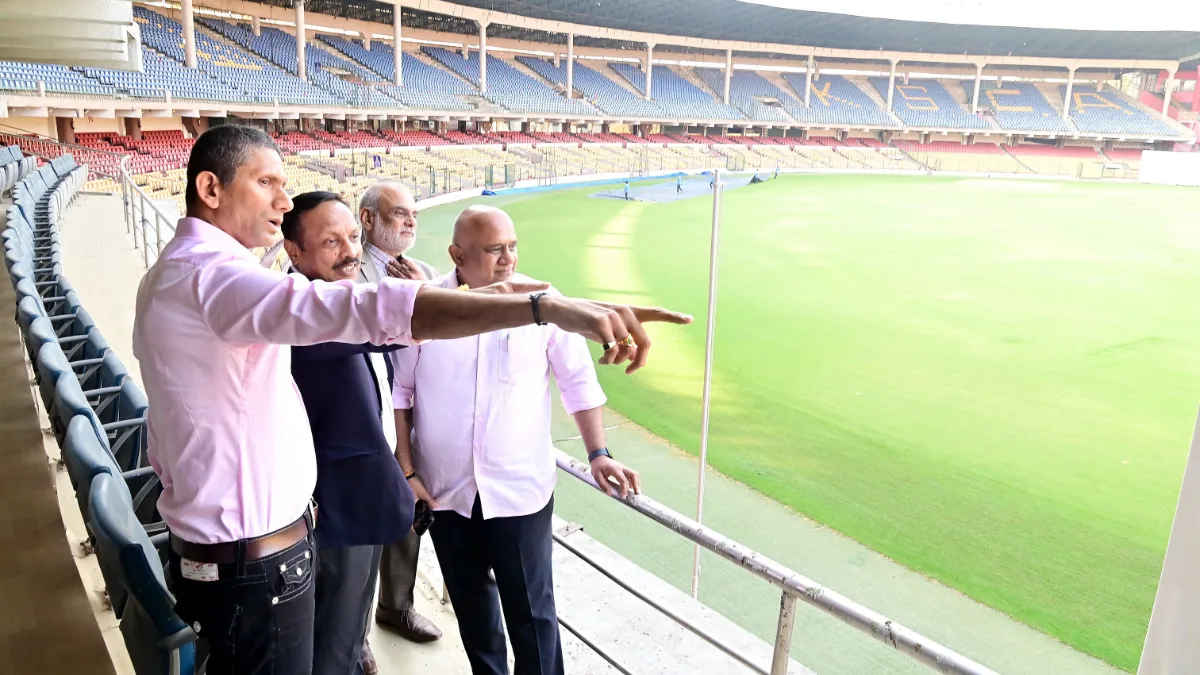
The fate of the M. Chinnaswamy Stadium will become clearer on March 13, when an expert committee appointed by the Government of Karnataka is scheduled to inspect the venue before delivering its final verdict on whether it can host IPL matches this season, according to a report by ESPNcricinfo.

The stadium has not hosted any matches involving RCB since the tragic stampede near the venue last year, which occurred during celebrations of the franchise’s maiden IPL title. The incident claimed the lives of 11 people, while more than 50 others were injured, raising serious concerns over crowd management and safety arrangements.

Following the incident, the Karnataka government barred the stadium from hosting events for several months before later granting conditional permission for cricket matches to resume.

Also Read: IPL 2026 tickets, schedule, teams and full match list: All you need to know

According to the report, several safety upgrades have since been implemented at the venue. These include the installation of new entry gates and the creation of additional entry and exit points to facilitate smoother crowd movement and ensure quicker evacuation during emergencies.

The Justice John Michael D’Cunha Committee, appointed to review safety measures, had set March 15 as the deadline for the Karnataka State Cricket Association (KSCA) to complete a series of short-term infrastructure upgrades at the stadium. The committee also carried out a detailed safety audit of the venue as part of the review process.

Last week, Karnataka Home Minister G. Parameshwara assured that all recommended safety measures would be implemented before the stadium hosts any matches, adding that additional police personnel will be deployed to prevent any untoward incidents.

RCB are scheduled to begin their IPL 2026 campaign on March 28 with a home match against Sunrisers Hyderabad. They are also set to host Chennai Super Kings in their next home fixture, pending the final clearance of the venue.

Infra push may drive 25-100% rise in land prices in tier-2, tier-3 cities: Report

The report, titled “Realty’s Next Growth Engines: Tier-2, Tier-3 Markets in Focus,” estimates that land values in several emerging cities could increase between 25% and 100% over the next two to four years, particularly in areas benefiting from new infrastructure corridors and employment hubs.

Statesman News Service | New Delhi |

Land prices in India’s Tier-2 and Tier-3 cities are likely to rise sharply over the next few years as large-scale infrastructure projects and industrial expansion fuel demand in emerging urban centres, according to a report by proptech firm Square Yards.

The report, titled “Realty’s Next Growth Engines: Tier-2, Tier-3 Markets in Focus,” estimates that land values in several emerging cities could increase between 25% and 100% over the next two to four years, particularly in areas benefiting from new infrastructure corridors and employment hubs.

Cities such as Bhubaneswar, Cuttack, Erode, Puri, Varanasi and Visakhapatnam are expected to lead the next phase of real estate growth as government-led infrastructure investments expand economic activity beyond major metropolitan centres.

According to the report, land markets tend to react more sharply than stabilised housing segments, especially when supported by employment hubs, logistics networks and industrial corridors.

Infrastructure development is expected to play a critical role in driving price appreciation. Properties located within 500 metres to 1 kilometre of metro corridors typically command premiums of 8–25%, with corridor-level appreciation of about 15–40% after completion.

Large infrastructure projects such as airports and expressways could trigger even stronger gains. Land prices in their influence zones may rise 30–70% from project announcement to completion, the report said.

In high-growth peripheral micro-markets, particularly in plotted developments, multi-year price appreciation could exceed 80–100% as improved connectivity unlocks new development potential.

Industrial corridors and logistics hubs backed by employment anchors are also expected to drive land value growth of 20–60%, reflecting stronger demand for residential and commercial development.

The report noted that India’s residential real estate sector is entering a structurally supported expansion phase, backed by about Rs 12.2 lakh crore in planned public capital expenditure, rising employment and improved financial stability.

According to Square Yards, this marks a shift away from speculative, liquidity-driven property cycles toward employment-led housing demand, where homebuying activity is increasingly driven by end users rather than investors.

This trend is expected to particularly benefit the mid-income housing segment, especially homes priced between Rs 50 lakh and Rs 1 crore, as affordability improves and income stability rises.

The report also highlighted that the revival of more than 200 legacy industrial clusters, along with initiatives such as Semiconductor Mission 2.0 and expansion in electronics, chemicals and advanced manufacturing, is expected to generate large-scale employment across multiple regions.

This employment growth is likely to drive sustained residential demand in emerging cities while also supporting commercial real estate segments such as office spaces, logistics hubs and warehousing, as businesses expand operations to support economic growth.

Improving macroeconomic stability and a moderation in the repo rate are also enhancing mortgage affordability, making homeownership increasingly accessible to India’s growing salaried class, the report said.

‘Maamla Legal Hai 2’ explodes on Netflix: Anubhav Singh Bassi and Kusha Kapila’s chemistry fuels on-screen mayhem

Bassi, Kishan, Nidhi, and Kusha bring courtroom chaos and comedy like never before. Get ready for laughs, drama, and legal twists when Netflix drops Season 2 on 3 April!

Statesman News Service | New Delhi |

The courtroom drama ‘Maamla Legal Hai’, which had everyone hooked in 2024, is back with its second season after two long years. And yes, the wait is finally over. ‘Maamla Legal Hai 2’ will stream on Netflix from 3 April 2026.

But before that, Netflix gave fans a hilarious taste of what’s coming with a teaser announcement on 11 March. And trust us, the video is pure comedy gold.

Teaser fun with Bassi, Kusha, and the cast

The short video opens with Nidhi Bisht and comedian Anubhav Singh Bassi in full courtroom drama mode. Bassi, of course, couldn’t hold back his trademark confusion and humour.

“Milord, we’re getting dates everywhere, but the trailer date of ‘Maamla Legal Hai 2’ is missing,” he says, joking about how two ladies went missing between Season 1 and 2, found now, but the trailer date still a mystery.

Then enters Ravi Kishan, trying to calm the chaos: “Bassi, why are you so desperate about the trailer?” To which Bassi replies with mock frustration, “I don’t know! Netflix just gave me dates, nothing else. The public is waiting, and all we have is… dates!”

Nidhi Bisht chimes in, classic courtroom style: “Objection, my lord!” The banter continues.

Kusha Kapila joins the fun

Things get even funnier when Kusha Kapila steps in. She playfully scolds Bassi: “It’s not your two-and-a-half kilo arm, it’s your two-and-a-half kilo mouth! Making a show takes time. You’ve been stuck doing the same thing for three years. Go write something new!”

Bassi, never missing a beat, sticks to his courtroom persona: “I’m just making sure the new lawyers don’t mess up.” And before leaving, he cheekily asks Nidhi where to submit a challan.

So, whether you loved the first season or are just hopping on the bandwagon now, get ready, ‘Maamla Legal Hai 2’ is coming to your screens.

Also Read: ‘Plan your pregnancy?’ Internet slams Kunal Kemmu for his misogynistic take on Deepika Padukone’s 8-hour shift demand

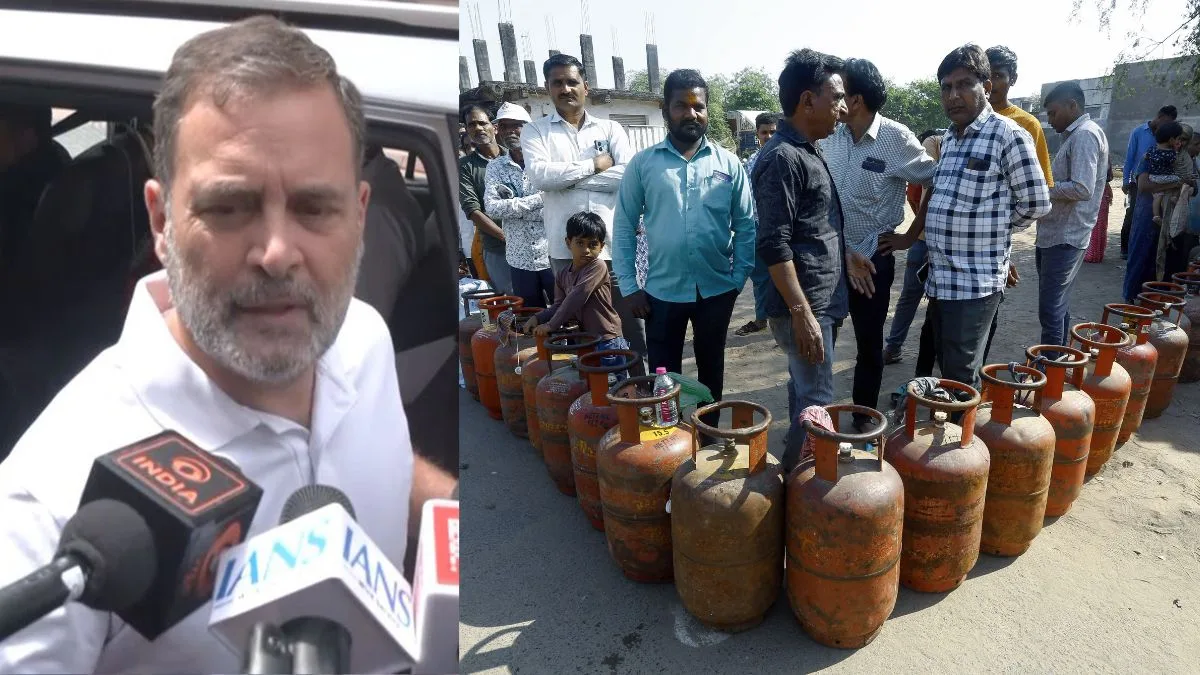
‘Still have a bit of time left’: LoP Rahul warns ‘big problem coming’, urges govt to prepare for looming fuel crisis

Rahul said that the energy security of India has been “compromised” due to the “flawed” foreign policy.

Statesman News Service | New Delhi |

With the US-Israel war against Iran spiraling out of control and the entire Middle East region bearing the brunt of it, Leader of Opposition in the Lok Sabha and Congress MP Rahul Gandhi on Thursday warned that a “big problem is coming” and that we still have a bit of time left to prepare for the looming fuel crisis.

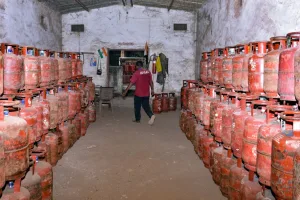
Raising his concern over the shortage of Liquefied Petroleum Gas (LPG), the Congress leader said that the fuel crisis would get even bigger in the coming days, urging the Narendra Modi-led government to ensure the interests and energy requirements of Indians remain protected.

Rahul said that the energy security of India has been “compromised” due to the “flawed” foreign policy.

“All fuel is going to be a problem because essentially our energy security has been compromised. Flawed foreign policy has created this problem. Now we have to prepare. We still have a bit of time left. The government and the Prime Minister should instantly start the preparations; otherwise crores of people will suffer great losses,” he told reporters outside the Parliament.

The LoP also claimed that he wanted to raise the issue of LPG shortage in the Parliament but wasn’t allowed to make a statement.

“Normally, the procedure is that you can ask to talk. So I asked to be allowed to make a statement about the LPG gas and oil situation in the country. But a new procedure has started where the Minister will first decide, then I will speak, then the Minister will reply,” he added.

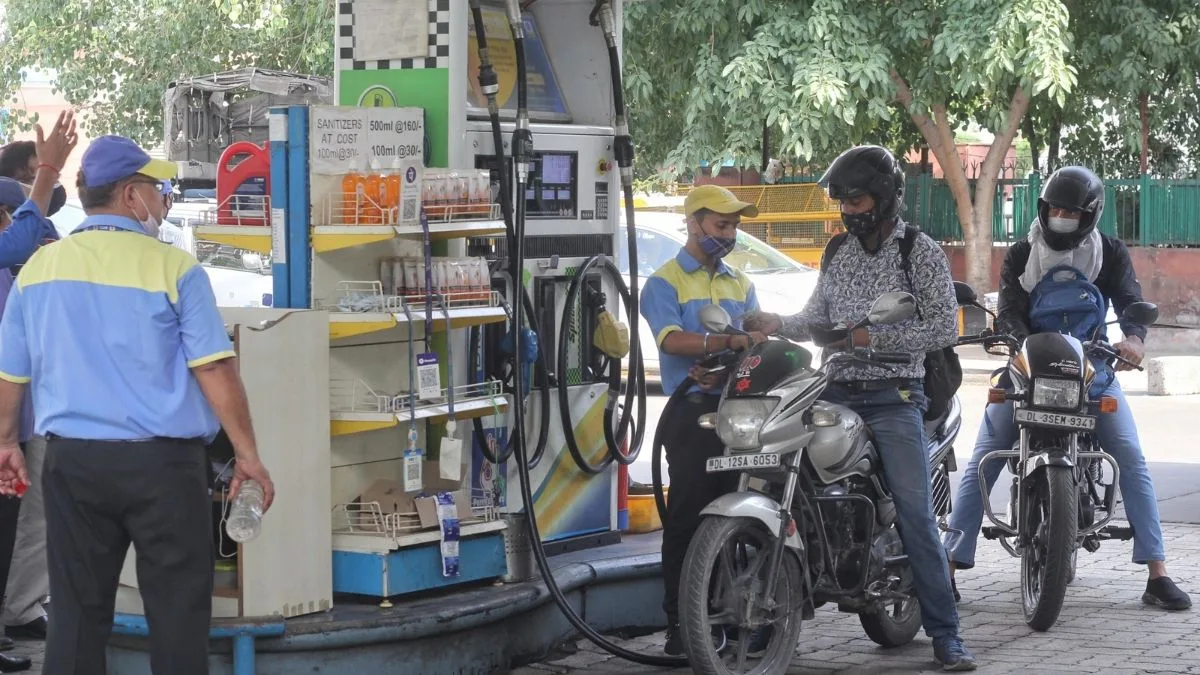
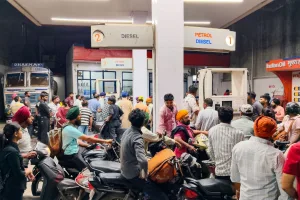
His remarks come amid reports of LPG shortage across the country. Certain states have stopped new bookings for commercial LPG, while long queues are also being seen outside the domestic LPG centres.

The government has assured that India has comfortable stocks and urged people not to panic-buy. In order to manage the crisis, the government has also invoked the Essential Commodities Act and rejigged LPG allocations.

In-house production has also been increased as the conflict in the Middle East disrupted global supply and production of crude oil, LPG and LNG.

‘India’s fuel supplies secure,’ assures Govt amid West Asia crisis, warns against hoarding

States have been advised to take strict action against hoarding of essential commodities and ensure an uninterrupted availability of supplies.

Statesman News Service | New Delhi |

The Central Government on Thursday assured that India’s fuel supplies remain secure and that contingency measures are in place to ensure uninterrupted energy availability, even as authorities continue to closely monitor the evolving situation in West Asia. The update came after an inter-ministerial briefing held at the National Media Centre, where senior officials from the Ministry of Petroleum and Natural Gas, the Ministry of External Affairs, the Ministry of Ports, Shipping and Waterways, and the Ministry of Information and Broadcasting outlined preparedness measures related to energy supplies, maritime safety, and the welfare of Indian nationals in the region.

Officials said the government is maintaining continuous coordination among ministries and agencies to safeguard energy security and prevent hoarding.

LPG supply boosted amid disruptions

India imports about 60 per cent of its LPG consumption, and around 90 per cent of these imports pass through the Strait of Hormuz, which has been impacted by the current situation in West Asia.

The government directed refineries and petrochemical complexes to maximise LPG production by diverting propane, butane, propylene and butenes streams to the LPG pool, resulting in about a 25 per cent increase in domestic LPG production.

The entire domestic output is being prioritised for household consumers, while non-domestic LPG is being allocated to essential sectors such as hospitals and educational institutions.

A committee of executive directors from IOCL, HPCL and BPCL is reviewing allocations to commercial users like restaurants and hotels to ensure fair distribution.

Crude oil supplies remain stable

Officials from the Ministry of Petroleum and Natural Gas said India’s crude oil supply remains stable despite tensions in the region. India consumes around 55 lakh barrels of crude oil per day, and the country has secured supplies exceeding the volumes that would normally arrive through the Strait of Hormuz during this period.

Notably, India now imports crude oil from around 40 countries, reducing dependence on the critical West Asian shipping route. Currently, about 70 per cent of India’s crude imports arrive through routes outside the Strait of Hormuz, compared with roughly 55 per cent earlier.

Two additional crude oil cargoes are also en route to India and are expected to arrive in the coming days, further strengthening supply availability. Officials added that refineries across the country are operating at very high-capacity utilisation, with some facilities running above 100 per cent capacity to ensure adequate fuel production.

Gas supplies being managed amid disruptions

India’s total natural gas consumption stands at about 189 million metric standard cubic metres per day (MMSCMD), of which 97.5 MMSCMD is produced domestically. However, around 47.4 MMSCMD of supply has been affected due to force majeure conditions.

To offset the disruption, gas companies are procuring LNG from alternative suppliers and routes, with two LNG cargoes already on their way to India. The government has also issued a Natural Gas Control Order on March 9 under the Essential Commodities Act to manage supply distribution and prioritise key sectors.

Under the revised allocation:

• Domestic PNG supply and CNG for vehicles will receive 100% supply with no cuts.
• Tea industries, manufacturing units and other industrial consumers connected to the gas grid will receive about 80% of their previous six-month average supply.
• Fertiliser plants will receive around 70% supply.
• Refineries and petrochemical units will see about a 35% reduction so that priority sectors can be protected.

Measures to prevent hoarding and misinformation

The Ministry of Information and Broadcasting said the Union Home Secretary has held a meeting with Chief Secretaries and Directors General of Police of all states and union territories. States have been advised to take strict action against hoarding of essential commodities and ensure an uninterrupted availability of supplies.

Authorities have also been asked to nominate state-level spokespersons to provide regular updates and disseminate verified information through official government social media channels and district administrations. Officials said district collectors, police commissioners and municipal authorities will also actively engage with the public to provide credible information.

The government said it will continue to closely monitor the evolving situation in West Asia and take necessary measures to safeguard India’s energy security, protect its citizens abroad, and maintain the smooth functioning of maritime trade and essential supply chains.

From India to North America: ‘Dhurandhar’ re-releases on 500 screens ahead of March 19 sequel launch

Fans are lining up again to witness ‘Dhurandhar’, just days before the sequel hits theatres. Special screenings and an international re-release are making this one of Bollywood’s most anticipated moments of the year.

Statesman News Service | New Delhi |

Bollywood fans, get ready for a double treat! Just a week before the release of ‘Dhurandhar: The Revenge’, the first chapter of the Ranveer Singh-starrer franchise is storming back into theatres. The film that had audiences on the edge of their seats is returning to the big screen, and this time it’s a global spectacle.

The re-release isn’t just a handful of screens. It’s massive. Around 500 screens worldwide are set to showcase the blockbuster once again, with 250 in India from March 12 and 250 overseas starting March 13.

In North America alone, the film will play in nearly 185 screens. Fans across the world are gearing up to relive Ranveer Singh’s high-energy action sequences.

Special previews for the sequel

Adding more fuel to the excitement, ‘Dhurandhar: The Revenge’ is going to have special Wednesday premiere shows in the USA and Canada on March 18, just one day before its global release.

And these aren’t just ordinary screenings. They will mostly be on Premium Large Format (PLF) screens, complete with Dolby Atmos sound, massive wall-to-wall screens, enhanced projection, and luxury seating.

Who’s behind the Dhurandhar universe

The film is a B62 Studios production by Jio Studios, with Aditya Dhar wearing multiple hats as writer, director, and producer.

The project also has backing of Jyoti Deshpande and Lokesh Dhar.

‘Dhurandhar: The Revenge’ will release worldwide on March 19, 2026, coinciding with Gudi Padwa and Ugadi, and arriving just ahead of Eid. The film will release in five languages: Hindi, Tamil, Telugu, Malayalam, and Kannada.

Also Read: Dhurandhar’s viral Fa9La rapper Flipperachi cancels India shows in Mumbai and Bengaluru; here is why

‘Plan your pregnancy?’ Internet slams Kunal Kemmu for his misogynistic take on Deepika Padukone’s 8-hour shift demand

A podcast conversation has snowballed into a heated debate about work culture and motherhood. Kunal Kemmu’s remarks on Deepika Padukone’s demand for shorter working hours have set social media buzzing.

Statesman News Service | New Delhi |

This week, actor Kunal Kemmu found himself in the middle of heated online debate after speaking about Deepika Padukone’s widely discussed demand for shorter working hours in film industry. What began as a discussion on work culture during a podcast with his wife, actor Soha Ali Khan, quickly spiralled into a storm of reactions across social media.

At the heart of the controversy is a question that has been simmering in Bollywood for years: should the industry adapt to healthier working hours, especially for actors who become parents?

Deepika Padukone’s earlier call for an eight-hour workday had already triggered conversations about work-life balance. But Kemmu’s comments about “planning pregnancy” have now added fuel to the fire.

The 8-hour workday that started it all

The debate goes back to last year, when Deepika Padukone publicly spoke about the need for an eight-hour work shift for actors.

The actress argued that film industry often demands extremely long workdays which sometimes stretching to 12-14 hours. For many actors especially those with families, such schedules can be exhausting and unsustainable.

Deepika’s suggestion was simple: adopt a work structure closer to regular industries, where eight hours of work is considered standard.

The conversation became even louder after reports suggested that the actress wanted such a schedule after becoming a mother. According to industry chatter, she wanted to balance filming commitments while spending time with her daughter, Dua.

Supporters praised the idea as a much-needed reform in Bollywood’s intense work culture.

Critics, however, felt the demand could complicate film production schedules.

What Kunal Kemmu said

The controversy exploded after Kunal Kemmu discussed the topic during a podcast conversation with Soha Ali Khan.

During the chat, Kemmu shared his thoughts on actors asking for shorter working hours while still expecting same pay. He argued that such demands could become difficult for producers responsible for budgets and schedules.

According to Kemmu, if someone wants that level of control over working hours and financial terms, they should consider becoming producer and investing their own money into projects.

He explained that film shoots operate under tight deadlines and budgets. If star chooses to work fewer hours, it could delay production and increase costs.

Kemmu said that when someone invests their own money in a film, they understand the financial risks better and can decide their own work schedule.

But it was his next comment that really caught people’s attention.

While discussing motherhood and career planning, Kemmu said that pregnancy comes with an “incubation period of nine months,” suggesting that people can plan their professional commitments during that time.

He also added that if someone chooses to become a parent, that decision should be planned in a way that does not disrupt the larger system of work.

Kemmu clarified that he was speaking in general terms and not specifically targeting women. He said the idea applies to men as well and called it a “mindset issue” rather than a gender issue.

Still, the internet had plenty to say.

Social media isn’t holding back

Within hours of the podcast clip circulating online, social media platforms filled with strong reactions.

Many users felt Kemmu’s remarks were dismissive of the challenges women face while balancing career and motherhood.

Never knew he is such a misogynist
by
u/ProfitAccording4178 in
BollyBlindsNGossip

One widely shared comment said that asking women to plan pregnancies around film schedules reflects deeper problems in industry’s work culture.

Another user argued that instead of expecting women to adjust their lives to suit work schedules, industry should modernise its work practices.

Several people also pointed out the irony that Bollywood often tolerates delays, reshoots, sudden schedule changes when it comes to major stars.

But when an actress asks for shorter working hours after becoming a mother, it suddenly becomes controversial.

Some reactions were sharper.

One user described the situation as “peak Bollywood mansplaining,” saying it felt strange for a male actor to explain how women should manage pregnancy and careers.

Others called the comments outdated and said the conversation shows how resistant the film industry still is to change.

How this debate unfolded

The topic of work hours had already been trending because of Deepika Padukone’s reported exit from a major film project.

In 2025, reports suggested that Deepika stepped away from the film ‘Spirit’ directed by Sandeep Reddy Vanga. According to rumours, disagreement involved her request for an eight-hour workday and a share in the film’s profits.

Also Read: Deepika vs Vanga: Actress responds calmly to director’s fiery accusations

The actress reportedly wanted limited working hours so she could spend time with her daughter.

While neither side publicly confirmed every detail, this news sparked massive discussions about how Bollywood handles actors’ schedules.

Soon after the ‘Spirit’ controversy, another development kept the conversation alive.

The makers of the sequel to ‘Kalki 2898 AD’ reportedly announced that Deepika Padukone would not be part of the project.

The reason cited was “commitment issues.”

Around the same time, fresh reports appeared online claiming that the actress had asked for a seven-hour work shift and higher pay. These demands were said to have contributed to the fallout with the production team.

Once again, the situation triggered debates about whether the industry is ready to accommodate changing work expectations.

For decades, Bollywood has functioned with extremely long shooting hours. Crew members and actors often spend entire days and nights on set to complete scenes.

Supporters of the current system argue that filmmaking is unpredictable. Weather, locations, and technical challenges often force schedules to stretch beyond normal office hours.

But critics believe the industry has simply normalised an unhealthy work culture. They point out that most professions now recognise the importance of work-life balance.

If companies across the world can adapt to humane working hours, they argue, why can’t the film industry?


Amid West Asia tensions, Hardeep Puri to brief Parliament today; govt urges public not to panic-book LPG

India says diversified oil imports and increased refinery output are helping maintain stable fuel supplies even as tensions in West Asia disrupt key global shipping routes.

Statesman News Service | Mumbai |

Petroleum and Natural Gas Minister Hardeep Singh Puri is set to brief the Lok Sabha on India’s energy situation on Thursday amid the ongoing conflict in West Asia, which has disrupted shipping lanes and raised concerns over global energy flows.

Tensions in the region have begun affecting key maritime routes used for oil and gas transport. Officials say the government wants to reassure Parliament that India’s fuel supplies remain stable despite the situation.

Sources said Leader of the Opposition Rahul Gandhi will be present in the House during the discussion and may intervene when the issue is taken up.

India relying on diversified crude procurement

Speaking at an inter-ministerial press briefing on Wednesday, Sujata Sharma, Joint Secretary in the Ministry of Petroleum and Natural Gas, said India’s crude supply remains stable because of diversified sourcing.

“India’s crude supply remains secure. Our daily consumption is about 55 lakh barrels. Through diversified procurement, the volumes we have secured today exceed what would normally have arrived through the Strait of Hormuz during this period,” Sharma said.

She added that India currently imports crude oil from nearly 40 countries, allowing the country to reduce risks linked to disruptions in any single route or supplier.

According to Sharma, domestic refineries are running at full capacity, and in some cases even above capacity, to ensure a steady supply of petroleum products across the country.

LPG supplies being managed amid West Asia tensions

Officials acknowledged that LPG supplies have been affected by the regional tensions, but said the government has absorbed part of the rising cost to shield consumers.

“Currently, LPG is being directed to the domestic sector. For non-domestic LPG, priority is being given to essential sectors such as hospitals and educational institutions. The committee is consulting with state authorities and industry bodies to finalise the plan to ensure that available LPG is distributed fairly and transparently,” Sharma said.

India imports around 60 per cent of its LPG requirement, and nearly 90 per cent of these imports pass through the Strait of Hormuz, making the route critical for supplies.

To boost domestic availability, the government has asked refining and petrochemical units to optimise LPG production. Sharma said these efforts have already increased domestic LPG output by about 25 per cent.

Most of this additional production is being directed towards household consumers to ensure cooking gas availability.

Government urges public not to panic book cylinders

Sharma also appealed to consumers not to rush to book LPG cylinders.

“As a temporary demand management measure, the minimum gap between LPG bookings has been increased from 21 days to 25 days,” she said.

She also noted that two LNG cargoes are currently on their way to India, which will help maintain gas supply for critical sectors.

The government has decided to prioritise gas allocation to sectors such as fertiliser manufacturing, tea production, and gas grid operations, which are considered vital for agriculture and industrial activity.