Logo

Gas Guy 2

In happier days I had penned a piece called “The Gas Guy” in Desktop Doodles. Little did I know at that time that one day the gas-guy would actually become such a sought-after entity.

Dola Mitra | Kolkata |

In happier days I had penned a piece called “The Gas Guy” in Desktop Doodles. Little did I know at that time that one day the gas-guy would actually become such a sought-after entity. Alas, that day has now come and as we wait wistfully by the door, window or balcony for a glimpse of his arrival, let me dig out the essay from the archives and share it with you once again, dear readers.

Here it is:
Today’s topic is the “Gas Guy”. But before we get ruminating about this unsung, taken-for-granted hero, whom we see lugging gigantic barrels on his shoulder, sometimes climbing up several flights of stairs to deliver door-to-door our most rudimentary requirement, cooking fuel, let us first get over with how we Bengalis often use the word to mean anything from flattery to falsification.

“Gas deesh na,”, literally “don’t give gas” means “don’t lie” and is a common phrase bandied about usually between friends and peers in which the word takes on a slangish form to delineate an innocuous but insubstantial utterance which would evaporate into thin air under careful scrutiny. “Gas kheyey gechhey”, another kindred usage, literally means “has eaten, drunk or consumed gas”, and translates to mean “fallen for flattery” and is usually used behind a naïve person’s back by friends and peers.
However, no discussion on “gas” or “gash” as many of us Bengalis are wont to pronounce it, can be complete without a mention of our clan’s most oft-repeated, go-to, use of it and that is after a scrumptious meal at a wedding, when we have stuffed ourselves silly and literally bitten off more than we can chew. And that phrase, no gifts for guessing, is the self-explanatory, “gas or gash hoyey gechey”. Loosely meaning “bloated” it has proved a lucrative phrase for a plethora of companies peddling quick-fix solutions to digestive disorders.

To get back to the point of this discussion, let us focus the spotlight on a group of boys and men who work as gas delivery personnel. Often joining the job at the tender age of 18 and retiring forty years later at 58, they go from house to house, flat to flat carrying cylinders containing compressed liquefied petroleum gas or LPG weighing 14 kgs on their shoulders.

“Initially it was difficult and I had to practice quite a lot so that it wouldn’t slip off,” laughs Lalon, who delivers gas in south Calcutta’s Garia area, but he says it is a job and he is grateful to God that he has this work. “Now I’m totally used to it and I can lift this without effort. Look,” he says showing off as he picks up a full barrel and throws it on his shoulders as though it was a bath towel. “See?” He says again smiling.
The empty cylinder itself is heavy. According to experts, “To withstand the high pressure, the cylinders are made of high carbon steel, manganese steel or aluminum alloy.” They warn, however, that unless carefully handled, cylinders could be dangerous and highly inflammable, when full. “Even these steels will not prevent the risk of an explosion if the cylinder is dropped on a hard concrete surface.”

Lalon, and like him his fellow colleagues, are not just gas delivery men. They can also troubleshoot and help fix problems of day-to-day wear and tear like malfunctioning burners or pipes. More importantly, they are also aware of the latest news about the gas delivery service and along with the cylinders, they carry information with them door-to-door. He is like a walking Wikipedia of the system.

“You had better get your LPG connection linked to the Aadhaar number,” he says, informing a consumer of the new regulation and the process. “It is easy. Just go to your nearest LPG dealer between 10 am and 4 pm on any given workday and they will record your biometric details and register your Aadhar number. Do this within the next couple of months or else you may face difficulties doing gas bookings.”

Gas booking by phone, of course, has been the norm for a while now but recently customers have also been provided the option of making payments online. Lalon says that many elderly consumers still prefer to pay by cash. “This is a personal choice. One does not have to do anything that they are not comfortable doing,” he says reassuringly.
Lalon does not pay much heed to discussions on the idea that eventually there will only be pipeline delivery of gas. “I have heard that it happens in different areas but I don’t think it will happen everywhere in Calcutta too soon,” he says, looking a little pensive. He does not want it to happen as it could adversely affect employees like him. But he says he is not worried. “They had said that the subway or Metro rail would take away the jobs of people – drivers of autos, buses, taxis and other transport – but it has not,” he points out.

Last but not least, Lalon says that customers should never be forced to give tip. “I never demand it,” he says. “In fact, I don’t even ask but there are those who give generously while others don’t give anything.
He adds, “Ami gas dee na”. Ironic, that.

(The writer is Editor, Features)
Can moral storytelling trump legal reason?

Since the United States and Israel launched their war against Iran, most international law experts appear to be speaking with one voice on the legality of the attacks.

TAMER MORRIS | New Delhi |

Since the United States and Israel launched their war against Iran, most international law experts appear to be speaking with one voice on the legality of the attacks. Legal experts have said the attacks violated Article 2(4) of the UN Charter, which prohibits the use of force against states. The US and Israel have not produced any evidence that Iran posed an imminent threat to either of them. And neither has brought the matter to the UN Security Council. As such, this was a clear breach of international law.

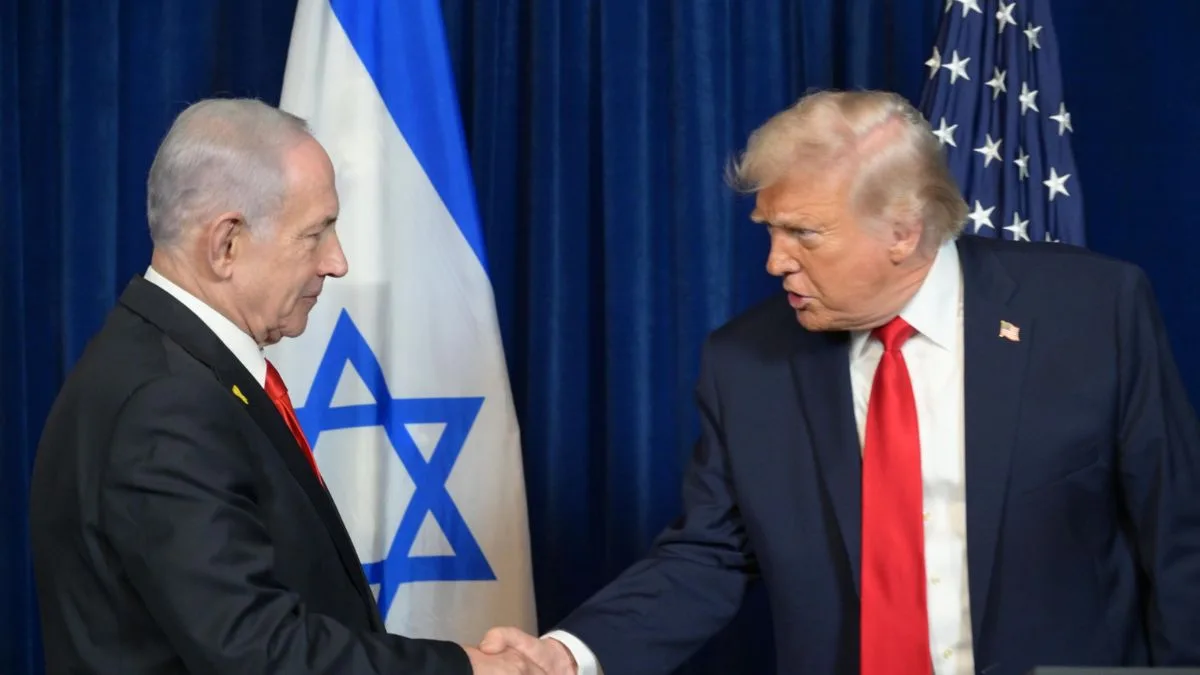
But even though most scholars agree the strikes were unlawful, the public and political debate has shifted somewhere else entirely. Instead of wrestling with the legal questions, many politicians, commentators, and everyday observers are counterbalancing the illegality with arguments about legitimacy. Both Israeli Prime Minister Benjamin Netanyahu and US President Donald Trump have cast the war as a “necessary” fight between good and evil. Netanyahu said: “I know the cost of war. But I know sometimes that war is necessary to protect us from the people who will destroy us. […] We have to understand that we’re fighting here the bad guys. We’re the good guys.

These people massacred their own people.” Canada and Australia, two of the US’ closest allies, have both used strikingly similar language in their statements about the war, saying they supported the US “acting to prevent Iran from obtaining a nuclear weapon and to prevent its regime from further threatening international peace and security.” This idea of legitimacy – that is, what is “right”, “necessary”, or “just” – is now being thrown around in almost every conversation about the war. These arguments echo centuries-old thinking about “just” wars. Christian philosophers such as St Augustine (4th–5th century) and St Thomas Aquinas (13th century), for example, were early proponents of what is known as the “just war theory”. Basically, this means you may violate the moral rule against violence if the cause is “just”. In modern debates, arguments about the legitimacy of wars tend to fall into two categories.

The first claims attacks like the ones launched by the US and Israel are morally just and therefore ought to be permitted, regardless of what international law says. This line of reasoning goes something like this: “So what if the action breaches international law? We removed an evil dictator.” Or: “Do we really want Iran developing nuclear weapons or long-range missiles?” The statements by Netanyahu and Trump frame the use of force as morally necessary, implying that if an action feels righteous, legality should not be a hindrance. The second argument dismisses international law altogether as ineffective or irrelevant. The strand of legitimacy reasoning is also becoming common. It’s reflected in statements like: “Where was international law when people were being killed on the streets in Iran?” or “How can international law matter if Iran is constantly threatening western states and funding a proxy war?” The conclusion drawn here is simple: if the law fails to prevent harm, it must be irrelevant.

And if international law is irrelevant, then the US-Israeli strikes on Iran are legitimate. Both of these lines of reasoning carry their own risks, not least the danger of allowing subjective morality to replace objective legal constraints. The first argument hinges on the notion that the US and Israel strikes on Iran are just, given the brutal, repressive nature of the Iranian regime and the fact it is pursuing nuclear weapons. And international law should allow just actions. But who decides what is just? For the US and some of its allies, this is a binary moral equation: Iran is bad, we are good. But this argument can also be made from Iran’s perspective: Israel and the US are bad.

Therefore, we need nuclear weapons to protect ourselves. Once states are permitted to act on their own sense of morality and justice, the international system goes down an extremely dangerous road. Every state can consider itself the “good” actor in its own story. If we allow individual morality to override the law, moral chaos follows. Historically, moral arguments about “civilisation”, “enlightenment”, or “improvement” were also used to justify colonisation and slavery. This is still happening in different contexts today: one group assumes its moral compass is universal, superior and mandatory for all others. If the world returns to that mode of thinking, the strongest states will once again become the arbiters of what counts as “good”. International law must therefore remain objective, free from claims of moral exceptionalism. The second argument is even stranger: where was international law when a state like Iran committed atrocities? This requires a clearer understanding of the role of international law.

If we disregard international law because someone violates it, it’s like rejecting the rule book while still using its language to call out a foul. Without it, there would be no norms to appeal to, no expectation of protection, no shared belief that certain harms are prohibited. This argument also doesn’t follow logic. Murders still happen in countries like Australia. Should we therefore abandon domestic laws that prevent them? Of course, there are double standards in international law. Powerful states have greater impunity and weaker states face more scrutiny. But double standards also exist in domestic legal systems – wealthier people generally receive better outcomes than those with less means.

The existence of inequality in international law, then, shows the need for reform, not the abandonment of the law altogether. The Iran war reveals a dangerous shift in the way states justify their actions: a growing preference for moral storytelling over legal reasoning. Once the narrative of a “just war” replaces the rule of law, there is little left to restrain the powerful states from dominating the weaker ones. The purpose of international law is not to determine who is morally good; it is to maintain order in a world where every state believes it is waging the “good” fight.

(The writer is Senior Lecturer, International Law, University of Sydney. This article was published on www.theconversation.com)

Security Questions

The attempted shooting of Dr Farooq Abdullah at a wedding reception in Jammu is more than a shocking moment of personal danger for an elderly political leader.

Statesman News Service | New Delhi |

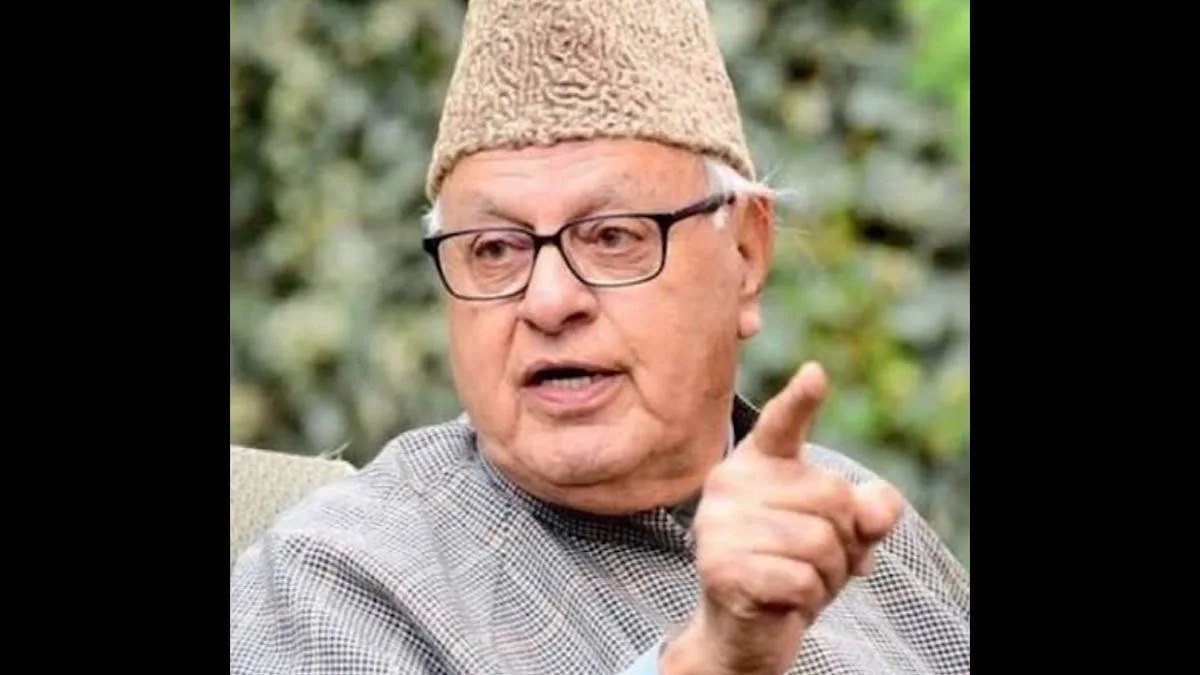
The attempted shooting of Dr Farooq Abdullah at a wedding reception in Jammu is more than a shocking moment of personal danger for an elderly political leader. It is a stark reminder of how fragile public security can become when complacency seeps into systems designed to prevent such incidents. Dr Abdullah, a three-time chief minister and one of the most recognisable political figures in Jammu and Kashmir, is not an ordinary public personality. At 88, he remains a senior voice in regional politics and enjoys one of the country’s highest levels of protection, commonly referred to as Z-plus security.

That security framework typically involves trained personnel from agencies such as the National Security Guard and other specialised units tasked with shielding high-risk public figures. Yet in this case, an armed man reportedly managed to come within striking distance of the former chief minister and fire a shot during what should have been a routine social gathering. The bullet was deflected by a member of the close protection team, preventing what could have been a major political assassination. The fact that a tragedy was narrowly avoided should not obscure the troubling question that follows: how did an armed individual reach that point in the first place?

Events like weddings, public functions and religious gatherings often create vulnerabilities even for heavily protected individuals. Security layers that function well in controlled environments can loosen amid crowds, personal acquaintances, and informal settings. But such risks are precisely why advance security planning exists. When senior political leaders attend public events, perimeter control, access screening, and coordination with local police are meant to ensure that personal familiarity does not override precaution. The episode also highlights a wider concern about the nature of threats faced by political figures today.

Unlike the organised militant attacks that dominated the region’s past, this incident appears to involve an individual actor carrying a licensed weapon and acting on what investigators describe as a long-standing grievance. Lone actors with personal motives are often harder to anticipate, making preventive intelligence more complex. At the same time, the political symbolism of such an attack cannot be ignored. Mr Abdullah has long been associated with the mainstream political process in Jammu and Kashmir, advocating participation in democratic institutions even during turbulent periods. Violence against such a figure risks deepening distrust in a region where political stability has already been fragile.

That is why a careful investigation into the circumstances of the incident is essential ~ not merely to determine the attacker’s motive but to review the security arrangements that allowed the situation to unfold. Accountability in such cases is not about assigning blame after the fact; it is about strengthening systems before the next threat emerges. The bullet that missed Dr Abdullah should serve as a warning. Security failures rarely announce themselves in advance. They reveal themselves only in moments when luck, rather than planning, prevents disaster.

Dignity’s Edge

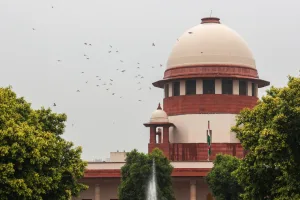
When the Supreme Court allowed doctors to withdraw life-sustaining treatment for Harish Rana, a man who had remained in a vegetative state since a 2013 accident in Chandigarh, it did more than resolve a tragic family ordeal.

Statesman News Service | New Delhi |

When the Supreme Court allowed doctors to withdraw life-sustaining treatment for Harish Rana, a man who had remained in a vegetative state since a 2013 accident in Chandigarh, it did more than resolve a tragic family ordeal. The ruling quietly forces India to confront one of the most difficult questions in modern medicine: when does preserving life cease to mean preserving dignity? For more than a decade, Mr Rana’s parents watched their son exist in a condition from which doctors believed recovery was virtually impossible. He could not speak, recognise anyone, or perform even the most basic bodily functions without assistance.

His survival depended on medical interventions such as tube feeding and constant care. What remained was biological existence, sustained by technology and routine medical support, rather than the conscious life most people associate with personhood. The legal landscape surrounding such situations in India has evolved slowly. In 2018, the Supreme Court recognised passive euthanasia and upheld the validity of living wills, allowing individuals to specify in advance whether they would want life-support treatment if they became terminally ill or permanently incapacitated. The judgment, delivered in the Common Cause case, was framed around the constitutional principles of personal liberty and dignity under Article 21. Yet the practical difficulty lies precisely in cases like Mr Rana’s, where no such directive exists. Living wills remain rare in India, partly because conversations about death are culturally uncomfortable and legally unfamiliar.

Families and courts are therefore left to make decisions under circumstances of emotional distress, medical uncertainty, and ethical ambiguity. In permitting doctors to consider withdrawing treatment after evaluation by medical boards, the Supreme Court has effectively acknowledged that prolonged mechanical survival cannot automatically override considerations of human dignity. This does not legalise active euthanasia, which remains prohibited under Indian law. Instead, it recognises that allowing a natural death may sometimes be the more humane course when medical science offers no realistic hope of recovery. The implications extend beyond one courtroom decision. India’s healthcare system is already under strain, and prolonged end-of-life care can impose enormous financial and emotional burdens on families. For many households, the costs of sustaining irreversible conditions can erode savings accumulated over a lifetime.

The Rana case exposes a reality that thousands of families quietly confront in hospitals and homes across the country. But the judgment should not be seen merely as an administrative solution to suffering. It highlights a deeper need for public engagement with end-of-life planning. Living wills, palliative care and ethical medical guidelines remain poorly understood outside specialised legal or medical circles. Without broader awareness, similar cases will continue to reach courts after years of anguish. Ultimately, the Supreme Court has not declared that life can be ended at will. What it has affirmed is something subtler but equally profound: that dignity, autonomy, and compassion must remain central to how society understands the final chapter of human life.

Trump urges global navies to secure Hormuz Strait

In a statement posted on social media, Trump said nations affected by potential disruptions in the waterway should help secure it alongside US forces.

IANS | New Delhi |

Amid rising tensions with Iran and fears over the safety of maritime traffic, US President Donald Trump Saturday said that multiple countries could join the United States in deploying warships to the Strait of Hormuz, a vital global shipping route.

In a statement posted on social media, Trump said nations affected by potential disruptions in the waterway should help secure it alongside US forces.

“Many countries, especially those who are affected by Iran’s attempted closure of the Hormuz Strait, will be sending war ships, in conjunction with the United States of America, to keep the Strait open and safe,” he wrote.

The President also claimed that Iran’s military capabilities had been severely degraded by US actions.

“We have already destroyed 100 per cent of Iran’s Military capability, but it’s easy for them to send a drone or two, drop a mine, or deliver a close range missile somewhere along, or in, this Waterway, no matter how badly defeated they are,” Trump said.

He urged major economies and US allies that rely on the strait for energy shipments to participate in securing it.

“Hopefully, China, France, Japan, South Korea, the UK, and others, that are affected by this artificial constraint, will send ships to the area so that the Hormuz Strait will no longer be a threat by a nation that has been totally decapitated,” Trump said.

Trump also warned that the United States would continue military operations aimed at preventing Iran from threatening shipping in the region.

“In the meantime, the United States will be bombing the hell out of the shoreline, and continually shooting Iranian boats and ships out of the water,” he wrote.

“One way or the other, we will soon get the Hormuz Strait OPEN, SAFE, and FREE!”

The Strait of Hormuz is one of the world’s most strategically important maritime chokepoints. A significant share of global oil and gas shipments passes through the narrow waterway linking the Persian Gulf to international waters. Any disruption there can quickly send energy prices higher and rattle global markets.

The route is especially critical for Asian economies, including India, Japan, South Korea, and China, which depend heavily on energy supplies shipped from Gulf producers through the strait.

The global oil supply has been impacted due to Iran’s blocking of the Strait of Hormuz in the aftermath of the US attack on Iran.

Iran vows to target US-linked oil assets if its energy infrastructure under attack

Iran’s Foreign Minister Seyed Abbas Araghchi warned that any attack on Iran’s oil and energy infrastructure would trigger retaliation against regional facilities linked to US companies.

IANS | New Delhi |

Iran’s Foreign Minister Seyed Abbas Araghchi warned that any attack on Iran’s oil and energy infrastructure would trigger retaliation against regional facilities linked to US companies.

In an interview with US broadcaster MS Now, Araghchi responded to Friday’s US strike on Kharg Island, Iran’s southern strategic oil terminal, and to President Donald Trump’s threat to target the island’s oil infrastructure if shipping through the Strait of Hormuz is disrupted, Xinhua news agency reported.

“Our armed forces have already stated that they will retaliate if our oil and energy infrastructure is attacked. They will strike any energy facility in the region that belongs to or is partially owned by an American company,” Araghchi said.

He also claimed that Friday’s US strikes originated from two locations in the United Arab Emirates: Ras Al-Khaimah and an area near Dubai, cautioning that using densely populated regions to launch attacks on Iran is highly dangerous.

“We would certainly retaliate, but we try to avoid hitting populated areas,” he added.

Echoing the warning, Iran’s Khatam al-Anbiya Central Headquarters, the country’s primary military command, said any attack on Iran’s oil, economic, or energy infrastructure would prompt immediate strikes on regional facilities affiliated with American companies. “All oil, economic, and energy infrastructure linked to US interests will be destroyed and reduced to a pile of ashes,” spokesman Ebrahim Zolfaghari told the official IRNA news agency.

Araghchi said the Strait of Hormuz remains open to shipping, except for vessels belonging to Iran’s enemies and their allies. While some ships avoid the waterway due to security concerns, many tankers continue to pass through.

Despite the strike, oil exports from Kharg Island continue uninterrupted. Ehsan Jahanian, deputy governor of Bushehr province, told semi-official Tasnim news agency that while military facilities and the airport on Kharg sustained damage, there were no casualties, and commercial operations remain ongoing.

On February 28, Israel and the United States launched joint attacks on Tehran and other Iranian cities, killing Iran’s Supreme Leader Ali Khamenei, senior military commanders, and more than 1,300 civilians. Iran responded with waves of missile and drone strikes targeting Israeli and US bases and assets across the Middle East.

India and Israel

Prime Minister Narendra Modi’s recent visit to Israel (25-26 February, 2026) generated a lot of hair-splitting discussions among our foreign policy pundits and political elites.

JAYITA MUKHOPADHYAY | New Delhi |

Prime Minister Narendra Modi’s recent visit to Israel (25-26 February, 2026) generated a lot of hair-splitting discussions among our foreign policy pundits and political elites. Amidst the predictable brouhaha about the visit, an attempt to probe deeper the significance of this visit, going beyond the euphoric reaction of ruling party members going gaga about the warm reception received by our PM in Israel and the loud lamentation of critical opposition members condemning abandonment of the Palestine cause by India, will not be out of place.

Israeli Prime Minister Benjamin Netanyahu had announced the visit last December and confirmed the dates on 22 February, indicating Israel’s keen interest in hosting Mr. Modi. From Mr. Modi’s landing, to every engagement up to his departure, Mr. Netanyahu personally escorted Mr. Modi everywhere. It is pertinent to note that India was among those countries that opposed the creation of Israel in 1948 through UN and Western intervention, was critical of deprivation of the people of Palestine and for decades was one of the most forceful non-Arab critics of Israel’s policies towards Palestinians.

Since the time of the first Prime Minister, Pandit Jawharlal Nehru, India’s policy towards the Palestine-Israel imbroglio was consistently in conformity with the basic tenets of India’s foreign policy, anti-imperialism, anti-racism, support to struggle for national liberation around the world, opposition to military occupation, solution of international disputes through mediation and negotiation, and a relentless struggle against neo-colonialism. But ever since the ascendency of the Bharatiya Janata Party government in India, there has been a steady, paradigmatic shift in India’s policy. India has chosen to deviate from the Nehruvian national consensus on the Palestine issue and has gradually warmed up to Israel. Even before Mr Modi, the compulsions of international politics made our foreign policy mandarins start liaison with Israel.

Collaboration between two countries gradually increased as Israel became a key Indian ally amidst the India-Pakistan conflict; Israel supplied India with armaments, ammunition, and intelligence during the Indo-Pakistani War of 1971 and the Indo-Pakistani War of 1999. Full diplomatic relations were established in 1992, when India opened an embassy in Tel Aviv and Israel opened an embassy in New Delhi. Both countries are now members of the I2U2 Group, formed in October 2021. Also known as the Middle Eastern Quad or Western Quad, I2U2is a strategic partnership between India, Israel, the United Arab Emirates, and the United States. The group’s first joint statement, released on 14 July 2022, outlined its intention to collaborate on “joint investments and new initiatives in water, energy, transportation, space, health, and food security. and sharing similarities in spirit and facing common challenges like terrorism.”

Indian external affairs commentator Harshil Mehta, called the I2U2 “a platform for the 21st century, driven by economic pragmatism, multilateral cooperation, and strategic autonomy”, which “stands in sharp contrast to old groupings where religion or political ideology would matter”. Mr Modi’s recent visit to Israel was in sync with the changing trajectory of the Indo-Israel relationship. In fact, it also bears testimony to India’s attempt to maintain its strategic autonomy, and its now open assertion of commitment to protect its national interest, over and above any ethical and normative considerations. Just before the visit, JP Singh, India’s ambassador to Israel, while speaking of India’s relations with Israel, commented, “We don’t compete, we rather complement each other,” “Israel is really good at innovation, science and technology.

Therefore, there will be a lot of discussion on AI, cybersecurity and quantum.” India is currently Israel’s second-largest trading partner in Asia, after China. According to India’s Ministry of External Affairs, trade jumped from $200m in 1992 to $6.5bn in 2024. After bilateral talks between the two Prime Ministers, they agreed to upgrade ties to a “Special Strategic Partnership,” and signed a critical technologies partnership among more than 15 MoUs in AI, agriculture, culture, and education. They also agreed to facilitate the employment of 50,000 Indian workers in Israel over the next five years.

The engagement, and Mr. Netanyahu’s deep praise for Mr. Modi and the India relationship was even more intense than during Mr. Modi’s 2017 visit. India also is expected to acquire from Israel soon its AI driven air defence system, Iron Dome and Iron Beam to further its much-vaunted Sudarshan Chakra (S400) used during Operation Sindoor. PM Modi became the first Indian leader to address Israel’s Knesset (Parliament). His message exuded a special warmth for his ‘friend’ Mr Netanyahu, endearingly referred to as Bibi by some of his acolytes. Mr Modi affirmed India’s ties with Israel during his address. He noted that he was born on the same day that India formally recognised Israel and said he is very happy returning to a land to which he has always felt drawn. He expressed his deepest condolences to the people of Israel for every life lost in the terrorist attack by Hamas on 7 October 2023.

He said countering terrorism requires sustained and coordinated global action, because terror anywhere threatens peace everywhere. The irony is not lost on observers that Mr Modi failed to mention Israel’s relentless bombing of the civilian population in Gaza. Presently, Mr Netanyahu is evading a summon by the International Court of Justice for allegedly perpetrating genocide in West Bank and Gaza. This possibly accrues from the timing of the visit, as Israel faces growing isolation over high casualties in Gaza and Mr. Netanyahu’s West Bank settlement plans. Israel’s West Bank proposals have been condemned by dozens of countries, including Germany, France, and the U.K. that have been measured so far. Mr. Netanyahu heads into an election later this year, which will be seen as a referendum on his record, in terms of alleged corruption in his government as well as accountability for security lapses in 2023 and the civilian toll of Israel’s response.

Critics further comment that the ruling party in India envisions the country as a Hindu homeland, echoing Israel’s self-image as a Jewish state. Both India and Israel frame “Islamic terrorism” as a key threat, a label used to justify wider anti-Muslim policies. “The alliance between India and Israel is not just about weapon sales or trade. It is about India’s open embrace of authoritarianism and militarism in building a supremacist state in Israel’s image,” noted a commentator on the Middle East. The ideological guru of the BJP, V. D. Savarkar cited Israel as an example of a nation that emphasised military service, strategic preparedness, and domestic arms production.

Israel demonstrated, in his view, how a small nation could survive through unity, technological innovation and defence strength. Hindu majoritarianism resonates this same hawkish sentiment. Now that the US and Israel have embarked on a full-scale war with Iran, India again needs to do another bout of right rope walking, of delicately balancing its image as a Vishwaguru committed to a rule based international order opposed to aggression and a hardcore pursuer of its national interest. The tricky question would be, where lies our true national interest.

(The writer is an Associate Professor in the Department of Political Science, Women’s Christian College, Kolkata)

Mann slams Amit Shah over ‘no announcements’ for Punjab, says Centre ignoring state’s key issues

The Chief Minister alleged that the BJP-led Central Government has consistently discriminated against Punjab by withholding its rightful funds, ignoring farmers’ demands and failing to act on major drug seizures outside the state, while attempting to defame Punjab.

Statesman News Service | Chandigarh |

Punjab Chief Minister Bhagwant Singh Mann on Saturday strongly criticized Union Home Minister Amit Shah for failing to address Punjab’s key concerns during his visit to the state. He said people had expected announcements on Minimum Support Price (MSP), farm loan waivers and a special package for Punjab, but were left disappointed.

The Chief Minister alleged that the BJP-led Central Government has consistently discriminated against Punjab by withholding its rightful funds, ignoring farmers’ demands and failing to act on major drug seizures outside the state, while attempting to defame Punjab.

Mann asserted that despite such challenges, the Punjab Government is taking decisive steps to curb drugs, strengthen the economy and attract investment. He added that the Progressive Punjab Investors Summit has received overwhelming support from industry leaders exploring new opportunities in the state.

Interacting with the media on the sidelines of the summit, CM Bhagwant Singh Mann said farmers and citizens of Punjab had hoped for concrete decisions addressing their concerns.

“We expected Amit Shah to speak about MSP, loan waivers or a special package for Punjab, but he left after merely criticizing Punjabis,” he said. He added that people were expecting major announcements such as a legal guarantee of MSP for crops, waiver of farm loans and other measures for farmers.

The Chief Minister also criticized the Centre for withholding Punjab’s rightful funds.

“The Modi Government has withheld Punjab’s Rural Development Fund (RDF) and GST dues, and has still not released ₹1,600 crore in flood relief compensation,” Mann said.

He added that despite tall claims made by Prime Minister Narendra Modi regarding ₹1,600 crore in flood relief, Punjab had not received even ₹16 from that announcement. During the devastating floods, he said, leaders from the Centre only visited Punjab for what he termed “disaster tourism.”

Raising the issue of gangsterism, the Chief Minister said the Union Government has failed to address the problem at a national level.

“Punjab gangster Lawrence Bishnoi has been given shelter by the BJP government in a Gujarat jail, and he is not even being allowed to be brought to Punjab,” Mann said.

He described gangsterism as a national issue posing a serious threat to the unity, integrity and sovereignty of the country and criticized the Union Government for failing to curb it.

Speaking on the issue of drugs, Mann said preventing smuggling across the international border is primarily the responsibility of the Centre.

“Stopping drug smuggling from across the border is the Centre’s responsibility, yet our government is installing anti-drone systems with its own funds to curb drugs,” he said.

He added that the Punjab Government has installed anti-drone technology along the 550-km border to stop cross-border smuggling despite receiving no support from the Centre.

He further questioned the lack of action against large seizures of narcotics outside Punjab.

“In Gujarat, tonnes of drugs are being seized but no action is taken, while Punjab has launched the country’s biggest campaign against drugs,” Mann said.

He pointed out that around 3,000 kg of drugs were seized at Mundra Port in Gujarat, yet no meaningful action has been taken against those responsible.

The Chief Minister also said divisive politics would never succeed in Punjab.

“Punjab’s soil is fertile, but the seeds of the BJP’s politics of religion and hatred will never grow here,” he said.

Taking a dig at the BJP’s political ambitions in the state, Mann remarked, “In Punjab, the BJP is a ‘scooter party’ that dreams of capturing power in 2027 with the help of Congress.”

He also said that Amit Shah’s visit had failed to address the real issues faced by the people of Punjab.

“Amit Shah came to Punjab only to criticize us and left without doing anything,” Mann said.

Questioning the BJP’s claims regarding the upcoming Punjab Assembly elections, Mann said the party lacks the organizational strength to contest alone.

“From where will the BJP bring 117 candidates to contest alone in Punjab,” he asked, adding that the party may attempt to induct leaders from other parties to contest the elections.

Raising the issue of drugs again, Mann said, “3,000 kg of drugs were seized at a Gujarat port — why is there no action there?” He alleged that the BJP government has failed to take strict action against drug smugglers despite such large seizures.

The Chief Minister added that the people of Punjab are well aware of the BJP’s political conduct.

“Punjab knows the BJP very well; there is no place for politics of hatred in the state,” he said. He also recalled how farmers from Punjab were humiliated during the agitation against the farm laws, during which more than 700 farmers lost their lives.

Highlighting the achievements of the Punjab Government, Mann said it has already provided more than 65,000 government jobs to the youth of the state, while the BJP’s promise of providing two crore jobs nationwide remains unfulfilled. He also remarked that the promised ₹15 lakh has never been deposited in the bank accounts of common citizens.

Further criticizing the Centre, Mann said the Union Government has withheld Punjab’s legitimate share in RDF, GST, NHM and other funds, affecting the state’s development. He described this as a deliberate attempt to derail Punjab’s progress, peace and prosperity.

He also said the Punjab Government has repeatedly recommended the implementation of the Swaminathan Commission report for the benefit of farmers, but the Centre has not acted on it. Mann cautioned that the proposed India–US agreement could adversely affect farmers.

The Chief Minister added that Punjab borrows funds from the same sources as BJP-ruled states and that this productive debt is utilised for providing services and facilities to the people. He remarked that the BJP is unable to accept the welfare-oriented policies of the Punjab Government.

Speaking about governance at the national level, Mann said it was unfortunate that the country appears to lack a clear foreign policy to safeguard national interests.

Meanwhile, speaking about the Progressive Punjab Investors Summit, the Chief Minister said the event has received tremendous response from industry leaders and investors.

“The Progressive Punjab Investors Summit has received overwhelming support,” Mann said.

He added that the summit has created a strong platform for collaboration and investment. “Investors are interacting with each other and discussing business opportunities in Punjab,” he said.

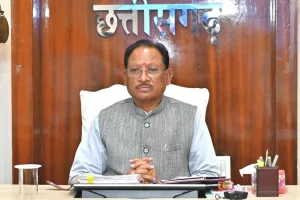
Chhattisgarh CM Vishnu Deo Sai launches Gaudham Yojana, lays foundation of state’s first cow sanctuary

Vishnu Deo Sai, Chief Minister of Chhattisgarh, on Saturday launched the state government’s ambitious Gaudham Yojana at a programme held at Guru Ghasidas Central University in Bilaspur.

Statesman News Service | Raipur |

Vishnu Deo Sai, Chief Minister of Chhattisgarh, on Saturday launched the state government’s ambitious Gaudham Yojana at a programme held at Guru Ghasidas Central University in Bilaspur. In the first phase of the scheme, operations have begun at 29 Gaudhams across 11 districts of the state.

On the occasion, the Chief Minister also laid the foundation stone for the state’s first cow sanctuary at Jogipur village in Kota development block of Bilaspur district.

The sanctuary will be developed over nearly 184 acres, with the state government approving Rs 1.32 crore for the first phase of its development. Once completed, it will have the capacity to shelter and care for around 2,500 cattle at a time.

Addressing the gathering, Sai said cows hold an important place in Indian culture, faith and the rural economy.

“Through the Gaudham Yojana, safe shelter will be provided to stray and abandoned cattle while strengthening livestock protection. The state government is fully committed to promoting cattle protection and cow service,” he said.

The Chief Minister also announced that the state government has signed a Memorandum of Understanding with the National Dairy Development Board (NDDB) to promote animal husbandry and milk production in the state.

Under this initiative, cows are being distributed in several districts, yielding encouraging results in boosting milk production.

Sai said the Gaudhams will ensure proper arrangements for fodder, water and care of cattle while also creating employment opportunities at the local level. All Gaudhams established on government land in the state will now be known as “Surabhi Gaudham.”

Training programmes related to animal husbandry, green fodder cultivation and the preparation of useful products from cow dung will also be conducted at these centres.

The initiative is expected to create self-employment opportunities for local residents and strengthen the rural economy. It will also help reduce road accidents by providing safe shelter for stray cattle.

Union Minister of State Tokhan Sahu said the launch of the Gaudham Yojana is a significant and auspicious step, noting that ensuring cow protection and service has long been an integral part of Indian culture and tradition while also contributing to the strengthening of the rural economy.

State Agriculture and Livestock Development Minister Ramvichar Netam described the launch as a historic day for Chhattisgarh, as the Gaudham Yojana is being implemented simultaneously across the state.

He added that, in a phased manner, 10 Gaudhams will be established in every development block, ensuring cattle protection while creating opportunities for self-employment.

MLAs Amar Agrawal, Dharamlal Kaushik, Dharamjeet Singh and Sushant Shukla, along with Bilaspur Mayor Pooja Vidhani, Bilaspur Commissioner Sunil Jain, IG Ramgopal Garg, Collector Sanjay Agrawal, SSP Rajnesh Singh, Director Veterinary Chandrakant Verma and a large number of livestock owners and citizens were present at the programme.

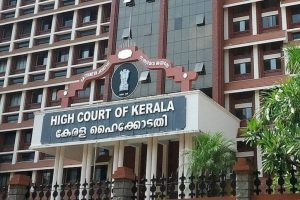
IPS officer MR Ajithkumar appointed BEVCO CMD after CAT order on IAS cadre posts

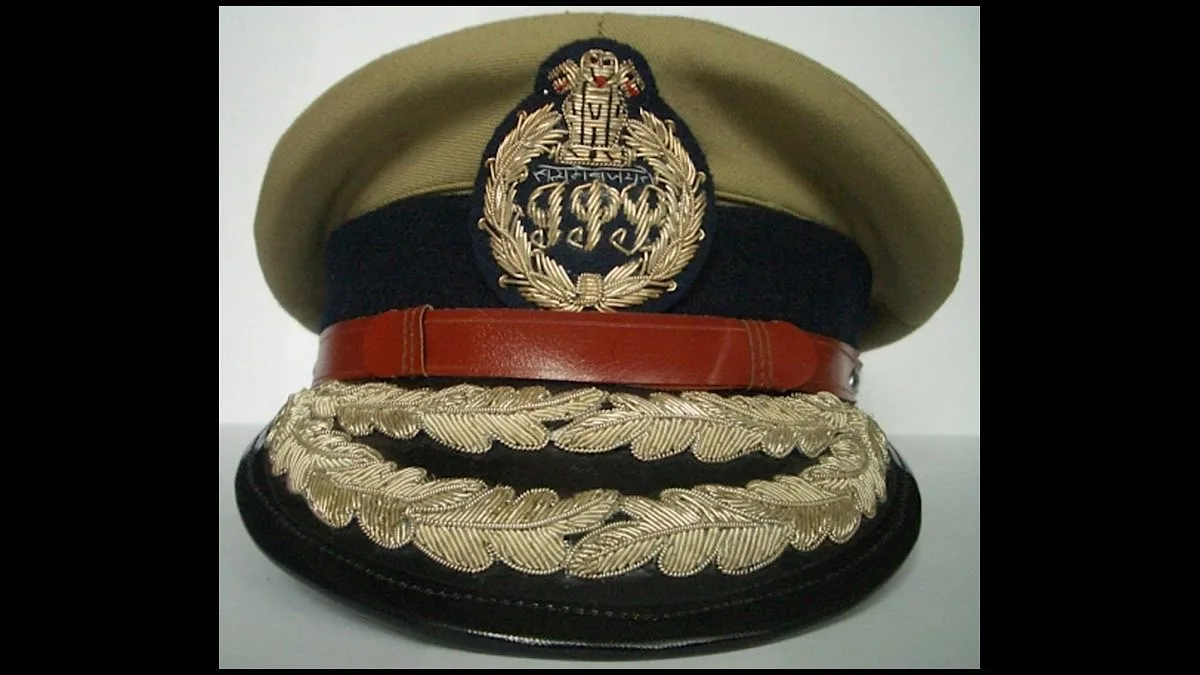
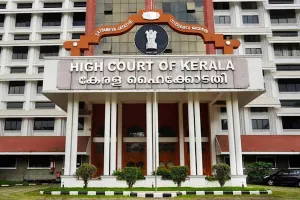
Senior IPS officer MR Ajithkumar, who was recently removed from the post of Excise Commissioner following a ruling by the Central Administrative Tribunal (CAT), has been appointed as the Chairman and Managing Director (CMD) of the Kerala State Beverages Corporation (BEVCO).

Statesman News Service | Thiruvananthapuram |

Senior IPS officer MR Ajithkumar, who was recently removed from the post of Excise Commissioner following a ruling by the Central Administrative Tribunal (CAT), has been appointed as the Chairman and Managing Director (CMD) of the Kerala State Beverages Corporation (BEVCO).

Ajithkumar’s removal came after the CAT ruled that the post of Excise Commissioner is an IAS cadre position and must be held only by an officer from the Indian Administrative Service.

Meanwhile, Harshita Attaluri, who had been serving as the Managing Director of BEVCO, has been appointed as the Inspector General (Traffic).

Earlier, on March 6, the Kochi Bench of the Central Administrative Tribunal quashed three transfer orders issued by the Kerala government that had appointed non-IAS officers to IAS cadre posts. The Tribunal observed that such appointments are illegal and violate established cadre rules.

While setting aside the transfer orders, the CAT stated that only IAS officers should be appointed to IAS cadre posts and directed the state government to strictly adhere to the 2014 Cadre Rules governing such appointments.

The Tribunal also ruled that the approval of the Civil Services Board is mandatory for the transfer of IAS officers.

In its order, the CAT specifically noted that the position of Excise Commissioner is an IAS cadre post and must be held exclusively by an IAS officer. The ruling came as a setback for Ajithkumar, who had been serving in the post despite being an IPS officer.

The directive was issued following a petition filed by the Kerala IAS Association.

Rajasthan Govt transfers 64 IPS officers in midnight reshuffle, 22 districts get new SPs

In a major reshuffle in Rajasthan’s police administration, the state government transferred 64 Indian Police Service (IPS) officers late on Friday night.

Statesman News Service | Jaipur |

In a major reshuffle in Rajasthan’s police administration, the state government transferred 64 Indian Police Service (IPS) officers late on Friday night.

The exercise appeared to be more performance-driven than a routine administrative move, as 41 of the 64 officers have now been transferred for the second time within a span of just eight months.

According to the transfer list, at least 10 officers received fresh postings within a short period of four to six months after their previous assignments.

The late-night reshuffle also brought significant changes at the district level, with Superintendents of Police (SPs) replaced in 22 of the state’s 41 districts.
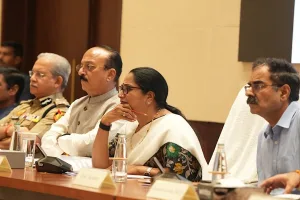
This is the second major round of transfers in the police hierarchy in recent weeks.

About three weeks ago, on February 23–24, the state government had ordered a major reshuffle involving 21 senior officers of the rank of Inspector General (IG) and above.
World sees India as a partner in building the future, not just as a market: Delhi CM

Delhi Chief Minister Rekha Gupta on Saturday said that the world today sees India not just as a market but as a decisive partner in building the future.

Statesman News Service | New Delhi |

Delhi Chief Minister Rekha Gupta on Saturday said that the world today sees India not just as a market but as a decisive partner in building the future.

CM Gupta said that the country is becoming the fulcrum of global transformation through next-generation reforms, the startup ecosystem, digital infrastructure, and emerging technologies.

Sharing her thoughts on X, she stated that under the leadership of Prime Minister Narendra Modi, the nation has resolved to achieve Viksit Bharat 2047.

She said it is not merely a development goal but a vision for a new era grounded in technology, innovation, digital empowerment, and human-centric governance.

She shared her thoughts at the NXT summit held here, adding that Delhi is also playing an active role in this journey towards a developed India.

Through policy innovation, technology adoption and citizen-centric governance, Delhi is preparing itself for the opportunities and challenges of the coming decade, the CM added.

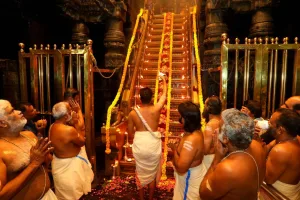
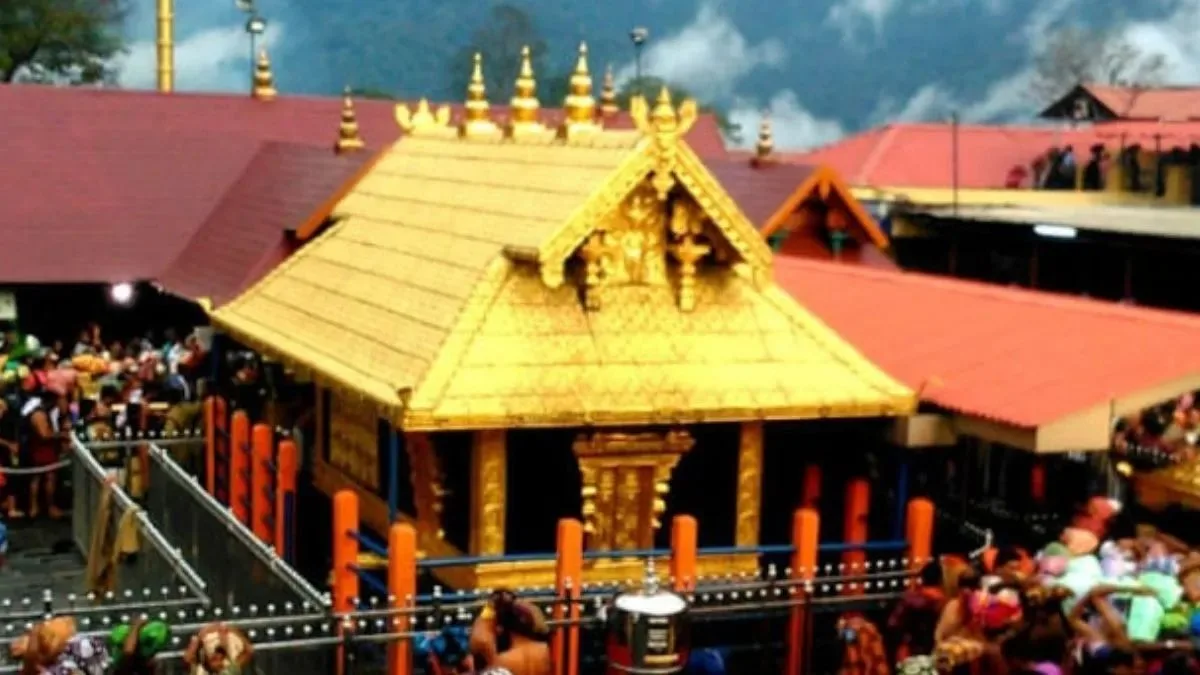
Kerala Govt softens stand on Sabarimala women entry, urges Supreme Court to consider views of religious scholars

In a notable shift from its earlier unequivocal support for the entry of women of menstruating age into the famed Sabarimala Temple, the Left Democratic Front (LDF) government in Kerala has told the Supreme Court of India that the issue should be decided only after considering the views of religious scholars and social reformers.

Statesman News Service | Thiruvananthapuram |

In a notable shift from its earlier unequivocal support for the entry of women of menstruating age into the famed Sabarimala Temple, the Left Democratic Front (LDF) government in Kerala has told the Supreme Court of India that the issue should be decided only after considering the views of religious scholars and social reformers.

In a fresh 17-page affidavit filed before the apex court, the state government said the question of whether the ban on women of menstruating age constitutes an “essential religious practice” should be examined only after assessing impartial opinions from eminent scholars of Hinduism and respected social reformers.

The affidavit states that the government cannot resolve the matter without consulting various religious and social groups and emphasizes the need to involve community leaders in the discussion.

It further argues that if the court considers it necessary to examine temple rituals and traditions, such an exercise should follow detailed consultations with knowledgeable religious authorities and reputed reformers.

The document responds to seven key questions framed by the Supreme Court concerning the relationship between the fundamental right to freedom of religion under Article 25 and the rights of religious denominations under Article 26 of the Constitution.

Observers note that the change in the state’s stance comes ahead of the upcoming Kerala Assembly elections and may reflect an attempt to address the sentiments of devotees while countering criticism from opposition parties.

The affidavit also maintains that individuals outside a religious tradition should not be allowed to challenge its practices through public interest litigation.

Earlier, the Travancore Devaswom Board (TDB), which manages the temple, decided to oppose the 2018 Supreme Court verdict permitting women of menstruating age to enter Sabarimala.

At a meeting held on March 2 in Thiruvananthapuram, the board resolved to file an affidavit opposing women’s entry and to uphold the shrine’s traditional customs and rituals.

However, in 2020, when the Supreme Court considered reviewing petitions against the women’s entry verdict, counsel for the TDB had argued that the judgment did not require reconsideration.

In its landmark 2018 ruling, the Supreme Court allowed women of all age groups to enter the Sabarimala temple, striking down a 1991 Kerala High Court judgment that had upheld the long-standing practice of barring women of menstruating age from the hill shrine.

At the time, the LDF government led by Pinarayi Vijayan strongly supported the Supreme Court verdict. The state administration facilitated the entry of two women — Bindu Ammini and Kanakadurga — into the temple, invoking constitutional principles of gender equality and fundamental rights.

The government now appears to be adopting a more cautious approach, seeking to avoid hurting the sentiments of devotees and religious organisations that hold significant influence in the state’s political landscape.

A nine-judge Constitution Bench of the Supreme Court is scheduled to begin hearing the review petitions in the Sabarimala case on April 7, 2026. The court has directed all parties, including the Kerala government, to submit their written submissions by March 14, 2026.

Final call on MPs contesting Kerala Assembly polls lies with high command: KC Venugopal

Speaking to the media in Thiruvananthapuram on Saturday, Venugopal said the party leadership would take an appropriate call on the issue.

Statesman News Service | Thiruvananthapuram |

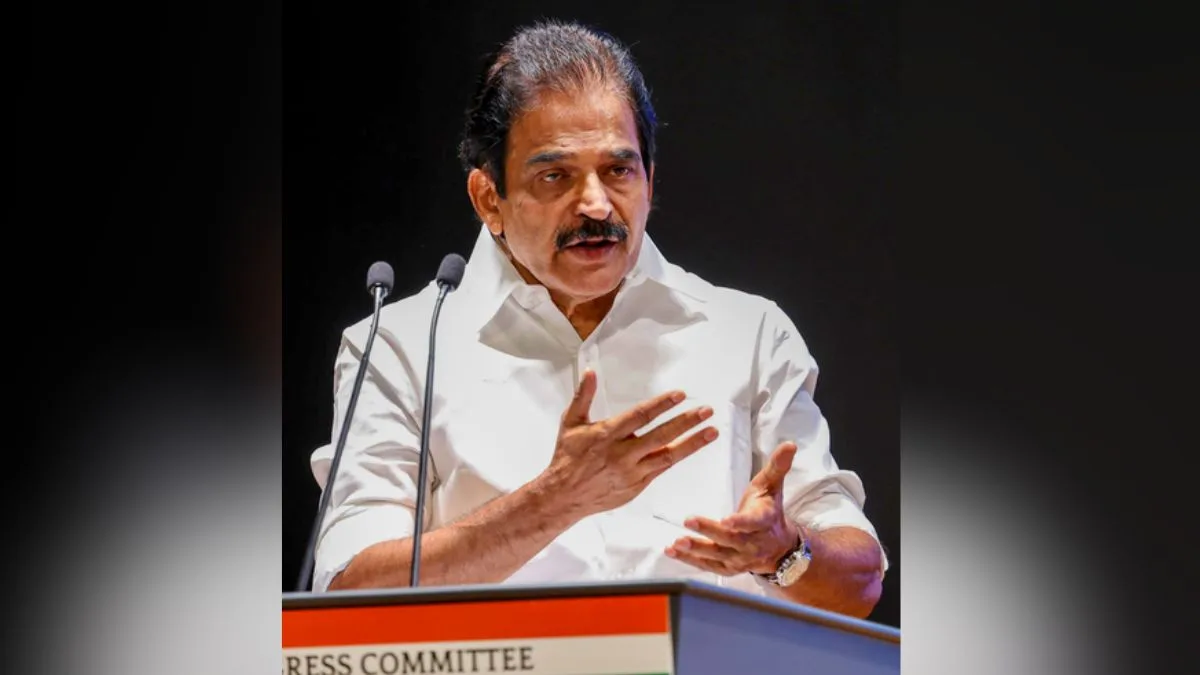
Amid former KPCC president and Kannur MP K Sudhakaran expressing his desire to contest the upcoming 2026 Kerala Legislative Assembly election from the Kannur constituency, KC Venugopal, General Secretary of the Indian National Congress, said the final decision on whether sitting MPs can contest the Assembly elections rests with the party’s high command.

Speaking to the media in Thiruvananthapuram on Saturday, Venugopal said the party leadership would take an appropriate call on the issue.

“Some MPs have expressed interest in contesting the Assembly elections. The party leadership will decide on the matter. I have already made it clear that I will not contest,” he said. He added that the candidate selection process in the Congress is progressing faster than usual and will be completed in a timely manner.

Venugopal also dismissed reports suggesting that Sudhakaran was unhappy with the candidate selection process. He said the senior leader’s recent social media post merely reflected his affection for Kannur and the party.

“Expressing an interest in contesting elections is not a crime. Sudhakaran was in Delhi for the entire last week attending the Parliament session and returned to Kannur afterwards. It is natural for leaders to express their opinions. The most important objective is the victory of the UDF in the elections, and everyone will work towards that,” Venugopal said.

Meanwhile, Deepa Das Munshi, another general secretary of the Congress, said the party has not yet taken a final decision on whether sitting MPs will be allowed to contest in the Assembly elections.

Speaking to the media in Kasaragod, Munshi described Sudhakaran as a senior leader with influence not only in Kannur but across Kerala. “He has every right to express his desire to contest the Assembly polls. However, no official discussion has yet taken place with the high command on this matter,” she said.

Munshi also clarified that candidate selection in the Congress would not be determined solely by the sentiments of party workers or supporters.

Leader of Opposition VD Satheesan reiterated that the Congress high command will ultimately decide whether MPs will be fielded in the forthcoming Assembly election.

“No one has been assured of a ticket. The party will decide who should be fielded in the polls. I do not know whether Sudhakaran was given any assurance when he was removed from the post of KPCC president. No one should declare themselves a candidate,” Satheesan said.

Reports suggest that Sudhakaran is dissatisfied with the party leadership’s handling of the Kannur Assembly seat. The senior Congress leader is believed to have been keen on contesting the 2026 election from the constituency and reportedly felt he had earlier been assured a ticket by the high command.

Sudhakaran returned to Kannur from New Delhi earlier than scheduled, skipping candidate-related discussions, reportedly to convey his displeasure over the lack of clarity regarding his candidature.

His supporters have also expressed strong dissatisfaction, with some planning protests against state leaders opposing his candidature.

According to reports, Sudhakaran remains firm in his stand despite attempts by the party leadership to persuade him otherwise. He has reportedly been asked to return to New Delhi for further discussions with the Congress high command on Monday, but his current decision is to stay in Kerala.

Trained cadre key to building strong organisation: Sachdeva at Delhi BJP training camps

Under the Bharatiya Janata Party’s Pandit Deendayal Upadhyaya Training Mega Campaign, night-stay training camps were organised in 79 mandals on Saturday as part of the second phase of the Delhi BJP’s mandal-level training programme.

Statesman News Service | New Delhi |

Under the Bharatiya Janata Party’s Pandit Deendayal Upadhyaya Training Mega Campaign, night-stay training camps were organised in 79 mandals on Saturday as part of the second phase of the Delhi BJP’s mandal-level training programme.

Guided by Delhi BJP president Virendra Sachdeva and conducted under the supervision of campaign convenor and MP Kamaljeet Sehrawat, state office-bearers and senior leaders participated as keynote speakers in training sessions organised across several mandals in the city.

As part of the campaign covering 79 mandals across 13 organizational districts of Delhi, Sachdeva primarily addressed the training camp in New Ashok Nagar.

Sehrawat addressed training camps in Moti Nagar and Karol Bagh, while former Delhi BJP president Satish Upadhyay spoke at camps in Tughlaqabad Extension and RK Puram.

Delhi Mayor Sardar Raja Iqbal Singh addressed workers in Burari and Sant Nagar mandals and Delhi BJP media head Praveen Shankar Kapoor addressed camps in Rajnagar and Vasant Kunj.

During the sessions, speakers interacted with party workers on the history and evolution of the BJP from the Jan Sangh era, the party’s organizational structure and working methodology, its ideological foundations, the concept of Antyodaya to saturation, and the achievements of BJP-led governments.

Sachdeva said that Pandit Deendayal Upadhyaya’s philosophy of Integral Humanism emphasizes the holistic development of every section of society, and the BJP is working towards nation-building based on this ideology.

He added that both the government led by former Prime Minister Atal Bihari Vajpayee between 1999 and 2004 and the government under Prime Minister Narendra Modi since 2014 have drawn inspiration from Pandit Deendayal Upadhyaya’s philosophy of Integral Humanism.

On the occasion, Sachdeva urged party workers to remain committed to the party’s ideology, discipline and spirit of public service.

He said trained workers play a crucial role in building a strong and effective organisation.

Through training programmes, he noted, party workers gain a deeper understanding of the party’s policies, programmes and functioning, enabling them to engage more effectively with the public.

World sees India as a partner in shaping the future, not just a market: Delhi CM

Delhi Chief Minister Rekha Gupta on Saturday said that the world today views India not merely as a market, but as a decisive partner in shaping the future.

Statesman News Service | New Delhi |

Delhi Chief Minister Rekha Gupta on Saturday said that the world today views India not merely as a market, but as a decisive partner in shaping the future.

Addressing the NXT Summit in New Delhi, the Chief Minister said the country is emerging as a fulcrum of global transformation, driven by next-generation reforms, a vibrant startup ecosystem, robust digital infrastructure and rapid advancements in emerging technologies.

Sharing her views on the social media platform X, Gupta said that under the leadership of Prime Minister Narendra Modi, the nation has resolved to achieve the vision of Viksit Bharat 2047.

She described the vision not merely as a developmental target but as a roadmap for a new era anchored in technology, innovation, digital empowerment, and human-centric governance.

The Chief Minister added that Delhi is also playing an active role in this journey towards a developed India.

Through policy innovation, adoption of advanced technologies and citizen-centric governance, the national capital is preparing itself to address the opportunities and challenges of the coming decade, she said.

Rajasthan CM performs ‘shramdaan’ at cleanliness drive, sweeps Albert Hall Museum courtyard

Chief Minister Bhajan Lal Sharma on Saturday inaugurated the Rajasthan Divas Mahotsav celebrations by leading a mega cleanliness drive at the historic Albert Hall Museum here.

Statesman News Service | Jaipur |

Chief Minister Bhajan Lal Sharma on Saturday inaugurated the Rajasthan Divas Mahotsav celebrations by leading a mega cleanliness drive at the historic Albert Hall Museum here.

The CM launched the voluntary Swachhta Abhiyan and performed shramdaan by sweeping the front courtyard of the grand museum complex located in Ram Niwas Bagh.

He also felicitated sanitation workers from civic bodies, and distributed PPE kits and transferred financial assistance to them under the Pradhan Mantri Street Vendor’s AtmaNirbhar Nidhi (PM SVANidhi) scheme.

“I am glad and proud that the Rajasthan Day celebrations this year are beginning with a statewide Swachhta Abhiyan. The cleanliness drive from this historic museum hall should generate mass awareness about cleanliness across the state,” the CM said.

He added that cleanliness is an essential precondition for a good start to any day or event and stressed that development and prosperity cannot be achieved without maintaining cleanliness.

Speaking about Rajasthan Day, Sharma said the state was formed on March 30, 1949, which coincided with the first day of the traditional Hindu calendar year, Vikram Samvat. Since 2025, the government has decided to celebrate Rajasthan Day grandly according to the tithi of the Hindu calendar (Panchang).

This year, the auspicious day falls on March 19, 2026, and several programmes are being planned for the occasion.

The Rajasthan Day celebrations will be observed across the state for nearly a fortnight from March 14 to March 30. In New Delhi, the celebrations will be held at Bikaner House from March 15 to March 30.

Sharma will inaugurate the 10-day event at Bikaner House on Sunday, an official spokesperson said.