Logo

West Bengal Assembly Elections 2026: Complete poll schedule

West Bengal Assembly Elections 2026 Complete Schedule: While elections in three states – Assam, Kerala, Tamil Nadu – and the Union Territory of Puducherry will be held in a single phase, the Election Commission has announced a two-phase polling schedule for the West Bengal Assembly Elections 2026.

Statesman News Service | NEW DELHI |

The Elections Commission of India on Sunday announced the dates for the forthcoming Assembly elections in West Bengal, Assam, Tamil Nadu, Kerala, and Puducherry. The voting in four states and a Union Territory will be held between April 9 and April 29, with counting of votes taking place on May 4.

While elections in three states – Assam, Kerala, Tamil Nadu – and the Union Territory of Puducherry will be held in a single phase, the Election Commission has announced a two-phase polling schedule for the West Bengal Assembly Elections 2026.

Below is the complete schedule of the West Bengal Assembly Elections 2026

Courtesy: ECI

In the first phase, polling will be held in 152 Assembly Constituencies on April 23. The gazette notification for the first phase will be issued on March 30, with the last date for filing nominations on April 6, scrutiny on April 7, and the last date for withdrawal of candidature on April 9.

The second phase will see the remaining 142 Assembly Constituencies going into polls on April 29. The gazette notification for this phase will be issued on April 2, the last date for filing and withdrawing nominations will be April 9, and April 13, respectively.

The counting of votes for both phases will take place on May 4, and the results are also likely to be announced the same day.

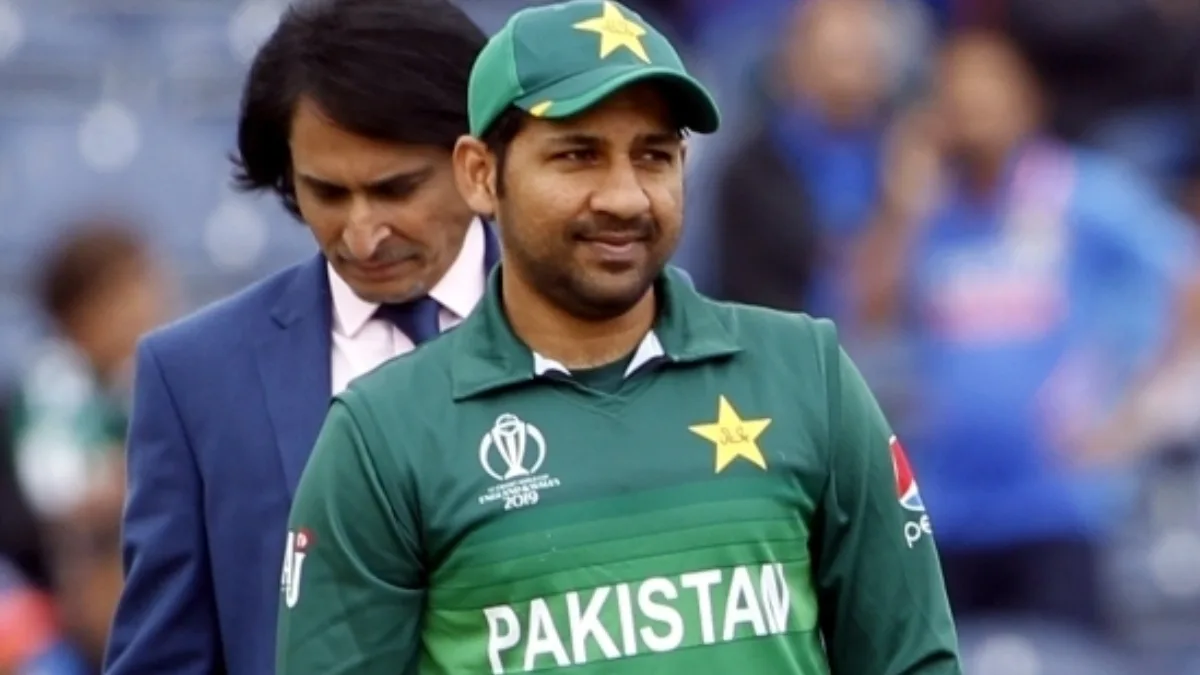
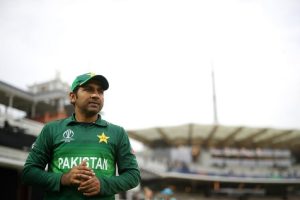
Former Pakistan skipper Sarfaraz Ahmed retires from international cricket after nearly two decades

The wicketkeeper-batter famously led Pakistan to their historic triumph at the 2017 ICC Champions Trophy and remains one of the most successful leaders in the country’s white-ball history.

Statesman News Service | New Delhi |

Pakistan’s only captain to have won ICC titles at both junior and senior levels, Sarfaraz Ahmed announced his retirement from international cricket on Sunday, bringing the curtain down on a career spanning nearly two decades.

The wicketkeeper-batter famously led Pakistan to their historic triumph at the 2017 ICC Champions Trophy and remains one of the most successful leaders in the country’s white-ball history.

The 37-year-old represented Pakistan in 54 Tests, 117 ODIs, and 61 T20Is, scoring a total of 6,164 runs across formats, including six centuries and 35 half-centuries. Behind the stumps, he was equally impressive, claiming 315 catches and 56 stumpings during his international career.

Sarfaraz captained Pakistan in 100 international matches across formats. Under his leadership, Pakistan reached the No. 1 ranking in T20Is and set a world record with 11 consecutive T20I series victories, including six clean sweeps against teams such as West Indies, Sri Lanka, Australia, New Zealand and Scotland.

One of the most memorable moments of his captaincy came at The Oval in London, where Pakistan defeated the India national cricket team by 180 runs in the final of the 2017 ICC Champions Trophy. Following the triumph, he was awarded the Pride of Performance in 2018, becoming the youngest Pakistan captain to receive the honour.

Sarfaraz had earlier led Pakistan’s youth side to glory in the 2006 ICC Under-19 Cricket World Cup in Sri Lanka, where Pakistan defeated India by 38 runs in the final, marking his first ICC title as captain.

“It has been the greatest honour of my life to represent Pakistan. From leading the U19 team to a world title in 2006 to lifting the ICC Champions Trophy in 2017, every moment in Pakistan colours has been special,” Sarfaraz said in a statement.

“I am grateful to my teammates, coaches, family and the fans for their unwavering support throughout my career. Captaining Pakistan across all formats was a dream come true. I always tried to play fearless cricket and build a united team.”

Among his individual records, Sarfaraz holds Pakistan’s record for the most catches in a single Test match, taking 10 against South Africa national cricket team in Johannesburg in 2019. He also remains the only Pakistan wicketkeeper-batter to score an ODI century at Lord’s Cricket Ground, achieving the feat against England national cricket team in 2016.

His captaincy era also played a significant role in shaping Pakistan’s next generation of stars. Players such as Babar Azam, Shaheen Shah Afridi, Hasan Ali, Imam-ul-Haq, Faheem Ashraf, Fakhar Zaman and Shadab Khan were all backed early in their international careers during his tenure.

Sarfaraz made his international debut in an ODI in 2007 and played his final match—a Test against Australia national cricket team in Perth—in 2023.

“Seeing players like Babar Azam, Shaheen Afridi, Hasan Ali and others grow into match-winners during my captaincy is one of my proudest achievements,” Sarfaraz added.

“I would like to thank the Pakistan Cricket Board for the trust they placed in me over the years. Pakistan cricket has always been very close to my heart and I will continue to support the game in every possible way.”

Last year, the Pakistan Cricket Board appointed Sarfaraz as manager and mentor of the Pakistan Shaheens and Under-19 teams. He also travelled with the side for the recent U19 World Cup held in Zimbabwe and Namibia, along with tournaments such as the Asia Cup Rising Stars event and the U19 Asia Cup.

Assembly Elections 2026: Assam, Kerala, Puducherry to vote on April 9; TN and Bengal on April 23, counting on May 4

Voting in Assam, Kerala, and Puducherry will be held on April 9 in a single phase, with counting of votes taking place on 4 May. In Tamil Nadu and West Bengal, polling will take place on April 23, and the votes will be counted on May 4.

Statesman News Service | NEW DELHI |

The Election Commission of India on Sunday, March 15, 2026, announced the dates of the Assembly Elections in West Bengal, Tamil Nadu, Assam, Kerala and Puducherry. Voting in Assam, Kerala, and Puducherry will be held on April 9 in a single phase, with counting of votes taking place on 4 May.

In Tamil Nadu and West Bengal, polling will take place on April 23, and the votes will be counted on May 4. While Tamil Nadu will vote in a single phase, the West Bengal Assembly Elections will be held in two phases: the first on April 23 and the second on April 29.

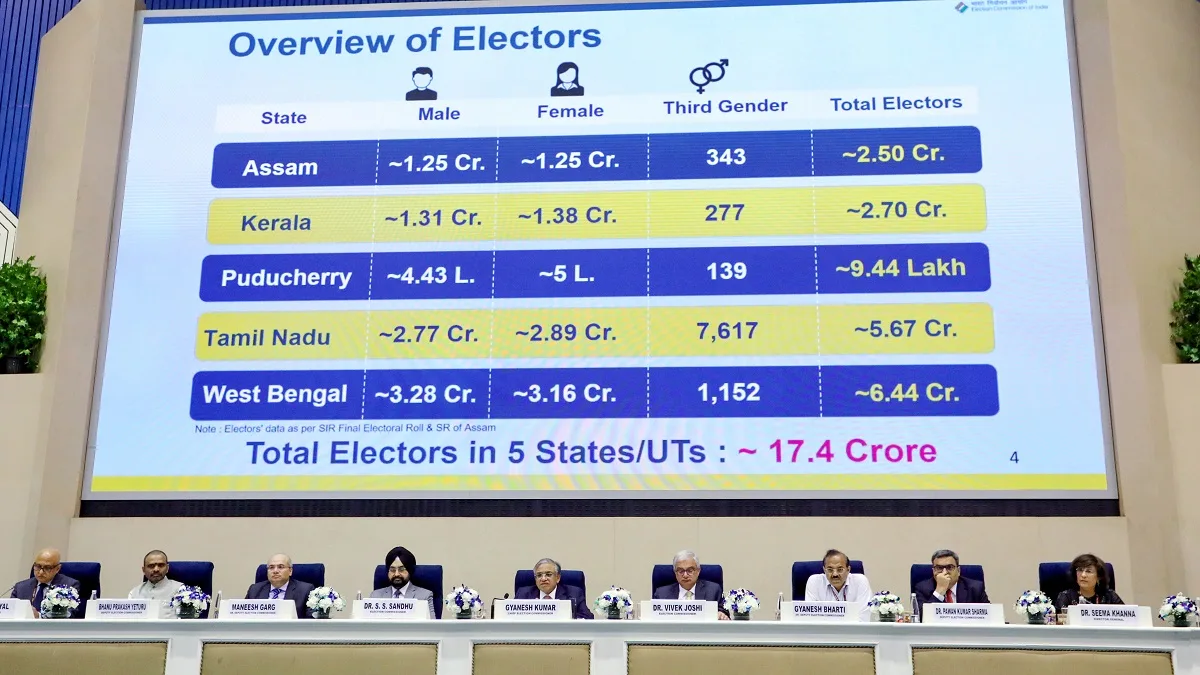
Addressing a press conference in New Delhi, Chief Election Commissioner (CEC) Gyanesh Kumar said that 17.4 crore voters will be eligible to cast their votes at 2.19 lakh polling stations across West Bengal, Assam, Kerala, Tamil Nadu, and Puducherry.

More than 25 lakh election officials will be on duty to ensure free and fair elections across the four states and the Union Territory of Puducherry.

“To give you a little overview of the electors, Assam as per the final list would be roughly 2.25 crores, Kerala 2.7 crores, Puducherry 9.44 lakhs, Tamil Nadu 5.67 crores, and West Bengal, the final list on 28th February comprises of 6.44 crores, and the learned judges, after their adjudication, whatever supplementary list comes, they shall be added…” he said.

The end of the term of the Assam assembly is on 20th May, Kerala is on 23rd May, Puducherry is on 15th June, Tamil Nadu is on 10th May and West Bengal is on 7th May.

CEC Kumar, who faces the Opposition’s allegations of helping the BJP in elections, assured that the poll panel will ensure “free, fair and transparent” Assembly polls. “The commission, along with lakhs of election officials and security personnel, is committed for ensuring free, fair, transparent, accessible and peaceful elections,” he added.

State-wise poll schedule

1. Assam- Date of Polling- 9th April; Date of Counting 4th May

2. Tamil Nadu- Date of Polling- 23rd April; Date of Counting- 4th May

3. West Bengal- Date of Polling- 23rd April (1st phase), 29th April (2nd phase); Date of Counting- 4th May

4. Kerala- Date of Polling- 9th April; Date of Counting- 4th May

5. Puducherry- Date of Polling- 9th April; Date of Counting- 4th May

Mamata govt hikes honorarium by Rs. 500 for purohits, muezzins just hours before poll dates announcement by ECI

With the revision, the monthly honorarium for both categories has been increased to Rs. 2,000.

Statesman News Service | New Delhi |

Hours before the announcement of the state assembly election schedule by the Election Commission of India (ECI), the West Bengal government, led by Chief Minister Mamata Banerjee, today announced a Rs. 500 increase in the monthly honorarium for purohits and muezzins in the state.

With the revision, the monthly honorarium for both categories has been increased to Rs. 2,000.

Announcing the decision, Banerjee said the move was aimed at recognising the services of religious functionaries who play a role in sustaining the spiritual and social fabric of communities.

“I am pleased to announce an increase of ₹500 in the monthly honorariums extended to our purohits and muezzins, whose service sustains the spiritual and social life of our communities. With this revision, they will now receive ₹2,000 per month,” the CM said in a statement.

She also said that all fresh applications submitted by purohits and muezzins seeking to avail the honorarium scheme have been approved by the state government.

Banerjee added that the government remains committed to ensuring that different religious traditions in the state receive recognition and support.

“We take pride in nurturing an environment where every community and every tradition is valued and strengthened. Our endeavour remains to ensure that the custodians of our rich spiritual heritage receive the recognition and support they deserve,” she said.

The announcement comes shortly before the expected declaration of the Assembly poll schedule by the Election Commission of India.

BAN vs PAK 3rd ODI: Bangladesh edge Pakistan by 11 runs in thrilling 3rd ODI to seal series 2-1

The hosts’ innings was anchored by a historic opening partnership between Tanzid Hasan Tamim and Saif Hassan, who put on 105 runs for the first wicket.

Neha Buswal | New Delhi |

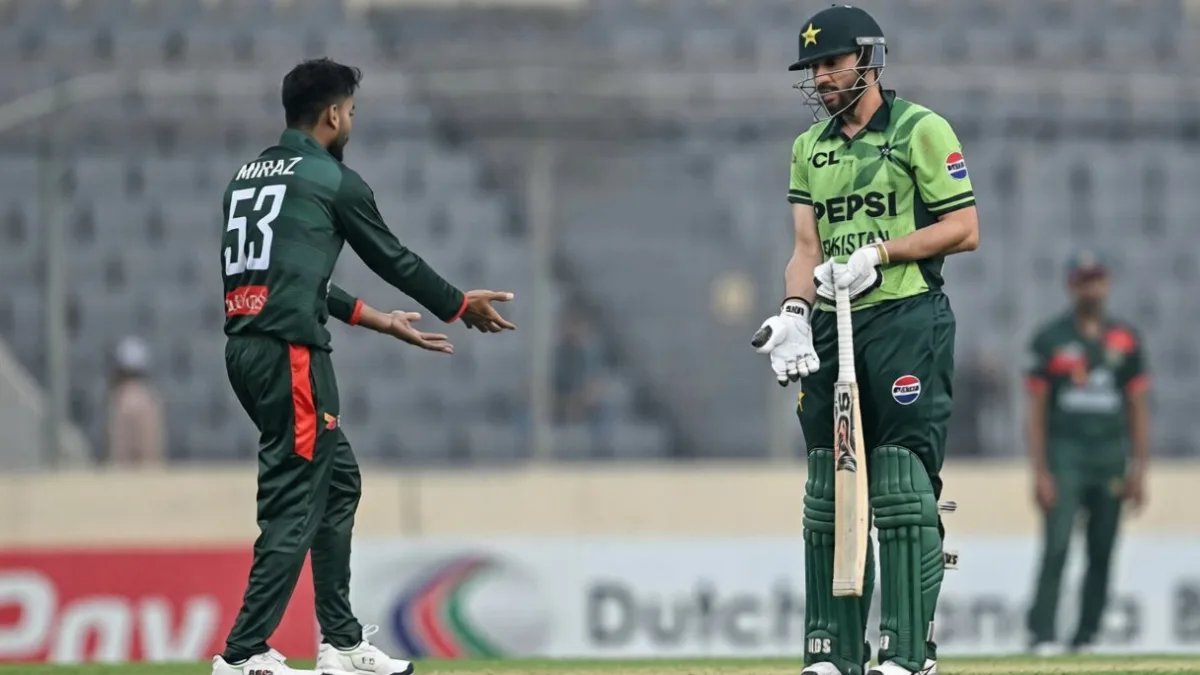
Bangladesh emerged victorious in a dramatic series-deciding third ODI, posting 290/5 and defending it successfully to bowl Pakistan out for 279, sealing an 11-run win at the Shere Bangla National Stadium and taking the three-match series 2-1.

The hosts’ innings was anchored by a historic opening partnership between Tanzid Hasan Tamim and Saif Hassan, who put on 105 runs for the first wicket. Tanzid Hasan Tamim was the star of the innings, scoring his maiden ODI century with 107 runs off 107 balls, including six fours and seven sixes.

After the fall of the openers, Litton Das and Towhid Hridoy steadied the innings with a 68-run stand, ensuring Bangladesh posted a competitive total. Haris Rauf was the pick of the bowlers for Pakistan, finishing with three wickets for 52 runs, including two wickets in consecutive deliveries late in the innings.

Pakistan’s chase was a rollercoaster, beginning disastrously as they were reduced to 17/3. Taskin Ahmed and Nahid Rana wreaked havoc on the top order, dismissing Sahibzada Farhan, Maaz Sadaqat, and Mohammad Rizwan cheaply.

Amidst the chaos, Salman Ali Agha rose to the occasion, playing a magnificent innings of 106 off 98 balls. He stitched together crucial partnerships with debutant Saad Masood and later with captain Shaheen Afridi, keeping Pakistan in contention.

The match went down to the wire with 14 runs needed off the final six balls. Rishad Hossain held his nerve and executed a stumping to dismiss Shaheen Afridi on the last ball, securing the 11-run victory for Bangladesh. Taskin Ahmed’s four-wicket haul, including the crucial wicket of Salman Agha in the 48th over, proved decisive in the final outcome.

Tanzid Hasan Tamim was named Player of the Match for his composed and impactful century. Reflecting on his innings, he said:

“It was a very important series for me. I tried to be cautious in the first 10 overs. The ball was holding a bit later, which made it hard for new batters to score. I always try to time the ball rather than hit hard. The team management backed me throughout, which really helped.”

Pakistan captain Shaheen Afridi praised his team despite the loss, stating:

“The team tried till the end. The youngsters stepped up and gave their best. Salman Agha is an all-format player and has been performing consistently for Pakistan. It was my business to try, but credit goes to the way Bangladesh bowled in the death overs. We need more hard work and fitness across all three departments.”

The match showcased the depth and resilience of both teams. Bangladesh’s strong batting and clinical death bowling secured a memorable win, while Pakistan’s spirited fight, led by Salman Ali Agha, ensured a thrilling contest right up to the final delivery.

Bangladesh vs Pakistan 3rd ODI: Playing XI

Bangladesh

Tanzid Hasan, Saif Hassan, Najmul Hossain Shanto, Litton Das (wk), Towhid Hridoy, Mehidy Hasan Miraz (c), Afif Hossain, Rishad Hossain, Taskin Ahmed, Mustafizur Rahman, Nahid Rana.

Pakistan 

Sahibzada Farhan, Maaz Sadaqat, Ghazi Ghori (debut), Mohammad Rizwan (wk), Salman Ali Agha, Abdul Samad, Saad Masood (debut), Faheem Ashraf, Shaheen Afridi (c), Haris Rauf, Abrar Ahmed.

Production, Transition and Diversification: How India Built Resilience Into Its Energy System

India today is in a far stronger position to handle disruptions in global energy markets than it was a decade ago.

Statesman News Service | New Delhi |

Generally, structural energy changes rarely happen during comfortable times. They happen when a crisis makes the cost of inaction too high to ignore.

However, over the course of the last 11 years, the Modi government has done the opposite. It undertook structural changes in the energy sector even when circumstances did not force such action.

It enabled India to build greater capacity to absorb disruptions in global energy supply chains. By expanding domestic production, managing the transition to new energy sources, and diversifying supply sources, the Modi government has reduced the country’s vulnerability to external shocks to its energy needs.

The path for India was never a mystery. What was required was the political will to pursue it consistently. Over the past decade, the Modi government chose to stay the course. The Modi government has made itself accountable to the public, which wanted solutions to its problems.

The strategy rested on three pillars, and each demanded a different kind of commitment from the government.

The first was domestic production. The practice of blending ethanol with petrol began in 2001 as a pilot project. Yet for many years, India made no progress, and ethanol production remained stagnant. It was only after 2014 that, through a series of comprehensive reforms, India was able to unlock the full potential of this initiative.

Under the Modi government, the country embarked on a series of comprehensive reforms to enhance energy security, combat climate change, and boost the rural economy. A target of 20% ethanol blending in petrol was initially set for 2030 under the Ethanol Blending Programme (EBP).

However, in 2020, the Cabinet Committee on Economic Affairs (CCEA) advanced this target to 2025, as it worked with renewed focus to reduce the country’s vulnerability to energy imports in the event of geopolitical shocks.

As a result of efforts and policy focus, ethanol blending in petrol rose from 1.5% in 2014 to 20% in 2025, a 13-fold increase over 11 years. Ethanol production surged from 38 crore litres in 2014 to 661.1 crore litres by June 2025.

The 20% ethanol blending programme now displaces roughly 44 million barrels of crude oil annually.

The second was getting the energy transition right. The Modi government, at all levels, backed the development of the country’s electric vehicle (EV) industry.

It allowed 100% FDI in the automobile sector, which has attracted $36 billion in FDI over the past four years. Incentive schemes were introduced to encourage technological innovation and to build supply chain capacity in the automobile manufacturing sector.

The Faster Adoption and Manufacturing of (Hybrid &) EVs in India (FAME I) was launched in 2015 to promote the adoption and manufacturing of electric and hybrid vehicle technology, ensuring the sustainable growth of this sector.

In the first phase of the scheme, approximately 2.78 lakh EVs were added, resulting in a saving of about 59 million litres of fuel. Based on the outcome and experience of the FAME India Scheme, the second Phase of FAME was launched in 2019. Incentives and concessions were provided to consumers (buyers/end-users) through upfront price reductions on hybrid and electric vehicles, thereby facilitating mass adoption.

This initiative made electric vehicles (EVs) more affordable and accessible to a larger segment of the population, helping to accelerate their adoption. The scheme subsidised the purchase of 16 lakh electric vehicles (EVs) and the construction of charging infrastructure, saving 42.9 million litres of fuel.

Moreover, as a result of the initiative, the number of electric vehicles registered in India in 2023-24 increased by 9.7 times compared to 2019-20. At present, India’s EV market is experiencing rapid acceleration in 2025-2026, with sales hitting 2.3 million units (approx. 8% of total vehicle registrations).

EVs and renewables are moving in the right direction, but the transition carries its own dependency risk with regards to critical minerals. Swapping oil dependency for mineral dependency is not complete energy security. To as to also reduce vulnerability, the Modi government launched a ‘National Critical Mineral Mission’ to secure the supply of critical minerals and strengthen India’s critical minerals value chains.

The third was the Modi government’s diversification of energy sources and supply partners. PM Narendra Modi has pursued a policy of multi-alignment, which has enabled India to cultivate parallel, deep relationships with multiple states to advance its interests. This diplomatic outreach has expanded India’s crude sourcing base from 27 countries a decade ago to more than 40 today.

A useful way to understand the importance of these measures is to consider what the situation might have looked like had these steps not been taken. Events such as the Russia–Ukraine War and tensions around the the Strait of Hormuz have repeatedly has demonstrated how quickly supply chains can be affected.

Consider for instance that without the expansion of domestic alternatives such as ethanol blending, which has already substituted over 190 million barrels metric tonnes of crude oil imports (and saved more than Rs 1.55 lakh crore) in foreign exchange after 2014, India’s exposure to such shocks would have been much greater and adversely consequential. In that scenario (of not making ethanol blending a priority), global supply disruptions would have translated much more sharply into Indian domestic economic pressure.

Had the Modi government not pursued these policies over the last 11 years such disruptions could have produced severe instability in India’s energy system, with consequences that may well have bordered on mayhem for an expanding economy like that of India.

The reforms undertaken over the past decade therefore has helped India enter a period of geopolitical uncertainty we are seeing today with stronger buffers and greater flexibility in managing its energy needs.

However, the days when India’s energy security rose and fell with conditions in a single maritime chokepoint are over, and any disruption to a single corridor triggers a managed sourcing adjustment, not a supply emergency.

As Indian refiners do not depend on a fixed slate from a fixed origin, this flexibility is a primary energy security asset for the country. While the Strait of Hormuz remains an important chokepoint, India can reroute vessels and shift strategy to other energy-exporting countries.

India today is in a far stronger position to handle disruptions in global energy markets than it was a decade ago. In a world where supply chains are increasingly uncertain, a wider and more diverse base of energy sources and partnerships has become an important safeguard for India’s energy supply resilience.


‘Khamenei 2.0: New generation, same terror regime, still evil’: Israel projects message at Times Square

According to the Israeli Foreign Ministry’s post, Mojtaba Khamenei represents continuity of the legacy of repression and violence rather than change in Tehran’s ruling system.

Statesman News Service | New Delhi |

A giant digital billboard in New York’s Times Square has become the latest stage in the information war between Israel and Iran, after Israel’s Foreign Ministry shared a video showing a stark message aimed at Iran’s new leadership: “Khamenei 2.0: New generation, same terror regime, still evil.”

The message, displayed on a massive LED screen in the middle of the busy New York landmark, was highlighted in a social media post by the Israel Ministry of Foreign Affairs, which said the display was intended to underline that Iran’s leadership transition does not signal a change in the regime’s nature.

“In Times Square, the message is clear: The face may slightly change, the Iranian terror regime does not,” the ministry wrote in its post accompanying the video.

A message aimed at Iran’s new leader

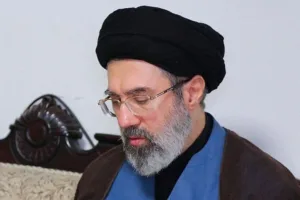
The statement specifically targets Mojtaba Khamenei, who has emerged as Iran’s new supreme leader following the death of his father Ali Khamenei. According to the Israeli Foreign Ministry’s post, Mojtaba Khamenei represents continuity of the legacy of repression and violence rather than change in Tehran’s ruling system. “Mojtaba Khamenei continues his father’s legacy of repression, war, and bloodshed,” the message reads.

Times Square as a global stage

Times Square, known for its towering LED screens and heavy tourist traffic, has long been used by governments, activists, and companies to project messages meant to reach global audiences.

The video shows the message playing across the massive digital billboard in one of the world’s most visible public spaces, turning the political statement into a public display watched by thousands in person and a much wider global audience online.

By placing its messaging there, Israel appears to be leveraging the iconic location to underscore its narrative about Iran’s leadership and policies.

Information war beyond the battlefield

The viral video reflects how the conflict between Israel and Iran is increasingly being fought not only through military strikes and diplomatic pressure but also through global messaging campaigns and symbolic displays.

By projecting its statement in Times Square and amplifying it through social media, Israel’s foreign ministry sought to deliver a simple message: while Iran’s leadership may have a new face, Israel argues the regime itself remains unchanged.

Unable to secure Hormuz alone, Trump seeks global help. But allies hesitate!

Trump has asked major economies, including Japan, China, France, South Korea, and the United Kingdom, to join a multinational effort to keep the waterway open.

Statesman News Service | New Delhi |

Amid rising tensions in the Middle East, Donald Trump has called for a multinational naval coalition to secure the Strait of Hormuz and keep global oil shipments flowing. The appeal comes as the conflict involving the United States, Israel, and Iran drags into another tense phase, with energy markets already rattled by the possibility of disruptions in one of the world’s most critical maritime chokepoints.

Speaking to reporters, Trump said the US has asked nations affected by disruptions in oil shipments through the strait to join a multinational effort to keep the waterway open. “They’ve not only committed, but they think it’s a great idea,” he said, referring to potential international participation in the security mission.

Trump also made a public appeal for coalition support in a post on Truth Social, stating that countries affected by Iran’s attempts to disrupt traffic in the waterway would send warships to assist the United States. “Many countries, especially those that are affected by Iran’s attempted closure of the Hormuz Strait, will be sending warships, in conjunction with the United States of America, to keep the Strait open and safe,” he wrote.

On the surface, the proposal sounds straightforward: countries that depend on oil passing through Hormuz should help protect it. Trump has suggested that major economies, including Japan, China, France, South Korea, and the United Kingdom, send naval vessels to patrol the waterway alongside American forces.

But the reality appears far less cooperative.

Japan has already indicated reluctance to join such a mission, slapping an almost immediate “no.” China, another major importer of Gulf oil, is widely expected to stay out of any US-led military coalition in the region. For many countries, participation would mean aligning militarily with Washington in a conflict that is rapidly escalating, something few are eager to do.

The appeal also carries a deeper contradiction. Trump has repeatedly claimed that the United States has devastated Iran’s military capabilities. Yet his call for international naval help underscores a different problem: it is as much an admission of America’s own degradation as the US is unable to protect the coastline alone.

Clearly, controlling a narrow, volatile maritime corridor against drones, missiles, mines and fast attack boats is far more complicated than conventional battlefield victories.

In effect, Trump is asking others to help secure the corridor.

That raises uncomfortable questions. The United States, which claims to have destroyed much of Iran’s conventional military power, still cannot confidently secure the coastline around the Strait of Hormuz.


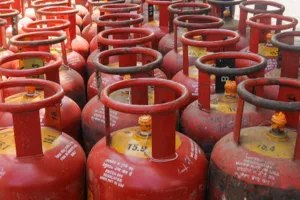
Govt bars LPG cylinders for PNG users; dual connection holders asked to surrender LPG

Consumers who already have both PNG and domestic LPG connections will be required to surrender their LPG connections.

Statesman News Service |

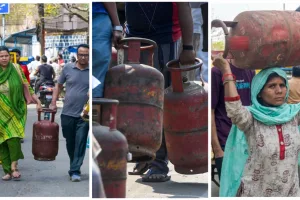
Amid the ongoing tensions in West Asia that have sparked concerns over energy supply disruptions and claims of a potential LPG shortage in India, the Ministry of Petroleum and Natural Gas has amended rules governing the supply and distribution of domestic liquefied petroleum gas (LPG), making households with piped natural gas (PNG) connections ineligible to retain or obtain LPG cylinders.

According to a notification issued by the Ministry under the provisions of the Essential Commodities Act, 1955, consumers who already have both PNG and domestic LPG connections will be required to surrender their LPG connections. Once the amended order comes into force, such consumers will no longer be allowed to receive refills of domestic LPG cylinders from government oil marketing companies or their distributors.

Also read: India steps up LPG production by 25% to secure household supply amid Gulf tensions

The amendment has been made to the Liquefied Petroleum Gas (Regulation of Supply and Distribution) Order, 2000. Under the revised provisions, any person who has a piped natural gas connection cannot retain a domestic LPG connection or obtain LPG cylinder refills.

The notification further states that individuals who already have PNG connections will also not be permitted to apply for new domestic LPG connections from government oil companies or their authorised distributors.

The new rule will come into effect after it is officially published in the Gazette, following which eligible consumers will be required to comply with the revised provisions.

Ira Khan puts cake on dad Aamir Khan’s face: Now it’s a real birthday party

One of Bollywood’s most prominent actors, Aamir Khan, turned 61 years old on Saturday.

IANS | New Delhi |

One of Bollywood’s most prominent actors, Aamir Khan, turned 61 years old on Saturday. However, instead of a grand birthday party, the ‘Sitaare Zameen Par’ actor did a simple cake-cutting ceremony in the company of his three kids- Ira Khan, Junaid Khan, and Azad Rao, and girlfriend Gauri Spratt.

We could also see former Indian cricketer Irfan Pathan with his wife during the celebration.

Ira took to the Stories section of her official Instagram handle and dropped a video from her father’s intimate birthday bash. The clip showed Aamir cutting the cake and lovingly feeding the first piece to his younger son, Azar, followed by Ira, Gauri, and Junaid.

Immediately after Aamir had cut the cake, Ira decided to put some other cake on her father’s face as a mark of celebration. She uploaded another still on her Insta Stories of putting the cake on Aamir’s face. What made the picture even more adorable was the expression of the ‘3 Idiots’ actor.

“There. Now it’s a real birthday party. Happy Birthday (sic)”, the text on the pic read.

According to the sources, Aamir decided to keep his birthday celebration low-key this year as he is preoccupied with the post-production work of his upcoming film “Ek Din”, starring Junaid and Sai Pallavi.

Aamir, who is producing the drama, is believed to be fully focused on completing the film as the release is near.

He is said to be involved in every detail of the romantic entertainer.

“The 61st birthday is a little different for Aamir Khan this year. Despite choosing a celebration, the superstar is completely tied up with the post-production work for ‘Ek Din’. The film is getting closer to the release and he is deeply involved in every detail of the film, which is keeping his schedule right,” revealed the sources.

Soni Razdan wishes daughter Alia Bhatt on the birthday eve with an adorable mother-daughter selfie

Bollywood actress Alia Bhatt is celebrating her 33rd birthday on Sunday, and before her special day, the ‘Jigra’ actress received some lovely birthday eve wishes from her mother, Soni Razdan.

IANS | New Delhi |

Bollywood actress Alia Bhatt is celebrating her 33rd birthday on Sunday, and before her special day, the ‘Jigra’ actress received some lovely birthday eve wishes from her mother, Soni Razdan.

Taking to the Stories section of her official Instagram handle, the veteran actress uploaded an adorable selfie of the mother and daughter duo, in which she was seen twinning with Alia in black attire.

Wishing the ‘Gangubai Kathiawadi’ actress on the evening before her birthday, Razdan included the text, “Happy Birthday eve sweetheart (sic)”.

She further added the “Pretty Woman” song by Die Campbells as the background score.

Not only her mother, but Alia’s sister-in-law, Riddhima Kapoor, also shared a lovely wish for her before her birthday.

She took to the Stories section of her Instagram account and posted a photo of herself facing the camera with Alia and her sister, Shaheen Bhatt. Shaheen was seen sitting between Riddhima and Alia in the picture that had the text overlay, “Happiest bday my Aaloo pie love you @aliabhatt”, followed by a beating heart emoji.

Alia is married to Riddhima’s brother and Bollywood star Ranbir Kapoor.

The dating rumours for Alia and Ranbir started doing rounds back in 2017 when these two were working together for Ayan Mukerji’s “Brahmastra”.

In 2018, the lovebirds made their first public appearance as a couple at the wedding reception of actress Sonam Kapoor and Anand Ahuja.

Alia and Ranbir finally got married in an intimate ceremony at Ranbir’s Bandra residence on April 14, 2022, surrounded by close family and friends.

Entering the next chapter of their lives, Alia and Ranbir welcomed their first child, a baby girl, Raha Kapoor on November 6, 2022.

Work-wise, Alia has two exciting projects lined up for release, “Love & War,” alongside husband Ranbir and Vicky Kaushal, and “Alpha”, co-starring Sharvari.

Indian Wells Open: I realized that I had to do something different, says ALcaraz on defeat vs Medvedev

World No. 1 Carlos Alcaraz admitted he felt the pressure of always having a target on his back after suffering his first loss of the season to Daniil Medvedev in the semi-finals of the Indian Wells Masters on Saturday.

IANS | New Delhi |

World No. 1 Carlos Alcaraz admitted he felt the pressure of always having a target on his back after suffering his first loss of the season to Daniil Medvedev in the semi-finals of the Indian Wells Masters on Saturday.

Medvedev delivered a strong performance to defeat the Spaniard 6-3, 7-6(3), ending Alcaraz’s impressive 16-match winning streak at the start of the season. This streak included the Australian Open title, where Alcaraz became the youngest player to complete the career Grand Slam.

Reflecting on the loss, Alcaraz acknowledged that the weight of being the player everyone wants to beat can sometimes affect him.

“What I’m just getting tired a little bit is to get that target on my back all the time.”

The Spaniard also praised Medvedev’s level on the day, saying he was surprised by the Russian’s aggressive and near-flawless display.

“I have never seen Daniil playing like this. I knew at the beginning that he was going to play aggressive, but how, the way he did it, surprised me a lot. He didn’t even miss.”

Alcaraz explained that despite trying to adjust his approach during the match, Medvedev seemed to have answers to everything.

“I realized that I had to do something different… and he was finding every solution and every answer to my shots.”

Despite the setback, the 22-year-old remained positive about his form and insisted that his opponents must produce their best tennis to challenge him.

“I have been playing great tennis, and I just show the players and show the people that if they want to beat me, they have to play at their best level one hour and a half, two hours in every match.”

Alcaraz also said he preferred to view the loss as motivation rather than disappointment.

“I have to see the good things about this loss. It is about the people and the players thinking that they need to play like this level if they want to beat me.”

Looking ahead, the Spaniard said he is not focused on starting another winning streak but rather on achieving the goals he sets for himself at each tournament.

“I’m not thinking about I need to win or I have to win. It’s just about chasing my goals, chasing what I just set up before every tournament. That’s my mindset.”

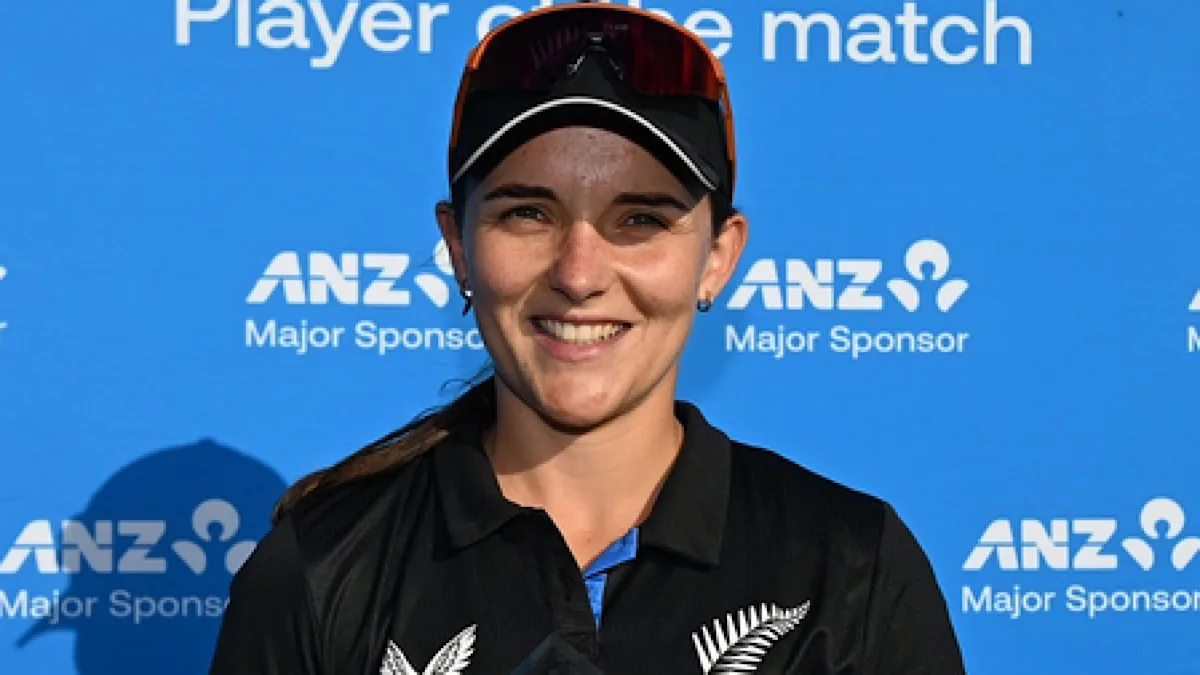
Kerr, Devine star as New Zealand cruise past South Africa in 1st T20I

After opting to bat first, the White Ferns piled up an imposing 190/7 in their 20 overs, riding on an explosive innings from Kerr and a fluent knock by opener Georgia Plimmer.

IANS | New Delhi |

A dominant all-round display led by captain Amelia Kerr and a four-wicket haul from former skipper Sophie Devine powered New Zealand to a commanding 80-run victory over South Africa in the opening T20I of the three-match series at Bay Oval on Sunday. With the comprehensive win, New Zealand took a 1-0 lead in the series.

After opting to bat first, the White Ferns piled up an imposing 190/7 in their 20 overs, riding on an explosive innings from Kerr and a fluent knock by opener Georgia Plimmer.

The hosts suffered an early setback when Isabella Gaze was run out in the opening over, but Plimmer steadied the innings with a brisk 63 off 44 balls, striking five fours and three sixes. She shared a match-defining 146-run partnership with Kerr for the second wicket that put South Africa under sustained pressure.

Kerr led from the front with a blistering 78 off just 44 deliveries, smashing 11 fours and two sixes to anchor New Zealand’s innings. After the partnership was broken in the 14th over, quick contributions from Sophie Devine (12), Brooke Halliday (13) and Maddy Green (10) helped the hosts maintain momentum and push the total close to the 200-mark.

For South Africa, Ayabonga Khaka and Nonkululeko Mlaba picked up a wicket each, while Masabata Klaas bowled a tidy spell, conceding just 15 runs in her four overs.

In reply, South Africa never recovered after a shaky start. Opener Sune Luus (10) fell early before captain Laura Wolvaardt (0) departed cheaply, leaving the visitors struggling at 17/2 in four overs.

Tazmin Brits tried to rebuild the innings with a fighting 29 off 35 balls, while Chloe Tryon chipped in with a 12-ball nine and Nadine de Klerk made a run-a-ball 19. However, regular wickets prevented South Africa from mounting any meaningful challenge.

Devine was the pick of the bowlers, delivering a superb spell of 4/12 in her four overs to dismantle the Proteas middle order. She received good support from Jess Kerr, who conceded just 13 runs in her four-over spell while also picking a couple of wickets to dent the visitors’ hope.

Late resistance from Kayla Reyneke (24 not out) helped South Africa reach 110/7, but the target proved far beyond their reach.

Election Commission to announce schedule for 2026 Assembly Polls in five states today

The Election Commission of India (ECI) will announce the schedule for the 2026 general elections to the legislative assemblies of Assam, Kerala, Puducherry, Tamil Nadu and West Bengal at a press conference

UNI | New Delhi |

The Election Commission of India (ECI) will announce the schedule for the 2026 general elections to the legislative assemblies of Assam, Kerala, Puducherry, Tamil Nadu and West Bengal at a press conference in New Delhi Sunday evening.

‎According to a media invitation issued by the poll panel, the announcement will be made at 4:00 PM during a press conference at Vigyan Bhawan, New Delhi.
“The Election Commission of India will hold a press conference today i.e. Sunday, March 15, 2026 at 4:00 PM at Vigyan Bhawan, New Delhi, to announce the schedule for General Elections to Legislative Assemblies of Assam, Kerala, Puducherry, Tamil Nadu and West Bengal,” the invitation said.

‎Assembly elections in these five assemblies are expected to be among the most significant political contests of 2026, with major national and regional parties preparing for high-stakes campaigns. Once the election schedule is announced, the Model Code of Conduct will come into effect in the respective states and union territory.

‎The last assembly elections in these states were held in 2021, when parties including the Bharatiya Janata Party, All India Trinamool Congress, Dravida Munnetra Kazhagam and the Left Democratic Front secured key victories in their respective regions. The upcoming polls are expected to witness intense campaigning and alliances as parties seek to retain or expand their political influence.
Videos, satellite images capture Iran drones breaching US defences across seven nations

One such video shows an aerial drone descending rapidly from a cloudless sky toward its target at Camp Buehring, a US military base in Kuwait. The drone struck near a running track inside the base, triggering a fiery plume of black smoke.

Manisha Gupta |

A series of verified videos and satellite images circulating online appear to show Iranian drones striking targets across the Middle East, raising concerns about the effectiveness of U.S. and allied air defences during the ongoing conflict.

One such video shows an aerial drone descending rapidly from a cloudless sky toward its target at Camp Buehring, a US military base in Kuwait. The drone struck near a running track inside the base, triggering a fiery plume of black smoke, as shown in the footage posted online on March 1 and verified by NBC News.

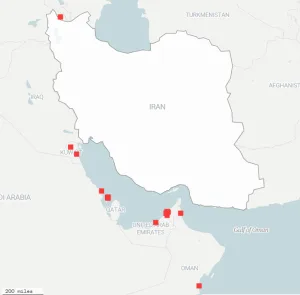
The footage posted online on March 1, is one of over 30 open-source videos and satellite images verified by NBC News showing Iranian drone strikes and interceptions by the U.S. and its allies across seven countries.

According to an analysis of more than 30 open-source videos and satellite images verified by NBC News, Iranian drones targeted locations across seven countries. The visual evidence reportedly documents both successful strikes and interception attempts by U.S. and allied defence systems.

Drone strike locations confirmed by NBC News

A beachgoer in Dubai captured another video showing a buzzing drone flying inland as a warplane thundered overhead, launching an interception missile moments later.


The review found that in 21 of 26 recorded drone strike videos, the drones appeared to reach their intended targets. Apparent targets include military bases, transportation hubs, energy infrastructure and diplomatic facilities, suggesting a broad range of strategic sites being threatened.

The visual evidence also indicates potential gaps in protection for several high-value locations during the early phases of the conflict. As the United States and Israel continue airstrikes on Iran aimed at weakening its nuclear, ballistic missile and drone capabilities, Tehran has responded with waves of missiles and low-cost explosive drones.

The verified footage and satellite imagery provide a rare visual record of how these drone attacks have unfolded across the region, underscoring the growing role of unmanned systems in modern warfare.

Terrorist killed as Army foils infiltration bid on LoC in J&K’s Uri

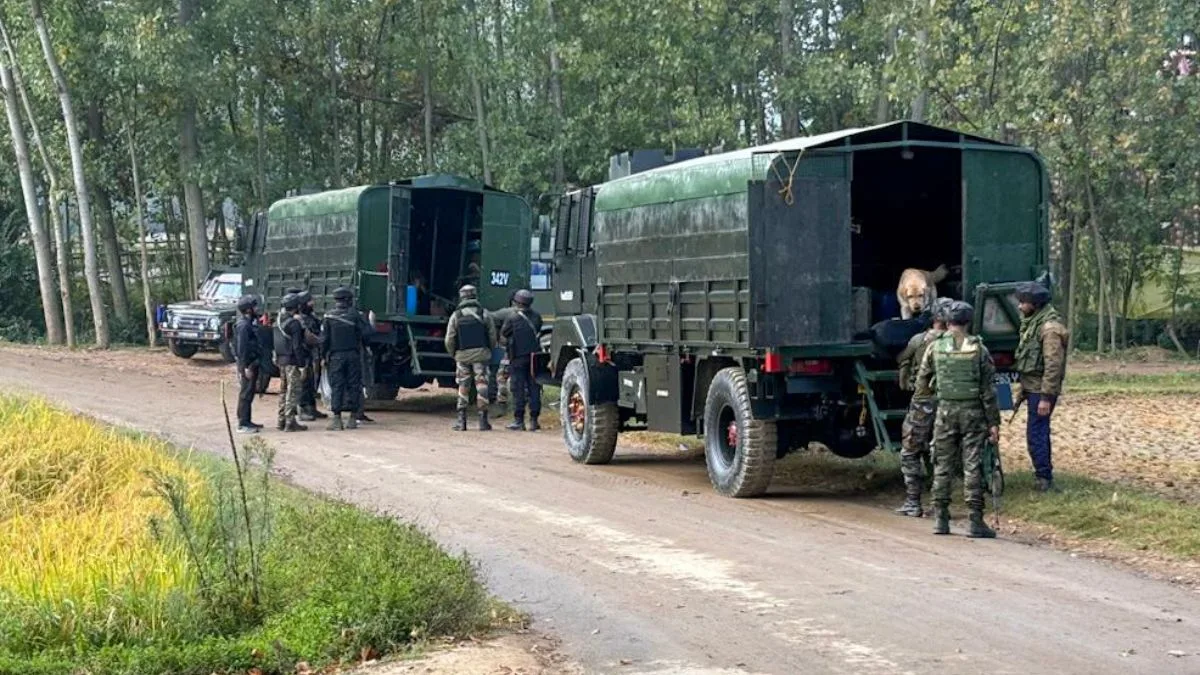
Alert troops of the Army foiled an infiltration bid on Sunday on the Line of Control (LoC) in Uri sector of Jammu and Kashmir’s Baramulla district, and during the operation, one terrorist was killed.

IANS | New Delhi |

Alert troops of the Army foiled an infiltration bid on Sunday on the Line of Control (LoC) in Uri sector of Jammu and Kashmir’s Baramulla district, and during the operation, one terrorist was killed.

Srinagar headquartered Chinar Corps of the Army said on X, “Based on a specific intelligence input provided by #JKP regarding an infiltration attempt, a joint operation was launched on intervening night of 14-15 Mar 26 in Gen area Buchhar, Uri sector.”

“Alert troops spotted suspicious movement of a terrorist in the thicket. The ambush was readjusted and the terrorist was challenged resulting in terrorist opening indiscriminate fire. In the Contact a Pak terrorist was eliminated,” the Army further said.

Warlike stores, including an AK rifle, pistols and a large quantity of ammunition, have been recovered by the troops.

The Army said that the anti-infiltration operation continued.

More details were awaited.

Earlier, one terrorist was gunned down while trying to cross the LoC on March 10 in the Nowshera sector in Rajouri district.

The Army had said that the movement of two terrorists was detected in the general area of Jhangar, Nowshera, along the LoC. Responding with swift and calibrated combat action, alert troops engaged the infiltrators, triggering an exchange of fire. In the ensuing engagement, one Pakistan-sponsored terrorist was eliminated, effectively thwarting any breach of the LoC.

Army is deployed along the 740 km-long LoC in Jammu and Kashmir. The LoC is situated in Baramulla, Bandipora and Kupwara districts of the Valley and in Poonch, Rajouri and partly in Jammu district of Jammu division.

In addition to the LoC, J&K has a 240 km-long international border situated in Samba, Kathua and Jammu districts where the Border Security Force (BSF) is deployed.

The Army and the BSF are deployed to prevent infiltration, exfiltration, drug smuggling and drone activity initiated from the Pakistani side.

Drones are used by terror outfits with the help of Pakistan’s ISI to drop payloads of arms, ammunition, cash and drugs on the Indian side of the border.

These payloads are picked up by the overground workers (OGWs) of the terrorists and then passed on to the terrorists to sustain terrorism in the union territory.

The Army and BSF have deployed special hi-tech anti-drone equipment along the border to check the drone menace, while human surveillance and intelligence continue to monitor the activities on the border 24/7. Drones are used more often by the enemy along the international border rather than the LoC in Jammu and Kashmir

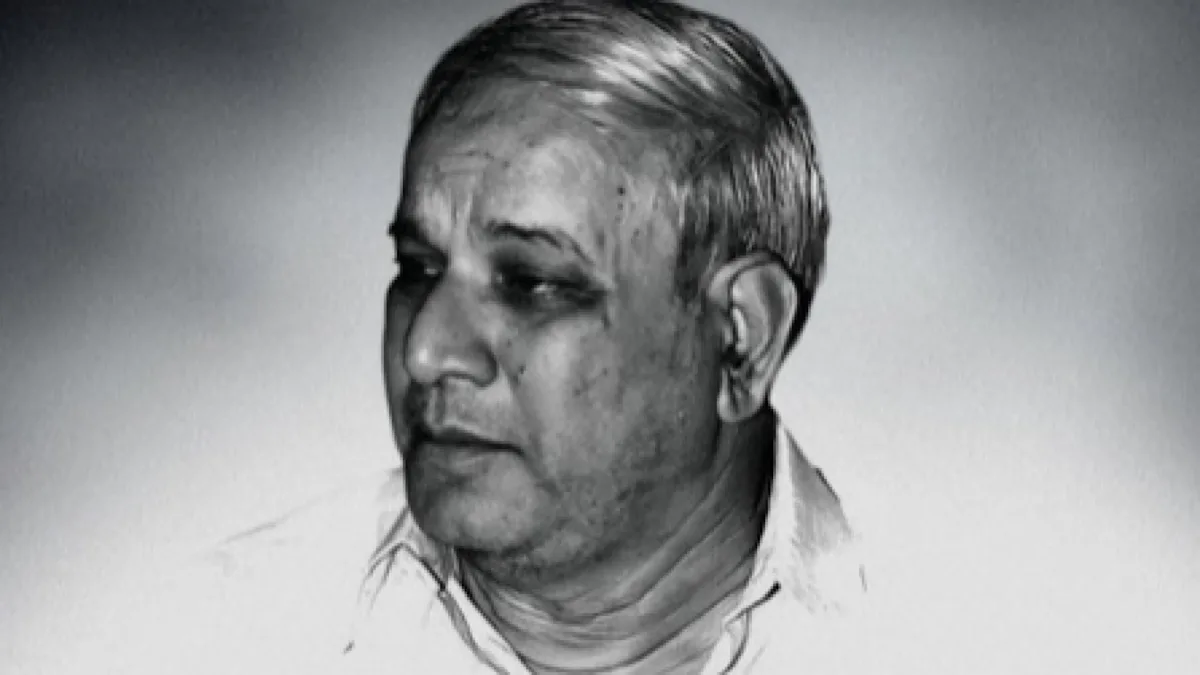
Kanshi Ram’s tireless struggle and dedication inspiration for all, says Rahul Gandhi

Rahul Gandhi, Leader of Opposition (LoP) in the Lok Sabha, on Sunday paid homage to Bahujan Samaj Party (BSP) founder Kanshi Ram on his birth anniversary, calling his “tireless struggle and dedication” for the poor

IANS | New Delhi |

Rahul Gandhi, Leader of Opposition (LoP) in the Lok Sabha, on Sunday paid homage to Bahujan Samaj Party (BSP) founder Kanshi Ram on his birth anniversary, calling his “tireless struggle and dedication” for the poor, Dalits, and the deprived an “inspiration for all”.

Kanshi Ram, who was born in March 1934, is widely revered by his followers as ‘Manyavar’ or ‘Bahujan Nayak’. He is regarded as a key political leader and social reformer who transformed the struggle of Dalits and other marginalised communities from largely social activism into a strong political movement.

He is also credited with reviving and expanding the vision of B.R. Ambedkar in post-independence India, particularly in northern states such as Uttar Pradesh, by emphasising political power as the central instrument for achieving social justice and economic empowerment for oppressed communities.

Gandhi, in a post on X, paid tributes to Kanshi Ram, stating, “His tireless struggle and dedication for the rights of the poor, Dalits, and the deprived is an inspiration for all of us. He believed that the Constitution is the true strength of Dalits, backward classes, and the deprived. That very Constitution is in danger today — the very ones who took oath on Baba Saheb’s Constitution to come to power are now bent on weakening it.”

“Until there is participation in power, justice is not possible — this is what Kanshi Ram Ji’s legacy tells us. This dream of social justice will not remain unfulfilled. The Congress Party has always stood for the participation and respect of the Bahujan society and for the protection of the Constitution — then, now, and forever,” Gandhi said.

Congress national president Mallikarjun Kharge also took to X and said, “The great social reformer, the esteemed Shri Kanshi Ram Ji, accomplished the historic task of organising the Dalit, deprived, exploited, and backward classes and securing them a respectable place in the mainstream of Indian politics.”

“His contribution to the struggle for social justice and equality will forever remain an inspiration. On his birth anniversary, we pay humble tribute to him,” he added.

Congress Wayanad MP Priyanka Gandhi Vadra called Kanshi Ram the “hero of the ideology of social justice” and the “fierce voice” of Dalits, deprived, and exploited sections.

Paying homage to the leader, Priyanka said, “Shri Kanshi Ram Ji, through his thoughts and movements, gave new heights to the constitutional principles of equality and justice. His ideas will forever continue to inspire us all.”