Logo

CM Mamata announces payment of DA arrears to state govt employees from March

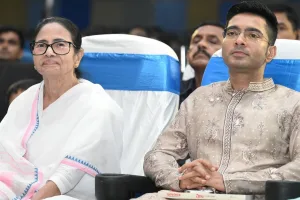
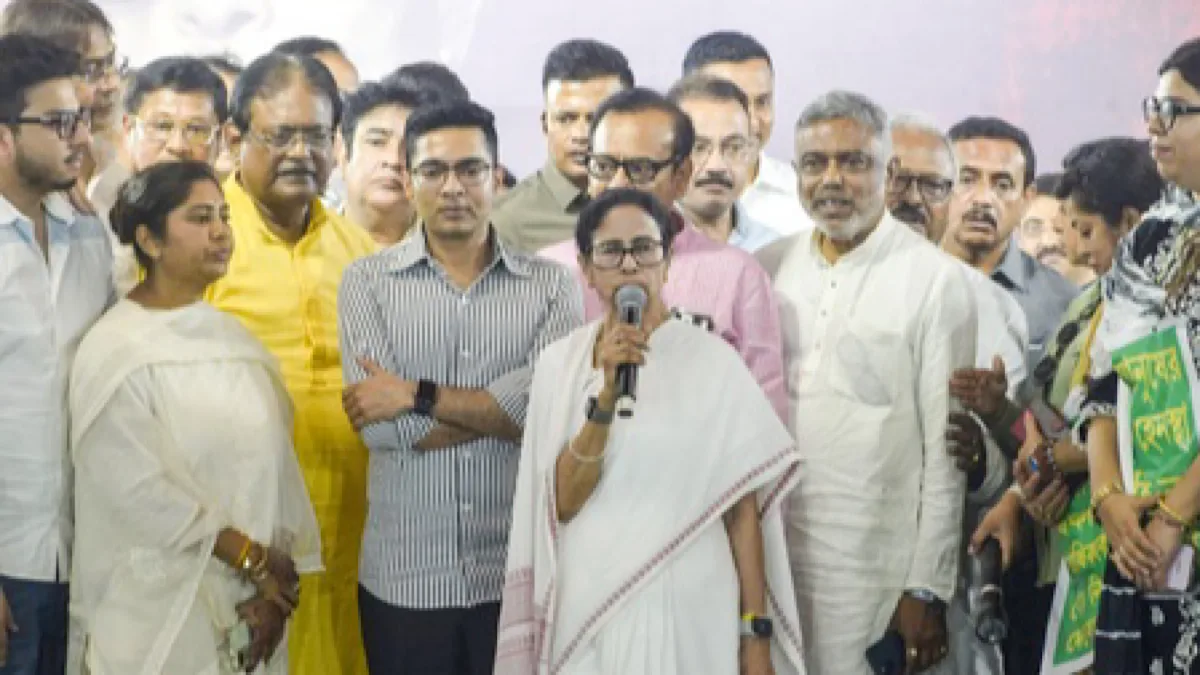
West Bengal Chief Minister Mamata Banerjee on Sunday announced the payment of dearness allowance (DA) arrears to state government employees from 2008, as directed by the Supreme Court.

IANS | Kolkata |

West Bengal Chief Minister Mamata Banerjee on Sunday announced the payment of dearness allowance (DA) arrears to state government employees from 2008, as directed by the Supreme Court.

The announcement was made through a statement posted by the Chief Minister on her social media handle on Sunday afternoon.

Notably, the announcement came just an hour before the Election Commission of India revealed the polling dates for four states and one Union Territory, including West Bengal.

“I am happy to announce that our Maa-Maati-Maanush government has delivered on its promise to all its employees and pensioners, and to lakhs of teachers and non-teaching staff of our educational institutions, as well as employees and pensioners of our other grant-in-aid institutions such as panchayats, municipal bodies and other local bodies. They will start receiving their ROPA 2009 DA arrears from March 2026 onwards as per the modalities detailed in the notifications issued by our Finance Department,” read the statement from the Chief Minister.

Earlier this year, the Supreme Court directed the state government to pay 25 per cent of the DA arrears for the period between 2008 and 2019 by March 31.

The court also instructed the state government to follow a phased approach, as directed by the apex court, to ensure that DA payments to employees are aligned with those of Central government employees, along with clearing the arrears that have accumulated since 2008.

The agitation over pending dearness allowance in West Bengal has been continuing for a long time. State government employees have been demanding DA at par with Central government employees under the 2009 pay structure, known as ROPA 2009, along with the arrears accrued on it.

Earlier this month, state government employees also observed a cease-work protest accusing the state government of being reluctant to abide by the Supreme Court order.

Bengal Assembly polls announced amid uncertainty over 42 lakh voters

According to figures from the office of the Chief Electoral Officer (CEO), West Bengal, the total number of electors in the state was 7,66,37,529 before the Special Intensive Revision (SIR) of the electoral rolls was announced in November last year.

IANS | Kolkata |

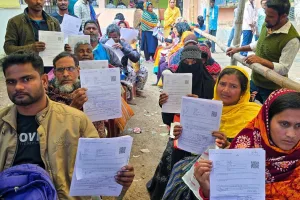
The Election Commission of India (ECI) on Sunday announced a two-phase polling schedule for the 2026 West Bengal Assembly elections — April 23 and April 29 — even as the fate of over 42 lakh voters referred for judicial adjudication after being classified under the “logical discrepancy” category remains uncertain.

According to figures from the office of the Chief Electoral Officer (CEO), West Bengal, the total number of electors in the state was 7,66,37,529 before the Special Intensive Revision (SIR) of the electoral rolls was announced in November last year.

However, when the final voters’ list — excluding those referred for judicial adjudication — was published on February 28, the number of electors came down to 6,44,52,609.

Of these, around 3.28 crore are male voters, around 3.16 crore are female voters, and a little over 1,000 fall under the ‘others’ category.

Earlier, a little over 60 lakh voters had been referred for judicial adjudication. Of them, the adjudication process had been completed for slightly less than 18 lakh voters till Saturday night, which means the fate of over 42 lakh voters remains uncertain.

A total of 732 judicial officers, including 100 each from neighbouring Odisha and Jharkhand, are currently working round the clock to complete the adjudication process.

When asked about the status of voters whose adjudication process has not yet been completed, Chief Election Commissioner (CEC) Gyanesh Kumar said the judicial officers are conducting the process expeditiously as per the directions of the Supreme Court.

“Supplementary lists are published, and the names approved by the judicial adjudicators will be included in those supplementary lists,” Kumar said, adding that the first supplementary list is likely to be published this week.

The Chief Justice of the Calcutta High Court, Sujoy Paul, is personally monitoring the progress of the judicial adjudication process on a daily basis.

Sources in the CEO’s office said that in some districts such as Bankura and Purulia, the process of clearing the names under consideration has already been completed, and the final voter list for these districts can be prepared.

However, significant work still remains in districts such as Murshidabad, South 24 Parganas, North Dinajpur and Malda, where the number of names under consideration is comparatively higher.

Commenting on clashes between supporters of the Trinamool Congress and the Bharatiya Janata Party (BJP) on Saturday afternoon that coincided with the Prime Minister’s visit to the state, the CEC said that since the Model Code of Conduct has come into force with the announcement of polling dates, the Commission will take strict action in such incidents.

After poll notification issued, Trinamool says will win more than 250 seats in Bengal

After the Election Commission announced that Assembly polls in West Bengal would be held in two phases, Trinamool Congress exuded confidence that it would win more than 250 seats in the state.

IANS | Kolkata |

After the Election Commission announced that Assembly polls in West Bengal would be held in two phases, Trinamool Congress exuded confidence that it would win more than 250 seats in the state.

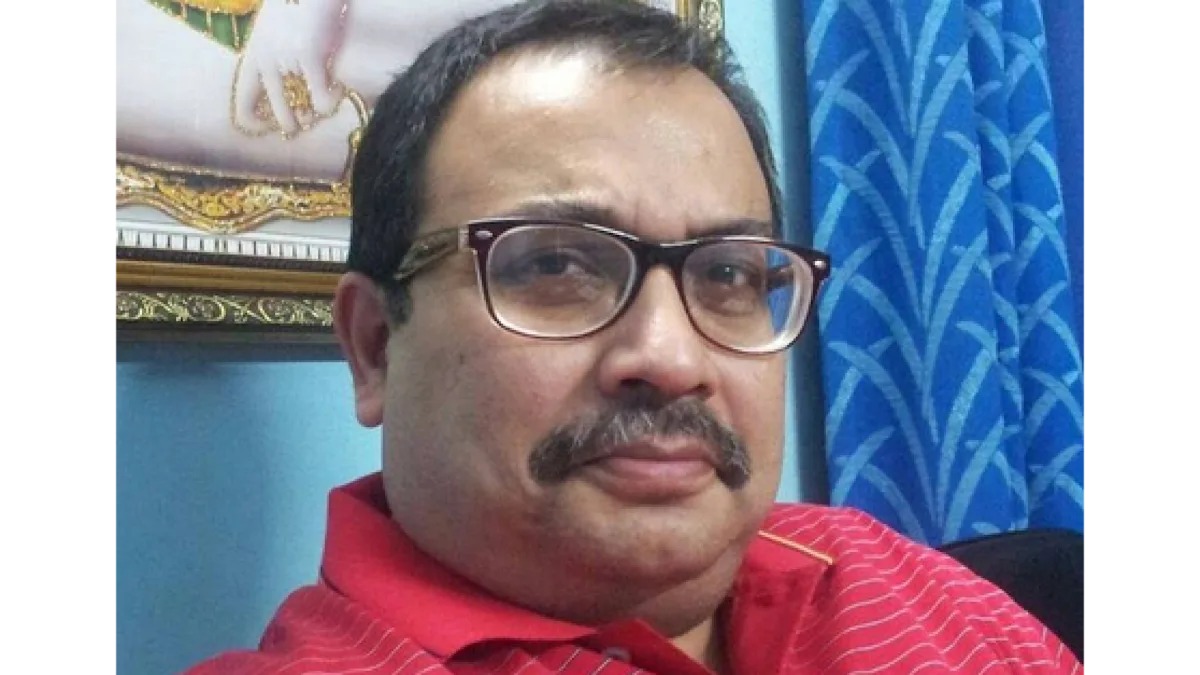
Speaking to media persons after the Assembly poll notification was issued, Trinamool spokesperson Kunal Ghosh said the election being held in a fewer number of phases than the last time would not change the prospects of the ruling party in West Bengal.

“Is the Election Commission itself impartial? Chief Election Commissioner Gyanesh Kumar himself is not impartial. We will not say anything! We are prepared even for a single-phase election. Our only demand is: remain impartial. The people will take action against him after the elections. The polls will not be held by excluding even a single valid voter. Which seats the BJP chooses to contest is merely their game of illusion. This time, Trinamool will win from Nandigram as well.”

Ghosh further said that the people of West Bengal would vote against the oppression of the central government and its politics of revenge after the benefits of welfare schemes were stopped in the state.

“West Bengal will vote against the central government’s politics of revenge, the politics of depriving Bengal, the insult to the Bengali language and the insult to the people of Bengal. People of Bengal will vote against those who are harassing people in the name of Special Intensive Revision (SIR). BJP will lose even more badly. TMC will win more than 250 seats. Mamata Banerjee will return to power with more than 250 MLAs.”

The Election Commission of India (ECI) on Sunday announced a two-phase polling schedule for the 2026 West Bengal Assembly elections — April 23 and April 29 — even as the fate of over 42 lakh voters referred for judicial adjudication after being classified under the “logical discrepancy” category remains uncertain.

According to figures from the office of the Chief Electoral Officer (CEO), West Bengal, the total number of electors in the state was 7,66,37,529 before the Special Intensive Revision (SIR) of the electoral rolls was announced in November last year.

However, when the final voters’ list — excluding those referred for judicial adjudication — was published on February 28, the number of electors came down to 6,44,52,609.

Bengal: Oppn calls for govt change; says election must be free, fair and peaceful

Opposition parties in West Bengal on Sunday called for a change of government in the state, saying the Assembly election must be free, fair, and peaceful.

Statesman News Service | Kolkata |

Opposition parties in West Bengal on Sunday called for a change of government in the state, saying the Assembly election must be free, fair, and peaceful.

BJP state president Samik Bhattacharya welcomed the Election Commission’s decision to hold the West Bengal Assembly election in two phases.

“We welcome the two-phase elections in West Bengal. Elections are held in other states, but no reports of death or violence are reported from there. Only in West Bengal are people targeted by Trinamool Congress workers for voting for the Opposition. Here, violence is unleashed, and democracy is crushed. We want people of Bengal to change the situation. A change of government is the need of the hour,” said Bhattacharya while speaking to media persons.

He also expressed confidence that the BJP will form the government in West Bengal on May 4, when the vote count will take place.

“There is no need to think about what the ruling party here is saying. People are tired of TMC’s divisive, hate-filled politics. We will put an end to this. The Trinamool Congress will pay for its misdeeds in these Assembly polls,” said Bhattacharya.

The CPI(M), meanwhile, said the full voters’ list should have been published before the poll notification was announced.

CPI(M) state secretary Md Salim said, “Designating such a large number of people as ‘D-voters’ is not legally tenable. One is either a voter or one is not. Initially, a mapping exercise was conducted; subsequently, even for those who successfully established their identities during that mapping, attempts were made to exclude their names on various pretexts or to keep them in limbo. Both the Central and State governments have failed in this regard. This serves as proof that the offices of the BDO, SDO, and DM have degenerated into mere political lackeys. The BLOs and COs, too, have suffered from indecision.”

Hitting out at the Election Commission, Salim further said, “How can they organise a fair, free and impartial vote when they cannot prepare a healthy voter list for everyone? The voter list that could not be prepared fairly, impartially, and free from communalism is being done in particular places, particular religions, particular booths, particular areas, to predetermine the outcome of the vote based on sheer numbers.”

He even threatened to move court to include the names of valid voters in the supplementary voters’ list.

“We will see this through to the very end. Our movement is underway to uphold voting rights and to establish democracy. There will be no politics of division here. We have consulted with our legal organisations. We appeal to all lawyers, those who cherish democracy and humanity, to join us; our legal professionals will form volunteer groups spanning from the Sub-divisional and District Courts to the High Court and the Supreme Court. We will stand firmly by the side of those under attack. We will fight to the very end to ensure that these voting rights are established.”

Speaking to IANS, state Congress leader Ashutosh Chatterjee said there is no clarity on whether people under adjudication will be able to vote.

“What would happen to the 60 lakh people whose names are under adjudication? No specific guidelines were laid down during today’s press conference. No discussion was held on the law-and-order situation. When will the supplementary voters’ list be published? There is no clarity on these issues. Is the Election Commission an ambassador of the BJP? Why can it not say the election would be impartial?” said Chatterjee.

The Election Commission of India (ECI) on Sunday announced a two-phase polling schedule for the 2026 West Bengal Assembly elections, April 23 and April 29, even as the fate of over 42 lakh voters referred for judicial adjudication after being classified under the “logical discrepancy” category remains uncertain.

According to figures from the office of the Chief Electoral Officer (CEO), West Bengal, the total number of electors in the State was 7,66,37,529 before the Special Intensive Revision (SIR) of the electoral rolls was announced in November last year.

However, when the final voters’ list, excluding those referred for judicial adjudication, was published on February 28, the number of electors came down to 6,44,52,609.

Bengal Assembly polls: Trinamool heads into election amid several challenges

One of the key challenges cited by observers is the impact of communal violence reported in parts of the state in April last year after protests against the newly promulgated Waqf (Amendment) Act turned violent.

IANS | Kolkata |

With the Election Commission of India (ECI) announcing a two-phase polling schedule for the 2026 West Bengal Assembly elections on Sunday, political observers believe the polls could pose the toughest challenge for the ruling Trinamool Congress since it came to power in 2011.

One of the key challenges cited by observers is the impact of communal violence reported in parts of the state in April last year after protests against the newly promulgated Waqf (Amendment) Act turned violent.

A division bench of the Calcutta High Court had observed that had the state government taken prompt and timely action, including deciding earlier on the deployment of Central Armed Forces (CAF), the situation might not have escalated to such an extent.

Observers note that the incidents of violence in Murshidabad reportedly alienated a section of Hindu voters, while the state government’s subsequent change in stance regarding the Waqf (Amendment) Act is believed to have caused discontent among sections of Muslim voters, who have traditionally been seen as a key support base of the Trinamool Congress since 2011.

Initially, during the first half of 2025 when the Waqf (Amendment) Act was promulgated, Chief Minister Mamata Banerjee had said that the Act would not be implemented in West Bengal.

However, later in the year the state government issued a notification directing the registration of Waqf properties in the state on the UMEED portal within a stipulated deadline.

This prompted non-BJP opposition parties in the state, particularly the CPI(M)-led Left Front, the Congress and the All India Secular Front, to accuse the Trinamool Congress government of adopting a contradictory stand on the issue.

Another major challenge for the ruling party has been the order by a division bench of the Supreme Court cancelling 25,753 teaching and non-teaching appointments in various state-run schools across West Bengal over irregularities in the recruitment process.

The apex court also endorsed the earlier observation of the Calcutta High Court that the entire panel had to be cancelled as the state government failed to provide separate lists distinguishing “tainted” candidates from “untainted” ones.

Observers also point to the alleged rape of a law student within her college premises in Kasba in South Kolkata earlier this year as another issue that has generated political controversy.

All three accused in the case were reportedly associated with the Trinamool Congress’s student wing, Trinamool Chhatra Parishad (TMCP). Opposition parties have been raising the issue to target the ruling party over law and order and campus politics in the state.

Another factor being discussed ahead of the polls is the deletion of a large number of names from the electoral rolls following the Special Intensive Revision (SIR) in West Bengal.

According to available figures, around 63 lakh names were removed from the final voters’ list published on February 28, and further deletions may occur after the completion of the ongoing judicial adjudication of voters placed under the “logical discrepancy” category.

In the 2021 West Bengal Assembly elections, polling began on April 18 and the results were declared on May 2. The state recorded an average voter turnout of 82.3 per cent across the 294 Assembly constituencies.

The Trinamool Congress won 215 of the 290 seats it contested, while the BJP secured 77 seats.

The CPI-M-led Left Front and the All India Secular Front (AISF) had a seat-sharing arrangement in 2021. While AISF managed to win one seat, both the Left Front and the Congress failed to win any seats in the Assembly.

This time, the Congress and the Left Front are contesting the elections separately.

EXCLUSIVE: From EV adoption to pollution fight, CM Rekha Gupta maps ‘New’ Delhi’s next governance model

Delhi Chief Minister Rekha Gupta discusses electric mobility plans, women’s safety initiatives, healthcare upgrades and the challenges of managing pollution and rapid population growth in the national capital.

SIDDHARTHA RAI | New Delhi |

After returning to power in Delhi after nearly three decades, the BJP government says its focus will be on long-term urban transformation, from reducing air pollution and expanding electric mobility to strengthening healthcare systems and improving public safety.

In an interview with The Statesman, Delhi Chief Minister Rekha Gupta spoke about the government’s plans for the capital, from pushing electric vehicles and building more charging stations to improving women’s safety and upgrading public hospitals.

She also spoke about Delhi’s long-running pollution problem, the pressure a fast-growing population is putting on the city, and why governments will have to work together to fix infrastructure gaps.

1. What is the EV plan of Delhi for passenger vehicles?

The transition to electric mobility is one of the central pillars of our government’s environmental strategy. Vehicular emissions account for a significant share of Delhi’s pollution, especially during the winter months, and therefore electrification of passenger vehicles is critical if we want lasting improvements in air quality.

Our upcoming EV Policy 2.0 focuses on three main pillars: affordability, infrastructure and sustainability. For passenger vehicles, the policy proposes strong financial incentives during the first three years to accelerate adoption. Infrastructure is equally important. The government plans to install sufficient public charging stations across Delhi by 2030, with each having multiple charging points located in markets, parking complexes, residential societies and government buildings. These should be available like petrol pumps are for ICE vehicles.

We are also expanding electric public transport, and thousands of electric buses are being added to the fleet to ensure that clean mobility becomes the backbone of Delhi’s transport system. We already have the largest e-bus fleet in the country, and we plan to increase it to at least 13,000.

Our long-term vision is clear: Delhi should become India’s EV capital where owning an electric vehicle is affordable, convenient and environmentally responsible.

2. You took a strong stand on the Uttam Nagar Holi murder case. What is the government’s stand on such cases?

The message from the government is very clear: Delhi will not tolerate heinous crime. When crimes shock the conscience of society, the administration must act decisively within the framework of law. The safety of citizens is the first responsibility of any government.

At the same time, we believe in due process and the rule of law. What we are trying to do is create a strong deterrence so that criminals understand that the state will respond firmly.

Our broader approach to law and order is not limited to punitive action. It includes better surveillance systems, improved coordination between civic agencies and police and investment in safer infrastructure. When citizens feel that the government stands with victims and not with criminals, trust in governance improves.

3. Women’s safety in the city?

Women’s safety is not just a governance issue; it is a social commitment. A city cannot call itself developed unless women feel safe at any hour of the day. Over the past year, we have worked on several initiatives aimed at improving safety and mobility for women. One example is the Saheli Pink NCMC card, a digital travel initiative designed to make public transport easier and safer for women commuters.

But safety is about more than just transport. It involves lighting of streets, better surveillance through CCTV networks and rapid coordination between law-enforcement agencies. We are also strengthening community-based initiatives and awareness campaigns to encourage reporting of crimes and ensure quick response.

At the policy level, we are expanding women-centric healthcare and social infrastructure as well to empower women. There are over 500 palna ghar across the city now. We offer nutrition kits to pregnant women, and we just rolled out the amount for Ladli scheme beneficiaries that had remained pending for over a decade. In fact, we have gone a step further and added more benefits to the Ladli scheme to transform it into the Lakhpati Bitiya scheme.

Ultimately, safety is a combination of policing, infrastructure and social attitudes. Our government is committed to addressing all three.

4. Arvind Kejriwal is portraying relief in the liquor scam as a victory?

Legal matters are before the courts, and it would not be appropriate for me to comment on specific proceedings. Our constitutional system functions on the principle that courts decide legal questions independently. Kejriwal still needs to face the High Court and the Supreme Court.

Public life comes with accountability. When serious allegations arise regarding public policy or governance decisions, the people of Delhi expect transparency and clear answers. Political leaders should focus on explaining their actions rather than turning legal developments into political narratives. However, AAP leaders destroyed evidence, including hundreds of phones, and did not respond to summons by investigating agencies. What were they trying to hide?

My government has consciously chosen a different approach. Instead of engaging in political drama, we are focusing on governance, whether it is improving infrastructure, addressing water supply issues, expanding public transport or tackling pollution.

The citizens of Delhi are more interested in practical solutions that affect their daily lives. Our priority is to deliver on those expectations.

5. Do you think Congress is working at cross purposes with the country?

In a democracy, opposition parties have a very important role. Constructive criticism strengthens governance and helps governments improve policies. However, when misinformation spreads, especially during crises, it can create unnecessary panic among citizens.

For example, issues such as fuel supply, energy availability or pollution require coordinated responses between different levels of government. Political narratives that amplify misinformation can undermine public confidence in institutions. Governments and opposition parties should both focus on solutions. Delhi faces several complex challenges of rapid population growth, pollution, water supply and infrastructure pressure. Addressing these issues requires cooperation across governments, parties and institutions. Our administration remains focused on practical governance rather than political confrontation. Citizens ultimately judge governments by results, not rhetoric.

6. The BJP has come to power after 27 years in Delhi. How are the challenges in governance different from what previous governments have dealt with?

Every era of governance has its own challenges and priorities. Sheila Dikshit focused on large infrastructure projects that transformed Delhi’s roads and transport network. Our vision is what I call “Integrated Development for a Developed Delhi”.

This means ensuring that infrastructure, environmental sustainability and social services grow together. For instance, we are simultaneously working on electrifying public transport, expanding charging infrastructure, improving water supply management and upgrading healthcare systems.

We have also introduced targeted development initiatives to ensure that growth is not concentrated in a few areas. Recently, the government announced a special development budget for each assembly constituency so that local infrastructure needs can be addressed more effectively. We have revived the trans-Yamuna and rural development boards.

At the same time, environmental sustainability is central to our model. Projects ranging from rooftop solar installations on government buildings to large-scale EV adoption are part of this approach. Our goal is to create a city where development is balanced, sustainable and inclusive.

7. Which global city would you like Delhi to become?

Delhi is unique because it combines ancient history with modern aspirations. The goal is not to replicate any one city but to learn from the best practices of many global cities. For instance, cities like Singapore demonstrate how efficient urban management and technology can transform governance. London offers a strong example of integrated public transport networks. Cities in East Asia have shown how urban planning and innovation can coexist with dense populations. Our aim is to adapt such global best practices to Delhi’s context. That means modern infrastructure, efficient public transport, clean air, digital governance and vibrant cultural spaces.

At the same time, Delhi must preserve its heritage, from historic markets like Chandni Chowk to monuments and traditional neighbourhoods. Development should enhance the city’s identity rather than erase it. If we succeed, Delhi will not merely resemble another global city; it will become a global model in its own right.

8. How will Delhi get rid of its air pollution?

Air pollution is one of the most complex challenges Delhi faces, and there is no single solution. It requires a multi-sector strategy.

First, transport emissions must be reduced. This is why we are pushing aggressively for electric mobility and expanding the electric bus fleet to reduce dependence on polluting vehicles.

Second, we are strengthening environmental infrastructure with cleaning drains and improving water systems as part of broader ecological restoration efforts connected to the Yamuna river system. Third, urban management practices such as dust control at construction sites, road maintenance with end-to-end road paving and greening, automated misting systems across major roads and green budgeting will play a major role. Air pollution in Delhi is also a regional problem involving neighbouring states and agricultural practices. Therefore, cooperation with the central government and surrounding states is essential.

9. Will Delhi introduce right-to-charge or congestion pricing?

Both of these ideas are being studied carefully because global cities increasingly rely on such mechanisms to manage traffic and encourage cleaner mobility. A right-to-charge policy can help accelerate EV adoption by ensuring that residents of apartments and housing societies have access to charging facilities. Without such a framework, many people who want to switch to electric vehicles may find it difficult.

Congestion pricing is a more complex issue. While cities like London and Singapore have implemented it successfully, Delhi’s transport system and regional commuting patterns are different. Many people travel daily from neighbouring NCR cities, so any such policy must be carefully evaluated.

Our immediate priority is to strengthen public transport and expand EV infrastructure first. Once reliable alternatives to private vehicles become widely available, policy tools such as congestion pricing can be considered more seriously.

10. How is politics different for women?

Women in politics often face a different kind of scrutiny compared to men. There are expectations not only about leadership but also about balancing public life with personal responsibilities. However, I see this not as a challenge but as an opportunity. Women leaders often bring empathy, patience and consensus-building skills to governance. These qualities are extremely valuable in public administration.

My own journey in politics has been shaped by grassroots work and engagement with communities. Support from my family has been crucial because public life requires long hours and constant commitment. I believe India is entering a phase where more women will participate in politics and leadership roles. Governments must encourage this trend by creating opportunities and platforms for women to lead.

11. One message to Delhiites?

My message to the people of Delhi is simple: this city belongs to all of us.

Government policies alone cannot transform a city. Citizens must also participate by following traffic rules, supporting environmental initiatives, conserving water and electricity and keeping neighbourhoods clean.

Delhi has immense potential. It is a city of entrepreneurs, professionals, students and cultural diversity. If we work together, government and citizens, we can overcome challenges like pollution, congestion and infrastructure pressure. I want every resident to feel proud of this city and to contribute to its development. They should also know that they have a CM and ministers who are willing to work 24 hours and 365 days for them.

12. One message to AAP?

Democracy works best when there is constructive opposition. I would encourage them to contribute ideas and policy suggestions that help improve governance. Political competition should be about offering better solutions to citizens rather than constant confrontation. Delhi’s people expect their leaders to work on real issues such as pollution, water supply, transport and economic growth. If opposition parties engage in constructive debate, democracy becomes stronger.

13. One message to online trolls?

Social media has transformed public discourse. It allows citizens to directly question governments and hold leaders accountable, which is a positive development. However, debate must remain respectful. Disagreement is part of democracy, but abuse and misinformation do not strengthen society. My message to online users is to use digital platforms responsibly and with fact-based information. If social media becomes a space for constructive dialogue, it can help improve governance and transparency.

14. Congress ecosystem vs the BJP-RSS ecosystem with respect to women?

Every political ecosystem evolves differently. In our organisation, women have been encouraged to take leadership roles at every level, from grassroots workers to chief ministers and cabinet ministers. The philosophy of our movement is that women should not only be beneficiaries of welfare schemes but also participants in decision-making. Political empowerment is just as important as social or economic empowerment. When women participate in governance, policies become more inclusive and responsive.

15. How will you strengthen government hospitals and healthcare infra?

Delhi’s healthcare system carries a unique burden because patients from across the country also come here for treatment. This puts enormous pressure on public hospitals. Our approach has three components: expanding infrastructure, strengthening primary healthcare and improving management systems. We are working to upgrade hospital facilities, increase bed capacity and introduce better digital systems to manage patient flow. Preventive healthcare and community clinics like the Aayushman Arogya Mandirs will also reduce the load on tertiary hospitals. Healthcare is a priority sector for our government, and improving it will remain a continuous process.

16. Does Delhi need a long-term population planning policy?

Absolutely. Delhi’s population has grown rapidly over the decades, and this has put enormous pressure on housing, transport, water supply and environmental systems. Urban planning must look at least 20–30 years ahead. That means integrating Delhi’s development with the broader National Capital Region so that growth is distributed more evenly. Smart urban planning, transit-oriented development and better land-use policies will help manage population pressures more effectively.

17. What is the one policy success you want people to judge your tenure by?

If five years from now Delhi becomes visibly cleaner, better connected and more efficiently governed, I would consider that a success.

Whether it is reducing pollution through electric mobility, improving public transport, strengthening healthcare systems or modernising infrastructure, the goal is to make daily life easier for citizens. Ultimately, governance should be judged by outcomes, not announcements.


Trump criticises Supreme Court over tariff ruling, attacks Fed chair Powell

United States President Donald Trump launched a sharp attack on the Supreme Court of the United States after a ruling related to tariffs, accusing the court of undermining his administration’s efforts to protect American economic interests.

ANI | New Delhi |

United States President Donald Trump launched a sharp attack on the Supreme Court of the United States after a ruling related to tariffs, accusing the court of undermining his administration’s efforts to protect American economic interests.

The President also criticised Jerome Powell, Chair of the Federal Reserve, over alleged financial mismanagement connected to a renovation project in Washington DC.
In a lengthy statement on Truth Social, Trump said the ruling on tariffs was the most significant decision for him and argued that the court’s position could benefit foreign countries and companies at the expense of the United States.

“The decision that mattered most to me was TARIFFS! The Court knew where I stood, how badly I wanted this Victory for our Country, and instead decided to, potentially, give away Trillions of Dollars to Countries and Companies who have been taking advantage of the United States for decades. Our Supreme Court has made these Countries very happy but, as the Court pointed out, I have the absolute right to charge TARIFFS in another form, and have already started to do so. The Hundreds of Billions of Dollars that our Adversaries want our Country to pay back to others that have disrespected the U.S.A., until I came along, should be marked down, in the eyes of the Public, as just another reason why the United States had been in such major decline –But, not anymore, because we have MADE AMERICA GREAT AGAIN and, very soon, it will be GREATER THAN EVER BEFORE!”

The President thanked three conservative justices — Samuel Alito, Clarence Thomas and Brett Kavanaugh — for what he described as their “Wisdom and Courage” in relation to the case. He further alleged that the court had increasingly become politically influenced and claimed that judges appointed by Democrats tended to vote together in major rulings.
Trump also revived his long-standing claim that the 2020 United States presidential election had been unfairly decided, criticising the judiciary for refusing to entertain legal challenges related to the vote.

“The Democrats on the Court always ‘stick together,’ no matter how strong a case is put before them — There is rarely even a minor ‘waver.’ But Republicans do not do this. They openly disrespect the Presidents who nominate them to the highest position in the Land,” he said in the statement.

In the same message, the President turned his criticism toward Federal Reserve Chair Jerome Powell, accusing him of mishandling a renovation of the Federal Reserve complex in Washington.

“The Courts treat Republicans, and me, so unfairly, always seeming to protect those who should not be protected. They are highly politicized. Cases don’t matter, the Judge does!” Trump said.
He also criticised US District Judge James Boasberg, alleging political bias in judicial decisions related to his administration and calling for scrutiny over the handling of cases involving the Federal Reserve project.
Trump argued that the tariff decision reflected what he described as a broader pattern of politically driven rulings that he believes have affected policies pursued during his presidency.
The President maintained that he would continue to pursue alternative tariff mechanisms to safeguard U.S. economic interests and reiterated his pledge to prioritise policies aimed at strengthening the country’s trade position.

Tragedy at Cuttack Hospital: 10 dead, several injured in ICU fire, CM orders judicial probe

Chief Minister has ordered a judicial inquiry into the incident and assured strict action against anyone found guilty of negligence that may have led to the fire.

Statesman News Service | New Delhi |

In a devastating incident, at least 10 patients lost their lives, and several others suffered serious burn injuries after a massive fire broke out in the Intensive Care Unit (ICU) of the trauma care centre at SCB Medical College and Hospital in Cuttack, Odisha, early Monday morning.

According to sources, the blaze erupted between 2:30 AM and 3:00 AM, reportedly triggered by a suspected electrical short circuit.

After visiting the hospital, meeting the injured patients, and reviewing the situation, Odisha Chief Minister Mohan Charan Majhi announced an ex-gratia of Rs 25 lakh for the families of each of the deceased victims. The Chief Minister also ordered a judicial inquiry into the incident and assured strict action against anyone found responsible for negligence that may have led to the fire.

PM Modi has also announced an ex-gratia of Rs. 2 lakh from PMNRF for the next of kin of each deceased, and Rs. 50,000 for the injured in the fire incident.

Addressing the media, CM Majhi said the fire broke out in the trauma care unit of the hospital due to a suspected short circuit, affecting patients in the Trauma Care ICU as well as those in a nearby ICU and ward.

Calling the incident extremely unfortunate, CM said seven critically ill patients died during the evacuation process, while three others succumbed after being shifted to other ICUs. He stated that a total 23 patients who were undergoing treatment on the first floor of the Trauma Care ICU were immediately evacuated to safer areas after the fire was detected.

Majhi also acknowledged the bravery of 11 hospital staff members, including security personnel, who risked their lives to rescue patients during the emergency. Several of them suffered smoke inhalation and minor burns while shifting patients, but are currently stable and receiving treatment in a ground-floor ward.

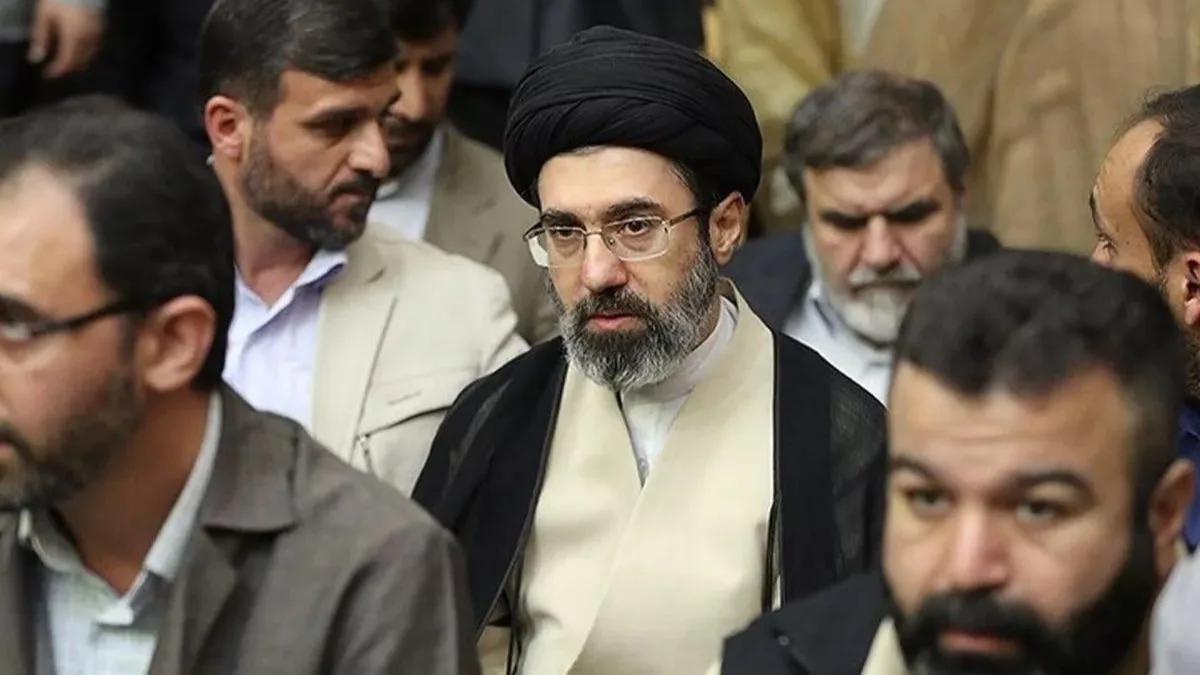
Did Ali Khamenei doubt his son Mojtaba’s ability to lead Iran? US intelligence raises questions

New intelligence cited by CBS suggests Iran’s late leader Ali Khamenei questioned his son Mojtaba’s abilities, even as the cleric assumes power during a deepening conflict with the US and Israel.

Statesman News Service | Mumbai |

Fresh intelligence gathered by the United States indicates that Iran’s former Supreme Leader Ayatollah Ali Khamenei was uneasy about the idea of his son Mojtaba Khamenei taking over the country’s top position, according to sources cited by CBS News, the BBC’s US media partner.

The revelation comes just days after Mojtaba Khamenei, 56, was chosen as Iran’s new supreme leader by the country’s Assembly of Experts, placing him at the centre of a rapidly escalating regional confrontation following US-Israeli strikes on Iran.

According to multiple sources quoted by CBS News, the late leader had privately expressed doubts about his son’s suitability for the role. The sources said Ali Khamenei believed Mojtaba lacked the necessary qualifications and intellectual strength to lead the Islamic Republic. They also suggested that the former leader was aware of concerns surrounding his son’s personal life.

The intelligence assessment has reportedly been shared with US President Donald Trump and a small group of senior officials around him.

$10 million on the table: US seeks information on Iran’s new supreme leader Mojtaba Khamenei

Mojtaba Khamenei vows revenge and warns of wider conflict

Despite the doubts attributed to his father, Mojtaba Khamenei has struck a defiant tone since assuming power.

In a message released through his official Telegram account and reported by Xinhua, Iran’s new leader repeated Tehran’s demand that its “enemy” pay compensation for damage and casualties caused during the conflict.

“We will obtain compensation from the enemy, and if he refuses, we will take as much of his property as we determine, and if that is not possible, we will destroy the same amount of his property,” the message read.

Earlier, in his first address after taking office, Mojtaba Khamenei promised that Iran would avenge those killed in the recent strikes and declared that Tehran would continue its resistance. The statement also stressed that the closure of the Strait of Hormuz would remain a strategic option and warned that Iran could open additional fronts if required.

The message, according to local media reports, was read out by a female presenter on Iranian state television. It also emphasised that Iran seeks cordial relations with neighbouring countries and would only target locations from which attacks are launched against it.

Reports of injury and hiding amid ongoing strikes

As tensions rise, questions have also emerged about Mojtaba Khamenei’s condition and whereabouts.

Iran International reported that the message attributed to the new supreme leader did not reveal where he was, nor did it provide details about his health or physical condition.

Meanwhile, US Defence Secretary Pete Hegseth said during a Pentagon briefing that Mojtaba Khamenei had been wounded and forced into hiding as the country’s leadership grapples with sustained American strikes.

Hegseth said the Iranian command structure was facing growing strain as the military campaign continued.

Conflict that reshaped Iran’s leadership

The current crisis began on February 28 when Israel and the United States launched coordinated attacks on Tehran and several other Iranian cities.

The attacks killed Iran’s then supreme leader Ali Khamenei, along with several top military commanders and civilians. Tehran hit back soon after, firing waves of missiles and drones at Israel and at US military bases and assets across the Middle East.

A few days later, on March 8, Iran’s powerful Assembly of Experts named Mojtaba Khamenei as the country’s new supreme leader, a decision that has opened a tense and uncertain new phase for the Islamic Republic.

‘Direct talks with Iran already yielding results’: EAM Jaishankar on Indian tankers’ safe pass via Strait of Hormuz

External Affairs Minister cited the recent transit of two Indian-flagged tankers, Shivalik and Nanda Devi, through the Strait as evidence that the diplomatic efforts are working.

Statesman News Service | New Delhi |

External Affairs Minister S. Jaishankar has said that direct diplomatic engagement with Iran is proving to be the most effective way to ensure safe passage for Indian vessels through the Strait of Hormuz, as tensions in the Middle East continue to threaten maritime trade.

The Union Minister, in an interview with the Financial Times UK, said New Delhi is actively engaging with Tehran to help reopen and stabilise traffic through the narrow waterway, which handles nearly 20 per cent of global oil shipments.
The Minister’s remarks come as disruptions in the Strait of Hormuz, one of the world’s most critical energy corridors, raise concerns about global oil supply chains and energy security.

Talks with Tehran ‘already yielding results’

Jaishankar indicated that India’s diplomatic outreach has begun to show progress, noting that ongoing discussions with Iranian authorities “already yielding some results.”

“Certainly, from India’s perspective, it is better that we reason and we coordinate and we get a solution than we don’t,” he said, adding that conversations with Tehran remain ongoing as efforts continue to secure safe navigation for Indian vessels.

The minister suggested that India finds it more effective to “reason and coordinate” with Tehran rather than disengage.


Sustained diplomacy central to India’s approach

Explaining New Delhi’s broader strategy, Jaishankar said India is pursuing a policy of sustained dialogue with regional partners to safeguard its economic and energy interests.

He cited the recent transit of two Indian-flagged tankers, Shivalik and Nanda Devi, through the Strait as evidence that the diplomatic efforts are working.

The vessels are transporting around 92,712 metric tonnes of liquefied petroleum gas (LPG) and are currently headed toward the western Indian ports of Mundra Port and Kandla Port.

‘Case-by-case’ clearances for vessels

Despite the successful passage of the two tankers, Jaishankar clarified that there is currently no blanket agreement guaranteeing passage for all Indian ships.

Instead, approvals are being handled individually. “The transit is being managed on a case-by-case basis,” he explained.


Surge in crude prices could raise global inflation by 60 bps, cut growth by up to 0.4 pp in 2026: Gita Gopinath

A sharp rise in crude oil prices could push global inflation higher and slow down global economic growth in 2026, according to Gita Gopinath, former Chief Economist of the International Monetary Fund (IMF).

ANI | New Delhi |

A sharp rise in crude oil prices could push global inflation higher and slow down global economic growth in 2026, according to Gita Gopinath, former Chief Economist of the International Monetary Fund (IMF).

Reacting to the recent surge in crude prices globally, Gopinath said that if oil prices average around USD 85 per barrel in 2026, it could significantly impact global economic indicators.

In a social media post, she stated, “If we are now looking at an average of USD 85 a barrel for oil for 2026 then that could shave off around 0.3-0.4pp from global growth. Headline inflation could rise by 60 bps. Before the Iran conflict global growth was projected at 3.3 per cent for 2026 on the assumption oil would average USD 65 a barrel.”
Crude oil prices in the international market have surged by more than 40 per cent in just 15 days amid the ongoing war involving the United States, Israel and Iran. The conflict has disrupted the energy supply route through the Strait of Hormuz and has affected global energy markets, particularly in Asia.

Before the beginning of the war, crude oil prices in international markets on February 27 were trading at around USD 73 per barrel. However, by Saturday, prices had surged sharply to around USD 103 per barrel.
The rise from USD 73 to USD 103 per barrel represents an absolute increase of USD 30 and a percentage increase of approximately 41.1 per cent in a short span of time.
The recent intense military conflict between the United States and Iran began on February 28, when U.S. and Israeli forces launched wide-ranging, direct attacks on Iranian military assets and leadership.

During the strikes led by the United States and Israel, Iran’s Supreme Leader Ayatollah Ali Khamenei was also killed.
The sharp increase in crude oil prices reflects growing concerns about global energy supply disruptions as the conflict in the Middle East continues to escalate.
The Strait of Hormuz plays a crucial role in global oil transportation, and any disruption in this route has a significant impact on global energy markets.
The surge in crude prices has raised concerns among economists and policymakers about its potential impact on inflation and economic growth globally, particularly if prices remain elevated for a prolonged period.

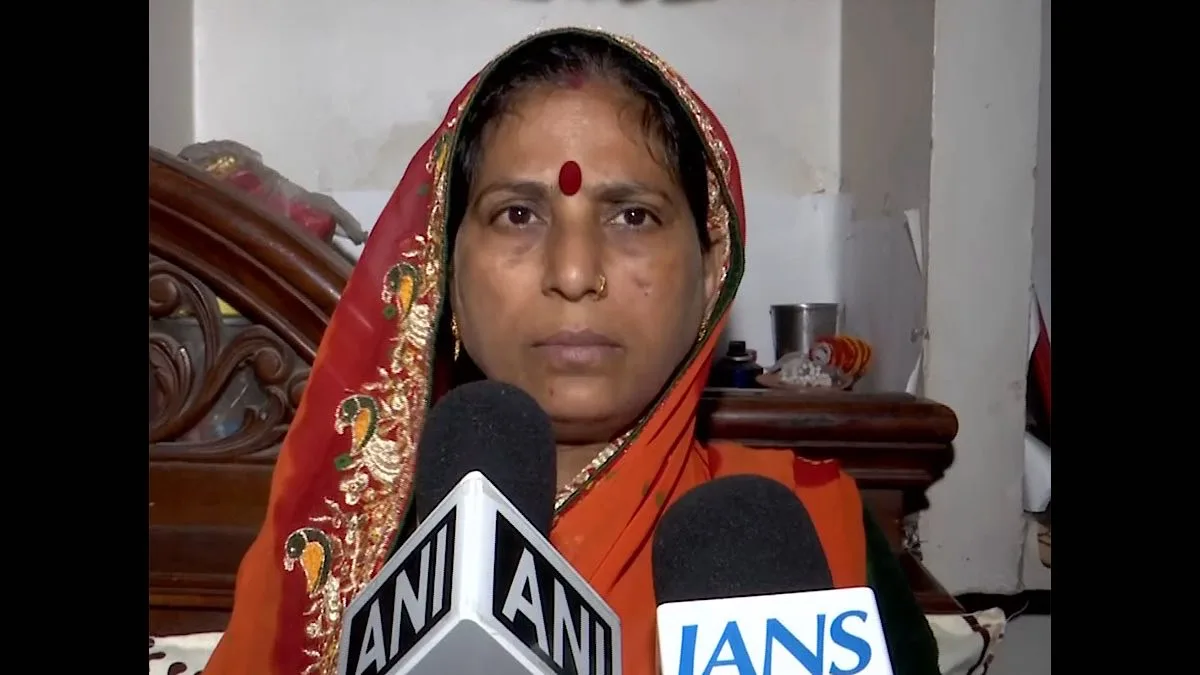
“Nothing has been heard yet on our appeal”: Uttam Nagar murder victim’s mother demands justice

The mother of the 26-year-old man, Tarun, who was killed in Delhi’s Uttam Nagar area after a clash broke out between neighbours from different communities during Holi celebrations, has demanded strict action against the accused, saying that no action has been taken on their appeal, neither do they know who has been arrested yet.

ANI | New Delhi |

The mother of the 26-year-old man, Tarun, who was killed in Delhi’s Uttam Nagar area after a clash broke out between neighbours from different communities during Holi celebrations, has demanded strict action against the accused, saying that no action has been taken on their appeal, neither do they know who has been arrested yet.

Speaking to reporters here, the grieving mother alleged that the incident began over a minor dispute involving a water balloon thrown by her seven-year-old niece. “Nothing has been heard yet on our appeal. When they are shot, I will be at peace. I want the same thing to happen to them as the Yogi government does to criminals… My son has left this world. May no one else’s son leave. They say 16 people have been arrested, but they haven’t even shown us who they are,” she said.

According to her, the confrontation escalated after a few drops of water from a balloon accidentally fell on the woman named Saira. “Because of just a drop of water, my son has been killed… The beginning of everything was that my 7-year-old niece was standing on the second floor, and I was standing just below my house. She was playing. A 7-year-old girl doesn’t know what colour is. From her hand, the balloon fell down. A few drops of water fell on that lady named Saira. Upon this, Saira started threatening her, saying that I will get you raped by my family members. I asked her, how can you say this about a girl?” she alleged.

She further claimed that within a short time, the woman called several people to the spot. “In such a short time, she called 20-25 people. Some of them are women, and some of them are men… Tarun didn’t know anything… It happened at night. She called her men,” she said.

Describing the alleged assault, the mother said she was attacked during the incident. “A lady named Salima hit me with a rod on the face. Some men tore my blouse… They hit my brother-in-law, husband, son, and my brother-in-law’s son. They said they will finish Khatiks today,” she alleged.
She expressed disappointment that, according to her, no Dalit leader had visited the family after the incident. “Still, no Dalit leader has come to me… I want justice for my son. If the Yogi government does it, why can’t Rekha Gupta do it?… She hasn’t even come to meet us yet. Our daughter went to meet her,” she said.

Tarun’s father also demanded strict punishment for those involved in the attack. Thanking people who have protested seeking justice, he said, “I would like to say to the people of the country that the way everyone is protesting for Tarun, we are thankful to everyone. We are doing all this to get justice for Tarun. All the criminals should be punished severely.”

He claimed that the family had no prior dispute with the accused. “We didn’t have a fight with them (attackers’ family)… but sometimes, they threw water and acid at the street dogs. Sometimes they used to hit them with sticks and stones. Our kids used to scold them for hitting dogs. Slowly, we started feeling that they had made Tarun their target because of this… A balloon fell from the girl. She is our family’s daughter. The balloon fell near her (the lady from the attackers’ family) feet. It didn’t fall on her. Still, she started screaming. Many people came to her.”

The father alleged that the attackers came with sticks and stones and vandalised their house before the police arrived. “They came with sticks and stones. They started beating us. Then we went inside the house. They were kicking the gate. They broke the windows of our house… The police came after an hour of the fight… The administration is doing its job. We ask the administration to hang the accused or get them murdered in an encounter. We ask the administration to break their whole house,” he said.

This comes after the Delhi High Court on March 10 directed the Municipal Corporation of Delhi (MCD) not to undertake any demolition action against the homes of persons accused in the murder of Tarun, until the court hears the matter on Wednesday.
According to police officials, the incident occurred on March 4 after a dispute reportedly broke out over a balloon during Holi celebrations, which later escalated into a violent altercation. During the clash, Tarun was allegedly assaulted and later died due to the injuries

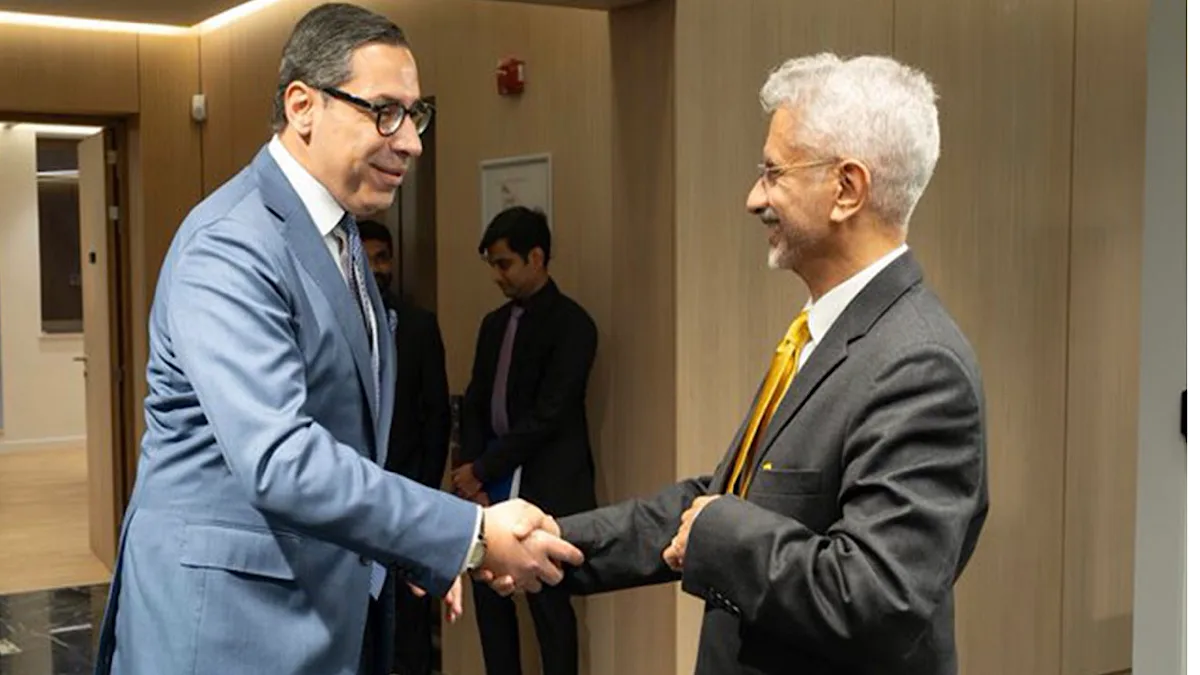
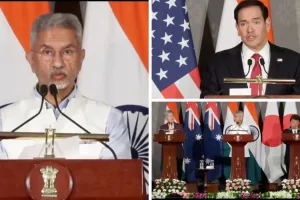
EAM Jaishankar meets Cyprus FM Constantinos Kombos in Brussels

External Affairs Minister S Jaishankar met with the Foreign Minister of Cyprus Constantinos Kombos.

ANI | New Delhi |

External Affairs Minister S Jaishankar met with the Foreign Minister of Cyprus Constantinos Kombos.

In a post on X, Jaishankar wrote, “Pleasure to meet FM Constantinos Kombos of Cyprus today in Brussels. Discussed ways to further strengthen our strategic partnership and exchanged views on the situation in West Asia. Holding the Presidency of the Council of the EU, appreciate Cyprus’ support in advancing European Union-India engagement.”
This would be Jaishankar’s first meeting with Kombos since he assumed office.
Kombos wrote in a post on X, ” Ahead of the Foreign Affairs Council and the informal exchange with #India’s Minister of External Affairs @DrSJaishankar it was a real pleasure meeting with my dear colleague Dr. Jaishankar. Insightful exchange focusing on: Further steps of the Cyprus-India strategic partnership, in view also of the upcoming visit of President Christodoulides to India.”
Cyprus also spoke about the impact of the EU-India Summit and the signing of the EU-India free trade agreement.

He wrote, “EU-India relations, following the recent EU-India Summit and the successful conclusion of the EU-India Free Trade Agreement.”
Kombos also spoke about the West Asia conflict in his post on X and said that he and Jaishankar had exchanged views on the issue.
“The profoundly concerning developments in the #MiddleEast. Underlined that diplomacy and dialogue is the only sustainable paths to de-escalation and stability,” Kombos’ post read.
Jaishankar is on an official visit to Brussels, Belgium, beginning March 15 to 16 at the invitation of European Union (EU) High Representative and Vice President Kaja Kallas to interact with Foreign Ministers of the 27 EU member states at the Foreign Affairs Council Meeting.

During the visit, EAM Jaishankar is to hold meetings with the leadership of the European Union and his counterparts from Belgium and other EU Member States.
The visit of EAM, coming shortly after the historic 16th India-EU Summit, is expected to further deepen India’s Strategic Partnership with the European Union.

Tamil Nadu assembly polls: Model code of conduct in force; Rs 2 lakh seized in Madurai

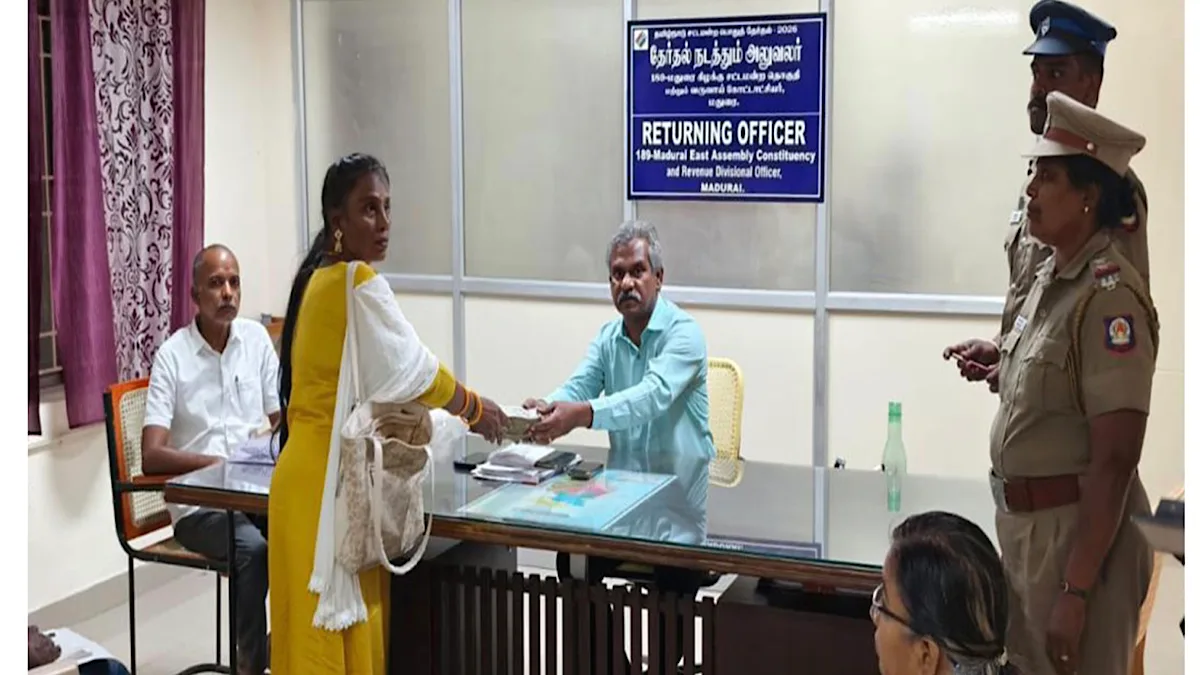
Following the announcement of the 2026 Tamil Nadu assembly elections, the Model Code of Conduct (MCC) has come into force across the state, with election officials seizing Rs 2 lakh in unaccounted cash in Madurai during vehicle inspection.

ANI | New Delhi |

Following the announcement of the 2026 Tamil Nadu assembly elections, the Model Code of Conduct (MCC) has come into force across the state, with election officials seizing Rs 2 lakh in unaccounted cash in Madurai during vehicle inspection.
In Madurai’s 189 – East Assembly Constituency, a vehicle inspection was carried out on March 15 at around 7:00 PM in the Rajakkur division, which falls under the East Circle, by the Static Surveillance Team (SST) 3rd Team (B Team) led by Sivagami Sundari.
According to the District PRO, during the inspection, Naresh Kumar was found carrying ₹2 lakh in cash without valid documents.
The officials seized the cash, and the amount was subsequently deposited in the Government Treasury as per the election monitoring procedures.
Election officials have been conducting these regular vehicle checks and inspections across constituencies following the implementation of the MCC to ensure a free and fair election.
With the MCC having come into force, Vellore District Collector and District Election Officer Subbulakshmi has also instructed all department officials, flying squad teams and static surveillance teams to act swiftly and remain vigilant.
A review meeting with officials of various departments, election flying squads and static surveillance teams was held under the leadership of District Election Officer and Collector Subbulakshmi and District Superintendent of Police Sivaraman at the Vellore District Collectorate.

During the meeting, detailed instructions were given regarding the procedures to be followed by the flying squads and surveillance teams. Officials were also directed to maintain strict monitoring and respond immediately to any complaints received.
According to the final electoral roll published on February 23, Vellore district has a total of 11,33,587 voters, including 5,49,654 male voters, 5,83,769 female voters and 164 third-gender voters.

For the polling process, 1,427 polling booths have been set up at 676 locations across the district. Among them, 137 polling stations have been identified as sensitive.
A total of 1,712 Electronic Voting Machines (EVMs), 1,712 Control Units and 1,855 VVPAT machines have been kept ready for use on the day of polling.
To ensure round-the-clock monitoring, three flying squad teams have been deployed for each assembly constituency, totalling 15 flying squad teams for the five constituencies in the district. Similarly, three static surveillance teams have been formed for each constituency, making it 15 static surveillance teams in total.

Members of the public can lodge election-related complaints through the control room by calling the toll-free number, via WhatsApp, or through the C-Vigil mobile application.
The District Election Officer has also stated that cash exceeding ₹50,000 and gift items worth more than ₹10,000 should not be transported without proper documents.
Meanwhile, Statues of political party leaders were covered with cloth in Coimbatore following the implementation of the MCC ahead of the upcoming elections.
This comes after the EC on Sunday announced the schedule for upcoming assembly elections in four states, including West Bengal, Kerala, Tamil Nadu, and Assam, along with one Union Territory, Puducherry.

The polling in West Bengal will be conducted in two phases on April 23 and 29. Kerala and Assam will vote in a single phase on April 9, while Tamil Nadu will go to the polls on April 23. Voting in Puducherry will also take place on April 9. The counting of votes for all four states and Puducherry will be held on May 4, the ECI announced.

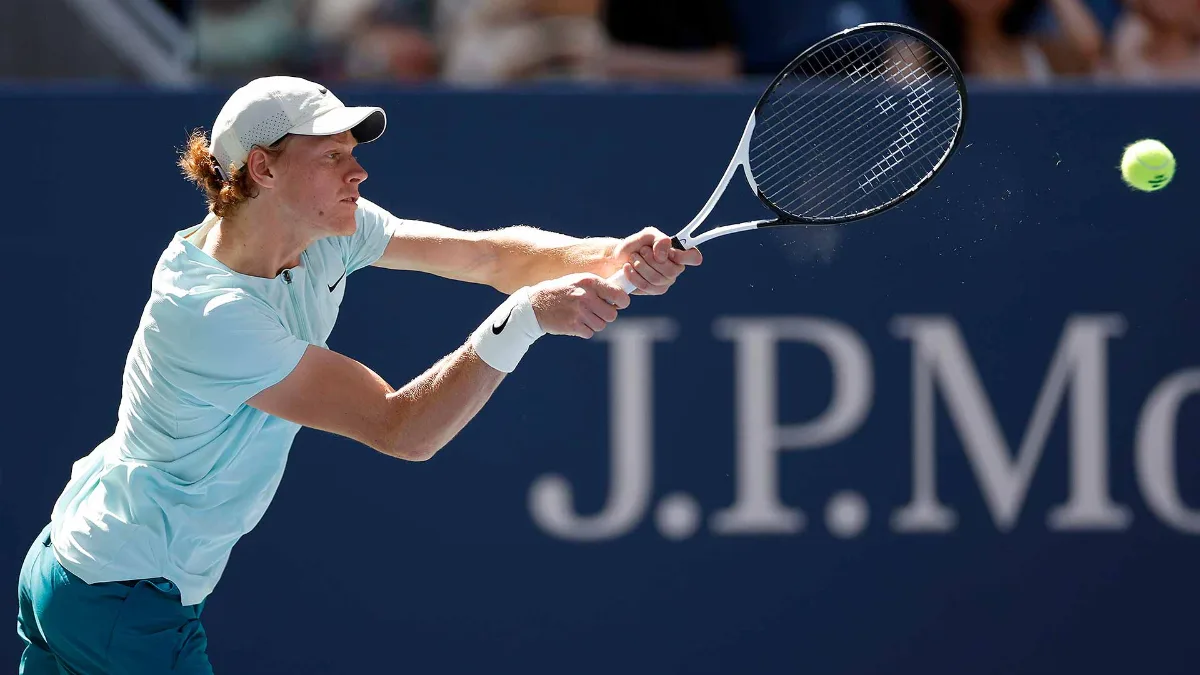
Jannik Sinner and Aryna Sabalenka win maiden Indian Wells titles in thrilling Finals

Jannik Sinner wins his maiden Indian Wells title with a straight-sets victory over Daniil Medvedev, while Aryna Sabalenka clinches the women’s crown after a dramatic comeback against Elena Rybakina.

Statesman News Service | New Delhi |

Italy’s Jannik Sinner captured his maiden Indian Wells title, edging past Daniil Medvedev in a gripping men’s singles final, while world number one Aryna Sabalenka claimed the women’s crown following a dramatic comeback victory over Elena Rybakina at the 2026 BNP Paribas Open.

In the men’s final, Sinner defeated Medvedev 7-6 (8-6) and 7-6 (7-4) in a tightly contested match filled with high-quality baseline rallies and powerful serving from both players. The Italian held his nerve in both tie-breaks to secure the victory and lift his first Indian Wells trophy.

Sinner’s tournament performance was flawless, as he did not drop a single set en route to the title. With this win, he has now captured all the major hard-court titles: six ATP Masters 1000 events, the Nitto ATP Finals, the Australian Open, and the US Open, a feat achieved by only Roger Federer and Novak Djokovic. Since winning his first Masters 1000 title in Toronto in 2023, Sinner has amassed all these elite-level hard-court trophies in under three years.

The women’s singles final also delivered drama as Sabalenka battled back from a set down to defeat Rybakina 3-6, 6-3, 7-6(8-6). The Belarusian rallied after losing the opening set and ultimately prevailed in a tense final-set tie-break, saving a championship point along the way to claim her first Indian Wells title.

For Sabalenka, the victory adds a prestigious trophy to her growing WTA resume after two previous runner-up finishes at Indian Wells. Rybakina, who had defeated Sabalenka in the 2023 final, pushed the world number one to the limit with her aggressive groundstrokes but ultimately fell short in one of the season’s most thrilling finals.

British PM Starmer talks to Trump on importance of reopening Strait of Hormuz

British Prime Minister Keir Starmer spoke with US President Donald Trump to discuss the situation in the Middle East and the disruption to global shipping caused by the closure of the Strait of Hormuz.

IANS | New Delhi |

British Prime Minister Keir Starmer spoke with US President Donald Trump to discuss the situation in the Middle East and the disruption to global shipping caused by the closure of the Strait of Hormuz.

During the conversation on Sunday evening, Starmer stressed the importance of reopening the strategic waterway to help restore normal shipping routes and ease rising global costs, a statement from 10 Downing Street said, Xinhua news agency reported.

Both leaders agreed to remain in close contact regarding developments in the region.

British Energy Secretary Ed Miliband said earlier on Sunday that ending the ongoing conflict is the “best and most conclusive way” to reopen the Strait of Hormuz, a strategic chokepoint through which roughly one-fifth of the world’s oil passes, warning that the situation is harming the global economy.

“The spike in oil and gas prices that we’re seeing is caused by the closure of the Strait,” Miliband told British media, adding that Britain wants to work with allies to seek to get the Strait reopened.

Trump said Saturday on social media that “many countries” would send warships to keep the Strait of Hormuz open, without offering any details.

On February 28, Israel and the United States launched joint attacks on Tehran and other Iranian cities, killing Iran’s Supreme Leader Ali Khamenei, senior military commanders, and more than 1,300 civilians. Iran responded with waves of missile and drone strikes targeting Israeli and US bases and assets across the Middle East.

As the strikes move into their third week, and with the effective closure of the Strait of Hormuz, the disruption to global energy and economic markets is becoming increasingly severe.

In his first message as Iran’s supreme leader, Mojtaba Khamenei pledged to maintain leverage over the Strait of Hormuz.

‘I’m demanding these countries come in’: Trump presses seven nations to police Strait of Hormuz

Oil prices have surged past USD 100 as tensions escalate around the Strait of Hormuz, prompting Washington to seek naval support from countries heavily dependent on Gulf energy shipments.
Statesman News Service | Mumbai |

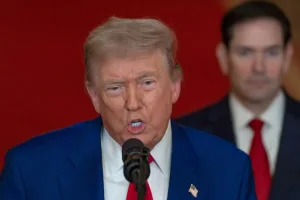
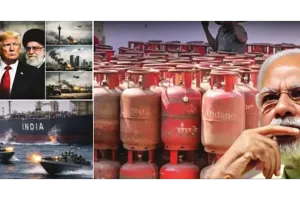
US President Donald Trump has said his administration is asking several countries to deploy naval vessels to help safeguard shipping through the Strait of Hormuz, as tensions with Iran continue to disrupt one of the world’s most crucial energy routes.

The narrow waterway between Iran and the Arabian Peninsula carries roughly one-fifth of global oil exports, making it a strategic choke point for international trade. The proposal to bring in multiple countries reflects Washington’s push to ensure vessels can move safely through the corridor amid rising hostilities in the region.
Speaking to reporters aboard Air Force One, Trump said the United States is in discussions with around seven countries about participating in the effort. According to the President, the nations approached are heavily dependent on oil supplies moving through the strait.

“We’re talking to countries about policing the straits because they are the ones — you know, we don’t get oil, very little, 1%. China, as an example, gets about 90% of its oil from the Hormuz Strait. It’d be nice to have other countries policing with us. And we’ll help, and we’ll work with them.”

He added that the responsibility should lie with nations whose economies rely on the route. “I’m demanding that these countries come in and protect their own territory because it is their own territory,” he said.

Trump also noted, “We’re always there for NATO. We’re helping them with Ukraine. It doesn’t affect us, but we’ve helped them. It’d be interesting to see which country wouldn’t help us with a very small endeavour, which is just keeping the Strait open.”

So far, however, no government has publicly confirmed it will send ships to take part in the proposed mission.

Trump says Iran’s military capability has been heavily weakened

Trump also claimed US strikes had severely reduced Iran’s military strength. According to him, American operations have damaged Tehran’s air force, air defence systems and leadership structures.

“As far as I’m concerned, we’ve essentially defeated Iran,” he said, though he acknowledged that Iran could still mount limited retaliation.

Trump also referred to US attacks on Kharg Island, a key oil export hub, and suggested that Iran’s missile and drone production capacity had been sharply reduced.

“Their missiles are down to a low number,” he said. “Likewise, the drones are way down… about 20% of what they had.”

He further said US forces had begun targeting locations believed to house Iran’s drone manufacturing facilities.

Iran says passage decisions lie with its military

Meanwhile, Iran’s Foreign Minister Abbas Araghchi said several countries had contacted Tehran to ensure safe passage for their vessels.

In an interview with CBS, Araghchi said permission for ships to pass through the strait falls under the authority of the Iranian military. He noted that a number of vessels from different nations had been allowed to transit the waters.

Araghchi also ruled out diplomatic engagement with Washington to end the conflict. He said Iran believes the hostilities began with coordinated US and Israeli strikes on February 28, which took place while indirect talks on Tehran’s nuclear programme were underway.

He added that Iran has no plan to rebuild its stockpile of enriched uranium that was destroyed during earlier operations by the US and Israel.

Oil prices surge as tensions shake global energy markets

Instability around the Strait of Hormuz has rattled global energy markets. Since the conflict escalated two weeks ago, oil prices have crossed USD 100 per barrel, raising fears of prolonged supply disruptions.

In the United States, petrol prices have climbed by more than 70 cents per gallon, adding economic pressure at home.

According to US officials, Iran has attempted to slow traffic in the region using small boats and sea mines. The US Navy, they say, will continue escorting commercial vessels passing through the strait.

The situation has also sparked political debate in Washington. Some Republicans in Congress have urged the White House to move quickly, warning that prolonged tensions could hurt the economy just as the country heads into an election year.

But Trump and some of his allies are not keen on rushing toward a quick end to the conflict. They say the bigger priority is making sure global supply routes remain stable in the long run, even if that means a longer standoff.