Logo

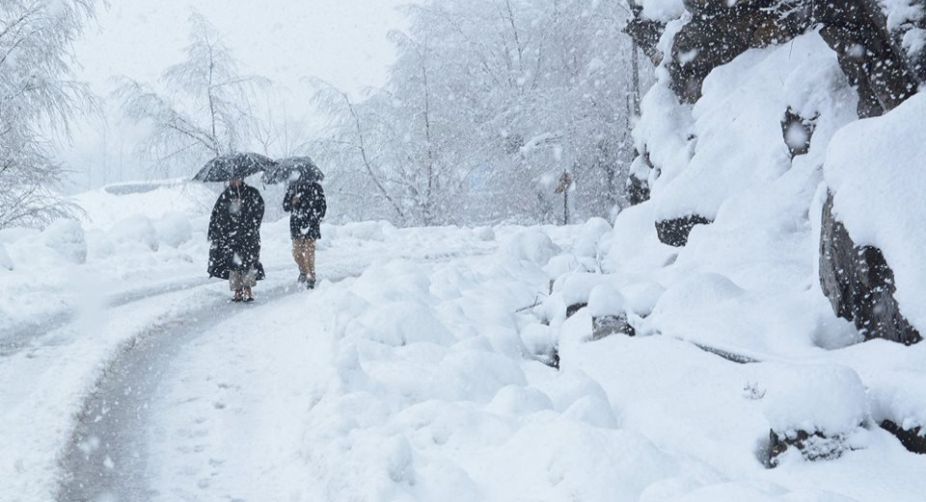
Rain, snow forecast in Kashmir for next 2 days

IANS | Jammu/Srinagar |

Night temperatures improved throughout Jammu and Kashmir due to cloud cover as the weather office on Sunday forecast snow in higher reaches during the next 48 hours.
“After a long dry spell of nearly three months, we are expecting rain and snow in the higher reaches of the state during the next 48 hours,” an official of the MET department said.
“Due to the night-long cloud cover, there has been overall improvement in the minimum temperatures through the state on Sunday.”
“The lowest night temperature was 11.9 degrees in Jammu city while it was 12.0 in Katra town, 9.8 in Batote, 3.5 in Bannihal and 4.6 in Bhaderwah town of Jammu region,” he added.
The official said the lowest night temperature in Srinagar city was minus 0.9 degrees Celsius while it was minus 3.5 in Pahalgam and 1.5 in Gulmarg.
“Kargil town in Ladakh region recorded minus 5.2 which is the lowest recorded night temperature in any town of the state.”
“Leh town recorded minus 3.8 as the minimum temperature,” the official added.

Eyes can reveal onset of Alzheimer’s disease

IANS | New York |

In a breakthrough research, US scientists have identified that early signs of Alzheimer's disease can be detected by looking at the back of patients' eyes.
The researchers found that the retina tissue shows evidence of toxic tau and inflammation — crucial for the onset of the neurodegenerative disease.
“Using the retina for detecting Alzheimer's disease and other neurodegenerative diseases would be non-invasive, inexpensive and could become a part of a normal screening done at patient checkups,” said lead author Ashley Nilson, graduate student at The University of Texas Medical Branch at Galveston.
The study demonstrated that the toxic tau, which spreads between connected brain regions, may initiate inflammation in brain regions.
In Alzheimer's, the tau protein changes into a toxic form called tau oligomers and begins clumping into neurofibrillary tangles, which can leading to the eventual death of the brain cells.
“Our findings suggest that the degeneration of nerve cells due to chronic inflammation induced by the tau oligomers may be combated through the combination of anti-tau oligomer and anti-inflammatory therapeutics for the treatment of Alzheimer's and related diseases,” added Rakez Kayed, Associate Professor at The University of Texas Medical Branch.
This situation can create a cycle of toxic tau, inflammation and cell death throughout the brain over time.
For the study, the team performed a systematic analyses of brain and retina samples from people with Alzheimer's and a mouse model of Alzheimer's.
“Early detection of Alzheimer's warning signs would allow for early intervention and prevention of neurodegeneration before major brain cell loss and cognitive decline occurs,” Nilson said.
Beyond determining eye health and corrective lens prescriptions, having an eye exam can alert health care professionals of several different health conditions including diabetic complications, high cholesterol and high blood pressure, the researchers suggested, in the paper in the Journal of Alzheimer's Disease.

Eyes can reveal onset of Alzheimer’s disease

IANS | New York |

In a breakthrough research, US scientists have identified that early signs of Alzheimer’s disease can be detected by looking at the back of patients’ eyes.
The researchers found that the retina tissue shows evidence of toxic tau and inflammation — crucial for the onset of the neurodegenerative disease.
“Using the retina for detecting Alzheimer’s disease and other neurodegenerative diseases would be non-invasive, inexpensive and could become a part of a normal screening done at patient checkups,” said lead author Ashley Nilson, graduate student at The University of Texas Medical Branch at Galveston.
The study demonstrated that the toxic tau, which spreads between connected brain regions, may initiate inflammation in brain regions.
In Alzheimer’s, the tau protein changes into a toxic form called tau oligomers and begins clumping into neurofibrillary tangles, which can leading to the eventual death of the brain cells.
“Our findings suggest that the degeneration of nerve cells due to chronic inflammation induced by the tau oligomers may be combated through the combination of anti-tau oligomer and anti-inflammatory therapeutics for the treatment of Alzheimer’s and related diseases,” added Rakez Kayed, Associate Professor at The University of Texas Medical Branch.
This situation can create a cycle of toxic tau, inflammation and cell death throughout the brain over time.
For the study, the team performed a systematic analyses of brain and retina samples from people with Alzheimer’s and a mouse model of Alzheimer’s.
“Early detection of Alzheimer’s warning signs would allow for early intervention and prevention of neurodegeneration before major brain cell loss and cognitive decline occurs,” Nilson said.
Beyond determining eye health and corrective lens prescriptions, having an eye exam can alert health care professionals of several different health conditions including diabetic complications, high cholesterol and high blood pressure, the researchers suggested, in the paper in the Journal of Alzheimer’s Disease.

TMC to hold rallies against demonetisation in Bengal

IANS | Kolkata |

Stepping up the offensive against the Narendra Modi government on the demonetisation issue, West Bengal’s ruling Trinamool Congress will take out a rally in Kolkata on November 23, the party announced here on Saturday.
Similar rallies will be taken out in the districts and blocks in the subsequent two days.
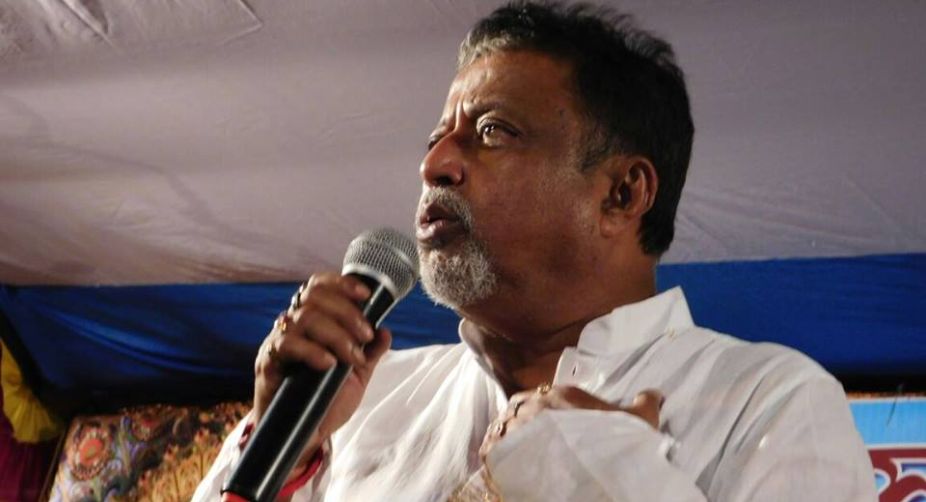
“Trinamool’s state unit will hit the streets in protest against the note scandal,” party’s All India Vice President Mukul Roy said.
The rally will start from College Square in north Kolkata and end at the Dorina Crossing about 3 km away.
Ministers, parliamentarians, legislators, office-bearers and party’s mass organisation representatives will be part of the rally, scheduled to start at 1 p.m.
On November 24, rallies will be brought out in all the district headquarters. Block level rallies will be held the next day.
Asked whether Trinamool supremo Mamata Banerjee, who has been in the forefront of the protests both at the national and state levels against the Modi government’s decision to scrap high denomination currency notes, would be part of the Kolkata rally, Roy gave an open-ended answer.
“This is a programme of the state unit of All India Trinamool Congress. She is our all India chief. She is very busy. Whether she will be part of the rally or not, depends on her,” he said.

Plea in HC against AWBI removal from animal testing panel

PTI | New Delhi |

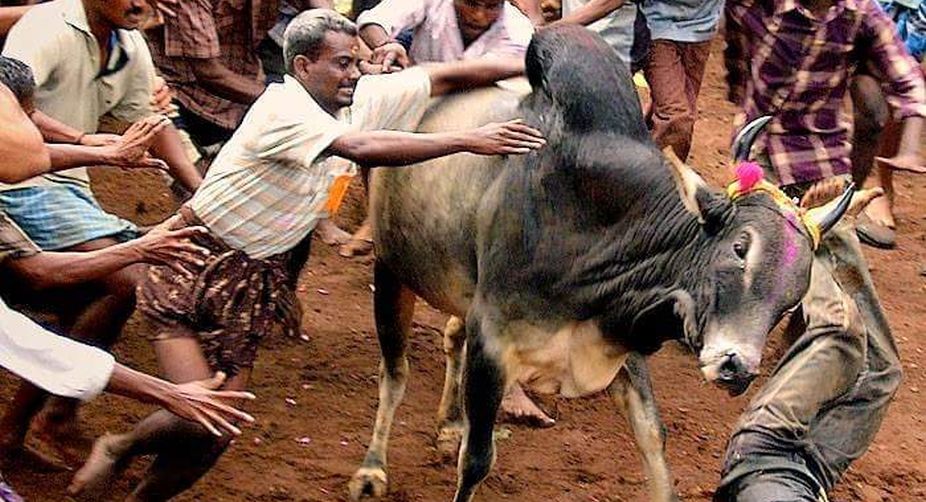
Delhi High Court has sought the Centre’s response on a plea claiming that the Animal Welfare Board of India (AWBI) was being excluded from a panel on animal testing, as it had opposed a government notification allegedly paving way for bulls to be used for “performances” like Jallikattu.
Jallikattu, also known Eruthazhuvuthal, is a bull-taming sport played in Tamil Nadu as part of the Pongal harvest festival.
Justice Sanjeev Sachdeva issued notice to the Ministry of Environment Forests and Climate Change and the Control and Supervision of Experimentation on Animals (CPCSEA) seeking their replies on the petition which alleges that the Board’s removal from the panel violates the Prevention of Cruelty to Animals Act, apart from being also “arbitrary and high handed”.
The plea by a member of the Board claims that the government by way of a notification issued on January 7 had excluded bulls from the list of animals not to be used for performance and AWBI had challenged it in the Supreme Court which had stayed the circular.
Subsequently, the Board was excluded from CPCSEA that was reconstituted on February 17, without informing AWBI which has been part of the panel since 1991, the petition has alleged.
The court listed the matter, which seeks setting aside of the February 17 decision reconstituting the CPCSEA, for next hearing on January 23 next.
The petition also seeks reconstitution of the panel with adequate representation of AWBI.
Central government standing counsel Jasmeet Singh contended during the brief hearing that under the Act the Board was not required to be made a member of the CPCSEA.
The petition by Chinny Krishna, Vice Chairman of the Board, claims that CPCSEA was set up on AWBI’s advice which was done as per the provisions of the Act.

Iraqi troops dig deeper as they recapture areas in Mosul

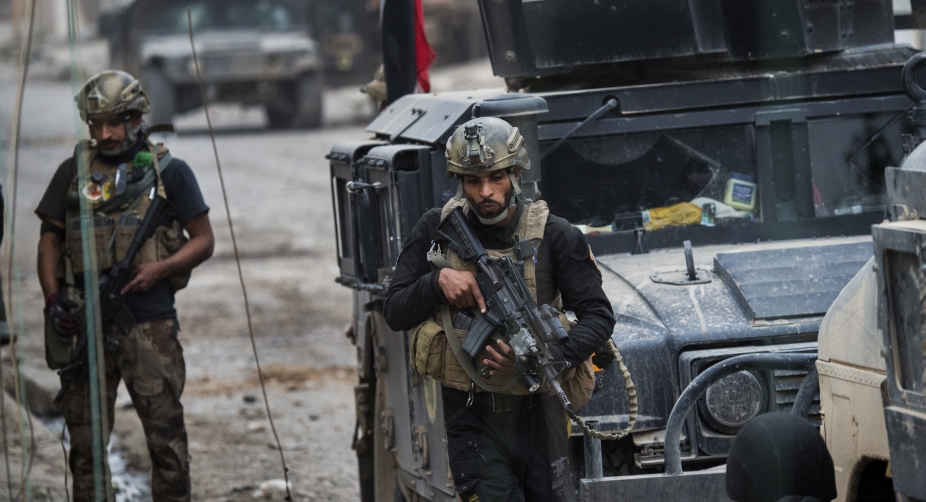
Iraqi security forces on Saturday recaptured a town and two villages in south of the city of Mosul, while special forces fought heavy clashes with Islamic State (IS) terrorists.

IANS | Mosul |

Iraqi security forces on Saturday recaptured a town and two villages in south of the city of Mosul, while special forces fought heavy clashes with Islamic State (IS) terrorists as they pushed deeper into the eastern part of the city, a security source said.
The army's 9th armoured Division continued their advance toward Mosul and managed to free the town of Khedhr al-Yas, which is the centre of Nimrud area in south of Mosul and nearby two villages of Qara-Shor and Kahriza, Xinhua quoted a statement from the Joint Operations Command (JOC) as saying.
Nimrud area includes the archeological site of Nimrud, located some 30 km south of Mosul and freed from IS terrorists a few days ago.
The ancient Assyrian ruin site of Nimrud, which was part of the IS militants' campaign of destruction against heritage sites, was founded in the 13th century B.C. and became the capital of Assyrian empire.
In eastern Mosul, the commandos of the Counter-Terrorism Service (CTS) continued clashes with the IS terrorists to gain more ground in Mosul and managed during the day to recapture parts of the Muharibin and Mu'alimen districts, the JOC statement said.
The troops started later in the day a clearing operation in the freed areas to defuse dozens of booby-traps planted by the extremist militants, the JOC statement said. 
Prime Minister Haider al-Abadi on October 17 announced a major offensive to retake Mosul, the country's second largest city.
Since then, the Iraqi security forces have inched to the eastern fringes of Mosul and made progress on other routes around the city.

Sebi mulls allowing FPIs to invest in unlisted NCDs

PTI | New Delhi |

With an aim to deepen capital markets, regulator Sebi is mulling relaxing its norms to permit FPIs to invest in unlisted non-convertible debentures and securitised debt instruments.
In a slew of proposed reform measures, the regulator also plans to tighten corporate governance rules on profit-sharing agreements between promoters and private equity funds as part of its efforts to safeguard minority shareholders in markets.
These proposals are likely to be discussed in the board meeting of Securities and Exchange Board of India (Sebi) later this week, sources said.
The regulator plans to allow Foreign Portfolio Investors (FPIs) to invest in unlisted non-convertible debentures and securities debt instruments, they added. RBI has also recently relaxed its rules for allowing such investments by FPIs.
The move comes after Sebi’s board, in September, allowed well-regulated FPIs to directly trade in corporate bonds, without going through any broker or other intermediary.
The revised norms are applicable for Category-I FPIs that include sovereign wealth funds and central banks as well as Category-II FPIs, which include mutual funds and banks.
However, hedge funds, individuals and other high risk foreign investors will not get this facility.
Prior to that, FPIs could trade in Indian markets only through brokers who are registered with the stock exchanges as their members.
The move is aimed at boosting foreign inflows in Indian capital markets. It would also deepen and widen the corporate bond market.
Sebi is planning to make it mandatory for promoters and top executives of companies entering into special profit-sharing deals with private equity funds to obtain prior approval from the company’s board and shareholders, sources said.
The regulator plans to add a provision to the listing agreement that will require disclosures and prior approval of shareholders.
In case of existing profit sharing agreements, such agreements would need to be informed to the stock exchanges for public dissemination.
“No employee including key managerial personnel, director or promoter of a listed entity shall enter into any agreement for himself or on behalf of any other person, with any shareholder or any other third party with regard to compensation or profit sharing agreement unless prior approval has been obtained from the board as well as public shareholders,” a source said.
Earlier, Sebi had said that instances of private equity funds entering into compensation agreements with promoters, directors and key managerial personnel of listed investee companies, based on performance of such companies have recently come to light.
However, when such reward agreements are executed without prior approval of shareholders, it could potentially lead to unfair practices, it had added.

Ease your pains with the best yoga moves

Yoga provides all kinds of goodness for the body and mind.

Deepa Gupta/ thestatesman.com | New Delhi |

Yoga provides all kinds of goodness for the body and mind. Its ancient practice that promotes holistic living through a combination of postures and breathing techniques has found widespread favour across the world. Yoga provides side-effect free remedies for curing many daily health problems. Some of the major health problems can be easily treated with yoga
        Hypertension – It is a common problem which increases the risk of stroke and kidney diseases. Pranayam is the best yoga technique to control it. Do it 10 times daily for effective results.
        Diabetes – It is a disease in which the person has high glucose (blood sugar) either because insulin production is inadequate or the body’s cells do not respond to insulin or both. This problem can be controlled through various yogas. Practice Vajrasana, Dhanurasana, Child pose, Kapalbhati and Nadishodhan pranayam to treat the problem. Cravings for sweets can also be calmed through seated meditation yoga poses.
        Depression – A man’s natural state is happiness, but he has moved far away from it due to the unending demands of modern fast paced life. Some standing poses can help to tackle this problem. Be calm and practice these poses religiously. Stand upright straight, keeping your legs slightly apart. Leave your whole weight on your left leg slowly. Fold your right knee and lift it up to touch your chest and embrace your shin with your hands. Hold your right ankle with your right hand and press your right foot into your left inner thigh. Now stretch out your arms straight up maintaining a balance of the body on your left foot. Take five long breaths in this position and relax. Repeat the same with the other leg.
        Painful cramps – If you suffer with this problem, try this move. It is great to soothe the cramps. Sit on a mat on a floor and stretch your legs straight in front. Keep a rolled blanket on your upper thighs. Now slowly fold your upper body over the blanket. Take 10 deep breaths in this position and relax.
        Cold and congestion – This problem is very common in every one’s life because of pollution and advance lifestyles. This yoga helps people keeping away cold and flu. Sit straight. Curl down the index and the middle finger of the right hand towards your palm. Press your left nostril with your right finger. Inhale four times. Now close your right nostril with your thumb so that both the nostrils are closed. Hold the air inside till four counts. Release your ring finger and let the air out from your left nostril in four counts. Repeat this for five minutes.


       Sleepless nights – If you are not able to sleep sound despite of your best efforts, you can try this yoga and make your nights comfortable and have a good sleep. Lie down on the base of your back. Hold the right knee with your hands and press it into your chest. Twist your right leg over, towards your left side. Spread out your arms to the sides in a relaxing state. Take 10 deep breaths in this position. Repeat the same with the other leg.
        Obesity – Obesity is a disease of concern. Loading on junk food and hectic lifestyles leaving no time for exercise are the main reasons for this disease. Yoga provides many relaxing asanas to get rid of this problem in a relaxing way. Among all asanas Kapalbhati pranayama tops the list. Paschimottanasana, Dandasana, Poorvottanasana, Halasana, Naukasana and Shalbhasana poses massage and tone the abdominal and pelvic organs resulting in reducing weight.
        Migraine – Many people suffer from migraine. It is becoming common in kids too.  This problem can be controlled or cured with some breathing techniques in particular poses. Stand straight with legs slightly apart. Stretch your arms upward and bend forward touching your finger tips on the floor. Breathe in while moving your arms upward and breathe out while bending forward. Stay in the bending position for three counts and then come back in the original position. Repeat it five times every day. The bridge pose is also beneficial to calm the brain and reduce the anxiety. These asanas invigorates the nervous system by increasing blood supply in the brain.
        Lower back pains – If you travel a long way or spend long hours in office sitting in almost the same posture, your spine gets affected with due course of time. To cure this, some asanas will really benefit you. Stand straight with both feet and shoulders aligned with your hips. Inhale deeply and move your arms out and up. Hold your left wrist with your right hand. Then pull your left arm up slowly with your right arm. Stay still and take three breaths. Do the same with the other side.
Practise these simple yoga postures every day to protect yourself from common health issues. Do them in a calm and relaxing way. Your health is your greatest wealth. Enjoy the simple pleasure of doing yoga everyday.

Kanpur train tragedy: Death toll rises to 68

SNS | New Delhi |

At least 68 people were killed when 14 coaches of the Patna-Indore Express derailed near Kanpur Dehat district at 3 am on Sunday.

“68 killed in Indore-Patna Express derailment,” DM of Kanpur Dehat, Ravikant Singh said.

The accident took place at around 3 am near Pukhraya station in Kanpur. “Several people have been rushed to nearby hospitals with injuries, and the casualties may go up,” Railways Ministry spokesperson Anil Saxena said.

According to some reports, the accident was caused by a rail fracture, however, the exact reason would be known only after an inquiry.

Meanwhile, Railway Minister Suresh Prabhu has announced Rs.3.5 lakh exgratia for those killed in derailment and Rs.50,000 for those grievously injured.

“Commissioner, Railway Safety, will inquire into reasons behind derailment of Indore-Patna Express,” Prabhu said. 

Anguished beyond words on loss of lives: PM on derailment

The Prime Minister said that Railway Minister Suresh Prabhu is personally monitoring the situation.

PTI | New Delhi |

Prime Minister Narendra Modi on Sunday expressed grief over the
loss of lives in the derailment of the Patna-Indore Express.

“Anguished beyond words on the loss of lives due to the
derailing of the Patna-Indore express. My thoughts are with the bereaved
families,” he said in a tweet.

The Prime Minister said that Railway Minister Suresh Prabhu
is personally monitoring the situation.

“Prayers with those injured in the tragic train
accident. I’ve spoken to @sureshpprabhu, who is personally monitoring the
situation closely,” Modi said.

At least 45 people have been killed and over 150 injured in
the derailment of the Indore-Patna Express in Kanpur dehat district in the wee
hours on Sunday.

Kallu’s last rites

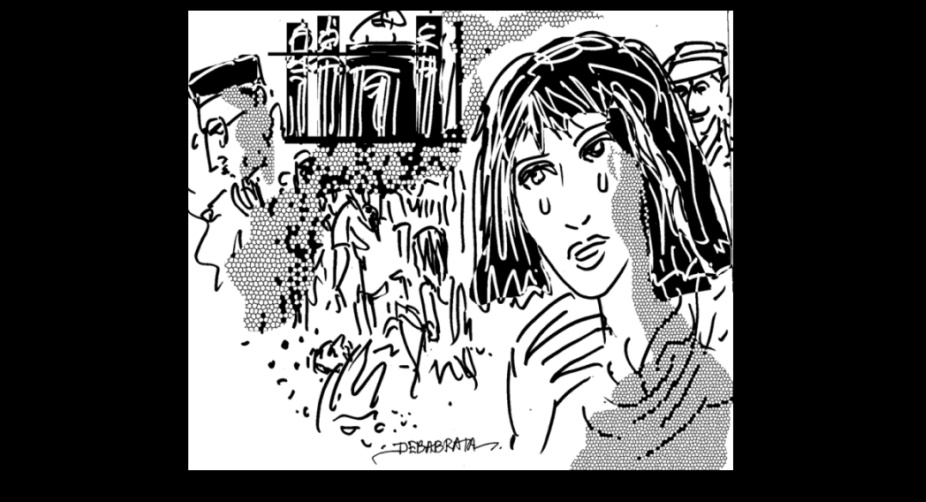
Gudia’s proficient father, Kallu, had already taught her the tricks of the trade — begging in this case. 

Quamar Ashraf |

A dead body lay abandoned near a dhaba, adjacent to Jagat
theatre in Delhi’s Chandni Chowk area. Seated by the side of the body was the
deceased’s daughter, Gudia — she was napping, leaning against the dilapidated
semi-moss milestone with her head resting on her tiny palm. Briefly, she would
yawn, rub her eyes and look at the nearby mosque. From behind the Red Fort, the
yellow rays of the morning sun gleamed on her vulnerable face, reminding,
rather commanding her to begin the day’s work.

Gudia, seven or eight years old, stood up. Her father was
never late at work and taught her to be punctual. She had to reach the near-by
Sunahri Masjid and beg for a few coins to have a cup of tea from Bismillah tea
stall, popularly called Ustad Chaiwale — a nickname for his mastery in making
and serving quality tea, fast.

Gudia’s proficient father, Kallu, had already taught her the
tricks of the trade — begging in this case. She knew her routine work but
something encouraged her to take liberty on account of her father’s absence.
Instead of going to the mosque, she would first take tea and then go begging.
She went to Ustad’s tea stall and asked for a cup. Still standing, Gudia waited
for Ustad’s usual rebukes, “Go away….Let the Maulvi Sahib or his companions
have tea first…First sale of the day must begin with pious people, not a thug
like you.” She had grown indifferent to such abuses. But today things were
different. Ustad did not chide her. Instead he compassionately said, “Come
along, my baby.” He lifted her up, kissed her and ran his hand affectionately
on her head before making her sit. “Why this?” thought Gudia.

Unknown tears flowed from her eyes and made their way
through the narrow dry lines that had appeared on her plump cheeks after
wailing the night before. Her lower lip pushed out; her nose widened a little
in her effort to control the tears. Cleaning her nose with her handcuff she
rose to retreat from the smoke-stained stall. She could not bear sympathy; she
was simply not used to it and she did not deserve it. But Ustad fondled her and
made her sit again. He gave her a glass of water and one big brown loaf to eat.

Gudia would not spend her penny for the loaf. Her father had
lessoned her to save money. “I don’t want the loaf, Ustad,” she mumbled in a
broken voice.  She told him that she only
wanted tea and had no money to spend on bread. But she realised that her father
was dead now and that she was a free bird. She would take whatever she liked.
Nobody would admonish or thrash her. She would take the loaf and tea and puri
and halwa and whatever she liked. She had money. Her father had handed her the
small red clothe-bag — his one-day savings — before his death.

Even as Gudia was provided tea and loaf, Maulvi Sahib
arrived ordering a cup in a flat, phlegmatic voice. His blue-stripped muffler,
which was tightly wrapped around his heavy head coupled with a blanket covering
him from head to toe, gave the man an otherwise ghostly look. Gudia stood and
intended to get back to work. Maulvi Sahib asked, “O daughter of an
imposter…Where is Kallu? Why did he not come to beg today?”

“He is no more,” answered Gudia in an indifferent tone.
After a short interval, cogitating, she said, “My father had told me before his
death to go to Maulvi Sahib’s mosque every morning… He will always give you
coins. Now I will be coming to your mosque every morning.”   Maulvi Sahib knew she was lying like her
father. But she was so small, so vulnerable, and at that time looked so cute
with her face dry and brown hair tousled, that something unusual had happened
to her.

Ustad informed, “Kallu had one crumpled blanket with holes
all around…The wretch could not save himself from the cold wind that blew last
night.” Maulvi Sahib murmured something in alien language. Ustad then added
pleadingly, “He left no amount for his last rites…Except this poor creature.”

“No problem, our men will do that”, said Maulvi Sahb asking
his companions around to arrange for Kallu’s funeral in the nearby graveyard.
He then headed for the chowk with a few others, along with Gudia, as passers-by
started assembling.

There were murmurs about her father’s last rites. One from
the crowd, who appeared to be a doctor from attire, said he needed a cadaver
and he was ready to pay money for it to his child. Looking at Gudia, he said,
“I will take care of her. Give her shelter.” The doctor held her tiny palm and
gave her a 500 rupee note to buy her assent. Before Gudia could say anything,
the Maulvi Sahib intervened, “Who are you to claim the body? We have arranged
for the burial at the nearby graveyard. Go away”.

The Punditji, who had been till then silent, objected to
this and informed the crowd about Kallu’s affiliation to the Hindu faith. “For
the last several years, he had been paying obeisance to gods and goddesses
outside Hanuman temple.” This infuriated Maulvi Sahib’s companions. “Don’t make
a fuss of it. Think of the poor child,” intervened the doctor. The dreaded
doctor played a trick and urged the crowd to allow Gudia to take a decision
about her father’s last rites.

People in the crowd, now divided into groups, were each
putting claims on the corpse. Soon the atmosphere turned tensed, leading to an
altercation before the police arrived there to take control of the situation.
The police carefully listened to the religious heads and then to the little
wretch. Meanwhile, one of the policemen came to Gudia and then asked her name.

He went on to take further details to get a clue of her
religion.

“What is your father’s name?”

“Kallu,” answered Gudia.

“What is your mother’s name?”

“Don’t know”.

“Where do you live?”

“On the street.”

“Has your father left anything for you?”

Gudia handed him the big clothe-bag, the only asset her
father left for her. The policeman emptied the bag in a huff but found nothing
there to drive any conclusion from the items — a bruised aluminum bowl, a
crumpled skull-cap and a saffron sheet printed with swastikas stuffed were all
there was.  Clueless, the policemen sat
for a while in silence then asked Gudia “How you want your father’s last rites
to be performed?”

The crowd fell silent. Now it was Gudia’s turn to speak. Her
decision would be final and binding for everybody there. Was she so
important?  Had she ever dreamt of this?
No. She had never hoped for much from people, except one man but he was dead
now. She was the daughter of a roadside beggar whose life centred on the
two-kilometre stretch from Lal Jain Mandir to Fatehpuri Jama Masjid.

She knew her father was a liar, a master impersonator who
would change his looks, his language and expressions according to the places of
worship he visited, according to people he begged to. But she was being given
much importance today. For a moment she felt like a princess standing at the
centre of her subjects begging for mercy, waiting for her announcement.

Unaware of the significance of her decision, she paid a
glance to her father whose hollow black cheeks gleamed in the morning rays. She
heard herself murmuring “Ah! How important you have become after your death. If
you could see those who abused you; those who rebuked you; those who shrugged
you off, are desperately thinking about your welfare! At least you will now
live in peace! Did you not often abuse these dignified men? Indeed, you were an
ungrateful man.” But she would not be ungrateful. She must move to the doctor
before the rays reflecting off the imposing glass-structure building nearby
became pricklier.

Anguished over her decision, the Maulvi angrily said,
“Haven’t you sold your father for the sake of a few coins? You are truly the
daughter of an imposter.”

The writer is chief sub editor, The Statesman, New Delhi

Kallu’s last rites

Gudia’s proficient father, Kallu, had already taught her the tricks of the trade — begging in this case. 

Quamar Ashraf |

A dead body lay abandoned near a dhaba, adjacent to Jagat
theatre in Delhi’s Chandni Chowk area. Seated by the side of the body was the
deceased’s daughter, Gudia — she was napping, leaning against the dilapidated
semi-moss milestone with her head resting on her tiny palm. Briefly, she would
yawn, rub her eyes and look at the nearby mosque. From behind the Red Fort, the
yellow rays of the morning sun gleamed on her vulnerable face, reminding,
rather commanding her to begin the day’s work.

Gudia, seven or eight years old, stood up. Her father was
never late at work and taught her to be punctual. She had to reach the near-by
Sunahri Masjid and beg for a few coins to have a cup of tea from Bismillah tea
stall, popularly called Ustad Chaiwale — a nickname for his mastery in making
and serving quality tea, fast.

Gudia’s proficient father, Kallu, had already taught her the
tricks of the trade — begging in this case. She knew her routine work but
something encouraged her to take liberty on account of her father’s absence.
Instead of going to the mosque, she would first take tea and then go begging.
She went to Ustad’s tea stall and asked for a cup. Still standing, Gudia waited
for Ustad’s usual rebukes, “Go away….Let the Maulvi Sahib or his companions
have tea first…First sale of the day must begin with pious people, not a thug
like you.” She had grown indifferent to such abuses. But today things were
different. Ustad did not chide her. Instead he compassionately said, “Come
along, my baby.” He lifted her up, kissed her and ran his hand affectionately
on her head before making her sit. “Why this?” thought Gudia.

Unknown tears flowed from her eyes and made their way
through the narrow dry lines that had appeared on her plump cheeks after
wailing the night before. Her lower lip pushed out; her nose widened a little
in her effort to control the tears. Cleaning her nose with her handcuff she
rose to retreat from the smoke-stained stall. She could not bear sympathy; she
was simply not used to it and she did not deserve it. But Ustad fondled her and
made her sit again. He gave her a glass of water and one big brown loaf to eat.

Gudia would not spend her penny for the loaf. Her father had
lessoned her to save money. “I don’t want the loaf, Ustad,” she mumbled in a
broken voice.  She told him that she only
wanted tea and had no money to spend on bread. But she realised that her father
was dead now and that she was a free bird. She would take whatever she liked.
Nobody would admonish or thrash her. She would take the loaf and tea and puri
and halwa and whatever she liked. She had money. Her father had handed her the
small red clothe-bag — his one-day savings — before his death.

Even as Gudia was provided tea and loaf, Maulvi Sahib
arrived ordering a cup in a flat, phlegmatic voice. His blue-stripped muffler,
which was tightly wrapped around his heavy head coupled with a blanket covering
him from head to toe, gave the man an otherwise ghostly look. Gudia stood and
intended to get back to work. Maulvi Sahib asked, “O daughter of an
imposter…Where is Kallu? Why did he not come to beg today?”

“He is no more,” answered Gudia in an indifferent tone.
After a short interval, cogitating, she said, “My father had told me before his
death to go to Maulvi Sahib’s mosque every morning… He will always give you
coins. Now I will be coming to your mosque every morning.”   Maulvi Sahib knew she was lying like her
father. But she was so small, so vulnerable, and at that time looked so cute
with her face dry and brown hair tousled, that something unusual had happened
to her.

Ustad informed, “Kallu had one crumpled blanket with holes
all around…The wretch could not save himself from the cold wind that blew last
night.” Maulvi Sahib murmured something in alien language. Ustad then added
pleadingly, “He left no amount for his last rites…Except this poor creature.”

“No problem, our men will do that”, said Maulvi Sahb asking
his companions around to arrange for Kallu’s funeral in the nearby graveyard.
He then headed for the chowk with a few others, along with Gudia, as passers-by
started assembling.

There were murmurs about her father’s last rites. One from
the crowd, who appeared to be a doctor from attire, said he needed a cadaver
and he was ready to pay money for it to his child. Looking at Gudia, he said,
“I will take care of her. Give her shelter.” The doctor held her tiny palm and
gave her a 500 rupee note to buy her assent. Before Gudia could say anything,
the Maulvi Sahib intervened, “Who are you to claim the body? We have arranged
for the burial at the nearby graveyard. Go away”.

The Punditji, who had been till then silent, objected to
this and informed the crowd about Kallu’s affiliation to the Hindu faith. “For
the last several years, he had been paying obeisance to gods and goddesses
outside Hanuman temple.” This infuriated Maulvi Sahib’s companions. “Don’t make
a fuss of it. Think of the poor child,” intervened the doctor. The dreaded
doctor played a trick and urged the crowd to allow Gudia to take a decision
about her father’s last rites.

People in the crowd, now divided into groups, were each
putting claims on the corpse. Soon the atmosphere turned tensed, leading to an
altercation before the police arrived there to take control of the situation.
The police carefully listened to the religious heads and then to the little
wretch. Meanwhile, one of the policemen came to Gudia and then asked her name.

He went on to take further details to get a clue of her
religion.

“What is your father’s name?”

“Kallu,” answered Gudia.

“What is your mother’s name?”

“Don’t know”.

“Where do you live?”

“On the street.”

“Has your father left anything for you?”

Gudia handed him the big clothe-bag, the only asset her
father left for her. The policeman emptied the bag in a huff but found nothing
there to drive any conclusion from the items — a bruised aluminum bowl, a
crumpled skull-cap and a saffron sheet printed with swastikas stuffed were all
there was.  Clueless, the policemen sat
for a while in silence then asked Gudia “How you want your father’s last rites
to be performed?”

The crowd fell silent. Now it was Gudia’s turn to speak. Her
decision would be final and binding for everybody there. Was she so
important?  Had she ever dreamt of this?
No. She had never hoped for much from people, except one man but he was dead
now. She was the daughter of a roadside beggar whose life centred on the
two-kilometre stretch from Lal Jain Mandir to Fatehpuri Jama Masjid.

She knew her father was a liar, a master impersonator who
would change his looks, his language and expressions according to the places of
worship he visited, according to people he begged to. But she was being given
much importance today. For a moment she felt like a princess standing at the
centre of her subjects begging for mercy, waiting for her announcement.

Unaware of the significance of her decision, she paid a
glance to her father whose hollow black cheeks gleamed in the morning rays. She
heard herself murmuring “Ah! How important you have become after your death. If
you could see those who abused you; those who rebuked you; those who shrugged
you off, are desperately thinking about your welfare! At least you will now
live in peace! Did you not often abuse these dignified men? Indeed, you were an
ungrateful man.” But she would not be ungrateful. She must move to the doctor
before the rays reflecting off the imposing glass-structure building nearby
became pricklier.

Anguished over her decision, the Maulvi angrily said,
“Haven’t you sold your father for the sake of a few coins? You are truly the
daughter of an imposter.”

The writer is chief sub editor, The Statesman, New Delhi

When killing is institutionalised

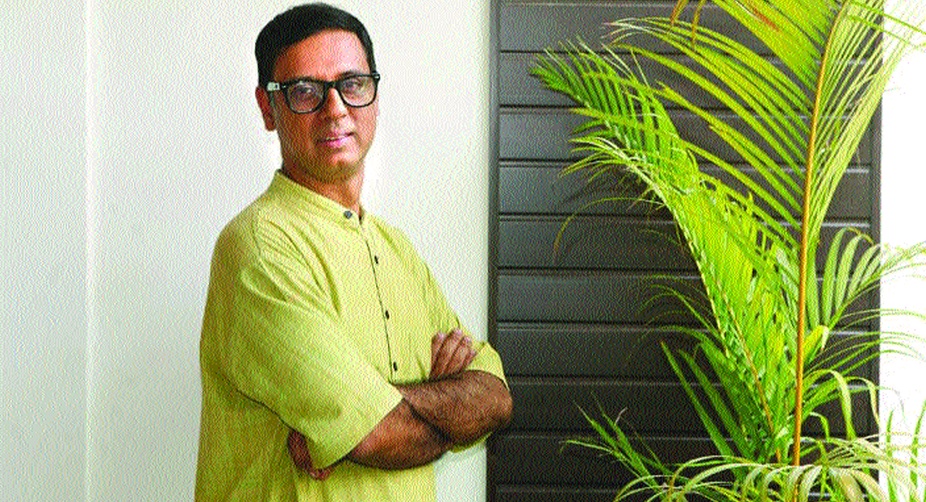
Journalist and non-fiction author, Kishalay Bhattacharjee talks about his new book, Blood on My Hands: Confessions of Staged Encounters.

Maleeha Hamid Siddiqui |

Kishlaya Bhattacharjee is the author of Blood on My Hands: Confessions of Staged Encounters that provides important insights into the practice of staged encounters and their institutionalisation in India. He spent 20 years of his career as a broadcast journalist, 17 of which were with NDTV where, as resident editor, he covered conflict and post-conflict situations in India. Che in Paona Bazaar: Tales of Exile and Belonging in India’s Northeast was Bhattacharjee’s debut non-fiction work.

In the following excerpts from his interview, he discusses pressures faced by journalists, feedback from security forces on his book, and the pathology of fake encounters.

You’ve reported from conflict regions for two decades, but was writing Blood on My Hands a different experience altogether?

It was completely different because as a reporter on the ground covering a fairly large area with impossible logistics, one moved from incident to incident without often following up on stories. Live television and later digital media had to be fed information by the millisecond. While writing a book one gets time to research and investigate, but the experience of having walked that ground was of great use because those were the very incidents I myself had covered.

This book emerged from many years of reporting such arbitrary “encounters”, where I could only report from two perspectives — the official state/police/Army version, and the account of the families of the victims. In researching this book, I encountered the perpetrators of this form of manhunt for the first time. These were members of the forces who were willing to elaborate the pathology of fake and staged encounters, the circumstances under which these killings take place and the complicity of the state machinery. It was also different because I had no idea this was an institutionalised form of killing.

You have written with great compassion about the victims; one senses perhaps you regret not questioning deeply the encounter cases since your book questions the role of media.

The nature of the beast was such that we reported and not investigated. In television we didn’t have the luxury of time and resource to follow each encounter. We usually reported the “official version” unless, of course, there was a protest or outrage. Yes, the book questions the role of media and civil society as well because we have been silent participants in what slowly became an institutionalised form of state violence. Even when such cases were reported, the victims rarely or never got justice and in many cases were stigmatised by the same civil society that would protest against the encounters.

From your book one gathers encounters are deeply entrenched in the system and not going anywhere soon …

Yes, they are very much entrenched and will continue as long as promotions, awards and performance are related to headcounts. The Army is an organisation where everything is quantified, including performance. In the Army, the system of unit citations is based on points which are earned by eliminating militants, apprehending militants or having militants surrender. The temptation of picking up awards against kills is so commonplace that the Supreme Court once said “Fake encounters are for gallantry awards and for getting out-of-turn promotions. The whole thing is devilishly planned.”

A serving officer who received the Ashok Chakra — the highest gallantry award in India — was found by the Supreme Court to have carried out a fake encounter. But one must not forget there have been people in the forces who have followed their conscience in refusing to take part in state-sponsored killings. Sadly, there are no Ashok Chakras for them.

With time, the space to pen such issues has become terribly constrained. Is the space in India really that unconstrained that it allowed the publication of your book?

Though the recent narrative in India has been of a climate of intolerance and a passive state, or sometimes even participatory in the silencing of voices, largely there has been space to question and to speak out. Yes, cases of sedition charges have come up from time to time, but I have not faced that challenge, ever. I have reported from conflict areas even when there wasn’t much media presence, which means I was conspicuous, but I have never been threatened or intimidated. Nor have I ever been asked to change my stories editorially.

But that doesn’t mean journalists have not faced pressure. In Chhattisgarh even now, journalists are under tremendous duress by the state as well as non-state actors.

How did the Indian security forces react to your book?

The panel at the main launch of my book in Delhi had serving police officer Shiv Sahay from Kashmir and he didn’t totally admit the practice, but neither did he ignore it completely. He called such cases an aberration. In the audience there were at least four Army officers and a former police chief. The drift among Army officers is mostly of agreement, though they would say everyone doesn’t do it. But they are happy it was exposed because they were sick of it. A former Army chief spoke with me while I was writing the book and obliquely agreed with my findings. I have even had intelligence chiefs agreeing and validating.

Have any cases been filed against those officers who carried out these false encounters? What has been the verdict of the judiciary?

Six Army persons including a commanding officer were sentenced to life in a well-documented case called the Machil encounter in Kashmir. In Manipur a case is ongoing of a fake encounter which took place in 2009 in a market where policemen were found guilty. There are a couple of other cases, but in most nothing is happening. The judiciary has asked for a review saying the incidents are false and fake, but the Army is protected under the Armed Forces (Special Powers) Act and that grants them immunity. With so much impunity they grow emboldened to carry out more such killings. The National Human Rights Commission of India has found them guilty, the Supreme Court has found them guilty, a former prime minister and a home minister had asked for the repeal of the AFSPA which protects them from prosecution, several intelligence chiefs have asked for the Act to be removed, yet the irony is that in a democratically elected civilian government, the Army’s wishes prevail.

Did lawmakers ever highlight this issue?

It has been highlighted several times in the assemblies of the states where the Disturbed Areas Act is in place, but politicians have failed to address it sincerely. The government doesn’t want to go against the Army when it comes to its border areas, but that contravenes the very idea of security because they just try and secure geographical India and not the citizens within that territory whose security the state must guarantee. It is difficult not to become numbed by the sheer volume and horror of the stories of human rights abuses and encounter killings, but for the state this is routine. This dirty war has enduring and profound consequences, not merely for our body politic, but for our national psyche and our collective moral behaviour. How we deal with encounter killings now will determine how we define violence in the future, and the type of society that is endowed to following generations.

dawn/ann

Those bloodstains on the sofa

May Bulman |

‘Our house became like a hospital, our courtyard like an operating theatre. There were injured people everywhere. We brought those in shock or lightly injured into the house to make sure there was space to operate those who were in a critical condition in the courtyard.”

Those are the words of Natalia Syed, who lives in an apartment directly behind the Bataclan concert hall in Paris that a year ago became the epicentre of one of the worst terror attacks to hit Europe when gunmen stormed the venue and started mercilessly shooting people dead, supposedly in the name of Islam.

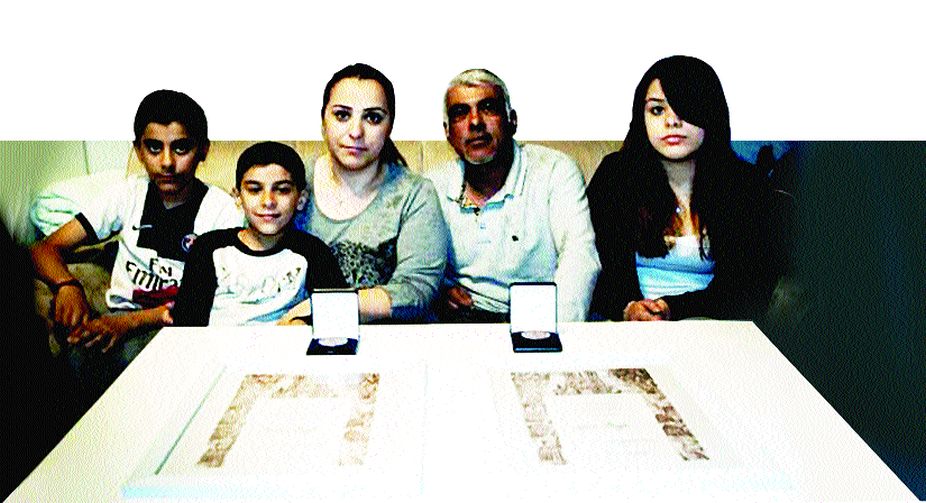
What began as a peaceful Friday evening in the Syed household became a night of carnage and grief that left them reeling. Gabriel, Natalia and their three children, aged eight, 12 and 18 — a Muslim family — were watching football on television when their modest bottom-floor flat in Oberkampf became a place of refuge and life-saving treatment for many of the injured people who managed to flee the Bataclan.

It was at around 9.40 pm that the family heard the first gunshots, but with the 11th district being a “lively, boho-chic” neighbourhood, they had passed them off as fireworks. Then Natalia’s husband, Gabriel, received a text message from a friend saying there had been an attack at a restaurant and pub in the north of the district, where they later discovered 15 people had died.

“When I saw the text I went out to have a smoke,” 57-year-old Gabriel remembers. “There were all these people running away from the Bataclan. I heard the bangs louder now. Then I saw police. It was emergency police — not the usual civilian police. They were running the other way. They were shouting 'Go home, close the doors'.”

Gabriel went back inside and turned on the news — “Attacks at the Bataclan”. The family watched in shock as presenters reported on the carnage that was ringing out just yards away from them. Within moments they heard screaming voices outside their gate.

What followed was a surreal scene as traumatised victims flooded into their courtyard, many seeping with blood. “There were around 60 injured people here,” recalls Natalia, who is the caretaker of the apartment block. “It was packed. The ambulance took a while to come, so it was just the civilian police and us trying to treat all these people.

“Neighbours from upstairs came to help. Two of them were trained doctors who began operating on the seriously injured. Others came with pillows and blankets and bandages to try stop the bleeding but gunshot wounds are hard to compress with a bandage.”

Natalia lifts a blanket covering the family sofa to reveal large, faded patches of blood. “I’ve tried to scrub it,” she says, “I’ve tried every cleaning product but they won’t come out.”

A policeman — the only officer known to have been seriously injured in the November attacks — had been lying on the sofa. “He had lost his finger,” says Letitia, the couple’s 18-year-old daughter, who had sat with the officer in the living room. “He was really brave. I gave him my heart-shaped cushion to lean on, but he had to bite it to ease the pain. He kept asking whether the other policemen were okay.”

In the backdrop of the chaos, the massacre continued. “The shooting went on for at least 50 minutes, and we could still hear it,” remembers Gabriel. “Then there was the shoot-out. We all heard the gunman blow himself up. That was something else.”

During the hours after the attack, the makeshift response continued, as more injured people entered the courtyard as well as a stream of people in desperate search for missing friends and family.

“One woman was in bits,” says Natalia. “She had lost her husband. They lived in the south of France, and their children had bought them tickets to the concert as an anniversary present. It was the first time they had come to Paris together.”

People died in the Syeds’ home that night, but the terror of what happened didn’t hit the family until later. “We saw horrible things,” says Natalia, “It didn’t shock me at the time. It was like a reflex. It wasn’t until the police had left at around 5am, as I was cleaning up the blood, that the images started coming back to me, and the reality of what had just happened sunk in. That's when I felt scared.”

Gabriel and Natalia won medals from the mayor for their conduct on the night, along with six other caretakers in Paris who took injured people into their homes. A year on, they say the impact of what happened can still be seen in the city, manifesting itself in part by heightened levels of distrust and intolerance.

Laetitia, who goes to school in Paris, has noticed the more racist attitudes in the city. “It has divided people,” she says. “There’s more racism, more misunderstanding, more divisions. I’ve heard people in public places saying Arabs should go back to their country. It has become more common.”

But amid this increased distrust, Natalia says within their immediate community people have come together as a result of the horrors of that night.

“It’s incredible how much the community has come together,” she says. “Before, everyone in this building and the surrounding area seemed too busy to speak to each other. But now, after going through that and seeing so much pain and bloodshed together, everyone is so much closer.”

The Independent

India’s forgotten freedom fighters

The road to independence was not one of peaceful protest but a series of violent uprisings across the subcontinent to bring an end to colonial rule, writes 

Joseph Mcquade |

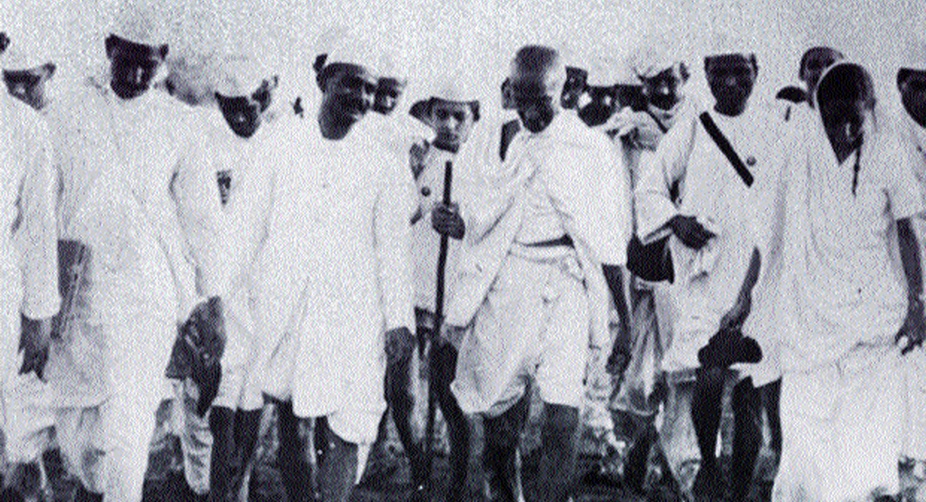
The popular view of India’s journey to independence from British rule is the famous story of Mohandas Gandhi’s extraordinary campaign of non-violent protest. It is a heritage still marked today during international state visits. But there was another, often forgotten –  and much less peaceful – side to the struggle for Indian independence.

British colonial rule in India had been established through a series of wars fought across the subcontinent from the mid-18th century onwards. It was bloody and gradual, and rested on a thin foundation of coercion and military dominance.

This was made painfully clear by the uprising of 1857, in which a series of rebellions erupted across northern India, seriously undermining imperial confidence. Although the mutiny was crushed, the memory of it continued to inspire generations of Indian anti-colonialists, who would later refer to it as the First War of Independence.

While the events of 1857 were described by the colonial authorities in various terms including “mutiny”, “rebellion” and “insurgency”, the first act of anti-colonial violence to be given the label of “terrorism”, was carried more than 40 years later.

In 1897, two brothers assassinated WC Rand, a civil service officer responsible for dealing with an outbreak of bubonic plague in the city of Pune, whose measures of forced home entry, bodily examinations and segregation were considered extremely heavy-handed.

Later, after colonial officials decided to partition the prosperous province of Bengal in 1905, non-violent forms of popular protest were accompanied by the growth of secret cells of revolutionaries who sought to undermine British imperial authority using targeted assassinations and bomb attacks. Even though the partition was annulled in 1911, the revolutionary organisations it spawned did not disappear. In fact, they expanded massively.

On 1 November 1913, Indian revolutionaries living in San Francisco published the first issue of Ghadar, or Mutiny, a radical weekly newspaper that quickly developed a global readership. By the summer of 1914, the Ghadar Party they founded was an international organisation, with more than 6,000 members and networks throughout North America, Europe, and Asia.

In February 1915, revolutionaries connected to the Ghadar Party attempted to overthrow British rule through an ambitious uprising across northern India. Led by Rash Behari Bose, a veteran revolutionary who had personally attempted to assassinate the Viceroy of India in 1912, the revolutionaries tried to convince the Indian Army to mutiny by disseminating propaganda in Lahore, Rawalpindi, and Meerut.

The plot was foiled after a British-paid spy penetrated the organisation, prompting a huge crackdown in which hundreds of radicals were detained. Bose was forced to flee India, escaping to Japan where he would live out the rest of his life in exile.

The following month, Ghadar revolutionaries in the US acquired two ships, the Annie Larsen and the Maverick. They planned to land a huge arms shipment in Calcutta on Christmas Day. It was timed to coincide with another planned uprising in Burma, then still a part of British India, and a raid on the prison islands of the Andamans, in which incarcerated radicals would be liberated to take up arms against the British. Like the February uprising, the Christmas Day plot was detected and foiled by the colonial intelligence services, which had expanded their operations to a global scale in response to the transnational reach of Ghadar.

With the implementation of strict wartime legislation such as the Defence of India Act, 1916 was a turning point for the revolutionary campaign, which was driven underground by imperial intelligence services, who detained several hundred suspected revolutionaries.

India’s revolutionary organisations did not vanish after the First World War. As the war measures expired, the colonial government implemented the 1919 Rowlatt Act in an effort to extend executive powers into the post-war period. The proposed legislation permitted suspects to be interned without trial and allowed political cases to be tried without juries. This provoked outrage among the majority of the Indian population, who viewed it as an insult to their loyal service during the war. At a gathering in Amritsar in April 1919, imperial troops opened fire on a crowd of unarmed protesters, killing at least 379 people and sparking nationwide anger.

This is the context in which Mohandas Gandhi (usually called Mahatma out of respect) emerged to lead the Indian nationalist movement, which he rallied with a message of peaceful non-cooperation and non-violent resistance. Nonetheless, the more violent anti-colonial organisations formed in the years before and after the First World War influenced both anti-colonial politics and imperial security right up until India’s independence and partition in 1947.

After the Second World War, many British officials were unsettled by fear of the Indian National Army, a military organisation made up of Indian prisoners of war released from Japanese custody and led by the famous nationalist Subhas Chandra Bose. Despite being defeated militarily, the INA strengthened British unease that the continued occupation of India would be met by violent resistance. Following the end of the war, the trial of INA prisoners provided a serious problem for colonial legitimacy and helped to stoke the mass nationalism that forced Britain to withdraw in 1947.

So while it is the memory of Gandhi and non-violence that is now marked by British politicians when they visit India, the other side to the story is very real, and should not be forgotten. Recalling the history of Indian revolutionaries isn't just a matter of filling in historical gaps. It can help us gain some perspective on modern society by looking at the recent past.

Now a visit to India by the British Prime Minister Theresa May has included a pledge with her Indian counterpart Narendra Modi that India and the UK will work together to fight terrorism in both countries. It is not known whether or not they discussed the role that terrorism played in securing India’s independence from Britain. But perhaps they should have done — they would have had plenty to talk about.

This article first appeared on The Conversation (theconversation.com). Joseph McQuade is PhD candidate and Gates Scholar, at Cambridge University

The independent

A visit to Ivy cottage

Swapan K Banerjee |

My book-shelf is perpetually in a chaotic jumble.
Due to space crunch, I have often to move the books around. As a result, when I
need a particular book it eludes me.

The other day I was looking for a little niche for
my new acquisitions when a book titled The Rain in the Mountains tumbled out.
It’s slightly yellowed with age and the sight of it stirred memories of the day
when I had visited Ivy cottage at Landour, Mussoorie for the first time and
received the book as a gift from its renowned author Ruskin Bond.

When I first read the author I was literally blown
away. The irrepressible charm of Night Train at Deoli & Other Stories, Time
Stops at Shamli & Other Stories and of course The Room on the Roof wove a
magic spell over me. His second-self Rusty took me by the hand, got me
acquainted with the lure of the Himalayas, introduced me to the purity and innocence
of those who lived there and made me privy to the vicissitudes of life that the
character got to grips with and transmuted them into stepping stones. No wonder
I was raring to meet him.

The evening I reached Mussoorie, it was
bone-chilling cold. Next day I embarked on the uphill journey from Hotel
Padmini Niwas at Library Stand. I had no idea how far up his oft-visited
cottage was. People advised me to take a car. But I was determined to cover the
distance a pied.

From Library Stand to Picture Palace Stand (a
leisurely 30-40 minute walk) sprawls the famed Mussoorie Mall boasting two
quality bookshops, Cambridge Book Depot and Chander Book Depot, along with
boutiques, parlours, restaurants and cafes of all sorts. From the three-way
fork at Picture Palace Stand I took the path leading to the crown of Mussoorie.
At that hour (half past 2 in the afternoon) it was in a siesta mood. As I
slowly moved up, I noticed how narrow steps hewn out of solid rock-wall made
short-cuts to upper region of the mountains. Deodar, pine and cypress trees
grew at a slant on the hillside. When I made it to Clock Tower (it no longer
exists), the entry point to Landour Bazar, the shops were mostly shuttered.
Once in a while, just to be sure I was on the right track, I asked a native the
way to the cottage. A long time resident and the most famous Ruskin Bond was
known to all.

I was a bit early as I always am whenever on a
self-imposed beat. There was a boy named Jason leaning against the stone-wall
at the edge of the path from where the hill fell away into a valley before
rising again in the distance. He was probably in a mood to pick up some walnuts
and peaches from the trees around Bond’s cottage (the trees have since been
felled for widening the road). I asked him:

‘Where exactly is Ivy Cottage?’

‘Oh, right in front!’

‘Have you ever met Ruskin Bond?’

‘Many times. He often goes to the market down there
and State Bank of India up there.’

How fortunate they are, I thought, having Bond as
their neighbour.

The steep stone staircase to his upper floor cottage
fascinated me no end. At 4.30, I went up and found Ruskin keenly waiting for
me. He knew the long haul I had undertaken to meet him.

We conversed for exactly an hour, for the cassette
of 60-minutes ran out the moment Bond finished answering the last question.
Then he got up and went into the adjoining study-cum-bedroom, as I suddenly got
petrified with the thought of how I would cope if the conversation went
unrecorded. I quickly put the earplugs on, rewound the tape a bit and pressed
the play button. There was no sound except of the spool running. I was close to
collapse when Bond’s taped voice came on. Obviously I had hit the place where
there was a pause in the conversation!

When I got my act together, I found Bond standing in
front of his shelf-full of books. Which one of them you would like to have, he
asked. I actually wanted to take all of them. But I said: ‘any one!’ He then
took out his book of fiction and poetry, Rain In The Mountains: Notes from the
Himalayas and autographed the book with the words: “To your success and
happiness!”

When I met him last a year or two ago, I gently
reminded him of the day of our first meeting (22 February 1997). Ruskin, the
lavengro, looked abstractedly past me as if mentally having a backward glance
and said with a touch of melancholy in his baritone: “How time flies!”

Unwelcome in my new land

Abhik Roy |

After 25-plus years of living in the United States,
I finally decided to become an American citizen in 2010. It was by no means an
easy decision to give up the citizenship of my beloved country, India, where I
was born, raised and educated – the country that gave me so much, helping me to
become who I am today.

As I was going through my decision-making process, I
remembered the legacy of Abraham Lincoln, Alexander Hamilton, Thomas Jefferson,
James Madison, and many other great American visionaries who created this
nation based on values of democracy, freedom, dignity and respect for all
regardless of their nationality, race, ethnicity, religion, gender, or
political beliefs. It was this nation that gave birth to extraordinary
individuals like Frederic Douglass, Booker T. Washington, Rosa Parks, and
Martin Luther King, to name a few, who all helped in breaking the shackles of
slavery, segregation, Jim Crow and other laws that historically oppressed men
and women of colour in this country.

I remembered how this nation served as a sanctuary
for the oppressed and persecuted. In fact, this nation was built on the blood,
sweat and tears of immigrants.  Where
would the greatness of this nation be if we didn’t have immigrants such as
Chinua Achebe, Mikhail Baryshnikov, Albert Einstein, I.M. Pei, Joseph Pulitzer,
Vladimir Nabokov, Martina Navratilova, Billy Wilder and many more who have
enriched our lives in so many important ways?

While this country stands for freedom for people
from all over the world, it’s not without its share of challenges. There’s
still racism, sexism, homophobia and laws that continue to oppress minorities.
And this is precisely why many of us were looking to have a new leader in the
White House who would be strong and yet compassionate – someone who would be
tough-minded as well as tenderhearted. 
Alas, that hope was dashed to the ground when Mr. Trump was elected as
the new president of the United States.

In this bizarre, circus-like presidential election,
we had two candidates: Secretary of State Hillary Rodham Clinton and Mr. Donald
J. Trump.  While Secretary Clinton was a
unifier, Trump was a divider.  Secretary
Clinton stood for democratic ideals, Mr. Trump, on the other hand, showed
visible signs of an autocrat. More importantly, Mr. Trump espoused values that
were totally antithetical to what this nation represents. His politics were
based on racism, bigotry, sexism, and xenophobia. He’s a demagogue whose idea
to unify was by dividing people by instilling fear and hatred in them.

When the elections results came out on November 9,
and I found out that Mr. Trump had won, I went through the motions of shock,
dismay, anger, sorrow, and horror. 
Candidly speaking, I couldn’t fathom how so many Americans, not in
thousands, but in millions, could blindly support a person who espoused racism,
misogyny and xenophobia. I simply couldn’t reason how a person who neither had
the qualifications nor the temperament for such a position could succeed in
becoming the 45th president of a nation that extols the virtues of respect,
tolerance, diplomacy, kindness and compassion. 
As a die-hard Democrat, I simply couldn’t accept the results of the
presidential election.

However, the post election information that poured
in from all media outlets regarding pro-Trump voters was truly revealing. The
findings consistently indicated that a vast number of White Americans were
disenchanted with the politics in Washington. 
They thought the system had let them down; they blamed both the
Republicans and the Democrats for their woes. In interview after interview they
said that their factories or their business had closed, and many became
bankrupt, losing their homes while others survived on food stamps. They also
believed that the immigrants were doing well when their lot was stuck in limbo.

Curiously, a vast majority of these people had voted
for President Obama both in 2008 and 2012, believing in Obama’s vision for
America. They thought that their lives were going to get better only to find
that their jobs were continuing to go overseas. They felt betrayed by Obama’s
government that had promised a better future for them. Much to their angst and
dismay, the Republicans were also not interested in listening to their
issues. 

There was, however, one presidential candidate who
listened to people’s narratives of pain and anguish and that happened to be Mr.
Trump. These voters not only appreciated the fact that Mr. Trump took the time
to listen to their issues but they also liked what Mr. Trump had to say about
making America great again. Mr. Trump’s vision and ideas resonated with them.
They took an intense dislike to Secretary Clinton because, to them, she
represented the broken system of Washington that had failed them. Many of them
also thought that Secretary Clinton was untrustworthy. For all Trump
supporters, the messiah had finally arrived who would help them to get to the
Promised Land.

If one were to look objectively at the results of
this presidential election, it’s really not all that shocking given the rise of
reactionary politics all over the world. 
In his compelling new book, “The Shipwrecked Mind,” Mark Lilla,
professor of political science at Columbia University, points out that
reactionaries who believe in the politics of division based on race, religion,
class and so on are in the saddle right now in many parts of the world. These
reactionaries seek to unify people by exploiting their anger, fear and
suspicion of the “cultural other.” Supporters of this kind of reactionary
politics are not just limited to angry white Trump supporters. We have seen the
surge of populist reactionary politics in India, Turkey, and the Philippines.
Now, right after Brexit, we are also witnessing the rise of reactionaries in
many European countries such as Austria, France, Germany, Hungary, Italy,
Netherlands, and Sweden, to name a few.

Reactionaries may be of different stripes but they
all share a common mentality.  They are
of the opinion that they have lost their past glory and they want to reclaim
it.  They believe that there was a golden
age where people had a great life only to be taken away by the elites and the
“cultural other.” This perceived loss of glory in the minds of many citizens
forms the lynchpin of reactionary movements.

According to Lilla, dreams and hopes of a redemptive
new social order and crippling fears of the present Dark Age that confronts the
nation spur these reactionary movements. Lilla also opines that reactionaries
in these movements are militant, possessing an apocalyptic mindset that is
built around mythical narratives in which the nation’s past of continuous glory
was rudely interrupted by the elites and the “cultural other.”  They are willing to take extreme actions, if
necessary, to bring back lost pride and glory, making the nation strong again.

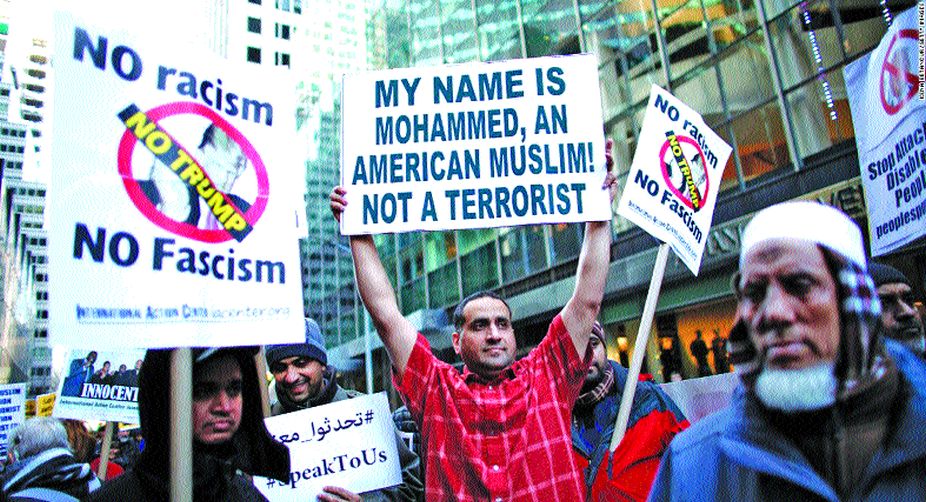
After Mr. Trump won the presidential election, hate
crimes have soared.  People of colour are
being beaten up, harassed and verbally abused in many parts of the nation.  Now White kids in schools are not afraid to
chant, “Build the Wall,” frightening students of colour, especially those
of Mexican heritage. White kids in several schools were even heard calling
black students by the N-word and telling them that they were not welcome in
this country anymore. We are also witnessing the proliferation of racist graffiti
and swastika signs of neo Nazi parties all across the nation.

Mr. Trump’s populist politics has divided the nation
along the crude lines of race and class. Thanks to Mr. Trump, it’s all about
identity politics now; it’s no longer about debates and discussions about
policies. It’s about personal insults and trying to put your opponents into the
box labeled “untouchables.” Reactionary politics, as practiced by Mr. Trump and
his supporters, has damaged the grand vision that we are one nation. His
politics has corroded our sense of solidarity by breeding suspicion, cynicism,
distrust and hatred for those who are different. By relying on the reactionary
politics of difference and division, Mr. Trump has done real damage to our
national life.  Millions of Americans,
especially people of colour, are alarmed that a new age of bigotry and hatred
has seized the country. It is indeed sad and heartbreaking that Mr. Trump has
not made any overt gesture to allay the fears of so many people who are
terrified of his presidency. And to add fuel to the fire, Mr. Trump has just
appointed Mr. Stephen Bannon as the White House chief strategist; he is a
controversial figure closely associated with white supremacists.

 Now, I have
to live with my decision to become a US citizen but I do question it, seeing
that millions of White Americans don’t want people who look like me to live in
this country and call it our home. It’s a bitter pill to swallow but I have no
choice but to accept the unpalatable truth that I’m unwelcome by many in this
country.

The writer is professor of communication studies,
Loyola Marymount University, Los Angeles.