Logo

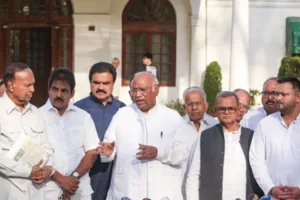
Rajya Sabha adjourned till 12.30 pm

IANS | New Delhi |

The Rajya Sabha on Monday was adjourned till 12.30 pm, minutes after it commenced.
The session began with condolences being paid for the 130 deaths in the Kanpur train derailment on Sunday. 
Immediately after, Opposition members sought a similar reference for the deaths caused by standing in queues outside ATMs since the government’s demonetisation move.
“If there can be condolence for the deaths caused in a train accident then why not for the people who died standing in the queue outside ATMs after the demonetisation,” asked Communist Party of India-Marxist’s (CPI-M’s) Sitaram Yechury.
In the midst of a continuous uproar, Deputy Chairman PJ Kurien adjourned the house.

Britain to invite Trump to meet the Queen

A formal invitation for Trump to make Britain one of his first foreign stops will be issued once he is sworn in as president on January 20, 2017.

IANS | London |

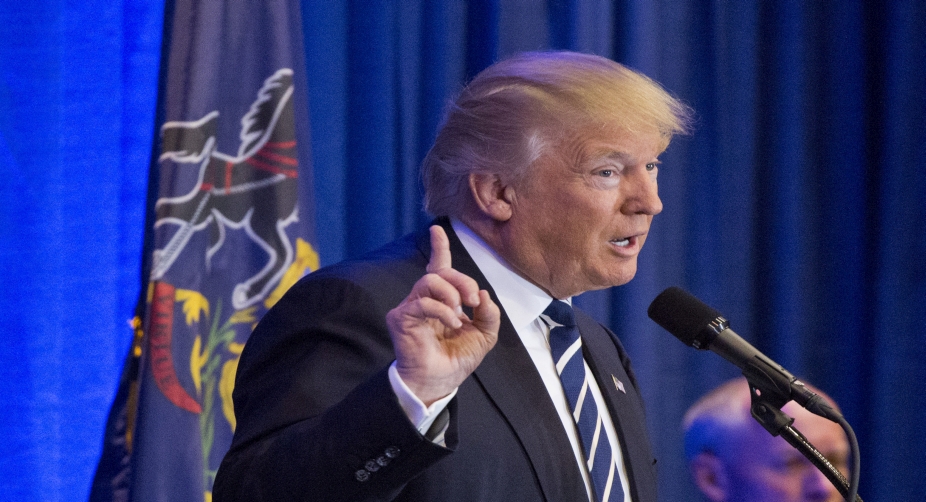
British officials are planning to invite Donald Trump to meet the Queen as the government deploys its “secret weapon” to cement close ties with the new American President-elect.
Plans to roll out the red carpet for Trump with a state visit in the summer of 2017 are being drawn up at the highest levels in Whitehall, The Times reported on Sunday.
A formal invitation for Trump to make Britain one of his first foreign stops will be issued once he is sworn in as president on January 20, 2017.
According to the officials, discussions between British officials and Trump’s team are expected to begin soon to ensure that a date can be agreed for June or July next year. 
The Queen will also send an official congratulatory message to the president to mark the inauguration.
Trump told Brexit backers last week that he was “looking forward to it” because his mother always loved the Queen.

Demonetisation: Queues get shorter at banks; no respite at ATMs

PTI | New Delhi |

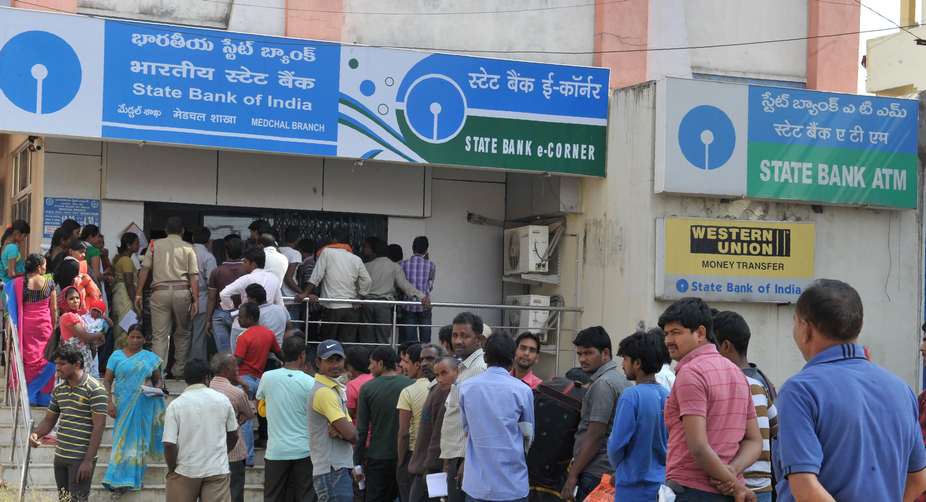
In the wake of certain restrictions on money exchange norms by the government, chaos and rush at banks eased but the situation did not quite improve at ATMs as people were still seen waiting in long queues to withdraw valid currency notes.
As banks opened after a day’s break today, people rushed to exchange old defunct bills or withdraw cash. On the 12th day of demonetisation today, people still have to stand in queues for hours at ATMs as most of the cash vending machines are either dysfunctional or running out of cash due to huge rush.
There have been reports coming from different parts of the country about people being frustrated with shortage of cash at branches, leading to scuffle with bank staff and rioting at some branches.
Besides, those having wedding in their families are still not able to withdraw Rs.2.5 lakh from their accounts, even after the relaxation announced by the Centre five days ago.
Banks said they have not yet received operational guidelines from the RBI in this regard.
People are visiting their branches with gazette notification that talks of relaxation being provided to farmers and for marriage, but to no avail.
“Withdrawal for marriage purpose can be availed only after RBI’s notification, which will have clear direction about the various formalities needed to be furnished by the customers for withdrawal,” said a senior public sector bank official.
To screen repeat customers, banks at many places have started using ink mark on fingers of people who are exchanging old notes.
Besides, the government last week also reduced the exchange limit of old defunct notes to Rs.2,000 from the earlier Rs.4,500.

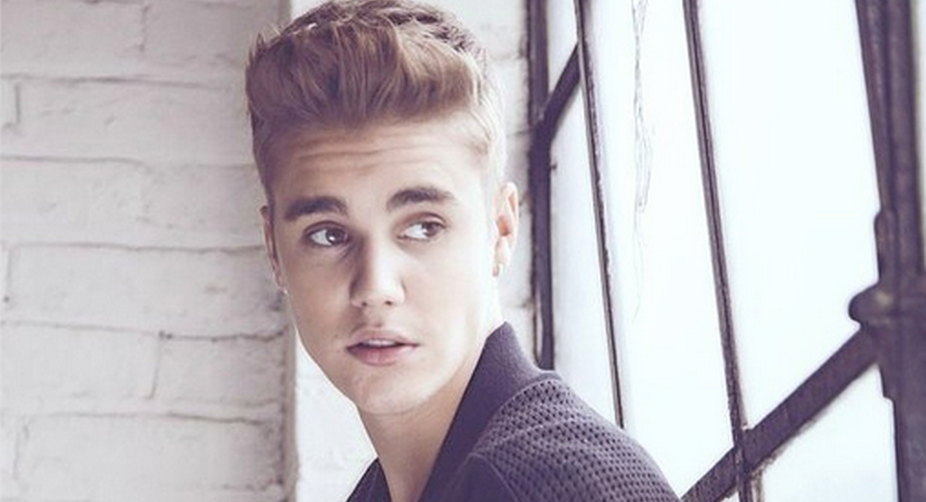
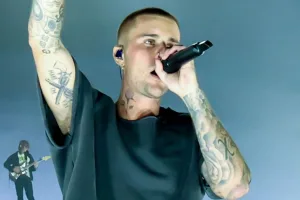
Justin Bieber, Drake lead the way at AMAs

PTI | Los Angeles |

Canadian singers Justin Bieber and Drake emerged as big winners at the American Music Awards held at the Microsoft Theater here. 
Bieber won four total awards on the night, pacing all nominated artists. Drake, who led the pack of nominees with 13 nods, breaking Michael Jackson's record for the most AMA nominations in a single year, nabbed three solo awards in rap/ hip-hop category, reported Billboard. 
Ariana Grande was named artist of the year. 
The night saw performances by Bieber, Niall Horan, Maroon 5 and Kendrick Lamar, James Bay, Fifth Harmony, Lady Gaga, Green Day, John Legend, Bruno Mars, Shawn Mendes and The Weeknd. 
The Chainsmokers and Halsey, and Ariana Grande and Nicki Minaj performed special duets. The American Music Award of Merit honoree and performer Sting also took to the stage. 
Bieber's four awards included favourite male artist pop/rock, favourite album pop/rock for Purpose, favourite song pop/ rock for Love Yourself and video of the year for Sorry
Zayn Malik received the new artist of the year award un-leashed by T-Mobile. 
Blake Shelton and Carrie Underwood received the favourite artist-country male and female respectively. 
Beyonce won the tour of the year honour beating Madonna and Bruce Springsteen & the E Street Ban. 
Selena Gomez won the favorite female artist pop/rock award. 
While the collaboration of the year went to Fifth Harmony featuring Ty Dolla $ign – Work From Home. The trophy for favourite artist- soul/R&B for male and female was taken home by Chris Brown and Rihanna respectively. 
Adele won the favorite artist award in adult contemporary category. Top soundtrack was given to Prince's Purple Rain
The Chainsmokers also took home the trophy in EDM category.

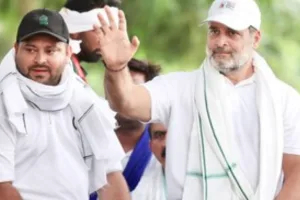
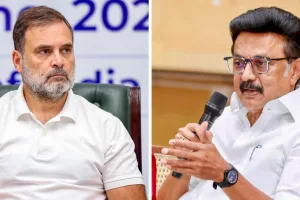
Rahul Gandhi visits Delhi ATM

 Gandhi visited an ATM in the city and interacted with the people standing in the queue.

IANS | New Delhi |

Congress Vice President Rahul Gandhi on Monday visited an ATM in the city and interacted with the people standing in the queue, the Indian National Congress(INC) tweeted.
“Congress Vice President Rahul Gandhi met people standing in queue early morning outside an ATM in Jahangirpuri area, Delhi,” said the tweet. 
The information initially tweeted by the Youth wing of the Congress party was later retweeted by the INC.
During the interaction, Gandhi asked the people about the difficulties they faced after the demonetisation of the Rs 500 and Rs 1,000 currency notes.
This was Gandhi’s third ATM visit post the Centre’s demonetisation move on November 8.

Photo

  • img
  • img
  • img
  • img
  • img

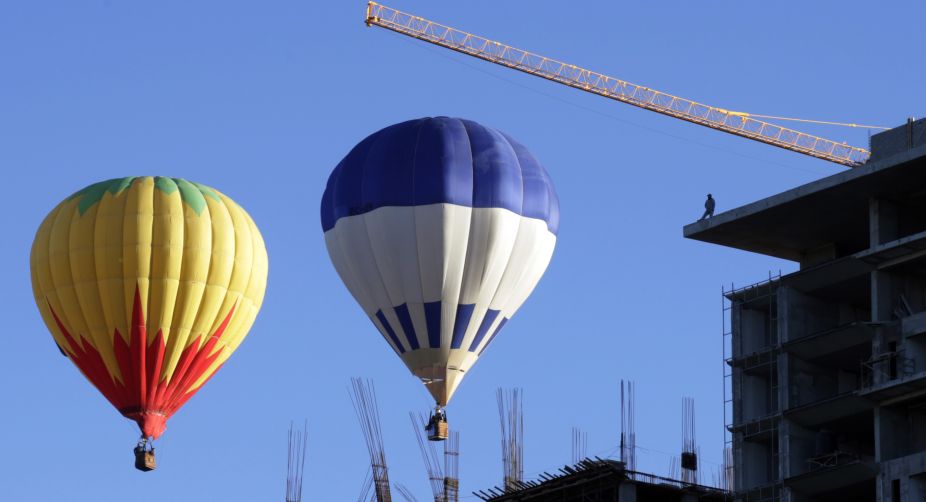
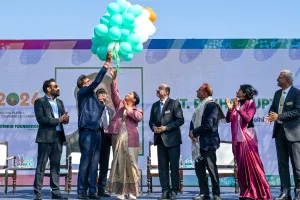
International Balloon Festival

International Balloon Festival

MORE Photo STORIES

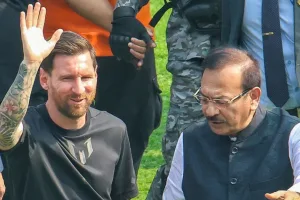
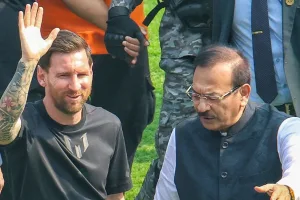
Manchester City plotting to sign Messi for £247 m?

The Mancunian club is reportedly prepared to pay Messi a basic wage of £500,000.

IANS | London |

English Premier League side Manchester City is reportedly preparing a staggering offer £200 million ($247 million) to sign FC Barcelona star forward Lionel Messi next summer, according to English media reports.
The London-based tabloid Sunday Mirror on Sunday reported that the Mancunian club is prepared to pay Messi a basic wage of £500,000 ($617,700) per week, reports Efe.
“The Blues believed that their appointment of Messi’s former Barça boss Pep Guardiola as manager last summer would put them in pole position to sign the player should he ever decide to leave the Nou Camp,” the newspaper said.
Additionally, Manchester City’s hopes to sign Messi have been revived as Barcelona still has to convince the Argentine star to renew his contract, which expires in 2018.
Manchester City is one of few clubs with the financial resources to sign Messi, after it was acquired by the Abu Dhabi United Group for Development and Investment — owned by multi-billionaire Sheikh Mansour — in August 2008.
In the event of that potential deal, Messi would break Paul Pogba’s record transfer from Juventus to Manchester United for £89 million ($110 million).
The Sunday Mirror also highlighted that there are other European sides who have shown interest in Messi, such as Paris Saint-Germain or Manchester United.

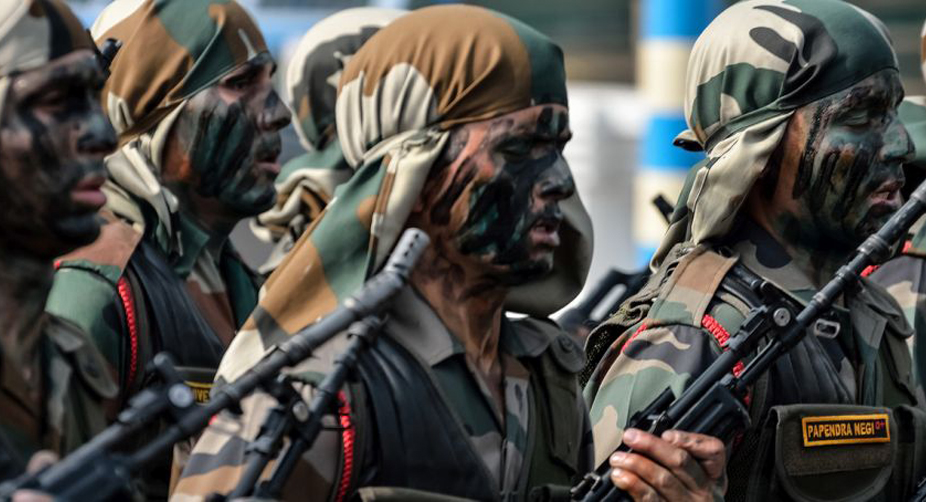
BSF trooper martyred, 7 soldiers hurt in LoC firing

The Army said that four of its soldiers were also injured in another ceasefire violation by Pakistan during the night in Naushera sector.

IANS | Jammu |

One Border Security Force (BSF) trooper was killed and seven others were injured on Monday in Pakistan firing on the Line of Control in Jammu’s Rajouri district, an official said.
“Pakistan Army resorted to unprovoked firing and shelling in Manjakot sector of Rajouri district after midnight,” the senior BSF official declared. 
“One BSF trooper was killed, while three others — four of the Army and three BSF troopers — were injured,” he added.
The Army said that four of its soldiers were also injured in another ceasefire violation by Pakistan during the night in Naushera sector.
Heavy shelling was still underway, the official added.

Top healthy drinks for winter

The cold is slowly seeping in. Cozy up with some great healthy drinks and keep yourself warm and nice.

Deepa Gupta/thestatesman.com | New Delhi |

Some drinks are considered healthier and enjoyable in winters, especially the seasonal ones. Many a times, you may be tempted to have beverages which may not be healthy. If you are looking for few healthy alternatives considering the calories, you need not worry. There are plenty of such options that will keep you healthy without putting on that extra pound. They are packed with health benefits that help you fight the chilly weather like strengthening your immune system, supplementing mineral deficiencies and staying fit. Here is a list of few special drinks that you must take in cold months. 
Hot organic honey lemon water: Both honey and lemon contain powerful therapeutic properties. When both are combined, an excellent health tonic is formed. Drink  immediately after preparing it, preferably on an empty stomach. 
Carrot juice: It is a power drink packed with nutrients and essential minerals like manganese, potassium, vitamin K and many more. Having a glass full of carrot juice daily is more advantageous than eating one or two carrots a day. 
Tomato soup: It is one of the tastiest, refreshing and healthiest hot soups. There is nothing better than sipping a bowl of steaming soup and warm yourself up on a chilly day. 
Golden milk: Turmeric hot golden milk is a lovely warming and calming drink for the digestive system, detoxification and perfect for chilly winter days. 
Green tea with cinnamon: Green tea and cinnamon both are full of flavour and health promoting properties. It is packed with anti-oxidants vitamins and an assortment of other nutrients that may prevent or treat certain ill conditions. 
Hot dark chocolate milk: This drink brings a smile on a chilly winter day reminding us of our childhood memories. This luxurious milk increases the microcirculation in your skin, warming your whole body up. It also triggers the brain to induce the feeling of calmness. This milk is a natural energy source containing minerals, vitamins and biochemical compounds. 
Vegetable clear soup: This soup is light, refreshing and soothing on any day and time in winter season. Made of vegetable stock and addition of crispy veggies make it worth having with health and taste. Full of nutrition, this soup will make you jump with joy in freezing cold. 
Ginger tea: Ginger tea has high levels of vitamin c and amino-acids. It is also packed with essential elements such as calcium, zinc, sodium, phosphorus and many more. Everything good is found in ginger tea. 
Fresh sweet orange juice: It is considered as one of the healthiest beverages because of its enormous health benefits. Its ability to boost immune system is commendable. Packed with an array of vitamins and minerals, this nutrient packed juice is a powerhouse of healing properties. 
Hot rasam: It is a South Indian specialty made of red lentils, variety of healthy vegetables and spices like turmeric. Drink a bowl of hot rasam that is quite rich in anti-oxidants, fibre and proteins. Keep cold at bay with delicious and healthy rasam. 
Go natural and treat yourself to these health drinks this winter. There is nothing more comforting than drinking a home-made healthful and delicious beverage.

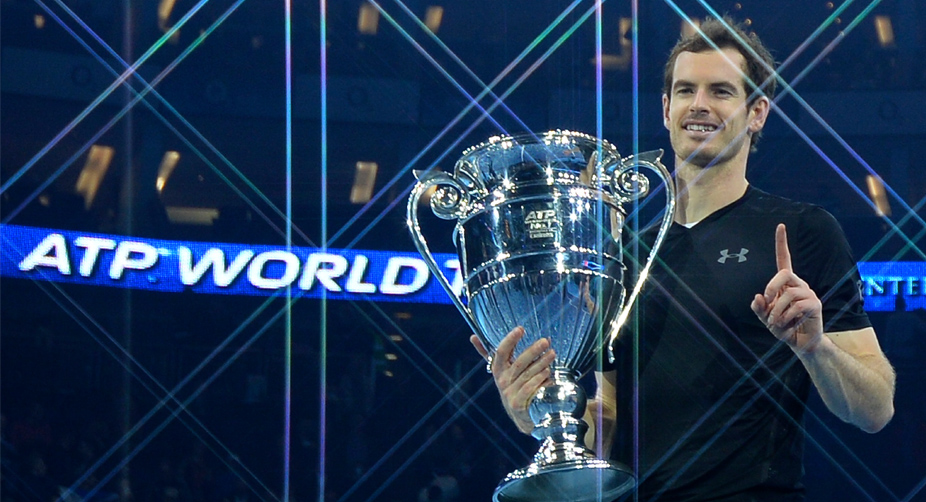
Murray beats Djokovic to win ATP Finals title, retains No.1 ranking

IANS | London |

Andy Murray beat four-time defending champion Novak Djokovic in straight sets at London's O2 Arena on Sunday to win the ATP World Tour Finals title and also secure year-end top spot in the world rankings.
The 29-year-old became the 17th different player to finish the year atop the world in history since 1973 and the first British player to achieve the feat, Xinhua news agency reported.
The Scot extended his winning streak to 24 matches dated back to September 18 after a 6-3, 6-4 victory.
Murray had spent nine hours and 56 minutes entering the final, including the two longest best-of-three set matches in tournament history, while Djokovic needed three hours less to reach the title match.

The cesspool that is Indian politics

Pravesh Jain |

All incidents affect. Some incidents affect more.
All statements don’t come as answers. Some come as questions too. Freedom of
speech is good. But freedom to tell the truth is even better.

Right to rule comes with a duty and responsibility.
But the right to fool comes with arrogance, inabilities and a sense of false
entitlement. Freedom is directly related to duty. In essence its character is
deontological.

To start with, let’s talk about the freedom to
exercise freedom. And what makes more sense; freedom with responsibility or
freedom with irresponsibility. The other day while the golden jubilee
celebrations of Delhi high court were on at Vigyan Bhavan, something unexpected
occurred.

In the presence of the Chief Justice of India and
the Prime Minister, Delhi Chief Minister Arvind Kejriwal said, “There is a
widespread fear that the phones of judges are being tapped and if it is true,
then it is the biggest assault on the independence of the judiciary.” When
freedom extends to irresponsible statements, it must be interpreted as
paranoia. It seems that Kejriwal is unable to rise above his party’s
priorities. Maybe it has blurred his vision and rationality.

He is a master at the blame game and most of his
colleagues are political upstarts who sing his tune. What was even more
shocking was that no one present on the dais, especially the judges, either
confronted him or contradicted his statement. After all it’s a very serious
matter.

It’s about the constitutionally empowered
independence of judiciary. It’s about the status of judges. And it’s about a
system that thrives on faith and mutual respect, based on the constitutionally
endorsed philosophy of checks and balances. So the public has a right to know
the truth, the truth in all its textures.

After all, it’s a serious allegation and it came
from no less than a constitutionally elected authority. So the nation must know
the truth. But perhaps the judges present there didn’t find it appropriate to
react as their chief was already present on the dais. We know soldiers don’t
like to respond when the general is present. But the silence of the CJI is
equally intriguing; though not very difficult to comprehend.

Maybe he too thought there is a proper time and
place for everything and that making an issue of it would be indecorous. After
all, it was not a debate session, it was the golden jubilee celebration of the
Delhi High Court.

Law minister Ravi Shankar Prasad realized the
seriousness of the issue and came out with a statement forthwith saying: “I
deny with all authority at my command the allegations that phones of judges
have been tapped. Independence of judiciary is fundamental, impeachable and
uncompromising for the Narendra Modi government.’’ Now the legal community
should demand proof from the Delhi CM for assurance of people.

Kejriwal must stop seeing everything with a
political glass. He must think of better coordination with the Centre so as to
build a model capital. People feel that Kejriwal has failed miserably in
creating a desired harmony. His antagonistic approach on all issues is a
dangerous political device.

His rigidity and his conditioned thinking are
deleterious to growth and betterment of the city. It seems Kejriwal’s claims
and promises are being debunked by disillusioned Delhi’ites. The second topic
that must be highlighted is the way the tragic suicide of a subedar in
connection with the One Rank-One Pension issue was mishandled. There is too
much of bizarre politics about such a heart breaking and soul stirring issue.

When a soldier commits suicide, a nation’s
conscience is put on the gallows. But instead of soberly seeking to understand
the reason for the tragedy, what we find is the shocking and baffling behavior
of our political parties and politicians. The government should be asked how it
can stop leaders from meeting the family members of the deceased soldier in the
hospital.

The nation belongs to all so also the citizens. It’s
the normal duty of public representatives to visit the affected family to show
solidarity with them. It mitigates the severity of bereavement. This human side
apart, even the constitutionality of denying the basic right to public
representatives is called into question. Does not the chief minister of the
state have a right to visit a hospital to see the family of the deceased? Can’t
the leaders of political parties come there to show their concern?

What’s wrong in that? The police denied access to
both the Delhi CM and Congress vice-president Rahul Gandhi and took them into
custody on the ground that their presence may disturb smooth operations at the
hospital but most people understood their real motive. It’s not the first time
that VIPs have visited a hospital. The government’s advisers must introspect,
shed their arrogance or fear and act sensibly.

They must know that wrong advice based on a
misplaced fear can land the government in bigger problems. Had there been no
obstructions to the people’s representatives visiting the family of the
deceased soldier, I doubt if this issue would have snowballed into a major
issue. The third event of note is the saga of Uttar Pradesh’s so-called first
family.

It sounds more like a story of conspiracies of the
medieval era than one of politics of the 21st century in democratic India. The
nation is fed with news of such undemocratic flavor that it becomes difficult
to digest. Who has how many wives? Whose children call the shots? Which one of
Mulayam’s wives conspires for what? Who all are the henchmen?

Who is the other ambitious son? Why was Akhilesh
away from his father from childhood? What will happen to the family? One day
it’s between father and son, the next day between uncle and nephew and the
third day between two brothers with a third one coming out with something new.
And the next day they are all back together wearing smiles.

And when some of the actors say “we may be divided
but Muslims are with us’’ it is truly beyond comprehension. In fact, instead of
talking about their vision to make UP a real Uttam Pradesh, political leaders
are are talking of who is with them. Some say Dalits are ours, some say Muslims
are ours, some say it’s the MY – Muslim and Yadav – combination that will work
while others say the Brahmin support is vital. But who is talking about development
and a secure future for people. All this is happening in a country with
innumerable problems – malnutrition, farmers’ suicides, unemployment, rise in
pollution, dirty rivers, communal strife and what not.

To cap it all there is growing poverty, sickness and
lack of infrastructure to bear the burden of a huge population. How long will
these apathies prevail in Indian politics and how long we will have to be
silent witness to our own downfall is something that provokes the mind and
fills the heart with unspeakable pain. Only a people-oriented mindset can
change this chaotic political culture. There is no doubt that destructive
politics and amoral politicians pose the greatest danger to us.

The writer is Chairman, Paras Foundation.

Nehruvian legacy — I

Subrata Mukherjee |

Jawaharlal Nehru (1889-1964) was the Prime Minister from the day of Independence, 15 August 1947 to his death on 27 May 1964. He was chosen as the ‘natural successor’ by Mahatma Gandhi. However, Nehru, unlike Gandhi, never attempted to build a team, the very essence of parliamentary democracy. Nor for that matter did he name his successor.

“Panditji knows best” was his guiding principle. He shouldered a forbidding workload as he headed the two ministries of Foreign Affairs and Atomic Energy, apart from being the Prime Minister. As Aakar Patel once wrote about Nehru: “He made too many speeches (often three a day) and spent too much time lecturing the West. He was careless with his time, once giving three hours to a high school delegation from Australia, while his ministers waited outside”.

This reflects the fact that Nehru never prioritised his work and never distinguished the frivolous from the serious. He never treated his ministerial colleagues or even the popular chief ministers with respect. Often, he would lecture them through his letters, which were crafted in general terms. There were no specific instructions to deal with the major problems.

He did not have a system of feedback. Gandhi’s Congress, being an umbrella party, had people of all shades of opinion and even before Independence, the views of both Nehru and Patel were radically different. However, after Independence, as Austin observed, the oligarchy of four — Rajendra Prasad, Azad, Nehru and Patel — provided a unified leadership leading to the smooth functioning of the Constituent Assembly and framing of the Constitution.

The 1950 presidential election of the party was a keenly contested affair. Patel supported Tandon, while Nehru supported Kripalani. Tandon won by securing 1306 votes while Kripalani received 1072. Nehru took it as a personal defeat in the manner of Gandhi’s response to Sitaramayya’s defeat by Subhas. Nehru resigned from the Congress Working Committee and other members followed him. Like Subhas earlier, an isolated Tandon resigned and Nehru took over the party presidency.

As the election revealed, Nehru did not accept the majority view and without trying to convince the majority by reason over a period of time, his action demonstrated his unilateralism and arrogance. He never tried to dissect Patel’s criticism of socialism that it failed to create wealth. Instead of practising a state-sponsored distributionist policy to which Nehru was committed, Patel preferred the Gandhian precept of non-possession and service to the poor.

Patel used to say that like the existence of 84 castes, there are 85 varieties of socialism and he was against class war and did not want liquidation of landlords or capitalists. He rejected nationalisation as it was inefficient. For Patel, the major concern was India’s industrial backwardness which he wanted to overcome by emphasising the need to increase production.

Disregarding Patel, Nehru followed the Leninist policy of “commanding heights” and a socialistic pattern of society leading to what Raj Krishna called “dharmshala capitalism” with a pathetic 3 per cent annual growth rate, which he described as the Hindu rate of growth. Hem Baruah, the PSP member from Assam in the Second Lok Sabha (1957-62) in a reply to Nehru’s observation that cars are manufactured in India, retorted that it was a unique car in the world… as all its parts except the horn are noisy. Another claim by Nehru, that an average Indian made 19 paise a day, was debunked by Ram Manohar Lohia, the indomitable socialist leader. He retorted that with that sum one could not buy even a bottle of Coca Cola and even that figure was a lie, as the actual earning was 16 paise a day.

Aakar Patel exploded the myth that Chacha Nehru loved children, as “Nehru did not really have time for or enjoyed their company” He quoted Crocker to prove his point. “Nehru certainly did some acting on public occasions and before TV cameras… The acting was never worse than the pose of Chacha Nehru with the children. This was at its worst on his birthday for a few years when sycophants organised groups of children with flowers and copious photographing to parade with him. It was out of character, his interest in children was slender”.

This keenness to be a man for all seasons and really believing that the world is a stage in which we are all actors, kept him preoccupied with several unnecessary ceremonies and actions which he could easily avoid. Many of his activities should have been reserved for the Head of State and not the Head of Government. Rakesh Batabyal portrayed Nehru’s grand project, the community development programme ‘as a means to entrench democracy in villages’.

An eminent social scientist SC Dube commented that the future of Asia in the larger context would depend on its success. As part of the project, the Balvantray Mehta committee was formed and its report was accepted and put into practice in Rajasthan. Batabyal remarked that ‘the entire political text of the community development programme, as Nehru saw it, was clearly apparent in this beginning. It was a remarkable roadmap for a decentralised democracy — one where everyone, down to the village level, through the Panchayats, would have ownership of the ‘idea of India’ and India would be a large, open home to all its citizens”.

But as Batabyal himself remarked by 1960, it became a ministry and under bureaucratic control a travesty”. Batabyal added: ‘Nehru’s home-making efforts ended up promoting urban growth, something that he himself, having spent almost his entire political life for and among village folk never wanted’. This failure of Nehru’s grand project for genuine decentralised democracy left numerous villages in filth and squalor, thereby pulling all of India’s many success stories back to the narrative of poverty and cultural degradation.

In a severe indictment of the community development programme, Barrington Moore described it as a grand failure in the context of the First Five-Year Plan. The subsequent import of grain under the PL 480 programme from the USA, of which Nehru was a severe critic, was a humiliating result of his failed agricultural policy. He ignored the basic requirement of building a modern state with meaningful land reforms, universal elementary education, population control, and affordable health care. This wide gap between policy and implementation is a legacy of the Nehruvian era that followed the Fabian collectivist model.

Nehru neither had the patience with details nor a team to really lead the nation that was in its infancy. He continued with a top heavy urbanised colonial set up without any reform proposal. Neither did he empower the poor. In contrast, the East Asians did not set up IITs, but they put in place a network of institutions for proper basic education and skills, a point that was underlined by Galbraith in the 1990s when he remarked that it is impossible to defeat the East Asians as they have no paucity of technically qualified manpower.

The great advantage that India had at the dawn of independence — an organised political party and an efficient merit based bureaucracy — was squandered by Nehru with his superficial modernism and over centralisation of power and authority.

In the context of the promise of a “new India”, Ernest Barker included the Preamble of the Constitution in his famous work as the noble intent of a nation. But the Nehruvian years witnessed an unreformed colonial state apparatus with an inbuilt incapacity to take hard decisions. (To be concluded)

The writer is a former professor, Department of Political Science, University of Delhi.

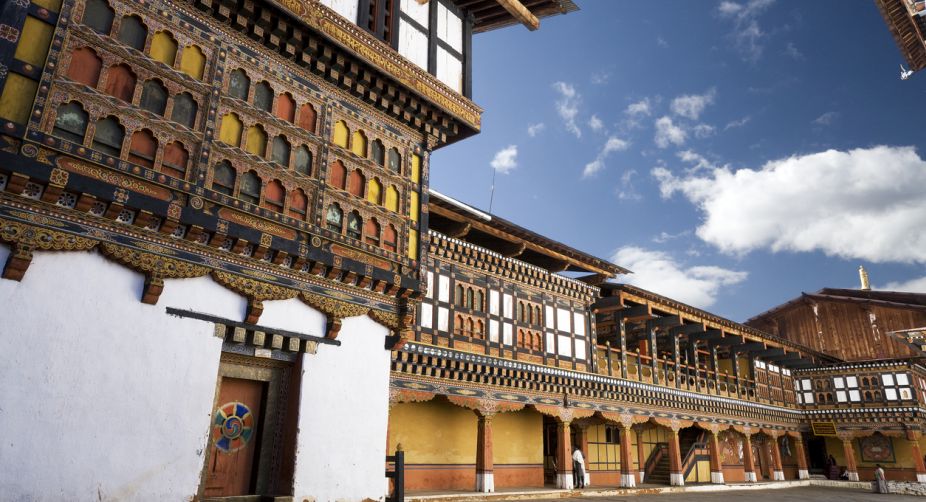
Bhutan’s bypass

Statesman News Service |

A decade after Bhutan became a constitutional monarchy, the tiny Himalayan country has charted its independent foreign policy vis-a-vis South Asia. Thimphu has made it pretty obvious that its dealings are no longer tied to India’s coat-tails… as they used to be during the long period of its status as a protectorate. Another critical feature is the role of Bhutan’s Parliament, and not the wishes — often overbearing — of South Block.

It thus comes about that more than a year after it was signed, the country has declined to be a partner to the four-nation pact, ostensibly to improve connectivity, but no less crucially to isolate Pakistan within South Asia. It was intended to allow vehicles to run without interruption between the four countries which had signed the agreement — India, Bhutan, Bangladesh and Nepal.

More than a year after the transit treaty was concluded, the elected government in Thimphu has decided to pull out expressedly in the interest of ecology of a picturesque capital. The timing of the backtracking is significant — in the aftermath of the boycott of the SAARC summit in Islamabad by India, Bangladesh and Nepal. Unwittingly or otherwise, Bhutan has ensured that the isolation of Pakistan is not reinforced. It would be pertinent to recall that Pakistan had scuttled a pan-South Asia transport pact which had been proposed at the SAARC summit in Kathmandu in 2015.

With the government beyond the Radcliffe Line opposed to any multi-nation agreement, to which India is a signatory, the government in Delhi was arguably anxious to prop up a sub-regional arrangement. Logistically, it shall not be easy to implement the transit treaty post Bhutan’s pullout.

The country’s National Council, an elected entity that is equivalent to the Upper House, has voted against the treaty as the vehicles are bound to damage the ecology of the mountainous country. Inherent in the voice of the people is a message to the three other countries, most importantly India. It is a legislative certitude in Bhutan that international agreements are ratified by Parliament. Inbuilt in the constitutional monarchy is the system of checks and balances pertaining to the executive and the legislature.

Situated as it is between India and China, tourism is Bhutan’s principal source of revenue. And the National Council’s refusal, however belated, to abide by the agreement is in deference to the reservations of the people generally. While the four-nation agreement would have benefited trade and transit across the borders, the deleterious impact on the environment can scarcely be discounted.

With the agreement now a virtual non-starter, Pakistan might be enjoying a quiet chuckle over Bhutan pulling out of the deal, which was a brainchild of India. Remarkably, it was conceptualised by the UPA-II dispensation and followed through by Narendra Modi.

Tactical misfire?

Statesman News Service |

The question has been asked repeatedly in recent
years, but never satisfactorily answered. It was raised yet again over the last
few days: what purpose was served by keeping Parliament paralysed when normal
life remained disrupted as a result of the sarkari-created cash calamity?

The Opposition — which was by no means the sole
culprit of the disruption — did enough to garner the bold headlines, but in
reality doing so ensured that the government was off the hook. Thus negated was
that basic principle of parliamentary democracy, the legislature holding the
executive accountable. There were tactical infirmities in the game plan — the
Opposition demand for a discussion in the Lok Sabha followed by a vote made
limited sense since it is short of numbers.

It does boast more favouable numbers in the Rajya
Sabha, but there the squabble was over the absence of the Prime Minister,
clearly an ego-hassle. For the folk troubled by having to wait long hours in
queues for access to their own money were hoping that some relief would be
squeezed out of an insensitive government by a vigilant Opposition, it mattered
little who would make the announcement that eased their hardships.

To be fair, the common man was uplifted by the focus
on his plight during the six hours of debate on the opening day of the Rajya
Sabha session, only to be left dismayed when the Opposition resorted to
obsolete tactics that actually reduced the pressure on the finance ministry and
banking officials to perform more effectively. That a string of “side-scraps”
broke out, and inconsequential political squabbling took over, further eroded
the people’s faith in the parliamentary system.

Adding to the citizens’ disappointment was the petty
one-upmanship of Mamata Banerjee and Arvind Kejriwal that proved that even the
cash crunch did not forge Opposition solidarity.

It would not be easy to recall a parallel in recent
times of the citizen being treated with such utter contempt by the government,
that too when in principle there was much initial approval of its action.

The refusal of the Prime Minister, finance minister,
their officials and sycophants to accept that they had grossly miscalculated
the fall-out of the demonetisation exercise hurts even more than the impact of
the cash crunch that has shaken trade and commerce as seldom before. Folk were
left wondering how the BJP would have acted had it been in the Opposition and
the government of the day had floated such an anti-corruption move: would the
issue have been taken to the streets? Unfortunately, a non-functional
Parliament has meant that Narendra Modi, Arun Jaitley & Co. were not
“forced” to explain their several shortcomings. The Opposition, as much as the
government, let the people down. 

–Editorial

Don’t make fun of the people’s suffering: Mamata tells Modi

IANS | Kolkata |

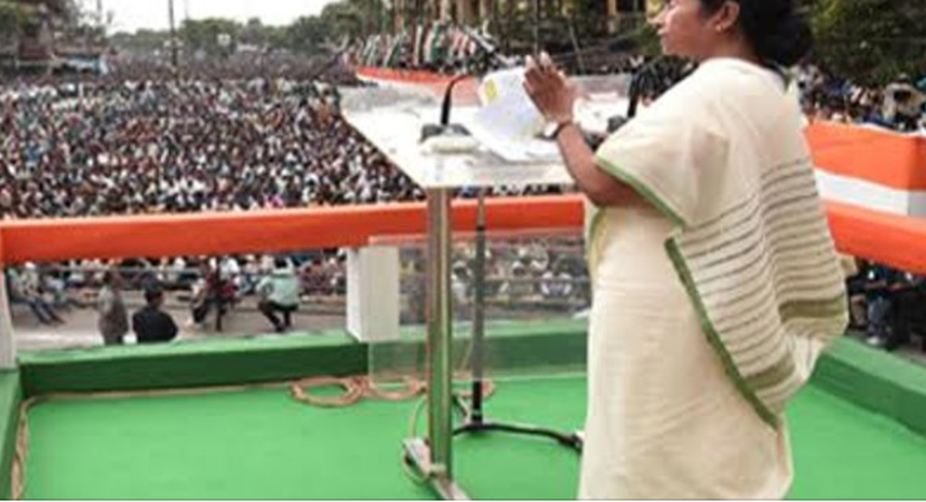
West Bengal Chief Minister Mamata Banerjee on Sunday criticised Prime Minister Narendra Modi for making fun of the “problems faced by the masses” following demonetisation, saying that unless he felt their pain, people would not forgive him.

In a series of tweets in Hindi and English, Banerjee seemingly refered to Modi's video conference address before the Coldplay concert in Mumbai on Saturday, where he had quoted from one of Bob Dylan's most famous songs and cracked a joke apparently alluding to the effects of his government's recent decision to ban Rs 500 and Rs 1,000 denomination notes.

“Don't think people's sufferings are mere fun. Why should your policies make people suffer? They should have instead benefited them,” Banerjee said on her Twitter handle.

“Economy of every state, entire country is in tatters. People are in distress, and your are in a celebaroty mood,” she said in another tweet.

Banerjee advised Modi to listen to the people's voice.

“Listen to the voice of the people . Feel their pain. People will not forgive you for this. They are suffering,” she said.

In an obvious reference to Modi attacking her on the chit fund issue on Sunday, Banerjee said the prime minister was dubbing as corrupt anybody who opposed him.

“Pradhan Mantri ji, you are equating corruption with anyone who opposes your policy. Are you the only magician?”

In his address in Mumdai, Modi had joked: “You've been smart in asking me to only address (the) gathering and not sing, or else I'm sure you'd be asking (for your) money back, that too in Rs 100 (notes),” in an obvious reference to the demonetisation initiative.

In another veiled reference to the country's situation, Modi quoted Dylan's song “The times they are a changing”.

Targeting Banerjee, who has been in the forefront of the anti-demonetisation protets, Modi on Sunday raised the chit fund scam issue in Bengal.

“Millions of people invested their hard earned money in this chit funds and under the blessings of politicians, all this hard-earned money disappeared in the scam. Many people lost their lives. And today, these people are levelling charges against me,” he said.

The Central Bureau of Investigation, probing the Saradha chit fund scandal, has arrested and quizzed several leaders of Banerjee's Trinamool Congress.

Horrific train disaster near Kanpur kills 120

IANS | Kanpur |

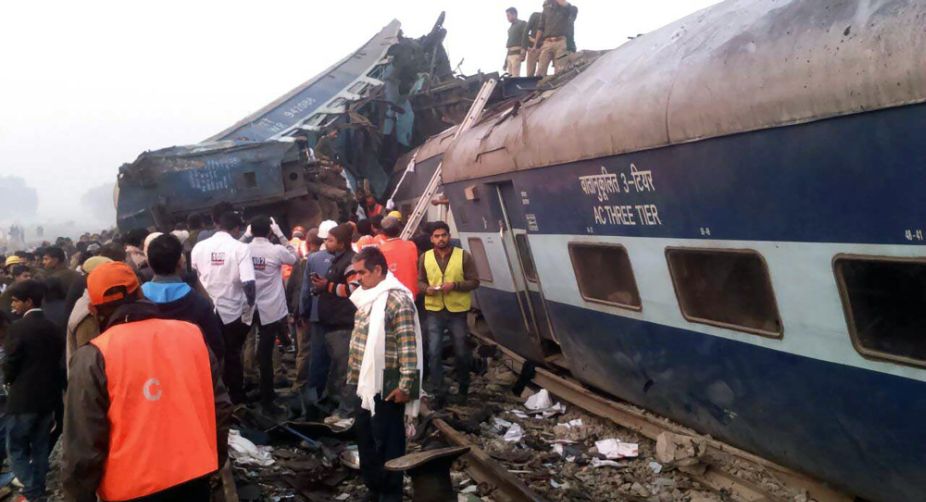
In one of the worst rail disasters in the country, at least 120 persons were killed and around 100 injured before dawn on Sunday when 14 coaches of the Indore-Patna Express derailed near Kanpur.

The tragedy occurred when the coaches of the Patna-bound train ran off the rails shortly after 3 a.m. near Pukhrayan station, about 60 km from Kanpur city in Uttar Pradesh, railway and police officials said.

Inspector General of Police, Kanpur, Zaki Ahmad told IANS that 120 people were killed in the accident and over 40 of the injured had been admitted in different hospitals in Kanpur. All others have been given first aid and discharged.

The deaths could rise as some passengers were in critical condition.

He also said that at least 60 of the bodies have been identified with most of the victims hailing from Uttar Pradesh and Madhya Pradesh. 

Railway Minister Suresh Prabhu, Minister of State for Railways Manoj Sinha and a host of top railways officials visited the site and supervised rescue and relief operations. 

Prabhu ordered an inquiry and vowed to take “strictest possible action” against the guilty.

While the cause of the derailment is yet to be ascertained, Sinha said the accident could have been caused due to rail fracture.

Panic set in when the coaches derailed in darkness, throwing scores of sleeping passengers over one another. Many took a while to realise that a tragedy had hit the train.

Passengers who survived related that there was screaming and shouting as many of the injured were in agony. 

The worst hit were the sleeper coaches S1, S2, S3 and S4.

A passenger who survived told journalists that the train stopped a couple of moments after 3 a.m. for unexplained reasons.

“It then suddenly picked up speed,” the man said. “And then I got an eerie feeling that the train was rolling down a valley,” he said.

“By the time I leant what had happened, some 20-25 people in my coach had been killed. A six-year-old girl was literally cut into two pieces,” said the terrified man.

Swayambi Mishra, in her early 20s, said she was in S1 coach and did not know what had happened to her father. 

A passenger in his 60s added: “God saved me. But most of the people who were with me in the coach seem to have disappeared. I can't find them.”

It was the worst train accident in the country after the May 2010 disaster in West Bengal involving Gyaneshwari Express in which some 170 people were killed. 

Relief officials described gory scenes, with many passengers crushed by tonnes of steel as several coaches rolled over. Gas cutters were used to rip through the coaches to take out the bodies and the wounded.

Hundreds of bags and suitcases belonging to the passengers were strewn all along the rail track.

National Disaster Response Force (NDRF) spokesperson Krishna Kumar told IANS: “Most bodies are beyond recognition as they are badly crushed.”

Ruby Gupta, who was going from Indore to Mhow to attend a wedding, could not find her father after the accident. “Some people are telling me to look for him in the hospital. I need my father back.”

Said another dazed survivor: “I was awake when the train derailed. There was a loud noise and then pandemonium broke out. I thought I was dreaming. My wife and children are fortunately safe….”

Survivors said the first to reach the semi-rural site were villagers.

An Uttar Pradesh Police constable rescued five people from S1 coach. “I felt bad… I had to walk over some bodies but I had no choice as I had to save those who were alive.”

President Pranab Mukherjee and Prime Minister Narendra Modi led the nation in mourning the dead. Modi announced ex-gratia of Rs 2 lakh for the next of kin of each of those killed and Rs 50,000 for each of the seriously injured.

The governments of Uttar Pradesh, Madhya Pradesh and Bihar also announced financial compensation.

Meanwhile, a row erupted when Sinha visited a hospital in Kanpur and gave an injured woman Rs 5,000 in demonetised notes of Rs 500. 

At the accident site, the railways used heavy machinery to separate the tangled coaches. NDRF personnel used hammers to smash the windowpanes to enter the air-conditioned coaches as most doors were locked from inside.

A railway official in Indore said the train, which left there on Saturday and would have reached Patna on Sunday evening, was carrying 1,266 passengers, including 308 in air-conditioned coaches. 

The accident led to cancellation and diversion of several trains. 

Later, a special train left from the accident site for Patna with the passengers who survived the disaster and could travel.

In the hospitals, the wounded remained frightened by what had happened. Some families got separated as relief officials, unknowingly, rushed a few from a family to one hospital and others to another.


Raj Tarun to play a blind character in ‘Andhagadu’

IANS | Chennai |

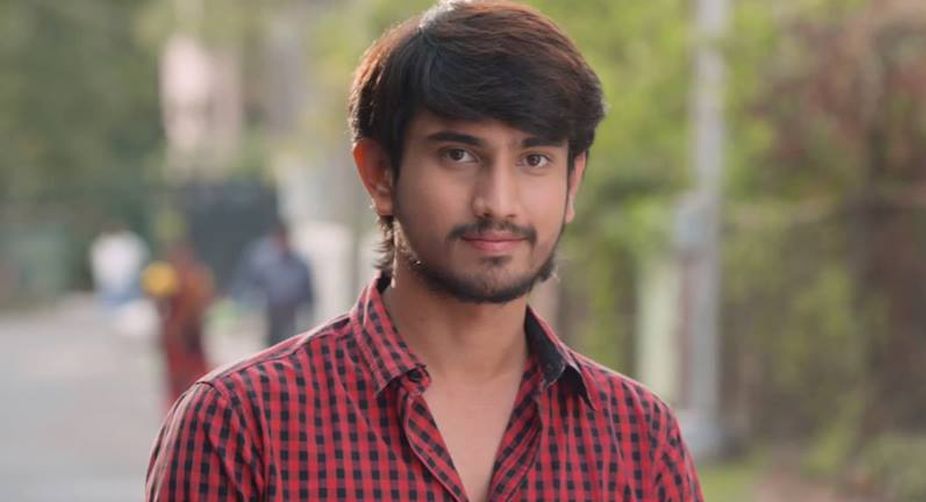
Actor Raj Tarun will be seen playing a blind character in upcoming Telugu romantic-comedy Andhagadu, a source said. 
“Yes, Raj is playing a blind character in the film. There’s nothing emotional or tragic about the role. It’s a fun film with a lot of comedy,” a source from the film’s unit said. 
Directed by debutant Veligonda Srinivas, the film also stars Hebah Patel and Rajendra Prasad. 
“The makers have just completed the first schedule. 
The film is being planned for summer 2017 release,” the source said. 
The film is produced by Anil Sunkara.