Logo

Mexican boy designs bullet-proof backpack

PTI | Mexico City |

An 11-year-old Mexican boy who lives in a northern city plagued by drug violence and shootouts has designed a bullet-proof backpack with a GPS tracker and an alarm system.
Juan David Hernandez, who lives in Matamoros on the border with the United States, presented his special school gear at a science fair in the state of Tamaulipas, according to local media.
The bag, which has the words “security backpack” inscribed on the back, weighs five kilogrammes.
It includes a steel plate to stop projectiles, an emergency alarm, a GPS locator, reflecting lights and a cellphone charger.
“You never know when a stray bullet can hit you or when you can be in the middle of crossfire, which is why I focused on designing something that could protect me and other students from so many shootings,” Hernandez told El Universal newspaper.
He said students in his class have had to drop on the floor as shootouts broke out outside his school.
Hernandez estimates the bag could cost between USD 48-USD 72.

Opposition didn’t get time to prepare for demonetisation: Modi

IANS | New Delhi |

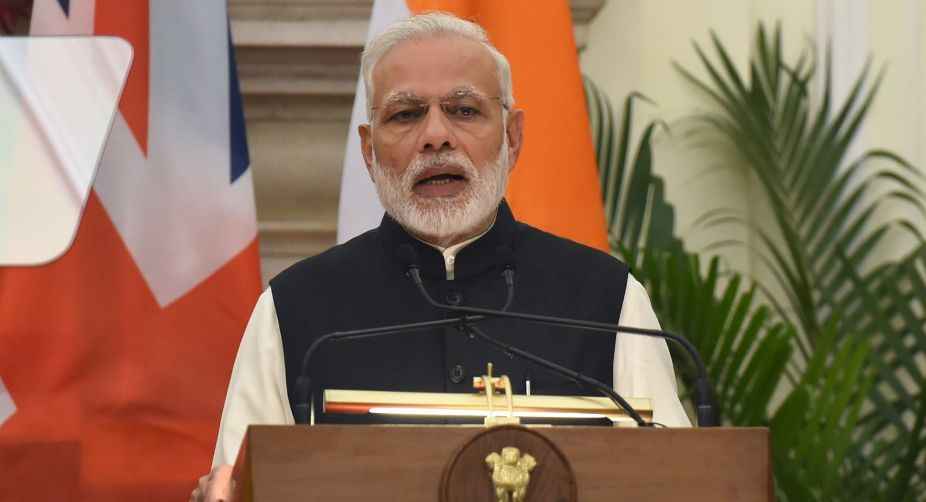
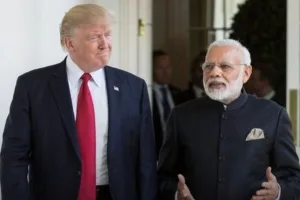
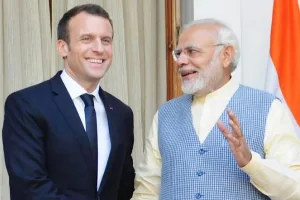
Prime Minister Narendra Modi while hiting out at the criticism over demonetisation, said on Friday the opposition was charged up not because the government was not prepared for its implementation but because it did not get time to prepare itself.
“A lot of people are criticising demonetisation in parliament. But most of the criticism is that the government was not prepared to implement the decision,” Modi said during the Constitution Day celebration function at the Parliament House Annexe.
“But that is not the real reason behind their criticism. They are hurt because the government didn’t give them enough time to prepare for it.”
“Even if they had got 72 hours to prepare themselves, they would have commended the move,” the Prime Minister said.
Lok Sabha Speaker Sumitra Mahajan was also present at the function, where two books on the constitution — “Making of the Indian Constitution” and an updated version of the Indian Constitution — were released.

Cash shortage to continue for 4 to 5 months: BEFI

PTI | Kolkata |

The
Bank Employees Federation of India (BEFI) on Thursday said currency note shortage
will continue for another four to five months even if the country’s all four
currency press facilities work at optimum capacity.

According to them, the cash scarcity spilling over to next week will make
people more impatient when receiving and withdrawing salary will become
difficult.

“Cash shortage will continue even if the four currency note printing
presses run at their optimum capacity. It will take four to five months to
restore normalcy in cash supply,” bank employees’ union BEFI general
secretary P K Biswas said here.

Biswas alleged that some customers have vandalised bank property in some
of branches of public sector banks and halted banking operations due to cash
shortage post-demonetisation.

As on March this year, there were 15,707 million pieces of old Rs.500
notes and 6,326 million pieces of Rs.1,000 notes in circulation, the union said.

The situation “can turn worse” in a week or so if the customers
face difficulties in withdrawing their salaries from banks and ATMs, BEFI said.

It said printing ink and dice for new denomination notes have reached the
Salboni printing facility in West Bengal, but when the actual printing will
start is yet to be known.

Gandhi’s Clean India

Editorial |

What separates two people most profoundly is a
different sense and degree of cleanliness
 — Friedrich
Nietzsche

Cleanliness is the symbol of dignity, health and
safety. Proper hygiene and sanitation are also the indicators of social and
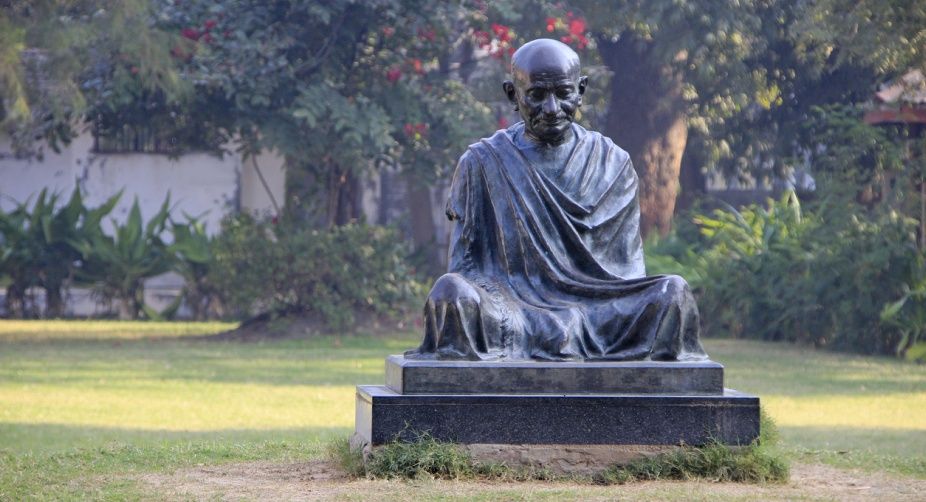
economic development. Mahatma Gandhi took cleanliness to the level of
spirituality. He had a firm belief in the proverb: ‘Cleanliness is next to
godliness’. He wrote, “We can no more gain God’s blessing with an unclean body
than with an unclean mind. A clean body cannot reside in an unclean city.”

At the age of 12, he spoke in terms of social reform
when he told his mother: ‘Uka (a sweeper) serves us by cleaning dirt and filth,
how can his touch pollute me? I shall not disobey you, but the Ramayana says
that Rama embraced Guhaka, a Chandal (a caste considered untouchable). The
Ramayana cannot mislead us.” In his reckoning, cleanliness did not mean mere
sanitation and hygiene. He warned that an unlean mind is far more dangerous
than an unclean body and surroundings. Indeed, his meticulous visualisation of
Swachh Bharat was three-pronged — a clean mind, a clean body and clean
surroundings. His perception of the concept was succinctly summed up when he
wrote that “‘I will not let anyone walk through my mind with their dirty feet”.

He criticised many Western customs but repeatedly
admitted that he learnt extensive lessons on sanitation from the West and
wanted to introduce that type of cleanliness in India. Till January 29, 1948, a
day before he was assassinated, he considered cleanliness as one of the most
important public issues. In 1937, he received a letter written by a villager of
Birbhum in West Bengal, asking him about his concept of an ideal village, and
the problems that plagued Indian villages. In response, he wrote: “An ideal
village will be so constructed as to lend itself to perfect sanitation. The
very first problem the village worker will solve is its sanitation.” In 1941,
he wrote a booklet titled Constructive Programme — Its Meaning And Place for
Congress workers which, in his own words “may otherwise and more fittingly be
called construction of Poorna Swaraj or complete Independence by truthful and
non-violent means.” He listed as many as 18 programmes and placed village
sanitation in the 6th position. On 28 January 1948, he advised the Congress
party to go into voluntary liquidation and form the Lok Sevak Sangh, and even
drafted a constitution for the members of the proposed Sangh — “He (people’s
worker) shall educate the village folk on all measures for prevention of ill
health and disease among them.”

His observations signify the importance of
cleanliness in Gandhian thought and philosophy. He placed the issue on the
public platform for the first time by defending the sanitation system of Indian
traders in business locations in South Africa, as a petitioner on behalf of the
Indian and Asian community. After spending two decades in South Africa, he
returned to India in 1915 and toured the country extensively to garner facts on
public issues. He always travelled in the third class and was appalled by the
insanitary conditions in the train compartment. Appalling too was the insanitary
condition around the great Vishwanath Temple at Varanasi.

Not that Indians are generally indifferent to
personal hygiene. In an article in Harijan, Gandhi wrote that Indians probably
lead the world in terms of personal hygiene. But he was shocked at our
behavioural aberration regarding cleanliness. We keep our home scrupulously
clean, but when it comes to cleaning public places or our surroundings, the
position is just the reverse. We do not hesitate to litter a road or public
place. Gandhi wrote in his Constructive Programme: “A sense of national or
social sanitation is not virtue among us. We may take a bath, but we do not
mind dirtying the well or the tank or the river by whose side or in which we
perform ablutions. Lack of collective responsibility has turned our villages
into dump yards.”

According to Gandhi, sanitation of public places is
as important as personal cleanliness. He wrote: “ With our dirty habits
(defecating in the open) we spoil the banks of our holy rivers and prepare
breeding grounds for flies. As a consequence of our criminal negligence the
same flies which sit on human excreta, come back and sit on our bathed bodies”.
To end the practice of defecation in the open, he advocated the use of trench
latrines. To restore the dignity of the untouchables, he relentlessly condemned
the Indian practice of hiring Harijans to manually clean the dry latrines or
collect waste from fields. He apprehended that if this inhuman practice
continued, human scavengers, as a caste, would forever be condemned to do so.

Gandhi was a practical idealist. He never did or
said anything that he had not practised. He himself learnt scavenging in South
Africa. As he said: “Everyone must be his own scavenger. If you become your own
bhangi (sweeper), not only will you ensure perfect sanitation for yourself, but
you will make your surroundings clean and relieve those whom you call bhangis,
of the weight of oppression”. He had formed a bhangi squad in the Congress, to
which even Brahmins were once inducted.

Indeed, we have failed Gandhi. Cleanliness was an
integral part of the struggle for freedom that he led.  “Sanitation,” he once observed, “is more
important than political independence.” He dreamt of a clean India. He appealed
to the country do away with the practice of manual cleaning of human excreta by
scavengers. But the inhuman practice persists in independent India. After
independence we have merely transformed the sanitation campaign into government
schemes, reducing them to a matter of targets, structures and numbers. We have
focused on tantra — the setting up of physical infrastructure and systems — and
ignored tatva, indeed the values of cleanliness to be inculcated among the
people.  Even 70 years after
Independence, the sanitation scenario is depressing. Littering, open defecation
and pollution and contamination of drinking water are common and rampant. The
Mahatma’s dream of a clean India remains unfulfilled.

Gandhi had raised the issue of sanitation to the
sphere of spirituality. While launching the Swachh Bharat Mission on 2 October
2014,  Narendra Modi had suggested that
“A clean India would be the best tribute India could pay to Mahatma Gandhi on
his 150th birth anniversary in 2019.” Cleanliness is the first habit that
should be learnt since childhood. The country needs to be cleaned for the
protection of the environment, for our safety, and for the healthy future.

In the words of Benjamin Disraeli: “Cleanliness and
order are not matters of instinct; they are matters of education, and like most
great things, you must cultivate a taste for them.”

–By Jaydev Jana

The writer is a retired IAS officer.

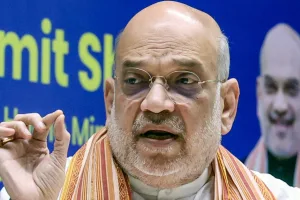
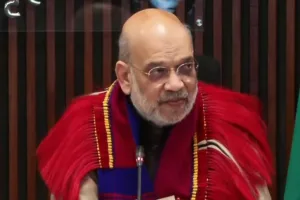
Shah meets BJP MPs from southern states

PTI | New Delhi |

Amid stalemate in Parliament over
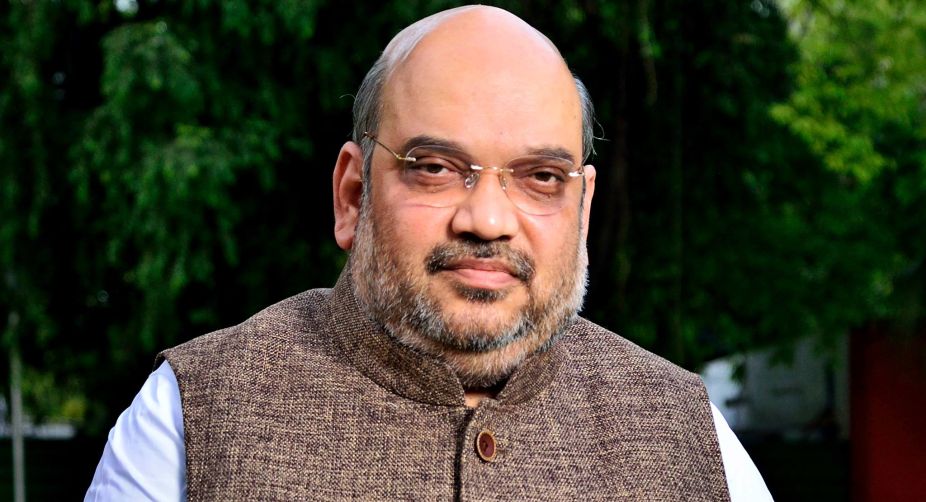
opposition parties’ protest over demonetisation, BJP President Amit Shah on
Thursday night held a meeting with party MPs from southern states where they
are believed to have discussed the current political situation.

The meeting was held at the residence
of Parliamentary Affairs Minister Ananth Kumar, who is a Lok Sabha member from
Karnataka, and attended by Union ministers Nirmala Sitharaman and Ramesh
Jigajinagi and Karnataka BJP chief B S Yeddyurappa.

BJP MPs of different states usually
hold meetings with ministers during the session, a party leader said, adding
that it was one such meeting.

However, the meeting, assumes
significance as the opposition is attacking the BJP-led NDA government over
demonetisation.

The party has asked its members to
aggressively counter the opposition’s charge and list benefits of
demonetisation, which the government has insisted will help curb black money
and corruption.

Colombia to sign revised peace deal

The accord aims to end Latin America’s last major armed conflict. 

AFP | Bogota |

Colombia’s government and FARC rebels will sign a
controversial revised peace accord on Thursday to end their half-century conflict,
set to be ratified despite bitter complaints from opponents.

Under pressure for fear that a fragile ceasefire could break
down, the government and the Revolutionary Armed Forces of Colombia (FARC) said
they will sign the new deal at 04.30 PM and immediately take it to Congress.

The plan bypasses a vote by the Colombian people after they
unexpectedly rejected the first version of the deal in a referendum last month.

The accord aims to end Latin America’s last major armed
conflict. But opponents say it is too soft on the leftist FARC force, blamed
for many thousands of killings and kidnappings.

The document is expected to pass after being debated next
week. President Juan Manuel Santos and his allies hold a majority in the
legislature.

Santos, who has staked his presidency on ending the conflict,
won this year’s Nobel Peace Prize for his efforts – giving him a boost just
five days after the shock referendum defeat.

A recent wave of alleged assassinations in conflict areas
has raised pressure to seal a deal fast.

“There is no time to waste,” Santos said.

“Lives have been lost and many more are in
danger.”

But an aftermath of discord and uncertainty appears likely
as opponents promised to keep resisting.

“We invite citizens to persist in the struggle for the
future of democracy,” said the Democratic Center Party led by conservative
ex-president Alvaro Uribe.

“In the coming days, we will examine various actions to
call the people into the streets and democratic spaces,” it added in a
statement.

Thursday’s signing will be low-key compared to that of the
original deal in September. Then, Santos and FARC leader Rodrigo
“Timochenko” Londono held a triumphant ceremony with 2,500 guests
including 15 heads of state.

The new ceremony will be held in the Colon Theater in Bogota
– relatively small, with a capacity of just 800.

“With today’s signing, the hope of peace is coming
alive,” tweeted the FARC’s chief peace negotiator, Ivan Marquez.

“It will be a project of self-construction in which all
of us must work.”

Government and FARC negotiators presented a redrafted
version of the deal earlier this month.

But Uribe complained it still did not satisfy his key
demands, notably on punishing FARC leaders for their crimes.

Under the deal, the FARC would disarm and become a political
party.

Uribe and his allies say rebel leaders guilty of war crimes
should not be allowed to run for office.

They also want guarantees for state police and soldiers who
may face trial over their actions in the conflict.

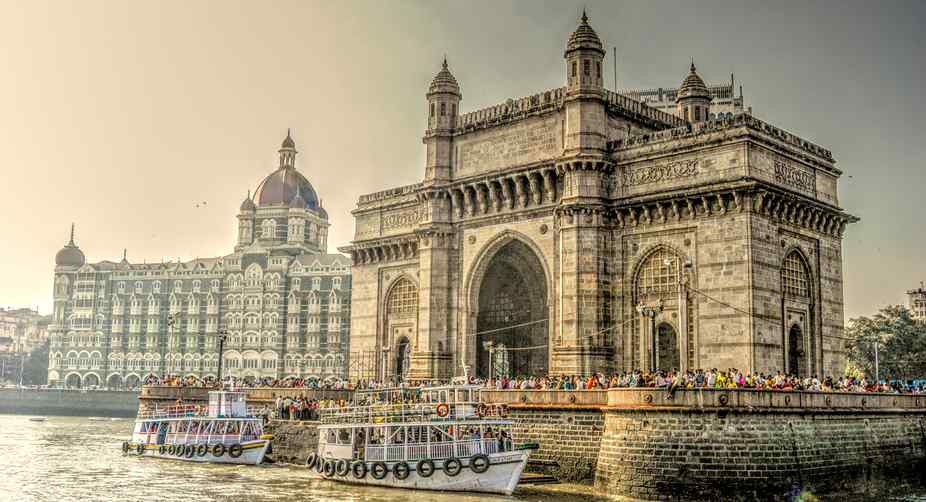
Mumbai among world’s top trending tourist spots for 2017

PTI | Mumbai |

The
financial and entertainment capital of India is likely to see an increase in
domestic and international tourist flow as a new survey has found the city to
be among the world’s top trending destinations for 2017.

Mumbai has recorded increased volume of travel and higher than average growth
in bookings, while moving up 10 places among the most searched destinations
relative to last year, according to a survey by Booking.com.

The data experts at Booking.com analysed the top 300 destinations based on
growth in search and bookings to find the most up-and-coming places to visit in
2017.

Besides Mumbai, the other top trending destinations recorded are Reykjavik
(Iceland), Cairns (Australia), Savannah (US), Puerto Rico, Kyoto (Japan) and
Jericoacoara (Brazil).

The survey revealed technology is fuelling a more demanding and impatient
traveller.
About 44 per cent of travellers already expect to be able to plan their holiday
in a few simple taps of their smart phone and over half (52%) expect their use
of travel apps to increase next year, it added.
The ‘bleisure’ (business & leisure) boom is well and truly underway. And
2017 will see a further upswing not only in the blurring lines between leisure
and business travel, but also in the value we attach to workplace travel
opportunities, the survey said.

Of the 40 per cent of global travellers who journeyed for business this year,
46 per cent think they will travel even more for business in 2017.

About 49 per cent of business travellers already extend their trips to further
enjoy the destination, while three quarters (75%) intend to do so the same or
more in the coming year.

The new year promises to see travellers unleashing their inner explorer like
never before. About 45 per cent plan to be more adventurous in their choice of
destination, while 47 per cent would like to explore corners of the globe that
none of their friends have been to.

Over 56 per cent of travellers would like to do more independent travel in
2017, a trend more prevalent amongst those from Brazil, India, the US, China
and Thailand.

Top destinations where Indians can indulge their pioneering spirit include
Indonesia, Turkey, New Zealand, Australia and the Philippines.

Booking.com Chief Marketing Officer Pepijn Rijvers said “2017 travellers
will have an insatiable appetite for adventure, but they are also mindful of
the impact those experiences can have on the local culture and issues
surrounding sustainability.”

‘Moh Maya Money’ review: Cool roller-coaster ride

The movie 'Moh Maya Money' seems like a roller coaster ride that makes it a a one-time watch. 

Mehak Chauhan | New Delhi |

Film: Moh Maya Money
Director: Munish Bhardwaj
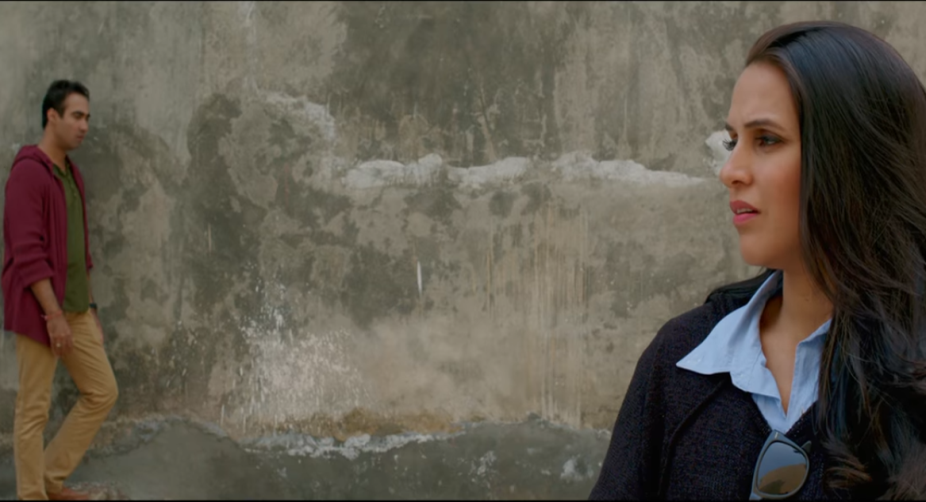
Cast: Ranvir Shorey, Neha Dhupia, Vidushi Mehra
Genre: Crime drama thriller 
The film depicts the life of an over ambitious man named Aman (Ranvir Shorey), who wants to make it big in the real estate world. He loves his wife Divya (Neha Dhupia). He is a perfect husband and wants to provide all the luxuries to her. Divya is a journalist. Her character represents the independent working woman of Delhi. The story revolves around the series of scams Aman pulls off in order to score a big house in Delhi. These scams, one after another, go horribly wrong and lead him to bigger problems.
The first half of the movie is smooth and successfully builds up curiosity to know what is going to happen next. Second half keeps you on your toes as it gradually unfolds the story in an impressive manner. All the characters are connected to each other and their connections are revealed in a subtle manner, which adds the element of suspense in the film.
Both the actors picked Delhi’s accent and lifestyle accurately. Neha Dhupia gave one of her career-best performances in this movie. Ranvir as usual was at his best. Other actors in the film lacked good acting skills but Vidushi Mehra who played Bhavna in the movie stole the show in her short but impactful appearance.
Demonetisation has turned out to be an opportunity for the film as it presents the consequences of black money in life-like situation. From Neha’s gray hair streak to art direction, minute details in the film makes it more realistic. 
A roller coaster ride, this film is a one-time watch. 
The film will hit the big screen on November 25, 2016.

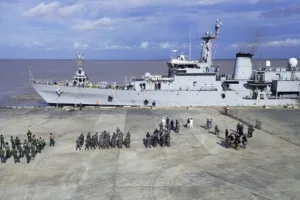
Pak to retaliate if India sends submarines again: Naval chief

Pakistan Navy last week claimed that an Indian submarine was pushed back after being detected near its territorial waters.

PTI | Karachi |

Pakistan naval chief Admiral Muhammad Zakaullah on Thursday termed
as ‘unusual’ the alleged effort by an Indian submarine to enter into
its territorial waters and warned of retaliation if such effort was made again.

“If India does something like this again, Pakistan Navy
will respond to protect our sovereignty,” he said, speaking on the
sidelines of the 9th International Defence Exhibition here.

Pakistan Navy last week claimed that an Indian submarine was
pushed back after being detected near its territorial waters.

India, however, strongly dismissed the charge as
“blatant lies”, saying the Indian Navy did not have any under water
movement in the said waters as claimed by the Pakistani Navy.

Indian embassy in Nepal assuages concerns about demonetised notes

Amid worry over India’s move to demonetise 500 and 1,000 rupee notes, that has affected tens of thousands of Nepalese who work in India.

IANS | Kathmandu |

Amid worry over India’s move
to demonetise 500 and 1,000 rupee notes, that has affected tens of thousands of
Nepalese who work in India, the Indian embassy here held an informal meeting
with Nepali businesspersons to assuage concerns.

During the unofficial meeting
with Nepali businesspersons on Wednesday, officials of the Embassy of India in
Kathmandu said their government was positive about allowing each Nepali citizen
to exchange Rs.500 and Rs.1,000 worth up to Rs.25,000 with legal bills here,
the Kathmandu Post reported.

The Nepal Rastra Bank (NRB)
had suggested that exchange facility should be provided to Nepalese holding the
banned Indian banknotes of 500 and 1,000 here in Nepal.

Indian Prime Minister
Narendra Modi on November 8 announced scrapping of the high value currency
notes to curb the black money menace and terror finance.

“We have forwarded the
modality prepared by the NRB to our central government and have received
positive response,” a leading businessperson quoted an embassy official as
saying, according to the Post.
 

India is cautious about
providing exchange facility to citizens of a foreign country, as it could be
used as “a clearing house” to convert counterfeit currency into legal
tenders, the businessperson said on the condition of anonymity.

“But we tried to
convince Indian officials that there was very little chance of Nepal being used
for that purpose because the payment is made in Nepali currency, which is of no
use in India,” he said. “Also, the embassy looks convinced with the
modality prepared by the central bank.”

The central bank in its
modality forwarded to the Indian government had said it planned to collect
recently banned Indian 500 and 1,000 rupee notes from Nepali citizens and send
them to the Reserve Bank of India (RBI) for verification before offering
equivalent exchange in Nepali currency.

The NRB has clearly stated
that it will not provide over-the-counter exchange facility for Nepalese
holding banned Indian currency, saying it lacks expertise and technology to
identify counterfeit Indian currency.

As per the NRB’s modality,
Nepalese citizens have to open accounts at banks and financial institutions and
deposit the demonetised Indian currency to receive the equivalent exchange
directly in their bank accounts.

The modality was prepared by
a technical committee formed under the leadership of its Deputy Governor
Chintamani Siwakoti last week as per the request made by Indian Embassy of
India in Kathmandu.

The Indian government has
also formed a task force under the leadership of the RBI to come up with a
modality to address the problems being faced by people of Nepal and Bhutan
where the circulation of the banned Indian notes is high.

Earlier, Prime Minister
Pushpa Kamal Dahal ‘Prachanda’ and Finance Minister Krishna Bahadur Mahara
through telephonic conversation had urged their Indian counterparts to arrange
exchange facilities in Nepal as Nepalese have a large stock of Indian 500 and
1,000 bank notes.

The NRB has said that Nepal’s
financial system holds Rs 33.6 million in the denominations of Rs 500 and
1,000. The amount includes cash kept in the vaults of banks, financial
institutions and the central bank.

The actual amount of the
banned Indian bank notes in Nepal is expected to be much higher as Nepalese
were previously allowed to carry up to Rs.25,000.

India gives $10 m as drought relief to Mozambique

IANS | New Delhi |

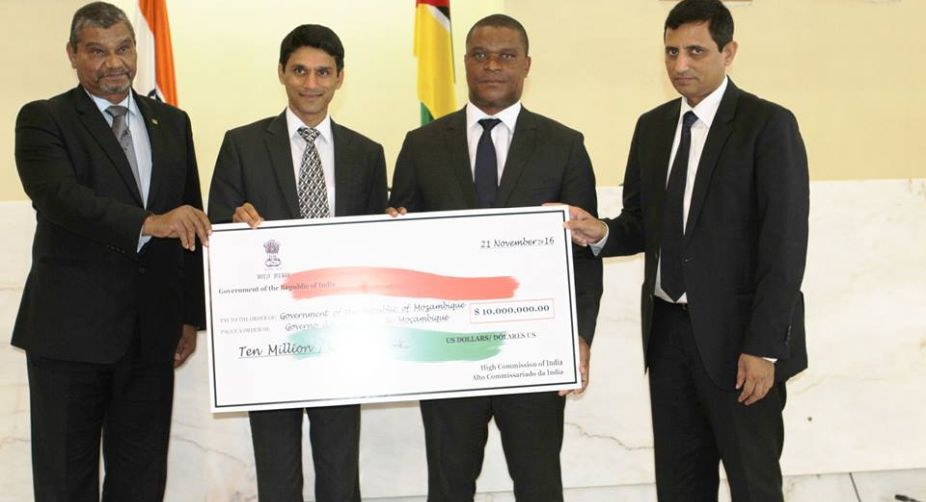
India has extended $10 million as grant-in-aid to Mozambique as part of relief measures to the south African country which is facing a drought, the government said on Thursday.
India’s High Commissioner to Mozambique Rudra Gaurav Shresth handed over a cheque of the amount on Wednesday to the country’s Minister of Trade and Industry, according to a statement issued by the External Affairs Ministry here.
“This grant-in-aid was provided in response to a request from the friendly country of Mozambique, which has faced two consecutive years of drought leading to severe difficulties for its people,” the statement said. 
“The Indian grant will help the Mozambique authorities to urgently purchase wheat from the international market, and thus help ensure availability of food for vulnerable sections of the Mozambique population”.
According to the statement, India and Mozambique “have long had warm and multi-faceted relations” and India was among the first countries to open its embassy in Maputo, after Mozambique gained independence in 1975.
“Mozambique is also home to nearly 20,000 persons of Indian origin, who provide a human link between the populations of both countries,” it stated.
“Mozambique is also among our most important economic partners in Africa, and accounts for almost 25 percent of India’s net FDI into Africa.”
The statement said that a closer economic partnership with Mozambique was a vital ingredient in addressing India’s future needs of energy and food security.
Mozambique was the first country in mainland Africa that Prime Minister Narendra Modi visited in July this year.
During the visit, India signed an agreement for purchase of wheat, which Thursday’s statement said was “a gesture of solidarity for a country which we see as one of our most important future partners”.

Demonetisation casts shadow over Manipur tourism festival

IANS | Imphal |

Will the 10-day International Sangai Tourism Festival which began on Monday prove to be a damp squib due to demonetisation and other problems? That the question is haunting both officials and participants.
Officials said on Thursday that only a few visitors have come to the festival so far in contrast to heavy rush every year. Indian entrepreneurs as well as those coming from Myanmar, Thailand and Indonesia said this time their sales will be slashed by 50 per cent as compared to last year.
“This may be the adverse impact of the demonetisation. Some of us had announced that demonetised Rs.500 and Rs.1,000 notes will be accepted. But this failed to impress the people since in the absence of Rs.100 notes and lesser value currencies, they have to spend the entire amounts,” said one of the Indian participants.
Besides demonetisation, there was a boycott of the festival by some armed rebel groups. One stall-holder said: “The indefinite economic blockade imposed by the Nagas from November 1 has paralysed the state economy. This has deterred the people from visiting the tourism festival.”
Union Home Minister Rajnath Singh has stated that Manipur CM Okram Ibobi Singh has not put forth any concrete proposals to end the blockade, but Ibobi Singh has denied the claim. Talks between the representatives of the United Naga Council and the central government did not yield any results.
Meanwhile, at least two loaded trucks were torched by the UNC activists along the National Highway No.2 and No.37. Hundreds of loaded trucks were stranded along the highways. Armed paramilitary personnel have been able to escort trucks and oil tankers thrice from Assam so far. 
Fuel, consumer items and life saving drugs are at low stock in the state. Deputy Chief Minister Gaikhangam asked the people to be prepared to face the blockade and shortages for some more time.

Sanjay Dutt biopic: Sonam, Ranbir to be back after 10 years?

SNS | New Delhi |

They started their film career together in 2007 with Sanjay Leela Bhansali’s fantasy romantic drama Saawariya.
 
The film bombed at the box office, but debutants Ranbir Kapoor and Sonam Kapoor made a lasting impact on viewers’ minds. 
 
After 10 long years, the two are all set to share screen space again.
 
Buzz is that the Neerja actress has been paired opposite Ranbir for the upcoming Sanjay Dutt biopic.
 
Filmmaker Rajkumar Hirani approached the actress for a cameo role in the movie.
Ranbir is already prepping to essay the role of the Munna Bhai star.
 
The 34-year-old actor will have to really buckle up as he will have to go undergo complete transformation for the role – right from his walking style to the way he speaks to the way he thinks.
 
The shooting of the movie will start in 2017.

Liverpool legend Steven Gerrard retires from football

Liverpool's greatest-ever player? Many will agree to that sentiment.

SNS | New Delhi |

Confirming rumours that had been swirling on social media for a while, former England and Liverpool captain Steven Gerrard on Thursday announced his retirement from all forms of football.
 
The 36-year-old ex-midfielder had 17 seasons with English giants Liverpool before spending the last two seasons with Major League Soccer side LA Galaxy.
 
Gerrard had confirmed that he would not be renewing his contract with the American club. This made many to speculate that perhaps a managerial role was imminent.
 
And despite talks not proving fruitful with League One Side MK Dons, the midfield maestro has decided to call time on a glittering career.
 
Adored by Liverpool fans for rejecting big-money moves to Real Madrid and Chelsea, the Liverpudlian thrice lifted the League Cup and won the FA Cup twice.
 
However, it’s his European exploits that are still talked about fondly, winning the UEFA Cup once before lifting the Champions League trophy in a famous night in Istanbul.
 
Down 3-0 to AC Milan at half-time, Gerrard grabbed the game by the scruff of the neck to inspire an unbelievable comeback to level the tie 3-3 in 90 minutes before going on to lift the trophy after winning a penalty shootout. 
Loved by his fans and hated by the rest for scoring goals that redefined the word golazos, more than a few of the Premier League's best goals were scored by his feared right-boot.
 
His England record was as most players of his generation, bereft of any major trophy and to add insult to injury, he was captain when the Three Lions crashed at the group-stages of the 2014 FIFA World Cup.
 
He remains the fourth-most capped English player of all time, garnering 114 appearances from 2000 to 2014, scoring 21 goals in the process.
 
His personal tally for Liverpool is astounding, with 504 appearances and 120 goals telling a tale in itself. Only Ryan Giggs (Manchester United) and Jamie Carragher (Liverpool) have crossed the 500-cap mark in the Premier League era.
 
Failings with England and an inability to win a domestic title with Liverpool are probably the only regrets of Stevie G’s, who ranks among the all-time greats for both England and Liverpool.

Allegation of adultery by spouse most painful: HC

PTI | New Delhi |

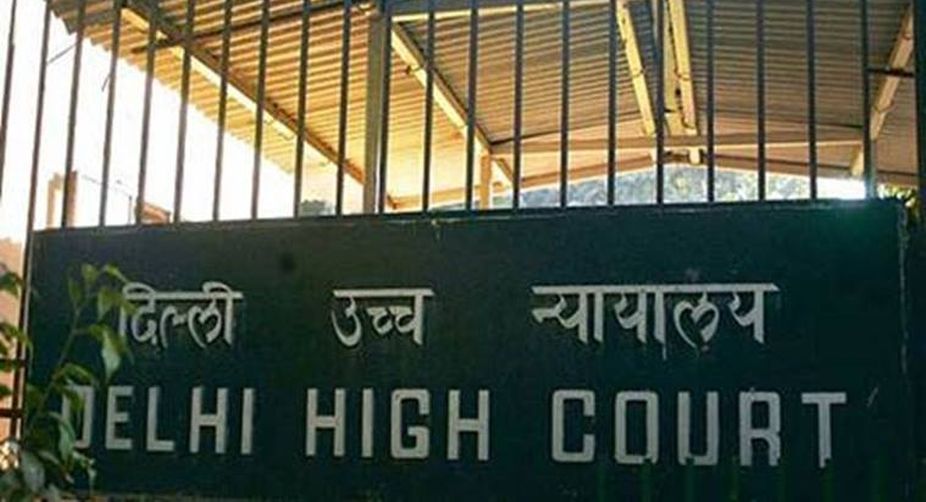
Allegation of adultery levelled by a spouse is most “painful” for a person, the Delhi High Court has observed while granting divorce to a man who was accused by his wife of having illicit relationship with another woman.
A bench of Justices Pradeep Nandrajog and Yogesh Khanna said that allegation of adultery was a “serious charge” and would constitute cruelty, if not proved.
The court held it was established that the woman had levelled false allegation of adultery and harassment for dowry against her husband.
“Nothing can be more painful to a spouse other than the allegations of adultery made by the opposite spouse. It is settled law that a charge of adultery is a serious charge and if not proved would constitute cruelty,” the bench said.
The court’s judgement came on a petition filed by the man who had moved the high court against the trial court’s verdict dismissing his plea seeking divorce.
In its verdict, the high court also noted that no one has appeared before it on behalf of the woman.
It granted divorce to the man on the grounds of cruelty and desertion, observing that the couple have not lived together since 1995 and their marriage has “irrevocably broken”.
The marriage between them was solemnised in February 1995.
In 1996, the man had filed a petition before a trial court seeking divorce on the ground of cruelty, but he withdrew it in 2001 after his wife gave the assurance that she would live amicably with him.
He told the high court that his wife had returned to her parental house in 1995 and despite giving assurance, she never returned to live with him after which he filed a fresh divorce petition before the trial court in 2009.
The woman had contested the plea before the trial court and in her written statement, she had alleged that her husband was having an illicit relationship with another woman.
She had also claimed that her husband was harassing her for dowry after which she had lodged an FIR against him.
However, the man was acquitted by a court in the dowry harassment case.
The trial court had dismissed the divorce plea filed by the man on the ground that he had failed to prove allegations levelled by him against her wife.
The high court noted that “withdrawal from the consortium without a cause would also be an act of cruelty”.

Safdarjung resident doctors continue strike

IANS | New Delhi |

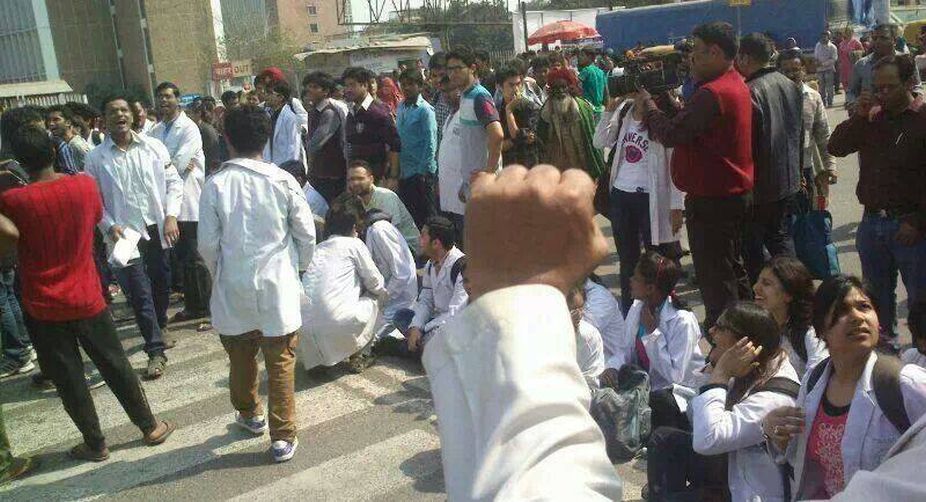
Resident doctors at the Central government’s Safdarjung Hospital continued their strike for the second day on Thursday, demanding proper security for the doctors on duty at the hospital.
According to the striking doctors, the strike won’t be called off until there is a written assurance from the Delhi and Central governments to provide proper security in the hospitals.
The doctors went on strike on Wednesday evening after a female resident doctor was allegedly manhandled while on duty by the attendants of a patient in the emergency ward.
In a similar incident, a senior resident doctor was assaulted by the relatives of a patient. However, police said that they are yet to receive a complaint in this connection.

Academy announces animated shorts in Oscar race

PTI | Los Angeles |

The Academy of Motion Picture Arts and Sciences has announced the 10 live action short films and animated shorts which will advance in the voting process for the 89th Academy Awards.
One hundred thirty-seven films had originally qualified in live-action shorts category, while sixty-nine movies had made it in the animated shorts category.
Bon Voyage, Ennemis Interieurs, Graffiti, La Femme et le TGV, Nocturne in Black, The Rifle, the Jackal, the Wolf and the Boy, Silent Nights, Sing (Mindenki), Timecode and The Way of Tea (Les Fremissements du The) are all the live-action shorts which have made the cut.
The animated shorts that have been short-listed are Blind Vaysha, Borrowed Time, Happy End, The Head Vanishes, Inner Workings, Once upon a Line, Pear Cider and Cigarettes, Pearl, Piper and Sous Tes Doigts (Under Your Fingers). 
Short Films and Feature Animation Branch members will now select five nominees from among the 10 titles on the shortlist.
Branch screenings will be held in Los Angeles, London, New York and San Francisco in December.
Nominations for the 89th Oscars will be announced on Tuesday, January 24, 2017.
The 89th Oscars will be held on Sunday, February 26, 2017, at the Dolby Theatre.