Kanye’s children don’t know he is hospitalised
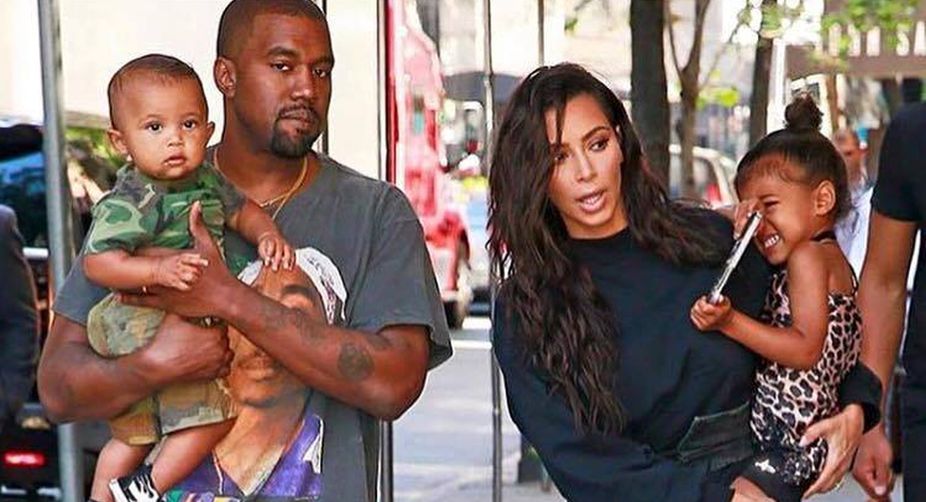
Kanye West with wife Kim Kardashian and children (Photo: Facebook)
Kanye West victim of ‘Kardashian curse’: Akon
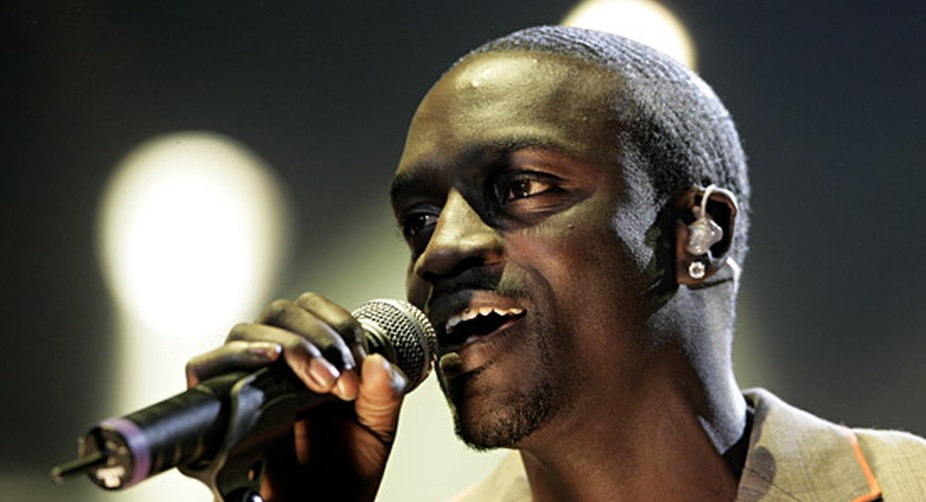
Singer Akon (PHOTO: Facebook)
Kanye West victim of ‘Kardashian curse’: Akon
Singer Akon (PHOTO: Facebook)
Miles Teller never wanted to be an actor
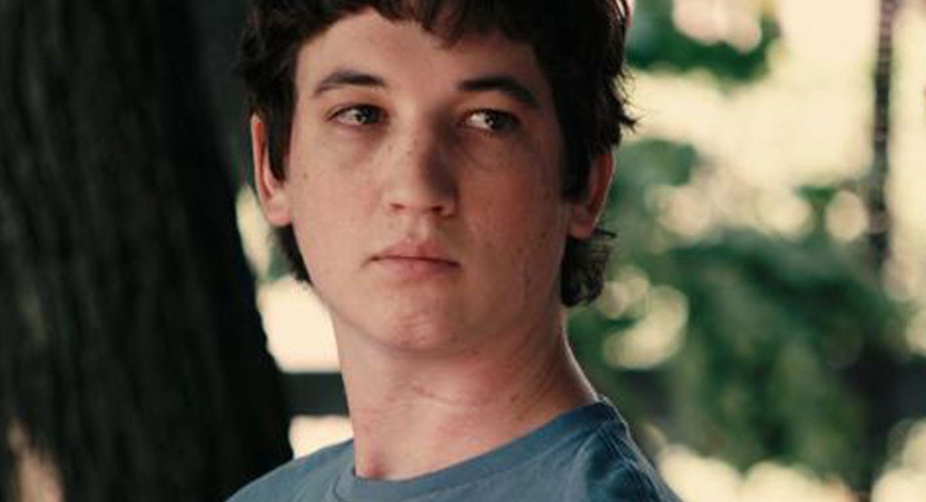
Miles Teller (PHOTO: Facebook)
Rose McGowan caught up in sex tape scandal
Rose McGowan (PHOTO: Facebook)
Naomie Harris was unsure about playing a crack addict
Naomie Harris (PHOTO: Facebook)
Premier League Preview: Chelsea host Tottenham Hotspur in derby clash
Can Tottenham somehow manage to derail the Chelsea juggernaut?
Hungry bacteria can extract energy from sewage
(Getty Images)
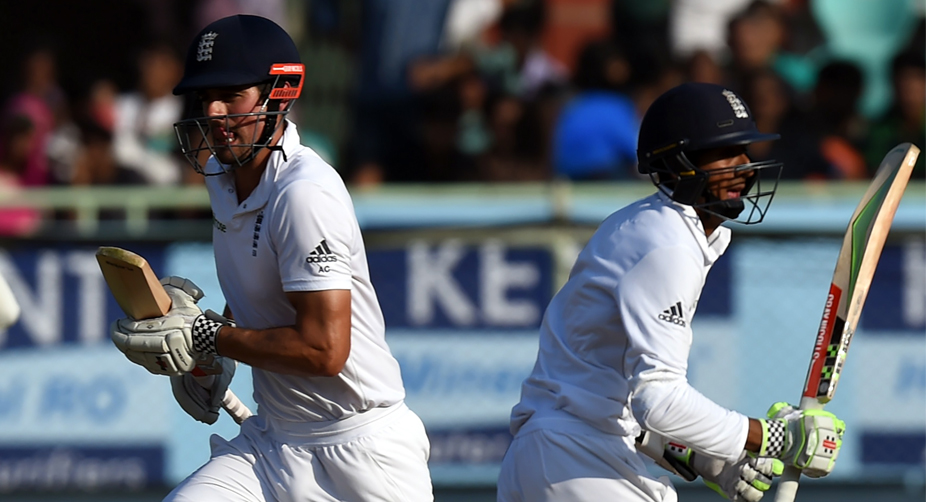
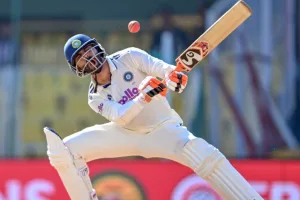
Mohali Test: England elect to bat vs India
Promising Karnataka batsman Karun Nair is making his Test debut replacing injured opener Lokesh Rahul.
Alastair Cook (L) and Haseeb Hameed (R) (Photo: AFP)
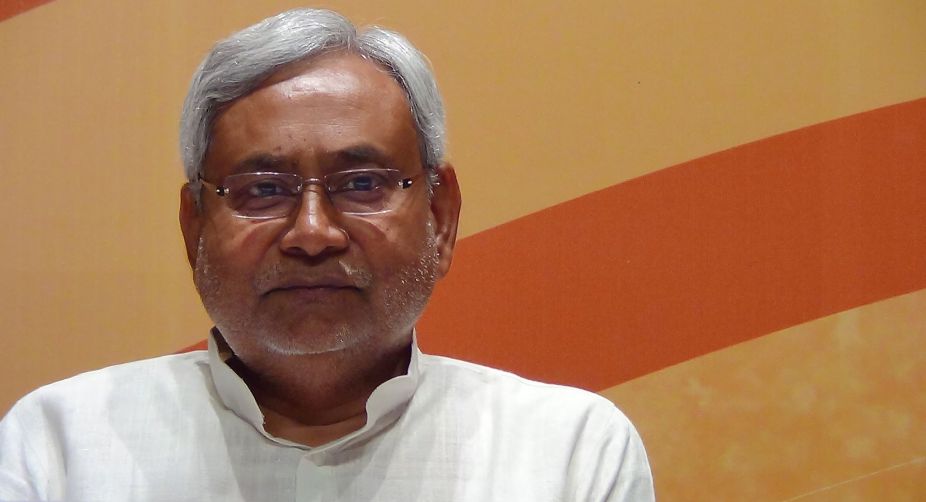
Nitish laments resignation of Nalanda Chancellor
NItish Kumar
Bihar Chief Minister Nitish
Kumar on Friday expressed sadness over resignation of Chancellor of Nalanda
University George Yoe, saying the events unfolding at the varsity show “an
environment of confusion”.
Yeo, earlier in the day, had submitted his
resignation letter to President Pranab Mukherjee, Visitor of the university,
saying the varsity’s autonomy was being affected.
The former foreign minister of Singapore had
succeeded economist and Nobel Laureate Amartya Sen as the second Chancellor of
Nalanda University (NU).
Kumar said, “The events unfolding at NU show
which way the university is going and an environment of confusion has been
created.”
“If everybody associated with the NU from the
beginning leave, the core value of ‘Idea of Nalanda’ would be affected,”
Kumar, who is closely associated with development of the University in Rajgir,
said.
The chief minister was all praise for Sen and Yeo
for their contributions to NU.
NU was created at the initiative of Bihar
government and the university has international historical importance, Kumar
said as he appealed to the Union government to take a “positive step”
considering core values and distinguished nature of the varsity for its
development.
He exuded confidence that the Union government
would initiate action keeping in mind all the aspects of the University.
NU Vice Chancellor Gopa Sabharwal’s one year
extension also expired yesterday
Green Party files for recount in Wisconsin
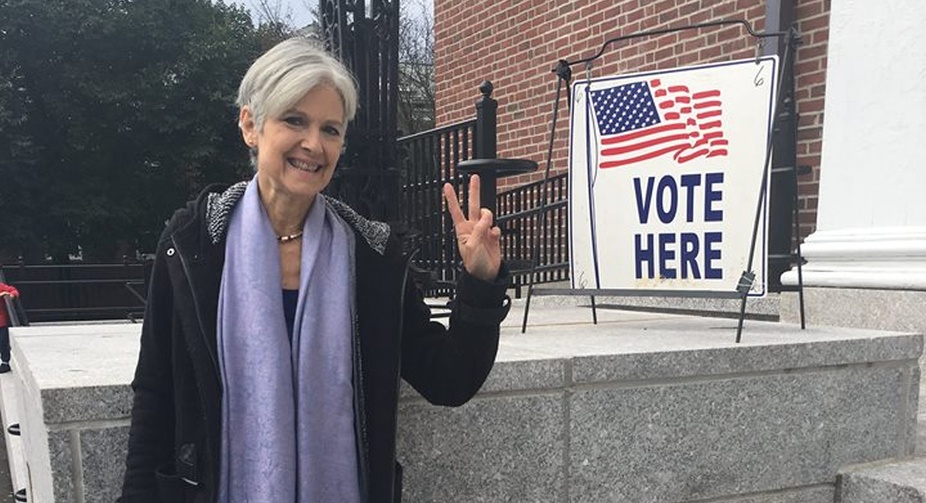
Jill Stein (Photo: Facebook)
Former Green Party candidate Jill Stein has submitted papers
to request a vote recount in Wisconsin, one of three battleground states won by
Donald Trump and where she intends to challenge the results.
The Wisconsin Elections Commission yesterday said it is
“preparing to move forward with a statewide recount of votes for President
of the United States” as requested by Stein and separately by a fringe
candidate.
The commission said the deadline for completing a recount is December
13, so its clerk will have to work quickly. It said it is still calculating the
fee it will charge Stein’s party for the arduous work of staging a recount.
Stein says she also plans to challenge the presidential
election results in Pennsylvania and Michigan, where Trump won.
Her campaign has cited unspecified “anomalies” as
grounds to mount a challenge in all three Rust Belt states.
Stein says she has raised more than $4.8 million of her $7
million goal.
The deadlines for filing in Pennsylvania and Michigan are Monday and Wednesday of
next week.
“These recounts are part of an election integrity movement to attempt to
shine a light on just how untrustworthy the US election system is,”
Stein’s fundraising website added.
The move comes amid stepped-up calls from some of Trump’s
left-wing opponents to challenge the results of the November 8 election, which
followed a bitter campaign that included persistent charges of Russian hacking
and allegations by Trump of fraud.
“After a divisive and painful presidential race,
reported hacks into voter and party databases and individual email accounts are
causing many Americans to wonder if our election results are reliable,”
Stein said on her website.
“These concerns need to be investigated before the 2016
presidential election is certified. We deserve elections we can trust.”
Although experts say there is virtually no chance of
overturning the result, the demands could reignite debate over the legitimacy
of Trump’s election, already fueled by Democrat Hillary Clinton’s lead in the
popular vote, which now stands at two million.
Clinton lost by a margin of around 27,000 votes in Wisconsin
and 60,000 votes in Pennsylvania, while unofficial results released by
Michigan’s secretary of state’s office put Trump ahead by a mere 10,704 votes.
‘Winning should not be the priority’
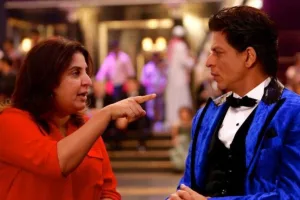
Judges of the next season of Indian Idol, Farah Khan and Sonu Nigam, share their experiences and expectations from contestants.
The popular musical reality show Indian Idol is all set to come back with its seventh season on Sony Entertainment this year. There will be a reunion of judges, popular singer Sonu Nigam, music composer Anu Malik and director choreographer Farah Khan on the show after a gap of 12 years. Abhijeet Sawant, Sandeep Acharya, Prashant Tamang, Sourabhee Debbarma, Sreeramchandra Mynampati and Vipul Mehta have been the winners of the six previous seasons respectively.
The judges spoke to The Statesman at the Delhi auditions, which will be aired soon at the end of this year on Sony Entertainment. Excerpts:
Farah Khan
What is Indian Idol for you?
Indian Idol for me is a changing show not only for contestants but for me personally. It gave me an alternative career of reality shows judge. That was the first time when I was on TV on Indian Idol. And 12 years have ended, 21 reality shows have come into my bag till now.
Definitely it gave me a brand name. Besides, being a choreographer and a director I'm a little more than that, thanks to Indian Idol. Not every director comes on TV. Normally people don't know how directors look like. It made me popular.
You are back on this show. What is the difference between then and now?
Well, the judges are pretty much the same. I think there are a lot of changes in contestants that I see. The ones now are far more prepared. They are
learning music. It's not a time-pass for them. It's now a career option. So, everyone is taking it far more seriously than that they did when the show started.
How is Indian Idol helping the aspirant singers?
Truly, not only we have changed but India in the sense of reality shows has changed. People now realise the power of these shows that can make you a star instantly and it also gives you a way to have a better life. Even people who didn't win the Indian Idol, like Monali Thakur, Neha Kakkar and others are at the peak of their singing career. Apart from singing, the contestants are popular TV faces also. Also, it needs a lot of determination to be like this after not winning the show.
How do you see the female contestants when they reach the finale?
Personally, I don't really judge them on gender. I never say that a girl or a boy should win. I think the person who sings the best and who's loved the most by the people deserves to be an Indian Idol. After the last 12 years that we haven't done Indian Idol, all the girls are coming with their mothers, fathers or brothers. They are being supported by family and they want their girls to be singers.
What are your expectations from this season' contestants?
I expect to have more originality in them. Earlier, everyone had come and tried to sing like Sonu Nigam. I think that has changed. They want to sing like themselves. Someone who tries to sing like other singers we say bye-bye to them. They have their own voice so that when you hear them you can recognise them instantly.
Sonu Nigam
You are probably the only singer who can sing in almost all languages. There are a lot of regional dialects that have disappeared now. Don't you think singing can somehow preserve these dialects?
Yes, singing can be a medium to do so. I have sung sub-languages like Khasi (Meghalaya), Manipuri and many which are not even in the National Languages (list). I get the opportunity and do it. I enjoy the bliss that god has given to me. The priority of this show is good singing, personality and attitude but singing in their own dialects and folk songs there is another feeling.
What should an Indian Idol contestant do to win the show?
It all depends how they work. If they are working hard personally and putting their best foot forward then they become people like Shreya Ghoshal, who did not stand first, she was second in my earliest show called Sa Re Ga Ma and today she among the top singers of the country. So, it all depends upon their hard work and destinies. Winning should not be the priority.
Don't you think it is easier to gain popularity in comparison to your days of start-up?
Well, everything is destiny. There were people around me who got a lot of things very easily. I took a lot of time to reach where I'm today. It was a slow process; I got everything in instalments but people like Kumar Sanu always say in his interviews that he didn't have to struggle. He came and just conquered. He got five Filmfare Awards back-to-back. So, most of the people don't struggle too much but I struggled.
Even today, if the contestants become Indian Idols they'll become super successful but from there they have to embark upon their own journeys, aided with a lot of determination. If you are lucky you will get a good feedback and if not god bless them!
An enduring classic radiantly retold
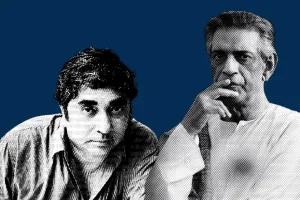
Soumitra Chatterjee’s brilliant translation of Henrik Ibsen’s Ghosts coupled with astute direction from Kaushik Sen and heart-felt performances from a great cast made Bidehi delightful on almost every front.
Henrik Ibsen, the Norwegian playwright often celebrated as
probably the greatest since William Shakespeare, has been as popular worldwide
as to Indian theatre and cinema, particularly in Bengal. One may recall
Satyajit Ray’s Ganashatru which was adapted from Ibsen’s Enemy of the People
and the doyen of Bengali theatre, Sambhu Mitra’s Putulkhela from A Doll’s
House.
To these was recently added Bidehi, adapted from Ghosts – a
play that has been translated to Bengali by Soumitra Chatterjee and directed by
Kaushik Sen. Chatterjee has been active in theatre for the last four decades
apart from being Bengali cinema’s most internationally recognised actor. He had
translated the same play in 1972, which was staged on behalf of Abhinetri
Sangha (The Actors’ Association) for fund raising purposes. At that time
Abhinetri Sangha was performing Andhayug directed by Ajitesh Bandopadhyay in
which Chatterjee acted.
There was a call show request from Bombay for two plays to
be staged at the Shanmukhanand Hall when the requirement for a second one arose
and therefore, Chatterjee translated Ghosts. Bidehi became an instant hit then
with over 50 call shows and critical acclaim.
Chatterjee acted in the play as the lead character of Oswald
Alving with Nilima Das playing his mother, Mrs Alving. Chatterjee soon started
his own productions in Bengali mainstream theatre when he was still a movie
star and didn’t get much chance to stage Bidehi again independently.
He took up the play again in 2012, precisely 40 years after
the first show and re-translated it.
The audience of Chatterjee’s theatre is already familiar
with his adaptations of foreign plays, which he literally trans-creates into a
Bengali one with little or no resemblance with the original apart from the
basic plot.
Why then an almost literal translation of Ghosts? Chatterjee
said, “I have always adapted foreign plays and made them suit the Bengali
language and culture quite successfully. But for this play I somehow felt that
an adaptation would be difficult because the social and cultural differences
are too vivid.
I felt that adaptation will not be convincing. There is no
place in India where a six month-long winter will put people into complete
isolation. The psychology of the characters stems from that and I would never
able to bring that out in a Bengali context. If I had to make an adaptation
then I would have had to introduce Captain Alving as a character with less
moral values due to other reasons than those expressed in the original play.
But then again, that Oswald is also a victim of similar
circumstances would have been difficult to establish.
“In addition, the setting has a very fundamental Christian
context. Pastor Manders was a family friend and one with whom Mrs Alving was
involved at a time. In the Indian context where will you find a noble lady
being friends with a priest and also the whole concept of confession isn’t
there in our religion. In essence, for an adaptation, I would have had to
change the profiles of almost all the five characters, which I felt would have
been very impertinent.”
The posters of Bidehi proudly proclaim “Three generations on
stage”. Chatterjee confessed that he thought of the re-translation with a wish
to direct his grandson Ronodeep Bose as Oswald, the hero. Bose is a musician
and has some films in his portfolio like Dutta Vs Dutta, Kshoto, Egaro and
others. His acting talent is unquestionable yet his focus on the same might
have been wavering.
It took four years for the play to be staged — in 2016,
Chatterjee finds himself unable to direct a new play as the physical strain is
too much for an octogenarian. It was decided that the play will be produced by
Shyambajar Mukhomukhi group with whom Chatterjee has been associated for the
last few years.
Poulami Chatterjee, Soumitra’s daughter, is actively involved
with Shyambajar Mukhomukhi as the lead actor and also the director of their
recent production Phera which was a remake of the original play adapted by
Chatterjee three decades back. With Poulami getting heavily tied up with her
directorial ventures, Shyambajar Mukhomukhi had to request an external director
as she was also playing the central character, Mrs Alving. That is how Kaushik
Sen came onboard.
For Sen it was indeed a nostalgic situation and he said as
much after the first show of Bidehi. Sen’s initial theatre association was with
Chatterjee in the latter’s Tiktiki. Though Sen directed the legend later on in
Pratikhya, it is with Bidehi that things came full circle and the director
acknowledged his indebtedness and expressed his pride in having the
opportunity.
The narrative deals with an idea that a father’s sin is
transported to the son. The widely accepted interpretation is that syphilis was
the disease that plagued both Captain Alving and Oswald.
Before the original adaptation in 1972 as part of his
research, Chatterjee found out one analysis that hinted at schizophrenia being
the disease, which dispossessed both the father and son. Chatterjee says,
“Harmony in home-making was slowly becoming absent from Europe at that time and
that was affecting young minds and potentially induced a kind of schizophrenia.
It was not a case of general paralysis of the insane. Hence, I understood that
the point of tragedy was not a physical problem but more due to lack of family
happiness. Thereafter I realised the timelessness and universality of Ghosts. “
The opening show ran to a packed house. Chatterjee’s
Engstrand was brilliant within the short scope — a character with sly humour
and a shade of villainy. Ronodeep as Oswald was like a raw diamond — he has a
power of performance lying latent within him but he has to harness it to thrive
more effectively considering the fact that theatre is a medium whose demands
are a bit different from that of cinema.
The attraction of the version was indeed Poulami Chatterjee’s
stupendous performance, probably her best so far. She submerged in her
performance, portraying the pathos of a battered soul, the revenge mindedness
of a deceived individual and the longing of an abandoned mother.
The final scenes where she pairs up with her real-life son
Ronodeep were the best. The set, which was a mixture of abstract and real, was
kind of static and hence disappointed a bit. The overtly verbose text was heavy
considering the points to be established yet they were harped on multiple times.
In 1881, in a letter to Jagob Hegel, Ibsen wrote, “Ghosts
will probably cause alarm in some circles but that can’t be helped. If it
didn’t, there would have been no necessity for me to have written it.”
The questions of promiscuity, incest and immorality that
seemed taboo in the 19th century have eased over time. What still resonate are
the questions of euthanasia, hypocrisy, the role of women as providers yet
sufferers and most importantly, the degenerating values of family life. The
three generations of Soumitra, Poulami and Ronodeep must be thanked for letting
the audience witness a classic on stage at a time when most of us are still
grappling with many of the issues raised in the play.
Pacer Broad out of Mohali Test, says Cook
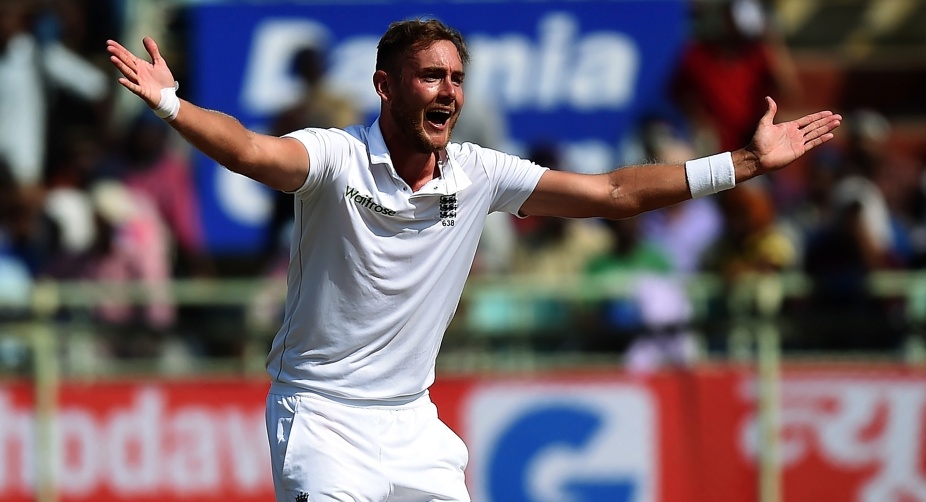
Stuart Broad suffered a strained tendon in his right foot during the second Test at Visakhapatnam.
Stuart Broad (Photo: AFP)
England skipper Alastair Cook on Friday confirmed that their premier fast bowler Stuart Broad will miss the third cricket Test against India here because of an injury.
Broad, who missed the team's first net practice ahead of the match at the Punjab Cricket Association (PCA) IS Bindra Cricket Stadium, starting on Saturday, suffered a strained tendon in his right foot during the second Test at Visakhapatnam.
Despite injury, the 30-year-old bowled in the fourth innings of the game.
“Stuart's definitely out. It's a shame after the way he bowled in that last innings (in Vizag) and you wouldn't know that his foot was as bad as it was, but the specialist's advice is that there is a risk of it going totally and he would be out for a period of time,” Cook told reporters here.
“They were quite surprised how well he got through those four and a half days after doing it in the third or fourth over. Knowing that, if he played here and did a lot more damage to the tendon in the second over, then you'd look stupid.”
“Chris Woakes who was part of that rotation is definitely in and it's just a question of whether we go with four seamers and two spinners or three and three again,” he added.
Cook also spoke about the mood in the dressing room after the 246-run defeat in Visakhapatnam.
“The guys are in good spirits. We've played some good cricket on this tour so far. Yes, we lost the last game.”
“But there were some aspects of it over the last 10 days of cricket where we've played well and have managed to put India under pressure — certainly in the first game,” Cook said.
“It will be great to get ahead of this game early, like we did at Rajkot, and then put some pressure on India,” he added.
Commenting on the Mohali pitch, the 31-year-old said: “I saw it yesterday. It looked quite dry, but they might have watered it overnight. Historically, the stats here are that the one place where seamers tend to get a bit more pace and carry is Mohali. Whether that pitch allows that, I don't know — we'll have to make that decision.”
England have included Jos Buttler, who has played only one first-class match in more than 12 months to provide the stability to the middle order.
Commenting on his inclusion and the batting line-up for the upcoming match, cook said: “I can tell you that Jos is coming in to play, and Ben (Duckett) misses out. He's going to bat at seven, Mo (Moeen Ali) at four and Jonny (Bairstow) at five.”
“It's clearly not an ideal circumstance, not having any red-ball (match) practice out here. But sometimes when the pressure's off, you can come out and play and do something special,” Cook explained.
“He's an extremely talented cricketer — we've all seen that, clearly mainly in the one-day and Twenty20 format, probably up there with the top three or four short-form players in the world,” he added.
PM is scared of facing Parliament: Congress
Continuing its attack on Prime Minister Narendra
Modi over demonetisation, the Congress on Friday said he was “not
worthy” of being trusted and accused him of being “scared” of
entering Parliament.
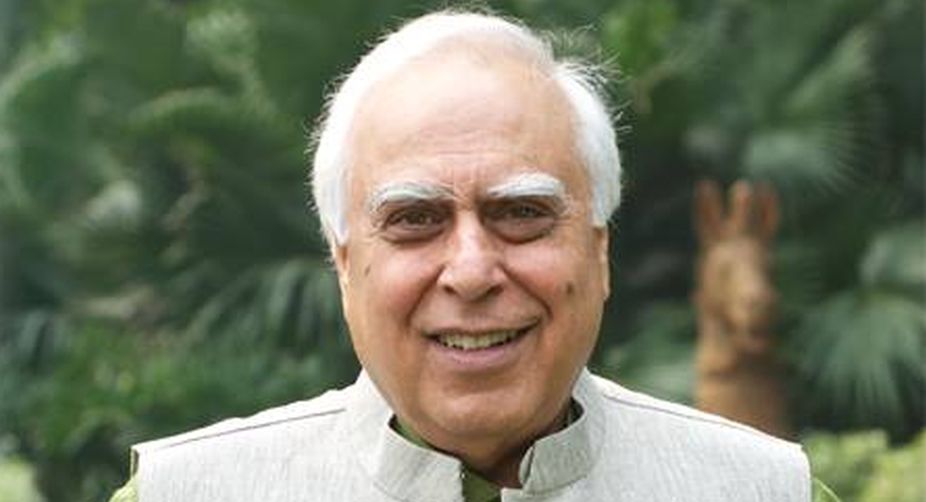
“He is scared of entering Parliament because he
knows he will not be able to give answers to the questions that are being
raised and will be left exposed. He should know that the country is not
changing but is actually burning because of demonetisation,” Congress
leader Kapil Sibal told media.
“In Rajya Sabha, he is silent. When he comes to
the House, he will be asked questions. If asked questions, he would be expected
to answer. If he doesn’t answer, then he will be exposed. People will realise
that the Prime Minister’s knowledge may be deficient on certain topics,”
he said.
Sibal also claimed that the ruling Bharatiya Janata
Party had the time to deposit cash and purchase land as they had all the
information about the move to demonetise the high value currencies.
“Does the Prime Minister think that all the
leaders in the opposition are black money hoarders? Then he says they are
worried because they were given no time.”
He said sarcastically, “The BJP had a lot of
time. They had all the information. They deposited cash and purchased
land.”
Sibal said according to the Reserve Bank of India
(RBI) data for 2015-16, 2,203 crore pieces of Rs 500 and Rs 1,000 notes were
needed to be printed. Till November 18, Rs 1.03 lakh crore has been withdrawn
and Rs 33,000 crore has been exchanged, he said.
“Rs 1.3 lakh crore has been pumped into the
economy. What is the value of the currency which is demonetised, it is Rs 14

lakh crore? They have four printing presses for currency and in 2015-16, the
intent was to create 2,203 crore pieces.

“The amount printed was 2,012 crore pieces.
This is in one year, in two shifts. Based on this, the time required for the
currency notes to be printed is at least six months. RBI has said that in the
rush two variants of notes have been printed,” he said.
He also said that there are only 19 issue offices of
RBI that provide currency to banks and wondered how the banks will get all this
money in such a short period of time.
Noting that when Modi first entered Parliament, he
had called it a temple, the former Union Minister said that “now he
doesn’t care about the traditions and etiquette of Parliament”. “He
will inaugurate a book on the Constitution, yet not give the Constitution the dignity
it deserves,” he said.
He also criticised the government, saying that it
has changed the rules 172 times since November 8, the day it took the decision
on demonetisation.
Slamming Modi for “continuously evading”
Parliament, Sibal said: “It seems the Prime Minister is afraid of his own
party members otherwise why doesn’t he come to Lok Sabha where his party (BJP)
has absolute majority?
“Modi promised he would bring back Rs 80 lakh
crore black money to India. Has he fulfilled that promise? He said he’d bring
Lokpal, has he implemented it? Which promise has he fulfilled? Why should we
believe him? We have no faith in this Prime Minister. He isn’t worthy of
trust,” he added.
“The Prime Minister said the situation will
normalise in two days. Did it happen? Finance Minister (Arun Jaitley) said
situation will normalise in two weeks. Did it happen,” he asked.
Make in India reports on textiles, telecom, auto sectors out
The textile sector accounts for 10 per cent of the country’s manufacturing production, 5 per cent of India’s GDP, 13 per cent of exports earnings and is the second largest job provider in the country.
Make In India (Photo: Facebook)
The government on Friday released Make in India
achievement reports on three relatively more vibrant sectors — textiles,
telecom and automobiles — that make a sizable contribution to the Indian
merchandise exports.
The textile sector accounts for 10 per cent of the country’s
manufacturing production, 5 per cent of India’s GDP, 13 per cent of exports
earnings and is the second largest job provider in the country, employing
nearly 51 million people directly and 68 million indirectly in 2015-16, the Commerce
Ministry report said.
“To provide encouragement to textile manufactures and
farmers of raw materials, the government has been providing incentives like
minimum support price to cotton farmers, upgrading the technology for handloom
weavers and providing centres for trade facilitation,” it said.
While 100 per cent foreign direct investment (FDI) is
allowed under the automatic route, FDI inflows into the sector between 2014-16
added up to $427.55 million.
Textiles and apparel exports are estimated to reach $62
billion by 2021, from the $38 billion in 2016, the Ministry said.
A number of tax reforms and benefits have been introduced to
promote the sector, like the Merchandise Exports from India Scheme (MEIS),
Interest Equalisation Scheme and reduction in Basic Customs Duty, it added.
On the automobiles sector, the report said the industry has
been on a growth trajectory, with impressive rise in sales, production and exports
over the last two years.
The $93-billion automotive industry contributed 7.1 per cent
to India’s GDP and almost 49 per cent to the nation’s manufacturing GDP during
the last fiscal.
Among the government’s initiatives, it mentioned the
Automobile Mission Plan 2016-2026, which envisages making India into one of the
top three automobile manufacturing centres in the world with a gross revenue of
$300 billion by 2026.
Official data showed that during the fiscal 2015-16,
automobile exports grew by 1.91 per cent at $8.8 billion.
The telecom industry in India is booming, with the
second-largest subscriber base in the world at 1.06 billon connections, the
report said.
India, with 275 million smart phone subscribers, recently
outpaced the US to become the second largest smart-phone subscriber base in the
world.
As many as 38 new mobile manufacturing units have been set
up since September 2015, which ramped up the manufacturing of mobile phone
units in 2015-16 by 90 per cent, the government said.
The number of unique mobile phone subscribers in India is
expected to cross the 1-billion mark by 2020.
“India will see an increase in adoption of 4G services,
with the number of 4G connections estimated to grow to 280 million by 2020 from
just 3 million in 2015,” the report added.
With 100 per cent FDI allowed in the telecom sector, 49 per
cent of which is permitted through the automatic route, total FDI in the sector
during 2014-16 was around $4.19 billion.
On incentives, the ministry said basic customs duty and
special additional duty have been withdrawn and importers of mobile handset
component need to pay only the countervailing duty of 12.5 per cent.
A duty advantage of 10.5 per cent exists for local
manufacturers of mobile speakers and batteries, it added.
CBI registers case against postal official