Logo

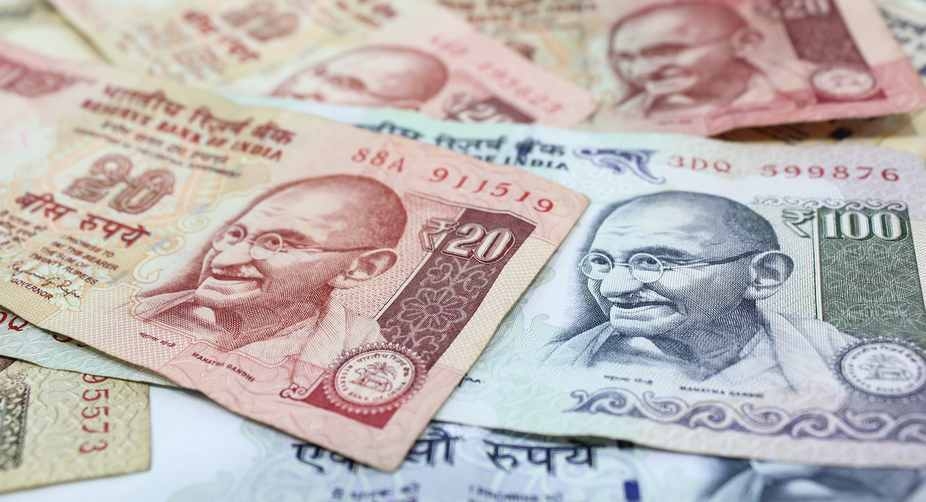
Rupee near all-time low, tumbles 28 paise to 68.84

PTI | Mumbai |

The Rupee crashed to nearly 39-month low of 68.84, plummeting by by another 28 paise against the US Dollar in early trade on Thursday amid sustained foreign fund outflows and the greenback’s surge in overseas markets.
The domestic currency had hit its all-time intra-day low of 68.85 and closed at 68.80 on August 28, 2013.
Forex dealers said besides a strong month-end demand for the American currency from importers, continued capital outflows by foreign funds and the Dollar’s bull run on an imminent hike in Fed’s interest rates, mainly weighed on the domestic currency.
Further, a lower opening of the domestic equity market also put pressure on the Rupee, they said.
The Rupee had shed 31 paise to close at a new nine-month low of 68.56 against the Dollar on Wednesday.
The Indian currency shrunk 2.92 per cent since Donald Trump’s victory in the US Presidential polls earlier this month.
A huge outflow of capital by foreign investors has been weakening the rupee as they apprehend an impact on the economy in the short-term following the India’s move to demonetise Rs 500 and Rs 1,000 banknotes. Surging US bond yields and a strong Dollar overseas are also contributing to the Rupee’s fall.
Meanwhile, the BSE Sensex fell by 145.97 points, or 0.56 per cent, to 25,905.84 points in early trade.

Charlie Hebdo to launch German edition

The French magazine will print 200,000 copies in German next week to recognise the support it received after the 2015 attacks that killed its Paris editorial staff.

IANS | Paris |

The French satirical weekly Charlie Hebdo, whose Paris offices were targeted by the jihadists in January 2015, will launch a German edition in December.
The French magazine will print 200,000 copies in German next week to recognise the support it received after the 2015 attacks that killed its Paris editorial staff, a spokeswoman said on Wednesday, reported the Guardian.
The German version that will launch on December 1, would consist mainly of articles and cartoons translated from the French.
The editors also plan to create German content by collaborating with German cartoonists, she said.
Priced at four euro it would be available across Germany every Thursday. 
Germans had bought 70,000 copies of Charlie Hebdo’s survivors’ edition, which appeared one week after the massacre.
Currently, the sales of the French edition stand at about 1,000 a week in Germany .
The attack at the Paris offices of the decades-old magazine had left 12 people dead including some of France’s best-known cartoonists.
Charlie Hebdo, which provides part of its content in English on its website, sells 60,000 copies a week on the newsstand and has 50,000 subscribers.
Germany has two leading satirical monthlies, Titanic and Eulenspiegel.

Malware can turn your laptop into an eavesdropping device

IANS | New York |

Malware that can covertly transform headphones into a pair of microphones can turn your personal computer into a perpetual eavesdropping device, warn researcher.
Using the malware SPEAKE(a)R, the researchers at Ben-Gurion University of the Negev (BGU) in Israel demonstrated how most PCs and laptops today are susceptible to this type of attack. 
“The fact that headphones, earphones and speakers are physically built like microphones and that an audio port’s role in the PC can be reprogrammed from output to input creates a vulnerability that can be abused by hackers,” said Professor Yuval Elovici, Director, BGU Cyber Security Research Center.
A typical computer chassis contains a number of audio jacks, either in the front panel, rear panel or both. 
Each jack is used either for input (line-in), or for output (line-out). The audio chipsets in modern motherboards and sound cards include an option for changing the function of an audio port with software — a type of audio port programming referred to as jack retasking or jack remapping.
Malware can stealthily reconfigure the headphone jack from a line-out jack to a microphone jack, making the connected headphones function as a pair of recording microphones and turning the computer into an eavesdropping device. 
This works even when the computer does not have a connected microphone, said the study published in the journal arxriv. 
The researchers studied several attack scenarios to evaluate the signal quality of simple off-the-shelf headphones. 
“We demonstrated it is possible to acquire intelligible audio through earphones up to several metres away,” Yosef Solewicz, an acoustic researcher at the BGU Cyber Security Research Center (CSRC) said.
“This is the reason people like Facebook Chairman and Chief Executive Officer Mark Zuckerberg tape up their mic and webcam,” lead researcher Mordechai Guri, Head of Research and Development at the CSRC, noted.
“You might tape the mic, but would be unlikely to tape the headphones or speakers,” Guri added.
Potential software countermeasures include completely disabling audio hardware, using an HD audio driver to alert users when microphones are being accessed, and developing and enforcing a strict rejacking policy within the industry. 
Anti-malware and intrusion detection systems could also be developed to monitor and detect unauthorised speaker-to-mic retasking operations and block them, the researchers said.

The Purani Haveli’s long held secrets

R V Smith |

In the 1950’s a Delhi college girl who was injured seriously in a train accident near Mathura was recovering from her trauma in Paharganj . She was greatly depressed and her cousin Sayeed Uddin made it a point to visit her regularly and cheer her up. One day when Afshan (not her real name) opened her eyes and saw Sayeed sitting near her bed, she asked him to tell a story to relieve her boredom. Sayeed, who was interested in the occult, scratched his head trying to remember an article by a spiritualist he had read in an old issue of Globe Magazine, edited by Thomas and Habib. Well here’s the tale he related: 
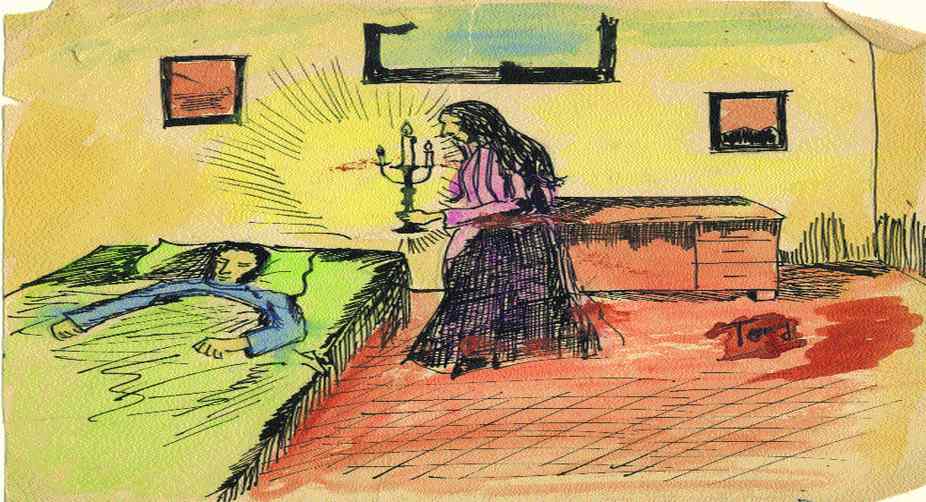
 “A degenerate nawab lived in Purani Haveli in Kutcha Tihar, South-West Delhi. Munne Nawab had inherited a good fortune from his uncle and with no close relatives, didn’t bother much about how he lived. He did have a lot of companions, who enjoyed nawabi hospitality. One day, at a different venue, one of them was suddenly taken ill in his suburban home near Beriwala Bagh. A doctor was called and, after the young man Ameer was better, the nawab sought leave and enquired if he could take an old pack of cards lying on the table that had attracted his fancy. Ameer was only too glad to oblige because his benefactor had hardly ever demanded anything from him. The nawab brought the cards and placed them on his bed. He gazed at each one night for some time until he came to the Ace of Spades. There was something strange about this card and no sooner had he passed his hand over it than a beautiful woman stood in front of him with a queer smile and said, ‘Whoever possesses this card possesses me.’ 
 “The nawab was taken aback. However, he managed to recover his composure and ask the young woman to sit down. ‘How did you emerge from this pack?’ he asked. ‘That is a long story,’ said the stately personage. ‘I am Princess Zamani, daughter of King Idris. While still a girl, I was married by proxy to King Zuber, but ere I could reach his palace a wizard chief forced my palanquin bearers into his fortress, where he tried to seduce me. But I resisted. Meanwhile, Zuber, my husband, attacked the fortress. The day it fell, Zahur the wizard  ravished me. I pulled out his dagger and stabbed him in the heart and then myself. Oh, it was a gruesome sight. His blood and mine was spilt over a pack of cards. But before he died the evil man breathed a charm on one of the cards, entrapping me in it’. 
 “The woman ended her story and lay down on the bed as though exhausted. Munne Nawab stared at her face, she was the most beautiful woman he had ever seen. ‘Zamani,’ he said, ‘I have fallen in love with you and would make you my bride.’ ‘That cannot be,’ she said. ‘But so long as you have this pack of cards I will keep you  company in the wee hours, when none else is around and the moon is not more than seven hours old.’ 
 “Just then the clock struck and Zamani was gone in a flash, leaving the quivering Ace of Spades, the symbol of death, on the bed. The nawab could scarcely believe his eyes. He wondered why Ameer did not know the secret because the pack of cards had been lying at his house. 
 “A few days later, he held a party at which Ameer was also present. They drank late into the night and when the party broke up he asked Ameer to stay back. When they were alone he broached the subject. ‘Where did you get this pack of cards from?’ he asked. A nervous Ameer stammered out, ‘Why, I picked it up from the Red Fort museum, when I went there along with my  cousin. I thought nobody would bother about such an old pack.’ 
 “The nawab heard what Ameer had to say. Now he was convinced that he alone knew the secret of the Ace of the Spades. At the next new moon he waited impatiently after a good drink, whose taste lingered till the clock struck the longed-for hour. He passed his hand over the enchanted card and lo, Zamani stood in front of him. Her dress was sky blue and the diamond in her nose-ring shone like the evening star. ‘Where have you been all these days?’ he couldn’t help asking. ‘In deep slumber ~ what you call death.’ 
 “The nocturnal experience, which he faithfully recorded in his diary, was such that slowly the nawab lost interest in daily life. Zamani held all the pleasures and thrills. But when she was not around after the seventh-day moon, the nawab would just sit and brood. His servants got alarmed and a doctor was discreetly brought, who examined him and diagnosed that, besides symptoms of insanity, he was also suffering from TB, and in urgent need of medication. And that probably prolonged his life. So the ‘affair’, real or imagined, with Zamani continued and the last time she came she told him that it was to take him away. Munne Nawab was found dead of cardiac arrest with the diary on his chest the next morning.” 
 But by the time the tale ended Afshan had fallen asleep. The haveli, which was looted by a mob pursuing Muslim Meo herdsmen in 1947 and all its books, presumably including the diary, burnt, however, survives after restoration as  a tenanted building. But the pack of cards was never found. And Sayeed Uddin Vakil (whom one used to meet at Faiyaz Manzil before his vendetta murder) regretted all his life not marrying the coy Afshan, who died a spinster. 
 Years later, someone else staying in the haveli fell in love with a much older man. The girl, Jasmine (not her real name), would wait for Marius every day and then indulge in sweet amours as her mother used to be away on duty and her father was dead. This went on for two years until Jasmine’s mother decided to get her married off to a member of her own South Indian community. This led to the girl going into depression, though she realised that Marius was old enough to be her father and not the right person she could settle down with. Eventually, Mrs Thomas put her foot down and told Jasmine  that she had no other choice but to wed Jose, the boy she had selected for her. Arrived the wedding day and Marius, a bit depressed himself, was among the honoured invitees as he had contributed a substantial amount for the marriage in response to Mrs Thomas’ appeal  to him as an old family friend. 
 After the wedding Jasmine went away to stay with Jose but when she returned home for a short visit, she called Marius one afternoon, when her mother was away at work and forced him to cohabit with her, saying, “You’ll have to be the father of my first-born because even if I have become somebody else’s wife it is you who are my first love.” After Jasmine’s confinement, she had a dream in which she  saw a young woman (Afshan?) telling her that she had done the right thing  in not denying her lover his due and by doing so she had fulfilled her own unfulfilled desire. When Jasmine disclosed this to Marius he nodded his head and said, “I’ve always felt that  this haveli exercises a weird influence on its young inhabitants. I know both Afshan and Sayeed Uddin Vakil, the latter more intimately, and he once confessed that he had impregnated Afshan as per her wish but it resulted in a still-birth that caused great grief to both though she was convinced that at some later date somebody else staying in this haveli would realise her wish of having a love-child with a man she couldn’t marry because of social taboos. 
 Jasmine has other children too but continus to love Marius, who is now past 75, and neither her mother nor her husband knows of the platonic relationship, except perhaps the haveli, which has lasted over 20 years. But the haveli is known to keep its secrets, many of which it has harboured over the long decades of its existence! 
                                                    

Congress initiates candidate selection process for Punjab polls

PTI | New Delhi |

The Congress
on Wednesday initiated the process for selection of candidates for the upcoming
Punjab elections with the Central Screening Committee holding discussions with
the party’s state unit chief Amarinder Singh.

Top
Congress leaders in the state, including the party’s in charge of Punjab
affairs Asha Kumari, sat with committee chairman Ashok Gehlot and screened the
candidates for the upcoming assembly election.

Assembly
polls in Punjab are slated early next year and Congress is making desperate
attempts to get back to power after remaining in political wilderness in the
state for 10 years.

Congress
lost two successive elections to the ruling Akali-BJP combine in 2007 and 2012.

Sources
said Amarinder held discussions with Gehlot and other leaders on candidates for
various seats and will recommend names to the Central Election Committee soon.

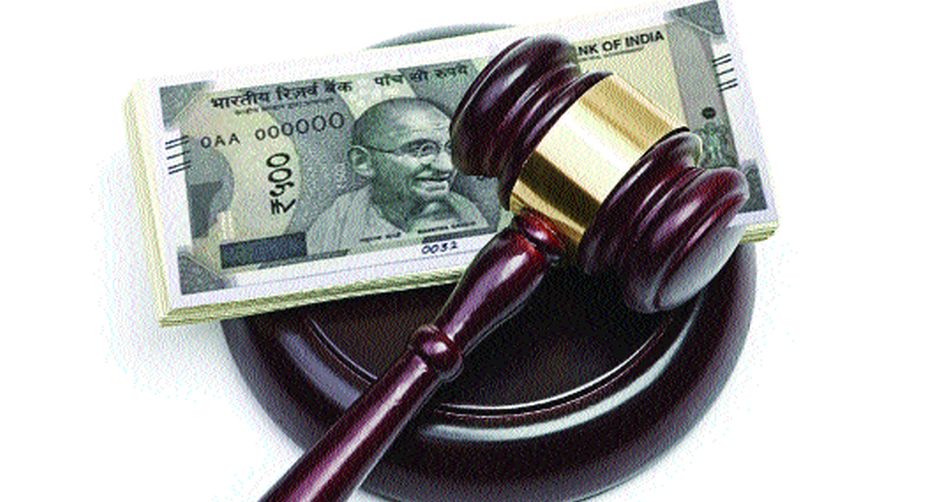
Making a case for demonetisation

Yogesh Pratap Singh |

The legitimacy of demonetisation of high denomination bank notes is being questioned in legal and political circles. The Madras High Court dismissed a petition and observed that demonetisation was good for India. The PILs filed in the Karnataka High Court and Bombay High Court were too dismissed on similar grounds. While the Supreme Court refused to stay the government order, it asked the Centre to file a reply without formally issuing notice on the steps government had taken to reduce the trauma of common people. The decision of High Courts and the Supreme Court have been questioned for taking a hands-off approach when it comes to matters of economic and fiscal policy.

It is argued that the political executive, owing to the degeneration of the electoral process, normally acts out of political and electoral compulsions, and for that reason it may not act justly and independently. However, if the provision is made by the legislature, it will not only provide an opportunity for debate where several shades of opinion are represented but a balanced and unbiased decision free from the allurements of electoral gains is more likely to emerge.

It is pertinent to record at this juncture that demonetisation by law was done in 1978 by the High Denomination Bank Notes (Demonetisation) Act, 1978.  The constitutional validity of this Act was challenged in Jayantilal Ratanchad Shah v. Reserve Bank of India on grounds that it was violation of the right to carry out trade and commerce and it amounted to a compulsory acquisition of property without compensation by the Government.

The Constitution bench of the Supreme Court while rejecting these contentions held that demonetisation law was in the larger public interest. Control of the problem of “unaccounted money” in any way does not amount to a violation of the right of the petitioners.      

Section 26, sub-section (2) of the Reserve Bank of India Act, empowers the Union Government on the recommendation of Central Board to declare that “any notes issued by the Reserve Bank will no longer be legal tender.” The Union government on 8 November in exercise of this power passed the order demonetising Rs. 500 and Rs. 1000 currency notes. The decision was taken principally to curb the grave menace of unaccounted money which had resulted not only in affecting seriously the economy of the country but had also deprived the exchequer of vast amounts of its revenue.

Legislation on this issue may be ideal but under these circumstances the courts are not to see what is ideal or desirable but what is legal and constitutional. To what extent can the court intervene if an economic policy or measure directly impacts the fundamental rights of citizens?

The Supreme court in Balco Employees’ Union (Regd.) vs. Union of India and Ors. 2002(2) SCC 333 observed (vide paragraph 92 and 93):  “In a democracy, it is the prerogative of each elected Government to follow its own policy. Often a change in Government may result in the shift in focus or change in economic policies. Any such change may result in adversely affecting some vested interests. Unless any illegality is committed in the execution of the policy or the same is contrary to law or mala fide, a decision bringing about change cannot per se be interfered with by the court. Wisdom and advisability of economic policies are ordinarily not amenable to judicial review unless it can be demonstrated that the policy is contrary to any statutory provision or the Constitution. In other words, it is not for the courts to consider relative merits of different economic policies and consider whether a wiser or better one can be evolved.”

In catena of other cases ( Peerless General Finance and Investment Co. Ltd. v. RBI, (1992) 2 SCC 343; Pallavi Refactories v. Singareni Collieries Co. Ltd., (2005) 2 SCC 227) the court has dithered about indulging itself in the executive and the legislative domains. Thus, unless policy is clearly illegal or unconstitutional, the courts should not intervene. In a democracy, the Government is constituted by chosen representatives of the people. It is for them to determine what measures should be taken or not taken to advance the welfare of the people. If the Government in its wisdom has concluded that demonetisation tends to the welfare of the State, as it prima facie appears to be, then it is not for the Courts of law to sit in judgment upon that decision. Considering the degree of evil the alleged executive action sought to remedy, it cannot be said that it is not taken for a public purpose. A decision taken in the larger public interest cannot be arbitrary. 

The contention regarding violation of freedom of trade and commerce as stipulated under Article 19(1)(g) will also be a misconceived argument for the precise reason that this freedom unlike others under Article 19 is subject to complete restrictions in the interest of larger public. Another possible contention that “No person can be deprived of his property except by authority of law” may not be entertained because there is no deprivation of property. Accounted money of all the citizens will remain intact. Citizens may only be deprived of their unaccounted money because it is not legally acquired and that appears to be fair enough.    

Demonetisation by an enactment would have facilitated corrupt politicians, public and private servicemen, lawyers, doctors, businessmen, traders, temples, mosques, akhadas, Trusts, Societies, private universities, private schools and others involved in unaccounted money with sufficient time to deal with it. No one would deny the possibility of backdoor arrangements this time too but they would be fewer.

Nevertheless, the sudden ban on high denomination notes has for the first time shaken the underground economy. For the first time, honesty as a virtue has got a sense of satisfaction. Are honest (real or forced) tax-payers not entitled to this minimum return of mental serenity? To keep honesty alive and encourage tax-payers to keep on paying taxes, government needs to give such treatment at regular and planned intervals.  

The writer is Associate Professor of Law at NLU Odisha and currently on deputation as Deputy Registrar, Supreme Court of India.

Relentless persecution

Statesman News Service |

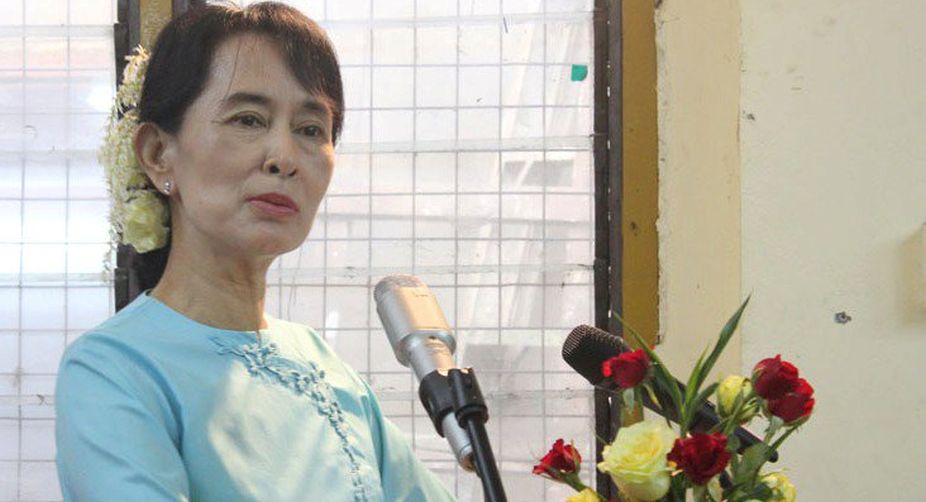
The irony is cruel. The persecution
of the Rohingyas has intensified in Myanmar with the change of guard — from
the junta to a democratic dispensation under Aung San Suu Kyi. The democratic
world had expected quite the contrary, if not a distinct measure of improvement
in the condition of the stateless minorities of Rakhine province — a wandering
group near the Bangladesh border… floundering in search of a home. The latest
offensive by the Myanmarese military is strangely of a piece with Suu Kyi’s
silence on the issue ahead of the momentous transition early this year. No less
deafening must be her muted response at this juncture.

Now that she is in power, though
not as President, there can be no compelling reason to almost tacitly condone
the offensive.The plot thickens as satellite images have revealed the
destruction of no fewer than 820 homes in the three weeks of this month. In the
net, the Rohingyas have been displaced further still in course of what has been
packaged as “counter-insurgency operation”.

We do not know what the provocation
for the latest onslaught was. Yet we do know that Human Rights Watch has called
for the UN’s intervention, asserting 
that “these alarming new satellite images confirm that the destruction
in Rohingya villages is far greater than what the government has admitted”.

Human rights is at stake as must be
the purportedly democratic government’s credibility. The withers of the Suu Kyi
administration in Naypidaw remain unwrung. Far from coming to the rescue of the
minorities, the government has acknowledged that helicopter gunships were used
in support of ground troops in the military operations. The civil
administration must have been privy to the army’s action, indeed an offensive
that has made a travesty of the democratic engagement.

Thus far, the government and GHQ
have advanced only an unsubstantiated charge — that nine police officers were
killed by “unidentified assailants” on the Bangladesh border. On closer
reflection, the junta doesn’t play the second fiddle in the overall construct
and it will be painful for the democratic bloc, not least India, to reflect
that the post-transition government has been thoroughly insensitive to the
stepped-up persecution. Its silence runs parallel to the military offensive.

It becomes direly imperative for
Myanmar to stop the offensive and no less crucially to grant citizenship to the
Rohingyas, who have lived in Rakhine for generations. Persecution is the thread
that binds the generations, and the democratic change of guard has done but little
to assuage the suffering of the stateless.

Actually, however, there has been a
palpable worsening of the human rights situation. And this  must be contextualised with the caveat of
Human Rights Watch — “The government should simply look at the facts and take
action to protect all people in Myanmar, whatever their religion or ethnicity”.

Editorial 

Mistry does U-turn on Corus, TCS as Tata veterans trash claims

PTI | Mumbai |

Springing to the defence of Ratan Tata, two retired group
veterans – FC Kohli and B Muthuraman – on Wednesday rubbished as
“frivolous and incorrect” Cyrus Mistry’s charges that the patriarch
wanted to sell TCS and his ego had inflated Corus acquisition cost, leading to
the ousted group chairman partially retracting his remarks.

Mistry said he never stated that Tatas were wanting to sell TCS to IBM or
any other company.

Within hours of the two coming out with strongly worded comments, Mistry
said his statement of Tuesday was based on “information from sources who
were close to JRD Tata who informed him that it was Ratan Tata’s intention, and
not the group’s intention, to sell TCS”.

While Kohli, the first chief executive of Tata Consultancy Services, said
at no point did the Tata Group consider selling the crown jewel to IBM,
Muthuraman said the USD 12 billion Corus acquisition was a well thought out
decision and the price paid was only 50 million pounds higher than the next
bidder.

In a late evening statement issued by his office, Mistry said he did not
“say that the ultimate decision was not unanimous, but there were
differences and reservations significantly, the fact that Corus was available
for purchase at half the price in the recent past is undisputed”.

A day after Mistry had claimed that Ratan Tata’s “ego” led to
“overpayment” for Corus, which was available for half the price a
year before the deal, Tata Steel too came out with a strongly worded statement
saying the acquisition was extensively deliberated and approved by the company
board.

Debunking Mistry’s claims that Ratan Tata had pitched for sale of TCS to
IBM when he was heading the joint venture between the two firms, Kohli said the
ousted chairman does not offer any timelines.

He said he had suffered a heart attack, claimed by Mistry, in 1984,
whereas the Tata IBM joint venture was set up much later in 1991-92.

“Mistry’s comments regarding the sale of TCS to IBM at some
‘unspecified point in time’ are not correct,” said Kohli, widely
considered as father of Indian IT industry. “At no point at that time was
there ever an intention of the Tata Group to sell TCS to IBM,” he said in
a statement.

Muthuraman, who was the head of Tata Steel when the acquisition was made
in early 2007, rubbished the Mistry’s remarks of overpayment as “frivolous
and unconsidered comments”, saying he was surprised and very sad at
“the speculative and biased views”.

In a statement, he said: “The long term strategy of Tata Steel was
well thought out after a lot of deliberation to grow the company through
capacity expansion in India and internationally through inorganic growth.

“The overseas growth strategy was also to focus on accessing new
markets through acquisitions, enhance the technology capability of the company
and develop high end premium products.” .

Sri Lanka beat West Indies by one run in ODI

The victory ensured Sri Lanka’s passage to Sunday’s final, while the West Indies must avoid defeat in their final group game against hosts Zimbabwe on Friday if they are to progress.

AFP | Bulawayo |

 West Indian batsman Evin Lewis hit his maiden one-day
international hundred but his efforts went in vain as Sri Lanka held their
nerve to secure a one-run victory at Queens Sports Club on Wednesday and advance to
the triangular series final.

Playing just his fourth ODI, Lewis struck a superb 148 but a
series of run-outs ultimately hurt the West Indies as they finished on 329 for
nine in response to Sri Lanka’s 330 for seven.

Sri Lanka’s total was set up by Niroshan Dickwella and Kusal
Mendis, who both scored 94 after the West Indies had won the toss and opted to
bowl first.

The victory ensured Sri Lanka’s passage to Sunday’s final,
while the West Indies must avoid defeat in their final group game against hosts
Zimbabwe on Friday if they are to progress.

Brief scores

Sri Lanka: 330/7 off 50 overs (Dickwella 94, Mendis 94, de
Silva 58; Holder 3-57)

West Indies: 329/9 off 50 overs (Lewis 148, Holder 45 not
out; Kulasekara 2-73, Lakmal 2-67).

‘India will be powerful economy if Swachh Bharat Mission succeeds’

PTI | New Delhi |

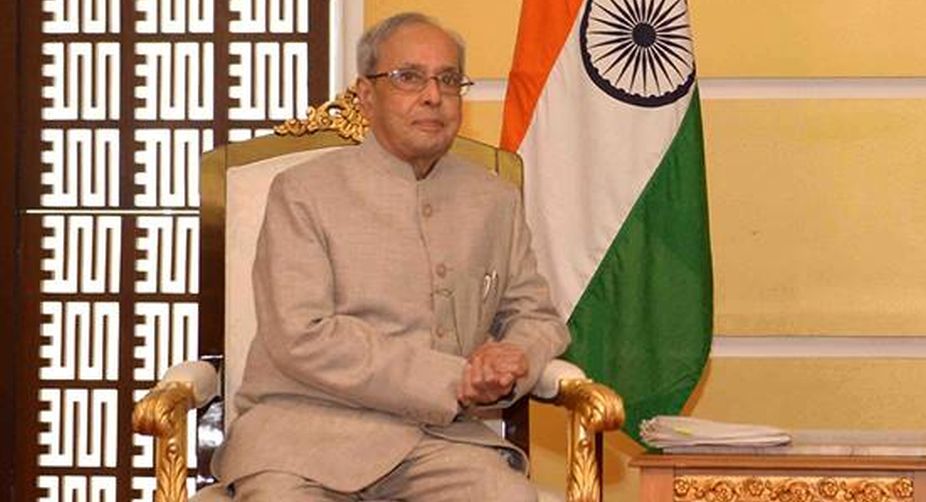
President Pranab Mukherjee has said if the Swachh
Bharat programme is implemented successfully, India can become a “powerful
modern economy”.

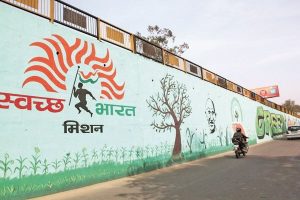
“If the innovative government programs like
Swachh Bharat Mission and Digital India are implemented successfully, then
India will definitely become a powerful modern economy,” the Swachh Bharat
Mission tweeted quoting the President.

The Ministry for Drinking Water and Sanitation,
which is the nodal ministry for implementation of the programme, has been
organising Swachh Bharat pakhwada in various government departments.

Swachh Bharat Mission was officially launched on
October 2, 2014 by Prime Minister Narendra Modi with an aim to eradicate open
defecation by 2019.

The programme is divided into two categories — Swachh
Bharat Mission (Gramin) and Swachh Bharat Mission (Urban).

In the rural areas, the scheme requires engagement
with community and facilitation — both of which are picking up slowly.

Rural areas facing difficulty : Odisha govt

Demonetisation has hit the rural populace in Odisha, its government told the central team here to review the scenario in the state post the announcement.

PTI | Bhubaneswar |

Demonetisation has hit the rural populace in Odisha, its
government told the central team here to review the scenario in the state post
the announcement.

“The central team discussed the problems faced by the
people in Odisha. We have told them that though situation has improved a little
in towns, but the people in rural pockets continue to suffer,” special
secretary to the finance department A K Meena told reporters after the meeting.

The government requested the team, which deliberated on
strategies to address problems faced by the people post- demonetisation, and
RBI to supply more currency notes of lower denominations like Rs 100 and Rs
500.

Appreciating steps taken by the state government in handling
the situation, the team assured that it would inform the Centre about the
difficulties faced by it.

“The demonetisation has been welcomed by all though
some difficulties exist. The state government has taken very good steps to
remove these difficulties. Specially distribution of old age pension amounting
to Rs 140 crore on November 15 is worth praising,” said Suresh Kumar
Vashisth, the joint secretary to the food and public distribution department.

The state government also suggested the Central team to
ensure easy payments to farmers through cooperative societies and Primary
Agriculture Committees during paddy procurement.

Besides Vasisth, Director of Urban Development Saurabh Jain,
Reserve Bank of India officials, other bank officials and state government officials
attended the meeting.

The central team leader Ashok Dalwai, who is the additional
secretary in the union ministry of agriculture and farmers welfare, said it
will visit Berhampur, Jajpur and other places to take stock of the situation.

Sindhu, Saina advance to second round at Hong Kong Open

PV Sindhu, Saina Nehwal, Ajay Jayaram and HS Prannoy entered the second round of the $350,000 Hong Kong Open Superseries.

IANS | Hong Kong |

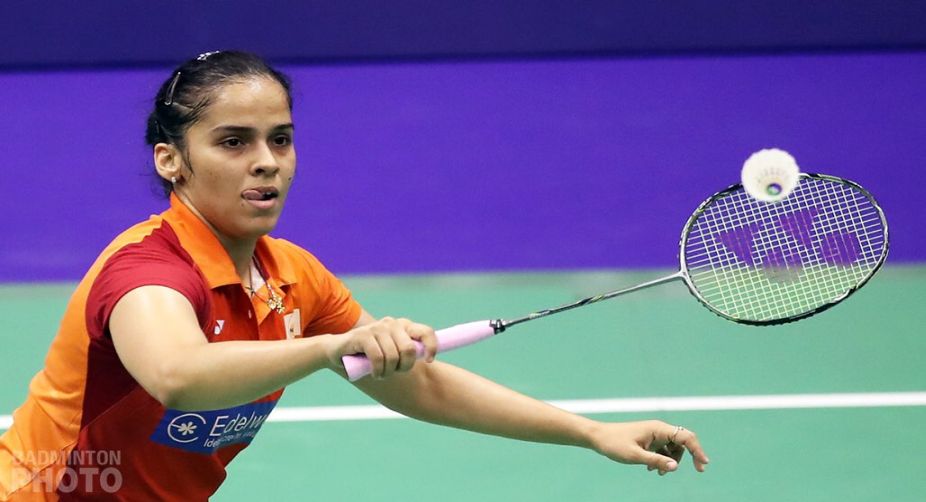
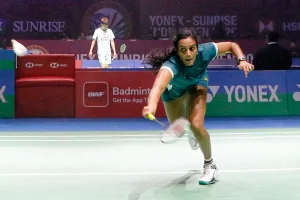
Indian shuttlers PV Sindhu, Saina Nehwal, Ajay Jayaram and HS Prannoy entered the second round of the $350,000 Hong Kong Open Superseries on Wednesday.
The 2016 Olympic silver medallist Sindhu eased past Susanto Yulia Yosephin of Indonesia 21-13, 21-16, while Saina overcame Thai Porntip Buranaprasertsuk 12-21, 21-19, 21-17 in 56 minutes.
World No.6 Saina’s battling win over World No.12 Porntip will give her a lot of confidence as it was only the second tournament she is participating since her knee surgery in August.
The illustrious Indian accepted that she was surprised with her performance on the day. 
“I am very surprised with this victory #Second tournament after the recovery from knee surgery and through to the second round,” Saina wrote on Twitter.
In the second round, she will face Japanese Sayaka Sato, who moved past Chinese Taipei’s Chiang Mei Hui.
Sindhu will meet Chinese Taipei’s Hsu Ya Ching, who stunned South Korean seventh seed Sung Ji Hyun 20-22, 21-14, 21-19.
In the men’s singles competitions, Sameer Verma beat Japanese Takuma Ueda 22-20, 21-18 in 51 minutes, while Prannoy beat Qiao Bin 21-16, 21-18 in 48 minutes.
Ajay Jayaram beat Indonesian Anthony Ginting 21-15, 13-21, 21-16 in 56 minutes. 
“A thrilling victory against ginting. Feels especially good as I had lost twice to him earlier this year.Looking forward to the next round,” Jayaram tweeted after his victory.
However, B Sai Praneeth had a tough outing as he was beaten by Danish third seed Jan ‘O’ Jorgensen 18-21, 18-21.
The Indian doubles pair of Manu Attri and B Sumeeth Reddy too lost in the opening round, losing 15-21, 8-21 to South Koreans Solgyu choi and Ko Sung Hyun.

Demonetisation: Another jolt for Modi Govt in SC

PTI | New Delhi |

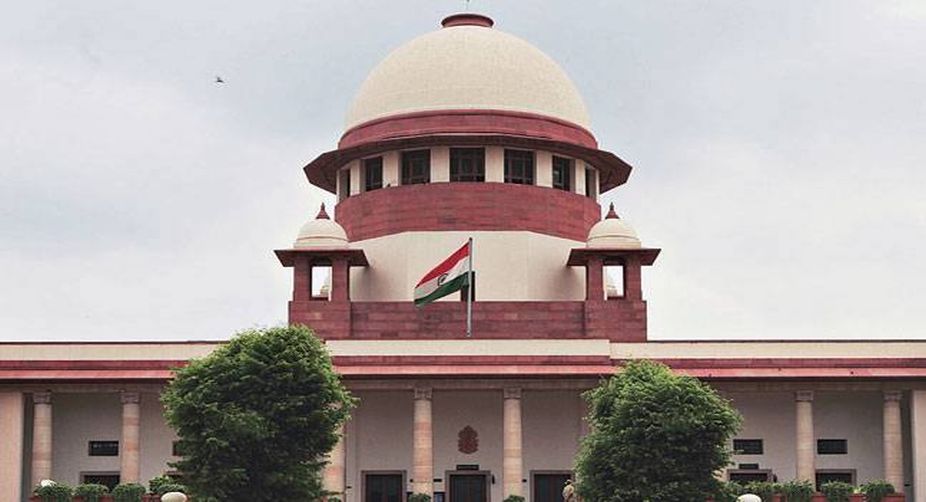
The government on Wednesday suffered another jolt with the Supreme Court refusing to restrain high courts across the country from taking up issues arising out of its decision to demonetise Rs.1000 and Rs.500 currency notes, saying people may get “immediate relief” from them.
The Centre’s claim that demonetisation was a “success” as over Rs.6 lakh crore have already been deposited and about Rs.10 lakh crore was expected to come to the exchequer till December end which would prevent hoarding of cash, failed to cut ice with the apex court as it refused to stay the ongoing proceedings before the high courts.
The setback to the government came in quick succession as the apex court on November 18 had refused to stop high courts from entertaining challenges to the November 8 notification, observing that people were seriously affected and doors of courts cannot be shut in a situation which “may lead to riots”.
Despite the government making a fervent plea for stay on high courts’ proceedings in demonetisation cases on the ground that the situation was “much better” with long queues declining and there was “a big surge in digital use of money transaction,” a bench headed by Chief Justice T S Thakur said, “We don’t want to stay it.”
“There are various issues. People may get immediate relief from the high courts,” the bench, also comprising Justices D Y Chandrachud and L Nageswara Rao, said.
Some of the issues which have come up before high courts are for removing the weekly cap of Rs 24,000 on withdrawals, questioning the use of old currency notes of Rs.1,000 and Rs.500 at public utility centres like hospitals and petrol pumps and direction to ensure sufficient cash in ATMs.
Attorney General Mukul Rohatgi’s submission that over Rs.6 lakh crore have been deposited so far and queues in banks, ATMs, post offices have shortened remarkably and, if required, the time limit of depositing and exchanging the Rs.1,000 and Rs.500 old notes may be extended beyond December 30, did not impress the bench to provide any relief to the Centre.
The high denomination currency notes of Rs.1000 and Rs.500 used to constitute 80 to 85 per cent of the legal tender and the top law officer said demonetising them was a “move to remove 70 years of slush money.” 
“If it takes another 20-30 days to remove it, I do not think its a big deal,” he told the bench adding that “it is a success till now.”
“The money will be used in the economy and the lending rates will come down,” he told the bench which only issued notices and sought the response of those who have approached different high courts on the Centre’s plea seeking transfer of the matters to the apex court or any one of the high courts.

Photo

  • img
  • img
  • img
  • img
  • img
  • img
  • img

Colours of Life

Colours of Life

MORE Photo STORIES

Veteran cricket administrator Samir Dasgupta passes away

IANS | Kolkata |

Samir Dasgupta, former Assistant Secretary of the Cricket Association of Bengal (CAB) and veteran team manager of the state’s Ranji Trophy team, breathed his last at a city hospital on Wednesday.
The body of Dasgupta, 75, was taken to Victoria Club, East Bengal ground and then to the BC Roy Clubhouse at the CAB before it was taken to its last rites.
“I have known Samir Dasgupta for several years now. He was a perfect gentleman and a warm human being. It is difficult to come to terms with his sudden death. My heartfelt condolence for his near and dear ones,” said current CAB President Sourav Ganguly.
CAB Joint Secretary Avishek Dalmiya echoed Ganguly’s voice, saying: “I have known Samir Dasgupta from the time of my father (Jagmohan Dalmiya). He has always served the association tirelessly. Besides being an expert in man-management, he was a warm and honest human being. His sudden and untimely death is most unfortunate and has left us grief stricken. May his family get the courage to deal with this tragedy.”
“I have known him for over 30 years. His contribution to CAB was huge. I have no words to express my grief. My prayers are with his family,” CAB Treasurer Biswaroop Dey concluded.

GST Council meeting rescheduled for December 2-3

The meet was earlier scheduled to be held on November 25.

IANS | New Delhi |

The GST Council meeting, which would discuss the crucial
issue of dual control or who will exercise control over GST assessees — the
Centre or the states — has been rescheduled for December 2-3, an official
said.

The meet was earlier scheduled to be held on November
25.

“The states desired some more time to internally
deliberate on revised draft of the laws within their respective state(s).
Therefore, the GST Council meeting scheduled for November 25, 2016, has been
rescheduled on December 2-3, 2016,” the Finance Ministry said in a
statement.

Meanwhile, another meeting of the Law Sub-Committee
comprising of the officers of the states and the Centre has now been scheduled
for November 25 in the national capital to finalise the draft GST
related laws before these are placed before the GST Council.

“After finalisation of the draft GST related laws in
the meeting of officers on November 25, the same will be placed before the
GST Council,” the Finance Ministry said in a tweet. 

Four draft bills — Central GST, State GST, Integrated GST
and state compensation matter for revenue losses — will have to be passed by
Parliament and state assemblies after the council approves them. 

The consensus on the issue of dual empowerment remains
crucial as the government intends to place the GST bills in the ongoing winter
session of Parliament so as to implement the new indirect tax regime from April
1, 2017.

Sources in the Finance Ministry said that the government was
looking at bringing these as financial bills before Parliament, but if any
issue crops up, then it may even place them as money bills.

Nepal constitution to address Madhesi issues

An understanding was reached during a joint meeting here of the ruling alliance and the agitating Madeshi Morcha or the United Madhesi Democratic Front (UMDF).

IANS | Kathmandu |

Offering a ray of hope towards ending the protracted Madhesi agitation against the year-old Nepali Constitution, the Madhesi Morcha on Wednesday consented to the tabling of a statute-amending proposal mooted by the ruling CPN (Maoist Centre) – Nepali Congress alliance.
An understanding in this regard was reached during a joint meeting here of the ruling alliance and the agitating Madeshi Morcha or the United Madhesi Democratic Front (UMDF). The meeting was chaired by Prime Minister Pushpa Kamal Dahal ‘Prachanda’.
The government had sought a formal meeting with UMDF leaders in its final attempt to reach agreement on the amendment proposal after failing in its bid with the main opposition Communist Party of Nepal (Unified Marxists-Leninists) [CPN-UML].
Madhes Samajbadi Party General Secretary Keshav Jha later said the leaders reached an agreement to table the amendment in Parliament within two days. 
Tarai Madhes Loktantrik Party Chairman Mahantha Thakur clarified that they had only agreed for the tabling of the amendment motion and will decide upon forwarding the motion only after studying its contents.
The meeting, according to a statement issued by the Prime Minister’s Office, assigned the task of tabling the amendment proposal to Prime Minister Prachanda.
Madhes-centric parties, following the promulgation of the new constitution in September last year, launched a violent anti-statute protest in the southern Terai region of Nepal which saw blockading of all major access points linked with India. 
The almost eight-month-long stir resulted in an economic and trade blockade of the Himalayan nation and caused immense suffering to people in the land-locked country. The agitation, which saw a brutal crackdown by the law-enforcing authorities, claimed at least 59 lives.
However, in evidence of dissension within the Madhesi Morcha, a section of Madhes-based parties and Janajatis/Adivasis led by Upendra Yadav expressed strong reservations against the move.
Any proposal that cannot deal with and address the grievances of minority communities which have suffered since centuries will be just a waste of time, Yadav said while registering his protest over the government move.
Issues pertaining to the boundary of seven provinces, proportional representation in the National Assembly, citizenship, language, and making the constitution more friendly to the minority communities will be incorporated in the proposal, it was learnt.
Main opposition CPN-UML lambasted the proposal as “anti-national” and warned that it will protest in Parliament and take to the streets if the amendment was passed.