Logo

EC checks security of electronic voting machines in Punjab

PTI | Chandigarh |

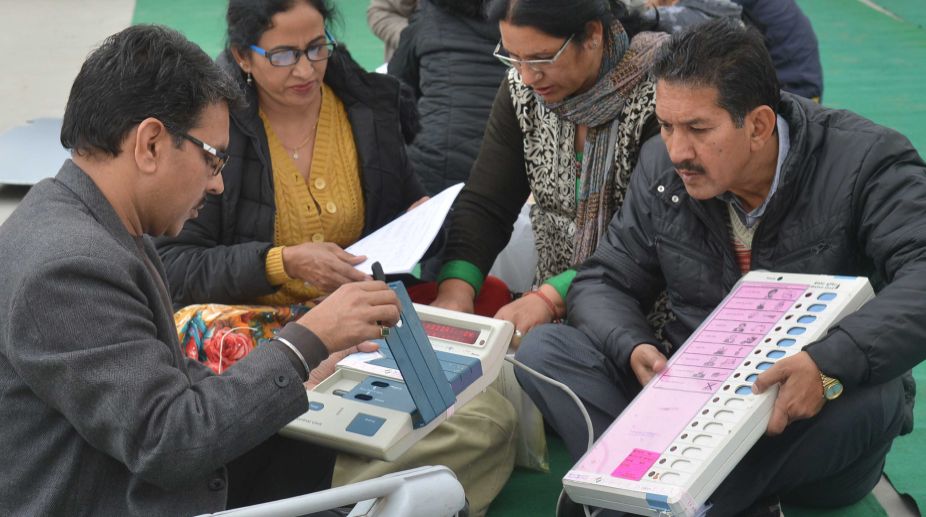
A team of the Election Commission arrived in Punjab on Thursday to inspect the security of buildings where electronic voting machines (EVMs) of the Punjab Assembly elections have been kept.

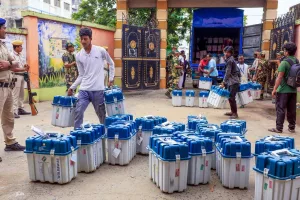
The EC team visited the strongroom at the Punjab Agricultural University (PAU) campus in Ludhiana to take stock of the security arrangements there.

District officials said the EC team was "fully satisfied" with the security around the strongroom.

"The EC team inspected the strongroom and saw the security arrangements, CCTVs and log books. We have a three-tier security arrangement around the strongroom," Ludhiana Deputy Commissioner Ravi Bhagat told media.

He said candidates of various parties were present during the EC team visit.

The inner-most security cordon of the EVM strongrooms was under central forces while the outer ring was with the Punjab Police, an official said.

The Aam Aadmi Party (AAP) had earlier complained to the EC saying the security around the strongrooms was lax and local officials were allowing unauthorised people to enter the strong rooms.

Two incidents, one where people were seen entering the strongroom in Ludhiana and another of EVM boxes being moved in Patiala, were pointed out to the EC in the AAP complaints.

The Congress and the BJP leaders in Punjab have blamed the AAP leadership for creating panic over the issue.

The fate of 1,145 candidates was sealed on February 4 in the voting for 117 assembly seats held in Punjab.

‘Moonlight’: Emotionally shattering experience

IANS |

Film: "Moonlight"

Director: Barry Jenkins 

Cast: Trevante Rhodes, Noami Harris and Mahershala Ali

Watching Moonlight is akin to getting into the skin of these unfathomably unhappy people. The film has no formal structure. It cuts sharply into slices from the protagonist's life and leaves the shards and splinters strewn across the narration for us to stumble and bleed over.

Not that anyone cares.

Moonlight is not an easy film to watch. It doesn't sanitize the protagonist's emotional trauma the way the other Oscar-nominated film Lion does. Rather, it opens up wounds that never heal, tells us that the hurt heart never recovers. And that pain, isolation and the pain of isolation are what we must learn to live with.

This is the first film featuring a gay protagonist which doesn't make a virtue of his emotional softness. Little Chiron (Alex Hibbert) living in a tough Miami neighbourhood where drugs and prostitution are a way of life, is constantly bullied for not being able to do 'man' things properly, like playing football and talking dirty about girls.

Chiron's uncertainties are starkly mapped in little Hibbert's face. His tormented eyes will haunt you for a very long time.

"How will I know," as a child, he asks about his own sexuality.

Those tormented haunted eyes follow Chiron's character through two other segments showing Chiron as a teenager when Ashton Sanders takes over the role as though he owns it. Then finally, it is Trevante Rhodes as the adult Chiron, all muscled up to fortify himself from the bullies the Man and Destiny hurl his way.

I remember while filming Boyhood, director Richard Linklater had waited for the same actor to grow up to film the later parts of the character's life. Moonlight cannot afford that luxury. It's a film in a hurry. The narrative is fidgety, restless, nervous, almost impatient to the point of self-ruination. No formal narrative convention is followed. We see chapters from Chiron's life unfold with unostentatious casualness.

The world Chiron inhabits is dark and desperate but never gloomy. Though violent, Chiron's environment is never shown as lethal. Characters carry guns, but no one shoots. Only one character dies. Though pivotal, we only hear of his passing away and that without sentimentality.

Wisely, director Barry Jenkins focuses on the inevitability of heartbreak in a world steeped in anxiety. He works on his protagonist's three life-defining relationships with his mentor (Mahershala Ali), his mother (Naomie Harris) and best friend (Andre Holland) with circumstantial splendour, bringing to each moment of the shared relationship a feeling of being the last.

The narrative seems strangely detached and disengaged, as though it couldn't care less whether we the audience give the characters the attention that they should. It is in the way the characters play out their denuded, disengaged drama that the core of the film's humanism emerges. We never see Chiron's homosexuality as being segregated from his surroundings. The hurt and pain that his sexuality causes are so devastating in their impact because the film seeks no impact,makes no attempt to gain our approval or sympathy.

Everyone will walk away from "Moonlight" with favourite moments. Mine is the sequence where little Chiron asks his mentor-father figure what a 'faggot' means and later, much later at the end of the film when the adult Chiron tells his friend that he has never been touched by any man or woman ever since their one and only sexual encounter ten years earlier on the beach under a moonlit sky.

The one decisive sexual encounter in the film is heartbreakingly furtive cursory and brief.

Funny, how we build the entire screenplay of our lives on moments that may not even be of casual importance to others. "Moonlight" takes us through lives that shed their tears so silently that we are seldom allowed to mourn for, let alone with them. The absence of an elegant structure in the narrative (the last one-third of the film is just Chiron and his friend in an eatery getting to know one another again) strips the narrative of all artifice and conceit.

This is a film that doesn't believe in the rules. It breaks them with no arrogance or pleasure. Just a feeling of deep regret and distant hope.

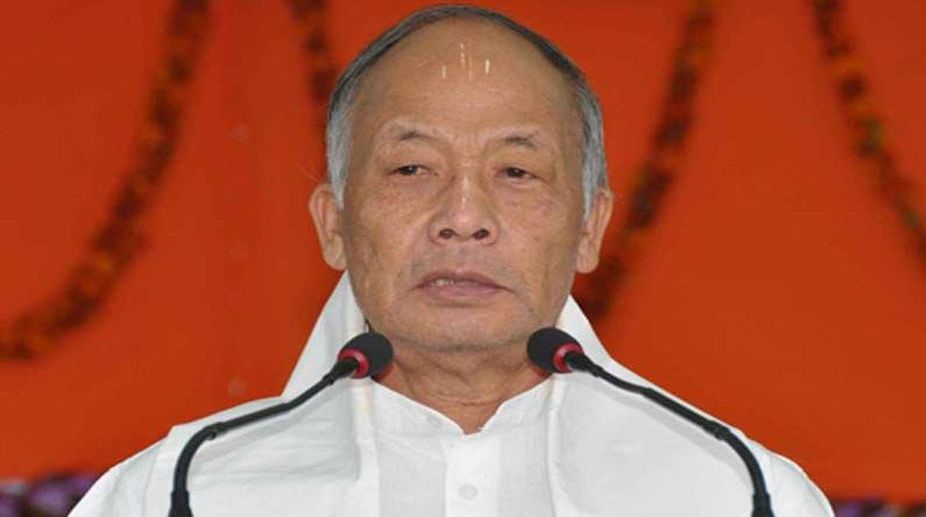
Manipur CM files nomination papers for assembly polls

IANS | Imphal |

Manipur Chief Minister Okram Ibobi Singh on Thursday filed his nomination papers for the upcoming state assembly polls.

He said that the Congress party will return with a "thumping" majority and will form the government for the fourth consecutive term. 

"The ruling Congress shall win absolute majority in the non-Naga areas. There are 10 seats in the constituencies dominated by the Nagas. We are hoping for at least half," Ibobi Singh told the media after filing his nomination papers in Thoubal district.

Naga groups are highly opposed to the Congress party and Ibobi Singh.

Sources said that many of the politicians were asked to resign from the assembly and contest after joining other parties.

Prominent members include veteran Congress legislator Phunzathang Tonsing, Parliamentary Secretary V Valte and the lone tribal woman assembly member Nemcha Kipgen.

Manipur will vote in two phases – on March 4 and 8 – to elect 60 members of the state assembly.

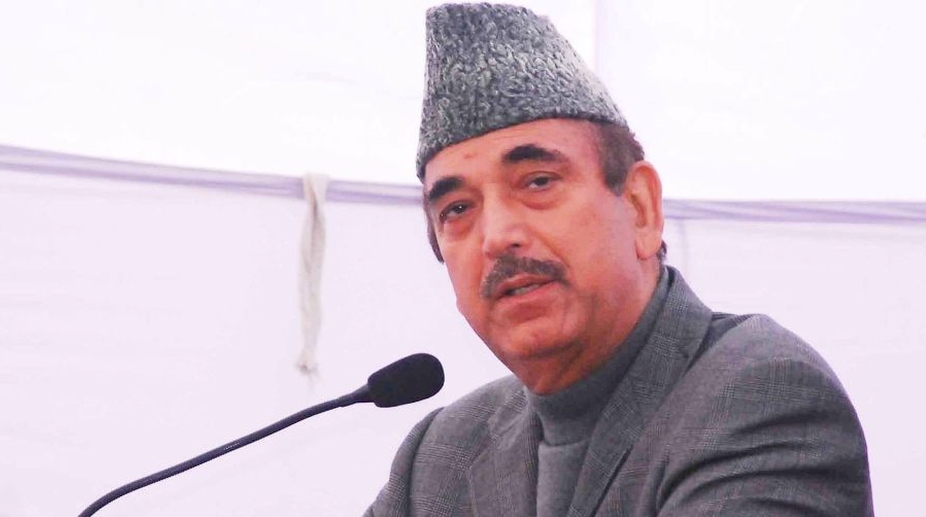
SP-Cong alliance will continue for 2019 LS polls: Azad

PTI | Kanpur |

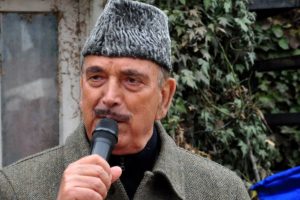
Senior Congress leader Ghulam Nabi Azad on Thursday said that the SP-Congress alliance will continue for the 2019 Lok Sabha elections and that other secular parties will also be a part of this coalition.

When asked whether BSP will be part of this grand alliance, Azad said that they are asking all the secular parties to come together and fight the saffron party.

"The SP-Congress alliance will continue in 2019 Lok Sabha elections as our parties realise that if we want to strengthen the secular base of Uttar Pradesh, then we need to be together," he said.

"The secular parties suffered a loss during the 2014 elections and BJP gained from this and that is why they were able to win 73 seats in UP. However, if Congress, SP and RLD fight the 2019 Lok Sabha elections together, BJP will only be able to get 10-15 seats in the state," Azad said.

Targeting Prime Minister Narendra Modi, Azad said that even though he became the Prime Minister of the country, he still lacks the maturity, seriousness and gravity required for the job.

"Perhaps that's why the quality of his speeches are getting lower and lower. I told him this in the Parliament as well that he should maintain the dignity of the office he is holding," Azad added.

Talking about the prospects of the SP-Congress alliance, he said the alliance is at "number one" in all the places where voting has taken place and added that he will campaign in the constituencies of the alliance candidates where the voting will take place in the third phase.

He further said that he is confident that the alliance will get at least 275 seats in the polls and will form the government under the leadership of Chief Minister Akhilesh Yadav.

Azad also targeted AIMIM chief Asaduddin Owaisi saying that he is trying to split the Muslim vote through his emotional speeches.

"Muslims know that to vote for AIMIM is to vote for the BJP. The speciality of AIMIM is that they support the ruling party, whether it is Congress or BJP and the Muslims know this," he said.

Last night, while campaigning for SP candidate in Colonelganj locality, Azad called Owaisi "an agent of the BJP" and said that he has nothing to do with the welfare schemes for the Muslims.

He claimed that Owaisi is in UP to divide the Muslim vote and has "taken hundreds of crore from BJP leaders" to do this.

"Earlier during the Bihar elections also Owaisi tried to divide the Muslim vote but Muslims there were smart and didn't vote for his party," he added.

Azad said BSP is left alone in this election and that is why Mayawati has "two sets of teeth – one to show off and the other to chew with".

"I was in western UP a while ago and I came across a video clip in which Mayawati was saying that when she saw the Muslim votes drifting towards other parties, she transferred her votes to the BJP. This means that whenever a Muslim candidate is close to winning, she transfers her vote to the BJP," he alleged.

Over 1,000 evacuated in New Zealand wildfire

IANS | Wellington |

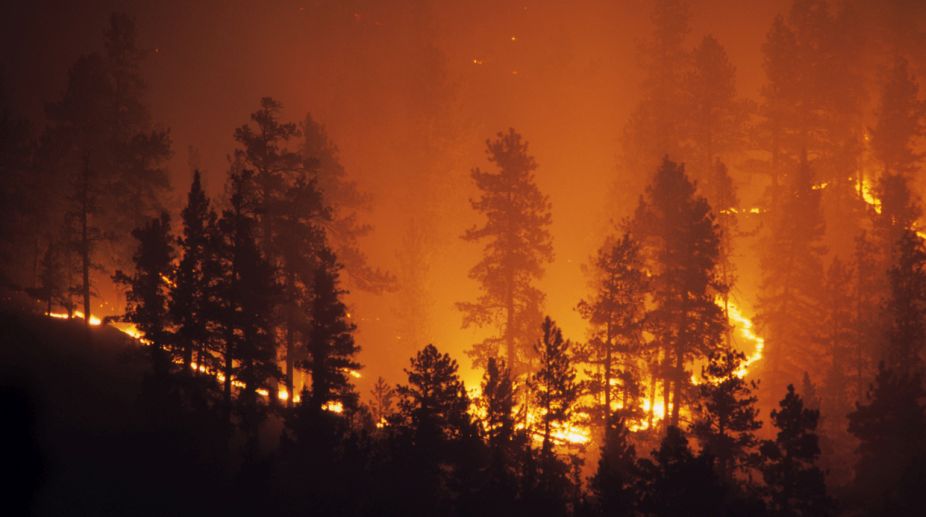
A wildfire has destroyed at least 11 homes and forced the evacuation of more than 1,000 people in New Zealand's Christchurch city, authorities said on Thursday.

Around 450 homes were officially evacuated on Thursday morning. 

A state of emergency was declared in the South Island city and neighbouring Selwyn district late Wednesday as two blazes that had been smouldering for days merged into a single giant fire-front, the New Zealand Herald daily reported. 

The emergency claimed the life of a decorated army pilot, David Steven Askin, who was killed on Tuesday when his helicopter crashed while tackling the blaze.

John Mackie, the civil defence controller for Christchurch, said about 130 firefighters on the ground, assisted by more than a dozen helicopters, had stopped the fire from encroaching further into the city.

Prime Minister Bill English took a helicopter flight over the disaster zone and said the blazes may have been deliberately lit.

"I've only had a very brief description of the fire starting in two places at about the same time, which to me looks suspicious," he told reporters.

He stressed that the investigations were continuing.

Christchurch City Council said more than 1,800 hectares of land had been torched in the Port Hills, an area of rugged terrain difficult to access to the east of the city centre. 

An "evacuation housing" Facebook page was established to offer support to those who have been forced to flee the flames. Hundreds of people quickly flooded the social media page offering beds, blankets and home baking.

The fire "compromised properties" in the Worsley, Hoon Hay Valley and Kennedys Bush roads, and streets in the vicinity of Longhurst Terrace in Cashmere.

Municipalities having surplus can issue bonds: Sebi

PTI | New Delhi |

To boost the market for municipal bonds, regulator Sebi has allowed municipalities having a surplus in their books in any of the three preceding financial years to issue such securities.

The move comes after Sebi's board last month approved changes to the relevant regulations in order to provide a criteria that is alternative to 'net worth' of municipalities.

The decision also comes against the backdrop of Prime Minister Narendra Modi last month pitching for boosting the market of municipal bonds also known as muni bonds.

In a notification dated February 15, Sebi said municipalities making public issue of debt securities should have "surplus as per its Income and Expenditure Statement, in any of the three immediately preceding financial years or any other financial criteria as specified by Sebi from time to time".

Under the Sebi (Issue and listing of Debt Securities by Municipalities) Regulations, 2015 (ILDM), a municipality or a Corporate Municipal Entity (CME) making public issue of debt securities should not have negative net worth in any of three immediately preceding financial years.

Besides, Sebi said that municipality should not have defaulted in repayment of debt securities or loans obtained from banks or financial institutions during the last 365 days.

DMK welcomes Governor’s invite to Palaniswami to form govt

PTI | Chennai |

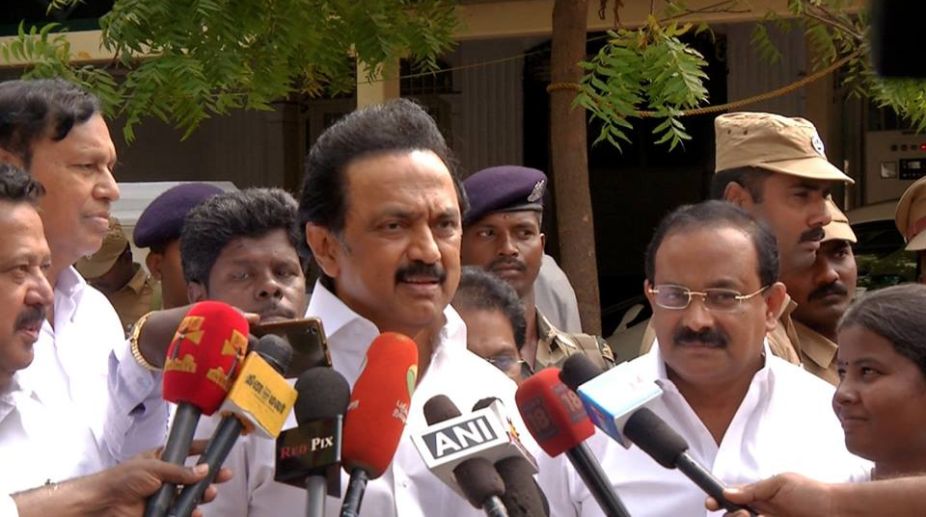
DMK on Thursday welcomed the Tamil Nadu Governor's invitation to AIADMK Legislature Party Leader Edappadi K Palaniswami to form the government, and urged him to monitor the situation "to prevent horse trading".

Party Working President and Opposition Leader M K Stalin apprehended that the 15-day time given to Palaniswami to seek the vote of confidence in the Tamil Nadu Assembly could lead to large-scale "horse-trading".

Speaking to reporters here, Stalin recalled that his party had repeatedly urged Governor Ch Vidyasgar Rao to take steps to ensure a government was in place and that he had made a representation with Rao himself.

"He (Governor) has taken a delayed decision, it is, however, welcome. But he has given 15 days' time. This is a big duration and one cannot understand why this window has been given," he said.

"Now with a 15-day window being given, certainly there are chances of big time horse trading happening for the purpose of proving strength in the Assembly," he said.

Stalin alleged that horse trading was taking place even now in both the Palaniswami and Panneerselvam camps.

"Therefore, the Governor should monitor the situation and take all steps to protect democracy," he added.

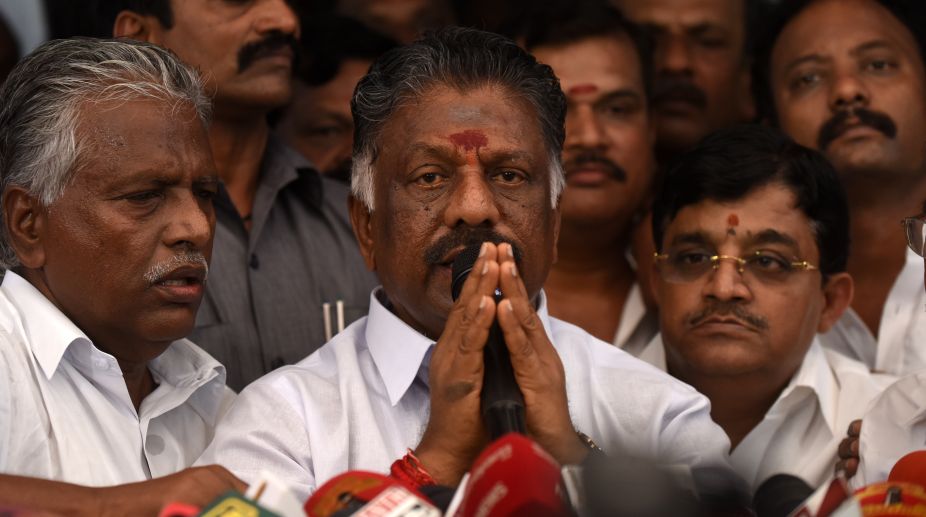
Panneerselvam camp leaders to meet EC officials

IANS | Chennai |

As Tamil Nadu Governor C Vidyasagar Rao invited E Palaniswami to take oath as the new Chief Minister, an AIADMK lawmaker from O Panneerselvam's camp said they will meet Election Commission officials in Delhi on Thursday.

AIADMK lawmaker K Pandiarajan told the media here that leaders from the camp of outgoing Chief Minister Panneerselvam will press their point before the poll panel that the election of Sasikala as party General Secretary is "void".

According to them, the AIADMK General Secretary is to be elected by party cadres in an election whereas Sasikala was elected at a meeting of the General Council.

Palaniswami, who belongs to the AIADMK camp led by now-jailed party General Secretary V K Sasikala, will take oath on Thursday evening, the Raj Bhavan said. Palaniswami will have to prove his majority in the assembly within 15 days.

Jharkhand can grow 4-5% above national average: Jaitley

PTI | Ranchi |

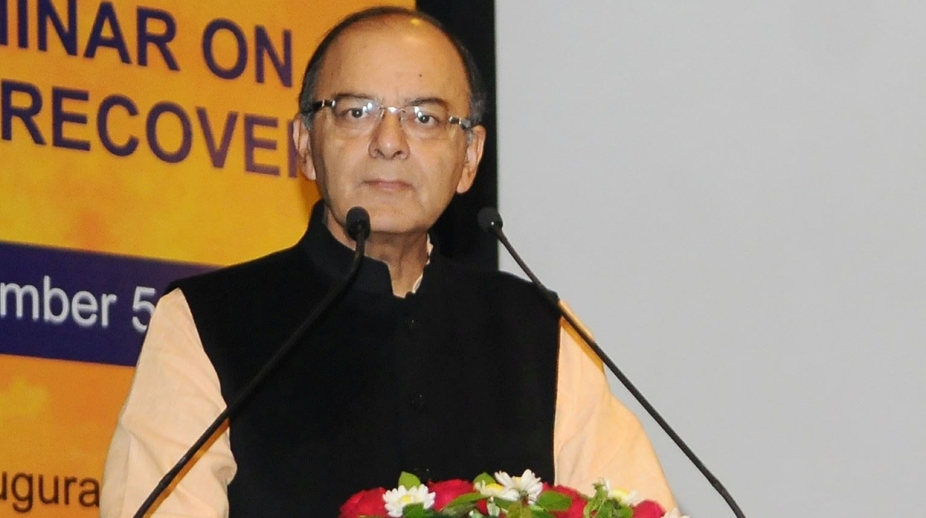
Free from 'stigma of corruption' and political instability, BJP-led Jharkhand can now exceed the national economic growth average by 4-5 per cent, said Finance Minister Arun Jaitley on Thursday.

"Jharkhand has a potential today with its natural resources, and potential for investment to grow at least 4-5 per cent ahead of the national average. Today, it is marginally 1 per cent above national average," he said at the Jharkhand's first global investors' summit here.

India's GDP expanded by 7.6 per cent in 2015-16.

After a spate of coalition government, the mineral-rich state has now a stable government and huge investment opportunities for investors, Jaitley said.

He said when Jharkhand was a part of Bihar, "a political model was developing which envisaged that you don't need" economic development to win elections.

"But you merely have to indulge in some kind of social engineering and by that process of social engineering you could win the elections. And for a fairly long period, social engineering in preference to developmental policies dominated the centre stage of this region.

"Initially, there was political instability, and if I can be more candid, there was a stigma of corruption and therefore in today's world where investor is the chooser, and investor has several multiple options, he does not like to invest or fish in troubled territories," the senior BJP leader said.

He also said that the state, which was carved out of Bihar in November 2000, has suffered due to flawed economic policies and there was inherent reluctance in allowing big industries to come and participate in economic progress.

"Finally, we have now seen the maturing of Jharkhand both from point of view of governance, also from point of view of policy," Jaitley said while highlighting growth potential of the state in terms of urbanisation, infrastructure, highways, airports and more cities.

The Finance Minister told the participating corporate leaders that there is investment opportunity in the state as well as potential for getting "great" returns.

Triple talaq: SC to frame issues on March 30

SNS | New Delhi |

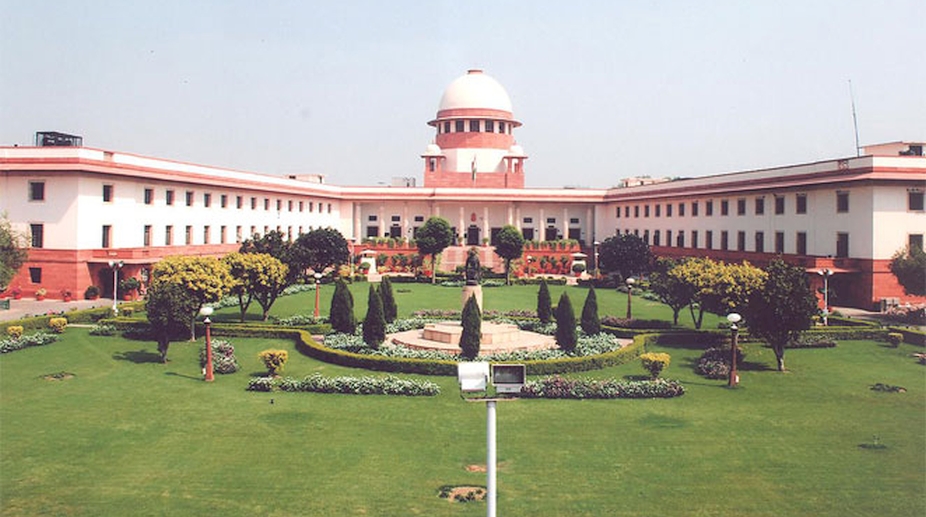
The Supreme Court on Thursday said it will frame issues on March 30 regarding triple talaq, nikah halala and polygamy in Muslims for consideration.

“Triple talaq is an important issue, it can’t be scuttled,” the apex court observed.

The apex court said that a five-judge constitution bench would sit in May to decide on pleas relating to aspects of triple talaq.

The top court had earlier in its last hearing clarified that it would not get into the common civil code issue and made it clear that it wants to adjudicate on the triple talaq issue as it is a matter human rights.

“We will not be debating Uniform Civil Code,” said a bench led by Chief Justice of India J S Khehar, while rejecting an attempt by a lawyer to raise the issue.

Several women have filed a petition before the Supreme Court seeking to quash the triple talaq practice.

The Centre has also told the top court that it is against gender injustice and for equality between men and women under the Constitution.

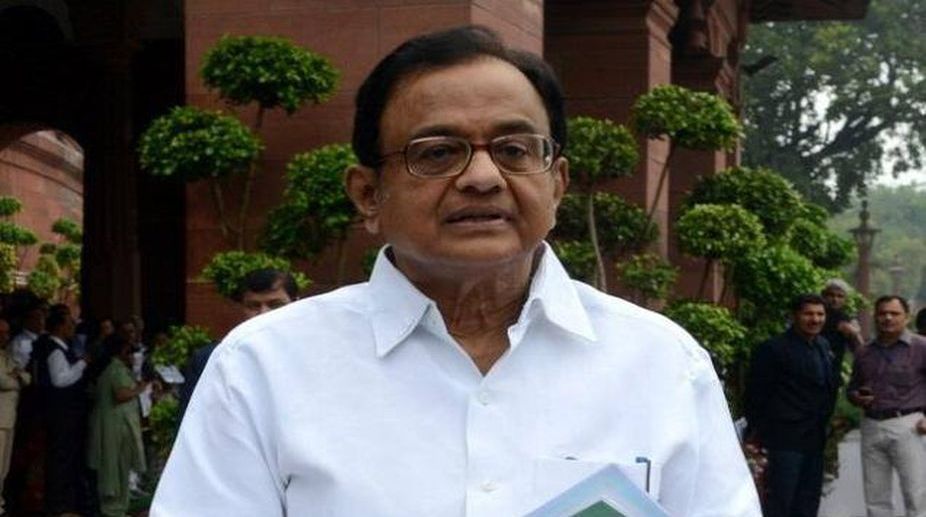
BJP has violated human rights, says Chidambaram

IANS | New Delhi |

In a direct attack on the ruling establishment under Prime Minister Narendra Modi, former Finance Minister P Chidambaram has accused it of violating individual and human rights, intimidating independent think tanks and mixing up history with mythology.

"This government has grossly violated individual and human rights. Some of the supporters of the BJP (Bharatiya Janata Party) tell us what to wear, what to eat, whom to love and whom to marry. Yet there is not a word from the Prime Minister condemning these extreme elements." Chidambaram said in an interview here on Thursday.

"Even in the current Uttar Pradesh elections, we have seen extreme statements made by star campaigners of the BJP. These trends do not auger well for an open democracy and thriving society," the Chidambaram said, adding that he was hoping for maximum opposition unity to counter the ruling dispensation.

His book, "Fearless in Opposition: Power and Accountability" (Rupa/Rs.500), was jointly launched here last week by Bihar Chief Minister Nitish Kumar, CPI-M leader Sitaram Yechury and Congress leader Kapil Sibal.

In the book, Chidambaram has accused the government of motivating ultra-right elements to brand as anti-nationals those who disagree with its policies.

"According to this government, anyone who questions its policies is anti-national — anyone who asks why Rohit Vemula was forced to commit suicide, why a mob lynched Akhlaq in Dadri, why Kanhaiya Kumar was thrown into jail. Any thinking human being can but ask questions while anyone who asks questions is dubbed anti-national. As far as we in opposition are concerned, it is our duty to ask questions," he said.

The 72-year-old Congress leader also expressed his disappointment over constant attempts to rewrite history and give a new interpretation to India's cultural heritage.

Dubbing the BJP as an "ahistorical party", he said it had no sense of history at all. 

"History is an accurate record of what happened. It must be distinguished from mythology. Unfortunately, the BJP mixes up history and mythology and when people write history, each one will interpret history in the manner he or she thinks is right. There can be no one interpretation of historical events," he said.

"The BJP wants one single interpretation, which is completely anti-intellectual. That is why they meddle with the curriculum, meddle with history text books, remove books written by certain historians, introduce chapters by known anti-historians and try to push their agenda," he contended.

Chidambaram also stressed the need for the opposition to be fearless and said that the government intimidates civil servants, academics, independent think tanks and the media. Dalits, minorities, and students, Chidambaram said, currently live in fear. 

The Congress leader, who also served as the Home Minister between November 2008 and July 2012 in the wake of the 2008 Mumbai terror attacks, further criticised the government for its faulty approach in dealing with Jammu and Kashmir.

"I think the approach of the Central BJP government as well as the BJP-PDP coalition government in Jammu and Kashmir is wrong. What Jammu and Kashmir needs is a political solution but there has been no political outreach to different sections of the people of the state.

"The present approach should be abandoned and a new approach should be adopted. I am afraid that if the government persists in its present approach it will lead only to more conflict and more violence. As it is, in 2016, the number of casualties, both among the civilians and the jawans, have reached a very high point, reversing the decline in the previous years," he lamented. 

Blaming the Modi government for repeatedly flip-flopping in its approach towards Pakistan, Chidambaram said sub-continental ties were at their lowest point. He cited several examples of the government's changing approach towards Pakistan – from inviting Nawaz Sharif to Modi's swearing-in ceremony in May 2004 to the January 2016 terrorist attack on Pathankot – and said that the government lacks "a coherent policy" on its neighbour. 

How does he evaluate the three years of the Modi government?

"Firstly they have not been able to stop the divisive agenda, polarisation in the name of religion and caste and pushing the Hindutva agenda. Secondly, during 2016, the economy became weaker and economic growth slowed down. Thirdly, demonetisation delivered a terrible blow to the economy," Chidambaram said.

He also regretted that there was "not enough debate in parliament" and even when debate took place, the government "does not listen to the opposition" nor take corrective measures. Most debates, he said, take place outside parliament, which is not a "satisfactory substitute" to parliamentary debates.

On the possibility of an unified opposition before the 2019 Lok Sabha elections, the Congress leader said he was still analysing the growing warmth among various opposition parties. 

"It is difficult to say. At the moment opposition parties are forging unity at the state level. We had unity in the Bihar elections, we have a considerable amount of unity in the Uttar Pradesh elections. And this could expand to other states. This can perhaps transpire to maximum opposition unity. One has to wait and see how things develop," he added.


BJP has violated human rights, says Chidambaram

IANS | New Delhi |

In a direct attack on the ruling establishment under Prime Minister Narendra Modi, former Finance Minister P Chidambaram has accused it of violating individual and human rights, intimidating independent think tanks and mixing up history with mythology.

"This government has grossly violated individual and human rights. Some of the supporters of the BJP (Bharatiya Janata Party) tell us what to wear, what to eat, whom to love and whom to marry. Yet there is not a word from the Prime Minister condemning these extreme elements." Chidambaram said in an interview here on Thursday.

"Even in the current Uttar Pradesh elections, we have seen extreme statements made by star campaigners of the BJP. These trends do not auger well for an open democracy and thriving society," the Chidambaram said, adding that he was hoping for maximum opposition unity to counter the ruling dispensation.

His book, "Fearless in Opposition: Power and Accountability" (Rupa/Rs.500), was jointly launched here last week by Bihar Chief Minister Nitish Kumar, CPI-M leader Sitaram Yechury and Congress leader Kapil Sibal.

In the book, Chidambaram has accused the government of motivating ultra-right elements to brand as anti-nationals those who disagree with its policies.

"According to this government, anyone who questions its policies is anti-national — anyone who asks why Rohit Vemula was forced to commit suicide, why a mob lynched Akhlaq in Dadri, why Kanhaiya Kumar was thrown into jail. Any thinking human being can but ask questions while anyone who asks questions is dubbed anti-national. As far as we in opposition are concerned, it is our duty to ask questions," he said.

The 72-year-old Congress leader also expressed his disappointment over constant attempts to rewrite history and give a new interpretation to India's cultural heritage.

Dubbing the BJP as an "ahistorical party", he said it had no sense of history at all. 

"History is an accurate record of what happened. It must be distinguished from mythology. Unfortunately, the BJP mixes up history and mythology and when people write history, each one will interpret history in the manner he or she thinks is right. There can be no one interpretation of historical events," he said.

"The BJP wants one single interpretation, which is completely anti-intellectual. That is why they meddle with the curriculum, meddle with history text books, remove books written by certain historians, introduce chapters by known anti-historians and try to push their agenda," he contended.

Chidambaram also stressed the need for the opposition to be fearless and said that the government intimidates civil servants, academics, independent think tanks and the media. Dalits, minorities, and students, Chidambaram said, currently live in fear. 

The Congress leader, who also served as the Home Minister between November 2008 and July 2012 in the wake of the 2008 Mumbai terror attacks, further criticised the government for its faulty approach in dealing with Jammu and Kashmir.

"I think the approach of the Central BJP government as well as the BJP-PDP coalition government in Jammu and Kashmir is wrong. What Jammu and Kashmir needs is a political solution but there has been no political outreach to different sections of the people of the state.

"The present approach should be abandoned and a new approach should be adopted. I am afraid that if the government persists in its present approach it will lead only to more conflict and more violence. As it is, in 2016, the number of casualties, both among the civilians and the jawans, have reached a very high point, reversing the decline in the previous years," he lamented. 

Blaming the Modi government for repeatedly flip-flopping in its approach towards Pakistan, Chidambaram said sub-continental ties were at their lowest point. He cited several examples of the government's changing approach towards Pakistan – from inviting Nawaz Sharif to Modi's swearing-in ceremony in May 2004 to the January 2016 terrorist attack on Pathankot – and said that the government lacks "a coherent policy" on its neighbour. 

How does he evaluate the three years of the Modi government?

"Firstly they have not been able to stop the divisive agenda, polarisation in the name of religion and caste and pushing the Hindutva agenda. Secondly, during 2016, the economy became weaker and economic growth slowed down. Thirdly, demonetisation delivered a terrible blow to the economy," Chidambaram said.

He also regretted that there was "not enough debate in parliament" and even when debate took place, the government "does not listen to the opposition" nor take corrective measures. Most debates, he said, take place outside parliament, which is not a "satisfactory substitute" to parliamentary debates.

On the possibility of an unified opposition before the 2019 Lok Sabha elections, the Congress leader said he was still analysing the growing warmth among various opposition parties. 

"It is difficult to say. At the moment opposition parties are forging unity at the state level. We had unity in the Bihar elections, we have a considerable amount of unity in the Uttar Pradesh elections. And this could expand to other states. This can perhaps transpire to maximum opposition unity. One has to wait and see how things develop," he added.

DRS enabled umpires to make 98.5 per cent correct calls: ICC

ICC chief David Richardson also said that the endeavour to protect the integrity of the sport remains.

PTI | Dubai |

The ICC Chief Executive David Richardson has revealed that the Emirates Panel of Umpires' usage of the Decision Review System (DRS) has enabled them to attain a staggering accuracy rate of 98.5 percent.

"I am very proud of the Emirates Elite Panel of Match Officials and our targets for correct decision making this year currently stands at 94 percent rising to 98.5 percent after DRS," Richardson wrote in his article for ICC's official website.

Richardson also said that another round of deliberations will happen during the first half of this year on working out a strategy for the inclusion of cricket in Olympic Games.

"…We also need to determine cricket's strategy in respect of participation in the Olympic Games. Is it something we will continue to explore in the first half of 2017 and if our Members agree they would like to pursue it, then that's when the real work for Olympic inclusion begins," he stated.
Richardson also said that the global body's endeavour remains to protect the integrity of the sport.

"Protecting the integrity of the sport, is of fundamental importance to everyone here at the ICC. We must continue to provide leadership and support in the global fight against corruption and we will complete the implementation of all agreed recommendations made by the Integrity Working Party.

"But protecting the integrity of cricket goes beyond our Anti-Corruption unit and we must ensure that our anti-doping programme is as effective as possible. We will introduce blood testing in 2017 as part of our ongoing commitment to a drug free sport and will continue to maintain our WADA compliance," Richardson wrote.

DRS enabled umpires to make 98.5 per cent correct calls: ICC

ICC chief David Richardson also said that the endeavour to protect the integrity of the sport remains.

PTI | Dubai |

The ICC Chief Executive David Richardson has revealed that the Emirates Panel of Umpires' usage of the Decision Review System (DRS) has enabled them to attain a staggering accuracy rate of 98.5 percent.

"I am very proud of the Emirates Elite Panel of Match Officials and our targets for correct decision making this year currently stands at 94 percent rising to 98.5 percent after DRS," Richardson wrote in his article for ICC's official website.

Richardson also said that another round of deliberations will happen during the first half of this year on working out a strategy for the inclusion of cricket in Olympic Games.

"…We also need to determine cricket's strategy in respect of participation in the Olympic Games. Is it something we will continue to explore in the first half of 2017 and if our Members agree they would like to pursue it, then that's when the real work for Olympic inclusion begins," he stated.
Richardson also said that the global body's endeavour remains to protect the integrity of the sport.
"Protecting the integrity of the sport, is of fundamental importance to everyone here at the ICC. We must continue to provide leadership and support in the global fight against corruption and we will complete the implementation of all agreed recommendations made by the Integrity Working Party.

"But protecting the integrity of cricket goes beyond our Anti-Corruption unit and we must ensure that our anti-doping programme is as effective as possible. We will introduce blood testing in 2017 as part of our ongoing commitment to a drug free sport and will continue to maintain our WADA compliance," Richardson wrote.

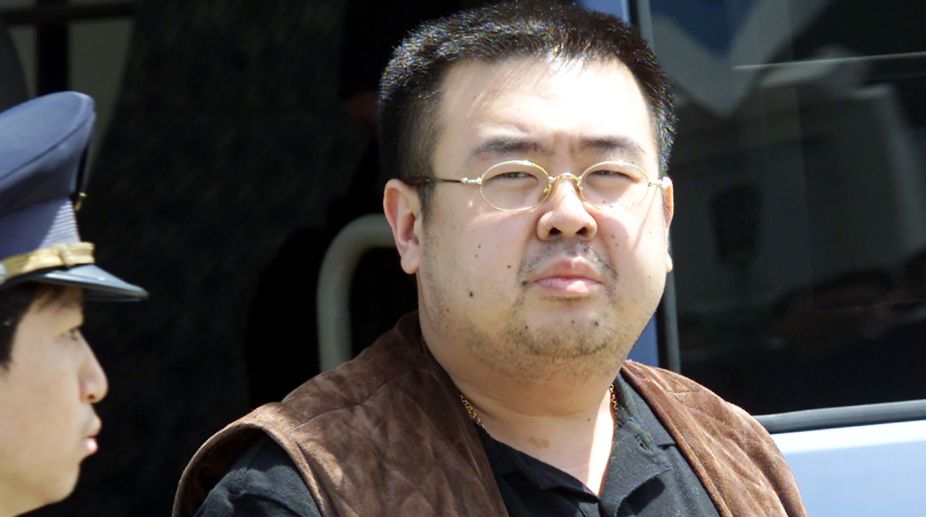
The unfortunate fate of North Korea’s ‘crown prince’

The Korea Herald/ANN | Seoul |

In May 2001, a man was rounded up after trying to smuggle himself into Narita International Airport in Tokyo, alongside his son and two women, using fake Dominican Republic passports.

The incident introduced Kim Jong-nam, the slain older half-brother of North Korean leader Kim Jong-un, to the outside world. But his yearning 16 years ago to visit Tokyo Disneyland blew his chances to succeed in the reclusive dynasty, incurring the wrath of his father and longtime strongman Kim Jong-il.

Born in 1971 to Kim Jong-il and Sung Hae-rim, a married actress with whom the late leader had an affair, Kim Jong-nam spent his childhood at international schools in Moscow and Geneva, like his brothers and sisters. After his return home, he quickly climbed the regime’s ladder, securing four-star general status in 1995 and chairing a state computer committee in charge of the country’s information technology policy in 1998.

Yet his political fate began to wane in the late 1990s after his aunt, Sung Hae-rang, took asylum in the US, following her son Lee Han-yong, who defected to South Korea via Switzerland in 1982 and was shot to death by North Korean agents in 1997. Kim Jong-nam’s parents, meanwhile, had also become estranged, as the leader had started seeing Ko Yong-hui, Kim Jong-un’s mother.

Kim Jong-nam had since lived a life in exile, transforming himself into a vocal regime critic until allegedly being slain with poison by North Korean operatives Monday in Kuala Lumpur.

Despite his fall from grace, he was believed to be managing his father’s slush funds in China, Macau and other Southeast Asian countries where he also enjoyed casinos, top hotel bars and other extravagances.

After the despot fell ill and his much younger half-brother geared up to take over, however, he raised his voice against a “third dynastic succession” during interviews with Japanese media. In 2011, he questioned the newly minted heir’s capabilities, saying, “In that young kid’s face, I can’t read at all any signs of his sense of duty, prudence and agony over the nation’s future.”

He faced an endless series of death threats, including a botched attempt in 2010 in Beijing by an agent disguised as a defector who testified to South Korean authorities that the order came from above.

Safety concerns may well have affected his absence at his father’s funeral in December 2011, as well as his decision to maintain a low profile, especially since the 2013 execution of Jang Song-thaek, his once-formidable uncle and patron.

Kim was last spotted in France last September and in 2013. His son Han-sol was studying at the Sciences Po university in Paris. Han-sol did a rare interview with a Finnish broadcaster in 2012, during which he called his uncle a “dictator.”

Yoji Komi, an editor at the Tokyo Shimbun who built personal ties with him via emails and meetings, wrote Wednesday that though Kim refrained from political remarks due to safety concerns about his son, he had told acquaintances he was going to start speaking out against the regime again once he graduates from college.

The unfortunate fate of North Korea’s ‘crown prince’

The Korea Herald/ANN | Seoul |

In May 2001, a man was rounded up after trying to smuggle himself into Narita International Airport in Tokyo, alongside his son and two women, using fake Dominican Republic passports.

The incident introduced Kim Jong-nam, the slain older half-brother of North Korean leader Kim Jong-un, to the outside world. But his yearning 16 years ago to visit Tokyo Disneyland blew his chances to succeed in the reclusive dynasty, incurring the wrath of his father and longtime strongman Kim Jong-il.

Born in 1971 to Kim Jong-il and Sung Hae-rim, a married actress with whom the late leader had an affair, Kim Jong-nam spent his childhood at international schools in Moscow and Geneva, like his brothers and sisters. After his return home, he quickly climbed the regime’s ladder, securing four-star general status in 1995 and chairing a state computer committee in charge of the country’s information technology policy in 1998.

Yet his political fate began to wane in the late 1990s after his aunt, Sung Hae-rang, took asylum in the US, following her son Lee Han-yong, who defected to South Korea via Switzerland in 1982 and was shot to death by North Korean agents in 1997. Kim Jong-nam’s parents, meanwhile, had also become estranged, as the leader had started seeing Ko Yong-hui, Kim Jong-un’s mother.

Kim Jong-nam had since lived a life in exile, transforming himself into a vocal regime critic until allegedly being slain with poison by North Korean operatives Monday in Kuala Lumpur.

Despite his fall from grace, he was believed to be managing his father’s slush funds in China, Macau and other Southeast Asian countries where he also enjoyed casinos, top hotel bars and other extravagances.

After the despot fell ill and his much younger half-brother geared up to take over, however, he raised his voice against a “third dynastic succession” during interviews with Japanese media. In 2011, he questioned the newly minted heir’s capabilities, saying, “In that young kid’s face, I can’t read at all any signs of his sense of duty, prudence and agony over the nation’s future.”

He faced an endless series of death threats, including a botched attempt in 2010 in Beijing by an agent disguised as a defector who testified to South Korean authorities that the order came from above.

Safety concerns may well have affected his absence at his father’s funeral in December 2011, as well as his decision to maintain a low profile, especially since the 2013 execution of Jang Song-thaek, his once-formidable uncle and patron.

Kim was last spotted in France last September and in 2013. His son Han-sol was studying at the Sciences Po university in Paris. Han-sol did a rare interview with a Finnish broadcaster in 2012, during which he called his uncle a “dictator.”

Yoji Komi, an editor at the Tokyo Shimbun who built personal ties with him via emails and meetings, wrote Wednesday that though Kim refrained from political remarks due to safety concerns about his son, he had told acquaintances he was going to start speaking out against the regime again once he graduates from college.

Nifty snaps 2-day fall; TCS buyback plan fires up Infosys

Statesman News Service | New Delhi |

Bulls resurfaced with a vengeance on Thursday as investors bought into front line pharma and software counters in anticipation of more gains ahead. Sentiment changing for the better after giant Tata Consultancy Services announced a plan to consider buying back its shares.

The Nifty added 51 points to close at 8,775 points snapping a two-session decline. Stocks are consolidating at 4-month highs in anticipation of fresh buying momentum and that came after TCS, India's most valuable company, informed investors its board would discuss a buy back plan on February 20. That news sparked a rally in IT stocks as also in pharma counters.

Here are the major events of the trading day:

* Sun Pharma, Infosys, Tata Motors, Maruti and Aurobindo Pharma rose 2.4-4.1 per cent and were among 37 shares that gained on the Nifty.

* ITC, Bharti Infratel, Asian Paints, BPCL and Coal India lost 0.6-2.2 per cent and were among 14 stocks to lose ground on the Nifty.

* Infosys Technologies was the top traded counter, up 3.2 per cent, on expectations it would follow its larger rival in announcing a buy back of its shares. State Bank, Colgate, TCS and Tata Motors were in heavy demand.

* Jindal Steel & Power, South Indian Bank, Vedanta, NHPC and SAIL were among the most active shares tracked on volume.

* Gains spread across the broader market with the Nifty 100, 200 and 500 indices rising 0.9 per cent and even higher gains being observed on the mid cap and small cap benchmarks.

* Sectoral benchmarks were mostly up. The maximum gains were reserved for software, pharma, auto, metals and realty stocks. Bits of selling was observed in FMCG shares and media companies.

* Cadila Healthcare, Bajaj Finance, ABB, Hindustan Zinc, Havells and Titan were some stocks that gained ground in the broader markets.

* The Sensex added 146 points to close the day at 28,301 points on the Bombay Stock Exchange. Sun Pharma was the top gainer while ITC lost the most. The maximum number of trades were seen on State Bank.

* The mood was intensely bullish in the wider market with 1,137 shares rising compared to 474 that fell in the wider market.

* Bulls ruled the roost in the derivatives segment with 153 futures gaining ground versus 26 that slipped.