Logo

2005 Delhi serial blasts: Tariq convicted, 2 others acquitted

SNS | New Delhi |

The mastermind of the 2005 Delhi serial blasts that killed over 60 people and injured about 200 was sentenced to 10 years in prison by a local court here on Thursday.

Tariq Ahmed Dar and two other accused, Mohammed Rafiq Shah and Mohammed Hussain Fazili, were acquitted of all charges.

The court in 2008 framed charges against Tariq Ahmed Dar, the mastermind, and the other two for waging war against the state, conspiring and collecting arms.

The Delhi Police chargesheeted Dar, mentioning his call details that allegedly proved he was in touch with Lashkar-e-Taiba (LeT) operatives.

The first blast took place at Paharganj, near the New Delhi railway station at around 5.38pm on October 29, 2005. Police later said the bomb was planted on a two-wheeler parked outside a chemist’s shop.

The second blast took place in a bus in south Delhi’s Govindpuri area, injuring several passengers.

The third explosion at 6.05pm took place in the Sarojini Nagar market, a business hub which remains busy with shoppers till late in the night.

Creativity to ‘light up’ Himachal prisons

Archana Phull | Shimla |

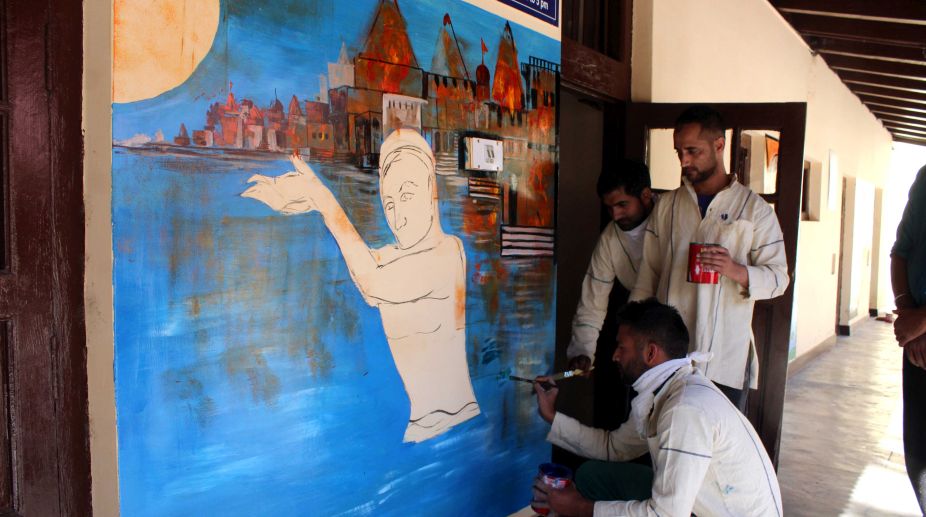
“As if I was walking in a dark tunnel. I would draw lines on the blank walls of prison, struggling to count the days .Since I got a brush in hand and was trained to paint these walls with colours and ideas, I see some light,” said 23 year old Satinder Singh, serving a life sentence in Kaithu jail for past four years.

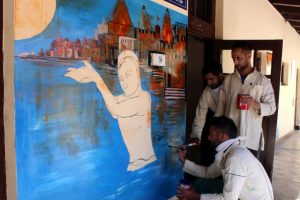
“It feels good,” said Maggar Singh, 29, another life convict as he explained the paintings on the walls of jail, which ranged from the sparkling bird Monal to abstract art on confused mind and the way out or the sand watch showing that the time passes off.

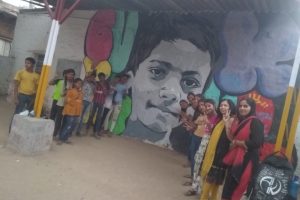
Several prisoners in Himachal jails have been trained in wall painting recently. They are now being given tips on creativity by noted artists, Ghanshyam (a Himachali) and Renu Kashyap, voluntarily.

The duo, based in Delhi, has done exhibitions in different countries, but said this exercise has attached more meaning to their art.

“The idea is to reform by engaging the prisoners in positive work. They learn with much interest as it helps them shun depression,” Director General of Prisons, Himachal Pradesh, Somesh Goel told The Statesman.

Goel said the wall painting by inmates would be taken up in all the 14 prisons in Himachal Pradesh one by one.

The state has over 2200 prisoners, including 80 women. More than half the inmates are undertrials.

Quite a number of prisoners have been involved in creative activities like poetry writing, script writing and one act plays all these years, with jail authorities helping them with required material.

Besides, most of them are involved in commercial work. They are running a bakery, food canteen and weaving woollens, meeting the market standards.

They have, however, been selling the products on their own through different outlets in the state. The government departments have shown little interest to promote the sale of products made by jail inmates in Himachal so far.

The trainings and initiative taken up pro-actively over the last year has given jail inmates the avenues of employment apart from the routine work they do in jails.

“The jail inmates engaged in different works in the state have been distributed Rs.75 lakh wages in the current year,” said the DGP.

He revealed that the enthusiasm in the inmates could be gauged from the fact that some of them have tripled their earnings by working in a double shift at the weaving factory. “They are now sending money to their families regularly.”

Goel shared that the prisons department would soon have a web portal to boost sales of the products made by inmates.

For this, a life convict, 30 year old former undergraduate student of Indian Institute of Technology (IIT), Roorkee at Kanda central jail near Shimla is already on the job of designing.


Creativity to ‘light up’ Himachal prisons

Archana Phull | Shimla |

“As if I was walking in a dark tunnel. I would draw lines on the blank walls of prison, struggling to count the days .Since I got a brush in hand and was trained to paint these walls with colours and ideas, I see some light,” said 23 year old Satinder Singh, serving a life sentence in Kaithu jail for past four years.

“It feels good,” said Maggar Singh, 29, another life convict as he explained the paintings on the walls of jail, which ranged from the sparkling bird Monal to abstract art on confused mind and the way out or the sand watch showing that the time passes off.

Several prisoners in Himachal jails have been trained in wall painting recently. They are now being given tips on creativity by noted artists, Ghanshyam (a Himachali) and Renu Kashyap, voluntarily.

The duo, based in Delhi, has done exhibitions in different countries, but said this exercise has attached more meaning to their art.

“The idea is to reform by engaging the prisoners in positive work. They learn with much interest as it helps them shun depression,” Director General of Prisons, Himachal Pradesh, Somesh Goel told The Statesman.

Goel said the wall painting by inmates would be taken up in all the 14 prisons in Himachal Pradesh one by one.

The state has over 2200 prisoners, including 80 women. More than half the inmates are undertrials.

Quite a number of prisoners have been involved in creative activities like poetry writing, script writing and one act plays all these years, with jail authorities helping them with required material.

Besides, most of them are involved in commercial work. They are running a bakery, food canteen and weaving woollens, meeting the market standards.

They have, however, been selling the products on their own through different outlets in the state. The government departments have shown little interest to promote the sale of products made by jail inmates in Himachal so far.

The trainings and initiative taken up pro-actively over the last year has given jail inmates the avenues of employment apart from the routine work they do in jails.

“The jail inmates engaged in different works in the state have been distributed Rs.75 lakh wages in the current year,” said the DGP.

He revealed that the enthusiasm in the inmates could be gauged from the fact that some of them have tripled their earnings by working in a double shift at the weaving factory. “They are now sending money to their families regularly.”

Goel shared that the prisons department would soon have a web portal to boost sales of the products made by inmates.

For this, a life convict, 30 year old former undergraduate student of Indian Institute of Technology (IIT), Roorkee at Kanda central jail near Shimla is already on the job of designing.

Hard time for ‘restless’ Sasikala in Bengaluru jail

IANS | Bengaluru |

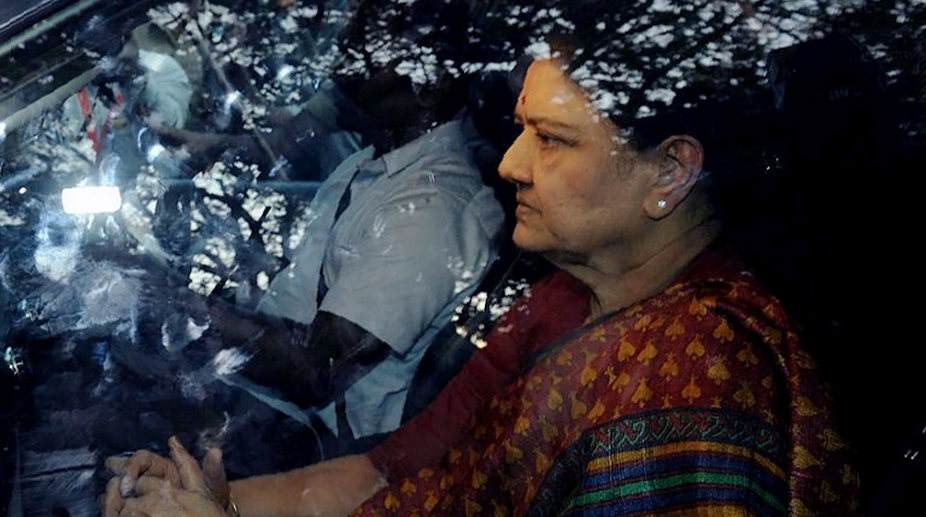
AIADMK General Secretary VK Sasikala had a hard time in the Central Jail here as she could not sleep and was restless at night, a party leader said on Thursday.

"Chinnamma could not sleep well and was restless as she had to sleep on the floor in a 10×8 feet ordinary cell in the women's barracks after jail officials denied her request for a mattress," the AIADMK's Karnataka unit Secretary, V Pugazhendhi, told reporters.

As the trial court denied Sasikala's demand for some privileges, including home food, she refused to have supper on Wednesday night though she was served two rotis, one ragi ball, 200 gm rice and 150 gm sambar (lentil) like all other inmates.

"When Saskiala's sister-in-law and co-convict Elavarasi cajoled her to have food in view of her weak health, she took rice with sambar and butter milk," a jail source said on the condition of anonymity.

The judge also rejected Sasikala's request for a special room for prayers and yoga, A-class facilities and an attached toilet-cum-bathroom. She was given a plate, a tumbler and a blanket.

Before entering the cell, she deposited her valuables at the counter and recorded the 21 days she spent earlier in the prison as per the procedure.

Expressing anguish over her plight and harsh conditions in which women inmates live in prisons, Pugazhendi said Sasikala woke up early (5am), did yoga and walked in the barracks for a while.

"She also read a couple of Tamil newspapers, had lemon rice for breakfast at 7.30am and a frugal meal (sambar rice) for lunch at 12.30," said Pugazhendi.

Saskiala, 59, surrendered before the trial court here on Wednesday evening and entered the jail premises before 6 pm after the Supreme Court declined her plea for more time to give herself up.

As trial court judge Ashwath Narayana denied her privileges she sought on health grounds, Sasikala was lodged in a 10×8 feet cell in the women's barracks.

This is the second time Sasikala, her sister-in-law Elavarasi and nephew VK Sudhakaran are serving their four-year sentence in the jail after being held guilty for corruption in a two decade-old illegal wealth case.

The three were in the same jail from September 27 to October 18, 2014 after the trial court held them guilty along with late Tamil Nadu Chief Minister Jayalalithaa, who died on December 5 in Chennai.

Hard time for ‘restless’ Sasikala in Bengaluru jail

IANS | Bengaluru |

AIADMK General Secretary VK Sasikala had a hard time in the Central Jail here as she could not sleep and was restless at night, a party leader said on Thursday.

"Chinnamma could not sleep well and was restless as she had to sleep on the floor in a 10×8 feet ordinary cell in the women's barracks after jail officials denied her request for a mattress," the AIADMK's Karnataka unit Secretary, V Pugazhendhi, told reporters.

As the trial court denied Sasikala's demand for some privileges, including home food, she refused to have supper on Wednesday night though she was served two rotis, one ragi ball, 200 gm rice and 150 gm sambar (lentil) like all other inmates.

"When Saskiala's sister-in-law and co-convict Elavarasi cajoled her to have food in view of her weak health, she took rice with sambar and butter milk," a jail source said on the condition of anonymity.

The judge also rejected Sasikala's request for a special room for prayers and yoga, A-class facilities and an attached toilet-cum-bathroom. She was given a plate, a tumbler and a blanket.

Before entering the cell, she deposited her valuables at the counter and recorded the 21 days she spent earlier in the prison as per the procedure.

Expressing anguish over her plight and harsh conditions in which women inmates live in prisons, Pugazhendi said Sasikala woke up early (5am), did yoga and walked in the barracks for a while.

"She also read a couple of Tamil newspapers, had lemon rice for breakfast at 7.30am and a frugal meal (sambar rice) for lunch at 12.30," said Pugazhendi.

Saskiala, 59, surrendered before the trial court here on Wednesday evening and entered the jail premises before 6 pm after the Supreme Court declined her plea for more time to give herself up.

As trial court judge Ashwath Narayana denied her privileges she sought on health grounds, Sasikala was lodged in a 10×8 feet cell in the women's barracks.

This is the second time Sasikala, her sister-in-law Elavarasi and nephew VK Sudhakaran are serving their four-year sentence in the jail after being held guilty for corruption in a two decade-old illegal wealth case.

The three were in the same jail from September 27 to October 18, 2014 after the trial court held them guilty along with late Tamil Nadu Chief Minister Jayalalithaa, who died on December 5 in Chennai.

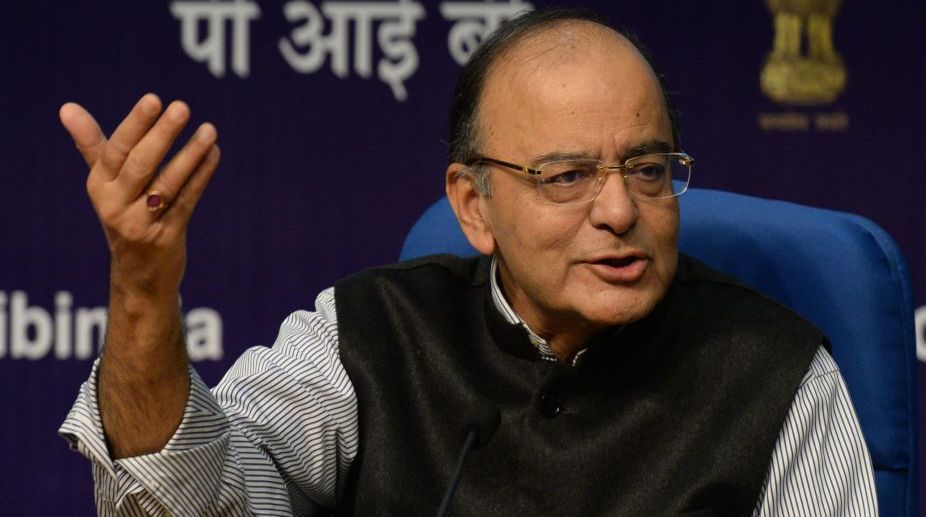
Remonetisation process almost complete: Jaitley

PTI | Ranchi |

The remonetisation situation with regard to replenishing the scrapped currency is "almost normal" now and the Reserve Bank is monitoring the supply on a daily basis, Finance Minister Arun Jaitley said on Thursday.

"As far as remonetisation is concerned, the situation is almost normal and RBI is monitoring the currency supply position on daily basis," he said.

The government had withdrawn legal tender character of old Rs.500 and Rs.1,000 notes on November 2016 with an aim to check black money, counterfeit notes and terror financing. The government is now pushing and incentivising digital payments.
Talking to reporters on the sidelines of 'Momentum Jharkhand Global Investors' Summit 2017 here, Jaitley said cash economy has many vices as it leads to crime and tax evasion.

Therefore there was need to change the way the trade and commerce is undertaken in the country, he added.

When asked about the amount of scrapped currency received by banks post demonetisation, the Finance Minister said RBI Governor Urjit Patel had recently informed that the central bank would disclose the figure only after the process of currency verification is complete.

"Whatever time is required, RBI will take that much time.I would not like to say anything thing beyond that," Jaitley said.

To a query on discrimination on royalty payment on minerals, Jaitley said it is done based on defined rule.

Remonetisation process almost complete: Jaitley

PTI | Ranchi |

The remonetisation situation with regard to replenishing the scrapped currency is "almost normal" now and the Reserve Bank is monitoring the supply on a daily basis, Finance Minister Arun Jaitley said on Thursday.

"As far as remonetisation is concerned, the situation is almost normal and RBI is monitoring the currency supply position on daily basis," he said.

The government had withdrawn legal tender character of old Rs.500 and Rs.1,000 notes on November 2016 with an aim to check black money, counterfeit notes and terror financing. The government is now pushing and incentivising digital payments.
Talking to reporters on the sidelines of 'Momentum Jharkhand Global Investors' Summit 2017 here, Jaitley said cash economy has many vices as it leads to crime and tax evasion.

Therefore there was need to change the way the trade and commerce is undertaken in the country, he added.

When asked about the amount of scrapped currency received by banks post demonetisation, the Finance Minister said RBI Governor Urjit Patel had recently informed that the central bank would disclose the figure only after the process of currency verification is complete.

"Whatever time is required, RBI will take that much time.I would not like to say anything thing beyond that," Jaitley said.

To a query on discrimination on royalty payment on minerals, Jaitley said it is done based on defined rule.

Russia warns US ahead of military chiefs’ meeting

AFP | Moscow |

Russia's defence minister on Thursday warned Washington not to try to negotiate with Moscow "from a position of strength" ahead of the first meeting between their military chiefs since Donald Trump became US president.

"We are ready to restore cooperation with the Pentagon," minister Sergei Shoigu said in a statement.

"But attempts to build a dialogue from a position of strength in relation to Russia have no prospects." 

Shoigu was responding to a comment to NATO by new Pentagon chief James Mattis on Wednesday in which he said Washington wanted to make sure its diplomats had the upper hand in any talks with Russia.

"We remain open to opportunities to restore a cooperative relationship with Moscow, while being realistic in our expectations and ensuring our diplomats negotiate from a position of strength," Mattis said in Brussels.

The comments come as the Chairman of the US Joint Chiefs of Staff Joe Dunford is set to hold talks with his Russian counterpart Valery Gerasimov in Azerbaijan's capital Baku.

The meeting takes place as Trump's administration battles to fend off reports that aides had repeated contact with Russian intelligence during the presidential campaign.

Ties between Russia and the US have slumped to their lowest point since the Cold War over Moscow's meddling in Ukraine and intervention in Syria.

Trump has repeatedly held out the prospect of cooperating with Russia in the fight against the Islamic State group, a goal that the Kremlin has long been pushing for.

The United States insisted, however, that Wednesday's meeting between the military bosses was not political in nature and had been planned for months.

The Pentagon said the two men will discuss "the importance of consistent and clear military-to-military communication to prevent miscalculation and potential crises".

The two sides currently have a system set up to help them avoid any confrontations in the air over Syria where both nations are flying bombing campaigns.

Russia warns US ahead of military chiefs’ meeting

AFP | Moscow |

Russia's defence minister on Thursday warned Washington not to try to negotiate with Moscow "from a position of strength" ahead of the first meeting between their military chiefs since Donald Trump became US president.

"We are ready to restore cooperation with the Pentagon," minister Sergei Shoigu said in a statement.

"But attempts to build a dialogue from a position of strength in relation to Russia have no prospects." 

Shoigu was responding to a comment to NATO by new Pentagon chief James Mattis on Wednesday in which he said Washington wanted to make sure its diplomats had the upper hand in any talks with Russia.

"We remain open to opportunities to restore a cooperative relationship with Moscow, while being realistic in our expectations and ensuring our diplomats negotiate from a position of strength," Mattis said in Brussels.

The comments come as the Chairman of the US Joint Chiefs of Staff Joe Dunford is set to hold talks with his Russian counterpart Valery Gerasimov in Azerbaijan's capital Baku.

The meeting takes place as Trump's administration battles to fend off reports that aides had repeated contact with Russian intelligence during the presidential campaign.

Ties between Russia and the US have slumped to their lowest point since the Cold War over Moscow's meddling in Ukraine and intervention in Syria.

Trump has repeatedly held out the prospect of cooperating with Russia in the fight against the Islamic State group, a goal that the Kremlin has long been pushing for.

The United States insisted, however, that Wednesday's meeting between the military bosses was not political in nature and had been planned for months.

The Pentagon said the two men will discuss "the importance of consistent and clear military-to-military communication to prevent miscalculation and potential crises".

The two sides currently have a system set up to help them avoid any confrontations in the air over Syria where both nations are flying bombing campaigns.

TCS likely to buyback shares to boost shareholder returns

Shailendra Bhatnagar/SNS | New Delhi |

Tata Consultancy Services will consider a proposal to buy back its shares from the market as the software developer seeks to put a floor under its stock and stave off criticism from activist shareholders seeking a better return on their investment.

TCS, sitting on a cash pile of more than Rs.29,000 crore, informed the exchanges on Thursday that its board will consider a proposal to buy back shares in its meeting slated for February 20. Mumbai-based TCS is the first software company to discuss a buy back in an overall tepid business environment for technology companies. TCS, valued at Rupees 4.82 lakh crore, has slumped 13 per cent from its most recent high of 2,840 rupees, stuck in October 2014. The stock has fallen due to inclement global economic conditions. TCS` most recent low was of 2,069 rupees a share, hit in early November as the broader markets contracted in the face of the government's surprise demonetization move.

The move to consider a buy back by the Tata Group, which controls 73.4 per cent equity in TCS, comes against the backdrop of an embarrassing public battle ongoing between the founders of smaller rival Infosys Technologies Ltd. and the company's board. Infosys' founder N R Narayana Murthy is butting heads with the chairman and the CEO of Infosys on how to manage costs and provide a better return to shareholders. Infosys, sitting on $5 billion in cash, has often been criticised by some institutional investors that it should either return a part of this cash hoard to investors via a one-time dividend or institute a share buyback plan to boost value for remaining shareholders.

Infosys surged 3.1 per cent to 1,012 rupees as investors speculated that TCS' move would force Infosys to announce a similar buy back.

Technology companies, which disgorge large amounts of cash from ongoing operations, have traditionally kept liquid cash on their balance sheets in a bid to have a cushion during economic downturns and also keep their powder dry in case a good acquisition comes up. Infosys, for example, raised cash by selling fresh capital in 1999 to create a fund for a large scale acquisition. That plan is yet to fructify after 16 years and the company's cash pile has grown dramatically over the last decade. A large amount of cash results in deterioration of operating ratios and leads to longer term shareholders being short changed.

“We need to decide what is the safe amount of cash that we should retain,'' Natarajan Chandrasekaran, Chairman-Designate of Tata Sons, the parent of TCS, said. “We have to keep a minimum amount of comfort.'' 

Chandrasekaran was the Chief Executive Officer of TCS before being elevated as chairman of Tata Sons earlier this year. The philanthropic Tata Group also depends upon its cash cow TCS to keep making substantial dividend payouts to fund its social obligations.

India's export oriented technology sector is being buffeted by a global headwind of lower tech spending and an increasingly hostile business environment in the United States, the main market for their services.  US President Donald Trump, in a bid to save local jobs, has taken steps to limit companies such as TCS and Infosys from sending relatively cheaper Indian software coders to the United States. It is in this kind of uncertainty that tech CEOs prefer the safety of cash on their balance sheets instead of instituting buy backs or paying one time dividends.

It is this level of uncertainty that also prompted industry body NASSCOM from giving its annual forecast of the sector's growth trajectory. Investors, too, have acted upon this unpredictability, which is visible in the 11 per cent fall in the sector benchmark over the last 8 months.

TCS rose 1.5 per cent higher at 2,450 rupees with Rupees 512 crore worth of shares changing hands on the National Stock Exchange. The stock has been one of the biggest wealth creators for long term investors since it got listed in 2004

TCS likely to buyback shares to boost shareholder returns

Shailendra Bhatnagar/SNS | New Delhi |

Tata Consultancy Services will consider a proposal to buy back its shares from the market as the software developer seeks to put a floor under its stock and stave off criticism from activist shareholders seeking a better return on their investment.

TCS, sitting on a cash pile of more than Rs.29,000 crore, informed the exchanges on Thursday that its board will consider a proposal to buy back shares in its meeting slated for February 20. Mumbai-based TCS is the first software company to discuss a buy back in an overall tepid business environment for technology companies. TCS, valued at Rupees 4.82 lakh crore, has slumped 13 per cent from its most recent high of 2,840 rupees, stuck in October 2014. The stock has fallen due to inclement global economic conditions. TCS` most recent low was of 2,069 rupees a share, hit in early November as the broader markets contracted in the face of the government's surprise demonetization move.

The move to consider a buy back by the Tata Group, which controls 73.4 per cent equity in TCS, comes against the backdrop of an embarrassing public battle ongoing between the founders of smaller rival Infosys Technologies Ltd. and the company's board. Infosys' founder N R Narayana Murthy is butting heads with the chairman and the CEO of Infosys on how to manage costs and provide a better return to shareholders. Infosys, sitting on $5 billion in cash, has often been criticised by some institutional investors that it should either return a part of this cash hoard to investors via a one-time dividend or institute a share buyback plan to boost value for remaining shareholders.

Infosys surged 3.1 per cent to 1,012 rupees as investors speculated that TCS' move would force Infosys to announce a similar buy back.

Technology companies, which disgorge large amounts of cash from ongoing operations, have traditionally kept liquid cash on their balance sheets in a bid to have a cushion during economic downturns and also keep their powder dry in case a good acquisition comes up. Infosys, for example, raised cash by selling fresh capital in 1999 to create a fund for a large scale acquisition. That plan is yet to fructify after 16 years and the company's cash pile has grown dramatically over the last decade. A large amount of cash results in deterioration of operating ratios and leads to longer term shareholders being short changed.

“We need to decide what is the safe amount of cash that we should retain,'' Natarajan Chandrasekaran, Chairman-Designate of Tata Sons, the parent of TCS, said. “We have to keep a minimum amount of comfort.'' 

Chandrasekaran was the Chief Executive Officer of TCS before being elevated as chairman of Tata Sons earlier this year. The philanthropic Tata Group also depends upon its cash cow TCS to keep making substantial dividend payouts to fund its social obligations.

India's export oriented technology sector is being buffeted by a global headwind of lower tech spending and an increasingly hostile business environment in the United States, the main market for their services.  US President Donald Trump, in a bid to save local jobs, has taken steps to limit companies such as TCS and Infosys from sending relatively cheaper Indian software coders to the United States. It is in this kind of uncertainty that tech CEOs prefer the safety of cash on their balance sheets instead of instituting buy backs or paying one time dividends.

It is this level of uncertainty that also prompted industry body NASSCOM from giving its annual forecast of the sector's growth trajectory. Investors, too, have acted upon this unpredictability, which is visible in the 11 per cent fall in the sector benchmark over the last 8 months.

TCS rose 1.5 per cent higher at 2,450 rupees with Rupees 512 crore worth of shares changing hands on the National Stock Exchange. The stock has been one of the biggest wealth creators for long term investors since it got listed in 2004

Palaniswami takes oath as Tamil Nadu CM

SNS | New Delhi |

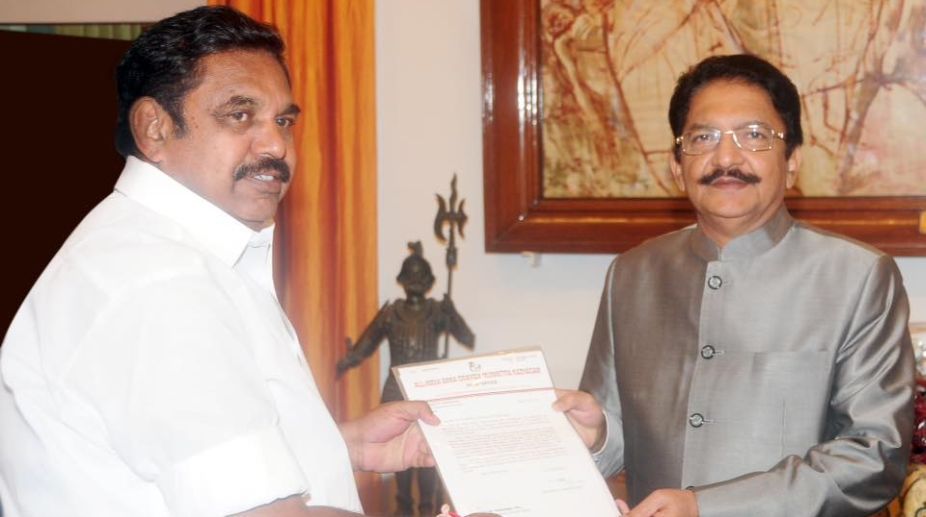
Loyalist of jailed AIADMK General Secretary VK Sasikala, E Palaniswami was on Thursday sworn in as the new Chief Minister of Tamil Nadu, bringing an end to weeks of political turmoil.

The AIADMK Legislature Party leader will retain most of the ministers from outgoing Tamil Nadu Chief Minister O Panneerselvam's cabinet in his 31-member ministry.

Among others, Palaniswami will hold portfolios of Home and Finance, besides Public Works, Highways and Minor Ports, which he had managed as a minister in the Jayalalithaa and Panneerselvam cabinets, sources said.

Governor C Vidyasagar Rao had invited Palaniswami, 64, earlier elected by AIADMK MLAs backing Sasikala as their legislature party leader, to form a ministry "at the earliest" and win a trust vote within 15 days.

The move came a day after Palaniswami met the Governor and submitted a list of legislators backing him.

The Governor's invitation set off celebrations in the Sasikala camp even as outgoing acting Chief Minister O Panneerselvam pledged to continue his fight against "one family" taking over the AIADMK.

Panneerselvam said people were angry that a new government was being formed with the support of legislators who, he said, were held for days in captivity at a resort near here.

(With inputs from agencies)

Sharmila files papers from Manipur’s Thoubal seat

IANS | Imphal |

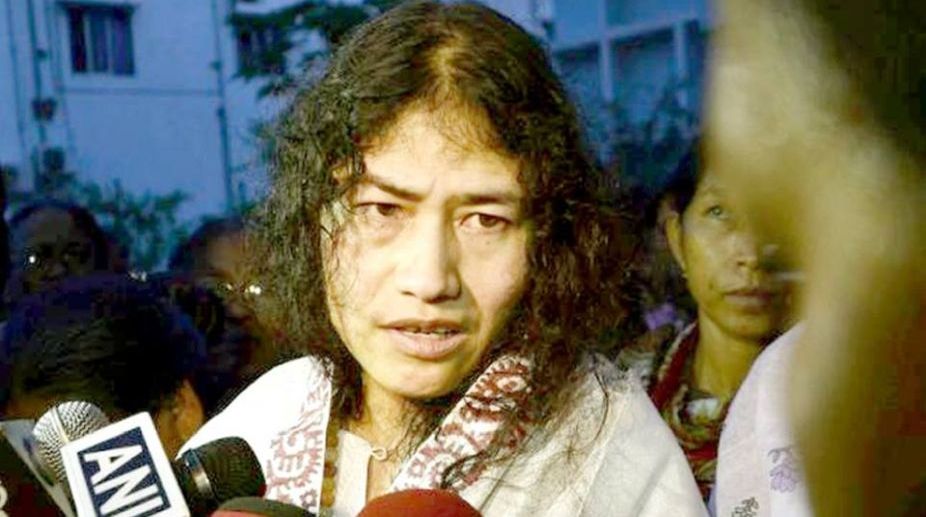
'Iron Lady' Irom Sharmila on Thursday filed her nomination papers to contest from Thoubal constituency in the Manipur Assembly elections.

"I am fighting the chief minister. I want to become the chief minister to repeal the AFSPA. I will work for economic independence and other welfare measures for the people," said Sharmila, who came in international limelight by continuing her fast-unto-death for 16 years to demand the repeal of the Armed Forces (Special Powers) Act, 1958.

The civil rights activist, a greenhorn in electoral battle, will be pitted against Congress candidate and Chief Minister Okram Ibobi Singh.

Thursday was the last day for filing the papers. The two-phased elections are slated to be held on March 4 and 8.

The 44-year-old Sharmila ended her indefinite hunger strike in August last year. She launched People's Resurgence and Justice Alliance in October last and said she will fight elections from Thoubal as well as Khurai, from where she hails.

Chief Minister Okram Ibobi Singh, who also filed his nomination papers on Thursday, wished her luck.

"It is her democratic right to contest elections. My best wishes are with her," he said.

IBPS SO VI results 2017: Check score cards at ibps.in

SNS | New Delhi |

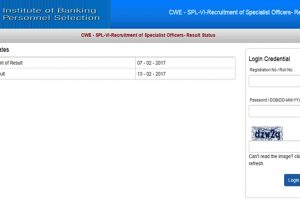
The Institute of Banking Personnel Selection (IBPS) has released the results of Specialist Officer VI recruitment exam 2017 on its official website ibps.in.

The institute had conducted the examination on January 28-29, and it was held to fill over 4,000 posts in the cadre.

The selection of the candidates will be done against the posts of IT Officer (Scale-I), Agricultural Field Officer (Scale I), Rajbhasha Adhikari (Scale I), Officer (Scale I), HR/Personnel Officer (Scale I) and Marketing Officer (Scale I).

Goa bankers to join nationwide strike on February 28

IANS | Panaji |

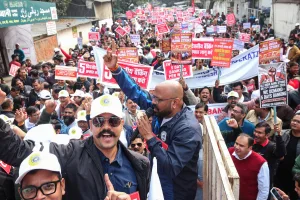
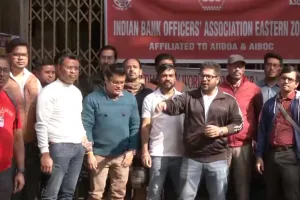
Bank employees in Goa would join the nationwide strike on February 28 against demonetisation and other "ill-conceived" reforms measures in the banking sector.

The costs incurred by banks due to the prolonged demonetisation exercise need to be reimbursed to banks by the central government, A M Pereira, General Secretary of the Goa Bank Employee's Association, said in a statement on Thursday.

The government had ignored the "real menace" of the banking industry, which is the increasing quantum of bad loans, he said.

"The cost of demonetisation as well as the business loss during the demonetisation period of nearly two months will have a cascading effect on the balance sheets of the banks, the brunt of which would ultimately fall on the bank employees and officers alone."

The association also said that the effort put in by the bank employees to make the demonetisation exercise work, was also not given due recognition.

"It is a pity that the day and night hard work and suffering of bank employees and officers are not given due recognition," the statement quoting Pereira added.

"Officers were also made to work for long hours and on Sundays and holidays without compensation or with notional payment," Pereira said.

"The whole country has so far witnessed that the method of evading repayment also is maximum done by the big and corporate borrowers. The economy of the country is affected. There is a need to fix accountability of those responsible for the bad loans. Criminal action against willful defaulters of bank loans can only reduce such types of irregularities in the banking industry."

MBA 2017: Admissions begin at Dibrugarh University, apply now at http://entrance.cmsdu.org

SNS | New Delhi |

Dibrugarh University has on Thursday released admission notification to invite applications from candidates to apply for Master of Business Administration (MBA) programme for the academic session 2017-18.

The last date for submission of application forms is March 9 and the entrance test will be held on March 11. Candidates can apply now at http://entrance.cmsdu.org.
Aspiring candidates must hold a Bachelor's degree in any discipline, except music and fine arts, from a recognised Indian university with at least 50 per cent aggregate marks (45 per cent for SC/ST candidates).
Candidates have to take the MAT (Management Aptitude Test) examination conducted by All India Management Association or Common Admission Test(CAT) conducted by IIMs or Common Management Admission Test(CMAT) conducted by the AICTE.

Candidates who have obtained a minimum MAT/CAT/CMAT score or already have a valid MAT/CAT/CMAT score will be called for group discussion and personal interview.

Haryana decides scheme for augmentation of drinking water supply

Statesman News Service | Chandigarh |

The Haryana government has decided to implement a scheme for augmentation of drinking water supply in 84 villages, officials said on Thursday.

Spread across two blocks in Palwal district and one block in Faridabad district, the villages will get water through wells and tube wells.

The National Bank for Agriculture and Rural Development (NABARD) has approved a financial assistance of Rs 185 Crore, as 85 per cent of the project cost of its implementation.

Minister of State for Public Health Engineering, Banwari Lal said that this project has been approved to tackle problem of salinity, excess fluoride and non availability of sufficient ground water in the villages.

He said that the project would be completed within a period of three years and would benefit the population of 4.70 lakh.

Apart from this, the prospective population of about 10.20 lakh persons in these villages would be benefited with safe drinking water, which would have a direct effect in improving the health of the people, leading to improvement in the socio-economic conditions and productivity. 

He said the existing ground water was getting recharged from the perennial river Yamuna, yet due to over exploitation, the hydraulic line of sweet water was receding and the quality of water in many of the villages had deteriorated.