Logo

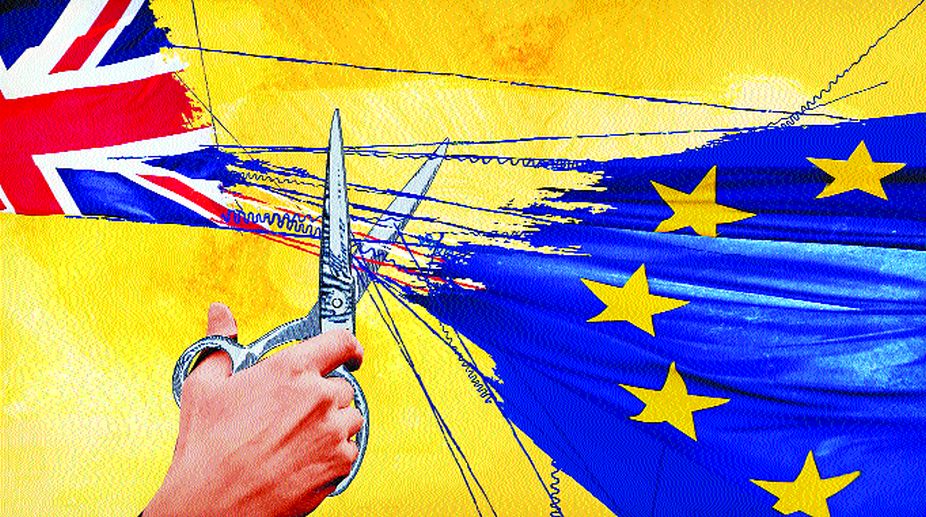
The Brexit ruling

Joyeeta Banerjee, Rajdeep Banerjee |

The European Union can trace its origin to the European Coal and Steel Community (ECSC) established in 1951 by the Treaty of Paris and signed by six states. Then in 1957 the Treaty of Rome creating the European Economic Community (EEC) was signed. In 1973, United Kingdom became a member of the EEC. The act of accession was based on Royal prerogative and did not require Parliamentary approval. The EEC law became a part of the domestic law of UK in accordance with the European Communities Act, 1972 (ECA) which was passed by Parliament few months before the joining. 

ECA 1972 gave effect to binding obligations and rights arising under the treaties. Section 2(1) of the Act provides "all such rights, powers, liabilities, obligations and restrictions from time to time created or arising by or under the Treaties, and all such remedies and procedures from time to time provided for by or under the Treaties, as in accordance with the Treaties are without further enactment to be given legal effect or used in the UK shall be recognised and available in law, and be enforced, allowed and followed accordingly." Then the Maastricht Treaty established the European Union (EU) in 1993. The Treaty on European Union (TEU) and the Treaty on the Functioning of the European Union (TFEU) along with their attached protocols and declarations are principal foundations of the EU. 

The European Court of Justice (ECJ) is the Apex Court in matters of European Union Law and it interprets EU law and ensures its equal applicability across all EU members. It was established by the Treaty of Rome in 1952 and the Amsterdam Treaty substantially increased its power. The conflict between EU law and domestic law has always been a contentious issue. 

Long back in 1964, the ECJ in Costa v ENEL [1964]ECR585 held that an individual could challenge a national law on the basis of its alleged incompatibility with European Community (EC) law. It declared that law stemming from the treaty, an independent source of law, could not, because of its special and original nature, be overridden by domestic legal provisions without being deprived of its character as community law and without the legal basis of the community itself being called into question. 

Again in Simmenthal [1978]ECR629 the Court held that provisions of national law which are incompatible with the European Union law will have to be set aside.

Factortame cases were very influential in the sense that for the first time the importance of EU law in UK domestic courts was bought to the forefront. The genesis of the dispute was the Merchant Shipping Act, 1988 (MSA) which mandated UK fishing vessels to be 75 per cent UK owned. A company of Spanish fisherman claimed that such a claim breached EU law and hence was invalid. Both the Divisional Court and the House of Lords (HL) held that English law did not contain any rule allowing a preliminary injunction against an act of Parliament even though it contradicted EU law.

Refusing the grant of interim relief, HL referred the question to the ECJ [R v Secretary of State for Transport, ex p. Factortame Ltd (No. 1) [1989] UKHL 1]. The ECJ in Factortame Ltd (No.2) [1990] 2 Lloyd's Rep 351 held that a national court had a duty to grant interim relief to safeguard alleged Community rights of individuals until the decision of the ECJ on the interpretation of Community law is available. 

In light of the ECJ ruling, HL in R v Secretary of State for Transport, ex p. Factortame (Interim Relief Order) [1990] UKHL 7 granted an interim injunction. It also observed that in passing ECA, 1972 any rule of national law could be overridden if found to be in conflict with any directly enforceable rule of community law. The ECJ then in Queen v Secretary of State for Transport, ex parte Factortame Ltd and others. [1991] 2 Lloyd's Rep 648 ruled that nationality requirements in the MSA were discriminatory and contrary to various articles of community law as it was a restriction on the freedom of establishment. 

Back in the UK the Court for a third time referred the matter back to the ECJ for deciding the conditions under which a Member State may incur liability for damage caused to individuals by breaches of Community law attributable to that State. This case was joined with Brasserie du Pecheur SA v Bundesrepublik Deutschland before the ECJ. 

Nine Justices of the ECJ in [1996] QB 404 en banc affirmed the right of reparation (approving the earlier judgment of Francovich v Italian Republic [1991] E.C.R. I-5357). It held that this right existed irrespective of whether the provision of Community law in question had direct effect. Also the principle applied to any case where a State breached Community law, irrespective of which organ of the State was responsible for the breach. Back to the Divisional Court, the Court held that the UK Government did commit a serious breach of community law in passing the provision of MSA and thus Factortame was to be compensated [1997] Eu.L.R. 475. The Court of Appeal [(1998) Eu.L.R.456] as well as the House of Lords [[1999] 4 All ER 906] upheld the order in favour of Factortame and thus these cases solidly founded the supremacy of EU laws over UK Laws.

On the Brexit issue, the UK Parliament passed the European Union Referendum Act in December 2015. A majority voted for leaving the EU. Referendum on EU membership is not legally binding but merely advisory. Thereafter question arose about the mode by which UK could leave the Union. The question before the courts concerned the steps which were required as a matter of UK domestic law before the process of leaving the EU could be initiated. 

Regarding the exit of any Member from the EU, the Lisbon Treaty in 2009 provided a route. Article 50 of the TEU provides that any member state may decide to withdraw from the Union in accordance with its own constitutional requirements. This provision displaced rules under public international law allowing a state party to denounce or withdraw from a treaty. Also Article 50(2) dictates that the member state must notify the European Council of its intention to leave. This notice cannot be given in qualified or conditional terms and once given it cannot be withdrawn. It is no doubt a sovereign function of the state to leave the EU. Also how the State reaches the decision is left to the national constitutional law. 

The European Union law is not concerned with it.  More specifically the question was whether a formal notice of withdrawal could lawfully be given by the UK government without prior legislation passed in the both houses of Parliament and assented by the queen. Whether the executive can bring about changes in domestic law by exercising the powers at the international level was the main issue before the law courts. 

The Divisional Court of England and Wales in  768 (Admin) ruled against the Secretary of State. The appeal was decided by the House of Lords in R (on the application of Miller and anr.) v Secretary of State for Exiting the European Union [2017] UKSC 5. 

The House of Lords observed that UK does not have a written constitution. But its constitutional arrangements are a combination of statutes, events, conventions and judicial decisions. Initially sovereignty primarily vested in the crown. The Bill of Rights (1688), Act of Settlement (1701), and the Act of Union (1706) were some landmark statutes which along with certain events which curtailed the Royal prerogatives and most of the powers became vested in the three principal organs of the state, legislature (two Houses of Parliament), executive and judiciary. Parliamentary democracy and the rule of law gradually developed and Parliamentary sovereignty became a fundamental principle of the UK constitution. 

As early as in the Case of Proclamations (1610) 12 Co Rep 74, Sir Edward Coke CJ said that the King by his proclamation or other ways cannot change any part of the common law, or statute law, or the customs of the realm. Even the Crown's administrative powers are now exercised by the executive, i.e. by ministers who are answerable to the UK Parliament. Even delegated legislation if not authorised by statute will be invalid even if they have been approved by resolutions of both Houses under the provisions of the relevant enabling Act [R(The Public Law Project) v Lord Chancellor [2016] AC 1531].

As held in Burmah Oil Co (Burma Trading) Ltd v Lord Advocate [1965] AC 75 Royal prerogative is only available for a case not covered by statute. This prerogative is now mostly restricted to declaring war and peace, diplomatic relations and making treaties. Any prerogative power may be curtailed by statute either expressly or by necessary implication (R v Secretary of State for the Home Department, Ex p Fire Brigades Union [1995] 2 AC 513 and AG v De Keyser’s Royal Hotel Ltd [1920] AC 508). Royal prerogative does not enable ministers to change statute law or common law [R(Bancoult) v Secretary of State for Foreign and Commonwealth Affairs (No 2) [2009] AC 453]. Also the power cannot be used to prevent the operation of a statute [Laker Airways Ltd v Department of Trade [1977] QB 643]. 

The power to terminate or withdraw from treaties is a part of the treaty-making prerogative [JH Rayner (Mincing Lane) Ltd v Department of Trade and Industry [1990] 2 AC 418]. Such power is not reviewable even by the courts [Council of Civil Service Unions v Minister for the Civil Service [1985] AC 374]. But the House of Lords in the present case observed that the decision to withdraw from the EU is not merely a decision relating to foreign affairs. 

UK follows a dualist approach which means that international law and domestic law operate in independent spheres. Treaties between sovereign states have effect in international law and are not governed by domestic law [Secretary of State in Council of India v Kamachee Boye Sahaba (1859) 13 Moo PCC 22]. Also treaties are not part of UK law and hence give rise to no legal rights or obligations in domestic law. Thus treaties are not self-executing and not part of English law unless and until they have been incorporated by statute. 

The 1972 Act authorised a dynamic process by which, without further primary legislation, EU law not only became a source of UK law, but actually took precedence over all domestic sources of UK law, including statutes. Thus EU law in EU Treaties and EU legislation passed into UK law. It is the EU institutions which are the relevant source of EU law. 

Dismissing the appeal, the House of Lords taking note of the observations in earlier cases like Blackburn v Attorney General [1971] 1 WLR 1037, Macarthys Ltd v Smith [1981] ICR 785, Pham v Secretary of State for the Home Department [2015] 1 WLR 1591, R (Shindler) v Chancellor of the Duchy of Lancaster [2016] 3 WLR 1196 thus held that as the EU Treaties not only concerned the international relations of UK, they were a source of domestic law and a source of domestic legal rights, the Royal prerogative to make and unmake treaties which operated wholly on the international plane could not be exercised in relation to the EU Treaties, at least in the absence of domestic sanction in appropriate statutory form. Thus prior parliamentary sanction is must before the Government can trigger Article 50.

The writers are Mumbai-based advocates and legal consultants.
Russian baby in Trump’s bathtub

Jawed Naqvi |

It is a strange anomaly. Whenever India or Pakistan, or both, go into the cobra pose, hissing invectives and threatening to decimate each other, including with nuclear weapons, the world cries foul.

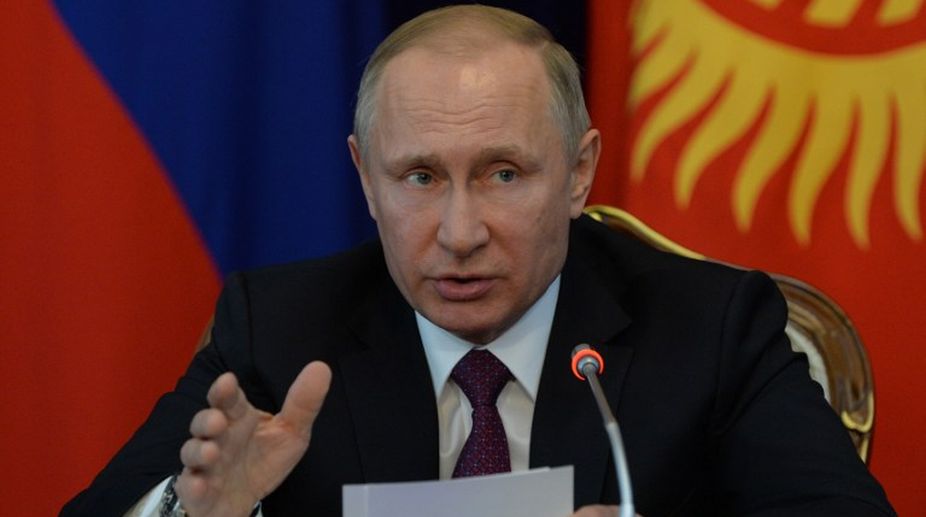
When Nawaz Sharif visits Delhi or when Narendra Modi drops in uninvited at a Lahore wedding, Indian and Pakistani peaceniks applaud together with the worried world. Yet, when Donald Trump wants to improve his country’s troubled relations with Vladimir Putin he is pilloried for even making the suggestion.

Granted he is not gender sensitive, that he has wronged and abused women and his mindset is possibly racist, driven by acute Islamophobia. I would liken Russia in this equation to the baby in Trump’s dirty bathtub. The deep state that contrived lies to invade Iraq or exulted in the wrecking of Libya, in cahoots with the media, seems to be facing an existential crisis with Trump’s presidency over his plans to touch base with Putin.

One day Trump excelled himself in his collaring of the deep state, which includes all major parties and the media. He said something to the effect that his country’s image was not exactly squeaky clean when it came to shedding blood around the world. That was his response to a Fox TV question about Putin’s alleged bloodlust as seen in the military operations in Aleppo.

Trump’s blunt criticism of his country’s savage moments has been at par with Reverend Jeremiah Wright, the priest who baptised Barack Obama’s children. When in a fit of rage over an Israeli assault on Palestinian camps he yelled ‘goddamn America’ Obama cut off ties with the African American priest.

Then suddenly it began to rain scams on Trump. So and so met the Russian ambassador. So and so made eye contact with him. Trump’s attorney general is said to have a racist background. That was forgiven or grudgingly gulped down. Instead his alleged dalliances with Russian diplomats and/or businessmen were picked up for censure.
A wider conspiracy was unleashed to torpedo the new president’s still unwavering plans to improve relations with Putin. BBC dug out dirt on the Russians, which they are good at. Russia was a British quarry, which became America’s bête noire.

Cut to the day when Prime Minister Theresa May sauntered into Washington and Ankara recently and the media said she was fixing business deals. They omitted the fact that both her destinations involved allies who seemed to have lost interest in the old British fear-mongering called Russophobia. Trump’s fascination with Putin was by now legendary and Turkey’s President Recep Tayyip Erdogan too had shown signs of becoming disenchanted with the British-assigned role of playing an anti-Moscow Sancho Panza.

If we think freely and without the Cold War blinkers, May couldn’t have signed a groundbreaking with anybody bilaterally until the fate of Brexit was decided, which could be some years away. Trump looks destined not to last that long.
For Erdogan to become a member of the Russian-Iranian backed peace talks on Syria was a huge somersault by a country that was regarded as a lynchpin to Nato’s Middle East policy. Turkey is no longer insisting on the Syrian president’s head as condition to discuss a future setup in Damascus. Erdogan’s unease with the Americans became more pronounced with the botched coup attempt, which he blamed on Turkish dissidents seated in the US.

It is nearly impossible to believe that May did not discuss her worry about Russia and Putin with Trump and Erdogan. Russia has been a British bugbear for centuries even if Napoleon preceded it and other Europeans in turning an obsession with Russia into an exhausting and costly military expedition.

Russophobia as we know it is a British innovation. It was left to Winston Churchill to give the Cold War a newer variant of an old pursuit. The new seeds were planted in Churchill’s Iron Curtain speech. Then James Bond took over while Alfred Hitchcock also embraced the diabolical imagery of the Russians. Until then, Hollywood had been in hot pursuit of Germans as America’s horns and canines ogres.

Much earlier, before Western democracies were swamped with the Churchillian exhortations against Russia, British governors-general and viceroys in India took it upon themselves to deepen and sustain the fear mongering. Delhi’s imposing colonial monument — India Gate — is a testimony to this perpetually induced fear with the rulers of Moscow. All sides of the landmark sandstone monument are lined with thousands of names of Sikh and Muslim soldiers who were sacrificed in the suicidal Afghan wars. May must have seen how Britain’s self-defeating obsession with Russia had dissipated into the brick-batting in Washington D.C. between the Democrats and the Republicans.

Going by usually trustworthy accounts Donald Trump is an unpredictable person, which makes him a dangerous leader of an already error-prone military power. Nevertheless, Noam Chomsky must have shocked the Democrats by suggesting that in his view John Kennedy was the most dangerous of presidents.

Trump is lampooned daily, which is as it should be, as an unqualified gatecrasher in the White House. The suggestion, however, implies that the world was somehow better off under George W. Bush and, more worryingly, under his Dr Strangelove-like colleagues — Donald Rumsfeld and Dick Cheney. Is Trump really worse than the marauders of Iraq and Libya?

Shorn of any media support in the heart of the land of free speech, Vladimir Putin wrote a piece for the American audiences in The New York Times of 11 September 2013.

“Relations between us have passed through different stages. 

We stood against each other during the Cold War. But we were also allies once, and defeated the Nazis together.” Trump believes the two countries should jointly fight a new menace, the militant Islamic State group. His detractors within the deep state somehow seem not to like the idea.

Dawn/ANN.

Is the judiciary in peril?

Kuldip Nayar |

Delhi University teacher G.N. Saibaba has been sentenced to life imprisonment for his links with Maoists. With due respect to the court, I beg to differ with the punishment. Maoists are ultra-left and most people in India do not like their philosophy. Some who follow them can be criticised, but cannot be imprisoned for their views and that too for life.
It appears that the courts are also getting influenced by the party in power. The ruling Bhartiya Janata Party (BJP) believes in Hindu rashtra. Conceded that it is not doing anything in the form of a bill or any order to impose Hindutva, but the very fact that Prime Minister Narendra Modi supports the cause does carry weight.

The Maoists should be fought on ideological grounds. The BJP should present its case that Hindu philosophy would bring more prosperity than that of the leftists which promises an egalitarian society. In fact, the left itself has to sell what it believes in and how the people, by adhering to their thesis, would benefit.

India is not alone in facing the challenge. All over the world, especially after the election of Donald Trump in America, people feel insecure in pursuing their right to espouse views. As his rival Hillary Clinton said, they would adhere to what the constitution of America says on individual rights. The US President should know that the popular movement against the Soviet system which brooked no other voice was brought down by the people themselves.

Even Soviet leader Stalin had to go because the people’s voice became louder and louder. Although he had suppressed every bit of dissent, not just that of a particular community but also of others, the popular sentiment was that expression of views should be free and without fear.  Germany also proved this point. It had the best of constitutions which guaranteed free speech in every way, but a person like Adolf Hitler used the same constitution to found the worst of regimes. It took a full-fledged war to oust him and his philosophy.

Even now Germany takes different stringent steps to see that the ghost of Nazism does not surface. The Nazi swastika has been found scribbled on the walls of Berlin. It seems that some Germans are still dreaming about ruling all of Europe. Economically, the country does dominate but politically it has not yet learnt to take its turn.

It is surprising that Maoism has very little following although it is the same kind of philosophy which does not entertain another point of view. Nationalism in Germany is so deep that it does not allow any other thinking which may be embracing other parts of Europe. The country has allowed some immigrants who have become a great burden. Berlin is now vigilant. It is not now possible to migrate to Germany even on humanitarian grounds.

New Delhi is unnecessarily worried. The idea of India counts so much with the people that there is no room for any other thought to germinate. It is probably this Indian-ness which binds people from Kashmir to Kanyakumari. The Maoists cannot penetrate.

Democracy is more than a faith with the people. It was seen how the popular leader, Mrs Indira Gandhi, was swept off her feet soon after lifting of the emergency in 1977. She too was defeated at the polls. The voters did not like authoritarian rule and revolted against it when they got the opportunity.

The ruling BJP, which was then Jan Sangh, also suffered and its followers were put behind bars. Even the then Delhi Mayor Hansraj Gupta was not spared. Members of the Jan Sangh and Gandhites shared the same cell. The Janata Party was born in jail itself. The credit, however, goes to Raj Narain, a socialist, who challenged Mrs Gandhi for her poll malpractices. The Allahabad High Court debarred her from occupying any elected post for six years. She, however, imposed the emergency but that is a different story.

The DU teacher and four others who were sentenced for life did not commit any heinous crime to deserve such punishment for having mere links with the Maoists. Even otherwise, I believe that the Maoists should have a say and express their viewpoint as citizens of this country. It should be left to people to choose or reject any philosophy but the criterion should be that they would not incite violence.

The experience has been that once you make leeway in one case the demand would be that the same attitude should be exhibited in other cases. The precedent will be quoted and the court would have to decide whether the case was similar or any different. Fortunately, the victims would most likely appeal in higher courts and it all will depend on what the verdict of the higher judiciary is going to be.

Ultimately, it would come to what Maoism means. In a country where the Constitution guarantees free speech and expression, the views of a particular philosophy cannot be banned. But there should no exhortation to violence. The manner in which the killings have taken place in Bastar indicates that the Maoists have no respect for life and would use any method to ensure that their idea is not opposed.

The court should not be influenced by what the Maoists preach because I find that verdicts are becoming dependent on the philosophy that the ruling party espouses. It is healthy to see that appointment of judges is now by the collegium of senior Supreme Court judges. Yet my experience says that the chief justice comes to be influenced by those in power. This was not the case till recently. The judges were appointed by the government and they delivered some of the best of verdicts. It is no use talking about the past. Instead, let us take  necessary steps to create an  atmosphere where independence returns to the courts. 

The writer is a noted journalist, columnist and commentator

Pakistan disowns history

Bhopinder Singh |

Till very recently, Sindh or ‘Mehran’ was an  oasis within  Pakistan’s undeniably syncretic past, a melting pot that gently hosted the forgotten and faceless diversities of the ancient land. The name ‘Sindh’ itself is etymologically derived from Sanskrit for river i.e. Sindhu (reference to the Indus river). Even the name ‘India’ owes its origin to the Greek pronunciation of Sindh. This cradle of civilization that dates back to 7000 BC, and predates all modern religions of the world has the famous Mohenjedaro ruins within its geographical womb.

Sindh’s fabled spirit of ‘inclusivity’ was sustained with the acceptance of  Mohajirs (Muslims who migrated from India to Pakistan after Partition), and by retaining nearly all of the remaining Hindus in Pakistan (40 per cent  of Tharparkar district identifies itself as Hindus).  It also played host to  Balochis and Pashtuns in an occasionally uncomfortable huddle in the tinderbox of Karachi, as  well as the adherents of the Shia, Ahmadiyya, Christian and Zoroastrian faiths. But  it was always the generous and welcoming presence of the Sufi Khanqahs, dotting the dusty arid lands of Sindh that were symptomatic of the hope and counterpoise to the rising extremism and militant strains that have been recently imported from the distant Arab region. The land of mystics, wanderers and poets like Abdul Latif Bhittai, Manjhi Faqueer, Sachal Sarmast and of the Sufi sites like the holy shrine of the great Sufi patron saint Hazrat Lal Shahbaz Qalander,  has been brutally convulsed by  the new reality of a terror-inspired, retrograde and increasingly intolerant Pakistan, which is at war with its own history, ethos and instincts.

A major problem with Pakistan are the dangerous untruths of  history ~ the supposition that the narrative starts with the advent of the Arab commander, Mohammad Bin Qasim (8th century CE), as the “first Pakistani”. This is factually wrong, insincere and contrary to the Quaid-e-Azam, Muhammad Ali Jinnah’s vision of the modern state of Pakistan. The project to artificially ‘Arabise’ itself and deny the actual  past was undertaken by the massive pumping of  petro-dollars by the Arab Sheikhdoms who generously funded the burgeoning madrasas that imparted regressive, sectarian and reactionary instruction. Today, the proverbial chickens are coming home to roost.

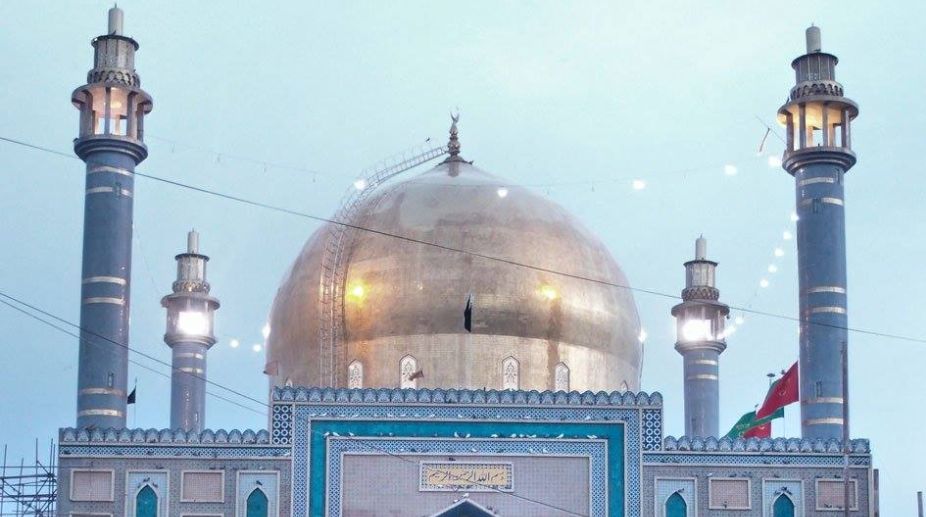
The terror attack in Sehwan that targeted the shrine of Lal Shahbaz Qalandar and killed nearly 100 people, was an attack on Pakistan’s deep-rooted sensibilities and future hopes. The Islamic State’s Khorasan faction, which claimed responsibility  for the dastardly action, represents the  antithesis of the all-encompassing and pacifist school of thought, exemplified at the shrine of Syed Muhammad Usman Marwandi, generally referred to as Lal Shahbaz Qalandar of Sehwan. This revered site is for Hindus and Muslims alike beyond the sectarian divides of Shia-Sunni-Ahmadiyya denominations, a place that willingly accepts the singing transgenders, dancing dervishes and non-conformists who simply want to celebrate divinity without the doomsday interpretations, impositions and rigidities of the Mullahs and the Pundits. The dhamaals in these Sufi shrines, replete with philosophical questions, unanswered quests and celebratory qawwali strains, are in sharp contrast to the austere, ultra-conservative and non-questioning compliance ordained by the orthodox school of monotheistic Salafism.

Pakistan is posited at the virtual crossroads of making a choice between the original syncretic and profound moorings of its vibrant history, and that of the intolerant strains injected by its recent Arab benefactors who summarily declare all non-adherents as Takfir (apostates) and Kafirs (non-believers), hence justifying the violent means of expressing dissent against them.

The outrage at the Sufi shrine  was followed by the familiar political  response of “eliminating terrorists with full force” and such vacuous statements as, “It is time for us to unite and fight against the internal and external terrorists”. The Pakistani army indulged in more kinetic bluster ~  “Every drop of the nation’s blood will be revenged, and revenged immediately. No more restraint for anyone”. All this was too trite and meaningless. Pakistan has relentlessly persisted with the dangerous game of selectively patronizing extremist elements as part its ‘strategic depth’, while pointing fingers across its borders (in this case, Afghanistan), whenever terror has struck on its soil. Directly or indirectly, the Pakistani establishment has been a willing accomplice and catalyst in institutionalizing religious intolerance in its society, and no amount of counter-drives (apparently 100 suspected militants were ‘neutralised’ within three days of this terror attack), will address the fundamental issue of Pakistan disowning its genealogical past, with the parallel regression of rewriting its sovereign narrative with narrow religiosity, iconography and inspiration from the Gulf monarchies (who are paying their own price for living by the sword and perpetuating ignorance).

The  devotees of the Sehwan shrine refused to be deterred by the obvious terror threats, and immediately resumed the customary dhamaal ~ an ode to the centuries-old tradition. But the official establishment has routinely failed to confront the ‘terror nurseries’ that breed hatred, bloodlust and exclusivity.

One is reminded of the haunting lines of the sub-continent’s poem, Dama Dum Mast Qalandar (originally written by Amir Khusro and later fine-tuned by Bulleh Shah) ~ Har dam peera teri khair hove, Naam-e-ali beda paar laga jhoole laalan, O naam-e-ali, O naam-e-ali beda paar laga jhoole laalan, Sindri da sehvan da sakhi Shabaz Qalandar, Dama dam mast Qalandar, Ali dam dam de andar (O Lord, may you prevail every time, everywhere, I pray of your well-being, In the name of Ali, I pray to you to help my boat cross in safety….in the river of life). The words ring more true today than ever before. From the voice of Runa Laila in Bangladesh to the Wadali brothers in India to the irrepressible Nusrat Fateh Ali Khan in Pakistan, every singer has graced and invoked the name of Shahbaz Qalandar in soulful reverence coupled with  the call for peace.

Pakistan has to reconcile itself with its own past. The creation of Bangladesh in 1971 was an early warning of the  twin-nation theory (a united ‘Muslim’ nation), the non-acceptance of which is violently felt in Baluchistan, Khyber Pakhtunkhwa and its hinterland. It is a tryst with the homegrown extremist organisations. The occasional attempts to selectively address the mushrooming terror nurseries are as cosmetic as they are inadequate.

Pakistan must first learn to celebrate its own true history, vivid diversity and rich culture and not suffer from any inferiority complex, as that aids the facilitation of alien sensibilities and their brutal implications.

An inhuman agenda

Editorial |

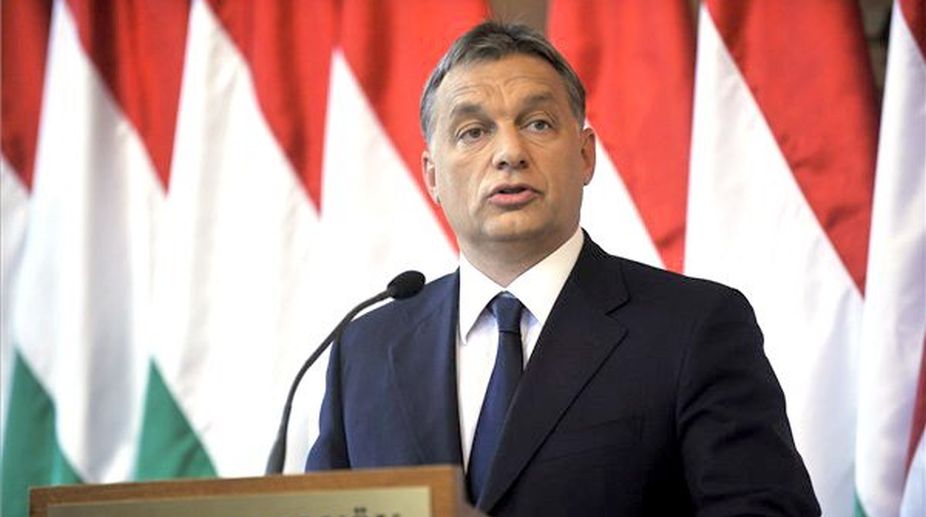
The word, “shocking”, would be a gross understatement in any response to Hungary's decidedly heartless decision on migrants. The country’s Prime Minister, Viktor Orbán, is entitled to his subjective reflection; but to officially describe the migrants’ issue as “a Trojan horse for terrorism” is to proceed from conclusion to premise… and with calculated malevolence. There can be no quarrel with his expressed objective to “save Europe”, but the praxis that is set to be adopted within a week is decidedly inhuman, to say the least. The asylum-seekers will be kept in converted shipping containers while they wait for their cases to be heard via video-link. In a faint echo of Donald Trump's aversion towards a particular community, Orban considers the migrants, many of whom are Muslims, as a threat to European Christian identity and culture. The manner of confinement is breathtaking and human rights groups have been remarkably prompt in condemning Tuesday's vote by the Hungarian parliament. Even civil rights groups within Hungary and some socialist MPs have fiercely opposed the measure, but to no effect. The legislation has nonetheless been passed overwhelmingly by 138 votes to six. Support was lent by Orbán’s Fidesz party and the far-right Jobbik. However much the likes of Angela Merkel might try to accommodate the migrants, it is the fractured eastern democracies that now pose a forbidding challenge to any essay towards humanitarian intervention. Hungary's withers remain unwrung despite Amnesty International’s stout debunking of the legislation ~ “The proposals would breach EU law and the refugee convention. Dumping all refugees and migrants into containers isn’t a refugee policy, it’s avoiding one,” the group said in a statement, denouncing the Hungarian moves as a “flagrant violation of international law.”
The governments of the liberal western democracies must react to such violation that masquerades as policy on refugees. The risk of being rendered breathless is dangerously real, and far greater weightage ought to be accorded to human life, and this must of necessity precede the pressure on economy, which ought legitimately to be addressed by a latter-day Concert of Europe. At this juncture, the least that can be expected of the European Union is  to take action against what by any reckoning are Hungary’s illegal and deeply inhumane measures. The legislation violates the country’s obligations under international and EU laws. The UN’s refugee agency has warned that it   “will have a terrible physical and psychological impact on women, children and men who have already greatly suffered.” It would be dangerous for Hungary to be impervious to the rising tide of world opinion. The law will also require asylum-seekers to have their fingerprints and photographs taken, or be thrown out of the country for non-cooperation. Hungary has crafted an inhuman agenda.

Relief no remedy

Editorial |

Pragmatic and realistic had been the Chief Justice of India when he asserted that the Supreme Court had no magical medicine to cure all ailments ~ essentially an effort to curb frivolous Public Interest Litigation. No less realistic is the public perception of the higher judiciary in general, and the apex court in particular, being the proverbial “court of last resort”. For many of the issues sought to be redressed via the PIL route ought to have been resolved by other instruments of the Republic, and the courts being as clogged as they are only reflects the failure of the legislature and the executive to deliver their mandated duty in a democratic welfare state. Their Lordships are now required to fill increasing breaches in the governance apparatus: a telling case in point being a bench headed by Chief Justice JS Khehar having recently made some scathing observations on the failure to address core issues of farm distress. Every legislature has its share of ‘kisans’, and while they do wield a certain political clout they have failed to coerce the executive into positive action to avert the distress situations that are causing farmers to take their own lives.

While “orders” are awaited, the observations of the court are hard-hitting. In their own version of the time-tested maxim that prevention is better than cure, the bench was constrained to observe that the government was going along in a “wrong direction”. Asking for a policy roadmap, the court declared “this issue is of extreme importance. Tentatively we feel that you are going in a wrong direction. Farmers take loans from banks, and when they are unable to repay, they commit suicide. The remedy to the problem is not to pay money to farmers after the suicide, but you should have schemes to prevent this.” Their Lordships noted that “farmers’ suicides have been happening for so many decades, and it is surprising that no action has been taken to address the causes behind suicides”. The bench, which also comprised Justices DY Chandrachud and SK Kaul, noted that farmers were always at the receiving end: a bumper crop caused prices to crash, they suffered in times of drought or flood, “if the matter is moved on a right track a lot can be achieved.” The court declined to comment on the specifics of the several schemes listed by the Additional Solicitors General, but Counsel for the petitioners contended that the schemes were seldom implemented efficiently. There may have been nothing particularly “new” in the deliberations ~ except the forum. It should have been the legislature not the courtroom in which farmers’ problems ought to have been resolved. Conditions are thus fertilised for “judicial overreach”.

Smriti Irani announces awards for women weavers

Sri Krishna | New Delhi |

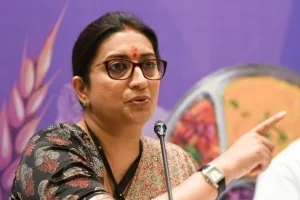
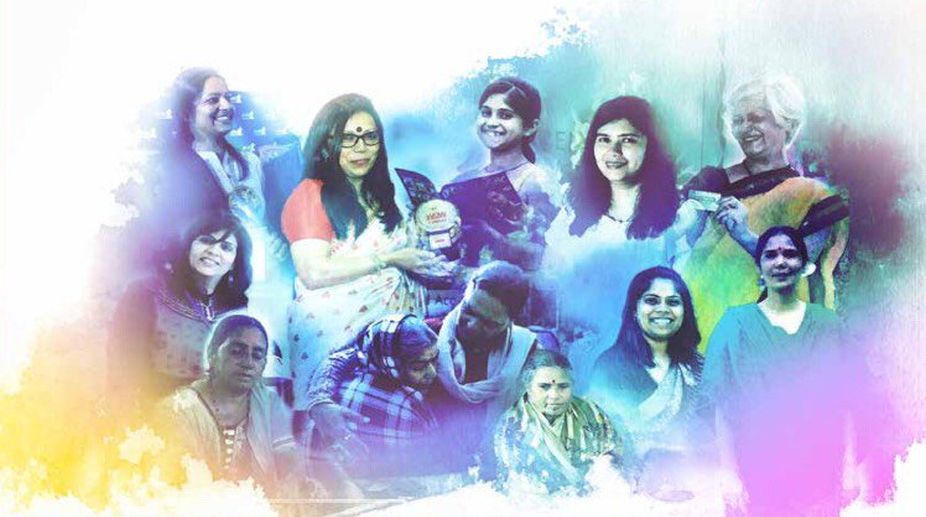
To mark International Women’s Day on Wednesday, Textiles Minister Smriti Irani announced a new category of ‘Kamaladevi Chattopadhya National Awards’, specially for women handloom weavers and women handicraft artisans.

Noting that only one woman has so far received the Sant Kabir Award, the minister said the awards are being instituted from this year, so that women weavers and artisans receive due recognition and economic benefits associated with the awards.

The awards would be a small tribute to recognise the craft excellence and hard work being put in by millions of women working in their homes, carrying forward the torch of India’s proud handloom and handicraft heritage, Ms Irani said.

The minister also launched a special campaign to provide MUDRA loans to women handloom weavers all across the country.

She said more than 1,700 women weavers are being given such loans, to start the campaign. Five weavers received MUDRA loans from her on the occasion.

Ms Irani launched a national campaign to eliminate the exploitative and unhygienic practice of thigh reeling in India (thigh reeling of tasar silk is usually practiced by marginal women entrepreneurs, working every day in their homes during spare time).

Ms Irani distributed replicas of the Buniyaad Reeling Machine to three beneficiaries, as a token of the launch of the initiative.

NITI Aayog announces 2nd edition of Women Transforming India contest

Statesman News Service | New Delhi |

NITI Aayog, in partnership with the UN in India and MyGov, on Wednesday announced the second edition of Women Transforming India, an online contest to celebrate women achievers, leaders and change makers from across the country.

NITI Aayog has sought entries in two categories: First, short video and photo contest on Women Breaking Gender Stereotypes: This can be a homemade video shot on a mobile phone. Both photos and videos are to be accompanied with a short caption of less than 50 words, capturing the story of the woman. The second category is of written entries of women in the workforce.

This should include stories of women across sectors, irrespective of their educational qualifications, working in non-traditional occupations, as well as women who are working to empower other women, their neighbourhoods and societies, in any way. Stories should not exceed 500 words.

Entries must be submitted online here: https://www.mygov.in/task/women-transforming-india-2017-breaking-glass-ceiling/ on or before 1 May 2017. A shortlist of the 10 best entries by a jury will be put to poll on MyGov.in. After the top three entries are determined, a jury constituted by NITI Aayog will pick the final winning entry.

Women Transforming India was launched in 2016 as an effort to bring attention to successful stories of change realised by women at the grassroots level, within communities.

The theme for International Women’s Day, 2017, focuses on “Women in the Changing World of Work: Planet 50-50 by 2030”. This advances the Government of India’s commitment to ensure gender parity in India, with special focus on women’s economic empowerment, NITI Aayog said.

HRD ministry launches digital literacy drive for students

Statesman News Service | New Delhi |

A National Convention of Student Volunteers under Digital Financial Literacy Campaign by Ministry of Human Resource Development began here on Wednesday.

Union Human Resource Development Minister Prakash Javadekar called upon the student volunteers for the widespread dissemination of the ideas of the Prime Minister on digital economy so that the resources of the nation could be utilised  in a transparent manner.

The minister congratulated the volunteers for their efforts and said going digital is the need of the hour as in comparison to developed countries where 4 per cent component of the GDP is in currency, India has 12 per cent component of currency in its GDP and hence needs to change to digital mode. He said going digital will help boost economic stability with definite availability of funds for the welfare of masses at large, especially the poor and needy population. 

It will also result in net tax collection and resources. Today there are 77 crore debit cards available for digital transactions, he said, adding that awareness should be generated across the country.

Javadekar said so far nearly 4.3 lakh volunteers have been registered who have started educating masses across the country and have covered 20 lakh households. The minister asked the volunteers to work during the post examination holidays for publicity of the scheme. He said the Prime Minister has set a target of 2500 crore digital transaction in 2017 and this is 100 per cent achievable.

Electoral bonds cannot become parallel currency: Jaitley

Statesman News Service | New Delhi |

Union Finance Minister Arun Jaitley on Wednesday said the proposed electoral bonds will be open a few days ahead of elections and these will be redeemable within two to three weeks. He added that the bonds announced in Union Budget 2017-18 to promote legitimate funding of political parties cannot become a parallel currency and thus would be valid only for a specific duration.

On the issue of state funding of elections, Jaitley said it needs to be debated as cynics may question why people should be taxed extra to fund elections and there is "no guarantee" that outside money will not find its way into campaign financing.

Speaking at a lecture "Towards a New Polity: Campaign Finance Reform in India" at an event organised by Dr Syama Prasad Mookerjee Research Foundation and Nehru Memorial Museum and Library, Jaitley said, "The scheme will be announced once the Finance Bill is passed. The scheme will only open for a limited period of time during elections or maybe a little before the elections. The life of a bond will be very short, maybe a few days. Why do we take these precautions, knowing the manner in which people have laundered money, a bond should not become a parallel currency, so that people start transacting in bonds. It will only be available for a few days. The bond can be purchased by any donor by cheque payment from an authorised bank. You can only donate these bonds to political parties. And these will be redeemable within a period of three or four weeks of the purchase of the bond in only one bank account of a political party."

Showing his concern on the earlier collections of political funds in rural areas and small towns, he said grassroots collections have slowed down and almost faded away, which is a cause for concern. Jaitley added that political parties should start digital campaigns to receive donations and that electoral bonds are totally clean, though partly transparent.
 To ensure greater transparency in political funding, the Union Budget 2017-18 announced that any anonymous cash donation to a political party will now be limited to Rs 2,000 from the earlier limit of Rs 20,000. For any amount above this people will have to resort to cheque and digital payments. The decision of the government to reduce cash donations will require political parties receiving a donation above Rs 2,000 to disclose the identity of the donor.
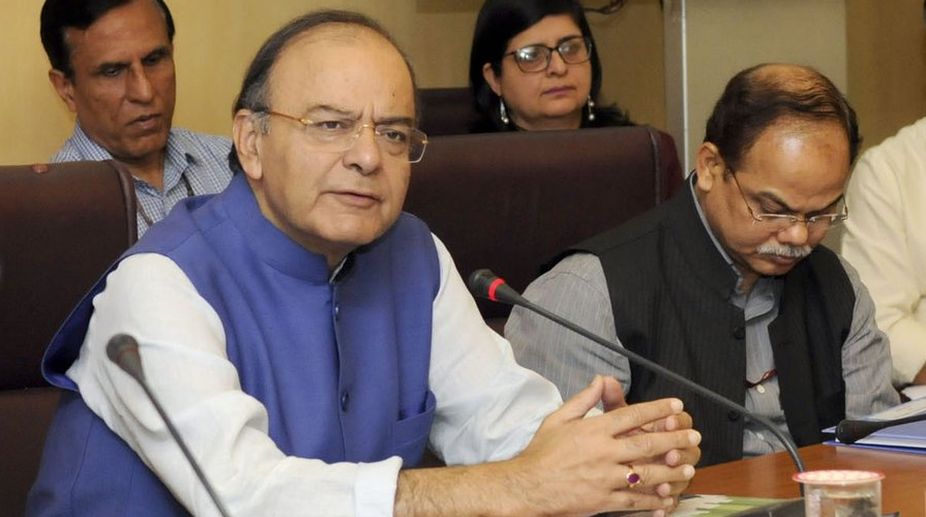
While this gives the donor the option of remaining anonymous, both ends of the transaction will happen through the banking system.

Spectacular cinematic experience

Shahim Sheikh |

With La La Land in December and now Rangoon, it seems like we are going through an age where filmmakers want to return to the epic beauty of golden age cinema. The project is a period film set during World War II (1939-1945) with the leading actress supposedly playing a character based on the life and times of Mary Ann Evans or Fearless Nadia, Bollywood’s first original stunt-woman still remembered for her fiery role in the movie Hunterwali.

Rangoon, a fictional/non-fictional love triangle set against the final years of India’s struggle against the British Raj is as grand a cinematic experience, as it is a heartfelt love letter to cinema of yore. Director Vishal Bharadwaj isn’t a stranger to movies that can take the audience’s viewing experience to the next level but with Rangoon, he covers new ground.
Essentially, it is a movie where the protagonist is played by the director himself with his majestic vision but that isn’t to say that the actors are any less. Kangana Ranaut as Julia gives a stellar performance as do her male counterparts, Shahid and Saif Ali Khan, especially the latter. His anti-hero role is probably the best character belonging to that category to have come out of Bollywood in years. The movie is driven by the characters, the writing being so well-knit that it feels that all three of them deserve their own movie.

As mentioned earlier, the movie is a love letter to yesteryear’s cinema. Sweeping majestic shots of painstakingly designed sets and the intoxicatingly beautiful landscape of Burma along with beautifully lit shots of nightclubs, army camps and other such places are definitely never-before-seen in Indian cinema. Pankaj Kumar, the cinematographer deserves a salute for his work. The music by Vishal Bharadwaj is definitely catchy from time to time but as a whole, it isn’t anything spectacular.

The problems with the movie are its runtime and at times, its choppy editing. It feels 20-30 minutes too long and the climax is unrelentingly ridiculous, especially considering how well it is built up to that point. Also worth mentioning is the CGI which is quite noticeable in battle scene on the beach.

Notwithstanding, Rangoon is still a cinematic experience that deserves to be watched at theatres in all its glory. Its a testament to the fact that we have directors in India who believe in the power of cinema as an art form and that essentially, the word ‘Bollywood’ is a genre and films like Rangoon definitely aren’t of that genre.

Coordinator, Class XI, Julien Day School, Kolkata

Spectacular cinematic experience

Shahim Sheikh |

With La La Land in December and now Rangoon, it seems like we are going through an age where filmmakers want to return to the epic beauty of golden age cinema. The project is a period film set during World War II (1939-1945) with the leading actress supposedly playing a character based on the life and times of Mary Ann Evans or Fearless Nadia, Bollywood’s first original stunt-woman still remembered for her fiery role in the movie Hunterwali.

Rangoon, a fictional/non-fictional love triangle set against the final years of India’s struggle against the British Raj is as grand a cinematic experience, as it is a heartfelt love letter to cinema of yore. Director Vishal Bharadwaj isn’t a stranger to movies that can take the audience’s viewing experience to the next level but with Rangoon, he covers new ground.
Essentially, it is a movie where the protagonist is played by the director himself with his majestic vision but that isn’t to say that the actors are any less. Kangana Ranaut as Julia gives a stellar performance as do her male counterparts, Shahid and Saif Ali Khan, especially the latter. His anti-hero role is probably the best character belonging to that category to have come out of Bollywood in years. The movie is driven by the characters, the writing being so well-knit that it feels that all three of them deserve their own movie.

As mentioned earlier, the movie is a love letter to yesteryear’s cinema. Sweeping majestic shots of painstakingly designed sets and the intoxicatingly beautiful landscape of Burma along with beautifully lit shots of nightclubs, army camps and other such places are definitely never-before-seen in Indian cinema. Pankaj Kumar, the cinematographer deserves a salute for his work. The music by Vishal Bharadwaj is definitely catchy from time to time but as a whole, it isn’t anything spectacular.

The problems with the movie are its runtime and at times, its choppy editing. It feels 20-30 minutes too long and the climax is unrelentingly ridiculous, especially considering how well it is built up to that point. Also worth mentioning is the CGI which is quite noticeable in battle scene on the beach.

Notwithstanding, Rangoon is still a cinematic experience that deserves to be watched at theatres in all its glory. Its a testament to the fact that we have directors in India who believe in the power of cinema as an art form and that essentially, the word ‘Bollywood’ is a genre and films like Rangoon definitely aren’t of that genre.

Coordinator, Class XI, Julien Day School, Kolkata

Manish Sisodia turns poet to take dig at Centre’s note ban

PTI |

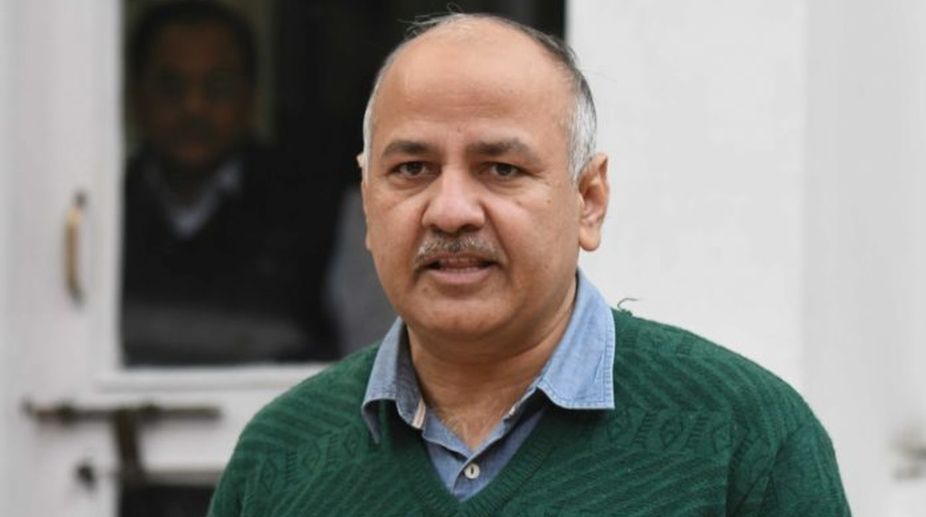
Delhi Deputy Chief Minister Manish Sisodia on Wednesday punctuated his budget speech with literary couplets to take a dig at the Centre over the impact of demonetisation decision on society.

"'Ghar mayn padi tankhwah ki gaddi koi kaam naa aayi, bacchon ke gullak toote tab jake ghar meyn sabzi aayi' (The wads of notes from salary became useless, children's savings brought bread home)," Sisodia said.

The AAP leader, who also holds the finance portfolio, was severely critical of the Modi government's demonetisation decision and said the cash crunch led to "economic scarcity" and flight of labourers from the city, who were the "worst-hit section".

In his speech, he intermittently used metaphor-ridden couplets to drive home his point.

"'Sab faisle hote nahin sikke ucchal ke, ye zinda kaum ke masle hayn zara dekhbhal ke' (All decisions are not taken with a toss of a coin, beware, these are issues of a vibrant society)," he said.

He said the note ban has hit the national capital's economic growth and "forced" the city government to cut spending on various developmental projects by about Rs 4,100 crore.

The Arvind Kejriwal-led government today presented a Rs 48,000-crore budget for 2017-18 which lays major focus on education, healthcare, transport and social sectors.

The budget also sought to shore up AAP's pro-poor image, and Sisodia cited examples of jhuggi jhopri demolitions to buttress the point.

In a tweet, he used another couplet, saying, "Ek raat ko aasma ka, nizam mere naam kar de, mayn saare tare uthakar garibon meyn baant dun (Give me the sky for a night, I will distribute the stars among the poor).

Manish Sisodia turns poet to take dig at Centre’s note ban

PTI |

Delhi Deputy Chief Minister Manish Sisodia on Wednesday punctuated his budget speech with literary couplets to take a dig at the Centre over the impact of demonetisation decision on society.

"'Ghar mayn padi tankhwah ki gaddi koi kaam naa aayi, bacchon ke gullak toote tab jake ghar meyn sabzi aayi' (The wads of notes from salary became useless, children's savings brought bread home)," Sisodia said.

The AAP leader, who also holds the finance portfolio, was severely critical of the Modi government's demonetisation decision and said the cash crunch led to "economic scarcity" and flight of labourers from the city, who were the "worst-hit section".

In his speech, he intermittently used metaphor-ridden couplets to drive home his point.

"'Sab faisle hote nahin sikke ucchal ke, ye zinda kaum ke masle hayn zara dekhbhal ke' (All decisions are not taken with a toss of a coin, beware, these are issues of a vibrant society)," he said.

He said the note ban has hit the national capital's economic growth and "forced" the city government to cut spending on various developmental projects by about Rs 4,100 crore.

The Arvind Kejriwal-led government today presented a Rs 48,000-crore budget for 2017-18 which lays major focus on education, healthcare, transport and social sectors.

The budget also sought to shore up AAP's pro-poor image, and Sisodia cited examples of jhuggi jhopri demolitions to buttress the point.

In a tweet, he used another couplet, saying, "Ek raat ko aasma ka, nizam mere naam kar de, mayn saare tare uthakar garibon meyn baant dun (Give me the sky for a night, I will distribute the stars among the poor).

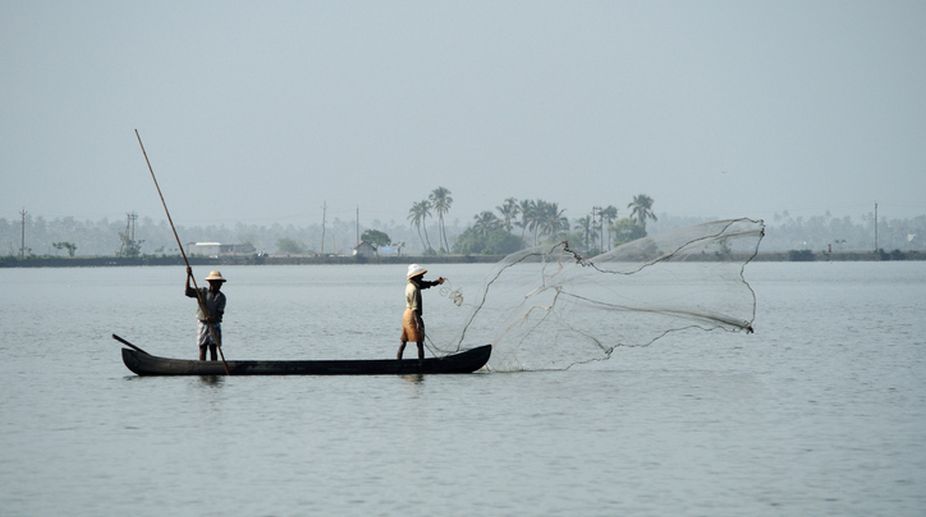
Sri Lanka, India to release fishermen to defuse tensions

PTI | Colombo |

Sri Lanka and India on Wednesday agreed to release the fishermen held in each other's custody after a high-level discussion between the two sides here following the killing of an Indian fisherman, a top government source said.

Lanka would release 85 Indian fishermen, the source said, adding that India would free at least 19 Lankan fishermen.

"This move is being made to defuse the current tensions," the source added.

It was a reference to the current controversy where the Sri Lankan Navy has been accused of opening fire on Indian fishermen and killing one of them.

The Lankan navy, however, denied the allegation, saying it does not open fire at poaching fishermen and only arrests them.

Sri Lanka has said it ordered an investigation into the incident and wanted to ensure that such incidents would not hamper the good relations between the two countries.

Fisheries Minister Mahinda Amaraweera said he had spoken with Indian High Commissioner Taranjit Singh Sandhu on the situation.

Sri Lanka, India to release fishermen to defuse tensions

PTI | Colombo |

Sri Lanka and India on Wednesday agreed to release the fishermen held in each other's custody after a high-level discussion between the two sides here following the killing of an Indian fisherman, a top government source said.

Lanka would release 85 Indian fishermen, the source said, adding that India would free at least 19 Lankan fishermen.

"This move is being made to defuse the current tensions," the source added.

It was a reference to the current controversy where the Sri Lankan Navy has been accused of opening fire on Indian fishermen and killing one of them.

The Lankan navy, however, denied the allegation, saying it does not open fire at poaching fishermen and only arrests them.

Sri Lanka has said it ordered an investigation into the incident and wanted to ensure that such incidents would not hamper the good relations between the two countries.

Fisheries Minister Mahinda Amaraweera said he had spoken with Indian High Commissioner Taranjit Singh Sandhu on the situation.

Conduit to success

Dr Samir Parikh |

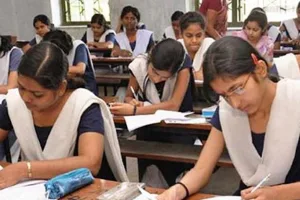
It is not possible for students to escape the hurdle of examinations, no matter how much they might wish to do so. However, a lot depends upon their perception and attitude towards these exams, and the studying skills and strategies employed by them for the same.

Be effective: Instead of sitting with books for longer periods of time without much success, it is advisable to study for around 40-45 minutes at a time, ensuring that one utilises each of those minutes fruitfully.

Avoid multi-tasking: It is important to remember that multitasking does not actually save time and energy, instead makes it more difficult to retain the information, as the human ability to process information simultaneously reduces the efficiency, while at the same time gives us less opportunity to rehearse the information.

Take regular breaks: One should take regular breaks between study hours, for around 5-10 minutes each. Remember, these breaks are not inflexibly stretchable.

Plan the break: While breaks are supposed to be times to recuperate and do whatever one wants, it is also important to keep in mind what one should and should not do during break times. Students must avoid reading, TV or computers, as they involve the same part of the brain involved in studying, and hence would not be very refreshing. Instead, prefer to listen to some music, have some light snacks, or go for a short walk.

Use time-saving tactics: As most of the times the same topic needs to be read and revised more than once, it would be very beneficial if students would highlight specific words or phrases that would help to save time while revising the same topic again. Moreover, highlighting has been found to be more effective than underlining as it helps you form visual memories of the highlighted words standing out.

Prepare study environment: Besides the study material, it is also important not to neglect the place where one studies. No matter how comforting the bed might seem, studying in bed should be avoided, as the brain recognises the bed as a place to sleep. The study table should be reserved for studying, and should be kept de-cluttered as much as possible.

Self-tests: At the end of the day, one needs to be responsible for their studies. These tests need not be prepared by teachers or parents. Instead, students should be honest to themselves, and must prepare timed self-tests on a weekly basis. This would help to give a reality check and to be able to evaluate their progress as well.
Chairman, Fortis National Mental Health Council and Fortis National Mental Health Programme, Fortis Healthcare