Logo

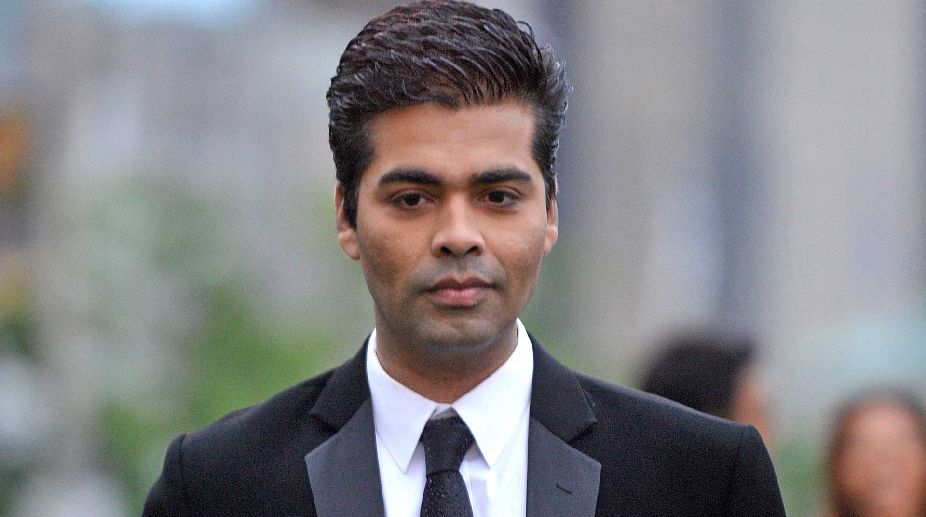
Karan Johar takes his twins home

IANS |

Filmmaker Karan Johar on Wednesday took home his surrogate twins Roohi and Yash after they spent over seven weeks in the neonatal intensive care unit (NICU) of a hospital here.

Karan came to receive his children on Wednesday afternoon, a source from the Surya Mother & Child Hospital told.

The children were under the care of Bhupendra Avasthi, the director of the hospital.

"The children were admitted on February 7. They were born premature at 30 weeks. They are now 37 weeks old. Today was the 50th day of their admission to the hospital," the source said.

In some photographs doing rounds over social media, Karan can be seen wearing an all black ensemble while leaving the hospital with his children.

Earlier this week, Karan said over social media that those who have premature babies should not get discouraged. 

The My Name is Khan director shared that he wants to reach out to people about the virtues of neonatal intensive care for premature children.

"Millions of preemies are born every year… but babies are resilient. With the right kind of care, they stand just as good a chance of survival as anyone else," Karan wrote.

"If your baby is a preemie, don't be discouraged. Seek help… Don't lose faith, don't lose heart," he added.

‘Pakistan to play key role in Indian Ocean region’

IANS | Islamabad |

The Pakistan Navy will play a significant role for maintenance of peace and stability in the Indian Ocean region, the country's naval chief Admiral Muhammad Zakaullah has said.

He said this in an address to the navy's Command and Staff Conference here on Tuesday, in which the matters related to operational preparedness, prevailing security situation and developmental plans of the Pakistan Navy were reviewed.

The naval chief was briefed about ongoing and future projects and plans, Pakistan Today reported. 

Zakaullah reiterated the navy's resolve to safeguard maritime frontiers of Pakistan against all threats.

He urged the commanders to remain at highest state of preparedness and maintain a constant vigil in their area of responsibility (AoR).

Zakaullah also appreciated successful test launch of the land-based anti-ship missile by the Pakistan Navy.

He said this weapon system had added a new dimension in the operational reach of the Pakistan Navy which would be able to further bolster seaward defence of the nation by having the capability of launching long range anti-ship missiles from land.

We learn to understand others after age 4

IANS | New York |

Researchers have found why at around the age of four children suddenly do what three-year-olds are unable to do — put themselves in someone else's shoes.

This enormous developmental step occurs as a critical fibre connection in the brain matures, according to a study published in the journal Nature Communications.

For the study, the research team from Max Planck Institute for Human Cognitive and Brain Sciences (MPI CBS) in Leipzig, Germany and Leiden University in the Netherlands analysed MRI data and behavioural data of 43 normally developing 3- and 4-year-old children.

"Our findings show that the emergence of mental state representation is related to the maturation of core belief processing regions and their connection to the prefrontal cortex," said the researchers.

The study showed that maturation of fibres of a brain structure called the arcuate fascicle between the ages of three and four years establishes a connection between two critical brain regions.

One region is at the back of the temporal lobe that supports adult thinking about others and their thoughts, and the other is in the frontal lobe that is involved in keeping things at different levels of abstraction and, therefore, helps us to understand what the real world is and what the thoughts of others are. 

Only when these two brain regions are connected through the arcuate fascicle can children start to understand what other people think, the study said.

Interestingly, this new connection in the brain supports this ability independently of other cognitive abilities, such as intelligence, language ability or impulse control, according to the researcher.

Why has PM not released full text of Naga accord: Yechury

PTI | New Delhi |

The CPI(M) on Wednesday questioned the Centre for not making public full text of Naga Peace Accord signed two years ago.

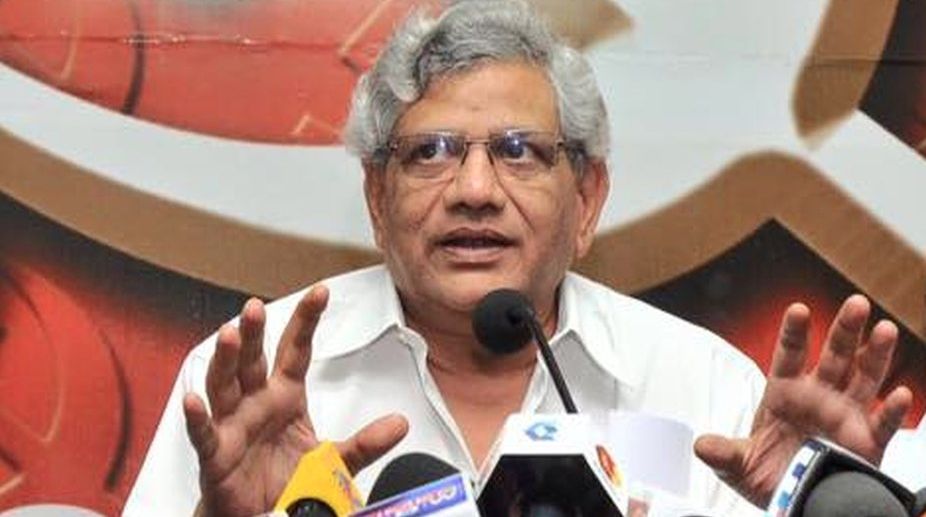
CPI(M) general secretary Sitaram Yechury referred to NSCN(IM) leader Thuingaleng Muivah's reported comment that the group's framework agreement signed with the Centre promises integration of all Naga territories and wondered why Prime Minister Narendra Modi does not release the full text of the accord to "bring out the truth".

"Muivah claims that the framework agreement that Modi signed with him promises 'integration of all Naga territories'. But we can't verify it.

"Why have the terms of the accord not been released for two years? Why doesn't PM release the full text to bring out the truth?" Yechury asked on Twitter.

Muivah had reportedly said earlier this week that 'Greater Nagalim' will have Naga-inhabited areas in Assam, Manipur and Arunachal Pradesh as part of the larger Nagaland state as per agreement signed on August 3, 2015.

The central government though refuted as "erroneous" the reports that it has agreed to carve out a larger Nagaland state.

"Such reports are erroneous. It is clarified that there is no such agreement or decision by the Government of India," a Home Ministry spokesperson said on Tuesday.

Darlene Cates was the best acting mom I ever had: Leonardo DiCaprio

SNS | New Delhi |

Paying tribute to Darlene Cates, actor Leonardo DiCaprio says she was the "best acting mom" he ever had.

The Oscar winning actor Leo shared silver screen with Cates in 1993 drama What’s Eating Gilbert Grape, and received his first ever Academy Awards nomination for supporting role.

Leo, who is also a climate change activist, wrote on Facebook: “Darlene was the best acting mom I ever had the privilege of working alongside”.

Cates passed away on March 26 during her sleep at her home in Texas. Her daughter Sheri confirmed the news of the death on social media. She was 69.

"Her (Darlene) endearing personality and incredible talent will live on in the memories of those who knew her, and those who loved her work,” the Revenant actor said

“My thoughts and prayers are with her family during this difficult time.” Leonardo added.

Himachal Pradesh HC seeks report on lawlessness in Kufri

Statesman News Service | Shimla |

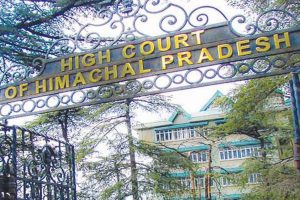
The Himachal Pradesh High Court has directed the state government to submit a status report on lawlessness and deteriorating condition at the famous tourist spot of Kufri near Shimla.

The HC also directed the committee, which is headed by the chief secretary, to convene a meeting to discuss the suggestion made by Amicus Curie in this matter.

A Division Bench comprising the Chief Justice Mansoor Ahmad Mir and Justice Tarlok Singh Chauhan passed these orders on suo moto petition taken up as Public Interest Litigation on a letter written to the Chief Justice by Rakesh Mehta, a resident of Kufri.

In his letter, the petitioner had stated that Kufri is well known tourist destination and a large number of tourists visit this spot every year.

A large amount of money from the public exchequer is being spent on the development of tourism activities in this area by the government through the department of Tourism and Special Area Development Authority.

The petitioner has further alleged in the petition that the condition of the area is deteriorating day by day. There are a large number of horse in the area which litters all the roads, paths and public places with horse dung.

Most of these horses are being plied by minors and persons of Nepali origin who indulged in oral and physical abuse with tourist and local inhabitants. Despite this fact being in knowledge of the district administration no concrete steps are being taken to restrict the number of these horses.

The petitioner has urged the High Court to issue necessary directions to the district and police administration to check the menace of horse. The court listed this matter for hearing on 18 April.

National Insurance Company Limited (NICL) to fill 205 AO posts in 2017 | Apply online before April 20, expected exam dates released

SNS | New Delhi |

NICL AO recruitment 2017: National Insurance Company Limited (NICL) has made an announcement for the candidates waiting to get latest update regarding the latest job opening in the NICL AO department. 

NICL has opened 205 vacancies for the post of administrative officers (generalist) scale I and candidates interest to apply for the job may apply online from March 30, 2017 and before April 20, 2017.

Along with this department has revealed that NICL AO 2017 recruitment for 205 vacancies will be filled in this pattern – UR: 113 posts, SC: 31 posts, ST: 16 posts and OBC: 45 posts.

As per the updates, NICL Preliminary examination 2017 will take place across different centers on June 3 or 4, while the NICL main exam 2017 is expected to take place on July 2.

Keep surfing this space for more news updates.

UP’s slaughterhouse ban could leave millions jobless

PTI | New Delhi |

The closure of Uttar Pradesh's slaughterhouses could leave a couple of million people jobless in the state, affect its allied industries and choke small but important revenue streams for its poor farmers, especially in drought-prone areas, according to an IndiaSpend analysis of available data on India's meat, leather and livestock industries.

Half of Uttar Pradesh's licensed slaughterhouses and scores of illegal ones have been closed after an order from new Chief Minister Yogi Aditya Nath against those that do not follow the law.

The drive against slaughterhouses could impact three critical industries: Meat packaging, livestock and leather. With some of the worst development indicators, stagnant agriculture and industry, India's most populous state is also one of its poorest with the second-highest unemployment rate — after Jharkhand — among eight most socio-economically backward states.

With a population of 200 million people, equivalent to the population of Brazil, the state's economy is the size of the tiny middle-eastern country of Qatar, which has 2.4 million people, the same as the town of Bijnore.

In 2015-16, more people per 1,000 were unemployed in Uttar Pradesh (58), compared to the Indian average (37), and youth unemployment was especially high, with 148 for every 1,000 people between the ages of 18 and 29 years unemployed, compared to the Indian average of 102.

Meat-packing and leather industries make up the major share of India's export earnings, with Uttar Pradesh contributing significantly. It accounted for nearly 43 per cent of buffalo-meat exports in 2015-16, the highest among all states, according to data published by the Agriculture and Processed Food Export Development Authority (APEDA). Leather ranks eighth among India's top export earners, with about 46 per cent of what is produced being exported, according to the Council for Leather Exports (CLE). A third of these exports go from Kanpur in UP, a city where the leather industry is already in crisis.

The Bharatiya Janata Party's (BJP's) election manifesto for the assembly election had promised to shut all illegal slaughterhouses in the state. But "over-enthusiastic" officials — who appeared to be acting indiscriminately, shutting down even abattoirs with licenses — are now being reined in by the government, according to some media reports.

IndiaSpend research shows that the slaughterhouse ecology is complex and supports diverse, rural and urban economic and social systems not just in Uttar Pradesh, but nationwide. Here is a look at the three industries that will be most affected by the campaign.

1. Meat: UP accounts for 43% of India's buffalo-meat exports
Illegal slaughterhouses being targeted by the government dominate the meat market in India: 4,000 are registered and more than 25,000 are not, among units that cater to the domestic market, according to APEDA. Even in the export market, registered and unregistered slaughterhouses both produce meat, APEDA acknowledges.

Uttar Pradesh is the largest producer of meat in India, according to the Agriculture Statistics Report, 2015. In 2014-15, it contributed 21 per cent of the meat produced in India. Of the 75 slaughterhouses registered with the APEDA for meat export, as many as 49 are in Uttar Pradesh. This means the state is likely to have the large number of slaughterhouses, many illegal.

Buffalo meat is a major export from India, going to more than 40 countries. In the 2015-16, Uttar Pradesh recorded the highest buffalo meat export, followed by Maharashtra. In 2015-16, India exported 13.14 lakh metric tonnes (MT) buffalo meat of worth Rs 26,685.42 crore.

There is no reliable estimate of people employed in Uttar Pradesh's slaughterhouses and meat shops, but it is likely to be in tens of thousands. Around 6.7 million are employed in the country's food-processing industry, which includes slaughterhouses and meat processing units, according to the Agriculture Statistics, 2015.

The issue of illegal abattoirs in Uttar Pradesh is not new. The erstwhile Samajwadi Party government had also issued a government order in June 2014 to probe their operations. In May 2015, the National Green Tribunal ordered the state government to act against illegal slaughterhouses to curb the pollution caused by them. The BJP government's move goes a step further, banning not only illegal slaughtering but also licensed mechanical operations, which are mostly legal and focused on exports.

Previous governments, acknowledging the advantage of mechanised slaughter technology over traditional methods in increasing and improving output for the export market, had offered financial assistance for upgrades.

2. Livestock: UP recorded 14% growth, indicating economic dependence
Meat production is entirely dependent on livestock, a sector that contributed nearly 4.11 per cent to India's GDP at current prices in 2012-13. It also contributes nearly 25.6 per cent of output, by value, at current prices in the agriculture, fishing and forestry sectors, according to the Livestock Census Report, 2012.

India houses a significant percentage of the world's livestock. A comparison of the last two livestock censuses reveals a 3.33 per cent decrease in livestock in 2012 compared to 2007. But Uttar Pradesh, along with Gujarat and Assam, registered growth (14 per cent), indicating the economy's dependence on livestock and allied businesses.

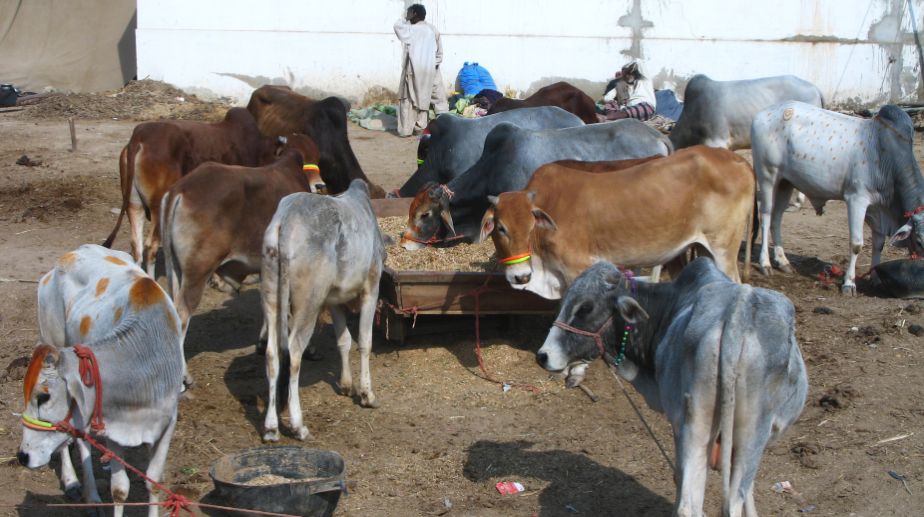
Livestock are an important economic resource, especially in rural areas. Cattle, buffalo, goat and sheep are maintained by agricultural families, mostly those with small land holdings, and by landless labourers who use them primarily for milk and also meat. Cattle are also loaned for agriculture and transportation. Poor families sell stray cattle to butchers. In drought-affected areas, such as parts of Maharashtra, Karnataka, Madhya Pradesh and Uttar Pradesh, cattle are often sold to tide over economic crises.

3. Leather: Majority of employees from disadvantaged communities
In 2014-15, India leather exports were valued at $6.4 billion (Rs 39,097 crore) and in 2015-16, at $5.8 billion (Rs 38,396 crore), according to Council for Leather Exports data.

The Indian leather industry provides formal and informal employment to 2.5 million people, mostly from disadvantaged communities: A third of leather workers are women and a fourth are scheduled castes and tribes. Leather workers who are not from traditional tanning communities or are not Muslims come from poor agricultural families, according to a study by the Centre for Education and Communication (CEC), an advocacy.

(In arrangement with IndiaSpend.org, a data-driven, non-profit, public interest journalism platform. Jeet Singh is Associate Fellow, Rajiv Gandhi Institute for Contemporary Studies, New Delhi. The views expressed are those of IndiaSpend. 

Why different house tax rules for people, politicians: Sisodia

IANS | New Delhi |

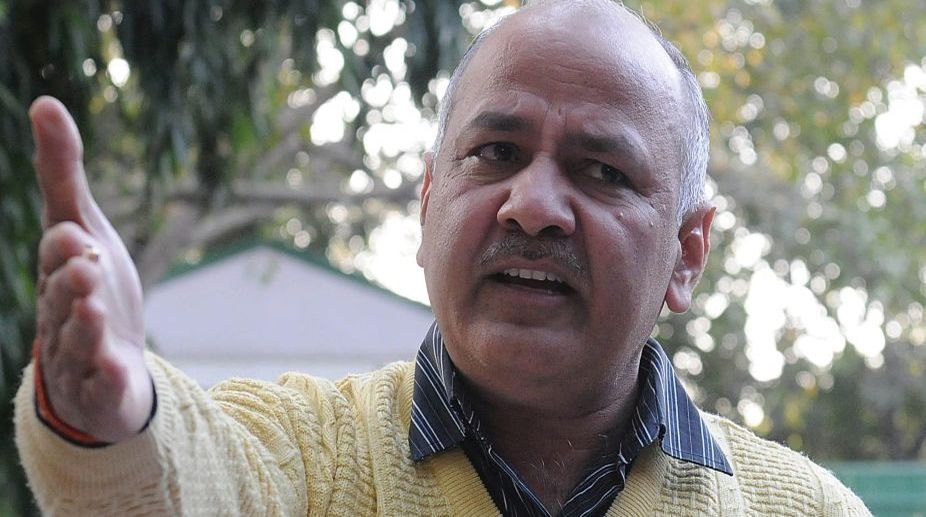
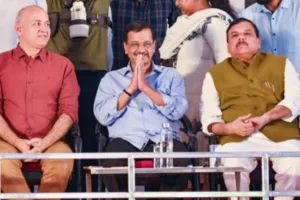
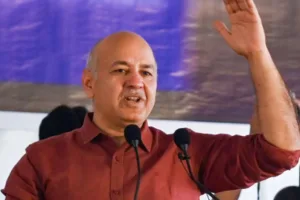
Delhi Deputy Chief Minister Manish Sisodia on Wednesday asked if the house tax of BJP leader Vijay Goel's mansion could be waived off, then why not for Delhi's commoners.

Sisodia said the municipal corporations in August,2016 decided to exempt tax on Goel's 'haveli' (mansion).

"If the House (Muncipal Corporation of Delhi) can waive off tax of a BJP leader's haveli, then why one needs to go to Parliament to do the same for common people?" Sisodia asked.

"Why the rules are different for the common people and the politicians?"

He added that if voted to power in the civic elections, the Aam Aadmi Party will use the same rules and powers to exempt house tax for common citizens, which the Bharatiya Janata Party-ruled corporation used for its leader.

Verbose, tendentious, self-indulgent

Krishnan Srinivasan | New Delhi |

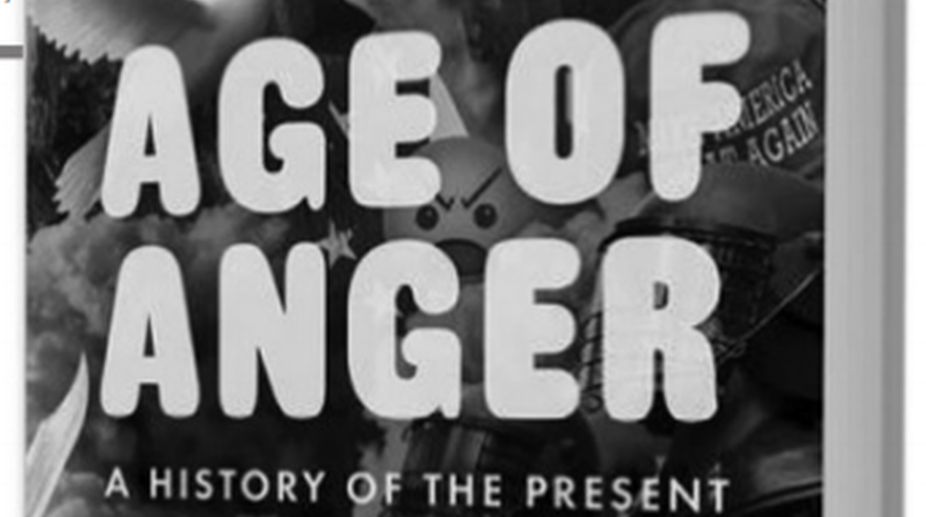
Pankaj Mishra is an Indian origin writer based in Britain who is a poster boy for the lunatic liberal fringe. Enjoying the privilege of the pages of some well-established journals, he plays up to this image by attacking from a safe distance and scant understanding those demonized by the self-accredited champions of liberty, whose targets include Modi, Erdogan, Xi Jinping, Duterte and Trump. On the jacket cover, Mishra is lauded as the heir to Edward Said which no discerning person would regard as a compliment.

This latest Mishra offering is a verbose, tendentious, selfindulgent work replete with over-writing. He claims the idea for this book came to me from … Nietzsche about the conflict between the serenely elitist Voltaire and the enviously plebian Rousseau. This sets out his stall early. The list of contents, containing the words conjectures, illusions, visions and nihilism, gives forewarning that this is not an easy read, full of inchoate and meandering thoughts. The Preface that follows confirms this; with references to Hindu supremacists, the Islamic State became a magnet for young men and women in Western democracies (sic) and the bewildering and often painful experiences in connection with the earthquakes of Brexit and Trump’s election.

The book professes to explore a climate of ideas and cognitive disposition from Rousseau in the 18th century to our age of anger. He speaks of the promised universal civilization being overturned by demagogues of all kinds here listing Erdogan, Modi, Le Pen and Trump, and people foaming at the mouth with loathing and malice. Those whose politics he disagrees with are demagogues and populists; as a superior species of democrat, Mishra deliberately forgets that these persons have been freely elected through the ballot box. The West-dominated world order which he longs for, is giving way to disorder, in other words, the age of anger, and the market-based Western model of democracy has begun to lose its sheen. Those who seek a post-West equitable multi-polar world would entirely disagree and could not concur with Mishra’s view of the West’s benign traditions. Colonialism was active until the 1960s and neo-colonialism is very much with us today.

With repeated references to Hannah Arendt and de Toqueville, Mishra backpedals to Voltaire, Montesquieu, Rousseau and the ‘philosophes’ in lengthy and scarcely convincing digressions on the Enlightenment and European history (but without acknowledgement to British and Scottish contributions to the Enlightenment) to show how far the world has fallen from his expectations, with sideswipes at Rushdie and (of course) Huntington. Wagner and Nietzsche, fascists and anarchists and appeals for gender equality play their part. Mishra’s pages are replete with as many references, repetitions and quotations as possible as evidence of his intellectuality.

He is a trenchant and wholly biased opponent of Narendra Modi ~ He and his fellow strongman, supervising bloody purges of economically enervated and unproductive people ~ and accuses Indians of chronic anti-Westernism, a West of which he presumably sees himself as a champion, though he refers two pages earlier to an Indian craze for foreign consumer goods and approval from the West. Defecation in the open and caste of course need to be mentioned. Savarkar is linked to fascists, communists and Zionists … ultra-nationalists and cultural supremacists.

Mishra believes that admirers of Edward Snowden and the National Security Agency of the USA and Guantanamo are left-leaning, and cannot conceal his snobbery, describing D’Annunzio as a short-statured man of humble provincial origins, a parvenu who tried to pass himself off as an aristocrat. Mishra belongs to the same ignorant army of ideologues that he despises. He has delivered another turkey, and the astonishing thing is that this work has been reprinted in India. The author offers no nostrum for the malaise he professes to discern, but this comes as no surprise, since it is easier to demolish than to build. Mishra is fundamentally in error: there is no destruction of faith in the future; quite the contrary. Modi, Duterte and Trump were elected not because of anger but because of hope. It was not the hatred of Sunni supremacists that killed innocents but faith. Mishra perhaps has some talent for biography of notables of the past and none for world affairs of today, and he should confine himself to the former. But with the liberal establishment in the West ~ more intolerant than any other in the world ~ cheering him on, neither redemption for him nor relief for his future readers, is at hand.
The reviewer is India’s former Foreign Secretary.

Virbhadra launches distribution of LEDs under UJALA scheme

Statesman News Service | Shimla |

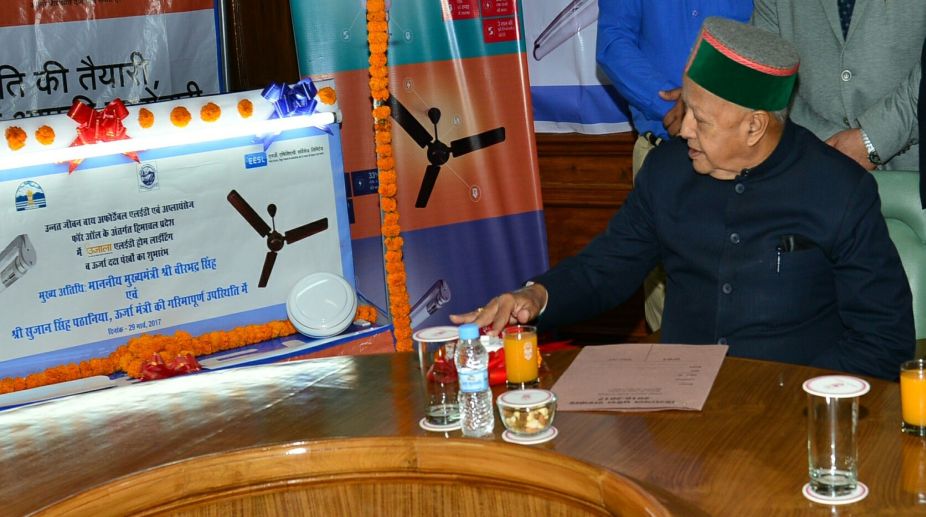
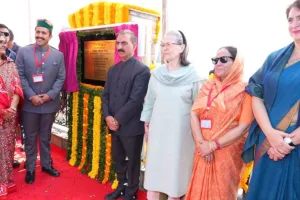
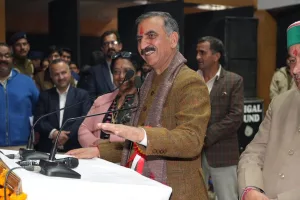
In a major initiative aimed at promoting energy efficiency in the state, Chief Minister Virbhadra Singh on Wednesday launched distribution of LED tube lights and Energy Efficient Fans under ‘Unnat Jeevan by affordable LEDs and Appliances for All’ (UJALA) scheme which is an extension of old domestic efficient lighting programme.

He said that ‘UJALA’ was an integral part of energy conservation initiative of the state government and had been very successfully adopted by the people of the state.

The innovative energy business model would result in large-scale replication of energy efficiency measures across the state.

He said the Energy Efficiency Services Limited (EESL), a joint venture of Public Sector Units (PSUs) of Ministry of Power, Government of India will implement this programme across the state in a phased manner in collaboration with state government and HPSEBL (Himachal Pradesh State Electricity Board Limited).

Singh said that energy efficiency was a key thrust area of the state government and emphasis had been laid on scaling up its implementation.

The launch of this initiative follows our commitment of such programme during 2015-16 budget for distribution of LED bulbs, he said.
Approximately 74 lakh bulbs to 12 lakh consumers had been distributed which resulted into energy saving of approximately 150 MU per annum, reflecting the success of the programme, he said.
He expressed hope that this new initiative also will achieve the success as similar to that of the LED bulb distribution programme.

MPP and Power Minister, Sujan Singh Pathania said that energy efficient LED tube light would be distributed in a phased manner.

The cost per tube light would be Rs.230 – along with three years free replacement warrantee.

The BEE 5 star 50 watt fan to replace conventional 75 watt ceiling fan will cost Rs.1,150 – along with two years free replacement warranty thus saving 33 per cent electricity.

The chief minister said that the programme was being launched for the state from Shimla from Wednesday and would be implemented in all the districts in a phased manner.

SC bans sale, registration of non BS-IV-compliant vehicles

IANS | New Delhi |

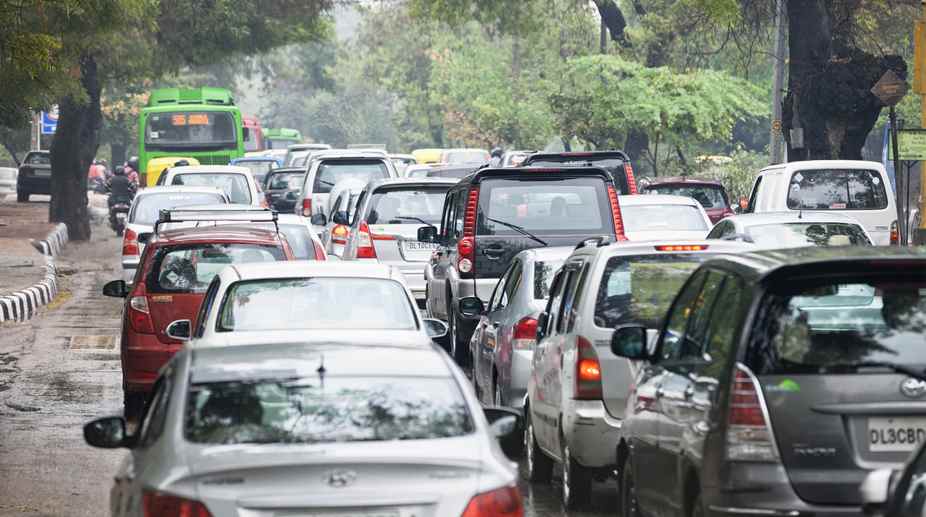
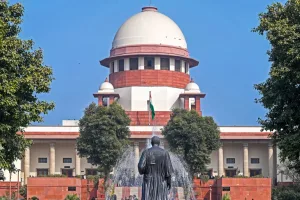
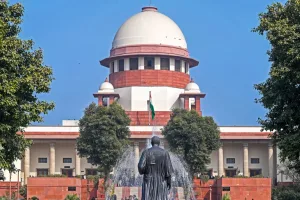
In a major decision, the Supreme Court on Wednesday said no vehicles which are BS-IV emission non-compliant will be sold in the country after April 1.

Banning the sale of BS-IV non-compliant vehicles, the bench of Justice Madan B Lokur and Justice Deepak Gupta said all the vehicle-registering authorities are prohibited from registering BS-IV non-compliant vehicles from April 1.

However, the court said that if proof is furnished that the vehicle was purchased before April 1, then it will be allowed to be registered.

Hindu temples attacked near India-Myanmar International Border

IANS | Imphal |

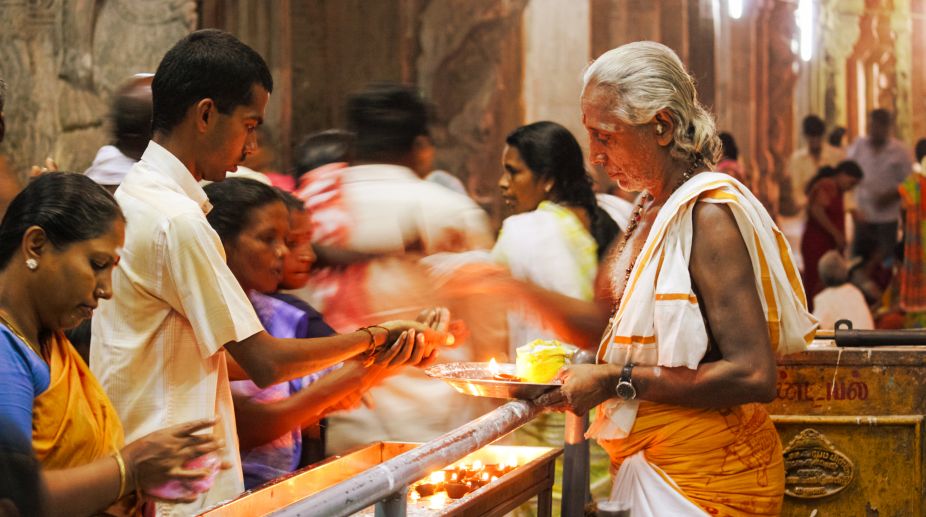
A Hindu temple on the Indian side of the India-Myanmar International Border was attacked on Wednesday, causing concern among local officials and people.

The second largest temple in the Northeast — and popularly known as Shiva temple — was attacked with a powerful remote-controlled bomb around 8.45 am, police said.

No casualty was reported.

The temple was inaugurated over 18 years ago by the Tamil Sangam Moreh in association with the trading community settled at Moreh, Manipur's border town. The town has a mixed population of Hindus, Muslims and Christians.

Troopers of 11 Assam Rifles and local police rushed there soon after the blast.

Electric bulbs, water tankers, window panes and some of the temple walls were damaged in the blast, a Brahmin attendant of the temple said.

Temple authorities said there was no monetary demand from any militant group.

Police said security measures have been beefed up in the border town.

On Sunday, another bomb exploded near the Nepali temple on the Myanmar side, intelligence sources said.

The temple is located 500 metres away from the Namphalong international market, frequented by Indian traders and tourists.

"We do not know why we are being targeted," said the temple authorities.

The Man from Kabul

Arnab Banerjee | New Delhi |

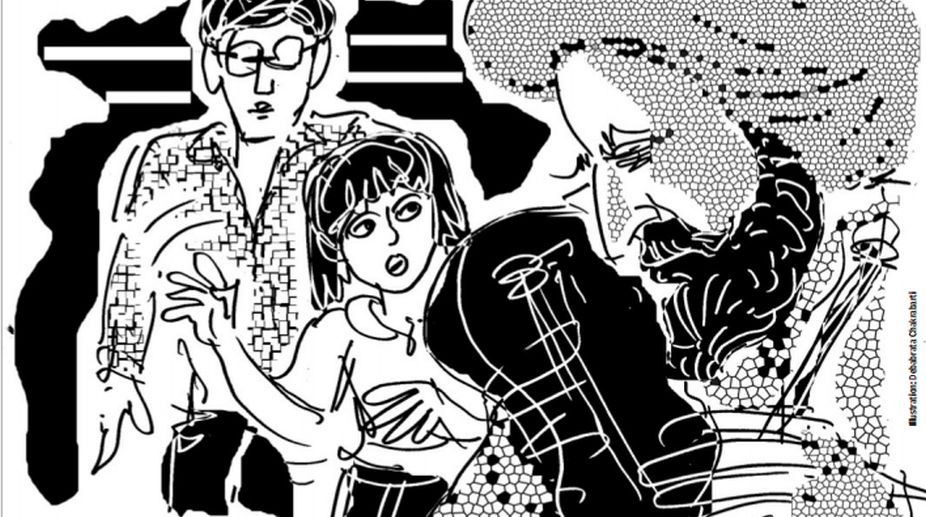
We first met Naajab on a dreary December evening. It was very cold and the wind pricked our faces with sharp, icy needles. We had just got off the bus and right in front of us, inside the bus stop shelter, was this tall gaunt man playing Hedwig’s theme on his violin. My daughter, being a recently indoctrinated, diehard Harry Potter fan, was understandably excited. She stood rooted, rapt in awestruck admiration. I had to remind her that she would be late for her ballet lesson and Miss Sarah wouldn’t be too happy. She asked me for a pound and with the greatest possible gentleness and care, deposited it inside the upturned, tattered cap on the pavement in front of the violinist, who had probably just met his biggest fan that evening.

I hurried along almost dragging my daughter by her hand. She continued to look behind her and though I did not turn back to see, I instinctively knew that that the fascinating object of her admiration was also holding her adoring gaze with a big toothy grin and violently nodding away at her, amid the gradual quickening tempo of the fiddling. When we came back to the bus stop after the lesson, much to the disappointment of my daughter, he was gone.

***

After that we saw him every week on our way to ballet lessons. If he was playing anything else on the violin, he would stop at once, as soon as he saw us, and immediately strike up Hedwig’s theme to my daughter’s evident satisfaction.

What’s your name? he asked my daughter, one evening.

Rukmini, she mumbled shyly.

Mini, he laughed out loud, Mini, the leetil one, ha ha ha. He held out a bar of chocolate. Take, take, he insisted, I will be happy… Please!

Sensing my daughter’s hesitation and seeing the apparent delight on the face of the man opposite, I gave her a tiny nudge of encouragement. She almost snatched the chocolate off him and ran. As I trotted after her, I heard a guffaw as Hedwig’s theme came back again on the airwaves. That evening, after dropping my daughter off, I came back to the bus stop. It was a relief to hear something else being played for a change. As I got into the shelter, he stopped playing and looked up, a little apprehensively. I rummaged in my pockets and offered him a fiver, Very kind of you but you shouldn’t. Those are expensive chocolates. He refused point-blank, Leetil girl, she is baby, I don’t. Not wishing to dilute the sentiment, I changed the subject, What’s your name? Naajab You from Afghanistan? Yes Whereabouts? Kabul Been here long? 14 years. I leeve in Pinner. How come we did not see you in the summer? My daughter’s started ballet in August. Summer, I do odd jobs here there. Help in garden. Garden, did you say? Perhaps you can help me then. The squirrels have dug up all my tulip bulbs. Can you replant them and cover the bed with some netting? Yes Tomorrow? Yes Eleven in the morning? Yes, I will go I jotted down my address and handed it to him. Then I went back to get my daughter. When we came to the bus stop again, Naajab was gone. On the bus ride home, I could not help thinking that this was straight from the pages of Tagore. You know Tagore, don’t you, I asked my daughter. In a flash she uncoiled like a jack-in-the-box and stood up. Before I knew what was happening, to my utter consternation, in her accented Bengali she began belting out, Jana Gana Mana Adhinayaka jaya he, Bharata Bhagya Bidhata. Fortunately, no one on the bus seemed to mind, some even attempted little indulgent smiles. I was glad this was London, such a child-friendly city. The little tykes can get away with murder here. As for me I was glad that I did not have to stand up. Tagore also wrote stories, I told her, a lot of very good stories. You should read them. Perhaps I will read them to you and your sister, one day, when I have time. The Man from Kabul, I was already translating in my mind for my daughters’ eventual paraphrased consumption.

***

True to his word, Naajab was there the next morning. And on time too! My daughter could not believe her luck when she saw him, though she was a tad disappointed when she discovered Naajab did not have his violin with him. In the garden, Naajab knew what he was doing. Within an hour he was done. When the doorbell rang, the tulips were back in their beds, the protective netting in place; everything swept up and cleaned; all tools, nettings and strings put away neatly in the shed. As I handed him a little more than the pro-rated London minimum wage, I thanked him for a job well done and asked if he could come next week to remove the dead annuals and put them on a new compost heap.

***

Soon Naajab was a regular feature in our lives. Hedwig’s theme on Friday evenings and his pottering about in the garden on Saturday mornings became routine. So where did you learn the violin, Naajab? I asked him one day. In Kabul I play rubab. One garden job here I find violin in shed. I take it. I listen to radio and play. Violin not so difficult. Not for you Naajab. You are a man of many talents.

***

Winter gave way to spring. Summer followed. My daughter started with her own violin lessons. We no longer had Hedwig’s theme to entertain us on Friday evenings and I, for one, wasn’t complaining. My daughter was a bit upset at first but since she saw Naajab every Saturday, she did not take it too much to heart. Naajab brought his violin on some Saturdays. The ever so familiar Hedwig’s theme resumed, assailing my senses once again when I was on the phone with my mother in Calcutta. Rukmini lost her shyness and leaned heavily on Naajab when he played the violin. She taught him jelly on a plate, which Naajab, after a few exaggerated false starts and punctuated with shrill reprimands, Finally got it, to the exhilarated delight of both my daughters who, holding hands, broke into an impromptu dance. They played in the garden after Naajab finished work and all three grinned and giggled and rolled on the lawn laughing out loud till it was time for Naajab to tear himself away to his next job of the day. So when were you in Kabul last, Naajab? 14 years You haven’t been back since you came? No Do you have family Naajab? Yes, in Kabul. Two boys one girl. Do you Skype them? Do you Facetime them? No! Internet no good in Kabul. I talk to them. I send them money. How old are your children? Two, five and seven. ‘But you said you haven’t been home for 14 years? Two, five and seven when I leeve Kaboul. 14 years ago. I leeve when they sleep. They don’t see me go. So they are all grown up now? He shrugged his shoulders. Why don’t you go back? They need money. I make money here. I don’t go back. If I go back I can’t come.

***

It was as I had feared. I had been providing employment to an illegal immigrant and had put myself on the wrong side of the law. Her Majesty’s law enforcement officers owed me a visit; social service too, when they found out we let our daughters play with Naajab, unsupervised. When I come I fill papers. Make me a refugee I ask. Afghanistan no safe. They take papers. Two years I get letter. Go back they say. Afghanistan is peace. No war no more. Democracy. I tear letter. I pack, I leeve Kent. I come to Harrow. I don’t go back. I work. I make money. I send money home. Don’t we all, I thought to myself. If they make me refugee I can bring family. That day we made a decision. Till he wanted, we would employ Naajab in some capacity or the other in summer and winter. He would see my daughters grow up. Not that it would lessen, in any way, the unarticulated pain of not seeing his own children blossom into young men and women, but at least every week, he would see expectant faces light up with innocent joy whenever he came to the garden through the back gate. He could talk to them about the stories he knew but never got to tell and play games he would have played in the Kabul that was never far from his mind. Sitting in his little room off Pinner Lane, perhaps he could see before him, a little more clearly, his own little children growing up in the barren, war-ravaged mountainous terrain of Afghanistan.

***

Next week before leaving for the airport, I popped my head into my daughters’ room to say goodbye. Both were deep in sleep. I knew when I came back home on Thursday, they would have gone to bed. So they get to see me only on Friday? Naajab, you either have a heart of stone or else a bank of resolve and a well of sorrows that puts me to shame, I whispered. In the flight I opened my long neglected, well-worn copy of Tagore’s collected short stories at the The Man from Kabul. I started to read and began to paraphrase, My seven-year-old daughter Mini cannot live without chattering. I really believe that in all her life she has not wasted a minute in silence…Tears came to my eyes. I forgot that he was a poor man from Kabul, while I was, but no, what was I more than he? He also was a father. The memory of the sleeping faces of his little children in their distant mountain home that Naajab carried inside him every moment of his life, reminded me of my own daughters.

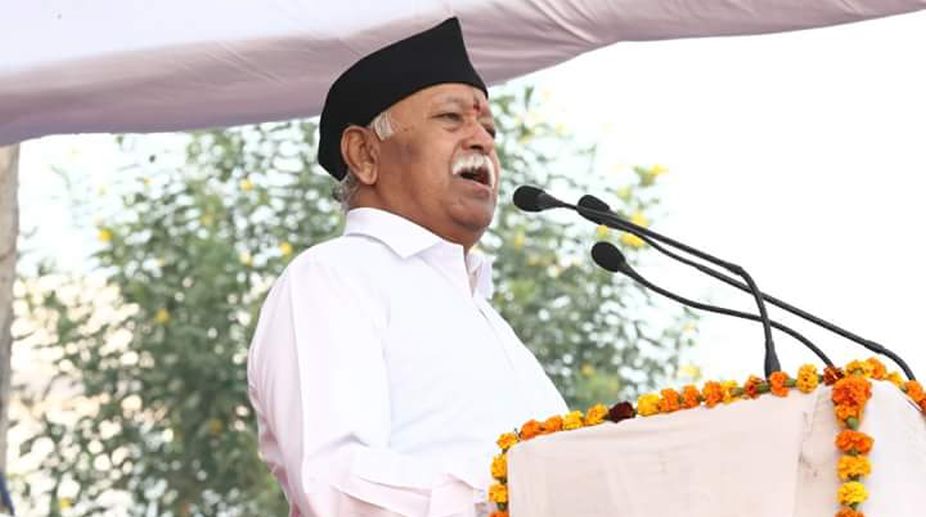
Not in race for President, says RSS chief Mohan Bhagwat

SNS | New Delhi |

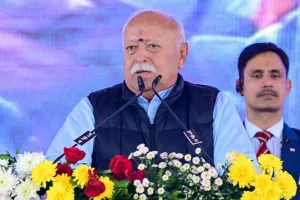
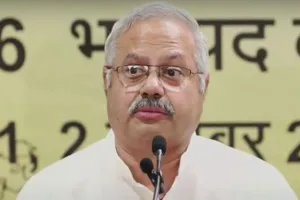
Putting an end to all speculations, RSS chief Mohan Bhagwat on Wednesday denied being in race for the President of the country.

"I am not in the race for the President," Bhagwat said in Nagpur on the occasion of Gudi Parva.

"There are some rumours in the media about me wanting to become president. That is never going to happen. I am here to work for RSS. I had already closed all doors myself before joining RSS. The rumours spread by the media will always remain rumours. Even if my name crops up, hypothetically, I will never accept it," he added.

The Shiv Sena had on March 27 proposed Bhagwat's name for the post and had urged the Modi government to consider his name.

In a statement, Sena MP and Saamana Executive Editor Sanjay Raut had said that the National Democratic Alliance – of which Sena is a member – and the BJP in particular should think of the RSS Sarsanghchalak if it wants to fulfill its dream of achieving a 'Hindu Rashtra'.

The presidential election is due in July.

20 shops gutted in Ujjain

IANS | Ujjain |


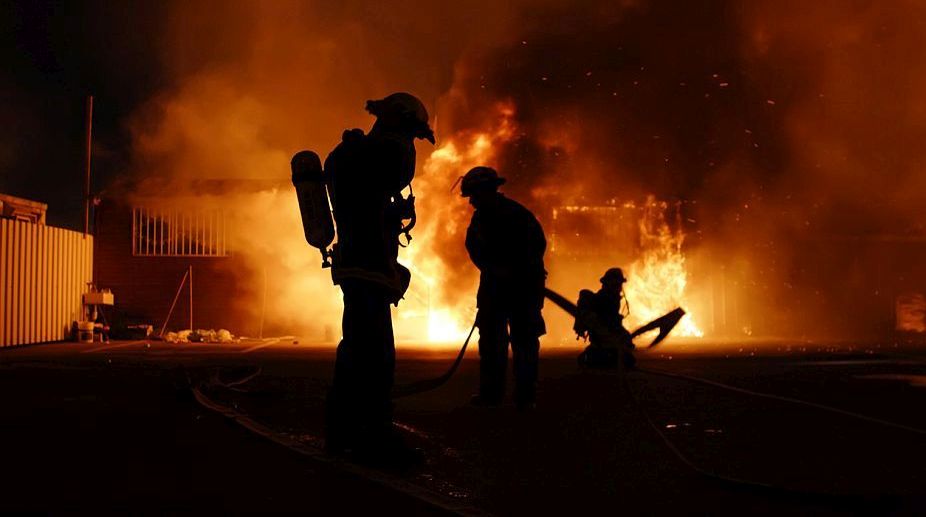
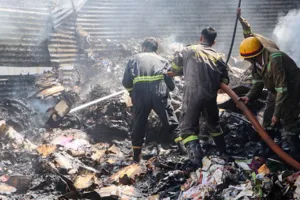
Over 20 shops were gutted in a fire in this Madhya Pradesh city on Wednesday, officials said.

The fire broke out in Ujjain's Hari Fatak area, and the cause of the blaze is being ascertained, officials said.

According to fire department officials, the fire broke out around 3 am and was finally doused after eight hours of struggle at 11 am.

Far away and long ago

Pulakesh Mukhopadhyay | New Delhi |

The cover has a diagonally rising red line cutting out the n’t. I couldn’t quite come to terms, writes Aakash Chopra in the foreword, with how completely we relied on the scoreboard to make sense of an innings or a player’s game. Are we all similarly reliant on it? If the answer is in the affirmative, our predecessors would appear to have been blessed with much, much greater sense. When Len Hutton scored his hundredth hundred, RC RobertsonGlasgow, no mean cricketer himself, reminded him that there were others, illustrious ones, who were not among those who had done so. Two of those outside the elite club were KS Ranjitsinhji and Victor Trumper, and the central point, as it appeared to RobertsonGlasgow, was this: In the judging of art, quantity is not of the first relevance; and, when we look up at the stars in the sky, it is not of their size that we are thinking.

The great writer went on to analyse the 13 cricketers who, by then, were similarly distinguished, pointing it out that WG Grace and Donald Bradman were only seventh and eighth on the list, and let it be known that he wanted that to be a warning to all arithmeticians. The attitude underpinning the viewpoint might explain why RobertsonGlasgow, referring to Tom Hayward, would write that there was something magnificently military in his stance and moustache. If cricket’s golden age is gone back to, its narrative accounts will be found full of the joy of the discovery and appreciation of beauty and the celebration of a wonderful experience, touched by the entire gamut of human emotions. But contemporary India, the hub of cricket’s commercial activities which sets forth the global economic agenda around the game, cannot really afford this easy insouciance. And those long-ago people actually revelled in its essence. Numbers are important to India, one way or another. One question that pops up in this context ~ given that the book seeks to reveal a lot more than the scoreboard does by factoring in details outside the statistical purview ~ is: how reliable are the records we pore over today, or don’t?

If we care to recall, 2015-16 was a period when several books spoke of the varieties of fixing as a phenomenon that had eliminated the last vestiges of integrity from the game, what with crime syndicates remote-controlling the choreography out there in the middle. One single tournament, the Indian Premier League, has simply played havoc with game, with the pompously named cricket board of our country losing its credibility probably forever and also a president who has had to be tamed, as the last resort, legally, which might serve to show just how much lies hidden behind the scoreboard in the purely national context. But then, Twenty20 is said to have been such a bonanza for bookies the world over that cricket’s administrative insiders admit that even global combative efforts cannot be anything more than cosmetic. The bad guys are everywhere, always ahead of the game. And from Twenty20 to the other formats is but a small step. So small that it is barely perceptible. This is an important point because cricket, tainted with corruption and marked also by punishments imposed fitfully on wrongdoers, has not altered its record book at all, creating a bizarre situation in which crime is acknowledged, some criminals are brought to book, official anti-corruption activities are routinely stepped up but the remote-controllers’ legacy, the make-believe scores, are not even sought to be discarded.

It is quite likely that a summary rejection of everything in the record book will be deemed absurd, but how do you tell the dud from the real? And if you cannot, how can you go by it? Given that urban India, with no mainstream sporting glory to aspire to, cannot really think beyond what it is saddled with, cerebral exercises of the sort this book limits itself to will be our alternative truth. Is Rahul Dravid our highest-impact Test batsman? Is VVS Laxman not among our highest-impact Test batsmen? Is Sachin Tendulkar the greatest support act in the history of Test cricket? The book gives its own answers but far more rewarding subjects are Alan Davidson, as the highestimpact Test player, Trevor Goddard, as the most underrated Test player, Colin Croft, as the highest-impact West Indian bowler during his career. But you wish you did not have to read about Hansie Cronje or Danish Kaneria and a few others whose track records were not quite what their parents would be proud of. You cannot wish corruption away.

Another point. Impact is so big a word that it includes a lot of things other than performances, even if contextually evaluated, as in this book, and the nuts and bolts of these. Victory and defeat are sometimes not central to the game. JS Barker, recalling history’s first tied Test, wrote that, until some minutes after the hurlyburly’s end, there was the utmost confusion about the result. There were those who thought Australia had won and also others who thought the West Indies were the winners. The discovery that the match was a tie, Barker wrote, was almost a relief. I remain convinced that nobody would have been happy had either side won. Not ***as*** happy, at any rate. An entirely different kind of impact, that, but one that India might as well reckon with, given that they have been bad travellers and the way they win their home Tests on designer wickets does not really make the rest of the world defer to them.

The reviewer is Sport Editor, The Statesman