Logo

Rajya Sabha to discuss vacancies in statutory commissions

PTI | New Delhi |


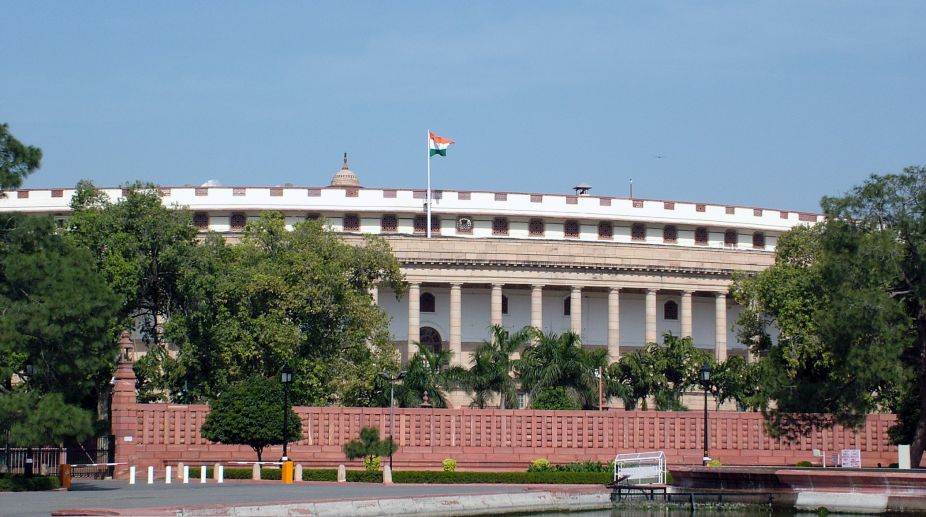
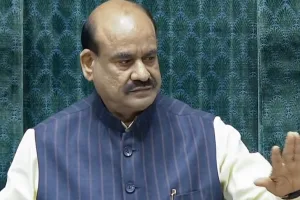
The Rajya Sabha may discuss non-filling up of vacancies in statutory commissions for SCs, STs, Backward Classes and Minorities and the delay in the process on Thursday.

For the third day in a row, the issue figured when the House met for the day with opposition SP and BSP members raising the issue.

Deputy Chairman P J Kurien said the notices under rule 267 seeking suspension of business to discuss the issue have been rejected and the opposition can give notice for a short- duration discussion, which will be considered.

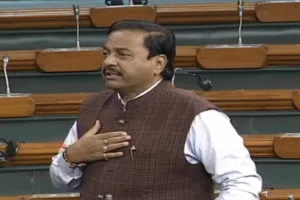
Ramgopal Yadav (SP) said such a notice will be given provided the Chair agrees for a discussion on Thursday.

Kurien at first said a proper notice should be given which will be considered by the Chair, but when Yadav persisted that the Chair should give an assurance that the notice will be accepted and discussion held on Thursday, the deputy chairman said, "OK."

Opposition members resumed their places after this and listed business was taken up.

Earlier, Kurien said 267 notices on the issue are rejected. "You can give another notice for short duration discussion. That can be examined. That can be considered. No problem. But not 267."

When the House met, SP, BSP and Congress members were up on their feet raising the issue of vacant posts in the commissions.

Minister of State for Parliamentary Affairs Mukhtar Abbas Naqvi said the government was ready to reply to any discussion on the issue, adding that the vacancies could not be filled up because of the model code of conduct for assembly elections coming into force.

Katie Cassidy to return to ‘Arrow’ in season six

PTI | Los Angeles |

Katie Cassidy is all geared up to make a comeback in the action crime TV show Arrow.

The 30-year-old actress, will be back as a series regular in season six and will portray the role of Black Siren, reported Variety.

Cassidy will first appear in the final two episodes of the CW show in the current fifth season.

She was an original cast member of Arrow where she essayed the role of Laurel Lance/Black Canary in the first four seasons, before she was killed off in the midst of season four.

After leaving the series, Cassidy signed a deal with the network where she would appear across the DC universe portfolio of shows in a guest capacity, which resulted in the arrival of Black Siren.

Morocco looking to diversify cooperation with India

IANS | New Delhi |

Morocco, fast emerging as north Africa's economic leader and a major source of phosphates for India, is keen to diversify its cooperation with New Delhi and is looking forward to a key bilateral meeting in May to boost its partnership, the country's envoy has said.

"The Morocco-India Joint Commission will convene on May 25-26 in Rabat. Both countries are also celebrating the 60th anniversary of the establishment of their diplomatic relations this year. The two countries have gone far in their cooperation which is being reinforced and diversified," Morocco's Ambassador to India Mohamed Maliki said in an interview.

Referring to the "very warm and lengthy" meeting between Moroccan King Mohammed VI and Prime Minister Narendra Modi on the sidelines of the Third India-Africa Forum Summit in New Delhi in October 2015, the envoy said the two leaders decided to elevate bilateral ties to a Strategic Partnership and "instructed their governments to work to materialise the important decision".

Both sides are now working to include new areas of cooperation to the partnership, besides the traditional ones of fertiliser, chemicals, automobiles, renewable energy and construction, among others, Maliki said.

"The two sides are exploring new areas in order to diversify their cooperation, especially in the economic sector," he added.

"Relations between India and Morocco include not only trade but investment as well. India is the largest Asian recipient of Moroccan governmental investment. Indeed, thanks to the several joint ventures between OCP (Office Cherifien Phosphates Group) and India, investment is an important part of relations between the two sides," Maliki said.

Maliki termed the India-Africa Forum Summit in October 2015 in New Delhi as not only a "remarkable milestone" in African-Indian relations but also a "significant milestone" due to the participation of the Moroccan King in the Summit. "The Indian government rightly decided that the Summit should not be convened without the participation of an important African country, which is Morocco."

He said the return of Morocco to the African Union earlier this year after three decades would add momentum to Africa-India relations.

He said both sides are working on promoting tourism and cultural relations "while enabling more cooperation between the cultural institutions of the two countries and holding cultural events in India and Morocco", leveraging particularly on the huge craze for Indian movies in Morocco.

"The commemoration of the 60th anniversary of the establishment of diplomatic relations is yet another occasion to stress on the excellent relations between the two countries in all sectors, and an opportunity not only to celebrate but also to double the efforts in bringing together the two governments and peoples, that could lay the ground to further economic cooperation."

Over the past few months, Moroccan King Mohammed VI has been touring the African continent, accompanied by business delegations, that has resulted in initiatives in the fertilser sector, infrastructure, and in energy.

The kingdom is keen to position itself as the gateway to Africa.

"Rich with their cumulative experiences, India and Morocco can join their efforts and launch initiatives towards the African countries and thereby contribute to South-South cooperation," the envoy added.

Stacks of junked notes lying with coop banks: Sharad Pawar

PTI | New Delhi |

Stacks of junked 500 and 1,000 rupee notes are lying in district central cooperative banks after they were not allowed to deposit them in currency chests and this was affecting crop loan disbursal, veteran NCP leader Sharad Pawar said on Wednesday.

Raising the issue during the Zero hour in the Rajya Sabha, the Maharashtra-strongman said the district central cooperative banks (DCCBs) were saddled with large sum of junked currency after the Reserve Bank midway withdrew its permission to them to accept the demonetised currency.

The deposits they had received before withdrawal of the permission is now lying in their chest, he said.

Following the withdrawal of old 500 and 1000 rupee notes from circulation on November 8, 2016, the junked currency was allowed to be deposited or exchanged in banks.

The DCCBs accepted and exchanged the demonetised currency notes between November 10 and 13, 2016, but they were subsequently barred from doing so, leaving them with stacks of junked currency, Pawar said.

He said 371 DCCBs got about Rs.44,000 crore worth of deposits, including Rs.4,600 crore in 31 such banks in Maharashtra.

After the permission to receive old notes was withdrawn, DCCBs were not able to deposit the junked currency they had got with the treasury, he said, adding that such banks as on November 17, 2016 had about Rs.8,000 crore in old notes. DCCBs in Maharashtra had Rs.2,772 crore.

DCCBs have to pay interest rate to deposit the old currency they had deposited in their accounts, he said.

Also, the old currency they hold is not being considered part of cash balance for determining the cash reserve ratio, thereby effecting their financial health, he said.

"This has had great impact on rabi season disbursement of crop loans," the former Union Minister said, adding only 33 per cent loan has been disbursed.

"Farmers are not getting crop loans," he said, adding money is lying in the chests of DCCBs but it cannot to disbursed and yet interest has to be paid on it.

He said he has written to the Prime Minister and the Finance Minister that the old notes lying with DCCBs be allowed to be deposited in currency chests.

His demand drew support from almost the entire opposition parties.

Minister of State for Parliamentary Affairs Mukhtar Abbas Naqvi said the concerns raised will be communicated to Finance Minister Arun Jaitley.

Deputy Chairman P J Kurien said this issue can be put to Jaitley when he replies to the debate on Finance Bill in the House.

IED explosion at Manipur border town

PTI | Imphal |

An Improvised Explosive Device exploded in the border town of Moreh in Manipur this morning, the police said.

No one was injured in the explosion at Shiv Shankar Mandir locality of Moreh, a senior police officer said.

A concrete wall in the vicinity of the blast site was partially damaged under its impact, he said.

Shiv Sena forces closure of meat shops, KFC in Gurugram

SNS | New Delhi |

As the controversy over ban on illegal slaughterhouses in Uttar Pradesh continues, Shiv Sena supporters on Wednesday marched across the streets and forced meat sellers in Haryana to shut down their shops.

Shops, including well-known food outlet KFC, were forced to shut down in Haryana’s Gurugram.

The Sena supporters demanded that the meat shops should be closed in view of Navratri, the nine-day Hindu festival when devotees only eat vegetarian food and on all Tuesdays.

Earlier on Tuesday, the Shiv Sena activists sent notices to hotels, dhabas and food joints serving non-vegetarian food to shut down their shops during Navratri, according to reports.

There were around 200 Sena activists running down the streets, forcing the shops to be closed.

The notice also had a warning that action will be taken by the police for not adhering to the notice.

The Haryana government, however, has not said anything on the matter yet.

Lewis Hamilton wants to make a film on his life

PTI | London |

Formula One star Lewis Hamilton wants to make a biopic on his life and his journey to the top of the racing world.

The British Formula One champion says he wants to both produce and star in the movie, reported Contactmusic.

“I would probably play myself. I have not seen an actor that looks like me or that I'd particularly want to represent me,” Hamilton says    The 32-year-old star says the screenplay would focus on his rags to riches story and how his dad worked three jobs to support him as a young driver who went on to become three-time world champion.

“My story is about coming from humble beginnings. I am probably the last of a dying breed because pretty much every other driver I'm racing with has come from wealth.

“It will be really telling a family story about where we've come from, how we did it as a family, the sacrifices my family made and the trials and tribulations we came across along the way.”

Hamilton believes his life story can inspire people to follow to their dreams.

“I think it is an inspiring story for people around the world, not to be racing drivers but for anything, for families to stick together as a unit and having dreams and following those dreams and actually achieving them,” he adds.

GST Bill debate in Lok Sabha: GST is a revolutionary bill, says Jaitley

SNS | New Delhi |

With the debate on the Goods and Services Tax Bill (GST) underway in Lok Sabha, Union Finance Minister Arun Jaitley has said that the GST is a revolutionary bill, which will benefit all.

"It is a revolutionary bill which will benefit all," the Union minister said in Lok Sabha.

Jaitley said that to make the bill a success, states and Centre have to work together.

"GST Council is India’s first federal institution in which the sovereignty of states and Centre have been pooled together to decide on taxes. States and Centre have to work together to make this work. We will have to honour this federal institution," he said, adding, "No additional tax will be imposed to provide compensation to states. States will be paid compensation within the existing mechanism," he said.

Saying that the bill should be passed through consensus, Jaitley said that 12 meetings in this regard have already been held.

"The GST council has been empowered to fix GST rates. The council has held 12 meetings so far and it has sent its recommendations for five GST laws" he said.

Meanwhile, reacting to the GST bill, presented by FM Jaitley, Congress leader Veerappa Moily said that the GST Bill was a big assault on the federal structure of the country.

"This is a very serious matter, just don't take shelter under constitutional amendment," Moily said in Lok Sabha.

"What you have brought today is not a game changer but only a baby step," he said, adding, "All Rajya Sabha members should resign as it is the biggest assault on Indian federal structure of the country."

Ex Uttar Pradesh CM ND Tiwari hospitalised due to infection

PTI | Lucknow |

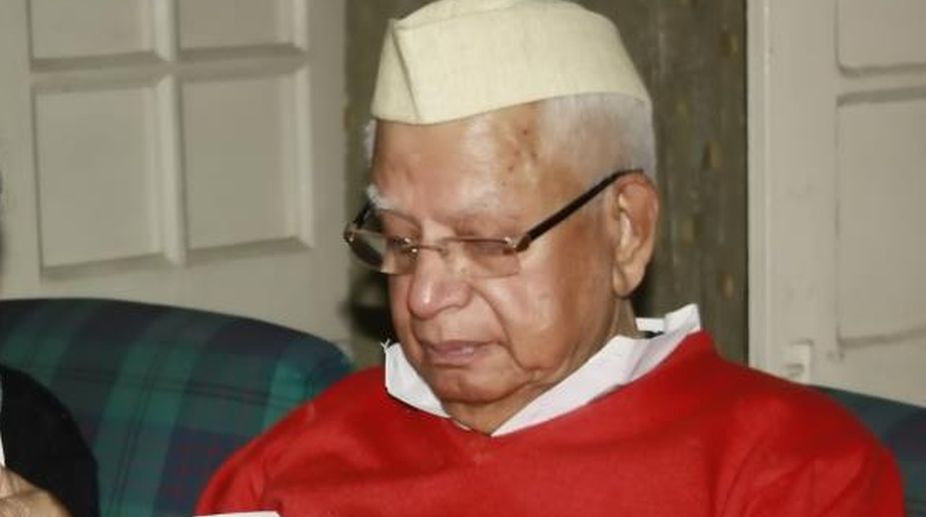
Former Uttar Pradesh Chief Minister Narayan Dutt Tiwari has been admitted to Ram Manohar Lohia Institute of Medical Sciences (RMLIMS) here following complaints of an infection.

The 91-year-old leader was taken to RMLIMS on Tuesday night.

Uttar Pradesh Chief Minister Yogi Adityanath on Wednesday met him at the hospital to enquire about his well being.

"The doctors are examining him. Chief Minister Yogi Adityanath visited the hospital at 10.30 AM," Director of RMLIMS, Lucknow, Prof Deepak Malviya said.

"Panditji, aap hamaare dharohar hai (you are our heritage)," Adityanath told Tiwari.

The chief minister's gesture made Tiwari and his son Rohit Shekhar emotional.

Tiwari was present during the swearing-in ceremony of Adityanath here on March 19.

US court dismisses case against H-1B lottery system

PTI | Washington |

A US court has dismissed a lawsuit that challenged the lottery system for determining successful applicants for H-1B visas, the most sought after by Indian IT firms and professionals.

The ruling by a federal judge in Oregon means that there will be no change in the H-1B visa issuance process for the fiscal 2018 which begins on April 3.

As a result, successful H-1B visa applicants are expected to be determined by the US Citizenship and Immigration Services (USCIS) through a lottery system.

The USCIS receives more applications for H-1B visas than the Congressional mandated limit of 65,000 in the general category and another 20,000 for those foreign students who have masters or higher degree from a US academic institution.

The case against the lottery system was filed by two firms from Portland — Tenrec Inc, a web development company and Walker Macy, a landscape architecture firm.

In its 31-page order last week, US District Court Judge Michael Simon upheld the USCIS's argument that a H-1B visa application is not considered as filed unless a lottery determines it.

"Because Congress left to the discretion of the USCIS how to handle simultaneous submissions, even if petitions are considered 'filed' immediately upon delivery, the USCIS has discretion to decide how best to order those petitions," Simon said.

"Plaintiffs offer no suggestion of how to order 150,000 petitions being delivered on the same day that is less arbitrary than a random computer selection. If a carrier delivers bags of envelopes containing petitions, it is just as arbitrary to order them based on how the envelopes are removed from the delivery bag as it is to randomly select the petitions from a computer," the judge said.

The USCIS resorts to a computerised draw of lots if the number of H-1B visa applications crosses the Congressional allotted quota in the first five days after it starts accepting the petitions every year in the month of April.

"The Court recognises that the practical implication of this rule is that every petition will be subject to the random computer-generated selection process in years when the numbers of petitions needed to meet the statutory cap are met in the first five days," the judge said.

Attorney Brent Renison, who represented the two Portland companies said the court did not say the lottery was the best way to distribute visas, only a permissible way.

"While we disagree with the court's ultimate ruling which defers to the agency, we note that Congress can change the system for the better," he said.

US court dismisses case against H-1B lottery system

PTI | Washington |

A US court has dismissed a lawsuit that challenged the lottery system for determining successful applicants for H-1B visas, the most sought after by Indian IT firms and professionals.

The ruling by a federal judge in Oregon means that there will be no change in the H-1B visa issuance process for the fiscal 2018 which begins on April 3.

As a result, successful H-1B visa applicants are expected to be determined by the US Citizenship and Immigration Services (USCIS) through a lottery system.

The USCIS receives more applications for H-1B visas than the Congressional mandated limit of 65,000 in the general category and another 20,000 for those foreign students who have masters or higher degree from a US academic institution.

The case against the lottery system was filed by two firms from Portland — Tenrec Inc, a web development company and Walker Macy, a landscape architecture firm.

In its 31-page order last week, US District Court Judge Michael Simon upheld the USCIS's argument that a H-1B visa application is not considered as filed unless a lottery determines it.

"Because Congress left to the discretion of the USCIS how to handle simultaneous submissions, even if petitions are considered 'filed' immediately upon delivery, the USCIS has discretion to decide how best to order those petitions," Simon said.

"Plaintiffs offer no suggestion of how to order 150,000 petitions being delivered on the same day that is less arbitrary than a random computer selection. If a carrier delivers bags of envelopes containing petitions, it is just as arbitrary to order them based on how the envelopes are removed from the delivery bag as it is to randomly select the petitions from a computer," the judge said.

The USCIS resorts to a computerised draw of lots if the number of H-1B visa applications crosses the Congressional allotted quota in the first five days after it starts accepting the petitions every year in the month of April.

"The Court recognises that the practical implication of this rule is that every petition will be subject to the random computer-generated selection process in years when the numbers of petitions needed to meet the statutory cap are met in the first five days," the judge said.

Attorney Brent Renison, who represented the two Portland companies said the court did not say the lottery was the best way to distribute visas, only a permissible way.

"While we disagree with the court's ultimate ruling which defers to the agency, we note that Congress can change the system for the better," he said.

Uneasy freedom

M Krishnan |

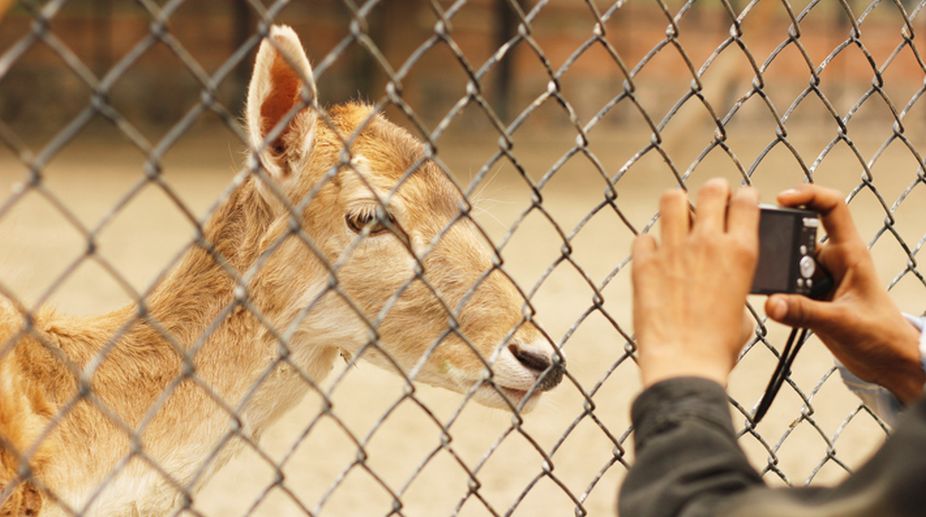
Some time ago, in a talk broadcast by the BBC, Desmond Morris, Curator of Mammals at the London Zoo, stressed the increasing importance of breeding animals in zoos as an ultimate measure in wildlife preservation.

He said that if breeding groups are not established now in the larger zoos of the world, many species will become extinct in the next century, and pointed out that the wild horse, the European bison, the Pere David deer, and the Hawaiian goose are cases where, had it not been for special breeding studies and success in captivity the species would already have become extinct. Morris added that there were two main obstacles to the effective preservation of species on the verge of extinction by breeding them in zoos.

The first was the tendency of zoos to feature variety in their inmates, rather than few groups of threatened species  no doubt a greater number of zoos, devoted to such breeding groups, would be established in due course. The second factor was the anthropomorphic popular feeling against caged animals deprived of their freedom.

It is true of course, Morris said, that the zoo animal has lost its freedom to suffer unaided from parasites diseases, starvation, droughts, extremes of temperature, the fears of predation, and of course from lingering death but loss of these kinds of freedom does not worry the antizoo mind. There is still a popular belief that wild animals are free to move about wherever they like but it has been known for many years that a wild animal is hemmed in just as tightly in its natural environment as we are in ours. Its food demands, its territorial rivals, and its predators make it a psychological captive, and there is a barrier round it that is just as effective as the bars round its cage at the zoo. If this were not so it is hardly likely that animals would adapt so well and live so long in the environment of the zoo. I am afraid Morris has presented a rather one-sided, and distorted, picture of the freedom of wild animals in nature.

Perhaps the wonderful work done in zoos and preserves in the West to save and even to revive nearly or quite-extinct species has influenced him, and perhaps he lacks firsthand knowledge of forest animals such as the sambar, the gaur, and the elephant, in their natural environments.

The examples he has cited of success in the saving of threatened species are well known  the saving of Pere David’s deer by the Duke of Bedford is, perhaps, the most romantic story in the annals of wildlife preservation. This peculiar, Chinese deer was already reduced to the status of a park animal (within the walls of the Imperial Park outside Peking) when Western science got to know it, through the agency of Pere David. With great difficulty a few live specimens were procured and sent to zoos in Europe by 1870. By 1900, the deer had been wiped out in the Imperial Park by a flood, and the Boxer Rising; the Duke of Bedford collected the dozen-and-a-half specimens available in European zoos (the only specimens of the deer left anywhere in the world) and founded a breeding colony in his deer park at Woburn Abbey. That was so successful that in 1944, his successor was able to donate fawns to Whipsnade, where a subsidiary herd was established.

In Western countries, particularly in England, with the decline in the native fauna (some of which people were unable to save  the spoonbill in England is an example), a great interest in exotic species began to manifest itself, not only in cage-birds and zoo animals, but also in species that could be given their freedom in parks and preserves remember that this was the peak period of the growth of natural history as a science. Woburn Abbey, for example, offered sanctuary to quite a few exotic animals besides Pere David’s deer, such as the last of the wild horses (Przwalski’s Wild Horse), white-tailed gnus, American bison, and wapiti.

The Severn Wildfowl Trust (which revived the dying Hawaiian Goose or Nene) provides for many water-birds and in Germany the brothers Heck claim to have bred back (from domestic stock) the extinct aurochs and tarpan. And England is the only country where the Chinese and Indian muntiac (run wild in parks) inter breed! Unquestionably some really outstanding work has been done in the West in saving species on the brink of extinction by establishing breeding colonies in zoos and preserves.

But when Morris goes on to suggest that animals in zoos and parks are better off than those in natural sanctuaries and forests in their own countries, he is carrying his argument too far and I think indulging in the very kind of anthropomorphism to which he objects though in a way less obvious than popular sentimentality.

For one thing no naturalist who knows the wild life of a country at first hand will subscribe to the statement that preys live in a state of constant apprehensiveness or fear.

Again, lingering death is no commoner in nature than in the most modern and scientifically-managed zoos. I appreciate the fact that living conditions have been tremendously improved for the inmates of modern zoos (thanks mainly to Carl Hagenbeck, who initiated unbarred naturalistic surroundings and pointed out the importance of providing captive wild animals with company and diversion). But the balance of nature is and will always be a better way of preserving wildlife than confinement and expert attention.

And many wild animals range over a much wider territory than Morris seems to appreciate.

Morris speaks of the wild animal’s freedom to suffer unaided from parasites and diseases ~ in this, too, I think he is being somewhat anthropomorphic. People who have had the curiosity to cut up the trophies shot by hunters will know that the most healthy-seeming creatures carry both external and internal parasites and that a balance seems to be struck in nature between host and parasites. A morbid fear of parasites is entirely a human feeling.

I realise that I am sticking my neck out in saying this and that it is easy by enlarging slightly on my meaning to turn the argument against me  all the same this needs to be said.

Permit me a seemingly anthropomorpric analogy in continuation of what Morris has said about a wild animal being hemmed in as tightly in its natural environment as we are in ours. I live in a rather squalid environment and thanks to my cook and my unfortunate gustatory preferences eat second rate and even third rate food both from a culinary and dietetic point of view. And I smoke far too many cheap cigarettes. But I am sure readers will need no reasoned explanation from me to appreciate my preference for life in my leaky, comfortless cottage to the luxury of spacious, air-conditioned confinement, with my diet carefully supervised by a team of specialists, my cigarettes superior, rationed and de-nicotinised, and a routine calculated to ensure optimum security, health and longevity.

Why does Morris ignore the great psychological need of all wild animals for personal liberty? It cannot be that he does not know that driven from their ancient homes, about to be artificially inundated to safe and hospitable surroundings, wild animals have rushed back to death by drowning or that if all barriers (such as fences and ditches) were to be removed from their paddocks zoo animals provided with every conceivable amenity will still escape.

Physical restraint is as unbearable to animals as it is to us, often even more unbearable, so far as we can judge by objective observation of wild creatures. Forest animals in particular such as gaur, sambar and elephants, dearly love their personal freedom.

Those animals have lived in good health and for long in a zoo prove nothing. Even a man may live to a ripe old age in prison.

However, my main criticism of Morris’s point of view is that he has wholly ignored the native terrain, flora and climate of wild animals, which cannot be substituted in zoos, even in their own countries. To me the word wildlife has complex connotations, as indicative of the flora as of the fauna. The Great Indian One-horned Rhinoceros may, with difficulty be bred in zoos; it cannot be bred in herds or breeding groups but granted that it can be bred in captivity to maintain a scattered population in several zoos, how much finer and more fitting is the achievement of the Kaziranga Sanctuary and other sanctuaries! The Gir Sanctuary for the Asiatic lions is another notable example.

But of course Morris is correct in his main point, which is that with things the way they are and the constantly increasing human demands on the land and even waters, a good way to save many species would be the founding of breeding colonies in special zoos and parks. But if we cannot set apart several comparatively small areas of forest, marshland and other tracts in each country for the preservation of its immemorial wildlife then why save anything at all?

After years of study it is my conviction that in India, the original home of sanctuaries for wild creatures, we can if we have sufficient patriotism and pride in our magnificent heritage of nature, achieve even more than has been achieved in Africa, despite the present depleted state of our wildlife. With no insuperable burden imposed on our plans for national betterment and our growing economy, we can still save the animals and plants that have lived here even longer than we have. I appreciate the magnitude of the effort, but it is less than might seem at first sight, and calls for no active contribution from us beyond effective protection, and supervision.

Moreover, the effort is necessary if we are to utilise the last chance that we have to save the greatest national asset that we have  the wonderful diversity and charm of nature in our country. If we allow this last clear chance to go unused, through irresponsible and myopic preoccupation with immediate human problems, Morris’s solution will be the only thing left to us.

This was published on December 27, 1964 in The Sunday Statesman

Uneasy freedom

M Krishnan |

Some time ago, in a talk broadcast by the BBC, Desmond Morris, Curator of Mammals at the London Zoo, stressed the increasing importance of breeding animals in zoos as an ultimate measure in wildlife preservation.

He said that if breeding groups are not established now in the larger zoos of the world, many species will become extinct in the next century, and pointed out that the wild horse, the European bison, the Pere David deer, and the Hawaiian goose are cases where, had it not been for special breeding studies and success in captivity the species would already have become extinct. Morris added that there were two main obstacles to the effective preservation of species on the verge of extinction by breeding them in zoos.

The first was the tendency of zoos to feature variety in their inmates, rather than few groups of threatened species  no doubt a greater number of zoos, devoted to such breeding groups, would be established in due course. The second factor was the anthropomorphic popular feeling against caged animals deprived of their freedom.

It is true of course, Morris said, that the zoo animal has lost its freedom to suffer unaided from parasites diseases, starvation, droughts, extremes of temperature, the fears of predation, and of course from lingering death but loss of these kinds of freedom does not worry the antizoo mind. There is still a popular belief that wild animals are free to move about wherever they like but it has been known for many years that a wild animal is hemmed in just as tightly in its natural environment as we are in ours. Its food demands, its territorial rivals, and its predators make it a psychological captive, and there is a barrier round it that is just as effective as the bars round its cage at the zoo. If this were not so it is hardly likely that animals would adapt so well and live so long in the environment of the zoo. I am afraid Morris has presented a rather one-sided, and distorted, picture of the freedom of wild animals in nature.

Perhaps the wonderful work done in zoos and preserves in the West to save and even to revive nearly or quite-extinct species has influenced him, and perhaps he lacks firsthand knowledge of forest animals such as the sambar, the gaur, and the elephant, in their natural environments.

The examples he has cited of success in the saving of threatened species are well known  the saving of Pere David’s deer by the Duke of Bedford is, perhaps, the most romantic story in the annals of wildlife preservation. This peculiar, Chinese deer was already reduced to the status of a park animal (within the walls of the Imperial Park outside Peking) when Western science got to know it, through the agency of Pere David. With great difficulty a few live specimens were procured and sent to zoos in Europe by 1870. By 1900, the deer had been wiped out in the Imperial Park by a flood, and the Boxer Rising; the Duke of Bedford collected the dozen-and-a-half specimens available in European zoos (the only specimens of the deer left anywhere in the world) and founded a breeding colony in his deer park at Woburn Abbey. That was so successful that in 1944, his successor was able to donate fawns to Whipsnade, where a subsidiary herd was established.

In Western countries, particularly in England, with the decline in the native fauna (some of which people were unable to save  the spoonbill in England is an example), a great interest in exotic species began to manifest itself, not only in cage-birds and zoo animals, but also in species that could be given their freedom in parks and preserves remember that this was the peak period of the growth of natural history as a science. Woburn Abbey, for example, offered sanctuary to quite a few exotic animals besides Pere David’s deer, such as the last of the wild horses (Przwalski’s Wild Horse), white-tailed gnus, American bison, and wapiti.

The Severn Wildfowl Trust (which revived the dying Hawaiian Goose or Nene) provides for many water-birds and in Germany the brothers Heck claim to have bred back (from domestic stock) the extinct aurochs and tarpan. And England is the only country where the Chinese and Indian muntiac (run wild in parks) inter breed! Unquestionably some really outstanding work has been done in the West in saving species on the brink of extinction by establishing breeding colonies in zoos and preserves.

But when Morris goes on to suggest that animals in zoos and parks are better off than those in natural sanctuaries and forests in their own countries, he is carrying his argument too far and I think indulging in the very kind of anthropomorphism to which he objects though in a way less obvious than popular sentimentality.

For one thing no naturalist who knows the wild life of a country at first hand will subscribe to the statement that preys live in a state of constant apprehensiveness or fear.

Again, lingering death is no commoner in nature than in the most modern and scientifically-managed zoos. I appreciate the fact that living conditions have been tremendously improved for the inmates of modern zoos (thanks mainly to Carl Hagenbeck, who initiated unbarred naturalistic surroundings and pointed out the importance of providing captive wild animals with company and diversion). But the balance of nature is and will always be a better way of preserving wildlife than confinement and expert attention.

And many wild animals range over a much wider territory than Morris seems to appreciate.

Morris speaks of the wild animal’s freedom to suffer unaided from parasites and diseases ~ in this, too, I think he is being somewhat anthropomorphic. People who have had the curiosity to cut up the trophies shot by hunters will know that the most healthy-seeming creatures carry both external and internal parasites and that a balance seems to be struck in nature between host and parasites. A morbid fear of parasites is entirely a human feeling.

I realise that I am sticking my neck out in saying this and that it is easy by enlarging slightly on my meaning to turn the argument against me  all the same this needs to be said.

Permit me a seemingly anthropomorpric analogy in continuation of what Morris has said about a wild animal being hemmed in as tightly in its natural environment as we are in ours. I live in a rather squalid environment and thanks to my cook and my unfortunate gustatory preferences eat second rate and even third rate food both from a culinary and dietetic point of view. And I smoke far too many cheap cigarettes. But I am sure readers will need no reasoned explanation from me to appreciate my preference for life in my leaky, comfortless cottage to the luxury of spacious, air-conditioned confinement, with my diet carefully supervised by a team of specialists, my cigarettes superior, rationed and de-nicotinised, and a routine calculated to ensure optimum security, health and longevity.

Why does Morris ignore the great psychological need of all wild animals for personal liberty? It cannot be that he does not know that driven from their ancient homes, about to be artificially inundated to safe and hospitable surroundings, wild animals have rushed back to death by drowning or that if all barriers (such as fences and ditches) were to be removed from their paddocks zoo animals provided with every conceivable amenity will still escape.

Physical restraint is as unbearable to animals as it is to us, often even more unbearable, so far as we can judge by objective observation of wild creatures. Forest animals in particular such as gaur, sambar and elephants, dearly love their personal freedom.

Those animals have lived in good health and for long in a zoo prove nothing. Even a man may live to a ripe old age in prison.

However, my main criticism of Morris’s point of view is that he has wholly ignored the native terrain, flora and climate of wild animals, which cannot be substituted in zoos, even in their own countries. To me the word wildlife has complex connotations, as indicative of the flora as of the fauna. The Great Indian One-horned Rhinoceros may, with difficulty be bred in zoos; it cannot be bred in herds or breeding groups but granted that it can be bred in captivity to maintain a scattered population in several zoos, how much finer and more fitting is the achievement of the Kaziranga Sanctuary and other sanctuaries! The Gir Sanctuary for the Asiatic lions is another notable example.

But of course Morris is correct in his main point, which is that with things the way they are and the constantly increasing human demands on the land and even waters, a good way to save many species would be the founding of breeding colonies in special zoos and parks. But if we cannot set apart several comparatively small areas of forest, marshland and other tracts in each country for the preservation of its immemorial wildlife then why save anything at all?

After years of study it is my conviction that in India, the original home of sanctuaries for wild creatures, we can if we have sufficient patriotism and pride in our magnificent heritage of nature, achieve even more than has been achieved in Africa, despite the present depleted state of our wildlife. With no insuperable burden imposed on our plans for national betterment and our growing economy, we can still save the animals and plants that have lived here even longer than we have. I appreciate the magnitude of the effort, but it is less than might seem at first sight, and calls for no active contribution from us beyond effective protection, and supervision.

Moreover, the effort is necessary if we are to utilise the last chance that we have to save the greatest national asset that we have  the wonderful diversity and charm of nature in our country. If we allow this last clear chance to go unused, through irresponsible and myopic preoccupation with immediate human problems, Morris’s solution will be the only thing left to us.

This was published on December 27, 1964 in The Sunday Statesman

Hillary Clinton gets political again

IANS | Washington |

US President Donald Trump's Democratic rival Hillary Clinton has made her most political comments since losing the 2016 presidential election, slamming the new administration for its policies relating to women, race and health, a media report said.

"There is no place I'd rather be than here with you," Clinton said on Tuesday at a San Francisco diversity conference, before adding: "Other than the White House", CNN reported. 

During her keynote address at the annual event hosted by the Professional Business Women of California, Clinton spoke largely about women's equality and peppered in criticism of the President and the Republican Party.

"Obviously the outcome of the election wasn't the one I hoped for, worked for, but I will never stop speaking out for common sense benefits that will allow moms and dads to stay on the job," Clinton said.

Besides a few comments in public gatherings and tweets from her personal account, Clinton has largely laid low since the November 8 election. 

She was spotted after the election in the woods near her New York home along with her husband former President Bill Clinton. She also attended Trump's inauguration.

She called Republicans' attempted replacement for the Affordable Care Act "a disastrous bill," adding that the Trump administration has been "met with a wave of resistance" that indicates the protests against Trump's policies are just getting started, the CNN report said.

During the question and answer session of her appearance, she grew incredulous at the GOP health care debate.

"Really? Take away maternity care?" Clinton said. "Who do these people talk to?"

Clinton also focused on issues like inclusivity and diversity of women in the workplace and the need for the private sector to make better efforts to bring more women to the table.

"Advancing the rights and opportunities of women and girls is the great unfinished business of the 21st century," she said, while noting that women's representation in Washington is "the lowest it's been in a generation."

The former Secretary of State also responded to racially charged incidents on Tuesday directed at two prominent black women — April Ryan, a longtime White House correspondent and Fox News host Bill O'Reilly.

Women of colour, said Clinton, have "a lifetime of practice taking precisely these kinds of indignities in stride."

But overall, Clinton offered an optimistic tone in the face of Trump's victory. She offered the audience her new mantra: "Resist, insist, persist, enlist", CNN reported.

She encouraged the audience to "resist actions that go against our values as Americans"; insist on "putting people first"; "persist" like Senator Elizabeth Warren did when she was prevented from reading a letter written by Coretta Scott King about Senator Jeff Sessions, and "enlist" others by running for office or opening a business.

"I'll be right there with you every step of the way," she said.

Hillary Clinton gets political again

IANS | Washington |

US President Donald Trump's Democratic rival Hillary Clinton has made her most political comments since losing the 2016 presidential election, slamming the new administration for its policies relating to women, race and health, a media report said.

"There is no place I'd rather be than here with you," Clinton said on Tuesday at a San Francisco diversity conference, before adding: "Other than the White House", CNN reported. 

During her keynote address at the annual event hosted by the Professional Business Women of California, Clinton spoke largely about women's equality and peppered in criticism of the President and the Republican Party.

"Obviously the outcome of the election wasn't the one I hoped for, worked for, but I will never stop speaking out for common sense benefits that will allow moms and dads to stay on the job," Clinton said.

Besides a few comments in public gatherings and tweets from her personal account, Clinton has largely laid low since the November 8 election. 

She was spotted after the election in the woods near her New York home along with her husband former President Bill Clinton. She also attended Trump's inauguration.

She called Republicans' attempted replacement for the Affordable Care Act "a disastrous bill," adding that the Trump administration has been "met with a wave of resistance" that indicates the protests against Trump's policies are just getting started, the CNN report said.

During the question and answer session of her appearance, she grew incredulous at the GOP health care debate.

"Really? Take away maternity care?" Clinton said. "Who do these people talk to?"

Clinton also focused on issues like inclusivity and diversity of women in the workplace and the need for the private sector to make better efforts to bring more women to the table.

"Advancing the rights and opportunities of women and girls is the great unfinished business of the 21st century," she said, while noting that women's representation in Washington is "the lowest it's been in a generation."

The former Secretary of State also responded to racially charged incidents on Tuesday directed at two prominent black women — April Ryan, a longtime White House correspondent and Fox News host Bill O'Reilly.

Women of colour, said Clinton, have "a lifetime of practice taking precisely these kinds of indignities in stride."

But overall, Clinton offered an optimistic tone in the face of Trump's victory. She offered the audience her new mantra: "Resist, insist, persist, enlist", CNN reported.

She encouraged the audience to "resist actions that go against our values as Americans"; insist on "putting people first"; "persist" like Senator Elizabeth Warren did when she was prevented from reading a letter written by Coretta Scott King about Senator Jeff Sessions, and "enlist" others by running for office or opening a business.

"I'll be right there with you every step of the way," she said.

47 Taliban militants killed in Afghanistan

IANS | Kabul |

At least 47 militants were killed as government forces stormed Taliban hideouts in Farah province on Wednesday, an army official said.

"As the result of well-coordinated operations launched against Taliban in Bala Block district, so far 47 rebels have been killed and 51 injured," Xinhua news agency quoted the official as saying.

He earlier put the number of Taliban militants killed at 30, saying the operations targeted Taliban bastion in Shiwan area.

Bala block is Taliban hotbed in Farah province.

Operations would continue until the insurgents are wiped out from the area, the official said.

Taliban militants who are active in Farah are yet to comment.

47 Taliban militants killed in Afghanistan

IANS | Kabul |

At least 47 militants were killed as government forces stormed Taliban hideouts in Farah province on Wednesday, an army official said.

"As the result of well-coordinated operations launched against Taliban in Bala Block district, so far 47 rebels have been killed and 51 injured," Xinhua news agency quoted the official as saying.

He earlier put the number of Taliban militants killed at 30, saying the operations targeted Taliban bastion in Shiwan area.

Bala block is Taliban hotbed in Farah province.

Operations would continue until the insurgents are wiped out from the area, the official said.

Taliban militants who are active in Farah are yet to comment.