Logo

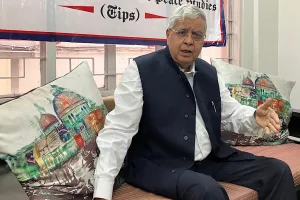
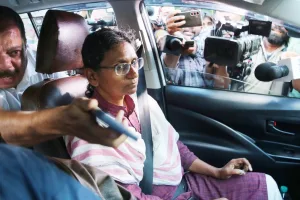
‘Write my obituary after my death’

Asad Ashraf | New Delhi |

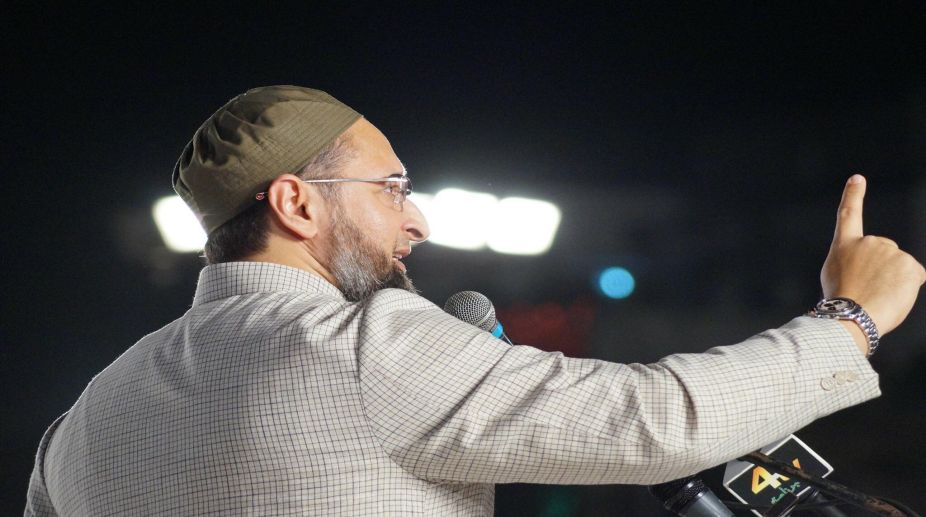
Asaduddin Owaisi is the president of the All India Majlis-e Ittehadul Muslameen. He is a three time Member of Parliament representing the Hyderabad constituency in the Lok Sabha. He was honoured with Sansad Ratn Award for overall best performance in the 15th Lok Sabha in 2014.

Owaisi is known for his articulation on constitutional rights of the Muslim community in India. His party is trying to move beyond Hyderabad and expand its base to other parts of the country. In this interview with Asad Ashraf, Owaisi talks about his party's loss in Uttar Pradesh , the crackdown on meat shops in UP and the question of the Pasmanda community within Muslims among other issues. Excerpts:

Q: After the electoral debacle in Bihar, you came out saying that the party will perform better in the Uttar Pradesh election as there was some party structure there and that people are working on the ground in the state. What do you have to say about your recent loss in Uttar Pradesh?

A: It is sad that we didn’t get success. However, victory and loss are a part of the electoral process and I humbly accept the people’s verdict. I am happy though that through this election I have been able to establish my party in the state. We will introspect into the causes of defeat and try to overcome them in the next elections.

Q: Quite a number of leaders from secular outfits and analysts have been pointing that your entering the electoral fray in Uttar Pradesh caused religious polarisation, essentially because you spoke exclusively for the Muslims. What are your thoughts on that?

A: The question here is that if I have contested 35 seats out of 403 seats, how does it cause polarisation? Secondly, many Muslim scholars and ulemas urged Muslims to vote for Dalit parties. Thirdly, during the tenure of Samajwadi Party in Uttar Pradesh there were 400 communal riots, a riot like Muzaffarnagar happened, there were custodial deaths, Samajwadi party was engaged in its own family feud, Bahujan Samaj Party gave tickets to 100 Muslim candidates. Leaders and analysts who have been pointing fingers at me do not have the courage to question why justice was not given to the victims of communal riots. Why did Muslim candidates of the BSP lose? Why did Congress lose seats in Amethi and Rai Barelli? Counter-polarisation did not take place because of me but due to the misgovernance of Samajwadi Party.

I did not contest elections in Jharkand, Haryana, Jammu and Kashmir. Why did BJP form the governments in these states? Is it also because of me?

Q: Going through the population composition of places where you had fielded your candidates in UP, it appears you had put them up where there were large chunks of Muslim population. Why so when you claim that you are not merely the representative of Muslims?

A: It was the first time that we were contesting elections in Uttar Pradesh. Like other parties we also have our electoral calculations. It was the party’s decision to contest the election on these seats. I am sure if I had placed my candidates in other seats and not these, you would have had another question on similar lines for me.

Q: By following your interviews and speeches quite closely one can observe that you talk about the constitutional rights of the minorities and other marginalised communities. But why is there a perception among the masses at large that Asaduddin Owasi is communal?

A: What is happening in this country is that you don’t talk about Sharia, you leave the matter of Triple Talaq for Hindutva, you don’t eat meat for Hindutva, you sacrifice your culture for Hindutva, and for secularism, you end your political participation. If I take a position against meat ban, Hindutva, ill-representation of the Muslim community politically I am branded as communal. I really can’t help it.

Q: How do you see your politics in the future? Experts and scholars believe that there cannot be any future for a political party which solely talks about the issues and rights of Muslims in this country.

A: It will be too early to comment on that. I suggest you write an obituary after my death. If I don’t get success in my own life, the future generations will reap the benefits out of my politics.

Q: There is another brand of politics within the Muslim community which identifies itself as backward ~ the Pasmandas. These groups do not accept you as their leader and claim that you represent upper caste Muslims. What do you have to say about that?

A: Yes, there are social groups within Muslims. However, I don’t identify myself as a Pasmanda or Ashraf. I only identify myself as a Muslim. In fact, I have clearly stated that Dalits should include Muslim Dalits too. My position is that the 1950 presidential order be removed which violates different fundamental rights of the Constitution.

Q: What is your position on the recent crackdown on meat shops and the attack on the economy of a certain community?

A: We all have to struggle against it. Muslims have been struggling for long and they will continue to do so. But I also think that secular forces such as Samajwadi Party are responsible for this crackdown and not just BJP. Why didn’t they renew the licences of the slaughter houses whose licences had expired? You knew that Rs 11,000-crore revenue was coming from the export of meat. Why didn’t you renew them?

As far as BJP is concerned, their hypocrisy is not hidden. It is the party which talks about the beef ban in North India and assures that people in North East will get to eat beef. As I said earlier, “Cow is mummy for BJP in North India and yummy in North East India.”

Q: It is often said that the Muslim community has to undergo some kind of social reformation. What is your position on that?

A: I strongly believe that the key to any kind of reform is political participation. As the late Kanshiram used to say, if we have political representation as a community our status both socially and economically will improve. It must be understood that for any reforms to take place within a community, their political participation must be ensured and they must have adequate representation in Parliament and state assemblies.
Pluralism under threat in Indonesia

Endy M. Bayuni | New Delhi |

Irrespective of the result, the Jakarta gubernatorial election on April 19 will leave a bitter aftertaste that could have consequences on the political landscape in the rest of Indonesia. The election is already billed as the ugliest, and most divisive and most polarising the country has ever seen.

Religion, and to a lesser extent, race, were issues that were widely exploited in the election. Rivals trying to unseat the hugely popular incumbent, Basuki Tjahaja Purnama, virtually forced Jakarta voters to decide whether a non-Muslim and an ethnic Chinese, hence a double-minority, could be allowed to govern the sprawling city of 10.5 million people.

Whether it is Basuki, or his challenger Islamic scholar Anies Baswedan, who wins the runoff, the religious bigotry and racism that the election raised will likely linger on, or even spread further afterwards.

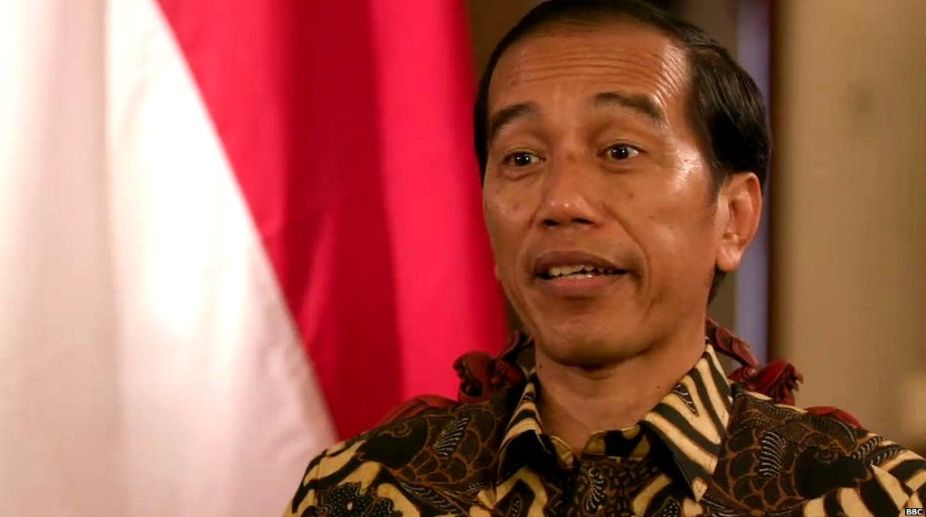
Pluralism, or the notion that this nation of 250 million people made up of diverse ethnic, racial, language and religious groups could live and coexist peacefully, looks like in serious jeopardy now, unless someone puts a stop to it. President Joko Widodo has stepped up to the plate, and he may have taken his cue from Indonesia’s first president Sukarno by combining several ideologies into one. In his particular case, it is Islam and nationalism.

Indonesia, the country with the world’s largest Muslim population, has defied the myth that democracy and Islam are incompatible by holding four peaceful democratic national elections since the downfall of strongman Suharto in 1998. Now President Widodo must show that Islam and nationalism are also not only compatible, but that the two can work together to preserve national unity.

Jakarta is considered a political trendsetter and the whole nation is watching the election to get a sense of how deep religion now plays in national politics. Not that Indonesia needs more of it. Religious Intolerance is already on the rise in recent years with many minorities becoming the target of attacks. The ugly election campaign in Jakarta is bound to put more pressure on the religious minorities and more strains on overall interfaith relations.

Two big demonstrations in Jakarta, in November and December, that were ostensibly aimed at stopping the reelection of Governor Basuki were part of a persistent campaign to push Islam into the center of the political stage and then drum up support for whatever agenda their sponsors have, including the sharia to replace the law of the land, and an Islamic state down the road.

This is making not only the religious minority groups restless, but also many Muslims who don’t necessarily agree with the Islamist agenda.

Although nearly 90 per cent of Indonesia’s population are Muslims, Indonesia is not an Islamic state, a decision its founding fathers consciously made upon independence in 1945 to placate religious minorities like Christians and Hindus, particularly from eastern Indonesia. These eastern provinces would have happily opted out of the new republic and formed their own independent states if the former Dutch colony had gone Islamic.

Indonesia’s secular status has since survived many tests, including a series of armed rebellions and terrorist attacks in the name of Islam. But now the battle by the Islamist proponents is primarily being waged in the public space. With the help of the Internet, which has created an open market place for ideologies, this fight has become about winning the hearts, minds and soul of the people.

President Widodo is leading the campaign to stop or reverse the rise of Islamism. He does so by raising the spectre, rightly or wrongly, that the nation’s unity is at stake because its key underpinning, pluralism, is being attacked by those who want to turn Indonesia into a theocratic state. And he does so not by tackling Islam head on, but rather by embracing the religion without losing sight of the bigger interests of preserving the unity of this very diverse nation.

He is combining Islam and nationalism into a single powerful force for national unity, development and prosperity.

This is reminiscent of the founding father Sukarno, who as a young 26-year revolutionary thinker, penned an article in 1926 about synthesizing Islam, nationalism and Marxism, which he saw as the main political pillars for the independence struggle. These three are competing ideologies, Sukarno wrote, but their combination would portend for a force that the Dutch colonial rulers could not stop.

After independence in 1945, President Sukarno tried to rally the three pillars together again, this time with disastrous and fatal effects. The communist party was crushed for good and Sukarno lost power in 1966.

Widodo is not as academically inclined, but he can be as astute a politician as Sukarno was.

His campaign in recent months has taken him to meet with top leaders of the military, the main force to preserve national unity, to secure their support and loyalty, telling them that he is fighting against the forces that undermining the Unitary State of the Republic of Indonesia (NKRI).

He called a press conference during his visit to the headquarters of the Special Forces saying that in his capacity as Indonesia’s commander-in-chief, he could deploy the country’s most fearsome and revered military division anywhere in the country to quell any threat to the state’s pluralistic status.

He has met with leaders of the Muhammadiyah and Nahdlatul Ulama, the country’s two largest Islamic social organizations, to get them on board of his NKRI campaign, and to make their leaders publicly denounce the forces that threaten national unity and get them to say that all Muslim citizens have the obligation to support the state and its policies.

These two organizations, with their massive influence among Muslims in Indonesia, have been responsible in developing the more tolerant and moderate version of Islam in the country, and in the past have been counted on to fight against the rise of radical Islam. And now Widodo is turning to them once again. Has the President done enough to stop the creeping Islamism in Indonesia? Time will tell. And somehow, the Jakarta election, whichever way it goes, would also be a telling factor about which direction Indonesia is heading.

The writer is Editor-in-Chief, The Jakarta Post. This is a series of columns on global affairs written by top editors and columnists from members of the Asia News Network and published in newspapers and websites across the region.

Silence over a scourge

Krishnan Srinivasan | New Delhi |

India no longer speaks about the scourge of demonetization. Where now are the outbursts of rage of some politicians who sought to make capital out of the de-legitimization of high face-value currency notes? After the short period of four months, these critics have gone mute and all that remains of the sound and fury are the huge placards in Kolkata with pictures of the chief minister denouncing the ‘note ban’ and the dictatorship of the prime minister. Even the Cambridge-educated economists, led by a person who called demonetization loot and plunder, are to be heard no more on this subject. Nor are the claque of foreign financial and political experts who were eagerly quoted by the Indian critics, who were apparently unaware that those authorities never harboured any affection for our country which they have consistently denigrated, and predicted its imminent collapse.

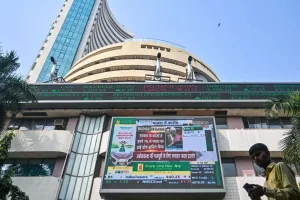
The welcome silence that has fallen on this issue is not hard to understand. The improved access to cash post-remonetisation, better tax reporting and compliance have generated a positive revenue and fiscal impact for higher public investment. The government calculates a growth upturn of 7.4 per cent in 2017-18. Tax receipts for 2016- 17 of Rs 17.10 lakh crore have exceeded even the revised estimate and are up by 18 per cent with Direct Tax up by 14.2 and Indirect Tax by 22. Merchandise exports are expected to touch $ 275 billion, the best since 2013- 14. Sensex and Nifty indices have reached record heights. In March, Foreign Portfolio Investors placed Rs 31,000 crore into equities. In the same month, manufacturing rose to a 5-month high after a dip in December.

Four months is all it took to move the economy out of the worst effects of demonetization. The effect was transient and limited mainly to November and December last year, and had dissipated by February. Taking the macro-economic scene first, alll from published sources that are by no means sympathetic to the government at the Centre, the Q-3 2016-17 GDP figures indicate a growth of seven per cent, with demonetization making a marginal dent on growth over Q- 2, despite the cash-intensive nature of consumption and industry in the unorganized sector. There was slowdown in financial, real estate and professional services, but increase in private consumption, fixed investment, electricity, mining and manufacturing. In fact the unorganized sector did fairly well, especially as the rabi crop was healthy. Agriculture, comprising 94 per cent of unorganized sector output, showed a 8 per cent increase. Banks, buoyed by liquidity, reduced their marginal cost lending rate, and spurred investment, while Small and Medium Enterprises opted for a wait-and watch attitude.

After demonetization, against 161 world currencies, the Indian Rupee has gained in strength over 143, including the US dollar, Euro, Swiss Franc, and Japanese Yen, weakened against 17 and on par with one.

Against the expectation that up to Rs 3 lakh crore ~ or 20 per cent of the demonetized currency ~ would not return, as of January New Delhi is resigned to the fact that only Rs 75,000 crore will not return to the banking system. Only Rs 14.5 lakh crore had been deposited, or 93 per cent of the delegitimized money, by that time. But this figure includes fake or counterfeit notes that will take time to identify. Rs 401 crore in defunct notes were seized up to 10 January. Four lakh crore of taxevaded income has been deposited during the amnesty window, and Rs 4,170 crore undisclosed money seized in November and December. Rs 25,000 crore in cash has been deposited in previously dormant accounts, 60 lakh bank accounts have each had more than Rs 2 lakh deposited in cash and Rs 80,000 crore has been repaid in cash against loans taken. Cash deposits totaling Rs 10,700 crore have found their way into various deposits in the North-east.

There has been a crackdown on 300 ‘shell’ companies which exist on paper and are used to launder money and evade taxes, with searches at 100 locations. At least 550 persons had laundered Rs 3900 crore through such companies after the demonetization decision.

As regards, digitization, the commonly used digital systems are credit and debit cards, mobile wallets, mobile banking and unified payments interface (UPI). There is upward movement in all these except debit cards, which were affected due to the initial lack of money in ATMs. Before demonetization, ATM withdrawals accounted for 90 per cent of debit card usage. From November to January UPI increased by 19 times.

A less-cash economy is dependent on mass adoption and focus on the base of the pyramid. A total of 125 lakh persons have adopted the new BHIM app which is backed by Referral Bonus and Cashback schemes to digitize everyday purchases. Aadhaar Pay will be launched shortly for those without debit cards, mobile wallets or mobile phones. Over 1110 million now have Aadhaar cards, and 490 million have bank accounts linked to Aadhar. Further financial inclusion is aimed at, with Aadhaar used for Direct Benefit Transfers resulting in annual savings of Rs 36,144 crore for the government. Steps are envisaged to enhance biometric authentication and to integrate BHIM with Aadhaar and to facilitate greater use of cards despite India having the worst point of sale terminal penetration in the world, at a paltry 693 machines per million users. Increased digital transactions will benefit SME to access formal credit by recording their transaction histories.

A top secret study that showed that Rs 400 crore of fake notes were in circulation and criminals intended to pump Rs 70 crore into the economy each year was the trigger for the move to deal with black money and fake currency. This was one of the major themes of the Prime Minister’s announcement last November. HDFC, ICICI and Axis are the banks with the best record of detecting these fake notes. Gurmeet Kanwal’s book, The New Arthashastra, draws attention to the serious menace to our security of counterfeit currency propagated by militant groups with the sponsorship of Pakistan. In February 2017, the government stated that the smuggling of fake currency had entirely stopped ~ but this is likely to be only a short-term relief. Counterfeit notes have been found primarily in Gujarat ~ the closest sea access for Pakistan.

The core reason for the silence that has happily descended on the chorus of opposition to demonetization is political. It is obvious from post-November polls that demonetization has not diminished Modi’s popularity or the BJP’s growing prospects of nationwide support. Local elections in Mumbai saw their support grow by 264 per cent, and 180 per cent in local elections elsewhere in Maharashtra. In Zilla Parishad polls the rise was 148 per cent. In Odisha, the increase in Zilla Parishad was 825 per cent. The same story was seen in Gujarat’s local polls earlier. The people regard demonetization with all its flaws as being a blow against corruption, bribery, the privileged class and politicians pedaling money power. In Uttar Pradesh and Uttarakhand, the BJP under Modi won an absolute majority. The wave was insufficient to overturn a 10-year incumbency in Punjab, but enough for government -formation in Goa and Manipur.

The UP election was a landmark victory for Modi but left a bitter taste for his opponents, who allege that the western media have been uniformly critical, India’s “international image took a severe beating”, and “Islamophobia as a state policy” makes the world take note in alarm. The UK Financial Times astoundingly stated that Modi’s government is “bereft of any substantive achievement … after three years.” As St Mark’s Gospel says, “Having eyes to see, see you not? And having ears, hear you not?” Indian politicians are known never to express regret, however much they misjudge the public mood. But for a start the huge placards that disfigure the Kolkata landscape and are a testament to folly, need to be removed.

The writer is India's former Foreign Secretary.

Bhadrak bedlam

Editorial | New Delhi |

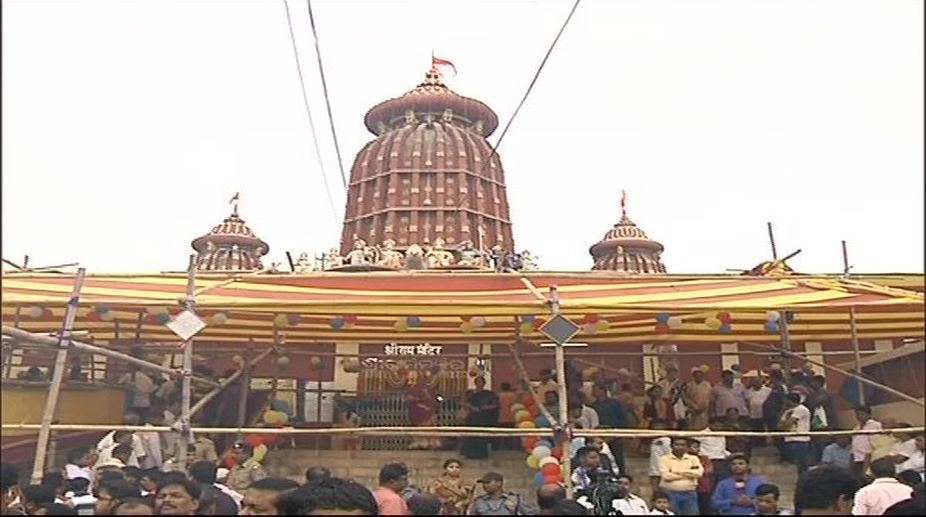
Seldom in the past, never in recent years, has the solemn occasion of Ram Navami ignited a communal flare-up as Odisha’s Bhadrak district bears witness. Palpable is the degeneration of matters religious. It was a riot situation for two days in Bhadrak, a communally sensitive belt even in the most normal of times. There is a collective sigh of relief within the administration in Bhubaneswar over the fact that there are no casualties; but this ought not to detract from the gravity of the crisis, underscored by Chief Minister Naveen Patnaik in course of his visit to the affected areas on Wednesday.

More accurately, his BJD government has suffered yet another jolt in the aftermath of the debacle in the panchayat elections. Nor for that matter can the political fallout be discounted. The communal flare-up has occurred on the eve of the Bharatiya Janata Party’s national executive meeting in Odisha… after 20 years. The damage to property must have been considerable considering Mr Patnaik’s prompt reshuffle of district officials and the directive to the administration to make an assessment within 72 hours. The charred remains of business establishments are a testament to the fanatical fury on both sides of the communal divide in a district where tension rages beneath the normal tenor of life, and violence a further inch beneath tension. Bhadrak, close to the Bengal Odisha border, exemplifies that communal truism.

Indeed, there appears to have been a severe dislocation of commercial activity, going by the Chief Minister’s directive to the recast district administration to provide financial assistance and to establish a vending zone to accommodate traders whose shops have been burnt and ransacked. At stake is the restoration of livelihood, and the task must rest as much on the administration as the people… cutting across communities.

The situation went out of control owing to the hamhanded approach of the police in the face of the tension that was building up on April 6 and 7. Hence the almost competitive mayhem, marked by retaliation and counter-mobilisation. Neither side can evade responsibility for having provoked the crisis, and the reckless use of the social media has done not a little to exacerbate matters. The police ought to have been circumspect before allowing a massive Ram Navami procession to wend its way through a surcharged Muslim area of the town. As it turned out, curfew was imposed and central forces despatched after the worst had happened. The local police stood by as mute witnesses as activists of the VHP and Bajrang Dal gheraoed the Bhadrak police station for three hours. It was no less helpless as “Hanuman flags”, so-called, were planted in predominantly Muslim areas of the district. Bhadrak has showcased a lethal cocktail of Ram Navami celebrations, the occasionally provocative social media, and an effete administration.

Licence to…..

Editorial | New Delhi |

It would be grossly unfair to hold the Prime Minister and the BJP president personally responsible for outrageous comments from lesser-lights (at times not particularly lowly) of the saffron community. Yet both of them would be worse than unfair to the positions they hold, and to the people at large, for their abject failure to initiate punitive and deterrent remedial action against the miscreants ~ be they political workers or RSS activists. There would be validity to the charge they have conveniently ducked their duty, thereby actually sending out a “green” signal to those advocating political and sectarian strife. And simultaneously have those leaders done little to curb politicised police from slapping charges of sedition, etc., even on those who opt for a pacifist path to deal with adversaries.

Things have come to such a sorry pass that someone might be dubbed a traitor should he applaud the proficiency of a sportsman or artiste from Pakistan, maybe even a good showing by a player from Kashmir could invite similar condemnation. There was, therefore, more than a grain of truth to Opposition leaders complaining to the President that a “reign of terror” had been unleashed: though what they expected Mr Pranab Mukherjee to do about it is a matter for speculation ~ particularly after his consistent calls for a tolerant and liberal society have been shamelessly spurned.

Clearly falling into the category of the “conveniently ignored” is the offer of a bounty of Rs 11 lakh from a leader of the BJP youth wing for the “head” of the chief minister of West Bengal ~ as legitimately elected to her office as Mr Narendra Modi himself. What appalls is that when the matter sparked off a furore in the apex legislature it was left to the political lightweights handling parliamentary affairs to “respond” ~ and they could offer nothing more than some meaningless words, and advising the state government to register and pursue a criminal case.

Their doing nothing more affirmative lends itself to interpretation as tacit approval of the death threat: not the first such threat to be sure. Is that the brand of discipline boasted by the BJP, the RSS and the Hindutva forces who now boast a chief minister from their ranks? The saffron community is intoxicated with its electoral successes ~ hence the unbridled terror spread by ‘gau rakshaks’, the equating of cemeteries with crematoria, and no distinction being drawn between the consumption of buffalo meat and cow slaughter. Not to mention the dubbing of people from the deep South as “black”, and frequent reminders about who have no right to dwell here. The Modi-Shah combine is so focused on winning elections that it is indifferent to the loss of India’s unique ethos.

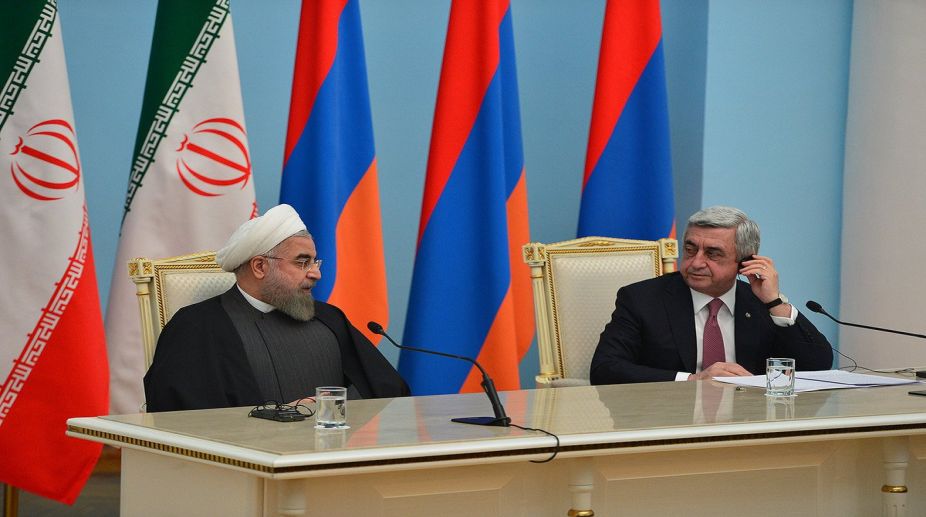
Iranian President Rouhani to seek second term

IANS | Tehran |

Iran's President Hassan Rouhani on Friday registered to run for a second four-year term in the upcoming presidential election in the country.

At the Interior Ministry's headquarters in Tehran, Rouhani said he had fulfilled the promises he made to the Iranian people during the election campaign four years ago, EFE news cited statements published by official media outlets.

In a new attempt to convince undecided voters and citizens disappointed with his policies, the Iranian President stressed that his government's economic performance was better than his predecessors' in recent years.

He also alluded to the nuclear agreement signed in July 2015 between Iran and six major powers, whose protection, in his view, is one of "the most important economic and political issues" facing the nation.

"Those who made incessant efforts on the nuclear pact should tread the path up to the end," he said in remarks to the press after registering as a candidate.

Rouhani said maintaining national security was one of his government's most important goals and stressed that "the ominous shadow of the war (over the country) has disappeared".

Rouhani, who won the 2013 presidential elections in the first round with 50.8 per cent of the vote, is the candidate of the reformist bloc, although he defines himself as moderate.

His main rival in the May 19 elections is expected to be the conservative cleric Ebrahim Raisi, who aligns with the views of the supreme leader, Ali Khamenei, and is the custodian of Iran's holiest shrine.

Another potentially strong candidate for the presidency is former President Mahmoud Ahmadinejad.

The registration process, which opened on April 11, is set to conclude on Saturday.

The country's Guardian Council — the highest political body in the country, which is overseen by Khamenei — then has 10 days to approve the candidates.

Indian ‘rhetoric’ on Jadhav fuelling hatred against Pakistan: Islamabad

IANS | Islamabad |

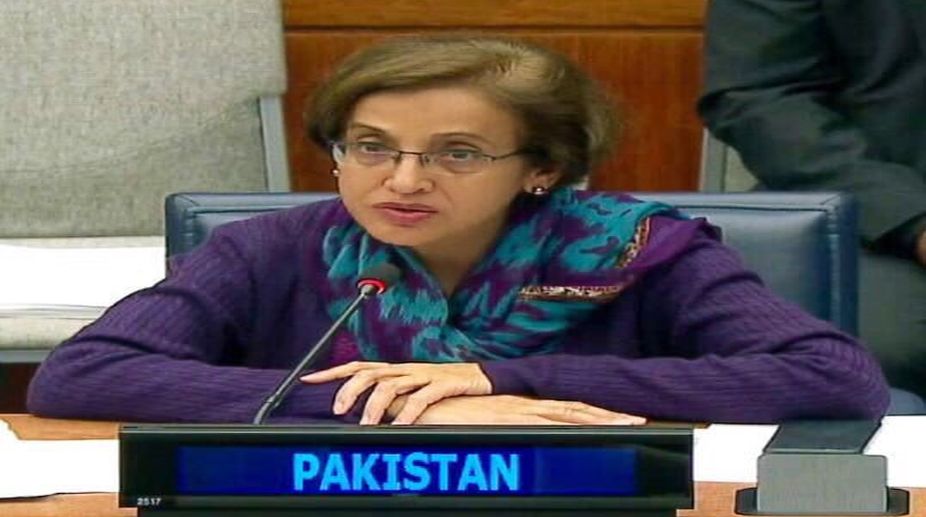
Pakistan Foreign Secretary Tehmina Janjua told Indian High Commissioner Gautam Bambawale that the "rhetoric" in the Indian Parliament on the sentencing of Kulbhushan Jadhav was "un-warranted" and fuelling hatred against Pakistan.

While refusing the request for consular access to Jadhav, Janjua told the Indian envoy that the hatred against Islamabad was not "conducive" for promoting cordial bilateral ties, a Foreign Office statement said.

Pakistan's top diplomat was referring to Indian statements that if Pakistan carries out the hanging of Jadhav it would amount to "premeditated murder".

Pakistan refused for the 14th time the Indian request for consular access to Jadhav, who has been sentenced to death by a military court for subversive activities and waging war against Pakistan.

Bambawale later told reporters here, "We demanded a meeting (with Jadhav), but they denied."

Janjua told Bambawale that India had not provided consular access to Pakistanis in Indian prisons for years, despite repeated requests and follow-up by the Pakistan High Commission in New Delhi.

India said it has sought consular access to Jadhav 13 times earlier, but was refused each time.

Earlier, Pakistan's top foreign policy chief Sartaj Aziz said that consular access can not be provided in "espionage cases".

Rome on Easter security lockdown

IANS | Rome |

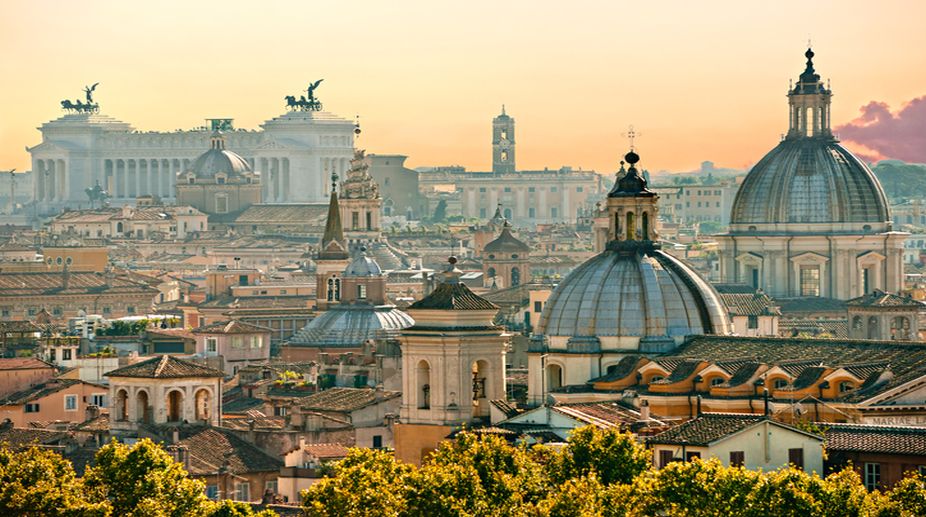
Italian authorities have tightened security in the capital for Easter and have deployed bomb squads, sniffer dogs and surveillance cameras at the Colosseum, Vatican and other sites after recent terrorist attacks in Britain, Sweden and Germany.

The Colosseum closed to visitors at 1 p.m. ahead of the Good Friday Stations of the Cross torchlight ceremony due to be led by Pope Francis, while the surrounding area is under lockdown and closed to traffic.

The Colosseum metro station also closed at 1 p.m. and buses were diverted from the area. Barriers, armoured trucks and mounted police units have been deployed at Rome's monuments, pedestrian zones, shopping streets and beach resorts near the capital.

Military helicopters, 800 soldiers, police prowler cars and outriders will patrol the capital and surrounding province under the special security measures for Holy Week.

Security has also been ramped up at tourist sites in other Italian cities over the Easter period and at transport hubs such as ports, airports and stations following a meeting of the government's strategic anti-terrorism analysis committee (CASA).

Animal rights activists use virtual reality against dairy cruelty

IANS | New Delhi |

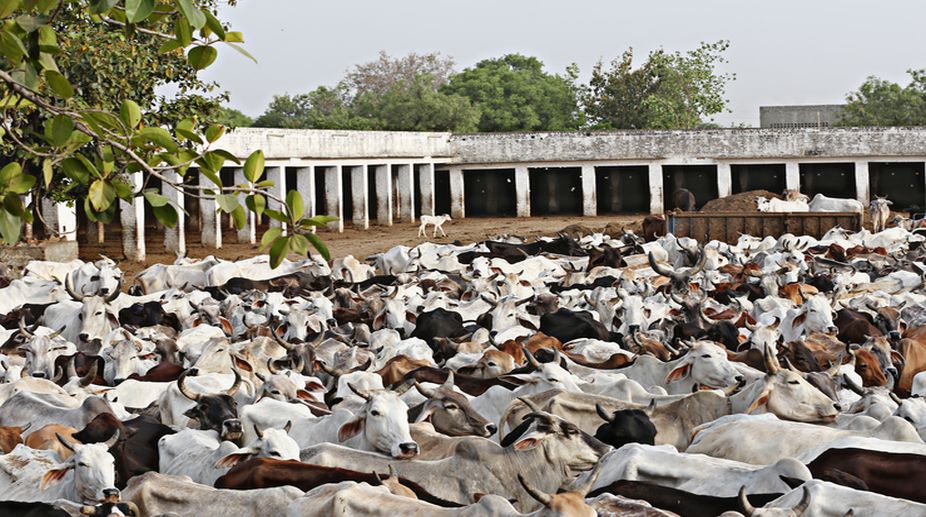
The Federation of Indian Animal Protection Organisations (FIAPO) on Friday launched a campaign against reported cruelty in dairies by showing some shocking pictures through virtual reality.

The NGO, which promotes veganism, offers experience of virtual reality to consumers with an aim to sensitise people and consumers towards the unseen cruelty to dairy cattle.

"The #DontGetMilked Campaign strives to educate people about the cruelty towards animals in the dairy industry. It aims to help people make informed choices about the food that they eat and the benefits of a compassionate and plant-based diet," Swati Poddar from FIAPO told IANS.

Asked if they are against the dairy or animal raising, FIAPO worker said: "It's fine till no cruelty is involved."

The campaign is bring to people the lesser known facts about the dairy industry where animals are often subjected to cruelty through untreated wounds, no vaccinations, artificial insemination and "Khalbaccha" (a makeshift calf).

Khalbaccha is a technique where a buffalo calf is killed and its head is stuffed with the straw to create a dummy. The dummy is hanged around the buffaloes who by getting smell of their child produce milk.

"Cows are considered sacred so they are not killed but the cruelty continues for buffaloes… Dairy animals are often subjected to cruelty," Poddar added.

After Delhi, the FIAPO will hold the virtual reality sessions at Pune, Mumbai, Hyderabad, Chennai, Lucknow and Bengaluru.

Easter weekend delight: Pineapple upside-down cake

Deepa Gupta | New Delhi |

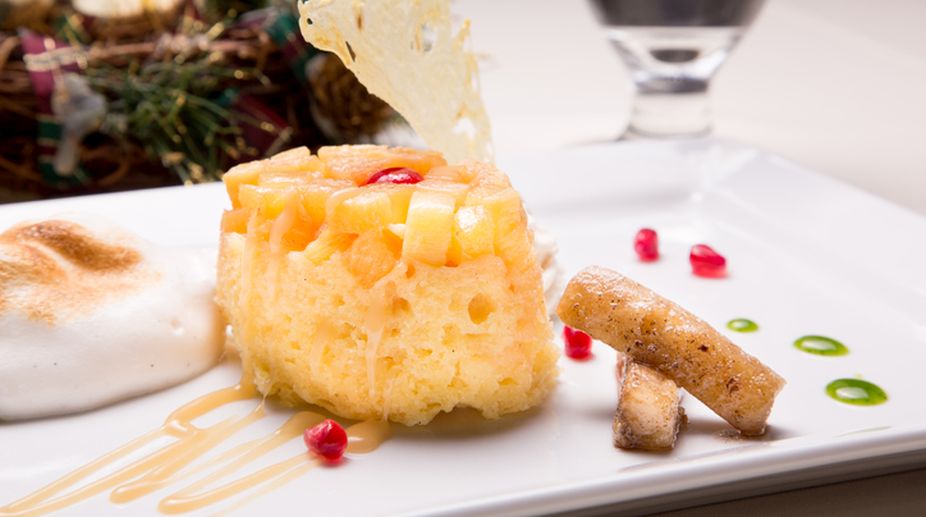
Easter weekend is finally here. It’s time to gorge on Easter cakes with free abandon. This Easter, try something new. Add some cherries and pineapple slices to your weekend. Make your Easter celebration memorable with this pineapple cake made of tinned pineapple, brown sugar, milk and eggs.

Serves: 10-12; Preparation time: 15-20 minutes; Baking time: 60 minutes

Ingredients:

Pineapple slices 1 big tin (drained)

Cherries few (tinned)

Butter 350 grams

Brown sugar ¼ cup

Maida 2 cups

Sugar 1 cup (powdered)

Baking powder 2 +1/4 tsp

Eggs 3 (large)

Milk ¾ cup

Ginger ¼ tsp (powdered)

Salt ½ tsp

Vanilla essence 2 tsp

Method:

Grease the baking dish with little butter. Spread brown sugar in the bottom.

Arrange the pineapple slices on brown sugar base and arrange one cherry in the centre of every pineapple ring.

Add eggs and milk to maida. Mix well with a hand beater.

Add butter, ginger powder, salt and sugar powder. Mix well.

Put vanilla essence and baking powder. Beat for a minute.

Pour this mixture on the pineapple rings.

Preheat oven for 10 minutes at 350 degree.

Bake the cake on the same temperature for 45 to 60 minutes.

After baking, let it cool for some time.

Knife it round the corners and turn it round on the serving plate.

Frost it with your favourite cream.

This cake tastes good when eaten hot. Don’t frost it with cream if you want to eat it hot.

A satisfying dessert perfect for cracking Easter weekend.

Suzuki, Toshiba and Denso to make lithium-ion batteries in India

IANS | New Delhi |

Suzuki Motor Corporation on Friday said that it has reached a basic agreement with Toshiba Corporation and Denso Corporation for establishment of a joint venture company which will produce automotive lithium-ion battery packs in India.

"Suzuki Motor Corporation (Suzuki), Toshiba Corporation (Toshiba) and Denso Corporation (Denso) have reached basic agreement on establishing a joint venture company for production of automotive lithium-ion battery packs in India, and signed the agreement," the company said in a statement on its website.

"In India, higher attention is being paid to environment, and new CO2 standards for automobiles is planned to be introduced."

The company elaborated that compact cars are the mainstream models in India and that introduction of sustainable technology suitable for such affordable cars is required.

"The battery pack manufacturing joint venture by the three companies will realize stable supply of lithium-ion battery packs in India in the course of promoting sustainable cars in the country and will contribute to 'Make in India' initiative by the Indian government," the statement said.

"The joint venture company will be established within 2017 and shall move to manufacturing phase at earliest possible timing. The initial capital expenditure will be 20 billion Japanese yen.

"The joint venture company will be capitalized at two billion Japanese yen, with the planned participation ratio of Suzuki (at) 50 per cent, Toshiba (at) 40 per cent and Denso (at) 10 per cent respectively," it added.

The company added that establishment of the JV company is subject to the approval by respective authorities in accordance with applicable competition laws.

Telangana minister earns Rs.7.5 lakh by selling ice-cream

IANS | Hyderabad |

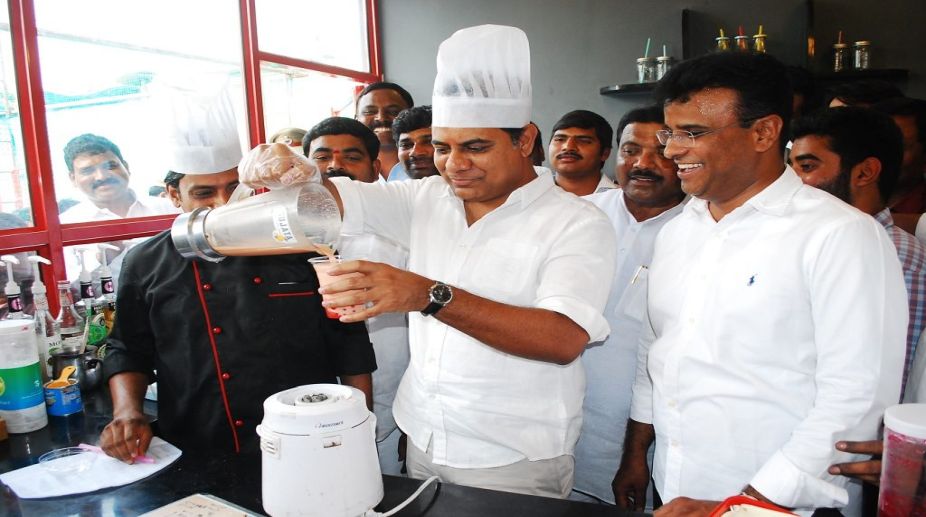
Telangana Chief Minister K. Chandrasekhar Rao's son and cabinet minister K. T. Rama Rao earned Rs 7.30 lakh just in a couple of hours by "selling" ice-cream and fruit juice here on Friday.

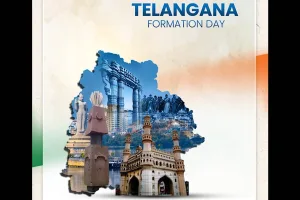
No, he has not become an entrepreneur. Rama Rao turned "coolie" to raise money for Telangana Rashtra Samithi's plenary and formation day public meeting scheduled to be held later this month.

The state Industries and Information Technology Minister sold ice-cream at a parlour in Qutubullahpur area. TRS MP Malla Reddy bought the ice-cream for Rs 5 lakh. Another party leader Srinivas Reddy paid Rs 1 lakh.

At fruit juice shop, Rama Rao earned Rs 1.30 lakh with the party leaders buying the juice from him.

Friday was the first day of a week-long programme in which all leaders and cadre of the party will work as "coolies".

Chandrasekhar Rao, who is also the TRS chief, announced that 'Gulabi (pink) coolie days' will be celebrated from April 14 to 20. He urged every party worker to work for at least two days to earn the money to meet transportation and other costs.

The chief minister, all ministers, MPs, MLAs and other leaders will work as "coolies" for at least two days.

The TRS will hold its plenary at Kompally near Hyderabad on April 21 while a massive public meeting is planned at Warangal on April 27 to mark the party's formation day.

IPL-10: All-round Gujarat thrash Pune by 7 wickets

IANS | Rajkot |

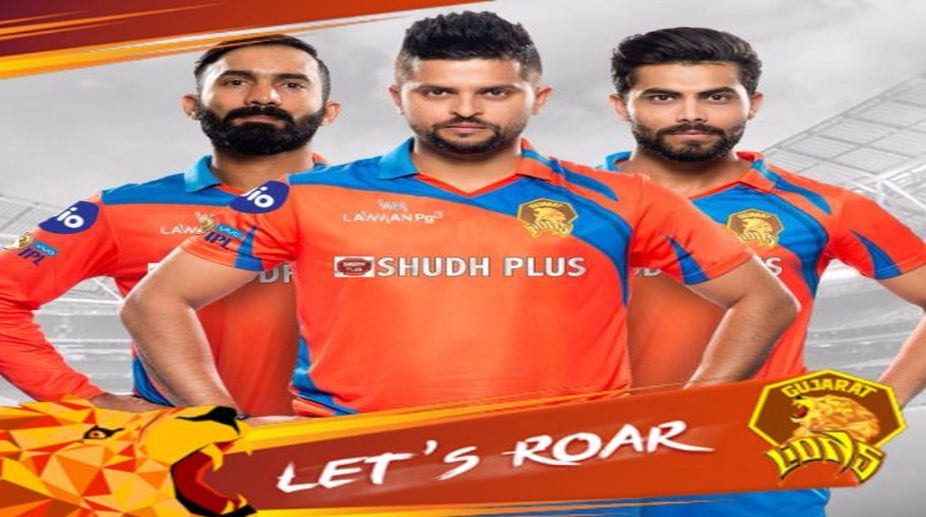
A hat-trick from debutant all-rounder Andrew Tie and sensible top-order batting helped Gujarat Lions (GL) outclass Rising Pune Supergiant (RPS) by seven wickets in an Indian Premier League (IPL) 2017 match at the Saurashtra Cricket Association Stadium here on Friday.

Tie bagged five wickets giving away 17 runs, the first in this edition of the IPL, including a hat-trick in the final over of Pune's innings, before the batsmen put on a collective show to chase down the 172 target, with two overs to spare.

Tie's hat-trick was the second of the day after Royal Challengers Bangalore's leg-spinner Samuel Badree got another in the afternoon game against Mumbai Indians.

Gujarat got off to a flier with the opening duo of Dwayne Smith (47) and Brendon McCullum (49) putting on 94 runs with none of the Pune bowlers having an answer to their onslaught.

The West Indian started his innings with an unconvincing four to square leg off Ankit Sharma before gaining in confidence with a mammoth six on the fifth ball and then ending the over with another boundary through the covers to milk 16 runs.

McCullum did not lag behind either to take fellow New Zealander Lockie Ferguson out of the park for a six over long-off before meting out special treatment to South African leg-spinner Imran Tahir, whose initial two overs cost Pune 35 runs.

There was no stopping the duo as the hosts rushed to 50 in just over five overs with Pune skipper Steve Smith changing as many as six bowlers before getting the first breakthrough in the form of Dwayne Smith, three short of his half century.

Playing his first match of the season, pacer Shardul Thakur's slower delivery did the trick for Pune, when he induced Smith for an uppercut only to be land down the throat of Rahul Chahar at third man. The West Indian's 30-ball knock was laced with eight hits to the fence and one over it.

Two overs later, a rush of blood saw McCullum's end, one run short of his half century. The former Kiwi skipper, who had by then faced 32 balls, firing five boundaries and three massive sixes was outsmarted by Chahar, who dragged the length back seeing McCullum coming down the track leaving the rest for stumper Mahendra Singh Dhoni.

The very next over saw the back of stumper Dinesh Karthik (3), who failed to pick Tahir's googly before chopping it back on to his stumps.

The loss of three quick wickets saw Gujarat slump to 111/3, before skipper Suresh Raina (35 not out) and Aaron Finch (33 not out) batted sensibly, sharing a 61-run undefeated stand for the fourth wicket to see the team home.

Finch appeared to be in a hurry to get his team over the line, lofting two consecutive sixes off Ferguson to take the hosts home.

Earlier, Pune's opening woes continued to haunt them with the loss of the in-form Ajinkya Rahane (0) in the very first over.

Skipper Smith (43) along with opener Rahul Tripathi (33) launched an onslaught, which medium pacer Praveen Kumar will perhaps remember for a long long time.

Bowling his third over on the trot, the 30-year-old Praveen was milked for 25 runs, with Tripathi dispatching him for two consecutive sixes and a four before Smith fetched two back to back boundaries as Pune rushed to their fastest IPL 50.

As Pune looked set for a massive total, Tie ended the 64-run second wicket stand between the duo, dismissing Tripathi with a slower delivery which the batsman failed to lift and was caught by Aaron Finch at mid-off.

Englishman Ben Stokes then joined Smith to add 25 runs before Dwayne Smith got the prized scalp of the Australian, who mistimed a back of a length outside off to be caught at long-on by Finch.

Two overs later, Stokes departed to another slower delivery from Tie which knocked off his off-stump, after the IPL 2017's costliest buy faced 18 balls, hitting two boundaries and a six.

All-rounder Ravindra Jadeja, playing his first match of the season, immediately provided another breakthrough with the wicket of Dhoni (5), whose form continued to desert him for the fourth consecutive match.

Congress to complete organisational polls by October-end

IANS | New Delhi |

The Congress has decided to complete its organisational elections by the end of October, said a party source on Friday.

The decision came after the Election Commission (EC) extended from June 30 to December 31 the deadline for the party to hold the organisational polls.

"The party has not finalised the schedule yet. It is under process. A detailed schedule will be prepared to complete the polls by October-end," said the source.

"The party's election authority is working on the schedule," he added.

This would pave the way for elevation of Congress Vice President Rahul Gandhi as the President, apart from several other changes in the organisational set-up.

According to the party source, AICC Central Election Authority Chairman Mullappally Ramachandran had a meeting with party President Sonia Gandhi, Rahul Gandhi, Ahmad Patel, A.K. Antony and Janardan Dwivedi on Wednesday to discuss the schedule.

The Congress, which was earlier given an ultimatum by the Election Commission to complete its organisational polls by June-end, had informed the panel that this could be done only by December 2017.

Earlier, the party is believed to have questioned the deadline fixed by the Commission.

President lays foundation for Ambedkar Economics School in Bengaluru

IANS | Bengaluru |

President Pranab Mukherjee on Friday laid the foundation stone for the Dr B.R. Ambedkar School of Economics in the Bengaluru University campus on the 126th birth anniversary of the architect of the Indian Constitution.

"As the principal architect of the Indian Constitution, Ambedkar was the first Indian to receive a Doctorate from the London School of Economics," said Mukherjee in his address at the event in the state secretariat here.

Noting that there had been significant expansion in the infrastructure of education in the country, he said, however, several students go abroad for higher learning every year.

"It is important to create institutes of international repute in the country to attract students and teachers from the world over as was the case in ancient India when we had universities like Nalanda, Taxila and Vikramshila," he said.

The President hoped that the new School would be another feather in the cap of Bengaluru, which has made a mark in the IT, BT, banking and industrial sectors.

"Education institutions named after Baba Saheb are a befitting tribute to Ambedkar who was also a great economist and a committed advocate of universal education."

Terming Ambedkar a legendary figure with a multifaceted personality, the President said he was the harbinger of dedication and commitment for the poor and deprived and had attached great importance to education as it was a means to change one's destiny.

Governor Vajubhai Vala said Karnataka was the best environmental place for education and health.

"The present generation have their education here and work for other countries, but Ambedkar studied abroad and served the nation," he said.

The Karnataka government has sanctioned Rs 150 crore for setting up the school's first phase, with an administrative block, student hostels, auditorium, three seminar halls and quarters for the faculty.

The state government intends to run the School as an autonomous institution of international standard.

Anup K. Pujari (IAS retired) is the special officer of the School which will begin admissions for the academic year 2017-18.

Chief Minister Siddaramaiah, Union Parliamentary Affairs Minister Ananth Kumar and state Industries Minister R.V. Deshpande were among the dignitaries present at the event.

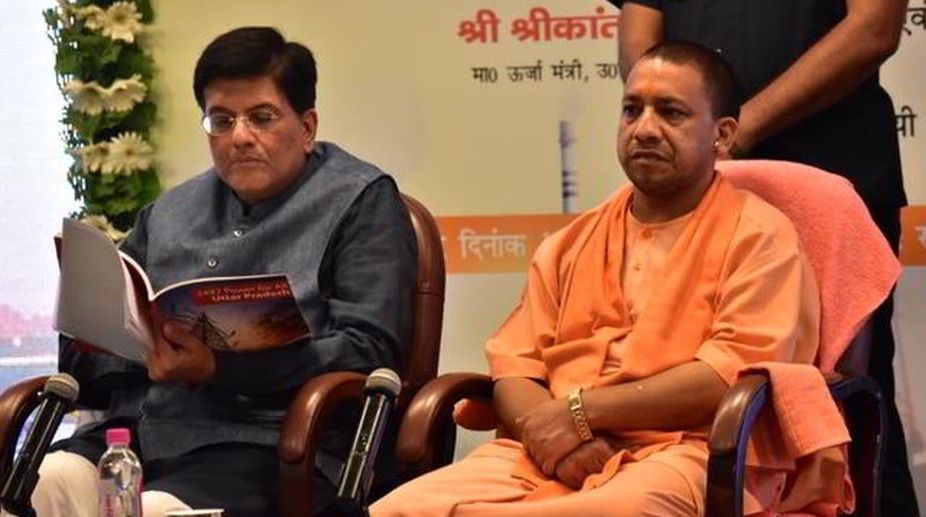
UP signs ‘power for all’ agreement with central government

IANS | Lucknow |

The Uttar Pradesh government on Friday signed an agreement with the Centre for "Power for All".

The agreement was signed in presence of Chief Minister Yogi Adityanath and Union Power Minister Piyush Goyal.

UP was the only state in the country which had not signed the scheme aimed at providing power to all, said Goyal, and also lauded state Power Minister Shrikant Sharma and his team for wrapping up the agreement in such a short time.

It was also announced that from now on, power consumers in the rural areas will be able to make digital payments of their electricity bills.

A 24×7 toll free number – 1912, was also activated across the state for people to complain about any power related issues. An MoU was also signed for providing of 10,000 solar panels by the Centre.

A scheme of providing LED bulbs, tube lights and energy efficient fans at cheap rates was also kicked off with the signing of an agreement between the Energy Efficiency Services Ltd and the state government.

Goyal also credited Baba Saheb Bhim Rao Ambedkar of being the visionary behind the giant strides being taken by the Narendra Modi government in the power sector, adding that it was the architect of the Indian constitution who had visualised the concept of power for all and that electricity and irrigation facilities were big tools in the hand of people for development.

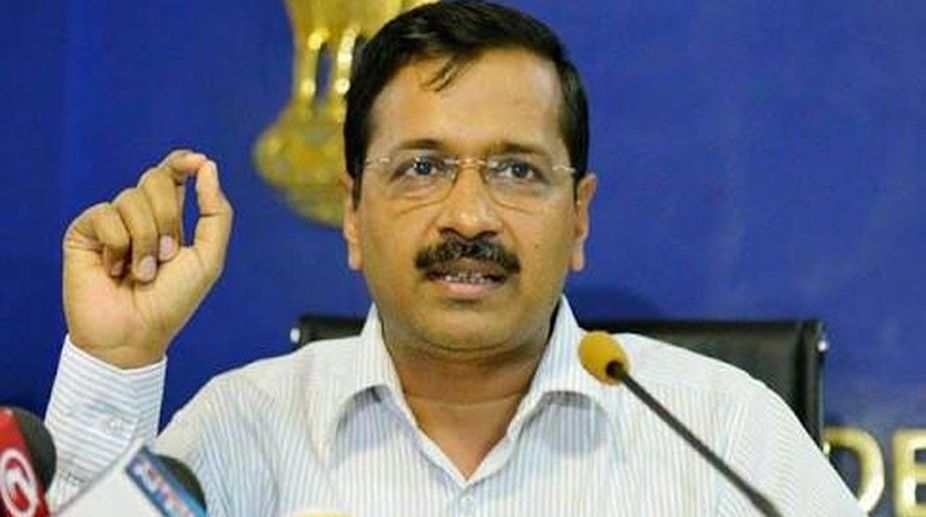
Kejriwal urges Delhi SEC to postpone municipal polls by 1-2 months

IANS | New Delhi |

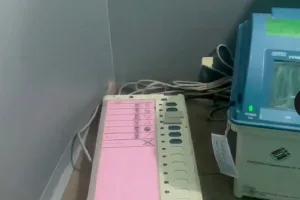
Delhi Chief Minister Arvind Kejriwal on Friday urged the State Election Commission (SEC) to postpone the municipal polls by one or two months until the VVPAT equipped machines are arranged.

Kejriwal, along with several other leaders of his Aam Aadmi Party (AAP), met Delhi State Election Commissioner S. K. Srivastava and demanded not to use Generation 1 Electronic Voting Machines (EVMs) manufactured before 2006 to conduct the municipal polls.

He alleged that the EVMs manufactured before 2006 were "junked" and had very "loose" security features which can even be "hacked by a child".

Kejriwal, after the meeting, told reporters that the SEC assured that he would write to the Chief Election Commissioner over the matter.

"But only one week is left for the municipal polls and there is no possibility of arrangement of VVPAT (Voter-Varifiable Paper Audit Trail) machines within this time. So I urged him (SEC) to postpone the polls by a month or two till VVPAT equipped machines are arranged or the Gen 1 machines are replaced," he said.

"He (SEC) said there is no such provision to postpone the election, then we told him that under Delhi Municipal Corporation (DMC) Act, the central government can extend municipal corporation's term by one year.

"I asked the SEC to write to the central government to extend MCD's session by one to two months," Kejriwal said.

He reiterated his demand that municipal polls must be conducted with EVMs with the VVPAT machines and if not, with paper ballots even if that means the election has to be delayed by a few days.

The delegation led by Kejriwal which met SEC included senior AAP leaders Sanjay Singh, Ashutosh, Ashish Khetan, Dilip Pandey, Atishi Marlena, Raghav Chadha and MLA Somnath Bharti.

Kejriwal also said that Uttar Pradesh State Election Commission had also written to the Election Commission that it did not wish to conduct local body elections using Generation 1 EVM machines because they were unreliable.

"The CEC has also admitted that Generation 1 machines are unreliable. In this context, why is the Delhi SEC insisting on conducting the MCD elections using Generation 1 EVMs?" the AAP leader asked.