Strait Lessons
The reopening of shipping lanes through the Strait of Hormuz may have calmed oil markets, but it would be a mistake to confuse the return of traffic with the return of certainty.
Italy has rejected allegations that it allowed its territory to be used for attacks on Iran, while urging Tehran to reopen the Strait of Hormuz to allow commercial shipping to resume. The diplomatic exchange follows remarks by NATO Secretary-General Mark Rutte that sparked political controversy.




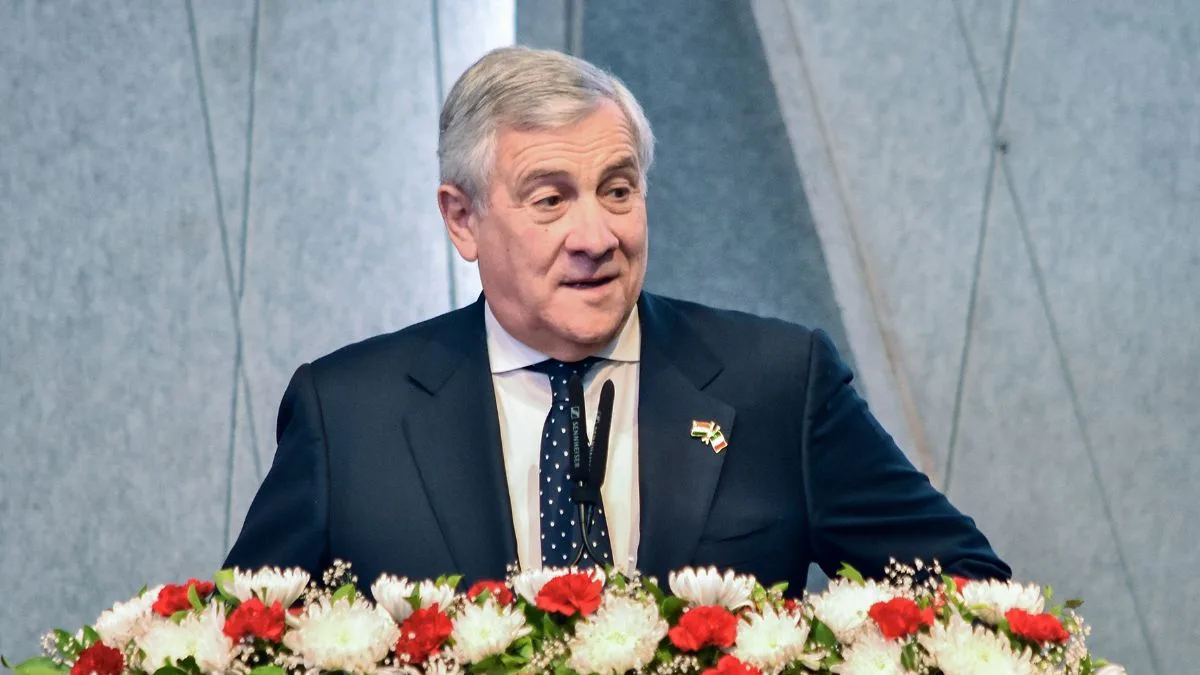
File Photo: Italian Foreign Minister Antonio Tajani. Italy has denied participating in military action against Iran and urged Tehran to restore full navigation through the Strait of Hormuz. | ANI
Italy has denied participating in any military action against Iran after Tehran raised objections over the alleged use of Italian territory during recent US operations. At the same time, Rome has urged Iran to fully reopen the Strait of Hormuz to allow commercial shipping, including Italian cargo vessels, to resume normal movement.
The diplomatic exchange comes after remarks attributed to NATO Secretary-General Mark Rutte triggered political and diplomatic reactions in both Italy and Iran. Italian leaders have rejected suggestions that the country supported military operations against Iran through its military bases.
Advertisement
Italian Foreign Minister Antonio Tajani said he conveyed Italy’s position directly to his Iranian counterpart Seyed Abbas Araghchi during a telephone conversation.
Advertisement
In a post on X, Tajani said, “I spoke with the Iranian Foreign Minister Seyed Abbas Araghchi. Italy has never taken part in any military initiative and has never authorized the use of bases for war actions against Iran, in the strictest respect of the treaties with the United States.”
He added that Italy had requested the “return to full opening of the Strait of Hormuz,” saying the move would help cargo ships that remain stranded in the waterway.
Tajani also described the reopening of the Italian Embassy in Tehran as “a strong signal of dialogue,” saying it could support the revival of economic and cultural relations between the two countries.
Italian Defence Minister Guido Crosetto also disputed suggestions that Italian bases had played an expanded operational role during what was referred to as the “Epic Fury” period.
In a post on X, Crosetto said the number of aircraft transiting through Sigonella and Aviano during that period was lower than the figures recorded every year between 2019 and 2025.
“For informational purposes, the number of flights in transit at Sigonella and Aviano during the Epic Fury period was far lower than the number of flights in transit in the years: 2025, 2024, 2023, 2022, 2021, 2020, 2019,” he wrote, adding that the figures were based on official Defence Ministry data.
Iran, however, maintained that countries allowing their territory to be used for attacks could bear international responsibility.
Deputy Foreign Minister for Legal and International Affairs Kazem Gharibabadi said on X that providing territory for another state to carry out aggression constitutes an act of aggression under UN General Assembly Resolution 3314.
“The statements of the NATO Secretary General regarding the use by the United States of Italian and Romanian bases in an attack on Iran give rise to the international responsibility of these countries,” he said.
Iranian Foreign Ministry spokesperson Esmaeil Baqaei also said Italy and Romania had been explicitly named by NATO’s secretary-general as participants in the aggression against Iran.
According to Politico, the controversy followed comments made by NATO Secretary-General Mark Rutte during an interview with Fox News before his meeting with US President Donald Trump in Washington.
Rutte said Rome had allowed around 500 US military aircraft to operate from American bases in Italy during US and Israeli strikes on Iran. He also said that European allies had collectively made military bases available for operations, resulting in between 4,000 and 5,000 aircraft departures linked to “Epic Fury.”
Politico reported that the Italian government, led by Prime Minister Giorgia Meloni, had earlier maintained that only logistical and technical flights permitted under the bilateral agreement governing US military bases in Italy would be allowed to use the country’s facilities for operations connected to the Middle East.
Advertisement