Logo

Sensex, Nifty inch up in morning trade

SNS | New Delhi |

Keeping aside weak Asian equity markets, domestic benchmark indices traded marginally higher in the early morning trade on Wednesday with Midcaps and Smallcaps leading the gains.

At 9.45 am, the Sensex was trading 23 points or 0.08 per cent higher at 29,342 while the Nifty50 was trading six points or 0.06 per cent up at 9,112.

Broader markets again outperformed the front liners. BSE Midcap and BSE Smallcap indices gained 0.3 per cent and 0.2 per cent respectively.

Among the BSE sectoral indices, Power index registered the biggest gain with a jump of 0.8 per cent. IT (up 0.8 per cent), Teck (up 0.6 per cent) and Healthcare (up 0.4 per cent) indices were other notable gainers. Metal index dropped 0.5 per cent.

On Tuesday, the BSE Sensex closed 102 points or 0.35 per cent down at 29,312 while the NSE Nifty ended 34 points or 0.37 per cent lower at 9,105.

Top gainers in the Sensex-30 pack: Power Grid (up 1.7 per cent), Sun Pharma (up 1 per cent), Adani Ports (up 1 per cent), TCS (up 0.9 per cent) and NTPC (up 0.5 per cent).

Top losers in the Sensex-30 pack: Axis Bank (down 1.1 per cent), Tata Motors (down 0.7 per cent), ONGC (down 0.6 per cent), Tata Steel (down 0.6 per cent) and ICICI Bank (down 0.4 per cent).

Meanwhile, the Rupee was trading six paise higher at 64.62 against the US Dollar.

Photo

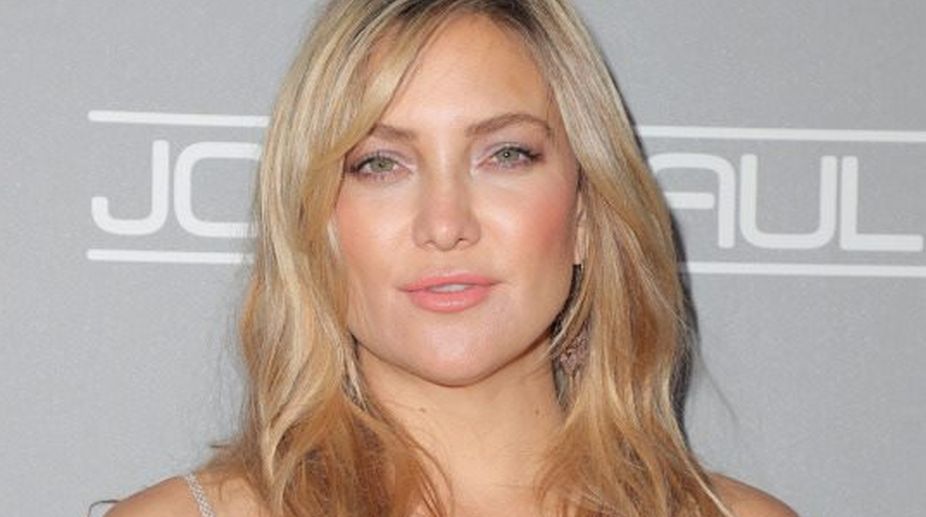
  • Kate Hudson was born on April 19, 1979, in Los Angeles, California (Photo: Twitter)

    " alt="img" />
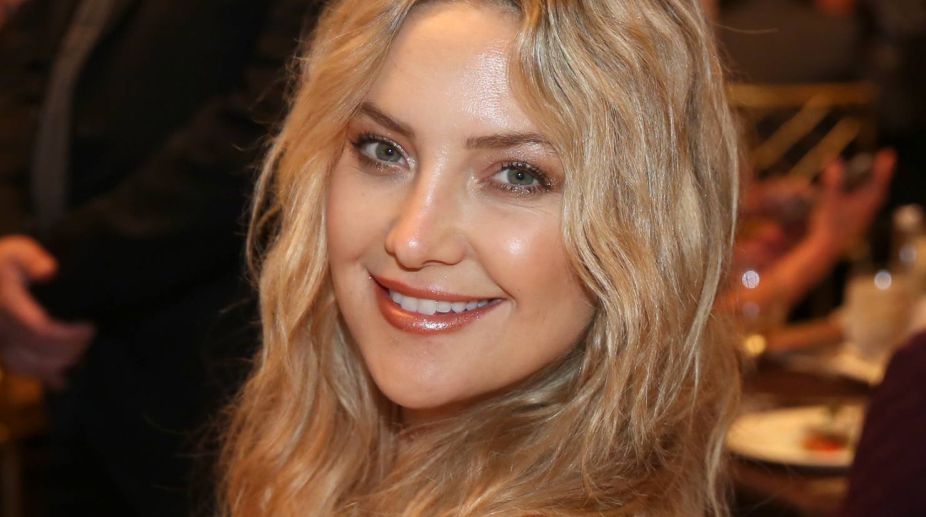
  • Kate is an actress and the daughter of actress-producer Goldie Hawn (Photo: Facebook)

    " alt="img" />
  • img
  • Hudson was raised by her mother and Hawn's longtime companion, actor Kurt Russell (Photo: Facebook)

    " alt="img" />
  • Like her mother, Hudson is a practicing Buddhist (Photo: Facebook)

    " alt="img" />
  • Hudson decided to embark on an acting career of her own, landing an agent and a guest spot on the TV drama 'Party of Five' in 1996 (Photo: Facebook)

    " alt="img" />

Birthday special: Ever-loved ‘Penny’ Kate Hudson

Birthday special: Ever-loved ‘Penny’ Kate Hudson

MORE Photo STORIES

Champions League: Vardy strikes, but Atletico Madrid knockout Leicester City

Their exit brings to an end a golden adventure sparked by last season's stunning Premier League win.

AFP | Leicester |

Jamie Vardy scored in vain as Leicester City's Champions League fairytale came to a valiant end following a 1-1 quarter-final draw at home to Atletico Madrid.

Seeking to overturn a 1-0 first-leg deficit, Leicester fell further behind to Saul Niguez's first-half header, before Vardy's 61st-minute strike gave them hope.

But despite heavy Leicester pressure and furious noise inside the King Power Stadium, Atletico on Tuesday night completed a 2-1 aggregate win to reach the semi-finals for the third time in four seasons.

"We had them rattled with the effort and commitment we showed. It's no discredit to lose to a team of that calibre," Leicester manager Craig Shakespeare told BT Sport.

"The whole club, from the supporters to the players to the owners can be immensely proud, but I've just said to the players that they should want more of this and they've agreed that that's what they want."

Leicester had hoped to become the competition's first debutant semi-finalists since Villarreal in 2006, but they were unable to engineer a repeat of their last-16 triumph against Sevilla.

Their exit brings to an end a golden adventure sparked by last season's stunning Premier League title win.

Having successfully staved off the threat of relegation under new manager Shakespeare, the rest of their season now holds nothing more than a return to pre-title normality.

It is the third time Atletico have eliminated Leicester from continental competition, after previous triumphs in the 1961-62 European Cup Winners' Cup and the 1997-98 UEFA Cup.

Beaten by city foes Real Madrid in the 2014 and 2016 finals, Diego Simeone's side can continue to dream that this will be the year they finally end their wait for European football's biggest prize.

"I'm full of emotion and pride at the performance of my team," said Simeone.

"I also have to say, what a great performance from our opponents. It was almost a pleasure to compete against them."

Leicester's desire to make the most of the occasion was clear from the start, pyrotechnics greeting the players as they came out while fans twirled blue, white and gold foil flags distributed by the club.

But whereas Leicester had quickly taken charge of their second-leg match against Sevilla in the previous round, Atletico made it clear they would not be pushed around.

They defended with their customary tenacity, while two dangerous crosses from Yannick Carrasco — preferred up front to the fit-again Kevin Gameiro — demonstrated their threat on the counter.

It was just as Leicester were threatening to make inroads, Shinji Okazaki stabbing wide at the near post from Vardy's cross, that the visitors tightened their grip on the tie.

Filipe Luis was given space to shape a cross into the box from the left and the unmarked Saul expertly guided a header past Kasper Schmeichel's outstretched right hand.

Riyad Mahrez volleyed straight at Jan Oblak at the other end after Marc Albrighton's cross was headed away, but it was the voices of the away fans that rang loudest as the half-time whistle sounded.

The second half brought with it drastic changes for the hosts, with Ben Chilwell and Leonardo Ulloa replacing Yohan Benalouane and Okazaki as Shakespeare switched to a bold 3-4-3 system.

Antoine Griezmann gave them a scare with an early dart into the box, but Atletico soon found themselves on the back foot.

After left wing-back Chilwell thrashed over, Leicester levelled, Vardy slamming in from inside the six-yard box after Chilwell's shot had been charged down by Stefan Savic.

The final half-hour was virtually one-way traffic, but Atletico repelled everything Leicester threw at them.

Ulloa and Vardy both had shots blocked, while Vardy's flick was caught by Oblak and Mahrez whipped a free-kick narrowly over the bar.

Leicester captain Wes Morgan, passed fit to play after six games out with a back problem, succumbed to injury late on, symbolically hobbling off as Leicester's European dream faded away.

Facebook launches camera platform for developers to encourage AR

IANS | New York |

Facebook CEO Mark Zuckerberg during the two-day annual F8 developer conference launched a platform for developers to encourage augmented reality (AR) camera effects.

Zuckerberg stressed that AR-powered camera effects would change the way people interact with friends on the social network.

According to a report in Time on Tuesday, AR-powered camera effects will be launching in a closed beta starting immediately. Dozens of AR-powered effects, like masks and frames, will be available within the Facebook app's camera.

With an AR platform, users will be able to leave a virtual note for a friend at a restaurant or create artwork that appears on a building wall when looking at it with your phone.

Th social networking giant will launch software to help developers create such experiences called AR Studio.

Zuckerberg has previously termed the virtual reality (VR) as the future of social interaction and in line with that, Facebook unveiled Facebook Spaces app that makes it possible to spend time with friends in virtual reality.

The app that is in its beta version offers a digital avatar to users that helps them chat and interact with users in VR.

The avatar is generated based on user's photos, which can also be customised. 

During the VR interactions, users can draw with virtual markers, watch 360-degree videos, and call other friends through Messenger.

Facebook also added a Discover tab to its Messenger home screen where users can find categories of chat bots, recently used bots, trending bots and a search field.

Here, Messenger will offer categories, recently used bots, trending bots, and a search field.

Facebook also added chat extensions to the Messenger app that lets users share songs and reserve tables directly from chat. It will make it possible for more than one person to interact with a third party app or business at the same time.

The addition of new QR codes to the Messenger makes it possible to learn more about events in the real world by scanning them with your phone.

The social networking giant also launched Developer Circles initiative which is free and open to any developer, and will function as a forum for collaborating and sharing knowledge. 

"Local developers will lead each circle by organising offline events and managing a Facebook Group for that specific region," the report said. 

Facebook said that the initiative was as an opportunity for students and experienced coders alike. 

Facebook is teaming-up with Udacity to create custom training programmes for Developer Circles.

Bernie Sanders most popular politician in US: poll

IANS | Washington |

Vermont Senator Bernie Sanders is the US' most popular active politician, viewed favourably by 57 per cent of registered voters, according to a new poll.

Sanders is particularly popular among people aged between 18 to 34, who gave him a 62 per cent approval rating. He also has majority support among those over the age of 50, according to the latest Harvard-Harris survey.

Moreover, he is the only person among 16 Trump administration officials or congressional leaders included in the survey who is viewed favourably by a majority of voters, Xinhua news agency reported.

In contrast, only 16 per cent think favourably of White House chief strategist Stephen Bannon, while 45 per cent of voters have a negative view of him, according to the survey data obtained by theHill magazine exclusively on Tuesday.

"In losing to Hillary (Clinton), Bernie Sanders has floated above today's partisan politics while Bannon has, rightly or wrongly, taken the blame for the administration's failures," said Harvard-Harris Co-Director Mark Penn.

"It is symptomatic of the Democrats increasingly consolidating to the left while the Republicans are fractured and unable to come together. Sanders is an asset to the Democrats while Bannon is a liability to the administration," Penn said.

Clinton is at 42 per cent positive and 53 per cent negative, down from a 44-51 split in a Harvard-Harris poll in February.

House Minority Leader Nancy Pelosi is viewed favourably by 31 per cent of registered voters and unfavourably by 48 per cent, while Senate Democratic Leader Charles Schumer is at 27 per cent positive and 35 per cent negative, the poll finds.

On the Republican side, President Donald Trump's favourability rating is at 44 per cent positive and 51 negative. House Speaker Paul Ryan is viewed favourably by 34 per cent of voters and unfavourably by 47 percent. 

Senate Majority Leader Mitch McConnell fares worse, at 23 per cent positive and 42 per cent negative.

FBI Director James Comey is also deep in negative territory in the poll, at 18 per cent positive and 36 per cent negative.

The online survey of 2,027 registered voters was conducted between Friday and Monday based on a methodology that doesn't produce a traditional margin of error.

The Harvard-Harris survey is a collaboration of the Harvard Centre for American Political Studies and The Harris Poll. 

US drone strikes kill 7 Al Qaida suspects in Yemen

IANS | Sanaa |

Two US drone strikes have killed at least seven suspected Al Qaida operatives in Yemen's northeastern province of Marib, a security official said on Wednesday.

"Two Al Qaida leaders, Saleh al-Awlaki and Saeed Ba-Kadir, were targeted and killed along with five others in two separate airstrikes late on Tuesday night," the official told Xinhua news agency on condition of anonymity.

The airstrikes were on two cars in different locations east of Marib, which has long been a hub of Al Qaida activities. 

The first car was hit on a road in Atran area, while the other was hit at the same time at a junction linking the areas of Al-Shabwan and Hoson Al-Jalal, said the official. 

The attacks were the latest in a series of airstrikes carried out by the US drones against the terror group in Yemen.

On April 5, a US drone killed two militants of the Yemen-based Al Qaida branch, including Khattab Wuhayshi, the nephew of Nasir al-Wuhayshi, the slain founder of the terror group in the Arabian Peninsula (AQAP), according to a security official.

Yemen, an impoverished Arab country, has been gripped by one of the most active regional Al Qaida insurgents in the Middle East.

The Yemen-based AQAP, also known locally as Ansar al-Sharia, has claimed responsibility for a number of terrorist attacks against Yemen's army and government institutions.

So far, the AQAP and other terrorists have taken advantage of the security vacuum and ongoing civil war to expand their influence and seize more territories in the south of the country.

Security in Yemen has deteriorated since March 2015, when a war broke out between the Shiite Houthi group supported by former President Ali Abdullah Saleh, and the government forces backed by a Saudi-led Arab coalition. 
 

UN to issue 10 stamps of ‘asanas’ on International Yoga Day

IANS | United Nations |

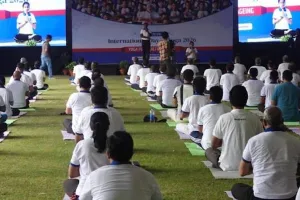
The UN Postal Administration (UNPA) is issuing a set of stamps showing 10 yoga asanas (poses) to commemorate the International Day of Yoga on June 21 in New York.

The 10 stamps of $1.15 denomination each depict a different yoga pose next to a large 'Om' in Devanagri script.

The stamps are on a single sheet with a picture of the UN Secretariat building that has International Day of Yoga projected on it.

In 2016, the UNPA issued a stamp in honour of M.S. Subbalakshmi, the classical Carnatic music singer, to commemorate the 50th anniversary of her 1966 concert at the UN.

The UN stamps can be used for posting letters and packages internationally from UN facilities in New York, Geneva and Vienna.

However, the yoga stamps would be issued only in the US dollar denomination in New York.

Amber Heard wants to settle down with beau

IANS | Los Angeles |

Actress Amber Heard is looking forward to settling down and starting a family with her boyfriend and tech tycoon Elon Musk, says her father.

After her bitter divorce battle with actor Johnny Depp, Amber is already making plans to marry Musk.

In an interview with Grazia magazine, Amber's father David talked about her daughter and her plans to settle down, reports dailymail.co.uk.

He said: "Amber and Elon are both very serious about each other. She would love to get married. One of the things they want to do is settle down and have a family. They are making plans for that."

Amber was first linked to Musk, 45, last year, after the pair was spotted together on several occasions both in London and Miami.

Driven by sixth sense

Ben Upton | New Delhi |

Eels have a magnetic “sixth sense” that enables them to navigate 5,000 kilometres across the Atlantic from their birthplace in the Sargasso Sea, scientists have discovered.

It enables them to detect changes in the Earth’s magnetic field, which allow them to hitch a ride in the Gulf Stream — a current that carries warm water from the Caribbean to Western Europe. And that reduces the amount of time it takes to make the journey, although it still lasts about 300 days.

The researchers used magnets to simulate conditions at different points on the journey, then noted how this influenced the young eels’ swimming direction. Professor Lewis NaisbettJones, of North Carolina University, said, “We were not surprised to find that eels have a magnetic map, but we were surprised to discover how well they can detect subtle differences in magnetic fields.

“We were even more surprised when our simulation revealed that they use their map not so much to locate Europe, but to target a big conveyor belt — the Gulf Stream — that will take them there.”

Pollution and our enthusiasm for eating eels have seen their numbers plummet by 95 per cent since the 1980s, and they are now critically endangered. It is hoped greater understanding of the animals could help conservation efforts. After their swimming the Atlantic, eels spend the next 15 years growing to maturity in the rivers and estuaries of Europe and North Africa.

Even though festivals of eel catching and eating have been held on rivers across Europe for centuries, their life history had long remained a mystery. It was only in 1922 that their spawning grounds were found, and the late 2000s when the adults’ journey was mapped for the first time.

Ben Upton/The Independent

Paths obstructed

Lin Yangchen | New Delhi |

Turtle breeding sites are already suffering from the impact of tourism and fishing, but scientists have just discovered that rare leatherback turtles nesting on the shores of Colombia in South America are also being threatened by logging in tropical forests.

Logging debris is hindering the movements of both the hatchlings and their mothers at one of the world’s most important nesting sites, said researchers at the University of Exeter in Britain and the Donana Biological Station in Spain, who published their findings in the journal Marine Ecology Progress Series. To nest and breed successfully, females must be able to cross the sandy beaches to dig their nest to successfully incubate their eggs. In turn, hatchlings must be able to cross the sand unaccompanied to reach the water.

The team monitored 216 turtles, studying how their activity varied with the amount of debris. They found that females, which nested in areas with higher amounts of debris spent more time building their nest and tended to do so closer to the shoreline. This meant they were more vulnerable to flooding, which puts their eggs at risk. Some females were even wounded while negotiating the debris.

The debris also meant it took longer for hatchlings to reach the sea, increasing their chance of being eaten by predators. Professor Brendan Godley, the co-author and director of the Centre for Ecology and Conservation at the University of Exeter, said in a statement that leatherback turtles are already under immense pressure, not only from being caught in fishing nets but also from ingesting marine plastic litter. “It is now paramount that beach clean-up operations are built into logging activities to prevent further damage to this species,” he said.

Lin Yangchen/The Straits Times

Of pairs, connections and spokes

Tapan Kumar Maitra | New Delhi |

Cilia and flagella have a common structure consisting of an axoneme, or main cylinder of tubules, about 0.25µm in diameter. The axoneme is connected to a basal body and surrounded by an extension of the cell membrane. Between the axoneme and the basal body is a transition zone in which the arrangement of microtubules in the basal body takes on the pattern characteristic of the axoneme.

The basal body is identical in appearance to the centriole. A basal body consists of nine sets of tubular structures arranged around its circumference. Each set is called a triplet because it consists of three tubules that share common walls — one complete microtubule and two incomplete tubules. As a cilium or flagellum forms, a centriole migrates to the cell surface and makes contact with the plasma membrane. The centriole then acts as a nucleation site, initiating polymerisation of the nine outer doublets of the axoneme. After the process of tubule assembly has begun, the centriole is then referred to as a basal body.

The axoneme has a characteristic “9 + 2” pattern, with nine outer doublets of tubules and two additional microtubules in the centre, often called the central pair. The nine outer doublets of the axoneme are thought to be responsible for the sliding of adjacent doublets. The inter-doublet links (nexin connections) join adjacent doublets and the radial spokes project inward, terminating near projections that extend outward from the central pair of MTs. Each outer doublet of the axoneme therefore consists of one complete MT, called the A tubule, and one incomplete MT, the B tubule. The A tubule has 13 proto-filaments, whereas the B tubule has only 10 or 11. The tubules of the central pair are both complete, with 13 proto-filaments each. All of these structures contain tubulin, together with a second protein called tektin. Tektin is related to intermediate filament proteins and is a necessary component of the axoneme. The A and B tubules share a wall that appears to contain tektin as a major component.

In addition to microtubules, axonemes contain several other key structures. The most important of these are the sets of side arms that project out from each of the A tubules of the nine outer doublets. Each sidearm reaches out clockwise toward the B tubules of the adjacent doublet. These arms consist of axonemal dynein, which is responsible for sliding MTs within the axoneme past one another to bend the axoneme. The dynein arms occur in pairs, one inner arm and one outer arm, spaced along the MT at regular intervals. At less frequent intervals, adjacent doublets are joined by inter-doublet links. These links are thought to limit the extent to which doublets can move with respect to each other as the axoneme bends. At regular intervals, radial spokes project inward from each of the nine MT doublets, terminating near a set of projections that extend outward from the central pair of microtubules. These spokes are thought to be important in translating the sliding motion of adjacent doublets into the bending motion that characterises the beating of these appendages.

The writer is associate professor, head, department of botany, ananda mohan college, kolkata, and also fellow, botanical society of bengal, and can be contacted at tapanmaitra59@yahoo.co.in.

Meet Enceladus

Andrew Griffin | New Delhi |

Enceladus is, to many, just an icy snowball floating around in space. But it’s just become a lot more important — it’s perhaps the greatest hope for life in our own solar system.

The small moon of Saturn, which has a 502km diameter, has been revealed to have hydrothermal processes going on underneath its crust. That, in turn, means that it may have all the requirements for life — and that microbial life might be found there. What started out as an afterthought or side project for the Cassini mission to Saturn has turned out to be perhaps its crowning glory. Enceladus is made up of an icy surface shell and a rocky interior inside, with a warm ocean sandwiched between the two. It’s in that ocean that any life is likely to live — apparently given fuel by the processes discovered in the new research.

It was first found by British astronomer William Herschel, in 1789. It got its name in 1847, from Herschel’s astronomer son John. Since then, it languished mostly in obscurity — one of a full 53 moons around Saturn and not looking to be even one of the more interesting ones. But that all changed when the Cassini orbiter arrived at Saturn in 2005. It found plumes of water shooting out of cracks in Enceladus’s surface, leading scientists to wonder whether it might be geologically alive after all. That led scientists to fly Cassini through the plumes, using all of the various sensing mechanisms on board to try and understand what the plumes were made of.

It found mostly water, or tiny ice particles, with traces of other things like methane, ammonia, carbon monoxide, carbon dioxide and various salts and simple organic molecules. Later it found silica nano-particles, suggesting that something was going on between the hot rocky interior and the alkaline water.

That led scientists to expect and hope that hydrogen might be found inside, making the world habitable. That’s what the latest flyby — in 2015, when Cassini was shot through the plumes — was looking out for, and what it found.

“What we knew already from Cassini is that Enceladus has these fountains of water jetting out from its surface,” said Lewis Dartnell, an astrobiologist from the University of Leicester. “That in itself was a hugely exciting and totally unexpected discovery — it tells us this tiny snowball of a world, smaller than the UK from side to side, is geologically active.

“It’s warm on the inside, where there’s a large body of liquid water. We knew there was an environment, which was potentially habitable, in Enceladus. But Cassini has essentially tasted what’s in that water.”

It’s what it tasted there that has got scientists so excited — molecular hydrogen, suggesting that the moon has fuel for life. With that, it completes the three things — alongside water and organic molecules — that are required to support living things.

But it’s just the latest surprise from the little moon, which was never intended to be a significant object of study for the Cassini mission. “When Cassini got there it was not a major target of the mission,” says Caitriona Jackman from the University of Southampton. “It was thought just to be a rocky or icy moon. It was at the beginning of the mission in 2005 when it had a flyby and realised there was more than meets the eyes.”

Gradually, the truth about the moon was revealed — strange magnetic effects were pinned down to “tiger stripes” on the crust, and water vapour and other organic material was shooting out of its vents.

“Enceladus has been the biggest bonus ever,” says Professor Jackman, who worked on the Cassini mission. “It was an incredible discovery to even know that it was interesting. It wasn’t a highlight or a major target, but it turns out to be one of the most interesting of Saturn’s moons.”

The Independent

Faint light of outer space

S Ananthanarayanan | New Delhi |

The reason we have such brightness when the sun is shining on the earth is that the atmosphere scatters light at us from different directions. If we did not have an atmosphere, everything in direct sunlight would be very well lit but we could not say the same about things in the shade. The sky overhead would be dark, and there would be stars, even more clearly than usually at night.

However, as we do have an atmosphere, we can see very little of the real blackness of outer space while we are on Earth. This is so even when we are above the atmosphere, because there is still scattering by interplanetary dust in the near solar system. Michael Zemcov, Poppy Immel, Chi Nguyen, Asantha Cooray, Carey M Lisse and Andrew R Poppe, from Rochester Institute of Technology, University of California, John Hopkins University and Jet Propulsion Laboratory, California describe in the journal, Nature Communications, the study of interstellar illumination conducted at a great distance from the earth. The study used instruments on Nasa’s spacecraft, Deep Horizon, beyond the orbit of Jupiter, on its way to Pluto, precisely to escape the glare that persists at shorter distances.

The faint light that is there in the blackness of deep space, the so-called Cosmic Optical Background (abbreviated as COB), is the sum total of the radiation from all the light emitting objects in the universe, after taking away the contribution from the solar system and our own galaxy. Although there are a great many of such external objects, they are distributed at such large distances that their effect in the spaces between them is extremely faint. It is this extreme faintness that makes the light so difficult to isolate and detect.

An accurate measurement of this faint glow, however, is of great interest, to test our current theories about the nature of the universe. We have a certain estimate of the number of luminous objects, and their distances apart, which lead to a certain level of illumination. If what we measure turns out to be different, then we may need to change our ideas of where the light comes from.

On the other hand, it is with the help of the faint background light that we make some of the estimates of the count of luminous objects in the heavens. If we have confidence in the amount of light from known objects, or the foreground light — in some direction — we could estimate the background light. We could then use this to work out the foreground light, from the total light coming in from another direction. The whole exercise, however, depends on measurement of the illumination itself, which is difficult in the level of glare in near-Earth locations makes. The background illumination is believed to arise from different processes in the universe. These processes include the star formation process and, after the stars are formed, the nuclear fires in stars, where atoms of elements are generated by fusion of the nuclei of atoms of lighter elements. Another source of radiation is the matter near black holes, which accelerate to near the speed of light as they crash into the black holes. Yet another source is emission, as the nuclear fuel in the larger stars runs out and the stars collapse, because of their own gravity. And then there is the emission from events like the decay of elementary particles, or the effect of particle annihilation or acceleration.

Most of the early deep space missions sent out, the paper says, had rudimentary optical range cameras and did not make useful observation of the intensity of the COB. The probes, Pioneer 10 and Pioneer 11 (1972-73), however, had specialised equipment but the results were still uncertain as the foreground components to be subtracted were themselves uncertain. It was Nasa’s New Horizons, the craft (launched in 2006) that flew by Pluto in 2015, which sent far superior data that the present researchers have analysed.

New Horizons was equipped with Lorri, the Long-Range Reconnaissance Imager, a camera primarily meant to analyse geological features of Pluto. The high sensitivity and ability to resolve narrow angles, however, could eliminate much of the starlight foreground that had confused earlier measurements and the mission collected relatively undisturbed data about the diffuse astrophysical emission or COB. The authors of the paper bring out that over the cruise of the spacecraft — beyond the orbit of Jupiter, at 779 km from the sun, on its way to Pluto at 5.9 billion km — there was data about COB measured from a range of vantage points.

Ninety days after the craft was launched, the Lorri camera recorded a series of measurements, with the camera shutter on or in total darkness. The shutter was removed about six months after the launch and a known open star cluster was imaged. The image that was acquired enabled the camera to calibrate, so corrections could be applied to faint measurements to be made later. Data was then recorded till July 2014, about a year before the encounter with Pluto.

The paper explains that the brightness of an image of the sky outside the atmosphere consists of several components. It arises because of interplanetary dust, with clearly visible stars; starlight from sources that cannot be made out, a component of “diffuse galactic light” and then the COB. With the help of the different sets of data acquired, the team could “correct for dark current in the detectors, mask bright stars from the images, assess the amplitude of residual starlight, sunlight from interplanetary dust and diffuse galactic light, and correct for galactic extinction,” the paper says, to arrive at a statistical upper limit of the value of COB.

The results show the effectiveness of the Lorri arrangement to make precise, low foreground measurements of the COB, the paper says. A future mission could hence be designed to yield a much more accurate upper limit of the COB, which could help us “complete our understanding of the history of stars and galaxies in the universe,” the paper says, “While we have estimates of these processes and of how intense the COB should be, finding the COB to be different may reveal the presence of exotic forms of matter or of decay of particles other than those that fit into the Standard Model.”

The writer can be contacted at response@simplescience.in.

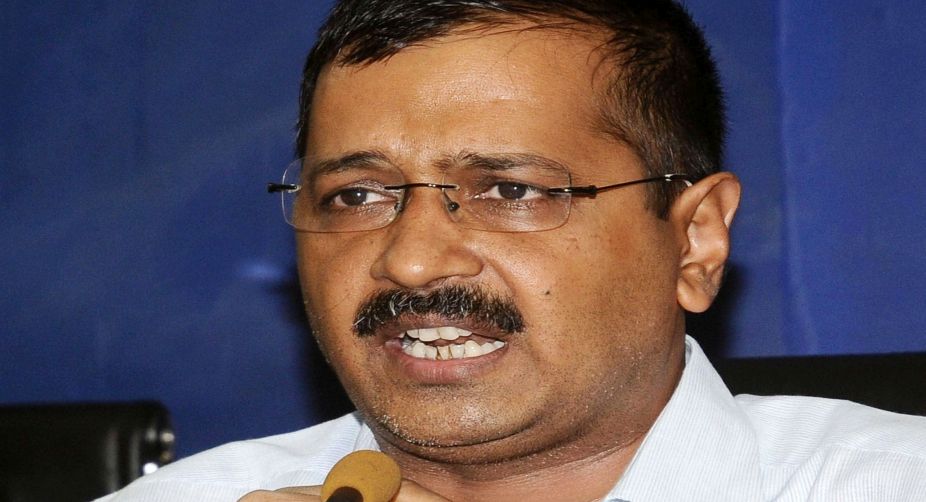
Kejriwal’s battle for survival

Arati R Jerath | New Delhi |

Winning the upcoming municipal election in Delhi has become a matter of survival for Arvind Kejriwal and his AAP government in the capital. If he loses, the defeat could well pave the way for the demise of his two year old government.

The ground has already been prepared for the death sentence. A case is pending with the Election Commission for the disqualification of 21 AAP MLAs who were appointed parliamentary secretaries. The charge is that the appointment violated the provisions of the Office of Profit Act.

The AAP government’s health minister Satyendra Jain is being investigated by the CBI on charges of corruption and could soon be arrested. Chief Minister Kejriwal himself is facing a jail term if he loses the criminal defamation case filed against him by Arun Jaitley. And if BJP sources are to be believed, several AAP MLAs are ready to jump ship and join the saffron side.

The BJP and Congress agree on one thing. Both want to finish off Kejriwal and his AAP. They feel threatened by their brand of politics.

Kejriwal is surviving so far because both the BJP and Congress are scared to touch him. They fear his popularity. They think any move to dislodge him could backfire by turning Kejriwal into a hero.

This is why the MCD election has become so important. It is being seen as a referendum on Kejriwal and his AAP government, a test of their popularity among the people of Delhi. A defeat for AAP will give the BJP and Congress the courage to strike. All the pending cases are likely to be activated and the noose could slowly tighten around the necks of AAP leaders including Kejriwal.

Be prepared for the strange spectacle of the BJP and Congress joining hands to celebrate the murder of democracy in Delhi.

Change in Gujarat?

The BJP grapevine is buzzing with speculation that there could be a change of chief minister in Gujarat after Modi’s recent visit to his home state where he sounded the bugle for the assembly polls at the end of the year. According to saffron circles, there is a move to put a Patel leader as CM with the aim of winning back the support of the community.

The name doing the rounds is that of Parsottambhai Rupala, currently minister of state for agriculture in the Modi government and a member of the Rajya Sabha. Consider his qualifications. He is a Kadva Patel and is considered an influential member of the community. He is a Modi-Shah loyalist. He was part of the campaign team for Modi in Varanasi for the 2014 election.

The current CM, Vijay Rupani, belongs to the Jain community and was always seen as a stop gap arrangement when Anandiben Patel had to be removed for administrative incompetence. BJP circles say that Modi and Shah planned to assess the mood of the Patel community during his two-day visit over the weekend and then take a call on whether or not to change the CM.

Surprise visitor

Jaya Bachchan had a surprise visitor on her birthday last Sunday: Mamata Banerjee. The West Bengal chief minister was in Delhi to attend the Inter-State Council meeting. She decided to drop into Jaya’s recently acquired and newly renovated bungalow in Lodi Estate to wish her a happy birthday.

Mamata is very close to the Bachchans and holds both Amitabh and Jaya in high regard. Amitabh has inaugurated the Kolkata International Film Festival five times in a row. He’s clearly a favourite with Mamata. The fiery Trinamool chief confided that she often exchanges SMS messages with the Bollywood actor and he responds immediately. So it was no surprise that Mamata took time off from a busy political schedule to touch base with Jaya on her birthday. They spent nearly an hour together and Mamata was impressed by the elegant interiors of Jaya’s bungalow.

Jaya Bachchan no longer travels back to Mumbai for the weekends when Parliament is in session. She says she finds it too fatiguing. Sadly, her family in Mumbai had work commitments so couldn’t fly to Delhi to be with her on her birthday.

Alliance bonhomie

Modi has finally proved that he can outstrip Vajpayee when it comes to winning friends and influencing people. The Modi-led NDA has as many as 33 parties including the BJP. The Vajpayee-led alliance had just 24.

Modi’s allies come from far and wide, from Meghalaya in the Northeast to Kerala in the deep south. Most of them are tiny parties but so what? The numbers add up to an impressive 33.

It was interesting that Modi chose to host a dinner for his alliance partners just before the budget session of Parliament ended. It was the first such dinner in his three years as prime minister.

The motive was clear. He’s looking at the upcoming election to choose the next President of India and is trying to keep his flock together through good will gestures like dinner parties. The BJP on its own is short of numbers and will need the help of all NDA partners plus a few others like BJD and AIADMK to elect a person of its choice as President.

With the Opposition toying with the idea of nominating a joint candidate to force a contest, numbers have become crucial. Modi is already looking ahead. He was particularly convivial at the NDA dinner-cum-meeting and gave full play to each and every NDA partner to speak. As a result the dinner went on well beyond midnight!

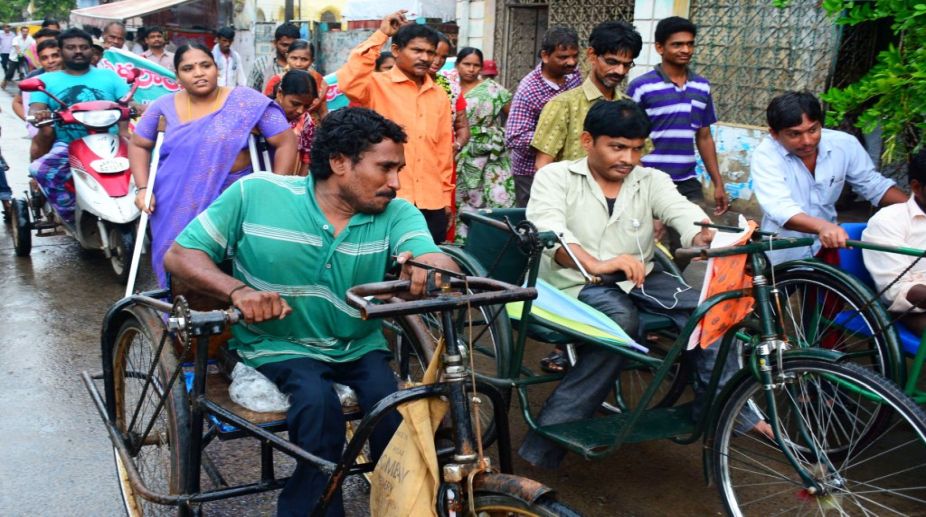
Disabled still have many miles to go

Debomita Chakraborty and Suchismita Goswami | New Delhi |

According to the World Bank, about 15 per cent of the world's population which amounts to one billion people, suffers from some form of disability. Developing countries or low and middle income countries (LMIC) have higher occurrence of disability. Usually developing countries fail to provide proper infrastructure to people living with disabilities in the form of accessibility to public places, public transport, work place, educational institutions and information and communication technology.

According to Census 2011, about 26.8 million people in India are living with disabilities and this, according to some prominent disability rights activists, is a huge underestimation. India also fails to address the issue of disability inclusive space due to lack of efficient and effective policies in place.

India is one of the 173 countries which ratified the United Nations Convention on the Rights of Persons with Disabilities (CRPD). In this convention, people with disabilities were for the first time, recognised as capable beings with “rights”, who can claim their own rights and take appropriate decisions for themselves based on “free and informed consent”. Since ratifying CRPD in October 2007, India is obliged to enforce it in its national laws and policies.

We present some points related to access to employment and education for people suffering with disabilities, based on the data from Census 2011 and the steps taken by the government so far.

In the HRD Ministry's All India Survey of Higher Education (2014-15), it was found that 64,289 persons with disability (PWD) are enrolled for higher education. Even though the Right of Children to Free and Compulsory Education (RTE) Act promises inclusive education, it fails to provide children with disabilities access to education majorly due to absence of infrastructure of schools and universities for providing better access to people with disabilities, lack of strong interest from the government and administration and due to closed mind-set.

The Rights of Persons with Disability Act 2016 recognised the need for sign language and Braille in schools and universities but in order to excel and make education inclusive for PWD students, it is important to also compulsorily introduce other modern technologies for learning in the school. More resources are required for spreading awareness about new provisions under this Act, especially the clause which says that books, learning materials and assistive devices will be provided to students who are dealing with benchmark disabilities, free of cost up to the age of 18 years. In the same Act, reservation for PWD students in higher educational institutions was raised from 3 to 5 per cent. Yet in reality, in spite of a number of PILs, very few institutions have been able to make their campus inclusive for the PWDs.

In the age group of 5-19 years, there are 6.5 million children with different types of disabilities. Fifty-four per cent children with multiple disabilities have never attended educational institutions. 797,000 children with different types of disabilities attended educational institutions but dropped off eventually while 1.75 million differently abled children never attended schools. Uttar Pradesh has the highest number of children (1.2 million) in the age range of 5- 19 years who have some form of disability. Of these, 40 per cent are not attending any educational institution. Maharashtra has 684,000 disabled children, the second highest number in the country, and 30 per cent are not attending schools. Daman and Diu has less than 500 disabled children in the age range of 5-19 years but 55 per cent do not attend school. Apart from Goa and Kerala, all states and UTs have more than 30 per cent disabled children who are not attending any educational institutions.

According to Census 2011, there are 15 million people with disabilities who are in the working age group of 15-59 years. Out of this 58 per cent are male and 42 per cent female. There are 20 states/UTs where more than half the disabled population of working age is unemployed. Uttar Pradesh has the highest number of people with disablities in the age group of 15-59 years, at 2.3 million and 52 per cent of these people are unemployed. In rural areas, out of all the disabled men who are employed, 74 per cent are main employees as opposed to 54 per cent of disabled women. In urban areas, 87 per cent of employed disabled men are main employees while 72 per cent of disabled women are employed as main workers. Disabled women are employed more than men for marginal jobs that last for a duration of 3-6 months or less than 3 months, in both rural and urban areas.

The state-wise distribution of employed disabled men and women shows that in all the states and UTs in India, the percentage of employed women with disablities is less than that of men with disabilities. Delhi has the highest disparity with the percentage of employed disabled men being higher than that of women by 43 per cent. Nagaland is the only state to have a difference of less than 10 per cent between the percentage of employed men and that of employed women with disabilities.

Previously only seven types of disabilities were recognised by institutions but under the Rights of Persons with Disabilities Act, 21 different kinds of disabilities are recognised. This would instantly increase the number of people to be considered as living with disability by the government. In the past decade, some well intended legislations and judgements came out to improve the situation for PWDs. Firstly, under the Rights of Persons with disability Act, government job reservation for people with disabilities was increased from 3 to 4 percent and in another instance last year, the Supreme Court of India, in one of its progressive judgements, declared that the disability quota can be used for promotions in government jobs. Yet we are not very optimistic about the implementation due to the deep-seated apathetic approach towards bringing in change within the system for PWDs. According to reports from Economic Times Intelligence Group (ETIG) in 2015, most of the public sector entities failed to meet the 3 per cent required work force reservation for PWDs and very few private sector entities in their survey were eager to include PWDs in their workforce.

The only way to reverse the situation, along with progressive judgements, is vigilant citizen's groups and civil societies. Proper implementation, usage of funds and filling up of quotas reserved for the PWDs can be possible only if proper awareness is raised by the groups and coalition working for disability rights.

The writers work on data engagement for a platform called “Be- Informed.”

Champions League: Ronaldo scourge of Bayern Munich, Real Madrid progress to semis

Yet another hat-trick for the Portuguese sensation in a controversial tie at the Santiago Bernabeu!

Prithviraj Dev | New Delhi |

Real Madrid rode their luck to beat Bayern Munich 4-2 at home on Wednesday in the second leg of their UEFA Champions League quarterfinal, with Cristiano Ronaldo scoring a hat-trick as the holders progressed to the semifinals 6-3 on aggregate in a tie that went to extra-time on Wednesday at the Santiago Bernabeu.

Ronaldo, who had scored his 100th goal in Europe in the first-leg when he notched a brace to give Madrid a 2-1 win in the first leg at the Allianz Arena, took a while to get going in a game which could have gone either way as the hosts squandered a glut of chances in the first-half.

Zinedine Zidane chose to award Isco for his sparkling performance in Los Blancos’ last-gasp win over Sporting Gijon over the weekend, with the talented Spaniard replacing the injured Gareth Bale as the hosts made just one change from the side that beat Bayern last week.

The visitors made several changes of their own, with the fit-again trio of Mats Hummels, Jerome Boateng and Robert Lewandowski all starting.

Yet, it was the hosts who utterly dominated the first-half, hitting Bayern on the counter and looking dangerous each time they broke with pace. Ronaldo was the major reason Madrid didn't score at least two in the first half, twice unable to find a way past Manuel Neuer.

The second-half, however, was turned quickly on its head when Lewandowski converted a 53rd minute penalty to bring Bayern level on aggregate. The Bavarians had begun the second period in a much more positive note and suddenly, were now the dominant team.

Madrid looked bereft of ideas but when Casemiro sent in a cross between Philp Lahm and Boateng, Ronaldo was there to head home past Neuer in the 76th minute. Quite possibly Madrid’s worst player on the pitch up until that point, the 32-year-old proved he can still be decisive when he wants to be with well-timed run and a composed finish. 

Barely two minutes later, Madrid’s celebration turned into despair as Sergio Ramos turned the ball into his own net after getting confused with substitute Thomas Muller’s chest down inside the box.

Already a remarkable game with the late flurry of goals, the tie then took on a controversial turn when referee Viktor Kassai chose to send off Arturo Vidal for a second bookable offence six minutes from regulation time. The Chilean had been skating on thin ice since his booking in the 5th minute, but while his first caution was just, the second was clearly not as he cleanly got the ball while tackling Marco Asensio.

After that, Bayern faded and understandably so, but were hard done by the officials yet again when Ronaldo scored in the 105th minute, as the Portuguese was offside as he headed in Sergio Ramos’ cross.

Bayern now needed two goals to progress and while Arjen Robben continued to make an effort against his former club, Madrid’s numerical superiority was overwhelming and Marcelo danced through half the Bayern team to set up Ronaldo’s third in the 109th minute.

Substitue Asensio, who had a played a key role in the first-leg win, then added gloss to the scoreline, beating Neuer with his right-foot in the 112th minute.

While Bayern will have plenty of complaints from the fact that Ronaldo was offside for at least one if not two of his goals, to the fact that Casemiro should have been sent off for numerous infractions rather than Vidal, the result stands and Madrid continue their quest to become the first team to defend the Champions League in its current format.
Ronaldo, meanwhile, continues to prove that he is still capable of leading the line with an impressive five goal haul over the course of two legs against Bayern.

Madrid’s arch-rivals Atletico Madrid also progressed to the semfinals, drawing 1-1 away to Leicester City to progress 2-1 on aggregate.

Crooks in politics

Amulya Ganguli | New Delhi |

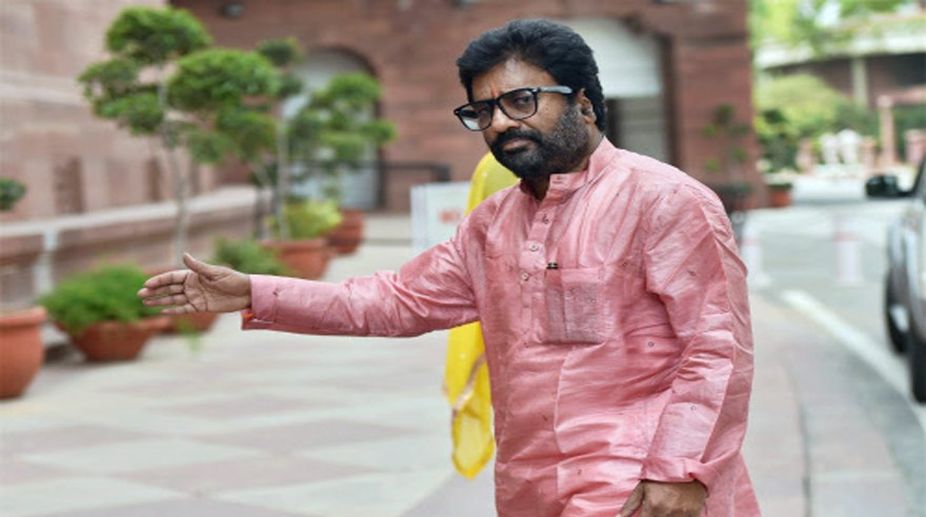
In the “fair is foul, foul is fair” world of Indian politics, the good does not always prevail over the bad and the ugly. Instead, it is often just the opposite, as can be seen from the relative ease with which a Shiv Sena M.P. has been able to shrug off his assault on an Air India staffer and return to Parliament to serve the people.

He is not the only honourable representative of hoipolloi who faces a criminal charge. There are quite a few others in the august House because unlike other democracies, the Indian version has the dubious distinction of openly harbouring disreputable elements.

When the Lok Sabha Speaker, Sumitra Mahajan, was told about the misconduct of the Shiv Sena MP, she refused to take suo motu cognizance of the incident since it occurred outside the House. Perhaps this technicality explains why no action can be taken against a third of the MPs ~ 186 out of 541 ~ who have a criminal past, according to the Association for Democratic Reforms.

The MLAs, too, do not lag behind, as is evident from the case of Kerala’s power minister, MM Mani, who boasted in a public speech in 2012 that his party ~ the CPI-M ~ had killed many of its opponents. “We made a list of 13 people”, he said, and “one, two, three … we killed the first three of them. One was killed by the bullet, another one was stabbed. The third was beaten to death”.

In next door Tamil Nadu, the person who aspired for the chief minister’s chair after Jayalalitha’s death is now in prison for amassing wealth beyond her known sources of income. Jayalalitha, too, would have suffered the same fate if the Supreme Court had delivered its verdict earlier. In the event, death saved her from the ignominy.

What the track record of these luminaries shows is that politics has become the playground of a sizeable number of unsavoury VIPs. It is not only isolated individuals who have a murky past.

Even entire parties are seen as the home of rowdies. The Shiv Sena, for instance, has had this reputation virtually from the time of inception.

In UP, the Samajwadi Party has long been known as a party of toughies. Now, chief minister Yogi Adityanath’s Hindu Yuva Vahini has taken off from where the Samajwadi Yadavs had left off in the matter of assault and intimidation.

The Congress, too, has faced this charge as when a Marxist theatre personality, Safdar Hashmi, was killed in 1989 in a case which the judge, who sentenced the nine accused to life imprisonment, said “symbolized criminalization of politics”.

At the root of this infiltration of villainous felons into politics is the virtually complete sway which the criminals enjoyed over politics, particularly at the time of elections till the Harvard-educated Chief Election Commissioner, TN Seshan, cleansed the electoral process during his tenure (1990-96). Till then, the phenomenon of the so-called booth-capturing was a disgraceful feature of elections, especially in the Hindi belt, when crooks masquerading as party workers muscled their way into polling booths, chased away the voters and polling officials and cast votes for their favourite candidates.

Electoral malpractices under political patronage are not the only reason for the criminalization of politics. Another is the violence which accompanied political agitations. One of the most well-known historical instances was the burning down of a police station by a mob in Chauri Chaura in U.P. in 1922, killing more than 20 policemen, which made Mahatma Gandhi call off his non-cooperation movement.

There have been innumerable such cases of violence both before and after independence which have enabled rowdy elements to become a part of the political scene.

Allied to their role is the fact that some of these elements rose from being the political musclemen of top political leaders ~ as Gopal “Pantha” Mukherjee was to BC Roy when the latter was the West Bengal chief minister ~ to being politicians themselves.

In the latter category can be placed the former Rashtriya Janata Dal MP from Bihar, Mohammed Shahabuddin, who is now in jail.

Notwithstanding the known links between the political class and the underworld, politicians have occasionally tried to address the problem, presumably because of the tainting of their reputation. As is their habit, the answer was to set up a committee to assess the festering malaise in the system.

The committee, headed by a former Union home secretary, NN Vohra, stated, inter alia, that the “various crime syndicate/mafia organizations have developed significant muscle and money power and established linkages with government functionaries, political leaders and others to be able to operate with impunity”.

That little has changed since 1993 when the report was submitted is evident from the increase in the number of M.P. with criminal records from 158 after the 2009 general election to 186 after 2014. Evidently, no serious attempt has been made by the political class to even address the problem, let alone trying to eradicate it.

Their disinterest and even defiance of sober behavioural norms could be seen from the response of a Shiv Sena spokesman to a question on the beating up of the Air India official by his party’s MP that the Shiv Sena was not against the raising of a hand against those it disapproved of.

There is a long way to go, therefore, before politicians arouse respect and admiration in India.

The writer is a former Assistant Editor, The Statesman.