Logo

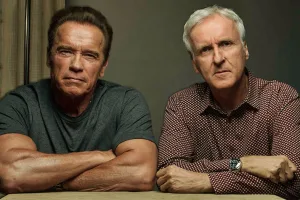
The metamorphosis of Arnold Schwarzenegger

Nick Hasted | New Delhi |

Arnold Schwarzenegger isn’t invincible any more. Terminator sequels apart, it’s been 20 years since he starred in a film, which broke the US blockbuster box-office threshold of $100million. His seemingly stable family life similarly collapsed in 2011, when his wife since 1986, Maria Shriver, separated from him on discovering that he had fathered a child with their housekeeper. His initial popularity as California’s Republican “Governator” had also nosedived by the time he left office in 2011. As action star, politician and family man, Arnie entered his sixties on the ropes.

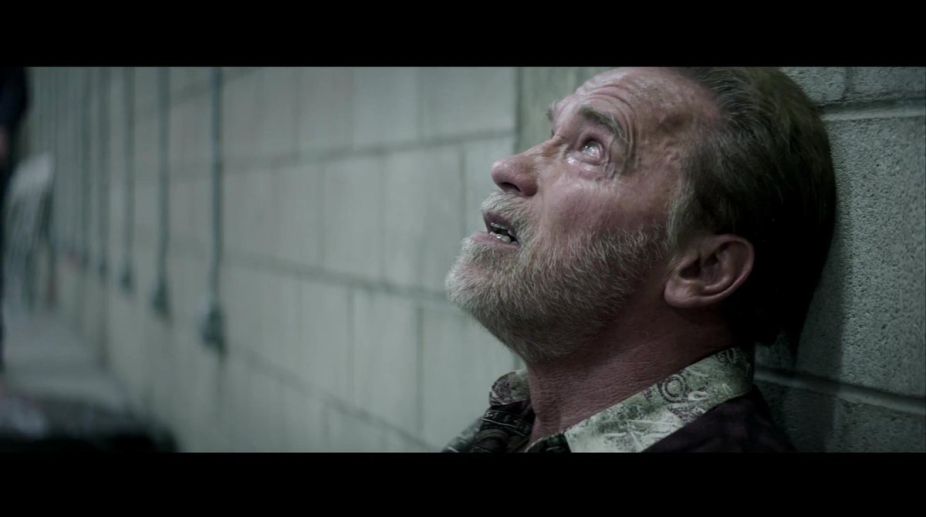
His unlikely response has been to reinvent himself as a serious actor, a move confirmed with the release of Aftermath, in which he plays a grieving and eventually vengeful father. Even more than his low-key role in Maggie (2015), where he quietly cared for his daughter while awaiting her transformation into a murderous zombie, Schwarzenegger shows gentleness, helplessness and nuance in Aftermath. Aged 69, he has finally learned to act.

Such subtlety hadn’t been needed in Arnie’s 1980s pomp. The macho American vision of the first Hollywood star-turned-politician, Ronald Reagan, had chimed with the bluntforce action films with which Arnie ruled the decade. The bulging pectorals on display as he wrestled Predators, leapt from a moving plane (Commando) and single-handedly shot a casino’s-worth of mobsters (Raw Deal) made him appear armourplated. Even Clint Eastwood suddenly looked old, and lost his box-office crown to Arnie and his similarly pumped-up pal, Sly Stallone.

Schwarzenegger had set himself ambitious goals ever since arriving in the US from Austria in 1968, writing them on index-cards like a muscle-bound Gatsby. After being crowned as body-building’s youngest ever Mr Universe, and ignoring his thick accent to triumph as not only an action but a comedy star (in Twins), politics seemed the inevitable next step in an irresistible rise. There was talk of changing the law, so this small-town Austrian could follow Reagan as President.

That also meant a full decade away from leading roles, which left Schwarzenegger’s Hollywood power exposed. There had been signs his lustre was fading even before he became Governor. He had co-starred in the disastrous bomb Batman & Robin (1997), as the thuddingly unfunny Mr Freeze. End of Days(1999) then saw out the Millennium with Arnie in a punch-up with Satan himself.

When Schwarzenegger finally made his comeback with The Last Stand(2013), he soon found how fatally long he’d been away from multiplexes. Korean director Kim Jeewoon brought super-charged style to a High Noon-like plot, in which Schwarzenegger’s sheriff defends his town from a drugs gang. The part was “specifically designed for a 63- year-old broken-down guy”, an executive from the producing studio Lionsgate told Deadline; Jee-woon saw a new “vulnerability” in his star, who now suggested some of the later John Wayne’s rough dignity. A miserable US box-office of $12mn showed how few now cared.

A jail-break team-up with Stallone, Escape Plan(2013), showed a lighter touch from Arnie in its comic moments, but again needed Asian and European fans to turn a profit. Solo again as a corrupt cop in Sabotage (2014), embarrassing US boxoffice of $10mn confirmed Schwarzenegger’s action stardom was done. Even Terminator Genisys (2015), though a massive hit, was widely ridiculed. Playing an android who first crash-landed from the future looking like the Arnie of 1984 offered limited prospects for the weathered, sixty something former governor.

Now Aftermath proves Schwarzenegger is serious about being serious. He plays Roman, a Ukrainian American construction worker whose wife and pregnant daughter die in a plane crash. Blaming the air-traffic controller, he is determined to seek revenge. But Roman is no assault weapon-wielding tough guy. We see him early on in the shower, the then 68-year-old Arnie looking far from tautly super-human. He has a big, old working man’s lumbering gait and, discovering his family’s death, he’s polite, and helplessly angry.

Why take such a role now — and why hadn’t he before, Aftermath’s British director, Elliott Lester, wondered when they met. “I was so busy being the biggest action star in the world, and then Governor, that it wasn’t in me,” Schwarzenegger confessed.

“In terms of raw skill as an actor, maybe when he was doing those action roles and being paid $30 million, the war wounds weren’t there yet,” Lester tells me. “I think you have to have a bit of damage to be able to do it. Although he would probably say that he has no damage at all. I saw in him sensitivity. With all the success that he’s had, he’s been beaten up a bit along the way.”

Schwarzenegger’s stubbornly intact accent here suggests a man who’s still an American outsider. “100 per cent,” Lester says emphatically. “And he’s been that guy that Roman is. Arnold used to be a bricklayer.” These ordinary roots resurfaced on set and in his performance. “I found Arnold incredibly straightforward and simple in his tastes. We were shooting in Columbus, Ohio, and he wanted to go and eat German sausages and potatoes.”When filming was over, though, Lester saw Schwarzenegger campaign for John Kasich in the Presidential primaries. “There were private jets, 21 security guards, and a convoy. He traversed two worlds, but was the same in both.”

Lester equates the work ethic he saw in Arnie the actor to his bodybuilder’s devotion to “reps” (repeated exercises). “He did an amazing turn in Maggie,” Lester reflects. “It would be great, as he gets older, to have a film like Unforgivenor Gran Torino. I know he’s just done a comedy (Why We’re Killing Gunther).”

It’s very late for such a second act, though. The model for Hollywood longevity, Clint Eastwood, built in such range-expanding roles from the start.

“It depends on how people react to these films,” Lester concludes, of Schwarzenegger’s commitment to leaving action behind. “I don’t know if his fans from The Terminator will necessarily appreciate Aftermath, which is quiet and intimate.

“But Arnold’s very self-aware. And I think that he knows that it’s very hard, physically, to do what he did in The Terminator when you’re 70.”

The Independent
‘I never wanted to be an actor’

Rakesh Kumar | New Delhi |

Portraying a powerful working woman has become a new trend in Bollywood these days. Sonakshi Sinha -starrer, Noor, is another addition to this genre. Inspired by Pakistani author Saba Imtiaz’s novel Karachi, You’re Killing Me!, the film highlights the journey of a journalist, who tries to navigate her way through Mumbai. Excerpts from an interview with Sinha:

Q The trailer of your film was well-received among the audience as well as critics. How do you feel about it?

I am actually very excited because the feedback is so positive. You know, when somebody comes and tells me that they relate to the character or feel the character, I think my job is half done, even before release of the film. When I heard the script I immediately connected myself with the character because she is modern, working and independent. Like today’s girls she wants to achieve something in life. She wants a perfect career, relationship and a perfect figure. It is her struggle, her journey of trying to achieve something in life.

Q You are playing the character of journalist in the movie. How did you prepare for this role?

Honestly, I don’t believe in research or preparation for a role because I believe in spontaneity. Apart from Akira, for which I had to train physically. But for most of the other characters, I talk with the director and try to understand how they have visualised it or what they want me to portray. It is my job to portray the director’s vision.

Q While playing the role of a journalist you must have come across a few things that you didn’t know about them before. Can you describe some?

The first thing I got to know about journalists is that their job is thankless. It has lots of hard work, many sleepless hours and so much research for just one story. And yes, deadlines and then bosses, who limit you from doing what you want to do. That is also Noor’s story in the film.

Q At the beginning of your career you did some malecentric movies, which had little scope for an actress. With Akira and now Noor, which are both women-centric, how do you see the change?

I feel great because I am able to play such wonderful characters, such beautifully-written roles. You know, as an actor it is our work to be able to do the roles which challenge you, push you in certain ways. From Akira to Noor to Force 2 — these characters have challenged me as an actress. I am really happy that I am finally playing a role, which I always dreamt of.

Q These days, women-centric roles are widely accepted among the audience. How do you view this change?

It is a great change. Now viewers are accepting films irrespective of the gender of the protagonist. That said, nobody says anything when the movie is based on male characters but when it concerns women, people call it women-centric. This mentality has to be changed.

Q You have spent quite some time in Bollywood now. What have you learnt so far? Any regrets?

I never wanted to be an actor while growing up, it seems destiny has planned for me. Therefore, whatever I have learnt has been on-the-job. Every person you work with has something different to teach you. Moreover, the process of learning is still continuing for me. I don’t have any regrets so far. In fact, I treat my mistakes as learning experiences. Yes, I have made some mistakes and it is not like I am going to erase all those. You have to make some mistakes for your personal growth. I am not going to name that film though!

Q Noor is based on a Pakistani novel. Given the current scenario, didn’t you get a little worried?

No…I think it is just a book at the end of the day. And the city is Mumbai. And we have made the film here. I don’t think anybody should have any issues.

Q You have said you want to do a biopic based on a sportsperson. Do you have anybody in mind?

Yes definitely…There are so many sportspersons, whom you or me have never heard about. I want to bring somebody like that alive on screen — one who is not that well known.

‘A lot of lessons from India’

Asha Ramachandran/SNS | New Delhi |

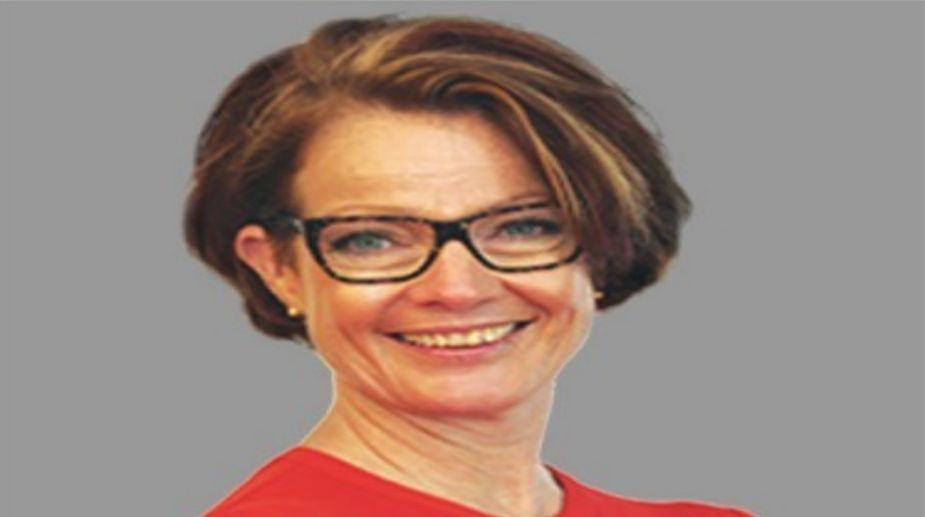
India’s decades-old family planning programme has seen many ups and downs. While it is seen as being ahead of similar programmes in several developing countries, maternal mortality continues to be an area of concern. The US based global organisation working on reproductive health, EngenderHealth, focuses on a rights-based healthcare programme that puts women’s needs, values and right to choose first. “When you provide women access, they have hope. Where there’s hope, there are dreams,” asserted Ulla Muller, president and CEO, EngenderHealth, in an interview with Asha Ramachandran.

With 11 April observed as National Safe Motherhood Day, Muller spoke about the need to ensure women get access to a choice of birth control methods in order to decrease India’s maternal death toll. EngenderHealth has been working for almost 20 years in various projects in Bihar, Rajasthan and Gujarat to improve maternal health services. The non-government organisation targets young people through innovative strategies, as they receive no sexual or reproductive health education.

The inspirational part, said Muller, is the extent that women will go to get their right to hope that contraceptives bring. “Women support each other, help each other, are each other’s backs. This is forgotten in developed countries,” she mused. Excerpts:

Q: In your opinion, is India’s family planning programme headed in the right direction?

A: India is more advanced than many countries such as Bangladesh and Philippines. India is on the right track. It has demonstrated this. There are a lot of lessons to be learnt from India. There is a huge opportunity here. We want to make sure that we continue to make promises to women. In EngenderHealth we will keep those promises. By 2020 we will reach 18 million women globally. We will see what the strategy in India is.

Q: How is EngenderHealth’s work different from other international NGOs working with India’s family planning programme?

A: EngenderHealth works with women and girls. We work with state governments. We first approach the Centre and then the states. Our experience in India has been that both the Centre and the states are very open. Government is keen to open (its programme) on method mix. India is advanced, and understandably, on contraceptive methods.

Q: India is planning to introduce injectables in its basket of contraceptives, which is strongly objected to by health activists. Your views.

A: The more choice offered to women, the better. The product (injectables) is very safe. It’s very well-established. It is the safest form of medical intervention. There’s a lot of speculation. But it’s power dynamics. Moreover, it’s very risky to remove IUDs (intrauterine devices). Very often the decision (to remove IUDs) is due to what the man thinks.

Q: What steps have been taken to empower women to access health services, particularly family planning? Also, what is your opinion on abortion?

A: The biggest driver behind maternal mortality is unsafe abortion. If a woman wants it (abortion), she will find it. It is better to give her that choice and also the full range of contraception methods. Maybe in India, the challenge is that women are not decision-makers. The question is how to change gender dynamics and women’s right to control. Because of power and gender dynamics, women don’t make decisions.

In EngenderedHealth we use the counseling model. We need to change women’s decision-making right. It doesn’t matter if a woman wants more children, that’s her choice, though not many women would want more children. We must have a conversation with the women. Moreover, we must train providers.

At the community level, we engage with men also but not to make decisions for women. We work with the community ~ have them in and decide what and how to do it, and then monitor it. Above all, we need to do it “with” women. Women need us to open the door and then they will do it themselves.

Q: Could you elaborate upon the training programme?

A: In the last two years, we have trained 1,100 providers ~ given them on-the-job training. We not only train but we also do necessary follow-up. It is a continuous cycle. We have an obligation as an organisation to go back and look at the tools that we developed. Inclusion and participation are important.

At the same time, we ensure that there is no provider bias, where the provider decides ~ that shouldn’t happen. It is a big challenge as the providers are from the same community. We have to recognise change-makers. We also have to ensure that providers do not give advice out of malice. We need to build on good intentions and allow women to make the choice. It is critical that we start from a positive platform.

We are more than eager to train. We are doing it in Bihar, Uttar Pradesh, Rajasthan and Uttar Pradesh. We go in, set up training centres ~ district training centres and PHCs ~ and hand them over to government or the ministry. An exit strategy is very important. The EngenderHealth model is based on strengthening the government system. We don’t build infrastructure. Government should be able to take over. It works only if the other half takes the right decisions. Therefore, there’s a strong focus on women.

Q: Sensitising men has been seen as an important component of the success of health services, especially reproductive. What is your opinion on this?

A: Wouldn’t it be amazing if we could count fertility rate for men? We need to leverage more on vasectomy. But where men father children, why shouldn’t they support them? It is inherently wrong putting responsibility on women. If men understood this well, it will make an impact. It doesn’t mean we don’t work with men. But it’s important that men understand. Accountability and responsibility towards children by men, even if outside marriage, is important.

Q: How will the US Global Gag Rule impact Engender Health’s work in India? Has it also affected women’s access to medical aid?

A: The US is not the biggest donor ~ significant but not the biggest. Europe has stepped up its funding. So have private funding bodies, including She Decides, LAD (large anonymous donors) and Gates Foundation. She Decides would give an additional amount of around 200 million dollars (globally) while LADs would give an additional 50 million dollars.

We see a global trend on pushing back what’s happening in the US. We are thus seeing a way out to balance the US cut-backs. We are even supported by African ministers ~ there is no money but political support. That’s an important and strong message.

Q: What then is your vision for the programme, especially in India?

A: They will be challenging times. We will not be silenced. We are in a position where constitutionally women have a right and will claim their right to it. Women’s right is a constant process and if they don’t defend it, they will lose it.

If women are cut out of reproductive health, they are cut off from right to social and health benefits. Girls in school, when they get pregnant, are denied education and also other rights ~ because they were denied right to contraceptives in the first place.

It is difficult for us to get into schools. Teachers are uncomfortable to talk about reproductive rights. They need to allow in professionals, who know how to train. One is often in denial mode about children having sex, as it’s natural.

Myanmar’s policy shift towards major powers

Kavi Chongkittavorn | New Delhi |

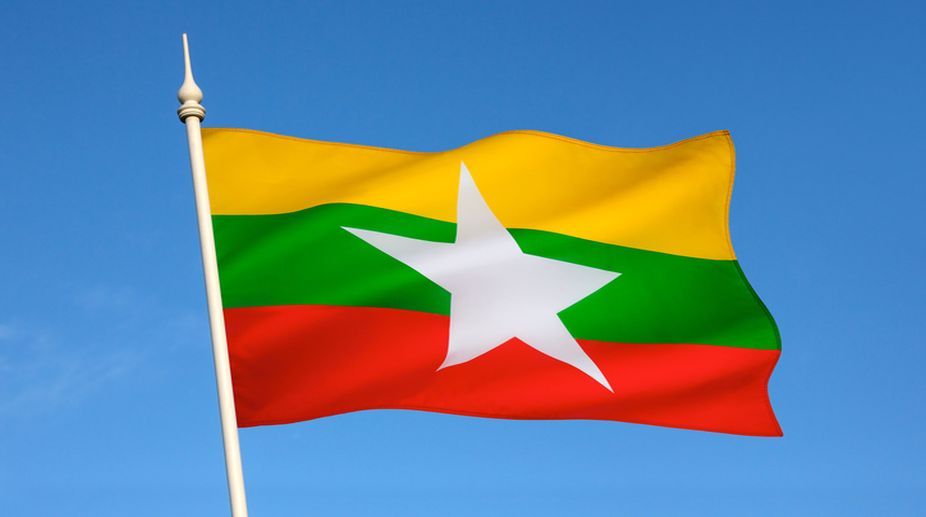
Myanmar has made substantial shifts in its relations with major powers comprising China, Russia and the United States. These are key regional players in Southeast Asia who will impact directly on peace and stability as well as economic development in Myanmar.

In the first half of this year, China has made impressive diplomatic inroads throughout Southeast Asia, taking advantage of the lack of policy clarity coming from the new US administration of President Donald Trump.

So far, Washington has flexed its muscle over the conflicts in Syria and Afghanistan and displayed a more reconciliatory tone towards Europe. That much was clear. It was only on Thursday that Vice President Mike Pence said that Trump would attend the Asia Pacific Economic Leaders Meeting in Vietnam, the ASEAN-US summit and the East Asia Summit.

Meanwhile, Beijing has been able to sharpen its long-standing policy and make the necessary adjustments to ensure strong friendships and cooperation with countries in the region. Myanmar President U Htin Kyaw’s recent visit to China demonstrated the new dynamics of their bilateral ties, which have encountered different challenges over the years.

Obviously, China has placed the highest value on Htin Kyaw’s week-long trip, knowing full well that this would be the most pivotal time to further strengthen their 67-year-old bilateral ties amid growing anxieties over US policy towards the region.

The joint press communiqué issued after his visit was extensive and forward looking, as China recognised the so-called Myanmar way of doing things.

“China supported Myanmar in following a development path in line with its own national conditions and steadily promoted democratic transition…” As such, it would commit Beijing to help Nay Pyi Taw in its endeavours to promote both economic and political development at the same time. It must be noted here that for Beijing, such a commitment represents a new model of bilateral relations promoted by the current Chinese leadership.

In addition, China expressed strong support for “Myanmar in realising domestic peace and national reconciliation through political dialogue.” In return, Myanmar thanked China for its assistance extending to Nay Pyi Taw’s domestic peace and national reconciliation and welcomed its continued constructive role in this process.

Most importantly as far as China-Myanmar relations are concerned, Myanmar reiterated its firm commitment to the one China policy and continued support towards “China’s position on the questions of Taiwan, Tibet and Xinjiang.” Akin to Cambodia, Myanmar has became another Asean member to concur with such stringent interpretations on the one-China policy.

After the scandal over the seizure of Singapore’s armoured vehicles tanks in Hong Kong last November, China has attempted to prevent further erosion of the one-China policy by becoming more forceful in pressing Asean members to adhere to it.

In 2014, Singapore concluded a free trade agreement with Taiwan by using different designations. The Philippines and Indonesia are pursuing a similar arrangement. Beijing is concerned that other Asean members will jump on the band wagon, further complicating ties with the grouping.

Obviously, Myanmar agreed to such a comprehensive statement as a goodwill gesture following China’s support at the UN Security Council for blocking a proposed statement in March on the situation in Rakhine State. Russia, another member of the UN Security Council, also vetoed the statement. Previously, in January 2007, both countries blocked a UN resolution on the situation in Myanmar.

The cosying up of the Myanmar-China friendship has been clearly manifested by the opening of their long-delayed oil pipeline, which will transport oil from the Bay of Bengal into China’s Yunnan provinces, some 800 kilometres inland. With both the oil and gas pipelines now in operation, Myanmar has suddenly become a major connectivity route for China’s Belt and Road Initiative — a showcase of Xi’s mega-plan in mainland Southeast Asia. China’s efforts elsewhere, especially in Laos and Thailand, are still at the early stage.

The quick operation of the oil pipeline also indicates that future Myanmar–China relations will be further strengthened. Both countries are confident that any remaining challenges posed by the controversial Myitsone Dam and the Letpadaung mine in Sagaing region will be resolved after final recommendations are made by the relevant assessment commissions.

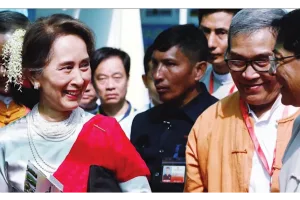
During Htin Kyaw’s visit, he also received an assurance that China would continue to play a “constructive” role in the peace process. Myanmar’s National League of Democracy-led government has been pushing for the much delayed second batch of the 21st Century Panglong Conference, which is now scheduled to be held in May. State Counsellor Aung San Suu Kyi wants to have all armed ethnic groups to sign the nation-wide ceasefire agreement. Those armed groups that were left out included — United Wa State Army, the Arakan Army, Myanmar National Democratic Alliance Army, the Ta’ang National Army and Kachin Independent Army.
As the NLD-led government enters its second year, the peace process and border security remain top priorities, but are equally elusive. The link between domestic and external factors were discussed during the summit meeting in Beijing, but whether it would produce positive results on the ground remained to be seen. To ensure that Myanmar and China are on the same page and follow similar strategic plans, Ms Suu Kyi has already confirmed her participation in the Belt and Road Initiative (BRI) Summit in Beijing from 14-15 May.

In comparison to China, Myanmar-Russia ties have been cordial, but they are still very much focused on military-related cooperation. The two countries will celebrate their 70th anniversary of relations next year. In retrospect, Russia has been faithful to Myanmar, treating the strategic Southeast Asian country as a gateway to Asean. Better Myanmar-Asean integration would also be beneficial to Russia.

Due to Myanmar’s external factors and unique political system and non-aligned diplomacy, its bilateral ties with Russia have special characteristics, focusing heavily on military and security related matters. The international boycott imposed by the West since the late 1980’s has further warmed their relationship. Russia has been quite sympathetic to Myanmar prior to its dramatic transformation in 2011. During the 1980’s-1990’s thousands of Myanmar officials and students were dispatched to Russia for training and study, especially in nuclear-related science and technology.

At this juncture, Russia is diversifying its cooperation with Myanmar to include economic, cultural and scientific fields. Although Russia does not have a big investment in Myanmar, its future interest in oil and gas exploration would increase its investment portfolio. Last year, Russia provided more than 300 scholarships to Myanmar students.

Finally, after years of optimism over the prospects of USMyanmar relations, the harsh realities have kicked in and seriously damaged the once unshakable bilateral relationship. Kudos must go to President Barack Obama who invested lots of foreign policy efforts to ensure Myanmar moved towards a new era by working closely with the previous administration under President U Thein Sein. Without him, the current transformation would not have been possible.

Truth be told, the US interest in normalising ties with Myanmar was aimed essentially at distancing the country from North Korea to halt the former’s nuclear ambition and desired missile technological development. Washington was extremely concerned that there would be quick knowledge transfer of these know-hows between the two countries. In late May 2011, the US Navy intercepted a North Korean ship carried missile technology in the Andaman Sea destined for Myanmar and managed to force the ship to return home.

Fortunately, Myanmar North Korea ties were quickly neutralised and their ongoing nuclear cooperation has subsequently been stopped ahead of US-Myanmar normalisation. Given the current focus on the nuclear threats from North Korea dominating global headlines, Myanmar could have been targeted as well without the earlier policy’s u-turn.

So far, the Trump administration has not yet made known its policy toward Myanmar, whether it would continue to pursue the same path or adopt a new one. However, judging from the US position and official comments on the Rakhine situation, Washington is pressuring Nay Pyi Taw to do more over the communal conflicts. Daw Suu Kyi has already asked the international community for time and patience as she is dealing with the issue through both domestic and international mechanisms.

Early next month, she is scheduled to visit key members of European Union following her participation in the 30th Asean Summit in Manila. She plans to update her colleagues on the latest development in Rakhine and remedial measures that have been instituted there since they last met in December 2016.

It remains to be seen how her reputation and shuttle diplomacy will play out in coming months as Myanmar intensifies broader engagements with concerned major powers, while at the same time mitigating the adverse effects emanating from the Rakhine situation.

The writer is a senior fellow at the Institute of Security and International Studies, Thailand. This is a series of columns on global affairs written by top editors and columnists from members of the Asia News Network and published in newspapers and websites across the region.

Transformed governance

Tuktuk Ghosh | New Delhi |

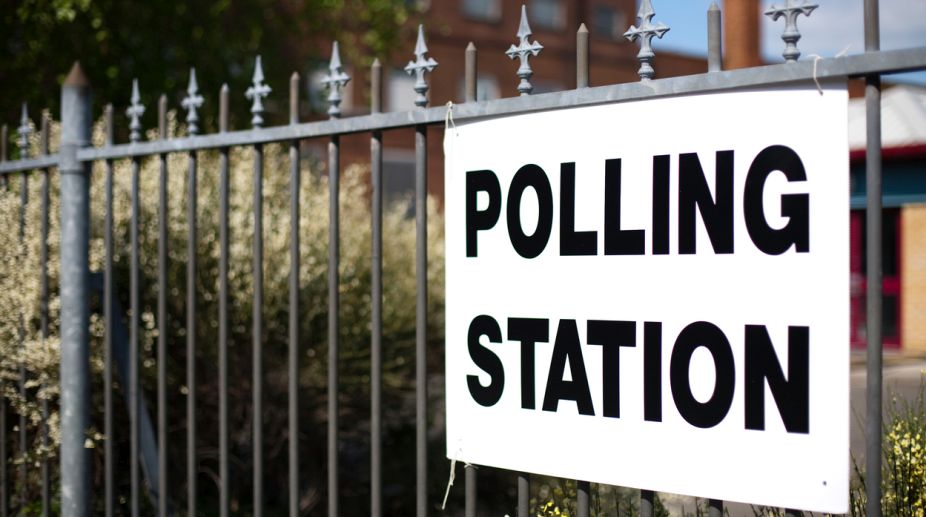
Holding simultaneous elections for different tiers of governance across the country has been advocated by the President and Prime Minister and has found favour with the Election Commission of India and many political commentators. However, it will be supremely naive to expect the reform to see the light of day anytime soon, notwithstanding its intrinsic merit. Elections to five State Assemblies have just concluded. In 2018, seven States go to the polls ~ Gujarat, Himachal Pradesh, Meghalaya, Nagaland, Tripura, Mizoram and Karnataka. Serious preparations are already underway for the 2019 General Elections. Winning these new-age battles through ballots is the most prized goal and understandably so.

It is, therefore, not surprising that, badly bruised from the dismaying, pundit-defying electoral battering, almost all the political parties which lost out, have shimmied on to the EVM controversy bandwagon that is needlessly hogging centre-stage. VVPATs (voter verified paper audit trails) are being touted as robust rectifiers of a system supposedly gone spooky. Old-fashioned ballot boxes have, strangely enough, found many votaries, the dark history of its brazen distortion having been most conveniently forgotten. Follow the developed western democracies is the shrill rationale now, specious as it is. Fund constraints and upcoming judicial pronouncements, of course, make the path ahead unpredictable and challenge-laden. What is difficult to understand is why the alternative proposed by the eminent, insightful losers is not more hi-tech and at least more eco-friendly. Maybe the theme for a mega hackathon by the ECI should be on this conundrum, on the lines organised recently by the Government of India to address problems confronting select Ministries. This is no facile suggestion ~ and not to be confused with the reported dare to tamper the machines ~ as we must get out of the time warp some netas have deliberately attempted to hustle the experts into, with motives which are clearly not above board.

In this scenario, where no major changes appear feasible in the immediate future, it becomes that much more important to ensure that elections are truly instrumental in deepening democracy and not mere supersonic shuttles to unbounded power and ill-gotten pelf. Among the most effective markers of accountability is the periodic Report Card of the elected Government. At the Central level, the Government, ahead of its third anniversary in power, has already asked all Ministers to submit five major achievements that have benefitted people, including three key reforms related to process, policy, functioning, programmes, etc., two striking success stories, substantiated with robust comparative data, reflecting tangible progress made. These are to be compiled in a booklet and published before 26 May, the day the NDA-2 was sworn in. Ministers have also been advised to communicate directly with the people on the positive changes, countering alongside, the negative narratives on less than promised employment generation, alleged threats to freedom of expression and our priceless pluralistic heritage as well as the perceived emboldening of fringe hard line elements, aggressively, often violently, pushing their own fanatical ideological and religious agendas.

In addition, at the recent BJP National Executive meeting in Bhubaneswar, the Prime Minister rolled out the road map for a New India free from socio-economic disparities. Raj nahi, samaj badalna chahiye. Enhanced in translation it means, mere change of power is not enough, total transformation is needed. Politics of performance is how it has been described, girded by the P2 G2 formula of pro-poor, pro-active good governance, with clear timelines of deliverables to coincide with the 75th anniversary of our Independence. His road shows thereafter, e.g. in Gujarat, are more than ample proof that this is a more direct, ready-to-be-answerable brand of democracy at work than we have been witness to in a very long time.

Apart from electoral victories which the party in power has worked on successfully, to sustain the unassailable political will, what is super critical is impeccable performance by the bureaucracy. In the final analysis, they have to shoulder the responsibility of delivering on the electoral promises, undoubtedly with requisite popular support. For the 11th year in a row, Civil Services Day is being celebrated on 20th and 21st April. The theme this year is “Making New India”. This, in fact, goes beyond the electoral promises of 2014 and is an interesting evolution of democratic processes, where dialogue, samvaad on growth and development is ongoing. It no longer is a once-in five-years ritualistic affair. People’s investment in governance is sought to be real and palpable. For this to be meaningful and translate to real transformative experiences on the ground, human capital management in the Government has to be accorded highest priority. It is one of the selected topics for the CSD, which according to the MoS, Personnel, Dr Jitendra Singh, is above all else, a stimulating and inspirational event showcasing excellence in public service.

While there must be occasions such as this to celebrate accomplishments, especially of bright young officers at the cutting edge, Government should also consider institutionalising mechanisms to understand better the “black spots” of governance and move, here too, in mission mode, to address them squarely. The Roundtable organised by ISB ( Indian School of Business) in Delhi on “Administrative Reforms: From Vision to Action”, with six former Cabinet Secretaries as panellists, explored why India does not have an enviable track record of implementing good ideas, in spite of Government taking them on board.

According to a disturbing media report, up to 50 per cent of posts in core sectors of the Government are vacant. These include health, education, judiciary, law enforcement and defence. There is a shortage of around 3000 IAS, IPS and IFS officers, around 22 per cent of the sanctioned strength. When there is under-reach by one wing, overreach by another is inevitable. Judicial overreach looming large over the Executive under- reach was taken up in Parliament during the historic Budget session. It is another matter that it did not lead anywhere , other than providing a platform to vent much pent-up angst.

One of the strategies to get around the inherent and endemic problems governance systems and structures are crucified to, NITI Aayog has come up with new rules that pave the way for lateral entry from outside the Government, which may become a model for other organisations. Career bureaucrats are expected to compete with outside experts for posts at different levels. Salaries have been made competitive. This is not the first such instance.Parameswaran Iyer, who had a long stint with the World Bank after he resigned from the IAS, as a sanitation expert, was brought in last year as Secretary in the Drinking Water and Sanitation Department and has worked wonders in the sector. This is indicative of a definite shift from the present thinking of confining the talent pool inhouse.

It may come as a surprise but it is a step which has been welcomed by many civil servants who are confident hum kisi se kum nahi! More strength to them. To be sure much more needs to be done to shore up the system, sagging and frayed in parts, but the resolve is unequivocal. If the PM is on duty 24/7, others cannot be far behind. It is all about democracy being for the people. You are either part of it or out of it.

The writer is a retired IAS officer and comments on governance issues.

Shia-Sunni swap

Editorial | New Delhi |

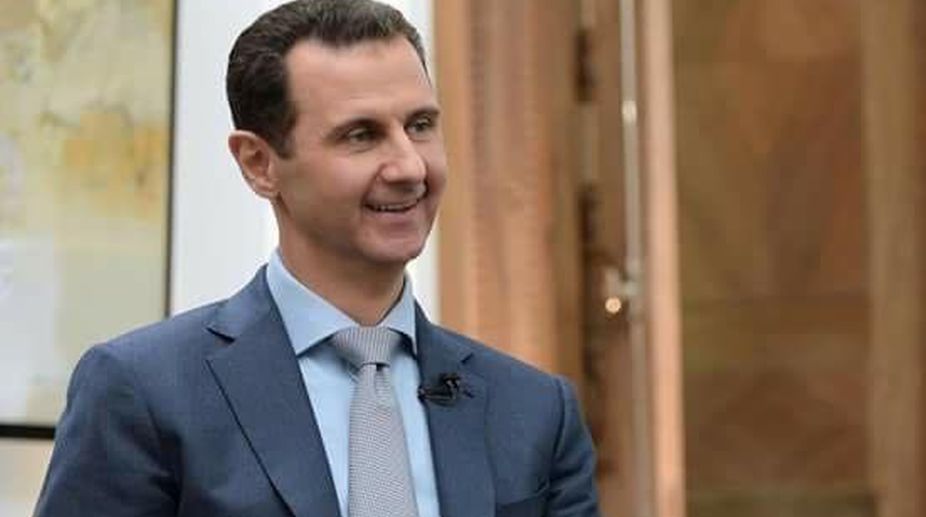
Packaged as a “coordinated population transfer” ~ in-house, more accurately ~ in Syria’s six-year-long civil war, last Friday’s evacuation of more than 7000 people from four besieged towns isn’t exactly an essay towards rehabilitation, initiated by the Bashar al-Assad regime. It is, on closer reflection, a forced rearrangement of the country’s population, and with sectarian overtones in a deeply fractious land. Through a deft policy of divide and conquer, President Assad has spelt out a choice between him and Sunni Islamist rule, symbolised by the surge of ISIS, if under pressure in Aleppo and the firing of the US cruise missile. In the midst of the increasing turmoil and the muscleflexing by the US and Russia (sailing of the warship), Assad appears to be considering a new course of action in his overall strategy, specifically by splitting the Shias and Sunnis in an intra-religion transfer of people from one city to another. Ignored in the process is the traditional stake in hearth and home, indeed a dislocation of life. “Honestly, when we left Madaya, I felt sadness, anger, and sorrow. But now, on the road, I don’t feel anything. I feel cold as ice,” was the pathetic comment of a resident as he was bussed out of Madaya, besieged by progovernment forces. The towns of Madaya and Zabadani near Damascus, from where 2350 people are reported to have been evacuated on Friday, are believed to be wholly inhabited by Sunnis ~ the bedrock of the Caliphate. Another 5,000 people were evacuated in 75 buses from the northern rebel-besieged towns of Foua and Kfraya, both predominantly Shia and loyal to the Syrian government.

At another remove, Idlib province, which recently suffered a chemical gas attack, has come under the hardline Sunnis. The Shia-Sunni evacuation from one city to another points to a calibrated shuffling around of the sects with the implicit objective that they don’t entrench themselves in any part of the country. This apparently is Assad’s strategy to face the challenge six years after the Arab Spring.

The beleaguered Syrian President has effected a 21st century variant of the policy of divide and rule… within one religion and one country. Small wonder that the state-sponsored population transfer has been condemned by the opposition within Syria as a “deliberate demographic change”. The evacuation deal was brokered in March by Qatar, negotiating on behalf of the rebels, and Iran, on behalf of the government. The United Nations is not supervising the Shia-Sunni swap that masquerades as evacuation.

It is far from certain whether the population swap will ease the siege, either by ISIS or the government. Arguably, it could lend a new dimension to the humanitarian crisis. As much was clear from the lament of an evacuee ~ “We were forced to leave. We left our land, our parents, our memories, our childhood… everything.”

Rumblings, finally

Editorial | New Delhi |

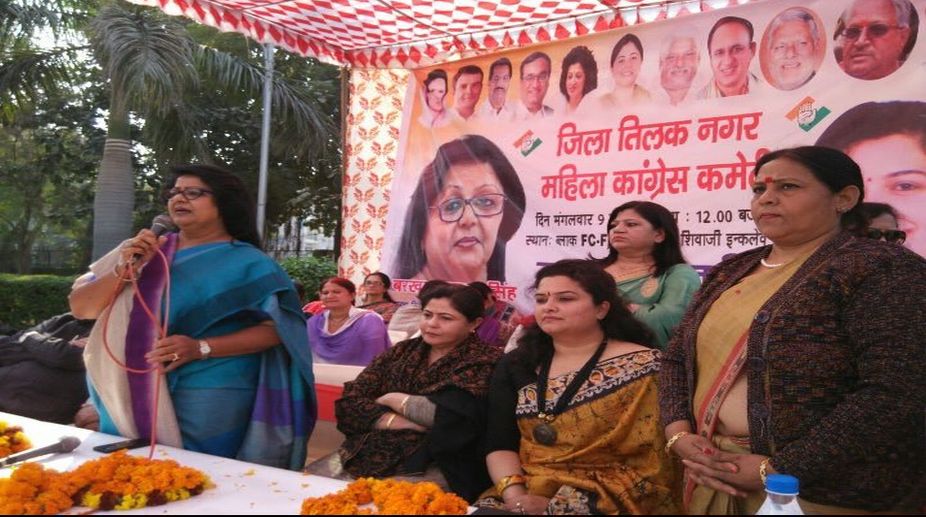
It is, as yet, only a trickle that may not develop into a flood; the triggers may be essentially local. Yet, it is apt to fall back on the hackneyed cliché: even worms turn. Coming as her forceful comments did ~ just after the defection of former Congress minister in Delhi, Arvind Singh Lovely, to the BJP ~ there is significance to the points raised by Ms Barkha Shukla Singh when stepping down as president of the Delhi Pradesh Mahila Congress. Her immediate target was DPCC chief Ajay Maken (flayed by former chief minister Sheila Dikshit when Lovely switched sides), but she went on to slam the national vice-president and heir-apparent of the Congress.

Even to the extent of declaring that Rahul was “mentally unfit” to lead. Her gripe was that he had ignored complaints that Maken had misbehaved with a number of Mahila Congress activists: “with utmost regret, I have to say that the Congress party under the leadership of Rahul Gandhi and Ajay Maken have only used the issue of empowerment of women and women’s security to gather votes, and it means nothing to them.” She went on to ask, “why does Rahul shy away from party leaders who can ask him questions? He is only interested in meeting sycophants.” According to her, senior party leaders whom she preferred not to identify “are also of the view that Rahul is mentally unfit to lead the party but choose not to say so”. She insists she is remaining with the Congress, but there can be no denying that her protest will have impacted the party’s prospects in the municipal polls.

True that the Congress was not in power in any of the three civic bodies, and that it is not expected to upset apple-carts when the results are tabulated, yet Ms Singh’s open dissent cannot be trivialised. She would be among the first to “take on” Rahul: despite consistently pathetic electoral performances ~ UP and Uttarakhand being prime examples ~ and the chronic lack of political acumen in “gifting” Goa and Manipur to the BJP.

Rahul and his cronies, in and beyond Parliament, have done little to make a mark in the political arena yet experienced, probably more competent persons like Moily, Chidambaram, Kamal Nath, Jairam Ramesh and KV Thomas (to name just a few) have been sidelined by the juvenile upstarts. And for a variety of factors, indifferent health among them, Sonia has lost her sting. Hopes of Priyanka performing the rescue act (complicated by the “reputation” of her husband) did not materialise in UP, and Capt Amarinder Singh waged a heroic but “solo” campaign in Punjab. There would be many silent spectators in the Congress hoping that Barkha Shukla Singh has activated the “RejectRahul” button.

SpiceJet to start second daily Kolkata-Dhaka flight from May 16

IANS | New Delhi |

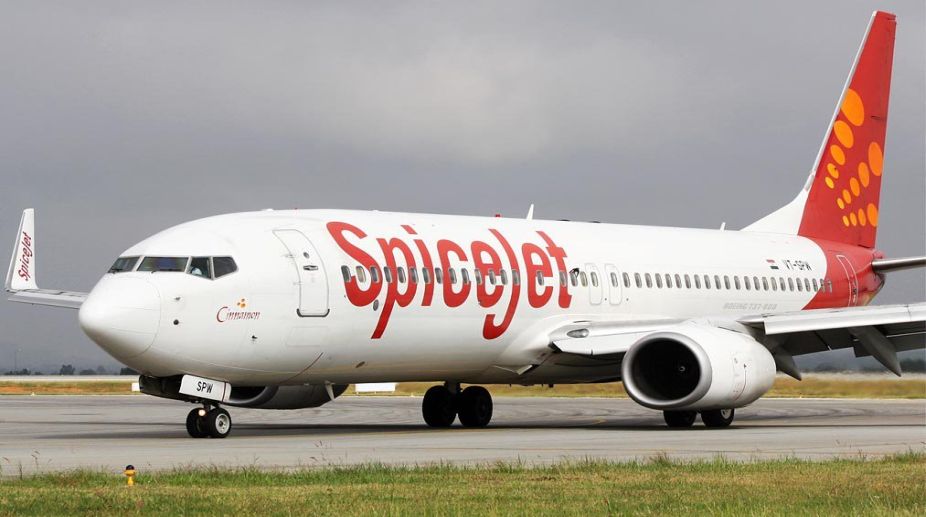
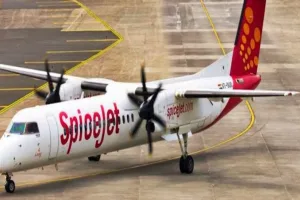
Low-cost carrier SpiceJet on Friday said it would launch its second daily direct flight on the Kolkata-Dhaka route from May 16.

The airline, which now operates to seven international destinations, is the only low-cost carrier to operate flights on the Kolkata-Dhaka sector.

Bookings for the new flight starting from May 16 are currently open.

"The overwhelming response of our customers to our first flight on the Kolkata-Dhaka route is what encouraged us to launch our second flight on the sector in such a short period. We will eye new markets and boost connectivity while discreetly gauging customer demand," said airline's Senior Vice President Commercial, Shilpa Bhatia.

Dhaka is the second international destination after Bangkok that the airline will be serving with a daily direct flight from Kolkata.

Laughing all the way with Ryan Stiles

SNS | New Delhi |

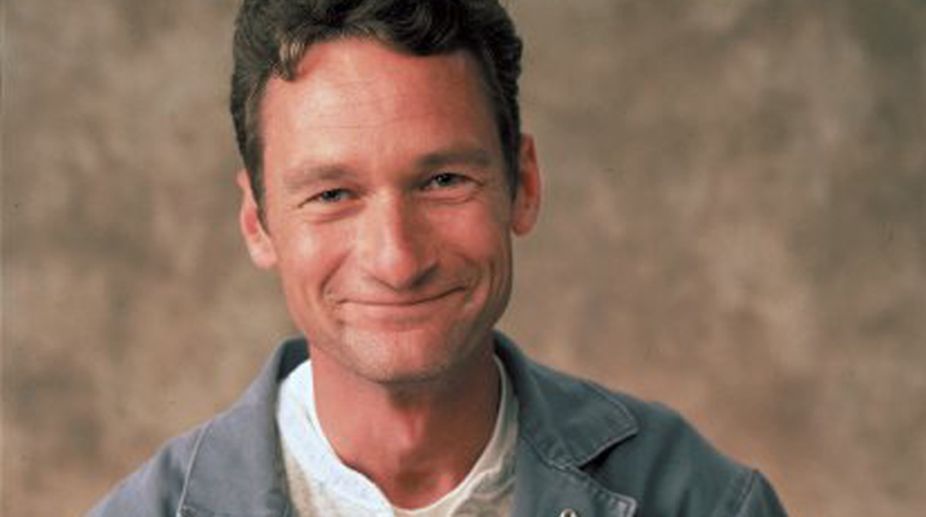
He tickles your funny bone with his one-liners, his sarcastic undertones are to die for. From being just a stand-up comedian to being the host of one of CW's popular shows, Ryan Stiles has come a long way. As the comedian brings in his 58th birthday on 22 April, here are five interesting things about America's most loved comedian.

1) Ryan is not just the host of his popular TV show but also a producer on "Whose Line Is It Anyway?" He wasn't just one of the regular performers, but also credited as an executive producer alongside host Drew Carey.

2) Stiles has been a part of an Academy Award-nominated film. Which is also Stiles' first credited acting appearance in the movie Rainbow War, a film created for the 1986 World's Fair in Vancouver.

3) Ryan has a fetish for footwear and most of his shoes are custommade. Although he has been mocked at several times for his obsession about his clothes and his shoes, the comedian doesn't stop adding new items to his collection!

4) He has also appeared in ads like the Nike's famous 1994 baseball ads.Not just that, Stiles benign presence was also felt in ads for Kinko's, KFC, Playskool, Pizza Hut, Progressive insurance and Zaxby's.

5) Ryan has also lived in a house owned by a flamboyant performer, Liberace in California. He later sold it and moved to Washington, where he currently lives with his wife Patricia and their three children.

SC to look into rights of Parsi women married to non-Parsi men

Statesman News Service | New Delhi |

The Supreme Court has agreed to examine in August if a Parsi woman after marriage deemed to take the religion of her husband would cease to be a Parsi.

Should a Parsi woman married to a non-Parsi be allowed to follow her religion? Should she have access to the Tower of Silence, the place for last rites of Zoroastrians, and other Parsi religious institutions to offer prayers and perform rituals?

It will also examine if a Parsi woman can be deprived of her religious identity and rights after marrying a man of different religion.

The apex court was dealing with an appeal challenging the Gujarat High Court's March 2012 verdict in which it was held that Goolrokh Adi Contractor, a Parsi, who had married Mahipal Gupta, a Hindu, under the provisions of the Special Marriage Act, ceased to be a Parsi.  

Her lawyer Indira Jaising has told the court she was denied entry to the Tower of Silence for the funeral of her father and that there was no law in India which said the wife must adopt her husband's religion.
But the Valsad Parsi Anjuman Trust while supporting the Gujarat High Court verdict added that as per the Parsi Personal Law, a woman married to a Hindu can't be allowed to offer prayers and that it is up to the court whether personal laws are amenable to judicial review.

A bench of Justices Dipak Misra, AM Khanwilkar and MM Shantanagoudar observed that the issue dealt with the aspect of "religious identity" of a woman.

The three-judge bench of the Gujarat High Court had dismissed the petition demanding a direction to Parsi Anjuman Trust not to prohibit her entry to Parsi religious places and to allow her to attend the last rites of her parents.

The high court had maintained that unlike her male counterpart, if a Parsi woman married a non-Parsi, her religious identity would merge with that of her husband and that she would be deemed converted to his religion. If she wanted to continue to be a Parsi, she would have to specifically "give up her husband's religion in court or prove that she led the Parsi way of life".

Right now, if Parsi women marry outside their community, they lose their right to the home in a Parsi baug, they can never enter an agiary or fire temple, and the children born out of such an alliance can't avail benefits of Parsi trust funds.

Business confidence up in Q1: Report

Statesman News Service | New Delhi |

At a time when the global economic scenario is not so encouraging, the Association of Chartered Accountants (ACCA) and Institute of Management Accountants (IMA) in its report released on Friday said business confidence in India has increased in the first quarter of 2017. The report also accepted that demonetisation was one of the causes in slowing down economic activity. 

The report said the quarterly survey of global chief financial officers (CFOs) and  finance professionals has found that global economic sentiment has risen to its highest levels since 2015 amid promising signs of a sustained recovery. The rise has been spearheaded by an increasingly confident outlook in North America and is reflected across leading developed and emerging markets. In particular, there has been the fastest rate of growth in global trade since 2015.

Commenting on the findings of the report, Sajid Khan, head of international development at ACCA said, "While the demonetisation campaign caused a slowdown in economic activity ~ which was a risk understood at the time ~ the increase in confidence this quarter reflects the underlying strength of the Indian economy." 

Khan added that the confidence level has been improving as businesses benefit from the government's recent economic reforms, "although securing prompt payment for small businesses remains an important priority". 

Moreover, the survey has found that inflationary fears are putting pressure on global economies, with nearly half (46 per cent) of firms reporting increasing costs as a cause for concern. Despite this there are significant improvements for employment and investment, with 22 per cent of firms planning to create more jobs and raise capital expenditure (up from 16 per cent and 14 per cent respectively in Q4 2016). 

Faye Chua, head of business insights at ACCA, added that policy makers will have an important role in the coming months. "This quarter demonstrates that there are signs that the global economy is returning to a degree of health after some very tough years: the IMF is expecting global growth of 3.4 percent this year, the fastest rate since 2012."

WHO Southeast Asia members pledge inclusive approach for autism

IANS | Thimphu |

Accelerating efforts to enable people with autism and other neurodevelopmental disorders to lead a productive life, countries in WHO Southeast Asia Region on Friday adopted the ‘Thimphu Declaration which calls for integrating the needs of such individuals and their families into national health and socioeconomic development plans.

The Declaration, adopted at the end of the three-day International Conference on Autism and Neurodevelopmental Disorders here, emphasizes the need for a whole-of-society and whole-of-government approach to these issues, with specific attention to strengthening national capacities in the health, education and social care sectors to provide effective services and support to people with autism spectrum disorder (ASD) and other neurodevelopmental disorders (NDDs), a media statement said.

The Declaration welcomed WHO Southeast Asia Region's strategy on autism and called for countries in the Region to share experiences and best practices, with a focus on the lifespan needs of people with ASD and NDDs.

"Inter-country cooperation and partnerships are fundamental to addressing autism in the Region. Member countries are already demonstrating how progress can be forged, providing valuable learning opportunities that must be embraced and adapted to country needs," Poonam Khetrapal Singh, Regional Director, WHO Southeast Asia, said.

The Thimphu Declaration, a collaborative effort of countries in the Region, was facilitated by the existing collaborative framework for autism in Southeast Asia.

Government at all levels – national, state and local – should work with civil society, including academia, professionals and non-government organizations, as well as the private sector and media to effectively address autism and other neurodevelopmental disorders, the Declaration said.

The Thimphu Declaration stressed the need to promote social inclusiveness and remove stigma, which are major challenges that individuals and their families face.

The conference witnessed high-level representation at the inaugural with the Queen of Bhutan – who is also the Royal Patron of Ability Bhutan Society – gracing the occasion, as well as Prime Minister of Bhutan Tshering Tobgay and Prime Minister of Bangladesh Sheikh Hasina, highlighting the need for focused and concerted efforts to address ASD and NDDs.

WHO Champion for ASD in Southeast Asia, Saima Wazed Hossain, who is also the chairperson of Shuchona Foundation, advocated for WHO's regional strategy on ASD.

The Conference, attended by policymakers, academics, professionals, practitioners, advocates and civil society organizations from the 11 Member countries of WHO South-East Asia Region and beyond, discussed community based services, inclusive education programs, employment opportunities, trainings and rights; and supported independent living in the community.
Autism and other neurodevelopmental disorders are life-long disabilities that affect brain functioning, and when left without proper support can cause significant impairment in exercising of an individual's human rights and fundamental freedoms, it said.

Parliamentary panel summons RBI Governor again

IANS |

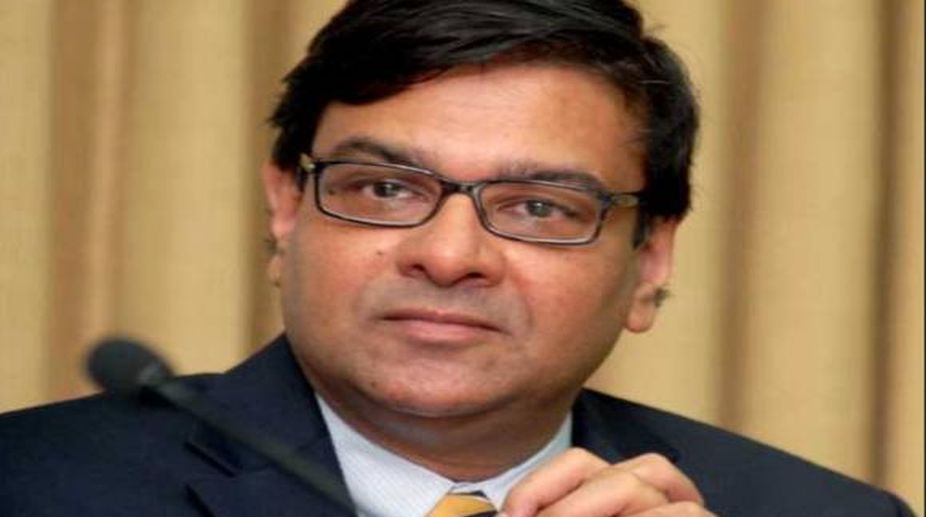
Reserve Bank of India (RBI) Governor Urjit Patel has been summoned by Parliamentary Standing Committee on Finance to appear before it on May 25 on the demonetisation issue.

According to one of the panel members, he will be asked how money has so far come back into the system after demonetisation.

The Governor would also be asked when the banks' operations would become normal and also how digital economy is being implemented in the country.

The committee is headed by former Union Minister and Congress leader M. Veerappa Moily, who had in January called Finance Ministry officials besides top RBI officials to discuss demonetisation.

Memorial in honour of Naga Labour Corps unveiled

IANS | Kohima |

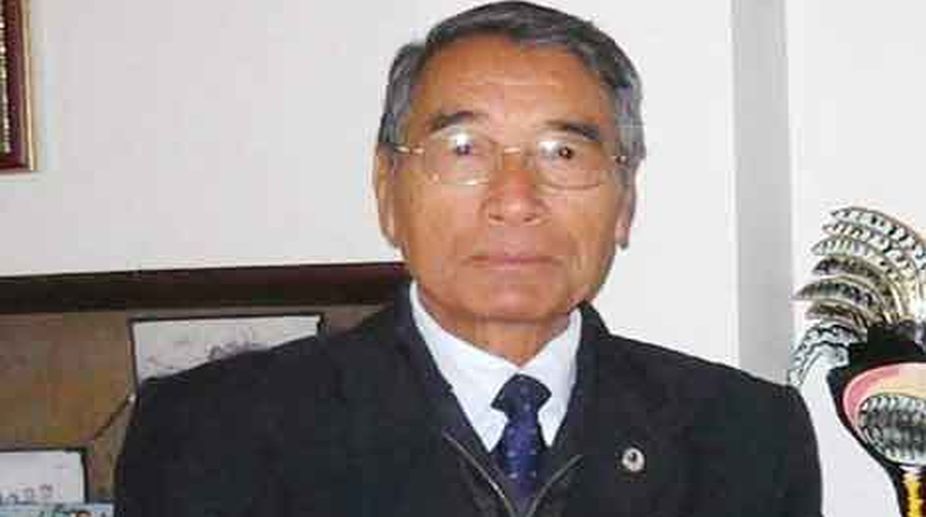
Nagaland Chief Minister Shurhozelie Liezitsu on Friday unveiled a memorial monolith in honour of the Naga Labour Corps that was raised exactly 100 years ago and sent out to France to take part in the First World War.

The monolith was erected in a hillock opposite the Red Cross Building in the heart of Kohima, which itself was the scene of one of the greatest battles of the Second World War.

Liezietsu announced that a memorial park will be built around this hilltop to mark the 100th anniversary of the date marking the departure of the Naga Labour Corps's first batch to the Western Front, and the monolith was the first step in this direction.

"One can hardly imagine the feelings that the Naga Labour Corps must have felt, leaving their homeland for the first time and crossing oceans to distant lands fighting for the then (British) Crown," he said.

"Certainly it was not India's war and it was definitely not the Nagas' war but the Naga Labour Corps participation and the bravery they exhibited during their battles in Europe and elsewhere would have ramifications," he added.

Liezietsu said amongst all the tribes who were sent to duties in the war, the Nagas were the first to realize the need to organise and unite themselves.

"Men who returned from France formed a socio-political association called the Naga Club with branches in Kohima and Mokokchung immediately after their return in 1918," he said, adding that it was this association that later in 1929 submitted a representation to the Simon Commission, conveying the right of choice of self-determination of the Nagas when the British left India.

Moreover, he said, the state of Nagaland has its direct bearing from the Naga Labour Corps and for this purpose alone, their brave mission must be remembered appropriately for posterity.

Nearly 1,700 tribal Naga men were recruited by Deputy Commissioner Herbert Charles Barnes for what was designated as the Naga Labour Corps, and the first batch was dispatched on April 21, 1917 for France, and they sailed for that country on April 26.

Arriving in France in two main groups (688 men on June 21, 1917 and 992 men on July 2, 1917), they were initially divided into the 15th, 16th, 17th and 18th Naga Labour Companies but yo avoid confusion with other Indian Labour Corps units serving in Mesopotamia at that time, these companies were renumbered as the 35th, 36th, 37th and 38th (Naga) Labour Companies.

The men of the Naga Labour Corps worked in various places around France on salvage work, road repairs among others. They returned to India in mid-1918.

Unfortunately during the Second World War, the building holding the lists of Naga Labour Corps' personnel was destroyed in Japanese bombing but Liezietsu said that the relative lack of historical records should however not deter the people from commemorating their contributions.

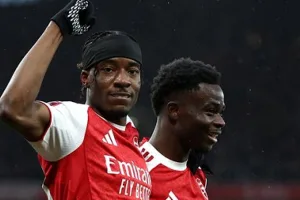
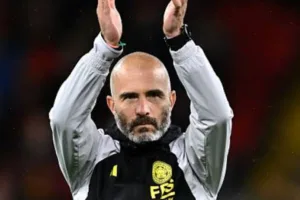
FA Cup preview: Struggling Chelsea face vibrant Tottenham Hotspur

Can the Lilywhites break their semifinal jinx or will the Blues ensure yet another heartbreak?

Prithviraj Dev | New Delhi |

The Premier League’s top two sides, Chelsea and Tottenham Hotspur, will collide in an epic FA Cup semifinal at Wembley Stadium on Sunday.

It’s going to be an emotionally charged-up London Derby, as Chelsea announced this week that John Terry will be leaving the club at the end of the season after being a wonderful servant for 22 years. 

And then truly tragic news came from Spurs, as the club announced that former player and current youth-team manager,  Ugo Eihiogu passed away on Friday, just 44 years of age.

While the news does not of course equate to the other, the fact remains that the sides will be charged up and eager to get the win at Wembley and it really is too close to call at this point.

Chelsea

Antonio Conte knows his team are one loss from a remarkable late-season meltdown and he will be desperate to avoid a damaging defeat at Wembley. Only a few weeks ago the Blues were on their way to win the league but losses to Crystal Palace and Manchester United have well and truly rocked the boat?

What’s going wrong? For starters, Diego Costa isn't scoring anymore. The snarling Spaniard is a fine striker and while Conte may publicly defend him all he wants, you need your striker to score if you wish to win matches. The burden is increasingly falling on Eden Hazard’s shoulders and while the Belgian winger has arguably been the finest player in England this season, he alone cannot decide the outcome of every game.

The other reason for their alarming slump has been their erstwhile watertight defence which has been leaking goals, in fact they have kept just one clean sheet in their last eight games.

So while Thibaut Coirtois will be touch and go for Saturday, Chelsea have been handed a major boost as Marcos Alonso is expected to shrug off an illness to start on the left flank.

What they are saying: ‘I’m sure they believe they can beat us. We believe we can beat them. It’s on the day. Psychologically football can be affected by results sometimes, but I believe every time we have had a bad result this year we bounced back very quickly and that says a lot about the team. Hopefully we can do the same and play a good game on Saturday,” Chelsea midfielder Cesc Fabregas (as per www.chelseafc.com)

Injury doubts: Thibaut Courtois (Ankle), Marcos Alonso (Illness)

Suspension Alert: None

Tottenham Hotspur

There seems to be no stopping Tottenham at the moment, flying high in the league and woe betide any who come across them.

Their young squad has been doing wonders in each game and as their front four is absolutely terrifying for opposing defenders. Christian Eriksen, Dele Alli, Son Heung-min and Harry Kane make Spurs a fast, free-flowing side that can’t stop scoring at the moment. There isn't just one player you can mark out of the game, which makes them even more dangerous.

Are there any weaknesses? Well, well with Danny Rose injured, Ben Davies has been deputising at left-back and his obvious lack of pace does make him a potential weak link but apart from that, Mauricio Pochettino’s men look rock-solid.

A point for caution, however, is that Chelsea’s grizzled squad will look to rile up the Spurs players any chance they get and avoiding a reaction will be key if they are to progress to the finals.

What they are saying: “It’s nice to say we are ready and we want to win but it’s not an easy task, it’s so difficult to win trophies. We will play against one of the best teams in Europe with a great manager, great players, players that have won European competitions and World Cups,” Tottenham manager Mauricio Pochettino (as per www.tottenhamhotspur.com).

Injury absentees: Erik Lamela (Hip), Danny Rose (Knee), Harry Winks (Ankle)

Suspension Alert: None

Super Stat: Spurs have lost their past six FA Cup semi-finals. The last being a 5-1 defeat at the hands of Roberto Di Matteo’s Chelsea in 2011/12.

India, EU agree to boost security cooperation

IANS | New Delhi |

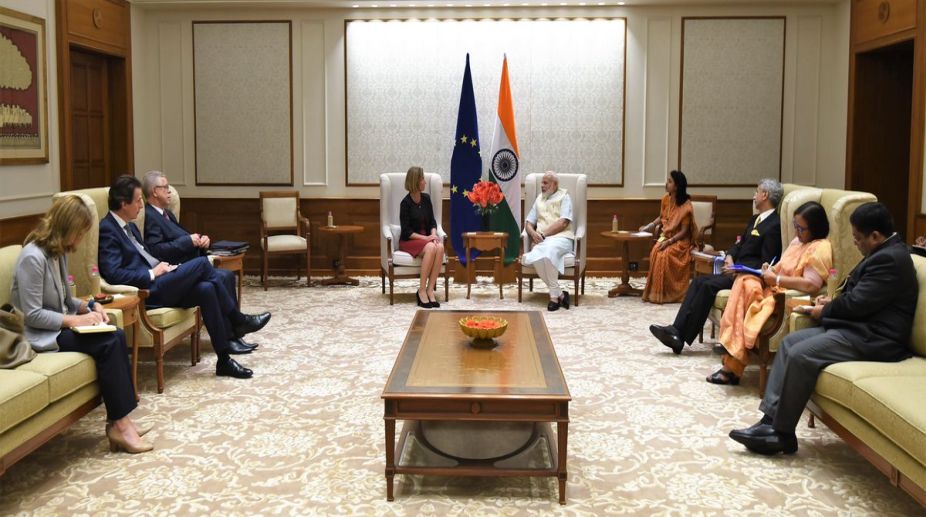
India and the European Union on Friday agreed to strengthen security cooperation during a meeting here between Prime Minister Narendra Modi and EU High Representative for Foreign Affairs and Security Policy Federica Mogherini.

"Prime Minister Modi and Mogherini discussed regional and global developments of mutual interest," the Prime Minister's Office said in a statement.

"The Prime Minister and Mogherini agreed on the need to strengthen the security cooperation between India and EU, particularly on the issue of counter-terrorism," it said

Modi recalled his visit to Brussels in March 2016 for the 13th India-EU Summit, and said that he was looking forward to the next India-EU Summit to be held in India in October 2017.

Earlier in the day, Mogherini, who is on an official visit to India, also met External Affairs Minister Sushma Swaraj and Minister of State for External Affairs M.J. Akbar.

According to a statement by the External Affairs Ministry, they reaffirmed their commitment to deepening their Strategic Partnership and reviewed progress on the commitments made during the Brussels summit, including in the areas of counter-terrorism, migration and mobility, water partnership, clean energy and climate change action.

Sushma Swaraj also condemned Thursday night's terror attack in Paris that claimed the life of a police officer. Emphasising that terrorism was the gravest threat to humanity today, she called for both to strengthen their cooperation to fight it.

The statement also said that EU is one of India's largest trading partners with bilateral trade in goods reaching $85 billion in 2016, as well as the largest destination for Indian exports and a key source of investment and cutting edge technologies.

"India seeks enhanced level of investments from EU companies in its flagship programmes like Clean India, Namami Gange, Skill India, Start-Up India, Smart Cities, renewable energy and next-generation infrastructure."

According to the statement, both sides also discussed ways to take forward the India-EU broad-based trade and investment agreement.

According to statement by the Delegation of the European Union here, during the course of Friday's meetings, the two sides discussed in depth a broad range of issues of common interest.

It said that the EU and India "are natural partners, they share fundamental values of democracy and diversity, economic interests and robust trade relations, common security challenges, a direct interest in the stabilisation of many fragile areas, from the Korean Peninsula to Afghanistan".

"The EU and India expressed their common interest and commitment to strengthen their cooperation on the world stage, both bilaterally and in multilateral fora, on common priorities such as multilateralism, climate change, sustainable development, free and fair trade, security and defence – notably on maritime security – and counter-terrorism," it said.

The two sides also agreed to take stock of progress made on decisions taken at last year's summit in Brussels, to deepen cooperation in foreign policy, security and defence, trade, investments, climate change, water, new and renewable energy, environment, ICT, space, research and technology, urbanisation, and to strengthen people-to-people contacts, including student exchanges.
During her visit, Mogherini opened the EU@60 Treaty of Rome Exhibition at the Italian Institute of Culture. This year, the EU celebrates the 60th anniversary of the treaty, which paved the way for the bloc's formation.

Will decide presidential candidate after consultations: Congress

IANS | New Delhi |

The Congress on Friday said that it will decide upon a presidential candidate after consulting its allies and all other opposition parties.

"Congress will decide upon a presidential candidate after consulting and taking into confidence all its allies as also all other opposition parties.

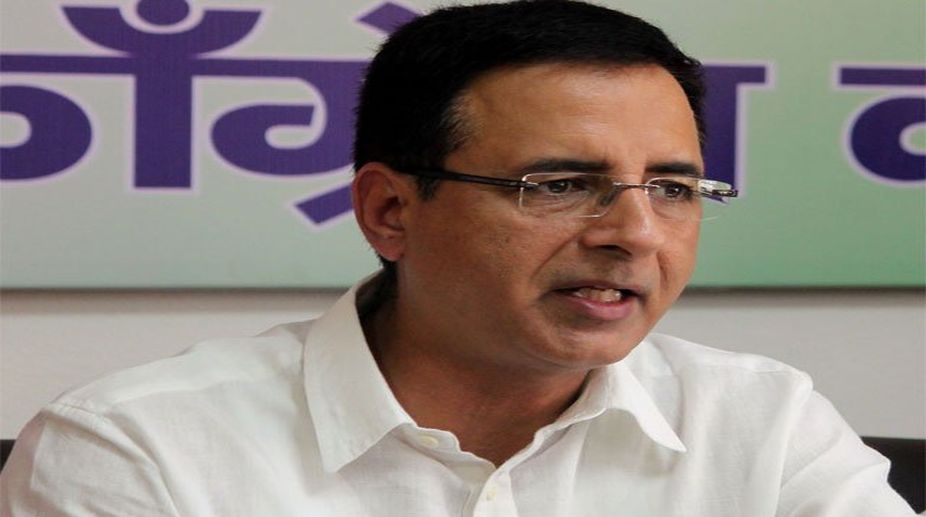
"When that stage arrives, we will be very happy to inform the media. So far, that stage has not arisen. So, the question of individual's name does not arise as yet," said Congress spokesperson Randeep Singh Surjewala at a media briefing.

"Congress President Sonia Gandhi, Vice-President Rahul Gandhi and Working Committee, after consultation with all leaders of the opposition parties, will take a conscious, concerted and balanced call on the issue," he added.
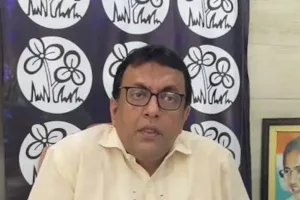
"As soon as it is decided, we will be very happy to share," he added.

On another question of Congress President meeting Bihar Chief Minister Nitish Kumar, Surjewala said: "Nitish Kumar met Congress Vice-President Rahul Gandhi when he visited Bihar and met up with Congress President Sonia Gandhi when he was in Delhi yesterday (Thursday).

"It was a regular courtesy call between two allies. To convert it into any other discussion perhaps would be unwarranted."