Logo

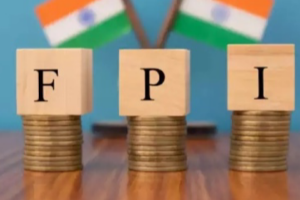
Rupee down 4 paise against Dollar in early trade

PTI | Mumbai |

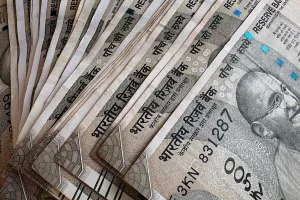
The Rupee weakened by 4 paise to 64.20 against the US Dollar in early trade on Friday on increased month-end demand for the American currency from importers at the Interbank Foreign Exchange.

Moreover, the US Dollar's gain against other currencies overseas and a lower opening of the domestic equity market put pressure on the Rupee, Forex dealers said.

The Rupee had eased from a 21-month high to close 5 paise lower at 64.16 against the Dollar on April 27 trade on fresh demand for the American currency from importers.

Meanwhile, the benchmark BSE Sensex fell by 82.21 points, or 0.27 per cent, to 29,947.53 in early trade.

Early morning shows of ‘Baahubali 2’ cancelled in TN

IANS | Chennai |

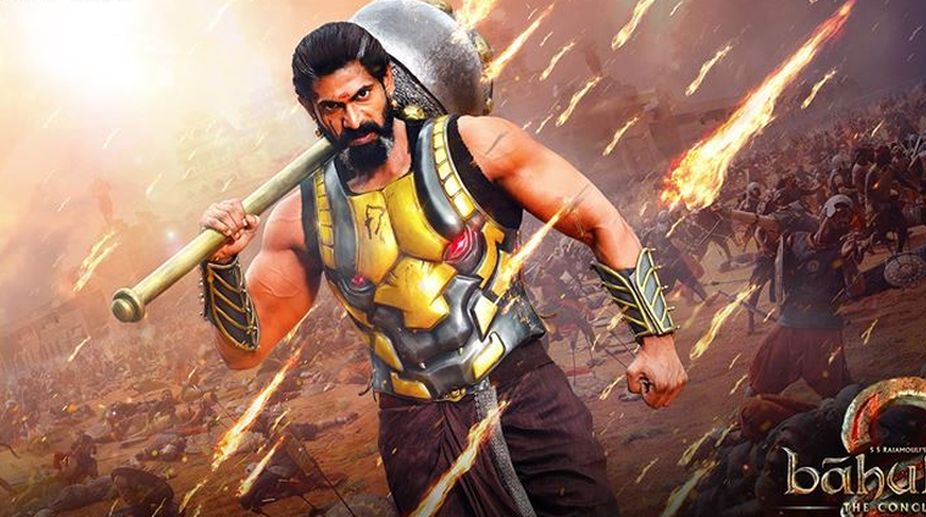
Early morning shows of S.S Rajamouli's magnum opus Baahubali 2: The Conclusion were cancelled on Friday due to financial issues in Tamil Nadu, industry sources said.

"Tamil Nadu distributor K Productions owes Rs 15 crore to Arka Mediworks, the makers of Baahubali 2. Arka is yet to issue KDM for the release of Telugu and Tamil versions of the film in the state," a source told IANS.

A theatre owner, on the condition of anonymity, said the issue is likely to be settled by the afternoon.

"Talks are being currently held to settle the deficit. Shows are likely to open from noon," the theatre owner said.

The Hindi version, however, has released in Tamil Nadu.

"The Hindi version didn't have any issues because it's being released nationwide by Anil Thadani," the source added.

Meanwhile, Baahubali 2 has released in other parts of the country and has been received well.

The film stars Rana Daggubati, Prabhas, Anushka Shetty, Tamannaah Bhatia, Sathyaraj and Ramya Krishnan.

GST to push Indian growth to over eight per cent: IMF

PTI | Washington |

The ambitious Goods and Services Tax to be implemented from July 1 would help raise India's medium-term growth to above eight per cent, the International Monetary Fund has said adding that the reforms being done is expected to pay off in terms of higher growth in the future.

“The government has made significant progress on important economic reforms that will support strong and sustainable growth going forward,” Tao Zhang, Deputy Managing Director of the International Monetary Fund, told PTI in an exclusive interview.

“We expect that the goods and services tax (GST), which is targeted to be applied starting in July, will help raise India's medium-term growth to above 8 per cent, as it will enhance production and the movement of goods and services across Indian states,” the IMF official said.

“We are extremely impressed by the work that is being done and that we expect it will pay off in terms of higher growth in the future,” he said in response to a question on the reforms being undertaken by the Indian Government.

Observing that India is the “fastest growing emerging market economy” in a region that remains the strongest-growing in the world, Zhang said the IMF believes that India is going to continue to grow at a fast pace, with a projected 6.8 per cent rate for Financial Year 2016/17 and 7.2 per cent in 2017/18.

Lower global oil prices have boosted economic activity, and helped lower inflation.

In addition, fiscal and monetary policies have helped foster economic stability, he said.

“The currency exchange initiative led to a slowdown in economic activity.

However, there are initial signs of recovery as the currency exchange has been progressing well,” said Zhang, who assumed the role of Deputy Managing Director at the IMF on August 22, 2016.

Zhang, who worked at the World Bank from 1995 to 1997 and at the Asian Development Bank from 1997 to 2004, said a key concern for the IMF in India is the health of the banking system, “which is still dealing with a large amount of bad loans”, as well as “heightened corporate vulnerabilities” in several key sectors of the economy.

“As India persists with its strong reform efforts, labour market reforms should take priority,” he noted.

These would facilitate greater and better quality jobs, raise female labour force participation, and enhance the impact of recent product market reforms, he observed.

“While there has been important progress generally, we see scope to pursue better targeting and greater efficiency of subsidy and social spending programs through greater use of the trio of Aadhaar unique beneficiary identification, direct benefit transfers, and information technology,” Zhao said.

“Finally, more could be done to raise agricultural productivity and enhance market efficiency. This would help increase the supply of high-value foods, enhance returns to farmers, and dampen food inflation pressures,” said the IMF official responding to a question.

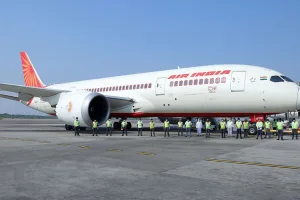
Passenger dragged off United Airlines flight reaches settlement

IANS | Washington |

A passenger who was violently dragged off a United Airlines flight earlier this month, has reached a settlement with the airline for an undisclosed amount, his lawyers has announced.

The incident occurred on April 9 when Kentucky resident David Dao, 69, was forcibly removed from the flight at O'Hare International Airport in Chicago after refusing to give up his seat to the airline's staff.

United Airlines has offered a series of intensifying apologies since Dao suffered a concussion and a broken nose, and lost two teeth, The New York Times reported.

On Thursday, both sides welcomed what they hoped would be the end of the ordeal.

"Munoz said he was going to do the right thing, and he has," Thomas A. Demetrio, one of Dao's lawyers, said of Oscar Munoz, United Airlines' CEO. 

"In addition, United has taken full responsibility for what happened on flight 3411, without attempting to blame others, including the City of Chicago. For this acceptance of corporate accountability, United is to be applauded."

Charles Hobart, a United Airlines spokesman, confirmed the settlement, reports The New York Times.

"We are pleased to report that United and Dao have reached an amicable resolution of the unfortunate incident that occurred aboard flight 3411," he said in an email. 

"We look forward to implementing the improvements we have announced, which will put our customers at the centre of everything we do."

Earlier on Thursday, the airline announced several steps to prevent such episodes from recurring and said that passengers who had arrived on an aircraft should not have to give up their seats. 

The airline also said it would create a new check-in process that would allow passengers to volunteer to give up their seats for compensation, and increased the limit of that compensation to $10,000 from $1,350.

United Airlines had previously announced that it would no longer ask law enforcement officers to remove passengers from its planes over booking issues, and that crew members would not replace boarded passengers.

"I hope other airlines will follow United's lead," Demetrio told The New York Times.

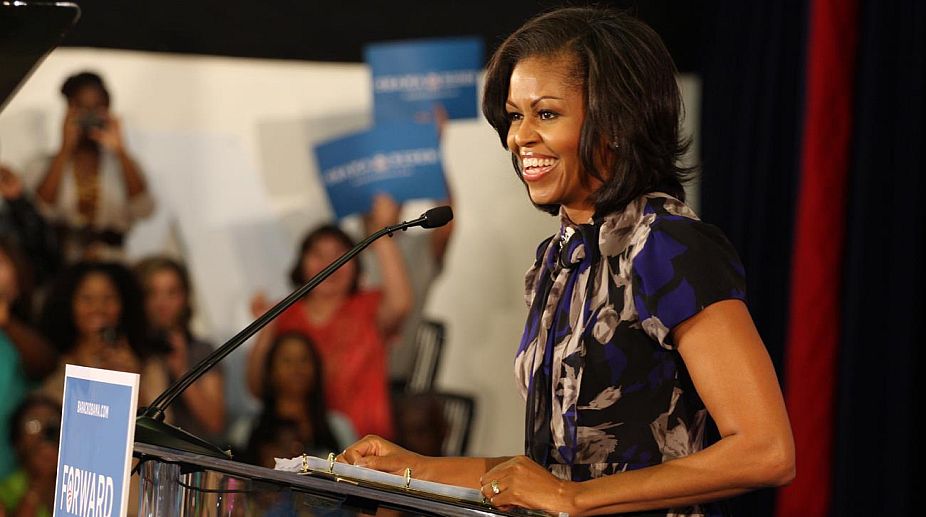
Won’t run for office, says Michelle Obama

IANS | Washington |

Former US First Lady Michelle Obama has shut down calls to run for president and said she would never run for political office, the media reported.

On Thursday, in her first speech since leaving the White House, she told an audience at the America Institute of Architecture convention in Orlando that being in the White House was tough on her family, CNN reported.

Obama said she will continue to work for young girls and women around the world who face challenges with education, medical care, economic inequality and violence.

"It's good to get out of the house," she said about being at the event. "(It's been) so far so good — it hasn't been that long since we left … it's good to not have the weight of the world upon your shoulders."

Obama gave the audience in the conference hall an inside look what is has been like for the former first family since leaving the White House, reports CNN.

"Friends are surprised I answer the door now," she said, adding that her daughters Sasha and Malia can actually open their windows, something they could never do at the White House. 

Obama said their dogs, Bo and Sunny, never heard a doorbell before because the White House does not have a doorbell.

She told the audience the final day was bittersweet because it was the place she had lived the longest in her entire life — and her daughters grew up in the White House. 

Malia and Sasha went out the back door with tears in their eyes while President Donald Trump and Melania Trump came through the front when they moved in.

"I didn't want to have tears in my eyes for the new President," she said.

For the most part, former President Barack Obama and Michelle Obama have steered clear of the public spotlight since leaving the White House in January, CNN reported. 

The two were last spotted earlier this month on a yacht off the island of Mo'orea in the South Pacific.

The Obamas are also busy working on their memoirs.

The couple plans to live in Washington until their younger daughter, Sasha, graduates high school in 2019.

US state holds execution as SC reviews case

IANS | Washington |

The state of Arkansas has temporarily put an execution on hold as the US Supreme Court was hearing the convict's last minute appeals, the media reported.

Kenneth Williams, 38, was scheduled to be executed on Thursday night at the Cummins Unit, a state prison southwest of Pine Bluff, the same facility where two convicts were killed by the lethal injection on Monday night and another criminal on April 21.

If Williams' final court appeals fail, he would be the fourth Arkansas prisoner to be executed in seven days – a compressed timeline precipitated by a scarcity of fresh lethal-injection drugs as states struggle with suppliers that don't want their products used in executions, reports CNN.

Williams was initially sentenced to life in prison for the 1998 killing of Dominique Hurd, a University of Arkansas cheerleader. 

But a month after his sentence, he escaped from the Cummins prison in October 1999.

Authorities said Williams the went to former deputy prison warden Cecil Boren's home nearby, confiscated his guns and shot him before taking off with his vehicle. 

Police said he drove to Missouri, where he wrecked with another vehicle as a police officer chased him, CNN reported. 

The wreck killed the other driver, Michael Greenwood.

Williams was convicted of Boren's death and sentenced to execution in 2000.

Adorning appearances

Meha Bhargava | New Delhi |

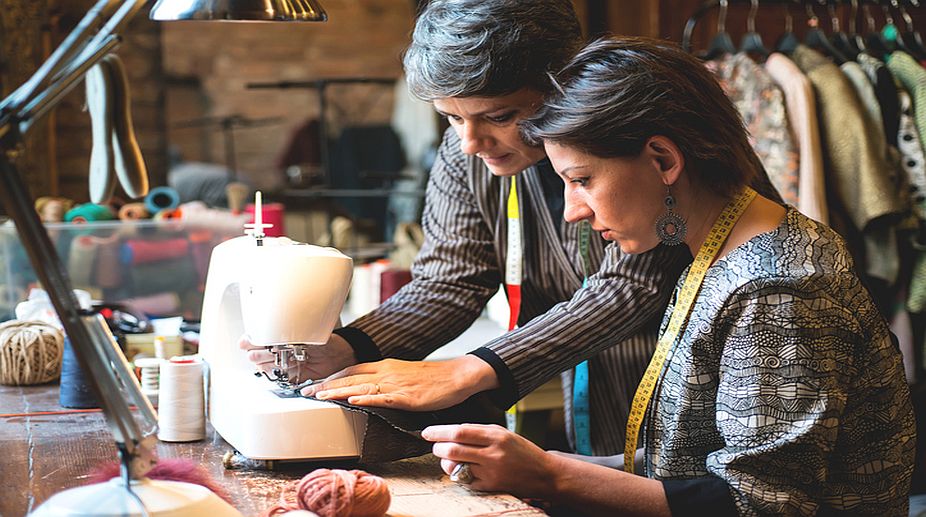
The fashion industry is the fast moving career path among the young generation. The glamour quotient always attracts enthusiast who have a zest to bring in its originality in the market. It offers an array of opportunities in designing and creativity, in integration with technology and management aptitude. Being associated with the fashion world, it does not limit one with the designing of clothes but extend in the areas of art and design as well.

Among others, fashion styling is an emerging profession. It also has one unique career path as wedding stylist. This has been a hot favourite in the West but India is slowly and steady attracting this segment. Those with a distinctive idea about the styling with an eye for trend and culture will be able to make their mark in the industry. This field is perfect for those who love creativity, has passion and immense love for fashion and wants to keep experimenting.

They come as a saviour for all those who want to look best in every way for the special occasion. They mostly work for clients to give them a personal style starting from the beginning of the celebrations to their daily routine set till the D-day. The work involves the selection of the best styling items from the best of the places or designers as per the clients’ budget and preferences. It can be a person or one full team dedicated to looking after a particular thing that works to conceptualise and execute the event styling. Their work is not just limited to the physical appearance of the client, but their body language and facial expression to look prettier as well giving a comfort feel with others.

One myth that has been associated with this career is that people think styling someone is a comfortable job. Making your client happy by providing the best in the budget is not an easy task. A stylist needs to go from one place to another or even cities to get the perfect thing for him/her. It is important to know your client as well and make sure to do things as per their preference and likings.

It is not mandatory to be a graduate or postgraduate but without formal training, it would be difficult, where some institutes can help you brush up your skills and expertise. One can attain a diploma or a degree in fashion styling related course to get the amalgamation of theoretical knowledge and practical exposure to the industry. After completing or during the training, one can start by either working with the team of known stylists. This helps the person to understand the industry with more of a practical knowledge and have a closer look at the reality. Whilst those who are very talented and have an exceptionally good portfolio, ambition, and perseverance, it may be possible.

The skill sets one must inculcate is that s/he should be artistic and creative with an eye for an outfit, jewellery, make-up, draping style keeping the trend and culture in mind. They should be able to communicate ideas through the presentation, work out costs and budgets. The most effective mantra to succeed in a frequently changing industry is to be on your toes and have all the knowledge about all the latest happening of the fashion industry.

The writer is founder, styl.inc.

Taking meaningful strides

Rushen Chahal | New Delhi |

A time and motion study conducted by the author as a part of a Six Sigma Project gave the following results. For employees who are mapped into a system login/ logout time and utilisation mapped to the last minute the overall maximum work efficiency obtained was at 67 per cent. For employees in desk roles with system access being 10 to 20 the overall efficiency obtained was at 45 per cent max. In line manufacturing setups the efficiency numbers stood at 77 per cent.

This clearly demonstrates that for the old model of setting up a huge office and workspace, investing millions — the efficiency numbers in the best possible scenario would never cross 60 per cent averaged out. Flexibility in location and work hours is already being offered by many progressive companies, the next step obviously will be variable pay-outs directly prorated to delivery. The on demand model is now being extended to talented resources, and is the only way forward for the IT and services industries to move up the value chain and survive.

We have already seen multiple employees being laid off by corporates due to under-utilisation. The problem clearly is not with the resources but their engagement contracts. Using flexible resources will give businesses the edge in delivery and an agile trimmed workforce. The workers — the good ones will realise that delivery is what brings them recognition and cash.

Currently these practices are being experimented by about 10 per cent of the top companies and this is the right time for students to specialise in one particular domain and be ready for 2018 and thereafter. The entire landscape is ready for a huge change and thus not only will the cost of hiring an employee become negligible, which today stands at about 30 per cent of annual salary, but the more painful part- hiring time will come down from 45 days minimum to five days or less—a dream for every HR head today.

Hidden costs for full time workers stand at about six to 12 per cent of the HR budgets and this is noted by finance but does not provide much weightage for a recruiter and the young employee who would rather prefer cash. The other benefit is access to talent with a twist- those opting might already be employed elsewhere and doing a fabulous job, once credibility is established. You may as well go and approach the person whose work you are using for reference. This would also allow you to access senior or experienced resources without the cost impact. The millennials have now surpassed generation X workers and have become the next workforce where HR strategies should be focussed towards. And the biggest differentiator is the impact of mobility on their process and their understanding of automation.

Branded theoretical education no longer carries weight and for many roles delivery focus is being noted. Hence a student who graduates in 2017 – 18 will have to immediately face the reality of a connected world, mapped, measured and managed by IT tools. Irrespective of any domain you may be graduating from, basics of computing and IT fundamentals and proficiency in excel, word and power point will certainly get you hired. Another domain where vast changes has happened in the last three years is social media, as we have clearly seen the old marketing roles becoming redundant and the online platforms becoming the new norm. Henceforth, be prepared for more contractual roles coming and we can certainly look at 50 per cent of the workforce in most industries employed through alternate channels.

The writer is vice chancellor, Rama University.

Getting down to business

Kalpana Sinha | New Delhi |

Entrepreneurship is all about one’s readiness to take risks, create structure, and handle a business in a competitive world that is dynamic. It is believed that to establish a startup, one should stop sketching and start building. There is a huge advancement in technology and ease in finding source for finance, showing major interest towards the new startup ways that is in trend. Startups by offering a better way to everything are challenging companies that have stood for 100 years. They work in a transparent environment and aim at improving the way one serves the customers. Such companies hunt for new ideas and enhanced ways to come up with improved quality.

There are numerous reasons that are boosting up this culture for the millennium generation. This is where startups play their role and gives the way to those who want to be their own boss. Also, one more thing that is attracting people towards this culture is that government offers a lot of benefits and is trying their best to build the desired ecosystem.

One of the freshest trends is that educational organisations in India have started to play a crucial role in creating entrepreneurial and startup opportunities by comprising this subject as one of the main courses in business schools.

From the past couple of years, college campuses have started encouraging the startup culture relating to different fields. Considering the example of one of the most famous social media site Facebook which was also born at a college campus, the education institutes have to be optimistic, because we never know where the next big entrepreneurial giant may take place.

In colleges, strong teams can be built with fellow students where there is a constant flow of ideas because of the dynamics involved with the young generation. Colleges can develop entrepreneurship cells which should chanellise the flow of idea in order to achieve aim at growth. If students are provided with the specific training on how to control a business, they can achieve heights. Many well established colleges in India do promote this culture by establishing entrepreneurial ecosystem. If more colleges will promote this concept, we can have a bigger room full of ideas. Entrepreneurship is the latest activity that is creating an atmosphere of excitement in the world. However, to begin with the idea of a startup and working efficiently for it, one feels necessity for strong devotion, a firm decision, confidence and determination. One should stay motivated and create an atmosphere that will help others in the team. Hiring people for operations like marketing and sales is easy, but finding technical talent is quite a difficult task.

Young people usually don’t know what to expect. People often evaluate a company by its elegant office which actually should not be given much preference when joining an organisation. Working from home is cheaper, much satisfying and low pressured. But in India, many employees think that having a proper office means more success. People have become habitual of MNC or call centre kind of jobs, where they can get security, high pay with much lesser skills and work.

One attribute that startups look for is the intelligence to do the role in terms of skill and experience. Some startups have assessment tests. A considered employee should be selfmotivated and should show team player abilities. Also, they need to have some complementary skills, knowledge of industry and network. One should have the knowledge of the industry in which he/she will enter and should be willing to learn fast. One has to be hard working, determinant and should be able to do multiple tasks. These are the some of the qualities that should be in an entrepreneur to achieve the desired goals.

  • They need to differentiate between markets where they can explore their strength and potential.
  • They should know about their potential consumers who are actually willing to buy their services.
  • The budding entrepreneurs must have knowledge about their Unique Selling Preposition so that can attract consumers through their value added services.

The writer is head of entrepreneurship and student welfare department, IMS Noida.

Hitting your child no solution

Laila Khondkar | New Delhi |

“Iam a good teacher, as I do not scold or punish my students. If they do not understand something then I explain it to them,” declared a four-year-old who was acting out the role of a “teacher”; the “students” were his parents. I always observe children play with great interest. It gives me an opportunity to learn how they think and feel about various issues affecting their lives. While observing the child, it occurred to me that even before attending school, he had developed an understanding about the qualities that made a good teacher. I was also sad to note that the idea of ‘punishment’ had already entered his life at such a young age!

Almost a billion 2-14 year olds were physically punished at home last month. (Source: UNICEF, 2014, quoted in Ending Legalised Violence Against Children, Global Progress Report 2016.) Violent “discipline” is the most common form of violence against children. Corporal punishment kills thousands of children across the world each year and injures millions more.

According to the Multiple Indicator Cluster Survey 2012-2013 (report published in 2015), 82.3 per cent children (1- 14 years) in Bangladesh experienced psychological aggression or physical punishment during the last one month. In most cases, children are punished by their parents, teachers, employers and caregivers in the name of ‘discipline’.

There is overwhelming evidence that corporal punishment causes direct physical harm to children, and negatively impacts their psychological and physical health, education and cognitive development in the short as well as long run. This also increases aggression in children and is linked with violence in intimate relationships and inequitable gender attitudes. Corporal punishment of children increases the likelihood of perpetrating and experiencing violence as an adult. So if we continue to allow corporal punishment of children then it will become impossible to break the cycle of violence in our society.

Fifty-two states have prohibited all corporal punishment of children, including in the family. Bangladesh is not yet included in the list. But we should be if we are truly serious about children’s rights. A new law prohibiting corporal punishment in all settings (homes, schools, workplace, institutions including alternative care arrangements, etc.) should be enacted. Law reform must be accompanied by awareness raising and public education to ensure knowledge of children’s rights among children and adults, which should include respect for their human dignity, physical integrity and protection from all forms of violence including corporal punishment.

Why is it important to prohibit all corporal punishment of children? Here are several strong reasons: children have a fundamental human right to legal protection from violent punishment; laws which allow physical punishment of children are discriminatory and breach children’s right to equality under the law. Sustainable Development Goals recognise that achieving the goal of peace and security must involve ending all forms of violence against children, and this includes ending corporal punishment; no child protection system can be effective while the law fails to prohibit corporal punishment of children.

Any initiative on full legal prohibition of corporal punishment is met with resistance by adults (parents, teachers, community members, policy makers etc.). Often we hear parents from various socio-economic backgrounds say that one has to use punishment to “discipline” children. There are misconceptions among parents, teachers and caregivers that corporal punishment teaches children how to behave. In reality, this increases anti-social behaviour, damages family relationships, and it is less likely that children learn the lessons adults want them to learn.

When parents hit their children in the name of discipline, children learn to “behave” only to avoid punishment, but they do not internalise why that behaviour should be avoided. So it is very likely that they will repeat it. This shows corporal punishment does not work. Alternatively Positive Discipline has proven to be an effective parenting technique.

“I was hit as a child by my parents, but I turned out to be fine.” This is the most common remark made during discussions on prohibiting all corporal punishment. Nobody knows how they would have turned out if their parents had never hit or humiliated them. Many people deny the hurt they experienced when the adults whom they trusted the most thought they could punish them using brute force. There is no need to blame previous generations for this; they behaved according to the culture of their time. But we cannot keep doing something just because it has been done before, especially when we now know that the practice is wrong and hurts human dignity.

Some argue that many parents are bringing up their children in challenging conditions, and teachers are often under stress from overcrowding and lack of resources, and thus, they often resort to corporal punishment as the ‘last resort.’ This argument reflects the lower status of children in our society and the disadvantageous position they are in due to the existing power dynamics with adults. Corporal punishment is often an outlet for adults’ frustrations in their personal and professional lives rather than an attempt to educate children. In many homes and institutions, adults need more resources and support. But hitting children is never acceptable even when adults face difficulties.

We have recently come across cases where people have killed, tortured, or abducted children in order to take revenge on an adult family member. There are several concerns with the argument that adults hit children when they are stressed out. Firstly, we never justify hitting any adult when we have some problems in our lives. Why should this be justified in case of children? If we accept this then we risk creating a society where children become more vulnerable to violence, and their rights are being seriously violated. Let us treat children with respect and dignity and end the legal and social acceptance of corporal punishment.

Let us learn to practice Positive Discipline. Isn’t it high time that we stop tolerating violence against children?

The Daily Star/ANN.

Why prohibition has worked in Bihar

D. N. Sahaya | New Delhi |

Bihar completed one year of prohibition on April 1 this year, which significantly coincided with the centenary of Gandhi’s Champaran Satyagrah. No homage to Gandhiji would have been more eloquent that prohibition, a core Gandhian thought.

On 9 July 2015 in the State level conference on “Gram Varta”, self-help groups and women participants expressed concern over growing alcoholism in the state and asked for prohibition. In the Gram Varta itself, Chief Minister Nitish Kumar made known his intent to introduce prohibition in the state if he was returned to power in the Vidhan Sabha election. True to his pledge, on return of the Grand Alliance to power the CM announced the enforcement of prohibition in the state from 1 April 2016.

The doubt-digit decadal economic growth of the state raised rural household incomes significantly and this led to increased consumption of alcohol. There was a rise in the number of apprentice bingers who graduated to alcoholics. Alcoholism wrought injury to physical health, nutrition, domestic harmony, dignity of women and deadened individuals.

Alcohol cast its shadow on not only economically weaker sections but also on youth as revealed in the course of raids on student hostels. Women who run households suffered the most, both physical torture and financial crunch. Real time narratives pouring in through media reports, day in and day out, exposed the dark patches and viciousness of alcoholism. An inebriated father raped his daughter, another alcoholic father killed his son on his refusal to part with his tuition fees and a husband killed his wife for not parting with her savings from daily wage earnings to fetch liquor for her husband.

The spectacle of alcohol horror simmering for some time erupted into widespread people’s outrage. Women’s organisations became active and burnt liquor vends. Women refused to marry alcoholic men and deserted alcoholic husbands; a father got his son arrested for bootlegging and in some places alcoholics were fined and the amount went to noble causes. As a climax, an exceptional and unique human chain was formed on 21 January 2016 by millions of people including children, students and teachers, NGOs and civil society members to voice unstinted support to prohibition.

Prohibition changed social, ethical, economic and domestic contours and brought cheer and smiles to the lips of afflicted families as money saved on liquor got ploughed into rural and urban households for a better living. This brought about a great improvement in rural life and improved quality of living. Crime and public order statistics showed improvement.

According to the government, statistics have shown a downswing in various forms of crime such as murder, dacoity, robbery, kidnapping for ransom, serious rioting, women’s harassment, road accidents, and domestic violence ranging from 20 to 35 per cent. The downswing was more pronounced in cases of domestic violence and kidnapping for ransom compared to the statistics of 2015-16. In parallel, there was sharp increase in seizures of liquor and drugs.

Nevertheless, prohibition has many a handicap to overcome, mainly the augmentation of revenue loss to the tune of Rs. 50 billion. Some opposition leaders have voiced concern and stated that there has been a marked fall in collection of commercial taxes. On the other hand, the Chief Minister exuded confidence that total revenue generated in the financial year 2016-17 was almost the same as before and that the gap was expected to be bridged through fiscal discipline and prudence as well as new avenues of taxes.

The government presented an enhanced budget for the current financial year and the trajectory of development programmes surged unhindered to show that the financial health of the state was not worrisome. All the same, the impact of the loss of revenue on account of prohibition must be watched in coming days.

Twenty-two of Bihar’s 38 districts share porous borders with U.P., Jharkhand; many share an international border with Nepal. This offers a passage for smuggling liquor and drugs. Police and Excise agencies keep a vigil and conduct raids to stop sale and consumption. Government is committed to the enforcement of the Bihar Excise Act, a stringent law which the opposition has branded draconian. District Magistrates and Superintendents of Police have been entrusted with the responsibility of overseeing prohibition to ensure innocent persons are not harassed.

Bihar has crafted a broad and synergetic eco-system of information dissemination and reached out to civil society, women’s organisations, NGOs, teachers, self-help groups and ASHA workers to secure the flow of information related to violation of excise laws. Lot of information has poured in through those sources and has been put to use to enforce prohibition. Simultaneously, de-addiction centres have been set up at all district headquarters to provide medical care, medicines and counseling.

Penal and punitive measures are not the only route as the Government has used the social awareness route to create awareness of and diffuse knowledge about its alcoholism and prohibition policy. The Chief Minister has toured extensively to make this point.

The buzz that prohibition would crumble under the weight of revenue loss and adverse impact on hospitality industry and tourism is now silenced.

The movement has grown robust and vibrant and distinctly its crescendo has reached across the country. With dexterity Nitish Kumar welded prohibition into a national movement and gave a fiilip to it. What distinguished the enforcement of prohibition in Bihar from prohibition-bound states of Gujarat, Nagaland, Manipur (partially) and Mizoram was that it was not a mere administrative façade devoid of missionary fervor. Bihar shaped prohibition into a vibrant mission and robust movement.

To make a choice between prohibition and alcoholism was indeed a hard one. Yet Nitish Kumar went in for prohibition, sustained revenue loss and responded to the well-being and happiness of people, the essence of democracy. He did not compromise even though it was revenue earner. His resolution will ensure that he does not retreat on prohibition.

The writer is ex-Governor, Chattisgarh and Tripura and former chairman, A. N. Sinha Institute of Social Studies, Patna.


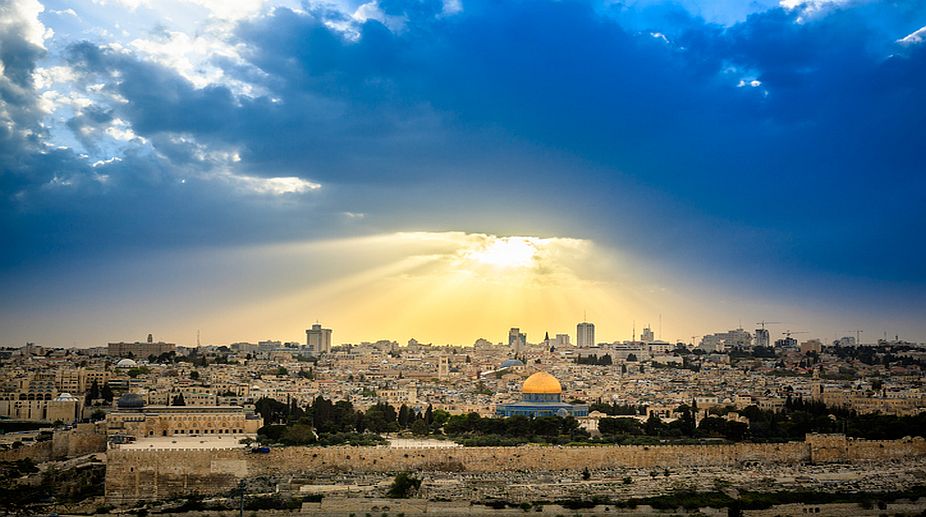
In Biblical lands

Bhopinder Singh | New Delhi |

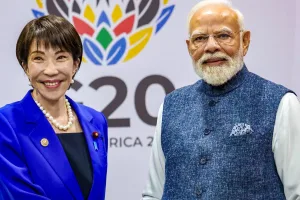
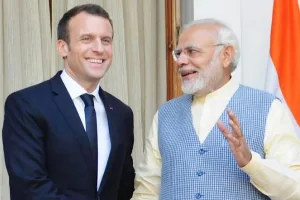
Given the strategic stakes and political symbolism, Narendra Modi’s first prime ministerial visit to Israel is logically overdue, though he had visited the country as the Chief Minister of Gujarat. On the contrary, he has charmingly courted the Arab states by visiting and signing major deals with Saudi Arabia, Qatar and UAE. The Crown Prince of Abu Dhabi, Mohammed Bin Zayed Al Nahan, was the Chief Guest at this year’s Republic Day parade. All this is in addition to the sectarian ‘other’ in the region ~ Iran ~ with whom the geopolitical alignment on the Chabahar port, energy and Afghanistan, were deftly managed with some tightrope diplomacy, without offending Arab or Israeli sensibilities.

Considering the relatively recent ‘formal’ friendship of the Indo-Israeli framework (full-fledged Embassies opened in 1992), the 25-year journey has witnessed a frenetic pace of mutually-beneficial transactions that were artificially stifled owing to India’s moral and genealogical conundrum of reconciling with a state, created on the basis of a religion. Israel describes itself as a ‘Jewish and democratic state’. The other factor is the political and psychological impact on the Indian Muslims on the sensitive issue of Palestine.

Civilian trade with Israel is now $5 billion annually and in the ultra-sensitive defence sector, India is the largest purchaser of Israeli weaponry and wares. The implicit trust in the IndoIsraeli equation affords itself to strategic cooperation in intelligence, technology-sharing and joint development of military platforms. Recently, a Rs 17,000 crore deal between DRDO and IAI for joint development of medium-range surface-to-air missile, MR-SAM, was cleared by the cabinet committee on security. Clearly, there is a certain acceptance and understanding of India’s occasional ambivalence towards Israel, and the same is counter-rationalised and contextualized in Tel Aviv as India’s own domestic and historical compulsions. Realpolitik ensures the continuum of expansion in the Indo-Israeli equation. . A healthy and logical geopolitical alignment in the Indo-Israeli framework, overrides India’s historical and moral commitment towards Palestine.

But, for all its hard-nosed realpolitik, Israel is not beyond the sensitivities of symbolism. From permanently downgrading its diplomatic ties with New Zealand and Senegal for co-sponsoring anti-settlement resolutions in the United Nations Security Council, to chiding President Obama for a ‘gangup’ in abstaining from the voting at the UN, to vociferously supporting the ultra-divisive move of shifting the US Embassy from Tel Aviv to Jerusalem ~ Israel reacts ferociously against sovereign moves that signify antiIsraeli intent, even if it is without any punitive bite or impact, by attaching a huge value to these symbolic moves. This has been the typical Israeli-Palestinian narrative, where the moves of third countries are keenly watched, analysed and decoded for a ‘for’ or ‘against’ verdict.

Thus, India is among the rare countries that has managed a certain ambiguous balance and sensitivity towards both Israeli and Palestinian causes, without offending the other. Against this backdrop, the scheduled summer visit of Prime Minister Modi to Israel ~ but not to Palestine ~ ostensibly to ‘dehyphenate’ the equation is either naïve or brazen. In a deeply hyphenated relationship (IndoPak), a visit by the US President to either Delhi or Islamabad, but not to the other, acquires adjectives beyond naivety and innocence. It is clearly tantamount to deliberate political messaging. Similarly, the equally hyphenated Israeli-Palestinian reality was historically respected and the accompanying dignity of affording dual ‘visits’ to both countries ensured visits to the region of the Biblical lands.

Diplomacy ought to be dynamic and not confined to the ghosts of the past. Yet it needs a simple ‘net gain or net loss’ calculation to ascertain the prudence of either changing or retaining the historical narrative and tradition. Just as the reason to visit both Israel and Palestine simultaneously on a visit to the region was essentially ‘political’, now the reason to not go, would similarly be deciphered to be even more ‘political’, and not just administrative. The delicate counterpoise of subsequently hosting the Palestinian President, Mahmoud Abbas, would be a post-facto balm and perhaps inadequate, especially given the hyper-sensitivity of the polarised times.

The Indian government’s existing formula in the Middle East has been successful. The trick has been to engage equally with all regional stakeholders i.e. Arabs, Israelis and the Iranians separately, without offending any ‘other’. But, ‘Palestine’ goes beyond a territorial dispute, it is an emotional and strictly hyphenated issue with Israel as far as the global ummah is concerned. It goes beyond sovereign insularities. By de-hyphenating Palestine during this visit, the net gains of playing to the extreme right-wing in the Zionist galleries or even domestically, just does not add up to the potential counter-reaction, both domestically and externally.

‘Palestine’ has been relegated to the relative backbenches of the Middle Eastern saga with the other self-imploding instincts and sectarian angularities dominating the modern narrative. Yet, Palestine is probably the only issue that all warring factions in the ummah agree upon, as it overcomes the sectarian, theological and political divides that are otherwise tearing apart the region. India, with its own moral high-ground of respecting the Palestinian cause and yet ‘normalising’ relations with Israel is ensuring a judicious middlepath that works to our commercial, security and moral advantage. Linking Palestinian de-hyphenation with the questionable and duplicitous antecedents of the OIC resolutions on Kashmir will invariably prop up justification of the move, as yet another show of diplomatic muscularity of the incumbent government. However, this does not work to our advantage in the long run. India needs to mesh dignified morality with prudent necessity.

The quintessential ‘Indian moment’ was the Republic Day parade on 26 January 2017, when an Arab leader poignantly applauded the late Havildar Hangpan Dada for fighting terrorists in Kashmir and later clapping simultaneously at the ironical sight of the Arab military contingent walking down Rajpath, only to be followed by weaponry and wares on display, some of them manufactured by Israel. This is the ideal normal that works to India’s advantage without the unnecessary shenanigans and posturings of choosing one over the other. India’s own pluralistic, moralistic and diplomatic instincts will be severely tested in the forthcoming years, as it works towards achieving a permanent seat in the Security Council. This will call for persisting with the winning formula and not succumbing to the more internal and political temptations of looking more ‘decisive’.

The writer is Lt Gen PVSM, AVSM (Retd), former Lt Governor of Andaman & Nicobar Islands & Puducherry.

The war within

Editorial | New Delhi |

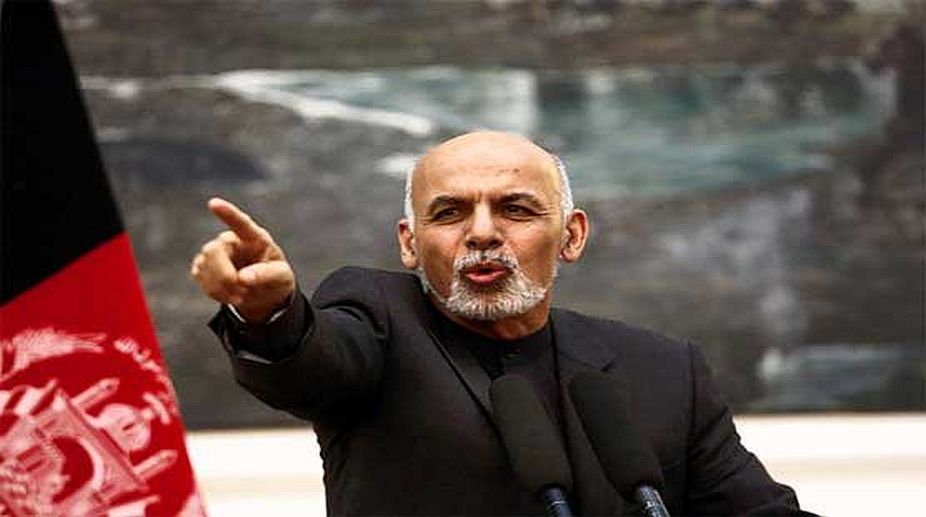
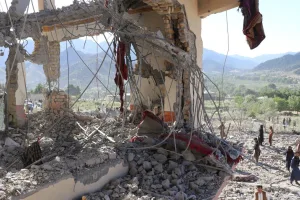
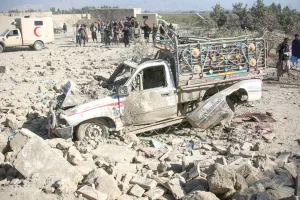
President Ashraf Ghani’s lament last Sunday that Afghanistan is “in mourning” was seemingly intended to mollify the general criticism of the country’s leadership in the aftermath of the deadliest attack by the Taliban on the army since 2001 ~ the year President Bush mobilised his forces to “smoke out” Osama bin Laden from the caves. The remarkably intrepid offensive on the military base at Mazar-i-Sharif was an attack on the increasingly fragile security establishment in a fractious land, most particularly after the pullout of the USled NATO forces three years ago. The striking feature of the outrage was the death of 140 soldiers, many of them unarmed. Small wonder that the Ghani regime has been accused by the people of “fumbling in its response to the atrocity”. One could argue that the elected civilian establishment has alienated the army no less. The Taliban offensive against a cantonment, with the perpetrators dressed in military fatigues, has jolted the system to its foundations. No less crucially, the army was targeted a week after the US had for the first time used its non-nuclear bomb to devastating effect against ISIS forces in Afghanistan. The tragedy reaffirms that it is the Taliban ~ and not ISIS ~ that is the fountainhead of Islamist terrorism in the country. President Ghani’s call for a “national day of mourning” is merely of sentimental value; his visit to the Mazar-i-Sharif base was greeted with strident demands of the people to come up with “answers, reassurances, and for government heads to roll”. This is suggestive of the degree of popular disaffection.

Suffice it to register that so catastrophic an attack on the army has somehow eluded the Intelligence network of the military and the civilian government in Kabul. Last Friday’s attack was the second major intelligence failure in two months, after Islamic State gunmen stormed an army hospital in Kabul in March, killing dozens of injured soldiers and nurses. The location and nature of the two attacks illustrate how pervasive and brutal the war within has become. Urban areas such as Mazar-iSharif and Kabul had previously been considered relatively safe.

The beleaguered country does deserve an answer from the presidential palace. “The government is disrespecting the martyrs by not telling the truth,” is the general refrain. Substantial is the fear that the military’s morale might suffer. The security forces are already struggling with a high attrition rate and recruitment problems. More than 6,700 soldiers and police were killed last year, a record high.

Public anxiety and anger have also been directed at the former President, Hamid Karzai, who often called the Taliban his “disgruntled brothers”. As disgruntlement turns to devastation, Karzai has stopped short of condemning the Taliban by name after the latest outrage.

What is ‘normal’?

Editorial | New Delhi |

The alliance remains intact, at least nominally. Mehbooba Mufti returned to Srinagar virtually empty-handed. After creating an impression that during her visit to the Capital she would be pressing the Centre to opt for a negotiated way out of the violence that has devastated life in the Valley, she was clearly unable to exert enough pressure on the Modi government to alter course and accept the line advocated by Kashmiri political forces that the current stress on a “military” solution had little chance of success. That the chief minister was left struggling to find “something” to prove her trip was not fruitless was evident when she made much of the Prime Minister having “an intention of holding talks after the situation becomes normal”, but she simultaneously echoed the New Delhi-line that “an atmosphere needs to be created…. Talks cannot happen amid stone-pelting and firing of bullets”. She has actually put herself on the spot ~ the onus is now on her government (albeit in conjunction with the security forces over which she has only token control) to contain and reverse a situation which she already has proved too inept to tackle. Her alliance partner, the BJP, is doing little to assist, the comments from some of its ministers have exacerbated the stand-off. And if the BJP/RSS “point-man” Ram Madhav thought he was being articulate when using the term “all is fair in love and war” (when defending the Army’s use of a human-shield), he actually fuelled the impression that the government was at war with the folk of the Valley.

All that raises the critical pre-negotiations question: what is “normal”? Militancy has engulfed the Valley for over 29 years, and the cycle of violence has had highs and lows but has never been eradicated. Sure there have been “good” tourist seasons (a key index to the conditions that prevail), but some disastrous ones too. It could be argued that if a delegation of MPs (shepherded by the home minister) could visit Srinagar, and a “team” that included former cabinet minister Yashwant Sinha could move around the Valley even after the Burhan Wani fiasco, what prevents the launch of negotiations? They could also be conducted elsewhere. The counter-point would be the farcical byelection to the Lok Sabha from Srinagar, the deferment of the poll in Anantnag. The truth being that “normality” and a “conducive atmosphere” point to a state of mind rather than physical conditions The other relevant query is who comprise the “stake-holders” ~ Mehbooba would like them to include Hurriyat leaders, the Central government is silent on that. The really pertinent query is why New Delhi is hesitant about imposing Governor’s Rule when the administrative machinery has crumbled: is Mehbooba merely serving as a convenient “buffer”?

EPL: Manchester United hold Manchester City in dour derby

A point gained for Manchester United, but two points dropped for Manchester City?

Prithviraj Dev | New Delhi |

The 174th Manchester Derby ended in a 0-0 draw as Manchester City were unable to find a way past a dogged Manchester United in their English Premier League tie at the Etihad Stadium on Thursday.

While the derby didn't have any goals, it sparked to life in the closing stage when United midfielder Marouane Fellani had a moment of madness, head butting Sergio Aguero to get himself sent off, leaving the visitors clinging on for dear life.

And Jose Mourinho’s men managed to win a point despite the late setback in a match which the hosts dominated large parts of the tie, having plenty of half-chances but not too many clear-cut ones. 

Fourth-placed City sent out their strongest XI, with Aguero playing at the tip of a 4-2-3-1 formation with Kevin De Bruyne, Raheem Sterling and Leroy Sane behind him. 
United were without Paul Pogba in midfield and Mourinho started Michael Carrick, Ander Herrera and Fellani in midfield with Marcus Rashford playing as a striker with Henrikh Mkhitaryan and Anthony Martial alongside him.

United had just two chances in the first-half, but arguably both were the closest either side went to scoring, as they sat back and sought to hit City on the counter. First, City keeper Claudio Bravo made a mess of a simple cross, fumbling the ball into Mkhitaryan’s path. The Armenian winger didn't get the cleanest of connections to give the hosts a reprieve. 
And then a minute before half-time, in-form midfielder Herrera was unmarked at the far post from a Rashford free kick but his header was well wide with the goal at his mercy.

City weren't just keeping possession, however, for they could have taken the lead as early as the 10th minute but Aguero could only hit the post from a De Bruyne cross.

Apart from that chance, City didn't really test David De Gea, with the Spaniard comfortably dealing with shots from range as the teams went to the dressing room deadlocked at the interval.

If United were unadventurous in the first period, they withdrew even further in the second, barely getting out of their own half even when they were numerically matched with the hosts. 

Fortunately for them, City didn’t really create any clear-cut chances despite enjoying the lion's share of possession but they really turned on the pressure when Fellani saw red in the 84th minute. Barely seconds ago, he had been booked (incidentally the first yellow of the match) and as as City  quickly restarted play, brought down Aguero with a slight tug. Referee Martin Atkinson was content with letting the Belgian off the hook. Butt his hand was forced when the midfielder walked into Aguero, who made the most of the contact, leaving United with a daunting task of managing a draw. 

City keeper Claudio Bravo had injured his calf in the second-period and his substitution had paused play for a while so with Gabriel Jesus entering the pitch and seven minutes of added-time declared, it looked as the Blue Moon would be rising over Manchester.

However, the double for City never materialised as Mourinho used all three of his substitutions to which made a draw look likelier with each passing second.

With the result, City remain in fourth-place on 64 points, a point behind Liverpool and two ahead of fifth-ranked United. Guardiola’s next travel to relegation-threatened Middlesbrough on Sunday while United host Swansea earlier on the same day.

Make a dazzling choice

Swaati Chaudhury | New Delhi |

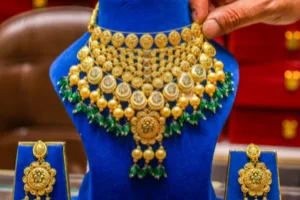
India is emerging globally with a paradigm shift in the market economy. For those interested in shopping for luxury jewellery from the comfort of their home, here’s something to look forward to. Bengaluru’s BlueStone.com, the country’s largest online jewellery brand, has a high penetration in West Bengal with a wide reach in major towns of North Bengal.

The online global group unveiled its novel traditional jewellery collections — Nava and B-Iconic — in Kolkata on the occasion of Akshaya Tritiya.

The Indian jewellery business is the largest and fastest-growing market in the country. When it comes to the jewellery group’s leading markets in India, West Bengal ranks in the seventh position and Kolkata occupies the sixth position. Gaurav Singh Kushwaha, founder and chief executive officer, BlueStone.com, said, “We present the most convenient way for luxury shoppers to buy jewellery online from the comfort of their home and customers are spoilt for choice with our amazing collections.
“West Bengal forms our key pillar and our customers are young women within the age group of 28 to 34 years. Our jewellery brand caters to 130 cities and major towns in West Bengal and the fast moving jewellery items are gold leaf earring and the circa pendant.”

Keeping with fast-changing fashion trends, the group’s Nava collection comprises antiquethemed jewellery with the recreation of the navaratnas through poetic eyes depicting the architectural grandeur of Hampi. The B-Iconic collection involves beautifully-crafted jewellery with intricate designs based on gold and pearls and is a tribute to the group’s logo making a powerful fashion statement.

Kushawa said, “We have a presence across 18 cities of India where customers have the option for free trail of jewellery items at home. We have a robust market in major cities of West Bengal including Kolkata, Howrah, 24 Parganas, Siliguri and Durgapur. Even customers from remote corners of the state like Nandigram and Hasimara, a miniature town in Alipur Duar district in North Bengal in the vicinity of Bhutan border, have embraced our jewellery products that are very affordable starting Rs 5,000.”

The manufacturing facility of the group is in Mumbai and the speciality in design makes the jewellery items stand off from others. “We believe in creating jewellery that can be worn every day. We add nearly 250 new designs every month. There are embellished jewellery stuff that serve as wedding collections. Our online jewellery business in West Bengal is around 42 per cent and our market share in North Bengal is quite minuscule.

“But our group has posted around 70 per cent growth in revenue in West Bengal last year,” further said Kushwaha. The online jewellery firm has forayed into all the major towns of North Bengal like Siliguri, Malda, Darjeeling, Cooch Behar and Gangtok in Sikkim. Kushwaha said, “We hope there would be around a three per cent growth in the online jewellery business in Bengal in the next five years.”

Refreshing & colourful

Deepa Gupta | New Delhi |

As the summer heat begins to soar, one needs to drink fluids and eat food that keeps the body cooland healthy. Fruit and vegetable salads are good option to control body heat. Also, in most cultures, salad is a way to gain good health. Certain vitamins, minerals and vital enzymes in vegetables are destroyed while cooking. So, having those vegetables, which can be eaten raw instead of being cooked maximises the utilisation of its nutritional content.

Cooking process powers up nutrients in some vegetables but does the opposite in others. Check out a few classic salads from different cuisines around the world based on tempering and dressings with traditional spices, herbs and dips.

Indian salad

Fresh and fibrous, packed with nutrition, Indian salad is all about raw vegetables, fresh fruits and sprouts. Blended with natural flavours and aromas, these bright and colourful salads give a refreshing kick during summer time. These are tossed with flavourful dressings, making them enjoyable with any meal.

Russian salad

The combination of fresh fruits and veggies in a single salad is unique and healthy. Russian salad recipes use boiled potatoes, carrots and other fresh vegetables and fruits topped with fresh yogurt or mayonnaise dressing. Cooked chicken or boiled eggs can also be used in it. These are mouth-watering and tempting. Easy to prepare and delicious, it provides health. They are served chilled. It is good to be consumed as snack as well.

Mexican salad

It includes taco salad, bean salad, chicken quinoa salad and jicama salad with a sprinkling of cilantro, lemon juice and so on. These salads go well with Mexican style dishes. Loaded with peppers, jalapenos and cheddar cheese tossed in spicy farm dressings, you may eat these yum salads with crackers or tostadas. These are the salads you will crave for.

French salad

A nice combo of cooked baby potatoes, boiled eggs, lettuce, green beans, tomatoes, olives and tuna or chicken, French salad is an important part of every meal in France. Plain green salad known as Salad Verte is the most famous variety and placed on the table with main course meal. Wonderfully fresh, it’s tasty and extremely healthy. Just make them for light snacking. Refreshing & colourful

Spanish salad

Baby spinach, Boston and Romaine lettuce torn into pieces, wedges of tomatoes, thin slices of Spanish onions, green olives with lemon drops and delicious dressings. The wide range from exceptional combinations to elaborate compositions seasoned with finest and freshest ingredients of Spanish origin and extra virgin olive oil is ideal to munch any time of the day. A classic sauce made of dried red pepper, hazelnuts and almonds with cheese gives extra moisture to this salad. Completely refreshing, sweet and salty, vivid in colour and a perfect side dish!