Logo

Premier League: Obiang, Son piledrivers highlights of Tottenham Hotspur-West Ham United draw

Some of the best goals you will ever see were on display at Wembley Stadium on Thursday night!

SNS | New Delhi |

West Ham United man Pedro Obiang and Tottenham Hotspur midfielder Heung-Min Son scored contenders for Premier League Goal of the Season in a 1-1 draw between the sides at Wembley Stadium on Thursday night.

With a number of key personnel, especially in the attacking department, missing, David Moyes set up his Hammers side to frustrate their fancied opponents and his players followed his gameplan to perfection up almost till the very last minute.

Don’t miss: Manchester United manager Jose Mourinho responds to speculation around his future

Pedro Obiang scored with West Ham’s first shot on target, and what a shot it was. The Spaniard collected Manuel Lanzini’s pass some 30 yards out, near the left flank and surged forward before letting fly with a venomous shot that left a sprawling Hugo Lloris with no chance in the 70th minute.

Spurs, to their credit, didn’t panic and continued to dominate the game as they had earlier and eventually broke through with a world-class strike of their own. Heung-Min Son, who had been his industrious self throughout, got the ball with some distance between himself and the Hammers goal but let fly with Mark Noble backing off.

Adrian, who had been keeping Spurs at bay with a series of excellent saves, was well-beaten for once with three minutes on the clock to silence the few, but raucous Hammers travelling contingent.

The first-half had been much less eventful than the second, with the away side clearly content to defend deep and Spurs were largely limited to half-chances despite seeing almost 75 per cent of possession.

Must read: Arsenal make first signing of January transfer window

Referee Mike Dean had a dim view of two Spurs penalty shouts as Mauricio Pochettino’s men were forced to settle for a result that saw them fail to capitalise on arch-rivals Arsenal’s 2-2 draw with Chelsea on Wednesday night.

The Lilywhites remain in fifth place, three points behind fourth-placed Liverpool and will next face AFC Wimbledon in the FA Cup third round on Sunday before resuming their Premier League campaign with a home clash against Everton on January 13.

West Ham, who have climbed to 15th place with the draw, will be delighted by the result considering Spurs’ dominance and will be confident of progressing to the next round when they take on Shrewsbury on Sunday in the FA Cup.

The Hammers’ next Premier League clash is an away trip to Huddersfield Town on January 13 and David Moyes’ men will approach that tie with plenty of optimism, especially if they can welcome some of their injured back into the fold.

Students showcase their learning journey

Statesman News Service | New Delhi |

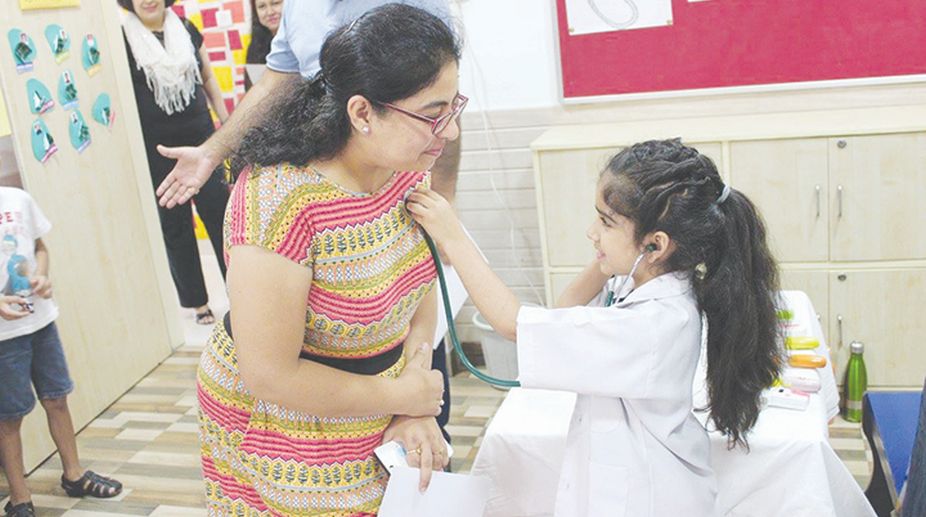
Students at the Manav Sthali International Wing showcased their learning journey through the programme ‘Superhumans’ which depicted varied aspects related to the human body and wellness.
The International wing was transformed into a super specialty hospital and students took charge as doctors, fitness experts and therapists.

Students of Class IV put together an interesting role-play related to the Casualty ward, where a patient is brought in suddenly and is given CPR. The students dressed up as certified CPR trainers, demonstrated the10 steps of giving CPR.

Visitors were educated on how to check a patient’s pulse, heart-beat and other vital signs before starting the emergency procedure. Visitors were informed how the CPR process can save a person’s life. The students also acted as nutritionists and advocated a healthy lifestyle. It was a gripping experience for both students and visitors.

WhatsApp users in India sent record 20 billion messages on New Year’s Eve

IANS |

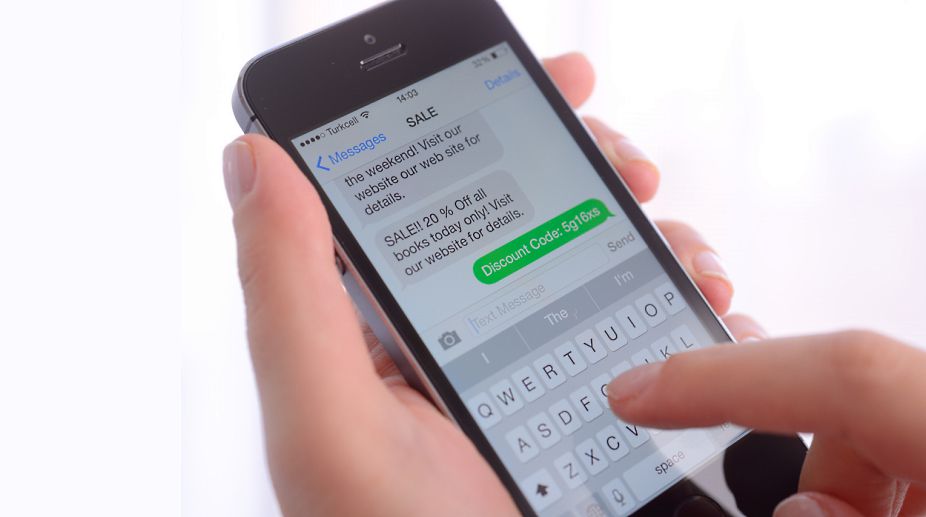
WhatsApp users in India sent a record over 20 billion messages to exchange greetings on New Year’s Eve, the Facebook-owned company said on Thursday. The messages were sent between 12 a.m. till 11.59 p.m. on December 31.

“New Year’s Eve was WhatsApp’s biggest messaging day ever, closing out a successful year for the company that included the introduction of several new features,” WhatsApp said in a statement.

The Indian users had sent 14 billion messages through the platform on New Year’s Eve last year.

The top five popular features of WhatsApp included video calling, live location, delete for everyone (messages), new album view for photos and “Status” which saw over 300 million daily active users.

WhatsApp currently has over 200 million monthly active users in India.

Globally, WhatsApp hit a new milestone with more than 75 billion messages sent by its users. The 75 billion number included 13 billion images and five billion videos.

The messaging platform registered these numbers despite the fact that users in India and other parts of the world went into a tizzy after WhatsApp went down at midnight on New Year. It was restored in two hours.

Three engineers face action for delay in PM’s dream project

Statesman News Service | Dehradun |

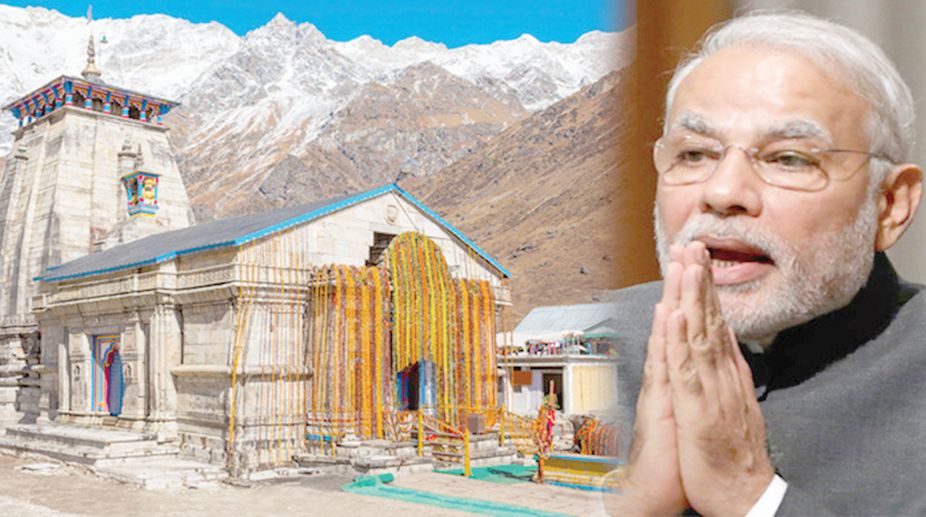
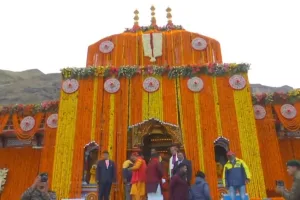
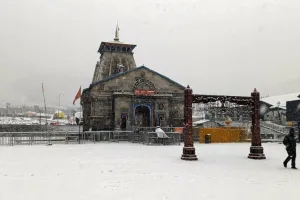
Three PWD engineers have faced action over the delay in implementation of one of Prime Minister Narendra Modi’s dream projects in Kedarnath.

The salary of one engineer was put on hold and he was transferred to another district. Adverse entries were ordered for two others in their service records.

The Uttarakhand public works department engineers faced this action over the construction of a trekking route from Rambara to Kedarnath via Garud Chatti.

In his early days, Modi used to stay at Garud Chatti en route to Kedarnath whenever he visited the holy township in the Uttarakhand Himalayas.

After Modi shared his Garud Chatti memories during his Kedarnath visit last year, the little-known place created a lot of curiosity.

As the trekking trail to Garud Chatti was lost in the 2013 disaster, the process of restoring the old pilgrimage path was then started.

Garhwal commissioner Dilip Jawalkar took action on Wednesday against the three engineers at a review meeting on Kedarnath reconstruction in Rudraprayag.

Despite regular instructions from higher authorities, the engineers had not prepared a project report on the roadwork from Rambara to Kedarnath. They also failed to get a geological survey done.
The engineers had also not uploaded the tender documents for the project.

Garud Chatti is located four kilometres from Kedarnath. During the 2013 floods, the trekking route to the place was lost in a landslide.

At present Garud Chatti can be reached from Limcholi through a temporary pedestrian bridge made of logs over the Mandakini river.

There are stories about Modi spending time at the Swami Ramanand Sant ashram at Garud Chatti. Some stories say he spent a few days there, others say he may have been there for up to two years.

Swami Abhiramdas Tyagi, the mahant of the ashram, and Modi’s brother Pankaj also visited Kedarnath on 27 October. They discussed with the reconstruction team ways of connecting the ashram with a trekking route.

Hundred of pilgrims took refuse at the ashram during the 2013 disaster.

Bhima-Koregaon clashes: Mevani, Khalid booked, their meeting scuttled

Statesman News Service | Mumbai |

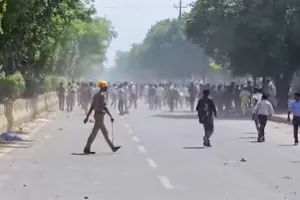
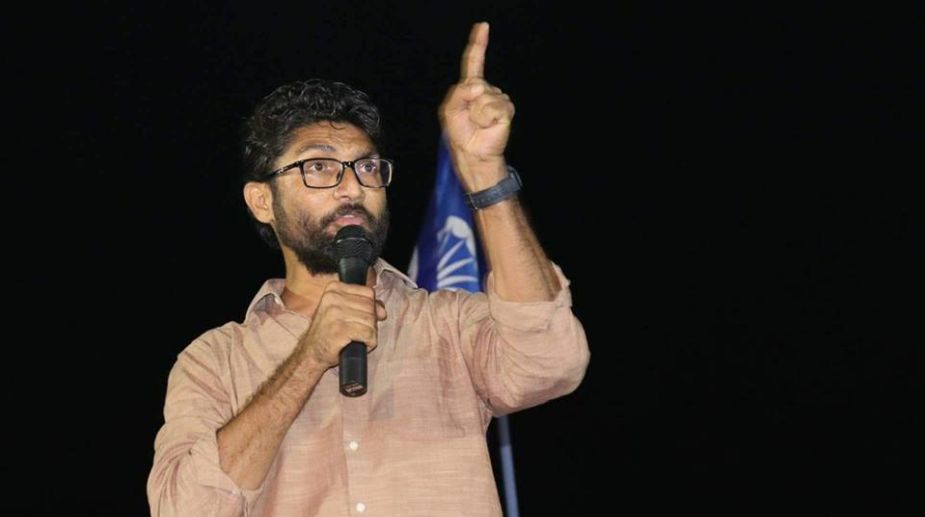
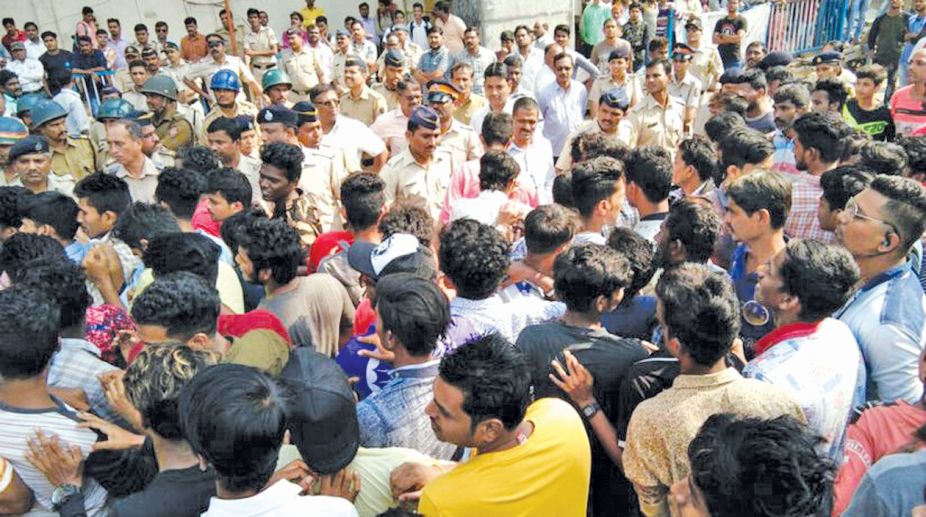
Police have booked Gujarat MLA Jignesh Mevani and JNU student leader Umar Khalid for making provocative speeches ahead of the Bhima-Koregaon clashes and denied permission to a meeting they were to address in Mumbai.

The newly elected MLA and Dalit leader Mevani and the Jawaharlal Nehru University student Khalid were scheduled to be among the main speakers at the now-cancelled All India Students’ Summit 2018 under the aegis of Chhatra Bharti.

Mumbai police on Thursday denied permission for the meeting. Their preventive action followed a decision late on Wednesday night by Pune police to book the two leaders for their speeches at the Bhima-Koregaon village on 31 December.

They were charged under sections 117 and 153A of the Indian Penal Code for “fomenting communal disharmony through provocative speeches” at an event at the village near Pune.
The FIR was lodged at Pune’s Vishrambaug Police station on a complaint by two local youths, Akshay Bikkad and Anand Dhond, who claimed they did not belong to any organisation.
Sources said the Mumbai police decision to scuttle students’ meet in the city was a follow-up action prompted by the FIR filed by their Pune counterparts as more details of 31 December meet were gathered by them.

According to intelligence sources, the Bhima-Koregaon conference called “Elgar Parishad” (roughly translated as ‘war cry meet’) was also attended by Naxal or pro-Naxal activists.
The Pune police case is that the speeches incited violence and arson on 1 December when thousands of people assembled in the village to commemorate the 200th anniversary of the Bhima-Koregaon battle

In that battle, British forces with the participation of the Mahars inflicted a defeat on the Peshwas.
The FIR cites extracts from the speeches by Mevani and Khalid in which they allegedly asked people to rise against “present day Peshwas” ~ a barb directed at the Maratha community.
In next day’s violence, a 28-year-old Maratha youth was killed and 12 other people injured.

The alleged call for an uprising is being cited by Pune and Mumbai police as a cause of violence not only in these two cities but across Maharashtra.
Meanwhile, as Dalit anger calmed down, the Gujarat MLA tweeted, asking people to shun violence and maintain peace. He also appealed to Maharashtra government to ensure that the “rule of law” prevails.

Triple Talaq crusader Najia Ilahi Khan joins BJP

Statesman News Service | Kolkata |

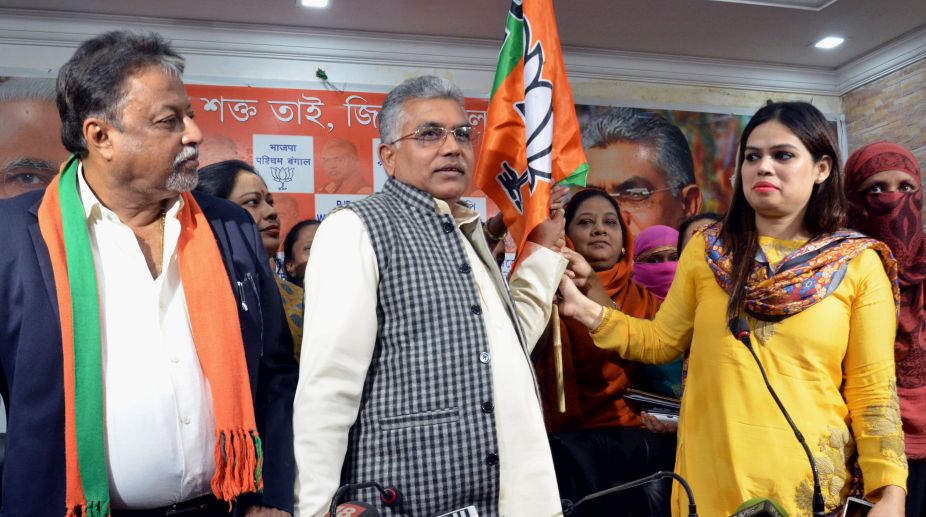
Triple talaq crusader Najia Ilahi Khan joined the state BJP today in presence of BJP president Dilip Ghosh and BJP leader Mukul Roy. Earlier Ishrat Jahan, one of the petitioners in the triple talaq case also joined the BJP.

Speculations are rife that advocate Khan could be the Lok Sabha bypoll candidate from Uluberia Parliament constituency.

BJP president Dilip Ghosh today said chief minister Mamata Banerjee and her party instead of concentrating on development issue for the minority community is playing appeasement politics rather.

Ms Khan complimented Prime Minister Narendra Modi and the BJP for waging a fight for the dignity and rights of Muslim women and said the Bill against the practice of triple talaq was a big boost to all the muslim women who are fighting for their self respect and unalienable civil rights.

Ghosh also today accused chief minister MamataBanerjee of practising ‘soft Hindutva’ to stop consolidation of ‘Hindu votes’ in favour of BJP. He said the TMC practices Muslim appeasement and it has started backfiring in several parts of the state.

“If we go to temple we are branded as communal. But if Trinamul leaders visit temples, they are secular.

“The Trinamul is practising soft Hindutva in Bengal to stop the consolidation of Hindu votes in favour of BJP,” Ghosh said.

Another BJP senior leader expressed hope that the joining of Ishrat and Khan into the party will rejuvenate minority women which will also strengthen the vote bank of the BJP.
Ishrat was one of the five petitioners who approached the apex court in the triple talaq case. Her husband had divorced her over phone from Dubai in 2014 by uttering ‘talaq’ thrice.
The controversial Islamic practice was struck down by the Supreme Court on 22 August last year and had ordered the Centre to frame appropriate laws for the same within 6 months.
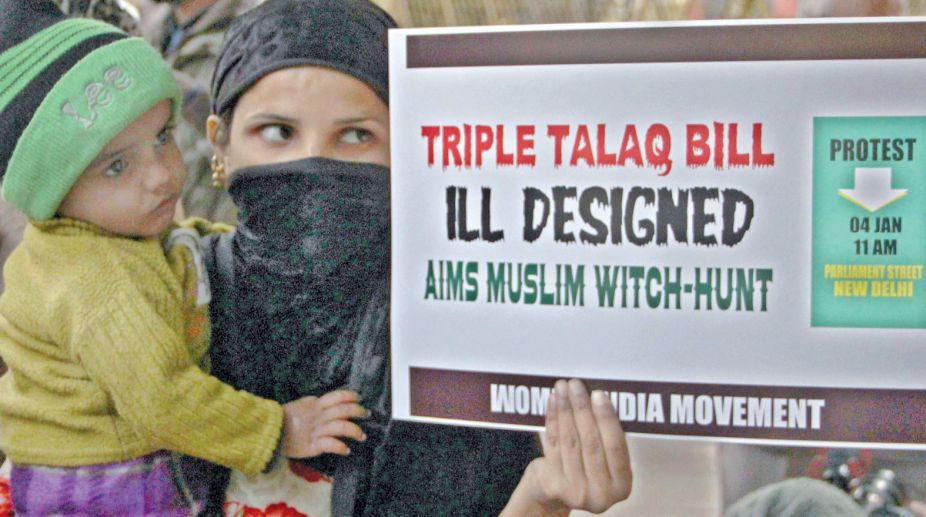
The government has introduced The Muslim Women (Protection of Rights on Marriage) Bill, 2017 in the Lok Sabha which was also passed by the lower house after a detailed discussion.
The Bill makes the pronouncement of talaq-e-biddat “void and illegal.” The Bill entails jail term for upto three years and fine in case anyone pronounces triple talaq on his wife. This Bill also makes the pronouncement of talaq-e-biddat a non-bailable offence.

The Bill will be introduced in Rajya Sabha this week and after assent of the upper house will be subsequently sent for the President’s approval.

However, a senior BJP leader said the central leadership will take the final decision to fix the candidate for Uluberia Parliamentary constituency. Trinamul selected the wife of the former MP Sultan Ahmed as the candidate from Uluberia Parliamentary constituency.

Mamata slams Centre for excluding state’s tableau

Statesman News Service | Kendul |

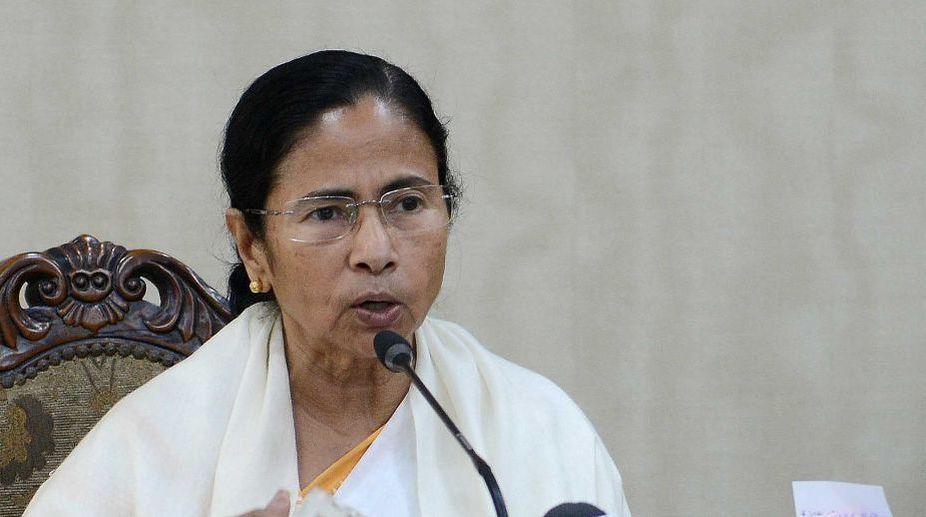
Bengal chief minister Mamata Banerjee today slammed the BJP-led Central government for allegedly excluding the state’s tableau from the Republic Day parade which was based on the theme of unity.

Stating that Bengal believes in togetherness of all faith, she alleged that the BJP is dividing people on the basis of religion.

“This year the proposed theme for our Republic Day tableau was unity. I think that is why we have been left out,” Banerjee said after inaugurating ‘Jaideb Kenduli Mela 2018’ here in Birbhum district.

In an obvious reference to the BJP-RSS, the chief minister said, “Saffron does not match everybody. If we find anyone misusing saffron colour, we will raise our voice.”
She said her government has brought several artistes to showcase the state’s tableau which was not included in the parade.The state government patronised over 2 lakh artistes representing various forms of art and culture. Some of them even participated in the state government’s advertisement.

The chief minister cautioned the people of Birbhum district against any activity by some Maoist groups in the neighbouring area. She also announced a number of development programmes in the district.The chief minister said atrocities on Bengalies in Assam will not be tolerated by her government and will be defended at any cost.

“Despite all these odds against us so far the state government has provided jobs to 81 lakh people, free health services and medicines have been provided to the people of the state.”
She also stated that West Bengal is the only state where about eight crores people get rice and wheat at Rs.2 per kilograms, fifty lakhs people get that in half price.

“The people of Birbhum approached me with the issue of re opening the closed stone quarries. I have assured them that a committee of Group of Ministers and secretaries will work out a policy for reopening the closed stone quarries,” she added.

NASA’s 60th anniversary logo represents quest for knowledge

IANS |

NASA has said the logo it has released for use in observing the 60th anniversary of its establishment as a US government agency in 2018 represents its quest for knowledge.

A crescent moon, a ringed planet and a field of stars amid a nebula of light blue represent the agency’s scientific underpinnings, particularly the enduring quest for answers to age-old questions about the workings and evolution of our planet, solar system and the universe, NASA said on Wednesday.

NASA considers its birthday to be October 1, the day the agency opened for business. The logo depicts how NASA is building on its past to soar toward a challenging future.

“NASA” and “60” are stacked, bold and tall, atop the continental US, the curvature of Earth, and the light of an approaching dawn.

This placement, according to NASA, captures the spirit of a metaphor about knowledge and discovery, often attributed to 17th century physicist Isaac Newton: “If I have seen further than others, it is by standing on the shoulders of giants.”

Similarly, the agency too was built from the legacy and expertise of giants in government-sponsored research and development, it said.

The light blue and white arc just below the alphanumeric elements recalls the sunrise, seen 16 times each day aboard an Earth-orbiting spacecraft, and symbolizes opportunity yet to come through exploration of the Moon, Mars and destinations far beyond, NASA said.

10 French firms may attend biz summit

Statesman News Service | Kolkata |

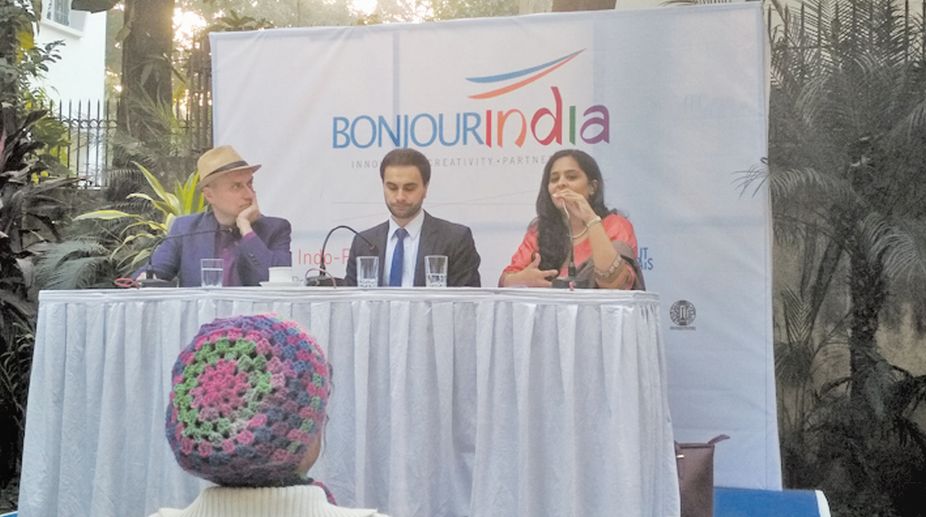
The Global Bengal Business Summit this month is about to witness participation of representatives from around 10 eminent French companies while several events are in line on account of Bonjour India 2017-18- a four month long voyage across India, in Bengal.

Addressing a Press conference, the French Consul-General in Kolkata, Mr Damien SYED said, “The Global Bengal Business Summit is going to witness participation of representatives from around 10 renowned French companies.

France is a partner country for this year’s summit. We are looking for more opportunities in Bengal. Bonjour India has provided a perfect platform to celebrate the bilateral and cordial ties between both countries.”

Bonjour India which started in last November and would continue till February this year, covers around 100 projects in 33 cities across 20 states and union territories. In this edition, Bonjour India is coming for the first time in Chandernagore to celebrate the French connection.

It would focus on conservation of heritage buildings in Chandernagore that are on the verge of being brought down or collapse due to lack of conservation. The Statesman had earlier reported that few of the buildings have already been razed down by promoters while others are yet to receive the heritage status.

A workshop is being conducted as part of the ‘Bonjour India’ endeavour named ‘Know your French Heritage’ which is being spearheaded by UNESCO awardee conservation architect Ms Aishwarya Tipnis.

Speaking on the matter, Ms Tipnis said “Conservation of heritage should be a collaborative approach with collective effort. Our attempt to conserve the French buildings in Chandernagore has been on for the last seven years. It is time when heritage conservation should transform from ‘expert driven’ to ‘community led’ and to make it successful, we are including all the citizens of Chandernagore to be a part of this endeavour through crowd funding.”

Ms Tipnis has been instrumental in implementing the restoration workshop for the Registry Office or ‘House of the Moon’ which was declared unsafe and set for demolition. There are around 99 French buildings in Chandernagore out of which around 11 have been granted the heritage status.

Talking on the issue, Mr SYED said “It is disheartening to find that these buildings are either being razed down or lying in a decrepit condition. However, the community residing there is being made further aware through participation in these workshops.”

Fabrice Plancon, director, Alliance Francaise, Kolkata said “ On 12 January , the Ambassador of France in India , Mr Alexandre ZIEGLER and his delegation will take a boat ride to Chandernagore and participate in the workshop in a first ever restoration exhibition on the Strand.

The evening will showcase ‘Metajingle’-a multi-disciplinary Indo-French performance mixing juggling , dance and poetry by Francois Chat followed by a closing dinner in the presence of a designated minister from the state government.”

The Institut francais, the Consulate general of France and the Alliance francaise du Bengale will organise 20 events in Kolkata and Chandernagore including unique ‘adda sessions’, seminal debates, jugglery, jazz concerts, theatre and virtual exhibitions .

Caste clashes uproar in House

Statesman News Service | New Delhi |

The Bhima-Koregaon strife and the caste violence in Maharashtra again made waves in the Rajya Sabha on Thursday, with Opposition members expressing serious concerns over continuing atrocities against vulnerable sections like Dalits and minorities in different parts of the country. During a brief discussion on the issue soon after the Upper House met this morning, the
Rajya Sabha members condemned the violence against Dalits in Maharashtra and other parts of the country and demanded an impartial and speedy judicial inquiry into the Bhima-Koregaon episode. Some members also appealed for peace and unity in the society.

The issue had on Wednesday rocked both Houses of Parliament and triggered political fireworks outside Parliament too, with the Congress-led Opposition attacking the ruling BJP and the RSS over it. They had also gone after Prime Minister Narendra Modi for his “continued silence” over atrocities against Dalits across the country.

Accusing the RSS and certain Hindutva outfits of allegedly sparking the caste violence in Pune’s Bhima-Koregaon that spread to other parts of the BJP-ruled Maharashtra, the Opposition had then also demanded an inquiry by a Supreme Court judge into the incident. Hitting back, the BJP had charged the Congress with “stoking” the caste conflict to divide the people for political gains.
Initiating the discussion on the issue in the Rajya Sabha on Thursday, Congress MP Rajani Patil alleged that the violence against Dalits had taken place on the watch of the Maharashtra government. Alleging that Hindutva outfits were behind the Bhima-Koregaon violence, she demanded action against them and pressed for setting up of a Commission to probe into the entire episode.

NCP president and former Maharashtra Chief Minister, Sharad Pawar apprised the Upper House of the history of the Bhima-Koregaon event and the sentiments of Dalits associated with it. He said over the past 50 years no violent incident has taken place there during its anniversary on 1 January every year, but this time stone-pelting was carried out targeting Dalits participating in it.
Pawar said the state administration should have been more vigilant as a large gathering was expected in Pune. He made an appeal to all sections to come together and bring about peace and harmony in society.

DMK member Kanimozhi said the Maharashtra violence should not be looked as an “isolated incident”.

Impasse over triple talaq Bill in RS as Govt-Opp confrontation continues

Statesman News Service | New Delhi |

For another day, the Rajya Sabha witnessed Government-Opposition confrontation over referring the Triple Talaq Bill to a Select Committee but failed to resolve the issue as the House was adjourned over the Opposition demand for taking up the Bill before any other listed legislative business. Leader of the House Arun Jaitley raised the issue of the validity of Opposition motions for referring the Bill to a Select Committee, again. Deputy Chairman P J Kurien repeated his ruling of Wednesday that the motions were valid as Chairman M Venkaiah Naidu had allowed them.
However, Kurien said while ruling on the validity of the motions, he had not given any direction on the listing of the Bill for Thursday. In such a situation, he maintained, the Government had the right to decide when to take up the Bill. Unless the Government agreed, he could not take up the Bill.

As the Government wanted the listed GST (Compensation to States) Amendment Bill discussed first, the Opposition raised a noisy protest, forcing the Deputy Chairman to adjourn the House for the day.

After listening to heated arguments from both sides on the issue of referring the Bill to a Select Committee, Mr Kurien said the Opposition motions were not only valid but were now the property of the House.

Law and Justice Minister Ravi Shankar Prasad had moved “The Muslim Women (Protection of Rights on Marriage) Bill, 2017 in the Upper House on Wednesday. The Bill makes instant divorce by any Muslim man to his wife a cognizable offence punishable with imprisonment up to three years.

As Jaitley said the Congress-led Opposition was opposed to the Bill, Leader of the Opposition Ghulam Nabi Azad “we are not opposed to the Bill. We are for the Bill. But you must provide a solution in the Bill who will feed the family of the convicted person during his three-year jail term. There is no provision for that in the Bill.”

As the House was adjourned abruptly on Wednesday, after the Deputy Chairman declaring the Opposition motions as valid, the Opposition on Thursday insisted that the Talaq Bill be taken up immediately to “complete” Wednesday’s unfinished work. This was just as the House reassembled after lunch at 2 p.m.

Premier League: Lineups, team news revealed for Tottenham Hotspur vs West Ham United

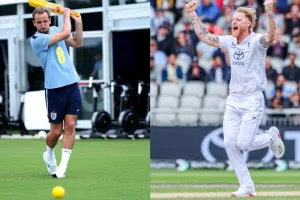
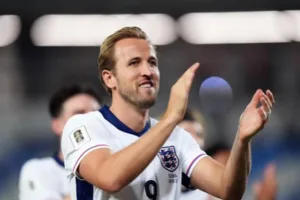
Harry Kane starts after recovering from illness and will look to get his 2018 off to a bang!

SNS | New Delhi |

Tottenham Hotspur host London rivals West Ham United in what promises to be a fiery Premier League encounter and the lineups for the clash at Wembley Stadium have been revealed by their respective managers.


Mauricio Pochettino has sent out his team in a 4-2-3-1 formation with star striker Harry Kane returning to lead the line. The Premier League’s top scorer is supported by Dele Alli, Christian Eriksen and Heung-Min Son while Moussa Sissoko and Eric Der start in the in midfield pivot.

Don’t miss: Manchester United manager Jose Mourinho responds to speculation around his future

Serge Aurier and Ben Davies are the preferred fullbacks, while Jan Vertonghen continues to partner Davinson Sanchez in the heart of defence ahead of custodian Hugo Lloris.


For West Ham, injuries seem to have forced David Moyes’ hand as Aaron Cresswell and Marko Arnaoutovic miss out from the matchday squads.

The Hammers are trotting out in a 3-5-2 formation, with Spanish custodian Adrian retaining his place between the sticks ahead of a three-man defence of Declan Rice, Angelo Ogbonna and Winston Reid.

Must read: Jurgen Klopp rules out two Liverpool stars for Everton clash

Mark Noble anchors the midfield and is joined by Pedro Obiang and Cheikhou Kouyate with Pablo Zabalete and Arthur Masuaku featuring on the flanks while Manuel Lanzini plays just off frontman Javier Hernandez aka Chicharito.

Spurs have won four of their last five games and will bid to close within a point of fourth-placed Liverpool with a win against the Hammers. With the Premier League title out of their grasp, the Lilywhites are in the race to make the top-four and will know nothing less than three points will do at Wembley.

Also read: Arsenal make first signing of January transfer window

West Ham have shown signs of a revival under new manager David Moyes and the West Londoners know the tie against their crosstown rivals is a massive one as they are perilously close to the relegation zone at the moment.

In 16th place, a point head of 18th-ranked Stoke City, the Hammers could shoot to 11th place above Huddersfield Town if they are able to grab three points on Thursday.

Tottenham Hotspur: Lloris (c), Aurier, Sanchez, Vertonghen, Davies, Dier, Sissoko, Eriksen, Dele, Son and Kane.

West Ham United: Adrian, Zabaleta, Reid, Rice, Ogbonna, Masuaku, Kouyate, Noble (c), Obiang, Lanzini and Chicharito.

Match kicks-off at 2000 GMT/01.30 IST.

Ambitious solar power plan

Armin Rosencranz and Archna Yadav |

India is blessed with 300 days of sunshine in a year and is making long strides towards becoming a solar superpower. The National Solar Mission was launched in 2010 with an ambitious target of deploying 20 GW of grid connected solar power by 2022. Solar is one of the eight missions of the 2008 National Action Plan on Climate Change. But the target was changed to 100 GW by Prime Minister Narendra Modi in 2015. Out of 100 GW, 40 GW is targeted to come through rooftop solar installations by 2022.

Finding open spaces to install solar parks in Indian cities is difficult. Rooftop solar installations can be installed on the roofs of buildings. Rooftop[AR1] solar benefits the environment. The most important benefit is that rooftop solar installations can provide electricity to areas not connected to the grid, such as remote locations or where the terrain makes it difficult to install power stations.

India has a total installed solar capacity of 1861 MW as of September 2017. Thus, there is a huge gap between the currently installed and expected capacity by 2022. Considerable efforts have been made by regulatory commissions, agencies and the government to develop the rooftop solar photovoltaic (PV) sector.

To accelerate the deployment of rooftop solar power in the country, the Ministry of New and Renewable Energy (MNRE) has proposed to bring distribution utilities/companies (DISCOMs) to the forefront in implementing the Grid Connected Rooftop Solar (RTS) Power Programme by providing them financial support. Such support will be linked to their performance in facilitating the deployment of RTS.

MNRE hopes to install increasing amounts of rooftop PV annually, growing from 5000 MW in 2017, 6000 MW in 2018, 7000 MW in 2019, 8000 MW in 2020 and 9000 MW in 2021. In December 2015, the central government approved the central financial assistance (CFA) for implementing ‘Grid Connected Rooftop and Small Solar Power Plants Programme’. CFA meets up to 30 per cent of the benchmark cost/tender cost (whichever is lower).

Under the programme, only residential, institutional and social sectors are eligible for CFA. As of January 2018, 2047 MWp (Mega Watt peak, a solar power measure in the photo-voltaic (PV) industry to describe a unit’s nominal power) rooftop capacity plants have been sanctioned under the programme and about 845 MWp rooftop capacity plants have been installed.

MNRE has identified the major issues for slow progress of installing rooftop solar systems. DISCOMs have been reluctant to participate because of revenue loss, lack of state policies and lack of uniform regulation. To addresses these issues, MNRE proposes that DISCOMs be made solely responsible for implementing the rooftop solar programme. DISCOMs will provide approval for installation, manage the distribution network and have billing interface with the rooftop owner.

Since DISCOMs already have direct access to their customers, MNRE hopes that RTS client acquisition cost would be reduced substantially. An incentive scheme has been suggested since DISCOMs would have to incur some additional spending in implementing the programme.

MNRE proposes to bring DISCOMs to the forefront in RTS implementation by providing them performance-based fiscal support. The incentives may be provided for each MWp capacity of solar rooftop that is added by them in their distribution network. It is also proposed that CFA will be provided only for installation of RTS plants in residential sectors.

DISCOMs will submit cumulative capacity of grid connected RTS plants (in MWp) installed in their jurisdictional area as of 31 March 2018. This number will be taken as the installed base capacity for the first year. The incentives will be given on incremental RTS capacity installed by the DISCOMs.

The proposed target for the commercial and industrial sector is 20000 MW. The target for the government, residential, institutional and social sectors are 50000 MW each.
Central Financial Assistance for residential installation of 5KW or less is Rs. 18000/kW calculated at benchmark cost of Rs. 60000/kW. For all other sectors the rate is Rs. 5500/kW. The benchmark cost of the PV system includes PV modules, inverters, minimum storage batteries, cost of meters, cost of civil works, foundations, installations, operation and maintenance for a period of five years.

The scheme would be in operation until March 2022.

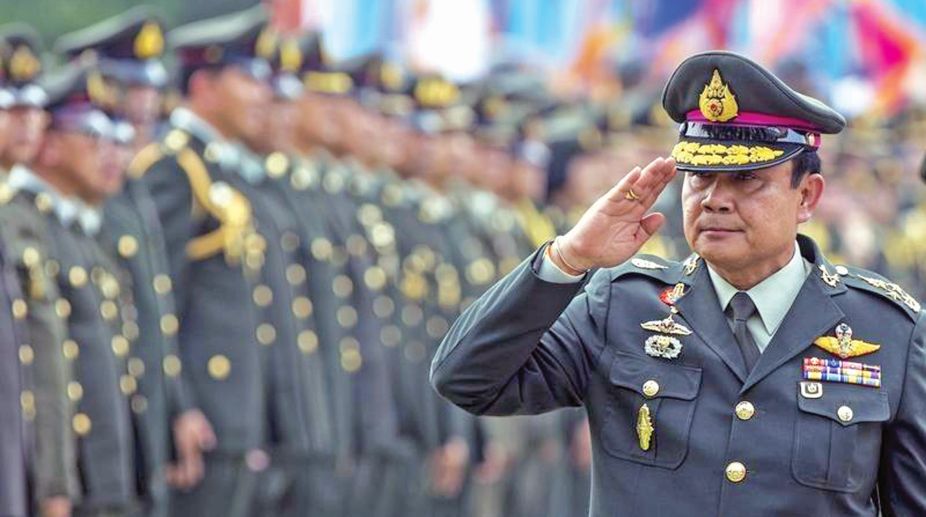
Thai junta faces growing pressure

Tan Hui Yee |

What a difference a year makes. Artiwara Kongmalai, the lead singer of the band, Bodyslam, who raised 1 billion baht for underfunded hospitals by running from the south to the north of Thailand, has topped year-end popularity polls, leaving premier General Prayut Chan-o-cha, who was tagged by one pollster as the 2016 “person of the year”, trailing behind.
Running 2,000km to raise money for charity is of course simpler than running a country riven by political conflict and overseeing a sensitive royal transition.

Yet, as Thailand edges towards its fourth year under military rule amid hints that a promised November election may be delayed, Gen Prayut is facing growing pressure to justify his continued rule. After seizing power in a coup in May 2014, junta chief Gen Prayut laid out a “road map” towards elections. While it contained no specific timelines, it mapped out milestones, most of which have now come to pass.

A major one was the drafting and promulgation of a new Cnstitution. That took place last April (2017). Even some milestones left unsaid have now been crossed. With the military firmly in control, Thailand’s longtime monarch, King Bhumibol Adulyadej, died in October 2016, and his successor, King Maha Vajiralongkorn, presided over a grand and emotional send-off for his widely revered father last October.

“The new era has arrived,” Mr Kan Yuenyong, who heads the think tank, Siam Intelligence Unit, said. “Fundamentally, the function of the junta has already finished in the eyes of the public.”
King Maha Vajiralongkorn’s assertive and more direct control over palace security, finances and other affairs has, in the meantime, raised questions over the long-term relationship between the monarchy and the military.

ISEAS-Yusof Ishak Institute visiting fellow, Dr Pongphisoot Busbarat, wrote in a publication this week: “Although the relationship between these two power centres shows no conflict on the surface, it is unclear to what extent the military will accommodate this new approach.”

In the shorter term, though, much of the overt tension is expected to centre on the elusive election.

Last August, the pieces seemed to be falling in place for the junta when the politically inconvenient incarceration of ousted prime minister Yingluck Shinawatra was averted at the last minute. She fled before a court sentenced her to five years’ jail for negligence over her administration’s multi-billion dollar rice subsidy scheme. A unconfirmed sighting of the popular Puea Thai party figure in London last week does not alter the fact that she is no longer a threat to the junta.

Yet Gen Prayut has refused to lift the ban on political activity, triggering an outcry from political parties required by a new law to update their memberships by today (Jan 5). Instead, he has issued an order that, among other things, allowed them to start work from April. It raised concerns he was tilting the playing field in favour of new parties that would support continued military influence.

Politicians from the rival Puea Thai and Democrat parties have challenged the grounds of this order.

“Don’t ever think that the arbitrary use of absolute power will not meet opposition from people who overthrew those who used elections as a tool to serve dictators,” Democrat leader Abhisit Vejjajiva told the Bangkok Post.

Privy council president Prem Tinsulanonda, himself a former general who was prime minister for much of the 1980s,, was unusually blunt about ebbing support for Gen Prayut.
“Tu has used up most of his reserves,” he said, using the Premier’s nickname. “You barely have any left. But if we show goodwill to Thai people, those reserves will return.”
Economic tailwinds could help the Premier, say analysts. The Bank of Thailand estimates that gross domestic product expanded a robust 3.9 per cent last year (2017), and is expected to maintain the momentum this year (2018). Much will also depend on how rural incomes grow to support domestic consumption.

As the clock ticks towards November, however, the premier should expect progressively louder questions should he continue to keep the lid on legitimate political activity.

White Knights of a Scam

Devendra Saksena |

The judgment in the 2G case has flummoxed everyone. The accused, who were being branded as icons of corruption, have emerged as white knights while the accusers have received their comeuppance. The electronic and print media is eating its words and the social media is afloat with jokes and weird theories.

Apart from the thinly-veiled innuendos emanating from political opponents and corresponding protestations of injured innocence from the accused and their well-wishers, acquittal of the accused in the 2G case has brought to the fore the dichotomy between judicial and public perception. With the public failing to accept the judgment, we need to introspect as to why in so many instances of high profile corruption the courts have not gone along with the public perception of guilt.

Take the Bofors scam, the 2G scam, the Gujarat riots cases. In all these cases all the accused walked free or only some small fry got indicted. To explain this anomaly one can perhaps say that unnecessary hype is often created by the media which makes the accused appear guilty in the public eye. Combined with the fact that the public actively distrusts bureaucrats and politicians, it is ready to believe the worst about the accused persons. On the other hand, a conscientious judge decides a case based only on legal provisions and the evidence available on record, therefore, persons who have been presumed to be guilty by the public are often acquitted by the Courts.

However, this does not explain the situation fully. One also has to keep in mind that the accused in scam cases are extremely rich and influential who hire the best legal brains and do not mind going down to any level to get a clean chit. The role of the investigators is often not above board; many a time investigators were found to be hand in glove with the persons they were investigating. The Mumbai Police Commissioner was jailed for connivance with Telgi & Co, the CBI Director’s role is under investigation in the 2G scam and in the Adarsh scam the Government advocates were found to be colluding with the accused.

Many years were wasted in all cases in filing charge-sheets and the subsequent court proceedings. The Bofors scam first surfaced in 1987 but the charge-sheet was filed only in 1999. The trial in the 2G scam dragged on for 7 years. Generally, there is inordinate delay by investigating agencies in filing voluminous charge-sheets after which court proceedings drag on for decades. By the time the Court takes up the case in earnest, witnesses may have been compromised, investigating officers may have changed and the main culprits may have died. The judge in the 2G scam case succinctly noted that initially the CBI was very prompt in its submissions, but towards the end the CBI’s responses were faltering.

Starting from the days of Bofors, allegations of a scam are a sure-fire way to win elections. In fact everyone, except the Government of the day, loves a nice juicy scam. The media gets a good story, the public gets a chance to bring down the high and mighty and the Opposition gets a handle to beat the government with. Conversely, constant media attention puts immense pressure on the Government. To avoid further ignominy Government agencies drag the accused to court without proper investigation which ensures that generally the accused walk free. The results could have been quite different had the agencies acted professionally.

It would thus appear that like God, scams have to be invented if they do not exist. Analysing, with hindsight, the Bofors, Coalgate and 2G scams and taking a contrarian view one would notice that the decision to allot airwaves on “first come first served basis” was a policy decision of the Government which put mobile telephony within the reach of the poorest Indian. The JAM (Jan Dhan, Aadhaar and Mobile) model of dispensing benefits of the present Government would not have been possible had mobile telephony been expensive, as it would have been after auction of air waves. Therefore, a sustainable charge against the 2G dramatis personae could only be that of cronyism in allotment of Spectrum and not that of framing a faulty policy, which was what the CBI set out to prove.

Similarly, not auctioning coalmines ensured that the price of coal remained low, which meant lower prices of electricity as also other manufacturing products. However, it is also a fact that coal mines were allotted in violation of extant policy. It would thus appear that 2G and Coalgate were instances of the ever-present venality in our system and were not scams in the sense the term is generally understood. The Bofors “scam” can also be summarised in similar terms. The Bofors gun was undoubtedly most suited for our requirements; later on, the gun acquitted itself honourably in the Kargil conflict. Under-the-table payments were made at the time of the purchase of the Bofors gun because this is how the armament industry works.

After the Bofors scam surfaced, the gun manufacturer was blacklisted and no purchases were made from it for many years. This led to a piquant situation where at the time of the Kargil war we had the Bofors gun but no ammunition to feed it. Consequently, we had to purchase ammunition at $10,000 per round from South Africa. Since the Bofors gun fires one round every 20 seconds, the cost of the ammunition was exorbitant; much more than the cost of the gun or the amount defalcated. However, our knee-jerk reaction to the Bofors scam ensured that we did not manufacture the Bofors gun indigenously which was our right under the contract. The Bofors ghost continues to haunt defence purchases; even essential purchases are inordinately delayed fearing allegation of corruption. No lessons were learnt from the Bofors scam; the Tehelka sting (2001) showed the entire defence establishment still mired in corruption. Tehelka was different from Bofors in only that the journalists responsible for the Tehelka sting were jailed.

Unproved allegations of a “scam” cause damage to society at large because allegations of corruption in high places shake the confidence of the public in the system and not in the government of the day alone. The public begins to justify their own corruption in light of the perceived corruption of the high and mighty, which corrupts the system at all levels. Another consequence is that regular politicians stand discredited in the public eye and community and caste leaders intrude into mainstream politics.

Persons involved in scams are seldom punished because the very mention of “scam” sends all enforcement agencies ~ Enforcement Directorate, Income tax, CBI and their ilk ~ on overdrive. Working in silos, each agency tries to prove offences under its domain; contradicting other agencies in the process which ensures that the charges against the accused are seldom proved. In the Malegaon blasts case, the Maharashtra ATS and the NIA charged different sets of persons for the same blasts. After a change of Government, the NIA gave a clean chit to the very persons it had charged leaving everyone baffled. At another level, the hyperactivity of investigating and regulatory agencies ~ which smell a scam in every routine transaction ~ has led to bureaucratic inertia with top bureaucrats blaming “5Cs” ~ CBI, CVC, CAG, CIC and the Courts for their lack of performance.

Looking at the frequency with which allegations of scam are bandied about and the consequent drop in public confidence, a standard response to such allegations has to be thought of. Any credible allegation of widespread corruption should be thoroughly probed by a combined team of enforcement agencies working with a common strategy for a common object viz. ensuring punishment of the accused and recovery of the defalcated money. All agencies should file a common charge-sheet and day-to-day hearings should be held in designated courts. Investigation and judgment should both be time-bound under law. Persons found guilty of perpetrating scams should be banned from public life forever. Finally, any law can only be as strong as its enforcers. Political parties have to realise that all scams are bad; not necessarily those of their political opponents. Till the time political parties fight over “our scam” and “their scam” there would be no reprieve from scams and corruption would continue to bedevil our polity.

The writer is a retired Principal Chief Commissioner of Income Tax

And now, Palestine!

Editorial |

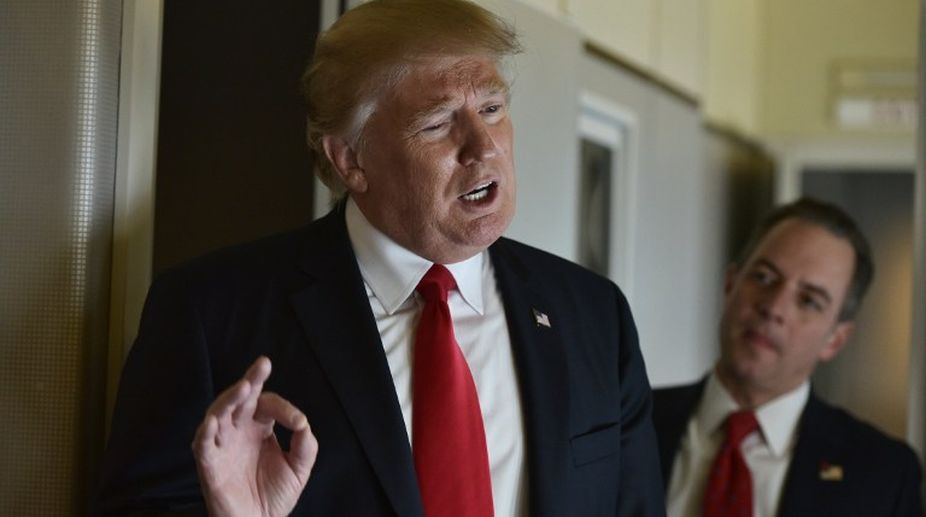
From Pakistan to Palestine, Donald Trump is set to turn the screws again. It is now obvious that in the reckoning of his administration, the threat to foreign assistance is a potent weapon of reprisal, indeed a means of leveraging. He has reinforced the recognition of Jerusalem as the capital of Israel with a threat to cut funding to the United Nations Relief and Works Agency for Palestine Refugees. More accurately, he has threatened to truncate the assistance towards a humanitarian effort. Viewed through that prism, Wednesday’s announcement, specifically the latest intervention in the Middle East peace process, is potentially far more damaging to the Palestinian Authority. The Palestinian camps run by UNRWA are home to the poorest and most disadvantaged. Indeed, the camps in such places as Ramallah, Nablus and Jenin on the West Bank and Gaza are inhabited by the most radicalised of the Palestinian factions. It was from these camps that the first and second intifadas emerged and where both Fatah and the Islamist group, Hamas, were born. They are places that pride themselves both on their resilience and on being the conscience of the Palestinian national movement. Ever since the second intifada, the weapons still held by the factions have largely remained inside these camps, and under the control of the Palestinian security forces helmed by President Mahmoud Abbas. The US President, given as he is to impetuous action, has betrayed a lack of understanding of the delicate dynamics that help maintain relative peace between Israelis and Palestinians. Though Pakistan will take a while to reflect on Mr Trump’s bluster, he may have rocked the Middle East boat fair and square.

The President and his advisers regard the moves at the UN Security Council and in the General Assembly to condemn the Jerusalem announcement as an escalation in the situation. It is hard not to wonder whether he has binned the conventional negotiating strategies used by past US administrations in the Middle East peace process as failures. The purported paradigm shift lends a new dimension to the theory and practise of international law. The working arrangement between UNRWA and the Palestinian Authority, fragile as it was, is bound to get destabilised. For years, international financial and technical support for the Palestinian bureaucracy has taken care of salaries and has supported NGOs working in key social sectors. This flow has underpinned the Palestinian Authority’s security cooperation with Israel, thereby checking the influence of Hamas on the West Bank. Indeed, that international support has spared the Palestinian Authority from a possible coup by the Hamas or “coup-proofed”, as the political scientist, Edward Luttwak, reacted on Wednesday. The US President has emitted a distressing signal ~ there is no peace process and no peace plan in the Middle East. Donald Trump has taken “care” of the essentials.

AAP convulses

Editorial |

On the face of it the Aam Aadmi Party’s selecting two virtual outsiders for the three Rajya Sabha seats it should bag shortly is quite a story particularly since founder-member Kumar Vishwas was ignored for a position he had made no secret of wanting to attain. The bigger story is that Arvind Kerjriwal had to settle for businessman Sushil Gupta and chartered accountant Narain Dass Gupta (in addition to party-activist Sanjay Singh) only because his overtures to more than a dozen eminent persons were spurned. When will Kejriwal come to accept that there are few takers for the larger-than-life image he projects of himself? It ought to be a sobering thought that persons who would otherwise have deemed a seat in the House of Elders a singular honour opted to stay aloof rather than touch AAP with the proverbial bargepole. Was it the supreme arrogance of Kejriwal that caused him to embarrass people like a former RBI governor and apex court judge by going public about offering them “tickets” to the Rajya Sabha without any pre-consultation? For there would be few who would accept the AAP-line that those eminent non-political persons declined the offer because they feared running foul of the government ~ there are limits to paranoia. There is little need to be exercised over poet-politician Kumar Vishwas not “making it”, nobody can claim a nomination by right. Yet there will be much resonance with Vishwas’ lament that his prospects were axed because he had aired his differences with Kerjriwal over several issues. The allegation that Kejriwal functions in dictatorial fashion has been levelled by many, a reflection of which is to be seen in his confrontations with successive Lieutenant-Governors, union ministers etc. The need to build a party “organisation”, or foster internal democracy, seems to elude the AAP leadership, a couple of persons call the shots, always.
In terms of time the AAP is still a fledgling, yet to write off all its convulsions as teething troubles would be to miss a point. In the short time it has been in business it has been disowned by its mentor Anna Hazare, and no longer enjoys the favour of those who had played prominent roles in its formation ~ Yogendra Yadav, Prashant Bhushan, Kiran Bedi, Mayank Gandhi and a host of others whose dreams of new politics have gone up in flames like the effigy of Ravana at the Ramlila Ground. Simultaneously have AAPs electoral ambitions come a cropper in Goa and Gujarat, after partial success in Punjab. The election to the Delhi Assembly is looming on the horizon, Kejriwal and his chosen few must resurrect the spirit that brought the party into existence, and power. Are they capable of proving themselves more than short-term wonders, or just the irritating mosquitoes the Prime Minister had dubbed them?