Logo

SDMC head seeks notification on 351 roads for relief to traders

Statesman News Service | New Delhi |

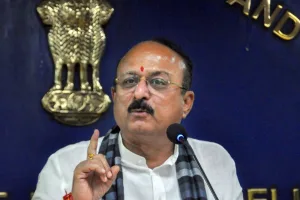
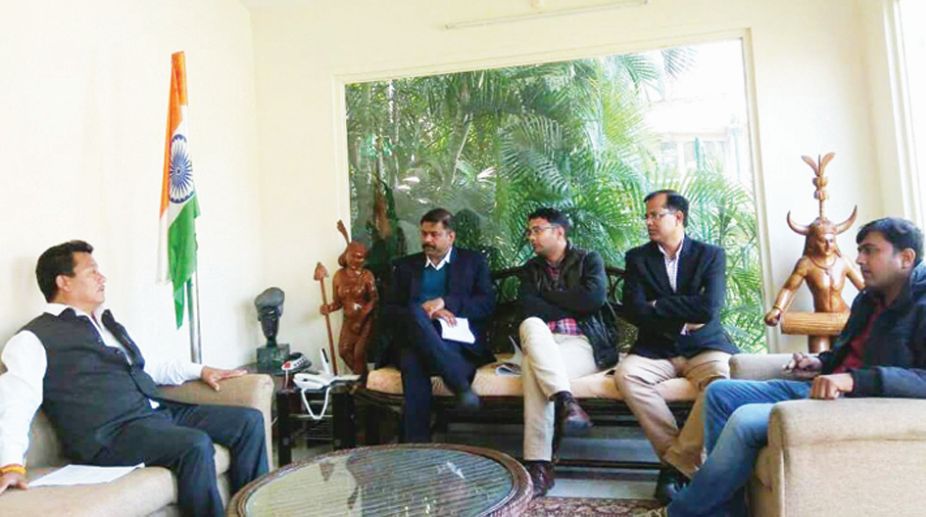
South Delhi Municipal Corporation (SDMC) standing committee chairman Bhupender Gupta has stressed the need to notifying 351 roads in Delhi as commercial, mixed land use and pedestrian streets.

He addressed separate letters to L-G Anil Baijal and CM Arvind Kejriwal for the issuance of notification, claimng it would provide substantial relief to traders and general public.

Gupta in his letters stated, ” the issue has been under consideration in Delhi government right from February 2017.

The MCDs passed a resolution for requesting city government to issue notification of 351 roads as commercial, mixed land use and pedestrian streets.”

Gupta claimed he enclosed copies of correspondence on the issue from May 2017 for perusal by the L-G and the Chief MInister so that the issue could be considered for an early decision.

He appealed to the CM to get a notification issued for the roads. Gupta also requested the L-G to make use of his offices for the issuance of notification.

Gupta on Thursday claimed, “The traders have been facing a lot of difficulties due to lack of notification in respect of these roads. Furthermore, the ongoing sealing is making their difficulties more complex.

eeping in view all this it is becoming essential to issue notification in respect of 351 roads. This will go a long way in allaying the fear among traders. This will also facilitate hike in the revenue of MCDs because of collection of conversion charge.”

He felt that the step would help in the development of Delhi and increase trade activities.

Jain urges Mayors to go slow on sealing drive

Statesman News Service | New Delhi |

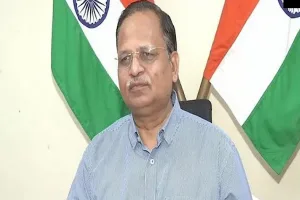
Delhi’s Minister Satyendar Jain on Thursday urged Mayors of three municipal corporations to save traders from a sealing drive by issuing a pending notification which would make 351 roads under commercial and mixed use category.

In separate letters to the three mayors, the city’s Urban Development Minister said that a notification for making 351 roads under commercial/mixed use category was to be issued and the Urban Development Department had met with the Commissioners of the three municipal corporations in this regard.

Jain said that following the meeting he had even sent five letters to the respective Commissioners, but there was no reply.

“I request you to take personal interest in the matter and ask the municipal commissioner to send the report in top priority so that traders can be saved from the sealing drive,” the letter reads.
The minister has also called a meeting of commissioners of the three municipal corporations on Friday.

Office of profit: Cong demands CEC disqualify 20 AAP MLAs

Statesman News Service | New Delhi |

Delhi Congress on Thursday met the Chief Election Commissioner at Nirvachan Sadan and submitted a memorandum seeking “immediate disqualification” of the 20 Aam Aadmi Party (AAP) MLAs. They were accused of holding office of profit and the issue has been pending with the Election Commission.

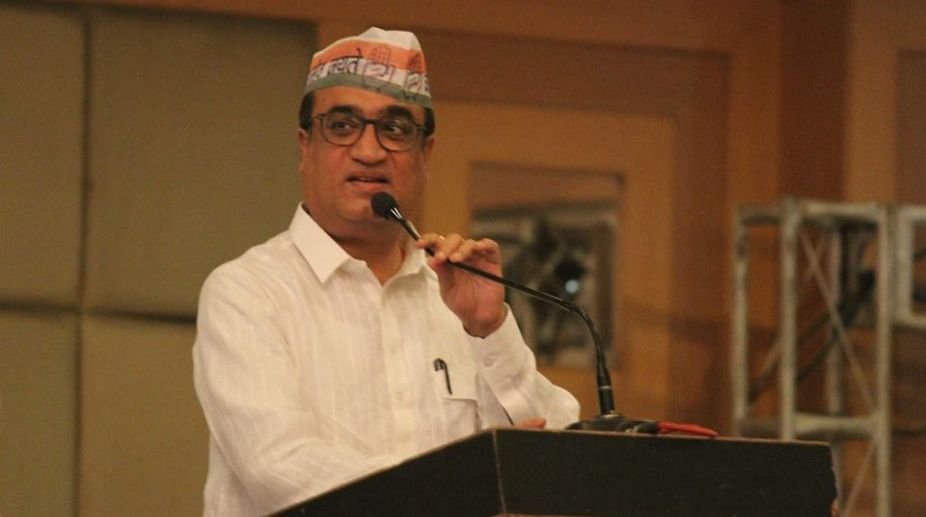
Speaking to media persons, Delhi Congress president Ajay Maken said the party delegation urged the Chief Election Commission to decide the matter as expeditiously as possible and disqualify the said 20 MLAs for holding office of profit.

He said in a democracy no MLA illegally holding an elected office shall be allowed to continue, whereas in the present case, the AAP MLAs have been continuing as MLAs even though they incurred disqualification on 13 March, 2015 itself, i.e. the day on which the 20 MLAs accepted the office of profit ~ the date of their appointment as parliamentary secretaries.

Maken urged the Chief Election Commissioner to decide on the disqualification of the MLAs before his retirement.

“The Chief Election Commissioner assured the Congress delegation of a final decision on the office of profit case against the 20 AAP MLAs as quickly as possible,” Maken told reporters.

Maken stated that among the various legal and factual aspects, the MLAs had been extended facilities and perks, at par with ministers, including offices, office furniture and vehicles.

“Hence, in the garb of appointment as parliamentary secretaries, AAP government virtually appointed 20 additional ministers with hefty perks and benefits,” Maken alleged.

AIADMK ‘two leaves’ symbol case: HC denies bail to middleman

Statesman News Service | New Delhi |

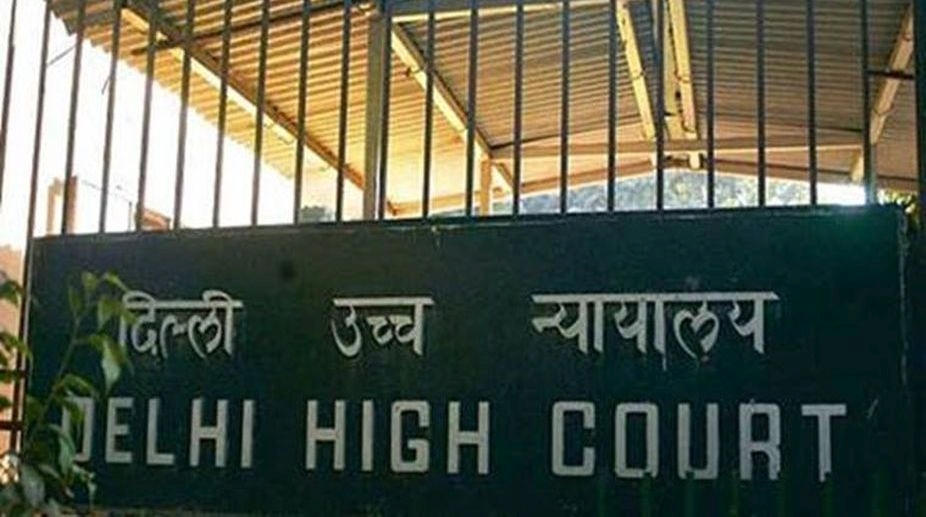
The Delhi High Court dismissed on Thursday the bail plea of a person arrested in an Election Commission (EC) bribery case allegedly involving AIADMK leader TTV Dhinakaran and others.

Earlier too, he was denied bail by the High Court and thrice by the trial court.

Justice Mukta Gupta rejected the bail application of Sukesh Chandrashekar, an alleged middleman in the case, who was arrested on April 16 last year.

Chandrashekar was taken in custody on a charge of accepting money from Dhinakaran for bribing EC officials to ensure the allotment of the ‘two leaves’ symbol for the AIADMK’s Sasikala faction during the R K Nagar Assembly by-election in Tamil Nadu.

Opposing his bail application, the Delhi Police argued that he did not deserve bail as Chandrashekar allegedly showed little respect for law even during the period he had been in jail.

According to Additional Public Prosecutor Hirein Sharma, there are 24 FIRs lodged against him besides three more cases registered against Chandrashekar during the custody period. Chandrashekar, lodged in Tihar Jail, has also moved a separate application in the High Court alleging that he was subjected to torture though, as he claimed, there was an order that he should not be given such treatment.
Denying his charge, the jail authorities said it was an “afterthought of the shrewd mind of the accused”.

His earlier bail plea was dismissed by the High Court on June 15 last year as the police had seized from him a fake ID card showing that he was a Rajya Sabha member.

Kejriwal meets Baijal for clearance to healthcare, services delivery schemes

Statesman News Service | New Delhi |

Following Delhi Chief Minister Arvind Kejriwal’s meeting with Lieutenant Governor Anil Baijal on Wednesday, the Delhi government resent files of “doorstep delivery of 40 public services” and “quality healthcare for all” schemes for reconsideration by the latter.

The L-G had pointed out some loopholes in the schemes and returned both the proposals to the Delhi government for re-evaluation. The move snowballed into a controversy with AAP leadership firing salvo at the L-G.

While Deputy Chief Minister Manish Sisodia alleged that the L-G was trying to “protect a corrupt system” by halting doorstep delivery of services, Health Minister Satyendar Jain termed the L-G’s objection on healthcare for all “as lack of knowledge of ground realities”.

Nagendar Sharma, media advisor to Kejriwal, said that after the CM’s meeting, the Delhi government was hopeful that the schemes would be cleared by the L-G.

Taking to micro-blogging site Twitter, Kejriwal said in the meeting he urged the L-G to approve the two schemes.

“I urge Hon’ble L-G to approve these two schemes. Both are of significant public interest. People of Delhi would benefit a lot with their implementation,” Kejriwal tweeted. Since AAP came to power, the L-G and Delhi government have been at loggerheads on a range of issues, including administrative jurisdiction, transfer and posting of officers and clearance of key Bills and proposals of the government.

L-G surprised by CM questioning hiring of retired staff in hospitals

Statesman News Service | New Delhi |

Lt Governor Anil Baijal on Thursday wrote a letter to Delhi Chief Minister Arvind Kejriwal regarding filling up of vacant posts in Delhi government hospitals.

In his letter, the L-G expressed surprise that the CM was questioning the decision to appoint retired employees against vacant posts, as the proposal for engagement of retired employees was moved by the Health Department in pursuance of directions given by the Chief Minister.

The L-G wrote in reply to Kejriwal’s letter in which the latter had questioned the decision to hire retired personnel to fill up vacant posts in hospitals.

The proposal for engagement of retired employees against existing vacancies was moved by the Health and Family Welfare Department in pursuance of directions of CM, in the meeting convened under the Chief Minister’s chairmanship on 16 August 2017. The minutes of that meeting were also issued by the CM’s office. Therefore, it is surprising that the CM had raised questions regarding filling up of vacant posts with retired personnel, the L-G emphasized.

The Lt Governor further stated in his letter that the engagement of retired personnel was purely an interim measure to meet the shortages. Regular recruitment alone was a sustainable solution for provision of quality healthcare services to residents of Delhi. The vacancies in the government hospitals have been pending for a long time and he had already got an action plan prepared for that not only by the Health Department but also by Delhi government.

Equity indices resume pre-Budget rally

Statesman News Service | Mumbai |

Overcoming yesterday’s profit booking spell, equity benchmarks of Bombay Stock Exchange and National Stock Exchange resumed their pre-Budget rally today hitting new highs as participants in Dalal Street picked up stocks selectively in IT, FMCG, bank and utilities timing their fresh investment with the start to October-December earnings season.

Private lender Indus Ind Bank was the first to declare its numbers which analysts found in line with the market estimates. Later in the day Tata Consultancy Service was to release is Q3 performance amid talk of IT sector’s strong comeback after a few sluggish quarters.

The resumption in buying suggests investors have taken in their stride any move by the government to levy long-term capital gains tax (LTCGT) on investments in shares for more than 13 months. The market buzz says a seven-member panel has submitted its recommendations to the Prime Minister Narendra Modi apparently making a case for such levy on equity trade to which the PM is not averse.

Analysts say long-term tax is for long-term investors or stakeholders but in the current market conditions the bullish sentiment is driven and kept running by hectic buying and selling. The 30-share Sensitive Index of BSE and 50-scrip Nifty of NSE, as seen in 2017, appear immune to a massive correction. The trend, which analysts say, will continue in 2018 regardless of “usual” concerns over stretched valuations raised in some quarters.

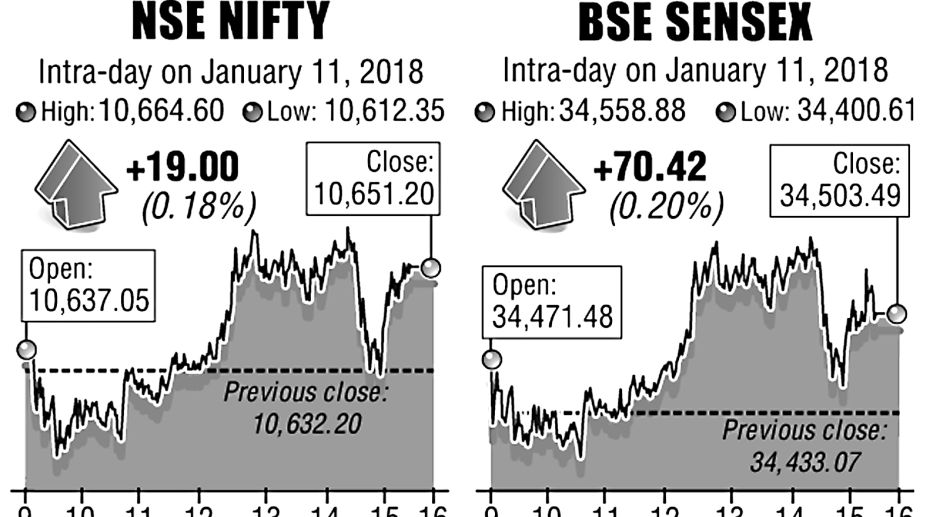
The Sensex closed for the day at 34,503.49 (+70.42) points gaining 0.20 per cent. Nifty increased 0.18 per cent to a new high of 10,651.20 (+19) points. These indices touched the day’s highs of 34,558.88 (+125.81) points and 10,664.60(+52.25) points.

Bank shares, mostly private sector lenders, were in demand which took Nifty Bank to 25,660.90 (+43.60) points a gain of 0.17 per cent. In Sensex 16 shares ended up and 15 down. For Nifty the ratio was 24:26.
In yesterday’s profit booking session, foreign portfolio investors or FPIs were net sellers worth Rs 572 crore in domestic equities while DIIs purchased Rs 600 crore worth new stocks, according to official data. Nevertheless, the domestic market looks stable and positive as it is not impacted by faltering new year rally in other Asian markets.

The regional markets, according to analysts, took hit following speculations that the United States bonds market has been dented after China slowed down its buying on account of protectionist stance of President Donald Trump’s administration. The mood in Wall Street too is mellowing after Dow Jones for the first time soared above 25,000 points ten days ago.

Analysts expect improved performance by lenders in Q3 after studying IndusInd Bank numbers. The net profit grew 24.73 per cent to Rs 936.25 crore over October-December quarter of 2016. The bank lived up to estimate which was Rs 940 crore.

TMC playing divide and rule politics in Bengal: Mukul Roy

Statesman News Service | Kolkata |

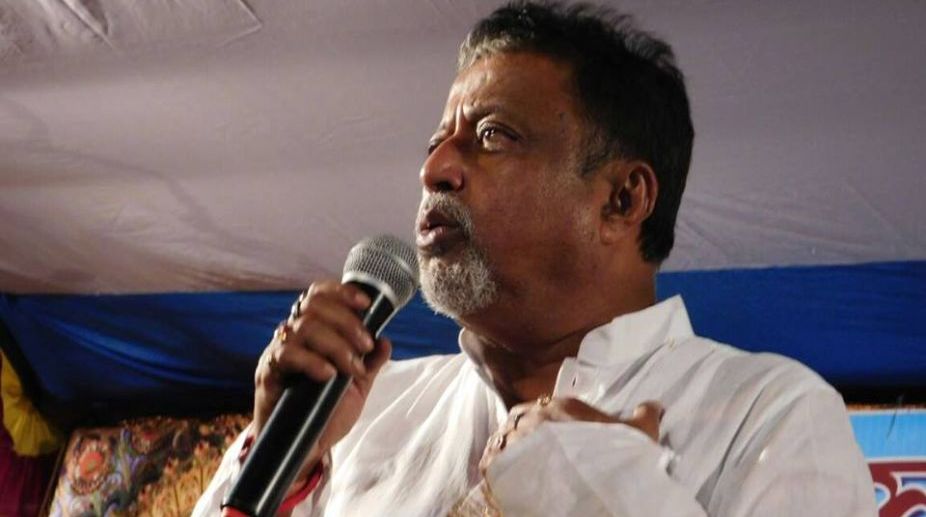
Addressing a rally of the BJP’s minority morcha at Esplanade, on Thursday, Bengal BJP leader Mukul Roy said the minority people are being deprived during the Trinamul Congress tenure.

Accusing the TMC of playing divide and rule politics, he said the ruling party should rather concentrate in the development work of the minority community.

“The current state government has claimed that huge development work for the minorities has been initiated in Bengal, but in reality only divisive politics was played to appease the people of the community,” he said.

“BJP never ever said that Durga idol immersion and Muharam could not be celebrated on the same day, but the TMC-led state government stopped immersion of Durga idol on the day of Muharam, which is nothing but a divide politics,” he said.

Mr Roy alleged that the development work for the minority community was largely taken up during former chief minister Siddhartha Sankar Roy’s tenure and since then there has been no progress in developing this community.

“The Central government has sanctioned a huge amount of fund for the development projects of the minority community. But those were not spent,” he said.

Alleging the minority youths were deprived of jobs in the state, he said the Bengal government must publish a list to confirm the exact number of employment of the minority youths during TMC tenure.

“Before each election this government promised jobs for the minority youths but the state has never fulfilled its promise. The government even did not recognise a large number of madrassas despite its promise.
“I was flooded with complaints by the several community religious leaders that the heritage sites were not developed,” he said.

Mr Roy also raised questions regarding the honesty of the TMC government to punish the alleged culprits in Rizwanur Rahman death case. “IPS officers accused in Rizwanur death case were given prize postings. What “insaf” (justice) was given to the mother of the Rizwanur?” he asked.

The minority morcha rally was attended by BJP’s national president (minority morcha) Abdul Rashid Ansari, BJP state president Dilip Ghosh, national general secretary Kailash Vijayvargiya.
A procession was organised from the BJP state office to Esplanade before the meeting to protest against deprivation of the minority people in the state.

CITU slams move to allow 49% FDI in AI

Statesman News Service | New Delhi |

The Centre of Indian Trade Unions (CITU) on Thursday said the government’s move to allow 49 per cent FDI in the country’s national carrier Air India was meant to expedite its privatisation.

CITU general secretary Tapan Sen said the airline’s privatisation would give foreign entities control over the national carrier, which is a public sector company with a huge asset base and a high-revenue earning international service network.

The government is citing huge losses of Air India to justify its privatisation, Sen said. But the fact is that Air India was pushed to this situation not because of its management’s failure, but owing to imposition of disastrous decisions on the company by successive governments at the Centre, he added.

Decisions like hasty merger of Indian Airlines and Air India, forcible procurement of huge fleet of aircrafts from foreign companies through direct purchase, were imposed on the company that resulted in an unbearable burden of indebtedness, Sen said.

Despite such reckless and imprudent decisions by successive governments, Air India has struggled to come back to operating profit during the last three years, Sen said.

Even then, the present government decided to privatise the national carrier, and to hasten up the process, foreign companies are being invited to take over, CITU said.

The decision would go against the Parliamentary Standing Committee on Transport, Tourism and Culture, represented by all political parties including BJP, which had unanimously recommended not to privatise Air India.

Nitish-BJP bond fails to boost Bihar

Statesman News Service | Patna |

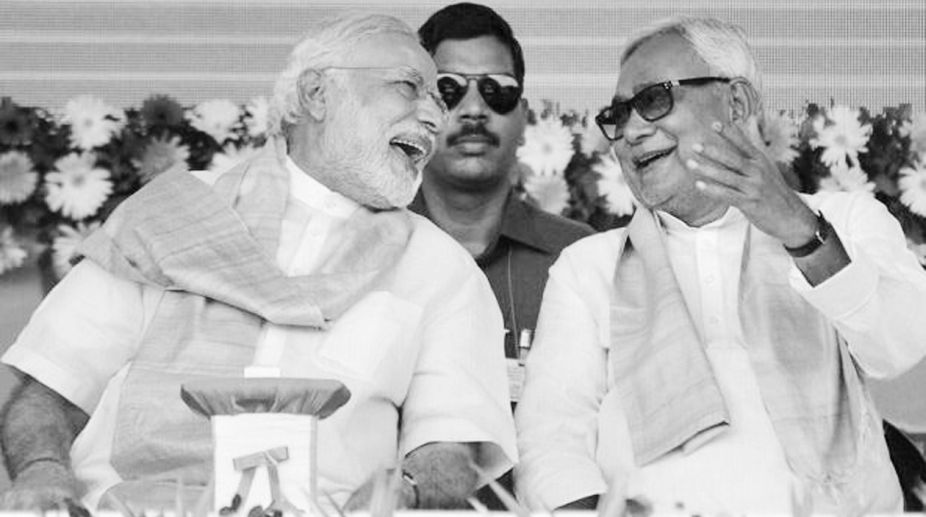
This was widely projected as the “double-engine” government which will spur all-round growth and bring prosperity to Bihar when chief minister Nitish Kumar suddenly walked out of the erstwhile ruling Grand Alliance and formed his new government with the BJP in July last year. Some six months after switching sides, Bihar still finds itself ignored by the Narendra Modi government at the Centre, which is yet to consider any of the three major demands of the chief minister.

The first major setback for the state was Centre’s failure to dole out relief package for Bihar flood victims even three months after the Nitish Kumar government sought a financial assistance of Rs 7,636 crore. The month-long flood affected over 1.61 crore people settled in 19 districts and had caused massive loss of property. It damaged crops and houses.

Prime Minister Narendra Modi had conducted an aerial survey of the flood-affected districts on 26 August and announced Rs 500 crore as immediate relief for the state while promising more relief once it gets the detailed report of damage from the state government. Subsequently, the Nitish Kumar government sought a financial assistance of Rs 7,636 crore from the Centre on 11 September for carrying out “restoration and reconstruction of damages caused by the devastating floods” in the state.

Strangely, the Centre is still to act even as the current financial year is coming to a close. What is further strange, the state is yet to get the financial assistance despite a Central team making spot verification of the areas and assessing the flood damage.

Moreover, the Narendra Modi government is yet to fulfill the long-pending demand for granting Special Category status to Bihar. Pressing for the demand, which has always been the “main agenda” of the JD-U, Mr Kumar in 2012 had embarked on a month-long ‘Adhikar Yatra’ across the state.“Without special category status, Bihar will take at least 25 years more to touch the national average of economic growth but the people of Bihar are not ready to wait for long,” Mr Kumar had told a rally at Patna’s Gandhi Maidan held on 5 November, 2012.In 2012, UPA government was in power at the Centre.

During campaign for 2014 Lok Sabha polls, NDA’s then Prime Ministerial candidate Narendra Modi had promised to fulfill this demand should his coalition is voted to power at the Centre.
In July, JD-U chief Mr Kumar crossed sides and returned to the BJP camp claiming things would change fast but nothing concrete is visible as such till now, say sources.

The Narendra Modi government has also refused special financial package to Bihar even though the PM himself had announced the same. While addressing a rally in Ara on 18 August, 2015 just ahead of Assembly elections, the PM had announced a special package of Rs1.25 lakh crore for Bihar.

“I am here to fulfill the promise I made to you earlier. I had promised to give Bihar a special package of Rs 50,000 crore but now I think such amount will not help quite much to the state. So, I am announcing a package of Rs 1.25 lakh crore for Bihar,” Mr Modi had announced.

In addition to that, the PM also announced a special financial assistance of over Rs 40,000 crore. But this promise too remains unfulfilled till date.

Gurung in Delhi, says ready to cooperate

Statesman News Service | Darjeeling |

Gorkha Jan Mukti Morcha (GJMM) chief Bimal Gurung today made a public appearance for the first time after the recent bout of the Gorkhaland agitation in the Hills, which forced him to go into hiding. Neatly dressed, Mr Gurung greeted the people on New Year, while he also said he was all ready to cooperate if an independent committee or agency took up investigations into the violence that occurred in the Hills of Darjeeling and Kalimpong during the agitation that began in early June and ended towards the end of September last year.

“We don’t have anything against Bengal’s people as they are our brothers and sisters. But out language, our culture, are very different from theirs. Whatever we are asking, we are asking under the Indian constitution. We are India’s inseparable part, and we will remain so,” the GJMM leader, who is on the run, said.

As GJMM general secretary Roshan Giri circulated photos of Mr Gurung in Delhi on Whatsapp, he said the Darjeeling leader talked to some press people. Mr Giri also circulated a New Year message Mr Gurung sent to the people through the media.

“Though I sent the photos, I am not with Mr Gurung presently. He talked to some media people I n Delhi today,” he told The Statesman, without elaborating.

“The state government, for the past several months, is working like a directionless government, and it has been giving one-sided account of all that has been happening in Darjeeling, but the truth is, we are not separatists,” Mr Gurung said in the message.

“I will continue the peaceful crusade for the Gorkha people’s identity and their life,” he added, and appealed to “my people” to maintain peace, not lose hope, have patience, and continue with their daily work and stay away from illegal activities.

“I have always trusted on the judiciary, and I am ready to cooperate with any independent investigation agency that will work with honesty,” he said.

“I have prayed to our judiciary to form independent probe committees/agencies to look into the various police cases slapped on us,” he added.

Meanhile, the Gorkha National Liberation Front (GNLF) is all set to hold a ‘centralized’ public meeting in Darjeeling on 28 January, where, the party said, it will present to the public the details of whatever transpired between the state and the central governments during the recent Gorkhaland agitation in the Hills.

Political observers feel that the meeting will also be a show of strength for the party that has regained popularity after the recent agitation.

I-T department attaches benami assets worth over Rs 3500 crore in raids

Statesman News Service | New Delhi |

As part of its crackdown against black money, the Finance Ministry on Thursday said the Income Tax Department has attached 900 benami properties, including flats, shops, jewellery and vehicles worth more than Rs 3,500 crore under the ‘Prohibition of Benami Property Transactions Act’, which came into force from 1 November, 2016.

In five cases, the provisional attachments of benami properties, valued at more than Rs 150 crore each, have been confirmed by the Adjudicating Authority. In one such case, it was established that a real estate company had acquired about 50 acres land valued at over Rs 110 crore using names of persons of no means. This was corroborated from the sellers of the land as well as brokers involved. In another case, after demonetisation, two assesses were found depositing demonetised currency into multiple bank accounts in the names of their employees and associates, the Finance Ministry said. The total amount attempted to be remitted to the beneficial owners was about Rs 39 crore. In yet another case, cash amount of Rs 1.11 crore was intercepted from a vehicle with a person who denied ownership of the cash. Subsequently, no one claimed ownership of the cash and it was held to be benami property by the adjudicating authority.

The I-T Department has opened 24 units to implement the Benami Act and the number will double in the next six months. According to senior government officials, the department is closely watching high-value transactions, suspicious transactions and the purchase of property within three months from the date of demonetisation. They are also looking at cases where income saw unreasonable hike. As a part of this move, the income tax department on Wednesday warned people to “keep away” from benami transactions, cautioning that violations under the newly enacted law would invite criminal prosecution and RI up to seven years.

Collaborative working environment

Derek Nazareth |

The millennial generation also known as Generation Y will make up about 50 per cent of the global workforce by 2020, according to a study by PwC.

As employers we need to understand what motivates them and how they approach their careers.

Millennial employees do not fit neatly into the 9 to 5 mould that their parents may have worked within. Flexible working patterns and the ability to work out of the office are not just perks for them as there are things that they have come to expect.

It is important to equip all employees with laptops to enable them to work from home and go a step further.

A recent study by the US software giant Citrix forecast that in 2017 half of all companies will have a mobile working policy, and that by 2020, 70 per cent of people will work away from the office as often as they work at a desk. A survey by the British Council for Offices and estate agency Savills, found that 48 per cent of the more than 1,100 British employees surveyed considered access to a collaboration space to be “imperative”.

Providing an environment where new ideas are welcome is important. Encouraging colleagues and having a mechanism for the adoption of ideas as this generation has a passion to improve things using technology. With the philosophy of continuous improvement, employees are exploring the use of robotics, machine learning and artificial intelligence. They are driving and embracing this learning, recognising that automation is not about putting people out of work, but rather about improving working practices.

Millennials tend to be quick learners and it is fair to say that change comes more naturally to them than to prior generations. They want to learn through multiple channels, a mix of classroom training, online learning, and a mixture of internal and external trainers. They seek promotion much more quickly than employees in previous generations.

As part of that drive for advancement through an organisation, they also seek feedback more frequently than those who might have been content to wait for their annual or six-monthly review. They like instant feedback to know how they can do things better.

Capturing this enthusiasm is really important. One way of doing it is to hold knowledge forums across functions to enable employees to share lessons. Unlike their parents, this age employees do not expect to have a job for life, and employers need to recognise that and be adaptable.

While each function within the organisation has a career path, employees are able to rotate across jobs and take on new roles either within the same department or across functions. As employers, one cannot expect them to stay with them for their whole careers. But we have noticed that we retain our best talent by enabling them to make changes in their career paths.

Millennials are not afraid to take risks. And by providing them with a safe environment in which to take those risks, we can help them move across functions or deviate from a more traditional career path. A stimulating, fun workplace is also a key requirement of the millennial generation. Social benefits such as sports clubs, fun days, tuck shops, recreation rooms are a key element of that.

There are of course challenges in having different generations working together. And employers need to explore ways to help foster communication and understanding across generations. As well as opportunities for senior staff to become mentors, it’s a great idea to put in place programmes of reverse mentoring.

Building a culture of compliance

Anthony Crasto |

Through tightened requirements around risk management, internal financial controls and compliance related disclosures, Companies Act, 2013 has brought significant rigour for laying the foundation for a culture of compliance in companies in India. This has imposed specific responsibilities on the board of directors and CEO/CFOs and has laid down provisions for penalties and prosecutions for non-compliances with various provisions.

Thus, scrutiny around risk and compliance is rapidly increasing as regulators are now looking to ensure that companies are putting policies and procedures in place to effectively respond to and mitigate risks. It is time that we change the lens that is used to view compliance from a “check-in the box” requirement to a “way of working”. More than just a set of policies and procedures, effective compliance management at the enterprise level can be viewed as a cultural ethic that should function like any other business asset that reaches across an organisation.

Nearly all companies provide some level of training to their employees, but a culture of compliance goes beyond once-a-year mandatory training programme. Establishing such requires continuous learning, resources and time to influence widespread change. It embeds compliance into everyday workflow and sets the foundation and expectations for individual behaviour across an organisation.

As regulatory demands continue to increase by the day, companies need to have the resources and technology frameworks in place to build compliance practices into their everyday operations. This is not just an item on the agenda any more, but it has an agenda of its own.

An effective way to achieve this is through a risk intelligent framework that brings compliance into the open, running throughout all business processes, with responsibility shared amongst all employees. To truly unlock the value that can be achieved by establishing a driven culture, managements should take a step back and evaluate. Following are the four key areas which will form pillars of a risk intelligent compliance framework:

Compliance culture, ethics and principles:

Policies, procedures, rules and controls will always be required to help provide guidance to the business on what is expected to manage compliance. However, they cannot cover every scenario and eventuality. A focus on compliance driven culture and principles may help in managing the unforeseen compliance risks.

The right team:

To foster a compliance driven culture, organisations need more than just people who can interpret laws, write rules and policies and conduct audits for compliance to these rules and policies. Organisations need people who can partner with the business teams and translate rules into what the business needs to do and help the business to change.

Integrated compliance programmes:

It is time that the compliance functions move away from their historic approach of operating in silos to an integrated way of working to drive synergies through simplification and harmonisation of compliance processes. This will result in a clearer identity enabling better business relationships, improved credibility and greater clarity in value.

Effective use of analytics and technology:

Having a “good enough” compliance programme is simply not good enough. Rather, organisations should continuously strive for “great”. A mature technology and data analytics driven approach to help identify and prevent compliance issues much before they occur and perform real-time monitoring of high risk areas are resulting in increased benefits in creating successful compliance programmes.

In addition to focusing on compliance frameworks and internal controls, it is imperative for boards and management to also evaluate the effectiveness of their business risk management processes. The current business environment is shifting with technology and regulatory changes disrupting business models and geography boundaries. Boards and management need to understand these signals of changes and their impact on business operations. They need to implement formal risk management systems to implement mitigation measures with an aim to ensure continuity of business.

The risk profile of existing business operations are also undergoing significant changes with cyber security, social media, brand and reputation, regulatory, efficient business solutions, risks gaining more and more importance. When it comes to managing risk and compliances, there is a difference between doing the minimum and doing the right thing, to effectively address the requirements.

Companies that choose to do the right thing will unlock value through increase in their level of compliances to the universe of regulations, reduced risks and reporting surprises, and sustained business performance over the long term.


Leader who can’t take pressure

Andreas Whittam Smith | Updated :

Prime Minister Theresa May left out the most important person from her re-shuffle – herself. I would like her to have followed Education Secretary Justine Greening out the door and returned to the backbenches of the House of Commons. For the muddle and confusion this week confirms again what has been evident since May entered 10 Downing Street: she lacks the qualities of a good leader.

Of course, she often speaks of the importance of leadership. But this comes under the rubric of the “lady” protesting “too much”. Just before last year’s general election, May was at pains to emphasise leadership: ‘‘In three days, the British people will choose who they want to lead the country through the next five years … It’s about which leader and which team people trust to take the big decisions that matter to Britain.”
Theresa May is undoubtedly a nice person – at least she often is in private and in small gatherings. In what follows, the quotations come from two excellent accounts of the Prime Minister’s first year in office: Fall Out by Tim Shipman and Betting the House by Tim Ross and Tom McTague. A former No 10 aide said: “She is a sphinx without a riddle. People think she is thinking something really deep, but the truth is she doesn’t know what to think. I once sat in a room with her in silence and I thought there must be a lot going on in there. But there is nothing.”

Let us start with those characteristics of the Prime Minister that are conducive to getting the best out of colleagues, before we come to her deficiencies. A former official at the Home Office, where May spent a number of years before becoming Prime Minister, said: “She’s not a warm person but she is unbelievably kind and loyal. Every year that I worked for her, I got a Christmas card and a present from Theresa.
“She never lost her temper or shouted, and she never pulled rank (which she was of course entitled to do). She treated me as an equal, which, in the hierarchy of the Home Office, I obviously was not.”
A colleague at No 10 added that she isn’t driven by “publicity and self-promotion… She’s always cautious about what decisions will mean for real people.”

Many people in Whitehall and in the Westminster village said that the Prime Minister lacks confidence in her own judgement. This is an extraordinary state of affairs. How could May propel herself to the very top place while all the time lacking confidence in her own judgement?

This led her to place undue trust on the advice of her joint chiefs of staff, Fiona Hill and Nick Timothy, until they were forced to resign after the disastrous 2017 election campaign. A denizen of Whitehall observed that: ‘‘Theresa was unable to take decisions without the clear steer and guidance of Fiona Hill.”

She seldom ever challenged Hill or Timothy. The former Home Office official quoted above says that he was struck by how different May was from the duo she employed: “She is thoughtful and polite; they were breathtakingly rude. They were certain they were right about everything; she is much more tentative and willing to listen to other views.” Another observer commented: “Most politicians have a tight team, it is almost as if they (May, Hill and Timothy) were actually an entity. Some people said that they were like joint Prime Ministers.”

Unfortunately, the Prime Minister’s shortcomings as a leader quite outweigh her good qualities. Another Home Office official said: “May didn’t have the character to elicit the information she might want.” That’s a bad start to making good decisions!

As to the inevitable pressures that prime ministers feel, an official observed that: “She doesn’t take pressure at all well … She just further retreats.”

She is also painfully indecisive. It is well known that the government ministers responsible for Brexit have often been unsure of May’s intentions. They have never seen an overarching plan for Brexit written down. She can also lack grip, as we saw with the reshuffle.

It was worse in the “war room” running the 2017 general election. The question that was never answered was a simple, one according to Shipman: who was actually in charge? Not one of the 30 campaign officials interviewed “gave a straight answer to this question”.

The upshot is that May makes a lot of mistakes. She prematurely triggered the famous Article 50 that set the Brexit process going, condemning Britain to negotiate against the clock. She contemplated crashing out of the EU without a deal, saying in her Lancaster House speech that ‘‘no deal for Britain is better than a bad deal for Britain”. As a matter of fact, no deal is the worst outcome of all.

Why then does May manage to hold onto office? Because the Brexit wing of the Conservative Party prefers her to any alternative they can contemplate. Remainers like me have to accept the prospect that we are stuck with Brexit and stuck with May. The two march together.

The Independent

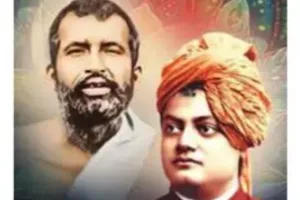
Swamiji’s message remains relevant

Bishwajit Bhattacharyya |

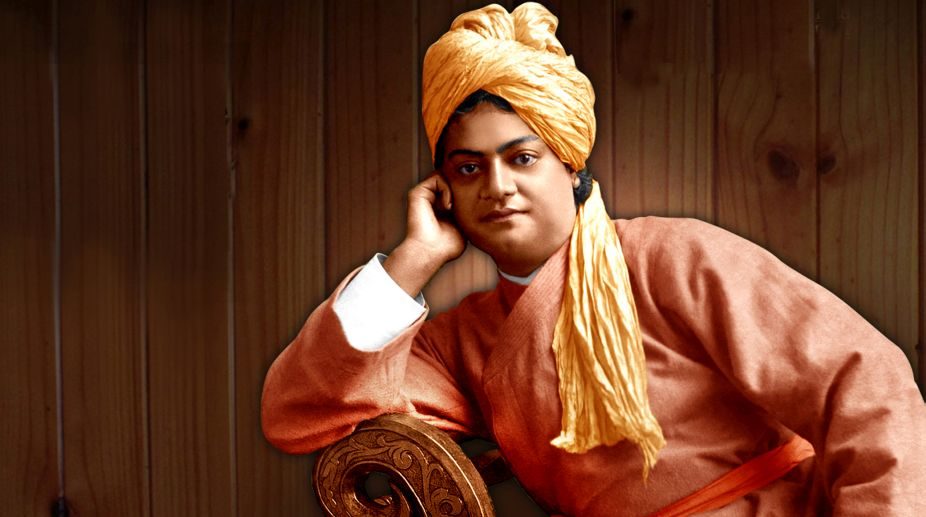
One hundred and fifty years ago this day, Swami Vivekananda was born (12 January 1863). He breathed his last on 4 July 1902 at the age of 39. By then he had ignited a spiritual fire across the world. That fire still burns. Swamiji’s ultimate message was: each soul is potentially divine, and religion is the manifestation of divinity already in man. This divinity is manifested when one treats others with love and compassion.

Unfortunately, in the name of religion, some of those claiming to be followers of Swamiji are playing havoc with his teachings. Social strife, sectarianism, bigotry and fanaticism are afflicting our society. One needs to recall just a few lines from Swamiji’s Chicago address, delivered in the World Parliament of Religions on 11 September 1893: “I am proud to belong to a nation which has sheltered the persecuted and refugees of all religions.” Mark the words “all religions”. This is India’s culture. Is this being protected by politicians whose sole aim is either to acquire/retain power or to regain lost power by only dividing people? But they shall not succeed as India’s youth is rising to the occasion. A time has come in India to enforce Swami Vivekananda’s teachings.

In fact, in his Chicago address, Swamiji had specifically said: “Sectarianism, bigotry, and its horrible descendant, fanaticism, have long possessed this beautiful earth. They have filled the earth with violence, drenched it often and often with human blood, destroyed civilization, and sent whole nations to despair. Had it not been for these horrible demons, human society would be far more advanced.” These ringing words of wisdom are so relevant today. It is also very important to remember that Swamiji had uttered these prophetic words while in a sense introducing Hinduism to the world. Hinduism, Swamiji had said, is the mother of all religions. Is true Hinduism being followed in India today? Or are we distorting Swamiji’s preachings to suit our narrow sectarian ends?

In fact, the essence of Hinduism and that of practical Vedanta of emitting love, compassion and fostering camaraderie is the essence of every religion in the world. 2600 years ago Gautam Buddha had enlightened humanity with these very ideals. Emperor Ashoka (304 to 233 BC) had embraced Buddhism and gave philanthropic administration. The Bible taught us that if you can’t love your brother whom you have seen, how can you love God whom you have not seen? Prophet Mohammed (570 to 632 AD) said the purpose of existence is to worship God, who is eternal, incomparable and absolute. Even Guru Nanak (1469 to 1539 AD) preached that God is not separate from the individual. He said that one must always share in need and remain honest. Therefore, I see no conflict whatsoever among Hinduism, Budhhism, Christianity, Islam, Sikhism or any religion in the world.

Swamiji aptly said: “As different streams having their sources in different places all mingle their water in the sea, so, O Lord, the different paths which men take through different tendencies, various though they appear, crooked or straight, all lead to thee”.

Swamiji implored people to cultivate faith in themselves for faith in God. He said that as soon as a man loses faith in himself, death comes. So, “believe first in yourself and then in God”, said Swamiji. He added that the history of the world is the history of a few men who had faith in themselves. That faith calls out to inner divinity. One can do anything, but one fails only when he does not strive sufficiently to manifest that infinite power. The greatest religion is to be true to your own nature. “Have faith in yourself”, and divinity is bound to manifest.

Swamiji did not think any man is superior to another. He said only by breaking down the barriers between man and man can one usher in the kingdom of heaven on earth. Swamiji said “after so much of tapasya, austerity I have known that the highest truth is this: He is present in all beings. These are all the manifested forms of Him. There is no other God to seek for. He alone is worshipping God who serves all beings.”


Swamiji also said liberty is the first condition of growth. Just as a man must have liberty to think and speak, so he must have liberty in food, dress and marriage and in every other thing, so long as he does not injure others. He said none deserves liberty who is not ready to give liberty. Slaves want power to make slaves. How apt Swamiji’s teachings are in today’s world when these very ideals are being breached brazenly by those who claim to be his followers. Today some followers of Swamiji are prescribing what to eat, what dress to wear, and whom to marry. A fear psychosis is being instilled in the name of religion and social norms. Ironically, Swamiji had preached: “Fear is the greatest sin my religion teaches”.

As we remember the saint on his 155th birthday, let us remember his teachings. Man is the highest being in creation because he has the freedom to think. And man can control nature – external and internal- by doing work, worship, psychic control or philosophy. This is the whole of religion. The divinity of soul, oneness of existence, non duality of Godhead and harmony of religions were recurring themes of Swamiji’s message. Ultimately, he said what India needed was not religion, but bread. Let us dedicate ourselves today to spread love, eschew hatred, and provide bread to the hungry.

The Iron Fist

Devendra Saksena |

The promptness with which a First Information Report (FIR) was lodged against The Tribune and its reporter has brought into sharp focus the danger of pointing fingers at the Government. Had the priority of the Unique Identification Authority of India (UIDAI) been to plug data leakage, the Authority would have called the reporter for a cup of tea and asked her as to how the “secure” UIDAI database was breached.

hereafter, UIDAI could have conducted a security audit to avoid future data leakages. Instead, the UIDAI has made a named FIR and the concerned minister has advised the lady reporter and the newspaper to cooperate with police investigations despite the negative connotation of the process in the hearts of ordinary Indians. Contrast this with the way the UIDAI ignores instances of government agencies publishing Aadhaar details of poor beneficiaries. No action has ever been taken, even contemplated, against such errant agencies.

Despite India being a democracy of long vintage, most of our laws are loaded in favour of the Government and against citizens; casting a multitude of responsibilities on citizens with no corresponding duties on the enforcers. In fact, in recent years there has been a trend to criminalise even routine and innocent activities, which I had pointed out in my article “Uniform Criminal Code” (11 December 2017). Such measures definitely deter public scrutiny of Government actions and decisions because except the truly bold, who would dare to highlight some inadequacy of the system, given the fact that he may be unwittingly transgressing some legal provision in the process? One of the few enactments which genuinely empower citizens, the Right to Information Act (RTI) has been in the crosshairs of the Government from the day it came on the statute book.

In fact, openness is something which all Government departments detest like the proverbial plague. Readers may remember that in June 2017, to avoid pointed questioning, the Election Commission moved a proposal which would have given it the power of punishing for contempt of itself. On the other hand, the Election Commission is not bothered about the thousands of cases filed for transgression of the Representation of the People Act during every election, which are routinely withdrawn or dismissed. The non-enactment of the Whistleblowers Act and the Lokpal Act has its own story to tell about non-implementation of the promises of transparency.

One would not mind the veil of secrecy which Government departments try to draw around themselves if these very departments were not tom-tomming their achievements at the same time. For example, the Income-tax Department repeatedly highlighted instances of tax evasion during demonetisation but it has never told us how much tax was collected after investigating the suspect deposits which (it says) run into lakhs of crores of rupees. Similar is the case of UIDAI, which claims to run an impregnable database but files an FIR for data theft negating its own claim of data safety in the process.

Consider, for a moment that we had genuinely citizen-friendly laws. Then we would not be faced with a situation where more than half the GST payers are not filing their returns. In ideal conditions, if any taxpayer faced any difficulty, he would have contacted his tax officer who would have helped him to comply with his legal requirements. However, in the present scenario tax payers have to pay full penalty before the GSTN website allows them to file their returns. The same is true for most of our laws; any person seeking assistance of the system or wanting to assist the system is deemed suspect. No wonder that the public and Government have a highly adversarial relationship in India.

The monolithic structure of the Indian Government, which disappointed Gandhiji, survives even today. Citizen-centric initiatives like the Guaranteed Public Service Delivery Act flounder because of bureaucratic apathy. The situation can be remedied only if we have a functioning judiciary and an active bureaucracy. Citizens have full rights in a democracy but they are not able to enjoy their rights because the bureaucracy repeatedly stonewalls citizens and the judiciary takes ages to take up their cases.

There can be a solution… admittedly a difficult one. Along with bureaucratic accountability, citizens have to fight for simpler laws which do not have the provisos and clauses making them unintelligible and unenforceable. A test case could be the Income-tax Act which should be simplified to the extent that an individual tax-payer can file his annual return of income on his own.

The way laws are drafted also needs a change; all enactments should provide for duties of the Government and its servants rather than the responsibility of citizens alone. After the Mumbai fire tragedy, restaurant owners were arrested for not following safety and building regulations whereas the personnel of the agencies which were constantly monitoring compliance by the restaurant owners have gone scot free. Vast tracts of Government lands are regularly encroached upon; sometimes illegal structures built on such encroached lands are demolished but the Government employees under whose watch the encroachment took place are never brought to book.

Such unequal implementation of the law makes the common citizen lose faith in the system. Knowing that he would gain nothing by insisting on his rights, he willingly pays bribes and works to distort the system. The outcome would certainly be different if all laws have incentives for the law-abiding and those helping in the implementation of the law. For example, in the USA tax-payers filing their return of income in time receive refunds within a week while in the absence of similar provisions, late filing and non-filing of income-tax returns are endemic problems in India. Again, compliance with any legal requirement is extremely difficult in India because a number of documents are required just to establish one’s bona fides. If we have laws that do not see everyone as a lawbreaker then perhaps we can have easier procedures ~ which will leave time to law enforcers to go after the really bad cases. As things stand, the common man has to go to great lengths for everything while the undeserving can get anything done easily. Hardened criminals are often caught with dozens of passports in different names while ordinary mortals have to labour for even one.

Ayn Rand summarised the situation nicely in Atlas Shrugged: “There’s no way to rule innocent men. The only power any government has is the power to crack down on criminals. Well, when there aren’t enough criminals, one makes them. One declares so many things to be a crime that it becomes impossible for men to live without breaking laws. Who wants a nation of law-abiding citizens? What’s there in that for anyone? But just pass the kind of laws that can neither be observed nor enforced or objectively interpreted ~ and you create a nation of law-breakers ~ and then you cash in on guilt.”

The writer is a retired Chief Commissioner of Income-Tax.