Logo

‘CSIR-NIO wants to be more self-reliant in FY 2018-19’

PTI | Panaji |

With around 30 per cent of its funding coming from non-CSIR sources, Goa-headquartered National Institute of Oceanography (NIO) is hoping to become more self reliant in the next financial year.

In a major innovative programme, the world-renowned science institute is researching how sea weeds or other underground flora and fauna can be used for the betterment of mankind and to explore whether they can be used as nutrition, or a drug or as a cosmetic product.

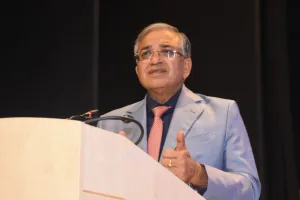
“The NIO is relying on the funding made available from CSIR (Council of Scientific & Industrial Research), which the parent body governing us. But we also get the funds from other sources, including private bodies, to the tune of 30 per cent,” CSIR-NIO Director Sunil Kumar Singh told PTI recently.

He said the CSIR-NIO was executing projects for other government organisations like the Ministry of Earth Sciences (MOES), Ministry of Environment and Forest and the Directorate of BioTechnology (DBT) besides providing service to the private industries.

Singh said the NIO wanted to increase this share of 30 per cent revenue collected from the non-CSIR organisations so that the institute becomes self-reliant.

“The budget of CSIR-NIO is Rs 100-120 crore annually of which Rs 30-40 crore is generated from the non-CSIR projects,” he added.

The NIO has also been associated with the Oil and Natural Gas Commission and private firms like Reliance and Adani for which it is undertaking offshore survey to locate petroleum and hydro-carbon, besides laying underwater pipeline for their projects.

The CSIR-NIO has also been doing a survey for the power grid, which also adds to the revenue collected by the science institute.

Singh said the revenue generated from the non-CSIR bodies cannot be relied upon as “sometimes some year, NIO gets a good project but for some year, it (revenue) goes down”.

“We would like to get more and more of non-CSIR fundings so that there is a self-reliance, but we have not set any such target to earn the funding. We have to keep the lower limit at at least 30 per cent to get the funding,” he added.

Singh said the NIO wanted to strengthen the existing facilities as well as to expand the research programme.

“Oceanographic research is more towards understanding the processes and it is towards the basic science,” the CSIR-NIO director said.

He said the stress would be on utilising the research benefit of research for the societal benefit.

Singh said one of big programmes the NIO was planning to undertake was the poly-metallic nodule programme.

“We have already surveyed and exploratory work is already done. We have identified the areas where we can do mining. This is one area where we would like to strengthen so that mining is possible as soon as it can be,” Singh said.

In one of its most innovative projects, the CSIR-NIO is also researching how sea weeds or other underground flora and fauna can be used for the betterment of mankind.

“Other area in which CSIR-NIO would be very much trying to push is about converting sea weeds and other flora and fauna for the benefit of mankind, whether they can be used as a nutrition, or drug or as a cosmetic product,” he said.

The director said the extensive research was going on this aspect with breakthrough is being achieved in one of the projects.

“Recently, we have transferred one technology to a private firm in which our scientists were able to get some bacteria out of the ocean which can be used as a sunscreen to protect the skin from ultra violet rays,” he said.

“These bacterias were on the sponges. We have given the technology to a private company which will commercially explore the research and see how they can take it further.

This was found off the Cochin area,” he added.

The researchers are also working on extracting nutrition from the ocean which could be of enormous potential.

“Lot of food colour is required for the people. Sea weed could be a source for food colour. We are exploring the possibility whether it can be exploited at industrial scale,” Singh stated.

The CSIR-NIO is also working in the field of gas-hydrates.

“We have been working on this project for some time and we have explored some area in the Krishna Godavari basin where there is potential for gas hydrate. The challenge is how to extract them. We will have to do a lot of technology enhancement for that so that these gas hydrates can be extracted,” he added.

Eating muesli in breakfast may help combat arthritis

Short-chained fatty acids are important for the body as they provide energy, stimulate intestinal movement.

IANS | London |

Eating a fibre-rich breakfast consisting of muesli and enough fruit and vegetables throughout the day everyday can help maintain a rich variety of bacterial species in the gut, which may have positive influence on chronic inflammatory joint diseases, and prevent bone loss, a study has found.

The findings, led by researchers at the Friedrich-Alexander-Universitat Erlangen-Nurnberg (FAU) in Germany, showed that a healthy diet rich in fibre is capable of changing intestinal bacteria in such a way that more short-chained fatty acids, in particular propionate, are formed.

Short-chained fatty acids are important for the body as they provide energy, stimulate intestinal movement and have an anti-inflammatory effect.

“We were able to show that a bacteria-friendly diet has an anti-inflammatory effect, as well as a positive effect on bone density,” said lead author Mario Zaiss from the FAU.

“We are not able to give any specific recommendations for a bacteria-friendly diet at the moment, but eating muesli every morning as well as enough fruit and vegetables throughout the day helps to maintain a rich variety of bacterial species,” Zaiss added.

arthritis

In the study, published in Nature Communications, the team focussed on the short-chain fatty acids propionate and butyrate, which are formed during the fermentation processes caused by intestinal bacteria.

These fatty acids can be found, for example, in the joint fluid and it is assumed that they have an important effect on the functionality of joints.

The researchers also proved that a higher concentration of short-chained fatty acids, for example in bone marrow, where propionate caused a reduction in the number of bone-degrading cells, slowing bone degradation down considerably.

“Our findings offer a promising approach for developing innovative therapies for inflammatory joint diseases as well as for treating osteoporosis, which is often suffered by women after the menopause,” Zaiss noted.

PM Modi welcomes Israeli PM at start of India trip

IANS | New Delhi |

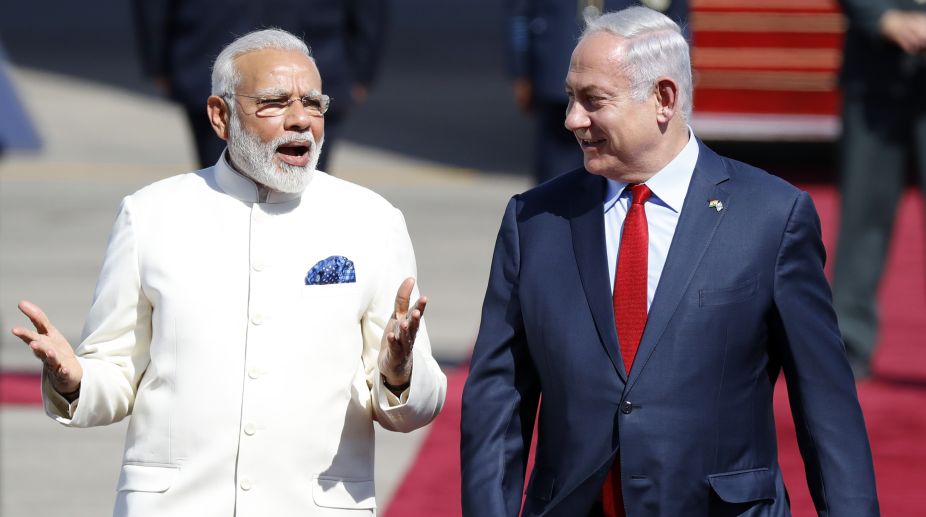
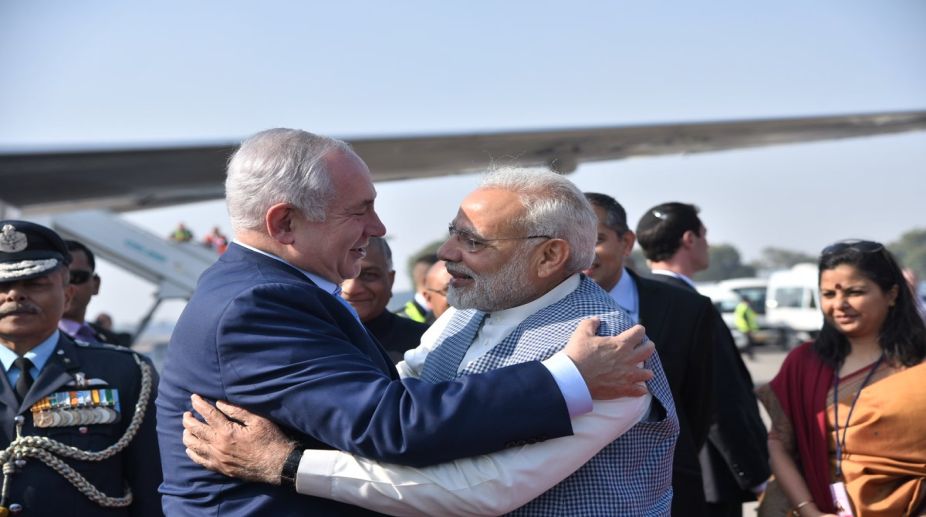
Israeli Prime Minister Benjamin Netanyahu arrived here on Sunday on a six-day visit that will also take him to Mumbai and Gujarat. He was received at the airport by Prime Minister Narendra Modi.

This is the first visit to India by an Israeli Prime Minister since Ariel Sharon came in 2003.

“A special welcome for a special visit… Modi personally receives Israeli PM at Delhi Airport,” the Prime Minister tweeted.

Netanyahu and Modi are expected to discuss a variety of subjects related to bilateral relations and the global situation.

Also read: Netanyahu visit: Teen Murti Chowk to be renamed after Israeli city Haifa today

The Israeli leader, accompanied by dozens of Israeli businessmen, will visit the Centre of Excellence in Agriculture at Vadrad in Gujarat and interact with business leaders in Mumbai.

Google dedicates doodle to author-activist Mahasweta Devi

SNS | New Delhi |

Search engine Google on Sunday dedicated its doodle to noted author and social activist Mahasweta Devi on her 92nd birth anniversary.

Born on January 14, 1926 in Dhaka in present day Bangladesh, Mahasweta Devi was a Bengali fiction writer who was honoured with various literary awards such as the Sahitya Akademi Award (Bengali), Jnanpith Award and Ramon Magsaysay Award along with Padma Shri and Padma Vibhushan. She died on July 28, 2016 in Kolkata.

Some of her famous literary works include “Hajar Churashir Maa”, “Rudali” and “Aranyer Adhikar”.

Mahasweta Devi wrote over 100 novels. Her first novel, “Jhansir Rani”, based on the life of Rani of Jhansi Lakshmibai, was published in 1956.

In 1997, she was awarded the Ramon Magsaysay award in journalism, literature and creative communication arts.

She was also awarded the prestigious Ordre des Arts et des Lettres (Orders of Arts and Letters) in 2003 for her contribution to literature.

Meanwhile, West Bengal Chief Minister Mamata Banerjee on Sunday remembered noted author and social activist Mahasweta Devi on her 92nd birth anniversary.

Banerjee tweeted; remembering Mahashweta Di on her birth anniversary. We miss her very, very much.

(with agency inputs)

Coal India boss sees challenging times ahead

Kolkata |

Coal India Ltd, which is struggling to meet coal production targets, foresees significant competition coming in from the private sector in the future, a top official of the company has said.

“More challenging times are ahead. Soon, mines for commercial exploitation will be offered to the private sector and in the not-too-distant future, private sector production may turn out to be significant,” Coal India chairman Gopal Singh said in a closed door video address to employees of all subsidiaries while congratulating them on their promotions.

The company has set a 600 million tonne coal production target for 2017-18.

Coal India officers said it was for the first time that any chairman personally interacted with staff to congratulate them on their promotion and listened to problems faced by them first hand.

In his address, Singh highlighted the need to gear up and meet the challenges ahead, sources told PTI.

Singh expressed concern over the rising cost of production for the miner and told his colleagues that in the future, when private players become active in commercial mining, the cost of production will become crucial for business.

He asked the officers to give villagers their due in the mining areas and listen to their concerns.

“The land belongs to the villagers. You must respect them and be polite and attempt to resolve their issues,” he said.

At a time when land acquisition is becoming increasingly difficult, such comments may make some difference, a Coal India officer said.

Singh also said that he was confident that Coal India’s employees will meet the challenges facing them

PM Modi receives Israeli PM Benjamin Netanyahu at Delhi airport

SNS | New Delhi |

Israeli PM Benjamin Netanyahu arrived in New Delhi on Sunday to mark the beginning of his 6-day visit to India. Indian Prime Minister Narendra Modi welcomed his Israeli counterpart at the Delhi airport.

Both the leaders will attend a solemn ceremony at the Teen Murti Memorial here in New Delhi to attend the formal renaming of Teen Murti Chowk and Teen Murti Marg after Israeli city Haifa.

The two leaders will also lay a wreath and sign the visitor’s book at the memorial, official sources said.


The three bronze statues at Teen Murti represent Hyderabad, Jodhpur and Mysore Lancers who were part of the 15 Imperial Service Cavalry Brigade.

The brigade carried out the victorious assault on the fortified city of Haifa on September 23, 1918, during World War I.

Israeli PM Netanyahu is the second Prime Minister from his country after Ariel Sharon to visit India in the last 25 years. He is accompanied by a 130-member delegation from various sectors including cyber, agriculture and defence.

Prime Minister Narendra Modi also greeted the guest on his Twitter account.


Israeli PM Netanyahu responded with a thank you tweet.


PM Modi will host a private dinner for Netanyahu on Sunday. PM Netanyahu will call on External Affairs Minister (EAM) Sushma Swaraj, later on the same day.

On Monday, he will be given a ceremonial reception at the Rashtrapati Bhawan following which he would lay a wreath at Rajghat.

He would then participate in a dialogue at Hyderabad House which will also include a one-on-one discussion with Modi.

PM Modi will hold talks with his Israeli counterpart on Monday covering entire expanse of the ties and explore new areas of cooperation to further deepen the “very very special relationship”. After the signing of agreements, they will issue a joint press statement.

Israeli PM Netanyahu will call on President Ram Nath Kovind and Vice President Venkaiah Naidu later on Monday.

Mark Wahlberg offers to donate 1.5 million to Time’s up fund

SNS | New Delhi |

In one the of the controversies regarding the gender pay disparity in Hollywood, actor Mark Wahlberg has now decided to donate 1.5 million dollars in name of Michelle Williams. Michelle Williams revelation shocked Hollywood, when she brought into light the case of pay gap. Director Ridley Scott had to reshoot a portion of his film ‘All the money in the world’ after Kevin Spacey got fired following the sexual harassment allegations imposed on him. Later, the actress revealed that she was paid $80 per day and on the other hand her co star Mark Wahlberg was paid 1.5 million for the reshoots.

The actress opened up about the discrimination and it shocked everyone. Although, this is not the only case of gender pay disparity that Hollywood has witnessed, last year in December 2017, a post from a website revealed that Catt Sadler was paid half of what Jason Kennedy was earning from the same film. In the same year, co actors Natalie Portman and Ashton Kutcher who starred in No strings attached came together for an interview where the actress revealed that she has experienced gender pay gap as Ashton was paid times more than her in the film.

ALSO READ: I admire Ridley Scott: Mark Wahlberg

The aftermath of the incident has made Mark Wahlberg announce a donation of 1.5 million to Time’s up legal defense fund. On 14 January, the actor tweeted “Over the last few days my reshoot fee for ‘All the Money in the World’ has become an important topic of conversation,I 100 percent support the fight for fair pay and I’m donating the $1.5 million to the Time’s Up Legal Defense Fund in Michelle Williams’ name.”

READ MORE: 2017: Mark Wahlberg named most overpaid actor

Other actors from the industry have reacted to the news; they took to Twitter to speak against the gender pay gap.

Co actors Christopher Plummer and Michelle Williams were nominated for the prestigious Golden Globes award for their performances.

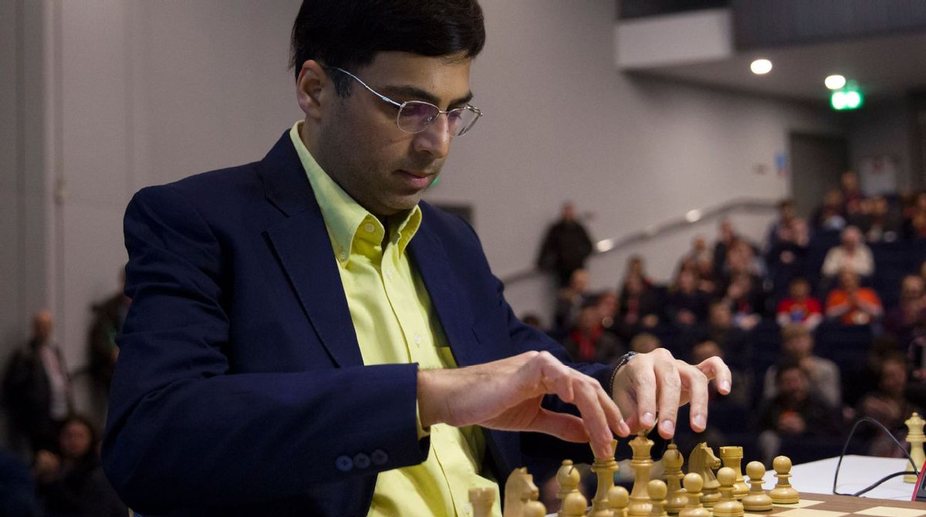
Anand edges past Matlakov in Tata Steel opener

Anand came up with some fine manoeuvres before dodging the checkmate attempt by the Russian.

PTI | Wijk Aan Zee (The Netherlands) |

Viswanathan Anand survived a few anxious moments, including a checkmate attempt by his rival, before prevailing over Maxim Matlakov in the first round of Tata Steel Masters Chess tournament here.

Coming into the event after his title-win at the World Rapid Championship, Anand came up with some fine manoeuvres before dodging the checkmate attempt by the Russian.

The Indian ace is playing in this 80th edition after a gap of four years but proved once again that it remains his favourite hunting ground.

A winner here five times, a record that he shares with World Champion Magnus Carlsen of Norway, Anand went for complications right from the beginning when he allowed Matlakov to break through on the queen side in a closed Ruy Lopez.

The Russian managed to weaken white s king side and threatened a beautiful checkmate vide queen sacrifice at one point. Anand came out of that but not without an error that could have left him a pawn less.

However, Matlakov missed his chance and then was subjected to a lesson in a major piece endgame. Anand s queen and rook dominated the proceedings once the Indian won a pawn and though the technicalities remained, it was all over in 53 moves.

“I was not able to breakthroughs,” said Anand in the post-game chat adding that it would have been a huge technical task to convert if his opponent had not blundered.

When asked about his possible sixth title victory here Anand said, “If I win now, I’m winning after 12 years, so it’s not like I’ve been blazing but, well, I’ll try for sure.”

Grandmaster B Adhiban, the other Indian in the 14-player 13-round field, started off with a draw against Peter Svidler of Russia. In the last edition, Adhiban had caused a sensation here when he finished third ahead of many stalwarts.

Besides Anand, Vladimir Kramnik of Russia and local hero Anish Giri were the other winners in the opening round.

Kramnik grinded down Wei Yi of China while Giri scored against highest-ranked woman Yifan Hou of China.

Carlsen was held to a draw by Fabiano Caruana of United States. It was a usually long game arising out of a Petroff defense that the world champion could not break.

In the Challengers section, top seed Vidit Gujrathi was held to a draw by World Junior champion Aryan Tari of Norway.

It was a Ruy Lopez where Gujrathi played black and sacrificed his rook to force perpetual checks.

D Harika played out a creditable draw with Amin Baseem of Egypt.

Complete Results round 1 Masters:

Anish Giri (Ned) beat Yifan Hou (Chn);

Vladimir Kramnik (Rus) beat Wei Yi (Chn);

Peter Svidler (Rus) drew with B Adhiban (Ind);

Magnus Carlsen (Nor) drew with Fabiano Caruana (Usa);

Gawain Jones (Eng) drew with Sergey Karjakin (Rus);

V Anand (Ind) beat Maxim Matlakov (Rus);

Wesley So (Usa) drew with Shakhriyar Mamedyarov (Aze).

Challengers:

Jeffery Xiong (Usa) drew with Benjamin Bok (Ned);

Anton Korobov (Ukr) beat Matthias Bluebaum (Ger);

Olga Girya (Rus) lost to Dmitry Gordievsky (Rus);

Jordan Van Foreest (Ned) beat Lucas Van Foreest (Ned);

Aryan Tari (Nor) drew with Vidit, Santosh Gujrathi (Ind);

Michal Krasenkow (Pol) drew with Erwin L’Ami (Ned);

Amin Bassem (Egy) drew with D Harika (Ind).

Reject ‘Hindutva’ that is causing violence: Nayantara Sahgal

IANS | New Delhi |

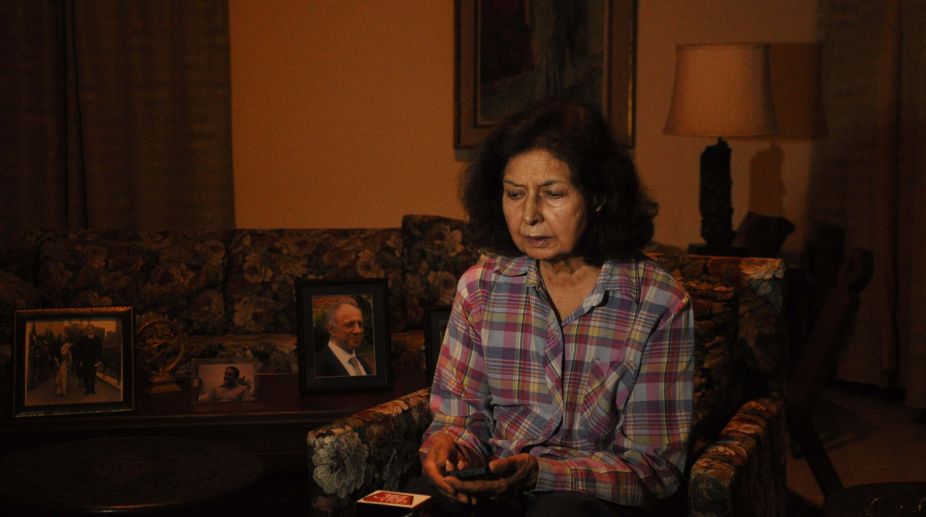
Describing the current political situation as “not conducive for anybody”, veteran writer Nayantara Sahgal has called for rejecting the idea of “Hindutva” which is “creating violence” and has “nothing to do with Hinduism”.

“Right now, it is a very different situation. In the present political situation, the forces are trying to stamp out all dissent and disagreement. People who disagree with them are being killed. The last person was Gauri Lankesh.

“Not only writers, people who are transporting cattle have been killed. On suspicion of storing beef, people are being killed,” the writer told IANS.

“Remedy is to throw out Hindutva and reject it. This is creating violence. It is a very dangerous ideology and has nothing to do with Hinduism. Many writers have been speaking and writing against this ideology,” Sahgal said on the sidelines of the Apeejay Kolkata Literary Festival 2018 here on Saturday evening.

She said Hinduism was “not a terrorist creed” and did not advocate violence.

“The current (political) situation is not conducive not for just writers but for anybody. Anybody, they don’t like, they file cases against them. There is persecution and murder and (there is) a very evil political climate,” Sahgal said.

The much feted writer said India at the time of independence decided to put democracy before development and it also decided to be secular. “This is something to be proud of.”

During the session of ‘Women Writers: Shaping a New India’ at the Festival, an award – the Prabha Khaitan Woman’s Voice Award – in Association with Oxford Bookstore, was announced.

Applauding the initiative, she said: “I always hate to put a dividing line between men and women. Maybe, it is because that in my family men strongly believe about woman’s rights. I always firmly believe in a partnership between men and women.”

She also said that gender and class were not at all limiting factors while a particular writer writes about specific gender or class.

During the interaction, she said: “I have found from what I read that writers from Pakistan, Afghanistan and Nigeria are much more politically engaged with their political situations than Indian writers are with Indian situations.

“I don’t know whether it is a correct assessment. But what I have read that seems to me… They have written very powerfully about various political situations in their countries.”

Mamata Banerjee wishes the nation on Makar Sakranti, Pongal, Bihu

SNS | New Delhi |

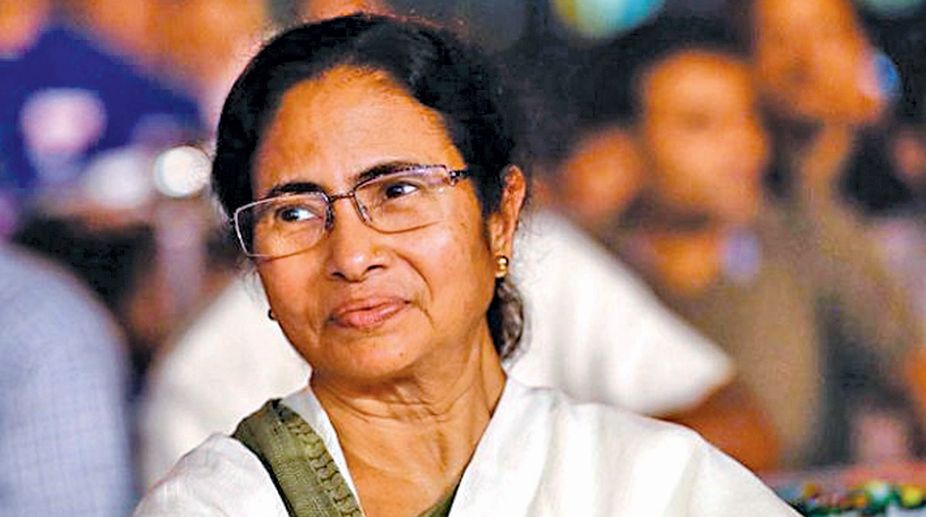
West Bengal Chief Minister Mamata Banerjee on Sunday wished the nation on the occasion of Makar Sakranti, Pongal and Bihu.

In a series of tweets, Banerjee wished the people of Bengal on Makar Sakranti, Tamils on Pongal and Assamese on Bihu.

Banerjee also said; From this year, we will be celebrating this day as Lok Sanskriti Dibas in Bengal to promote the folk artistes of our state.

Makar Sankranti is one of the few ancient Hindu festivals that has been observed according to solar cycles, while most festivals are set by the lunar cycle of the lunisolar Hindu calendar.

Being a festival that celebrates the solar cycle, it almost always falls on the same Gregorian date every year (January 14), except in rare years when the date shifts by a day for that year, because of the complexity of earth-sun relative movement.

Also read: Mamata Banerjee extends Lohri greetings

The festivities associated with Makar Sankranti are known by various names such as Lohri by north Indian Hindus and Sikhs, Sukarat in central India, Bhogali Bihu by Assamese Hindus, Posh Sangkranti by Bengali Hindus and Pongal by Tamil and other south Indian Hindus.

Read more: 5 legends of Lohri you may want to know

Makar Sankranti is observed with social festivities such as colorful decorations, rural children going house to house, singing and asking for treats (or pocket money), melas (fairs), dances, kite flying, bonfires and feasts.

ICC U19 World Cup 2018: India defeat Australia by 100 runs

Other than, Jack Edwards no other Australian batsman was able to leave a mark on Indian pacers.

SNS |

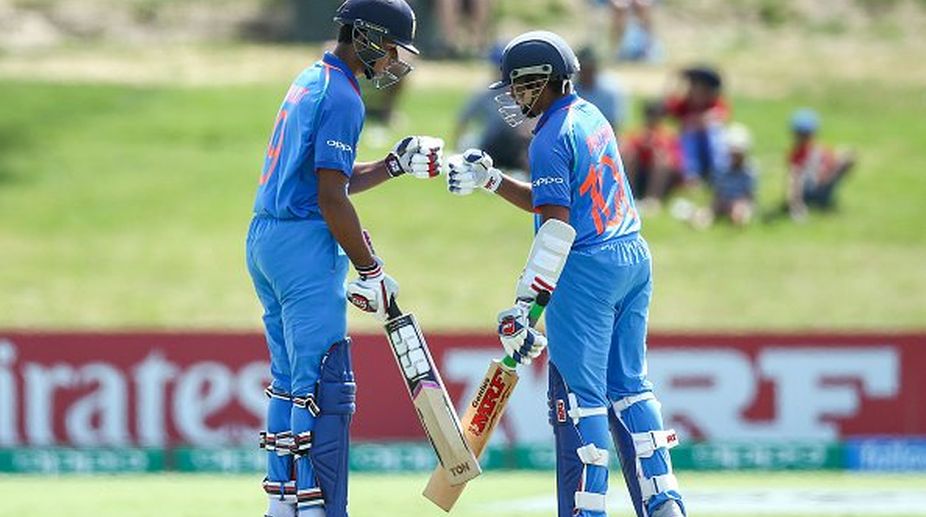
India started their International Cricket Council (ICC) Under-19 World Cup campaign in style by thrashing Australia in the opener by 100 runs on Sunday.

The Australian batsmen were not able to handle the pace attack of India bowlers, especially Kamlesh Nagarkoti and Shivam Mavi. The duo touched speeds of 140+ kmph during their spell.

Other than, Jack Edwards no other Australian batsman was able to leave a mark on Indian pacers.

Nagarkoti along with Mavi rattled Aussies batting line up and tormented Edwards and Max Bryant early into their innings.

Earlier, Rahul Dravid’s boys led by skipper Prithvi Shaw (94 runs) scored 328 runs for seven wickets while batting first. Shaw shared a 180-run stand with the Indian opener Manjot Kalra (86).

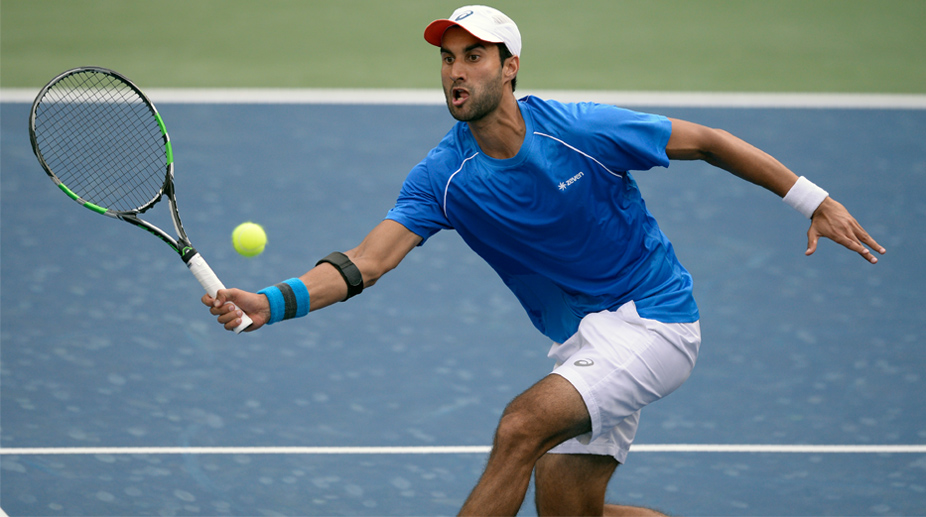
Yuki Bhambri downs Polansky to qualify for Australian Open

Bhambri overcame a first set lapse to tame Canadian Peter Polansky 1-6 6-3 6-3 in the third and final qualifying round.

PTI | Melbourne |

Continuing his good form from the last season, Yuki Bhambri today qualified for the Australian Open with a come-from-behind win but Ramkumar Ramanathan missed out on his maiden Grand Slam appearance.

The 25-year old Bhambri overcame a first set lapse to tame Canadian Peter Polansky 1-6 6-3 6-3 in the third and final qualifying round in one hour and 55 minutes.

It will be third Australian Open men’s singles main draw for Bhambri who had lost in the first round in 2015 and 2016 to Andy Murray and Tomas Berdych respectively.

Meanwhile, Ramkumar had a break chance in the fifth game of the decider but could not convert and eventually lost his third round match 4-6 6-4 4-6 to Canadian Vasek Pospisil.

At Grand Slams, it is Ramkumar’s best show, reaching the final qualifying round.

Bhambri, who was junior world number one, had won Australian Open boys singles tile here in 2009 and has played only at this Grand Slam in the main draw since turning Pro.

Asked what makes him perform at Melbourne Park, Bhambri told PTI,” I don’t know what makes me play better here. Maybe the conditions suit me or I am just familiar with it because I have played here before.”

In his first two attempts, Bhambri could not make much of the chance as he drew very strong opponents for his opening matches.

“I am hoping for a better draw of course. I am hoping that I can win a few rounds in the main draw,” said Bhambri, who won his sixth ATP Challenger title in Pune in November.

Asked about the first set against the Canadian world number 140, Bhambri said,”It was a nervous start but once I got my rhythm, I started playing more freely.”

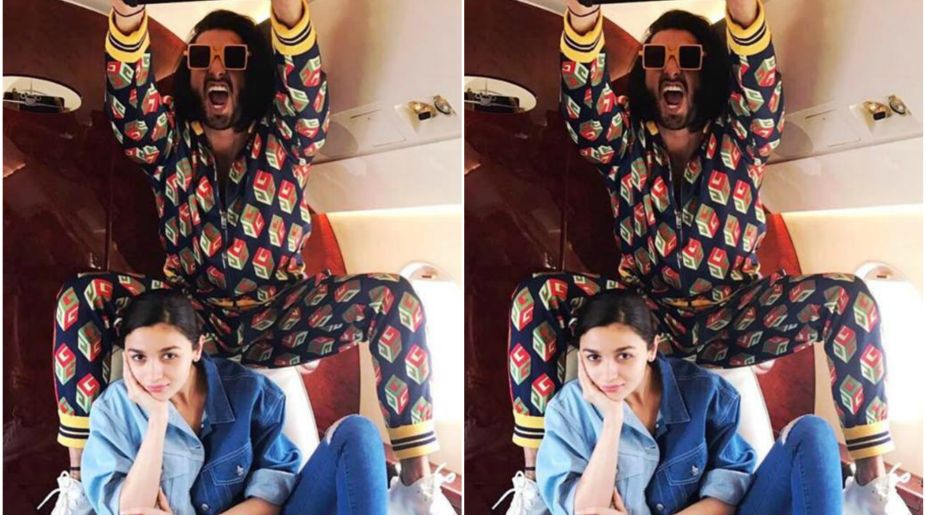
Alia Bhatt, Ranveer Singh starrer ‘Gully Boy’ goes on floor today

SNS | New Delhi |

Bollywood actors Alia Bhatt and Ranveer Singh have started shooting for Zoya Akhtar’s Gully Boy in which Ranveer is all set to flaunt his rapping skills as he plays a role of a street rapper.

Gully Boy is inspired by the lives of two rappers Vivian Fernandes aka Divine and Naved Shaikh aka Naezy.

Both the actors were excited as the shooting began. They shared this news via their Tweeter account, respectively.

Alia tweeted, “And finally its Day 1 of #GullyBoy !!! Such a special film for me for various reasons!!!! Wish me luck!!!! Your support and love means the world to me. Wohooo let’s do this.”

Co-star Ranveer Singh tweeted the post of film’s director Zoya Akhtar Instagram post captioned, “Day 1 #herewego #gullyboy #slateit #makingmovies #anotherdayinparadise.”

Day 1 #herewego #gullyboy #slateit #makingmovies #anotherdayinparadise

A post shared by Zoya Akhtar (@zoieakhtar) on

Farhan Akhtar, who is also the producer of the film also wished his sister good luck as he tweeted, “And it begins.. Day 1 of #GullyBoy. All the best Zoya @aliaa08 @RanveerOfficial & team.”

On the work front, the duo Alia Bhatt and Ranveer Singh are doing their first film together. Ranveer is currently awaiting the release of Padmaavat. Meanwhile, Alia has other films Brahmastra and Meghna Gulzar’s Raazin in the pipeline.

A release date for Gully Boy hasn’t been finalised as yet.

Daniel Radcliffe talks about Johnny Depp’s casting in ‘Fantastic Beasts 2’

IANS | New Delhi |

Daniel Radcliffe has broken his silence on Johnny Depp’s casting in “Fantastic Beasts 2”, saying he understands the reason for the fans’ frustration over the actor’s association with the film franchise.

Depp’s former wife Amber Heard had accused the actor of domestic violence. Radcliffe, who grew up onscreen as J K Rowling’s boy wizard Harry Potter, said although he is grateful to the team for giving him “a great start in life and an amazing job”, he believes Depp’s behaviour is being tolerated because he is a renowned name in the showbiz.

“I can see why people are frustrated with the response that they were given from that… I’m not saying anything that anybody hasn’t already said – and this is a weird analogy to draw (but) in the NFL, there are lots of players arrested for smoking weed and there is other people’s behaviour that goes way beyond that and it’s tolerated because they’re very famous players,” Radcliffe told Entertainment Weekly. Radcliffe made an indirect reference to the case of Jamie Waylett, the actor who played Vincent Crabbe in the first six Potter films but was fired after being charged for possession of cannabis in 2009. “I suppose the thing I was struck by was, we did have a guy who was reprimanded for weed on the (original Potter) film, essentially, so obviously what Johnny has been accused of is much greater than that,” he added. The 28-year-old actor’s comments come after Rowling shared her response to a fan on social media, who questioned the author’s agreement to let Depp be a part of the film.
She wrote back saying although she understood the concern of Harry Potter fans regarding their choice to continue with Depp in the role, the directors, along with her were “genuinely happy” to have him on board the project. Rowling added both she and David Yates had considered the possibility of recasting the role for “Fantastic Beasts: The Crimes Of Grindlewald”.

Nasser: Forgotten colossus of the Arab world

IANS |

An abiding image of much of the Arab world now would be members of an indiscriminate and unconscionable violent Islamist terror group, but it was not always like that. A few decades ago, the model was a hugely charismatic and genuinely popular ruler (despite coming to power by revolution) who inspired hope and dignity in his own countrymen and the region — but was reviled and undermined by the West.

Egypt’s travails may have started under the rule of Gamal Abdel Nasser (1918-70), whose 100th birth anniversary is on January 15, but he also deserves credit for ending the rule of a ruinous “foreign” elite, finally evicting the British colonisers (and cutting them to size) and striving for social justice, modernisation, and a cultural revival — a famous TV clip shows him laughing at the Islamist demand that women should be compulsorily veiled.

During his nearly decade-and-a-half rule, he was always accessible to all, at home among the people in a way that his contemporaries — or even present statesmen — can rarely imagine.

Nasser made mistakes too, like laying foundations of authoritarian rule but especially leading his country and the Arab world into a ruinous war in 1967, subsequently seen as the root of West Asia’s problems — but, to be fair, it was one he never wanted.
And while his legacy was long sought to be discredited by his successors as well as detractors in West Asia and elsewhere, it has endured. During the Arab Spring, protesters not only in Cairo but other Arab capitals too brandished his pictures — making him possibly the only Arab statesman to be so honoured.
Born in Alexandria in the family of a postal employee, Nasser was politically active from his student days, getting injured while leading a protest in 1935. Due to his police record as an agitator, his first application, in 1937, to enter the army was rejected but he succeeded the second time.

He saw action in the First Arab-Israeli War of 1948, in which the performance of his unit in the battle of Falluja pocket — where he was also wounded — cemented his reputation and led him to be promoted. He was a prominent leader of the Free Officers, though the more well-known General Mohammed Naguib was its “face”, that deposed King Farouk and proclaimed Egypt a republic.

He himself came to the forefront after the October 26, 1954, assassination bid on him by a Muslim Brotherhood activist in Alexandria when he was delivering a speech, broadcast across the Arab world, to celebrate the British withdrawal. The gunman, who was only a few feet away, fired eight shots at him, but all of them missed.

Amid the tumult, Nasser remained composed, and loudly appealed for calm and emotionally said: “My countrymen, my blood spills for you and for Egypt. I will live for your sake and die for the sake of your freedom and honour. Let them kill me; it does not concern me so long as I have instilled pride, honour, and freedom in you. If Gamal Abdel Nasser should die, each of you shall be Gamal Abdel Nasser… Gamal Abdel Nasser is of you and from you and he is willing to sacrifice his life for the nation.”

That was a turning point. Naguib was soon placed under house arrest (though he ended up outliving his junior) and his supporters sidelined. Under Nasser, Egypt made enormous strides — the Aswan Dam and Helwan City, and his Pan-Arabism united the region, or most of it, quite effectively — and the 1956 Suez Crisis made him a global figure.

But it was 1967 that finished him off — though Nasser angled for a political resolution to the Palestine issue despite his assessment of Israeli obduracy, his “sabre-rattling” led to a war that thoroughly tarnished all modernist, secular nationalist Arab leaders and left the way open for radicals and Islamists.

The final nail in his coffin came when Nasser attempted to broker an end to the Palestinian-Jordan infighting at the Arab League summit in 1970, despite the intransigence of both sides. His deputy (and successor) Anwar el-Sadat recalled him upbraiding Palestinian leader Yasser Arafat that “I haven’t done all this for you… wrecked my health in this manner… to be rewarded with such ingratitude”.

He was soon dead of a massive heart attack, aged only 52.

For Indians, the burly, broad-shouldered but graceful and photogenic Nasser will be remembered as towering over Jawaharlal Nehru and Marshal Tito, as the three steered a new “nonaligned” course in global affairs. Unfortunately, the Egypt of Nasser is long gone, and so has Tito’s Yugoslavia, while attempts are being made to revile Nehru and change the India he built.

We should draw the necessary lessons.

Mena breaks into top-20 after stage 7, Santosh placed 40th

PTI |

Oriol Mena finished the stage seven of Dakar Rally in the 17 position to break into top-20 while his Hero MotoSports Team Rally team-mate CS Santosh finished 39th for an overall ranking of 40.

After a rest day at La Paz, the Dakar Rally went on the road again with the first Marathon stage kicking off from La Paz to Uyuni. A change in software was required for the riders as the landscape changed from sandy dunes to lot of off-piste, river beds and harder ground and the stages become longer and faster from here on.

Both Mena and Santosh tackled the stage with a steady head and arrived at the Uyuni bivouac safely, though deprived of any assistance from the team for the overnight halt as per the regulations of the marathon stage.

Stage 8 will see the rally move through to Tupiza for the second leg of the marathon stage, which will test the riders with the longest special stage of the rally, covering nearly 500 kms, including a high altitude dune crossing.

Tupiza will be the last halt for the rally in Bolivia before changing the borders again and crossing over to Argentina.

Feeding the hungry: Cancer doesn’t detract him from his life’s mission

IANS | Chandigarh |

He is 83 years old and has been serving free food to the poor and needy for over three-and-a-half decades. He is fighting cancer and has sold off assets to keep his community service going. And, despite the odds, there is no let-up in the enthusiasm of businessman Jagdish Lal Ahuja in what he thinks is his life’s mission.

“I will continue the ‘langar’ (community kitchen) till my last breath. This is something that gives me ‘sakoon’ (satisfaction and contentment). Doing this is God’s command to me and I will continue this,” Ahuja, draped in heavy woolens on a winter evening in Chandigarh, told IANS outside Gate No. 2 of the Post-Graduate Institute of Medical Sciences and Research (PGIMER), a premier referral hospital.

Having started organizing langars across Chandigarh and adjoining areas way back in 1981, Ahuja started the daily langar outside the PGI, which attracts hundreds of patients and their attendants from all states in northern India and even faraway places like Bihar and Uttar Pradesh, in 2001.

“I have been doing this all on my own. Over the years, many people have offered money and other things to get associated with it. But I do not take anything from anybody. I want to do it from my own resources. I decline all offers. I think that God has been kind enough to me to enable me to carry out this work,” Ahuja said.

In the process of carrying out community work, Ahuja has sold off seven properties in the past few years. “I will not allow the langar to be affected for want of funds. In recent years, we had to scale down the numbers. Earlier, we were providing food up to 1,800 people. Now, it is around 500,” said Ahuja, who says he has not studied much due to adverse family circumstances.

For Ahuja the inspiration to carry out the free langar came from his grandmother, Mai Gulabi, who used to organize such langars in their hometown Peshawar (now in Pakistan) for poor people. The langar food comprises dal (pulses), vegetables, rice, chapattis, bananas, and halwa. For children, Ahuja’s wife, Nirmal Ahuja, carries balloons, candies, biscuits and other goodies in their SUV pick-up.

Ahuja, a millionaire businessman who now deals in fruits, lived no ordinary life. Displaced from his birthplace and childhood in Peshawar in the 1947 Partition, Ahuja, then 12, came to Punjab’s Mansa town as a refugee with his family. As a kid, he sold namkeen dal (a traditional snack) at the railway station to earn some money and survive. He later moved to Patiala and got into selling gur (jaggery) and fruits.

It was in the latter part of the 1950s that Ahuja, at the age of 21, moved to Chandigarh when the country’s first planned city was being built. He hired a fruit cart and started selling bananas.

“No one in this place knew how to properly ripen the bananas. I got into this and started making good money,” said Ahuja, who later came to be called “king” in the area and became a millionaire.

“I don’t want anyone to go on an empty stomach. I have faced very hard times in my childhood. In these people, I can recall those times. If I am able to contribute even a small percentage to lessen their suffering, I will try my best,” said Ahuja, who is not bothered about his own ill-health.

Popularly known as the “PGI Bhandare Wale” and “Langar Baba” by people coming there, Ahuja makes it a point to come himself every day at the langar venue outside PGI. The queue of people coming to take the langar is always long.

Many people coming to the langar venue try to touch his feet, but Ahuja gets irritated. “Please don’t touch my feet. I am nobody and have done nothing great. Seek blessings from the Almighty,” he is heard saying often.

The langar at PGI is not the only social activity that Ahuja has been doing. He has been contributing to old age homes, distributing fruits and candies to children, giving away woolens and clothes to people, and engaging himself in other activities. He has been honored by the Chandigarh Administration and several organizations and people. Ahuja, who said he is virtually illiterate, carries a mobile tablet in his car in which his daughter has loaded videos and photographs of his activities.

Married for five decades, Ahuja is supported in his activities by his wife, Nirmal.