Logo

Non-apathetic young minds

Barnana H Sarkar |

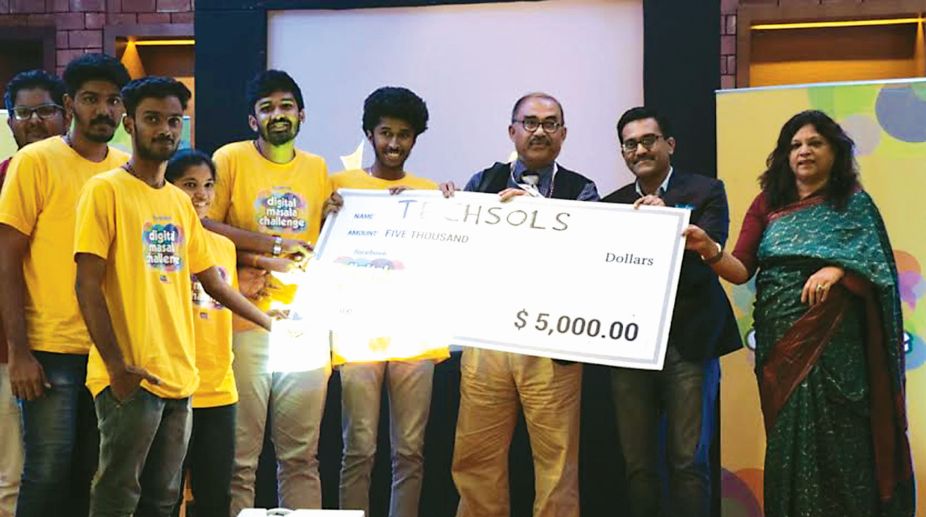
A two-day hackathon named “Digital Masala Challenge” was held at The Lalit Great Eastern Hotel in Kolkata, recently. This was organised by Facebook in partnership with Youth Ki Awaaz — India’s largest user-generated content platform for publishing stories by the youth. The aim was to engage five teams of students to come up with a tech or non-tech solution to counter violent extremism and reconnect communities.
“The biggest challenge that our generation is facing is that our voices are heavily underrepresented when it comes to the main stream discourse. The Digital Masala Challenge came about because we realised that the Internet is a free space for everyone to talk about what they want; again due to which a lot of hateful content is spread. The idea is to bring together young people to find out ways to stop hateful extremism,” said Anshul Tiwari, founder, Youth Ki Awaaz.

The idea is based on the way Facebook counters hateful speeches and the community as a whole that comes together to resist such extremism. Around seven challenges have been carried out earlier, the Kolkata edition being the eighth and the final challenge. The event was earlier carried out in other major cities like Delhi, Hyderabad and Kochi. The two day hackathon brought together six teams from various parts of the country and work on ideas and projects to tackle online violent extremism. The prize money would be implemented by the winning team to further develop their project, as they would be helped by both Facebook and Youth Ki Awaaz to apply the idea.

Several teams from across the country had participated in which Kolkata’s local team from Scottish Church College had participated. Sounak from Scottish Church College came up with the idea to work on a website where they could track self-proclaimed terrorists who would further plan on joining a terrorist group.

“Terrorist organisations try to isolate people. Our website would be like a dummy for these people and the moment they log in we would track him down and get an idea of his location and movement,” said Sounak.
Kerala’s NSS team Techsols, won the $5,000 award worked on a platform interfaced with a web browser extension behind which they have implemented sophisticated technology such as machine learning and block chaining. “If the platform is successful and if we could involve the government and some more NGOs and other such bodies, then we are pretty sure that we could use this technology to stop the spread of radical contents online,” said Aebel, the block chain expert of Techsols.

Towards sustainable solutions

Neellohit Banerjee |

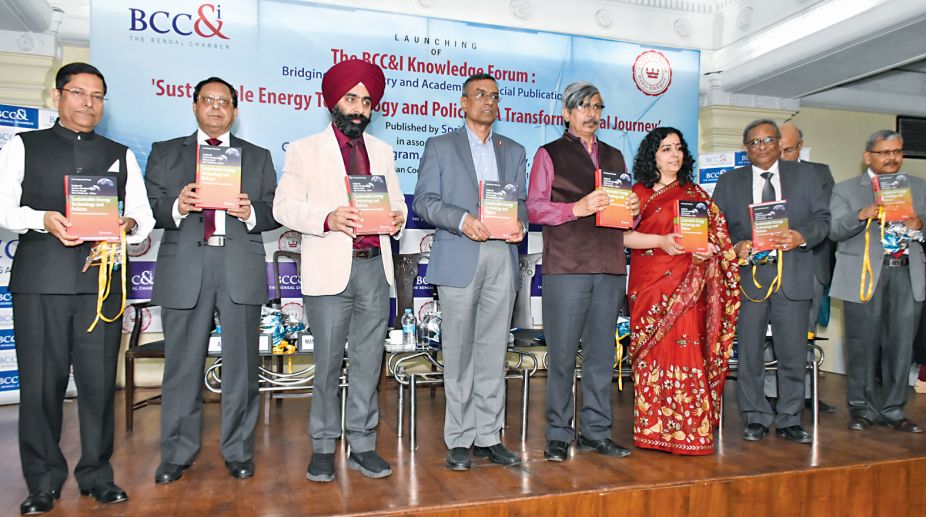
The Bengal Chamber of Commerce and Industry organised a seminar aimed at linking academia with production-oriented activities, besides coming out with a book, Sustainable Energy Technology and Policies – A Transformational Journey to buttress its point of view.

The Chamber believes that its role goes beyond being the vanguard of industry and business. It also has to play an important role in enriching the academia as the contributions from the academia would, in turn, facilitate the industry with intellectual resources.

The Chamber, partnering with Global Change Programme, Jadavpur University, spoke on various issues related to the chasm between the industry and the academia. Deb A Mukherjee, vice-president and chairperson of energy and environment committee, Bengal Chamber, spoke about industry-academia partnership, research-driven innovation and the challenge of taking research to market. “Research is driven by hunger for truth, whereas business is driven purely by profit,” said Mukherjee.

The forum also acknowledged the innovative technology that stems from start-ups and MSME, and said it should be focused upon by not only the government but also by responsible chambers of commerce and trade bodies. Mukherjee said three sets of objectives shape this knowledge forum namely —– creating a proper ecosystem that nurtures innovation, wherein he emphasised on the role of the chamber to create awareness about the importance of intellectual property rights which helps to create and deliver value.

The second objective was knowledge dissemination. A significant part, he said, was the need provided by industries to the research students to pursue it. The third objective is to offer online business-application driven skill development and structure meaningful and value-driven courses.

Professor Ajoy Kumar Ray, director IIEST (Shibpur) delivered his address on academia perspective on renewable energy. “I am really happy that in IIEST Shibpur today, we are facilitating solar cells which are highest in efficiency in India.”

Ray believes that at least for the next 30 years, India has to depend on coal-based energy before shifting to renewable sources of energy.

At IIEST, bio gasification is performed on the campus kitchen waste which has created 15 kilowatt of energy. Since efficiency of energy utilisation is worst in MSME sector, Ray urged institutions such as Jadavpur, Shibpur and Kharagpur to join hands to use greater energy efficiency technologies.

Manpreet Singh Manna, director PMSSS and SWAYAM, Government of India, All India Council for Technical Education, in his special address spoke about three important points on energy-generation, conservation and storage, and said this publication was like a combo pack of Make in India and Digital India. “If you want to have Make in India, it does not mean you have to bring more industries. It means we have to strengthen the industries which are already here. For this we do not have a good energy-storage concept.”

His topic of discussion was inclusive education that included suggestions for an energy conservation hackathon in West Bengal, wherein Manna recommended inviting the engineering students. His advice was to ask the students about improvement in coal and wind energy generation.

The seminar concluded with the launch of the book, and the chapters in the publication featured advanced case studies and thought papers in the realm of transformational energy.

What do employers expect from MBA graduates?

Anupam Narula |

Indian employers clearly expect three components while hiring students from premier B-Schools — knowledge component (facts, frameworks and theories), practice component (doing and execution) and being human component (values and ethical boundaries, commitment to organisation, attitudes and beliefs towards work, optimism and empathy).

Premier B- Schools in India are strong on preparing students for analytical skills on knowledge component but are poor in other two components, which are heart of practical management in India. Employers clearly expect certain functional roles to be filled by fresh MBA graduates along with hands on approach to work.

This indicates that while designing the curricula, business schools must retain a focus on their current strength in the “knowledge” component, while augmenting their stress on the “practice” and “being human” component.

Practice component means executing the policies effectively by recognising the organisational realities. It is this approach that involves team work, people management and perspective building.

This can be done through action learning labs/track trips focussed on specific subject areas like analytics, sustainability, entrepreneurship and innovation, etc. It can be also done through a company or geographic region to facilitate hands on experience away from the campus for two to three weeks to build real world critical thinking skills in order to sense opportunities and define problems in the corporate world. This will also help students to focus on a particular area of interest before choosing elective courses.

“Being human” component means understanding the moral principles to create balance between a career and commitment to organisation, adaptability, developing a positive attitude and belief towards work and integrative thinking approach.

This can be done through additional immersive programme of two to three week experience that specifically focuses on the themes like effective teams, ethics and social responsibility, leadership and corporate accountability, social innovation for improving the society and world, etc.

This is where the challenge for B-schools lies. These components are not easy to develop in a classroom setting and call for more experiential methods of learning. Recruiters in the initial years expect from MBA graduates to handle functional roles like client-customer handling, business development and intelligence, management trainee, market analyst, brand manager, digital marketing executive and manager, social media manager, job rotation and cross functional training, sales manager, operation manager, etc.

This implies a practice component or hands-on approach towards work. Those recruited from IIMs are assigned strategic roles.They are placed as executive assistant manager to senior business leaders and are expected to help them in strategy formulation and work as a resource team for them. Generally MBA’s are expected to play supportive roles to the middle level management who are team leaders to formulate policies and set directions.

Being human aspect gets reflected in the workplace after five to six years of work experience when MBA’s reach to middle level management cadre and work as team leaders and business leaders. They must be sensitive enough to the social impact of business and ethical standards that are expected from them by their employer in strategy development and execution.

The new roles and the skills that the Indian corporate world is now demanding from MBA’s require a different kind of curriculum on the above three components and business schools need to rebalance their curricula, if they are to re-establish the value addition. This indicates that B- Schools in India must balance all the three components in developing a holistic business managers who can have a balanced intellectual and emotional quotient to face the present day challenges of corporate world.

Markets at new high, Nifty ends over 10,700

Statesman News Service | Mumbai |

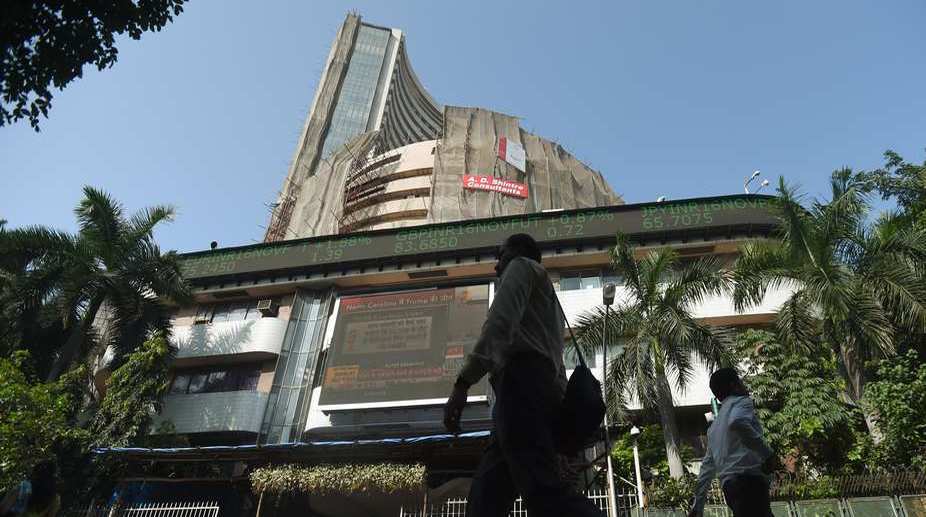
Equity benchmarks of Bombay Stock Exchange and National Stock Exchange continued to touch new highs on strong buying in the run up to the Budget 2018-19 scheduled for 1 February.

Bulls were further charged up on account of firm domestic and external cues. Highlight of the day was Nifty Bank surpassing 26,000 milestone to all time high of 26,091.80 (+34275) points, mainly on strong buying in private lenders HDFC Group and ICICI Bank. Market analysts see clear signs of economic recovery and revival of industrial sector after several quarters of virtual stagnation. Overall earnings data so far have been on expected lines.

The Sensex in early morning deals surged to 34,963.69 (+371.30) points and Nifty peaked 10,782.65 (+101.40) points before slowing down a bit in the afternoon trade. These benchmarks closed the day at 34,843.51 (+251.12) points and 10,741.55 (+60.30) points respectively, increasing 0. 73 per cent and 0.56 per cent.

Bank shares led by ICICI Bank and HDFC Bank rose sharply as Nifty Bank of NSE ended the day at record high of 26,069.20 (+320.15) points, increasing 1.24 per cent.

In Sensex, ten shares advanced, 19 declined and two remained unchanged. For Nifty, the ratio was 20:30. HDFC Group shares such as HDFC Bank, Housing Development Finance Corporation and HDFC Standard Life increased in tandem between 2 per cent and 6.5 per cent on buying by domestic and foreign funds. The rise in these shares was on account of HDFC board’s decision to raise up to`13,000 crore through Qualified Institutional Placement (QIP) in preferential shares.

Analysts say it would be worth watching whether the BSE and NSE’s prime indices surpass 35,000 and 11,000 marks ahead of the budget presentation. Foreign funds have returned bourses adding to liquidity glut. In the first ten days of January FPIs are buyers in stocks worth `2,172 crore, according to data with NSDL.

Premier League: Lineups for Manchester United vs Stoke City announced

No Henrikh Mkhitaryan in the matchday squad! Is the Armenian on his way out of Old Trafford?

SNS | New Delhi |

Second-placed Manchester United host a beleaguered Stoke City side in a Premier League clash at Old Trafford on Monday night and both sides’ lineups have been revealed

Antonio Valencia returns to the starting lineup on the right side of a back-four for United, with Chris Smalling, Phil Jones and Luke Shaw featuring in the Red Devils’ defence.

David de Gea, unsurprisingly starts in goal as do the central midfield duo of Paul Pogba and Nemanja Matic.

Must read: Manchester United legend Ryan Giggs is new Wales manager

The in-form Jesse Lingard starts behind striker Romelu Lukaku alongside Anthony Martial and Juan Mata to complete Jose Mourinho’s starting XI.

There’s no space for Henrikh Mkhitaryan in the matchday squad, with reports swirling that the Armenian is on his way out of Old Trafford and his omission on Monday will only boost the rumours surrounding his future.

Eddie Niedzwiecki is the caretaker-manager for the Potters, who have announced Paul Lambert will be taking over the reigns after today’s game, and the visitors are trotting out in a formation that mirrors United’s 4-2-3-1.

Jack Butland features behind a back-four of Josh Tymon, Bruno Martins Indi, Kurt Zouma and Moritz Bauer.

Joe Allen and Darren Fletcher start in the midfield pivot, behind Stephen Ireland, Erich Chuopo Moting and Xherdhan Shaqiri while Peter Crouch starts as the lone forward.

Don’t miss: PSG star Neymar executes filthy nutmeg in training

After Manchester City’s loss at the hands of Liverpool on Sunday night, it is imperative for United to eke out a win at Old Trafford and they will be backing themselves to pick up three points, especially after recharging their batteries with a warm weather training camp in Dubai last week.

Also read: Player ratings for Liverpool vs Manchester City

Stoke, who are in the relegation zone, a win would see them climb to 15th place, but even a draw would do at this stage and they will be up against it from the off.

Manchester United: De Gea, Shaw, Smalling, Jones, Valencia (c), Matic, Pogba, Lingard, Mata, Martial and Lukaku.

Stoke City: Butland, Bauer, Zouma, Martins Indi, Tymon, Fletcher (c), Allen, Shaqiri, Ireland, Chuopo Moting and Crouch.

Match starts at 2000 GMT/01.30 IST.

US-Pak battle of wits rages

Harsha Kakar |

Since the tweet by President Donald Trump at 4 a.m. on 1 January, blaming Pakistan for consuming US funds and doing nothing to battle the Taliban and Haqqani network, relations between the two countries have only been spiralling downhill. The US has suspended all military assistance to Pakistan, issued threats and yet attempted to cajole them to act. As always, back channels employing military to military contacts continue. Pakistan, on the other hand, has been crying as always, saying that its true contribution has been overlooked, that the US should consider its own failures before blaming it and that the groups operate from Afghan soil, not Pakistan.

To further muddle up matters, it briefed the diplomatic corps stationed in Islamabad on Indian interference in their war on terror, ceasefire violations and involvement in supporting anti-Pakistan terror groups in conjunction with the Afghan intelligence service. As a final threat to the US, Pakistan’s defence minister announced suspension of all intelligence and military cooperation with them, while claiming that the aid cut has had no impact.

Factually, Pakistan knows that the US is aware that it has and will continue to provide support to the Taliban and Haqqani network. It may have to repeat General Musharraf’s actions of a 360- degree turn and challenging those whom he supported under US pressure, provided its terms and conditions are met. Pakistan has adopted a strong stance mainly because it feels that the US needs it more than it needs US support. This flows from a collection of reasons.

Firstly, with the Taliban and Haqqani leadership safely ensconced deep within Pakistan, it knows that US strikes if any could cause immense collateral damage, worsening an already deteriorating relationship and compelling Islamabad to react adversely. Secondly, it is aware that without Pakistan’s support, the Taliban may not come to the negotiating table. Thirdly, it knows that the US, mainly because of its enmity with Iran and with sanctions and poor diplomatic relations with Russia, would require the services of Karachi port and Pakistani airspace. Thus, it could always shut access adding to their woes. Finally, it is aware of Chinese support, which came as soon as the US imposed aid cuts.

Many former diplomats including Richard Olsen, the former US ambassador to Pakistan, have stated that such humiliating and penalising action against Pakistan may not work. He states that “it is likely to respond by showing how it can truly undercut our position in Afghanistan”. He also stated that, “the generals (in Pakistan) knew that as long as the US maintained an army in Afghanistan, it was more dependent on Pak, than Pak was on it”.

The US had made a strategy for Afghanistan and must stick to it. It was aware of the crucial role which Pakistan would play in it. Further, throughout its involvement, it was losing soldiers to Taliban strikes which were being financed by the same funds that it gave Pakistan. Thus, indirectly it was paying Pakistan to kill its own. This had to change. The present decision-making leadership in the US is made up of Afghanistan veterans, aware of the pitfalls and blocks which they may encounter from Pakistan and would have evaluated options to counter them.

There would be diplomatic and military options to enforce on Pakistan in case it blocked the use of Karachi port. The US, if compelled, could establish a costly air corridor, while making things difficult for Pakistan in multiple ways. Enhancing drone strikes even deeper into Pakistan and accepting collateral damage while targeting the Taliban and Haqqani leadership would lower the standing and image of the Pakistan army, which it cannot accept. Diplomatically it could commence removing Pakistan from a non-NATO ally status or even declaring it a terror-supporting state, thus denying it funds from international monetary bodies.
However, unless major fears of Pakistan remain unaddressed, it would continue to hesitate. Thus, the importance of back channel diplomacy continuing. These include denying India a significant role in Afghanistan, which it considers its strategic backyard, controlling the TTP, the Pakistan Taliban, which has safe bases within Afghanistan and the fear of failure of the US in subduing the Taliban, which could compel it to turn inwards against Pakistan.

Officially Pakistan has only stated that it would prefer dialogue with the Taliban, rather than an offensive, expressed fears of India supporting the TTP and increased pressures on its eastern borders with India. It would always remain fearful that if it reduces forces on its eastern front to employ against terror groups, India could take advantage and enhance pressure.

Chinese support to Pakistan assures it of being protected from action in international forums. If China could protect Hafiz Saeed from being declared an international terrorist, it would ensure Pakistan is not officially chastised despite the fact it openly supports terror groups as an instrument of state policy. However, with major funding being blocked, China would become Pakistan’s main support base. Slowly and steadily it would devour all Pakistani institutions. This may be detrimental to long term US interests of obtaining cooperation from Pakistan.

Thus, there remain multiple issues which unless addressed by Pakistan and the US and resolved to satisfaction would prevent Pakistan from effectively contributing to US operations. Trump may have spoken in frustration and anger, as he is known to tweet even before his own government is ready, but not without being aware of options available to the US to counter Pakistan. Thus, as a follow up to his tweet, his government has acted and enforced serious cuts in military aid to Pakistan. Strong comments by the leadership have only enforced the US views.

Despite all its bravado, claims and comments, Pakistan would act. It would only be seeking reassurances on its concerns. It was forced to change tack post 9/11 and it would do so now again, as it is aware of the implications of avoiding such an action. Pressure should continue to flow failing which it would backtrack.

(The Writer is a retired Major- General of the Indian Army)

Uncertain fate of Rohingya women

Nahida Akter |

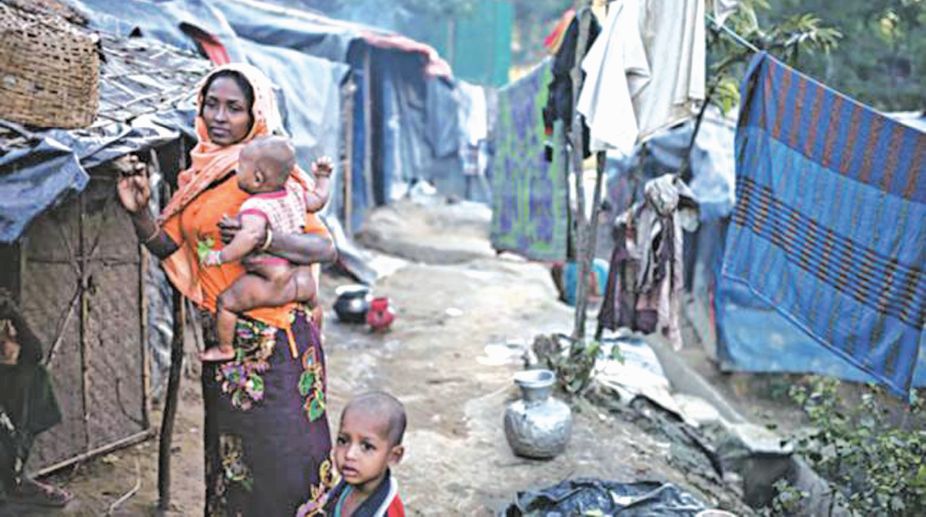
Amina Khatun, a 40-year-old Rohingya woman, was sitting in front of the door of her tiny shelter house with her two-year-old son Salam. She somehow managed to flee Myanmar along with her son but her husband Abdul Rashid was not so lucky. He was killed by the Myanmar army.

She reached the shores of the Naf river safely. However, she is now passing her days in the camps in Bangladesh in utter oblivion, not knowing what lies ahead. There are other female-headed households in the camps going through the same thing – struggling alone with mouths to feed isn’t the only problem Rohingya women are facing amidst one of the worst ongoing humanitarian crises in the world.
During my visit this month to Rohingya makeshift settlements in Cox’s Bazar, currently sheltering more than 800,000 forcefully displaced Myanmar nationals who have fled the brutality of the Myanmar army in Rakhine State, I found that Rohingya women are especially vulnerable to many forms of transgressions exclusively based on their gender. Among the newly arrived 655,000 Rohingyas, 60 per cent are women. It is easy to understand the threats any crisis situation poses to women. Structural inequalities put these Rohingya women – who have just escaped unspeakable horror in their native country – in a more vulnerable position to all forms of violence.

As I was passing through the narrow aisles of Kutupalong makeshift settlement, the largest of the camps sheltering Rohingyas, I gazed upon women and girls of different ages whose distress was palpable. Like Amina, her neighbour Shahida is also running her three-member household alone after her husband left her to marry some other woman after coming to Bangladesh. Following their traditional norms, Amina and Shahida do not go outside their huts, which is why they solely depend on relief items for subsistence. It has been more than a month since they last received relief assistance. They have no rice or lentils left to cook. When I asked Amina how she is feeding her son and herself, she said she occasionally gets food from her neighbours and sometimes they go hungry.

There are thousands of female-headed households in these camps who have lost the breadwinner of the family – typically a male. Along with countless other challenges that come with being alone, these women who have never stepped outside of their home to earn livelihoods are finding it difficult to provide for themselves and their children.

I also found some pretty faces glimmering with hope – in their smiles and eye-catching attire. Rashida, a teenage girl of 17 who lives with her mother, sister-in-law and three nieces and nephew, was one of them. Her elder brother is still in Myanmar trying to escape the brutal ethnic cleansing. When I went to their home, on the first day peeking through the curtain I found a man sitting in the hut who, Rashida said, was not her family member.

She was not interested to talk to me that day. It made me curious so I went to meet her again the next day. She was all dolled up just like the day before and was standing in front of her hut. After getting to know her and the things she had gone through, I asked her how she was doing now—whether or not she was happy with her life since she looked much more joyful thanks to her makeup and colourful attire.
She said she felt relieved but not happy. She said the ration they are getting is not nearly enough although her ten-year-old nephew occasionally works and brings in some money. When I asked her about her plans to get married, she blushed and said some men from the Rohingya community want to marry her but she wishes to marry a Bangladeshi man. She doesn’t want to go back to Myanmar. The man who was sitting with her the other day was one of her many suitors, she said, denying any other prospect when I probed her.

After bidding her farewell I went to one of her neighbours’ hut who informed me that many Rohingya men frequent Rashida’s place. At first Rashida would come to her place whenever someone approached their hut and wasn’t willing to meet them but now she stays there. The woman, like many other parents, raised her concern about these “unusual incidents” as she has a daughter of almost marriageable age. She does not want a future like this for her daughter. Other parents are also concerned about the safety of their girls and are trying to marry off their daughters at a very early age considering it as their greatest chance of security and survival. These concerns are leading to an increase in child marriage in the camps which was already prevailing in the Rohingya community.

Other forms of sexual violence like street harassment are also prevalent in these camps. Young girls do not go far from their huts as they are harassed by men and boys in their own community. They cannot even seek help as it defames the girl in the community. Young girls and boys are vulnerable to human trafficking as well. Domestic violence has been normalised to the point where Rohingya women are expressing relief for being beaten up by their husbands rather than being raped by the Myanmar army.

Old Rohingya women are at high risk of economic deprivation. Eighty-year-old Rabeya Khatun is now living with her son and daughter-in-law who have four mouths to feed along with her. Back in Myanmar she used to help them with the cattle and also had her deceased husband’s property to support them. Here she is completely dependent on her son. The old woman does not even know what would be better for her—to go back to her own country or to live here in utmost insecurity. But she is certain that they are neither getting back the property they have lost nor can they go back to Myanmar to die.

After living through the extreme trauma of losing their home and loved ones and being physically and sexually abused, these women and girls came to Bangladesh seeking shelter; yet they are going through sexual exploitation, “survival sex” for protection and money, domestic violence, economic adversity, stress and anxiety. For me, a member of the host community where these people have come to seek refuge, it is something worth thinking about. Like these Rohingya women, we too have no idea about what lies ahead in the future for them but we all have a collective and individual responsibility to act upon to make their lives a little easier and make them feel safer.


(The Daily Star/ANN)

The new society

Mohit Chakrabarti |

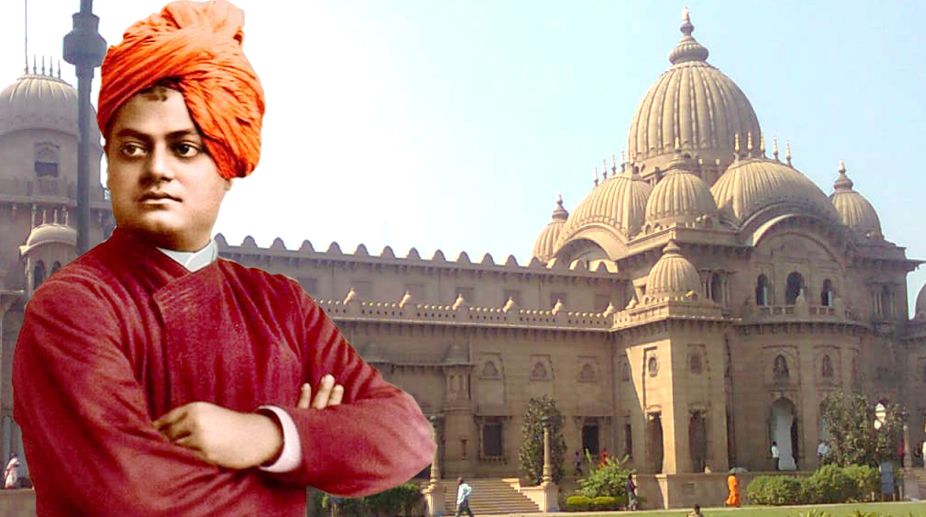
Swami Vivekananda upheld the spirit of man as one who is always victorious. He cared for the society that never fails to fathom and respond to its problems and priorities, promises and perfection. A vibrant visionary and positive thinker, he was one of the most powerful exponents of radical thought and experiments to put in place a challenging attitude both for man and society. His clarion call for the uplift of hoi-polloi is important even now and definitely for ever. His untiring endeavour for ‘man-making’ and ‘character-building’ education can indeed reshape the destiny of man.

The evolution of man deserves to be examined in terms of enlightened humanism and spiritual excellence. Vivekananda’s prescription for man ~ “marooned in artificiality and maimed in a schizophrenic society” ~ is to be focused on the education of the soul or in other words, education of the whole in order to ensure serenity and fullness. Forbearance, gentleness, modesty, simplicity and sympathy ~ the essential components of education for the advancement of man and civilization ~ are yet to be recognised in terms of the progress of man and society.

Vivekananda underlined the importance of the universal brotherhood of man and Truth in religion. Addressing his first public lecture in the East in Colombo on 15 January 1897, he said: “You may be a dualist, and I may be a monist. You may believe that you are the eternal servant of God, and I may declare that I am one with God Himself; yet both of us are good. How is that possible? Read then Ekang sadvipra vahuda vadanti (That which exists is One; sages call it by various names).’Above all others, my countrymen, this is the one grand truth that we have to teach to the world. Even the most educated people of other countries turn up their noses at an angle of 45 degrees and refer to our religion as idolatry. I have seen that; and they never stopped to think what a mass of superstition there was in their own heads. It is still so everywhere, this tremendous sectarianism, the low narrowness of the mind. The thing which a man has is the only thing worth having; the only life worth living is his own little life of dollar-worship and mammon-worship; the only little possession worth having is his own property, and nothing else. If he can manufacture a little clay-nonsense or invent a machine, that is to be admired beyond the greatest possessions.

That is the case over the whole world in spite of education and learning. But education has yet to be in the world, and civilisation has begun nowhere yet. Ninety-nine decimal nine per cent of the human race are more or less savages even now. We may read of these things in books, and we hear of toleration in religion and all that, but very little of it is there yet in the world; take my experience for that. Ninety-nine per cent do not even think of it. There is tremendous religious persecution yet in every country in which I have been, and the same old objections are raised against learning anything new. The little toleration that is in the world, the little sympathy that is in the world for religious thought, is practically here in the land of the Aryans, and nowhere else.” (The Complete Works of Swami Vivekananda, Advaita Ashrama, Kolkata, Mayavati Memorial Edition, Vol. 3, 1989, pp. 113-4).

Profound reflections on the spirit of man the unknown is Vivekananda’s forte. As a harbinger of education that combines excellence and ascent of man and society, he strongly emphasised the education of the mind which should prioritise how to effectively control and master the same. Let education be a spontaneous and powerful force of how to think. Thinking alone would pave the path of success in every arena of life and work. To teach how to think embraces a world of multifarious and complex visions and experiences which foster an illuminated mind with endless challenges. Today’s education is in dire need of thinking in right earnest.

He said: “The present system of education is all wrong. The mind is crammed with facts before it knows how to think. Control of the mind should be taught first. If I had my education to get over again and had my voice in the matter, I would learn to master my mind first, and then gather facts if I wanted them. It takes people a long time to learn things because they can’t concentrate their minds at will.” (Ibid., Vol. 8, p. 280).
To learn how to think effectively in order to study the minds of others is to continually enrich the mind with right thoughts, right visions, right emotions and right sensibilities which, indeed, crystallise the mind with right actions and the right approach to life. The destruction of our character under the alien yoke has its stronghold even now so much so that the education of modesty, respect and patience is today almost a myth.

More than a hundred years ago, Vivekananda had warned: “Our children have lost their politeness. To talk nicely is degrading. To be reverential to one’s elders is degrading. Irreverence has been the sign of liberty. It is high time that we go back to our old politeness. The reformers have nothing to give in place of what they have taken away. Yet in spite of the most adverse surrounding of climate, etc., we have been able to do much, we have to do much more. I am proud of my race, I do not despair, (and) I am seeing daily a glorious and wonderful future in my mental visions. Take greatest care of these young ones on whom our future depends.” (Ibid., Vol. 9, pp. 546-547).

How does one orient the destiny of man and society? How does one bring about a radical change in man who is prepared to sacrifice everything for the welfare of society? Swami Vivekananda wanted each one of us to find the answer in fulfilment of the quest for Sachchidananda ~ Existence, Knowledge, Bliss. In the interest of our existence and general bliss, knowledge should lead to a meeting of the minds of men irrespective of caste, creed or community. The glory of a man rests in becoming men. Each ‘I’ ought to be in perfect unison with all ‘We’ and vice versa to ensure the genuine identity of man. The emerging society can then be declared as refined and enlightened.

Vivekananda stressed the importance of transparency and transcendence which are pivotal to the excellence and ascent of man and society. The more one is in search of reshaping oneself in terms of transcendence and transparency, the nearer is one’s mission towards “All Bliss” fulfilled. Vivekananda observed: “Virtue is that which tends to our improvement, and vice to our degeneration. Man is made up of three qualities ~ brutal, human, and godly. That which tends to increase the divinity in you is virtue, and that which tends to increase brutality in you is vice. You must kill the brutal nature and become human, that is, loving and charitable. You must transcend that too and become pure bliss, Sachchidananda, fire without burning, wonderfully loving, but without the weakness of human love, without the
feeling of misery.” (Ibid., Vol. 6, p. 112).

The quest for an objective society is ever so relevant. Vivekananda said: “An objective society will always be a mixture of good and evil.”
A new society born on the new image of man who cares more for others than for the self is what Vivekananda strongly professed.

The writer is former Professor of Education, Visva Bharati University.

Manchester United legend Ryan Giggs is new Wales manager

This is the 44-year-old’s first managerial job and expectations are high, to say the least!

SNS | New Delhi |

Manchester United legend Ryan Giggs has replaced Chris Coleman as the manager of the Welsh national football team, the Football Association of Wales announced on Monday.

“The Football Association of Wales (FAW) are delighted to announce the appointment of Ryan Giggs as the Wales National Team Manager on a 4-year contract,” a statement on the association’s official website read.

Must read: PSG star Neymar executes filthy nutmeg in training

Giggs, who hung up his boots in 2014 after becoming the most decorated British player of all time, was the heavy favourite to clinch the job.

This is his first time he will be managing a side on his own, with the 44-year-old having been Louis van Gaal’s assistant for two seasons at Manchester United. He was briefly the interim manager of the Red Devils at the end of the 2014-15 season and was in charge of the last four games.

Don’t miss: Player ratings for Liverpool vs Manchester City

“I am so proud to have been given the honour of managing the National Team. The challenges that we have ahead of us with the Nations League and qualification for UEFA EURO 2020 excite me a great deal,” Giggs gushed at his appointment as he added, “I can’t wait to start working with the players as we prepare for those crucial games later in the year”.

Also read: Arsene Wenger admits Alexis Sanchez could leave Arsenal by Tuesday

The former winger has a tall order to replace Chris Coleman, who was responsible in making the Welsh Dragons qualify for the European Championships in 2016, where they had a stellar run and reached the last-four. They lost to eventual champions Portugal in a hard-fought semi-final and while they failed to qualify for the 2018 FIFA World Cup to be held in Russia, hopes are high that Giggs will make them European powerhouses in the coming years.

Germany’s hope

Editorial |

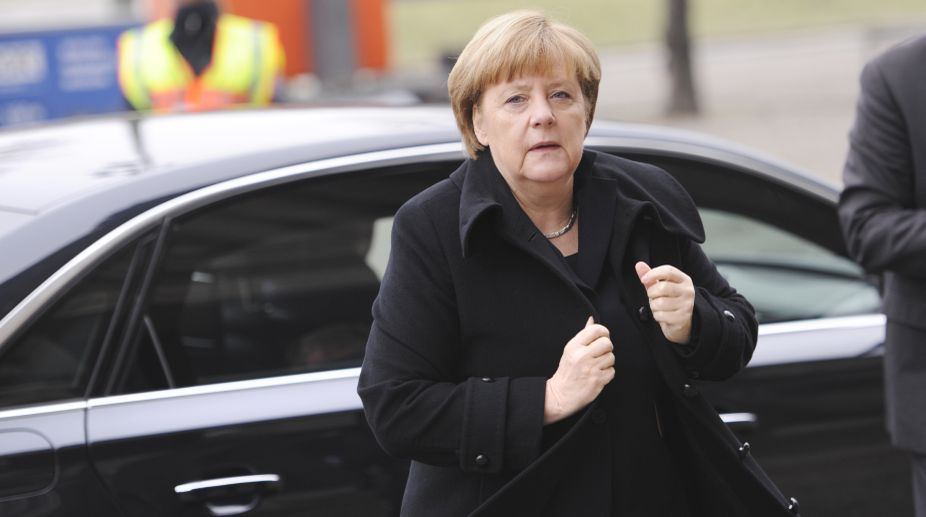
It is a patchwork quilt that was woven in Berlin last Friday after five days of hectic talks ~ including a 24-hour “all-nighter” ~ on the formation of a coalition government in Germany. Governance has been in limbo for the past four months and the coalition agreement is a critical step towards giving the country a new government. And yet Angela Merkel is acutely aware that the future course of Germany’s political history rests in the hands of her coalition partner, the Social Democrats.

There is, therefore, an inherent fragility about the terms of engagement but this ought not to militate against what has been achieved in the true tradition of a vibrant democracy. Mrs Merkel’s CDU-CSU conservative bloc has on the face of it struck a coalition deal with Martin Schulz’s centre-left SPD. The success of the arrangement will hinge on whether the deal will hold. There is without question a glimmer of hope of renewed stability; this should be good news not merely for Germany, but for the European Union and Britain as well not least in the context of the migrants crisis and Brexit. Given the emergence of the rightwing AfD in the election last September, it was imperative for the parties to work together, indeed to renew their social market model.

The 28-page agreement, which was inked before the deal was proclaimed on Friday morning, spells out the details on almost every front ~ guarantees of pension, equalisation of employer and employee healthcare contributions, higher spending on schools, tax breaks for lower earners, more police jobs, and an annual cap of 180-200,000 refugees allowed into Germany. Clearly, the overriding emphasis is on social sector spending, clothed with a pledge to accept the French President, Emmanuel Macron’s eurozone ideas pertaining to reform, putting Germany back at the heart of the EU. Yet there are red herrings across the trail, verily mountains to climb for both coalition partners.

As Mrs Merkel gears up for her fourth term as Chancellor, it is essential for the SPD’s Martin Shulz to get his party to support the deal. No easy task. Ever since the party’s poor performance in the September election, it has been against taking part in another grand coalition with Mrs Merkel. Indeed, Mr Schulz had even ruled out such a deal after the SPD had lost one-fifth of its support in the election.
As it turns out, another grand coalition has been the only viable alternative after Mrs Merkel failed to cobble a four-party government with the liberal FDP and the environmental Greens. The challenge of the far-right has for now been surmounted. The next major challenge is on 21 January when the SPD meets at an “extraordinary conference” in Bonn to consider the joint programme. Should the party have second thoughts, the choice before Mrs Merkel is either minority rule or fresh elections.

Looking backwards

Editorial |

It is a trifle disturbing that within days of its progressive assertion that law must keep pace with the times (when dealing with Section 377 IPC criminalising homosexuality) the apex court should have its energies consumed by the curious argument whether death by hanging is less barbaric than execution by lethal injection. That too after no fewer than 109 nations have rejected the concept of capital punishment as inhuman. True that the issue before their Lordships was limited, and they had made it clear that they were not reviewing the death penalty, and that hanging had earlier been held to be legal: yet public perception is not bound by technicalities, so an observation on the core issue might have been reassuring.
Similarly, the Additional Solicitor General is not to be faulted for an initial response (a detailed affidavit will be submitted later) that hanging was preferable to lethal injection, but persons in more enlightened political and administrative positions in the law ministry could have issued instructions pointing out that India was not steeped in retrograde concepts. It is to be hoped that fresh thinking will be exhibited when the case is next heard.
It is true that the ideal forum for a debate on capital punishment would be the law-making body, unfortunately Parliament is now so overly consumed with topics that have electoral or partisan political importance that a debate on the subject would arouse limited interest. Though quite a few members would be well qualified to speak on the subject, their personal opinions would be “seconded” to following the line spelt out by their party’s bosses. That is the price the nation is having to pay for the institution being reduced to a political sock-exchange.

Long gone are the days when the “collective wisdom of the House” was brought to bear on such issues: today if one side says something is white the other deems itself honour-bound to paint it black. In less-confrontationist times the ministers for parliamentary affairs took the lead in forging a consensual approach, today their top priority is carrying the fight across the aisle. No doubt the situation would hardly be different if the political equation was reversed. Was it not a slur on Indian democracy that at the conclusion of the recent session of the Rajya Sabha headlines were “made” when Mr Narendra Modi walked up to Dr Manmohan Singh to exchange some pleasantries? Have we forgotten that when Atal Bihari Vajpaye was to undergo medical treatment abroad the then Prime Minister, Rajiv Gandhi, directed that all expenses be borne by the Government of India? The dire need for a return to such cordial times is acutely felt when “matters of principle” like retaining the death penalty, instant talaq, freedom of religion etc are on the national agenda.

Activists demand action against cops in girl’s suicide case

Statesman News Service | Meerut |

The police came in the ire of women activists in the case of self immolation of a fourteen year old girl with activists demanding stern action against errant cops.

Sakshi, an eighth standard student, was compelled to take the extreme step due to stalking and rape threats by four boys. She passed away during treatment on Thursday.

The police was accused of cooking up a fake story when they claimed the girl had relations with the boys.

Ridiculing the police, a group of women activists led by Atul Sharma, president of Sankalp organisation raised their voice demanding action against the errant cops.

“We condemn the incident and attempt of police for tarnishing the character of the deceased girl instead of accepting that stalking provoked the girl to take such drastic step,” said Atul Sharma.

Raising questions on the working of Bhawanpur police in this case Sharma said that why they didn’t record the statement of the girl. The women activists are now planning to approach senior police officials with request to lodge case against the errant SHO Kartar Singh and his sub ordinate Sub Inspector.

The family members as well as the villagers too expressed their disappointment with the investigation .Reportedly, BJP MP Rajendra Aggarwal criticized police over its shoddy investigation into the case and conveyed the same to the senior officials.

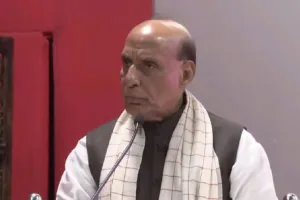
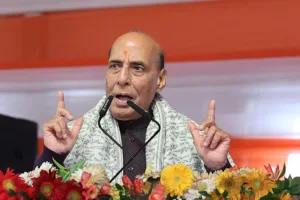
Disaster-proof infra requires global cooperation: Rajnath

Statesman News Service | New Delhi |

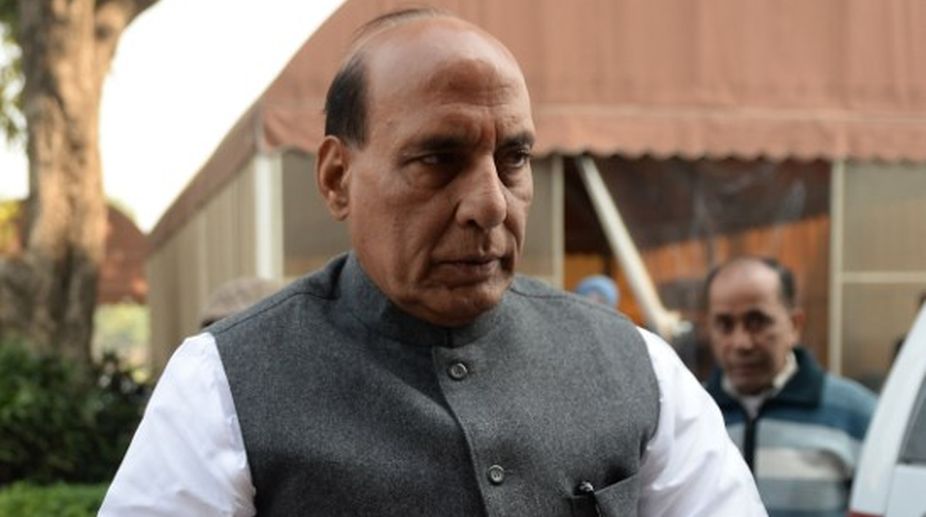
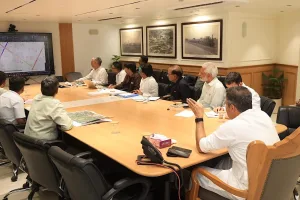
Home Minister Rajnath Singh on Monday said building disaster resilient infrastructure will not be possible without international cooperation as climate-related extremes become more challenging. Inaugurating an international workshop organised by the National Disaster Management Authority (NDMA) in collaboration with the United Nations Office for Disaster Risk Reduction (UNISDR), he said “Climate related extremes are likely to become more intense and frequent. Past is no longer a good guide for the future.”

The Home Minister said, “As the infrastructure systems are globally interconnected, disruptions in one part of the world can cause havoc in another part of the world. It is, therefore, important that all stakeholders come together to address the challenges and devise solutions to create resilient infrastructure.”

He said, “Our forefathers showed tremendous foresight when they developed infrastructure that served us for generations. They have helped us tame the fury of nature, while also helping us maximize the benefits of mother Nature’s benevolence.

“The way we build our infrastructure today will either build risk or resilience for the future generations.

We need to bring to bear tremendous foresight and rigour to ensure that all our new infrastructure is built to withstand the hazards of the present as well as the future,” Singh said.

The minister said, “The infrastructure that we will build in the next twenty years will be more than what we built over the last two thousand years.” By 2040, the world will require $100 trillion to meet the infrastructure needs of humanity: Asia alone spending $ 26 trillion for the purpose by 2030, he said.

Experts from 23 countries, multilateral development banks, United Nations, private sector, academia and other stakeholders are participating in the workshop. Deliberations at the workshop are to take the dialogue on Disaster Resilient Infrastructure and global cooperation further.

Cong seeks BJP’s stand on charge-sheeted Shimla MP

Statesman News Service | Shimla |

Congress party has sought an explanation from Bharatiya Janata Party (BJP) on their stand on the charge-sheeted Shimla Member of Parliament (MP) in alleged corruption case.

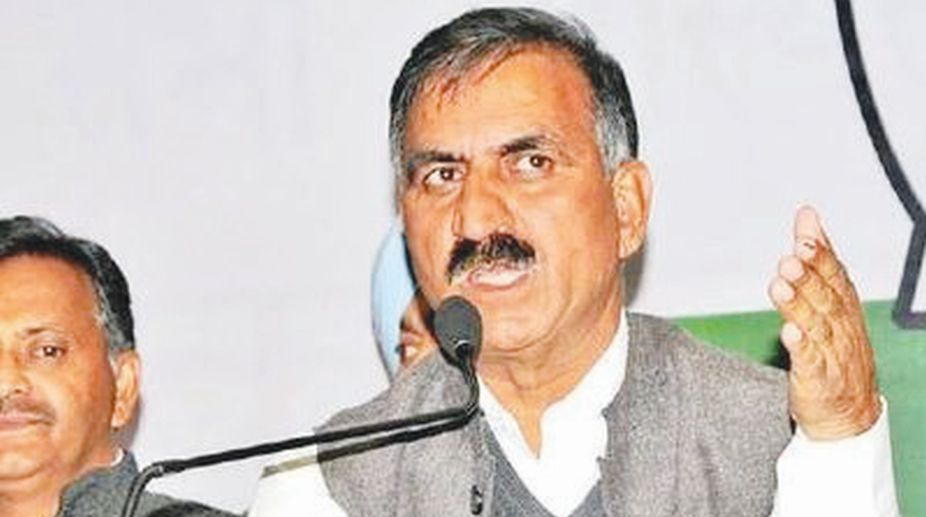
Himachal Pradesh Congress Committee (HPCC) Sukhwinder Singh Sukhu chaired the HPCC executive committee emergency meeting held on Monday that was attended by Congress office bearers, executive members and district presidents.

While addressing the meeting he said, “It is a matter of serious concern and the BJP should clarify their stand on the chargesheeted MP from Shimla Virender Kashyap in the corruption case that allegedly took place before the 2009 Lok Sabha elections. An FIR has also allegedly been registered against BJP Member of Legislative Assembly (MLA) JR Katwal.”

He said that the Congress party will review the state government functioning after 100 days of the newly formed BJP government. During the meeting Sukhu also discussed on the future strategy and policy to take the Congress party forward, tampering of EVM during the recent Assembly elections.The party workers having worked with indiscipline during the Assembly elections was also discussed during the meeting.

BJP misleading public on employment issue: Virbhadra

Statesman News Service | Shimla |

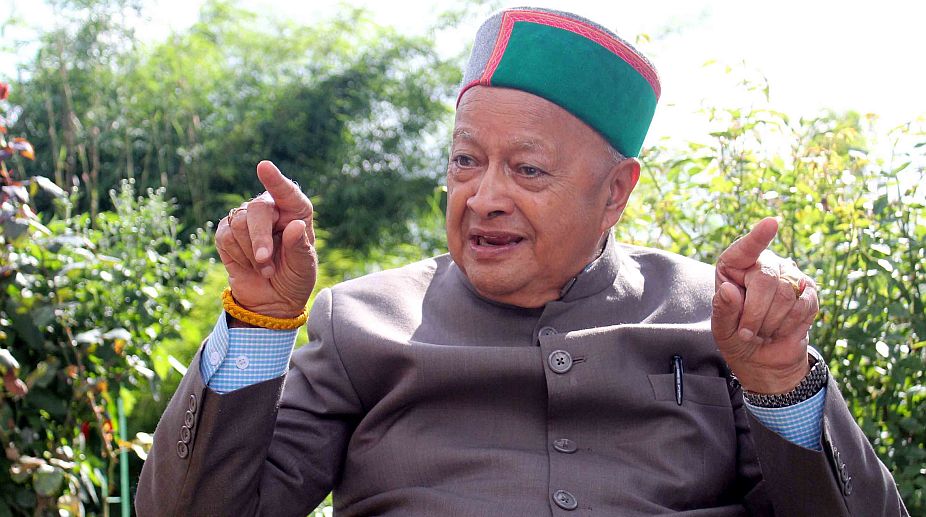
Himachal’s former Chief Minister (CM) Virbhadra Singh has accused CM Jai Ram Thakur for misleading the public of the state in the name of employment issue.

“The previous Congress government had established the Skill Development Corporation, to provide employment to the youth in the state. In addition, more than 70,000 jobs were provided in the government sector. Similarly, jobs were provided to thousands of youth in the private sector through job fairs and other measures,” he said.

Expressing surprise, Virbhadra Singh took strong objection on the alleged statement of Jai Ram Thakur wherein he had stated that the unemployed youths were harassed owing to the feud between him and the Himachal Pradesh Congress Committee (HPCC) chief Sukhwinder Singh Sukhu.

“The statement is devoid of facts and completely baseless,” he said, adding that the Jai Ram Thakur was making such statement in an effort to stop unemployment allowance.

He said that the previous Congress government had opened many avenues for employment in the state, thereby fulfilling the election promise and about 1.50 lakh youths were trained through the Skill Development Corporation.

Lambasting the Bharatiya Janata Party (BJP) for politicising the ‘Gudia’ rape and murder Virbhadra Singh said that the law and order situation was under control during his rule in the state and it was his government that had been instrumental in handing over the case to the Central Bureau of Investigation (CBI) and the inquiry in the said case is still going on.

“The CBI is doing its job and no effort should be made to influence it,” he said.

Clarifying on the financial condition of the state, Virbhadra said, “When Congress came to power in 2012, they too inherited the debt trap in crores from the then previous Prem Kumar Dhumal lead BJP government.”

Advocating the BJP government not to mislead the public and instead focus on development, he said that the BJP will not get any political mileage by criticising the previous Congress government.
“It is to be seen, how efficient the new government will be in providing jobs to the unemployed youth in the state,” he said.

Expedite work on highway projects: Thakur

Statesman News Service | Shimla |

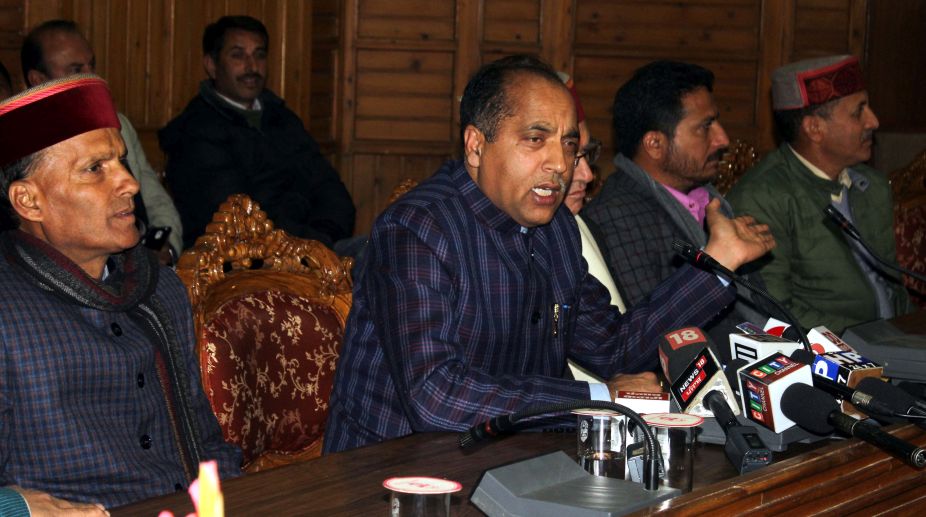
Chief Minister, Jai Ram Thakur directed the state Public Works Department (PWD) to fix the deadline of 31 March, 2018 for awarding the consultancy services for preparing the Detailed Project Reports (DPRs) of the 62 new declared National Highways. He was presiding over the review meeting of the department on Monday.

He said that the DPRs need to be prepared well in time and the work to be started on these National Highways at the earliest.

At present there are 69 National highways of 4,400 kilometers length and 62 are with the state government, one with Border Roads Organisation, two with Himachal Pradesh Road and other Infrastructure Development Corporation (HPRIDC) and three with the National Highway and Infrastructure Development Corporation Limited (NHIDCL). One NH was jointly with government of HP and other agency.I want to see the groundwork done and so the people of the state expect the same from the PWD, he said. He added that up-gradation and maintenance of existing road projects should be expedited.

The CM directed that the department to prepare a road map for connecting all the left out panchayat headquarters with roads and further plan out to connect those villages and hamlets which were void of road connectivity till date.

The CM said that the department should plan in advance the number of kilometers required to be constructed in a financial year or the bridges to be built and should go for it to achieve the target.He said monitoring was an essential component of any work to be carried out and the officers concerned should monitor the works regularly and give necessary feedback.”The government will not compromise on the poor quality of work done and the delay or dilly-dallying tactics either by a contractor or anybody down the line in the department. By any means, if the work gets delayed without a valid reason, the concerned officials should be ready to face the action,” he said.

The CM advised to at-least fix a target for the works being implemented and supervise at-least three major ongoing works in a fortnight.

Additional Chief Secretary and Principal Secretary to CM, Manisha Nanda, Engineer-in-Chief, Chief Engineers and other senior officers of the PWD department were present in the meeting amongst others.

Noisy scenes in J-K Assembly over Army Chief’s remarks

Statesman News Service | Jammu |

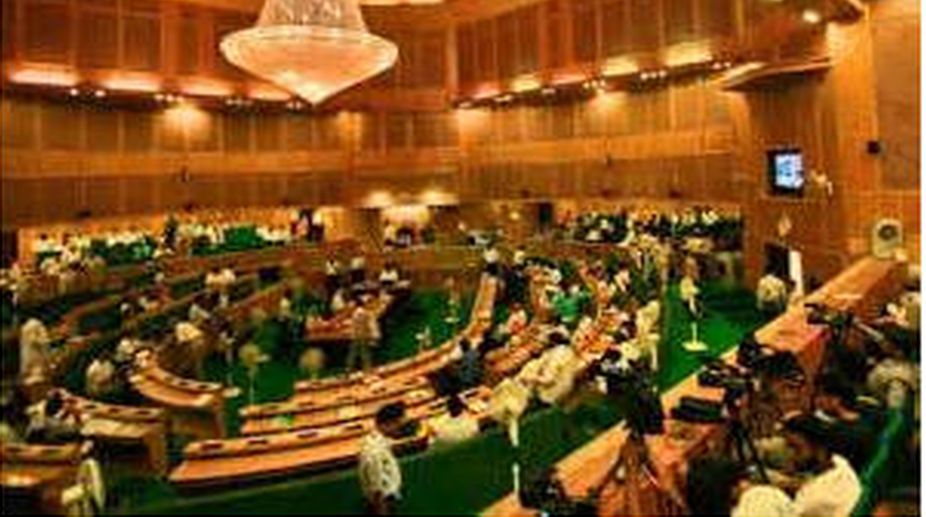
Pandemonium prevailed in the Jammu and Kashmir Assembly over the remarks of Army chief about the radicalizing education in the state and cordon and search operations of the Army in Kashmir as the opposition National Conference (NC) and independents created ruckus and staged walk out from the House demanding statement from the government on the issue.

Rawat had on Friday said social media and government schools in the state were spreading a “disinformation campaign” resulting in radicalisation of youths. He had also called for “some control” over mosques and madrassas in the state and suggested a “major revamp” of the education system.

Reacting to his statement, the education minister Altaf Bukhari had asked the Army chief to mind his own business instead of interfering in the education sector of the state.

As the house assembled in the morning, members of NC stood up and raised the issue of remarks of Army chief General Bipin Rawat and sought statement from the Chief Minister Mehbooba Mufti or any other minister.

Speaking on the issue in Assembly, Ali Mohammad Sagar (NC) told house that army chief’s statement is sad and unwarranted and that he should not have given such a statement which sends wrong message to Kashmir.

Mohammad Yousuf Tarigami (CPM) also criticised the statement and sought a reply from the government.

Amid protests, NC members were up on their feet in opposition as they sought statement from the CM over the issue. They walked out of the house when the statement did not come from the treasury benches.
Speaking to reporters, Sagar said there is problem in the PDP-BJP government and that the ruling alliance partners are not taking note of the issue.

He also denied there was no radicalisation is Kashmir, and dismissed the statement as “manufactured propaganda” aimed to target Kashmir and Kashmiris.