Logo

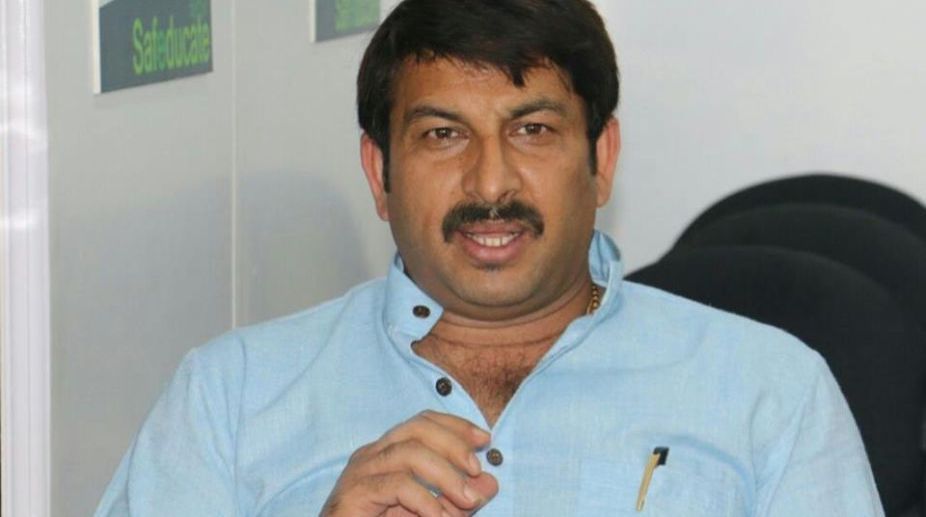
Tiwari urges Rajnath to resolve sealing issue

Statesman News Service | New Delhi |

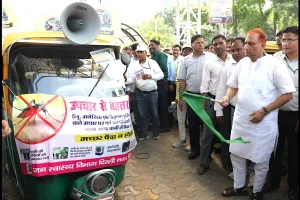
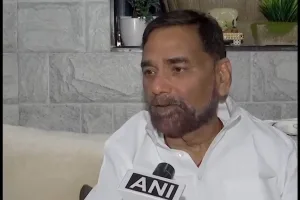
The Bharatiya Janata Party (BJP) Delhi unit president Manoj Tiwari on Tuesday welcomed Union Home Minister Rajnath Singh at the two-day executive meet of the party and appealed to him to get the ongoing issue of sealing of properties in the Capital resolved.

Tiwari described Tuesday’s meeting as ‘shanknaad’ (alluding to significance of blowing conch shell in Hindu rituals) for 2019 Lok Sabha elections and 20 possible Assembly by-elections. He called upon party workers to increase interaction with the people, especially women, youth, Dalits and traders. He also asked party cadres to focus on grievances of people in rural Delhi and urban villages.

Speaking on the occasion, Rajnath Singh called upon partymen to avoid ‘political ego’ and work unitedly to ensure another clean sweep in 2019 parliamentary elections in Delhi.

He said Delhi being the national capital had a special significance for the Centre which was extending all possible support to Delhi government for development of the city but the confrontationist attitude of AAP government was creating a hurdle for speedy development. We wish the shun politics of confrontation. He, however, assured help in solving the crisis resulting from sealing of properties.

The Home Minister released a special booklet on the work of Delhi BJP during the last one year. He congratulated party workers of Delhi for their work which resulted in last year’s municipal elections win and also lauded the Delhi partymen contribution in recent Gujarat and Himachal Pradesh elections.

The Home Minister, however, condemned Delhi government for its alleged negligence which resulted in over 200 deaths due to cold and action in Max Hospital case of medical negligence besides decision to increase water and power tariffs.

“Today world over people feel that BJP is best equipped to govern the country and in Prime Minister Narendra Modi people see not only the best Prime Minister but a social crusader who is fighting to change their lives,” Singh claimed. He further said that India was the fastest growing economy and attributed higher GDP to the ease of business facilitated by the Central Government.

Speaking on some Congress leaders raising domestic issues to international forums, Rajnath Singh said it was a sad situation.

Special committee to probe sealing drive

Statesman News Service | New Delhi |

Delhi Assembly on Tuesday decided to hand over the matter related to sealing of properties in the Capital to a special committee for investigation.

Speaker Ram Niwas Goel said that after taking into consideration the sentiments expressed by members in the House, he was “referring the matter of collection and utilisation of conversion charges and all other related issues for examination and report by the special committee on MCDs.”

Goel stated, “I direct the commissioners and all other officers of MCDs to depose before the committee as and when desired by the committee and state the truth.

The nine-member committee, which will be headed by Bhavna Gaur, was asked to submit its report on the opening day of the next Assembly session.

The sealing drive has been discussed in the Assembly for the past two days with Aam Aadmi Party (AAP) and the Bharatiya Janata Party (BJP) legislators playing blame game.

The leader of opposition Vijender Gupta accused the AAP government for playing politics over the issue.

Gupta said that the sealing drive is carried as per Supreme Court-appointed monitoring committee and no AAP legislators spoke about it. “It is evident that they (AAP) don’t want to debate on the real facts but are playing politics over the entire matter,” Gupta quipped.

Labeling AAP government as ” Jhoot bolo rule karo” (speak lies and rule), Gupta claimed that AAP made the sealing drive a ” shuttlecock” issue by putting blame on municipal corporations.

Gupta also raked up the issue of 351 roads which were yet to be notified under commercial and mixed-use category.

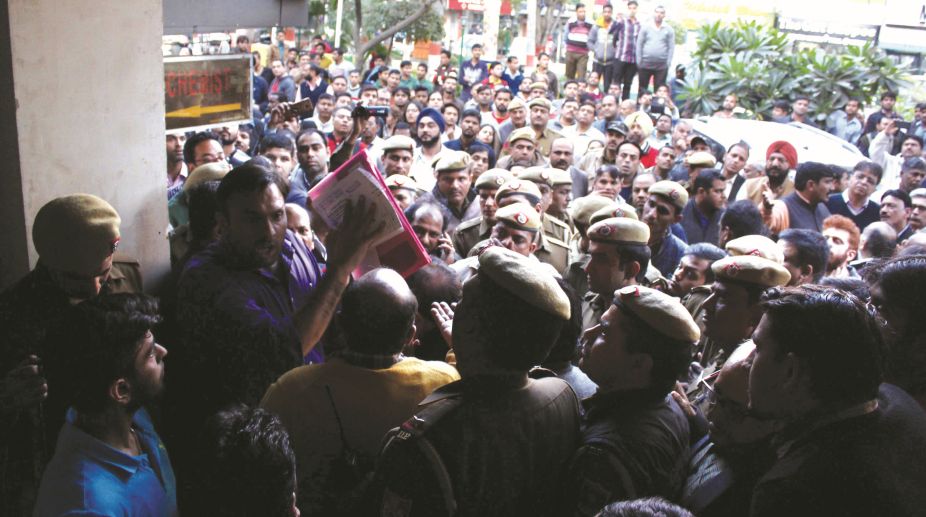
Displaying various letter written by municipal corporation to the AAP government in the past two years or so to notify 351 roads, Gupta said that the government had not taken any action in that regard.

Hitting back at the BJP, Urban Development Minister Satyendar Jain said that all letters displayed by Gupta were written only after the state government put the process of notifying 351 roads under commercial and mixed-use category into motion.

“I know which all letters you are referring to. These letters were written only after government’s continuous reminders to the municipal commissioners to expedite the process of notifying these 351 roads,” Jain remarked.

Jain claimed that he had asked all the three municipal commissioners to submit their reports by 22 January on the status of notifying those 351 roads.

Delhi Labour Minister Gopal Rai also cornered the BJP saying that sealing drive that was taking place had already been notified and the BJP was only minting money in the name of conversion charges.

Kovind’s concern over shortage of doctors

Statesman News Service | New Delhi |

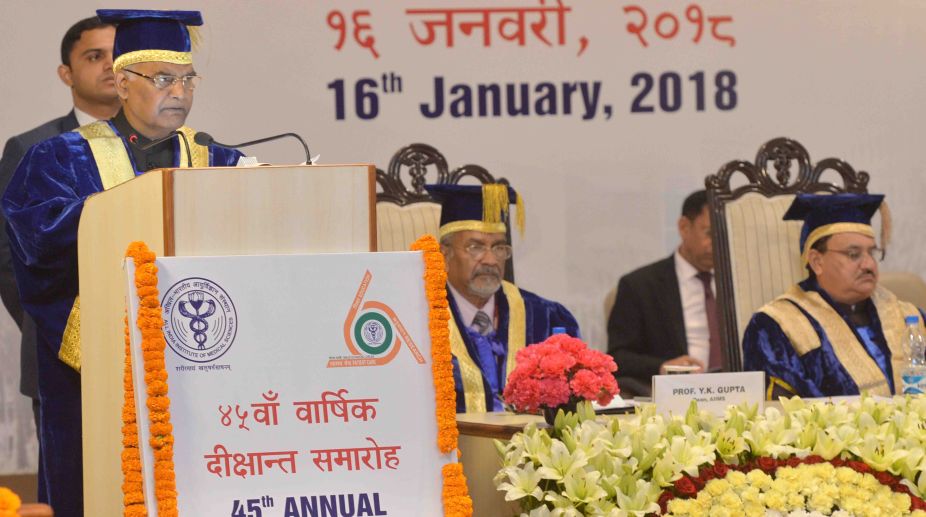
Pointing out the shortage of doctors in the country, President Ram Nath Kovind on Tuesday said a new regulatory system was the need of hour to enhance availability of doctors and medical professionals in society.

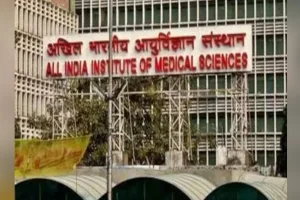
Addressing the 45th convocation of the All India Institute of Medical Sciences (AIIMS), he noted that doctors needed help in form of more colleagues. “And this is where we need a new regulatory system to enhance availability of doctors and medical professionals in our society. In the absence of this, the workload on our doctors is very high,” added Kovind.

He also expressed serious concern over “highly inadequate” medical seats existing in the country. Kovind noted that medical colleges, run by both government and private institutions, had about 67,000 undergraduate seats and 31,000 post-graduate seats currently. and said, “In a country of 1.3 billion people, this is highly inadequate,” he claimed.

The country has to overcome these “regulatory bottlenecks” and “interest groups” that have prevented the growth of quality medical education in our country, the President said.

“This gives us far fewer medical graduates and post-graduates every year than our people need. It also leads to aspiring medical students seeking admission in colleges in other countries, simply because they have limited options at home,” he said and added that such a situation was “simply not acceptable”.

“We need to address this situation very urgently. We need to create more opportunities for those young people who want to make medicine their calling,” Kovind added.

Advising the graduating doctors to give back to the society, the President said doctors need to be legitimately rewarded for their academic excellence, their medical skills and their expertise.

“Yet, as doctors, their services must be available both to those who can afford their fees and also to those who are less fortunate and cannot. A disease does not distinguish between rich and poor but unfortunately the poor suffer the most. It is for society to profit from medical science ~ it is not for medical science to profiteer from society,” said Kovind.

Kovind expressed some other concerns related to immunisation campaigns for children. “Despite the progress we have made, gaps remain. For example, Indian companies are among the world’s biggest manufacturers of vaccines. These vaccines are supplied across the globe. “Our innovative medical scientists have even developed new vaccines. Even so, our own immunisation record remains below the desirable levels,” he observed.

Many children particularly in the far-flung and difficult-to-access areas did not get the full course of immunisation, the President added.

Ruckus in House as Mishra portrays Kejriwal as snake

Statesman News Service | New Delhi |

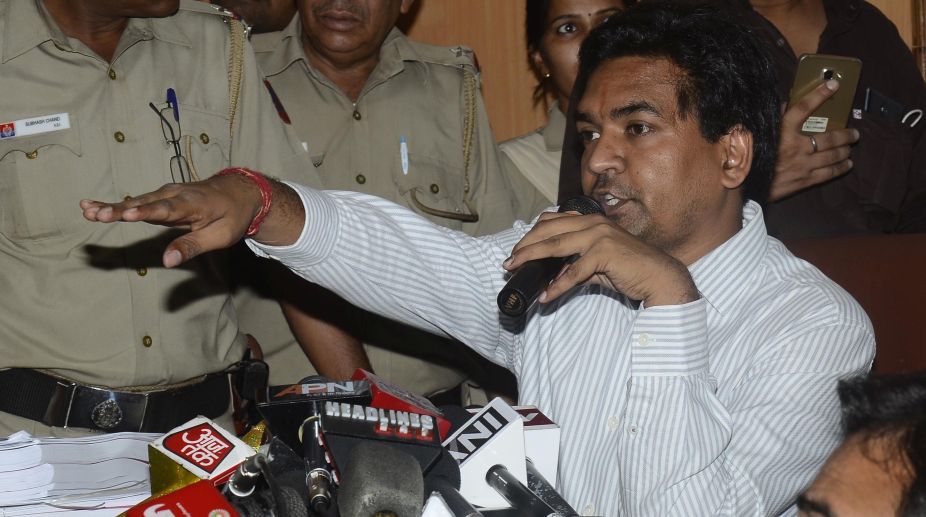
The second day of the winter session of Delhi Legislative Assembly witnessed a ruckus on Tuesday when suspended AAP leader Kapil Mishra criticised Delhi Chief Minister Arvind Kejriwal for nominating Sushil Gupta as a member of Rajya Sabha.

As soon as the proceedings began, Mishra rose from his seat with a poster portraying Chief Minister Arvind Kejriwal as a snake around Sushil Gupta’s neck.

Mishra alleged that AAP had “sold” its Rajya Sabha seats and demanded a discussion on the matter in the House.

Speaker Ram Niwas Goel was quick to snub Mishra for his behaviour in the House and ordered him to be marshalled out.

However, the scene become more dramatic when BJP legislator Manjinder Singh Sirsa came to Mishra’s defence while marshalls were taking him out. Sirsa’s action prompted Goel to order him out of the House as well.

The Speaker also forwarded a complaint that Sirsa “trying to obstruct the marshalls while they were taking away Mishra” to the privilege committee of the House. Talking to the reporters outside the House, Sirsa, assailed the Speaker’s decision. “I was not blocking the marshalls, but was just asking Kapil to go out,’ he remarked.

On 3 January, AAP nominated Sanjay Singh, ND Gupta and Sushil Gupta as Rajya Sabha nominees. The trio were elected unopposed on 8 January. However, the selection of Sushil Gupta, who is a prominent businessman and was affiliated with the Congress, drew criticism from some opposition and AAP members.

Bengal summit: Investment deals with European nations on the cards

Statesman News Service | Kolkata |

The European countries are set to go for a host of partnerships with Bengal.

To begin with, the first MOU was signed by Italy today. Italy is a partner country in this event. The other partner countries include Japan, Poland, Czech Republic, France, Germany, South Korea, China and UK.
The MOU was signed between Italian Leather Research Institute, CLC and Tanner’s Association, Kolkata.

The Italian delegation of 30 is led by Art Valley an organisation that has attended BGBS last year as well. The Italian side was represented by Mr Paolo Gurisatti, president of SSIP district and Mr. Golin Mauro, CEO Spraytech.

This has the support of the West Bengal government and is involved in exchange and support in providing technical competence in the Bengal tanning companies , said professor Alberto Cavicchiolo of Art Valley.
Other agreements are also expected in course of the visit. Delegates of another partner country, France also held a host of B2B meetings to explore opportunity in harnessing greater economic cooperation.

French minister counsellor and head regional economic department India, Jean Marc Fenet said 12 companies delegation from varied sectors including energy, infrastructure , tourism, water management among others were present today. Companies that participated today include Accor, Bureau Veritas, Capgemini, Dassault and others. He said last minute discussion and MoU are expected tomorrow.

He said that some companies including Matiere, Suez and Poma are in the process of tying up with Bengal. French companies are particularly interested to invest in the hospitality sector and are contemplating to come up with a few more hotels in the city. Dassult System said they are trying work with SME’s of west Bengal to empower them with technology to upgrade their capability.

Scheneider Electrical official said they are trying work in the rural electrification and recently Railway braking system business had been transferred from Baroda to Kolkata.
BGBS received participation from 32 countries.

Spice Jet plans to set up sea plane manufacturing hub in Bengal

Statesman News Service | Kolkata |

Private low-cost airlines Spice Jet is planning to set up a sea plane manufacturing hub in Bengal. The announcement was made at the inaugural session of the 4th edition of the Bengal Global Business Summit by Mr Ajay Singh, chairman of the airlines.

“Bengal is a state of rivers and lakes and for movement of sea planes any river or lake can be used as a runway or airport. We are planning to set up a hub of sea plane manufacturing in the state. The move will also give a major boost to tourism with popular tourist destinations like Gangasagar, Sunderbans connected by these sea planes,” Mr Singh said. According to Mr Singh, Spice Jet will start direct flights to Chittagong and several ASEAN countries by the end of 2018.

“One of the big issues for the state has been the commencement of flights from the greenfield airport at Durgapur. We will connect Durgapur with Bengaluru and Hyderabad soon,” he added.

Presently, Spice Jet operates as many as 70 flights a week from Kolkata Airport including flights to Bangkok and Dhaka. The company is planning to run more flights to more destinations. He said with the union government,’s Look East Policy , Bengal will see the introduction of more flights in the next few years.

Singh said Spice Jet has placed orders for the manufacture of 250 airplanes at an investment of more than Rs 150000 crore and committed that many of these planes will leave from Bengal. Meanwhile, Mr Niranjan Hiranandani of H Energy Group announced bringing “cleaner, greener and more efficient fuel” to the households of the state along with gas retail outlets in five districts.

Mr Sanjeev Goenka of PR Sanjeev Goenka Group announced building a hospital, an investment of Rs 1000 crore in power distribution network, 150,000 distribution outlets and a new FMCG Park.
Mr Kishore Binani, CEO of Future Group announced that the group will increase its manpower from 10,000 to 55,000 in one year and spread in 14 districts from the
existing 10.

Mamata promises industry-friendly atmosphere in Bengal

Statesman News Service | Kolkata |

Chief minister Mamata Banerjee today invited industrialists to Bengal and guaranteed an industry-friendly atmosphere, with ample “tolerance” and “security” and assured that the state would deprive none.
“We in Bengal believe in unity and tolerance. So I invite all my industrial friends to invest in the state without fear. At the same time, I would like to tell that I will not compromise on the issue of security of the industrialists. I will not spare even my own party activists on this count,” Miss Banerjee said.

“West Bengal is ideal for industrial investment. We have political stability. On the issue of man- days lost, the dark days are over. We have surplus power and skilled labour. Moreover, there is an air of unity and tolerance in the state,” she said, adding, “People of various castes, religions and beliefs reside in India. That is the beauty of our country. Unity in diversity is our pride. People of Bengal always practice this unity in diversity and that is where the strength of the state lies.”

Stressing that the state is one of the best in terms of employment oppurtunities, Miss Banerjee said that with industrialists investing in Bengal, the state would become number one in terms of providing employment.

Calling industrialists as “assets”, Miss Banerjee urged them to consider Bengal as their ‘home town’. “We cannot work without you. Please invest in the state,” she said.
Bengal government has an excellent team of bureaucrats, who are always ready to fully cooperate with the industrialists, the chief minister said. “The credit goes to our bureaucrats that the state is best when it comes to the ease of doing business,” she said.

Speaking on the occasion, chief minister indirectly admitted that without fresh investments Bengal cannot develop economically. “Just as the state cannot move ahead without proper agricultural development, similarly without industrial progress the state cannot develop economically. So we will have to ensure that the industrialists can run their business peacefully in the state,” Miss Banerjee said.
Even as the BGBS missed the Union ministers, Miss Banerjee said that the huge presence of the industry bigwigs proves that the meet has been successful and aptly justifies that ‘Bengal means Business’. This time the meet is ‘Top of the top’, she added.

The galaxy of industrialists present on the occasion applauded Miss Banerjee.

Mr Lakshmi Mittal, chairman and CEO of ArcelorMittal, the world’s biggest steelmaker said Miss Banerjee has understood the expectations from industrialists very well. Political stability, good infrastructure, limited bureaucracy makes the state a good investment destination, he said, adding that the state government was doing well in the social infrastructure sector. Mr Mittal extended all assistance and assured to do the same in future. Miss Banerjee who had met Mr Mittal during her trip to London last year had invited the couple to attend BGBS.

Mr Sajjan Jindal, MD JSW Group said that the state has undergone an “amazing transformation” in the last six years.

Uday Kotak, the executive vice-chairman and managing director of Kotak Mahindra Bank said that the mindset of Bengal has significantly changed in the last few years.

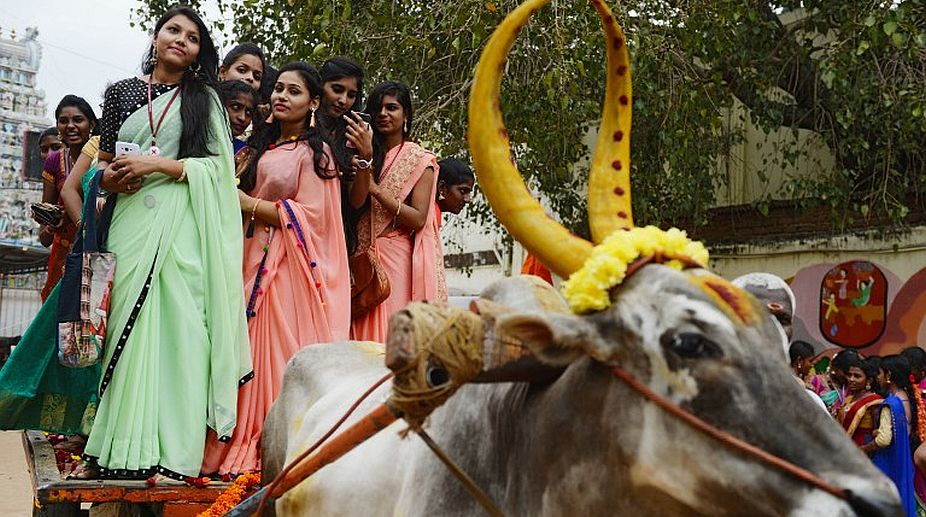
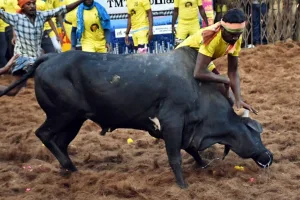
Three more gored to death by charging bulls during Pongal

Statesman News Service | Chennai |

Giving credential to the earlier apprehensions of Animal Welfare Board of India (AWBI) over the security lapse of Jallikkattu, three more persons were gored to death by charging bulls and 70 persons were injured, some of them critically, in bull taming sports held in two districts of Tamil Nadu on Tuesday in connection with the Pongal festival.

While R Solaiandi (25) was gored to death at Avaarangaduin Tiruchirappalli district, Ramanathan (45) and Kasi died in Sivaganga districts increasing the number of persons who lost their lives in Jallikkaattu during the this year’s events to four.

More than 100 people have been injured in the events held during Sunday and Monday at Madurai and Tirchirappalli. As the season will end only on 31 May, 2018, which means Tamil Nadu is in for more such deaths and fatalities in the coming days.

But in a curious U-turn, the AWBI officials, entrusted with the safety of the animals and bull tamers have joined the festivities demanding that Jallikkaatu should be made a permanent affair in the State. S K Mittal, convener, AWBI, said on Monday that Jallikkattu should he held forever in Tamil Nadu and he scoffed at those who oppose the sport. Mittal joined Tamil Nadu minister Udayakumar and Madurai district collector K Veeraraghava Rao in inaugurating the Monday’s event at Palamedu in Madurai.

But Tuesday’s Jallikkatu event held at Ananganallur in Madurai shocked the spectators as the organisers made it in to an open gambling. When the bulls were forced out to the arena through the Vadivaasal (the narrow passage to the arena), the announcer declared that the person who tames the bull would get Rs 10,000.

Meanwhile, the video of a person announcing an unmarried women and the bull as gift to those who tame it in the Jallikkattu went viral in the state and finally the person admitted to the police that he has done it in an inebriated state.

Komban, a ferocious looking bull owned by Tamil Nadu minister Vijaya Bhaskar, turned out to be Tuesday’s star as no tamers could come anywhere near it inspite of the announcer declaring openly that the person who tames Komban would get Rs 10,000.

There were prices ranging from Renault cars to motorcycles to refrigerators to entice the tamers. All these things happened in the presence of chief minister Edappadi Palaniswamy and his deputy O Panneerselvam

India one of the greatest powers on earth: Netanyahu

Statesman News Service | New Delhi |

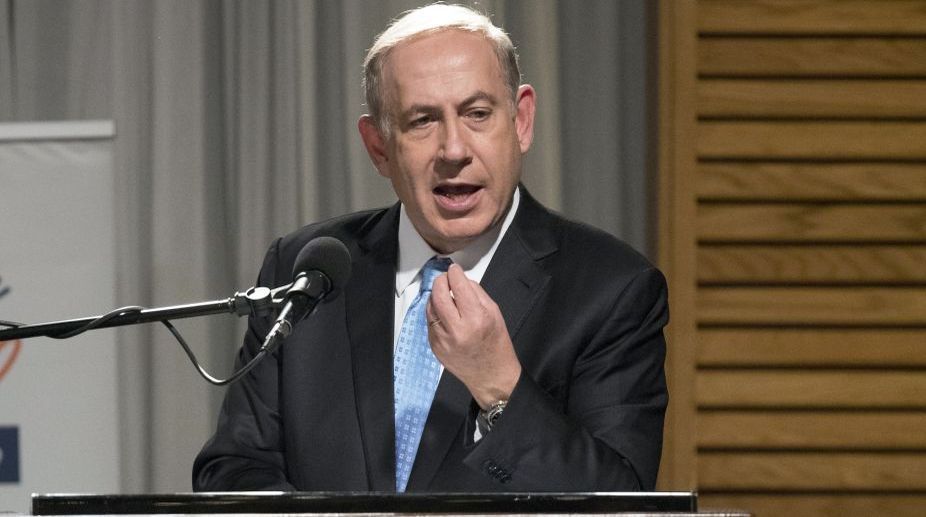
Israeli Prime Minister Benjamin Netanyahu on Tuesday said a country needed to develop economic, military and political power to emerge as strong in the comity of nations even as he called India one of the greatest powers on earth.

“The weak don’t survive, the strong survive…you make alliance with the strong,” he said delivering the inaugural address at the 3rd edition of the annual ‘Raisina Dialogue’, organised by the Ministry of External Affairs and the Observer Research Foundation (ORF).

Prime Minister Narendra Modi and External Affairs Minister Sushma Swaraj were among nearly 500 national and global personalities who attended the event.

He said to defend a nation, one needed a strong military which in turn required a lot of money. The money, he said, would come from a strong economy. There have been societies which had highly educated people but did not achieve economic power and, therefore, they failed, the Israeli leader said, referring to the Soviet Union.

Strongly favouring a robust relationship between India and Israel, Netanyahu stressed that alliance between democracies was important.

He appreciated the efforts being made by the Modi government to cut bureaucratic red tape and improve ease of doing business.

Nitish’s human chain runs into trouble over HC order

Statesman News Service | Patna |

In a major setback to the ruling Nitish Kumar government in Bihar, the Patna High Court today ruled that school children cannot be forced to join the government’s proposed human chain programme against dowry and child marriage, scheduled to be organised on 21 January.

In view of this order, the fate of the much-flaunted programme hangs in balance as the schoolchildren are considered the backbone of the function, which, according to experts, is meant more to make political gains than creating social awareness.

A bench of the High Court comprising chief justice Rajendra Menon passed this order today after hearing a petition filed by Nagrik Adhikar Manch, an NGO. The court also said that parents’ permission is mandatory for children to join the human chain programme and the government cannot initiate action against the children who wish to stay away from the function.

The state government has announced to form the world’s longest human chain against dowry and child marriage across the state, and has invited the Guinness Book of World Records as well as the Limca Book of World Records for coverage of the programme. The invite has been reportedly sent through emails.

The court passed the order after the petitioner said that the little schoolchildren were being pressurised by the state government to participate in the human chain even as severe cold wave has claimed many lives and paralysed normal life. According to the petitioner, while on one hand the local district administrations have been issuing orders to close down the schools because of severe cold conditions, on the other the education department has issued orders, asking for participation of children in human chain.

“How can the little children be forced out of their homes in this bone chilling cold and asked to participate in the programme?” asked the petitioner, adding there is nothing new to the state government’s programme and it was being done only with political motive.

At presently, the chief minister has been on the whirlwind tour of the state in course of his “Samiksha yatra”. Although the government claims that the chief minister’s move is aimed at reviewing the progress of development, the Opposition alleges the chief minister under the guise of yatra has been extending invites to the masses to join the human chain to make it a success.

Last year too, the state government had faced similar challenge after the Patna high court issued similar directive but the government was able to save its face as it got support from the RJD, its erstwhile partner which enjoys huge support among the common masses.

Now that the chief minister has swapped his allies, it’s to be seen how much he is able to get support from his NDA allies in his mission.

Smart cities mission progressing fast: Puri

Statesman News Service | New Delhi |

The government’s ambitious smart cities project is progressing briskly and the ‘Smart Cities Mission is a step towards achieving the mission to improve the ease of living for Indians, particularly for the poor, women, elderly and differently-abled people, minister for urban affairs and housing Hardeep Singh Puri said here on Tuesday.

Speaking at the Smart Cities Summit organised by Ficci, he said all Indians should be able to enjoy a clean and sustainable environment. As a major player in digital revolution and a technology superpower, India must also leverage cutting edge technology to power its infrastructure, offices and homes, he said.

Puri said the Smart Cities Mission is progressing at a brisk pace and 90 cities have been selected so far. The selection of ten more cities will be announced shortly.

There are about 3000 projects worth Rs 1,40,000 crore at various stages of implementation. Tenders for projects worth Rs 16,000 crore have been invited, and more than Rs 1 lakh crore worth projects are being readied for issuance of tenders, he said. This will have a ‘Lighthouse’ effect. Other cities and regions around the smart cities will soon become centres of urban excellence, he said.

The minister said this is a new benchmark in terms of project implementation in a short duration of 2.5 years (first round of 20 cities were selected in January 2016, and last 30 cities were selected as recently as June 2017) which is a small period in terms of urban development life-cycle where transitions take place over decades.

This is also the first time that cities have created an institutional mechanism of special project vehicles (SPVs) at the city level. Till now 82 SPVs have been formed and considering the capacity gaps in cities, this is not a small achievement. For the first-time cities are thinking in terms of converging the objectives, resources and processes of projects taken up by various agencies towards realisation of a common vision, he said.

CJAR files complaint

Statesman News Service | New Delhi |

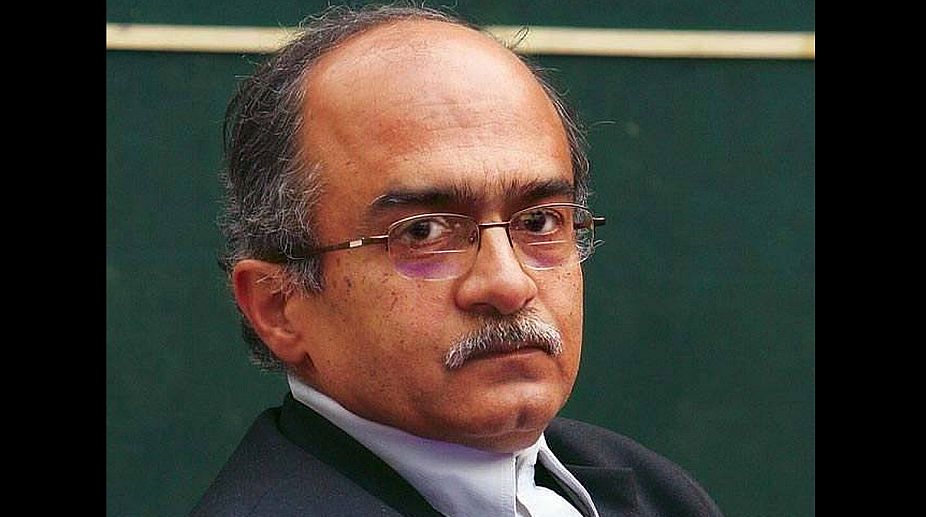
The NGO Campaign for Judicial Accountability and Reforms has filed a complaint against CJI Dipak Misra to five seniormost judges of the Supreme Court after him ~ Justices J Chelameswar, R Gogoi, M B Lokur, K Joseph and A K Sikri ~ under an “in-house” procedure. The 24-page complaint, signed by senior lawyer and CJAR convener Prashant Bhushan, calls for an inquiry against the CJI by either three or five senior Supreme Court judges for what is described as “various allegations of misconduct” against him.

The complaint dated 15 January and its massive annexures were released at a press conference addressed by Bhushan on Tuesday afternoon. He alleged that the key charges against the CJI include “the manner in which the case of the Prasad Education Trust (involving the Lucknow medical college or judges bribery scam) was dealt with by Chief Justice Misra, in which case the CBI has registered an FIR regarding an alleged conspiracy to bribe judges of the Supreme Court to secure favourable judgments”. He said “phone transcripts available with the CBI of conversations between a retired judge, middlemen and representatives of the medical college show discussion about amount of bribe, dates and progress of this case being discussed.”

The complaint has been filed under the “in-house” procedure for investigating complaints against judges of the High Courts and the Supreme Court. Bhushan said, “Though this procedure is silent with respect to complaints against the Chief Justice himself, it is obvious that complaints against the CJI cannot be examined by the Chief Justice himself and therefore must be examined by the next judge in seniority or by a Collegium of senior judges.” The CJAR’s complaint alleges, “The CBI FIR makes allegations that the entire conspiracy and planning was to bribe and influence apex court judges who are dealing with the case of Trust. This Bench was clearly headed by CJI. In these circumstances, he was an interested party and could not have dealt with this case either on the judicial or even on the administrative side by way of assigning a particular Bench to hear this case.”

RIL to invest Rs 5k crore in Bengal

Statesman News Service | Kolkata |

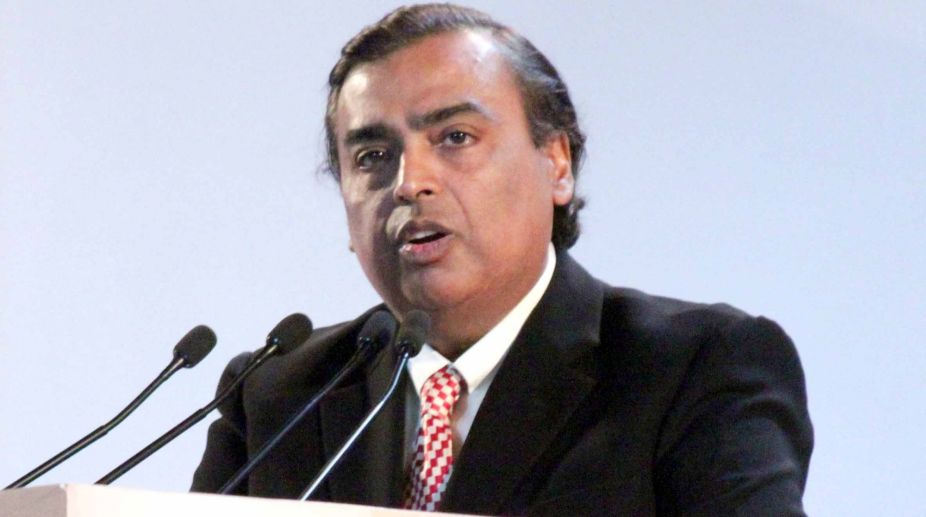
Applauding chief minister Mamata Banerjee’s initiative to turn West Bengal into ‘Best Bengal’, Reliance Industries Ltd Chairman Mukesh Ambani today announced an additional Rs 5,000 crore investment in non Jio business across the state in the next three years.

Along with Reliance, the inaugural session of the fourth edition of Bengal Global Business Summit today registered a total investment announcements worth Rs 17,000 crore. This includes, Rs 10,000 crore from Mr Sajjan Jindal of JSW Group, Rs 1000 crore from RP Sanjeev Goenka Group and another Rs 1000 crore from Mr Saroj Poddar of Adventz.

Speaking at the inauguration of fourth Bengal Global Business Summit at Biswa Bangla Convention Centre in New Town, Mr Ambani said “Miss Banerjee’s effort has already turned Bengal as the number one state in the country in terms of ease of doing business.

Chief Minister Mamata Banerjee today invited industrialists to Bengal guaranteeing an ideal industry-friendly atmosphere amidst “tolerance” and “security” and assured that the state would deprive none. (See P5)

Crisis in SC: CJI meets 4 judges

Statesman News Service | New Delhi |

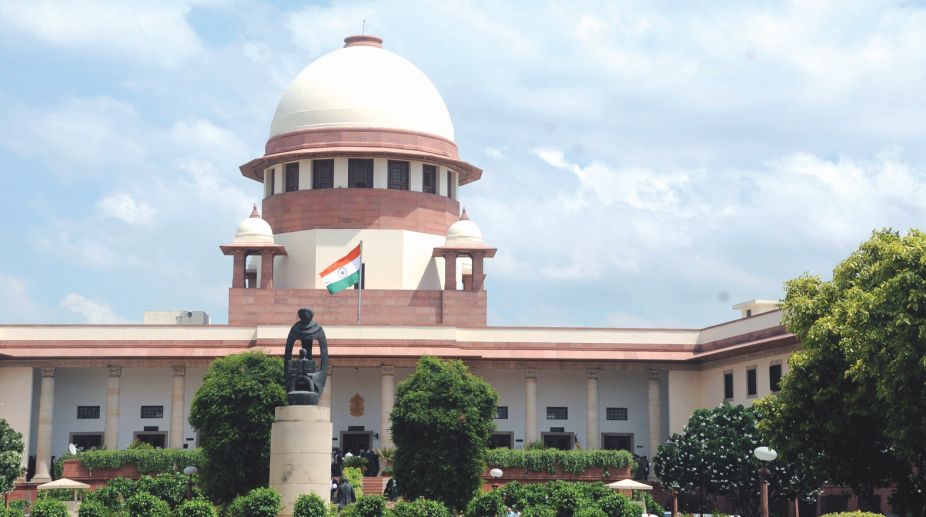
The unprecedented crisis gripping the Supreme Court continues to rage, even as Attorney General K K Venugopal ~ the central government’s top law officer ~ Tuesday made a U-turn from his Monday’s position, conceding that the conflict between Chief Justice of India (CJI) Dipak Misra and four seniormost judges after him has remained “unresolved”.

However, there were some signs of a possible thaw on Tuesday as CJI Misra met the four ‘rebel’ judges ~ Justices J Chelameswar, Ranjan Gogoi, M B Lokur and Kurian Joseph ~ for about 15 minutes before starting the normal work of the day. Some other judges were also present in the meeting following which the CJI and the four top judges went ahead with the listed business of their courtrooms.

The meeting took place in the chamber of the CJI, who had requested the four top judges to meet him. The five seniormost judges, who are members of the Collegium, agreed that the institution was capable of resolving all issues by itself, sources said.

The meeting, however, remained inconclusive and the CJI is likely to hold another round of meeting with the four judges on Wednesday to deliberate on the issues raised by them against him.

The AG had on Monday claimed that all their issues had been settled and that it was all a “storm in a tea cup”.

Messenger from afar

Fabo Feng |

One of the highlights of 2017 was the discovery of the first object in our solar system that definitely came from somewhere else. At first we thought it was a comet, then an asteroid, and now the International Astronomical Union has reclassified it as something new entirely — an interstellar object. The Hawaiian astronomers who discovered it aptly named it Oumuamua, which means “a messenger from afar arriving first”, reflecting that this object is like a scout sent from the past to reach out to us.

Research has already helped us learn a lot about Oumuamua’s rare cigar-like shape, what it’s made of (ice with a carbon-rich surface) and its highly unusual orbit, which will take it out of our solar system at a speed of around 26km/s. The Breakthrough Listen research programme has even investigated whether Oumuamua is an alien space ship by scanning the object for life forms with the Green Bank telescope. No intelligent signals have been identified so far, though further observations are planned.

Now my latest study gives us a glimpse of exactly where Oumuamua may have come from. Reconstructing the object’s motion, my research suggests it probably came from the nearby “Pleiades moving group” of young stars, also known as the “Local Association”. It was likely ejected from its home solar system and sent out to travel interstellar space.

Based on Oumuamua’s trajectory, I simulated how it has probably travelled through the galaxy and compared this to the motions of nearby stars. I found the object passed 109 stars within a distance of 16 light years. It went by five of these stars from the Local Association (a group of young stars likely to have formed together) at a very slow speed relative to their movement.

It’s likely that when Oumuamua was first ejected into space, it was travelling at just enough speed to break away from the gravity of its planet or star of origin, rather than at a much faster speed that would require even more energy. This means we’d expect the object to move relatively slowly at the start of its interstellar journey, and so its slow encounters with these five stars suggests it was ejected from one of the group.
Stars typically move with an average speed when they are formed and gradually change speed as they encounter very large objects, such as massive stars and molecular clouds and are affected by their gravity. Unlike most nearby stars, Oumuamua moves very slowly compared to the average motion of the rest of the galaxy. This suggests it has only been travelling in interstellar space for a relatively short time and hasn’t had a chance to encounter many massive objects that would speed it up.

We also have evidence for Oumuamua’s relatively young age from the colour of its surface. Outside of the protection of a star’s magnetic field, objects in space are bombarded with cosmic rays and interstellar dust and gas that gradually alter their surfaces and turn them very red in colour. But Oumuamua has a more neutral colour, suggesting it has only been impacted by cosmic rays for, at most, hundreds of millions of years rather than for the billions of years that our solar system has existed. Oumuamua is extremely elongated and has quite a different shape from other objects in our solar system. It was probably formed by a relatively high-energy process, such as a collision, or ejected from a forming star. Most objects in the outer part of a planetary system are made more of ice and most objects in the inner regions are made more of rocks. Since Oumuamua is a more even mix of ice and rocks, it’s likely it came from the middle part of a solar system, similar to the asteroid belt between Mars and Jupiter that features a mixture of icy and rocky asteroids.

Perhaps the most plausible scenario is that Oumuamua was ejected from a closely separated binary star system made of two stars closely orbiting each other. Objects orbiting one of the stars in a binary system will be strongly affected by the gravity of the other and so can be more easily ejected from the system than if it had just one star.

Oumuamua is probably just the tip of the iceberg. My research suggests there are likely more than 46 million similar interstellar objects crossing the solar system every year. Most of them will be too far away for us to see with our current telescopes. But new telescopes and surveys should soon be able to find these interstellar messengers, which may be sending us important information about how stars and planets are formed. Studying more objects like Oumuamua will enable us to work out how much debris is left over from star formation and how much this adds to the mass of our galaxy.

Another reason to study these interstellar objects is that they could one day threaten to collide with the Earth and cause catastrophic events such as mass extinctions. The more we know, the better prepared we’ll be if that day ever comes.

Plugging escape routes

S Ananthanarayanan |

Pathogens have a tendency to develop resistance. The usual pathway is through chance mutations that have inborn resistance. These mutants, though in small numbers, survive the attack by drugs and the body’s mechanisms against the original organisms, and they thrive, because the drugs reduce their competitors for resources. Mutants hence multiply and grow into a drug-resistant strain, in good numbers.

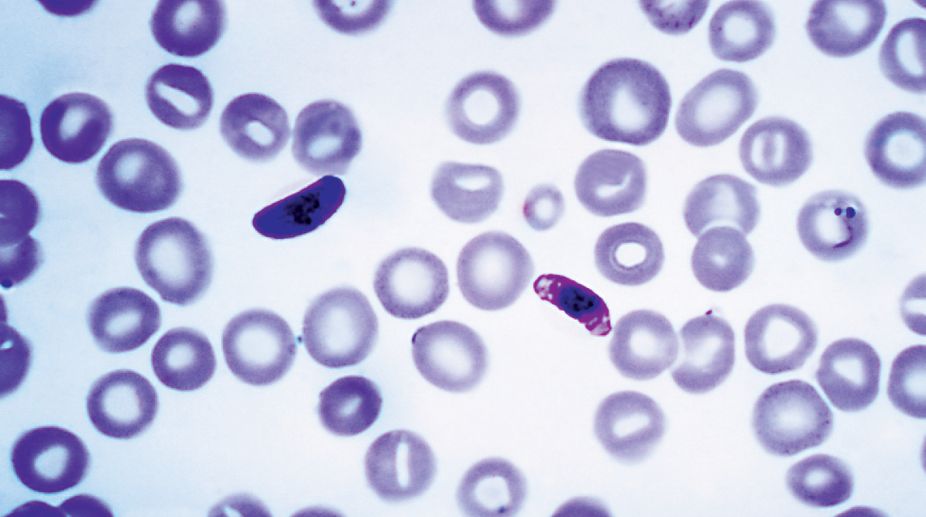
Malaria is a notable example of this method of keeping a step ahead of drugs and has been rampant in the tropics, where the temperature and humidity favour the growth of the malaria parasite. In a paper just published in the journal, Science (of the American Association for the Advancement of Science), Elizabeth A Winzeler and a team of scientists from California, Missouri, Massachusetts, New York, Geneva and Madrid describe an innovative strategy to track down the sensitive spot in the parasite’s genome, to block the facility with which it changes form.

The authors explain that a single human infection may result in more than a thousand billion blood-stage parasites. With even a mutation rate of one instance in a billion, at least one parasite that resists known drugs or body defences can turn up in a few reproductive cycles. And this mutant strain can grow unopposed, for months, till effective drugs are developed.

While this rapid proliferation and turnaround of generations leads to successive, new drugs becoming obsolete, the same features allow the process of evolution, under pressure of anti-malarial substances, to be initiated and observed in the laboratory. As drug-resistant forms arise in the laboratory cultures, minute genetic changes can be traced, by analyses of the genome of the succession of parent and mutant offspring, to uncover the changes that bring about drug resistance. The paper notes that watching for the changes that accompany the onset of resistance is also an effective method of isolating the target, or mechanism of action, of a known anti-malarial agent. These methods, however, have focused, so far, on isolated genetic effects of single compounds.

In the present study, the group systematically examined the changes in the DNA of the falciparum malaria parasite, over its life cycle, as it evolved and developed resistance against a range of anti-malarial substances. The bulk of therapeutic drugs consist of organic chemical molecules that are small in comparison with structures like proteins. These molecules act by binding at specific regions of large biological molecules or cells or act as initiators of immune or other responses. As small molecules can be absorbed through the intestinal wall, it is possible for such drugs to be administered orally. The study was hence conducted with a collection of plasmodium falciparum parasites of the same genealogy, which had developed resistance against an array of 37 different small molecules. Most of these were known anti-malarials, while the others had significant chemical structures.

To isolate the genetic bases of the drug-resistance developed, the DNA structures of 204 mutant varieties of the falciparum parasite were fully sequenced. The DNA structure is a pair of strings, each of which is a series made up of four kinds of chemical units known as A,T,G and C. The units in the pair of strings are interconnected, to form the shape of a spiralling ladder, with the rule that A must pair with T and C must pair with G. The sequence of bases in one string thus defines the sequence in the other string and this is what makes it possible for each string to build up the complementary string when the DNA splits into two during cell division.

Segments of DNA, each one called a gene, are the code on the basis of which the cells of an organism generate different proteins. The structure of the DNA thus administers the functional viability of a species and permitted variations in the DNA structure lead to differences in the individuals of the species. These are the differences among the descendents of pathogen organisms that may lead to some growing resistant to drugs or other agents that threaten the organism.

In 262 analyses of the sequences of millions of units (which are called base pairs) in the DNA, the study discovered 1,277 instances of a change in a single base pair and 668 small insertions or deletion of base pairs. Single base pair damage, called point mutations, can have far ranging effects and there is a list of serious genetics disorders arising from them. This study, like others that have gone before, thus finds single base pair damage implicated in malarial drug resistance.

In addition to single pair variations, the study found frequent instances of base pairs or series of base pairs being repeated, a feature known as copy number variants, which contribute to drug-resistance. While the human DNA, with three billion base pairs, codes for 30,000 genes, it was believed that the DNA usually had two copies of each gene. But it has been discovered that there are often many copies and great variety in the number of copies of even large sections of DNA, often in parts that do not code for genes.

Such variations lead to individual differences, due to which functional genes are differently presented for becoming active. That leads to differences in traits, including susceptibility to disease, or, in the case of the malaria parasite, in the sensitivity to drugs. True to being difficult to handle, the paper notes that even in this feature of copy number variants, the structure of p falciparum is “A-T rich”, which makes it problematic to detect copy number variation. The team hence developed a case specific algorithm for detecting copy number variants.

The team notes that the study, through “a controlled examination of anti-malarial drug resistance acquisition”, has identified a collection of genes that would aid clinical studies and drug development. “It is notable that we were able to identify a likely target or resistance gene for every compound for which resistant parasites were generated. Our characterisation of the chemo genetic landscape of p falciparum will guide the design of small-molecule inhibitors against this deadly eukaryotic pathogen,” the paper says.


BSE to buy back shares worth Rs 166 cr

Statesman News Service | Mumbai |

The board of directors of Bombay Stock Exchange Limited has approved a proposal to buy back its shares worth `166 crore within a year of its listing at a price not exceeding `1,100/stock. Asia’s oldest exchange founded in 1875 plans to buy back up to 15.09 lakh or 9.99 per cent of the aggregate of its paid- up capital and free reserves.
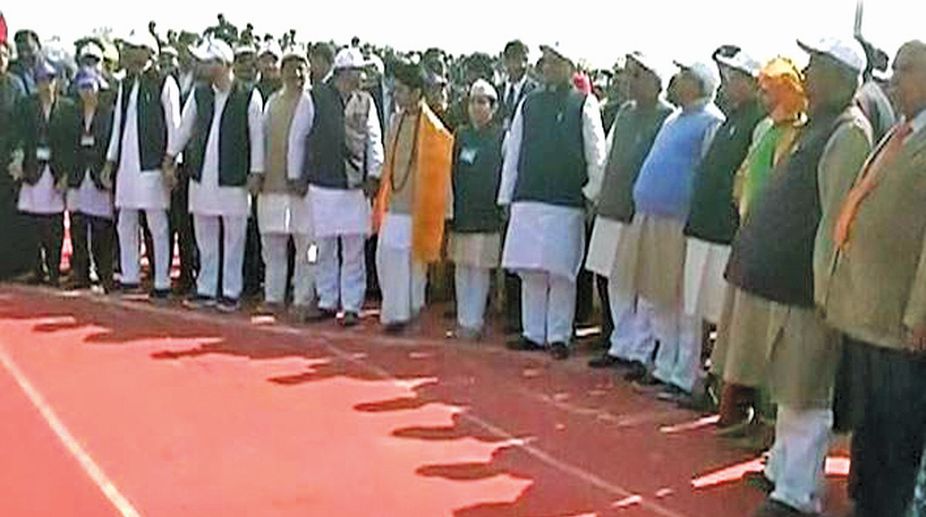
According to BSE CEO Ashish Chauhan, the exchange wants to start its own commodity exchange, where derivatives in commodities would be traded. Mock trading in commodities would start in a few weeks and the proposed exchange would be fully functional by October 2018, said Chauhan.
BSE, which lags behind NSE in futures and options derivatives trade, apparently now wants to make up for the delay in initiating F&O trade by diversifying in commodity and other exchange related activities.
Last year, BSE stock made a strong debut on NSE closing 33 per cent up in its very first trade at `1,070.55. BSE IPO of `1,234.4 crore was a big success. Significantly BSE piped NSE in going public last year while the state-run NSE’s IPO is yet to be cleared by Securities and Exchange Board of India. However, BSE share on Tuesday slipped nearly five per cent after its board’s announced buyback plan after market hours on Monday.

Meanwhile, the 30-scrip Sensitive Index of BSE and 50-stock Nifty of NSE turned choppy after Kotak Mahindra Bank’s vice-chairman Uday Kotak stirred a debate on “liquidity induces bubble” forming in main exchanges across the continents.

Most analysts on Tuesday said they do agree with the private banker saying the equity benchmarks have rallied ahead of macros or economic fundamentals. It is purely liquidity driven rally for which brokerages point fingers at central banks in developed countries since these monetary regulators had pumped in excess liquidity in the aftermath of 2008 global economic crisis in their attempt to revive their respective economies.

Kotak has warned against abnormal jump in prices of shares in mid-cap and small-cap categories which could be a cause of serious worry since there is no clarity in governance of these entities. Besides, household savings are being invested in many of these entities.

The Sensex after hitting yet another fresh high of 34,936.03 (+92.46) points turned volatile shifting from positive to negative terrain to end the day at 34,771.05 (-72.46) points down 0.21 per cent. Nifty dropped from day’s 10,762.35 (+20.80) points high to end at 10,700.45 (-41.10) points, down 0.38 pc.