Logo

S Corpn to waive penalty, interest on property tax till 31 March

Statesman News Service | New Delhi |

Hundreds of crores of rupees in interest and penalties on pending property tax payments will be waived till 31 March, the South Corporation announced in a meeting of standing committee on Friday.

Presenting the revised budget estimates 2017-18 and budget estimates 2018-19, standing committee chairman Bhupender Gupta said that the amnesty scheme for waiver of hundred per cent penalties and interest amount on property tax arrears would continue till 31 March this year. The civic body move is aimed to encourage people to start paying taxes, he clarified. “The amnesty scheme 2017-18 in unauthorised colonies, villages and urbanised villages for waiver of 100 per cent interest and 100 per cent penalty will be extended upto 31 March 2018. Unauthorised regularised colonies may also be included in the ambit of the amnesty scheme,” said the chairman.

After the unit area method of computing property tax was introduced in 2004, the corporation is not known to have collected any money from unauthorised colonies. Officials claimed that if these properties were brought under the tax net, the civic body would earn an additional Rs 10 crore annually. Waiving the penalty, however, would cause it a one-time loss of Rs 40 crore.

According to the Delhi Municipal Corporation Act, all properties under SDMC jurisdiction have to pay property tax. However, sources said, due to political intervention and after the introduction of the unit area method, there had been no income for the corporation from unauthorised colonies. There are around eight lakh properties spread over 1,100 unauthorised colonies under SDMC jurisdiction. Overall, while there are 16 lakh properties under the corporation, the civic body has managed to bring only 4.4 lakh in the tax net.

It also announced for the withdrawal of the proposed hike in property tax rates on residential properties. Property tax on non-residential properties may be levied on the basis of categories of colonies instead of group of buildings at 20 per cent on annual value in A to F categories and 15 per cent in G to H categories. Mutation fee may also be hiked from Rs 150 to 1500.

“Remission of full property tax in respect of one property of a martyr from armed and paramilitary forces will be allowed. Similarly, regular safai karamcharis will be facilitated.”
The chairman said that the assessment of property would be done on the basis of declaration made by the owner in respect of year of purchase of property. Presently the claim is being sent in respect of such properties since 2004.

The civic body has announced for the free booking of AC and non-AC community centres for the marriage of daughter of the martyrs of armed and paramilitary forces.
Poor women and members of the washermen community will also be given one cooking gas stove and one five kg LPG cylinder instead of sewing machine and ‘dhobi press’ being distributed presently.

Rising trend continues in equity markets

Statesman News Service | Mumbai |

Performing up to the market’s expectations private lenders such as HDFC Bank, Kotak Mahindra Bank and Yes Bank ~ regardless of some concerns over assets stability ~ stayed in the forefront of the continuing rally for the second day today. Dalal Street participants, according to analysts, are more relieved to note that banks and IT segment stocks are back in the reckoning after a significant gap and are handsomely contributing to the current rally.

Today the Sensex and Nifty resumed on a steady note retaining upside bias of the previous two sessions. As Q3 earning numbers, including that of ITC, started coming in, positive sentiment picked up taking these benchmarks to fresh new highs. The benchmark received a boost in the last hour on brisk buying.

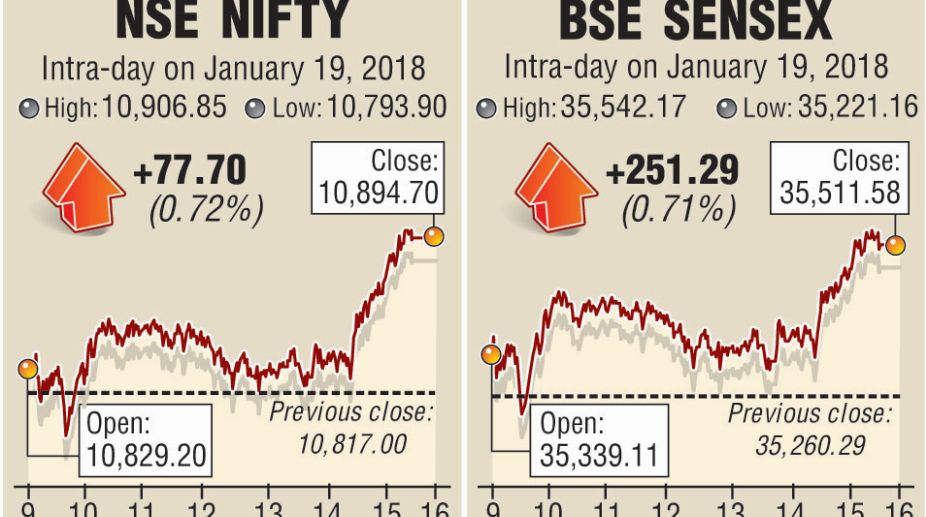
The Sensex closed at 35,511.58 (+251.29) points gaining 0.71 per cent and Nifty at 10,894.70 (+77.70) points, up 0.72 per cent. For the week BSE top index gained 919.29 points and Nifty jumped 213.45 points. Bank Nifty stood out as major performance for the day as it ended with 1.40 per cent increase at 26,909.50 (+372.10) points. PSU Bank Nifty jumped 2.18 per cent to end at 3,710.70 (+79.25) points. In Sensex 24 stocks advanced and seven declined. For Nifty the figure was 39:9:2.

HDFC Bank was the first in the day to declare its Q3 (October-December) earnings that enabled Nifty Bank to maintain its upside momentum. The country’s second biggest lender by assets value posted 20 per cent rise in net profit at Rs 4,642.60 crore over previous year’s Rs 3,865. NII or net interest income (difference between interest earned and expended) is up 24.1 per cent at Rs 10,314.3 crore. However, gross bad loans at 1.29 per cent of total loans were slightly higher than 1.26 per cent in the September quarter. The HDFC Bank stock which has gained 59 per cent in one year today hit a fresh record high of Rs 1,954 on BSE which was an increase of 3.3 per cent.

Another private lender Kotak Mahindra Bank delivered steady Q3 numbers with profit growing to Rs 1,053 crore in Q2 from Rs 880 crore for the corresponding period of previous year. The NII is up 17 per cent to Rs 2,394 crore. But significantly KM Bank has improved its gross NPA ratio from 2.47 per cent to 2.31 per cent on QoQ while net NPA ratio at 1.09 per cent was down from 1.26 per cent previous year. Analysts say improvement in credit growth in recent months has been a major achievement for lenders.

Mr Mahesh Patil investment official of Birla Sunlife AMC has highlighted relatively better valuations in large cap stocks and investors’ interest in IT and consumption segments apart from banks. He feel the government focus on rural economy would push up consumption in 2018 which is likely to witness a doubling of investment by foreign portfolio investors in domestic stocks.

In yesterday’s rally, FPIs were top investors. They bought equities worth Rs 1,894.49 crore apparently welcoming the government’s intention to raise their investment limits in private and state-run banks to 100 per cent and 49 per cent albeit subject to the Reserve Bank of India’s clearance.

FPIs in january have been net buyers in shares worth Rs 4,019.49 crore. Yesterday domestic institutional investors booked profits at higher levels by selling shares worth Rs 657.46 crore.
Today the Sensex and Nifty resumed on a steady note retaining upside bias of the previous two sessions.

Sohrabuddin: Lawyers’ body moves HC against CBI not challenging Shah’s discharge

Statesman News Service | Mumbai |

A city-based lawyers’ association today filed a PIL in the Bombay High Court against CBI’s decision not to challenge a lower court order discharging BJP president Amit Shah in the Sohrabuddin Shaikh fake encounter case.

The Bombay Lawyers Association, which filed the public interest litigation, termed as “illegal, arbitrary and malafide” the CBI’s decision not to challenge the 30 December, 2014 order passed by a court here discharging Shah. The PIL urged the HC to issue a direction to the CBI to file a revision application challenging the sessions court’s order discharging Shah.

The petitioner’s lawyer Ahmad Abidi said the plea would be mentioned before a division bench of justices S C Dharmadhikari and Bharti Dangre on 22 January.
“The CBI is a premier investigating agency. It has a public duty to observe the rule of law in its action but it has miserably failed,” the petition said.

It submitted that the trial court had similarly discharged two Rajasthan Police sub-inspectors, Himanshu Singh and Shyam Singh Charan, and senior Gujarat police officer N K Amin in the case.
“The petitioner has learnt that the CBI has challenged their discharge before the high court. This act of the CBI in challenging discharge of the accused persons on selective basis is arbitrary and unreasonable, rather malafide,” the petition said.

It claimed the Supreme Court, while transferring the trial in the case from Gujarat to Mumbai, had ordered that it be concluded expeditiously.

In a related development, another high court judge today issued notices to the CBI and the accused in the Sohrabuddin Shaikh case on two petitions filed by journalists against the trial court’s ban on reporting the proceedings. Justice Revati Mohite-Dere will hear the petitions on 23 January.

CPM CC meet to resolve political plan

Statesman News Service | Kolkata |

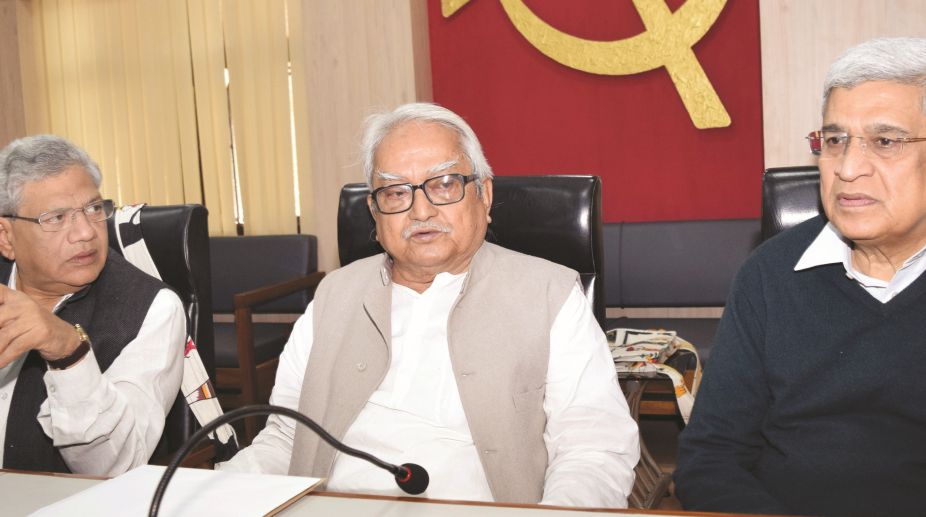
The CPI(M) politburo members along with its central committee members joined the three-day CC meeting at the state party headquarters today. It is learnt that the party will finalise the political and tactical resolutions which will be adopted in party congress to be held in Hyderabad in April.

The party will prepare a detailed strategy to tackle BJP in the state as two different lobbies of the party, owing allegiance to former general secretary Prakash Karat and current general secretary Sitaram Yechuri, reached a consensus that BJP is the most “dangerous force” in the state and the Centre.

However, party sources said the factions led by Yechury and predecessor Karat could gear up for another showdown at the party’s central committee meeting if they fail to iron out their differences on the party’s approach towards the Congress. The CC will then consider two separate drafts of the political resolution.

The CPI(M) will organise a party congress in Hyderabad from 18 February to 22 February and this CC will finalise the political resolution for the 22-party congress.

The two sides differed on the party’s approach at the last politburo meeting in December. They had agreed to work to curb down the divergence of views and present one document, but differences persist and two documents ~ by Yechury, and by Karat and S R Pillai ~ will be considered by the central committee.

Both sides agreed that the primary objective of the party should be to oust the BJP-led government at the Centre. Three of the five points made by Yechury in the revised draft are in this fashion: Strengthen the party and its independent activities, strengthen Left unity through movements and forge a unity of Left and democratic forces and form a Left and democratic front to offer a political alternative. Sources said the Karat side agreed with this. Earlier Yechury also said the party should have an anti-communal campaign in cooperation with other secular forces.

Party sources said the Karat side, however, is unwilling to accept his last formulation that the party should work to achieve its primary objective of defeating the BJP and ousting it from power “without entering into an electoral alliance or front” with ruling-class parties.

The Karat draft says the party should work to achieve the same goal “without entering into any understanding of alliance with the Congress”.
It goes on to say that in states where there are dominant regional parties, the party can have an understanding with them even though they are in alliance with the Congress. The specific example could be Tamil

Nadu where the CPM wants an alliance with the DMK which will have an alliance with the Congress.

The Karat draft also says that in states where the Congress and the BJP are in a direct fight, the CPM can contest a few seats and campaign for the defeat of the BJP in other seats.

The Yechury faction said the Karat formulation is contradictory as the party giving a call for the defeat of the BJP which means seeking for support to the Congress. “So a consensus must be reached to resolve this,” a senior leader party leader said.

Meanwhile, former Kerala chief minister and an invited member of the CC, VS Achuthanandan, who did not attend CC meeting wrote letters to the members for a greater unity of the democratic forces, in which Congress must be included.

CPI-M leaders Gautam Deb and Mridul Dey urged for a united democratic force in the state which could fight BJP and Trinamul Congress. Party sources said they demanded inclusion of the Congress to the democratic forces.

Mamata slams Centre’s move to stop 8 Rly routes in Bengal

Statesman News Service | Kolkata |

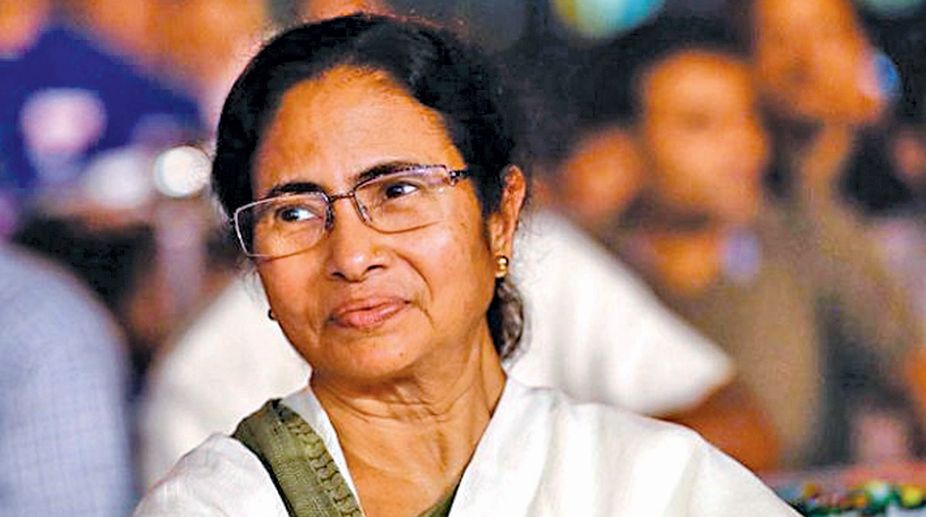
Chief minister Mamata Banerjee today criticised the Centre’s proposal to close eight non-viable suburban railway routes and termed it as an insult to the Bengal government.

The Eastern Railway has recently informed the state about the proposal and requested the latter to share the financial burden that is incurred in plying trains on these routes. It said it could run the routes only if the state government shared 50 per cent of the burden.

The routes are ~ Sonarpur-Canning, Shantipur-Nabadwipghat, Barasat-Hasnabad, Kalyani-Kalyani simanta, Ballygunge-Budge Budge, Baruipur-Namkhana, Burdwan-Katwa and Bhimghar-Palasthali.
“This is a sheer effort to deprive our government. It is an insult to Bengal. We will not tolerate this insult. The trains on the routes termed unprofitable were started during my tenure as Railway minister. This is nothing less than a political vengence. We won’t accept the decision of the Railway ministry,” said Miss Banerjee.

The Centre, she further said, takes away Rs 50,000 crore every year and now they are asking the state to pay 50 per cent for the loss-making projects. We strongly object to this, she added.
In a letter dated 17 January, Mr SS Gehlot, chief commercial manager of Eastern Railway has written to state chief secretary Moloy De to consider its proposal of either closure or sharing the loss of ‘un-economic branch lines’.

According to the letter: “The operation of commercially viable lines, which is source of sustained loss being borne by the Indian Railways has been commented upon by the Public Accounts Committee of Parliament in their 42nd report as well as through their 88th report on the Action Taken note submitted by the Railways ministry.

“PAC has strongly impressed upon the Ministry of Railways to seek consent of state government so as to secure closure of such loss- making lines.

“Accordingly my predecessor had sought the state government’s consent for closure of the lines. In case, however, these are to be retained in public interest, state government’s agrement was requested for sharing the burden of loss of working lines at least in the 50:50 ratio, with Eastern Railway.

“We are yet to recieve the views of the state government on the issue. I would, therefore, request your personal intervention in examining our request expeditiously and communicate the state’s decision in the matter.”

Silvassa tops Smart Cities challenge

Statesman News Service | New Delhi |

Silvassa in Dadra and Nagar Haveli was adjudged the top city among the nine winning cities of Round Four of the National Smart Cities Challenge, Minister of State for Housing and Urban Affairs Hardeep Singh Puri announced here on Friday.

The other eight cities are: Erode (Tamil Nadu), Diu (Daman and Diu), Biharsharif (Bihar), Bareilly (Uttar Pradesh), Itanagar (Arunachal Pradesh), Moradabad and Saharanpur (both Uttar Pradesh) and Kavaratti (Lakshwadeep).

“It is heartening to note that the winning cities have improved the quality of their Smart City proposals by 19% (average) to become eligible for selection. Each city has developed a unique vision and has selected an area which will be developed as a lighthouse, to be replicated by the city. The nine cities selected have proposed an investment of Rs 12,824 crore of which Rs 10,639 crore would be in area based development (ABD) and Rs 2,185 crore in pan city initiatives which would be impacting 35.3 lakh persons living in these areas,” he said.

These nine cities have approximately 409 projects. The funding sources for these projects is proposed to be with; SCM – with contribution from State and Centre 61.25%, Convergence 24.19%, PPP 12.90%, Own sources 1.57%, and other sources 0.09%. With today’s announcement 99 cities Smart Cities have been selected. Twenty cities were selected in January 2016, 13 cities in May 2016, 27 cities in September 2016 and 30 cities in June 2017. With the selection of these nine cities, the total proposed investment in the 99 Smart City Mission would Rs 2,03,979 crore.

As on 17 January this year, there are 2,948 projects worth Rs. 1,38,730 crore which are in various stages of implementation. Altogether 189 projects worth Rs 2,237 crore have been completed, and implementation is underway for 495 projects with a cost of Rs 18,616 crore; further tenders have been floated for 277 projects at a cost of Rs15,885 crore; while 1,987 projects worth Rs.1,01,992 crore are at DPR stage.
The minister also announced the commencement of the Liveability Index Programme in 116 cities.

The ministry has through an international bidding process under World Bank funded CBUD programme selected IPSOS Research Private Limited in consortium with Athena Infonomics India Private Limited and Economist Group Limited for assessment of liveability indices in 116 cities.

SAD asks AAP to stop playing blame game

Statesman News Service | Chandigarh |

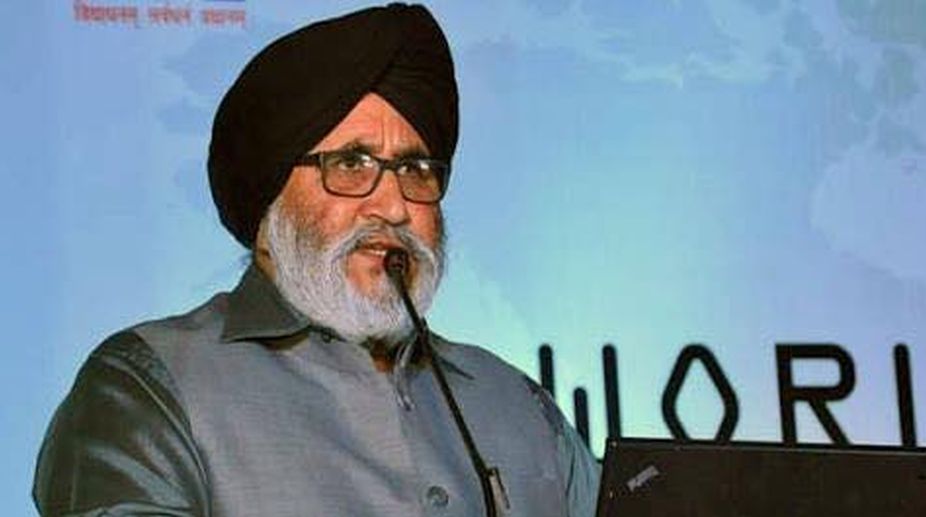
With the Election Commission recommending disqualification of 20 Aam Aadmi Party (AAP) legislators in Delhi for holding offices of profit as parliamentary secretaries, the Shiromani Akali Dal (SAD) on Friday asked AAP convener and Delhi Chief Minister, Arvind Kejriwal, to stop playing a blame game over the issue.

In a statement, SAD spokesman Daljit Singh Cheema said Kejriwal should accept the fact that he had committed a gross irregularity by appointing legislators to office-of-profit posts without amending the concerned State Act and be ready to face the people.

He said it had been conclusively proven that the Delhi CM had gone against the law by appointing 21 legislators to office of profit posts. “The EC has justly held this move to be unconstitutional. Instead of accepting this verdict gracefully, AAP is claiming that its chief parliamentary secretaries were not enjoying any facilities when the state chief secretary has submitted a report to the contrary. No elected government should lie in this manner and when caught should not try to defame institutions like the Election Commission. This kind of behaviour is reprehensible,” the Akali leader said.

Cheema said AAP was resorting to such cheap tactics because it was afraid of facing the people. “If AAP has not done anything wrong, it should not run away from the peoples’ court”. He said AAP was taking desperate measures like trying to approach the high court to avoid going in for an election on 20 seats.

Cheema said the mood of the Delhi electorate was reflected in the municipal elections and the position of AAP had gone from bad to worse since then. “Now it might not even be able to save its security deposit on all these 20 seats”, the SAD spokesman added.

Killing of 3 school kids raises question on human chain success

Statesman News Service | Patna |

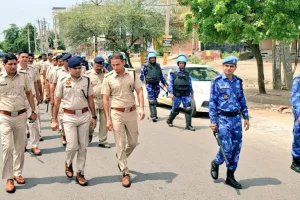
Even as Bihar chief minister Nitish Kumar seeks participation of children in large numbers in state government’s human chain, the killing of three school children and kidnapping of another three in the past 24 hours have raised a question mark over the success of the programme and have exposed the deteriorating law and order situation in the state.

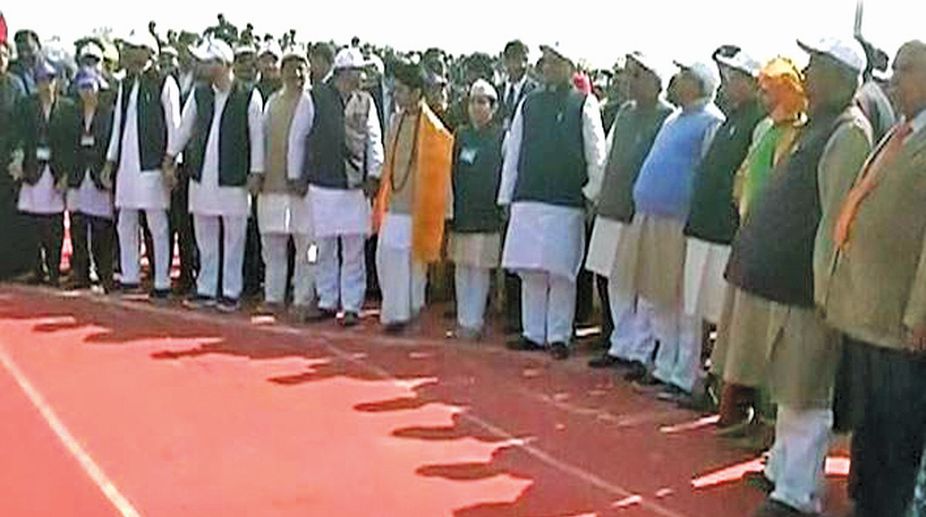
The government has planned to form world’s longest human chain against dowry and child marriage on 21 January, for which the chief minister is making repeated appeals to the masses to join the human chain to make it a huge success.

In capital city Patna, a class nine student was brutally murdered shortly after being kidnapped for ransom. The victim Raunak Kumar, son of a property dealer, was on his way to school when he was kidnapped by some motorcycle-borne miscreants yesterday. Subsequently, a case was registered with the local police but today his body was recovered from a shop in the state capital, triggering strong protests in the area.
According to police, the kidnappers had demanded a ransom of Rs 25 lakh.

“The police kept us assuring that my son is safe and will be recovered soon but today they handed us his body,” said a family member of the victim. The police, however, said the victim was killed soon after he was kidnapped and that they have arrested the main accused. “The arrested person has confessed to the crime. A charge-sheet will be filed soon,” Patna’s senior superintendent of police Manu Maharaj said.
Another schoolboy was killed by kidnappers in Betia area of West Champaran district.

The five-year-old victim Veer Kumar Singh of LKG was kidnapped last evening when he was playing outside with his friends. Today his body was recovered from a safety tank of a building under construction. The victim was the lone child of his parents.

Yet another murder of a schoolboy was reported from Bhabua, the headquarters of Kaimur district. The five-year-old victim had been missing since last week after which a case was registered with the local police. On Thursday, his body was recovered from a well.

Five more school children, four of them girls, were kidnapped from Gaya district yesterday while on their way to a coaching centre. According to reports, the victims were waiting for a vehicle, when a car suddenly stopped near them and offered them lift, promising to drop them at the designated place.

However, soon after they took lift, the car picked up speed. Sensing some foul play, two of the girls opened the door and jumped out of the car and it was then that the entire story came to light. Three schoolchildren, however, are still missing.

The Opposition today mounted heavy attacks on the government describing the incidents as “total collapse” of the law and order situation in Bihar.

“Criminals and kidnappers are roaming around freely while the government is silent. Why is the BJP, especially Sushil Kumar Modi, who routinely talked about ‘jungle raj’ when the RJD was in power is mysteriously silent now?” asked Bihar Opposition leader Tejashwi Yadav. He said the situation had come to a sorry pass since “the present government has come to power by stealing people’s mandate.”

‘Attacks on journalists increased in 2017’

Statesman News Service | New Delhi |

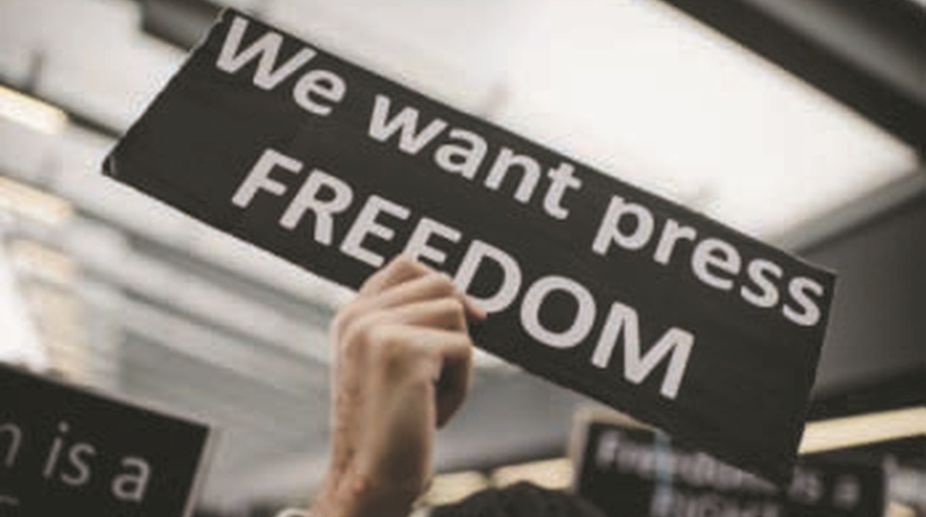
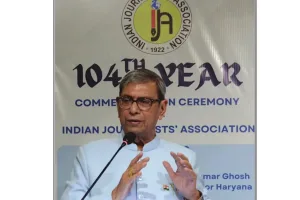
The climate for journalism in India grew steadily adverse in 2017 with a host of perpetrators making reporters and photographers, even editors, their target, media watchdog The Hoot’s “India Freedom Report ~ Media Freedom and Freedom of Expression in 2017,” released on Friday revealed.

There were murders, attacks, threats, and cases filed against them for defamation, sedition, and internet-related offences, it said.

It was a year in which two journalists were shot at point blank range and killed, and one was hacked to death as police stood by and did not stop the mob, the report said. Statistics compiled by The Hoot show there were 46 attacks, 27 cases of police action including detentions, arrests and cases filed, and 12 cases of threats.

The major perpetrators of the attacks tend to be the police, politicians and political workers, followed by right wing activists and other non-state actors, the report’s section “journalists under attack” said.
These cases included a minister from Uttar Pradesh who threatened to set a journalist on fire, and an MLA from Chirala in Andhra Pradesh and his brother, accused of being behind a brutal attack on a magazine journalist. If RJD leader Lalu Prasad threatened to punch a Republic TV reporter in the face, his son Tejashwi’s guards assaulted reporters and photographers when they arrived at his house to get his reaction to an FIR being lodged against him on corruption charges, the report pointed out.

The report’s section on “Murders” said 11 journalists were murdered in 2017 in India. In only three of these cases, there is a clear linkage with their journalistic work. One murder, that of journalist Gauri Lankesh, took place in Karnataka and two others in Tripura. Gauri was Editor of the Kannada publication Gauri Lankesh Patrike. Till date, no arrest has been made.

Santanu Bhowmick, a journalist from Din Raat news channel, was killed on 20 September, 2017 and several people were wounded in clashes between supporters of two rival tribal associations in Mandwai, about 28 km from the Tripura capital of Agartala. Another journalist was shot dead on 21 November in the same year by personal security officer of a commandant of the Tripura State Rifles. Sudip Datta Bhaumik was a senior journalist with the Syandan Patrika, a leading Bengali newspaper in Agartala, and had gone to meet the local commandant. He had an altercation with the PSO.

In the section “Attacks,” the report said,“the larger evidence of how increasingly vulnerable journalists became emerged from the growing attacks on reporters, photographers and stringers going about their job. In the year under review, 46 attacks were recorded.” In the violence which followed the Dera Sacha Sauda chief Gurmeet Singh’s arrest in August 2017, the physical vulnerability of the media was on display: TV vans up in flames, a cameraman missing after the violence, and a Punjabi language news channel reporter as well as an NDTV engineer injured in the attacks, the report said.

As television channels bore the brunt of the violence that broke out in Haryana and parts of Delhi after Singh was convicted of rape, I&B minister Smriti Irani tweeted a veiled warning to television channels. She drew attention to Clause B of the News Broadcasting Standards Authority code on spreading panic, distress and undue fear. She was swiftly pilloried on Twitter for that, the report added.

Andhra Pradesh has seen no less than three attacks in February, March and April by the politician-criminal nexus on those reporting on illegal mining and corruption. Stringers are easy targets, the report said.
In Andhra Pradesh, most attacks follow stories on illegal mining, usually where those in power are involved.

Under its section “arrests and police cases against journalists,” the report said there were 13 cases of journalists being interrogated who were later let off, or arrested, or had cases registered against them.
Frontline magazine correspondent Kunal Shankar was held in January for trespassing into the University of Hyderabad and violating the High Court order (barring outsider entry) on the first death anniversary of Rohith Vemula. He was questioned and subsequently released.

In August, the Chandigarh police banned media personnel from entering Sector 26 police station which is investigating the Varnika Kundu stalking case.
ABC Four Corners, an Australian news team, was threatened by the Crime Branch of Gujarat Police in October while it was at Gujarat’s Mundra port to investigate the Adani group. It was forced to leave Gujarat and India.

On actions by legislatures, the report said, in July, the Kashmir Assembly was adjourned after the Opposition raised the issue of unprecedented regulation of the media in covering the special session on GST. The National Conference, Congress and other opposition parties said they would not be part of any proceeding in which media will be deliberately kept away.

On cases of censorship, The Hoot report recalled that in June, West Bengal chief minister Mamata Banerjee pulled up the authorities of Shri Shikshayatan, a private girl’s school in Kolkata, for playing Prime Minister Narendra Modi’s ‘Maan Ki Baat’ for students. She warned the school authorities that such initiatives do not add to knowledge and are merely political initiatives, and no child must be forced to listen to a speech against their choice.

The Hoot recalled cases of “news censorship” including the one on Independence Day, when Manik Sarkar, the chief minister of Tripura found Doordarshan and All India Radio refusing to broadcast the customary Independence Day address he had recorded until he reshaped it. Restricting media access became rather frequent in 2017. The list of governments is long: Goa, Kerala, West Bengal, Odisha, Jammu and Kashmir and Rajasthan. What’s more, political parties also got into the act.

In December, reporters in J&K were “barred” from covering the activities of the Government of India’s special representative Dineshwar Sharma during his maiden visit to the frontier district of Kupwara.
In its section giving state-wise account on the “climate for free speech,” The Hoot report said Kashmir notched up the worst record in India for a population chronically affected by internet shutdowns and for journalists working in difficult, conflict-ridden conditions which included attacks, police actions and threats.

Authored by Sevanti Ninan, The Hoot report recalled the internet-related cases and said Section 66A of the IT Act was “used” during the year, although it had been struck down by the Supreme Court in 2015! In 2017 there were at least 32 cases of action taken on account of internet-related offences.

The Hoot’s documentation showed that 13 arrests were made in the course of the year, in Andhra Pradesh (3), Assam (1), Karnataka (1), Madhya Pradesh 1), Rajasthan (1), Maharashtra (1) Uttar Pradesh and West Bengal (5). In other cases FIRs were lodged against multiple persons and complaints booked. In at least six cases across the country section 66A was still invoked along with other provisions of the law, the report says.

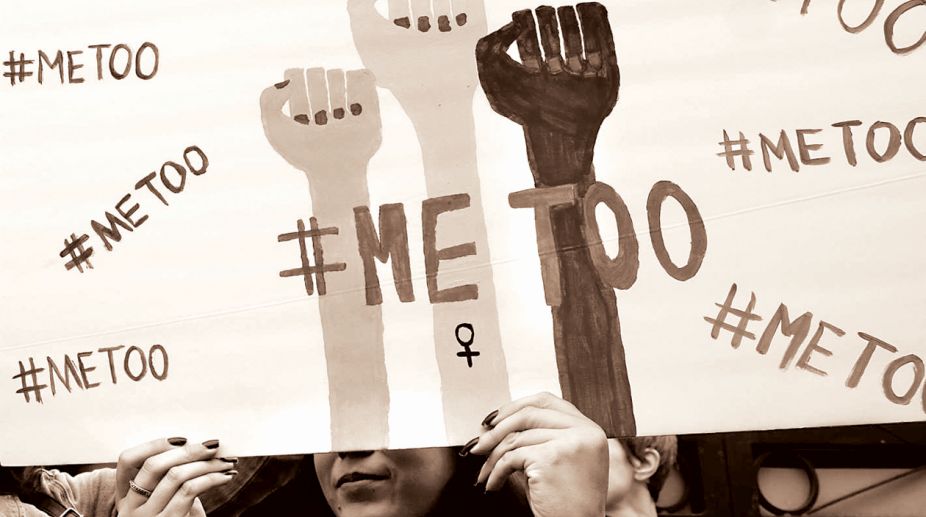
#MeToo exposes West’s underbelly

Pramod Mishra |

The #MeToo movement has turned into a revolution in the United States, and its repercussions are being felt all over the world. As in any revolution, unruly heads of men have rolled, bodies of women have been avenged, men’s wayward hands have been tied, and such men themselves have been kicked out of their posts. Feminist scholars have come to argue not just for notional freedom but one that is embodied as well—the freedom of women over their bodies in the world.

The #MeToo movement has turned into a revolution in the United States, and its repercussions are being felt all over the world. As in any revolution, unruly heads of men have rolled, bodies of women have been avenged, men’s wayward hands have been tied, and such men themselves have been kicked out of their posts. Feminist scholars have come to argue not just for notional freedom but one that is embodied as well—the freedom of women over their bodies in the world.

Who knew what had been going on behind closed doors and who knew about the interactions between American men and women before the #MeToo movement exploded and exposed not just the monsters like Harvey Weinstein, Charlie Rose and Matt Lauer, but a whole world of unwanted interactions that had so far remained hidden from public view?

The rest of the world, especially the non-Western world, had thought that American women had empowered themselves with the suffragette movement resulting in their voting rights in 1920 (by the way, the bastion of liberty, equality and fraternity, France, gave voting rights to women only in 1944), and with the Flappers (women so called for wearing loose, unconventional clothing as their new-found fashion statement) embracing the freedom to wear short skirts and sleeveless blouses in the Roaring Twenties.

Then, after surviving the Great Depression, World War II and the conservative 1950s, the 60s unlocked the doors for freedom of all kinds for the young, the ethnic groups, especially African Americans through the Civil Rights movement, and the women.

The contraceptive pill liberated women’s sexuality in a way that freed her for the most part from the clutches of her family, clan, marriage and procreation.Even though courtship and falling in love had been a longstanding precondition of marriage in the West, sexual experimentation with different eligible girls and boys (men and women, if you prefer) had not been socially accepted before. A glance through 18th century sentimental English novels will tell you that. But by the 90s, if one didn’t play around and map the field before getting married, one was considered a fool.

One was not expected to get married with the man or woman whom one met for the first time. If one did not map the field, it was thought that one was immature and naïve, and sorely lacking in the training and social skills necessary for successfully navigating one’s way through life.Here is an example:  I had a female friend at my graduate school who had fallen in love right in her first year in college at a premier American university. She stuck with the guy through college from ages 18 through 22, married him, and went to Europe with him after graduating. But in Europe, their marriage soured, and she returned to the US post-divorce and subsequently enrolled for graduate studies.But now, at an older age, having not experienced the social scene at a nimble age in college by herself, she found herself lacking the social skills to find a new partner.

My friends said that she had wasted her college experience and now she didn’t know how to play the scene and find a boyfriend. In a traditional non-Western culture, I suppose, my friend’s family, extended clan and caste would have found her a partner and arranged a marriage without much hassle—with all the limitations, restrictions, and comfort of an arranged marriage.This realisation of individual freedom to choose the person, the act, or the degree and extent of any act one participates in is at the heart of the #MeToo movement.

My first encounter of a bar scene on Lake Erie in Buffalo, New York, on a night when we were taken bar hopping (that’s what our organisers called it) some two decades ago mesmerised me. Men and women on that warm August night with glasses of alcohol in hand seemed to me to be as free as birds; they had full sovereignty over their bodies. I thought if there was paradise anywhere on earth, this was it—the freedom to be where you want to be with whom you want to be. American men and women had achieved it after a long struggle, I had thought.But the #MeToo movement has revealed the underbelly of Western patriarchy.

To be sure, women are not free in many Muslim or Hindu majority countries because religion and history have fortified patriarchy and women are expected to stay within the patriarchal fortress of traditional rules, laws, customs and mores. Women are not individuals but part of the collective entity of family, clan, caste and religion and its denominations. And in many cases, so are men. But while family, clan, race and religion have freed Western women more or less from their tentacles, they have also been rid of their protection.

In traditional non-Western societies, the family (brothers, fathers, cousins, uncles) protect the young women of the family. A fight or even a riot would ensue if somebody violated a woman’s honour.In the West, especially in the United States, there is no such thing as honour associated with a woman’s sexuality, as it is in many non-Western societies. What women have here is their personhood, their individuality, their self and subjectivity—legal, moral, psychological, philosophical. And now, the #MeToo movement has shown that patriarchy hasn’t allowed women their full personhood and their individuality through the workings of social, political and economic power.In a capitalist system of economic hierarchy, Western women were not given the equality of power that every individual is entitled to in a democracy.

This was so because even professional women suffered sexual harassment and exploitation silently because they were afraid that their career would be ruined or that they would be discredited until the dam broke and the #MeToo movement was born.As I said, like any revolution, this too will go through some excesses, but the open flow of media and social media will stabilise it and offer American women a fresh ground to negotiate their social and sexual power over their bodies. But before this happens, this movement is sure to go through considerable twists and turns. Let’s wish it both good luck and balance.

The writer is department Chair of English Studies at Lewis University in the United States.  The Kathmandu Post/ANN

‘More challenges than under British’

Deepak Razdan |

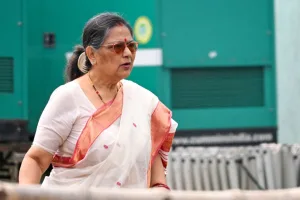
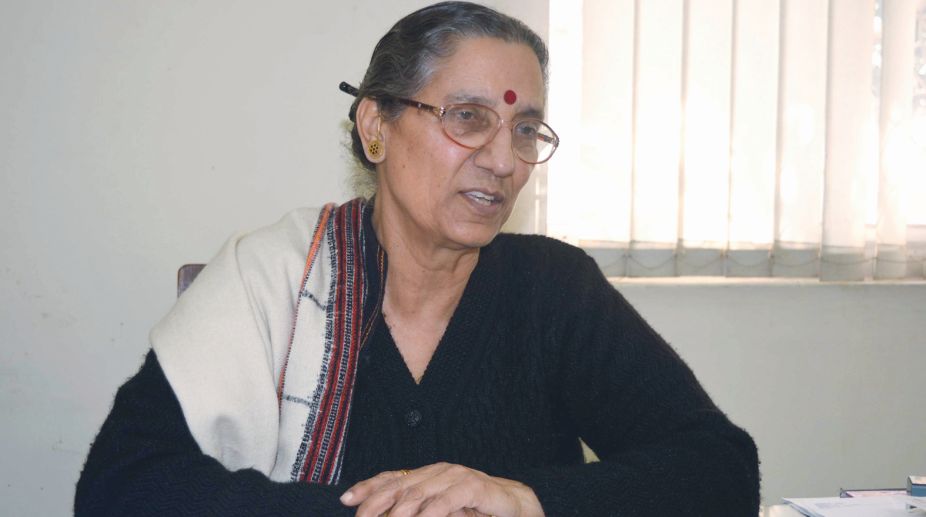
Amarjeet Kaur took over as general secretary of the All India Trade Union Congress (AITUC) at its General Council meet at Ranchi on 11 December 2017, becoming the first woman in Independent India to be at the helm of one of the country’s largest trade unions, after Maniben Kara’s election as AITUC General Secretary in 1936.

Succeeding veteran CPI Parliamentarian and trade union leader Gurudas Dasgupta, Amarjeet has taken charge of the union when the Indian economy is at the threshold of major labour reforms, with mounting pressures from industry and workers. Announcing the change, AITUC, founded in 1920 by Lala Lajpat Rai, said it had elected a “woman leader to lead the movement at this crucial juncture when the working class is facing tremendous challenges”.

Amarjeet (65) started as a student activist at Delhi’s Ramjas College while taking her MSc degree in Physics, following it up with a law degree from Delhi University in 1979. She was General Secretary of All India Students Federation (AISF) for seven years from 1979; and General Secretary, National Federation of Indian Women (NFIW), for three years from 1999.

While a student, she was jailed in Delhi for 10 days in 1972 for participating in a CPI protest over price-rise, and for four days in 1977 for a joint Jamia-JNU-Delhi University students’ protest over Aligarh Muslim University riots. She was AITUC National Secretary from 1994, before becoming its General Secretary last month. Married to an ENT surgeon, she has a doctor-son pursuing super-speciality in medical emergencies in the UK. In this interview to DEEPAK RAZDAN, she spoke on burning labour and employment issues. Excerpts:

Q: What are the major challenges confronting the Indian working class?
A: I think, at present, the Indian working class is facing many more challenges than during British rule. At that time, we knew it was a foreign government, and we had to struggle for Independence, as well as for labour rights. The unions struggled hard and got the Trade Union Act and other Acts during the 1920s.

What is happening today is we have our own government, elected by our own people, but this government at the Centre is trying to do away with whatever we achieved during the British period. So, the challenges are deep. The first challenge is to labour laws, enacted pre- and post-Independence, and to the several rights in the Constitution in recognition of the role played by the working class in the freedom movement.

We got rights of unions, equal pay for equal work, social security for all, laws to protect women labour, no child labour, work place safety, and they were addressed in the Constitution. At present, what we are facing is that the laws we got through Parliament, based on the Constitution’s spirit and direction, are endangered through labour law reforms. These are not labour law reforms, but changes in the labour laws to favour corporates and foreign companies, and employers in general.

Q: Do you think there is jobless growth in the country?
A: Ever since the new liberal economic policy started, we said it would lead to jobless growth. At present, not only is unemployment rising, but jobs are lost also. Jobless growth is growth that is not able to create new jobs. But now we also see those who have jobs are losing them. Existing labour rights are going, and existing jobs are jeopardised, livelihood is being impacted, specially after the way demonetisation was imposed and GST implemented. Lakhs of jobs have gone, and 2.4 lakh small factories shut down work.

Q: How do you think the government is going about labour reforms?
A: The government is going ahead without caring about the trade unions’ viewpoint. While deciding on any amendment Bill, they don’t consult us, they prepare everything, they call us, listen to us, but they practically do what the employers are demanding. They don’t pay heed to any of our suggestions. It happened when they started the codification of labour laws. They have already prepared the three Codes – Wage Code, Industrial Code and Social Security Code.

When they brought the Wage Code, unions had extensive discussions among themselves, and then we took a joint position before the government. But when they brought the Wage Code, none of our suggestions was included. It was the same with the Industrial Code, the meeting was held, the trade unions placed their views, but we are seeing none of our concerns have been taken care of. The Social Security Code is on the website, we have submitted our viewpoints, independently and jointly, but there is no word from their side.

On Wage Code, our fear is the wage negotiation system will collapse; there is Pay Commission for Central Government employees, bipartite wage agreement system for public sector units, and, third, a minimum wage process in various states. All these levels will collapse, the way the Wage Code is drafted. Putting up a minimum floor level and leaving everything to the employers will be damaging.

In the Industrial Code, they are changing the Trade Union and Industrial Disputes Acts, and increasing the threshold for easy hire and fire, and for closing units, in entities having workforce up to 300 workers, in place of 100 workers at present.

The Social Security Code will jeopardise existing schemes like EPF and ESI, construction and beedi workers’ welfare boards. Instead of addressing separately the needs of workers not covered under any of the schemes, they want to combine them with the workers covered under the schemes, put all the money at one place, and thereby kill the schemes.

Q: Despite agreement on major issues, there is no trade union unity?
A: We came on a single platform, all unions including INTUC, Bharatiya Mazdoor Sangh, besides AITUC, HMS and others, 11 of us. Till 2014, we conducted joint activity, INTUC continued with us, and BMS too. After that, when we gave the call for the first strike on 2 September 2015, just four days before the strike, BMS wanted to listen to the Labour Ministry.

We insisted that a Group of Ministers should discuss with us. The Group was there but when it held the meeting, it did not consider our agenda. We decided to go ahead with the strike but two days before that, BMS withdrew. The strike was successful. Since then, the BMS is not on the platform which mainly discusses action programmes. The BMS comes out with statements opposing government proposals from time to time and dharnas, but is not ready for united action. At the sectoral level, they do come together. All other 11 unions are together, and there will be a satyagraha soon.

Q: The government is revising the job data collection methodology. What do you think of this?
A: There are already systems in place. NSS data tells us there are various surveys. I think the government is doing this to undo their failure ~ not to end the failure, but to hide the failure. They want to include everybody, even when you have work for five days or 10 days, or 50 days in a year, they will say they are all employed people. The intention is to hide the failure, the intention is not to make corrections in the existing systems.

Q: Trade unions are charged with having neglected the unorganised workers, accounting for the vast majority of the total work-force.
A: I deny the charge. It is the trade unions which fought for beedi workers and got their beedi welfare hospitals and the Act. Trade unions got legislation for construction workers. Whatever enactments were done were the result of trade unions’ work. More than 80 per cent of our membership comes from the unorganised sector ~ agrarian, agro-based industry, beedi workers, construction, small factories, self-employed rickshaw pullers, shop workers, or street vendors, they have been unionised by trade union workers.

Achievements may be slow because the government’s concern is little. After 30 years’ struggle, we got the 2009 Unorganised Workers’ Social Security Act. Now we are demanding Budget allocation for this law, a few lines of legislation talking of social security without a Budget will not do. Trade unions are not neglecting the unorganised workers.

Q: Is a safe working environment for women workers still a challenge?
A: It is true from all points. Take occupational safety, women have special needs which are not met. Hardly four to five per cent working women are covered by maternity benefit law. The vast majority is not protected, they are even back to work within days of delivery. That women will not work in the night shifts in factories or mines we achieved in the Sixties.

They continued to work in health, aviation, telecom, day and night; but otherwise for security reasons, they were prevented from work between 6 p.m. and 6 a.m. The government has amended the law and factories and mines are included where women can work at night. In the Factories Act, women were barred from working in hazardous industries; now the Act has been amended to say pregnant women will not work in hazardous industries, others can work.

In the Sexual Harassment Act, complaint committees have not been formed even in the government and public-sector units, and the vast majority of unorganised workforce is not covered. A formal employer-employee system is required to address the problem, which does not exist in the unorganised sector. Instead of giving security to women at workplaces, the government is going in the reverse direction.

Q: Trade unionism is generally treated as aggressive activity. How were you drawn towards it?
A: When I joined student movement in the Seventies, I was told I should stay out as student politics was not a girl’s cup of tea. Nothing could stop me once I was in the students’ movement. Now, I am leading the third organisation at the national level. Aggression or no aggression, women have space, and should have space, in every walk of life because they can prove themselves as capable of doing anything.


Budget bucket list

Devendra Saksena |

Union Budget 2018 is being put together under obsessive security. After being fed halwa by the Finance Minister, junior officers of the Finance Ministry are set to be sequestered in the cavernous interiors of North Block… lest the smallest detail of the Budget is known to the public before the document is presented in Parliament. Pressure groups are hurriedly making rounds of top officials pleading for one change or the other. Pink papers are busy speculating on the outline of the Budget. Chief Ministers, as much at sea about the contents of the Budget as the next man, are petitioning the Finance Minister to safeguard the interests of their respective states.
Does the run-up to the Budget have to be like this? The near fanatical secrecy associated with the Budget is a colonial relic which was necessary because at that time the ultimate control over colonial finances was exercised by London. Budget secrecy, as a concept, has already been discarded by former colonies like Canada. Probably, moving with the times, our Government should publish a SWOT (strengths, weaknesses, opportunities and threats) analysis of the economy prior to the Budget and engage in a dialogue with the public about the thrust areas of the Budget.

The Economic Survey is meant for this very purpose but again respecting tradition, it is published only a day before the Budget leaving no time for public discussion. Even otherwise the Government hardly heeds the advice contained in the Economic Survey. For example, the principal advice of the Survey of 2014-15 was that the Government should not go in for Big Bang reforms but adopt “persistent, creative and encompassing incrementalism” as the guiding principles for prospective action. The Economic Survey of 2015-16, reiterated this advice and went on to add that:

“1.2 This year’s Survey comes against the background of an unusually volatile external environment with significant risks of weaker global activity and non-trivial risks of extreme events. Fortifying the Indian economy against possible spillovers is consequently one obvious necessity. Another necessity is a recalibration of expectations.”

However, the leitmotif of the Government appears to be quantum change and heightened expectations. This is manifest in such game-changing steps as demonetisation and the promise to double farm incomes over the next five years. The inherent divergence in the basic approach between the Union Budget and the Economic Survey is intriguing because the same set of people crafts both the Union Budget and the Economic Survey.

The Economic Survey 2015-16 listed the following priorities for the Government:
a) Exit policy for business;
b) Revamp of health and education sectors;
c) Sprucing up of the delivery of essential services;
d) Modernisation of agriculture;
e) Pruning of incentives, subsidies and increasing consumption;
f) Taking effective measures for climate control;

Except for passing the Bankruptcy law, not much has been done to address these priorities ~ either in the Union Budget 2016 or the current budget or even otherwise. Such disdain for the Economic Survey, which is drafted by the Government’s own economists, is inexplicable.

Another feature of the Budget, which can be done away with, is the misleading statistics and tall promises. For example, Budget 2017 presented in the wake of demonetisation claimed growth of 7.3 per cent in the demonetisation period, which was against the general perception and which has now been scaled down to 7 per cent. Budget 2017 quoted figures of foreign investment only up to October 2016, without mentioning the outflow of capital in November and December. So far as promises are concerned, from budget to budget the country always seems to be on the cusp of an economic revolution… which unfortunately always eludes us.

Over the years, the Budget has ceased to be merely a laundry list of the Government’s income and expenditure. Many significant policy initiatives that have nothing to do with finance are announced in the Budget. In 2017, it had a number of diverse non-monetary legislative provisions like abolishing some tribunals and amalgamating others, which should not have found place in a money bill. This exercise may have been undertaken to carry through legislation which would otherwise have been difficult given the composition of the Rajya Sabha at that time. Perhaps with the change in circumstances, the Finance Bill 2018 would limit itself to purely financial topics.

If one dispassionately analyses the Finance Bill 2017, which runs into 85 pages and has 150 clauses, one would find that most of the legislative provisions merely tweak existing provisions achieving nothing substantial but managing to complicate matters. Some amending provisions affected very few tax-payers; some others were inserted to overrule judicial decisions against the Government. If we take note of the fact that 90 per cent of the income-tax collection comes only from 8,000 (of the total 5 crore and odd) taxpayers, such provisions only add to the length of the Finance Bill contributing little to revenue collection. The cause of revenue collection would definitely be better served if the cases of these top 8,000 taxpayers are handled in a better manner.

Then we have innumerable schemes in the budget. Each Budget adds some welfare schemes, continues some earlier schemes, renames some inconveniently named schemes and abandons a few schemes. This is not a minor item in the Budget; the current Budget is funding about 100 major schemes in a sum of Rs 6.75 lakh crore ~ more than a third of the entire budget expenditure.

Despite the Economic Survey warning against introduction of new schemes, each budget adds to the existing schemes. Hopefully, Budget 2018 would not add or change existing schemes but would instead focus on an audit of the existing ones. The foremost priority of Budget 2018 should be to jettison the “top down” approach of earlier budgets and opt for a “bottom-up” approach.

This would mean that instead of formulating all schemes and plans in North Block, plans with identifiable outputs and a working blueprint would be prepared for each village or block with inputs from the affected people. Such plans would be aggregated to district level, state level and then national level with each level taking responsibility for implementation of the proposed plan. In a departure from current practice, instead of expenditure the outcome at each level would be closely monitored.

Afterwards, State budgets should dovetail with the Union Budget so that expenditure could be more focussed. Presently, money for Centrally Sponsored Schemes is provided by the Centre, but implementation is left to the State bureaucracy (over whom the Centre has little direct control) leading to leakages and poor implementation. Dovetailing of Central and State budgets would obviate this problem and give Centrally Sponsored Schemes a chance of success.

Decentralised planning would also cut down expenditure because spending would only be on identified needs and only to the extent that money could be used productively. Since we would have small-size plans at the village and block levels, the outcome would be easy to monitor and failures would get pinpointed.

The budget process needs a relook; otherwise we would end up repeating the mistakes we made year after year. As the great urban planner Jane Jacobs observed in another context: “The pseudo-science of planning seems almost neurotic in its determination to imitate empiric failure and ignore empiric success.”

(The Death and Life of Great American Cities)

The writer is a retired Chief Commissioner of Income-Tax.

Cap on the khap

Editorial |

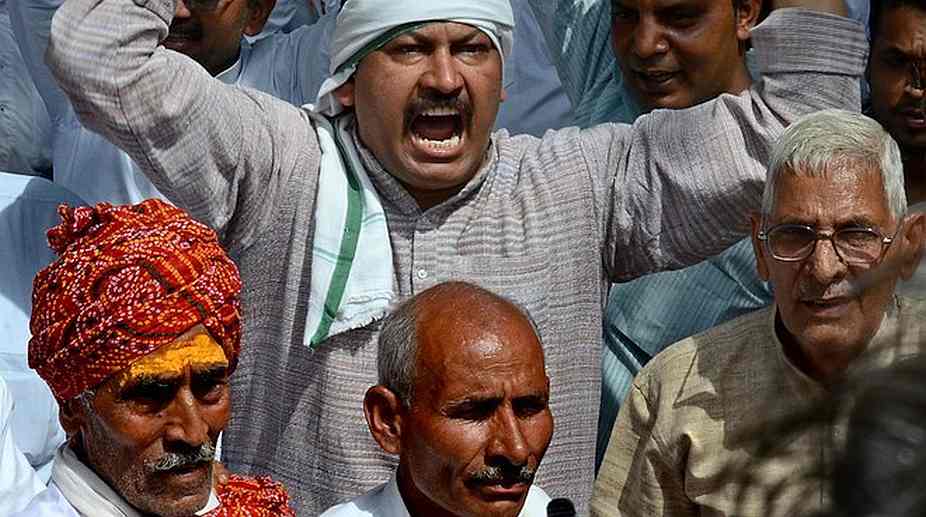
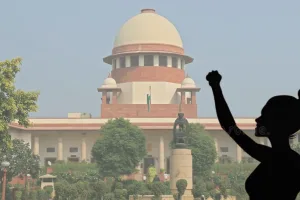
An essay towards ending the persecution by khap panchayats ought now to be initiated with Tuesday’s Supreme Court directive (coram: Dipak Misra, CJ, AM Khanwilkar and DY Chandrachud , JJ), decrying as “absolutely illegal” the attacks on, when not killings of, couples in the wake of inter-caste or same gotra marriages. The judicial intervention was long overdue after such horrendous developments were reported a couple of years ago, most particularly in Rajasthan, Haryana and Uttar Pradesh, even the national Capital.

The robust intervention comes after the police and the executive in the larger context had failed to check the barbarity, almost medieval, and as often as not due to the suspected involvement of legislators in ordering the imprimatur of the khap. Indeed, the Centre had pleaded with the apex court to put in place a mechanism to monitor crimes against women that were perpetrated by the khap. In real terms, the national government has pleaded its helplessness as well as that of the police in the affected states.

At the core of such retrograde reaction is the fact that superstition and ignorance are still the two nooses hung around the neck of civilization in India of 2018. Both have had a long run from the 19th century to the 21st. Have the momentous reforms been forgotten? It is also testament to the existence of a parallel and hideous system of justice. And yet governments both at the Centre and in certain states have winked at the operations of these quasi-judicial entities.

There is little doubt that the khaps have turned the clock back on societal mores, and the apex judiciary has eventually signalled its intent to ensure that the clock ticks in step with the times. The political meddling has been obvious enough, and this has doubtless added to the murk. The Supreme Court has made it explicit that if “an adult man and woman marry, no khap, individual, village panchayat or society can question them”. Clearly, the praxis of the khap has gone beyond the certitudes of civility.

To buttress the contrived compulsion of “family honour” is to attempt a feeble defence of an ugly truth. Hence the court’s directive to the Centre to furnish its response to suggestions advanced by the amicus curiae, Raju Ramachandran, on ways to put a stop to the canker that has permeated a section of society.

Hence the court’s decision to examine the frightful situation in three districts of Haryana and UP, the latter now under the rule of an ascetic. Hence also the summons to the SPs of Rohtak and Jind districts of Haryana and that of Baghpat in UP. Violent regression is the singular underpinning when there ought to be a qualitative change in the societal construct.

Magnificent, Milords

Editorial |

It is to the infinite acclaim of the Supreme Court of India that even as it was roiling under the impact of internal disharmony it mustered the moral courage to uphold Constitutional values like the freedom of speech and expression, bolstered the authority of the Central Board of Film Certification, and directed all state governments not to duck their mandated duty by sacrificing law and order responsibilities at the altar of political expediency.

In one grand move their Lordships Dipak Misra (CJI), AM Khanwilkar and DY Chandrachud reinforced the majesty of the law, ridiculing suggestions that public sentiment was paramount. “Our Constitutional conscience is shocked if the exhibition of a film is guillotined like this” declared the court, as it not only junked notifications of the Gujarat and Rajasthan governments banning the screening of Sanjay Leela Bhansali’s Padmaavat (Haryana and Madhya Pradesh had spoken of similar action), and directed all states to refrain from moves of that nature.

It went even farther in demanding due protection to theatres screening the movie as well as all involved in the production. In a message that must “register” in an era of increasing intolerance the court said state governments were not super-censors, the CBFC was the sole authority. Though merely an interim order, there was a ring of finality to the richly endowed “quotable quotes” that flowed through the court on Thursday as the glory of the law was emphatically underscored.

The Rajasthan and Gujarat governments sought brownie points when claiming they would honour the interim order ~ did they have any other option? ~ but would explore legal options to have it modified. The “fringe” had no time for niceties ~ a theatre in Bihar was ransacked, warnings of dire consequences were issued, a group of women threatened mass suicide as “caste pride” assumed insane proportions in the 21st century. Without venturing into the political underpinning of the furore, let it be accepted that social regression is the new “norm” when garnering electoral advantage.

Wonder if Bhansali and his team had ever dreamt of how even before it was publicly exhibited Padmaavat would shake to the core India’s liberal traditions and expose the immaturity of those making pretensions to leadership. While the movie’s success at the box office is yet to be displayed, it has “bombed” the national thinking into much-needed self-reappraisal.

What the interim order also achieved was the filling of an administrative vacuum created by government(s) that sacrificed their “spine” to appease forces sending society into a tailspin. In stepping in where the administration had conveniently backed off, the court upheld the basic features of the social fabric, making it clear the divisive intolerance was utterly unacceptable. Let none in the field of governance ever again speak of judicial over-reach, instead let them admit to dereliction of duty.

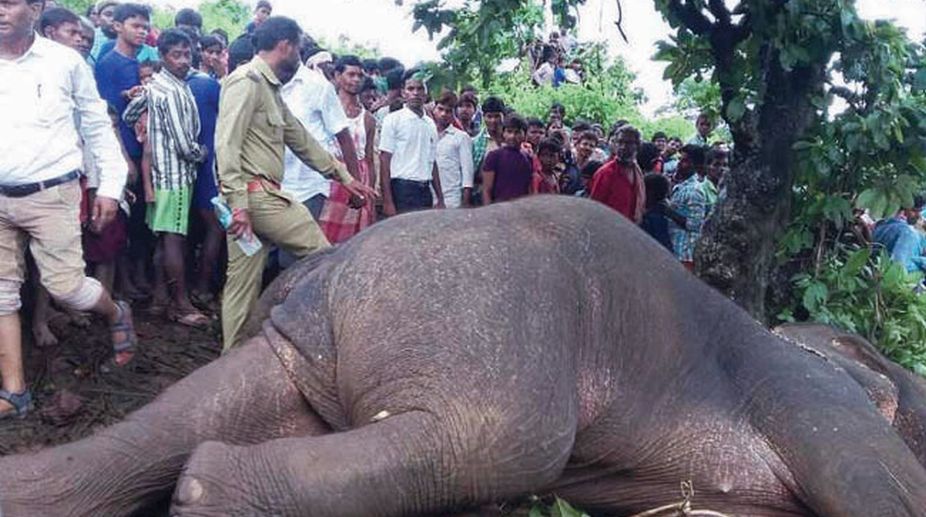
Killer elephant tranquilised, taken to jungle

Statesman News Service | Dehradun |

The over one-and-a-half month long terror of a wild elephant at Jwalapur locality in Haridwar ended on Friday, with the forest department tranquilising and shifting the tusker to another part of the forest. The elephant had created panic by killing two persons and injuring two other in recent weeks.

Since the past two days the tusker had become active at the BHEL-Jwalapur locality forcing people to rfemain largely confined to their homes. The forest department is also hunting for another elephant that was spotted with the tusker recently. The forest department first tranquilised the elephant, wrapped a belt around its body and lifted it by a crane to be fainally taken to the forest and released in the wild.

The operation was complicated and the presence of a large number of onlookers created a challenging situation for the forest staff. Even after tranquilising the elephant, the other processes involved took over six hours.

Forest warden (Haridwar) Komal Singh said, “Boundary walls are being erected in elephant affected areas. Forest department will be putting sugarcane and salt inside the forest to stop jumbo movement in residential areas.”

As a precautionary measure the forest department has started early morning and night patrolling in the affected area. The BHEL locality shares its boundary with the Rajaji Tiger Reserve. The first incident took place on 13 January when the jumbo killed 50-year-old Chander. It was followed by another similar attack in which Ajeet Singh lost his life on 16 January. Manjur and Rajnikanth Shukla were lucky to survive an attack from elephants this month.

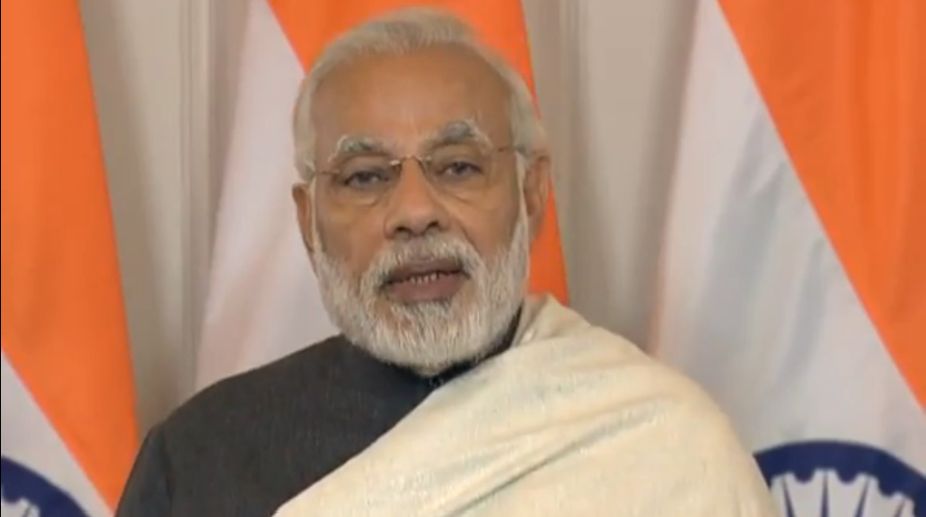
Modi to address economic forum in Davos; no meeting with Pakistan PM

Statesman News Service | New Delhi |

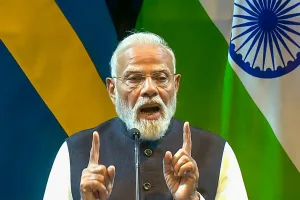
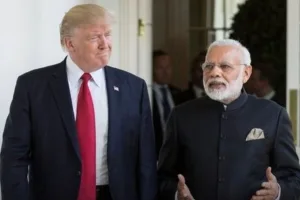
With relations between India and Pakistan at a low ebb, Prime Minister Narendra Modi has no plans to meet his Pakistani counterpart Shahid Khaqan Abbasi on the margins of the World Economic Forum (WEF) in Davos next week.

“No meeting is planned between the two Prime Ministers,’’ Vijay Gokhale, Secretary (Economic Relations) said while briefing the media on Modi’s visit to Davos on 22-23 January.

There was no possibility of a meeting between Modi and US President Donald Trump either since the two leaders would not be in Davos at the same time, he added

“The Prime Minister’s visit to Davos is very short. It will be only for 24 hours and will be very focused. This is a sign that we engage with the globe,” Gokhale said.

Modi will deliver the keynote speech at the plenary session of the WEF on 23 January. He will also have a bilateral meeting with Alain Berset, President of the Swiss Confederation on 22 January. The same evening, he will hold a round-table with global CEOs.

This is the first visit by an Indian Prime Minister to the WEF after more than 20 years. Earlier in 1997, then Prime Minister H D Deve Gowda had addressed the economic forum.

As many as six ministers from India are scheduled to address the forum. They include: Finance Minister Arun Jaitley, Railways Minister Piyush Goyal, Commerce Minister Suresh Prabhu, Oil Minister Dharmendra Pradhan, Minister of State for External Affairs M J Akbar and Minister of State for Development of North Eastern Region Jitendra Singh.

HP to provide Patanjali products at fair price shops

Statesman News Service | Shimla |

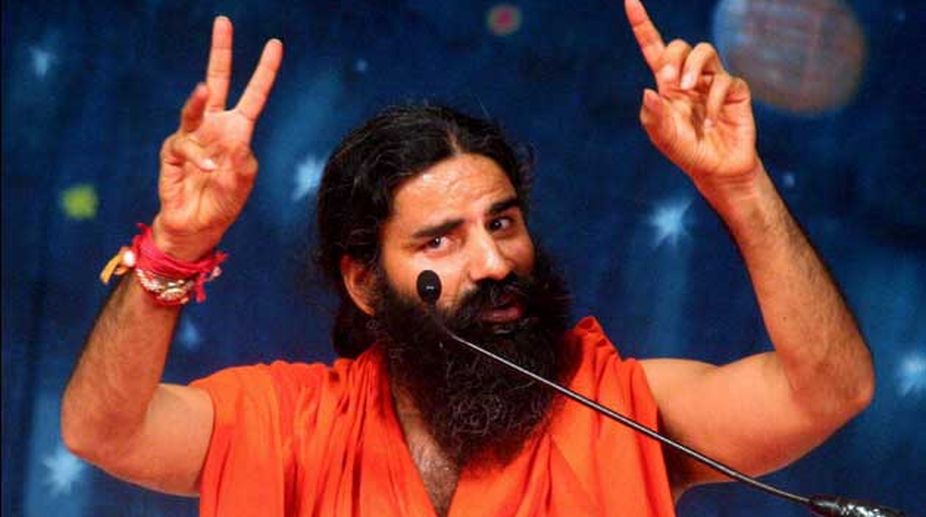
The Bharatiya Janata Party (BJP) government in Himachal Pradesh is contemplating to make available the popular products of Pantanjali brand at fare price shops regulated by the Food and Civil Supplies Department and Consumer Affairs Corporation.

Food, Civil Supplies and Consumer Affairs minister, Kishan Kapoor revealed this during a meeting held here today with the officials of the Patanjali Ayurveda limited.

He said that keeping in view the demand of the Patanjali products in the state, these products including food items, beverage products, sorbets, spices, home-care, juices, curry items, oils, pulses, syrup etc. will be given to the consumers through government depots.

Kapoor said that Patanjali was producing hundreds of consumer products and efforts will be made to provide daily use products to the consumers through fair price shops in a phased manner. He said that due to fluctuation in the prices of food items, especially pulses, rice and flour, their tenders will be done every month.

Giving necessary guidelines in this regard to the officers of the Civil Supply Corporation, he said that by the end of February, all the formalities should be completed to make the availability of Patanjali products available in the state. He said that there would be no compromise regarding the quality of every commodity or food grains.

Managing Director, State Civil Supplies Corporation, SS Guleria apprised the minister about the efforts being made regarding the purchase of Patanjali products. Representatives of State Civil Supplies Corporation and Patanjali Ayurved Ltd. were present in the meeting.