Logo

‘All guns were trained on me’: Lalit Modi names Sonia Gandhi, alleges pressure to protect Shashi Tharoor in Kochi IPL row

In a fresh interview from London, Lalit Modi revisited one of the IPL’s biggest controversies, detailing his objections to Kochi Tuskers Kerala’s ownership structure and the fallout that followed.

Statesman News Service | New Delhi |

Former IPL chairman Lalit Modi has revived the controversy surrounding the now-defunct Kochi Tuskers Kerala franchise, alleging that powerful figures in the then UPA government exerted pressure on him after he questioned the ownership structure of the IPL team and the role of Sunanda Pushkar.

In a wide-ranging interview with ANI, Modi claimed that his opposition to the Kochi consortium’s shareholding model triggered a political backlash that eventually isolated him. He alleged that senior Congress leaders intervened on behalf of then Union minister Shashi Tharoor as questions emerged over the franchise’s equity distribution.

Asked who was backing Tharoor at the time, Modi replied: “Sonia Gandhi. All guns were trained on me from every side.” He further claimed that he received calls from senior Congress leaders, including Ahmed Patel and Pranab Mukherjee, as the dispute escalated.
Lalit Modi questions Kochi franchise equity structure

According to Modi, concerns arose when he examined the financial arrangement behind the Kochi franchise, which won the IPL expansion bid with an offer of around $350 million.

Recalling discussions with consortium members, Modi alleged that he was troubled by the allocation of equity to Sunanda Pushkar.

“All the shareholders were there except for the lady, Sunanda Pushkar. You’re giving away 25 per cent shares to a lady called Sunanda Pushkar. Who is she? You’re giving up 15 per cent of the revenue. Who is she?” he said.
Modi argued that the financial structure was unsustainable and claimed he had warned stakeholders that the model would eventually collapse.

“For her 10-rupee share, on the day she got the team, it was worth 1 lakh rupees. Their 10-rupee share was worth 1 paisa. I knew this was going to collapse. And what happened? Two years down the line, it did,” he alleged.

Claims of confrontation with Shashi Tharoor

Modi also recounted what he described as a tense exchange with Tharoor while the franchise agreement was awaiting approval.

He claimed that during discussions over the ownership structure, he received a phone call from Tharoor, who was then Minister of State for External Affairs.

“I get a call from Shashi Tharoor on the phone,” Modi said, alleging that Tharoor asked him not to pursue questions about Pushkar.

Modi further claimed that he refused to sign the agreement until he received clarity about the shareholders involved in the consortium.

He also alleged that the standoff reached a climax during a late-night meeting in Bengaluru, where pressure mounted on him to clear the franchise despite his objections.

BCCI signing and Kochi franchise fallout

Modi alleged that then BCCI president Shashank Manohar later instructed him to sign the franchise agreement immediately despite his reservations.

“I told him, ‘Shashank, I will sign this agreement under duress. And I will note it on the document that the President is forcing me to sign.’ And I did note it,” Modi claimed.

The Kochi franchise entered the IPL and played only one season in 2011, finishing eighth among ten teams. The Board of Control for Cricket in India later terminated the franchise in 2011.

The controversy had wider political ramifications as well. Tharoor resigned as Minister of State for External Affairs in April 2010 amid the row over the Kochi franchise and allegations linked to the team’s ownership structure.

Lalit Modi recalls Sunanda Pushkar and Sushma Swaraj episodes

Speaking about his interactions with Sunanda Pushkar, Modi claimed they communicated on Twitter before her death in 2014 and said he never met her in person.

“That morning, Sunanda was communicating with me on Twitter… she said, ‘Should I disclose?’ I said, ‘Go ahead and disclose,'” he said.

Modi also addressed criticism surrounding the assistance he received from late Union minister Sushma Swaraj in obtaining emergency travel documents while his passport was under challenge.

Describing it as a personal and humanitarian matter, Modi said he sought help while his wife was undergoing treatment for a brain tumour in Portugal.

“When it comes to family, what did I ask? My wife was going through surgery, and the tumour was not waiting,” he said, adding that he used his personal contacts during what he described as one of the most difficult periods of his life.

‘I’ll have you raided’: Lalit Modi alleges warning from Shashi Tharoor over Sunanda Pushkar in Kochi IPL row

Fresh comments by Lalit Modi have brought the Kochi IPL franchise controversy back into focus, with the former IPL chief recounting his objections to the consortium’s ownership structure.

Statesman News Service | New Delhi |

Former Indian Premier League (IPL) chairman Lalit Modi has levelled fresh allegations against Congress MP Shashi Tharoor, claiming the senior politician once warned him against raising questions about Sunanda Pushkar’s involvement in the Kochi IPL franchise controversy.

Speaking to ANI, Modi alleged that Tharoor called him during the process of finalising the Kochi franchise deal and urged him not to scrutinise Pushkar’s role. According to Modi, the disagreement centred on what he described as an irregular equity structure within the consortium that had won the franchise bid.

The claims revisit one of the most contentious episodes in IPL history, a controversy that eventually led to intense political scrutiny, the collapse of the Kochi franchise, and Tharoor’s resignation as Minister of State for External Affairs in 2010.

Recalling the alleged conversation, Modi claimed Tharoor sought to dissuade him from pursuing questions about Pushkar’s stake in the consortium.

He further alleged that Tharoor warned him of government action if he continued probing the matter.

Modi said he rejected the warning and refused to approve the agreement without greater clarity on the ownership structure.

“I get a call from Shashi Tharoor on the phone. He says, ‘Lalit, don’t ask about Sunanda Pushkar. She is a good friend of mine. I asked why, and he said, If you do, I’ll have you raided in the morning. I said, ‘Screw you. Who the hell do you think you are? You may be the Foreign Minister of India, but don’t you dare ever tell me this.’ I slammed the phone and said I would not sign,” Modi told ANI.

Lalit Modi questions equity structure in Kochi consortium

According to Modi, concerns first emerged when he examined the financial arrangement behind the Kochi franchise bid, which had secured an IPL team with a reported bid of $350 million.

He alleged that a section of shareholders was funding the project while another beneficiary was receiving a substantial equity stake without making a corresponding financial contribution.

“All the shareholders were there except for the lady, Sunanda Pushkar. You’re giving away 25% shares to a lady called Sunanda Pushkar. Who is she? You’re giving up 15% of the revenue. Who is she?” Modi said he repeatedly questioned consortium members about the shareholding arrangement, particularly Pushkar’s reported stake and the rationale behind it.

He argued that the structure made little commercial sense, claiming it placed the financial burden on a section of investors while allowing another stakeholder to benefit disproportionately. According to Modi, such an arrangement was bound to create problems for the franchise in the long run.

Claims of late-night standoff over franchise agreement

Modi also claimed the dispute escalated during a late-night meeting in Bengaluru, where he refused to sign the franchise agreement until the identities of all stakeholders were disclosed.

He said he was unfamiliar with Pushkar at the time and sought details about her background and role within the consortium.

Modi further alleged that despite his reservations, he had supported Kochi’s entry into the IPL bidding process even though Kerala did not have a stadium capable of hosting the team at the time.

“He’d come to my house. He was a smooth talker without doubt. I fell for it,” Modi said while referring to Tharoor.

Kochi franchise lasted just one IPL season

The Kochi franchise became one of the shortest-lived teams in IPL history. The team, owned by KCPL and RSW, participated in only the 2011 season and finished eighth among ten teams.

The Board of Control for Cricket in India (BCCI) terminated the franchise in 2011 following disputes involving contractual obligations.

The controversy had also triggered a political storm in 2010, leading to Tharoor’s resignation from the Union Council of Ministers after questions were raised over the franchise’s ownership structure and Pushkar’s reported stake.

’17 years and no prosecution’: Lalit Modi rejects ‘fugitive’ tag, says he has nothing to prove

The former IPL chairman said media narratives have overshadowed legal realities, insisting that years of investigations have not resulted in a criminal conviction against him.

Statesman News Service | New Delhi |

Former Indian Premier League (IPL) chairman Lalit Modi has pushed back strongly against being described as a “fugitive”, arguing that the label has been driven more by media perception than by any legal finding against him.

Speaking to ANI in London, Modi said he has never been convicted in any case and dismissed suggestions that he is hiding from Indian authorities. He maintained that despite years of scrutiny and investigations, no criminal prosecution has resulted in a conviction against him.

“If I was running, you would be picking me up somewhere or the other. The Indian government has a long arm. You can’t take on the government of India. And I don’t intend to. It’s not the government. It’s the media,” Modi told ANI.

Lalit Modi disputes claims of being on the run

The former cricket administrator mocked the notion that he could evade Indian authorities while travelling internationally, saying such a scenario was unrealistic given India’s global reach and legal mechanisms.

Modi also criticised what he described as media trials, claiming public perception of him had been shaped by years of reporting rather than court rulings.

“You have no libel in your country, in our country. You can say what you want, and I sell news,” he said.

Former IPL chief cites lack of criminal conviction

Modi’s remarks come against the backdrop of multiple legal and regulatory proceedings linked to his tenure as IPL chairman and his departure from India in 2010.

Over the years, he has faced allegations related to bid-rigging, money laundering and violations of the Foreign Exchange Management Act (FEMA). However, he argued that the absence of a completed prosecution after years of investigations raises questions about the allegations levelled against him.

“Not a single case against me has been registered. If I have been so bad, and everybody says I’ve been so bad, OK, please, guys, go out and prosecute me,” he said.

Modi also criticised the pace of India’s judicial process, saying delayed proceedings can themselves become a form of punishment.

“It never gets heard in our country. Justice comes. I don’t know when it comes. The slow justice is a punishment as well,” he added.

No plans to return to India to prove a point

Asked whether he intends to return to India and fight the allegations in person, Modi indicated that he no longer feels compelled to do so.

“There was a time when I did want to come back. And I had all the reasons to come back. Come back and do what?… I don’t need to prove to anybody,” he said.

Questioning the basis for any possible detention, Modi added that authorities would have had to take him to court long ago if there was sufficient evidence against him.

“Arrest you want to do, you have to take me to court. Seventeen years you haven’t taken me to court. How can you arrest me today? If there was something there, it would be out,” he said.

ED probe and extradition efforts continue

Even as Modi contests the allegations and the narrative surrounding his departure from India, investigations into alleged financial irregularities linked to his IPL tenure remain under the scanner of Indian authorities.

According to ANI, the Enforcement Directorate is investigating allegations of financial misconduct, money laundering and unauthorised fund transfers. The Ministry of External Affairs is also pursuing extradition-related procedures under applicable Indian and international legal frameworks.

Iran blames Patriot malfunction for Kuwait airport damage; ex-Qatar PM questions Tehran’s motives

A diplomatic row has erupted after Kuwait blamed Iran for a deadly airport strike, while Tehran insists the damage was caused by a malfunctioning US-made defence system.

Statesman News Service | New Delhi |

Iran’s Islamic Revolutionary Guard Corps (IRGC) has denied responsibility for the damage caused at Kuwait International Airport, claiming the destruction was linked to a malfunction in the American-made Patriot missile defence system and not the result of an Iranian strike.

The denial comes at a sensitive moment for the Gulf region, where a ceasefire that ended weeks of fighting involving Iran, the United States and its allies is facing renewed strain. The latest exchange has triggered fresh accusations, diplomatic protests and growing concern over the stability of the truce.

Iran’s response followed sharp criticism from former Qatari Prime Minister Sheikh Hamad bin Jassim bin Jaber Al Thani, who accused Tehran of repeatedly targeting neighbouring Gulf states and questioned the rationale behind recent attacks on Bahrain and Kuwait.

In a post on X, Al Thani described Iran’s actions as difficult to justify and suggested there were reasons to examine whether the operations had been planned well in advance. While reiterating Qatar’s interest in maintaining positive relations with Iran, he said Doha would not accept being “blackmailed” by Tehran.

The former Prime Minister also called on Gulf nations to present a united response, arguing that collective action would demonstrate that attacks on any member state would not weaken regional solidarity.

Iran, however, has maintained that its military actions are retaliatory measures against countries that allow the United States to launch operations against Iranian targets from their territory.

Gulf governments have rejected that explanation, accusing Tehran of using military pressure to influence regional leaders and push them to persuade US President Donald Trump to end the conflict.

Kuwait airport strike raises ceasefire concerns

The exchange of accusations intensified after Kuwaiti authorities reported casualties and damage at Kuwait International Airport following what they described as an Iranian attack. Officials said one person was killed and 63 others were injured.

Kuwait’s Foreign Ministry said projectiles landed on sovereign territory and damaged diplomatic facilities, though it did not identify the embassies affected.

India also reacted to the incident. The Ministry of External Affairs confirmed that the person killed was an Indian national and condemned attacks on civilian infrastructure.

“We again call on all parties to cease such attacks,” the ministry said in a statement.

According to Kuwaiti Defence Ministry spokesman Saud Abdulaziz Al-Atwan, around 30 ballistic missiles and drones were involved in what he called a “heinous Iranian aggression” that caused significant damage.

Kuwait’s state news agency reported that airport operations were temporarily suspended and incoming flights diverted after Terminal One sustained damage, and casualties were reported. Flight services have since resumed in phases, with Kuwait Airways restoring its normal schedule.

IRGC says US military sites were intended targets

In a statement posted on its Telegram channel, the IRGC said its operation was aimed at military installations and not civilian infrastructure.

The force said it targeted Ali Al Salem Air Base in Kuwait and the headquarters of the US Fifth Fleet in Bahrain in response to what it described as aggression against Iran.

“In response to this aggression, the Ali Al Salem Air Base in Kuwait, which hosts helicopters, as well as the headquarters of the US Fifth Fleet in Bahrain, were targeted with missiles and drones by the Guards’ forces,” the statement said.

Notably, the IRGC’s account did not mention Kuwait International Airport among its intended targets.

US says Iranian attacks were intercepted

The US military said most of the incoming Iranian missiles and drones were intercepted before reaching their targets.

US Central Command (CENTCOM) stated that two Iranian missiles launched towards Kuwait either fell short or broke apart before impact, while three missiles fired at Bahrain were intercepted by American and Bahraini air defence systems.

“All Iranian attacks on American forces failed,” CENTCOM later said in a post on X.

Bahraini authorities separately confirmed that air defence systems successfully intercepted three missiles and several drones during the attack.

The latest confrontation threatens to further destabilise a ceasefire that took effect on April 8 after more than a month of intense fighting triggered by US and Israeli strikes on Iran. Tehran had earlier accused Kuwait and Bahrain of facilitating American military operations against Iranian targets, including an oil vessel and Qeshm Island.

What Rubio said when asked about an Iran nuclear ‘warning’ allegedly sent via Pakistan

A congressional hearing in Washington turned attention to reports involving Iran and Pakistan, with Secretary of State Marco Rubio firmly distancing the administration from the claims.

Statesman News Service | New Delhi |

US Secretary of State Marco Rubio on Wednesday dismissed reports suggesting Pakistan had conveyed a message from Iran warning of a possible nuclear demonstration if the ongoing tensions in the region escalated further.

The issue surfaced during a hearing of the House Foreign Affairs Committee when Republican Congressman Scott Perry referred to media reports claiming Pakistan’s foreign minister had personally communicated such a message to the Trump administration.

The exchange comes at a sensitive moment as Washington continues to navigate its approach towards Iran following months of military tensions and parallel diplomatic efforts aimed at curbing Tehran’s nuclear programme. Questions over Iran’s capabilities and intentions remain central to the debate in Washington.

Raising the matter during the hearing, Perry asked Rubio whether Pakistan’s foreign minister had directly informed him that Iran was prepared to demonstrate a nuclear weapon should the current escalation continue.

Rubio flatly denied being aware of any such communication.

“I’ve not seen that reporting, and I’m not aware of any such message,” the Secretary of State said.

Perry followed up by referring again to reports circulating in the public domain. Rubio maintained that no such message had reached him.

“I would be surprised if that message had been relayed. I would be aware of it if it was,” he said.

Rubio responds to hypothetical Iran nuclear threat

The hearing later turned to a broader discussion on how the administration would respond if Iran threatened to demonstrate or test a nuclear capability in the event diplomatic efforts broke down.

Responding to the hypothetical scenario, Rubio said such a move would only reinforce existing concerns about Tehran’s intentions.

“I think it would confirm everything we believe about them anyway,” he said.

He added that any such development would likely compel the President to weigh further courses of action.

“I think the President then would have to pursue, or at least have to consider, various other options that are available to him in that context,” Rubio said.

Four Republicans join Democrats as House votes to curb Trump’s Iran war powers

The closely contested vote exposed divisions within the Republican Party while renewing debate over Congress’ authority to approve extended military operations overseas.

Statesman News Service | New Delhi |

In a significant setback for President Donald Trump, the US House of Representatives on Wednesday approved a resolution seeking to prevent further military engagement with Iran unless Congress formally authorises such action.

The vote marks the latest attempt by lawmakers to reassert Congress’ constitutional role in decisions involving military conflict and comes amid growing scrutiny of the administration’s handling of the Iran campaign. The measure also highlighted emerging divisions within the Republican Party over Trump’s foreign policy approach.

The Democratic-led resolution was adopted by a narrow 215-208 margin, with four Republicans breaking ranks to support it. Representatives Thomas Massie, Brian Fitzpatrick, Tom Barrett and Warren Davidson joined Democrats in backing the proposal, according to CNN.

The measure, introduced by New York Democrat Gregory Meeks, seeks to limit the president’s authority to continue military operations against Iran without congressional approval. Although the resolution requires passage by both chambers of Congress, it does not go to the president for signature and does not carry the force of law under normal congressional procedures.

Speaking after the vote, Meeks welcomed the bipartisan support.

“I am thrilled that we’ve had the opportunity to have some members from the Republican side stand up. I’m really thrilled and proud of my Democratic colleagues, because every Democrat, every single one voted for this,” he told reporters.

He said lawmakers would continue exercising their constitutional responsibilities and act as a check on the executive branch when necessary.

Republicans divided over Iran conflict

The House action comes as concerns over the administration’s conduct of the conflict appear to be widening within Congress. Democrats have repeatedly sought to curb Trump’s war powers, and recent efforts have drawn support from a small but growing number of Republicans.

The floor vote had initially been scheduled for May 21 but was pulled by Republican leaders amid concerns that member absences could result in an immediate defeat, CNN reported.

Meeks had earlier accused House Speaker Mike Johnson of delaying the vote. He argued that Republican lawmakers were facing pressure from constituents concerned about rising living costs and broader government priorities.

Before Wednesday’s vote, Johnson defended opposition to the resolution, saying it could weaken the administration’s ability to negotiate a lasting peace settlement.

“I think it is a very dangerous prospect to take away from the administration and the commander-in-chief right now the ability to negotiate,” Johnson told CNN.

He argued that military objectives under “Operation Epic Fury” had been achieved and maintained that the administration should be given room to pursue diplomatic efforts.

“The president is now in the process of concluding a peace agreement, and we have to allow him the latitude to do that,” Johnson said.

Questions over 60-day military deployment

The vote comes alongside increasing scrutiny of the legal basis for the military operation.

A joint investigation has been launched by inspectors general from the Pentagon, the State Department and USAID into the conduct of the campaign. In a statement issued Wednesday, the watchdogs said federal law requires them to review overseas military deployments that continue beyond 60 days.

Their intervention suggests oversight authorities believe the conflict has crossed the 60-day threshold since it began on February 28.

Under the War Powers Act, a US president cannot keep armed forces engaged in active hostilities for more than 60 days without congressional authorisation.

The White House did not obtain approval from Congress before launching the military operation, known as Operation Epic Fury.

Last month, US Secretary of War Pete Hegseth argued that the 60-day clock effectively restarted after Trump announced a ceasefire in April.

The House vote adds fresh political pressure on the administration as lawmakers continue to debate the limits of presidential war powers and Congress’ role in authorising military action.

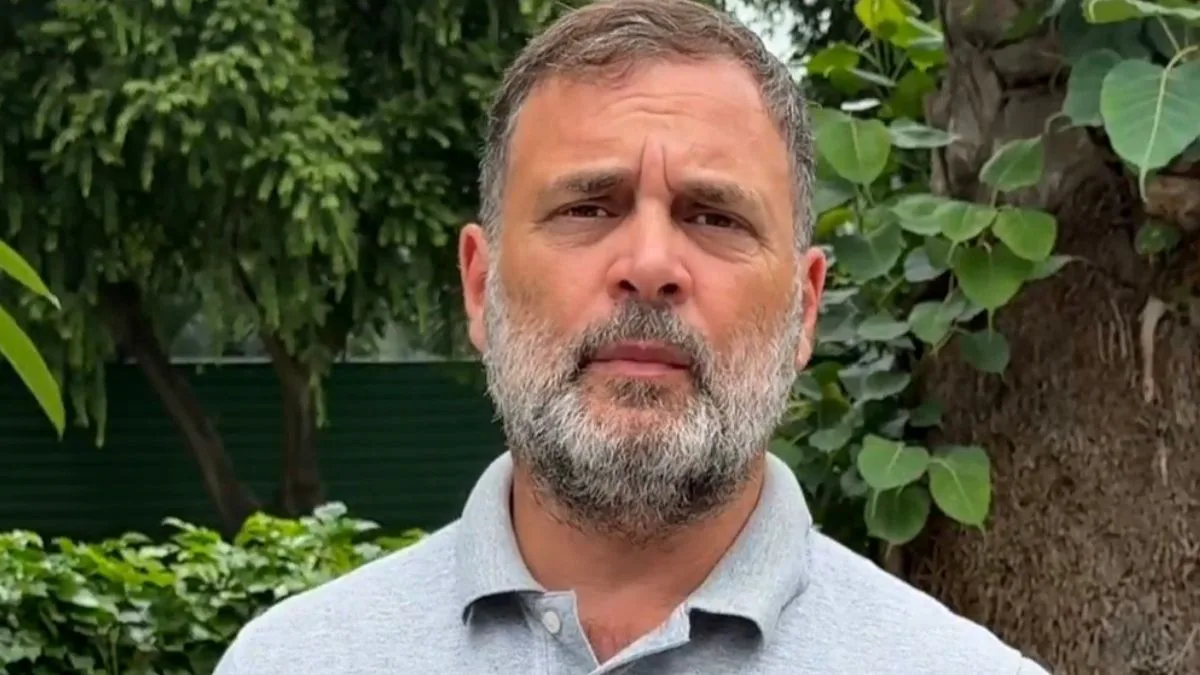
‘Emergency exists only in Congress’: BJP’s Shehzad Poonawalla rebuts Rahul Gandhi’s ‘institutional revolt’ claim

BJP spokesperson Shehzad Poonawalla accused Rahul Gandhi of spreading panic and misinformation after the Congress leader claimed an “institutional revolt” was underway and predicted PM Modi would not remain in office for another year.

Statesman News Service | New Delhi |

BJP national spokesperson Shehzad Poonawalla on Thursday launched a sharp attack on Rahul Gandhi, accusing the Congress leader of spreading misinformation and creating panic for political gain, a day after the Leader of Opposition claimed that Prime Minister Narendra Modi may not remain in office for another year and that an “institutional revolt” was underway within the system.

The BJP’s response came after Gandhi, addressing tribal leaders at an event organised by the Adivasi Congress in Delhi, alleged that institutions, including the Election Commission, intelligence agencies and even members of the judiciary, were internally revolting against the government. He also claimed that information about Prime Minister Modi, Union Home Minister Amit Shah and other senior leaders was being passed on to him.

Taking aim at Gandhi’s remarks, Poonawalla said the Congress leader was seeing the possibility of an Emergency everywhere because of his party’s own political history.

“Rahul Gandhi’s family has a history of Emergency. That is why he thinks everyone wants to impose an Emergency. The Constitution was crushed only once in this country, and that was during Indira Gandhi’s rule,” Poonawalla said in a video statement.

He further alleged that the real crisis existed within the Congress party itself.

“Emergency exists in the Congress party…People are revolting against dynastic politics, and that is why leaders continue to leave the party one after another,” he said.


BJP accuses Rahul Gandhi of spreading fear and propaganda

Poonawalla further accused Gandhi of repeatedly undermining India’s institutions and democratic processes.

“You spread lies about India’s economy when it is the fastest-growing major economy. You campaigned against Indian vaccines. You questioned Operation Sindoor and military actions, and even spoke against India’s democratic strength abroad,” he said.

The BJP spokesperson also criticised Gandhi’s remarks on the electoral system, saying such statements were aimed at creating distrust among citizens.

“Your model is to spread propaganda, create panic and then profit politically from that panic,” Poonawalla alleged.

He urged Gandhi to stop what he termed an “India defamation agenda” and refrain from making claims that could weaken public faith in democratic institutions.

Rahul Gandhi predicts political change within a year

Speaking at the Adivasi Congress event on Wednesday, Gandhi claimed that the political system once controlled by Prime Minister Modi was now “shaken” and “collapsing internally”.

“In my assessment, Modiji will not be the prime minister in a year’s time,” Gandhi said.

The Congress leader also warned of what he described as a looming “economic tsunami”, alleging that economic distress and public anger would increase pressure on institutions.

“On one side, a massive economic tsunami is coming; prices are rising, and this is just the beginning. India will witness such an economic crisis that you have never ever witnessed in your life. This is happening, and no one can stop this. On the other hand, there is an institutional revolt happening within India’s system … the Election Commission (EC) is fully controlled…,” claimed Gandhi.

He claimed that messages were reaching him from the Chief Election Commissioner, intelligence officials and members of the higher judiciary, suggesting that sections of the system were unhappy with the current political situation.

Gandhi further alleged that the government could attempt to impose “something like an Emergency” to deal with rising public pressure.

Sealed windows, no fire NOC: Key findings emerge in Delhi’s deadly Malviya Nagar hotel fire

Investigators are examining safety clearances, property modifications and management responsibilities after the deadly Malviya Nagar hotel fire that killed 21 people.

Statesman News Service | New Delhi |

As investigators dig deeper into the deadly Malviya Nagar fire that claimed 21 lives, arrested hotel co-owner, Lovkesh Bajaj, has told Delhi Police that he was not directly involved in the day-to-day functioning of the establishment and had entrusted its management to others, news agency ANI mentioned sources as saying on Thursday.

The questioning assumes significance as police attempt to piece together how a bed-and-breakfast facility operating in a densely populated South Delhi neighbourhood allegedly functioned without mandatory safety clearances. Investigators are also examining whether decisions related to structural modifications and daily operations contributed to the scale of the tragedy.

According to sources, Bajaj told investigators that another person was handling billing, accounts and overall management of the premises. He also allegedly claimed that changes made to the property, including enlarging rooms and carrying out modifications, had been suggested by someone who assured him that such arrangements were common and would not create any issues.

During interrogation, Bajaj is learnt to have admitted that the premises did not possess a Fire No Objection Certificate (NOC), a key aspect now under scrutiny as authorities probe possible lapses in safety compliance.

Police are verifying records from the electricity department and other agencies to establish whether the property had obtained the required permissions and approvals. Investigators are also examining documents related to structural alterations carried out at the premises.

Sources said the probe has widened to include multiple properties linked to the accused, with police looking into ownership patterns, operational control and compliance records.

Bajaj is expected to be produced before a court later on Thursday. Delhi Police is likely to seek his custodial interrogation to verify statements made during questioning and determine whether other individuals were involved in managing or operating the establishment.

The arrest comes a day after Delhi Police took Bajaj, co-owner of Hotel Flourish Stays, into custody in connection with the devastating blaze that swept through the property in Malviya Nagar. Police had earlier issued a Lookout Circular against Bajaj and his wife.

According to official figures, 49 people were admitted to hospitals after the fire. Twenty-one of them later succumbed to their injuries. The deceased include 12 foreign nationals and nine Indian citizens.

Authorities said eight injured persons have been discharged following treatment, while several others remain admitted to hospitals.

What preliminary findings suggest about the fire

Preliminary observations by Delhi Fire Services indicate that the blaze may have started near the staircase on the ground floor, where combustible material was reportedly stored. Investigators believe the flames may have quickly spread through the building from there.

Sources further claimed that windows in the building had been sealed, severely limiting escape options for occupants as smoke and flames engulfed the premises. Firefighters also recovered LPG cylinders during rescue operations.

Officials have said a detailed forensic examination is underway to determine the exact cause of the fire and reconstruct the sequence of events that led to one of the deadliest fire tragedies in the national capital in recent years.

Sugar export ban reflects a policy problem

India’s sugar policy is slipping into a familiar pattern. When production rises, exports are encouraged. When supply tightens, exports are restricted.

SHREY MADAAN | New Delhi |

India’s sugar policy is slipping into a familiar pattern. When production rises, exports are encouraged. When supply tightens, exports are restricted. As ethanol targets expand, sugar availability comes under pressure again. The government’s latest export ban is being presented as a temporary measure to contain prices and protect domestic supply, but it also reflects a deeper problem: export controls are increasingly becoming the default response whenever competing policy goals begin to collide.

The call to ban sugar exports until September comes amid concerns over domestic supply, inflation risks, and uncertainty linked to the Iran war. Officials are trying to keep domestic sugar prices from rising further, even as higher global oil prices already put pressure on consumers’ pockets. As a widely consumed household staple, sugar is often at the centre of efforts to contain food inflation. But the latest ban also highlights how India’s sugar sector is caught between competing priorities. On one hand, the government wants stable domestic sugar prices. On the other hand, it wants to aggressively expand ethanol blending to reduce dependence on imported crude oil. Both goals rely on the same raw material: sugarcane.

That balancing act becomes harder when production weakens. This year, unseasonal weather in key producing states such as Maharashtra and Karnataka reduced sugar recovery rates, lowering overall output expectations. At the same time, continued diversion of sugarcane toward ethanol blending has further pressured domestic sugar availability. With closing sugar stocks projected to fall to their lowest levels in years, exports have once again become the adjustment mechanism. The logic is simple. Restrict exp or ts, re tain more supply domestically, and limit price pressure.

But repeated interventions also create distortions that are harder to reverse over time. India has imposed sugar export restrictions multiple times since 2022 whenever supply concerns resurfaced. That pattern creates uncertainty across the sector. Mills negotiate export contracts for just one month, only to face policy reversals the next. Traders struggle to plan shipments. Buyers are beginning to treat Indian supply as unreliable. Markets can adapt to changing prices. Constant policy shifts are far harder to absorb. The impact does not stop with exporters.

Once export channels close, financial pressure on mills builds quickly, particularly for operators already facing higher cane procurement costs and heavy investments tied to ethanol expansion. And when sugar mills face financial pressure, farmers usually feel it next. Delayed payments to sugarcane farmers, commonly known as cane arrears, have long been one of the industry’s biggest structural problems. Restrictions that reduce mill revenues risk worsening those delays further. That, in turn, pushes farmers toward alternatives that offer quicker returns.

In many sugar-producing states, farmers already view jaggery as a more reliable alternative because payments are quicker and returns can often be better than supplying cane to mills. Local jaggery processors frequently offer immediate cash, unlike mills, where payments can stretch for weeks or even months. If more sugarcane gets diverted toward jaggery production instead of sugar processing, the same supply pressures the government is trying to contain today may return even more sharply next season.

Thailand’s sugar sector offers a useful contrast. Periodic export controls and price interventions have often been used to stabilize domestic supply, but they have also created uncertainty for producers, exporters, and mills trying to plan ahead. The problem is not the intervention itself, but the frequency with which short-term controls are used to manage structural issues.[1] Over time, those pressures do not disappear; they simply shift elsewhere in the supply chain. The sugar sector already operates under heavy administrative influence, from cane pricing to export quotas and ethanol diversion targets. Each additional intervention may temporarily solve one problem, but it often creates pressure elsewhere in the system.

That is increasingly visible in India’s sugar market. Ethanol expansion reduces sugar availability. Lower sugar stocks trigger export restrictions. Export restrictions weaken mill revenues. Financial stress delays farmer payments. Farmers then divert cane elsewhere, tightening future supply again. The result is a sector that constantly shifts between surplus and shortage management, without addressing the underlying instability. None of this means governments should ignore inflation concerns or domestic supply risks. But repeated intervention is not the same thing as long-term stability. The broader issue is not whether India should restrict sugar exports during periods of stress. It is whether constant policy reversals are gradually replacing a coherent market strategy altogether.

(The writer is Indian Policy Associate, Consumer Choice Center.)

A linguist beyond borders

For someone who had spent most of his life studying constructed languages, the idea of constructing his own death would certainly have amused him. The flood of social media posts and the exchange of messages among Esperantists and linguists from across the world soon confirmed that this was no joke.

BIPASHA BHATTACHARYYA | New Delhi |

It was on 1 June 2026, in the little Scottish village of Dirleton, a few hours away from the home of the Nobel Prize-nominated Esperanto poet, William Auld, that I received news of the untimely passing of the celebrated linguist, Esperantist and polymath, Probal Dasgupta. Professor Dasgupta had been fond of joking about most everything and I had initially believed that this too was some sort of joke.

For someone who had spent most of his life studying constructed languages, the idea of constructing his own death would certainly have amused him. The flood of social media posts and the exchange of messages among Esperantists and linguists from across the world soon confirmed that this was no joke. Probal Dasgupta passed away in his sleep in the early hours of June 1, at the age of 72, leaving behind unfinished conversations with those who loved and admired him. Born in Calcutta in 1953 to academic parents, Probal Dasgupta’s earliest years were spent in Ithaca, New York.

His father, the late Arun Kumar Dasgupta, was a historian, primarily of the Dutch colonial world and had taught history at Presidency College, Calcutta and at Burdwan University. In 1957, he began his doctoral study at Cornell University’s Faculty of History. His partner, the social psychologist Manashi Dasgupta, and their five-year-old son (then called Mukur, who was later to change his own name to Probal in consultation with his parents) followed him to Cornell. In 1962, Arun Kumar Dasgupta submitted a thesis entitled ‘Acheh in Indonesian Trade and Politics: 1600–1641,’ which studied the altering political attitudes of western Indonesian kings in response to the arrival of the English and Dutch to early 17th Century Indonesia.

Probal Babu’s own memories of this time were filled with wonder at his father’s ability to decipher the characteristic handwriting of 17th Century Dutchmen — a feat beyond the standard printed Dutch that he also learned at this time — in order to consult letters sent to the Netherlands by Dutch sailors from Indonesia and preserved at the Hague. While he was admiring of his historian father, much of Probal Babu’s time in Ithaca was spent in the company of his mother, Manashi Dasgupta.

Her own doctoral thesis at Cornell, ‘Some Determinants of the Judgement of Interestingness’ focused on intended and received aspects of human communication and desirability. In Probal Babu’s words, Manashi proposed ‘that we imagine narratives about people we meet; perceiving a half-story that leaves us intrigued – and interested in the protagonist’. This belief in the ability of language to create different selves poised for different kinds of communication would be reflected in Manashi’s later Indian Council of Philosophical Research-funded research on an intrinsically production-based need that guided most friendships.

Manashi’s understanding of psychology as a communication-based discipline, as well as her knowledge of the international language Esperanto inspired young Mukur. Many years later, he would narrate to me the events of a day in Ithaca in 1960 on which his mother’s frustrated use of the Bengali word ‘baari’- meaning both house and a physical blow – had caused the seven-year-old Mukur to burst into peals of laughter at the image of his mother trying to hit her head with a big house. It is difficult to be surprised that he later became a linguist.

After a B.A. in linguistics from Sanskrit College, University of Calcutta in 1974 and an M.A. from Deccan College, Pune in 1977, he returned to New York for a PhD on ‘Questions and Relative and Complement Clauses in a Bangla Grammar’ at New York University, supervised by Lewis Levine and Ray C. Dougherty. His subsequent academic career in the United States, Australia and India combined rigorous scholarship with meticulous, hands- on student mentoring. His 1993 monograph The Otherness of English: India’s Auntie Tongue Syndrome brought him international acclaim.

In it he argued that Indian usage of English was not unlike the universal and particular usage of appellatives like ‘masi’ (maternal aunt by blood) or ‘mami’ (maternal aunt by marriage). In the same way that these endearments were both reserved for bona fide relatives and simultaneously used indiscriminately as honorifics for women of certain age groups that one encountered in passing, English in postcolonial India remained both affectionately intimate and dispassionately alien when juxtaposed against immovable ‘mother’ tongues.

His After Etymology: Towards a Substantivist Linguistics, co-authored in 2000 with Alan Ford and Rajendra Singh, questioned the usefulness of seeking linguistic meaning in a search for origin-myths, which were often born of a Victorian obsession with racial anthropology. Beyond the historical origins of elements of language lay a need to question the structures that constituted it in real time. Language, for Probal Babu, was thus very much a question of the here and now.

The ingenuity of his scholarship came with the ability to bring an existing structural reality into conversation with a hopeful future. It is this sustained hopefulness that guided his lifelong passion and interest in the international language Esperanto. Created in 1887, by the Lithuanian Jewish ophthalmologist L.L. Zamenhof in an imperial Russian, riven by anti-semitism, Esperanto (literally ‘the language of hope’) and its practitioners believed in international unity through a common language for the people of the world.

The hopeful origins of the language would give way to countless thematic organisations — for vegetarians, Boy Scouts, philately, police forces and pacifists—before the creation of two major organisations, the Universala Esperanto-Asocio (Universal Esperanto Association, U.E.A. with national membership, in 1908), and Sennacieca Asocio Tutmonda (World Annational Association, S.A.T. in 1921). Probal Babu, who had learnt the language as a child, would go on to serve as the President of the UEA. from 2007 to 2013. It was in his capacity as the foremost Esperantist in what is now called the ‘global south’ that I first met him, in 2020.

Amidst a global pandemic that confined many of us to our homes, under Probal Babu’s guidance, I learned Esperanto and began serious work on a MA dissertation that focused on the life of the Indian Esperantist, engineer, musical enthusiast and playwright, Lakshmiswar Sinha. Based in Shantiniketan, Sinha himself had learnt Esperanto on a study trip to Sweden in 1929, encouraged by Rabindranath Tagore. Probal Babu had known Sinha well. What had begun as a request for an interview, led to the creation of a study group around the translation of Sinha’s Esperanto memoir ‘Jaroj Sur Tero’ (My Years on Earth), a group that included the Professor of Russian Sajal Dey and the musical polymath and then-graduate student Moushumi Bhowmik.

Probal Babu also introduced to me to comrades from around the world, who ‘toil’d, and wrought, and thought with me’. My PhD on Esperanto’s history in South Asia completed earlier this year was, in many ways, an extended conversation with him. Our conversations did not always end in agreement. Probal babu, a linguist with an encyclopaedic knowledge of Esperanto’s histories, was not always interested in the meandering paths taken by historical questions.

Yet, he was always interested in taking individual trajectories seriously, and in inspiring others to not throw away the self in favour of a durable collective. His generosity towards the most banal of interrogations and capability to gauge potential was astounding to witness in action. In December of 2020, I remember receiving a calm phone call from him, requesting me to look at some ‘old letters in Esperanto between an American and Siberian’. It turned out that these ‘old letters’ were written by someone who had known Nadezhda Krupskaya, wife of Vladimir Lenin, whose family had been participants in an Esperanto publishing firm set up by Leo Tolstoy.

When I told him of these astounding connections, he simply said ‘Yes, Esperanto letters often reveal connections at this level’. That he will not be able to read the final products of these labours is a sadness that seems unbearable now. Obituaries are meant for the living; not the dead. In this function, they carry the burden and joy of re-telling facts and stories of the once living without attempting to betray confidences. Perhaps in the re-telling of stories and facts, we attempt to detach ourselves from the movement of a person who is to the stagnancy of a person who was, in effect killing this person twice.

In this case, the ability to tell a few stories of Probal Babu forces me to accept that he is no longer merely a message away. In one of his own dystopian Esperanto stories, a character named after me appears in the year 2047 as a singer in the Rock quartet Mola Kulteno (Soft Culture), consistently producing music that subtly alludes to the forgotten Iron Curtain. His last piece, beginning with a re-telling of the significance of the Dreyfus Affair to the Esperanto movement, sent to me on the day before he passed, still lies in my inbox, unopened. To say that I shall miss him is inadequate. He was my teacher and mentor, my best reader, my dearest friend. His humour, brilliance and love for science fiction, green curry and mixed metaphors will keep me company in these dark times in memory of a world in which hope does not die.

(The writer is the Joseph Bell Writer in Residence at the Royal College of Edinburgh Surgeons and the University of St. Andrews.)

Doja Cat had one simple request for Elon Musk before calling him a ‘chimpanzee’

The rapper took to X on Wednesday to ask for the return of its audio post feature. She addressed the request directly to Elon Musk with several choice words attached. The feature has been missing from the platform since early 2025.

Statesman News Service | New Delhi |

Doja Cat took to X on Wednesday to ask platform owner Elon Musk to bring back the “audio post” feature. The Grammy-winning rapper did not hold back while making the request. She called Musk a “frog build looking bitch” in the same message where she was asking for his help. Her exact words were: “Hey Elon if u see this please put the audio post feature back on here. Thanks, u frog build looking bitch. Barrel chested ewok u look like u eat sand.”

In another tweet, she wrote, “put the audio post feature back on this app. Thanks, you hairless no-neck havin, chimpanzee. Face look like it was drawn from memory. When u swim on ur back at the beach sh** look like a man o’ war. Hourglass ankles. Not tryna be mean though sorry. (sic)”

What feature was she talking about

Doja Cat was most likely referring to voice notes, also known as the audio post feature, which appeared to be removed from X sometime in early 2025, based on user complaints about its disappearance. Users can still send voice memos through direct messages on the platform, but the public audio post function is no longer available.

There was no immediate response from Musk or X following her post. It remains unclear whether the feature will be reinstated.

Also Read: Explained: Is the SpaceX IPO the best opportunity of the decade or Elon Musk’s most expensive con?

This is not their first clash

This is not the first time Doja Cat and Elon Musk have clashed publicly on the platform. Back in November 2022, Doja Cat found herself stuck with the display name “Christmas” after changing it before Musk’s new Twitter Blue subscription rules came into effect. The new $8 monthly plan locked her out of changing the name without paying.

She tweeted: “Why can’t I change my name on here. How do I change it, also f you Elon.” She later added: “I don’t wanna be Christmas forever. Please help, I’ve made a mistake.”

Musk did respond at the time, assuring her that a fix was on the way and calling the situation “pretty funny.” Once access was restored, Doja Cat changed her display name to “fart.”

Musk’s record as X owner

Musk finalized his purchase of Twitter, now called X, in October 2022. He immediately removed platform’s senior executive team after closing deal.

In his first year as owner, the platform’s monthly active users dropped by roughly 15 percent while advertising revenue fell by 54 percent. More recently, Musk was ordered to pay a $1.5 million civil penalty in early May.

Doja Cat Is Not the Only Artist to Go After Musk

This is part of a broader pattern of pop stars clashing with Musk online. In November 2025, Billie Eilish publicly called Musk a “fing pathetic p**** b**** coward,” criticising him for not donating his wealth to humanitarian relief efforts.

Accepting reality

Five years after Myanmar’s military seized power and plunged the country into a prolonged civil conflict, a new reality is emerging across Asia.

Statesman News Service | New Delhi |

Five years after Myanmar’s military seized power and plunged the country into a prolonged civil conflict, a new reality is emerging across Asia. Whatever reservations governments may harbour about the legitimacy of Myanmar’s political order, few can afford to ignore the country any longer. The significance of Myanmar President Min Aung Hlaing’s trip to India lies not merely in the diplomatic optics of a state visit.

It reflects a broader recalibration in regional geopolitics. Nations that once hoped international pressure would compel a democratic transition in Myanmar are increasingly confronting a more uncomfortable fact: geography often outlasts ideology. For India, Myanmar is not a distant foreign policy concern but an immediate strategic neighbour. The two countries share a long and porous border. Instability in Myanmar has direct consequences for India’s northeastern states, affecting migration, security, insurgency management and cross-border commerce. No government in New Delhi can formulate a serious regional strategy while treating Myanmar as a diplomatic outcast.

This is not the first time India has balanced democratic ideals with strategic necessity. During the Cold War and afterwards, successive governments engaged regimes of varying political character when national interests demanded it. Myanmar presents a similar dilemma. Publicly emphasising inclusive politics and reconciliation remains important, but engagement has become unavoidable if India wishes to influence outcomes rather than merely comment on them. There is also a larger geopolitical calculation at work. China’s footprint in Myanmar has expanded steadily over the past decade through infrastructure projects, energy corridors and strategic investments. For Beijing, Myanmar offers access to the Bay of Bengal and a valuable alternative route that reduces dependence on maritime chokepoints farther east.

Any vacuum left by other powers is unlikely to remain vacant for long. India’s response appears increasingly shaped by this reality. Engagement with Myanmar is no longer simply about border management; it is about preserving strategic space in a region where competition among major powers is intensifying. The logic is straightforward. Isolation may satisfy moral instincts, but it rarely produces influence. Dialogue, economic engagement and security cooperation, however imperfect, provide leverage that distance cannot. The changing international environment reinforces this trend. Western sanctions and diplomatic pressure have not fundamentally altered Myanmar’s political trajectory. At the same time, global attention has shifted to other crises.

As external pressure weakens, regional actors are assuming greater responsibility for managing the consequences of Myanmar’s internal conflict. None of this means that concerns about democracy, human rights or political freedoms have disappeared. Rather, it suggests that governments are increasingly separating their long-term aspirations from their immediate strategic requirements. The lesson is clear. Asia’s geopolitical landscape is entering a phase where pragmatism is eclipsing symbolism. Myanmar’s future remains uncertain, but one conclusion is already evident: regional powers have begun adjusting to the government that exists, not the one they would prefer. For India, that adjustment is less an endorsement than an acknowledgement of reality.

Watch: Upasana blows whistle, throws papers like a mass fan during Ram Charan’s entry in ‘Peddi’

‘Peddi’ is Ram Charan’s most awaited film directed by Buchi Babu Sana. The movie released worldwide on June 4, 2026, on a budget of Rs 350 crore. AR Rahman has composed the music for this rural sports action drama.

Statesman News Service | New Delhi |

Ram Charan’s most awaited film ‘Peddi’ has finally arrived in theatres. The film directed by Buchi Babu Sana released worldwide on June 4, 2026. Since premiere shows on Wednesday night, ‘Peddi’ has been creating massive wave across Tollywood. Fans, critics, celebrities are all talking about the film on social media.

Amid all the celebrations, a video of Ram Charan’s wife Upasana Konidela is now going viral. In the video, she is seen blowing a whistle and throwing papers during Ram Charan’s village mass entry scene. The clip has taken social media by storm.

Also Read: Peddi Twitter (X) review: ‘Career best’ vs ‘disaster’ for Ram Charan’s performance; the internet is at war

Premiere night at Balanagar

A celebrity premiere show was scheduled for 8 PM at Mythri Vimal 70MM, Hyderabad. Upasana Konidela, director Sukumar, and several other film personalities were expected to attend the special screening.

Upasana came to a special screening in Balanagar, Hyderabad on Wednesday night along with her family. Fans gathered in large numbers at theatres across Hyderabad, turning the screenings into a celebration.

Upasana goes full fan mode

During the screening, Upasana watched her husband’s village mass entry scene. She did not hold back. She was seen shouting along with the fans inside the theatre. And, she blew a whistle and threw papers in the air, just like the mass fans seated around her. Her full-on fan reaction was captured on video by fellow audience members.

The video quickly spread across social media platforms. On X (formerly Twitter), it started trending within minutes of being posted. Mega fans celebrated Upasana’s reaction widely online. The clip became one of the most shared visuals from the ‘Peddi’ release day.

Peddi mania takes over social media

At Bengaluru’s Brunda Theatre, fans of Ram Charan arrived early for the preview shows. Crowd quickly grew as more supporters joined in creating festive mood outside venue. Fans held large posters of the actor and cheering loudly for the film. Some of the most enthusiastic supporters were also seen climbing onto theatre hoardings to express their excitement.

Fans were also seen bursting firecrackers outside theatres during the preview shows. The sound of crackers added to the already charged atmosphere, making the event trend quickly on social media.

Fans who watched the film are praising Ram Charan’s performance highly. Charan’s Oorama looks in the film have been getting a strong response. Audiences are especially excited about the action sequences and the background score composed by AR Rahman.

About Peddi

Produced by Venkata Satish Kilaru under Vriddhi Cinemas and co-produced by Ishan Saksena under IVY Entertainment, and presented by Mythri Movie Makers and Sukumar Writings, ‘Peddi’ stars Ram Charan in the titular role alongside Shiva Rajkumar, Janhvi Kapoor, Jagapathi Babu, Divyenndu, and Boman Irani.

The film has a running time of 189 minutes and was made on a budget of Rs 350 crore. The music is composed by AR Rahman. Cinematography is handled by R. Rathnavelu.

‘Peddi’ is a sports drama that showcases Ram Charan in a powerful role of a village-based sports icon who excels in cricket, wrestling, and running. The character undergoes intense physical transformations to match the demands of different sports.

The film is distributed by Mythri Movie Makers, Sukumar Writings, and Jio Studios in North India. Netflix has acquired the OTT streaming rights for Rs 105 crore. The deal covers all languages.

‘Peddi’ is now rushing towards creating new records at the Tollywood box office.

Israel-Lebanon talks yield ceasefire breakthrough, but Hezbollah hurdle remains

After two days of discussions in Washington, both sides agreed to continue negotiations, explore security arrangements along the border and strengthen state control in southern Lebanon.

Statesman News Service | New Delhi |

Israel and Lebanon have agreed to implement a ceasefire and resume political and security negotiations later this month, marking a rare point of convergence between the two neighbours amid continuing tensions along their shared border.

The agreement emerged after two days of intensive US-mediated discussions in Washington and comes amid continuing hostilities between Israel and Hezbollah. Officials hope the latest understanding will help create conditions for a broader security arrangement and reduce the risk of further escalation along the Israel-Lebanon frontier.

According to a joint statement issued after the talks, the ceasefire remains contingent on “a complete cessation of Hizbollah fire and the evacuation of all Hizbollah operatives from the South Litani Sector”.

The diplomatic progress comes days after Israel signalled it could step up military operations in Lebanon, raising fears of a wider regional flare-up and casting uncertainty over other ongoing diplomatic efforts in the region, including talks involving Iran.

The two sides also agreed to reconvene political and security discussions during the week of June 22 “with a view toward reaching a comprehensive agreement”. The United States said it would continue facilitating communication between the parties in the interim.

Pilot zones proposed along border

One of the immediate outcomes of the talks was an agreement to advance the creation of pilot zones where the Lebanese Armed Forces would exercise exclusive control, excluding all non-state armed groups from those areas.

According to the statement, Israel and Lebanon agreed “to swiftly advance the creation of pilot zones in which the Lebanese Armed Forces will take exclusive control of the territory to the exclusion of all non-state actors”.

The statement did not specify a timeline for establishing the pilot zones.

Hezbollah disarmament remains central to talks

The discussions also underscored the centrality of Hezbollah’s military presence in any future settlement.

Israel reiterated that its security concerns and territorial integrity could only be addressed through the disarmament of Hezbollah and the dismantling of the group’s infrastructure across Lebanon.

“Israel reaffirmed that its security and respect for its territorial integrity can only be achieved through the disarmament of Hizbollah and the dismantlement of its infrastructure throughout Lebanon,” the statement said.

The declaration also stressed that the future of relations between the two countries should be determined by their elected governments.

“All countries reaffirmed that the future of the relationship between Israel and Lebanon must be decided by the two sovereign governments. They rejected any attempt, by any state or non-state actor, to hold Lebanon’s future hostage,” it added.

For its part, Lebanon reaffirmed the importance of internationally recognised borders and the full implementation of the cessation of hostilities.

“Lebanon reaffirmed the necessity for mutual respect of internationally recognised borders, the urgent need for full implementation of the cessation of hostilities, underscoring the principles of territorial integrity and full state sovereignty,” the statement said.

US backs stronger Lebanese military role

Lebanon also committed to strengthening the capabilities of its armed forces with American support to exercise effective control across the country.

The United States reiterated its intention to support the Lebanese Armed Forces and improve their operational capacity, saying stronger state institutions remain critical to ensuring sovereignty across Lebanese territory.

The statement further noted that discussions covered a broader security framework aimed at safeguarding the sovereignty, security and territorial integrity of both Lebanon and Israel, including efforts to prevent the re-emergence of non-state armed groups.

The joint declaration also struck a common note on Iran, with the parties condemning actions they said continue to destabilise the region.

“All parties condemned Iran’s attacks on countries in the region, and ongoing activities that undermine stability throughout the Middle East, whether through support for proxies and all other acts of aggression,” the statement said.

Heritage queried

The controversy surrounding the Delhi Gymkhana Club is no longer only about one institution in Lutyens’ Delhi.

Statesman News Service | New Delhi |

The controversy surrounding the Delhi Gymkhana Club is no longer only about one institution in Lutyens’ Delhi. What began as a dispute over a government lease and a security-related eviction notice has widened into a debate about privilege, heritage and the place of inherited institutions in a democratic republic. The government may insist that the Gymkhana case is exceptional, tied to security and land-use considerations. Yet the questions it has raised extend far beyond one club.

For more than a century, clubs such as the Gymkhana occupied a distinctive place in urban India. Some emerged during the colonial era. Others evolved around military cantonments, administrative capitals, commercial centres or princely patronage. Their histories differ, as do the arrangements under which they occupy land. Some stand on government property; others trace their origins to estates, trusts, endowments or princely families. Their histories are often more complex than public debate assumes. Yet legal distinctions alone do not explain why the present controversy has resonated so widely.

The deeper issue is legitimacy. Modern India is increasingly asking questions that earlier generations rarely raised. Why should exclusive institutions continue to enjoy privileged access to valuable urban spaces? What public purpose do they serve? How should historical prestige be weighed against demands for greater access and accountability? These questions are reasonable. Many legacy clubs were built around restricted membership systems and social hierarchies that reflected a different era. In a country transformed by social and political change, inherited privilege is bound to face greater scrutiny. At the same time, there is a danger in reducing every historical institution to a question of real estate or exclusivity.

Cities derive their character not merely from roads, office towers and security zones but from continuity. Institutions that survive political transitions often become repositories of collective memory. They preserve architectural traditions, civic habits and historical experiences that cannot easily be recreated once lost. The fact that an institution originated within an unequal social order does not automatically erase its cultural significance. The challenge, therefore, is not whether old institutions should be questioned. Democratic societies must periodically re-examine inherited arrangements. The more important question is how that scrutiny is conducted. If legacy institutions are to be reassessed, the principles must be transparent and consistent. Otherwise, public debate risks slipping into symbolism rather than reform.

A republic confident in its democratic values should be capable of distinguishing between preservation and privilege, between heritage and exclusion, and between reform and erasure. The Delhi Gymkhana controversy has brought these tensions into the open. Whether the club ultimately survives in its present form may prove less significant than the larger conversation it has triggered. Across India’s cities stand numerous clubs carrying layered histories ~ colonial, princely, administrative and post-independence. Their futures cannot be decided solely by nostalgia. But neither should they be judged solely by the impatience of the present. The true test is whether India develops a coherent philosophy for dealing with inherited elite spaces, not just a single address in Delhi.

Is samosa the most unstoppable snack in human history?

It’s been at royal banquets. It’s been on railway platforms. It’s been in a Bradford kitchen breaking world records. The samosa contains multitudes.

Statesman News Service | New Delhi |

There is a small, triangular pastry that has survived empires, crossed deserts, sailed oceans, and somehow ended up in a gas station in Texas. The samosa is having a moment. Actually, it is having a millennium. And right now, in 2026, its global takeover feels more complete than ever before.

It started long before you think

Most people assume the samosa is deeply, purely Indian. It is not. The story starts much earlier and much further away.

The samosa’s origin traces back to the ancient Persian Empire, where it was known as sanbosag. Historical records from 11th century describe early versions as small, triangular pastries filled with minced meat, nuts, dried fruits. They were popular among merchants and travellers because it was nutritious, portable, held up well on long journeys. Essentially, samosa was world’s first road-trip snack.

During the 13th century, the samosa was introduced to the Indian subcontinent with the arrival of Persian merchants and invaders. India, being India, took the idea and ran with it spectacularly. The meat filling gave way to spiced potatoes and peas. The spice profile got bolder. The pastry got crispier. What emerged was the golden, crackling masterpiece we know today.

Then the diaspora did what diaspora always does. Indian emigrants brought their culinary traditions to Africa, the Caribbean, and Southeast Asia. In Kenya and Tanzania, samosas have seasoned meat and they call it Sambusa. In Portugal, the same snack goes by chamuça. In Central Asia, it is still called samsa, after the pyramids the shape resembles. One snack, dozens of names, a planet full of fans.

Also Read: Matcha is everywhere. That’s exactly the problem.

Numbers behind the craze

Let’s talk figures, because they are wild.

A 2023 study by the Food and Beverage Council of India found that samosas are consumed on average 3.2 times per week by urban Indians, higher than any other fried snack. That beats vada pav, bhel puri, and even dosas. For a country of 1.4 billion people, that is a staggering volume of pastry being fried every single day.

Globally, the market is catching up fast. Asia Pacific region leads global samosa market accounting for over 55% of total global market value in 2024 according to IMARC Group estimates. But demand is rising everywhere, driven by urbanisation, busier lifestyles, growing appetite for street food culture in Western markets.

Growth of the retail frozen snack market and online shopping platforms has significantly increased the availability of samosas. You can now order them to your door, find them in airport lounges, pick them up at supermarkets, and increasingly, encounter elevated versions of them at restaurants that would not have touched Indian street food a decade ago.

And there is world record attached to this snack. The record for the largest samosa was set in 2009, weighing 110.8 kg, made by Bradford College in the UK. Someone out there looked at a samosa and thought: bigger. Respect.

Great reinvention

Across London, New York, Dubai, Melbourne, chefs are pulling samosa apart and rebuilding it in ways that would confuse a Mughal court but absolutely delight a modern diner. Think samosas stuffed with pulled jackfruit in a smoky chipotle sauce. Or a cheese and jalapeno version served at a Tex-Mex fusion pop-up. Or a dessert samosa filled with dark chocolate and salted caramel, dusted with cardamom sugar.

The crispy triangular shell has become a canvas. The reason? Global flavours are now redefining American and Western restaurant menus, with 88% of US consumers living near a globally influenced restaurant. Indian food, and South Asian food more broadly, is not niche anymore. It is mainstream. And the samosa is its most portable, most approachable ambassador.

In the UK, the British Curry Awards have consistently celebrated fusion takes on Indian classics. Chefs are not abandoning tradition. They are honouring it while adding a new chapter. The samosa fits that template perfectly because its core concept, a spiced filling in a crisp shell, is inherently versatile.

Even the freezer aisle has caught up. Frozen samosa brands have multiplied across US supermarkets, with Texas alone reportedly home to 38 frozen samosa production facilities. Sukhi’s held over 78% of the frozen samosa market share in the US by end of 2025. That is a remarkable grip on a category that barely existed as a mainstream product twenty years ago.

Why this snack has no equal

Spend five minutes thinking about what makes the samosa work and you start to realise it is almost unfairly well-designed as a food.

It is handheld. It travels. It is affordable. It works at any temperature. It suits vegetarians. It suits meat lovers. It scales from a street stall charging ten rupees to a fine dining tasting menu charging a hundred dollars. No other single snack has that range.

Samosas can also come with with meats, lentils, paneer, or sweet fillings like coconut and jaggery, meaning the snack adapts endlessly without ever losing its identity. The shape stays the same. The crunch stays the same. Everything inside is up for negotiation.

There is also the ritual of it. In India, the samosa is not just a snack. It is a social signal. Rain falling outside means samosas are being made inside. A chai and samosa combo is not just a snack, it is a philosophy. Office meetings, railway platforms, roadside dhabas, weddings, funerals, exam breaks. The samosa shows up everywhere because life always needs something warm and something reliable.

Health debate nobody wins

Nobody wants to hear this part, but here it is anyway.

On average, a samosa contains around 217 calories, a major part of which comes from the oil used in preparation. Two samosas at a sitting puts you at roughly 430 calories before you have even touched your chai. That is not nothing.

The good news? The samosa is adapting here too. Baked samosas, air-fried versions, and whole wheat pastry alternatives have been gaining ground. A baked samosa made with whole wheat flour and a vegetable filling can have up to 40% fewer calories than a deep-fried aloo samosa. The purists will argue the soul leaves with the oil. But your arteries might disagree.

The spices, at least, are doing honest work. Turmeric, cumin, coriander, and ginger all bring genuine anti-inflammatory and digestive properties to the table. The samosa is not health food, but it is not entirely without virtue either.

Snack for the ages

Samosa has now officially been around for over a thousand years. It has outlasted the empires that first traded it. It crossed continents before aeroplanes existed. It turned up at 14th-century royal banquets, was documented by the Moroccan explorer Ibn Battuta at the court of Muhammad bin Tughluq, and now sits in a cardboard box in the freezer section of your local supermarket.

That is a survivor.

World Samosa Day is on September 5th every year, but honestly, the samosa does not need its own day. Every day is samosa day somewhere. At a roadside stall in Lucknow at 7am. At a food market in East London on a Saturday. At a wedding in Nairobi. At a fusion restaurant in San Francisco with a menu description that takes longer to read than the samosa takes to eat.

ICU turns death trap in Muzaffarpur: 4 killed in hospital fire; Bihar CM announces compensation

Four people were killed after a fire engulfed the ICU of Prasad Hospital in Muzaffarpur, triggering a large rescue operation, compensation announcement and a high-level inquiry.

Statesman News Service | New Delhi |

A devastating fire that tore through the Intensive Care Unit (ICU) of a private hospital in Bihar’s Muzaffarpur district in the early hours of Thursday claimed four lives and forced the emergency evacuation of more than 20 patients, prompting the state government to announce compensation and order an inquiry into the incident.

The tragedy at Prasad Hospital in the Brahmpura area has once again put the spotlight on fire safety standards in private healthcare facilities. While authorities suspect an electrical short circuit may have triggered the blaze, officials have said the exact cause will be established only after a detailed technical investigation. A high-level inquiry committee has been constituted to examine the circumstances leading to the fire and identify any lapses.

According to officials, the fire broke out in the ICU during the intervening night of Wednesday and Thursday, filling the ward with thick smoke and triggering panic among patients, attendants and hospital staff.

Eyewitnesses said cries for help could be heard from inside the building as hospital employees and local residents rushed to rescue those trapped. Windows were reportedly broken to evacuate patients from the smoke-filled ICU.

Fire officials said more than 20 patients were rescued from the ICU amid dense smoke as firefighters battled the blaze and evacuated those trapped inside the building.

Speaking to ANI, Fire Officer Faiz Alam said preliminary findings point to a possible electrical short circuit.

“Prima facie, the cause of fire appears to be a short circuit. We rescued 20-22 people from the ICU. Six fire engines were deployed to extinguish the fire. The post-mortem report will make clear the reason for death. We have information that a fire audit was conducted here,” he said.

A firefighter involved in the rescue operation said visibility inside the building was severely affected by smoke.

“I rescued around 15 people. There was a lot of smoke as we were busy rescuing people. My job was to extinguish the fire,” he told ANI.

Victims identified as probe gathers pace

District authorities said four people died in the incident. The deceased have been identified as Krishnandan Prasad Singh (76), a resident of Gaurigma village under Minapur police station, Geeta Devi (62), a resident of Distolia village under Kathaiya police station, Shashank Kumar (30), originally from Ratanpur village under Aurai police station and presently residing at Newalal Chowk in Ahiyapur, and Uday Kumar (57), a resident of Vishambharpur village under Tariyani Chhapra police station in Sheohar district.

Officials said between 13 and 15 patients were admitted to the ICU when the fire broke out.

Several injured and critical patients were shifted to nearby healthcare facilities in Muzaffarpur, where they are undergoing treatment.

Authorities are also working to assess the damage caused to the hospital’s ICU infrastructure.

District Magistrate Subrat Kumar Sen said preliminary findings indicate that the fire may have been triggered by an electrical short circuit in the ICU ward, though he stressed that the exact cause would be established only after a detailed technical investigation.

Officials said specialised forensic teams are examining the site while investigators assess the hospital’s electrical systems, fire safety infrastructure and emergency preparedness protocols.

Bihar government announces compensation

Expressing grief over the incident, Bihar Chief Minister Samrat Choudhary announced an ex-gratia payment of Rs 4 lakh each to the families of those who lost their lives.

“The demise of four individuals in the fire at a private hospital in Muzaffarpur is deeply tragic. My deepest condolences to the bereaved families. May God grant peace to the departed souls and provide strength to their families during this difficult time. Instructions have been issued to immediately provide an ex gratia of Rs 4 lakh each to the families of the deceased. The local administration remains fully alert, and adequate arrangements have been made at the Sadar Hospital for the treatment of the injured,” the Chief Minister said.

Bihar Health Minister Nishant Kumar also reviewed the situation and spoke with Muzaffarpur District Magistrate Subrat Kumar Sen.

He directed the district administration to ensure that all injured patients receive complete and timely medical treatment.

Questions raised over safety standards in private hospitals

The incident also triggered a political debate over compliance with safety norms in private healthcare establishments.

Bihar Minister Ram Kripal Yadav called for strict action against hospitals found violating prescribed standards.

“The government must take strict action regarding this so that no one makes such a mistake in the future. Hospitals have opened like mushrooms. Those not complying with standards should face action,” he told ANI.

Congress leader Akhilesh Prasad Singh questioned the state’s safety preparedness and criticised the government’s response, while Bihar BJP president Sanjay Saraogi said authorities were examining all aspects of the incident.

Officials said the investigation would determine whether safety lapses contributed to the fire and fix responsibility if any negligence is found.