Logo

Doja Cat had one simple request for Elon Musk before calling him a ‘chimpanzee’

The rapper took to X on Wednesday to ask for the return of its audio post feature. She addressed the request directly to Elon Musk with several choice words attached. The feature has been missing from the platform since early 2025.

Statesman News Service | New Delhi |

Doja Cat took to X on Wednesday to ask platform owner Elon Musk to bring back the “audio post” feature. The Grammy-winning rapper did not hold back while making the request. She called Musk a “frog build looking bitch” in the same message where she was asking for his help. Her exact words were: “Hey Elon if u see this please put the audio post feature back on here. Thanks, u frog build looking bitch. Barrel chested ewok u look like u eat sand.”

In another tweet, she wrote, “put the audio post feature back on this app. Thanks, you hairless no-neck havin, chimpanzee. Face look like it was drawn from memory. When u swim on ur back at the beach sh** look like a man o’ war. Hourglass ankles. Not tryna be mean though sorry. (sic)”

What feature was she talking about

Doja Cat was most likely referring to voice notes, also known as the audio post feature, which appeared to be removed from X sometime in early 2025, based on user complaints about its disappearance. Users can still send voice memos through direct messages on the platform, but the public audio post function is no longer available.

There was no immediate response from Musk or X following her post. It remains unclear whether the feature will be reinstated.

Also Read: Explained: Is the SpaceX IPO the best opportunity of the decade or Elon Musk’s most expensive con?

This is not their first clash

This is not the first time Doja Cat and Elon Musk have clashed publicly on the platform. Back in November 2022, Doja Cat found herself stuck with the display name “Christmas” after changing it before Musk’s new Twitter Blue subscription rules came into effect. The new $8 monthly plan locked her out of changing the name without paying.

She tweeted: “Why can’t I change my name on here. How do I change it, also f you Elon.” She later added: “I don’t wanna be Christmas forever. Please help, I’ve made a mistake.”

Musk did respond at the time, assuring her that a fix was on the way and calling the situation “pretty funny.” Once access was restored, Doja Cat changed her display name to “fart.”

Musk’s record as X owner

Musk finalized his purchase of Twitter, now called X, in October 2022. He immediately removed platform’s senior executive team after closing deal.

In his first year as owner, the platform’s monthly active users dropped by roughly 15 percent while advertising revenue fell by 54 percent. More recently, Musk was ordered to pay a $1.5 million civil penalty in early May.

Doja Cat Is Not the Only Artist to Go After Musk

This is part of a broader pattern of pop stars clashing with Musk online. In November 2025, Billie Eilish publicly called Musk a “fing pathetic p**** b**** coward,” criticising him for not donating his wealth to humanitarian relief efforts.

Accepting reality

Five years after Myanmar’s military seized power and plunged the country into a prolonged civil conflict, a new reality is emerging across Asia.

Statesman News Service | New Delhi |

Five years after Myanmar’s military seized power and plunged the country into a prolonged civil conflict, a new reality is emerging across Asia. Whatever reservations governments may harbour about the legitimacy of Myanmar’s political order, few can afford to ignore the country any longer. The significance of Myanmar President Min Aung Hlaing’s trip to India lies not merely in the diplomatic optics of a state visit.

It reflects a broader recalibration in regional geopolitics. Nations that once hoped international pressure would compel a democratic transition in Myanmar are increasingly confronting a more uncomfortable fact: geography often outlasts ideology. For India, Myanmar is not a distant foreign policy concern but an immediate strategic neighbour. The two countries share a long and porous border. Instability in Myanmar has direct consequences for India’s northeastern states, affecting migration, security, insurgency management and cross-border commerce. No government in New Delhi can formulate a serious regional strategy while treating Myanmar as a diplomatic outcast.

This is not the first time India has balanced democratic ideals with strategic necessity. During the Cold War and afterwards, successive governments engaged regimes of varying political character when national interests demanded it. Myanmar presents a similar dilemma. Publicly emphasising inclusive politics and reconciliation remains important, but engagement has become unavoidable if India wishes to influence outcomes rather than merely comment on them. There is also a larger geopolitical calculation at work. China’s footprint in Myanmar has expanded steadily over the past decade through infrastructure projects, energy corridors and strategic investments. For Beijing, Myanmar offers access to the Bay of Bengal and a valuable alternative route that reduces dependence on maritime chokepoints farther east.

Any vacuum left by other powers is unlikely to remain vacant for long. India’s response appears increasingly shaped by this reality. Engagement with Myanmar is no longer simply about border management; it is about preserving strategic space in a region where competition among major powers is intensifying. The logic is straightforward. Isolation may satisfy moral instincts, but it rarely produces influence. Dialogue, economic engagement and security cooperation, however imperfect, provide leverage that distance cannot. The changing international environment reinforces this trend. Western sanctions and diplomatic pressure have not fundamentally altered Myanmar’s political trajectory. At the same time, global attention has shifted to other crises.

As external pressure weakens, regional actors are assuming greater responsibility for managing the consequences of Myanmar’s internal conflict. None of this means that concerns about democracy, human rights or political freedoms have disappeared. Rather, it suggests that governments are increasingly separating their long-term aspirations from their immediate strategic requirements. The lesson is clear. Asia’s geopolitical landscape is entering a phase where pragmatism is eclipsing symbolism. Myanmar’s future remains uncertain, but one conclusion is already evident: regional powers have begun adjusting to the government that exists, not the one they would prefer. For India, that adjustment is less an endorsement than an acknowledgement of reality.

Watch: Upasana blows whistle, throws papers like a mass fan during Ram Charan’s entry in ‘Peddi’

‘Peddi’ is Ram Charan’s most awaited film directed by Buchi Babu Sana. The movie released worldwide on June 4, 2026, on a budget of Rs 350 crore. AR Rahman has composed the music for this rural sports action drama.

Statesman News Service | New Delhi |

Ram Charan’s most awaited film ‘Peddi’ has finally arrived in theatres. The film directed by Buchi Babu Sana released worldwide on June 4, 2026. Since premiere shows on Wednesday night, ‘Peddi’ has been creating massive wave across Tollywood. Fans, critics, celebrities are all talking about the film on social media.

Amid all the celebrations, a video of Ram Charan’s wife Upasana Konidela is now going viral. In the video, she is seen blowing a whistle and throwing papers during Ram Charan’s village mass entry scene. The clip has taken social media by storm.

Also Read: Peddi Twitter (X) review: ‘Career best’ vs ‘disaster’ for Ram Charan’s performance; the internet is at war

Premiere night at Balanagar

A celebrity premiere show was scheduled for 8 PM at Mythri Vimal 70MM, Hyderabad. Upasana Konidela, director Sukumar, and several other film personalities were expected to attend the special screening.

Upasana came to a special screening in Balanagar, Hyderabad on Wednesday night along with her family. Fans gathered in large numbers at theatres across Hyderabad, turning the screenings into a celebration.

Upasana goes full fan mode

During the screening, Upasana watched her husband’s village mass entry scene. She did not hold back. She was seen shouting along with the fans inside the theatre. And, she blew a whistle and threw papers in the air, just like the mass fans seated around her. Her full-on fan reaction was captured on video by fellow audience members.

The video quickly spread across social media platforms. On X (formerly Twitter), it started trending within minutes of being posted. Mega fans celebrated Upasana’s reaction widely online. The clip became one of the most shared visuals from the ‘Peddi’ release day.

Peddi mania takes over social media

At Bengaluru’s Brunda Theatre, fans of Ram Charan arrived early for the preview shows. Crowd quickly grew as more supporters joined in creating festive mood outside venue. Fans held large posters of the actor and cheering loudly for the film. Some of the most enthusiastic supporters were also seen climbing onto theatre hoardings to express their excitement.

Fans were also seen bursting firecrackers outside theatres during the preview shows. The sound of crackers added to the already charged atmosphere, making the event trend quickly on social media.

Fans who watched the film are praising Ram Charan’s performance highly. Charan’s Oorama looks in the film have been getting a strong response. Audiences are especially excited about the action sequences and the background score composed by AR Rahman.

About Peddi

Produced by Venkata Satish Kilaru under Vriddhi Cinemas and co-produced by Ishan Saksena under IVY Entertainment, and presented by Mythri Movie Makers and Sukumar Writings, ‘Peddi’ stars Ram Charan in the titular role alongside Shiva Rajkumar, Janhvi Kapoor, Jagapathi Babu, Divyenndu, and Boman Irani.

The film has a running time of 189 minutes and was made on a budget of Rs 350 crore. The music is composed by AR Rahman. Cinematography is handled by R. Rathnavelu.

‘Peddi’ is a sports drama that showcases Ram Charan in a powerful role of a village-based sports icon who excels in cricket, wrestling, and running. The character undergoes intense physical transformations to match the demands of different sports.

The film is distributed by Mythri Movie Makers, Sukumar Writings, and Jio Studios in North India. Netflix has acquired the OTT streaming rights for Rs 105 crore. The deal covers all languages.

‘Peddi’ is now rushing towards creating new records at the Tollywood box office.

Israel-Lebanon talks yield ceasefire breakthrough, but Hezbollah hurdle remains

After two days of discussions in Washington, both sides agreed to continue negotiations, explore security arrangements along the border and strengthen state control in southern Lebanon.

Statesman News Service | New Delhi |

Israel and Lebanon have agreed to implement a ceasefire and resume political and security negotiations later this month, marking a rare point of convergence between the two neighbours amid continuing tensions along their shared border.

The agreement emerged after two days of intensive US-mediated discussions in Washington and comes amid continuing hostilities between Israel and Hezbollah. Officials hope the latest understanding will help create conditions for a broader security arrangement and reduce the risk of further escalation along the Israel-Lebanon frontier.

According to a joint statement issued after the talks, the ceasefire remains contingent on “a complete cessation of Hizbollah fire and the evacuation of all Hizbollah operatives from the South Litani Sector”.

The diplomatic progress comes days after Israel signalled it could step up military operations in Lebanon, raising fears of a wider regional flare-up and casting uncertainty over other ongoing diplomatic efforts in the region, including talks involving Iran.

The two sides also agreed to reconvene political and security discussions during the week of June 22 “with a view toward reaching a comprehensive agreement”. The United States said it would continue facilitating communication between the parties in the interim.

Pilot zones proposed along border

One of the immediate outcomes of the talks was an agreement to advance the creation of pilot zones where the Lebanese Armed Forces would exercise exclusive control, excluding all non-state armed groups from those areas.

According to the statement, Israel and Lebanon agreed “to swiftly advance the creation of pilot zones in which the Lebanese Armed Forces will take exclusive control of the territory to the exclusion of all non-state actors”.

The statement did not specify a timeline for establishing the pilot zones.

Hezbollah disarmament remains central to talks

The discussions also underscored the centrality of Hezbollah’s military presence in any future settlement.

Israel reiterated that its security concerns and territorial integrity could only be addressed through the disarmament of Hezbollah and the dismantling of the group’s infrastructure across Lebanon.

“Israel reaffirmed that its security and respect for its territorial integrity can only be achieved through the disarmament of Hizbollah and the dismantlement of its infrastructure throughout Lebanon,” the statement said.

The declaration also stressed that the future of relations between the two countries should be determined by their elected governments.

“All countries reaffirmed that the future of the relationship between Israel and Lebanon must be decided by the two sovereign governments. They rejected any attempt, by any state or non-state actor, to hold Lebanon’s future hostage,” it added.

For its part, Lebanon reaffirmed the importance of internationally recognised borders and the full implementation of the cessation of hostilities.

“Lebanon reaffirmed the necessity for mutual respect of internationally recognised borders, the urgent need for full implementation of the cessation of hostilities, underscoring the principles of territorial integrity and full state sovereignty,” the statement said.

US backs stronger Lebanese military role

Lebanon also committed to strengthening the capabilities of its armed forces with American support to exercise effective control across the country.

The United States reiterated its intention to support the Lebanese Armed Forces and improve their operational capacity, saying stronger state institutions remain critical to ensuring sovereignty across Lebanese territory.

The statement further noted that discussions covered a broader security framework aimed at safeguarding the sovereignty, security and territorial integrity of both Lebanon and Israel, including efforts to prevent the re-emergence of non-state armed groups.

The joint declaration also struck a common note on Iran, with the parties condemning actions they said continue to destabilise the region.

“All parties condemned Iran’s attacks on countries in the region, and ongoing activities that undermine stability throughout the Middle East, whether through support for proxies and all other acts of aggression,” the statement said.

Heritage queried

The controversy surrounding the Delhi Gymkhana Club is no longer only about one institution in Lutyens’ Delhi.

Statesman News Service | New Delhi |

The controversy surrounding the Delhi Gymkhana Club is no longer only about one institution in Lutyens’ Delhi. What began as a dispute over a government lease and a security-related eviction notice has widened into a debate about privilege, heritage and the place of inherited institutions in a democratic republic. The government may insist that the Gymkhana case is exceptional, tied to security and land-use considerations. Yet the questions it has raised extend far beyond one club.

For more than a century, clubs such as the Gymkhana occupied a distinctive place in urban India. Some emerged during the colonial era. Others evolved around military cantonments, administrative capitals, commercial centres or princely patronage. Their histories differ, as do the arrangements under which they occupy land. Some stand on government property; others trace their origins to estates, trusts, endowments or princely families. Their histories are often more complex than public debate assumes. Yet legal distinctions alone do not explain why the present controversy has resonated so widely.

The deeper issue is legitimacy. Modern India is increasingly asking questions that earlier generations rarely raised. Why should exclusive institutions continue to enjoy privileged access to valuable urban spaces? What public purpose do they serve? How should historical prestige be weighed against demands for greater access and accountability? These questions are reasonable. Many legacy clubs were built around restricted membership systems and social hierarchies that reflected a different era. In a country transformed by social and political change, inherited privilege is bound to face greater scrutiny. At the same time, there is a danger in reducing every historical institution to a question of real estate or exclusivity.

Cities derive their character not merely from roads, office towers and security zones but from continuity. Institutions that survive political transitions often become repositories of collective memory. They preserve architectural traditions, civic habits and historical experiences that cannot easily be recreated once lost. The fact that an institution originated within an unequal social order does not automatically erase its cultural significance. The challenge, therefore, is not whether old institutions should be questioned. Democratic societies must periodically re-examine inherited arrangements. The more important question is how that scrutiny is conducted. If legacy institutions are to be reassessed, the principles must be transparent and consistent. Otherwise, public debate risks slipping into symbolism rather than reform.

A republic confident in its democratic values should be capable of distinguishing between preservation and privilege, between heritage and exclusion, and between reform and erasure. The Delhi Gymkhana controversy has brought these tensions into the open. Whether the club ultimately survives in its present form may prove less significant than the larger conversation it has triggered. Across India’s cities stand numerous clubs carrying layered histories ~ colonial, princely, administrative and post-independence. Their futures cannot be decided solely by nostalgia. But neither should they be judged solely by the impatience of the present. The true test is whether India develops a coherent philosophy for dealing with inherited elite spaces, not just a single address in Delhi.

Is samosa the most unstoppable snack in human history?

It’s been at royal banquets. It’s been on railway platforms. It’s been in a Bradford kitchen breaking world records. The samosa contains multitudes.

Statesman News Service | New Delhi |

There is a small, triangular pastry that has survived empires, crossed deserts, sailed oceans, and somehow ended up in a gas station in Texas. The samosa is having a moment. Actually, it is having a millennium. And right now, in 2026, its global takeover feels more complete than ever before.

It started long before you think

Most people assume the samosa is deeply, purely Indian. It is not. The story starts much earlier and much further away.

The samosa’s origin traces back to the ancient Persian Empire, where it was known as sanbosag. Historical records from 11th century describe early versions as small, triangular pastries filled with minced meat, nuts, dried fruits. They were popular among merchants and travellers because it was nutritious, portable, held up well on long journeys. Essentially, samosa was world’s first road-trip snack.

During the 13th century, the samosa was introduced to the Indian subcontinent with the arrival of Persian merchants and invaders. India, being India, took the idea and ran with it spectacularly. The meat filling gave way to spiced potatoes and peas. The spice profile got bolder. The pastry got crispier. What emerged was the golden, crackling masterpiece we know today.

Then the diaspora did what diaspora always does. Indian emigrants brought their culinary traditions to Africa, the Caribbean, and Southeast Asia. In Kenya and Tanzania, samosas have seasoned meat and they call it Sambusa. In Portugal, the same snack goes by chamuça. In Central Asia, it is still called samsa, after the pyramids the shape resembles. One snack, dozens of names, a planet full of fans.

Also Read: Matcha is everywhere. That’s exactly the problem.

Numbers behind the craze

Let’s talk figures, because they are wild.

A 2023 study by the Food and Beverage Council of India found that samosas are consumed on average 3.2 times per week by urban Indians, higher than any other fried snack. That beats vada pav, bhel puri, and even dosas. For a country of 1.4 billion people, that is a staggering volume of pastry being fried every single day.

Globally, the market is catching up fast. Asia Pacific region leads global samosa market accounting for over 55% of total global market value in 2024 according to IMARC Group estimates. But demand is rising everywhere, driven by urbanisation, busier lifestyles, growing appetite for street food culture in Western markets.

Growth of the retail frozen snack market and online shopping platforms has significantly increased the availability of samosas. You can now order them to your door, find them in airport lounges, pick them up at supermarkets, and increasingly, encounter elevated versions of them at restaurants that would not have touched Indian street food a decade ago.

And there is world record attached to this snack. The record for the largest samosa was set in 2009, weighing 110.8 kg, made by Bradford College in the UK. Someone out there looked at a samosa and thought: bigger. Respect.

Great reinvention

Across London, New York, Dubai, Melbourne, chefs are pulling samosa apart and rebuilding it in ways that would confuse a Mughal court but absolutely delight a modern diner. Think samosas stuffed with pulled jackfruit in a smoky chipotle sauce. Or a cheese and jalapeno version served at a Tex-Mex fusion pop-up. Or a dessert samosa filled with dark chocolate and salted caramel, dusted with cardamom sugar.

The crispy triangular shell has become a canvas. The reason? Global flavours are now redefining American and Western restaurant menus, with 88% of US consumers living near a globally influenced restaurant. Indian food, and South Asian food more broadly, is not niche anymore. It is mainstream. And the samosa is its most portable, most approachable ambassador.

In the UK, the British Curry Awards have consistently celebrated fusion takes on Indian classics. Chefs are not abandoning tradition. They are honouring it while adding a new chapter. The samosa fits that template perfectly because its core concept, a spiced filling in a crisp shell, is inherently versatile.

Even the freezer aisle has caught up. Frozen samosa brands have multiplied across US supermarkets, with Texas alone reportedly home to 38 frozen samosa production facilities. Sukhi’s held over 78% of the frozen samosa market share in the US by end of 2025. That is a remarkable grip on a category that barely existed as a mainstream product twenty years ago.

Why this snack has no equal

Spend five minutes thinking about what makes the samosa work and you start to realise it is almost unfairly well-designed as a food.

It is handheld. It travels. It is affordable. It works at any temperature. It suits vegetarians. It suits meat lovers. It scales from a street stall charging ten rupees to a fine dining tasting menu charging a hundred dollars. No other single snack has that range.

Samosas can also come with with meats, lentils, paneer, or sweet fillings like coconut and jaggery, meaning the snack adapts endlessly without ever losing its identity. The shape stays the same. The crunch stays the same. Everything inside is up for negotiation.

There is also the ritual of it. In India, the samosa is not just a snack. It is a social signal. Rain falling outside means samosas are being made inside. A chai and samosa combo is not just a snack, it is a philosophy. Office meetings, railway platforms, roadside dhabas, weddings, funerals, exam breaks. The samosa shows up everywhere because life always needs something warm and something reliable.

Health debate nobody wins

Nobody wants to hear this part, but here it is anyway.

On average, a samosa contains around 217 calories, a major part of which comes from the oil used in preparation. Two samosas at a sitting puts you at roughly 430 calories before you have even touched your chai. That is not nothing.

The good news? The samosa is adapting here too. Baked samosas, air-fried versions, and whole wheat pastry alternatives have been gaining ground. A baked samosa made with whole wheat flour and a vegetable filling can have up to 40% fewer calories than a deep-fried aloo samosa. The purists will argue the soul leaves with the oil. But your arteries might disagree.

The spices, at least, are doing honest work. Turmeric, cumin, coriander, and ginger all bring genuine anti-inflammatory and digestive properties to the table. The samosa is not health food, but it is not entirely without virtue either.

Snack for the ages

Samosa has now officially been around for over a thousand years. It has outlasted the empires that first traded it. It crossed continents before aeroplanes existed. It turned up at 14th-century royal banquets, was documented by the Moroccan explorer Ibn Battuta at the court of Muhammad bin Tughluq, and now sits in a cardboard box in the freezer section of your local supermarket.

That is a survivor.

World Samosa Day is on September 5th every year, but honestly, the samosa does not need its own day. Every day is samosa day somewhere. At a roadside stall in Lucknow at 7am. At a food market in East London on a Saturday. At a wedding in Nairobi. At a fusion restaurant in San Francisco with a menu description that takes longer to read than the samosa takes to eat.

ICU turns death trap in Muzaffarpur: 4 killed in hospital fire; Bihar CM announces compensation

Four people were killed after a fire engulfed the ICU of Prasad Hospital in Muzaffarpur, triggering a large rescue operation, compensation announcement and a high-level inquiry.

Statesman News Service | New Delhi |

A devastating fire that tore through the Intensive Care Unit (ICU) of a private hospital in Bihar’s Muzaffarpur district in the early hours of Thursday claimed four lives and forced the emergency evacuation of more than 20 patients, prompting the state government to announce compensation and order an inquiry into the incident.

The tragedy at Prasad Hospital in the Brahmpura area has once again put the spotlight on fire safety standards in private healthcare facilities. While authorities suspect an electrical short circuit may have triggered the blaze, officials have said the exact cause will be established only after a detailed technical investigation. A high-level inquiry committee has been constituted to examine the circumstances leading to the fire and identify any lapses.

According to officials, the fire broke out in the ICU during the intervening night of Wednesday and Thursday, filling the ward with thick smoke and triggering panic among patients, attendants and hospital staff.

Eyewitnesses said cries for help could be heard from inside the building as hospital employees and local residents rushed to rescue those trapped. Windows were reportedly broken to evacuate patients from the smoke-filled ICU.

Fire officials said more than 20 patients were rescued from the ICU amid dense smoke as firefighters battled the blaze and evacuated those trapped inside the building.

Speaking to ANI, Fire Officer Faiz Alam said preliminary findings point to a possible electrical short circuit.

“Prima facie, the cause of fire appears to be a short circuit. We rescued 20-22 people from the ICU. Six fire engines were deployed to extinguish the fire. The post-mortem report will make clear the reason for death. We have information that a fire audit was conducted here,” he said.

A firefighter involved in the rescue operation said visibility inside the building was severely affected by smoke.

“I rescued around 15 people. There was a lot of smoke as we were busy rescuing people. My job was to extinguish the fire,” he told ANI.

Victims identified as probe gathers pace

District authorities said four people died in the incident. The deceased have been identified as Krishnandan Prasad Singh (76), a resident of Gaurigma village under Minapur police station, Geeta Devi (62), a resident of Distolia village under Kathaiya police station, Shashank Kumar (30), originally from Ratanpur village under Aurai police station and presently residing at Newalal Chowk in Ahiyapur, and Uday Kumar (57), a resident of Vishambharpur village under Tariyani Chhapra police station in Sheohar district.

Officials said between 13 and 15 patients were admitted to the ICU when the fire broke out.

Several injured and critical patients were shifted to nearby healthcare facilities in Muzaffarpur, where they are undergoing treatment.

Authorities are also working to assess the damage caused to the hospital’s ICU infrastructure.

District Magistrate Subrat Kumar Sen said preliminary findings indicate that the fire may have been triggered by an electrical short circuit in the ICU ward, though he stressed that the exact cause would be established only after a detailed technical investigation.

Officials said specialised forensic teams are examining the site while investigators assess the hospital’s electrical systems, fire safety infrastructure and emergency preparedness protocols.

Bihar government announces compensation

Expressing grief over the incident, Bihar Chief Minister Samrat Choudhary announced an ex-gratia payment of Rs 4 lakh each to the families of those who lost their lives.

“The demise of four individuals in the fire at a private hospital in Muzaffarpur is deeply tragic. My deepest condolences to the bereaved families. May God grant peace to the departed souls and provide strength to their families during this difficult time. Instructions have been issued to immediately provide an ex gratia of Rs 4 lakh each to the families of the deceased. The local administration remains fully alert, and adequate arrangements have been made at the Sadar Hospital for the treatment of the injured,” the Chief Minister said.

Bihar Health Minister Nishant Kumar also reviewed the situation and spoke with Muzaffarpur District Magistrate Subrat Kumar Sen.

He directed the district administration to ensure that all injured patients receive complete and timely medical treatment.

Questions raised over safety standards in private hospitals

The incident also triggered a political debate over compliance with safety norms in private healthcare establishments.

Bihar Minister Ram Kripal Yadav called for strict action against hospitals found violating prescribed standards.

“The government must take strict action regarding this so that no one makes such a mistake in the future. Hospitals have opened like mushrooms. Those not complying with standards should face action,” he told ANI.

Congress leader Akhilesh Prasad Singh questioned the state’s safety preparedness and criticised the government’s response, while Bihar BJP president Sanjay Saraogi said authorities were examining all aspects of the incident.

Officials said the investigation would determine whether safety lapses contributed to the fire and fix responsibility if any negligence is found.

Acres of Privilege

On 22 May 2026, the Ministry of Housing and Urban Affairs issued an eviction order directing the historic 113-year- old Delhi Gymkhana Club to vacate its 27.3-acre Lutyens’ Delhi premises by June 5.

PRABHU DAYAL | New Delhi |

On 22 May 2026, the Ministry of Housing and Urban Affairs issued an eviction order directing the historic 113-year- old Delhi Gymkhana Club to vacate its 27.3-acre Lutyens’ Delhi premises by June 5. The government cited an urgent necessity to reclaim the land for “strengthening and securing defence infrastructure,” governancerelated needs, and “vital public security purposes”.

In response, club members and staff mounted a legal challenge. While the Delhi High Court declined to grant an immediate stay on the eviction, it mandated that the government must follow due legal process and provide prior notice before taking any forcible possession of the iconic property. The government’s eviction order has ignited a fierce debate, pitting the preservation of colonial-era heritage and elite club culture against the state’s prerogative to reclaim prime public land for defence and national security.

While the Gymkhana members protest the abrupt takeover of the Lutyens’ Delhi property and its impact on 14,000 members, proponents of the move welcome the repurposing of highly subsidized land away from exclusive privilege toward broader public use. Ironically, this eviction order has drawn critical attention to the sheer extravagance of political housing in Lutyens’ Delhi. While the Gymkhana Club is a social asset utilized by thousands of members, military veterans, and civil servants, Lutyens’ Delhi bungalows are the personal, taxpayer-subsidized domains of individuals.

The juxtaposition is glaring: the government invokes “public purpose” and strategic necessity to dismantle a historical social institution, yet it hardly exercises the same urgency when it comes to reclaiming or rightsizing the expansive, sprawling acreages assigned to Ministers and MPs. In Delhi, holding public office is inextricably linked to grand, estate-style living. Historical bungalows in the capital feature thousands of square feet of living space, sprawling lawns, and extensive staff quarters. Ministers and Members of Parliament pay only a nominal “licence fee”, along with highly subsidized utilities and generous allowances, while the actual market value of these properties is astronomical.

This arrangement often creates a severe psychological divide between the political class and the everyday citizens they represent. While the intention behind this perk was to ensure that lawmakers from diverse economic backgrounds have a secure base to perform their legislative duties, it has transformed into a symbol of entrenched elite status. By moving against the Delhi Gymkhana Club, the government has unwittingly opened a Pandora’s box, prompting the public to ask a highly uncomfortable question: if a 27-acre social club must be surrendered for national necessity, why should single-family political mansions remain untouched?

Thus, the government’s eviction of the iconic club has sparked a broader debate over who holds prime Lutyens’ real estate. This assertion of state power has inadvertently shifted the spotlight onto the massive, sprawling government bungalows occupied by Ministers and Members of Parliament. Sprawling bungalows of Ministers and MPs stand as a unique historical anomaly, contrasting sharply with the compact, heavily regulated housing provided to Ministers and members of national legislative bodies in other major democracies.

In the United States, only the President and the Vice President are provided official residences (The White House and Number One Observatory Circle respectively). Cabinet members and other high-ranking officials do not receive government housing. They live in their own homes, which are heavily fortified and upgraded for security by the Bureau of Diplomatic Security. This eliminates the concept of state-owned “sprawling estates” for the majority of the executive branch. As regards Congressmen, the US does not provide free housing for them. Lawmakers must arrange and pay for their own accommodations in Washington, DC, utilizing their salaries to rent or purchase property in an exceptionally expensive market.

Dozens of U.S. lawmakers live out of their Capitol Hill offices during legislative sessions. They convert their workspaces into makeshift bedrooms by using pull-out sofas, air mattresses, or pull-down beds. Each congressional office includes an attached private bathroom. To take a shower, lawmakers typically walk to the dedicated Members’ gym located in the basement of the Capitol complex. In the UK, a few senior British ministers are provided with official residences. The Prime Minister and the Chancellor of the Exchequer have official residences (10 and 11 Downing Street respectively).
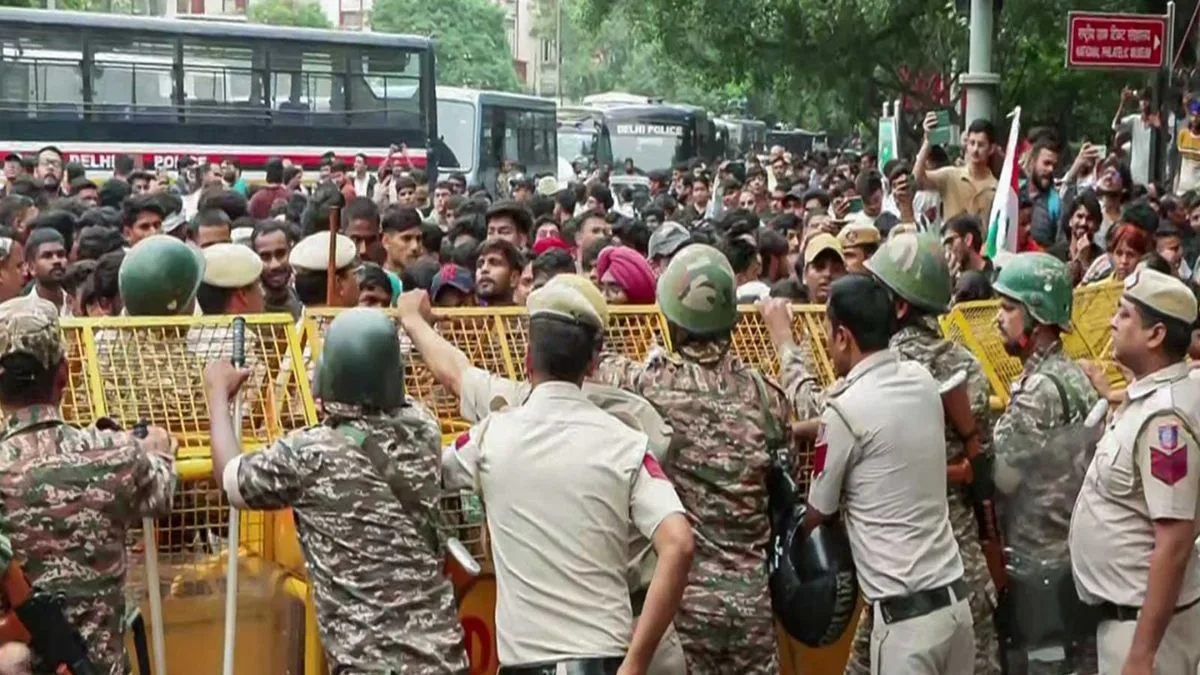
1 Carlton Gardens, a townhouse located in central London, is traditionally used as the Foreign Secretary’s residence. While the government maintains a few other properties, these are typically smaller, apartment-style, and strictly used as temporary city bases for members of parliament whose constituencies lie outside London. Admiralty House in London is used for government functions and also has flats occupied by some senior ministers. British MPs are not provided official residences.

Instead, MPs whose constituencies are outside the London area receive an accommodation budget to help cover the cost of maintaining a second home or hotel stays. While British MPs can claim parliamentary expenses to cover the “additional costs” of maintaining a second home for work in London, these are strictly audited, capped, and fundamentally intended to offset necessary expenses rather than provide lavish estates. Germany champions a highly decentralized, austere approach to ministerial accommodation. The Chancellor is provided with an official residence (the Federal Chancellery), but it is essentially a functional workspace with a small living area.

Federal ministers generally live in their own homes or rent apartments in Berlin. If they relocate for government work, they are given housing allowances, but they are not given expansive, state- maintained bungalows. The German political ethos strictly avoids visual displays of aristocratic opulence. German lawmakers are responsible for finding their own accommodations while in Berlin. While they are provided with an allowance to cover the costs of a second residence at the seat of government, they must rent privately, ensuring their standard of living remains aligned with that of working professionals. France provides official residences for its leaders, but these properties are grand offices and historical national monuments rather than sprawling personal compounds.

The President resides at the Élysée Palace and the Prime Minister at the Hôtel Matignon. Similar to Germany, other cabinet ministers do not receive sprawling private residences. They are expected to live in standard, private accommodations, or utilize small, strictly utilitarian departmental apartments. French parliamentarians receive a standard salary that covers all their living costs. They must secure their own Parisian apartments. The state does not own or maintain vast, rent-free residential enclaves for its legislators. Federal government ministers in Canada do not get government-provided bungalows or official residences.


Only the Prime Minister is provided with an official residence (24 Sussex Drive in Ottawa). Due to structural and safety issues, the building is currently uninhabitable and the PM has been living at the nearby Rideau Cottage. The only other individuals provided with official government residences in Canada are the Monarch’s representatives: the Governor General (Rideau Hall) and the ten provincial Lieutenant Governors. All Cabinet Ministers must arrange and pay for their own housing. Members of Parliament in Canada do not get free government-owned housing.

If they must maintain two residences (one in their constituency and the other in Ottawa), the government provides expense allowances to offset these costs. MPs whose constituencies are located outside the National Capital Region can claim up to $28,000 annually for housing expenses in Ottawa (such as rent, mortgage interest, or hotels). In China, government ministers and members of the legislature generally do not live in designated official houses; instead, most senior state officials and civil servants are responsible for securing and owning their own housing, with the exception of the very highest-ranking political leaders.

The highest-tier officials, such as Politburo Standing Committee members, are typically accommodated in secure, state-managed compounds or villas, such as the Zhongnanhai complex in central Beijing or Jade Spring Hill in the western suburbs. Cabinet-level ministers heading State Council departments are not automatically assigned government-owned homes. Many either live in properties they have purchased, or in traditional, older government-allocated housing or apartments tied to their respective ministries. Regular members of China’s National People’s Congress (NPC) receive fully paid state-funded accommodation in Beijing while attending the annual “Two Sessions” legislative meetings, though they do not receive permanent government-provided housing.

The roughly 2,900 NPC deputies serve on a part-time basis and remain in their normal, day-to-day careers outside of these meetings. During the annual sessions in March, the state covers all travel, dining, and hotel costs, typically housing delegates in specific state guesthouses or designated hotels across Beijing. While politicians in Western democracies navigate housing markets just like their constituents, Indian lawmakers are shielded by an antiquated culture of privilege.

Transitioning toward a consolidated, transparent salary package ~ where Indian MPs are paid a realistic, taxable market-rate salary and held financially accountable for their own housing ~ could reduce the drain on the public exchequer and foster a more egalitarian, accountable democracy. The disparity between the Indian system and those of the US, UK, Germany, France, Canada and even China exposes a fundamental divergence in political philosophy. In India, a government bungalow operates as a tangible display of state power – a vestige of colonial-era administration where authority was meant to be imposing.

The maintenance of these massive properties requires a significant diversion of public funds, a reality that sits uncomfortably in a developing nation fighting inequality. By insulating lawmakers from the housing and living realities faced by the electorate, the nominal-rent system threatens to disconnect representatives from public grievances. Because housing is highly subsidized, the government loses massive amounts of potential revenue, and the highly coveted Lutyens’ bungalows have historically been used as tools of political patronage.

Summing up, the controversy surrounding the government’s recent decision to reclaim the Delhi Gymkhana Club land has reignited a much broader national debate regarding entrenched elitism and state privilege. For critics, the club’s decades-long occupation of prime real estate at a nominal rent is emblematic of an archaic entitlement culture. This friction has led prominent commentators to argue that India must move beyond the imperial-era mindset of granting sprawling, subsidized bungalows and perks to Ministers, MPs, and even top bureaucrats.

Furthermore, the entitlement mentality often outlasts a lawmaker’s tenure, leading to long-term unauthorized occupation and rent disputes. In a modern, democratic society, public land and state resources should be redirected toward national security or broad public welfare, rather than functioning as private enclaves for the Ministers and MPs. Evicting the Delhi Gymkhana Club while allowing ministers and MPs to continue occupying their acres of privilege would unfairly target an exclusive private enclave for consuming prime public land while ignoring sprawling, taxpayer-funded estates retained by the political class.

(The writer, a retired IFS officer, served as India’s Ambassador to Kuwait and Morocco and as Consul-General in New York. He is a member of the Delhi Gymkhana Club)

Explained: Is the SpaceX IPO the best opportunity of the decade or Elon Musk’s most expensive con?

Buying into the SpaceX IPO means funding Elon Musk’s vision, not shaping it. Public investors get Class A shares with one vote each, Musk holds Class B shares worth ten votes apiece, giving him 85% of voting control.

Statesman News Service | New Delhi |

SpaceX IPO: SpaceX filed its S-1 registration statement with SEC on May 20. The stock is set to begin trading on the Nasdaq under the ticker SPCX on June 12, 2026. After more than two decades as a private company, Elon Musk’s rocket and satellite business is finally opening its books to the public. Here is what the filing actually reveals.

Size of the deal

SpaceX is targeting a valuation of roughly $2 trillion on listing day. At that number, it would rank behind only Apple and Nvidia among all publicly traded companies. The IPO is expected to raise around $75 billion, which would eclipse Saudi Aramco’s $29 billion raise in 2019 and become the largest public offering in history.

Twenty-one banks are underwriting the deal, with Goldman Sachs in the lead position. One notable feature: retail investors are allocated 30% of the float. That is three times the standard allocation for a mega-cap IPO. Whether that reflects genuine democratization or a marketing decision to build public hype is worth questioning.

Also Read: Explained: Anthropic just filed for an IPO at a $965 billion valuation; here’s what that actually means

The valuation has moved sharply in a short time. In July 2025, secondary shares traded at $212 each implying a $400 billion valuation. By December 2025, price had risen to around $421 per share, pushing the implied valuation to roughly $800 billion. The current $2 trillion target more than doubles that figure within six months. Investors should ask what has fundamentally changed to justify that acceleration, beyond market excitement.

Revenue: The real story is Starlink

SpaceX reported total revenue of $18.7 billion for 2025 up 33% from $14.1 billion in 2024. In first quarter of 2026, revenue came in at $4.69 billion though growth slowed to 15% year-over-year. The deceleration is notable and is not prominently featured in company’s marketing narrative.

The business breaks into three segments: Connectivity (Starlink), Space (rocket launches), AI (the recently acquired xAI business).

Starlink is carrying the company. The segment generated $11.4 billion in revenue for 2025 representing 61% of total revenue and growing 50% year-over-year. Operating income from Connectivity reached $4.4 billion for 2025 with adjusted EBITDA of $7.2 billion. In Q1 2026, Starlink added $3.26 billion revenue. $1.19 billion was operating income. As of March 31, 2026, the service had 10.3 million subscribers and over 9,600 satellites deployed in low Earth orbit, making it the largest active satellite constellation ever operated.

The rocket launch business, the original core of SpaceX, is a money-loser. Space segment generated $4.1 billion in revenue in 2025. But it posted operating loss of $657 million. In Q1 2026, it lost another $662 million on just $619 million in revenue. Starship development is expensive. And launches are not yet generating enough revenue to cover those costs.

The xAI acquisition: Expensive and unproven

In February 2026, SpaceX completed its acquisition of xAI. It is Elon Musk’s artificial intelligence company. The deal folded Grok and the Colossus data centers into SpaceX, creating a new AI segment now branded SpaceXAI.

The numbers here are stark. AI segment lost $6.36 billion in 2025. In Q1 2026, it posted $818 million in revenue against a $2.47 billion operating loss. Research and development costs within segment rose more than 300% in 2025 driven largely by GPU depreciation and cloud infrastructure costs. The company has $25.45 billion in contractual commitments related to cloud capacity, with 95% of that falling due in 2026 and 2027.

One headline contract: Anthropic agreed to pay $1.25 billion per month for access to SpaceX-linked data center capacity through May 2029. If that deal holds, it could materially accelerate AI segment revenue in the second half of 2026. But a single client accounting for the bulk of a segment’s revenue is a concentration risk, not a strength.

The broader question is whether the xAI merger serves SpaceX shareholders or Musk’s broader portfolio of interests. Shareholders are buying into the combined entity with no practical ability to separate the two businesses.

Losses and the GAAP reality

SpaceX’s adjusted EBITDA for 2025 was $6.6 billion, a figure the company has highlighted. But on a GAAP basis, the company reported a net loss of $4.94 billion for 2025. The gap is explained by stock-based compensation, satellite constellation depreciation, AI infrastructure capital expenditure. These are real costs regardless of how they are classified.

Operating loss widened to $1.94 billion in Q1 2026 driven heavily by $10.1 billion in capital expenditure during that quarter alone primarily on Starship and AI data centers. Losses are growing faster than revenue in the near term. The accumulated deficit on the balance sheet stands at $41.3 billion.

Investors are being asked to value a company at $2 trillion that has never reported a GAAP profit, is in an aggressive spending phase, and has operating losses widening each quarter. That is not unusual for high-growth technology companies. But the valuation multiple leaves almost no room for execution risk.

Governance: You are not getting a vote

The S-1 confirms a dual-class share structure. Class A shares, which are the shares being sold to the public, carry one vote each. Class B shares, held by Musk, carry ten votes each. After IPO, Musk will retain approximately 42% of equity. But he will control around 85% of voting power.

This structure means that public shareholders have no practical ability to influence board composition, executive compensation, strategic direction, related-party transactions. Antonio Gracias, CEO of Valor Equity Partners and SpaceX board member, owned 503.4 million Class A shares heading into IPO. Valor has extensive business relationships with SpaceX subsidiaries, including equipment leases tied to xAI valued at over $20 billion.

Buying SPCX is a bet on Musk’s judgment and priorities. It is not participation in corporate governance. Investors who are uncomfortable with that arrangement should be clear-eyed about it before they purchase shares.

What justifies the valuation

SpaceX claims in its S-1 that its total addressable market is $28.5 trillion. That figure includes global internet access, satellite communications, AI compute, space logistics, and eventual planetary colonization. Some of those markets are real. Others are decades away from generating meaningful revenue.

The credible bull case rests on Starlink. It is a genuinely dominant business in satellite internet, with 50% revenue growth, expanding margins, and a global subscriber base that is still early in its penetration curve. The Falcon 9 rocket has established launch cadence and customer relationships that competitors have not matched.

Starship, if it achieves full reusability at scale, would dramatically lower the cost of orbital access and create a platform for the company’s broader ambitions. SpaceX says the IPO proceeds will fund an “insane flight rate” for Starship, AI data centers in space, and a lunar base. The company plans to begin deploying orbital AI compute satellites as early as 2028.

The bear case is straightforward. The company arrives at a $2 trillion valuation with widening GAAP losses, an expensive and unproven AI bet, founder governance that gives public investors no real recourse, and a thin float relative to total market cap. Starlink’s growth will eventually plateau. Starship’s development timeline has slipped before. And the public market is being asked to price in decades of optionality at a premium that leaves little cushion.

‘I would love to play him’: Jim Sarbh opens up on his dream role as Jim Corbett

He grew up in India. He rejected England. He spoke Hindi better than any Englishman around him. Jim Corbett was no ordinary colonial figure, and Jim Sarbh knows it. Now he wants to bring that story to the screen, and he is not hiding it.

Statesman News Service | New Delhi |

Actor Jim Sarbh is currently riding high on the success of his latest OTT show. But his mind is already on a very different project. He wants to bring the story of legendary hunter and author Jim Corbett to the big screen. And he wants to play the man himself.

Show that sparked the conversation

Jim Sarbh spoke to IANS during the promotional events for ‘Made in India: A Titan Story’ in Mumbai. In the show, he plays Xerxes Desai, the executive who helped build the Titan brand under the Tata Group. Naseeruddin Shah plays industrialist J.R.D. Tata alongside him. The show is streaming on Amazon MX Player and has received strong audience response.

It was during these promotions that Sarbh shifted the conversation to a dream project.

Also Read: Who is Kevin Sobieski? The Harvard-educated millionaire Andy Cohen was holding hands with on his birthday

Fascination with Jim Corbett

Sarbh told IANS: “I’m fascinated with that guy. I hope somebody makes a show or a movie based on him. I would love to play the character.”

His reasons are specific. He described Corbett as “an English guy raised in India” who “absolutely rejected wanting to go back home” and “fell in love with the place.”

That emotional connect with India is at the heart of Sarbh’s interest in the story.

Man who rejected his own people

Sarbh was direct about what he finds compelling in Corbett’s character. He said Corbett “did not enjoy his compatriots and how they were treating India, and thought they were exploiting it completely.”

This sets Corbett apart from the colonial figures of his era. He sided with the land he grew up in rather than with the empire he was born into.

Sarbh also pointed out that Corbett “could speak Hindi better than anybody else around.” That detail alone says a lot about how deeply Corbett had rooted himself in Indian life.

Hunter who chose the camera

Sarbh also spoke about the complexity in Corbett’s relationship with hunting. He said Corbett “started out as a hunter because that’s kind of what he had done when he was younger,” but eventually “hung up his gun” and “would only come back in at specific times when there was a man-eater basically that needed hunting.”

The actor went further. Corbett reportedly said that “if he had grown up in a different time when the camera was invented instead of the gun, he would have never ever picked up a gun.”

Sarbh explained the practical reality behind Corbett’s hunting. He said that “back then the only way to go into the jungle for 5-6 days was if you were a hunter. There was no other financial fiscal way to support it.”

That context reframes Corbett not as a trophy hunter but as a man shaped by the limitations of his time.

An inspiring story that has not been told yet

Sarbh ended with a clear call to filmmakers. He said: “What an interesting, lovely story. I hope that gets made one day. Someone makes it.”

No project has been officially announced. No director or producer has been attached. But Sarbh’s interest is on record.

Who is Jim Corbett?

Jim Corbett (1875-1955) was a British-Indian hunter, author, and conservationist. He was born in Nainital and spent much of his life in the Kumaon hills.

Corbett tracked and shot numerous man-eating tigers and leopards in the early 20th century. He later became a wildlife photographer and wrote books including ‘Man-Eaters of Kumaon’. The Jim Corbett National Park in Uttarakhand is named after him.

Did Jennifer Lopez just accidentally confirm a romance with Brett Goldstein?

J.Lo called Brett Goldstein the best kisser she’s ever had onscreen. He asked to play the clip again. Now they both have some explaining to do.

Statesman News Service | New Delhi |

The promotional trail for Netflix’s upcoming romantic comedy ‘Office Romance’ has taken an unexpected turn. Jennifer Lopez and her co-star Brett Goldstein were put on the spot during an interview on the TODAY show, where host Savannah Guthrie pressed them to answer questions about their offscreen relationship. Both gave clear denials. Neither is currently dating the other.

How the rumours started

Jennifer Lopez and Brett Goldstein’s chemistry in their new romantic comedy has been convincing enough to spark dating rumours in real life.

Part of the fuel came from Lopez herself. During an appearance on ‘Watch What Happens Live with Andy Cohen’, Lopez was asked to name the best onscreen kiss she had ever had. She named Goldstein without hesitation, saying, “I just did a movie with Brett Goldstein and I’d say he was the best kisser.”

That comment did not go unnoticed. Guthrie played the clip back during the TODAY interview, with both actors watching it in real time. Goldstein’s immediate response was to joke, “OK, let’s just play that again.”

Also Read: Who is Kevin Sobieski? The Harvard-educated millionaire Andy Cohen was caught holding hands with on his birthday

Lopez defended the Cohen comment, pointing out that the Bravo host has a way of drawing admissions out of his guests. “Cohen always corners you into saying something,” she said.

Fan reactions online added further momentum to the speculation. One person commented on a promotional video for the film, “I love your chemistry!” Another wrote, “Writing a movie for your superstar crush who always falls in love with her costars is genius,” and predicted: “They’ll be engaged by Christmas.”

What Lopez said on TODAY

Guthrie channelled her best Andy Cohen energy and told Lopez directly: “You know what everyone’s saying.” Lopez played coy and asked what people had been saying. Guthrie confirmed: “That you might actually be dating in real life.”

Lopez did not dodge the question. She pointed to a pattern she has long dealt with in the press. “There’s never a time when I’m seen with somebody or working with somebody where they don’t try to put me with the person,” she said.

She also listed examples to prove her point. “Because I’m not dating all these people that they put me together with in rumours. I think I was with Kevin Costner this year. There was a lot of people. It happens all the time. Doesn’t make it true,” Lopez said.

When Guthrie pushed further and noted that Lopez had not given a straight yes or no, Lopez responded plainly. “Not dating,” she said. Goldstein confirmed: “Correct.”

Goldstein’s role in the rumour mill

Goldstein did not stay entirely on the sidelines during the exchange. He joked about Lopez’s observation that anyone seen standing near her gets linked to her, quipping, “I think if you stand near her, that’s what happens.” When Guthrie pointed out that standing close had not helped his case, Goldstein deadpanned: “Yeah, that’s why I’ve been standing so close.”

The banter between the two was relaxed, and both acknowledged that their working relationship had been easy from the start. Goldstein recalled their first meeting saying, “When we first met on the Zoom, it was instant. We were laughing.” Lopez agreed: “Yes, it was easy.”

About the film

‘Office Romance’ is directed by Ol Parker and written by Brett Goldstein and Joe Kelly. The film stars Jennifer Lopez as Jackie Cruz, the president and CEO of an airline company, and Goldstein as Daniel Blanchflower, a lawyer who joins her company.

Goldstein is also a producer on the film. The supporting cast includes Betty Gilpin, Amy Sedaris, Tony Hale, Bradley Whitford, and Edward James Olmos. The film is set to premiere on Netflix on June 5, 2026.

Lopez on her relationship status

The rumours around Goldstein are not the first Lopez has had to address this year. Lopez finalised her divorce from Ben Affleck in January 2025. Since then, she has been open about enjoying her single life.

During a May 27 appearance on ‘Jimmy Kimmel Live’, Lopez joked that she had been “doing it all wrong” when it came to relationships, and added that she was open to dating again in the future, but only if the right person came along.

When Kimmel suggested she consider becoming the next Bachelorette as a way to meet potential partners, Lopez shut it down immediately. “No. Are you crazy? I’m not doing anything to ruin how I feel right now. It’s fantastic. I love it,” she said.

She also made clear that she was not rushing into anything. “I’ll meet somebody somewhere one day, if they’re good enough,” she told Kimmel.

Goldstein’s dating history

Goldstein is 45 years old and has kept his personal life largely private. Reports indicate he is currently single.

In 2021, Goldstein publicly confirmed a relationship with fellow comedian Beth Rylance at the Primetime Emmy Awards, where he won for his portrayal of Roy Kent in ‘Ted Lasso’. During his acceptance speech, he told Rylance directly: “Beth, I love you.”

A year after that public declaration, reports surfaced that Goldstein and Rylance had broken up. Goldstein has not spoken publicly about the split, and the two no longer follow each other on Instagram.

Oscar-nominated Gaza film ‘The Voice of Hind Rajab’ finally gets a release date in India after months of silence

She was six years old. She was on the phone. She was alone. The car was surrounded. Her family was gone. She kept talking. India almost never let you hear her voice. Now, on June 19, you can.

Statesman News Service | New Delhi |

‘The Voice of Hind Rajab’ finally gets a green light in India. Hind Rajab was a six-year-old Palestinian girl from Gaza whose death became one of the most widely recognised symbols of the humanitarian toll of the Israel-Gaza war. In January 2024, Hind was trapped inside a car with several family members while attempting to flee heavy fighting in Gaza City. After her relatives were killed, she reportedly spent hours calling emergency responders for help.

The phone recording of Rajab’s voice to the Palestinian Red Cross Society is used in the film.

About the film

‘The Voice of Hind Rajab’ is a 2025 docudrama produced as a Tunisian-French-Palestinian collaboration. It was directed by Tunisian filmmaker Kaouther Ben Hania.

The film had its world premiere in the main competition of the 82nd Venice International Film Festival in September 2025, where it won the Grand Jury Prize and received a 23-minute standing ovation. It also screened at the Toronto International Film Festival.

The film was nominated for Best International Feature Film at the 98th Academy Awards.

The film has some of the biggest names from world cinema on board as executive producers, including Hollywood stars Brad Pitt, Joaquin Phoenix, and Rooney Mara, as well as Oscar-winning filmmakers Alfonso Cuaron and Jonathan Glazer.

Submission to CBFC and the first block

The film’s local distributor Manoj Nandwana revealed that ‘The Voice of Hind Rajab’ was submitted for certification in February, aiming for a release before the Oscar season. The initial release date was set for March 6, allowing Indian audiences more than a week to view the film before it competed in the Best Foreign Film category at the Oscars.

The film’s distribution rights in India and some neighbouring countries were bought by Jai Viratra Entertainment Limited.

According to Nandwana, the board did not point out any specific issues such as violence, nudity, or political content. Despite this, the film did not receive certification in time for its planned release.

A CBFC member informally conveyed concerns that the film’s release could strain India-Israel ties. No official list of cuts was given, which usually happens when changes are required. Instead, only a verbal concern was shared.

The distributor said the film was screened before the CBFC when Prime Minister Modi was on a two-day visit to Israel, and was held up due to sensitivity and India-Israel relations.

Despite no theatrical release in India, a planned streaming debut on Lionsgate Play in October 2025 also did not happen.

Opposition pushback

Opposition MPs wrote a joint letter to Union Minister Ashwini Vaishnaw, raising concerns over the reported denial of certification by the CBFC, stating that the matter had significant implications for artistic freedom, institutional credibility, and India’s standing as a society committed to democratic values and cultural openness.

The MPs who signed the letter included Jairam Ramesh, John Brittas, Ram Gopal Yadav, Manoj Jha, Salma, Haris Beeran, and Javed Ali Khan.

In their letter, the MPs said that reports about the film board orally declining certification raised serious concerns about whether factors beyond the statutory framework for film certification had influenced the decision-making process.

The MPs stated that the screening of a film is an exercise of artistic expression protected within the constitutional framework and cannot be made contingent upon perceived diplomatic relationships.

Congress leader Shashi Tharoor also criticised the delay, saying that films should not be stopped because of relations with other countries.

Nandwana responded to the diplomatic concern by saying the India-Israel relationship is strong enough that blocking the film over it made no sense, and pointed out that the film had already been released in the US, UK, Italy, France, and many other countries that also have ties with Israel.

CBFC clears the film

After months of uncertainty, ‘The Voice of Hind Rajab’ received certification from India’s Central Board of Film Certification, paving the way for its theatrical release on June 19.

The film has been given an ‘A’ certificate.

Nandwana thanked the CBFC for granting certification without any cut to the film, calling it an important step for enabling Indian audiences to engage with this cinematic work. He said he hopes the film fosters empathy, understanding, and constructive conversations among viewers.

A pattern of certification troubles

‘The Voice of Hind Rajab’ is not the only internationally acclaimed film to have run into certification trouble with the CBFC. British-Indian filmmaker Sandhya Suri’s 2024 movie ‘Santosh’, which was the UK’s official entry for the Best International Feature Film category at the 97th Academy Awards, also failed to obtain a certificate from the CBFC. That film follows a widow who joins the police force to investigate the murder of a Dalit girl. Despite no theatrical release in India, a planned streaming debut on Lionsgate Play also did not happen.

5 movies like ‘Peddi’ you should watch next

‘Peddi’ is not just a sports film. It is a village screaming to be seen. These five films speak the same language, same hunger, different ground.

Statesman News Service | New Delhi |

‘Peddi’ is the kind of film that may stay with you. Set in 1980s rural Andhra Pradesh, it follows young man named ‘Peddi’ who uses his sporting talent to fight for his village’s dignity. Real enemy in the film is not a person but system. Neglect, indifference, and the slow erasure of a community’s identity drive the conflict. Sports becomes the language through which ‘Peddi’ speaks to the world.

If that story moved you, here are five films that hit the same nerve.

Also Read: Peddi Twitter (X) review: ‘Career best’ vs ‘disaster’ for Ram Charan’s performance; the internet is at war

Lagaan (2001)

This is the obvious one, but it earns its place for a reason. A drought-hit village in colonial India is given an impossible choice. Accept three times the usual tax or win a cricket match against British officers. The villagers have never played the game. They learn it from scratch.

What makes Lagaan feel close to ‘Peddi’ is the idea that a game can carry the weight of an entire people. The match is not just a match. It is about survival, pride, refusal to disappear quietly. The villagers are ordinary people with no special advantages. Their only asset is the will to fight together. Director Ashutosh Gowariker gives the film an epic scale, but the emotional core is surprisingly intimate. Every character in the village gets a moment. That is rare for a film of this size.

Irudhi Suttru (2016)

Known in Hindi as Saala Khadoos, this Tamil film is a bare-bones sports drama about a disgraced boxing coach who discovers a raw talent from a fishing village. He is difficult, obsessive, and not easy to like. She is stubborn and untrained but has something no amount of coaching can create.

The story is not about trophies. It is about two people from the margins who have something to prove. The boxing sequences are gritty and real. There is no slow-motion heroism. The film earns its emotional beats honestly. R. Madhavan gives one of his best performances, and Ritika Singh is a revelation. For anyone who liked how ‘Peddi’ used sport as a mirror for deeper social realities, this one delivers the same weight.

Dangal (2016)

This film needs no introduction, but it belongs on this list because of what it is actually saying underneath the wrestling. Mahavir Singh Phogat is a man who once had a dream that the system crushed. He channels that dream into his daughters at a time when nobody in rural Haryana thought girls could be wrestlers.

What connects Dangal to ‘Peddi’ is the setting and the stakes. The village is not a backdrop. It is the whole point. Winning internationally means something specific to a place that has been told it does not matter. Aamir Khan disappears into the role completely. The film is long but never slow. The climactic bout at the Commonwealth Games is one of the finest sequences in Indian sports cinema.

Sarpatta Parambarai (2021)

This one is a step apart from the others and is better for it. Set in the 1970s in a working-class neighbourhood in North Chennai, the film follows a young man who joins an underground boxing clan. The clans are more than sports teams. They carry caste loyalties, political allegiances, and old wounds that never fully healed.

Pa. Ranjith directs this with the eye of a social historian. The film is long, detailed, and unafraid of complexity. The hero does not always make the right choice. He fails, rises, fails again. Sport here is inseparable from identity and community survival. That is exactly what ‘Peddi’ is about. If you want a film that treats its world seriously and does not simplify for comfort, Sarpatta Parambarai is essential viewing.

Chhichhore (2019)

This one earns its spot by approaching the theme differently. A group of college students who were considered failures band together for a hostel sports championship. The film cuts between their youth and their present, where one of their sons is in hospital after a suicide attempt following exam failure.

The message is direct. Losing is not the end. What you do with failure defines you more than success ever could. The film does not preach. It earns that message through character and story. The sports sequences are funny, chaotic, and oddly moving. Sushant Singh Rajput plays the lead with a lightness that hides genuine depth. Like ‘Peddi’, the film uses sport to talk about something much larger than the game itself, about what we owe to each other when life is going badly.

Peddi Twitter (X) review: ‘Career best’ vs ‘disaster’ for Ram Charan’s performance; the internet is at war

The theatres emptied, the phones came out, and within minutes X turned into a battlefield of opinions. Half the crowd was calling it Ram Charan’s greatest performance ever. The other half was already asking for a refund.

Statesman News Service | New Delhi |

Peddi Twitter (X) Review: Ram Charan’s rural sports drama ‘Peddi’, directed by Buchi Babu Sana, finally arrived in theatres today amid tremendous expectations. The film stars Ram Charan alongside Shiva Rajkumar, Janhvi Kapoor, Jagapathi Babu, and Divyenndu, with music by AR Rahman and cinematography by R. Rathnavelu. The moment the first shows ended, X exploded with opinions from all sides.

The hype going in

The pressure on this film was real. ‘Peddi’ marks Ram Charan’s third release since the blockbuster ‘RRR’, but none of his post-‘RRR’ films have come close to recreating that success. The makers had already shown the film to buyers, with producer Ravi Shankar claiming every buyer gave it a “blockbuster” report, calling it the biggest film of Ram Charan’s career. But the buzz was low, as the trailer did not really connect with audiences. The film’s success depended entirely on word-of-mouth after release.

Fans go wild on X

Once the premiere crowds walked out, fan reactions flooded the timeline. In a post that went viral, ‘Peddi’ was referred to as “pure cinematic fire.”

Ram Charan was lauded for delivering “one of the most intense and career-defining performances of his life. People said he owned every frame with unmatched screen presence,” while Janhvi Kapoor was praised for bringing charm and depth to the story.

Not everyone was convinced

Positive buzz ran into a wall of skepticism from another camp on X.

Several users pointed to pacing concerns. Critics noted the film feels slightly stretched in places, even while acknowledging strong performances throughout.

The first hour on X tells one story clearly: the fans came out swinging, and so did the skeptics. ‘Peddi’ is not a clean hit or a clean miss in public opinion yet. The word-of-mouth over the next 24 hours will settle it.

With a reported budget of Rs 350 crore and the weight of two consecutive flops behind him, Ram Charan needs the numbers to match the noise.

Also Read: Peddi OTT release date and platform: When and where to watch Ram Charan and Janhvi Kapoor-starrer after theatres

Who is Kevin Sobieski? The Harvard-educated millionaire Andy Cohen was caught holding hands with on his birthday

Andy Cohen was photographed holding hands with Kevin Sobieski outside Via Carota in NYC on his 58th birthday. Here is everything to know about the Harvard-educated finance executive.

Statesman News Service | New Delhi |

Andy Cohen may have a new man in his life. On June 2, the Bravo host was photographed holding hands with Kevin Sobieski in New York City. The two were arriving for dinner at celebrity hotspot Via Carota in New York City’s West Village neighbourhood, seemingly to celebrate Cohen’s birthday.

Popular internet gossip account DeuxMoi posted photos of Cohen and Sobieski holding hands with their fingers interlocked, alongside the caption, “Andy Cohen and his boyfriend Kevin spotted at Via Carota.” TMZ also quickly ran with the story, alleging that the two men had been dating for a “few months.”

Also Read: Beds, boys, and a broken prosecution: 10 most disturbing revelations from Netflix’s ‘Michael Jackson: The Verdict’

For the night out, Cohen wore a tan off-white cream suit paired with a pink shirt and sleek footwear, while Sobieski opted for a traditional dark suit and a pale button-down shirt.

Neither Andy nor Kevin have made any public statement after these June 2 dinner photos were released.

Who is Andy Cohen?

Andy Cohen is an American television executive and personality with a net worth of $50 million. He is perhaps best known as the host and executive producer of the late-night talk show Watch What Happens Live with Andy Cohen, which premiered in 2009.

Cohen was born on June 2, 1968, in St. Louis, Missouri. His television career started more than three decades ago when he interned at CBS News alongside fellow intern Julie Chen. He worked at CBS News for 10 years, serving as a producer for programs like The Early Show, 48 Hours, and CBS This Morning before joining the television network Trio in 2000.

After Trio was bought by Bravo in 2004, Cohen became the Vice President of Original Programming. He later became the Executive Vice President of Development and Talent at Bravo until 2013.

Cohen welcomed son Ben and daughter Lucy via surrogate. Previously, he confessed on the Call Her Daddy podcast in October 2025 that while he loves being a single father, the dating world is complicated. He joked about searching for love on Raya and Grindr.

Who is Kevin Sobieski?

Kevin Sobieski is a 42-year-old high-powered executive with serious ties to the entertainment world.

According to his LinkedIn, Kevin currently works in Portfolio Operations at TPG and has been in the role for just over two years. He described his work as: “Member of General Management (generalist) function within TPG Capital’s Portfolio Ops team, focusing primarily on Healthcare investments.”

TPG is one of the world’s largest alternative asset management firms, with over $200 billion in assets under management.

His education

Kevin Sobieski graduated with a Bachelor of Business Administration in Finance from the University of Wisconsin-Madison and an MBA from Harvard Business School. He also completed a semester abroad in Copenhagen.

His career path

Sobieski has built a career across finance, consulting, and private equity over nearly two decades.

Kevin began his career in marketing and financial analysis at General Mills from 2006 to 2010. He then spent significant tenure at Bain & Company from 2012 to 2017. This included multiple leadership roles focused on strategy and merger integrations. After that he directed transformation initiatives at Newell Brands in 2017-2018.

From 2018 to 2022, he served as a Portfolio Operating Executive at MacAndrews & Forbes, where he assisted with strategic initiatives for several companies, including RxSaver, which was acquired by GoodRx in 2021.

Sobieski spent two years advising early-stage companies focused on remote work technology and AI-driven human resources software prior to his 2024 entry into TPG.

His connection to the entertainment world

Before Kevin Sobieski became linked to Andy Cohen, he was known in entertainment circles as the former boyfriend of a major Broadway composer.

Sobieski dated composer and songwriter Benj Pasek from 2018 to 2022. The two were photographed on the red carpet a number of times throughout their relationship, including at the opening of the Broadway musical Dear Evan Hansen, which Pasek composed. Pasek also created the music for films like La La Land and The Greatest Showman.

Sobieski travelled to multiple public appearances with Pasek while they were together, including the London premiere of Dear Evan Hansen in 2019.

How did Andy Cohen and Kevin Sobieski meet?

Andy and Kevin appear to have first met in 2020 after they both participated in a Covid fundraiser called Saturday Night Seder.

The Saturday Night Seder was a virtual fundraiser broadcast on YouTube on April 11, 2020. It was co-produced by Benj Pasek and featured a wide array of celebrity participants, including Andy Cohen.

Sobieski is no stranger to a glamorous lifestyle or mingling with elite crowds. He previously accompanied Benj Pasek to high-profile opening nights in London and Los Angeles.

Reactions online

The comments on the DeuxMoi Instagram post were immediately flooded by fans who recognised the man with Cohen as Kevin Sobieski.

An alleged friend of Kevin revealed more about their romance to DeuxMoi, claiming: “He is a GREAT guy and Andy is super lucky to be with such a gem.”

The story spread rapidly across entertainment outlets, with TMZ, Just Jared, and Out all running coverage within hours of the photos going online.

What Cohen has said about dating

Cohen opened up to Extra in November 2025 about hopes for getting married, saying: “I think that a few things need to happen before I get married.” He also revealed his dating dealbreaker, noting: “I think if the first date was like, ‘When can I meet Countess Luann?’ I might be like, ‘You know what? Slow your roll, dude.'”

On the Call Her Daddy podcast in October 2025, when host Alex Cooper asked if he was on the apps, Cohen confirmed he was on Grindr, Scruff, Raya, Hinge, and Tinder. He even noted he got kicked off Grindr because people accused him of impersonating himself.

The relationship marks a new chapter for Cohen, who has not publicly dated anyone since his early 2000s split from John Hill.

Beds, boys, and a broken prosecution: 10 most disturbing revelations from Netflix’s ‘Michael Jackson: The Verdict’

Twenty-three million dollars bought silence in 1993. A decade later, the cameras caught him holding a child’s hand and calling it innocent. Nobody stopped him then either.

Statesman News Service | New Delhi |

Netflix dropped its three-part docuseries ‘Michael Jackson: The Verdict’. Directed by Nick Green, it revisits the 2005 criminal trial that acquitted Jackson on all 14 counts of child sexual abuse. Here is what the documentary lays bare, without the softening that Jackson’s admirers prefer.

1. The Bashir documentary triggered everything

Former BBC journalist Martin Bashir’s film ‘Living With Michael Jackson’ put the spotlight directly on the entertainer’s relationship with 12-year-old Gavin Arvizo, who would go on to accuse Jackson of molesting him. In the BBC documentary, Jackson appears clutching Arvizo’s hand and speaking joyfully about sharing a bed with the boy on multiple occasions. Jackson invited Bashir into Neverland specifically to rebuild his battered image. It destroyed what was remaining of it instead.

Also Read: He spends money on a date, she goes home without sleeping with him: What India’s ‘favourite’ stand-up comics call content

2. Jackson never recovered from the 1993 settlement

Jackson never really recovered from the 1993 child molestation accusations when he settled with 12-year-old Jordy Chandler and his family for $23 million. The documentary shows this payment was not closure. It was a shadow that followed him into every courtroom argument, undermining any claim of innocence with jurors who knew the history.

3. He admitted to sleeping with children

In an archival footage’s most controversial moments, Jackson openly admits to sharing his bed with young boys, insisting that sleepovers involved nothing more than fun, games, sleep. He said this on camera, to a journalist, while holding a child’s hand. No spin from his legal team or inner circle could undo it.

4. Pornography found behind locked doors

At best, Jackson engaged in a historic pattern of taking young children who were not his own into his bedroom behind a locked door, sleeping in bed with them, and showing them pornography. There is no dispute here. It is a statement of documented fact that the documentary does not shy away from, even as it also presents his defenders.

5. The prosecution self-destructed

Jackson walked free because the prosecution’s case was undone by unreliable witnesses, namely Gavin’s mom Janet, and major blunders like putting Jackson’s ex-wife Debbie Rowe on the stand, where she flipped. Rowe was called as a prosecution witness and ended up helping the defence. That is not bad luck. That is a catastrophically ready case.

6. Jurors swayed by fame, not just facts

The real uphill battle was simply convincing admirers that the man behind ‘Thriller’ could be a monster, particularly when the likes of child actor Macaulay Culkin were willing to take the stand to proclaim him a harmless saint. The fact that accusations from multiple kids that they were groped and raped was not enough to convince a jury to put Jackson behind bars speaks volumes about who is and is not believed in matters of justice.

7. No cameras in court meant the public was kept blind

No cameras entered in court. And so the public’s view of the facts at the time were filtered by commentators and presented piecemeal, the filmmakers themselves acknowledge. For years, people judged the trial on whatever fragments television chose to air. The documentary argues this distorted the public understanding of how strong the prosecution’s underlying evidence actually was.

8. The accusers were completely absent from the documentary

Viewers hoping for a balanced examination of the allegations against the singer may keep waiting to hear from at least one of the accusers or their families. That testimony never arrives. A documentary about child abuse allegations that does not include the alleged victims’ voices is a significant editorial choice. Critics have called it a glaring gap.

9. The timing is nakedly commercial

It is hard to separate the timing of this documentary from the renewed interest in Michael Jackson. With the biopic ‘Michael’ currently drawing a lot of attention, the pop star is once again dominating headlines. As a result, ‘Michael Jackson: The Verdict’ often feels like a project designed primarily to capitalise on that renewed interest. The documentary arrives over a month after the theatrical debut of the Michael biopic starring Jaafar Jackson, which grossed around $850 million. This is content riding a money wave, not justice-seeking.

10. The documentary offers almost nothing new

Green’s docuseries is a rather linear affair that is heavier on rehashing than on revelation, and those familiar with this headline-making chapter will come away with scant new information. The series relied heavily on interviews that rarely go beyond information that has been publicly available for years. For a trial that ended 21 years ago and left so many questions open, Netflix had the access and the platform to go further. It chose not to.

Two blockbusters, then nothing: How Aruna Irani spent 3 years jobless and danced for Rs 2,500 to survive

From Amitabh Bachchan’s heroine to a Rs 2,500 Lavani in a Marathi film, Aruna Irani’s three years of silence are a story Bollywood never told. She didn’t wait to be noticed. She showed up anyway

Statesman News Service | New Delhi |

Veteran actress Aruna Irani recently spoke about one of the darkest phases of her career, three years without work, and a Marathi film that changed everything.

Let’s delve into it, chronologically.

A Career That Began in Childhood

Aruna Irani was born on 18 August 1946 in Bombay. Her father, Faredun Irani, ran a drama troupe, and her mother, Saguna, was an actress. The performing arts were part of her household from the very beginning.

Aruna Irani made her debut in the movie Gunga Jumna (1961) at nine years old. The classic song “Insaf ki Dagar pe” in Dilip Kumar’s Gunga Jumna was picturised on her. From that point, she kept working steadily as a child artist.

After doing several small roles in films like Jahanara (1964), Farz (1967), Upkar (1967), and Aaya Sawan Jhoomke (1969), she was building a name for herself. The bigger break, however, was still a few years away.

Also Read: 5 Ram Charan films to watch before ‘Peddi’

The Blockbuster Years With Caravan and Bombay To Goa

The early 1970s brought Aruna Irani her most high-profile work. She shot to fame with her performance as an aggressive gypsy woman in the superhit Caravan (1971), where she also danced with Jeetendra in tracks like “Chadti Jawani Meri Chaal Mastaani” and “Dilbarr Dilse Pyaare.”

Then came Bombay To Goa in 1972. Aruna Irani played the role of Mala in the film, opposite Amitabh Bachchan who played Ravi Kumar. Shatrughan Sinha and Mehmood were also part of the cast.

Aruna herself has recalled this period with pride. She said that both Bombay To Goa and Caravan were blockbusters. Both films ran for years in Super Cinema and Dreamland theatres. She was at the top of her game, working alongside one of Hindi cinema’s biggest rising stars.

The Sudden Fall: Three Years Without Work

Then, without warning, the work stopped.

Aruna Irani has opened up on the toughest phase of her life when she was out of work for three consecutive years, and how a once leading actress had to dance for just Rs 2,500 to earn a livelihood.

Speaking on the reality show Tum Ho Naa, she recalled how abruptly things changed after two back-to-back hits. After Caravan and Bombay To Goa, there were suddenly no offers. No calls. No roles. She has described sitting in studios and waiting for someone to notice her as something she refused to do.

The success as a heroine eluded her, and ironically, the newer actors and actresses who she supported became stars while acting with her — Jeetendra in Farz (1967), Rishi Kapoor and Dimple Kapadia in Bobby (1973), Jayaprada in Sargam (1979), Kumar Gaurav in Love Story (1981), and Sanjay Dutt in Rocky (1981).

Her memorable performance in Caravan had already typecast her in vampish and supporting roles. The film industry had effectively moved on from her as a leading lady.

Accepting a Lavani for Rs 2,500

When work finally came, it was not what she had been known for. It was a Lavani performance in a Marathi film. The pay was Rs 2,500.

She performed a Lavani in a Marathi film and did it with courage. She told herself she had to go and show people she was still alive. She could not just sit in a studio and ask to be cast.

The film was Dada Kondke’s Marathi film Aandhla Marto Dola. She told herself she had once been a heroine opposite Amitabh Bachchan and was now doing a Lavani for Rs 2,500. But she chose to go anyway.

This was not a decision made out of comfort. It was one made out of necessity and a firm refusal to disappear from the industry quietly. She has spoken about this with no regret, describing it as the choice that saved her career.

The Turning Point: Meeting Raj Kohli

That Marathi film did more than give her a paycheck. That decision turned out to be fruitful because there she met people who would change her career. She met Raj Kohli ji, and from there work started coming her way again.

This meeting opened new doors. The roles returned. The industry noticed her again.

A Career That Reinvented Itself

Rather than fade away, Aruna Irani adapted. In the late 1980s and 1990s, she focused more on motherly characters in films like Shahenshah, Chaalbaaz, and Phool Aur Kaante. That approach struck the right formula when she played an elderly character in the 1992 release Beta.

Beta earned her the second Filmfare Best Supporting Actress Award. She had won her first Filmfare Best Supporting Actress Award for Pet Pyaar Aur Paap (1984).

In her later career, Irani switched to television and also took up the direction and production of tele-serials such as Mehndi Tere Naam Ki, Des Mein Niklla Hoga Chand, Rabba Ishq Na Hove, and Vaidehi.

On 19 February 2012, she was awarded the Filmfare Lifetime Achievement Award.

She married Bollywood film director Kuku Kohli in 1990. Aruna Irani is also the sister of filmmaker Indra Kumar.