Logo

‘Why am I being attacked?’: Lalit Modi takes aim at Rahul Gandhi, revisits 2009 IPL row

The former IPL chief defended his record, claimed political figures continue to invoke his name, and revisited the events that led to the IPL’s relocation to South Africa in 2009.

Statesman News Service | New Delhi |

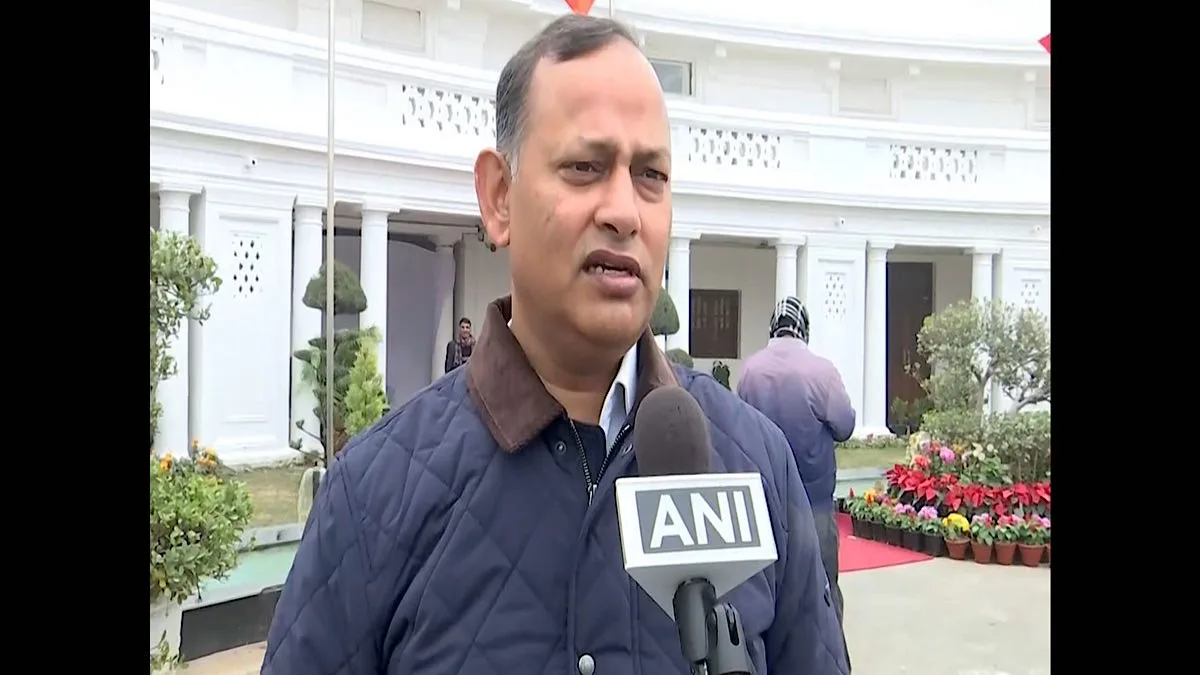
Former IPL chief Lalit Modi has taken exception to Rahul Gandhi’s repeated criticism of him, saying he continues to be targeted politically despite no case having been established against him in 17 years.

In an interview with ANI, Modi argued that nearly 17 years have passed without authorities taking him to court, which he said demonstrates the absence of any legally sustainable case against him. He also accused political figures of repeatedly invoking his name for public and political attention.
The remarks come as Modi renewed his criticism of sections of the Congress leadership and revisited some of the biggest controversies surrounding his tenure as the architect of the Indian Premier League. Alongside defending himself against allegations levelled over the years, he also opened up about the political circumstances that led to the IPL being shifted to South Africa in 2009.

“Arrest you want to do, you have to take me to court. Seventeen years you haven’t taken me to court. How can you arrest me today?” Modi said, adding that if there had been evidence against him, it would have emerged long ago.

He also questioned why Rahul Gandhi frequently refers to him during parliamentary debates, election campaigns and public speeches.

“Every time you look at Parliament or you look at the speeches of Mr Rahul Gandhi, he always attacks me. Every time there’s an election, he attacks me. Every time there’s some issue that comes up, I’m being attacked. Why am I being attacked by the Congress government?” he said.

Lalit Modi says cricket keeps him in public spotlight

Asked about comparisons with industrialists who are also regularly criticised by opposition leaders, Modi claimed his case was different because of his association with cricket.

“They don’t sell newspapers. They don’t sell news. I sell news. Because cricket is so big,” he said, adding that the sport had placed him under a level of public scrutiny unlike many business figures.

Modi further claimed that he was not worried about legal proceedings but about what he described as politically motivated attempts to target him.

“I’m not afraid of the law. What I’m afraid about is that you have some people… they’re political. Whether they sit in the opposition or they sit anywhere else, they have an axe against me,” he said.

Modi recalls move of IPL to South Africa in 2009

The former IPL chief also revisited the circumstances that led to the tournament being shifted to South Africa in 2009, when the IPL schedule coincided with the General Elections in India.

Modi alleged that the then Union Home Minister P Chidambaram opposed holding the tournament in India and that Congress-ruled states were unwilling to provide permission for matches.

According to him, BJP-ruled states had agreed to host games, but the broader security concerns and lack of approvals from other states created uncertainty around the tournament.

“Mr Chidambaram threatened me and didn’t want me to do it. I didn’t want to move it. At that point in time, it was the BJP government states who gave permission for me to hold the matches because the Congress government said they would not give permission in Congress states,” Modi claimed.

He further alleged that IPL organisers repeatedly revised the tournament schedule in an attempt to keep the competition in India.

“We changed the schedule 154 times before I moved to South Africa. And then, finally, the diktat came from Mr Chidambaram. He was the Home Minister then. He was all-powerful,” Modi said.

The IPL was eventually held in South Africa in 2009 after concerns were raised over the availability of security personnel during the General Election period.

Pahlaj Nihalani, Censor Board chief who blocked ‘Lipstick Under My Burkha’ and demanded 89 cuts in ‘Udta Punjab’, is no more

He launched Govinda. He ran India’s most contentious censor board. He picked fights with filmmakers, lost some in court, and never once said sorry. Pahlaj Nihalani did Bollywood entirely on his own terms.

Statesman News Service | New Delhi |

Pahlaj Nihalani, film producer and former chairperson of the Central Board of Film Certification, has died at 76. He had been unwell for some time and was reportedly suffering from liver-related health complications. His death marks the end of a career that stretched across four decades and left a sharp, often divisive imprint on Bollywood and on India’s relationship with film censorship.

A Sindhi family, a Bollywood foothold

Nihalani was born on January 10, 1950. He came from a Sindhi family and grew up with cinema already in his orbit. His elder brother, Govind Nihalani, had established himself as one of the foremost directors of parallel cinema in India, known for films like ‘Aakrosh’ and ‘Ardh Satya’. That connection gave Pahlaj an entry into an industry that is notoriously hard to break into. He did not squander it.

He also had a lesser-known family tie to Bollywood royalty. Shatrughan Sinha’s wife, Poonam Sinha, is a cousin of the Nihalani brothers, making Sonakshi Sinha a maternal niece by relation. These connections placed Nihalani near the centre of the film world long before he produced his first picture.
Building a production house

Nihalani produced his first film, ‘Haathkadi’, in 1982. The cast included Sanjeev Kumar and Shatrughan Sinha. It was a commercially minded action film, and it set the tone for the kind of cinema he would go on to champion: mass-market Hindi films aimed squarely at the paying public.

He followed ‘Haathkadi’ with ‘Aandhi-Toofan’ in 1985. Then came ‘Ilzaam’ in 1986, a film that holds a specific place in Hindi film history. ‘Ilzaam’ was notable for being actor Govinda’s debut. The following year, 1987’s ‘Aag Hi Aag’ served as the debut for Chunky Pandey. Two major careers, launched within twelve months of each other, under the same production banner.

Nihalani went on to produce ‘Gunahon Ka Faisla’ and ‘Paap Ki Duniya’ in 1987 and 1988 respectively. ‘Mitti Aur Sona’ followed in 1989. Through the early 1990s, his output continued at pace. ‘Shola Aur Shabnam’ came in 1992 and ‘Aankhen’ in 1993. ‘Aankhen’ was a significant commercial success. It cemented Govinda as a bankable star and Nihalani as a producer who knew how to read popular taste.

He also developed a close working relationship with Govinda that lasted across many films and spanned decades. That partnership, built on a shared sensibility for commercial Hindi cinema, remained one of the defining professional associations of his career. His bond with Govinda extended to personal friendship and he later tried to produce a film that would launch Govinda’s daughter, Tina Ahuja.

He was also president of the Association of Pictures and TV Programme Producers for 29 years until he resigned in 2009. It was a long tenure in a trade body position, and it reflected his standing within the industry’s institutional structures.

Politics and the Modi video

Before politics formally touched his professional life, Nihalani had already shown an inclination toward it. Before the 2014 general elections, he made a YouTube video called “Har Har Modi, Ghar Ghar Modi”, supporting Narendra Modi. The video spread widely online and signalled his alignment with the BJP’s political project at a pivotal moment.

That alignment had consequences. He took the office of the chairperson of the Central Board of Film Certification on 19 January 2015, roughly a year after Modi became Prime Minister. The timing was significant. Many noted it as a politically motivated placement.

On 10 November 2015, a music video called “Mera Desh Mahaan”, produced by Nihalani as a tribute to Prime Minister Modi, was uploaded to YouTube. A shorter version was played in film theatres during the interval of the film ‘Prem Ratan Dhan Payo’. The video reportedly caused major personal embarrassment for Modi and was criticised by the Information and Broadcasting Ministry, which reportedly called for Nihalani to be sacked from his position. It was a rare instance of a government appointee embarrassing the very administration that had placed him in office.

The Censor Board years: Scissors and controversies

Nihalani’s tenure at the CBFC ran from January 2015 to August 2017. Those two and a half years became the most talked-about period of his life, for almost entirely contentious reasons.

Soon after his appointment, he floated a new set of extremely strict guidelines under which curse words would not be even in the ‘A’ category. He said depiction of violence against women would be discouraged and that no content which might hurt religious sentiments would be allowed.

The controversies multiplied quickly. After kissing scenes in the James Bond film ‘Spectre’ shortened before release, Nihalani attracted criticism on social media. He responded by stating the cuts were within the rules.

The defining battle of his tenure came with ‘Udta Punjab’, the Anurag Kashyap-produced film about drug abuse in Punjab. On 4 June 2016, he became the centre of a national debate on film censorship after placing severe restrictions on the film. The CBFC had suggested 89 cuts. On 13 June 2016, ‘Udta Punjab’ won the case against the CBFC and released with just one cut, upholding freedom of speech.

Also Read: Suman Kalyanpur dies at 89: She sang 740 songs, recorded 140 duets with Rafi, and spent a career as ‘the other Lata’

‘Lipstick Under My Burkha’ fought a long battle with the CBFC to get released. The film was initially refused certification for being too “lady-oriented.” Films like ‘Aligarh’ and ‘Unfreedom’, which dealt with same-sex relationships, received A certificates, drawing criticism from rights groups. In 2017, he disallowed the word “intercourse” in the trailer of ‘Jab Harry Met Sejal’, citing the view that Indian mentality was not ready for such progressiveness. Critics pointed out the irony immediately, noting that he had produced a 1994 film called ‘Andaz’ that contained songs with explicit double meanings about sex.

Nihalani was one of the most controversial censor board chairpersons, running into skirmishes with film producers over cuts, beeps and disclaimers he insisted on. He did not apologise for any of it. He called himself “sanskari” and wore the label with visible pride.

Nihwas sacked on 11 August 2017 and replaced by writer-lyricist Prasoon Joshi. In remarks after his removal, he said he had no regrets and had been preparing for his exit for some time. He also alleged that elements within the CBFC had been working against him since he arrived.

Life after the CBFC

The years after his removal from the censor board saw Nihalani return to filmmaking, though the landscape had changed around him. In 2017, after leaving the CBFC, he became the distributor of the erotic thriller ‘Julie 2’. Many observers noted the irony. The man who had blocked films for suggestive content was now distributing one.

He produced ‘Rangeela Raja’ in 2019 with Govinda in the lead. The film ran into its own certification troubles, with the CBFC’s Examining Committee recommending 20 cuts. Film Certification Appellate Tribunal reduced these to three. The film released in January 2019 and did negligible business at the box office.

In 2021, he was hospitalised for 28 days after a severe health episode. He spoke publicly about vomiting blood at 3 in the morning and described surviving as being rescued from the jaws of death. The episode was linked to a food-related reaction. His health had been a concern in the years since.

He continued to argue, publicly and persistently, for regulation of OTT platforms. He believed streaming services had created an unregulated space where explicit content reached audiences, including children, without any certification check. It was a position consistent with the views he had held throughout his career.

‘Rs 10-12 crore won’t last me a week’: Lalit Modi denies wrongdoing, says he was born with a ‘diamond spoon’

In a candid interview from London, Lalit Modi spoke about his business success, personal wealth, IPL legacy and why he believes allegations against him are misplaced.

Statesman News Service | New Delhi |

Former IPL commissioner Lalit Modi has defended his extravagant lifestyle and rejected allegations against him, saying the sums he has been accused of misusing are insignificant compared to the wealth generated by his family’s business empire.

Speaking to ANI in London, Modi said he had “done nothing wrong” and maintained that the legal cases against him in India have no basis. The former cricket administrator, who has lived outside India for years, used the interview to push back against criticism over his wealth, spending habits and public image.

Describing himself as someone born into immense privilege, Modi said he sees no reason to alter the lifestyle he has led throughout his life. He argued that allegations involving a few crores of rupees make little sense given the scale of the business interests associated with his family.

“I have done nothing wrong….I told you I was born with a diamond spoon. When you accuse me of taking few crore rupees, I make more than that a day in my life. We are the biggest…company is globally big. It’s a two-and-a-half lakh crore market capitalised value,” he said.

He said the family business is valued in lakhs of crores and claimed he personally built successful ventures outside the family’s established enterprises. According to Modi, much of the wealth he spends today comes from businesses he helped create rather than inherited assets.

Lalit Modi says he built businesses independently

During the interview, Modi pointed to ventures such as Modi Entertainment Networks as examples of businesses he developed himself.

“I made hundreds and hundreds of millions of dollars in my life,” he said, arguing that he should be free to spend money earned through his own entrepreneurial efforts.

Modi also said he has transferred ownership of family business interests to his children and jokingly described himself as a “kept father” supported by them.

“I’m part of it. I own the business. I gifted it to my children. My children own it. I’m a kept father by my children. I live in a beautiful home. I live the biggest life. I go everywhere. How do you think I do it? What is this thing? I took Rs 10 or Rs 12 crores of money..it won’t last me a week….It is what it is. I was born with it. Why would I change my lifestyle for anybody? Why would I live my life for anybody else? My grandfather didn’t live it. My father didn’t live it for anybody else,” he added.

Calls Vijay Mallya a friend

Responding to a question about businessman Vijay Mallya, Modi described him as a friend but said their situations were different.

According to Modi, Mallya’s legal issues were linked to banks and borrowing, whereas his own businesses did not depend on loans, government contracts or public money. He said his business interests were rooted in consumer brands and manufacturing.

IPL founder remains under scrutiny

Modi remains one of the most influential and controversial figures in Indian cricket administration. He was the architect of the Indian Premier League and served as its founding chairman and commissioner from 2008 to 2010.

In 2013, the Board of Control for Cricket in India (BCCI) imposed a lifetime ban on him on charges of indiscipline and misconduct.

He also faces an alleged money laundering case being investigated by the Enforcement Directorate.

The Power of Belonging: 45 Years of The Art of Living

From Kashmir to Kanyakumari, from Imphal to Indore, the scale of the gathering at The Art of Living International Centre reflected the extraordinary breadth of his influence across public life.

Statesman News Service | New Delhi |

“When the resolve is clear and the work is done in the spirit of service, every effort bears fruit,” spoke the Prime Minister of India, Shri Narendra Modi within the pristine environs of The Art of Living International Center in Bengaluru on 10th May. The words captured the journey of one of the largest volunteer-driven movements dedicated to humanitarian service, inner peace, solace and wisdom. And the man behind the vision that has manifested this movement is the global spiritual icon, Gurudev Sri Sri Ravi Shankar, who incidentally turned 70 this month, a lifetime “lived wholly in service of others,” as described by the Governor of Manipur, Shri Ajay Kumar Bhalla.

It is interesting that, not too long ago at one of his most important addresses to the United Nations in public memory, Gurudev had said, “I have this crazy idea to see a world without violence. This may appear Utopian, but we need to dream, and we will get there.” Coming from a spiritual leader, those words comfort the mind and makes one more hopeful.

But what can a world without violence, without hate, where people come together for something more wholesome and unifying, beyond one’s limited identities, look like?

If the views at the at The Art of Living International Center were anything to go by, the dream seemed closer to be fulfilled than ever- a showcase of possibility of peace, a display of oneness beyond caste, creed, and regionality not seen very much in recent times, something that found expression in the words of Hon. Archibishop of Kerala, “We live in a world weighed down by wars…by a deep restlessness in the human heart. Nations are divided, faiths are misunderstood, and millions live in fear and despair.” The words of Hon. Archbishop of Kerala Mor Baselios Joseph were not without hope.

“It is precisely in such times that the world needs voices like yours, voices that speak not of division, but of the oneness of the human family,” he said while honoring Gurudev for his lifelong work, as Gurudev turned 70 this month.

And perhaps that was the deeper significance of what unfolded over the last few weeks at The Art of Living International Center.

The proposition was that, first of all, peace is possible and that inner peace alone can ensure there is peace in the world, and that human connection itself may be the most urgent need today. Millions of people from 182 countries came together to celebrate 45 years of the movement embodying its very spirit of joi de vivre, cherishing diverse cultures, philosophies, music, art forms and consciousness with global meditations with Gurudev online and in person throughout the month. These moments of collective silence of a million minds becoming one for a few minutes every day was a sign that it is possible to suspend our divisions for a while and experience peace together as something more tangible than we can imagine.

During one particular evening , while the month long celebrations were underway, Gurudev quipped, “Who says I’m 70?” breaking into his characteristic open laugh with a head tilt and sparkling eyes, “Seven thousand sounds far more acceptable.”

He often says he refuses to grow old, and perhaps it is what Hon. Vice President of India Shri C. P. Radhakrishnan decsribed as “His smile, his simplicity, his humility, and his affection” that touches everyone. That, coupled with a wish to see a smile on every face on the planet, that has enabled him to achieve what seems outwardly impossible.

From Kashmir to Kanyakumari, from Imphal to Indore, the scale of the gathering at The Art of Living International Centre reflected the extraordinary breadth of his influence across public life, bringing together 678 distinguished VVIPs, including the Prime Minister of India, five Union Cabinet Ministers, six Chief Ministers, four Ministers of State, nine Governors, twenty-eight of the country’s leading industrialists, celebrated film personalities, members of royal families, and lakhs of Art of Living volunteers and devotees from around the world.

But what does the presence of these statesmen, artists and leaders from across the political spectrum really denote?

For Shri Satish Sharma, Cabinet Minister in the Government of Jammu & Kashmir,, holding multiple portfolios, the memory was deeply personal. “During our darkest times, you stood by us. You held our hand,” he said, recalling Gurudev’s engagement with the people of Kashmir through some of the region’s most difficult years. It was a sentiment echoed in different ways and a numbet of times across the celebrations, that beyond the public figure known to millions, there was someone people felt had shown up when it mattered.

For Andhra Pradesh Chief Minister Shri N. Chandrababu Naidu, Gurudev’s contribution lay in his ability to build a bridge between ancient wisdom and modern governance. Recalling Art of Living programmes conducted three decades ago for ministers, legislators and senior bureaucrats, he spoke of the tangible impact they had created, describing Gurudev as “a global humanitarian, a messenger of harmony and a bridge between the wisdom of ancient Bharat and the aspirations of the modern world.”

Again and again, speakers returned to the unusual breadth of work that had emerged from a spiritual movement. Manipur Governor Shri Ajay Kumar Bhalla reflected on how The Art of Living had taken wisdom that once lived in homes and traditions and given it a language that resonates across the world. He spoke of free schools for children with little more than “their hunger to learn,” of communities healing after conflict, of forests replanted and rivers restored. At the heart of it all, he said, was seva, not as obligation, but as “love as action.” Looking at Gurudev’s seven decades, he summed it up as “A life lived wholly in service.”

Others marvelled at the way that service translated into individual lives. Karnataka Cabinet Minister Shri Mankal S. Vaidya said, “ Gurudev has transformed the lives of people who had lost everything, helping them rise again. When children have no parents, no family, or no support system, the organization tells them: ‘We are here for you. We will shape your future, educate you, and help you live with dignity.’ He added, “Whoever comes under his guidance, or witnesses his service naturally becomes inspired to do good and help others.”

Several dignitaries spoke of Gurudev’s presence that seeps into the highly inspired nature of his work that has rippled across continents to create lakhs of dedicated volunteers and teachers. Governor of Himachal Pradesh Hon. Shri Kavinder Gupta described him as one of those rare individuals whose very presence brings calmness, clarity and positive energy. Goa Chief Minister Shri Pramod Sawant reflected on how Gurudev’s vision had helped shape conversations around happiness and well-being in his state, while also giving direction to young people struggling with stress and violence.

The steady stream of saints and spiritual leaders who arrived at the ashram may have come from different faiths but they all seemed deeply affected by Gurudev’s unconditional love snd sense of belonging. Swami Chidanand Saraswati of Rishikesh’s famous Parmarth Niketan, described Sudarshan Kriya and The Art of Living as “a new sun, a new light” needed by the world today. Having witnessed Gurudev’s work over decades, he spoke of a man capable of transforming conflict into dialogue and hostility into friendship. Sadhvi Bhagawati Saraswati called it nothing less than a “revolution of consciousness,” unfolding quietly across the world, one mind and one heart at a time.

Bishop Dr. Marvin Mathew, Archbishop, Sefi Diocese, Anglican Communal Churches of India, pointed to something profound and necessary of our times, “He never divides people on the basis of faith. Instead he helps people become better human beings, go deeper in their own faith.”

For business icon Ashok Hinduja, Gurudev’s influence could be seen in boardrooms as much as meditation halls. Recalling interactions with the Hinduja Group’s global CEOs twenty-five years ago, he credited Gurudev’s insights on leadership and management for continuing to shape the organisation’s journey even today.

The scale of what had grown from a small initiative in 1981 was not lost on the country’s leaders. While inaugurating the Dhyan Mandir, a splendid meditation hall at the ashram, Prime Minister Shri Narendra Modi compared The Art of Living to a vast banyan tree whose branches now touch countless lives across the world. Maharashtra Chief Minister Devendra Fadnavis called Gurudev “India’s biggest spiritual ambassador to the world.” Haryana Governor Ashim Kumar Ghosh reflected that the lamp lit forty-five years ago now shines across more than 182 countries.

Even those encountering the Ashram for the first time seemed struck by something difficult to quantify. Her Highness Rajmata Saheba Shrimati Raseshwari Rajalakshmi ji, of Jaisalmer, described the experience as “out of the world,” while Thakur Saheb Praveen Singh Daspanji expressed amazement at the discipline, dedication and spirit of volunteerism that animated the sprawling campus.

Taken together, the tributes spoke of a teacher, a humanitarian, a peacebuilder, a cultural ambassador, and the inspiration behind a global movement dedicated to bringing happiness to individuals and bringing harmony and social change in the world around us. Different people observed different facets. Yet across their varied experiences ran a common thread: an acknowledgement that the ideas Gurudev set in motion forty-five years ago continue to find resonance in villages, cities, rural classrooms, boardrooms, government institutions, environmental projects and communities across the world.

And this, probably is the secret of Gurudev’s spiritual stardom that the legendary actor Rajnikant talked about. A much loved superstar himself, Rajnikanth shared during his recent visit to the Ashram, what he feels is a deeply personal lesson, “When I sat beside Gurudev, not a single person even looked at me, they were all so focussed on him. That is the power of spirituality. Stardom comes and goes. But spiritual stardom is supreme.”

India is a deeply diverse nation, and we take pride in that diversity. Differences of ideology, caste, religion, community, gender, language, and political beliefs have long shaped and separated us. ‘Unity in Diversity’ is an idea we cherish, though in reality it is not always easy to achieve. Yet this familiar narrative transforms within the confines of one ashram, where people from vastly different backgrounds truly come together as one. And this is made possible by a man, who is neither a politician nor a policymaker. Then how does he command the love and respect of millions?

The simple answer is, love. Kana Das, a devotee and a farmer who practices natural farming travelled all the way from West Bengal to take part in the 45th year celebrations, said, “I am a farmer. I am here because I am grateful for what Gurudev has done in my life. With his love, he gave me another chance to live and prosper. I was in deep financial loss because of the money I was spending in chemical fertilizer and buying seeds. Flooding and monsoons had made life more difficult. Then Gurudev’s natural farming trainers came to me, gave me hope, taught me meditation and breathing (Sudarshan kriya). They showed me hope, they showed me how I could cut my input costs by adopting natural farming and home-made inputs. It had made all the difference. When you give hope to a poor farmer, you give hope to many families in similar state. Today I have been able to book my own ticket and come here to meet Gurudev. I am proud of it, and grateful from my heart.”

Whether it was Colombia, Kosovo, Iraq, Ivory Coast or India’s Bihar, Kashmir or Northeast, over 45 years, Gurudev did not let the idea of peace as an experience remain confined to the comfort of urban spaces but took it where it was needed the most- regions ravaged by war and conflict, societies and communities where communication had broken down with little room for a conversation or trust. His programmes in these difficult areas have focused on trauma relief, emotional healing, and community rebuilding that have helped individuals recover from the psychological scars of war and violence.

Of all the peace work, perhaps this level of unwavering care and compassion for a broken world is where Gurudev’s legacy as a voice of peace becomes vital.

Tejasvi Surya, Member of Parliament, Bengaluru summed it up during his visit to the Ashram, saying, “The Art of Living, under Gurudev’s guidance, has gone to places where armies have hesitated to go. And they have gone there with the mantra of peace and have brought reconciliation and hope to places where even the greatest of world leaders had completely taken their hands off.”

In an open air Satsang, Hon. Chief Minister of Manipur Shri Yumnam Khemchand Singh, said, “In our place, Manipur, such an ethnic crisis took place. Every day there were sounds of gunfire. Children died. Elderly people died, homes were burnt. From Gurudev, I asked for one thing. I asked him for peace.” Among the many other efforts, a football academy is being run by The Art of Living for the displaced children of Manipur, so that children can be allowed to be children for a few hours each day, setting aside the pain and trauma.

But then, what is Art of Living? During one of the evening Satsangs, a large gathering where mesmerising devotional music, meditation and spontaneous clapping and dancing would happen all at once, Gurudev captured the core of his movement that “Art of Living means celebrating life,” urging that our entire existence should become a continuous celebration. Looking out at the diverse international crowd, he described the Earth as a “very small place for us” and passionately reaffirmed the vision of “Vasudhaiva Kutumbakam,” or the “one world family.”

Inspired by this vision, over the past four and half decades what has emerged is one of the world’s largest volunteer-driven humanitarian movements, working across the fields of peace building, conflict resolution, disaster relief, and mental well-being. Active in more than 182 countries, the organisation has touched a billion lives through its emphasis on human values, meditation, and service.

Infact, during his visit to the ashram for the inauguration of Dhyan Mandir, the Prime Minister Shri Narendra Modi also launched nine nationwide service initiatives of the organisation aimed at bringing inclusive development across education, youth and women empowerment, reforestation, environmental conservation, tribal welfare, healthcare, prison reform and digital literacy.

Equally significant has been the organisation’s contribution to the global promotion of yoga, meditation, and mental wellness. Through breathing techniques such as Sudarshan Kriya, meditation programmes, and stress-relief workshops, the Art of Living has introduced millions of people to practices rooted in ancient Indian wisdom traditions. Its programmes are conducted in schools, prisons, corporate institutions, rural communities, and international forums, promoting emotional resilience, inner peace, and holistic well-being.

The same sentiment resonated in the words of Hon. Chief Minister of Maharashtra, Devendra Fadnavis, when he recently joined a distinguished gathering of global leaders and social change-makers at the ashram. “The vision we hold of India as a Viswaguru is not just economic or military power but rooted in spiritual power. And the path towards becoming that spiritual superpower is guided by Gurudev Sri Sri Ravi Shankar.” While talking about the need to carry India’s greatness, its principles, thoughts and spiritual visions to the world, he said, “Today, if anyone is fulfilling that need, it is Gurudev. He has presented our spiritual thought, our universal knowledge and our entire wisdom before the world, and has worked to draw the world’s attention towards us.”

His state, Maharashtra, for example, has witnessed remarkable transformation in river rejuvenation, water conservation, and natural farming through several initiatives undertaken by the Art of Living. Acknowledging Gurudev’s contribution he further added, “In Maharashtra, for the last 10-12 years, I myself have been working with the Art of Living. The way Art of Living has worked in natural farming, our farmers, who had fallen into despair somewhere, were inspired by Gurudev. He made them the architects of their own lives and brought transformation into their lives.”

The gift of Intuition

At a time when conversations around education are increasingly dominated by performance pressure, digital distraction, anxiety and shrinking attention spans, one of the most thought-provoking moments during The Art of Living’s 45-year celebrations came through an event centred not on marks or competition, but on consciousness itself.

In what emerged as one of the largest and most extraordinary showcase of the power of intuition in the country, over 11,000 children and parents who are part of The Art of Living Intuition Process came together for a striking exploration into focus, perception, emotional balance and the untapped possibilities of the human mind. Across the Ashram, children participated in blindfold reading, memory exercises, rapid pattern recognition activities, intuitive games and sensory demonstrations with an ease that left educators, psychologists, scientists and parents visibly intrigued. The most arresting moment came when 50 children cycled blindfolded through the curves and bends of the Ashram roads with complete confidence.

Yet the significance of the gathering lay beyond the spectacle.

The Cultural Showcase

For decades, Gurudev has consistently used his global platform not only to speak about peace and human values, but also to protect and revive India’s artistic and cultural traditions, particularly forms that are slowly fading from public memory. This vision found a place in the 45 yesr celebration too in the form of BHAAV 2026: The Expressions Summit, a five-day cultural gathering held in the Ashram.

Bringing together leading dancers, musicians, theatre practitioners, visual artists and scholars, the summit placed rare and classical Indian traditions at the centre of contemporary cultural conversation. Rooted in texts such as the Bhagavad Gita and the Natyashastra, BHAAV moved beyond performance into deeper explorations of the spiritual and philosophical foundations of art itself.

Particularly striking was the focus on lesser-seen traditions such as Perini Nritya, the ancient warrior dance form rooted in the Kakatiya period, and Agama Bharatam, both brought back into public attention through performances and discussions. Dr. Padma Subrahmanyam examined Natyashastric angika in dialogue with the Bhagavad Gita, while SNA awardee Saswati Sen conducted a workshop on Geet Govind as an embodied knowledge system.

The music sessions blended scholarship with performance. T. N. Seshagopalan explored the musical dimensions of Geetha Govindam, Sumitra Guha led a masterclass on the bhajans of Meera and Surdas, while Chitravina N. Ravikiran presented Naada Brahma through the 12 Jyotirlinga Kritis. In the visual arts segment, Padma Shri K. K. Muhammad reflected on conserving the temples of Chambal and their lived histories, while Hemoprova Chutia interpreted the Bhagavad Gita through Assamese Barnab Astra tirelessly woven in Muga silk and wool.

The theatre segment revisited the foundational principles of the Natyashastra, approaching performance as a synthesis of angika, vachika, aharya and sattvika abhinaya. Veteran theatre personality Ram Gopal Bajaj led a session on theatre as a medium of expression, while National School of Drama, Bengaluru Director Chittaranjan Tripathy explored musicality in acting and the deep relationship between rhythm, emotion and performance traditions.

Closing remarks

Recalling the early days of The Art of Living, Gurudev on one of the days shared how the organisation’s very foundation reflected a coming together of diverse worldviews. Among the first trustees of The Art of Living were former Chief Justice of India Justice P. N. Bhagwati and Justice V. R. Krishna Iyer. While one was deeply spiritual and the other known to be a committed rationalist, both were drawn to Gurudev’s vision and agreed to serve as founding trustees.

Forty-five years after a movement was born out of Gurudev’s vision of creating a stress-free, violence-free society, one wonders why it continues to resonate with such force across continents, cultures and generations. Perhaps the answer lies in a perspective shared by Dinesh Gundu Rao, a seasoned leader and cabinet minister in the Karnataka government at the 45 year commomeration,

“People from all sections of society, across religions and communities, come together here without barriers or divisions. Through decades of tireless work, Gurudev has taken India’s timeless message of spirituality, brotherhood, and human values to the world.”

30 lakh farmer beneficiaries, 1.2 lakh children studying in Art of Living’s free schools, 75 rivers and tributaries being rejuvenated as we speak, over 8 lakh prison inmates who found freedom within. What explains the popularity and far reaching impact of a spiritual leader of the stature of Gurudev?

Dinesh Gundu Rao adds, “His growing global popularity reflects the authenticity, transparency, and sincerity of his work. Gurudev has always led by example. He has not merely spoken about these values, but has lived them.”

Virat Kohli to miss Afghanistan ODI series with hamstring injury, Rohit Sharma faces fitness race

Virat Kohli has been ruled out of India’s ODI series against Afghanistan with a hamstring injury, according to BCCI sources. Rohit Sharma remains doubtful due to fitness concerns.

Statesman News Service | New Delhi |

Star India batter Virat Kohli has been ruled out of the upcoming ODI series against Afghanistan due to a hamstring injury, according to sources in the Board of Control for Cricket in India (BCCI).

The three-match ODI series is scheduled to begin on June 13 in Dharamshala following the one-off Test between the two sides in New Chandigarh.

Kohli appeared to struggle while running during the closing stages of the Indian Premier League (IPL) 2026 final against Gujarat Titans in Ahmedabad. Despite the apparent discomfort, the former India captain played a match-winning knock of 75* off 42 balls to guide Royal Challengers Bengaluru to a challenging 156-run chase.

Rohit Sharma also doubtful; Kohli misses return to ODI action

While India captain Rohit Sharma has been included in the ODI squad, his participation in the Afghanistan series remains uncertain and will depend on his fitness.

Kohli enjoyed another prolific IPL campaign, finishing as Royal Challengers Bengaluru’s leading run-scorer and the fourth-highest run-getter overall. He amassed 675 runs in 16 innings at an average of 56.25 and a strike rate of 165.84, including one century and five half-centuries, with a best score of 105*.

The 37-year-old remains one of the most accomplished ODI batters in cricket history. He is the second-highest run-scorer in the format with 14,797 runs in 299 innings at an average of 58.71, including a record 54 centuries and 77 fifties. His highest ODI score is 183.

Having retired from T20 Internationals after India’s T20 World Cup triumph in 2024 and from Test cricket in May 2025, Kohli now features exclusively in the ODI format.

Also Read: ‘Ek Bihari sab pe bhari’: Virat Kohli’s special message to Vaibhav Sooryavanshi after IPL 2026 final

The veteran has continued to thrive in the 50-over format. Since the start of last year, he has scored 891 runs in 16 matches at an average of 68.53 and a strike rate of 98.45, registering four centuries and five fifties, with a highest score of 135. He was also instrumental in India’s ICC Champions Trophy-winning campaign.

Since India’s tour of Australia last year, Kohli has accumulated 616 runs in nine ODIs at an average of 88 and a strike rate of 106.39, including three centuries and three half-centuries. In his most recent ODI assignment against New Zealand earlier this year, he finished as India’s leading run-scorer with 240 runs in three matches at an average of 80.00, including a century and a fifty.

‘Not good enough’: Lalit Modi seeks world-class makeover for Ahmedabad stadium, calls PM Modi a ‘great cricket fan’

Lalit Modi says India’s cricket venues should evolve beyond match-day use, proposing integrated entertainment, retail and hospitality infrastructure around stadium complexes.

Statesman News Service | New Delhi |

Former IPL chairman Lalit Modi has defended his controversial remarks about Ahmedabad’s Narendra Modi Stadium, insisting that his comments were not aimed at criticising the venue but at pushing Indian cricket towards global standards in fan experience and infrastructure.

In an exclusive interview with ANI in London, Modi also recalled his interactions with Prime Minister Narendra Modi, describing him as a keen cricket enthusiast whose focus was always on developing the sport in Ahmedabad. His comments come amid discussion around his recent suggestion that he would demolish and rebuild the world’s largest cricket stadium if given the opportunity.

According to Lalit Modi, the debate around his remarks has overlooked the larger point he was trying to make. While acknowledging Narendra Modi Stadium as the finest cricket venue in the country, he argued that Indian cricket possesses the resources to think much bigger and create sporting destinations comparable with the most iconic arenas across the world.

“Mr Modi was a great cricket fan. All the dealings I had with him were because he wanted cricket in Ahmedabad,” Lalit Modi told ANI.

Why Lalit Modi says India’s best stadium is still ‘not good enough’

Addressing the controversy directly, the former cricket administrator said he never intended to belittle the stadium’s stature.

“It’s the best stadium in India today. But it’s not good enough. That’s what I said. I said I’d tear it. I said that if I were to tear it down, obviously, all the others have to be torn down too,” he said.

He maintained that if the objective was to deliver a truly international fan experience, every existing cricket venue in the country would need a rethink, including Ahmedabad’s flagship stadium.

The Narendra Modi Stadium, with a seating capacity of around 1.32 lakh spectators, is currently the largest cricket stadium in the world and one of the most prominent sporting venues in India.

Comparing Indian venues with global sporting landmarks

Lalit Modi argued that the financial strength of the BCCI should allow Indian cricket to dream beyond conventional stadium design.

Drawing comparisons with some of the world’s most recognisable sporting venues, he said Indian stadiums still fall short in terms of overall visitor experience and infrastructure.

“Today, you look at Wembley Stadium, Lord’s, the Barcelona Stadium, the Manchester United Stadium, the Man City Stadium, they are far greater than any stadium that we have ever had. And today we have more money in the BCCI,” he said.

Lalit Modi pitches stadiums that work 365 days a year

Beyond cricket, Lalit Modi said stadiums should evolve into year-round entertainment hubs rather than facilities that remain active only during matches.

He suggested incorporating underground shopping areas, restaurants, food courts, escalators and climate-controlled public spaces that could attract visitors throughout the year.

“Why don’t you put modern escalators going up, food courts in there? Make it 365 days. Put shopping underground. Make it completely air-conditioned. Make restaurants in there and make it really world-class,” he said.

According to him, such integrated developments would not only improve the fan experience but also generate sustainable revenue streams for sporting venues outside match days.

‘Please, I beg you to play the T20′: Lalit Modi recalls Indian players’ scepticism before 2007 T20 World Cup

Former IPL chairman Lalit Modi recalled how Indian players were reluctant to play in the inaugural 2007 T20 World Cup, revealing the scepticism surrounding T20 cricket before India’s historic title-winning campaign under MS Dhoni.

Statesman News Service | New Delhi |

Former Indian Premier League (IPL) chairperson Lalit Modi has recalled the scepticism surrounding T20 cricket before the inaugural ICC T20 World Cup in 2007, revealing that several Indian players were reluctant to participate in what was then an untested format.

Speaking to ANI, Modi said he personally approached members of the Indian team during their 2007 tour of England and begged them to play in the inaugural T20 World Cup in South Africa.

India’s tour of England in 2007 ran from July 19 to September 8, ending just days before the first-ever ICC T20 World Cup began on September 11. While senior stars such as Rahul Dravid, Sachin Tendulkar and Sourav Ganguly were part of the England tour, they did not feature in the T20 World Cup squad.

According to Modi, many players viewed the format as insignificant and preferred to rest after a lengthy international assignment.

“I went to every player in the dressing room in England when India was touring in 2007. I went and I said, ‘Please, I beg you to play the T20. They said, ‘Lalit, are you joking? What is this stupid game? We don’t want to play it.’ Everybody said that to me in the dressing room. ‘Oh, we’ve had a long tour. We want to be with our families.’ Now, today, would the public, number one, the players, number two, the administrator, number three, accept a player not playing the World Cup? There’d be uproar,” he said.

BCCI sent young team led by Dhoni

Instead of sending a full-strength squad, the BCCI backed a youthful side led by MS Dhoni for the tournament, a move that ultimately resulted in India lifting the trophy.

Modi said such a decision would be difficult to imagine in modern-day cricket.

“The BCCI didn’t even send the main team, India team to South Africa to play the World Cup T20. They sent a second team. ‘Let’s not even send the India team. Let’s put our new team under Mahendra Singh Dhoni.’ Completely raw. Completely green. The Tendulkars, the Dravids, the Saurav Gangulys; none of them played the T20 World Cup. Would you accept that today? Today, if the Indian team is to go to the World Cup, any World Cup, would you accept a B team? Would the public accept a B team? Would the board accept a B team?” he added.

The squad featured players such as Virender Sehwag, Yuvraj Singh, Gautam Gambhir, Dinesh Karthik, Irfan Pathan and RP Singh, many of whom played pivotal roles in India’s title-winning campaign.

‘Nobody believed in T20 cricket’

Modi also reflected on the commercial uncertainty surrounding T20 cricket at the time, saying broadcasters and advertisers were hesitant to invest in a format that had yet to capture public interest.

“Nobody believed in the T20 cricket in India. If there are no eyeballs, there’s no advertising dollars. There’s no advertising dollars, there’s no subscription. If someone is watching, then there will be money. If no one is watching, then there will be no money. Today, anything that has eyeballs is going to get the money from the advertisers,” he said.

Modi further claimed that the tournament struggled to attract viewership until Yuvraj Singh’s iconic six sixes in an over against England transformed public interest and television ratings.

“The T20 World Cup in South Africa had no ratings till Yuvraj Singh hit the six sixes. Till that very day. I orchestrated that. It just happened. I just said anybody who makes six sixes or takes six wickets in an over, I’ll give you a push. I was trying to make something happen when nobody was wanting to make it happen. I went around the world trying to convince people because I knew it will work,” he said.

India went on to defeat Pakistan in a thrilling final to win the inaugural T20 World Cup, a triumph widely regarded as a turning point in the growth of T20 cricket and a catalyst for the launch of the IPL the following year.

Decoding Kalyan Chakraborty’s journey from research labs to political battlegrounds

Regarding the current state of agriculture in West Bengal, Chakraborty cited high costs of cultivation and non-payment of reasonable prices for the produce as the main issues.

Subham Bose | Kolkata |

Politics has been a relatively new experience for renowned agriculturist, mango specialist, former college lecturer, and agricultural development officer Kalyan Chakraborty. Having spent years in academia and rural India engaged in agricultural development, it took him some time to recognise that the plight of farmers needed to be addressed in political forums as well. It was thus his deep concern for the welfare of farmers that led him to enter politics. Even though he had been associated with the Rashtriya Swayamsevak Sangh (RSS) for quite a while, it was finally his win from the influential Khardah Assembly constituency that made him join the cabinet.

Speaking with a steady voice, Chakraborty appeared to be more comfortable sharing his practical experiences than making political promises. Talking about his career, he discussed about working in tea gardens, serving as an agriculture officer, and lecturing at various universities, but emphasised the difficulties faced by farmers at the grass-root level.

“There are discussions about farmers all the time, but policies are always imposed from above. It is impossible that the soil, climate, and methods of cultivation in Purulia would be the same as in Darjeeling. But such differences in ground realities are rarely taken into consideration,” he remarked.

Regarding the current state of agriculture in West Bengal, Chakraborty cited high costs of cultivation and non-payment of reasonable prices for the produce as the main issues. He also stated that there is a need to encourage small farmers to adopt a mixed farming approach including vegetable production, fisheries, and animal husbandry.

Commenting on the recent unrest in the Trinamul Congress, Chakraborty referred to the recent statement by Sandipan Saha and Ritabrata Bandyopadhyay saying that they might be temporary measures for saving faces in public opinion but that people are no longer interested in allegations. Instead, the BJP will focus on doing something meaningful.

Speaking harshly against the previous administration, Chakraborty claimed that the condition of farmers had deteriorated dramatically over the last fifteen years. According to him, many farmers had fallen into debt owing to soaring prices of inputs while ordinary citizens were struggling to make ends meet owing to price hikes.

Referring to the problems faced by Khardah, Chakraborty named water logging, environmental pollution, unemployment, and unplanned growth as major issues. Stating that it was necessary to develop the area industrially, he nevertheless pointed out that development had to be done without any damage to agriculture and the natural environment.

It is important to note that even outside the political process, Kalyan Chakraborty continues his social work through his organisation ‘Desher Mati Kalyan Mandir’. Recalling his experiences, he stressed that government schemes usually failed owing to the fact that the benefits never reached the target audience. Thus, he proposed creating smaller teams working at grass-root levels.

Finally, when asked what he expected from Bengal five years from now, he answered quietly avoiding political rhetoric: “I wish people to get employment, farmers to live with honour, and people to have a better life both in villages and cities.”

In spite of being a member of the cabinet now, Chakraborty still keeps referring to farmers, soil and rural realities.

Dawood, betting syndicates and threats: Lalit Modi makes startling claims about IPL years

Lalit Modi has alleged that clashes with illegal betting networks, security concerns and mounting pressure from powerful syndicates influenced his decision to step away from cricket.

Statesman News Service | New Delhi |

Former IPL commissioner Lalit Modi has made a startling claim about his years in cricket administration, saying that fear for his life was one of the main reasons he chose to step away from the game. Modi alleged that threats linked to fugitive gangster Dawood Ibrahim and his syndicate followed his efforts to curb betting and fixing during the IPL’s formative years.

Speaking to ANI in an exclusive interview, Modi said his tough stance against illegal betting networks put him on a collision course with powerful interests operating around the sport. He claimed the fallout went far beyond cricket, leading to security concerns and alleged threats across different countries, ultimately convincing him that retiring from cricket administration was the only option.

Modi described the scale of illegal cricket betting as staggering, claiming that underground wagering around matches has grown into a multi-billion-dollar business.

“Dawood Ibrahim is a known bookmaker. He controlled the cricket book. In those days, it used to be $2 billion of underground betting. Today, it’s $4 billion of underground betting a game,” Modi told ANI.

Lalit Modi alleges pressure from betting syndicates

The former IPL chief said betting operations have evolved beyond traditional match-fixing and now focus heavily on spot-fixing, where individual deliveries or overs become the target.

Explaining how such activities allegedly operate, Modi claimed that subtle gestures by players can serve as signals for betting networks.

“We don’t know what success is. It’s become so sophisticated. Somebody takes out a handkerchief, somebody rubs something the other way, and it’s a sign,” he said.

Modi further alleged that he took a hard line against suspicious activity during the first few IPL seasons and barred several individuals from stadiums. According to him, these actions angered influential betting operators.

“If you look at the first three years when I ran the IPL, there was no fixing. I took a lot of people to task. I threw a lot of people out of the stadium,” he said, adding that he was allegedly offered large sums of money to ignore such activities.

Claims of a late-night meeting and Dawood phone call

Recounting an incident that he said took place in 2012, Modi alleged that he was summoned to a late-night meeting in London by a fixer and introduced to an intermediary known as “Baba”.

According to Modi, the intermediary pressed him to facilitate the acquisition of an IPL franchise and later contacted Dawood Ibrahim through a satellite phone.

Modi claimed the call was placed on speakerphone, but he refused to engage in the conversation. He alleged that the message conveyed to him was that past issues could be forgotten.

The former IPL commissioner said he did not agree to any such proposal and continued to keep his distance.

Security threats across countries, says former IPL chief

Modi alleged that his refusal to cooperate triggered a series of threats and security incidents.

He claimed Mumbai Police provided him with Z-category security after intercepting intelligence inputs and alleged that there were threats against him in India, South Africa and parts of Europe. He also claimed that his son was briefly kidnapped in London.

The allegations made by Modi could not be independently verified.

According to him, tensions further intensified after IPL Season 2 was shifted to South Africa in 2009. Modi claimed betting syndicates had expected the tournament not to take place and suffered heavy losses after the relocation was successfully executed.

“They lost a lot of money, apparently. So they wanted me to make good that money. I didn’t ask him to take the bet,” he said.

Why Lalit Modi says he stepped away from cricket

Modi said the standoff eventually eased after alleged assurances were communicated through underworld channels. He claimed that his commitment to permanently leave cricket administration became a key factor in ending the dispute.

“He said we have resolved issues with Lalit Modi,” Modi recalled while referring to an alleged public statement by Chhota Shakeel.

Asked what had changed, Modi said: “I just said I will retire from cricket. I gave my word I would retire. It’s one of the biggest reasons.”

Modi added that sustained media scrutiny, government pressure and what he described as life-threatening circumstances left him with little desire to remain involved in the sport.

Lalit Modi predicts billion-dollar future for women’s cricket, says ‘each team will be worth billions’

Former IPL chairman Lalit Modi says women’s cricket could become the world’s second-biggest sporting property, with WPL franchises worth billions within 15 years.

Statesman News Service | New Delhi |

Former Indian Premier League (IPL) chairman Lalit Modi has predicted a massive financial future for women’s cricket, saying individual franchises could be worth billions of dollars within the next 15 years.

Speaking to ANI in London, the 62-year-old sports administrator said the rapid growth of women’s cricket, driven by the Women’s Premier League (WPL), is putting the sport on course to become one of the biggest sporting properties in the world.

“It is also going to go to another level. Amazingly, Indian cricket is going to get better. Women’s cricket, the crowds are filling up.

“What the men’s IPL was 20 years ago, women’s cricket has reached that level already. Mr. Adani paid ₹1,600 crore for a women’s team (Gujarat Giants). Conversely, we only got around $100 million or ₹400 crore in season one of the men’s IPL for the Mumbai Indians. So on its very debut, women’s cricket hit ₹1,600 crore,” he said.

While acknowledging that women’s franchises still have a long way to go before matching the valuation of men’s IPL teams, Modi believes the growth trajectory is far steeper than what the men’s league experienced after its launch in 2008.

Former IPL Chairman predicts million-dollar franchises ahead

“Women’s cricket is going to go to another level,” Lalit Modi said. “What the men’s IPL was 20 years ago, women’s cricket has reached that level already. Mr Adani paid ₹1,600 crore for a women’s team (Gujarat Giants). Conversely, we only got around $100 million or ₹400 crore in season one of the men’s IPL for the Mumbai Indians. So on its very debut, women’s cricket hit ₹1,600 crore.”

He estimated that women’s cricket would take around 15 to 20 years to fully realise its commercial and viewership potential.

“You will see, unlike any other sporting league in the world, in any sport, that women’s cricket will become number two in the world, and after IPL, men’s cricket. And in terms of viewership, you will see that women’s cricket will also, but it will take, I will tell you, take another 20 years. Okay, it has taken 18 years for the IPL to reach where it is today, with a $2 billion team. And women’s cricket has just begun, but 15 years from now, Women’s cricket will also be worth billions of dollars for each team. But it will be great for the game.”

The recent commercial success of the WPL, along with India winning its first Women’s Cricket World Cup on home soil, has further strengthened confidence in the future of the women’s game.

Modi on his role in women’s cricket growth

Modi also reflected on his tenure as BCCI vice-president in 2006, highlighting his role in integrating women’s cricket into the board’s structure following the merger of the Women’s Cricket Association of India (WCAI) with the BCCI.

“I was the one who introduced women to the constitution and the BCCI,” Lalit Modi stated. “We started to achieve that in my time alone when we started having women coming and women’s cricket starting out there… I did not think the IPL ecosystem would be ready for a women’s league for 10 or 12 years, but they have done it now, and they have achieved it.”

While praising India’s thriving cricket ecosystem, Modi reiterated concerns about the financial sustainability of international cricket outside India.

He again called for the abolition of bilateral One-Day Internationals (ODIs) and proposed franchise-backed, IPL-style Test cricket as a way to support struggling cricket boards around the world.

“I am saying that test matches on bilateral will die. One Day should die. The test should survive. The test is a very important part. Unfortunately, it will die if it IS not taken over by club cricket because there is no viewership on a global level. So it will be a loss leader. I am not saying everything has to make money. So you can…develop players for the T20. You do not have to have profit in everything. You have got to do something for the game too. So, as far as the BCCI is concerned, it is a non-profit organisation. But every other country has to make some money. If they do not make money, cricket will die. Sri Lankan cricket is crying. Pakistan is crying. They have no money. Bangladesh is crying. They have no money. If India does not go to New Zealand, they die. If you do not go to the West Indies, they die. If you do not go to South Africa, they die,” he concluded.

‘All guns were trained on me’: Lalit Modi names Sonia Gandhi, alleges pressure to protect Shashi Tharoor in Kochi IPL row

In a fresh interview from London, Lalit Modi revisited one of the IPL’s biggest controversies, detailing his objections to Kochi Tuskers Kerala’s ownership structure and the fallout that followed.

Statesman News Service | New Delhi |

Former IPL chairman Lalit Modi has revived the controversy surrounding the now-defunct Kochi Tuskers Kerala franchise, alleging that powerful figures in the then UPA government exerted pressure on him after he questioned the ownership structure of the IPL team and the role of Sunanda Pushkar.

In a wide-ranging interview with ANI, Modi claimed that his opposition to the Kochi consortium’s shareholding model triggered a political backlash that eventually isolated him. He alleged that senior Congress leaders intervened on behalf of then Union minister Shashi Tharoor as questions emerged over the franchise’s equity distribution.

Asked who was backing Tharoor at the time, Modi replied: “Sonia Gandhi. All guns were trained on me from every side.” He further claimed that he received calls from senior Congress leaders, including Ahmed Patel and Pranab Mukherjee, as the dispute escalated.

Lalit Modi questions Kochi franchise equity structure

According to Modi, concerns arose when he examined the financial arrangement behind the Kochi franchise, which won the IPL expansion bid with an offer of around $350 million.

Recalling discussions with consortium members, Modi alleged that he was troubled by the allocation of equity to Sunanda Pushkar.

“All the shareholders were there except for the lady, Sunanda Pushkar. You’re giving away 25 per cent shares to a lady called Sunanda Pushkar. Who is she? You’re giving up 15 per cent of the revenue. Who is she?” he said.

Modi argued that the financial structure was unsustainable and claimed he had warned stakeholders that the model would eventually collapse.

“For her 10-rupee share, on the day she got the team, it was worth 1 lakh rupees. Their 10-rupee share was worth 1 paisa. I knew this was going to collapse. And what happened? Two years down the line, it did,” he alleged.

Claims of confrontation with Shashi Tharoor

Modi also recounted what he described as a tense exchange with Tharoor while the franchise agreement was awaiting approval.

He claimed that during discussions over the ownership structure, he received a phone call from Tharoor, who was then Minister of State for External Affairs.

“I get a call from Shashi Tharoor on the phone,” Modi said, alleging that Tharoor asked him not to pursue questions about Pushkar.

Modi further claimed that he refused to sign the agreement until he received clarity about the shareholders involved in the consortium.

He also alleged that the standoff reached a climax during a late-night meeting in Bengaluru, where pressure mounted on him to clear the franchise despite his objections.

BCCI signing and Kochi franchise fallout

Modi alleged that then BCCI president Shashank Manohar later instructed him to sign the franchise agreement immediately despite his reservations.

“I told him, ‘Shashank, I will sign this agreement under duress. And I will note it on the document that the President is forcing me to sign.’ And I did note it,” Modi claimed.

The Kochi franchise entered the IPL and played only one season in 2011, finishing eighth among ten teams. The Board of Control for Cricket in India later terminated the franchise in 2011.

The controversy had wider political ramifications as well. Tharoor resigned as Minister of State for External Affairs in April 2010 amid the row over the Kochi franchise and allegations linked to the team’s ownership structure.

Lalit Modi recalls Sunanda Pushkar and Sushma Swaraj episodes

Speaking about his interactions with Sunanda Pushkar, Modi claimed they communicated on Twitter before her death in 2014 and said he never met her in person.

“That morning, Sunanda was communicating with me on Twitter… she said, ‘Should I disclose?’ I said, ‘Go ahead and disclose,'” he said.

Modi also addressed criticism surrounding the assistance he received from late Union minister Sushma Swaraj in obtaining emergency travel documents while his passport was under challenge.

Describing it as a personal and humanitarian matter, Modi said he sought help while his wife was undergoing treatment for a brain tumour in Portugal.

“When it comes to family, what did I ask? My wife was going through surgery, and the tumour was not waiting,” he said, adding that he used his personal contacts during what he described as one of the most difficult periods of his life.

‘I’ll have you raided’: Lalit Modi alleges warning from Shashi Tharoor over Sunanda Pushkar in Kochi IPL row

Fresh comments by Lalit Modi have brought the Kochi IPL franchise controversy back into focus, with the former IPL chief recounting his objections to the consortium’s ownership structure.

Statesman News Service | New Delhi |

Former Indian Premier League (IPL) chairman Lalit Modi has levelled fresh allegations against Congress MP Shashi Tharoor, claiming the senior politician once warned him against raising questions about Sunanda Pushkar’s involvement in the Kochi IPL franchise controversy.

Speaking to ANI, Modi alleged that Tharoor called him during the process of finalising the Kochi franchise deal and urged him not to scrutinise Pushkar’s role. According to Modi, the disagreement centred on what he described as an irregular equity structure within the consortium that had won the franchise bid.

The claims revisit one of the most contentious episodes in IPL history, a controversy that eventually led to intense political scrutiny, the collapse of the Kochi franchise, and Tharoor’s resignation as Minister of State for External Affairs in 2010.

Recalling the alleged conversation, Modi claimed Tharoor sought to dissuade him from pursuing questions about Pushkar’s stake in the consortium.

He further alleged that Tharoor warned him of government action if he continued probing the matter.

Modi said he rejected the warning and refused to approve the agreement without greater clarity on the ownership structure.

“I get a call from Shashi Tharoor on the phone. He says, ‘Lalit, don’t ask about Sunanda Pushkar. She is a good friend of mine. I asked why, and he said, If you do, I’ll have you raided in the morning. I said, ‘Screw you. Who the hell do you think you are? You may be the Foreign Minister of India, but don’t you dare ever tell me this.’ I slammed the phone and said I would not sign,” Modi told ANI.

Lalit Modi questions equity structure in Kochi consortium

According to Modi, concerns first emerged when he examined the financial arrangement behind the Kochi franchise bid, which had secured an IPL team with a reported bid of $350 million.

He alleged that a section of shareholders was funding the project while another beneficiary was receiving a substantial equity stake without making a corresponding financial contribution.

“All the shareholders were there except for the lady, Sunanda Pushkar. You’re giving away 25% shares to a lady called Sunanda Pushkar. Who is she? You’re giving up 15% of the revenue. Who is she?” Modi said he repeatedly questioned consortium members about the shareholding arrangement, particularly Pushkar’s reported stake and the rationale behind it.

He argued that the structure made little commercial sense, claiming it placed the financial burden on a section of investors while allowing another stakeholder to benefit disproportionately. According to Modi, such an arrangement was bound to create problems for the franchise in the long run.

Claims of late-night standoff over franchise agreement

Modi also claimed the dispute escalated during a late-night meeting in Bengaluru, where he refused to sign the franchise agreement until the identities of all stakeholders were disclosed.

He said he was unfamiliar with Pushkar at the time and sought details about her background and role within the consortium.

Modi further alleged that despite his reservations, he had supported Kochi’s entry into the IPL bidding process even though Kerala did not have a stadium capable of hosting the team at the time.

“He’d come to my house. He was a smooth talker without doubt. I fell for it,” Modi said while referring to Tharoor.

Kochi franchise lasted just one IPL season

The Kochi franchise became one of the shortest-lived teams in IPL history. The team, owned by KCPL and RSW, participated in only the 2011 season and finished eighth among ten teams.

The Board of Control for Cricket in India (BCCI) terminated the franchise in 2011 following disputes involving contractual obligations.

The controversy had also triggered a political storm in 2010, leading to Tharoor’s resignation from the Union Council of Ministers after questions were raised over the franchise’s ownership structure and Pushkar’s reported stake.

’17 years and no prosecution’: Lalit Modi rejects ‘fugitive’ tag, says he has nothing to prove

The former IPL chairman said media narratives have overshadowed legal realities, insisting that years of investigations have not resulted in a criminal conviction against him.

Statesman News Service | New Delhi |

Former Indian Premier League (IPL) chairman Lalit Modi has pushed back strongly against being described as a “fugitive”, arguing that the label has been driven more by media perception than by any legal finding against him.

Speaking to ANI in London, Modi said he has never been convicted in any case and dismissed suggestions that he is hiding from Indian authorities. He maintained that despite years of scrutiny and investigations, no criminal prosecution has resulted in a conviction against him.

“If I was running, you would be picking me up somewhere or the other. The Indian government has a long arm. You can’t take on the government of India. And I don’t intend to. It’s not the government. It’s the media,” Modi told ANI.

Lalit Modi disputes claims of being on the run

The former cricket administrator mocked the notion that he could evade Indian authorities while travelling internationally, saying such a scenario was unrealistic given India’s global reach and legal mechanisms.

Modi also criticised what he described as media trials, claiming public perception of him had been shaped by years of reporting rather than court rulings.

“You have no libel in your country, in our country. You can say what you want, and I sell news,” he said.

Former IPL chief cites lack of criminal conviction

Modi’s remarks come against the backdrop of multiple legal and regulatory proceedings linked to his tenure as IPL chairman and his departure from India in 2010.

Over the years, he has faced allegations related to bid-rigging, money laundering and violations of the Foreign Exchange Management Act (FEMA). However, he argued that the absence of a completed prosecution after years of investigations raises questions about the allegations levelled against him.

“Not a single case against me has been registered. If I have been so bad, and everybody says I’ve been so bad, OK, please, guys, go out and prosecute me,” he said.

Modi also criticised the pace of India’s judicial process, saying delayed proceedings can themselves become a form of punishment.

“It never gets heard in our country. Justice comes. I don’t know when it comes. The slow justice is a punishment as well,” he added.

No plans to return to India to prove a point

Asked whether he intends to return to India and fight the allegations in person, Modi indicated that he no longer feels compelled to do so.

“There was a time when I did want to come back. And I had all the reasons to come back. Come back and do what?… I don’t need to prove to anybody,” he said.

Questioning the basis for any possible detention, Modi added that authorities would have had to take him to court long ago if there was sufficient evidence against him.

“Arrest you want to do, you have to take me to court. Seventeen years you haven’t taken me to court. How can you arrest me today? If there was something there, it would be out,” he said.

ED probe and extradition efforts continue

Even as Modi contests the allegations and the narrative surrounding his departure from India, investigations into alleged financial irregularities linked to his IPL tenure remain under the scanner of Indian authorities.

According to ANI, the Enforcement Directorate is investigating allegations of financial misconduct, money laundering and unauthorised fund transfers. The Ministry of External Affairs is also pursuing extradition-related procedures under applicable Indian and international legal frameworks.

Iran blames Patriot malfunction for Kuwait airport damage; ex-Qatar PM questions Tehran’s motives

A diplomatic row has erupted after Kuwait blamed Iran for a deadly airport strike, while Tehran insists the damage was caused by a malfunctioning US-made defence system.

Statesman News Service | New Delhi |

Iran’s Islamic Revolutionary Guard Corps (IRGC) has denied responsibility for the damage caused at Kuwait International Airport, claiming the destruction was linked to a malfunction in the American-made Patriot missile defence system and not the result of an Iranian strike.

The denial comes at a sensitive moment for the Gulf region, where a ceasefire that ended weeks of fighting involving Iran, the United States and its allies is facing renewed strain. The latest exchange has triggered fresh accusations, diplomatic protests and growing concern over the stability of the truce.

Iran’s response followed sharp criticism from former Qatari Prime Minister Sheikh Hamad bin Jassim bin Jaber Al Thani, who accused Tehran of repeatedly targeting neighbouring Gulf states and questioned the rationale behind recent attacks on Bahrain and Kuwait.

In a post on X, Al Thani described Iran’s actions as difficult to justify and suggested there were reasons to examine whether the operations had been planned well in advance. While reiterating Qatar’s interest in maintaining positive relations with Iran, he said Doha would not accept being “blackmailed” by Tehran.

The former Prime Minister also called on Gulf nations to present a united response, arguing that collective action would demonstrate that attacks on any member state would not weaken regional solidarity.

Iran, however, has maintained that its military actions are retaliatory measures against countries that allow the United States to launch operations against Iranian targets from their territory.

Gulf governments have rejected that explanation, accusing Tehran of using military pressure to influence regional leaders and push them to persuade US President Donald Trump to end the conflict.

Kuwait airport strike raises ceasefire concerns

The exchange of accusations intensified after Kuwaiti authorities reported casualties and damage at Kuwait International Airport following what they described as an Iranian attack. Officials said one person was killed and 63 others were injured.

Kuwait’s Foreign Ministry said projectiles landed on sovereign territory and damaged diplomatic facilities, though it did not identify the embassies affected.

India also reacted to the incident. The Ministry of External Affairs confirmed that the person killed was an Indian national and condemned attacks on civilian infrastructure.

“We again call on all parties to cease such attacks,” the ministry said in a statement.

According to Kuwaiti Defence Ministry spokesman Saud Abdulaziz Al-Atwan, around 30 ballistic missiles and drones were involved in what he called a “heinous Iranian aggression” that caused significant damage.

Kuwait’s state news agency reported that airport operations were temporarily suspended and incoming flights diverted after Terminal One sustained damage, and casualties were reported. Flight services have since resumed in phases, with Kuwait Airways restoring its normal schedule.

IRGC says US military sites were intended targets

In a statement posted on its Telegram channel, the IRGC said its operation was aimed at military installations and not civilian infrastructure.

The force said it targeted Ali Al Salem Air Base in Kuwait and the headquarters of the US Fifth Fleet in Bahrain in response to what it described as aggression against Iran.

“In response to this aggression, the Ali Al Salem Air Base in Kuwait, which hosts helicopters, as well as the headquarters of the US Fifth Fleet in Bahrain, were targeted with missiles and drones by the Guards’ forces,” the statement said.

Notably, the IRGC’s account did not mention Kuwait International Airport among its intended targets.

US says Iranian attacks were intercepted

The US military said most of the incoming Iranian missiles and drones were intercepted before reaching their targets.

US Central Command (CENTCOM) stated that two Iranian missiles launched towards Kuwait either fell short or broke apart before impact, while three missiles fired at Bahrain were intercepted by American and Bahraini air defence systems.

“All Iranian attacks on American forces failed,” CENTCOM later said in a post on X.

Bahraini authorities separately confirmed that air defence systems successfully intercepted three missiles and several drones during the attack.

The latest confrontation threatens to further destabilise a ceasefire that took effect on April 8 after more than a month of intense fighting triggered by US and Israeli strikes on Iran. Tehran had earlier accused Kuwait and Bahrain of facilitating American military operations against Iranian targets, including an oil vessel and Qeshm Island.

What Rubio said when asked about an Iran nuclear ‘warning’ allegedly sent via Pakistan

A congressional hearing in Washington turned attention to reports involving Iran and Pakistan, with Secretary of State Marco Rubio firmly distancing the administration from the claims.

Statesman News Service | New Delhi |

US Secretary of State Marco Rubio on Wednesday dismissed reports suggesting Pakistan had conveyed a message from Iran warning of a possible nuclear demonstration if the ongoing tensions in the region escalated further.

The issue surfaced during a hearing of the House Foreign Affairs Committee when Republican Congressman Scott Perry referred to media reports claiming Pakistan’s foreign minister had personally communicated such a message to the Trump administration.

The exchange comes at a sensitive moment as Washington continues to navigate its approach towards Iran following months of military tensions and parallel diplomatic efforts aimed at curbing Tehran’s nuclear programme. Questions over Iran’s capabilities and intentions remain central to the debate in Washington.

Raising the matter during the hearing, Perry asked Rubio whether Pakistan’s foreign minister had directly informed him that Iran was prepared to demonstrate a nuclear weapon should the current escalation continue.

Rubio flatly denied being aware of any such communication.

“I’ve not seen that reporting, and I’m not aware of any such message,” the Secretary of State said.

Perry followed up by referring again to reports circulating in the public domain. Rubio maintained that no such message had reached him.

“I would be surprised if that message had been relayed. I would be aware of it if it was,” he said.

Rubio responds to hypothetical Iran nuclear threat

The hearing later turned to a broader discussion on how the administration would respond if Iran threatened to demonstrate or test a nuclear capability in the event diplomatic efforts broke down.

Responding to the hypothetical scenario, Rubio said such a move would only reinforce existing concerns about Tehran’s intentions.

“I think it would confirm everything we believe about them anyway,” he said.

He added that any such development would likely compel the President to weigh further courses of action.

“I think the President then would have to pursue, or at least have to consider, various other options that are available to him in that context,” Rubio said.

Four Republicans join Democrats as House votes to curb Trump’s Iran war powers

The closely contested vote exposed divisions within the Republican Party while renewing debate over Congress’ authority to approve extended military operations overseas.

Statesman News Service | New Delhi |

In a significant setback for President Donald Trump, the US House of Representatives on Wednesday approved a resolution seeking to prevent further military engagement with Iran unless Congress formally authorises such action.

The vote marks the latest attempt by lawmakers to reassert Congress’ constitutional role in decisions involving military conflict and comes amid growing scrutiny of the administration’s handling of the Iran campaign. The measure also highlighted emerging divisions within the Republican Party over Trump’s foreign policy approach.

The Democratic-led resolution was adopted by a narrow 215-208 margin, with four Republicans breaking ranks to support it. Representatives Thomas Massie, Brian Fitzpatrick, Tom Barrett and Warren Davidson joined Democrats in backing the proposal, according to CNN.

The measure, introduced by New York Democrat Gregory Meeks, seeks to limit the president’s authority to continue military operations against Iran without congressional approval. Although the resolution requires passage by both chambers of Congress, it does not go to the president for signature and does not carry the force of law under normal congressional procedures.

Speaking after the vote, Meeks welcomed the bipartisan support.

“I am thrilled that we’ve had the opportunity to have some members from the Republican side stand up. I’m really thrilled and proud of my Democratic colleagues, because every Democrat, every single one voted for this,” he told reporters.

He said lawmakers would continue exercising their constitutional responsibilities and act as a check on the executive branch when necessary.

Republicans divided over Iran conflict

The House action comes as concerns over the administration’s conduct of the conflict appear to be widening within Congress. Democrats have repeatedly sought to curb Trump’s war powers, and recent efforts have drawn support from a small but growing number of Republicans.

The floor vote had initially been scheduled for May 21 but was pulled by Republican leaders amid concerns that member absences could result in an immediate defeat, CNN reported.

Meeks had earlier accused House Speaker Mike Johnson of delaying the vote. He argued that Republican lawmakers were facing pressure from constituents concerned about rising living costs and broader government priorities.

Before Wednesday’s vote, Johnson defended opposition to the resolution, saying it could weaken the administration’s ability to negotiate a lasting peace settlement.

“I think it is a very dangerous prospect to take away from the administration and the commander-in-chief right now the ability to negotiate,” Johnson told CNN.

He argued that military objectives under “Operation Epic Fury” had been achieved and maintained that the administration should be given room to pursue diplomatic efforts.

“The president is now in the process of concluding a peace agreement, and we have to allow him the latitude to do that,” Johnson said.

Questions over 60-day military deployment

The vote comes alongside increasing scrutiny of the legal basis for the military operation.

A joint investigation has been launched by inspectors general from the Pentagon, the State Department and USAID into the conduct of the campaign. In a statement issued Wednesday, the watchdogs said federal law requires them to review overseas military deployments that continue beyond 60 days.

Their intervention suggests oversight authorities believe the conflict has crossed the 60-day threshold since it began on February 28.

Under the War Powers Act, a US president cannot keep armed forces engaged in active hostilities for more than 60 days without congressional authorisation.

The White House did not obtain approval from Congress before launching the military operation, known as Operation Epic Fury.

Last month, US Secretary of War Pete Hegseth argued that the 60-day clock effectively restarted after Trump announced a ceasefire in April.

The House vote adds fresh political pressure on the administration as lawmakers continue to debate the limits of presidential war powers and Congress’ role in authorising military action.

‘Emergency exists only in Congress’: BJP’s Shehzad Poonawalla rebuts Rahul Gandhi’s ‘institutional revolt’ claim

BJP spokesperson Shehzad Poonawalla accused Rahul Gandhi of spreading panic and misinformation after the Congress leader claimed an “institutional revolt” was underway and predicted PM Modi would not remain in office for another year.

Statesman News Service | New Delhi |

BJP national spokesperson Shehzad Poonawalla on Thursday launched a sharp attack on Rahul Gandhi, accusing the Congress leader of spreading misinformation and creating panic for political gain, a day after the Leader of Opposition claimed that Prime Minister Narendra Modi may not remain in office for another year and that an “institutional revolt” was underway within the system.

The BJP’s response came after Gandhi, addressing tribal leaders at an event organised by the Adivasi Congress in Delhi, alleged that institutions, including the Election Commission, intelligence agencies and even members of the judiciary, were internally revolting against the government. He also claimed that information about Prime Minister Modi, Union Home Minister Amit Shah and other senior leaders was being passed on to him.

Taking aim at Gandhi’s remarks, Poonawalla said the Congress leader was seeing the possibility of an Emergency everywhere because of his party’s own political history.

“Rahul Gandhi’s family has a history of Emergency. That is why he thinks everyone wants to impose an Emergency. The Constitution was crushed only once in this country, and that was during Indira Gandhi’s rule,” Poonawalla said in a video statement.

He further alleged that the real crisis existed within the Congress party itself.

“Emergency exists in the Congress party…People are revolting against dynastic politics, and that is why leaders continue to leave the party one after another,” he said.


BJP accuses Rahul Gandhi of spreading fear and propaganda

Poonawalla further accused Gandhi of repeatedly undermining India’s institutions and democratic processes.

“You spread lies about India’s economy when it is the fastest-growing major economy. You campaigned against Indian vaccines. You questioned Operation Sindoor and military actions, and even spoke against India’s democratic strength abroad,” he said.

The BJP spokesperson also criticised Gandhi’s remarks on the electoral system, saying such statements were aimed at creating distrust among citizens.

“Your model is to spread propaganda, create panic and then profit politically from that panic,” Poonawalla alleged.

He urged Gandhi to stop what he termed an “India defamation agenda” and refrain from making claims that could weaken public faith in democratic institutions.

Rahul Gandhi predicts political change within a year

Speaking at the Adivasi Congress event on Wednesday, Gandhi claimed that the political system once controlled by Prime Minister Modi was now “shaken” and “collapsing internally”.

“In my assessment, Modiji will not be the prime minister in a year’s time,” Gandhi said.

The Congress leader also warned of what he described as a looming “economic tsunami”, alleging that economic distress and public anger would increase pressure on institutions.

“On one side, a massive economic tsunami is coming; prices are rising, and this is just the beginning. India will witness such an economic crisis that you have never ever witnessed in your life. This is happening, and no one can stop this. On the other hand, there is an institutional revolt happening within India’s system … the Election Commission (EC) is fully controlled…,” claimed Gandhi.

He claimed that messages were reaching him from the Chief Election Commissioner, intelligence officials and members of the higher judiciary, suggesting that sections of the system were unhappy with the current political situation.

Gandhi further alleged that the government could attempt to impose “something like an Emergency” to deal with rising public pressure.