Logo

‘I was raped, forcibly married, abandoned on the streets’: Haji Mastan’s daughter seeks PM Modi’s help

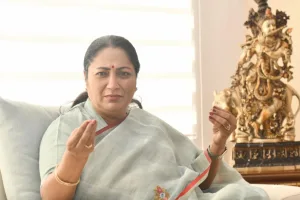
Haseen Mirza, daughter of Haji Mastan, has alleged years of sexual abuse and forced marriage, seeking Prime Minister Modi’s intervention in a case she says has stalled for years.

Statesman News Service | New Delhi |

Haseen Mastan Mirza, the daughter of late underworld figure Haji Mastan, has sought the intervention of Prime Minister Narendra Modi and Union Home Minister Amit Shah, accusing a family member of subjecting her to years of sexual abuse, a forced marriage, and unlawful takeover of her property. She has sought their intervention, saying her case has remained unresolved for over a decade.

Speaking to news agency IANS, Haseen alleged that her maternal uncle’s son, Naseer Hussain, first attempted to sexually assault her in 1996 and later coerced her into marriage when she was only 12 years old. According to her, the abuse did not end there and continued over several years, marked by repeated physical violence and mental trauma.

Says abuse began after her father’s death

Haseen said her suffering had nothing to do with being Haji Mastan’s daughter while he was alive, but began only after his death. She alleged that her identity was deliberately hidden during the period in which the crimes were committed.

She stated that as a minor, she was raped, forced into marriage, stripped of her property and faced multiple attempts on her life. She further alleged that the abuse led to the loss of her unborn child and eventually left her homeless and without financial support.

“I made a request to our Prime Minister Narendra Modi and Home Minister Amit Shah that the laws should be made so strict that these criminals, who are committing crimes openly, feel fear. That was my main demand… I was raped, attempts were made to kill me, my unborn child was killed, I was forcibly married off, and then after all this, I was abandoned on the streets to die; I had no money, nothing,” Haseen Mirza told news agency IANS.

Case stalled due to money troubles, alleges the complainant

Haseen said she has been pursuing legal action since 2013, but has struggled to do so consistently because of her financial condition. She also alleged that the police failed to assist her at any stage.

“Police never helped it. If it had helped me, my mother had been with me, and I would have received justice,” she said, adding that direct intervention by the Prime Minister could prevent the case from being ignored.

Recounting another disturbing incident, she said that after she suffered a miscarriage at the age of 14, her aunt contacted the police and tried to have her sent to a juvenile home. “Police came to our home and got to know that I am just 14 years of age, but they still did not help me,” she alleged.

Long trauma led to suicide attempt

Haseen also said the prolonged abuse and legal struggle severely impacted her mental health, pushing her to attempt suicide in 2010 after her divorce. She claimed the alleged crimes were motivated by greed for her father’s wealth.

“If I hadn’t been born as the daughter of Haji Mastan, I wouldn’t have faced these challenges. The culprits saw money. My father died, and they thought that they could get all our money. The reason behind all this, the rape and forced marriage, is money. Even my ex-husband told me that he had raped me because I am Haji Mastan’s daughter,” she said.

Despite this, she said she does not want her father’s legacy to be questioned. “However, my father had gained a lot of blessings during his lifetime; he had helped a lot of people. I do not want his name to be tainted. He was a very nice man, I am proud to be his daughter, and I am only fighting this case because of him,” she added.

No political plans, comments on law and order

Rejecting speculation about entering politics, Haseen said she has no interest in a political career and only expects those in authority to perform their responsibilities. She voiced support for Uttar Pradesh Chief Minister Yogi Adityanath’s bulldozer action, stating that firm measures instil fear among criminals.

She also revealed that she had been approached to participate in the reality show Bigg Boss, but declined the offer, citing her mental health.

Her renewed appeal comes days after she posted a video on Instagram detailing her struggle and again urging Prime Minister Modi and Home Minister Shah to intervene. In the video, she praised the Centre’s move to ban triple talaq and alleged misuse of religious law and called for tougher legislation to ensure swift justice for women.

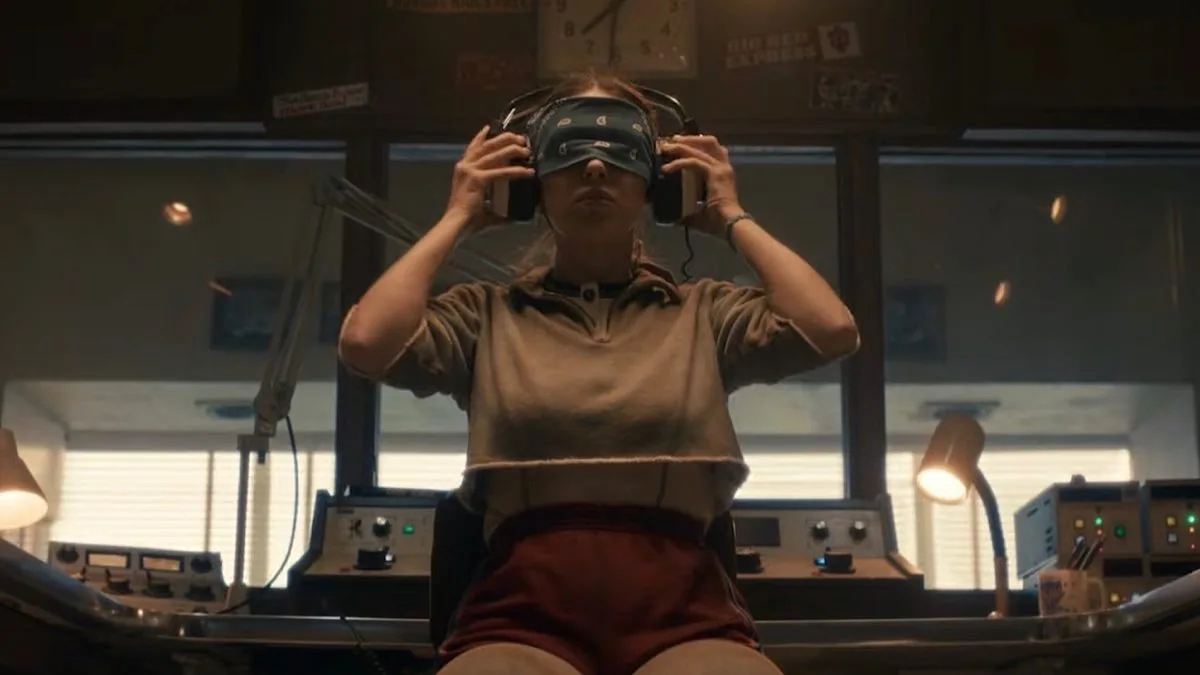
Stranger Things Season 5 Volume 2: Each episode runtime revealed, what you can expect before the finale

Stranger Things Season 5 Volume 2 is almost here, and the makers have revealed the runtimes of the final episodes. From emotional twists to a movie-length finale, here’s what fans can expect as the series reaches its end.

Mitali Gautam | New Delhi |

Stranger Things Season 5 Volume 2: The long wait for ‘Stranger Things’ fans is almost over. After years of theories, tears, cliff-hangers, season five is finally reaching its last stretch. FINALLY! With just three days left for the release of volume two, the excitement is all-time high.

Adding to the buzz, co-creator Ross Duffer has shared the official runtimes of the remaining episodes.

Season five is the final chapter of the Netflix hit, and the makers have promised a powerful, emotional, and unforgettable goodbye. Here’s a closer look at what each episode in volume two has in store.

Also Read: ‘Stranger Things’ Season 5 Volume 2 release date and time in India: When and where to watch the finale

Episodes 5. Shock Jock

Episode 5, titled “Shock Jock,” has a runtime of 1 hour and 8 minutes. The episode is directed by Frank Darabont, who is no stranger to the ‘Stranger Things’ universe. He earlier directed the episode ‘The Turbo Trap’, and his return has raised expectations among fans.

This episode will continue directly from where Episode 4, “Sorcerer,” ended. Viewers can expect the story to move at a fast pace, with several important reveals coming to light.

The makers have hinted that this episode will focus heavily on character growth. In the meantime, they will also be pushing the central mystery forward. Big answers and tough choices are expected setting the tone for the emotional journey ahead.

Episode 6. Escape from the Camazotz

One of the most awaited episodes of the season, “Escape from the Camazotz,” runs for 1 hour and 15 minutes, making it the third-longest episode of season five.

According to the Duffer Brothers, this episode plays a key role in the overall story.

Ross Duffer shared on Instagram that this episode features some of the best performances from the cast. He even warned fans to keep tissues ready as the emotional impact will be strong.

Directed by Shawn Levy who previously helmed the iconic ‘Dear Billy’ episode in season four, this chapter is likely to hit hard. The emotions, performances, and turning points may change everything for the characters.

Also Read: ‘Stranger Things’ Season 5 Volume 2 trailer breakdown: Will’s fear, Vecna’s past, and a dark final battle

Episode 7. The Bridge

Episode 7, titled “The Bridge,” is the second-last episode of the season and the final episode of volume two before the grand finale. With a runtime of 1 hour and 6 minutes, it is the shortest episode of the season.

The episode is co-directed by the Duffer Brothers and Shawn Levy. They have come together to deliver what they describe as one of the most emotional chapters of series. The makers have hinted at a massive cliff-hanger, shocking moments, heartbreaking losses.

Apart from the finale, this episode is reportedly the most emotional of entire season. It suggests major deaths and huge story revelations.

Episode 8. The right side up

The final episode, “The Right Side Up,” will mark the official end of ‘Stranger Things’. With a massive runtime of 2 hours and 8 minutes, this finale is almost a full-length movie. The episode will release on December 31, 2025 both in select theatres worldwide and on Netflix.

Fans can expect intense action, emotional closure. They have answers to every lingering question. So buckle up because the finale promises a powerful goodbye and an epic ending to a show that changed pop culture forever.

Also Read: ‘Stranger Things’ Season 5 Volume 2 trailer breakdown: Will’s fear, Vecna’s past, and a dark final battle

‘The Odyssey’ trailer: Christopher Nolan unleashes Matt Damon’s brutal fight to survive after the Trojan War

Christopher Nolan returns with ‘The Odyssey’, an epic tale of survival, fate, and courage as Matt Damon steps into the role of Odysseus, a broken hero fighting storms, monsters, and destiny on a dangerous journey back home after the Trojan War.

Statesman News Service | New Delhi |

Christopher Nolan is back. And this time, he is taking movie lovers on a legendary journey from ancient Greece. The first teaser trailer of ‘The Odyssey’ has finally released. And it already feels grand, dark, full of danger.

A hero’s long road home

The film is based on the famous Greek tale of Odysseus. He is a warrior who tries to return home after the long and brutal Trojan War.

Here Matt Damon plays Odysseus. He is a man pushed by fate, fear, hope as he travels across wild seas and unknown lands. The teaser shows his struggle clearly. He storms crash, ships break. Survival looks uncertain at every step.

From shipwrecks to silent walks across lonely land, the journey feels exhausting and emotional.

Familiar legends, Nolan style

One of the most talked-about moments in the teaser is the Trojan Horse. Odysseus and his soldiers are seen hiding inside it reminding viewers of the clever trick that changed history. This scene was earlier teased in special IMAX screenings.

The teaser also shows dark caves, rough seas, and terrifying shadow of a giant beast. This hints at the many dangers Odysseus must face.

Nolan keeps the mystery alive revealing just enough to make viewers curious.

A power-packed star cast

Matt Damon is not alone on this epic ride. The film features a massive cast including Anne Hathaway as Penelope, Odysseus’ loyal wife, and Tom Holland as their son, Telemachus. Zendaya, Lupita Nyong’o, Charlize Theron, Mia Goth, Benny Safdie, Jon Bernthal, and John Leguizamo are also part of the ensemble.

Universal had earlier shared Damon’s first-look photo in costume, which already gave fans a taste of the film’s intense mood.

Shot for the big screen

Universal has confirmed that ‘The Odyssey’ is being filmed across different countries using brand-new IMAX film technology. Studio executive Jim Orr called it a “once-in-a-generation cinematic masterpiece,” saying even the ancient poet Homer would be proud.

Actor John Leguizamo praised Nolan’s working style, saying the director works with full creative freedom and follows his own vision.

Nolan’s last film, ‘Oppenheimer’, swept seven Oscars in 2024. With ‘The Odyssey’, expectations are even bigger.

Also Read: Desi beats, Nick Jonas style: Priyanka Chopra and Jonas brothers dance to ‘Aap jaisa koi’

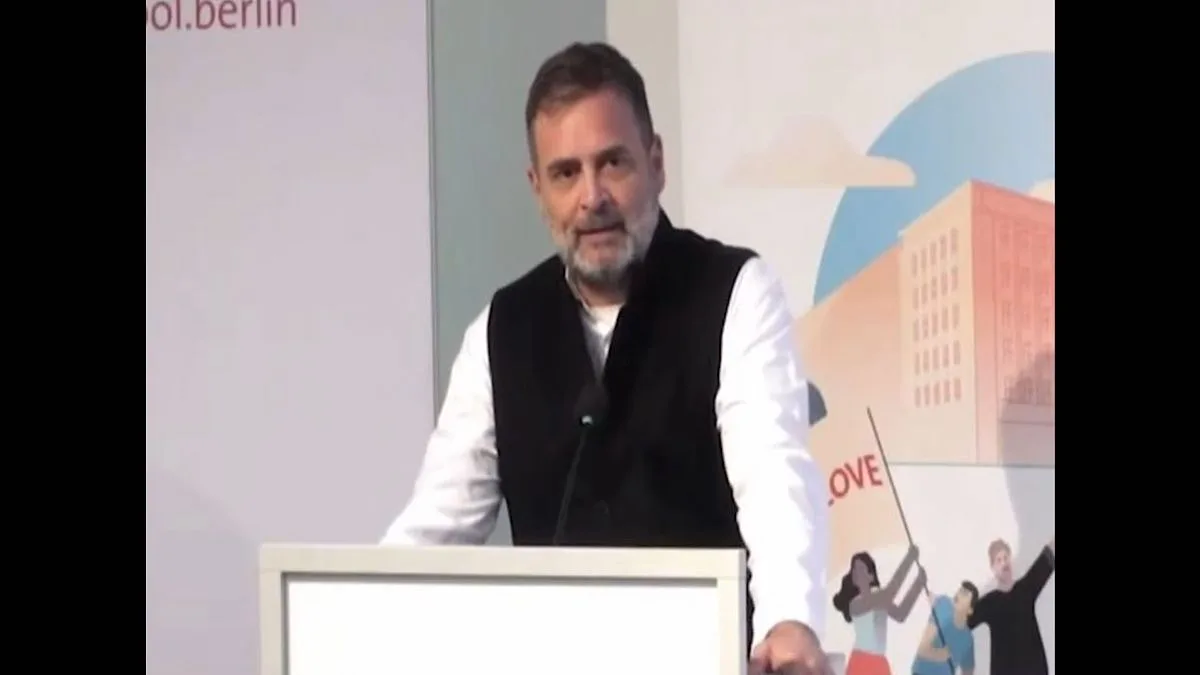
‘BJP has captured Indian institutions,’ claims Rahul Gandhi at a lecture in Germany

Rahul Gandhi also reiterated allegations of irregularities in India’s electoral process, while addressing a lecture in Berlin, Germany.

Statesman News Service | New Delhi |

Lok Sabha Leader of Opposition and Congress MP Rahul Gandhi on Tuesday accused the government of “weaponising” central investigating agencies to target political opponents, while addressing a lecture at the Hertie School in Berlin, Germany. He alleged that the central government is misusing the agencies, including the Enforcement Directorate (ED) and the Central Bureau of Investigation (CBI), against Opposition leaders and businessmen who support non-BJP parties.

Claiming there is a wholesale capture of the institutional framework in India, Congress MP said, “ED and CBI have zero cases against the BJP, and most of the political cases are against the people who oppose them. If you are a businessman and try to support the Congress, you are threatened.”

Pointing at the financial resources of the BJP, Gandhi highlighted, “BJP uses the institutional framework of India as a tool to build political power. Look at the money the BJP has and the Opposition has.”

He further said the Congress would build a “system of resistance” to counter what he termed the capture of democratic institutions. “There is an attack on the democratic system. We are not fighting the BJP alone, but the capture of India’s institutional structure,” he said.

Gandhi accuses Centre of ‘vote theft’

Speaking on the theme “Politics Is the Art of Listening” at the Hertie School, he reiterated allegations of irregularities in India’s electoral process. Claiming there is a “problem with the electoral machinery” of the country, Gandhi alleged voter list manipulation and accused the Centre of undermining democratic institutions.

The Congress leader claimed that elections in Haryana and Maharashtra in 2024 were not conducted fairly. He said the Congress had raised concerns with the Election Commission but received no response.

“We have been raising concerns regarding the fairness of elections in India. I have done press conferences in India, where we have clearly shown without a shadow of a doubt that we won the Haryana election and that we don’t feel the Maharashtra elections were fair. There is a full-scale assault taking place on the institutional framework of our country. We asked direct questions to the Election Commission, but we did not get a response. We fundamentally believe there is a problem with the electoral machinery in India,” he said.

Rahul Gandhi is currently on a five-day visit to Germany.

Also read: West, India handed over production to China: Rahul Gandhi in Germany

Delhi air turns ‘severe’; AQI crosses 400 amid dense smog and fog

Delhi’s air quality worsened sharply on Tuesday as AQI crossed 400, with dense smog, fog and calm winds pushing pollution levels into the severe category.

Statesman News Service | New Delhi |

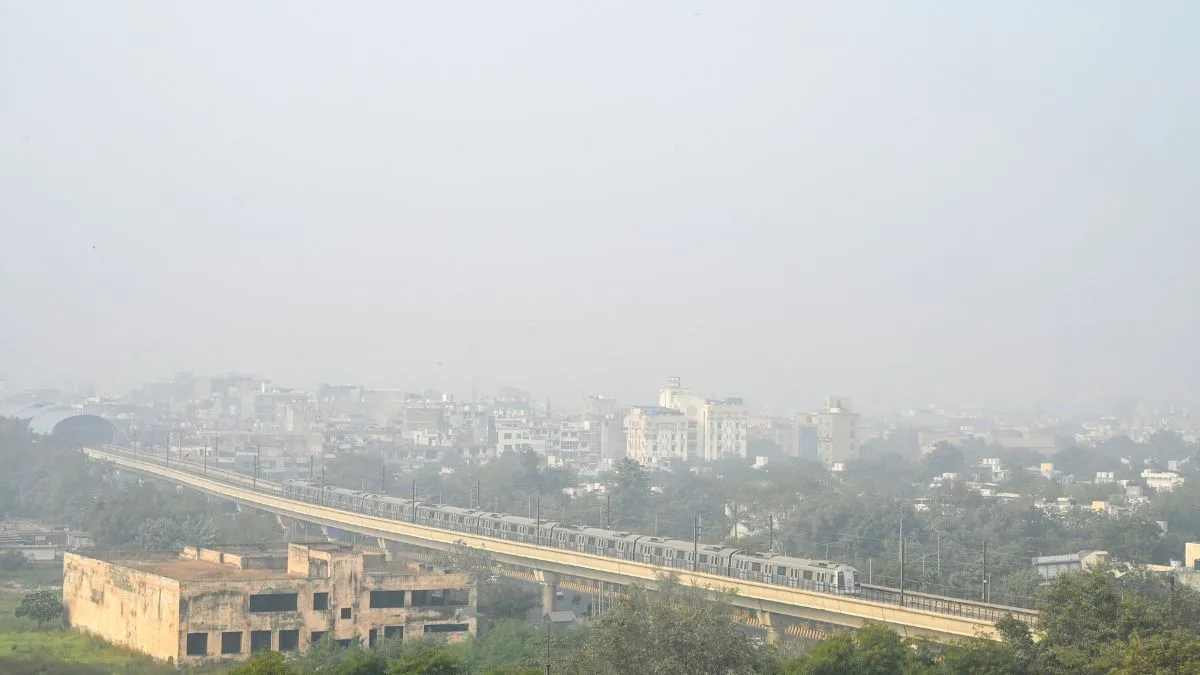
A dense layer of smog and fog covered large parts of Delhi on Tuesday morning as air quality in the national capital deteriorated sharply, with pollution levels rising and visibility dropping across the city.

At 7.05 am, Delhi’s Air Quality Index (AQI) was recorded at 414, breaching the ‘severe’ category, according to data from the Sameer app.

Weather conditions offered little relief. Low temperatures coupled with calm winds and high humidity trapped pollutants near the surface in the early hours.

Of the 40 operational air quality monitoring stations in the city, 29 reported air quality in the ‘severe’ or ‘severe plus’ categories.

Delhi pollution crisis: Government initiates sealing drive against polluting factories

Anand Vihar worst-hit as pollution stays high

Anand Vihar recorded the highest pollution levels on Tuesday morning, with the AQI touching 466.

The station has remained in the severe zone over the past several days, recording AQI readings of 416 on Monday, 418 on Sunday, 440 on Saturday, 430 on Friday and 438 on Thursday. The highest AQI recorded at the station in recent days was 492 on December 14.

Other areas with high pollution levels included Mundka (451), Nehru Nagar (453) and Okhla Phase-2 (452), while several stations hovered close to the ‘severe plus’ mark.

Fog hits visibility; transport, NCR areas affected

Very dense fog was reported at Safdarjung and Palam around 7.30 am, with visibility dropping to 50 metres, compared to 100 metres recorded at 5.30 am.

Low visibility continued to affect movement across the city. Flight operations at the Delhi airport saw delays and cancellations, while road traffic moved slowly on several arterial stretches, including the Rajokri flyover.

Air quality remained poor across parts of the NCR as well. Gurugram’s Sector 51 recorded an AQI of 386, Vasundhara in Ghaziabad reported 374, while Bahadurgarh recorded an AQI of 308 amid cold conditions.

The weather department issued a red alert for fog across all 11 districts of Delhi for the next two to three hours, warning of continued low visibility.

‘We stopped a potential nuclear war’: Donald Trump again claims credit for halting India-Pakistan conflict

Donald Trump has again claimed he stopped a potential India-Pakistan war using tariff pressure, a claim India has denied, insisting the ceasefire followed direct military communication.

Statesman News Service | New Delhi |

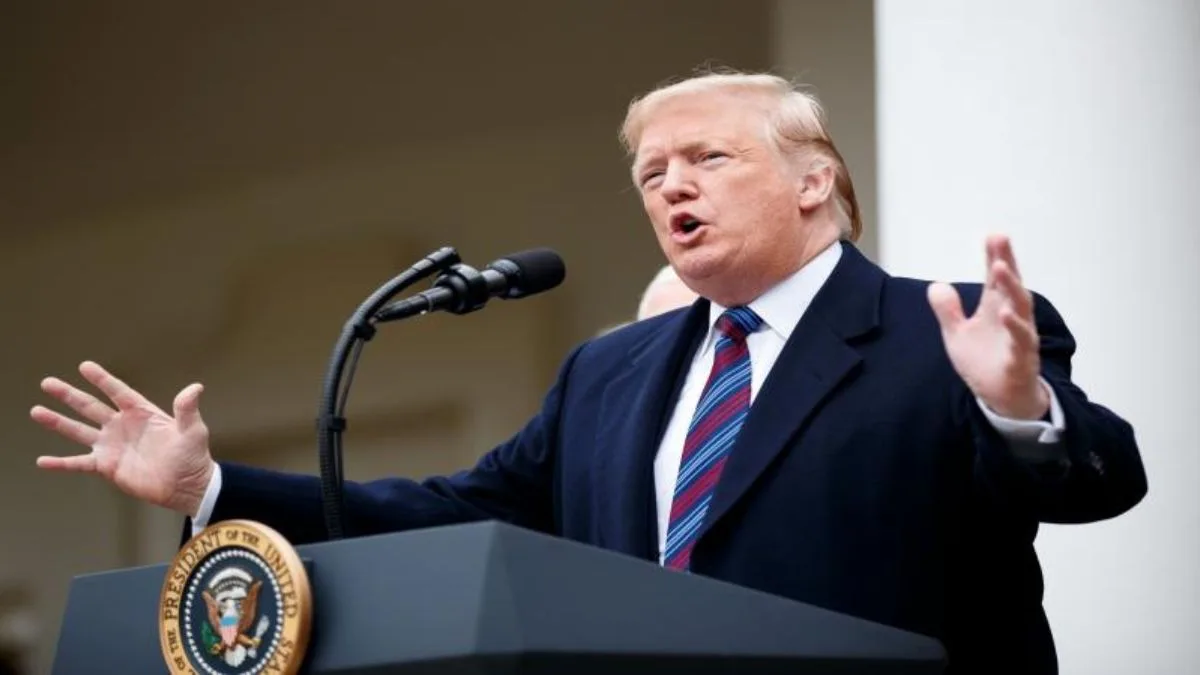
United States President Donald Trump on Monday reiterated his claim that a potential war between India and Pakistan was stopped due to his intervention. He further claimed that eight aircraft were shot down during the four-day military confrontation earlier this year between the two neighbouring countries.

The four-day confrontation followed Operation Sindoor, which India launched in response to the Pahalgam terror attack that killed 26 people. The exchange marked one of the most serious flare-ups between the two nuclear-armed neighbours in recent years, raising international concern before the May 10 understanding came into effect.

Speaking to reporters, Trump said the situation was defused before it could spiral into a nuclear conflict.

“We stopped a potential nuclear war between Pakistan and India. The Prime Minister of Pakistan said that President Trump saved 10 million lives, maybe more. Eight planes were shot down. That war was starting to rage,” Trump said, adding that the only conflict he had not “solved” yet was the Russia–Ukraine war.

Trump reiterates India-Pak war claim, but this time with a different number on planes shot down

Trump repeats tariff pressure claim; India rejects it

Trump has, on multiple occasions, claimed that the crisis between the two neighbours was “settled” within 24 hours after he used trade tariffs as leverage. India has consistently denied this assertion.

New Delhi has maintained that Pakistan’s Director General of Military Operations (DGMO) reached out to his Indian counterpart after suffering significant damage, following which both sides agreed to halt all firing and military action on land, air and sea beginning May 10.

Indian officials have underlined that the cessation of hostilities was the result of direct military-to-military communication, not third-party mediation.

Trump claims he helped avert India-Pakistan war using trade and tariff

Trump on Russia-Ukraine talks: ‘tremendous hatred’

During the same interaction, Trump also addressed ongoing peace efforts related to the Russia–Ukraine war, saying talks were continuing despite deep animosity between leaders.

“There is tremendous hatred between President Putin and President Zelenskyy,” he said.

Recently concluded discussions in Miami, Florida, were followed by a statement from Trump’s foreign envoy Steve Witkoff, who said Russia remained committed to achieving peace in Ukraine.

According to the statement, Russian Special Envoy Kirill Dmitriev held “productive and constructive” meetings with the American delegation, which included Witkoff, Jared Kushner and White House staff member Josh Gruenbaum.

Miami talks and Ukraine’s position

The negotiations took place as Ukrainian President Volodymyr Zelenskyy urged Washington to step up pressure on Moscow. Witkoff and Ukraine’s National Security and Defence Council Secretary Rustem Umerov later described Ukraine’s meetings with American and European officials as “productive and constructive”.

A joint statement said discussions also covered further development of Trump’s proposed 20-point plan and efforts to align positions on multilateral and US-backed security guarantee frameworks for Ukraine.

India and the AI moment

When Time magazine announce d the “Architects of AI” as its Person of the Year for 2025, the world paused to acknowledge a historic turning point.

SANTHOSH MATHEW | New Delhi |

When Time magazine announce d the “Architects of AI” as its Person of the Year for 2025, the world paused to acknowledge a historic turning point. Artificial intelligence, once a curious experiment in computer labs, has now become a civilizational force – a phenomenon reshaping economies, cultures, and global power structures. Time declared 2025 as the year when the potential of AI “roared into view,” marking a moment from which humanity can no longer turn back. For delivering the age of thinking machines, Time chose not an individual but a collective, symbolizing that this revolution belongs to many minds across continents. This monumental announcement also rekindles the long legacy of Time’s Person of the Year, a tradition that began in 1927 to spotlight the most influential force of the past year – for good or for ill. From Roosevelt to Gandhi, from scientists to social movements, the Person of the Year has chronicled the shifting currents of global history.

Very few Indians have found their place in this storied list: Mahatma Gandhi, named in 1930 during the height of India’s nonviolent struggle, and later Prime Minister Narendra Modi, noted for his imprint on global diplomacy and domestic transformation. Their presence reflected not only individual stature but India’s growing significance in the world. This year’s choice – the pioneers of AI – signals something much bigger. It marks the dawn of a new technological epoch. It also opens a powerful opportunity for India, a nation that stands today as the most influential voice of the Global South and the largest English-speaking society in the world.

At the intersection of demographic strength, technological ambition, and global diplomatic leadership, India finds itself perfectly positioned to help shape the rules, ethics, governance, and vision of the AI revolution. In global forums, India has already become the most persuasive advocate of equitable digital access. After successfully championing digital public infrastructure, digital payments, space demo cratization, and cross-border technological cooperation, India now sees an even larger possibility: an AI alliance for the Global South. At a time when most AI technologies are monopolized by a handful of nations and corporations, India recognizes the urgent need for a platform where developing nations can collaborate, innovate, and share AI tools responsibly.

This is not merely a diplomatic initiative; it is a moral imperative – ensuring that billions of people are not left behind in the greatest technological transformation of the century. India’s aspiration to float an AI alliance is both logical and strategic. As the world’s largest English-speaking population, with millions of engineers, coders, designers, and thinkers, India holds a linguistic and human- capital advantage that seamlessly integrates into the global AI ecosystem. English has become the programming language of global AI, and India’s demographic edge provides a natural bridge between the Global North and Global South.

This creates a moment of historic opportunity: India can simultaneously absorb global technologies and export its own innovations, both in terms of software and policy frameworks. Events like AI Summit 2026 underscore this trajectory. With world leaders, innovators, corporations, universities, and policymakers converging in India, the Summit signals the country’s ambition to not just participate in the AI era but to lead it. India is increasingly viewed as the convenor of responsible AI, the voice that emphasizes safety, fairness, transparency, and inclusivity.

Unlike many Western approaches driven purely by market logic, India’s vision incorporates social equity – using AI to improve agriculture, healthcare, language access, skilling, and governance for the many and not just the elite. At home, India’s talent engine is firing at full steam. Cities like Bengaluru, Hyderabad, Pune, and Chennai have become AI laboratories for the world. Star tups are experimenting with generative AI in Indian languages, developing tools that democratize information, enhance productivity, and reduce inequalities. AI-powered diagnosis is entering rural clinics; AI tutors are entering classrooms; predictive models are helping farmers face climate volatility. India’s unique ability to scale solutions to millions gives it an unparalleled advantage in shaping the practical future of artificial intelligence.

Yet this technological transformation is not occurring in isolation. It is part of a paradigm shift that is rewriting the world’s economic and cultural codes. Work culture has changed irreversibly. The traditional office is evolving into hybrid spaces. AI assistants draft documents, analyze data, improve research, enhance creativity, and automate repetitive tasks. Human beings are moving from manual execution to conceptual supervision. Productivity is rising, but so is the need for reskilling, adaptation, and continuous learning. A job is no longer a static role but a living process, constantly influenced by technological evolution.

For India, this shift offers both challenges and unprecedented opportunities. With a young population and fast-growing economy, India can become the global hub of AI talent. But it must also prepare its workforce for a world where machines perform routine tasks and humans focus on judgment, ethics, imagination, and empathy. Fortunately, India’s cultural flexibility, linguistic versatility, and entrepreneurial spirit provide a strong foundation for embracing this era of rapid transformation. Diplomatically, India is already being viewed as the rising power of the Global South – a role earned through humanitarian gestures, vaccine diplomacy, peacekeeping efforts, and the ability to bridge diverse perspectives.

As AI becomes the new engine of geopolitical competition, India’s inclusive approach stands out. Nations in Africa, Asia, Latin America, and the Pacific are looking to India for partnership that respects sovereignty and promotes shared prosperity. An AI alliance under India’s guidance could become a historic platform,much like the Non-Aligned Movement of the 20th century or the G20 presidency that showcased India’s convening power. This is where the symbolic power of Time’s Person of the Year intersects with India’s vision. The “Architects of AI” remind the world that the future will be shaped not by borders but by ideas; not by weapons but by intelligence; not by conflict but by innovation. In this landscape, India’s rise is not opportunistic – it is inevitable.

The world is witnessing a moment of extraordinary transition, a once-in-a-century shift comparable to the Industrial Revolution or the birth of the internet. Technologies are changing, institutions are adapting, and humanity is learning to coexist with thinking machines. But amid this whirlwind of change, one truth remains timeless: the only thing that never changes is change itself. Civilizations that embrace transformation thrive; those that resist, decline. India today stands on the right side of this historical tide. The AI century is not merely beginning – it is accelerating.

And India, with its demographic strength, ethical vision, diplomatic stature, and technological ambition, is ready not just to participate but to lead. As the global order rearranges itself around intelligence – both human and artificial – India’s role as champion of the Global South and architect of an inclusive AI future will define its place in history. The age of thinking machines has arrived. The world cannot turn back. But with nations like India stepping forward, it can move ahead with purpose, with responsibility, and with hope.

(The writer is Professor, Centre for South Asian Studies, Pondicherry Central University.)

Ill winds blow in Bangladesh

The death of Sharif Osman Hadi in Singapore, where he had been taken for treatment after being shot in an assassination attempt, resulted in violence across Bangladesh.

HARSHA KAKAR | New Delhi |

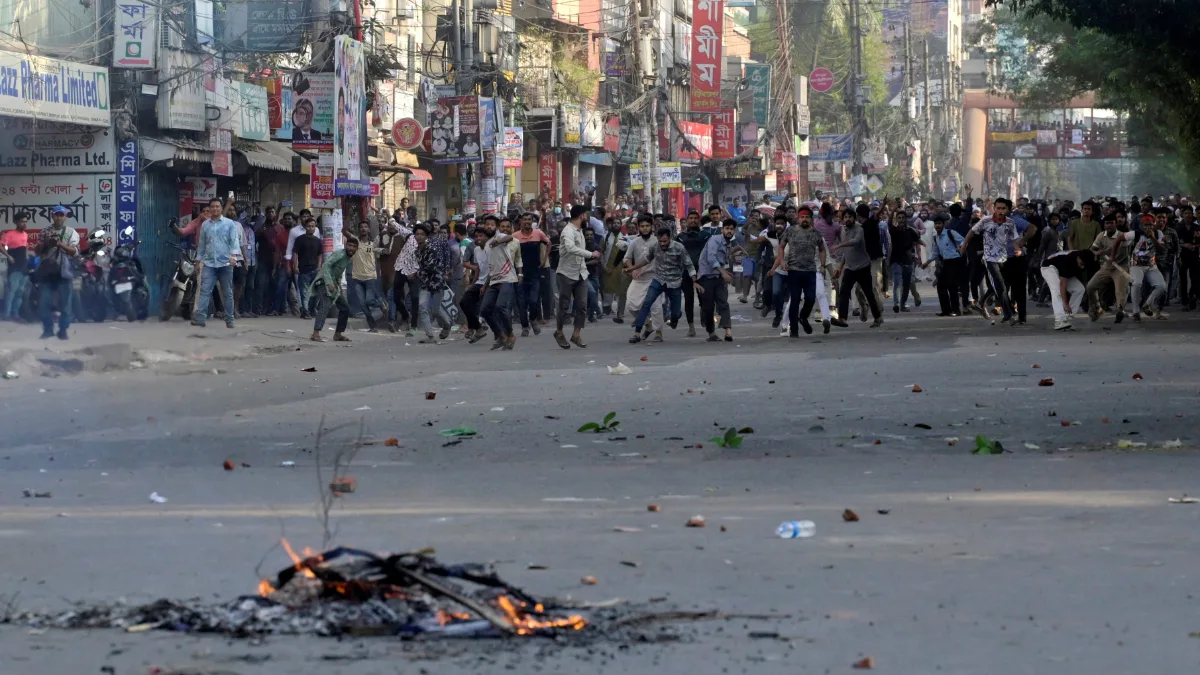
The death of Sharif Osman Hadi in Singapore, where he had been taken for treatment after being shot in an assassination attempt, resulted in violence across Bangladesh. Hadi was an anti-Indian activist and convenor of the Inqilab Moncho, a group formed in the wake of the 2024 student-led uprising which led to the overthrow of the Sheikh Hasina regime. Expectedly, the blame for the killing shifted to India. This incident comes about two months before Bangladesh is to go to polls to elect a new government.

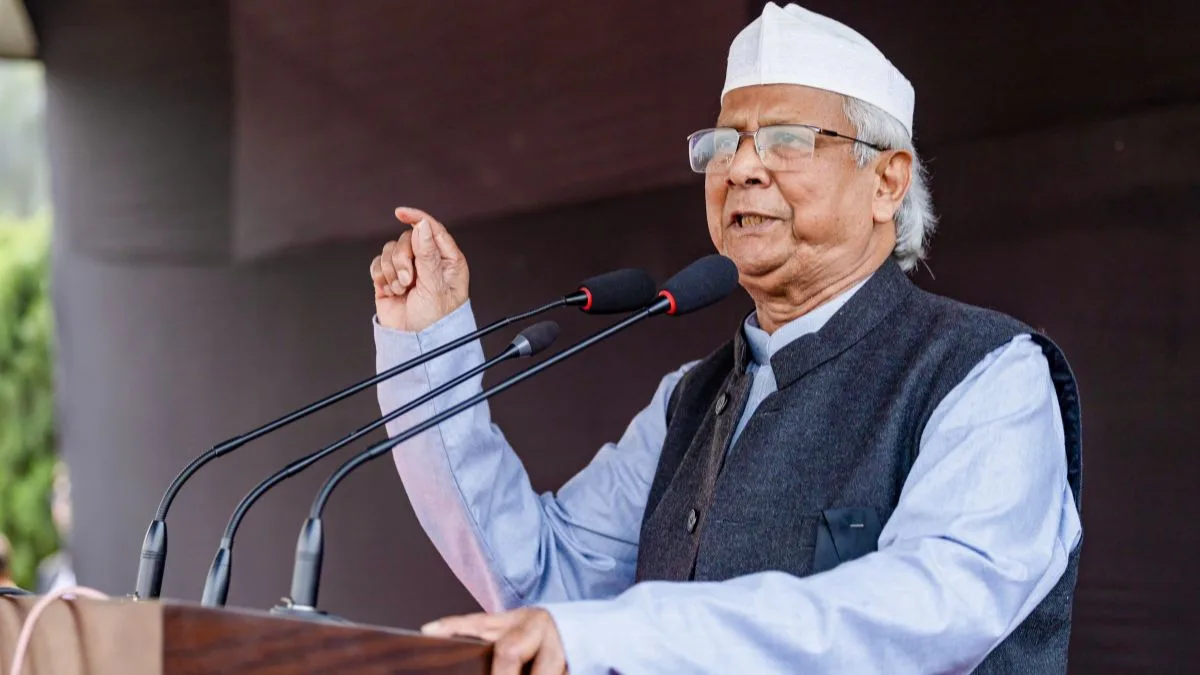
Since the exit of the Hasina regime, relations between India and Bangladesh have been deteriorating as caretaker chief Mohammed Yunus has sought to improve ties with India’s adversaries. He has also advocated for a SAARC, sans India. The Bangladesh Awami League, led by Sheikh Hasina, who continues to reside in India, has been banned from forthcoming polls while she has been sentenced to death over her role in curbing the student protests. Her trial has been negatively commented upon by global human rights bodies. Her party, the largest in the country, has threatened to protest, which could increase violence levels as elections draw close.

Current protests, apart from torching major media houses, Prothom Alo and the Daily Star, assumed to be pro-India, also attempted to target the Indian embassy and consulates within the country. In addition, a Hindu youth, 25-year-old Dipu Chandra Das was lynched and his body set ablaze while the residence of Sheikh Mujibur Rahman and Chhayanaut, a hub for Bengali arts, was damaged. Places were specifically selected to project an anti-India sentiment. While protestors were prevented from entering Indian consular assets, work in them came to a standstill.

The Indian government summoned the Bangladesh High Commissioner and registered a protest. The Bangladesh army chief telephonically assured his Indian counterpart that their army would protect Indian assets. It is possible that Hadi was killed by either the ISI or by anti-India elements within Bangladesh to enhance anti-India sentiments. This would also ensure that the next government continues with the same policy while protests by the Awami League against their ban collapse. It could also be an excuse to delay elections. Without naming anyone Yunus had mentioned, “The objective of the conspirators (killing Hadi) is to derail the election.”

It was with this intent that Yunus hailed Hadi as a martyr and claimed the killers were linked to the Awami League and had fled to India. The interim government declared a day’s state mourning and announced the conduct of special prayers in honour of Hadi. Yunus along with his advisory council members and the army chief attended Hadi’s funeral. Its foreign office announced it has asked India’s cooperation to prevent the escape to India of the suspects (Hadi’s killers) involved,’ implying an Indian hand. In the same voice it has demanded India repatriate Sheikh Hasina. This added to public anger against India. An anti-India narrative is also being played out by Pakistan’s ISI in Bangladesh, targeting youth, largely unaware of the atrocities committed by Pakistan during the freedom struggle.

The theme has been that India has exploited Bangladesh and unduly interfered in its internal matters throughout the rule of the Awami League. It is also pushing for increased radicalization. The official blaming of India for Hadi’s killing would play into the hands of anti-India political parties including the Jamaat-e-Islami. Distrust has risen to levels where the Indian army is establishing posts to monitor the Indo-Bangladesh border especially in the vulnerable Chicken’s Neck region. This was unheard off till last year. The anti-India wave, including projection of a larger Bangladesh, which includes parts of Indian territory, is being fuelled by the Yunus government to divert attention from its failures. Bangladesh’s economy is sinking, unemployment rising, inflation increasing and the government is unable to meet basic demands of the public.

Yunus was selected to head the interim government to transform the country and improve its economy. However, the reverse has happened. By worsening ties with Delhi, cooperation in all fields came to a standstill. Facing failure, Yunus began playing the anti-India card by moving closer to Pakistan and China, hoping to force Delhi to accede to his requests. It did not happen. China will only provide loans at high rates of interest while Pakistan has nothing to offer except anti-India narratives while it exploits Bangladesh territory for expanding insurgencies in India’s North East and use the country as an additional route of infiltration for Kashmiri terrorists. Increased visits to the country by Pakistan’s military and ISI officials add credence to this.
Banking on the US will only be effective till they exploit Bangladesh to support pro-democracy resistance movements in Myanmar as a counter to Chinese influence. After that Bangladesh will be left to fend for itself. The only nation which Bangladesh can historically bank upon is India India’s growth was carrying Bangladesh. India was Bangladesh’s second-largest trading partner with trade at USD 12 billion. Bangladesh exploited Indian markets, its ports, territory for exportsto Nepal and Bhutan and obtained food essentials and medical supplies at discounted rates. India was always the first responder whenever Bangladesh faced a natural disaster. The ongoing anti-India wave is far more damaging for Bangladesh. All claims of a greater Bangladesh mean nothing, as it lacks resources and military power to achieve this.
The over 4,100-km long border implies the nation is surrounded on three sides by India, while this is also a challenge for Indian security forces. The Bangladesh leadership is repeating Pakistan’s narrative. The Pakistan economy is in tatters, surviving on loans from the IMF and other global institutions, inflation is high, unemployment on the rise, while internally there is a battle for power with Asim Munir taking control of all institutions. Gulf nations are returning Pakistani nationals while refusing to grant fresh visas. Internally, Pakistan’s western provinces face major security upheavals.

To divert minds of its people, Pakistani narratives highlight fake Indian atrocities in Kashmir, targeting of minorities, the stalled Indus Water Treaty and Delhi’s refusal to discuss Kashmir. The public is pushed into believing that all their problems emanate from India. This enables the military and political leadership to empty the country’s coffers and exploit its gullible populace. Bangladesh is adopting the same playbook. Unless the public understands the game being played by the Yunus government, the country will continue to sink. If it has to restore its economy, it needs India. Accusing India would only be detrimental.

(The writer is a retired Major-General of the Indian Army.)

Citizenship on Trial

The forced removal of a pregnant Indian citizen to Bangladesh on mere suspicion exposes a dangerous erosion of due process at the heart of the state’s immigration machinery.

Statesman News Service | New Delhi |

The forced removal of a pregnant Indian citizen to Bangladesh on mere suspicion exposes a dangerous erosion of due process at the heart of the state’s immigration machinery. When citizenship can be questioned not through evidence but through accent, language, or religious identity, the problem is no longer illegal migration alone ~ it becomes one of constitutional fidelity. India’s eastern border has always been porous, shaped by history rather than hard lines on a map. Movement across it predates Partition and continues to be driven by work, family ties, and, at times, fear. Managing such migration is undoubtedly complex.

But complexity cannot justify shortcuts that bypass verification protocols or reduce citizenship to a matter of police discretion. When deportation precedes investigation, the burden of proof is unfairly shifted onto the individual, often the poorest and least equipped to defend themselves. What is most disturbing in recent cases is not merely administrative error but the pattern it suggests. Bengali-speaking Muslims ~ whose presence in Murshidabad, Birbhum and other parts of West Bengal even predates the 1757 Battle of Plassey ~ appear disproportionately vulnerable to detention, even when they are long-term citizens. Language, in this context, becomes evidence; identity, a liability. This creates a chilling precedent in a multilingual country where internal migration is both legal and essential to urban economies. If workers from one state can be expelled without confirmation from their home administration, no migrant labourer is truly secure. The humanitarian consequences are immediate and brutal. Families are separated across borders, children are detained, and livelihoods vanish overnight.

For women, especially those pregnant or caring for young children, detention and expulsion carry risks that go far beyond legal inconvenience. The psychological trauma of imprisonment in a foreign land, coupled with uncertainty about one’s legal status, leaves scars that court orders cannot easily erase. Judicial intervention, when it comes, often arrives late and only for a few. Courts may grant temporary relief on humanitarian grounds, but they cannot reunite families instantly, recover lost income, or restore dignity. Nor can they compensate for months spent in limbo because an administrative safeguard was ignored. Justice delayed in such cases is not just justice denied; it is justice diminished. At a policy level, the silence around numbers and procedures is telling. Without transparent data on detentions and deportations, accountability becomes impossible. Immigration enforcement, by its nature, involves the exercise of immense state power.

In a democracy, such power demands visibility, clear rules, and independent oversight. Otherwise, enforcement risks becoming indistinguishable from coercion. India’s Constitution does not condition citizenship on language, religion, or the ability to instantly produce paperwork. It guarantees equality before the law and protection against arbitrary action. Upholding these principles is not incompatible with border management; it is essential to it. A system that mistakes its own citizens for outsiders corrodes the very idea of the nation it claims to defend.

Measured Relief

The latest inflation numbers from the United States offer a moment of relief in a debate that has been politically charged and economically fraught for years.

Statesman News Service | New Delhi |

The latest inflation numbers from the United States offer a moment of relief in a debate that has been politically charged and economically fraught for years. A slower pace of price increases in November suggests that some of the pressures weighing on households may finally be easing. But beneath the headline figure lies a more complicated story ~ one that cautions against premature celebration or sweeping policy conclusions. On the surface, the moderation in inflation appears broad-based.

Prices for discretionary services such as hotels, along with everyday essentials like milk and clothing, showed signs of cooling. Most notably, housing-related costs ~ long the most stubborn and anxiety-inducing component of household budgets ~ registered an unusual slowdown. Given the heavy weight that rents and shelter carry in inflation calculations, this shift alone explains much of the softer reading. Yet this apparent progress comes with caveats. The inflation report was delayed due to a government shutdown, disrupting data collection and leaving gaps that complicate interpretation.

Without a complete and uninterrupted series of figures, it is difficult to distinguish a genuine trend from a statistical blip. Seasonal retail discounts ahead of the holiday shopping season may also have temporarily pushed prices down, a factor that could reverse once demand normalises. For monetary policymakers, the numbers widen the narrow corridor they have been navigating. Inflation remains above the level typically considered healthy, but its direction now offers greater flexibility. A sustained easing would strengthen the case for further interest rate cuts, especially if core components continue to soften. However, acting too aggressively on incomplete data risks misjudging the underlying momentum of the economy.

The political implications are equally significant. Cost-of-living pressures have become a defining issue for voters, and any sign of easing is quickly claimed as validation by those in power. Assertions that inflation has been “stopped” may resonate rhetorically, but they gloss over unresolved risks. Tariffs imposed earlier in the year have already raised prices for several categories of goods, and even selective rollbacks do not guarantee that supply chains will revert smoothly. Trade-related costs often filter through slowly, resurfacing months after policy announcements fade from headlines. Labour markets pose another challenge. Restrictions on immigration may tighten the supply of workers in labour-intensive sectors such as agriculture, construction, and hospitality.

While politically popular with some constituencies, such constraints tend to push wages ~ and eventually prices ~ higher. If labour shortages intensify, they could offset recent gains on the inflation front. In essence, November’s inflation reading should be seen less as a victory lap and more as a pause for reassessment. It signals that inflation is no longer accelerating uncontrollably, but it does not guarantee a smooth descent to stability. For policymakers and politicians alike, restraint may be the wiser response ~ acknowledging improvement while preparing for the possibility that inflation’s retreat will be uneven, fragile and vulnerable to policy missteps.

‘Bangladesh polls on February 12 will go ahead,’ Muhammad Yunus tells US envoy as UN flags violence

Chief Adviser Muhammad Yunus says Bangladesh will hold general elections on February 12 as scheduled, assuring the US of free and peaceful polls amid rising violence concerns.

Statesman News Service | New Delhi |

Bangladesh will go to the polls as scheduled on February 12, Chief Adviser of the interim government Professor Muhammad Yunus said on Monday, asserting that the administration is fully prepared to ensure a free, fair, and peaceful election amid political churn and security concerns.

Speaking during a telephone conversation with Sergio Gor, the US Special Envoy for South and Central Asia, Yunus said the nation was “eagerly waiting to exercise their voting rights”, which he claimed had been “stolen by the autocratic regime”.

The half-hour conversation took place around 7.30 pm Dhaka time, details of which Yunus later shared on X.

Bangladesh halts consular and visa services in Delhi, Agartala amid protests and rising tensions

Yunus assures US of free and peaceful polls on February 12

According to Yunus, discussions with the US envoy ranged from the upcoming general election and Bangladesh’s democratic transition to trade and tariff negotiations between Dhaka and Washington. The two also spoke about the killing of young political activist Sharif Osman Hadi and the massive funeral held in his memory.

With about 50 days remaining for the polls, Yunus said the interim government was ready to tackle any attempt to derail the process. He alleged that supporters of the ousted autocratic regime were spending millions of dollars to disrupt the election, with their fugitive leader inciting violence.

“We have roughly 50 days to go before the election. We want to hold a free, fair and peaceful election. We want to make it remarkable,” Yunus said, according to IANS.

National Security Adviser Dr Khalilur Rahman, Commerce Adviser Sheikh Bashiruddin, and SDG Coordinator and Senior Secretary Lamiya Morshed were also present during the call.

Tariff relief with US hailed as major trade win

During the interaction, Sergio Gor congratulated Yunus on his leadership in recent tariff negotiations with the United States. Bangladesh has succeeded in reducing US reciprocal tariffs on Bangladeshi goods to 20 per cent — a development seen as a significant boost for the country’s trade sector at a time of political transition.

UN voices concern over violence, urges minority safety

Meanwhile, concerns over rising violence in Bangladesh have drawn international attention. Antonio Guterres, the United Nations Secretary-General, has called for ensuring the safety of minorities in the country.

“All Bangladeshis need to feel safe,” UN spokesperson Stephane Dujarric said on Monday, reacting to reports of violence against minorities, including recent lynchings of Hindus. He added that the UN was “very concerned” about the situation and expressed confidence that the Yunus-led administration would take steps to protect all citizens.

Violence has simmered since the upheaval following the overthrow of former Prime Minister Sheikh Hasina in August last year and has intensified over the past two weeks. The situation worsened after the death of Sharif Osman Hadi, a youth leader and spokesperson of the Inquilab Mancha, who succumbed to injuries after an attack earlier this month.

Last week, Volker Turk, the UN High Commissioner for Human Rights, appealed for calm, warning that retaliation would only deepen divisions and undermine rights ahead of the elections.

In Washington, US lawmakers also condemned the violence. Congressman Raja Krishnamoorthi described the killing of Dipu Chandra Das as a “targeted mob killing”, while Suhas Subramanyam said he was deeply troubled by reports of growing attacks on Hindu and other minority communities since the change in government.

Macaulay today

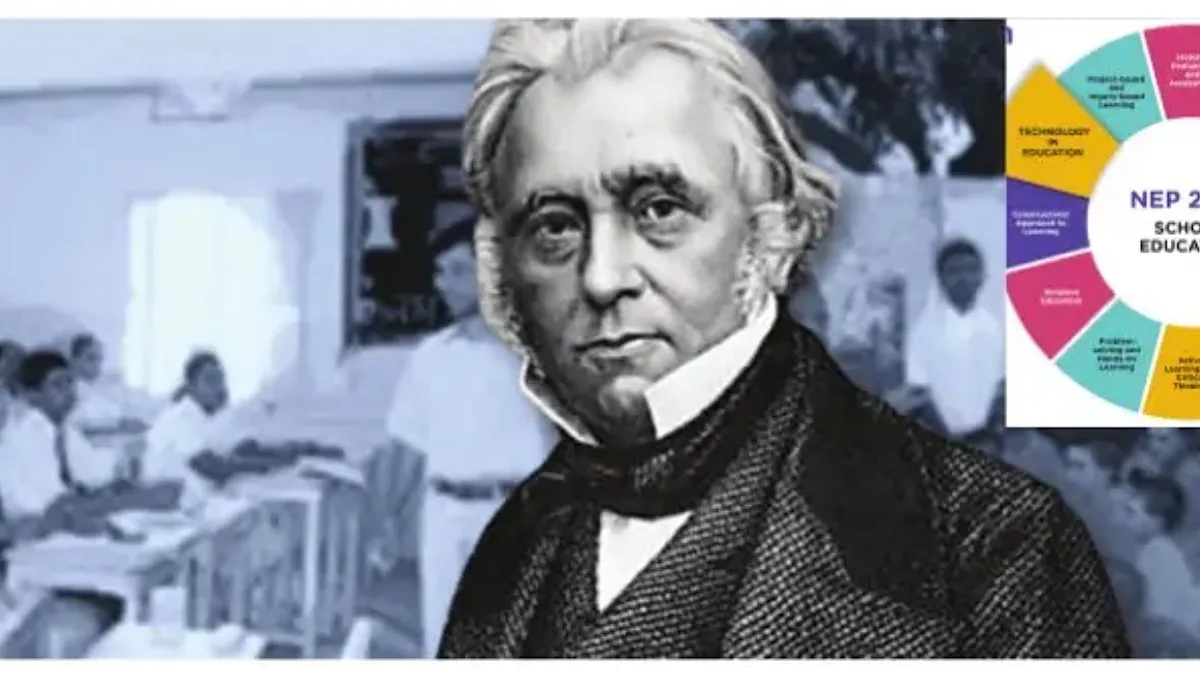
Thomas Babington Macaulay’s 1835 “Minute on Indian Education” is a short text that has cast a long shadow over debates about language, knowledge, and power in India.

AMAL CHANDRA | New Delhi |

Thomas Babington Macaulay’s 1835 “Minute on Indian Education” is a short text that has cast a long shadow over debates about language, knowledge, and power in India. Read literally, it is an unapologetic statement of cultural preference: Macaulay argued that “a single shelf of a good European library” was worth more than the whole native literature of India and recommended that government patronage concentrate on creating an English-reading class to serve the needs of administration.

That text, available in full in contemporary archives, is the origin point for the critique that English colonial education displaced vernacular learning and produced a cultural inferiority that still haunts public life. But the story is more complicated than the caricature of Macaulay as a simple cultural vandal. Recent historiography and sober commentary stress that pre-colonial educational institutions were neither uniformly democratic nor uniformly comprehensive: centres such as Takshashila and Nalanda were once cosmopolitan hubs of learning, yet most local schooling before the Raj remained tightly bound by caste, religion and patronage and did not systematically provide the secular technical knowledge that was spreading across Europe.

Some scholars and contemporary analysts therefore treat Macaulay’s reforms not as a beneficent gift but as an administrative reordering that incidentally opened avenues, unevenly and imperfectly, to modern texts, scientific curricula, and bureaucratic employment for a wider swath of the population than had been reached before. That nuance must inform our politics because the current “Undoing Macaulay” rhetoric is doing political work beyond pure historical correction.

The recent thrust: evident in media coverage of renamings, curricular reframings and rhetorical assaults on “Macaulay’s children” ~ is part of a broader decolonisation agenda that combines cultural reclamation with state policy changes and political narratives. Journalistic accounts of the shift toward a “Bharat-centred” identity show how symbolic moves, new museum narratives and educational directives are being marshalled together to reconfigure what counts as legitimate knowledge in the public sphere. This is not mere nostalgia: it is a reallocation of prestige and institutional priority that has tangible administrative consequences.

At the policy level, the National Education Policy (NEP) 2020 is the clearest institutional expression of a more multilingual, mother-tongue-friendly approach. The NEP explicitly recommends that early schooling use the child’s home language as the medium of instruction and encourages multilingualism through a three-language formula; it also opens the door to higher-education instruction in Indian languages where feasible. These changes are presented as pedagogically sound: many cognitive-development studies support early-mother-tongue instruction, but translating theory into equitable practice is the real challenge, because infrastructure, teacher training and textbooks in regional languages remain patchy across states and disciplines.

The NEP itself sets the aspiration; its implementation will determine whether multilingualism becomes genuine pluralism or merely another set of uneven offerings. Implementation is already producing contentious, concrete interventions. The Central Board of Secondary Education and some state machineries have begun operationalising “mother-tongue first” norms and language learning initiatives; at the same time, critics warn that poorly resourced rollouts risk deepening disparities between urban, elite schools that can sustain bilingual instruction and rural or private institutions that cannot.

The fear that a policy framed as anti-colonial might, in practice, privilege one regional language or produce new gatekeepers is widely voiced, particularly in non-Hindi states where linguistic federalism remains a live political issue. These are not abstract anxieties: they reflect predictable asymmetries in fiscal capacity, textbook production, and the market value of different languages. Another critical dimension is social mobility. English in India and the broader world, despite its colonial pedigree, has functioned as a credential that opened doors to administration, law, higher education and global labour markets. For many historically marginalised groups, access to English education became a route into professions and public life; erasing that pathway without providing equivalent substitutes would be a policy error.

Thus, one important truth in the debate is that the colonial language regime had both exclusionary effects and emancipatory side-effects: it consolidated new elites but also, over time, created openings for others. Any reform that romanticises pre-colonial forms or that demonises English wholesale risks sacrificing those real, if partial, gains. The agendas behind the rhetoric matter. On one hand, linguistic and cultural revivalism can democratise knowledge, legitimise the study of indigenous epistemologies, enable students to learn in their mother tongues, and correct the oddity that a democracy’s elite debates sometimes happen in a language foreign to most citizens. On the other hand, when revivalism is instrumentalised for majoritarian cultural consolidation, it ceases to be pedagogic reform and becomes a project of identity politics.

The line between pluralist enrichment and centralising cultural politics is thin and often crossed not in manifestos but in administrative details: which languages receive funding for technical translation, which departments prioritise Sanskrit or classical studies over contemporary pedagogy, and how academic hiring and evaluation adapt to multilingual scholarship. These are bureaucratic fault lines where rhetoric becomes reality. Evidence for such shifts can be seen in the mix of symbolic and structural changes reported across states. A third problem is the scholarly method. Reclaiming indigenous knowledge must not lapse into a politics of assertion that treats classical texts as self-validating sources for modern science or public policy.

Genuine decolonisation of curricula demands careful philology, translation, critical editions and the difficult work of placing traditional insights in conversation with contemporary disciplines, not the uncritical elevation of antiquity as proof of national greatness. Academic standards and peer review cannot be optional in a decolonised academy; otherwise, the result will be the replacement of one orthodoxy with another, and Indian universities will suffer the twin maladies of parochialism and credential weakening. Finally, the politics of Macaulay in 2025 is a mirror: it reflects anxieties about class, caste, and cultural authority rather than simply an encapsulated judgment about a nineteenth-century bureaucrat. Answering whether Macaulay was a villain, a benefactor, or something in between is less important than the contemporary choices we make about institutional design. If language policy becomes a lever for widening access, funding regional research, and professionalising multilingual scholarship, then the corrective impulse will have been well spent.

If it becomes a slogan that substitutes symbolism for capacity building, Indian academia will lose years it cannot afford. The prudent course is neither to erase Macaulay from history nor to canonise him, but to use the debate he provokes to strengthen universities: invest in textbooks and teacher training in Indian languages, build rigorous translation programmes, protect spaces for English where it serves global engagement, and ensure that raising vernacular prestige does not lower methodological rigour. That synthesis ~ difficult, technical, and institutionally demanding ~ is the only historically honest and politically responsible way forward.

(The writer is an author, political analyst, and columnist)

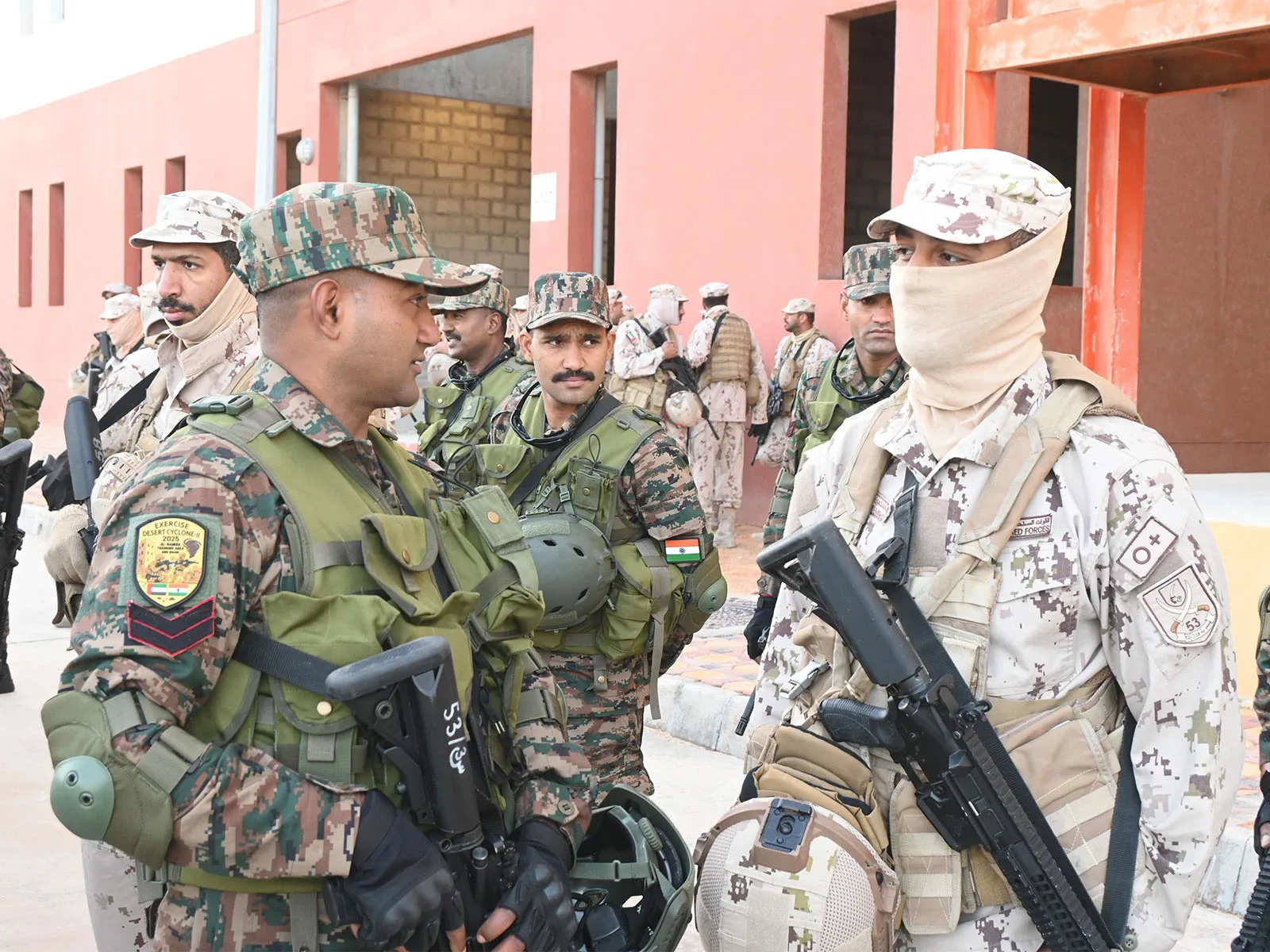
Desert Cyclone-II focuses on urban combat, interoperability between India and UAE

The second edition of India-UAE Joint Military Exercise, Desert Cyclone-II, is progressing with intensive joint training at Al-Hamra, with troops from both the nations undertaking a rigorous mix of classroom instruction and field-based modules, the army spokesperson has said.

UNI | New Delhi |

The second edition of India-UAE Joint Military Exercise, Desert Cyclone-II, is progressing with intensive joint training at Al-Hamra, with troops from both the nations undertaking a rigorous mix of classroom instruction and field-based modules, the army spokesperson has said.

The exercise which started on Dec 18 at Abu Dhabi, UAE, has the Indian contingent comprising of 45 personnel, primarily from a battalion of The Mechanised Infantry Regiment. The UAE Land Forces contingent, of similar strength, are being represented by the 53 Mechanised Infantry Battalion.

In a statement issued here today, the spokesperson said that the ongoing training focuses on core urban combat fundamentals, including the marking and clearing of buildings, IED awareness, casualty evacuation, first aid and structured mission planning, aimed at enhancing interoperability and developing common operating procedures in built-up areas.
As the exercise advances, troops are executing progressive practical drills in urban terrain, covering room intervention, building clearance and platoon-level joint assault exercises. Joint drills on room intervention and clearance have been exchanged between both armies and subsequently rehearsed to standardise tactics, techniques and procedures.
The training will culminate in integrated offensive and defensive urban operations, reinforcing coordinated action, mutual trust and operational readiness for sub-conventional contingencies in an urban environment.

The exercise aims to enhance interoperability and further defence cooperation through joint training in an urban environment, with emphasis on sub-conventional operations under a United Nations mandate, including peacekeeping, counter-terrorism and stability operations, the statement read further.

West, India handed over production to China: Rahul Gandhi in Germany

Claiming that India and the West have “handed over” the production of goods to China, Congress leader Rahul Gandhi said that Made in China goods have crippled job creation in democracies, fuelling political turbulence across India, the United States and Europe.

ANI | New Delhi |

Claiming that India and the West have “handed over” the production of goods to China, Congress leader Rahul Gandhi said that Made in China goods have crippled job creation in democracies, fuelling political turbulence across India, the United States and Europe.
Addressing an event at Hertie School in Berlin, Germany, Rahul Gandhi called for production in a democratic environment, arguing that democracy is required to sustain itself by producing goods.

Gandhi said, “The West and to an extent India, have handed over production to the Chinese. China dominates production today, which means that it is difficult to give employment to a large number of people. Countries like India, the US and Germany cannot give their employment based on services. How do democracies produce in this transition? What are the models that are required, how do you think about production in a democratic environment, and what are the types of partnerships that India, the US and Europe can create for production? It will become very difficult for democracy to sustain itself if we are not able to produce.”

“A huge part of the turbulence that we are seeing in Europe, India and the US, polarisation of politics, is because we are not able to give our people jobs, which is because we said: China, you produce for the world,” he added.
Rahul Gandhi flagged Made in China goods selling in India, and said that New Delhi has “capability, cost structure and population” to produce goods but has not done it yet.
“Everything that you see is made in China, and that, at least for a country like India, is a problem. We have the capability, cost structure and population to produce, but we have just not done it,” he said.

Further, the Congress leader said that US’ hegemony is being challenged “effectively,” claiming that Washington DC is “struggling internally.”
“We are in the middle of a socio-economic-political transition that is taking place. In India, we benefited greatly from the hegemony of the US from the 1990s till about 2014. We had tremendous advantages as we built a relationship, a partnership with them,” Gandhi stated.

“We lived in a unipolar world, where the US had its shortcomings and made mistakes, but it defined the rules and structure. For the first time, that hegemony is being challenged effectively. We are seeing a dramatic reduction in American power across the spectrum: militarily, economically, and financially. A challenge is being posed to the US dollar and the financial system. The US is struggling internally and almost walking away from its earlier position,” the Congress leader added.

Rahul Gandhi is on a five-day visit to Germany.
His remarks come after he had claimed that manufacturing in India is declining.
During his visit to the BMW World museum in Munich, Germany, on December 17, he said, “Manufacturing is the backbone of strong economies. Sadly, in India, manufacturing is declining. For us to accelerate growth, we need to produce more – build meaningful manufacturing ecosystems, and create high-quality jobs at scale.”
However, BJP spokesperson Pradeep Bhandari refuted the Lok Sabha LoP’s claim, calling it “fake news” against India’s growth story.

The BJP Spokesperson, in an X post, claimed 495 per cent growth in total electronics manufacturing in the last 10 years, with exports growing by 760 per cent, and a 14 times increase in the automobile manufacturing since 1991.

AAP releases list of 40 star campaigners ahead of BMC elections

The Aam Aadmi Party (AAP) on Monday announced its list of star campaigners for the upcoming Brihanmumbai Municipal Corporation (BMC) elections, intensifying political activity in Maharashtra ahead of the crucial civic battle slated for 2026.

ANI | New Delhi |

The Aam Aadmi Party (AAP) on Monday announced its list of star campaigners for the upcoming Brihanmumbai Municipal Corporation (BMC) elections, intensifying political activity in Maharashtra ahead of the crucial civic battle slated for 2026.
In a post on X, the party said, “Aam Aadmi Party declares its list of Star Campaigners for the upcoming BMC elections!”
The list features 40 leaders from across the party’s national and state leadership. AAP national convenor Arvind Kejriwal tops the list, followed by senior leaders Manish Sisodia, Punjab Chief Minister Bhagwant Mann, Sanjay Singh, Satyendra Jain and Atishi.
The party has also included key organisational faces such as Durgesh Pathak, Dilip Pandey, Saurabh Bharadwaj, Harpal Singh Cheema and Imran Hussain. The names of several Mumbai-based leaders, including Ruben Mascarenhas, Preeti Sharma Menon, Vijay Kumbhar and Sandeep Desai, were also present in the list.

The voting for BMC and other Municipal Corporation bodies is set to happen on January 15, with counting to happen on January 16.

The announcement comes a day after a strong show by the ruling Mahayuti alliance in Maharashtra’s recent local body elections. On Sunday, Maharashtra Assembly Speaker Rahul Narwekar said the results reflected widespread acceptance of Chief Minister Devendra Fadnavis’ leadership across the state. He went a step further to predict that the mayor of the Mumbai civic body after the BMC elections would be from the BJP.

CM Fadnavis, reacting to the verdict, thanked voters for giving the BJP-led Mahayuti a decisive mandate, noting that around 75 per cent of municipal council chairpersons were elected from the alliance. Calling the results a ‘trailer’ for the upcoming municipal corporation elections, Fadnavis urged party workers to gear up for bigger victories ahead.
Around 129 municipal council chairpersons have been elected from the BJP. Together, all three alliance parties (Shiv Sena, BJP, and NCP (Ajit Pawar) account for 75% of the city council chairpersons. In terms of corporators, over 3300 candidates of the BJP have been elected, according to CM Fadnavis.

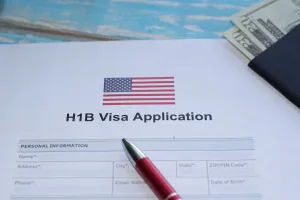
FIIDS urges Trump administration to ease H-1B visa delays

In a letter addressed to President Donald J. Trump, the Foundation for India and Indian Diaspora Studies (FIIDS) said it strongly supports the US Department of State’s decision to expand online presence and social media vetting to all H-1B and H-4 applicants.

IANS | New Delhi |

A leading Indian American policy organization has urged the Trump administration to adopt a more calibrated approach to expanded social media vetting for H-1B and H-4 visa applicants, warning that widespread cancellations and delays in visa appointments are disrupting US industry and stranding thousands of high-skilled workers abroad.

In a letter addressed to President Donald J. Trump, the Foundation for India and Indian Diaspora Studies (FIIDS) said it strongly supports the US Department of State’s decision to expand online presence and social media vetting to all H-1B and H-4 applicants.

The new policy became effective December 15. FIIDS described it as “a vital step in enhancing national security through thorough reviews of applicants’ digital footprints to identify potential risks.”

At the same time, FIIDS cautioned that the implementation of the new measures has led to “widespread cancellations and rescheduling of visa appointments—pushing many from December 2025 into March 2026 or later,” causing “significant disruptions for essential workers and US industry.”

The organization said thousands of H-1B holders are currently stranded abroad after holiday travel or visa renewals due to consular cancellations, with the impact falling heavily on Indian nationals.

In its letter, FIIDS noted that Indian professionals account for “70–75% of approvals,” making them particularly vulnerable to the sudden appointment bottlenecks.

According to the letter, major technology companies have already begun to feel the effects.

“Tech leaders, including Google, Apple, and Microsoft, have issued advisories warning employees against international travel, citing unpredictable delays that could indefinitely halt contributions to critical projects,” FIIDS said.

The group warned that prolonged disruptions threaten ongoing work in “AI, data platforms, engineering, and other high-impact fields,” with broader implications for US “economic competitiveness, innovation leadership, and global advantage.”

FIIDS emphasised that its concerns are not aimed at rolling back enhanced scrutiny but at preventing avoidable disruption.

It urged the administration to “preserve existing scheduled appointments without blanket cancellations,” proposing instead that authorities prioritize pre-interview vetting for applicants who already hold confirmed slots.

The organization also recommended placing clear limits on additional processing delays.

“We further suggest capping any post-interview administrative processing at one month to alleviate hardships,” the letter said, arguing that such a measure would allow vetted professionals to return promptly to the United States without compromising security objectives.

FIIDS framed its proposal as consistent with the administration’s broader policy goals. The suggested approach, it said, “aligns with your Administration’s goals of robust immigration enforcement alongside a strong, innovation-driven economy fueled by skilled professionals.”

The H-1B visa program allows US employers to hire foreign workers in specialty occupations. It has long been a key pathway for Indian professionals in technology, engineering, healthcare, and research to work in the United States.

Over the years, India has emerged as the single largest source country for H-1B beneficiaries, reflecting the depth of U.S.–India ties in high-skilled labor and innovation.

Trump announces ‘Golden Fleet’ battleship push

US President Donald Trump unveiled plans to begin construction of a new class of massive battleships as part of a broader effort to rebuild US shipbuilding capacity, strengthen deterrence, and restore what he described as American military supremacy.

Statesman News Service | New Delhi |

US President Donald Trump unveiled plans to begin construction of a new class of massive battleships as part of a broader effort to rebuild US shipbuilding capacity, strengthen deterrence, and restore what he described as American military supremacy.

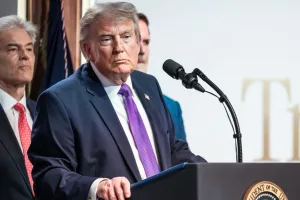
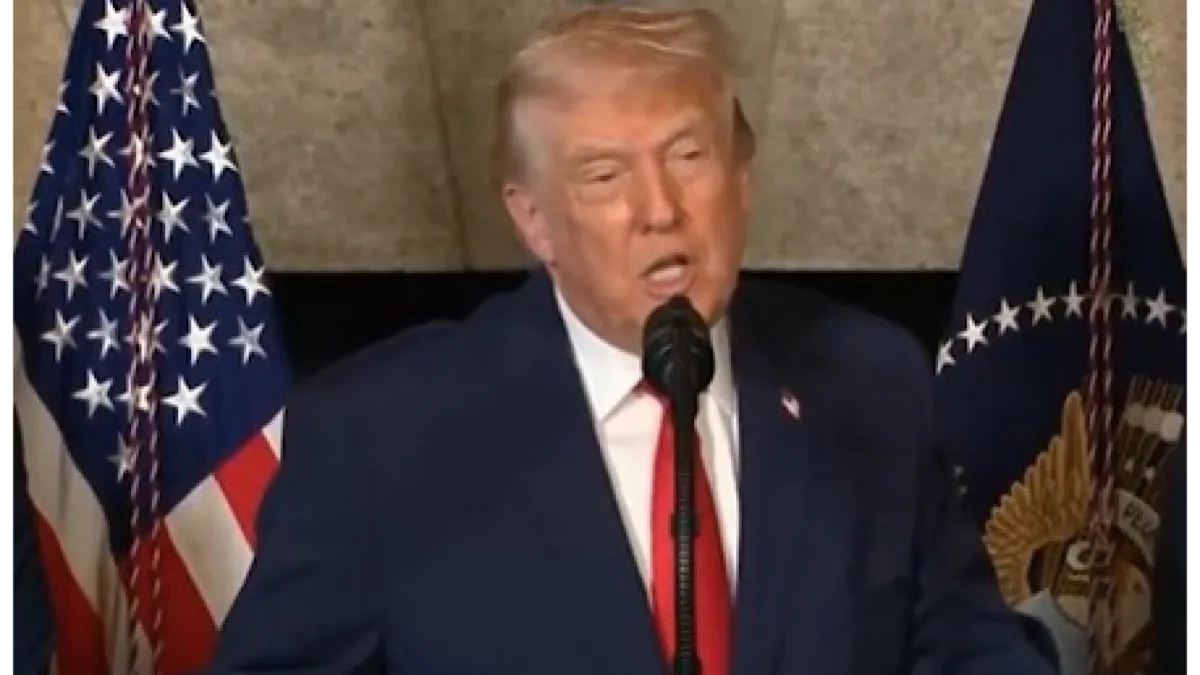
“Today, I get the great honor to announce that I have approved a plan for the Navy to begin the construction of two — the largest we’ve ever built — battleships,” Trump said at a Mar-a-Lago news conference on Monday.

With Defence Secretary Pete Hegseth, Secretary of State Marco Rubio, and Navy Secretary John Phelan by his side, Trump said he had approved a plan for the Navy to begin construction of two new battleships immediately, calling them the foundation of a new “Golden Fleet.”

“They’ll be the fastest, the biggest, and by far — 100 times more powerful than any battleship ever built.”

Trump said the new ships would be the largest battleships ever constructed, exceeding even the historic Iowa-class vessels, and would be “the most heavily armed vessels built specifically for naval combat.”

He said the ships would carry advanced missile systems, hypersonic weapons, state-of-the-art targeting technology and lasers, and would also be capable of launching nuclear-armed cruise missiles.

“These will be some of the most lethal surface warfare ships,” he said, adding that they would anchor a revival of US maritime power and shipbuilding.

The President said construction would start “almost immediately,” with an initial timeline of about 2.5 years, and that the Navy envisioned a fleet of 20 to 25 such battleships over time.

“We’re going to start with two, and we’re going to quickly morph into 10,” Trump said. “And ultimately, we think it’s going to be anywhere from 20 to 25 of these.”

Trump framed the initiative as both a military and industrial project, saying it would revive American shipyards, create thousands of jobs, and restore domestic manufacturing capacity.

He said new vessels would displace 30,000 to 40,000 tons and would be built in US yards, even as the administration presses defense contractors to accelerate production and reinvest profits into facilities rather than executive compensation or stock buybacks.

“We want the dividends to go into the creation of production facilities,” Trump said. “I don’t want them to buy back their stock. I want them to put the money in plant and equipment so they can build these planes fast, rapidly.”

Hegseth said the announcement marked a generational shift in American defense posture, linking naval expansion to border security, counter-narcotics efforts, and global deterrence.

“This new class… marks a generational commitment to American sea power,” he said, adding that the investments would restore what he called the “warrior ethos” at the Department of Defence.

Navy Secretary Phelan said the future “Trump-class” battleship would be “the largest, deadliest and most versatile warship anywhere on the world’s oceans,” designed to deliver overwhelming offensive firepower and command naval forces across vast distances.

He said the ships would restore the role of battleships as fleet flagships capable of commanding forces “from warships to drones and everything in between.”

Rubio described the announcement as part of a broader effort to rebuild US industrial strength and maintain freedom of navigation. “The US Navy is the single biggest source of peace in the world,” he said, calling the shipbuilding push a tangible reminder of American industrial capacity.

Trump rejected suggestions that the battleships were aimed at any one country, saying, “It’s a counter to everybody. It’s not China.” He said the goal was deterrence through strength and added, “Hopefully, we never have to use them.”

The announcement comes amid longstanding concerns within the US defense establishment about shrinking shipyard capacity, aging fleets, and competition with China’s rapidly expanding navy.

The US Navy has not built a new battleship since the mid-1990s, relying instead on aircraft carriers, submarines, and smaller surface combatants.

Battleships played a decisive role in World War II and later served as symbols of American sea power, though advances in missile and submarine warfare gradually reduced their prominence.