Logo

Kate Hudson on the ‘Spider-Man’ role she declined and how it led to life-changing experiences

Kate Hudson has revealed she turned down the role of Mary Jane in 2002’s ‘Spider-Man’, a decision she admits still stings years later. She reflects on how choosing a different project shaped her life and career.

Statesman News Service | New Delhi |

Hollywood actor Kate Hudson has shared a surprising truth from her early career. She once turned down the role of Mary Jane Watson in the 2002 blockbuster ‘Spider-Man’. More than two decades later, she admits that talking about that decision is still uncomfortable.

The film went on to become a massive hit and helped shape modern superhero movies. The role of Mary Jane, Peter Parker’s love interest, was eventually played by Kirsten Dunst. The character became iconic especially among fans of the Sam Raimi-directed trilogy.

“It doesn’t feel good to talk about it”

Kate Hudson revealed this story during a recent appearance on ‘Watch What Happens Live With Andy Cohen’. When asked about the long-rumoured casting story, the 46-year-old actor confirmed that she had indeed said no to the film.

Looking back, Hudson explained why the topic still feels sensitive. She said that when people bring up missed opportunities, it can feel strange because the actors who took those roles were the right choices.

Life, she believes, moves in its own direction. Still she admitted that part of her does feel regret.

Revisiting the decision now, Hudson said that being part of such a successful franchise would have been exciting. The thought of swinging through New York City as Mary Jane is something she can’t help but imagine.

Why she chose a different path

At the time, Hudson made her choice based on another project that mattered deeply to her. She decided to work on ‘The Four Feathers’, a historical drama where she starred opposite the late Heath Ledger.

That experience, she said, changed her life in many, many ways she never expected. Working with Ledger helped her grow both personally and professionally. The two became close friends, and the film gave her memories and lessons she still values.

Gratitude mixed with a little “what if”

Hudson described her feelings as a mix of acceptance and curiosity. On one hand, she believes life happens exactly the way it is meant to. On the other, she admits that playing Mary Jane would have been fun.

Bright future still ahead

Today, Hudson’s career continues to shine. She will soon be seen in ‘Song Sung Blue’ alongside Hugh Jackman.

Speaking at the Gotham Awards earlier this month, Jackman said Hudson is not just a star but a deeply skilled actor. He even hinted that her role could earn her Academy Award recognition.

Also Read: Rob Reiner discussed difficulties of supporting son Nick through addiction, Michael Douglas reveals

Laura Dern faces a year of heartbreak and loss while bringing her most intimate film to life

Oscar-winning actress Laura Dern opens up about a year marked by personal loss, including the deaths of her mother Diane Ladd and longtime collaborator David Lynch. Her new film, ‘Is This Thing On?’, reflects her journey through grief, intimacy, and creative resilience.

Statesman News Service | New Delhi |

Oscar-winning actress Laura Dern is stepping into a deeply personal chapter of her life and career with upcoming release of ‘Is This Thing On?’, a film she describes as “intimate and emotionally resonant.” For Dern, this project is a mirror to a year filled with loss and reflection.

A tribute to a creative partnership

Working on the film brought back memories of her decades-long collaboration with legendary filmmaker David Lynch, who gave Dern her breakout role in ‘Blue Velvet’. She found a similar intimacy on set with director Bradley Cooper, who also handled the camera.

“Your director becomes your partner,” Dern reflected drawing parallels between her experiences with Lynch and Cooper. The bond was especially poignant as Lynch passed away shortly before filming began.

A year of personal grief

Dern’s year hasn’t been marked by professional milestones alone. The actress also endured the loss of her mother, Oscar-nominated Diane Ladd, who passed away at 89, and witnessed the destruction of wildfires across her hometown of Los Angeles.

Speaking candidly, Dern admitted that she hasn’t fully processed these compounded losses yet. “It’s been tender, heartbreaking,” she said reflecting on the emotional weight of the past twelve months.

Art imitates life

Discussing ‘Is This Thing On?’ has provided Dern with an unexpected form of solace. The film delves into themes of intimacy, grace, longing, and grief mirroring the personal experiences she is currently navigating.

She described feeling fortunate that the story aligns so closely with her own life, noting it would have been far more difficult to engage publicly had the film explored entirely different territory.

For Laura Dern, this year has been a test of endurance, both as an artist and as a human being.

Also Read: Rob Reiner discussed difficulties of supporting son Nick through addiction, Michael Douglas reveals

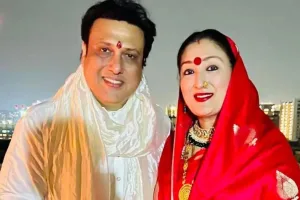
Sunita Ahuja admits Govinda’s extramarital affair: ‘She doesn’t love him, only wants his money’

Sunita Ahuja has opened up about Govinda’s extramarital affair, revealing it’s not about love but money. She calls for an end to the controversies and hopes for a happy family in 2026.

Statesman News Service | New Delhi |

Bollywood’s comedy actor Govinda has often made headlines, but 2025 has been a rollercoaster year for him and his family. Now his wife Sunita Ahuja has finally spoken up about the much-discussed rumours of his alleged extramarital affair.

In a candid chat with ETimes, Sunita cleared the air: the woman in question is not a young Marathi actress, as the gossip mills suggested, but there surely is a woman. According to Sunita, the woman “doesn’t love him but only wants his money.”

Sunita didn’t hold back. She said, “No one has the right to keep a fourth woman in their life. This is true for every man including Govinda.”

A tough 2025 for Sunita Ahuja

It hasn’t been an easy year for Sunita. Between public speculation and personal worry, she described 2025 as “very bad” for her. “I kept hearing about Govinda’s alleged affair with a girl,” she revealed. “But I know she’s not an actress. Actresses don’t behave this way. She doesn’t care about him; she only wants his money.”

Looking ahead, Sunita is optimistic. She hopes the new year will bring peace and happiness to the family.

“I wish to change my life in 2026. I want Govinda to put an end to all these controversies, and I want a happy family,” she said.

Sunita emphasised the importance of Govinda focusing on the three most important women in his life: his mother, his wife, and their daughter. “No one has the right to keep the fourth woman in their life,” she added firmly.

She also had a message for those around him. “I want Chichi (Govinda’s nickname) to leave all his chamchas and focus on his work because even they are with him for money,” she said.

Earlier this year, gossip columns were abuzz with speculation about a possible divorce between Sunita and Govinda. But Sunita dismissed these rumours during Ganesh Chaturthi celebrations.

Test Twenty launches Coach Equity Programme

In a move that promises to transform cricket’s ecosystem, Test Twenty’s parent company Parity Sports, on Wednesday, announced a ‘Coach Equity Programme’ that will offer real equity participation to cricket coaches globally, a release said.

Statesman News Service | New Delhi |

In a move that promises to transform cricket’s ecosystem, Test Twenty’s parent company Parity Sports, on Wednesday, announced a ‘Coach Equity Programme’ that will offer real equity participation to cricket coaches globally, a release said.

The Test Twenty is a unique format of the game, with four innings of 20 overs. The programme, launched in the spirit of Christmas, represents a paradigm shift in how cricket will recognise and reward those who shape the sport’s future, the release said.
For the first time in cricket history, coaches will not be merely contributors to the game but will be invited to become stakeholders in the platform they help build.
Under the initiative, coaches will earn Coach Equity Points (CEPs), a digital reward mechanism designed to recognise their tangible contributions to the Test Twenty ecosystem. By introducing and encouraging young cricketers to enter a system built on fairness, transparency, and merit, coaches will play a direct role in widening access to genuine opportunity.

CEPs will accumulate over the course of a season and will be converted into actual equity in Parity Sports, the IP owning company of Test Twenty, at the end of each cycle, making coaches real shareholders. This model will ensure that those who help shape the talent pipeline share in the value it creates.
Madan Lal, World Cup-winning Indian cricketer and a former cricket coach, emphasised the transformational impact on cricket’s development structure, expressing, “The Test Twenty Coach Equity Programme is more than just an initiative; it is a transformational shift that finally places grassroots coaches at the heart of cricket’s growth. By giving them a stake in the ecosystem, we are not just acknowledging their contribution, we’re elevating it.”
Niranjan Shah, former BCCI Secretary, reflected on how the initiative aligns with Test Twenty’s broader vision for the sport, sharing, “As someone who has seen the evolution of cricket over decades, I believe the Test Twenty format is both a visionary step forward and a defining chapter in cricket’s story. It bridges the timeless spirit of Test cricket with the energy of modern play, offering young talent from every corner of the world a true stage to rise.”

Aakash Chopra, former Indian cricketer and leading cricket commentator, highlighted the historic nature of recognising grassroots coaching contributions, adding, “For too long, grassroots coaches have been the unsung heroes behind every star player. Test Twenty’s initiative finally gives them a stake in the future they help build, and it’s a revolutionary move for the sport,” he said, according to the release.

Leading figures from international cricket have hailed the move as transformational. Phil Simmons, Head Coach of Bangladesh and former head coach of Afghanistan, Ireland, and West Indies, commented on the programme’s significance for coaching professionals worldwide, saying, “This is not just another initiative; it’s a profound shift in how we see cricket’s growth. By bringing coaches into the equity circle, Test Twenty is ensuring that those who cultivate talent are rewarded and empowered. It is a game-changing vision.”

Speaking on the announcement, Gaurav Bahirvani, Founder and CEO of Test Twenty, shares, “Before the crowds, before the caps, before the country, there is always a grassroots coach. The one who finds you early, believes when no one else does, shapes your game on empty grounds and then fades from the story. Cricketing nations are built by coaches, but remembered by players. Yet history has rewarded them with little more than applause. This programme is our way of rewriting that equation quietly, respectfully, and permanently.”
The initiative represents a fundamental rethinking of cricket’s ecosystem, designed to be merit-led rather than political, inclusive in opportunity yet selective in impact, simple to enter yet powerful to grow into, and anchored in long-term value rather than instant gratification. This approach will shift recognition from visibility to contribution, and from participation to genuine ownership.

The programme is structured as an invitation rather than an application process, opening doors to grassroots coaches across the world who are shaping the next generation of cricketers. Individual coaching champions, academy coaches, academy leaders, or personal mentors of young talent from global cities, small towns, or remote corners of the world are all welcome to participate. Interested coaches are invited to begin a conversation by writing to coach@testtwenty.com, with no forms or public enrolment required, only dialogue.

Senior Nationals: Unnati, Tanvi, Rounak and Sanskar Saraswat begin campaign in style

Women’s top seed Unnati Hooda, world junior championships silver medallists Tanvi Sharma, the experienced Aakarshi Kashyap, and upcoming junior Rounak Chauhan registered convincing wins to advance in the 87th Senior National Badminton Championships on Wednesday.

IANS | New Delhi |

Women’s top seed Unnati Hooda, world junior championships silver medallists Tanvi Sharma, the experienced Aakarshi Kashyap, and upcoming junior Rounak Chauhan registered convincing wins to advance in the 87th Senior National Badminton Championships on Wednesday.

Unnati, who had a bye in the first round, hammered wildcard entrant Akanksha Matte 21-8, 21-18, while Tanvi began her campaign with a 21-10, 21-14 victory over the Asian U-15 girls singles gold medallist Shaina Manimuthu.

Also advancing to the next round were the experienced Aakarshi, who defeated Asian U-17 championships silver medallist Lakshya Rajesh 21-7, 21-9, while Ashmita Chaliha got the better of Kavya Marvaniya 21-7, 21-11.

16th seed Purva Barve was the only seeded player to bite the dust as she went down 21-19, 17-21, 18-21 against M Meghana Reddy in the Round of 64.

In the men’s singles event, the 11th-seeded Chauhan defeated Ranveer Singh 21-9, 21-13, while 12th 12th-seeded D. S. Saneeth beat Ankit Mondal 21-7, 21-11 to book their spots in the next round.

The 16th seed and Guwahati Masters Super 100 champions, Sanskar Saraswat, also began his campaign in style with a 21-11, 21-13 win over Shikhar Rallan.

Earlier in the month, Unnati Hooda and Kiran George claimed the women’s and men’s singles titles, respectively, in the Odisha Masters 2025, a BWF World Tour Super 100 tournament, at the Jawaharlal Nehru Stadium, Cuttack, on Sunday.

In the women’s singles final, top seed Hooda produced a composed performance to defeat compatriot Isharani Baruah 21-17, 21-10 in just over half an hour. Hooda controlled the rallies from the outset, denying Baruah the momentum that had powered her impressive run through the draw. Despite the loss, Baruah capped a memorable week with a well-earned silver medal after a series of standout performances.

The men’s singles final witnessed a gripping contest, with second seed George prevailing over Indonesia’s Muhamad Yusuf in a hard-fought three-game battle. George took the opening game 21-14 before Yusuf fought back to level the match.

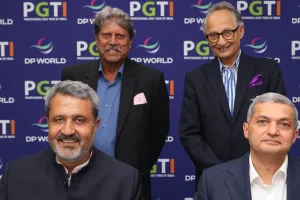
PGTI Tour: Yuvraj Sandhu, Veer Ahlawat among top contenders for Tata Open starting on Thursday

The Professional Golf Tour of India (PGTI) on Wednesday announced the Tata Open golf tournament, which will be held in Jamshedpur from December 25 to 28.

IANS | New Delhi |

The Professional Golf Tour of India (PGTI) on Wednesday announced the Tata Open golf tournament, which will be held in Jamshedpur from December 25 to 28. The four-day tournament will be hosted at the Beldih and Golmuri golf courses in Jamshedpur. The event offers a prize purse of Rs 2 crore and constitutes the last leg of the 2025 PGTI season.

The tournament will have a field of 126 professionals. The event will be played in the stroke-play format, consisting of four rounds of 18 holes each. The top 50 players and ties will make the cut after two rounds.

The format for the event is as follows: In round one, one half of the field will play its 18 holes at Beldih Golf Club while the other half of the field will play its 18 holes at the Golmuri Golf Club. In round two, both halves of the field will switch venues (those who played at Beldih in Round One play eighteen holes at Golmuri in round two, and vice-versa).

In rounds three and four, after the cut has been applied, the leading groups will tee off from Golmuri and play their first nine holes at Golmuri before moving to Beldih to play their second nine holes.

The tournament will feature some of the top Indian professionals, such as 2025 PGTI Order of Merit champion Yuvraj Sandhu, 2024 PGTI Order of Merit champion Veer Ahlawat, Shaurya Bhattacharya, Arjun Prasad, Manu Gandas, Angad Cheema, Om Prakash Chouhan (former champion), Ajeetesh Sandhu, Rashid Khan, Khalin Joshi, and Chikkarangappa, to name a few.

The top foreign players in the field are Sri Lankans N. Thangaraja and Mithun Perera (former champion), Bangladesh’s Md Siddikur Rahman and Jamal Hossain, Czech Republic’s Stepan Danek, American Koichiro Sato, Nepal’s Subash Tamang, and Uganda’s Joshua Seale.

Besides Om Prakash Chouhan and Mithun Perera, the other former Tata Open champions in the field are Mukesh Kumar, Shamim Khan, and Gurki Shergill. The local challenge will be led by professional Kurush Heerjee.

Amandeep Johl, CEO, PGTI, said, “The PGTI extends our sincere gratitude to Tata Steel for their unwavering commitment to Indian golf and for the revival of the Tata Open—one of the most iconic tournaments in the history of the PGTI. Its return as the season finale in 2025 has added a special significance to the calendar and has rightly made it one of the most eagerly-awaited events of the year.

“The Tata Open 2025 brings together a stellar field of India’s leading professionals competing for a handsome prize purse across the Beldih and Golmuri golf courses in Jamshedpur. The stage is set for a thrilling week of golf that promises to captivate fans on-site, as well as television and digital audiences across the country and overseas.

“With PGTI Rankings, playing cards for the next season, and pride on the line, the intensity is expected to reach its peak as players make one final push in a fitting climax to the season. We wish all the players the very best and look forward to an unforgettable Tata Open,” he said.

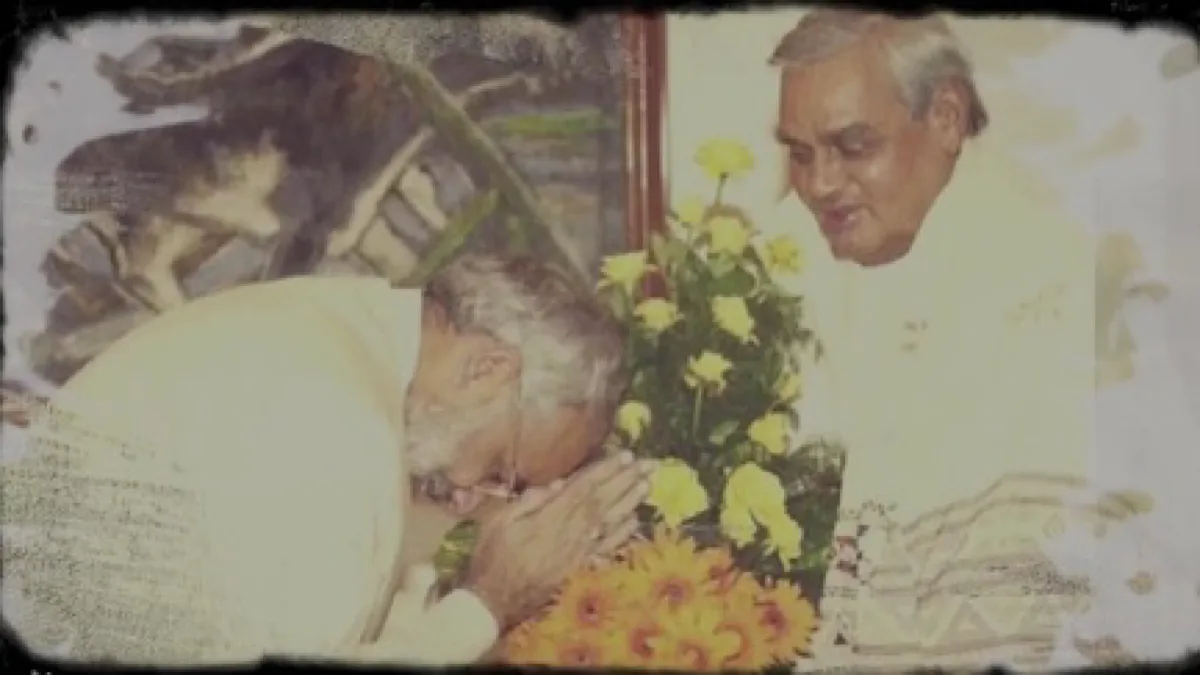
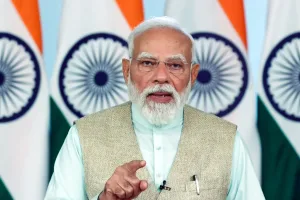
Eloquent orator, continues to inspire nation, says PM Modi on Atal Bihari Vajpayee’s birth anniversary

Prime Minister Narendra Modi on Thursday paid tributes to former Prime Minister Atal Bihari Vajpayee on his birth anniversary, stating that his leadership will continue to serve as a guiding light for the all-round development of the nation.

IANS | New Delhi |

Prime Minister Narendra Modi on Thursday paid tributes to former Prime Minister Atal Bihari Vajpayee on his birth anniversary, stating that his leadership will continue to serve as a guiding light for the all-round development of the nation.

Vajpayee, born on December 25, 1924, in Madhya Pradesh’s Gwalior, is remembered as a statesman and visionary leader who served as India’s Prime Minister three times and played a pivotal role in shaping modern India. His leadership continues to inspire millions across the country.

In a post on X, PM Modi said, “My heartfelt salutations to former Prime Minister Bharat Ratna Atal Bihari Vajpayee ji, who resides in the hearts of the countrymen, on his birth anniversary. He dedicated his entire life to good governance and nation-building.”

He said that Vajpayee will always be remembered not only as an “eloquent orator” but also as a “spirited poet”.

“His personality, works, and leadership will continue to serve as a guiding path for the all-round development of the country,” PM Modi added.

He also said that Vajpayee’s birth anniversary is a special occasion for all the countrymen to draw inspiration from his life.

“His conduct, grace, ideological steadfastness, and unwavering commitment to placing the nation’s interest above all serve as an exemplary standard for Indian politics. Throughout his life, he demonstrated that true excellence is not established by position, but by conduct — and it is that which guides society,” the Prime Minister added.

Meanwhile, PM Modi is scheduled to visit Uttar Pradesh to inaugurate Rashtra Prerna Sthal in Lucknow to honour the legacy of luminaries of independent India. Rashtra Prerna Sthal has been developed as a landmark national memorial and inspirational complex of enduring national significance.

Built at an estimated expense of Rs 230 crore and covering a vast area of 65 acres, the facility is designed to serve as a lasting national resource aimed at promoting leadership principles, civic engagement, cultural awareness, and public motivation.

The complex features 65-feet-high bronze statues of Dr Syama Prasad Mookerjee, Pandit Deendayal Upadhyaya, and Former Prime Minister Atal Bihari Vajpayee, symbolising their seminal contributions to India’s political thought, nation-building, and public life.

Cuddalore road accident: SETC bus collides with cars, nine killed; Tamil Nadu CM announces ex gratia

Nine people died in a highway crash in Cuddalore after an SETC bus collided with two cars. CM MK Stalin announced ex gratia and ordered special care for the injured.

Statesman News Service | New Delhi |

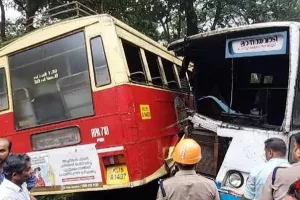
A late-evening road accident on the Trichy–Chennai National Highway in Tamil Nadu’s Cuddalore district claimed nine lives on Wednesday, prompting Chief Minister MK Stalin to announce ex gratia relief for the victims’ families and direct enhanced medical care for the injured.

According to the district administration, a State Express Transport Corporation (SETC) bus travelling from Trichy to Chennai collided with two cars near Eluthur village in Thittakudi taluk. The crash occurred around 7.30 pm. Nine occupants of the cars, five men and four women, died on the spot, while four others sustained injuries and were rushed to government hospitals.

Cuddalore District Collector Thiru Sibi Adhithya Senthil Kumar said the injured are currently undergoing treatment in government facilities. “Yesterday in Cuddalore district, a tragic road traffic accident happened near Thittakudi, where a government SETC bus travelling from Trichy to Chennai collided with two cars. Nine people died in the accident, and the remaining four injured are undergoing treatment in government hospitals,” he said.

Also Read: Karnataka bus accident: 9 killed in Chitradurga sleeper bus fire; PM announces ex-gratia

TN CM’s relief announcement and directions

Expressing grief over the incident, the Chief Minister announced financial assistance from the Chief Minister’s Public Relief Fund, Rs 3 lakh each for the families of the deceased and Rs 1 lakh each for those critically injured and under treatment. In an official communication, he also directed that special medical care be ensured for the four injured, including two children.

“I express my deepest condolences and sympathy to the families of the nine people who died in this accident and their relatives,” the Chief Minister wrote, adding that the relief would be disbursed from the Public Relief Fund, according to ANI.

Officials said the focus remains on treatment and support for the injured, while standard procedures are underway to ascertain the sequence of events leading to the collision.

Uncovered million more documents potentially related to Jeffrey Epstein: US Department of Justice

The United States Department of Justice on Wednesday (local time) stated that it uncovered over a million additional documents “potentially related” to the Jeffrey Epstein case.

ANI | New Delhi |

The United States Department of Justice on Wednesday (local time) stated that it uncovered over a million additional documents “potentially related” to the Jeffrey Epstein case.
In an X post, the DOJ said that these documents will be released in the coming weeks.

“The US Attorney for the Southern District of New York and the FBI have informed the Department of Justice that they have uncovered over a million more documents potentially related to the Jeffrey Epstein case. The DOJ has received these documents from SDNY and the FBI to review them for release, in compliance with the Epstein Files Transparency Act, existing statutes, and judicial orders. We have lawyers working around the clock to review and make the legally required redactions to protect victims, and we will release the documents as soon as possible. Due to the mass volume of material, this process may take a few more weeks. The Department will continue to fully comply with federal law and President Trump’s direction to release the files,” DOJ said.

Earlier on Tuesday (local time), the Department of Justice released 30,000 more pages of documents related to Jeffrey Epstein, while noting that some of these documents contain “untrue” claims made against President Donald Trump.
In an X post, the DOJ claimed that the documents against Donald Trump are “false” and would have been “weaponised” against him.

“The Department of Justice has officially released nearly 30,000 more pages of documents related to Jeffrey Epstein. Some of these documents contain untrue and sensationalist claims made against President Trump that were submitted to the FBI right before the 2020 election. To be clear: the claims are unfounded and false, and if they had a shred of credibility, they certainly would have been weaponised against President Trump already. Nevertheless, out of our commitment to the law and transparency, the DOJ is releasing these documents with the legally required protections for Epstein’s victims,” the DOJ wrote on X.
A 2021 subpoena to the Mar-a-Lago Club, founded by Trump in 1995, is also among the documents, as reported by CNN. The subpoena relates to a probe into Epstein’s former girlfriend and convicted accomplice, Ghislaine Maxwell.

The documents also include a letter signed by “J Epstein,” which was sent to convicted sex offender Larry Nassar in the same month Epstein died by suicide in 2019. The letter, as reported by CNN, makes references to Trump without explicitly naming him. The letter contains the phrase “our president.”

However, the DOJ said that the Federal Bureau of Investigation (FBI) has confirmed that the letter is fake. DOJ noted that writing in the letter does not appear to match that of Epstein’s, and the letter was postmarked three days after his death.
The US had passed the Epstein Files Transparency Act last month, prompting the DOJ to release documents related to Epstein, who was charged as a sex offender.

A need for legal reform

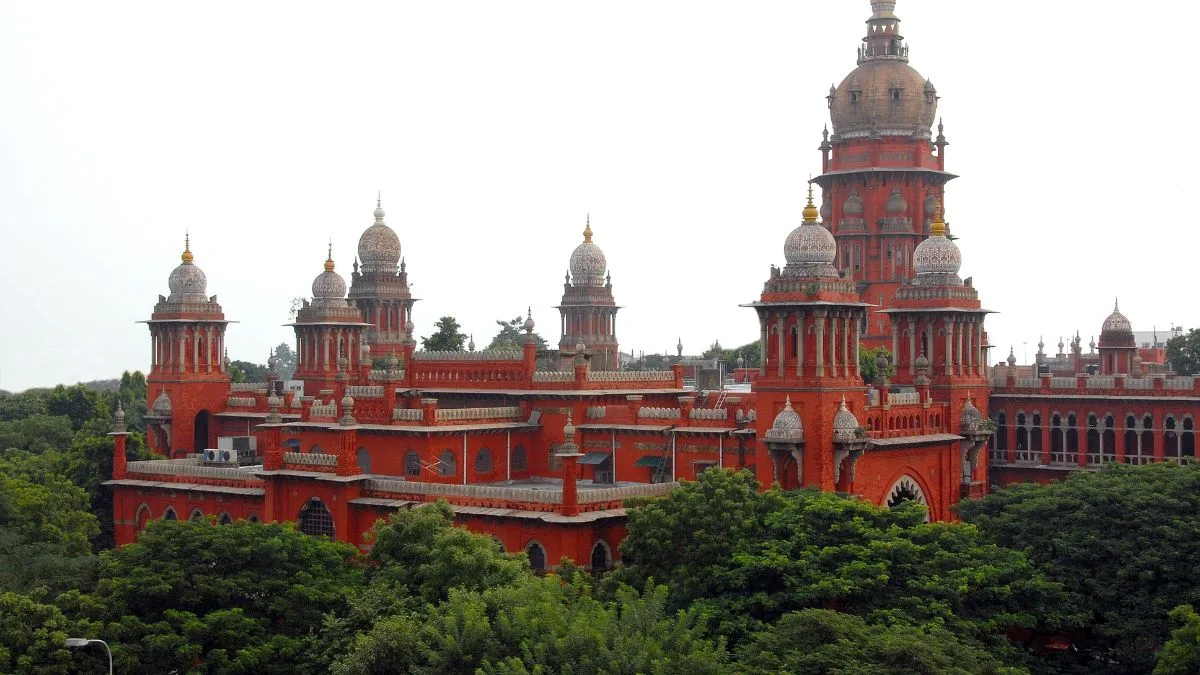
Very recently, the Madras High Court, on 25 October, declared cryptocurrency a ‘property’ of the user. The question for declaring it as a property arose from a recent incident in which an investor, Rhuti Kumar, among other investors, lost savings in WazirX due to a cyberattack on the platform.

Vandana Tiwari and Ravi Singh Chhikara | New Delhi |

Very recently, the Madras High Court, on 25 October, declared cryptocurrency a ‘property’ of the user. The question for declaring it as a property arose from a recent incident in which an investor, Rhuti Kumar, among other investors, lost savings in WazirX due to a cyberattack on the platform. Due to that cyberattack, the accounts of thousands of Indian investors were frozen by the platform due to which they were not allowed to control their coins/points on that platform. The investor approached the Madars High Court and it declared, that cryptocurrency is a “property” under Indian law and restrained the platform from dealing with Rhuti’s property.

The troubling part is that the judgment, although it protects ownership, does not hold as to who shall be responsible for any loss to her assets. What was missed? The Court missed the fact that WazirX employs a dual-structure model. The Indian arm, Zanmai Labs, manages rupee deposits. The Singapore entity, Zettai Pte Ltd, purports to hold the crypto wallets. In court, WazirX asserted that it never owned or controlled the XRP coins, it only managed the interface. Zettai, the foreign company, possessed the keys and the breach occurred in Zettai’s systems. This dual-jurisdiction structure creates a legal grey area. Who owes users the duty of care, the Indian company that accepts the user’s currency, or the foreign company that holds the user’s coins? Another issue is a decisive jurisdictional finding. The failure to disregard the corporate veil between Zanmai and Zettai left behind an operational vacuum of shifting layers of liability.

On occasion, exchanges use these types of structures to essentially operate in India, while eluding regulatory scrutiny in India. This case was an opportunity to clarify that simply because Indian users are trading from servers in India, they will be governed by Indian law, no matter where the parent company is registered. So, if tomorrow the wallet is breached again, would users initiate action against WazirX, or Zettai? Declaring a Custodian is important: When platforms are holding users’ private keys, they are not simply intermediaries; they are fiduciaries. Saying that a hack was “unforeseeable” cannot be used as an excuse to not accept liability. By confirming that crypto is “property,” the Madras High Court legitimised digital assets as having legal status.

But it is not worth much if there is no enforceable duty associated with that property or asset status. Investors may start to approach Indian courts under section 9 of the Arbitration Act for interim protection, but recovering values will still require that custodial liability is evidenced and proven. Courts across the world have already started to close this ethical-legal gap. The UK High Court in AA v Persons Unknown & Ors, Re Bitcoin [2019] EWHC 3556 (Comm). ruled that crypto assets are property, and that intermediaries holding crypto assets act as trustees and therefore have fiduciary obligations. The US SEC requires “qualified custodians,” which are entities that safeguard crypto holdings on behalf of investors to protect them. Thus, India’s assertion of property rights without custodial duty is incomplete.

This case should have initiated three policy responses : a. Clear standards for custodians to mandate segregation of customer assets, similar to the securities business b. Clarity over jurisdiction, if Indians are trading on Indian servers then Indian law ought to apply c. Requirement of insurance for crypto exchanges so that cyber loss does not become a socialized liability Until then, our courts will continue its algorithms for wallet protection one at a time while allowing the conditions for vulnerability to remain. The Road to Reform: In the case of Rhuti Kumari, one would expect a prompt regulatory review and prompt changes. Equivalent considerations, in the first instance, must give rise to clear custodian standards.

Crypto exchanges maintaining the private keys of users, must, like traditional securities intermediaries do with client funds, be required to hold customer assets separately from their own. This would ensure customer assets are ring-fenced and protected from insolvency risks if the platform were to become insolvent or hacked. Secondly, there must be clarity of jurisdiction. If Indian users trade from Indian servers and deposit their money into Indian bank accounts, the transaction should be governed by Indian law irrespective of whether the holding entity is registered somewhere else. Such consideration would prohibit exchanges from hiding behind foreign structures to avoid their obligations.

There must also be a requirement for some form of mandatory insurance mechanism for crypto exchanges. When millions are lost due to hacking or other forms of attacks, taking comfort in knowledge that insurance will absorb the loss, would lead to the result we all would expect. The loss of their digital assets should not become a “socialised liability”, as the innocent investor should not be subject to the costs of the platform collapsing due to cyber hacking. Lastly, it must be stated that the issues of transparency and fairness cannot be negotiable. Every crypto exchange as a “reporting entity” registered under FIU-IND must report under the PMLA regime serious breaches, data theft, or suspicious transactions. Likewise, the government has to regulate clickwrap contracts; those unilateral “I Agree” terms that can be hidden in an avalanche of foreign arbitration clauses often to the detriment of the user.

Users must be given the appropriate chance to litigate in India when they are trading on Indian exchanges. Collectively, these measures would not only protect digital investors but enhance the credibility of India’s rapidly evolving FinTech framework. The real reform doesn’t start with defining crypto as property, but with defining who has the responsibility to protect that property. Property Without a Guardian: The decision in Rhutikumari v. Zanmai Labs is decisive, but also a warning.

We now know crypto is property under Indian law, still we don’t know who is the guardian of that property. Between the click of a button and the crash of a server is a new form of citizenship that is digital, yet stateless. Until custodians are held accountable, each crypto holder is a landowner without land, the owner of something that exists everywhere and nowhere, at the same time. While we have acknowledged ownership in the digital space we have not yet acknowledged responsibility in an earthly jurisdiction. We are going to finish on a both intellectual and emotional note.

(THE WRITERS ARE, RESPECTIVELY, AN ADVOCATE, PRACTICING IN CALCUTTA HIGH COURT, AND AN ADVOCATE PRACTICING IN SUPREME COURT AND DELHI HIGH COURT.)

Justice in the Dock

The move to impeach a judge of the Madras High Court for a judgment that he had pronounced is patently wrong, because according to the Constitution, a judge of the High Court may be removed by impeachment only on the ground of proven misbehaviour or incapacity, which can hardly be inferred from a single judgement – even if demonstrably wrong.

Devendra Saksena | New Delhi |

The move to impeach a judge of the Madras High Court for a judgment that he had pronounced is patently wrong, because according to the Constitution, a judge of the High Court may be removed by impeachment only on the ground of proven misbehaviour or incapacity, which can hardly be inferred from a single judgement – even if demonstrably wrong. However, the process of impeachment is such that it drags the name of the judge through mud, and guarantees the end of his judicial career.

Should the present case be taken as a precedent, and vengefulness be taken as the prime requirement, everyday there would be judges in the dock, threatened with impeachment – for some judgement that had annoyed some political party. And the ruling party, with a majority in the Parliament, would have a merry time browbeating judges, to do their bidding. The present controversy, which we will call ‘the Deepathoon controversy,’ arose, because as it often happens in India, two temples, a Muslim graveyard, and a Muslim dargah were all located close to each other. Hearing a PIL, the judge had directed that a lamp should be lit by the temple at a place where it was not being lit earlier.

This judgement led to a law-and-order situation, and an impeachment motion signed by 107 MPs. Also, for the last many months, another judge, of the Allahabad High Court, is facing impeachment on charges of corruption. No judge has ever been impeached by Parliament, so far, and impeachment motions have been few and far between. Thus, the present situation, where two judges are in the dock at the same time shows that all is not well in the higher judiciary. That said, the lot of a superior court judge is a difficult one in India; testing the limits of jurisprudence, political and religious questions, disguised as questions of law, are often agitated in courts.

The judiciary could have been an appropriate referee for such controversies in colonial times, but not when we are a free country. Probably, opposing parties in political and religious disputes should compulsorily solve their disputes by conciliation. For example, if both sides to the Deepathoon controversy, had sat down together, probably an acceptable solution could have been reached. An instance of a political controversy, eroding the credibility of the Supreme Court, is the Governors’ Powers Case; a bench of the Supreme Court decided that Governors were bound to approve bills in a definite timeframe, while in an advisory opinion, rendered soon after, the Supreme Court held that no definite timeline could be prescribed. Probably, the correct course would have been to debate the issue in Parliament, and come out with a proper legislation.

Recently, there have been repeated instances of the Supreme Court frequently reversing its earlier judgements – a trend deprecated judicially by the Supreme Court itself – which signals that there is no finality to the law laid down by the Supreme Court, and thus erodes public confidence in the apex court. Also, recent face-offs between the Supreme Court and some High Courts exposes the schisms in the judicial fraternity. One hopes that the new Chief Justice of India would make the judiciary a cohesive whole again. The situation is much more chaotic in district courts.

Lower courts are often guided more by convenience, and local circumstances, rather than by jurisprudence, because judges of lower courts are a demoralised lot, with uncertain career prospects. They have to satisfy public sentiments, and yet appear to be on the right side of the powerful Executive. Consequently, most judges rely on technicalities, rather than facts to decide cases, and often leave contentious cases undecided. The Civil Procedure Code and the Bharatiya Nagarik Suraksha Sanhita (earlier the Criminal Procedure Code), have a number of provisions like plea bargaining, compromise, trial by summary procedure etc, to aid quick disposal, which are seldom applied by courts. Similarly, the timelines laid down in both Codes for disposal of cases are seldo observed.

To dispense justice quickly and boldly, more than anything else, District Court judges require moral support and reassurance, rather than constant criticism from higher courts. According to the National Judicial Data Grid, 4.76 crore cases are pending in District Courts, 63.63 lakh cases are pending in various High Courts, and more than 91,000 cases, are pending in the Supreme Court. Not surprisingly, most cases drag on till the litigants kick the bucket, or the requested relief becomes meaningless. According to a 2018 strategy paper of Niti Aayog (New India @75), at the present rate of disposal, it would take 324 years to clear the backlog of pending cases, even if no new cases were filed, so an ordinary litigant cannot expect to get justice in his lifetime. A lamentable consequence of such delays is that the process is the punishment – unfortunate undertrials remain incarcerated for years together.

The political executive often takes advantage of judicial delays, by charging inconvenient persons, under stringent provisions of law, and keeping them in jail, for long periods. All Chief Justices have promised to reduce pendency of cases, but pendency has only increased through the years, because divergent interests of the various stakeholders in the judicial delivery system have led to a pathetic situation where cases multiply, but justice is seldom done. The common man, watches in dismay, as the Government and Judiciary slug it out in the open. To sum-up:

a) The common man wants cheap and quick justice;

b) The judiciary wants to preserve its entrenched prestige and privileges, with the assurance that occasional transgressions by its members would be papered over;

c) The Government wants support from the judiciary in furthering its agenda. Seldom expressed in so many words, the ‘committed judiciary’ that the late Indira Gandhi wanted, has been the desire of all governing parties;

d) Lawyers, who are the link between litigants and judges want many disparate things, the bottom line being the continuation of the present process-heavy system which discourages quick justice, and ensures that no litigant can pursue his case without hiring a lawyer.

That all stakeholders have vastly different ethos makes the search for a common meeting point even more difficult. To elucidate, most higher court judges are from the English-speaking elite, and more often than not, from judicial families, while the political executive, abhors both elitism and dynastism. On the other hand, judges consider the average politician corrupt, crass, and uncouth. The public view the judiciary with distrust, probably because the judiciary can be approached only through lawyers, who are the proverbial X factor; a handful rendering yeoman service, both to litigants and the Court, but a significant briefless mass, disrupting judicial proceedings at the drop of a hat, and maligning the fair name of the profession by their unruly behaviour.

The net result is a highly deficient judicial system. Justice Ranjan Gogoi, a former Chief Justice of India, stated in an interview: “If you have to go to court, you will only be washing dirty linen in court and you will not get a verdict. I have no hesitation to say so. You regret it if you go to court.” Presently, laws circumscribing personal choice in matters of food, drink, marriage and religion, enacted by some State legislatures, prescribing long prison sentences for alcohol consumption, cow slaughter and consumption of beef, have brought millions of cases in their wake.

The Chief Justice of Patna High Court had to write to the Chief Minister to point out that stringent prohibition laws had led to a flood of litigation in lower courts that left little time to judges for deciding more important cases. Probably, following the Pre-Legislative Consultation Policy (PLCP) before introducing legislation and assessing the effect of the legislation after a pre-determined period would help in curbing the enactment of contentious laws. Only genuine co-operation between the three branches of Government – the Executive, the Legislature and the Judiciary – can rid Courts of the accumulated mountain of cases and prevent accretion of new ones. The Executive could help by sticking to rules and avoiding actions that test the borders of legality, and the Legislature could simplify laws, so that a common citizen can represent his own case in court. Finally, courts, too, have a solemn duty towards society, as William Howard Taft, a former US President, and Chief Justice had pointed out: “Presidents come and go, but the Supreme Court goes on forever.”

(THE WRITER IS A RETIRED PRINCIPAL CHIEF COMMISSIONER OF INCOME-TAX,)

Harnessing the learnings of MGNREGS

India’s livelihood landscape is highly diverse and complex, shaped by varied agro-climatic conditions and unequal access to natural, human, and economic resources, knowledge, technology, and markets.

SAROJ MAHAPATRA | New Delhi |

India’s livelihood landscape is highly diverse and complex, shaped by varied agro-climatic conditions and unequal access to natural, human, and economic resources, knowledge, technology, and markets. Nearly 70 per cent of rural households depend on agriculture, with 83 per cent being small and marginal farmers. There is a huge scope of improvements in productivity enhancement, access to resources, irrigation and rural infrastructure, and market access constrain incomes, calling for targeted investments and participatory approaches to build resilient livelihoods.

Launched in 2005, MGNREGS guaranteed the right to work by providing at least 100 days of assured wage employment per household annually, while creating durable assets for livelihood security. Through Gram Panchayat-centred participatory planning, it has demonstrated the model of “Today’s Wages – Tomorrow’s Livelihoods”. Large-scale asset creation under MGNREGS, particularly through landscape-based, community-led natural resource management, has strengthened productive assets, livelihood and income security, and household capabilities. The High Impact Mega Watershed Project in Chhattisgarh demonstrated sustainable pathways to enhance smallholder incomes while conserving land and water resources.

In Western Odisha, the Migration Project reduced distress migration by providing an additional 200 days of wage employment (from the state’s budget) and strengthening local livelihoods through land and water development. Jharkhand’s Birsa Harit Gram Yojana transformed landscapes through plantation-based interventions led by Gram Panchayats and women’s collectives. More recently, Madhya Pradesh created over 85,000 farm ponds under the Jal Ganga Samvardhan Abhiyan, improving water security for smallholder farmers. The major learnings of these initiatives are:
● lives and livelihoods of people transform when the community is involved in scientific and participatory planning processes;

● enhanced technical capacities;

● integrating GIS tools and water budgeting;

● large-scale creation of land and water conservation assets which would lead to livelihood intensification and diversification;

● targeted investments with strong convergence with line departments to realize Gram Panchayat-led plans.

Community-led planning strengthens ownership, natural resources, skills, and aspirations of small and marginal farmers, enabling diversified and sustainable livelihoods. Over the past two decades, MGNREGS has provided assured wage employment to rural households while demonstrating pathways to convert short-term wages into sustainable livelihoods.

As rural youth increasingly aspire to annual incomes of Rs 2.5 lakhs or more, the way forward lies in strengthening resilient livelihoods, promoting climate-resilience and water security, developing rural growth centres, and fostering entrepreneurship. The possibilities under Viksit Bharat – Guarantee for Rozgar and Ajeevika Mission (Gramin) are many. This proposed programme aims to strengthen the rural economy by securing household income, increasing employment days, and building durable livelihood assets. There are possibilities to improve water availability, strengthening livelihoods, and creating rural infrastructure that can withstand climate vagaries and extreme weather.

A key feature of this initiative is the convergence of several government flagship programmes to ensure a unified and inclusive approach to rural development, aligned with the vision of Viksit Bharat @ 2047. Water security is the key component of the programme. With a need-based approach, the programme promotes community-centric planning that addresses the needs of the smallholder farmers. The Viksit Gram Panchayat Plan, will serve as a bottom-up planning unit under the principle of ‘One Gram Panchayat, One Plan’, leveraging the provision of 125 working days as per this programme, and helping identify local needs, using available skills, unlocking livelihood opportunities, and catering to aspirations of rural people. CSOs and experts can play an important role in developing the capacities of the Gram Panchayat functionaries leading to a more transparent planning process. Ensuring water security at the Gram Panchayat level is essential for strengthening the rural economy, protecting local ecosystems, and fostering community ownership through participatory planning, especially with the involvement of women-led community institutions and schemes under Deen Dayal Antyoday Yojana -National Rural Livelihoods Mission. Livelihood security will be ensured when the assets will be effectively utilised to generate sustained income opportunities.

Gram Panchayats and women collectives will play a crucial role in livelihood strengthening through sustainable production systems, climate resilient practices, improved technologies, cluster-based livelihoods, local entrepreneurship and robust convergence. Moreover, as a statutory guarantee, it allows up to 25 additional days of wage employment beyond the existing 100 days, with a provision of weekly payment, providing a financial safety net. The Ministry of Rural Development, Government of India has already launched Samaveshi Ajeevika Yojana to support the livelihoods of extremely vulnerable households. The mission also supports the development of livelihood-related rural infrastructure such as storage godowns, small cold storage, solar processing units etc. to reduce production risks and improve resilience to climate variability.

At the same time, a strong focus on digitising systems and processes is expected to improve transparency, efficiency, and service delivery. The emphasis on women, water, and wealth is designed to strengthen the rural economy while promoting social equity and ecological balance. The women-led SHGs, Cluster-Level Federations, and Gram Panchayats can play a critical role in identifying and including the vulnerable households, particularly the women members, in the planning processes for transforming their lives and livelihoods and strengthening the local economy. This saturation and convergence based, technology-enabled, inclusive and progressive bill, providing 125 days of wage employment, focuses on strengthening resilience, and expanding livelihood opportunities in rural India. It seeks to make rural areas places of dignity, opportunity, and aspiration, in line with the vision of Viksit Bharat @ 2047.

(The writer is Executive Director, PRADAN.)

A year of big-ticket reforms

While India celebrates former PM Atal Bihari Vajpayee’s birth anniversary as Good Governance Day, it is worth noting that 2025 has witnessed some of the Modi government’s most decisive, big-ticket governance reforms.

Tuhin A. Sinha | New Delhi |

While India celebrates former PM Atal Bihari Vajpayee’s birth anniversary as Good Governance Day, it is worth noting that 2025 has witnessed some of the Modi government’s most decisive, big-ticket governance reforms. These reforms only reinforce the Prime Minister’s commitment to raise the governance bar and expedite India’s 2047 goals. Good Governance Day, marked every December 25 since 2014, honours the legacy of former PM Atal Bihari Vajpayee, one of India’s most revered leaders and a founding figure of the Bharatiya Janata Party (BJP).

Vajpayee, born in 1924, exemplified principles of accountability, transparency, and inclusive growth during his tenure as Prime Minister from 1998 to 2004. His administration pioneered initiatives like the Golden Quadrilateral highway project and telecom reforms, setting a benchmark for efficient governance. The same ethos of “Sushasan” (good governance) have underpinned the Modi government’s reform agenda, transforming abstract ideals into concrete policies that prioritize citizen welfare, economic resilience, and systemic efficiency. 2025 emerged as a year of “reform blitz” for the Modi government, with over a dozen major bills passed in Parliament to turbo charge the economy amid global challenges like potential US tariffs and geopolitical uncertainties. These reforms, spanning nuclear energy, insurance, securities markets, labour laws, rural employment, and Waqf property management, were designed to unlock hundreds of billions in investments, simplify compliance, and position India as a global economic powerhouse.

By consolidating outdated laws, enhancing transparency, and opening sectors to private and foreign participation, the government aimed to boost GDP growth, create jobs, and achieve the targets of “Viksit Bharat” (Developed India) by 2047. Critics argued some changes diluted worker rights or increased government oversight, but proponents hailed them as decisive steps to correct historical wrongs, formalize informal sectors, and shield the economy from external shocks. A decoding of some of these reforms only underscores their importance in the country’s journey ahead. One of the most contentious yet corrective reforms of 2025 was the Waqf (Amendment) Act, passed in April, which overhauled the Waqf Act of 1995 and its 2013 amendments.

The 1995 Act had granted Waqf Boards unchecked powers to declare properties as Waqf, often leading to arbitrary claims on government, private, and even non-Muslim lands. The 2013 amendments exacerbated this by introducing “Waqf by user” – a provision allowing properties to be deemed Waqf based on historical usage, without formal documentation, enabling illegal land grabs estimated to affect millions of acres. The 2025 Act rectifies these wrongs by abolishing “Waqf by user,” ensuring only properties with valid deeds or explicit dedication can be classified as Waqf, thus preventing retrospective claims on government lands. This formalization paves the way for transparent management, including digitization of records and inclusion of non-Muslims in Waqf Councils for broader oversight.

By ending unchecked encroachments, the reform safeguards heritage while promoting socio-economic utilization of Waqf assets, potentially unlocking value for community welfare and reducing litigation. Implemented nationwide from 21 November 2025, the four new Labour Codes – on Wages, Social Security, Industrial Relations, and Occupational Safety – consolidated 29 previous laws into a streamlined framework of four comprehensive labour codes, marking a historic overhaul. These codes enhance social security by mandating Provident Fund (PF), Employees’ State Insurance Corporation (ESIC), insurance, and gratuity for all workers, including those in unorganized sectors. A boon for gig and platform workers, the Social Security Code requires aggregators to contribute to a welfare fund, providing first-time coverage like accident benefits and pensions.

To boost women’s workforce participation, provisions include extended maternity leave, creche facilities, and flexible work hours, addressing barriers that have kept female labour force participation below 40 per cent. Uniform minimum wages across industries and simplified compliance (reducing forms from hundreds to a few) make it easier for businesses to hire, potentially creating millions of jobs while protecting vulnerable workers from exploitation. The codes’ focus on inclusivity positions them as a catalyst for a more equitable labour market. Enacted in December 2025, the VB–G RAM G Bill replaced the 2005 Mahatma Gandhi National Rural Employment Guarantee Act (MGNREGA) with a modernized framework aligned with India’s 2047 development goals. MGNREGA’s 100-day guarantee often suffered from delays, corruption, and limited focus on asset creation; the new Bill expands it to 125 days of wage employment per househol, introduces Gramin Rozgar Guarantee Cards for seamless access, and raises administrative spending to 9 per cent for better tech-driven monitoring. It emphasizes livelihood security through skill-linked works and infrastructure projects, with seasonal pauses to align with agricultural cycles.

By capping funding and integrating digital tools, the reform curbs leakages and shifts from mere wage provision to sustainable rural empowerment. This overhaul is expected to enhance rural resilience, reduce migration, and contribute to balanced economic growth. The Sustainable Harnessing and Advancement of Nuclear Energy for Transforming India (SHANTI) Bill, passed in December 2025, marked a seismic shift by allowing private and foreign firms full participation in India’s nuclear sector for the first time since independence. Previously monopolized by state entities, the sector faced funding shortages and slow expansion. This single reform unlocks $214 billion in investments. It streamlines regulations, promotes clean energy to meet net-zero targets, and bolsters energy security amid rising demands.

Safety remains paramount with enhanced oversight, positioning nuclear power as a cornerstone for sustainable development and reducing reliance on fossil fuels. The Sabka Bima Sabki Raksha (Amendment of Insurance Laws) Bill,approved in December 2025, raised Foreign Direct Investment (FDI) in insurance from 74 to 100 per cent, fulfilling a long-pending demand to infuse capital and achieve “Insurance for All by 2047.” With penetration at just 3.8 per cent of GDP, the sector needed a boost; the reform reduces capital requirements for reinsurers from Rs 5,000 crore to Rs 1,000 crore, encouraging more players and innovation in products like micro-insurance. It mandates full premium reinvestment in India, addressing data privacy concerns while spurring job creation and skill development. This liberalization is projected to deepen market penetration, lower premiums through competition, and fortify financial resilience for millions. Introduced and passed in December 2025, the Securities Markets Code Bill unified three legacy laws – the SEBI Act (1992), Depositories Act (1996), and Securities Contracts (Regulation) Act (1956) – into a single, contemporary code.

Outdated regulations had hampered efficiency; the new code strengthens the Securities and Exchange Board of India (SEBI) by expanding its board to 15 members, enhancing accountability, and bolstering investor protection through stricter penalties and faster dispute resolution. It simplif ies compliance for intermediaries, promotes market participation, and integrates digital tools for transparency. This reform shields India’s booming stock markets from volatility, attracts foreign inflows, and aligns with global standards, fostering a robust financial ecosystem. Moreover, In August 2025, PM Modi during his Independence Day speech, announced a dedicated Task Force for Next-Generation Reforms led by former Cabinet Secretary Rajiv Gauba.

It aims to accelerate economic growth, slash red tape, and modernize governance by repealing obsolete laws, simplifying compliance, digitizing approvals, and decriminalizing minor offencesbuilding on prior elimination of over 40,000 compliances. Complementing this, the government advanced key trade pacts: India-UK CETA (July), India-EFTA TEPA (October, $100B investments), India- New Zealand and India- Oman (December). Additionally, “GST 2.0” reforms (September) simplified rates to mainly 5 and 18 per cent, cut taxes on essentials and insurance, and boosted MSME refunds to stimulate consumption and growth.

These measures reflect conviction-driven reforms to insulate the economy and attract investments. The Modi government’s 2025 reforms represent a decisive push towards systemic transformation, echoing Vajpayee’s governance legacy while adapting to contemporary needs. From curbing land grabs to empowering gig workers and opening strategic sectors, these changes promise sustained growth, job creation, and equity. As India navigates 2026, the true test will be in implementation, but 2025 undoubtedly laid a resilient foundation for a pacy future.

(The writer is a national spokesperson of BJP and an author.)

Tracks of Tragedy

The deaths of seven elephants on a railway track in Assam are not just a tragic accident; they are a stark reminder of how India continues to underestimate the cost of development imposed on living landscapes.

Statesman News Service | New Delhi |

The deaths of seven elephants on a railway track in Assam are not just a tragic accident; they are a stark reminder of how India continues to underestimate the cost of development imposed on living landscapes. Each such incident is quickly framed as an unfortunate collision between modern transport and wildlife. In reality, it is the outcome of long-standing policy blind spots where infrastructure planning treats forests as obstacles rather than as inhabited, dynamic ecosystems.

Elephants are not strays wandering onto railway lines at random. They follow inherited routes shaped over generations, adjusting constantly to shrinking forests, blocked corridors, and human pressure. When a train hits a herd, it is usually because steel tracks have been laid across paths that existed long before the locomotive. Whether or not a stretch is officially marked as a corridor is often irrelevant to the animals themselves. Assam’s tragedy is painfully familiar to eastern India. Forest divisions in north Bengal, especially in the Dooars and Terai regions of West Bengal, have witnessed repeated elephant deaths on railway tracks over the past two decades.

Express trains running through tea gardens and reserve forests have struck lone tuskers and entire herds alike. Speed restrictions were announced, signboards erected, and awareness drives launched. Yet fatalities continue, suggesting that piecemeal measures have failed to address the structural problem. The core issue is the mismatch between how infrastructure is designed and how wildlife moves. Trains today are faster, heavier, and more frequent than ever before. Emergency braking sounds reassuring, but at high speeds it is little more than a gesture. Once a driver spots elephants on the track, physics has already decided the outcome. What is often missing from the conversation is accountability at the planning stage. Railway alignments, doubling projects, and speed upgrades are routinely cleared with minimal integration of real-time animal movement data. Environmental safeguards are treated as compliance checklists rather than living systems that demand continuous updating. The result is predictable: collisions are mourned, inquiries ordered, and business resumes as usual.

There is also a human dimension that tends to be overlooked. Train derailments caused by such collisions put passengers and railway staff at risk. Preventing elephant deaths is not only about conservation ethics; it is also about public safety and economic prudence. India does not lack solutions. Technologies such as thermal sensors, motion detectors, and AI-based alert systems already exist. Underpasses and overpasses designed specifically for elephants have shown promise in limited pilots. What is lacking is the willingness to deploy these at scale and to enforce speed controls rigorously, even when they inconvenience tight rail schedules. The lesson from Assam and north Bengal is clear. So long as forests are viewed as empty spaces waiting to be crossed, elephants will keep paying with their lives. Development need not be anti-nature, but it must accept one basic truth: in landscapes shared with wildlife, the burden of adaptation lies with humans, not with the animals that were there first

Christmas Day tragedy in Karnataka: ‘Truck hits sleeper bus fuel tank after losing control’, 9 dead in Chitradurga

Nine people were killed after a sleeper bus caught fire following a collision with a truck on NH-48 in Karnataka’s Chitradurga district early on Christmas Day.

Statesman News Service | New Delhi |

At least nine people were killed and 21 others injured after a private sleeper coach bus caught fire following a collision with a container truck on National Highway 48 in Karnataka’s Chitradurga district early on Christmas Day, police said.

The accident occurred around 2 am at Gorlattu Cross, when a truck coming from the opposite direction lost control, jumped the divider and rammed into the bus, triggering a massive fire. The bus was travelling from Bengaluru to Gokarna.

According to police, the impact led to fuel leakage after the truck hit the bus’s fuel tank, causing the vehicle to be engulfed in flames within minutes.

Truck hit fuel tank, fire spread rapidly: IGP

Inspector General of Police (East) BR Ravikanthe Gowda said preliminary investigations indicate that the truck struck the fuel tank directly.

“What we suspect is that the truck directly hit the fuel tank of the bus. Following fuel leakage, the bus caught fire and was completely engulfed,” Gowda said, adding that eight bus passengers and the truck driver died in the incident.

Several passengers managed to escape by jumping out after the collision. However, eight passengers who were asleep inside the sleeper coach got trapped, police said. The truck driver, identified as Kuldeep, a native of Uttar Pradesh, also died on the spot.

In total, 32 persons, including the driver and assistant, were travelling in the bus. The bus driver and assistant escaped unhurt.

Injured shifted to multiple hospitals; one critical

Among the injured, 11 were admitted to a hospital in Hiriyur, nine to Sira, and three to Tumakuru. One passenger with 15–20 per cent burn injuries was shifted to Victoria Hospital in Bengaluru, while the others are stated to be out of danger, Gowda said.

Police also said information is emerging about the spotting of a burnt body of a baby, and confirmation will follow after identification procedures.

PM announces ex-gratia; DNA teams deployed

Prime Minister Narendra Modi expressed grief over the loss of lives. In a post on X, the Prime Minister’s Office said it was “deeply saddened” by the incident and announced an ex-gratia of Rs 2 lakh from the Prime Minister’s National Relief Fund for the next of kin of each deceased. The injured will receive Rs 50,000.

DNA experts from Bengaluru and local Scene of Crime Officers (SOCO) teams have reached the spot. Police said bodies will be retrieved from the burnt bus, post-mortem examinations will be conducted, and DNA samples will be collected for identification before handing over the remains to families.

Karnataka CM, Deputy CM express grief over loss of lives

Meanwhile, Karnataka Chief Minister Siddaramaiah, Deputy Chief Minister DK Shivakumar, Union Minister for Heavy Industries and Steel HD Kumaraswamy, and other leaders condoled the deaths. The Karnataka CM said that a probe will be conducted to ascertain the cause of the accident.

“Hearing the horrifying news of the accident between a lorry and a bus near Chitradurga, in which several passengers were burned alive, was deeply distressing. Tragically, the journey of people travelling to their hometowns during the Christmas holidays ended in such a disaster.”

“A thorough investigation into the accident will be conducted to ascertain the cause. I pray for peace for the departed souls and share in the grief of the families who lost their loved ones in the accident,” the CM said.

Deputy Chief Minister and state Congress president DK Shivakumar stated, “I am deeply shocked to learn about the accident near Hiriyur involving a bus travelling from Bengaluru to Gokarna and a truck, in which several people were burnt alive. I express my condolences to the families of those who lost their lives and wish the injured a speedy recovery. I hope such tragedies do not recur.”

Traffic disruption and near-miss with school bus

The accident caused traffic disruption for several hours on the Bengaluru–Sira stretch of NH-48.

Authorities also said a bus carrying school children on an academic tour, which was travelling behind the affected bus, narrowly escaped the accident. Statements of eyewitnesses are being recorded.

Police have attributed the crash to the negligence of the truck driver. Further investigation is underway.

Cooked Slowly

Global recognition has finally caught up with what Lucknow has long known about itself: that its food is not just cuisine, but culture carefully simmered over centuries.

Statesman News Service | New Delhi |

Global recognition has finally caught up with what Lucknow has long known about itself: that its food is not just cuisine, but culture carefully simmered over centuries. The city’s inclusion in an international gastronomic network is being celebrated as a milestone, yet it is better understood as a validation rather than a transformation. Lucknow did not become special because it was recognised; it was recognised because it refused to stop being itself.

At the heart of Lucknow’s food lies an idea almost subversive in the modern age ~ that time matters. The defining techniques of Awadhi cooking demand patience, silence, and restraint. Slow cooking is not a trend here; it is a philosophy shaped by royal kitchens, seasonal rhythms, and domestic rituals. Whether it is a sealed pot left to cook over low heat or a dessert coaxed into being by winter dew, the process is as important as the plate. This culinary ethic also explains why Lucknow’s food has resisted homogenisation. Its most celebrated dishes were not designed for scale or speed. They emerged from courtly experimentation, community traditions, and necessity ~ even famine ~ and were refined through repetition rather than reinvention. The result is a cuisine that values balance over excess, subtlety over spectacle.

Equally important is the social architecture that sustains this food culture. Generational eateries, street vendors, and neighbourhood kitchens form an ecosystem that is deeply local and fiercely guarded. Many of these establishments operate with minimal branding and maximum loyalty. They survive not because they chase novelty, but because they deliver consistency, a taste that reassures people that some things need not change. Yet this very strength is also a vulnerability. As aspirations shift and younger generations move away from labour-intensive culinary crafts, the risk is not that Lucknow’s food will disappear overnight, but that it will be diluted ~ simplified for convenience, stripped of context, or repackaged without its underlying discipline. Recognition alone cannot prevent that. Preservation requires documentation, skill transmission, and economic dignity for those who keep these traditions alive.

For India, Lucknow’s moment matters beyond the city. It challenges the country’s tendency to reduce food heritage to a handful of export-friendly icons. It reminds us that culinary greatness often resides in the ordinary, in breakfast stalls, seasonal sweets and methods that cannot be rushed. It also offers a counterpoint to the idea that global relevance demands uniformity. If the recognition is used wisely, it can shift attention from celebrity kitchens to anonymous hands, from luxury dining rooms to crowded lanes, from novelty to knowledge. That would honour the spirit of Lucknow far more than any plaque or title. In the end, Lucknow’s food tells a larger story about India itself: that depth outlasts fashion, that memory can be a form of resistance, and that some flavours are meant to be earned slowly

Rising above the din

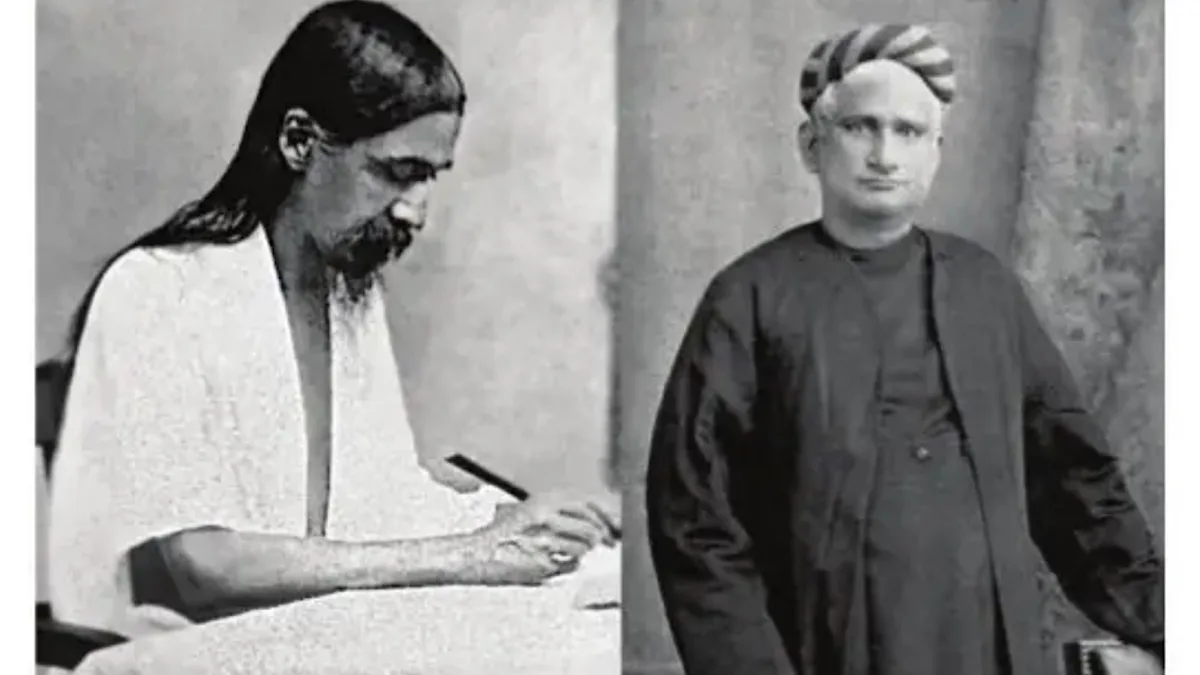
When ‘Babu’ and ‘Da’ become national issues, the voice of a 22-year-old Aurobindo Ghosh from Baroda can still be heard above the political din in contemporary India. Writing a series of essays in 1893-94, the young Aurobindo Ghosh stated: “Bankim Chandra Chattopadhyaya, the creator and king of Bengali prose, was a high-caste Brahman and the son of a distinguished official in Lower Bengal.

Statesman News Service | New Delhi |

When ‘Babu’ and ‘Da’ become national issues, the voice of a 22-year-old Aurobindo Ghosh from Baroda can still be heard above the political din in contemporary India. Writing a series of essays in 1893-94, the young Aurobindo Ghosh stated: “Bankim Chandra Chattopadhyaya, the creator and king of Bengali prose, was a high-caste Brahman and the son of a distinguished official in Lower Bengal. Born at Kantalpara on the 27th June 1838, dead at Calcutta on the 8th April 1894, his fifty-six years of laborious life were a parcel of the most splendid epoch in Bengali history; yet among its many noble names, his is the noblest. Very early men saw in him the three natural possessions of the cultured Bengali, a boundless intellect, a frail constitution, and a temper mild to the point of passivity.

And indeed, Bankim was not only our greatest; he was also our type and magnified pattern. He was the image of all that is most finely characteristic in the Bengali race.” Through the essays, Aurobindo Ghosh pens the portrait of Bankim Chandra with a flourish, tracing his life and times, commenting, and sharing with readers his insights. Aurobindo, fresh out of university in England, was working with Maharaja Sayajirao Gaekwad III in Baroda. In Bankim Chandra’s early years he saw, “The first picture of his childhood is his mastering the alphabet at a single reading; and this is not only the initial picture but an image and prophecy of the rest. At Midnapur, the home of his childhood, the magnificence of his intellect came so early into view, that his name grew into a proverb. ‘You will soon be another Bankim’ ~ for a master to say that was the hyperbole of praise. He ascended school by leaps and bounds; so abnormal indeed was his swiftness that it put his masters in fear for him. They grew nervous lest they should spoil by over-instruction the delicate fibre of his originality, and with a wise caution they obstructed his entrance into the highest class.”

In college Bankim Chandra’s brilliance intensified: “At Hugly College, he conceived a passion for Sanskrit and read with great perseverance at a Pandit’s tol. In a single year he had gone through Mugdhabodh, Raghuvansa, Bhatti and the Meghaduta. Advancing at this pace he managed under four years to get a sense of mastery in the ancient tongue and a feeling for its literary secrets which gave him immense leverage in his work of creating a new prose. Not that there is the least touch of pedantry in his Bengali style: rather it was he and Madhu Sudan Dutt who broke the tyranny of Sanskrit tradition: but one feels how immensely his labour was simplified by a fine original use of his Sanskrit knowledge. At Presidency College he shaped his versatile intellect to the study of law.

He had then some project of qualifying as a High Court Pleader, but at the right moment for literature the Calcutta University came into being and Bankim took literary honours instead of legal. The Courts lost a distinguished pleader and India gained a great man.” Bengal of the 1850s was an extraordinary society that formed Bankim Chandra. Aurobindo Ghosh described, “a society electric with thought and loaded to the brim with passion, the theatre of a great intellectual awakening.” He traced the rise of Rammohun Roy, Rajnarain Bose and Debendranath Tagore, the two Dutts, Okhay Kumar and Michael Madhu Sudan and Vidyasagar: “an ardent and imaginative race, long bound down in the fetters of a single tradition, had had suddenly put into its hands the key to a new world thronged with the beautiful or profound creations of Art and Learning.

This is what happened and may yet happen in Bengal. The first impulse was gigantic in its proportions and produced men of an almost gigantic originality.” The young Aurobindo Ghosh questions the power of environment in the making of genius. “Genius it is true exists independently of environment and by much reading and observation may attain to self-expression but it is environment that makes self-expression easy and natural; that provides sureness, verve, stimulus. Here lies the importance to the mind in its early stage of self-culture of fine social surroundings ~ that sort of surroundings which our Universities do nothing and ought to have done everything to create.” The poet and the thinker are helpless in the affairs of the world, wrote Aurobindo Ghosh, because they choose to be helpless ~ “they sacrifice the practical impulse in their nature, that they may give full expression to imaginative or speculative impulse; they choose to burn the candle at one end and [not] at the other, but for all that the candle has two ends and not one.

Bankim, the greatest of novelists, had the versatility developed to its highest expression.” It is this versatility of Bankim Chandra which the young writer underlines: “Scholar, poet, essayist, novelist, philosopher, lawyer, critic, official, philologian and religious innovator ~ the whole world seemed to be shut up in his single brain. At first sight he looks like a bundle of contradictions. He had a genius for language and a gift for law; he could write good official papers and he could write a matchless prose; he could pass examinations and he could root out an organised tyranny; he could concern himself with the largest problems of metaphysics and with the smallest details of word-formation: he had a feeling for the sensuous facts of life and a feeling for the delicate spiritualities of religion: he could learn grammar and he could write poetry. His province was literature, prose literature, and he knew it.

His lyrics are enchanting; metaphysics he followed at the end of his life and law at the beginning; and he used scholarship and philology, simply as other great writers have used them, to give subtlety of suggestion and richness of word-colour to his literary style. Even in the province of prose literature, where he might have worked out his versatility to advantage, he preferred to specialise.” When Aurobindo traces the masterpieces of Bankim Chandra, there is pathos and empathy: “It was the Durgesh Nandini, a name ever memorable as the first-born child of the New Prose. At Baruipur he wrote also Kopal Kundala and Mrinalini and worked at the famous Poison-Tree. At Barhampur, his next station, he began editing the Bangadarshan, a magazine which made a profound impression and gave birth to Bharati, the literary organ of the cultured Tagore family.

Since then, Bankim has given us some very ripe and exquisite work, Chandrashekhar, Krishna Kanta’s Will, Debi Chaudhurani, Anandmath, Sitaram, Indira and Kamal Kanta. Amid his worst bodily sufferings, he was poring over the Bhagavadgita and the Vedas, striving to catch the deeper and sacred sense of those profound writings. To give that to his countrymen was the strenuous aim of his dying efforts. A Life of Krishna, a book on the Essence of Religion, a rendering of the Bhagavadgita and a version of the Vedas formed the staple of his literary prospects in his passage to the pyre. Death, in whose shadow he had so long dwelt, took the pen from his hand, before it could gather up the last gleanings of that royal intellect. But his ten masterpieces of fiction are enough. They would serve to immortalize ten reputations.”

Aurobindo Ghosh finds it easy to assign Bankim’s place in Bengali literature: “there is no prose-writer, and only one poet who can compete with him. More difficulties enter into any comparison of him with the best English novelists; yet I think he stands higher than any of them, except one; he bears a striking resemblance to the father of English fiction, Henry Fielding. Bankim had the eye of a poet and saw much deeper…He saw what was beautiful and sweet and gracious in Hindu life, and what was lovely and noble in Hindu woman, her deep heart of emotion, her steadfastness, tenderness, and lovableness, in fact, her woman’s soul; and all this we find burning in his pages and made diviner by the touch of a poet and an artist. Of Bankim’s style I shall hardly trust myself to speak. To describe its beauty, terseness, strength, and sweetness is too high a task for a pen like mine. I will remark this only that what marks Bankim above all, is his unfailing sense of beauty. This is indeed the note of Bengali literature and the one high thing it has gained from a close acquaintance with European models.

The hideous grotesques of old Hindu Art, the monkey-rabble of Ram and the ten heads of Ravan, are henceforth impossible to it. The Shakuntala itself is not governed by a more perfect graciousness of conception or suffused with a more human sweetness than Kopal Kundala and the Poison-Tree.” The Early Cultural Writings of Sri Aurobindo remain a guiding light for those raising high their consciousness, drawing inspiration from the greatest writers-philosophers.

(The writer is a researcher-auth or on history and heritage issues, and a former deputy curator of Pradhanmantri Sangrahalaya)