Logo

Naandi Festival 2025 celebrates through mediums of dance and art

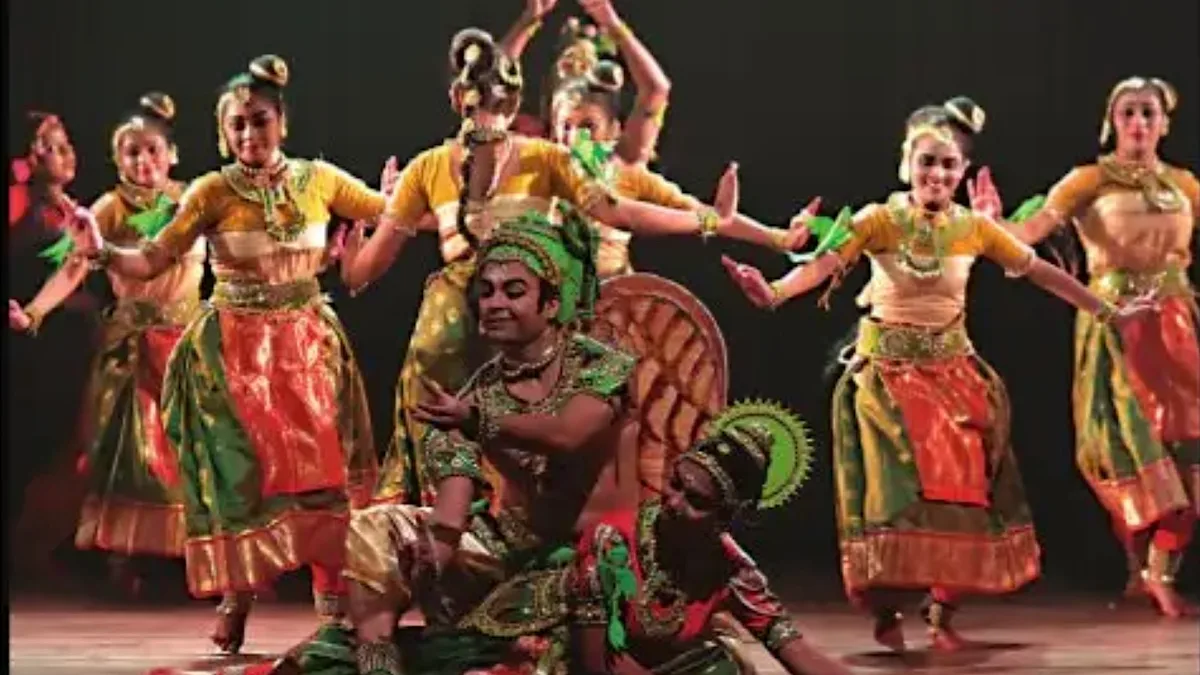
Recently the Satyajit Ray Auditorium at Indian Council for Cultural Relations buzzed with vibrant hues and rhythmic grace as the Brahma Kamal Institute of Dance and Drawing presented its 14th annual programme.

ROUSHAN CHATTERJEE | Kolkata |

Recently the Satyajit Ray Auditorium at Indian Council for Cultural Relations buzzed with vibrant hues and rhythmic grace as the Brahma Kamal Institute of Dance and Drawing presented its 14th annual programme. Naandi Festival 2025, funded by the production grant from the Ministry of Culture, Government of India, stood as a testament to the institute’s commitment to nurturing India’s classical and contemporary artistic traditions.

The event was graced by distinguished personalities from diverse cultural spheres including Vid. Sutapa Talukder; Vid. Polly Guha; Debasish Kumar, Member Mayor in Council, K.M.C; Uday Kumar Das, Organising Secretary, Sanskar Bharati; Abhijit Chatterjee; eminent Bharatanatyam dancers Guru Abhoy Pal and Krishna Pal; Mridangam artist Vid. Shankar Narayanaswamy, Tarun Bose, Satinath Mukhopadhyay and artist Devlina Kumar. The programme unfolded in three segments. It opened with a heartfelt homage to Padma Vibhushan Guru Kelucharan Mohapatra, the legendary Odissi exponent.

The director of the institute, Sabarnik De, presented a solo rendition of ‘Yami he Kamiha Smaranam’ from Jayadev’s Geeta Govinda, evoking the aching pathos of a weeping Radha. The performance led the audience through a cathartic emotional journey rooted in timeless choreography and poetic depth. However, the highlight of the festival was ‘Ripu Samhaar’.The dance-drama retold the mythological immolation of Ananga by Lord Shiva, drawing inspiration from Kalidasa’s ‘Kumarsambhava’ and the evocative poetry of Kazi Nazrul Islam. Directed by De himself, the production stood out for its visual splendour, choreography and thematic intensity. Music composed by Pratik Chakraborty and Pratim Chakraborty, coupled with the narration by Satinath Mukhopadhyay, elevated the presentation and earned applause from the audience.

The key roles were essayed by Subhajit Das as Shiva, Srimoyee Deb as Parvati, Sabarnik De as Kamadeva, Sulagna Chowdhury as Rati and Sourav Deb as Vasanta. The final segment, ‘Arghya’ showcased the discipline of the institute’s junior students. The performances were set to the timeless melodies of Rabindranath Tagore and other notable artists. Highlights included the patriotic ‘Vande Mataram’- an ode to Mother India, and the lyrical ‘Barisho Dhawra Maajhey’. The young dancers’ display reflected a year of dedicated training. Alongside dance, selected artworks by students of the drawing wing were also exhibited. This emphasised the institute’s dual focus on movement and visual art. Speaking to The Statesman, Sabarnik De reflected on the journey of the institute. “Our institute was established in 2011, and from 2012 we have been celebrating our annual programme every year.

This is our 14th year. The main goal of the institute is that it is a non-profitable institute where we teach dance and drawing to preserve Indian culture and tradition,” De said. He further added, “Odissi and Indian contemporary inspired by Uday Shankar, and visual arts coexist here. Even our costumes, ornaments and movements are inspired from ancient murals, temple sculptures and heritage paintings. This year, honouring Guru Kelucharan Mohapatra and presenting the dance-ballet ‘Ripu Samhaar’ was our special focus.” The programme concluded with the presentation of awards to annual examination rank holders, alongside the prestigious “Partha-Sarathi” and “Kalakriti” awards honouring promising talents in dance and drawing.

Lost Land: Two children on a flight through turmoil and terror

Migration is as old as history. We have seen hundreds of thousands of men, women, and children run away from persecution in what was then East Pakistan and come to India. Lankan Tamils escaped from Buddhist tyranny in Sri Lanka to settle in Tamil Nadu.

GAUTAMAN BHASKARAN | Kolkata |

Migration is as old as history. We have seen hundreds of thousands of men, women, and children run away from persecution in what was then East Pakistan and come to India. Lankan Tamils escaped from Buddhist tyranny in Sri Lanka to settle in Tamil Nadu. Much earlier in history, partition of the Indian subcontinent saw how a genocide pushed people away from what was then called West Pakistan into Punjab and further; and we have seen Palestinians homeless and wandering.

Japanese director Akio Fujimoto captures this kind of suffering and sorrow in his Lost Land through the eyes of two Rohingya Muslim children who along with their grandmother set sail in a boat from Myanmar to Malaysia. They are fleeing religious torture in Myanmar – hoping to find their uncle somewhere in Malaysia. Movingly powerful, this work, the first in the Rohingya language, was part of the recent Red Sea International Film Festival. Nine-year-old Somira (Shomira Rias Uddin Muhammad), and her four-year-old brother Shafi (Shofik Rias Uddin) are accompanied by their stern looking grandmother. We are not privy to their back story, and their voyage is long and dangerous.

They have to deal with ruthless agents, who are merely concerned with money, not the family’s welfare. Mercifully, Fujimoto does not veer into child trafficking. He sticks to migration, dotting the perilous journey with a variety of adventures, mostly dangerous. The performances are appealing, especially those of the child actors, and the production team does a commendable job. Cinematographer Yoshio Kitagawa, and the director use a lot of night time shots to create a feel of anxiety and a sense of forbidding precariousness to capture a story steeped in uncertainty and sense of panic. Using some 200 actual Rohingyas, they along with Ernst Reijseger’s music score produce a work that is far from dramatic and yet packed with terrifying power and pulse pounding adventure.

Before I Forget You: Tales of resilience from young minds

Sourya Dipta Ghosh is a young, bright-eyed filmmaker, quite literally travelling with his first feature film Before I Forget You. Nervous and very polite, Sourya Dipta talked to The Statesman about his journey as a filmmaker, a student of cinema, and his prized creation.

MOHUL BHATTACHARYA | Kolkata |

Sourya Dipta Ghosh is a young, bright-eyed filmmaker, quite literally travelling with his first feature film Before I Forget You. Nervous and very polite, Sourya Dipta talked to The Statesman about his journey as a filmmaker, a student of cinema, and his prized creation. He started with, “I have done my post-graduate on film studies from Jadavpur University.

I come from a family where cinema, and filmmaking are jobs done by the more privileged class. When we are young, we all think that we will change the world, we will have earth shattering ideas. Hence, I wanted to try out if I could really make a film by ourselves. The entire budget of the film was Rs 80,000. I collected that money by doing various writing jobs. You know how it goes. At that point of time, I had no idea how to make a film. It was supposed to be a two-three-month project at most, but it went on to become a three-year journey.” Before I Forget You is a road trip film, historicizing the journey of a group of friends, from the time they were seventeen to the late twenties, in the span of two days, without the use of any flashbacks.

continues, “When the film was done, I had no idea where to show it. But the only thing I had as my arsenal was that I am a proper cinephile. But I had no idea how to get into the bigger festivals. You need to have a lot of potential contacts to get into the festivals that I know of internationally. At that point of time, it had become three years, a lot of people had come and gone, and the film had metamorphosed from an idea over a cup of tea to a full length feature. I had also run out of steam, because I had to run around to the bigger names of the industry and request them to edit the film and works like that.

I just sent out emails to a lot of international festivals about who I was and if they could give me a chance.” The film has gone on to win six best feature documentaries internationally. Come on, Doc is a film festival focusing on first time documentary makers, and they have a prize money of 800 Euros. Sourya said, “It was more than the whole budget of the film, and we won it.” More than the money Sourya states, “It was about someone outside acknowledging the work we did for such a long time.” The film is also currently being streamed on Japanese OTT platforms. Right now Sourya Dipta has a page on the internet to crowd fund his film. “I was doing English Graduation.

I wanted to be a journalist desperately. An acquaintance of mine told me to give the exam for film studies, and i very stupidly said what will come of it? It was accidental. Then I wrote the film. It’s a chronicle, it’s about three friends, the cars on the road take the shape of houses, and it is about journeys. Somehow, it had gained a lot of momentum. About two months back, we lost the main financier of the film. He backed out, and the film fell onto its face. I felt a little defeated, but I have hope. The film has gathered love, and I hope it continues.” Sourya ends on, “Given the dire financial situation of the family, I really should be getting a job, maybe these are my last blows in the nothingness before accepting that some dreams are always too far from us. I am just trying to do every last thing to not give up on this.”

Dealing with the ecology of poverty

Environmental pollution and poverty are often discussed as separate crises, but they are deeply intertwined, forming a vicious cycle that traps millions of people across the developing world, including India.

RUDRASHIS DATTA | New Delhi |

Environmental pollution and poverty are often discussed as separate crises, but they are deeply intertwined, forming a vicious cycle that traps millions of people across the developing world, including India. Pollution does not merely damage ecosystems; it systematically erodes livelihoods, health, and human dignity. At the same time, poverty compels communities to depend on environmentally harmful practices for survival, perpetuating degradation. Decoding this cycle is essential if sustainable development is to move beyond slogans and become social reality.

At the heart of the pollution-poverty nexus lies inequality. Poor communities disprop or tionately inhabit environmentally hazardous spaces – along polluted rivers, near landfills, industrial zones, highways, or mining belts. These locations are not chosen freely but imposed by unaffordable housing, insecure land tenure, and social marginalization. In urban India, slum settlements often emerge on floodplains or beside drains, exposing residents to contaminated water, toxic air, and recurring disasters. In rural areas, land degradation, pesticide overuse, and deforestation affect small farmers and landless labourers the most, stripping them of productive assets. Environmental pollution directly deepens poverty through health impacts.

Air pollution, contaminated drinking water, and chemical exposure cause respiratory illnesses, cancers, neurological disorders, and chronic diseases. For poor households lacking access to healthcare or insurance, illness translates into lost wages, mounting debt, and intergenerational poverty. Children growing up in polluted environments suffer from stunting, cognitive impairment, and reduced educational outcomes, undermining their future earning potential. Pollution thus functions as a silent tax on the poor, extracting value from their bodies while remaining invisible in economic calculations. Livelihoods are another major casualty. Fisherfolk lose income when rivers and coastal waters are polluted by industrial effluents and sewage.

Farmers face declining soil fertility and water scarcity due to chemical-intensive agriculture and climate stress. Informal workers – ragpickers, waste sorters, construction labourers – work in toxic conditions without safety nets. Ironically, many of the poor survive by engaging in environmentally harmful activities such as illegal mining, sand extraction, forest logging, or waste burning, because safer alternatives are unavailable. Poverty pushes them into ecological destruction, even as it destroys their own long-term prospects. The cycle is intensified by weak governance and environmental injustice. Regulatory failures allow polluting industries to operate with impunity, often targeting regions with limite d p olitical voice.

Environmental laws exist on paper, but enforcement is selective and uneven. When pollution affects affluent neighbourhoods, protests, litigation, and media attention follow. When it affects the poor, it is normalized as collateral damage of “development.” This unequal distribution of environmental harm reflects deeper power imbalances within society. Climate change acts as a multiplier of both pollution and poverty. Extreme weather events – floods, droughts, heatwaves – disproportionately affect vulnerable populations who lack resilient infrastructure or adaptive capacity.

Polluted rivers overflow into slums during floods, spreading disease. Heat stress reduces labour productivity among outdoor workers. Crop failures push marginal farmers into distress migration. Climate-induced poverty, in turn, increases reliance on cheap fossil fuels, biomass burning, and resource extraction, further degrading the environment. The 2025 Global Multidimensional Poverty Index (MPI) rep or t “Overlapping Hardships: Poverty and Climate Hazards”, released ahead of the COP30 climate summit in Brazil, presents clinching evidence that the climate crisis is not only reshaping global p over ty but intensifying it.

By overlaying climate hazard data with multidimensional poverty data for the first time, the findings reveal a world where poverty is not just a standalone socio-economic issue but one that is deeply interlinked with planetary pressures and instability. The Rep or t reinforces the assumption that exposure to climate hazards exacerbates the daily challenges faced by people living in poverty, reinforcing and deepening their disadvantages. The report finds that among those assessed to be living in acute multidimensional poverty – spanning health, education, and living standards – an overwhelming 651 million endure two or more climate hazards, while 309 million face three or four hazards simultaneously. Breaking this cycle requires rethinking development itself.

Traditional growth models prioritize GDP expansion while externalizing environmental and social costs. Industries pollute, ecosystems degrade, and the poor pay the price. A more just approach demands integrating environmental protection with poverty alleviation. Clean air, safe water, and healthy ecosystems must be recognized as basic human rights, not luxuries. Policy interventions must be locally grounded and socially inclusive. Investing in clean cooking fuels, renewable energy, and sustainable public transport can reduce pollution while creating jobs. Decentralized solar power, for instance, can transform rural livelihoods without ecological damage. Sustainable agriculture practices – organic farming , water conservation, agroforestry – can enhance food security and farmer incomes simultaneously. Urban planning must prioritize affordable housing away from hazardous zones, with access to sanitation and green spaces.

Equally important is empowering communities. When people participate in environmental decision-making, outcomes improve. Community-led water management, waste segregation, and forest conservation initiatives across India demonstrate that environmental stewardship and livelihood security can go hand in hand. Education and awareness play a crucial role in enabling such participation, helping people understand the long-term costs of environmental degradation and the benefits of sustainable alternatives. Corporate accountability is another critical pillar. Polluters must pay – not merely through fines but through restoration, compensation, and structural reform.

Transparent environmental impact assessments, independent monitoring, and strong judicial mechanisms are essential to deter exploitation. The informalization of risk – where profits are privatized and pollution is socialized – must end. Finally, addressing the pollution-poverty cycle demands a moral shift. Environmental degradation is not an unfortunate side effect of progress; it is a symptom of unjust systems that value profit over people.

The poor are not enemies of the environment; they are often its first victims and most committed protectors when given the chance. Sustainable development will remain elusive unless social justice and ecological responsibility advance together. Decoding the link between environmental pollution and poverty reveals an uncomfortable truth: environmental crises are also crises of inequality. Solving one without addressing the other is not only ineffective – it is ethically indefensible. The path forward lies in policies that heal both people and the planet, recognizing that a healthy environment is the foundation of a dignified life.

(The writer is Assistant Professor, Department of English & Co-ordinator, IQAC, Pritilata Waddedar Mahavidyalaya.)

How US authorities thwarted a major ISIS-inspired terror attack on New Year’s Eve

The suspect allegedly planned to storm a grocery store and a fast-food restaurant using knives and hammers.

Statesman News Service | New Delhi |

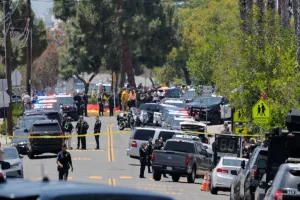
The US authorities have thwarted a major ISIS-inspired terrorist attack on New Year’s Eve in North Carolina, FBI Director Kash Patel said on Friday.

The suspect allegedly planned to storm a grocery store and a fast-food restaurant using knives and hammers.

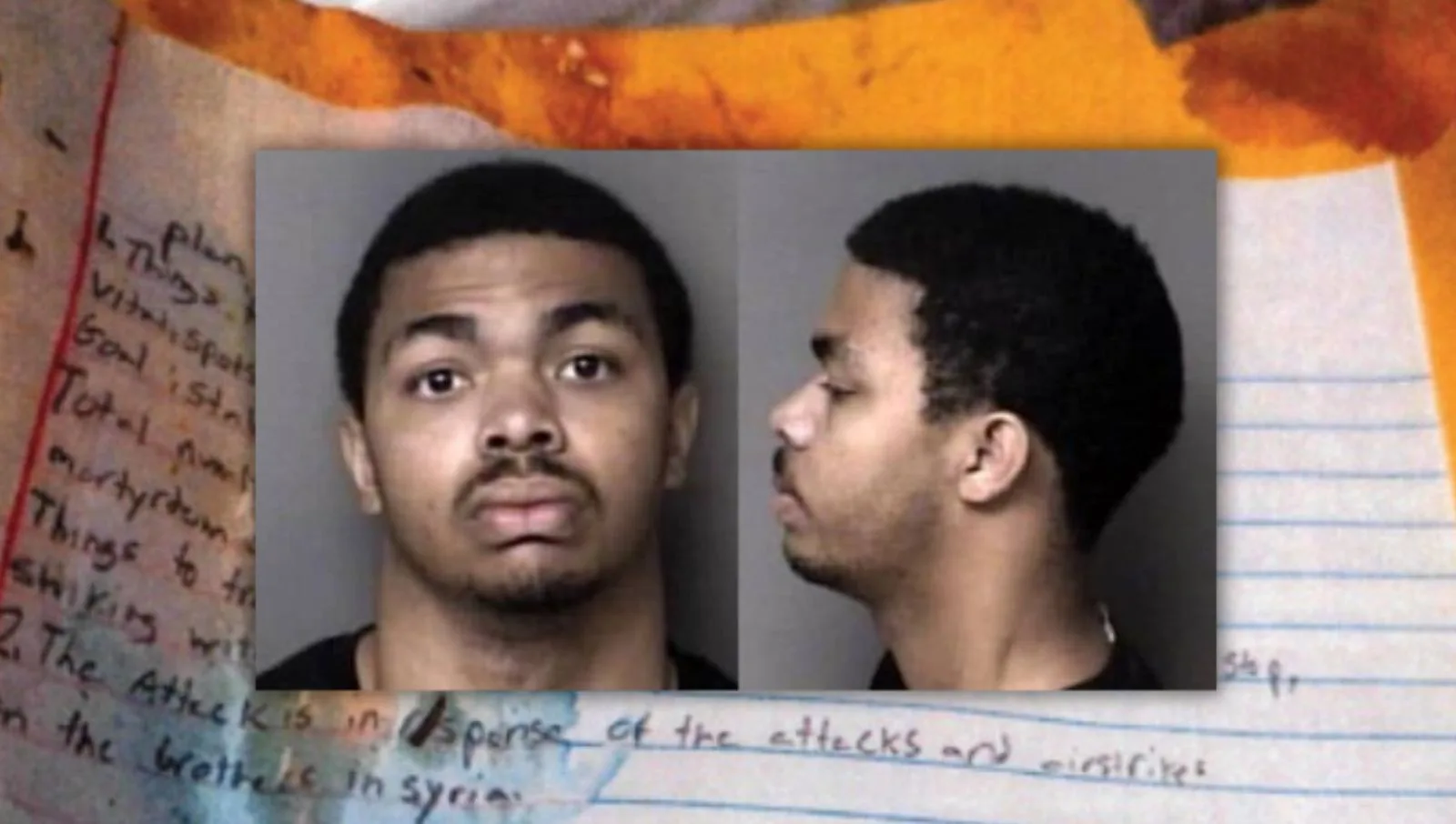
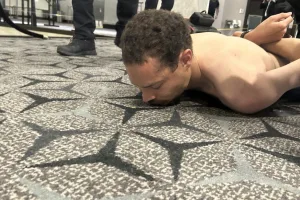
The accused has been identified as Christian Sturdivant, a Mint Hill man who wanted to be an ISIS soldier. He was arrested after a joint operation by the FBI and local law enforcement partners.

“The accused allegedly wanted to be a soldier for ISIS and made plans to commit a violent attack on New Year’s Eve in support of that terrorist group, but the FBI and our partners put a stop to that,” said FBI Director Kash Patel.

John A. Eisenberg, Assistant Attorney General for National Security said that the accused aspired to become a ‘martyr’ for ISIS and was in the final stages of planning a mass-casualty attack on New Year’s Eve.

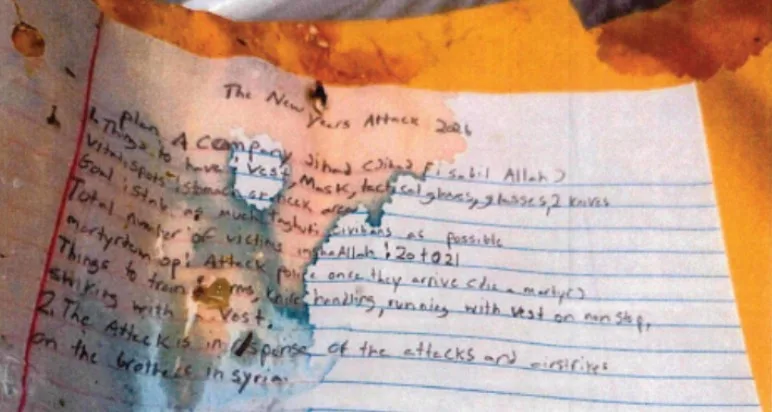
“Notes recovered from his home appear to reflect intent to harm as many people as possible and terrorise the Nation,” Eisenberg stated.

The note was recovered by investigators from Sturdivant’s home.

How US authorities thwarted New Year’s Eve attack?

Undercover cybersecurity investigators identified “threats of extremist behavior” of Sturdivant and thwarted them before they could be carried out.

According to the investigation, Sturdivant made multiple social media posts in support of ISIS, a designated foreign terrorist organization.

In early December 2025, Sturdivant posted an image depicting two miniature figurines of Jesus with the on-screen text that read, “May Allah curse the cross worshipers.”

The post was allegedly consistent with ISIS’s rhetoric calling for the extermination of all non-believers, including Christians, Jews, and Muslims who do not agree with ISIS’s extreme ideology, said a press release by the United States Attorney’s Office.

Sturdivant started communicating with an undercover agent on social media, believing the agent was an ISIS member. He told the agent, “I will do jihad soon,” and called himself “a soldier of the state”.

He also revealed his deadly plan to use firearms along with the knives during the attack.

‘The young should learn their culture’

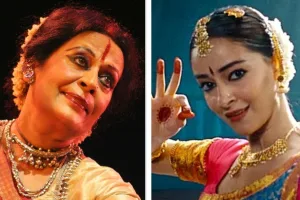
Padma Vibhushan Sonal Mansingh has practiced many dance forms, including Manip uri, Kuchip udi, Odissi, and Bharatanatyam.

Statesman News Service | New Delhi |

Padma Vibhushan Sonal Mansingh has practiced many dance forms, including Manip uri, Kuchip udi, Odissi, and Bharatanatyam. She has been the recipient of many awards, including the Sangeet Natak Akademi Award (1987) and the Padma Bhushan (1992) and Padma Vibhushan (2003), two of India’s highest civilian honours.

She founded the Centre for Indian Classical Dances in 1977. Her choreography is often rooted in Indian mythology though she also explores contemporary topics such as women’s issues and environmentalism. Mansingh was nominated by the President of India to the Rajya Sabha in 2018. This marked a historic moment as she became the first classical dancer to receive this honour. She is currently serving her second term as a trustee at the Indira Gandhi National Centre for the Arts (IGNCA).

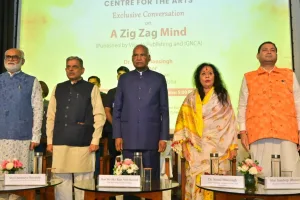
In an exclusive interaction with Surya S Pillai of The Statesman, the Odissi doyen talks about her latest book “A ZigZag Mind”, the stature of Indian performing arts on the global stage, and how the contemporary political class views artists.

Q. You latest book “A ZigZag Mind” was widely praised for its beautiful account of the ‘Guru-Shishya’ (teacher-disciple) parampara, creativity in dance, and the divinity of life itself. How do you feel about it?

A. I feel honoured and am thankful to my readers for the kind feedback. I usually write longhand as there is stream of thoughts, and I do not like the hurdle of technology. Yes, the book talks about the ‘Guru-Shishya’ tradition, which unfortunately is on a decline. India is one of the few countries which still keeps this tradition close to its heart. Apart from this, I have also brought into focus “secularism in the Indian performing arts” in the book. I have talked about how Hindus, Muslims, Parsis, Sikhs, Buddhists, Sufis, maong others have come together to ‘create and worship art’, from time immemorial. I am surprised why people do not talk about it.

Q. Indian art and culture has come a long way. From mere participants to now major influencers, our artists and their craft have made a niche for themselves on the global stage? What role, do you think, the politics of the day play in propagating art?

A. Besides the artists, the political leadership also plays a ists. We have seen many Padma awards being given to many ‘unconventional’ artists from varied backgrounds. When I started off, there were only four dance forms (Bharatanatyam, Kathak, Kathakali, and Manipuri). I am one of the rare art personalities who has lived through various political regimes. Today, art is not just dance and song. There is respect, money, and opportunities for artists across the country. Case in point is the ‘Mera Gaon, Meri Dharohar’ scheme which aims to document the cultural heritage of 6.5 lakh villages of India.

Q. You have been a mentor to many students. How does the young generation, or the Gen Z, view art?

A. For the young today, there is no dearth of opportunities to exhibit their work. From reality shows to OTTs, I am so envious of the range of platforms the youth is getting today. Back in old days, artists depended on print media for the publicity. The Statesman’s art critic Charles Fabri wrote a piece on me titled “New Star on The Horizon”. He made me a star overnight. Regarding the young generation’s attitude towards art, I would say many take it up for pure recreation or as a means of employment. But only those who have the “staying power” can reap the benefits of art. It is all about continuing ‘sadhna’ (practise).

Q. The five-day ‘Festival of New Choreographies – KalaYatra 2026’ is scheduled from January 13-15 and January 28-29 in the nation capital . Can you elaborate on the event?

A. To be really honest, I am a madcap. I am crazy about all aspects of dance. The festival will enter its 49th year in 2026. The non-ticketed event, to be held at Kamani Auditorium, is open to all discerning dance lovers, rasikas, artists and general audiences. KalaYatra, in its true essence, is a continuum of 10 new choreographies, each presented by eminent dance institutions of India and led by their Gurus, showcasing India’s civilizational soul and pride – a timeless cultural expression in motion! I invite all big names from the art world for the festival every year. We will b e presenting many choreographies like Yakshagana, Kathakali, Sattriya from Assam, Kuchip udi from Telangana , Bharatanatyam from Pune, Odissi, among others. For the first time, we also have a group (Rainbow) representing the LGBTQ community from Kolkata.

Q. As an artist, what are the issues that are close to your heart?

A. I have talked about many issues via my art, be it environmental conservation, jail reforms, women empowerment or human rights. But women issues have always been dear to me. I believe ‘women empowerment’ is a misnomer. Women have always been empowered. Right from the Upanishads, Vedas, and even in the freedom struggle, women have been at the forefront. According to me, the women who are toiling hard in the fields are more empowered than the so-called educated ones “caged” in the comforts of their houses. They are more in control of their lives than others who are bogged down by the walls created by the society. So, we cannot and should not lump all women in one basket. Secondly, people, especially the young, are not ‘concerned’ about their traditions. I wish they participate more to learn about their culture and sensibilities.

Viral India

India’s viral moments over the year gone by offer more than a light-hearted rewind of what trended online.

Statesman News Service | New Delhi |

India’s viral moments over the year gone by offer more than a light-hearted rewind of what trended online. Taken together, they reveal how the country now performs, negotiates, and asserts its identity in a hyper-connected public sphere where national confidence is increasingly shaped by visibility rather than validation. Consider the rapturous response to Shah Rukh Khan making his debut at a global fashion event. The excitement was not simply about celebrity glamour. It reflected a long-simmering belief that Indian cultural icons no longer need to wait for permission or timing to be deemed “global”.

The reaction online carried a tone of inevitability rather than surprise – an assertion that such recognition was overdue, not aspirational. A similar sentiment surrounded India’s triumph at the Women’s Cricket World Cup under Harmanpreet Kaur. The victory was celebrated not as a feel-good underdog story but as a corrective moment. For decades, women’s sport in India existed in the margins of public attention. The scale and intensity of the online response suggested a broader cultural shift: sporting excellence, regardless of gender, is now central to national pride rather than an adjunct to it. Perhaps the most telling viral moment, however, came from outside stadiums and red carpets. When Shubhanshu Shukla stepped aboard the International Space Station, the achievement travelled across social media through short videos and informal explanations.

This was not the distant, reverential space triumph of an earlier era. It was intimate, accessible, and deeply personal – science recast as something Indians could emotionally inhabit, not merely applaud. The message was clear: ambition in India today is not just about scale, but about participation. Then there was the chessboard drama involving Gukesh Dommaraju and Magnus Carlsen. The viral spread of that moment owed as much to humour as to victory. Indians did not just celebrate a teenage prodigy beating a global great; they revelled in the collapse of old hierarchies. The memes that followed suggested a society confident enough to laugh at power rather than simply revere it.

What stood out was how quickly these moments crossed class, language, and regional lines. Virality became a rare common currency, briefly aligning disparate audiences around shared emotion, shared humour, and a shared sense of national presence in a fragmented public sphere. What unites these episodes is the way social media has become India’s most democratic national stage. Algorithms now sit alongside institutions in deciding what matters. Moments once filtered through official narratives are instantly reinterpreted, parodied and claimed by the public. Pride is expressed horizontally, through collective participation, rather than vertically through sanctioned symbols. In this sense, India’s viral year was not about distraction but definition. It showed a country increasingly comfortable with its contradictions – glamour and grit, tradition and irreverence, achievement and mockery. The real story is not that these moments went viral, but that India recognised itself in them, and liked what it saw.

Clearer Contours

What the world is entering now is not a sudden crisis, but the moment when a long, uneven transition becomes impossible to ignore.

Statesman News Service | New Delhi |

What the world is entering now is not a sudden crisis, but the moment when a long, uneven transition becomes impossible to ignore. The geopolitical order that shaped the early 21st century did not collapse overnight; it eroded gradually. But in 2025, enough pillars cracked at once for the illusion of continuity to finally give way. For more than three decades, global politics rested on a loose but powerful consensus: open trade would expand prosperity, institutions would arbitrate conflict, and American leadership – even when contested – would ultimately stabilise the system.

That framework survived wars, financial crises, and political shocks. It did not survive 2025. What distinguished last year was not turbulence, but intent. Long-standing norms were not merely bent; they were actively dismantled. Trade rules were weaponised. Alliances were reframed as transactions. Institutions once treated as neutral referees were openly questioned, defunded or bypassed. At home and abroad, executive power expanded at the expense of institutional restraint. By the end of 2025, the message was unmistakable: the old order was no longer being preserved, even rhetorically. As 2026 begins, the consequences of that shift are coming into focus. The world is not reorganising into a clean bipolar rivalry, nor returning to a stable hierarchy. Instead, power is fragmenting across regions, technologies, and economic systems. Military strength, economic weight, and political influence no longer align neatly.

States that once followed are now shaping outcomes in narrower but decisive ways. One defining feature of this new phase is the primacy of economic security. Trade is no longer treated as a shared good, but as a strategic vulnerability. Supply chains are being shortened, duplicated or redirected with geopolitical risk in mind. Governments are embracing industrial policy, even at the cost of efficiency, signalling a permanent shift away from the assumptions that governed globalisation in the 1990s and 2000s. Technology sits at the centre of this transformation. Control over artificial intelligence, semiconductors, data, and critical infrastructure increasingly determines national power. Unlike past industrial competitions, these struggles blur civilian and military domains, making regulation and standards as consequential as hardware and troops. Alliances, too, are changing character.

Commitments once framed around shared values are now assessed through cost, leverage, and reciprocity. This does not mean alliances are disappearing, but that they are becoming conditional and fluid – effective in some moments, fragile in others. For India, 2026 will test strategic autonomy: balancing growth, technology access and security ties while avoiding entanglement in rival blocs without forfeiting leverage. For middle powers, 2026 will be a year of sharper choices. The erosion of rigid blocs offers room for manoeuvre, but neutrality is harder to sustain when economics, technology and security are deeply entangled. The significance of 2026 lies not in dramatic realignments, but in accumulation. As these trends reinforce one another, the emerging order will become recognisable – not as chaos, but as a more competitive, less forgiving world where adaptation replaces consensus as the core test of statecraft.

Throttled city

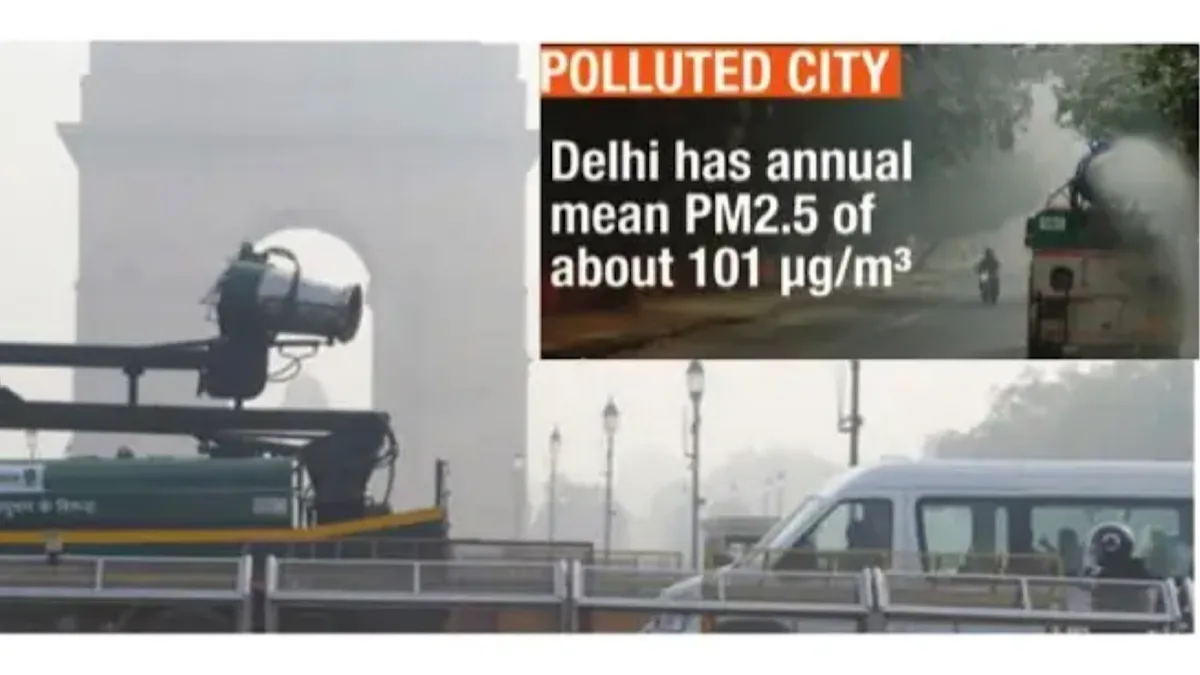
Air pollution in Delhi has reached a critical and almost irreversible stage, turning the city into one of the most polluted capitals in the world and posing a serious threat to public health and environmental sustainability.

DEBAPRIYA MUKHERJEE | New Delhi |

Air pollution in Delhi has reached a critical and almost irreversible stage, turning the city into one of the most polluted capitals in the world and posing a serious threat to public health and environmental sustainability. For a significant part of the year, especially during winter, the air becomes a toxic mix of PM 2.5 and PM 10, vehicular emissions, industrial pollutants, construction dust, and smoke from biomass and stubble burning, often pushing the Air Quality Index into the “severe” category.

Dense smog reduces visibility, disrupts daily life, and leads to a sharp rise in respiratory and cardiovascular illnesses, particularly among children, the elderly, and outdoor workers. I wish to record my deep grievance over the chronic and almost normalized failure of India’s air-pollution governance, where responsibility has been systematically avoided by scientists, politicians, institutions, and society together. Scientific data produced for agencies like the Central Pollution Control Board accumulated year after year, but without moral pressure or unified scientific resistance, it failed to translate into enforceable action. Politically, pollution persists because it is a slow killer without immediate electoral consequences.

Accountability is diluted through blame-shifting between central and state governments, seasonal excuses, and symbolic emergency measures that vanish once winter ends. Though regulatory agencies issue notices, they rarely translate into closures, penalties, or long-term deterrence, especially against powerful industrial and infrastructural violators. This air pollution is treated as an episodic inconvenience and invoked loudly during winter smog or court interventions and quietly ignored when elections, economic optics, or corporate interests take precedence. Successive governments publicly endorse clean-air targets while simultaneously diluting enforcement, extending compliance deadlines, and prioritizing short-term growth narratives over the right to breathe clean air.

Worse still, corruption is not an aberration but an enabling mechanism ~ inspectors vulnerable to pressure or inducement, data manipulation to underreport emissions, and selective enforcement that spares influential polluters while penalizing small, visible actors ~ creating an ecosystem where non-compliance is cheaper than compliance. Nepotism and patronage further corrode the system, as appointments, transfers, and regulatory decisions are influenced by political proximity rather than expertise or integrity, hollowing out agencies that should be science-driven and autonomous.

Even ministries tasked with stewardship, such as the Ministry of Environment, Forest and Climate Change, appear constrained by inter-ministerial politics and industrial lobbies, resulting in fragmented policies that lack accountability, transparency, and measurable outcomes. In addition to these, I want to strongly highlight the deeply flawed approach in which the government spends huge public funds every winter to procure and install pollution-monitoring gadgets, sprinklers, smog towers, mobile vans, and emergency-response equipment, while conspicuously failing to design or implement any serious year-round programme to control air pollution at its source.

This seasonal, optics-driven strategy reduces governance to spectacle: equipment is hurriedly showcased when AQI levels spike and media pressure mounts, only to be forgotten once winter passes, even though emissions from industries, construction, transport, waste burning, and power generation continue unabated throughout the year. Under national frameworks like the National Clean Air Programme, targets are announced but accountability is missing, funding is skewed toward short-term technological fixes rather than sustained regulatory action, and structural reforms – such as strict industrial audits, continuous emission penalties, urban planning corrections, and public transport expansion – are indefinitely postponed.

This pattern reflects a deeper political failure, where the Government of India appears willing to finance visible winter-time interventions that generate headlines, but unwilling to confront powerful polluters or invest consistently in preventive measures that may be politically inconvenient. As a result, public money is repeatedly spent on treating symptoms during a few months of crisis instead of curing the disease through continuous, science-based governance, leaving citizens trapped in an annual cycle of emergency, expenditure, and abandonment, with clean air promised every winter and denied for the rest of the year. In my opinion, control of air pollution in Delhi will never be truly effective unless strategies are framed around the geographical reality of the region, its adverse meteorological conditions, and the actual distribution of pollution sources, with a strong emphasis on preventive, ground-level action.

Delhi’s landlocked location in the Indo-Gangetic Plain, weak wind circulation, frequent temperature inversion, and high winter humidity trap pollutants for long durations, making the city a permanent receptor of both local and regional emissions. Under such conditions, merely organizing seminars, conferences, or laboratory-based research by scientists within pollution control boards, choosing academic safety over public confrontation, may allow pollution to become a research subject rather than a civil-rights emergency but cannot by itself deliver cleaner air. It demands coordinated field action, strict enforcement on roads, construction sites, industries, landfills, and agricultural regions, along with sustained public awareness so that citizens become active participants rather than passive sufferers.

Equally essential is strong political will to take scientifically guided but often unpopular decisions, instead of relying on short-term announcements and media-driven publicity that highlight political visibility rather than real outcomes. It is pertinent to mention here that PM2.5 can be generated within an already polluted atmosphere, and in my view this secondary formation is one of the most underestimated reasons for persistently high pollution levels in cities like Delhi. Even when direct emissions are reduced, polluted air rich in precursor gases such as sulfur dioxide, nitrogen oxides, ammonia, and volatile organic compounds can chemically react in the atmosphere to form new fine particulate matter.

Under conditions common to Delhi ~ high humidity, low wind speed, fog, and temperature inversion – these gases undergo complex photochemical and aqueous-phase reactions, producing secondary PM2.5 such as sulfates, nitrates, and organic aerosols. In such stagnant conditions, pollution effectively “self-generates,” meaning the atmosphere itself becomes a factory for fine particles rather than just a carrier of emissions. This explains why PM2.5 levels often remain critical even when visible sources appear limited or temporarily controlled. This PM2.5 formed within a polluted atmosphere (secondary PM2.5) is often more harmful, or at least equally harmful, than PM2.5 emitted directly from point sources. Secondary PM2.5 is rich in sulfates, nitrates, ammonium, and secondary organic aerosols, which are often more acidic and oxidative.

These particles can trigger stronger inflammatory and oxidative stress responses in the lungs and bloodstream. It is important to note that during the Covid-19 lockdown, when most transport systems and industries were shut down, AQI levels in Delhi often remained high, which clearly demonstrates that air pollution is not controlled by emission sources alone. Secondary formation tends to produce ultrafine and highly hygroscopic particles that grow in humid air, allowing them to penetrate deep into the alveoli and even enter the bloodstream, and in some respects, it can be more dangerous.

Therefore, focusing only on direct emission sources without reducing precursor gases and unfavourable atmospheric conditions fails to address this hidden but powerful mechanism of pollution build-up, reinforcing the need for preventive, year-round control strategies. In my view, unless pollution control strategies are designed around Delhi’s geographical disadvantage and meteorological reality, and focus on permanently lowering baseline emissions rather than reacting after pollution peaks, clean air will continue to remain an unfulfilled promise despite repeated emergency measures.

(The writer is a former Senior Scientist, Central Pollution Control Board)

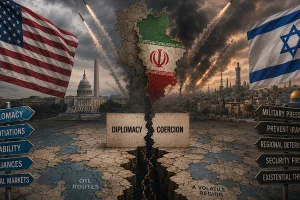
Iranians seek end to “reign of chaos”: Reza Pahlavi thanks US president for support to people

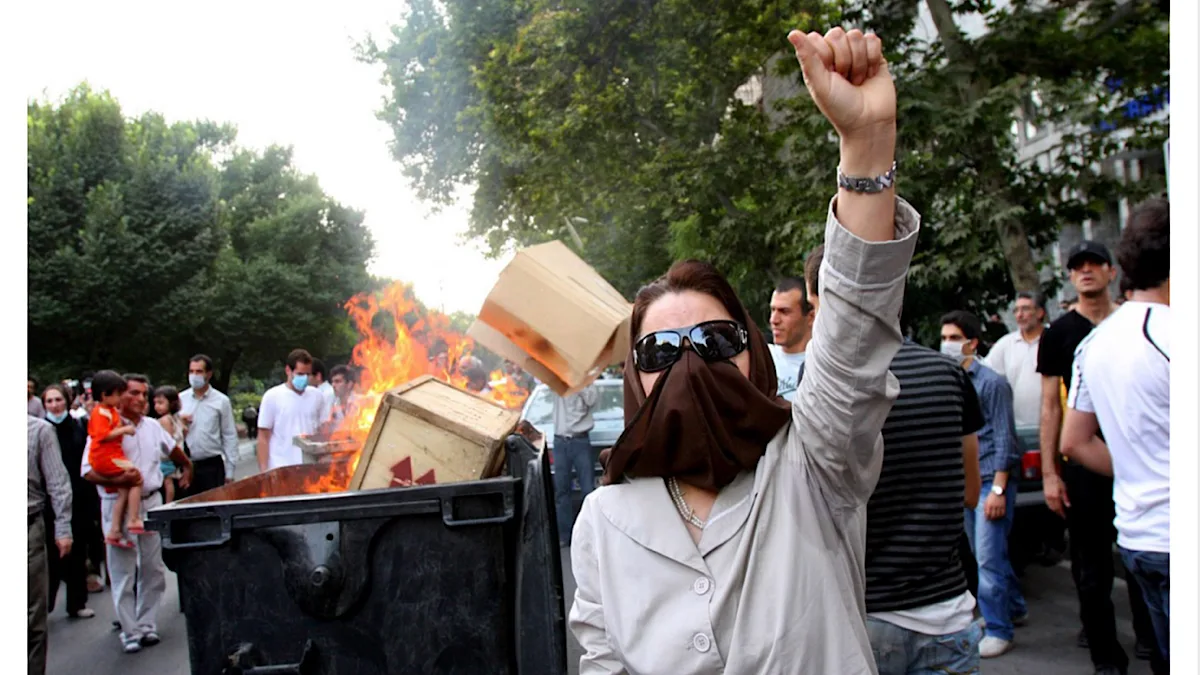
Iran’s former Crown Prince Reza Pahlavi thanked US President Donald Trump for his support of the Iranian people, saying his message had given hope to those protesting against the country’s leadership.

ANI | New Delhi |

Iran’s former Crown Prince Reza Pahlavi thanked US President Donald Trump for his support of the Iranian people, saying his message had given hope to those protesting against the country’s leadership.

He said Iranians are seeking an end to what he called “decades of repression” and are looking to rebuild ties with the United States for peace and stability in the region.
In a post on X, Pahlavi said, “President Trump, thank you for your strong leadership and support of my compatriots. This warning you have issued to the criminal leaders of the Islamic Republic gives my people greater strength and hope–hope that, at last, a President of the United States is standing firmly by their side. As they risk their lives to end this regime’s 46-year reign of chaos and terror, they send me with a responsibility and a message: to seek the relationship Iran once had with America that brought peace and prosperity to the Middle East.”

“I have the plan for stable transition for Iran and the support of my people to get it done. With your leadership of the free world, we can leave a legacy of lasting peace,” he added.

Earlier, US President Donald Trump said that the United States is “locked and loaded” to respond if Iranian authorities use violence against peaceful protesters, as demonstrations over worsening economic conditions spread across multiple provinces in Iran.
In a Truth Social Post, Trump wrote, “If Iran shots and violently kills peaceful protesters, which is their custom, the United States of America will come to their rescue. We are locked and loaded and ready to go. Thank you for your attention to this matter!”
This comes as people in Iran continue to protest against rising prices and economic hardship pouring into the streets across several provinces in Iran, with some protests escalating into fatal confrontations with security forces, CNN reported.
Protesters reportedly clashed with police, hurled stones at officers and torched vehicles, according to Fars News Agency. The outlet alleged that some armed “disturbers” exploited the gatherings. Without offering proof, Fars claimed authorities later seized firearms from several individuals.

Meanwhile, Iranian officials sharply rebuked US President Donald Trump and the Israeli Foreign Ministry for their statements regarding the ongoing protests in the country, warning that any foreign intervention in its internal affairs would be met with a “regrettable response”.
They further asserted that the country’s national security is a “red line” not subject to “adventurous tweets”.

Ali Shamkhani, Political Advisor to the Supreme Leader of the Islamic Revolution and representative of Ayatollah Ali Khamenei on the Defence Council, in a post on X, said that Iran’s national security was a red line and not open to external interference.
He further slammed the US President over his “rescue” call, noting that Iranian citizens were “well familiar” with Americans coming for rescue, citing previous US military actions in Iran and Afghanistan.

The people of Iran are well familiar with the experience of “rescuing” Americans, from Iraq and Afghanistan to Gaza. Every hand of intervention that approaches Iranian Security with excuses will be cut off with a regrettable Response before it arrives. Iran’s national security is a red line, not the subject of adventurous tweets, Shamkhani said.

Bangladeshi player in IPL controversy: ‘We should not let politics come into this,’ says Shashi Tharoor

Tharoor asserted that cricket should not be made to bear the burden of attacks against minorities, including Hindus, in Bangladesh.

Statesman News Service | New Delhi |

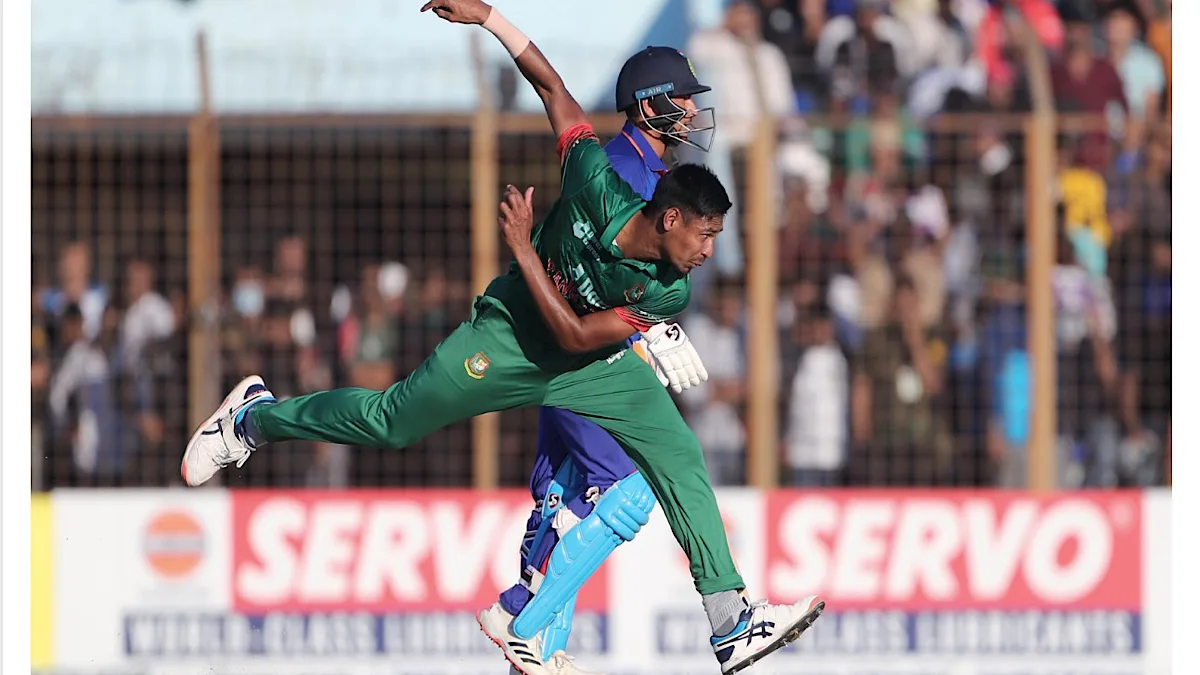
Amid the row over Shahrukh Khan-owned Kolkata Knight Riders (KKR)’s decision to include Bangladeshi cricketer Mustafizur Rahman in their team for the IPL 2026, Congress MP Shashi Tharoor has defended the franchise, saying that it was a purely sporting decision.

Urging not to politicise the issue, Tharoor asserted that cricket should not be made to bear the burden of attacks against minorities, including Hindus, in Bangladesh.

“Cricket should not be made to bear the burden for attacks on minorities in Bangladesh. We should try to insulate some areas from others. We are reaching out to Bangladesh and urging them to do the right thing to protect and look after their minorities, and this messaging must continue,” Tharoor said.

The Congress leader further added that Rahman is a cricketer and has nothing to do with these attacks. “He has not been personally accused of any hate speech or condoning or defending any attacks. Mixing these two things is simply not fair.”

He said that India cannot isolate its neighbours over sporting decisions. “We should not let politics come into this,” Tharoor said.

“If we become a country that isolates all of our neighbours, and say nobody is playing with any of them, how does it do any good? It is purely a sporting decision…We surround Bangladesh on three sides. We cannot isolate them. We have to play with them,” Tharoor added.

The controversy erupted after a spiritual leader named Devkinandan Thakur slammed Shah Rukh Khan for his team’s decision to include Rahman, claiming that the inclusion of a Bangladeshi player in the IPL has hurt the sentiments of Hindus.

However, the BCCI has declined to comment on the issue, saying it has not received any communication from the Government of India directing it to prevent Bangladeshi players from playing in the IPL.

“Let’s not get into this. It is not in our hands. We have not received any communication from the government directing us to prevent Bangladesh players from participating in the IPL… Can’t comment much as of now,” a BCCI source had told news agnecy IANS.

Ukraine: Death toll in Kherson drone attack rises to 28

The number of civilians killed in a drone attack on a cafe and a hotel in the Kherson Region of Ukraine’s Khorly has climbed to 28, Governor Vladimir Saldo said, as quoted by TASS.

ANI | New Delhi |

The number of civilians killed in a drone attack on a cafe and a hotel in the Kherson Region of Ukraine’s Khorly has climbed to 28, Governor Vladimir Saldo said, as quoted by TASS.

“Three people died in the hospital, so the number of those killed now stands at 28. More than 100 people were in the cafe at the time of the attack, and over 60 were affected,” Saldo said.
Saldo said the attack took place on January 1, when civilians had gathered to mark the New Year. He said 31 people, including five children, were hospitalised after the incident, TASS reported.

Earlier, Ukrainian President Volodymyr Zelenskyy claimed that two missiles from Moscow struck the city of Kharkiv.
In a post on X, Zelenskyy condemned the strike by Russia, saying it targeted a residential area and caused significant damage.
“A heinous Russian strike on Kharkiv. Preliminary reports indicate two missiles struck an ordinary residential area. One of the buildings has been severely damaged. A rescue operation is currently underway, with all necessary services on site,” Zelenskyy said.
He also noted that the exact number of casualties is yet “unknown”.
While Russia’s Defence Ministry has denied reports of a strike on the Ukrainian city of Kharkiv, calling the claims false, Sputnik reported.

“Information about the alleged strike on the city of Kharkov by the Russian Armed Forces on January 2 of this year is untrue,” the ministry said in a statement.
The ministry said Russian armed forces neither planned nor carried out any missile or air strikes within the city on January 2, Sputnik reported.
“The Kiev regime’s claims about the alleged ‘Russian strike on Kharkov’ are intended to distract international attention from the brutal terrorist attack committed by the Ukrainian armed forces against civilians in the settlement of Khorly in the Kherson Region overnight into January 1,” the statement read.

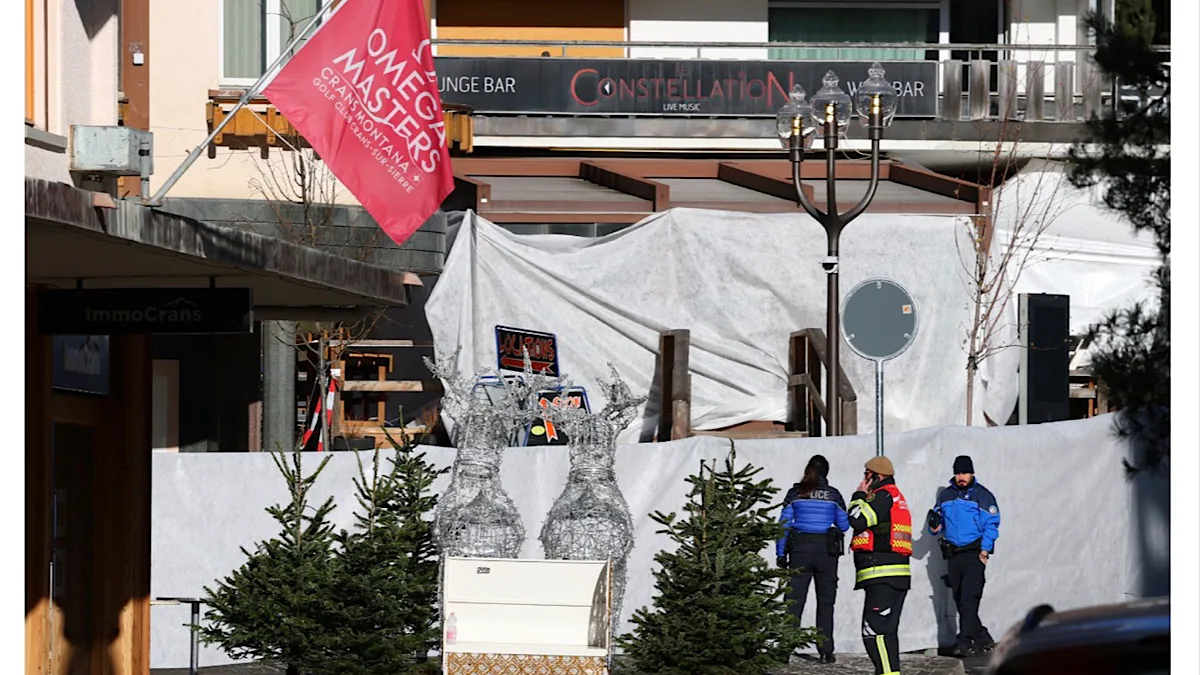
Swiss bar fire in Crans-Montana likely caused by champagne sparklers: Officials

Sparklers attached to champagne bottles and held too close to the ceiling likely sparked the deadly fire at the “Le Constellation” bar in Crans-Montana, Switzerland, during a New Year’s party, killing at least 40 people, CNN quoted officials as saying.

ANI | New Delhi |

Sparklers attached to champagne bottles and held too close to the ceiling likely sparked the deadly fire at the “Le Constellation” bar in Crans-Montana, Switzerland, during a New Year’s party, killing at least 40 people, CNN quoted officials as saying.
The blaze reportedly spread rapidly due to a flashover, and Swiss prosecutors have opened an investigation into possible criminal responsibility.

Earlier, at a press conference in Crans-Montana, Valais Cantonal Police Commander Frederic Gisler said authorities responded swiftly after a fire was reported at a bar in the area.
According to Gisler, smoke was first seen coming from the bar in the centre of the Swiss ski resort at around 1:30 am. Moments later, a witness contacted the emergency call centre to report the incident. A red alert was immediately issued to mobilise firefighting services, he added.

The first teams from the Crans-Montana intercommunal police and the gendarmerie reached the scene at 1:32 am, and were soon joined by additional emergency responders, CNN reported.
“Their initial assignment was obviously to take care of the victims, to provide them emergency help,” Gisler said. He noted that firefighters managed to extinguish the blaze quickly. “Following that, the initial investigations were able to start,” he said.
Reception centres were later set up to assist those affected by the incident, and a helpline was launched at 4:14 am to provide information and support to families.
“All of the injured people had received care by shortly after 5 am, thanks to this widescale mobilisation,” CNN quoted Gisler as saying.

Families of those who lost their lives in the fire at Crans-Montana are facing a painful wait, as local authorities said it could take several days to identify all of the approximately 40 victims, CNN reported.
“Currently and in the days to come, the priority will be identifying the people who have died so that their bodies can be returned quickly to their families,” Gisler said in a press conference.

‘Believe in looking from perspective of cricket, not politics’: Bangladesh Cricket Board president on demands for excluding Mustafizur Rahman from IPL

Bangladesh Cricket Board (BCB) president Aminul Islam Bulbul on Friday emphasised the cricketing links with India amid demand from a Shiv Sena (UBT) leader that the neighbouring country’s cricketer Mustafizur Rahman should not be allowed to play in IPL in view of violence against minorities in Bangladesh.

ANI | New Delhi |

Bangladesh Cricket Board (BCB) president Aminul Islam Bulbul on Friday emphasised the cricketing links with India amid demand from a Shiv Sena (UBT) leader that the neighbouring country’s cricketer Mustafizur Rahman should not be allowed to play in IPL in view of violence against minorities in Bangladesh.

He said the BCB believes in viewing this issue from a cricket perspective.
“We will monitor the entire matter until the end, because we are people of cricket. We believe in looking at this issue from the perspective of cricket, not politics,” Aminul Islam Bulbul told ANI.

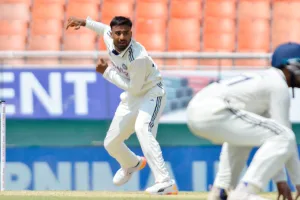
Bangladesh pacer Mustafizur Rahman was picked by KKR for the IPL 2026 season. Rahman was picked up by the Kolkata-based franchise for Rs 9.20 crore at the IPL auction in December last year.

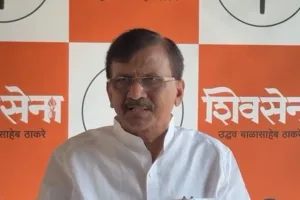
Shiv Sena (UBT) spokesperson Anand Dubey is among the political leaders who have spoken against the participation of Bangladesh players in the IPL.
“Bangladeshi players shouldn’t be allowed to play on Indian soil in the IPL. Pakistani and Bangladeshi players should be prohibited….Shah Rukh Khan should immediately remove that Bangladeshi cricketer from his team… If he does not do this even after all this uproar, it will prove that, while he lives in this country and earns money here, he doesn’t understand this nation’s sentiments,” Dubey had alleged.
The BCB president told ANI over the phone from Sylhet that IPL is not an ICC cricket event but a domestic event.

“Only one player from Bangladesh is on the Kolkata Knight Riders roster: Mustafizur Rahman. So we will see what happens until the very end; we will monitor it till the end. We always encourage the game of cricket,” he said.

“India is our neighbouring country, and we have a very good cricketing relationship with them–a very good cooperative relationship in cricket,” he added.
Kolkata Knight Riders (KKR) made a strong statement at the Indian Premier League (IPL) 2026 mini-auction, led by the marquee signings Cameron Green, Matheesha Pathirana and Mustafizur Rahman. They also added depth with Finn Allen, Rachin Ravindra and returning players Tim Seifert and Rahul Tripathi.

BJP, TMC unleash early campaign blitz in north Bengal

With the New Year ushering in the crucial Assembly election year, the political temperature in North Bengal has begun to rise. Sensing the high electoral stakes, both the Bharatiya Janata Party (BJP) and the ruling Trinamul Congress (TMC) have stepped up political mobilisation across the region, signalling the onset of an early and intense campaign battle for 2026.

Statesman News Service | Kolkata |

With the New Year ushering in the crucial Assembly election year, the political temperature in North Bengal has begun to rise. Sensing the high electoral stakes, both the Bharatiya Janata Party (BJP) and the ruling Trinamul Congress (TMC) have stepped up political mobilisation across the region, signalling the onset of an early and intense campaign battle for 2026.

Senior BJP leader and film actor Mithun Chakraborty has taken the lead in spearheading the party’s outreach in North Bengal. Campaigning under the banner of “Parivartan Sankalpo Sabha”, Chakraborty began his tour from Cooch Behar and proceeded through Jalpaiguri, arriving in Siliguri on Thursday. The campaign is aimed at energising grassroots workers, consolidating organisational strength and sharpening the BJP’s poll narrative in the region.

Continuing the BJP’s offensive, Leader of Opposition Suvendu Adhikari held a Parivartan Sankalpo Sabha at Chanchal in North Malda on Friday. Addressing the gathering, Adhikari launched a sharp attack on the Trinamul Congress and cited the 2024 Lok Sabha election results to bolster his claims.

“TMC failed to manage a lead in even a single Assembly segment out of the 12 in Malda. In fact, the people of Malda have rejected TMC since 2011,” Adhikari claimed.

Escalating his criticism, the Leader of Opposition referred to the recent killing of Dipu Das in Bangladesh and drew comparisons with incidents in Mothabari in Malda and Dhulian in Murshidabad during protests against the Waqf Amendment Bill. Adhikari accused Chief Minister Mamata Banerjee of allowing riots and attacks on Hindus, alleging that such incidents were being tolerated to fuel polarisation ahead of the Assembly elections.

Meanwhile, the ruling TMC has also begun firming up its political roadmap for North Bengal. Party’s national general secretary Abhishek Banerjee is expected to formally kick off his campaign from Cooch Behar, tentatively on 13 January, indicating an aggressive counter-outreach by the ruling party.

Adding further momentum to the political churn, Prime Minister Narendra Modi is tentatively scheduled to visit Malda on 18 January to address a central rally. In anticipation of the Prime Minister’s visit, preparations are already underway in North Malda. Simultaneously, the Darjeeling district administration and senior political leaders have begun parallel preparations to organise a programme of Chief Minister Mamata Banerjee in Siliguri around mid-January.

North Malda MP Khagen Murmu confirmed that groundwork has begun to organise the Prime Minister’s rally at a suitable venue within the North Malda parliamentary constituency. Speaking to reporters, Murmu said the rally is being planned with a clear focus on the upcoming Assembly elections and the BJP’s objective of strengthening its position in Malda.

Malda holds strategic political significance as the southernmost district of North Bengal, bordering South Bengal and Murshidabad district along the banks of the Ganges. The region remains electorally sensitive due to the presence of several Muslim-dominated Assembly segments under the South Malda parliamentary constituency and in neighbouring Murshidabad.

Of the 12 Assembly segments in Malda district, the BJP won five seats in the 2021 Assembly elections but failed to retain the Hindu-dominated Baishnabnagar seat in South Malda. The TMC, on the other hand, secured seven seats by defeating both the Congress and the BJP, including victories in traditionally Congress-dominated areas. Notably, the ruling party won four seats by fielding Hindu candidates, underlining its calibrated electoral strategy in the district.

Against this backdrop, the BJP is aiming to significantly improve its tally in Malda and has decided to launch its focused campaign with a high-profile rally addressed by Prime Minister Modi.

The TMC, meanwhile, appears to be countering the BJP’s narrative with a different political and developmental pitch. Chief Minister Mamata Banerjee has decided to lay the foundation stone for a Mahakal Temple in Siliguri, along with a conference centre envisioned as a venue for global summits.

On Friday, Siliguri Mayor Goutam Deb, Siliguri Jalpaiguri Development Authority Chairman Dilip Dugar, along with senior officials from the district administration, police and HIDCO, visited the site earmarked for the project.

According to official sources, the Chief Minister may visit Siliguri in mid-January to lay the foundation stone. Mayor Goutam Deb said preparatory work has already begun to ready the plot of land for the Chief Minister’s programme.

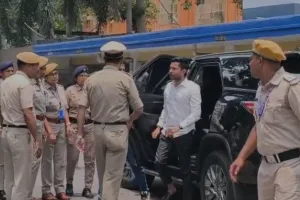
Three days before ECI hearing, woman found dead on railway tracks

A 57-year-old woman is said to have panicked after being summoned by the Election Commission of India (ECI) for a Special Intensive Revision (SIR) hearing, and was found dead near the railway tracks close to Burdwan Junction railway station on Thursday.

Statesman News Service | Kolkata |

A 57-year-old woman is said to have panicked after being summoned by the Election Commission of India (ECI) for a Special Intensive Revision (SIR) hearing, and was found dead near the railway tracks close to Burdwan Junction railway station on Thursday.

The deceased has been identified as Fulmala Pal, a resident of Roynagar under the Bardhaman (Uttar) Assembly constituency, near the district headquarters. Her body, badly mutilated, was recovered from beside the tracks. According to the Government Railway Police (GRP), she was hit by a running train and the incident is being treated as a case of suicide.

Pal was scheduled to appear before the ECI for a hearing on 5 January. In the draft electoral roll, her name appeared in Part No. 285 with serial number 293. While neither her husband nor her son was summoned, a notice was sent to her residence directing her to attend the hearing.

Following the incident, the Trinamul Congress (TMC) staged protests, alleging that the EC’s “arbitrary” notice was responsible for the woman’s death. Party workers, led by local MLA Nishith Malik and the district president of the party’s youth wing, Rasbehari Haldar, placed the body on the road and held a protest for nearly an hour.

Addressing the agitators, Malik alleged: “The Election Commission is arbitrarily issuing notices to deliberately harass and put mental pressure on our party workers.” He further claimed that the woman was unable to cope with the mental stress and that the EC must take responsibility for her death.

The deceased woman’s son-in-law is an elected karmadhyaksha of the TMC-run Burdwan-II Panchayat Samiti.

Following instructions from TMC national general secretary Abhishek Banerjee, state minister Swapan Debnath visited the bereaved family to offer his condolences.

Confused trade unions seek W Burdwan DM’s intervention on SIR

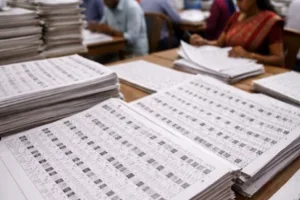
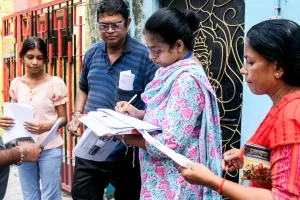
In the wake of the ongoing Special Intensive Revision (SIR) of electoral rolls, authorities of nationalised steel plants have issued fresh circulars asking workers to submit declarations, sharing details from the electoral rolls, including confirmation for deletion of their or their spouse’s names if enrolled in any Assembly constituency earlier.

Statesman News Service | Kolkata |

In the wake of the ongoing Special Intensive Revision (SIR) of electoral rolls, authorities of nationalised steel plants have issued fresh circulars asking workers to submit declarations, sharing details from the electoral rolls, including confirmation for deletion of their or their spouse’s names if enrolled in any Assembly constituency earlier.

The Durgapur Steel Plant (DSP), under the Steel Authority of India Limited (SAIL), has issued such circulars and appointed nodal officers in each service shop of the plant for the purpose. The declarations, referred to in DSP circular No. DSP/PERS-NW/SIR/2025/2918 as Format-B, along with another declaration in Format-A1 authorised by the nodal officers and the respective heads of departments, are to be submitted to a higher nodal authority for further action.

The declarations also require personal details of the workers’ spouses. Similar instructions, signed by Anjali Rana, Senior Manager (HR), SAIL, have been forwarded to workers and executives of IISCO Steel Plant, Burnpur, and Alloy Steels Plant, Durgapur.

A Chatterjee, Assistant General Manager (HR-NW) of DSP, issued the circulars on 24 December to nearly 6,000 workers and executives of the plant, asking for submission within a week. However, Smita Pandey, the Election Commission’s Roll Observer for West Burdwan, expressed ignorance about the move by the SAIL units. Speaking to The Statesman, she said: “It is possibly an instruction to PSUs from the EC office. We were not aware of this.”

The move has triggered concern among functioning trade unions, which fear a parallel SIR being conducted by the SAIL authorities. The CITU has sought clarification from the DSP management, while the Congress-affiliated INTUC has approached the District Magistrate of West Burdwan seeking intervention.

Debesh Chakraborty, district president of the Congress, said: “We have brought the matter to the notice of the DM, raising doubts over whether DSP can compel employees to provide such personal details by floating a parallel SIR, especially when workers and their family members have already submitted SIR enumeration forms and hearings are still in progress.”

The circular issued by AGM A Chatterjee states that it is “in accordance with the instructions of the Chief Electoral Officer, West Bengal”. Notably, the Chittaranjan Locomotive Works under the ministry of railways also issued a separate ‘urgent’ circular on 26 December seeking similar details for sanitisation under the SIR.