Logo

Chicken’s Neck

It is not just elements on the fringes of the Bangladesh establishment who have threatened to exploit India’s vulnerability in the Siliguri corridor; some months ago, interim leader Mohammed Yunus had hinted at this weakness.

Statesman News Service | New Delhi |

It is not just elements on the fringes of the Bangladesh establishment who have threatened to exploit India’s vulnerability in the Siliguri corridor; some months ago, interim leader Mohammed Yunus had hinted at this weakness. While there have been angry ~ and predictable ~ reactions to these statements in India, including a reference to Bangladesh’s similar vulnerabilities by the Assam chief minister, these appear to miss the point.

Attempts to target the Chicken’s Neck will likely be made by non-state actors, and not the Bangladeshi state, and India’s response cannot be seen to be disproportionate. Therefore, before training its guns eastwards, the Indian security establishment ~ which must include the states of West Bengal, Bihar, and Assam ~ needs to take steps internally to fortify India’s position. The Siliguri corridor poses a unique security challenge, straddles as it does several districts of West Bengal, in addition to sensitive districts of Bihar. This in effect means that those bent on mischief can easily exploit this administrative ambiguity to hop from one of these districts to the other to evade the law.

Add to this the challenge posed by their complex demographics and the activities of radical elements in these districts ~ those who may already be here and those who can easily slip in from Bangladesh ~ and the situation begins to look increasingly alarming. In effect, any insurgent action in this area can quickly spiral out of control, especially if the local population is ambivalent, or some within its ranks choose to be complicit. It does not help that local leaders are allowed to create dangerous templates and get away with outrageous assertions such as the construction of a Babari mosque in Murshidabad, a proposition that blithely ignores the fact that Babar left this world nearly 500 years ago.

Thus, if India’s answer to an assault on the Siliguri corridor is to be meaningful, it must make district and state lines irrelevant to the extent they do not impede a strategic response. The next challenge to be considered is that the Army’s Eastern Command maintains a core headquarter at Panagarh, near Durgapur. Moving reinforcements from Panagarh to the Siliguri corridor will involve crossing the Ganga at Farakka. If Murshidabad and Malda districts, both contiguous to Bangladesh, are enveloped in strife, troop movement would be affected, forcing a long detour via Bhagalpur in Bihar. An alternate river crossing must be planned, and quickly. But above all this, the affected states and their leaders will have to rise above partisan politics to ensure that any threat to the Siliguri corridor is countered in measured and meaningful ways.

If this entails sacrificing some political ground, or even acquiescing to a unified command structure, so be it. The alternative is to allow internal fault lines to overpower national interests. Experienced leaders are at the helm in all three states, and at the Centre. They need to work together, and not at cross purposes, to ensure that any misadventure by elements in Bangladesh, or by their patrons elsewhere, is effectively thwarted.

‘Act of war, violation of international law’: NYC Mayor Mamdani condemns US capture of Venezuela’s President

New York City Mayor Zohran Mamdani has strongly criticised the United States’ capture of Venezuelan President Nicolás Maduro and his wife, Cilia Flores, calling it an “act of war” and a “violation of international law.”

Statesman News Service | New Delhi |

New York City Mayor Zohran Mamdani has strongly criticised the United States’ capture of Venezuelan President Nicolás Maduro and his wife, Cilia Flores, calling it an “act of war” and a “violation of international law.”

In a post on X, Mamdani said he had been briefed on the US military operation that led to the arrest of the Venezuelan leader and his wife in Caracas, and their subsequent transfer for imprisonment in federal custody in New York City. He said that the move could have far-reaching consequences, including for Venezuelans living in the US.

“I was briefed this morning on the U.S. military capture of Venezuelan President Nicolas Maduro and his wife, as well as their planned imprisonment in federal custody here in New York City. Unilaterally attacking a sovereign nation is an act of war and a violation of federal and international law,” Mamdani said.

The New York City mayor added that the action amounted to a “blatant pursuit of regime change” and stressed that its impact would be felt not only abroad but also domestically. “This does not just affect those overseas. It directly impacts New Yorkers, including tens of thousands of Venezuelans who call this city home,” he said, adding that his administration’s priority was ensuring the safety of all residents. Mamdani said city authorities would continue to monitor the situation and issue relevant guidance as needed.

Venezuela crisis

President Maduro and First Lady Cilia Flores were captured in Caracas during a joint operation involving US law enforcement agencies and intelligence services, and were later flown out of Venezuela.

Former US President Donald Trump claimed that Maduro and Flores have been indicted in the Southern District of New York on charges related to alleged drug trafficking and narco-terrorism conspiracies, and would face trial in the United States.

He said, “No nation in the world could achieve what America achieved yesterday or frankly, in just a short period of time. All Venezuelan military capacities were rendered powerless as the men and women of our military, working with US law enforcement, successfully captured Maduro in the dead of night.”

Trump said, “It was dark, and it was deadly, but he was captured along with his wife, Cilia Flores, both of whom now face American justice. Maduro and Flores have been indicted in the Southern District of New York.”


Nicolas Maduro, his wife land in New York after US military capture

The plane carrying Venezuelan President Nicolas Maduro and his wife, Cilia Flores, has landed at Stewart Air National Guard Base in New York on Saturday (local time) following their capture in a large-scale US military strike in Caracas, Venezuela.

ANI | New Delhi |

The plane carrying Venezuelan President Nicolas Maduro and his wife, Cilia Flores, has landed at Stewart Air National Guard Base in New York on Saturday (local time) following their capture in a large-scale US military strike in Caracas, Venezuela.

Venezuela’s President Nicolas Maduro and his wife, Cilia Flores, were captured in Caracas and flown out of the country in a joint operation involving intelligence agencies and US law enforcement.

Trump on Saturday (local time) said that Maduro and his wife, who were captured in Caracas during a US military operation, have been indicted on charges of alleged “drug trafficking and narco-terrorism conspiracies” in the Southern District of New York, and will face trial.

He said that American forces, working with law enforcement agencies, captured Maduro and his wife in a night-time operation.
While addressing a press conference in Florida, Trump said, “No nation in the world could achieve what America achieved yesterday or frankly, in just a short period of time. All Venezuelan military capacities were rendered powerless as the men and women of our military, working with US law enforcement, successfully captured Maduro in the dead of night.”

“It was dark, and it was deadly, but he was captured along with his wife, Cilia Flores, both of whom now face American justice. Maduro and Flores have been indicted in the Southern District of New York,” he said.
Trump said that Maduro and his wife “will soon face the full might of American justice and stand trial on American soil” for their alleged role in drug trafficking, adding that they are currently being taken to New York, with authorities to decide later whether the trial will be held in New York or Florida.

“We will make the people of Venezuela rich, independent, and safe. The illegitimate dictator Maduro was the kingpin of a vast criminal network responsible for trafficking colossal amounts of deadly and illicit drugs into the United States. Maduro and his wife will soon face the full might of American justice and stand trial on American soil. Right now, they’re on a ship that will be heading to, ultimately, New York. And then a decision will be made, I assume, between New York and Miami or Florida,” he said.

Strategic Shrug

US President Donald Trump’s decision to publicly shrug off China’s latest military drills around Taiwan may sound reassuring, but it masks a far more consequential reality unfolding in the western Pacific.

Statesman News Service | New Delhi |

US President Donald Trump’s decision to publicly shrug off China’s latest military drills around Taiwan may sound reassuring, but it masks a far more consequential reality unfolding in the western Pacific. These exercises are not background noise, nor are they mere muscle-flexing for domestic consumption. They are part of a carefully sequenced strategy by China to redefine the military and psychological boundaries around Taiwan ~ incrementally, persistently, and without triggering outright war.

The drills, which simulate blockade conditions and integrate air–sea coordination, reveal Beijing’s evolving preference for coercion over confrontation. Rather than a dramatic invasion scenario, China appears intent on normalising constant pressure: crossing the median line, saturating Taiwan’s airspace, and forcing Taipei to remain on perpetual alert. Over time, this approach erodes readiness, drains resources, and conditions both regional actors and global audiences to accept a more militarised status quo. What makes this moment especially volatile is the absence of clear red lines.

As China pushes incrementally and the United States signals restraint through tone rather than policy, deterrence becomes blurred. In such grey zones, signalling matters as much as firepower ~ and misreading intent can be as dangerous as provocation itself. President Trump’s remarks, rooted in personal diplomacy and historical precedent, risk misreading this shift. While it is true that China has conducted exercises in the region for decades, the scale, frequency and operational sophistication have changed markedly. The assumption that a cordial relationship with Chinese President Xi Jinping can meaningfully influence Beijing’s approach to Taiwan overlooks how central the issue is to China’s national narrative. Reunification is framed not as a policy choice but as a historical obligation ~ one that transcends individual leaders and transactional bargains.

The drills are also a pointed response to recent US arms sales, signalling that Beijing views military assistance to Taiwan as crossing from deterrence into provocation. Yet, the real audience extends beyond Taipei. These manoeuvres are designed to probe Washington’s resolve and expose ambiguity in its commitments. Mixed signals ~ arming Taiwan while downplaying Chinese pressure ~ create strategic uncertainty that benefits the side willing to push boundaries. For Taiwan, the dilemma is acute. Its leadership must project calm and restraint while preparing for worst-case scenarios. Overreaction risks escalation; complacency invites encroachment. The island’s greatest challenge may not be a sudden assault, but the slow recalibration of norms that makes extraordinary pressure seem routine. The broader danger lies in miscalculation.

When one side treats drills as routine and the other treats them as rehearsal, the margin for error narrows. History shows that conflicts often erupt not from deliberate intent, but from accumulated misunderstandings layered over time. President Trump’s nonchalance may play well domestically, but geopolitics is not governed by personal chemistry alone. In the Taiwan Strait, power is being exercised quietly, persistently, and with long memory. Ignoring that reality does not reduce the risk ~ it merely postpones the reckoning.

ECI says ‘logical discrepancies’ in voter list drop by over 41 lakh

The Election Commission on Friday said the number of “logical discrepancies” detected in the electoral rolls of West Bengal during the ongoing Special Intensive Revision (SIR) has come down significantly, from 1.36 crore to 94.49 lakh, a reduction of 41.51 lakh cases.

Statesman News Service | Kolkata |

The Election Commission on Friday said the number of “logical discrepancies” detected in the electoral rolls of West Bengal during the ongoing Special Intensive Revision (SIR) has come down significantly, from 1.36 crore to 94.49 lakh, a reduction of 41.51 lakh cases.

According to the commission, logical discrepancies refer to anomalies in voter data such as mismatches in names, abnormal age gaps between voters and their parents, or inconsistencies involving grandparents’ ages.

Earlier, the commission had initially pegged the number of such discrepancies at 1.67 crore, which was later revised to 1.36 crore.

The latest revision brings the figure down further, with officials indicating that the number may reduce even more after the hearing process is completed.

Breaking up the revised figures, the commission said cases where one individual has been linked with six voters stand at 23 lakh.

Instances of name mismatches account for 51 lakh cases.

Around 4.74 lakh voters have an age gap of less than 15 years with their fathers, while 8.41 lakh cases show a gap of more than 50 years.

Discrepancies involving the age difference between voters and their grandfathers have been found in about 3 lakh cases.

The issue of logical discrepancies recently triggered a political row after TMC national general secretary Abhishek Banerjee questioned the manner in which the lists were released.

He alleged that the commission published the draft electoral roll and the logical discrepancy list on the same day, without issuing any formal press release.

“A list called ‘logical discrepancies’ was floated in the air. There was no official press release. It was shared on WhatsApp. We have screenshots. It claims that 1.36 crore voters have spelling errors in names or age-related discrepancies with their fathers,” Banerjee said.

“By what magic did the commission publish both the draft roll and the logical discrepancy list on the same day?” he had asked.

Following this, the TMC escalated the matter, demanding the publication of the complete discrepancy list after meeting the state Chief Electoral Officer (CEO).

Meanwhile, after “no mapping,” the commission has begun preparations to summon voters for hearings under “progeny mapping.”

Progeny mapping refers to cases where more than six voters share the same father’s name, suggesting that a single guardian has submitted multiple enumeration forms as the parent of several voters.

Sources said there are instances where as many as 100 voters share the same father’s name.

Around 24 lakh voters fall under the progeny mapping category. The commission has prepared notices to call them for hearings, and the process of serving the notices is set to begin shortly.

Abhishek answers to tea garden workers’ issues

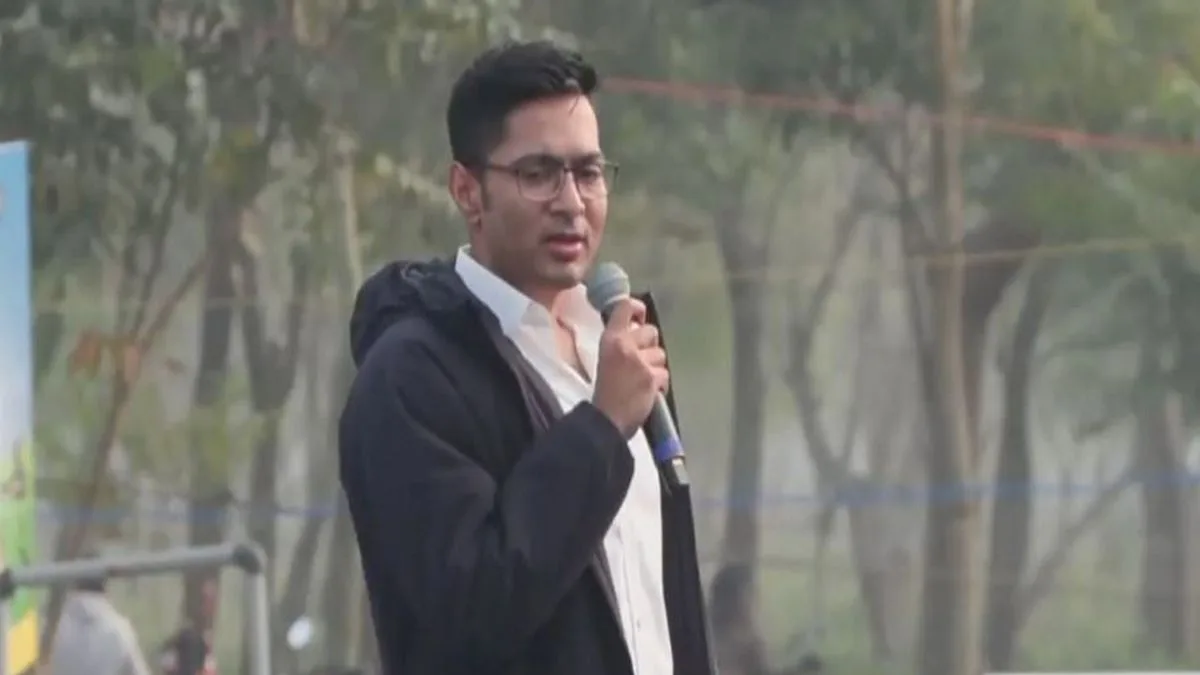
Trinamul national general secretary Abhishek Banerjee Today met with tea garden workers, a first of its kind.

Statesman News Service | Kolkata |

Trinamul national general secretary Abhishek Banerjee Today met with tea garden workers, a first of its kind.

In the meeting, Abhishek directly listened to the grievances of the garden workers and they got the opportunity to get their problems addressed after filling a form, where they shared their details.

Ahead of polls, this is a direct outreach by Abhishek and TMC for the benefit and welfare of tea garden workers.

Reeta Terwa said that her husband, the only earning member of the family, works as a labourer in Dubai. He neither has money nor time to come back. The BLO is saying that his name will be removed from the voter list.

Abhishek said: No one’s name can be forcibly removed from the voter list. If someone lives outside and cannot come back because it takes time and money, the most important thing to understand is that if your name is already in the electoral roll, the Election Commission of India cannot delete it forcibly. At the same time, if you are living abroad with a passport and are working or studying on a visa, you should fill Form 6A at the consulate along with copies of your passport and visa, and send it by mail. If required, you can also submit a copy separately to the Election Commission, the ERO, or the DO. If any BLO is saying that they will delete the name, you should file a complaint against that BLO with the ERO. This is unconstitutional.”

When Suresh Turi of Madhu Tea Estate, Alipurduar district asked about not receiving land patta (title deed), Abhishek said: “Please have a little more patience. If the government has assured you, you will definitely receive the patta. Every genuine issue will be raised by our trade union before the management. It is our responsibility to stand by the workers and help those who need support, according to our capacity.”

After ED, now police attacked in Sandeshkhali, 8 arrested

The West Bengal Police personnel were attacked in North 24-Parganas district’s Nazat police station area while trying to stop illegal construction on a plot of land, the police said on Saturday.

Statesman News Service | Kolkata |

The West Bengal Police personnel were attacked in North 24-Parganas district’s Nazat police station area while trying to stop illegal construction on a plot of land, the police said on Saturday.

Several police officers were injured after locals hurled bricks and stones at them and a police vehicle was also vandalised.

As of now, eight people have been arrested in connection with the incident.

After the Enforcement Directorate (ED), it was the turn of the state police to face the heat of locals.

Musa Molla, an alleged Trinamul Congress activist, according to police sources , was allegedly found involved in illegal construction letting salt water into other’s lands.

A suit was filed in the court against the incident. The court had asked the local police station to clamp Sec 144 on the said land and ban any kind of activity till further order, which was put in place.

But what according to police, Musa continued with his illegal act defying the court order and hence the Rajbari police station had served notice on him to depose before the police station for interrogation.

After Musa failed to appear at the police station, a team from the Rajbari PS was sent to take him to the police station for interrogation on Friday night.

This was when an alleged attack on the police by a group of his aides was launched to get him free from police. In the process, a crowd assembled there, not only mounted an attack on the police but also vandalised police vehicles leaving an officer and five other police personnel seriously injured.

The police sources said that they were on the trail of the prime accused and to get further information on the alleged attack, pradhan and upapradhan of Boyarmari Gram Panchayat 2 were detained.

Police said that strict action will be taken against those who attempted illegal construction in defiance of a court order and attacked the police.

An investigation into the incident is underway.

“Eight people have been arrested and several others have been detained. A search is on for the remaining suspects,” a senior officer of Basirhat Police said.

Increased Metro services on four Sundays in Green, Blue Lines

The Kolkata Metro Railway is to run an increased number of services on four Sundays in the Green and Blue Line.

Statesman News Service | Kolkata |

The Kolkata Metro Railway is to run an increased number of services on four Sundays in the Green and Blue Line.

Starting from tomorrow and continuing till 25 January, the city Metro is to operate special services for commuters in the Blue Line and Green Line. Considering the fact, Kolkata Metro Railway will run 160 services in the Blue Line instead of 130 and 124 services in the Green Line instead of 108.

In the Blue Line, the timing of the first and the last services have been kept unchanged except the last Metro from Shahid Khudiram to Dakshineswar, which is to be run at 9.33 p.m. instead of 9.30 p.m. while that from Shahid Khudiram to Dum Dum is to be operated at 9.44 p.m. instead of 9.43 p.m.

In the Green Line, there have been no changes in the timings of the first or the last service and the Metro is to start and end at their usual schedule.

According to the city Metro office, on these four Sundays, services will run at eight minutes intervals from 3.20 p.m. to 7.20 p.m. instead of 10 minutes on the Blue Line. In the Green Line, services are to be operated at 10 minutes intervals instead of 15 minutes from 4.02 p.m. to 8.30 p.m.

As learnt from the office of Kolkata Metro Railway, no services would be operated in the Orange Line and Purple Line as usual on these Sundays. However, Yellow Line is to have normal Sunday services on these four consecutive weekends.

ED files charge sheet in sand smuggling case

The Enforcement Directorate (ED) on Saturday filed a charge sheet in connection with the sand smuggling case, within 60 days of the arrest of Arun Saraf and other accused.

Statesman News Service | Kolkata |

The Enforcement Directorate (ED) on Saturday filed a charge sheet in connection with the sand smuggling case, within 60 days of the arrest of Arun Saraf and other accused.

The charge sheet was submitted before the ED’s special court at Bankshall against a total of 14 companies.

The central investigating agency has described the case as a massive financial scam, claiming that corruption worth Rs 145 crore has taken place. According to the ED, the money was siphoned off through multiple channels using GD Mining and 14 other associated companies.

Arun Saraf, the head of GD Mining, was arrested by the ED on 6 November, 2025. He has been accused of committing various financial irregularities. The agency alleges that Saraf earned huge profits by mining and selling sand while largely flouting the rules of the West Bengal Sand (Mining, Transport, Storage and Sale) Corporation Limited (WBMDTCL).

The ED further claimed that at least Rs 79 crore of government funds were misappropriated. Irregularities were also detected in the company’s bank accounts. During the financial year 2024-25, approximately Rs 130 crore was deposited in the company’s account, of which Rs 103 crore reportedly came from sand sales.

Apart from Arun Saraf’s firm, several other companies have also been charge sheeted in the case.

The investigators detailed the modus operandi of the illegal sand smuggling racket in the charge sheet. Officially, trucks transporting sand were required to operate using a specific licensed registration number. However, the ED alleged that the same registration number was used on multiple trucks and dumpers to illegally transport sand. Fake challans, or transport documents, were also widely used.

In many instances, the fraud initially went undetected by the administration, as trucks appeared to be operating with valid permissions. In reality, multiple vehicles were using the same registration number, facilitating large-scale corruption.

The investigation also revealed that the QR codes on sand mining permission letters were fake. The ED has included all these findings in the charge sheet filed after completion of the investigation.

Development Paradigms ~I

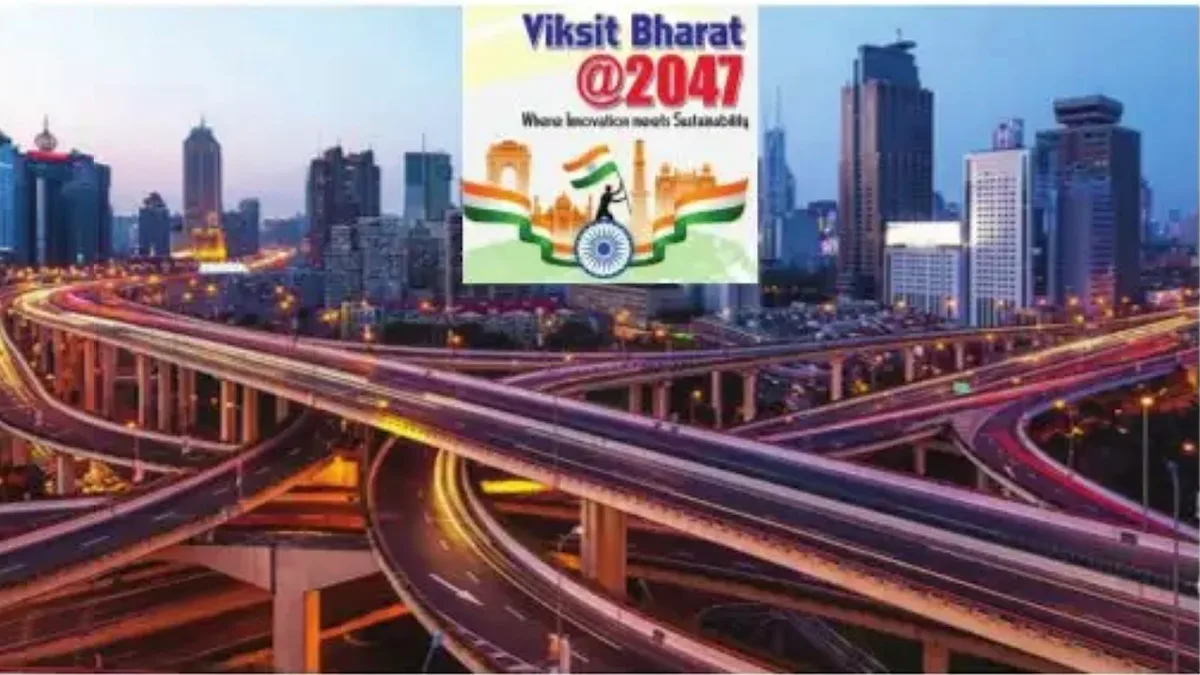
India is aiming to become a developed nation, or Viksit Bharat, by 2047, a hundred years after independence.

GOVIND BHATTACHARJEE | New Delhi |

India is aiming to become a developed nation, or Viksit Bharat, by 2047, a hundred years after independence. To understand how we should transform ourselves to become a developed country it is necessary to know the gap between us and a developed nation. The idea of a “developed country” is so widely used in public discourses that it often appears as self-evident. But if we probe deeper, we begin to understand the hollowness of its underlying presumptions. Colonial era economists have addressed differences between nations in binary terms: civilised vs uncivilised, advanced vs backward.

Classical economists like Smith, Mill and Marx had treated industrial capitalism as representative of a higher stage of social organisation and a model that all nations should emulate. Colonial administration translated these assumptions into their extractive policies for governing the colonies. The terms “developed” and “underdeveloped” entered the economic lexicon from President Harry Truman’s inaugural address in 1949: “We must embark on a bold new program for making the benefits of our scientific advances and industrial progress available for the improvement and growth of underdeveloped areas.” From this moment, “developed” became the hallmark of the industrialised West, a benchmark that the “underdeveloped” rest of the world should follow.

The distinction between “developed” and “underdeveloped” countries that treated non-Western societies as laggards in a universal trajectory defined by the West became one of the most enduring and widely used distinctions institutionalised by the global governance structures like the UN, World Bank, IMF, or WTO. The industrialised West became the implicit universal benchmark against which all progress is to be measured in every aspect of social life ~ polity, economy, culture, education, etc. so that the West, now robbed of colonies, can maintain its supremacy. In this new vocabulary, western-style “development” became a universal aspiration and “underdevelopment” represented a transitional state towards its attainment. The language encoded a clear hierarchy that put the West at a higher civilisational stage implicitly emphasising its superiority.

The Cold War and disintegration of the Soviet Union reinforced this dichotomy, as explicitly expressed in Francis Fukuyama’s Essay on “The End of History” in 1989. The Western model of economic growth was a universal, linear movement through five stages, as proposed by Walt Rostow in his 1960 book “The Stages of Economic Growth: A Non-communist Manifesto”. It was a sequential transition from traditional agriculture through industrial maturity to high mass consumption, driven by capital accumulation, industrialisation, urbanisation, and integration into global markets.

The model was based on American and European history, and on the American norms of high mass consumption as being integral to the economic development process. Even the alternative socialist model of state-led industrialisation and central planning shared the same underlying assumption of development being equated with rapid industrialisation. Both models propagated growth along a single developmental continuum. The post-war Bretton Woods institutions were designed around a world divided between capital-surplus and capital-scarce countries, which over time translated into a functional division between donor and recipient nations, rule-makers, and rule-followers.

Their statistical classifications entrenched this philosophy deeply into the fabric of global governance dictated by the West even as it itself was declining. Metrics were devised to reinforce the distinctions, with a single indicator ~ the per capita income (PCI) becoming the dominant indicator of progress, by which development of a nation could be measured, compared, and ranked. This shaped how aid would flow, concessions given and conditions imposed for bailouts or loans ~ the so-called Washington Consensus ~ to maintain the stranglehold of a declining West, while emergent nations like China, India, Brazil, etc, were fast rising.

It was only from the late 1950s when Dependency Theories started gaining prominence that these linear and universalist assumptions were seriously challenged. These theories focused on the core-periphery dynamics, arguing that industrial core nations exploited raw material-producing peripheral nations, leading to unequal terms of trade. Economists like Raúl Prebisch, Andre Gunder Frank and Samir Amin forcefully argued that underdevelopment was not a stage preceding development but a condition produced by historical forces into an unequal global economic system. Frank argued that underdevelopment is caused by development ~ in the “development of underdevelopment,” core powers actively create and maintain underdevelopment in the periphery.

The prosperity of developed countries was structurally linked to the poverty of underdeveloped nations through trade, capital flows, and technological dependence of the latter on the former. Amin integrated this dependency with Marxist theory, linking underdevelopment to global capitalist structures and geopolitical power play. These theorists argued that the development experience of the West could not be simply replicated elsewhere and that global power relations mattered as much as domestic policies. Thus, the developed~ underdeveloped binary was exposed as a structural feature of the capitalist system, where rich nations had strong vested interests in keeping the poor nations poor, whose poverty was not due to the failures of their internal policies.

In response to these critiques, from the 1970s onwards, the terminology shifted from “underdeveloped” towards “developing”, implying dynamism and progress, but the binary sustained, with the developed countries at the top of a ladder and developing countries climbing upwards. But the fragility of this binary became exposed from the late 20th century onwards, and especially in the present century. Many of the so-called developing countries, like China and India, started exhibiting advanced technological capabilities challenging the superiority of high-income countries which faced economic stagnation, inequality, social stress, and climate vulnerability; further, demographic drawback and institutional fragility were cutting across all income categories.

Development now is treated as a complex, multidimensional process of interaction between economic growth, institutional dynamics, and human capabilities, not capturable by a single metric like per capita income or its proxies like the UNDP’s HDI. The World Bank now avoids using the developed ~ developing terminology, instead using income group classifications in explicit recognition that income cannot be a sole measure of development. The IMF’s distinction between “advanced” and “emerging and developing” economies similarly reflect on a wider approach beyond income. Even these classifications are illogical and analytically fragile as they attempt to retain the old structure under a new name, like old wine in a new bottle.

The World Bank classifies economies by per capita GNI expressed in US$, using the Atlas method based on a 3-year moving average exchange-rate conversion, adjusted for inflation differentials between the country and major economies, updated each July. According to the latest 2025 classification, countries with per capita GNI below $1,135 are labelled low income, then up to $4,465 as lower middle-income, and up to $13,485 as upper middle-income, above which countries are classified as high-income. These income groups are nothing but proxies for the old binary, with high-income economies corresponding to “developed” and the rest “developing”.

In this classification, India is a lower middle-income country with its per capita GNI of around $2800, and needs to grow at a sustained annual rate of around 7.4 per cent for the next 22 years to become a high-income country, a tough but not impossible proposition if technology, especially AI, can be leveraged to boost productivity, along with a strong focus on renewables. The IMF uses a categorization that distinguishes advanced economies from emerging and developing economies without any income thresholds, but based on a combination of factors including income level, market development, integration into the global financial system and other economic characteristics.

According to this classification, there are 41 advanced. economies in the world. It is to be remembered that these institutions are still dominated by the Western countries, and they do not give equal voting rights to each member. Voting rights are linked to the contributions of individual members, with the USA alone having 16.1 per cent of the voting power, compared to China’s 5.8 per cent and India’s 3.6 per cent. Thus, Western countries can easily group together to defeat the collective voices of the developing countries of the global south. They have monopolised power in these institutions ~ the World Bank is always headed by an American while the IMF by a European. Their classifications also reflect a Western mindset unwilling to cede space to others they had ruled once and cannot treat as equal.

(The writer is a commentator, author and academic. Opinions expressed are personal)

‘Avoid non-essential travel to Venezuela’: MEA issues advisory for Indians amid escalating tensions

The Ministry of External Affairs (MEA) has issued an advisory urging Indian nationals to avoid all non-essential travel to Venezuela in view of the rapidly evolving security situation in the South American country.
Statesman News Service | New Delhi |

The Ministry of External Affairs (MEA) has issued an advisory urging Indian nationals to avoid all non-essential travel to Venezuela in view of the rapidly evolving security situation in the South American country.

In the statement, the MEA also advised Indians currently residing in Venezuela to exercise extreme caution and remain in close contact with the Indian Embassy in Caracas. The ministry shared the embassy’s contact details, including the emergency helpline number +58-412-9584288 (also available on WhatsApp) and the email address cons.caracas@mea.gov.in, for immediate assistance.

“In view of recent developments in Venezuela, Indian nationals are strongly advised to avoid all non-essential travel to Venezuela. All Indians who are in Venezuela for any reason are advised to exercise extreme caution, restrict their movements, and remain in contact with the Embassy of India in Caracas,” the MEA said.


The advisory follows the dramatic escalation in tensions after Venezuelan President Nicolás Maduro and his wife, Cilia Flores, were captured in Caracas during a joint operation involving intelligence agencies and US law enforcement, and subsequently flown out of the country.

Earlier, US President Donald Trump claimed that Maduro and Flores had been indicted in the Southern District of New York on charges related to alleged drug trafficking and narco-terrorism conspiracies. Trump said the arrests were carried out during a US military operation, with American forces working alongside law enforcement agencies.

Trump said, “No nation in the world could achieve what America achieved yesterday or frankly, in just a short period of time. All Venezuelan military capacities were rendered powerless as the men and women of our military, working with US law enforcement, successfully captured Maduro in the dead of night.”

“It was dark, and it was deadly, but he was captured along with his wife, Cilia Flores, both of whom now face American justice. Maduro and Flores have been indicted in the Southern District of New York,” he said.

PM Modi likely to visit state this month, hold rallies

Prime Minister Narendra Modi is set to visit West Bengal again at the beginning of the new year, with the BJP stepping up its campaign ahead of the 2026 Assembly elections.

Statesman News Service | Kolkata |

Prime Minister Narendra Modi is set to visit West Bengal again at the beginning of the new year, with the BJP stepping up its campaign ahead of the 2026 Assembly elections.

According to sources, the Prime Minister is expected to arrive in the state later this month with two public programmes, for which preliminary preparations have already begun.

If plans fall into place, Modi will address two public rallies ~ one in north Bengal and another in south Bengal. Party sources said the tentative schedule includes rallies on January 17 in Malda and January 18 in Howrah.

The Prime Minister is likely to speak at BJP’s Paribartan Sankalp Sabha (resolution for change meetings).

However, state BJP leaders are yet to officially confirm the venues and the Prime Minister’s detailed itinerary. District leaderships in Malda and Howrah have also not made any formal announcement so far.

Political observers see the proposed visit as part of the BJP’s early push to build momentum for the 2026 Assembly polls.

While the ruling Trinamul Congress has already launched its outreach drive from the start of the year, the saffron party, too, is looking to raise the pitch by bringing top national leaders, including the Prime Minister, to the state.

Earlier, Modi was scheduled to address a rally on 20 December at Taherpur in Krishnanagar, a Matua-dominated area.

The rally had drawn attention in the backdrop of the Special Intensive Revision (SIR) exercise, after several Matua names were reportedly excluded from the initial draft.

However, due to dense fog, the Prime Minister’s helicopter could not land in Krishnanagar, and he addressed the gathering virtually from Dum Dum airport.

During that address, Modi had promised to visit Taherpur and meet the people in person at a later date.

There is also a speculation that Krishnanagar could also feature in the Prime Minister’s January itinerary, apart from Malda and Howrah.

However, there is no official confirmation on his Krishnanagar visit so far.

Meanwhile, Trinamul Congress national general secretary Abhishek Banerjee has rolled out a month-long state-wide programme titled “Abar Jitbe Bangla” (Bengal Will Win Again), undertaking district-wise public outreach throughout January.

In response, the BJP is gearing up for an aggressive campaign from the very start of the year, with Modi’s proposed Bengal visit expected to mark the launch of its high-voltage poll push, political circles believe.

TMC flags off 15-year development outreach from Ranaghat

With an eye on the 2026 Assembly elections, the Trinamul Congress rolled out a state-wide mass outreach campaign aimed at taking its 15-year governance record directly to the people, blending political mobilisation with a detailed presentation of the state government’s developmental narrative.

Statesman News Service | Kolkata |

With an eye on the 2026 Assembly elections, the Trinamul Congress rolled out a state-wide mass outreach campaign aimed at taking its 15-year governance record directly to the people, blending political mobilisation with a detailed presentation of the state government’s developmental narrative.

Branded “Unnayaner Panchali” (Chronicle of Development), the campaign was formally launched from the Barbaria area under the Ranaghat Uttar-East Assembly constituency on Friday. The programme was inaugurated by former MLA of the constituency, Samir Kumar Poddar, marking the beginning of an extensive door-to-door exercise designed to reconnect the ruling party with voters at the grassroots.

The initiative seeks to place before households a comprehensive “report card” of the Trinamul Congress government’s performance over the past 15 years. The document highlights key achievements in infrastructure development, social welfare schemes and people-centric governance initiatives, which party leaders say have transformed lives across urban and rural Bengal.

As part of the campaign, Trinamul Congress leaders and workers will visit homes, engage residents in direct conversations and hand over the report card detailing the government’s work. The outreach, party leaders maintain, is not merely a publicity drive but an attempt to initiate a dialogue with citizens on development, governance and future priorities.

The campaign will be conducted in two distinct phases. The first phase, titled “Banglar Samarthane Sanjog” (connecting in support of Bengal), focuses on reaching out to prominent and influential individuals, delivering the government’s 15-year performance report at their doorsteps. The second phase, “Unnayaner Sanglap” (dialogue on development), will involve structured interactions at the booth level, where party representatives will engage directly with voters and address local concerns.

Speaking at the launch, Mr Poddar said the core objective of Unnayaner Panchali was to ensure that the benefits and impact of the state government’s developmental projects reached the common people in a transparent and accessible manner. “This is about taking the story of Bengal’s development to every household and listening to what people have to say,” he said.

Party leaders described the campaign as a key organisational exercise ahead of the 2026 polls, signalling the Trinamul Congress’s intent to consolidate its support base through sustained grassroots engagement and a strong emphasis on its governance record.

NHRC sets 4-week deadline to W Burdwan DM, police on silicosis report

The NHRC has made it clear that if the ATR is not submitted within four weeks, it will be compelled to exercise its powers under the Protection of Human Rights Act, 1993. A copy of the reminder has also been sent to the state Chief Secretary, Nandini Chakravorty, underscoring the seriousness of the matter.

DEBAJYOTI CHAKRABORTY | Kolkata |

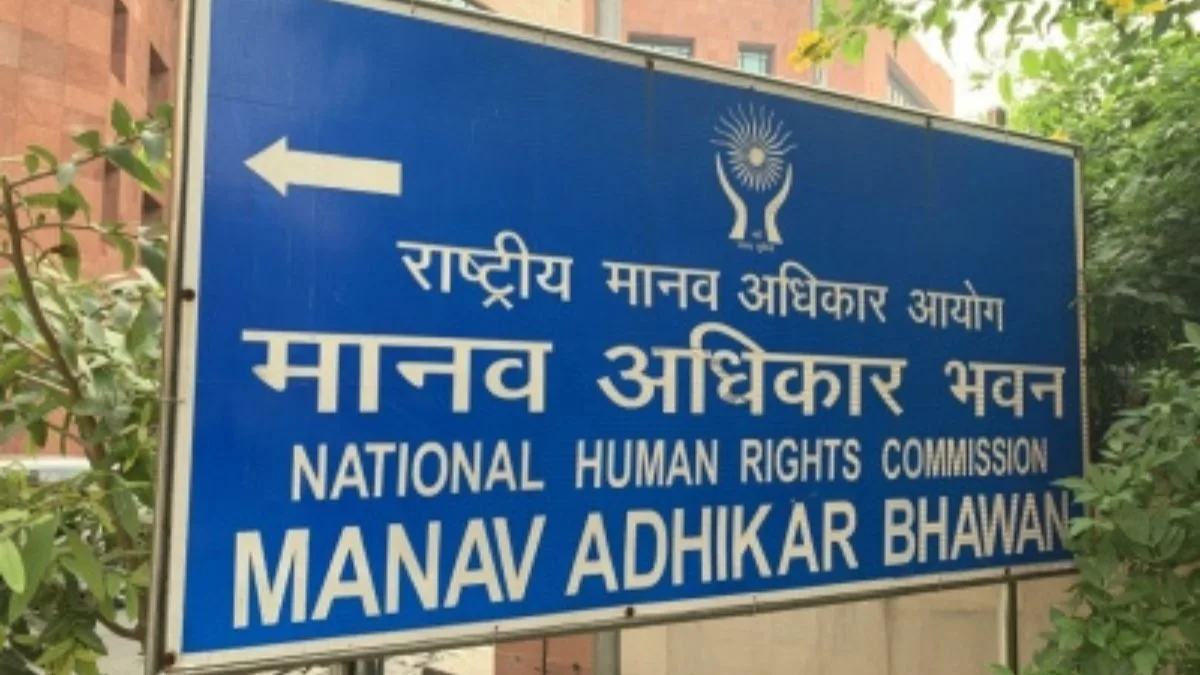
The National Human Rights Commission (NHRC) has taken cognisance of the silicosis issue in the Dendua region of Salanpur block and has issued reminders to the District Magistrate (DM) of West Burdwan, S Ponnambalam, and the Commissioner of Police (CP) of the Asansol-Durgapur Police Commissionerate (ADPC), Sunil Kumar Choudhary, seeking an action taken report (ATR) against polluting industries operating in the area.

The NHRC has made it clear that if the ATR is not submitted within four weeks, it will be compelled to exercise its powers under the Protection of Human Rights Act, 1993. A copy of the reminder has also been sent to the state Chief Secretary, Nandini Chakravorty, underscoring the seriousness of the matter.

Silicosis is reportedly spreading rapidly in the Salanpur block of the Asansol Sadar sub-division in West Burdwan district. It has been alleged that neither the police nor the administration took adequate action earlier. Local social worker Amarendra Mahato had approached the NHRC, alleging that silicosis patients were being incorrectly treated as tuberculosis cases under the DOTS programme and that factory managements should be held responsible for the victims.

Earlier, on 28 October, 2024, the NHRC had written to the West Burdwan DM and the ADPC Commissioner seeking a report within eight weeks following a complaint by a local teacher, Amarnath Mahato. The complaint alleged that stone and silica crushing units in the area were causing the spread of silicosis and that several labourers had already died.

Subsequently, on 17 November, 2024, a general diary (GD) entry (No. 513) was registered at Salanpur police station, directing verification of industrial units located in the Dendua area. The District Industries Centre and the West Bengal Pollution Control Board were asked to conduct physical verification of the factories, and the information was shared with local residents.

The NHRC had also sought the deployment of a technical expert team to measure silicon metalloid emissions from the factories, citing serious environmental and public health concerns. However, as the expert team’s report is still awaited, the Commission has issued fresh reminders, granting a final four-week deadline for submission of the ATR.

The NHRC has warned that failure to submit the required investigation and pollution reports within this period will invite legal action under the Protection of Human Rights Act, 1993.

In 2025, two residents of Salanpur block reportedly died due to silicosis, while several labourers have been diagnosed with the disease by the Medical Board constituted by the Chief Medical Officer of Health (CMOH), West Burdwan, and Asansol District Hospital following health screenings.

No official response has so far been received from either the West Burdwan District Magistrate or the Commissioner of Police, ADPC, on the issue.

2026 polls a vote of protest, time to uproot BJP from Bengal: Abhishek

The Trinamul Congress (TMC) national general secretary Abhishek Banerjee on Saturday described the 2026 West Bengal Assembly elections as a “vote of protest”, urging voters to use the ballot to decisively uproot the Bharatiya Janata Party (BJP) from the state.

Statesman News Service | Kolkata |

The Trinamul Congress (TMC) national general secretary Abhishek Banerjee on Saturday described the 2026 West Bengal Assembly elections as a “vote of protest”, urging voters to use the ballot to decisively uproot the Bharatiya Janata Party (BJP) from the state.

Addressing a political rally at Majher Dabri Tea Plantation in Alipurduar district, Banerjee launched a sharp attack on the BJP, the Election Commission of India and central agencies, alleging systematic attempts to undermine democratic rights in Bengal. Drawing a comparison with legendary magician PC Sircar, he remarked that the Chief Election Commissioner had “outdone magicians”, adding that the time had now come for voters to become “magicians themselves” on polling day in 2026.

“This election is not just about choosing a government. This is a vote to protest. When BJP leaders come begging for votes, tell them you will vote for them ~ but on polling day, press the button for the twin flowers of Trinamul,” Banerjee said, triggering loud applause.

Addressing tea workers, he said the party was expecting a 100 per cent lead from all 450 booths in Alipurduar district. Recalling past electoral outcomes, Banerjee noted that voters had elected BJP MPs in 2019 and 2024 and handed over all five Assembly seats to the BJP. However, he pointed out that political equations have since shifted, citing the defection of a BJP MLA to the TMC and the party’s victory in the Madarihat Assembly bypoll last year.

Raising concerns over the ongoing Special Intensive Revision (SIR) of electoral rolls, Banerjee alleged harassment of voters and instances of living voters being declared dead. “Will you vote for a party that is trying to snatch your voting rights?” he asked, warning that democracy itself was under threat.

He further claimed that had the BJP secured over 400 seats in the last Lok Sabha elections, it would have altered the Indian Constitution. Accusing the BJP of attempting to bypass electoral processes, Banerjee criticised the proposed ‘one nation, one election’ move, alleging that the ruling party “does not want elections at all”. “We must protest and stop this Bill from being passed in Parliament,” he said.

Banerjee also alleged that instead of allowing people to choose their representatives, the BJP-led government was “selecting voters who will vote for them”. He asserted that Bengal would not bow down to pressure from the Centre, even if agencies like the ED, CBI and Income Tax were used against the state.

Mocking the BJP’s ‘double-engine government’ narrative, Banerjee cited alleged deaths linked to contaminated water in Madhya Pradesh to question governance claims. Raising the slogans “Abar Jitbe Bangla” and “Jotoi Karo Hamla, Ebar Jitbe Bangla,” he said this was his second meeting under the campaign banner.

Highlighting the Mamata Banerjee-led state government’s welfare initiatives, he underscored schemes such as Lakshmir Bhandar, claiming that Rs 1,500 crore had been disbursed in Alipurduar district alone. He alleged that while the Centre had collected Rs 6.5 lakh crore in revenue from Bengal, it had failed to return adequate funds and had stalled schemes like the 100-day job programme after the BJP’s defeat in the 2021 Assembly polls and losses in the 2024 Lok Sabha elections.

Recalling Chief Minister Mamata Banerjee’s decision to carve out Alipurduar as a separate district, he said the time had come to repay that trust with a “return gift” by ensuring Trinamul’s victory in all five Assembly seats from the district.

In a controversial remark, Banerjee compared BJP MPs to snakes, alleging they “bite the very people who vote for them”. He later participated in an interactive question-and-answer session with the audience.

Tea growers seek urgent policy support to stabilise tea industry

Calling for urgent policy support to protect the long-term sustainability of the Indian tea industry, Sandeep Singhania, President of the Tea Association of India (TAI), on Saturday outlined a comprehensive roadmap addressing production challenges.

Statesman News Service | Kolkata |

Calling for urgent policy support to protect the long-term sustainability of the Indian tea industry, Sandeep Singhania, President of the Tea Association of India (TAI), on Saturday outlined a comprehensive roadmap addressing production challenges, export bottlenecks, import misuse and declining prices at the 50th biennial general meeting of TAI held in Kolkata today.

Delivering an extensive address, Singhania highlighted that while global tea supply continues to rise, India must recalibrate its policy focus towards productivity enhancement, quality upgrade and market development rather than expansion of cultivated area. Referring to the Tea Development and Promotion Scheme (TDPS) proposed from 2026 onwards, he said the scheme should prioritise consolidation of existing plantations, cost reduction, technological intervention, clean energy usage and competitiveness in a free-market environment.

He stressed the need for government support for plantation development, revival of dilapidated tea gardens, irrigation facilities, field mechanisation, factory modernisation, value addition and incentives for orthodox and green tea production. Emphasising the role of technology, Singhania called for the adoption of drone surveillance, precision farming, traceability systems and block-chain technology to ensure transparency and efficiency across the value chain. Market promotion, utilisation of renewable energy and monetisation through carbon credits were also highlighted as critical focus areas.

On exports, Singhania pointed out that Indian tea shipments are increasingly hampered by logistical constraints, including inadequate export infrastructure, inefficient transportation modes, weak logistics value-chain management, shortage of dry ports and lack of supportive infrastructure. He urged both the Centre and the states to intervene to resolve these structural bottlenecks to improve India’s export competitiveness.

Raising serious concerns over rising imports, Singhania flagged the alleged misuse of the advance authorisation scheme and duty-free imports through Special Economic Zones (SEZs). He said these provisions, meant to promote exports, are distorting the domestic market and undermining the credibility of Indian tea globally. Despite a sharp increase in imports, there is no effective mechanism to track how much tea is re-exported and how much is diverted into domestic circulation.

TAI demanded that duty-free imports under advance authorisation and SEZ provisions be disallowed, proposing instead full duty payment with duty drawback on re-export under Section 74 of the Customs Act. He also called for stringent quality controls to prevent substandard teas from entering India, citing the Sri Lankan Tea Board’s standard operating procedures as a model. The Tea Board of India and the Directorate General of Foreign Trade were urged to introduce traceable and auditable systems aligned with FSSAI norms.

Highlighting domestic demand potential, Singhania noted that India’s per capita tea consumption stands at just 840 grams annually, far below the UK’s 1.61 kg and Pakistan’s 1.01 kg. He said an increase of even 100 grams per capita could absorb an additional 131 million kilograms annually, helping restore demand-supply balance.

The industry is also facing sustained price pressure. In 2025, the national average tea price declined by Rs 12.31 per kg or nearly 6 per cent, dropping from Rs 199.30 in 2024 to Rs 186.99. North India saw a sharper fall of about 8 per cent, with prices slipping by Rs 16.73 per kg.

On the global front, Singhania said world tea exports in 2024 stood at 1,956 million kg, with India contributing 256 million kg ~ around 13 per cent ~ marking an 11 per cent year-on-year increase. India’s production has risen 35 per cent over the past 15 years to 1,304 million kg in 2024, accounting for 19 per cent of global output and cementing its position as the world’s second-largest tea producer after China.

Youth found dead in pond in Pandaveswar

The body of a 32-year-old man was found floating in a local pond at the Shyamla area of Khottadaih under the Pandaveswar police station in West Burdwan district on Friday.

Statesman News Service | Kolkata |

The body of a 32-year-old man was found floating in a local pond at the Shyamla area of Khottadaih under the Pandaveswar police station in West Burdwan district on Friday.

According to local residents, Jayanta Ruidas had not returned home since the previous evening. His body was later spotted floating in the pond by locals, who informed the Pandaveswar police.

A Quick Response Team (QRT) of the district civil defence was called in, and personnel recovered the body from the pond. As the water level of the pond is deep, police prima facie suspect that he accidentally slipped into the pond during the night.

The body was sent to Durgapur Sub-Divisional Hospital for post-mortem examination.