Logo

PM Modi launched campaign to free India from symbols of colonial rule: Amit Shah

Shah inaugurated and laid the foundation stone for various development projects of the Andaman and Nicobar Administration at Sri Vijaya Puram.

Statesman News Service | New Delhi |

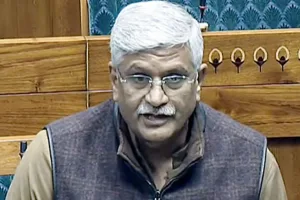
Union Home Minister Amit Shah on Saturday said Prime Minister Modi has launched a nationwide campaign to free the country from symbols of colonial rule, that is why Port Blair has been renamed Sri Vijaya Puram, and the islands have been named after India’s brave freedom fighters.

Shah inaugurated and laid the foundation stone for various development projects of the Andaman and Nicobar Administration at Sri Vijaya Puram.

In his address on the occasion, Shah noted that on this very land, many martyred freedom fighters, who fought for India’s independence, spent years of their lives in the Cellular Jail built by the British. Many people breathed their last here, strengthening India’s freedom struggle, and many brave souls were hanged.

The Union home minister said the memorial of Veer Savarkar and the eternal flame lit in the Cellular Jail tell the entire world that many great souls sacrificed their lives here.

Shah recalled Netaji Subhas Chandra Bose was the first to hoist the Tricolour at this place of free India, and in his memory and honour of his words, Prime Minister Narendra Modi named two islands as Shaheed and Swaraj.

He said PM Modi has undertaken the task of naming every island in this archipelago after heroes of the Indian freedom struggle.

This land is a pilgrimage site for every citizen of free India, because it was here that “our freedom fighters endured suffering as strength, solitude as resolve, and torture as the path to freedom, ultimately achieving independence,” he averred.

The Home minister said the prime minister has transformed this island into a strategic power. Nine major development projects were inaugurated and the foundation stone for two projects was laid here today, and in a single day, development works worth Rs 373 crore were gifted to this island.

These development projects, he said, include an Integrated Command and Control Centre with a cost of Rs 229 crore. The inauguration of Phase-I of the district hospital at a cost of Rs 33 crore, the inauguration of a Forensic Science Laboratory, and the inauguration of six other schemes at a cost of Rs 50 crore also took place today.

Business, investment climate improving in UP: CII delegation to CM Yogi

During their meeting with Chief Minister Yogi Adityanath, industry representatives clearly expressed their views.

Statesman News Service | Lucknow |

“Due to improved law and order and a stable administrative environment, Uttar Pradesh is steadily emerging as the first choice for industries across the country. Security, discipline, and impartial governance have strengthened investor confidence in the state,” a CII delegation said here on Saturday.

During their meeting with Chief Minister Yogi Adityanath, industry representatives clearly expressed their views.

They further said that due to an improved environment, large, medium, and small industries are increasingly turning towards Uttar Pradesh.

A delegation comprising Confederation of Indian Industry (CII) President Rajiv Memani, New Delhi; Umashankar Bhartia, Chairman and Managing Director, India Glycols Ltd., Delhi/Noida; and Sunil Mishra met the Chief Minister and held detailed discussions on investment, infrastructure, and industrial expansion.

The representatives stated that under CM Yogi’s leadership, the state’s system and governance model have undergone a complete transformation. Working on the ground has become much easier than before, and projects are progressing in a time-bound manner.

The delegation said that entrepreneurs are keen to contribute to the vision of making Uttar Pradesh a one-trillion-dollar economy. Discussions were also held with CM Yogi on accelerating industrial development. Following the implementation of the decriminalisation legislation in the state, industry confidence has further strengthened. Additionally, investor-friendly policies and incentives have led to a rise in global investment inflows.

The delegation stated after meeting CM Yogi Adityanath that strict law and order has completely transformed the industrial environment of Uttar Pradesh. The security and administrative stability required for investment decisions are now clearly visible in the state. Rapid development of expressways, industrial corridors, airports, logistics hubs, and basic facilities such as power and water has provided renewed strength to the state’s industrial ecosystem.

During discussions with CM Yogi Adityanath, it was highlighted that ease of doing business is no longer limited to policy intent but is being effectively implemented on the ground. The state government’s single-window system, Nivesh Mitra, currently offers more than 525 services across 43 departments. Time-bound digital approvals without physical intervention have made the process of setting up industries simpler and more transparent. The government’s pro-industry policies and swift decision-making continue to encourage investment. In this direction, the upgraded Nivesh Mitra 3.0 will be launched soon, incorporating AI and chatbot features to make the investor journey even smoother.

The representatives said that overall improved law and order, robust infrastructure, transparent administration, and strong government support are positioning Uttar Pradesh as a reliable and stable investment destination. This is why industrialists from across sectors nationwide are highly enthusiastic about new investments and expansion plans in the state. A significant increase in the number of industrial units in Uttar Pradesh is expected in the coming period.

Odisha: Khurda Road Division logs record freight handling in first three quarters of 2025-26 fiscal

In the same period, East Coast Railway as a whole loaded 209.97 MT of freight compared to 188.64 MT in the corresponding period of the previous fiscal, achieving an impressive growth of 11.3%, amounting to an additional 21.33 MT.

Statesman News Service | BHUBANESWAR |

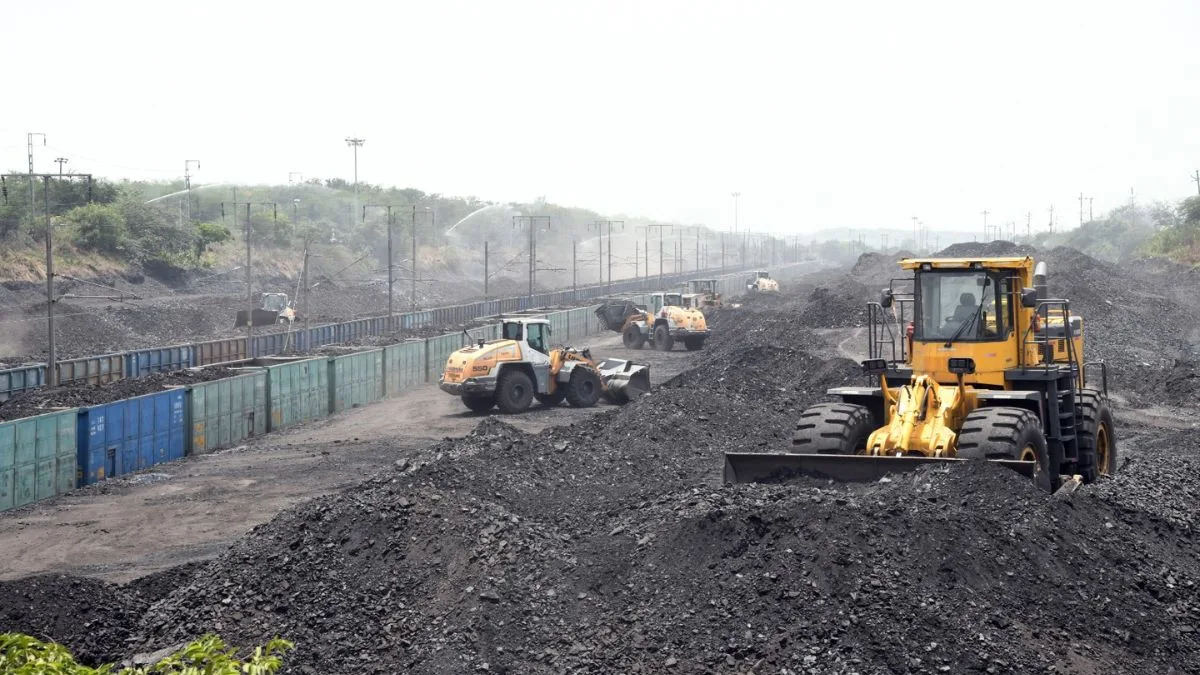
The Khurda Road Division of the East Coast Railway (ECoR) has recorded an outstanding performance in freight loading and traffic handling during the first three quarters of the current financial year 2025–26, reflecting sustained growth, higher wagon utilisation, and enhanced operational efficiency.

During the period April to December 2025, the Khurda Road Division loaded 130.36 Million Tonnes (MT) of freight as against 119.56 MT loaded during the corresponding period of the previous financial year, registering a growth of 9%, which is 10.80 MT more than last year.

In the same period, East Coast Railway as a whole loaded 209.97 MT of freight compared to 188.64 MT in the corresponding period of the previous fiscal, achieving an impressive growth of 11.3%, amounting to an additional 21.33 MT.

In December 2025 alone, the Khurda Road Division loaded 15.23 MT of freight as against 14.73 MT loaded in December 2024, registering a growth of 3%. Similarly, during the same month, the East Coast Railway loaded 25.25 MT of freight compared to 23.27 MT in the previous year, reflecting an increase of 9%.

During the April–December 2025 period, the Khurda Road Division utilised an average of 7,068 wagons per day, compared to 6,596 wagons per day in the corresponding period of the previous year, registering an increase of 7%. During the same period, the East Coast Railway utilised an average of 11,389 wagons per day, as against 10,415 wagons per day, registering a growth of 9%.

In December 2025, the Khurda Road Division achieved an average utilisation of 7,331 wagons per day, compared to 7,088 wagons per day in December 2024, reflecting a 3% increase. During the same month, the East Coast Railway utilised 12,112 wagons per day, as against 11,250 wagons per day, registering an 8% growth.

During the period, the East Coast Railway recorded substantial freight loading across a wide spectrum of commodities, highlighting its critical role in supporting core industries and essential supplies. The loading included 117.83 Million Tonnes (MT) of coal, 7.89 MT of raw materials for steel plants, 19.76 MT of iron and steel, 27.51 MT of iron ore, 0.75 MT of cement, 2.43 MT of food grains, 7.22 MT of fertilisers, 2.43 MT of POL, and 4.03 MT of containerised goods. In addition, 20.13 MT of other commodities were loaded, comprising raw materials for steel plants, alumina, bauxite, caustic soda, gypsum, quartzite, fly ash, and manganese, among others, underlining East Coast Railway’s strong contribution to industrial growth and national logistics.

The consistent growth in freight loading, wagon utilisation, and earnings underscores the Khurda Road Division’s commitment to enhancing freight operations, strengthening port-rail connectivity and contributing significantly to the nation’s logistics and economic growth, claimed railway officials.

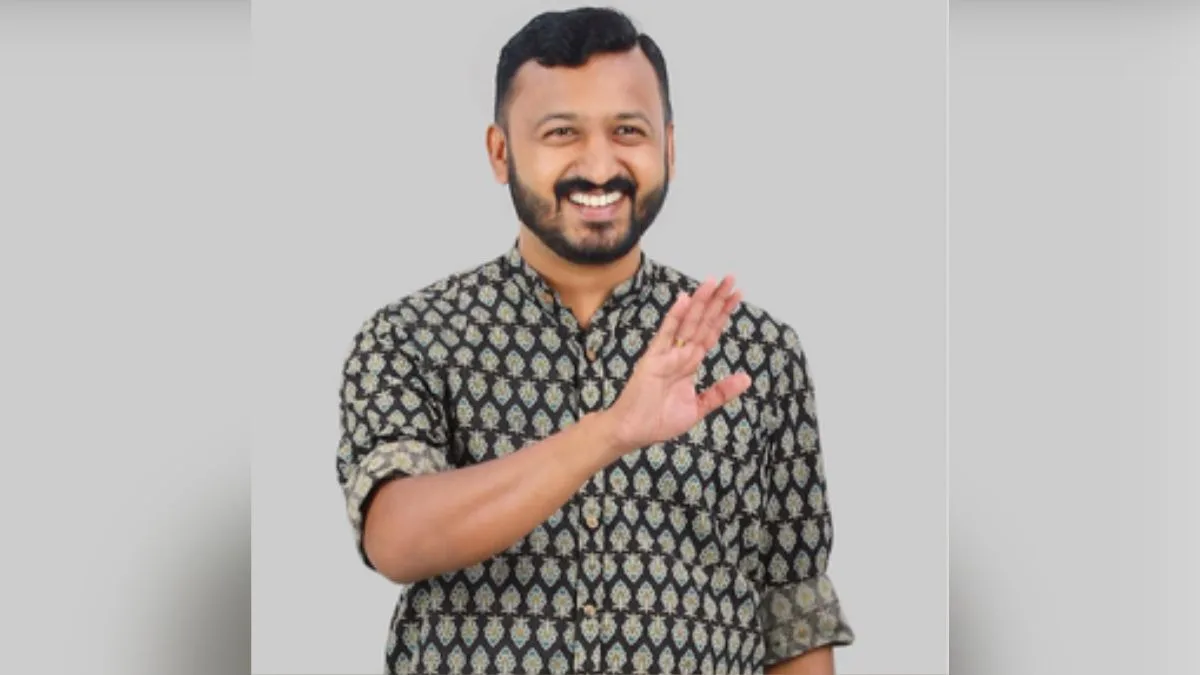
Survivor’s husband lodges complaint against rape accused MLA Rahul Mamkootathil

He stated that Mamkotathil’s claim in the court that he became close to the man’s wife after he intervened to resolve their family issues is not true as claimed by the accused in his application for anticipatory bail to the court.

Statesman News Service | Thiruvananthapuram |

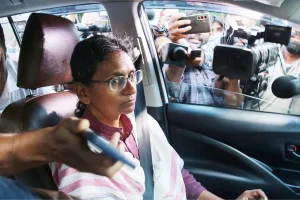
The husband of the survivor, linked to the first rape case against Rahul Mamkootathil, alleged, in his complaint, that the MLA established an illicit relationship with his wife despite knowing that the woman was married. He not only tarnished the reputation of the family but also ruined the complainant’s family life, he said.

He stated that Mamkotathil’s claim in the court that he became close to the man’s wife after he intervened to resolve their family issues is not true as claimed by the accused in his application for anticipatory bail to the court.

The husband explained that if Rahul really intended to mediate or assist, he should have contacted him directly, which never occurred. “He did not once, at any point during this period, reach out to me to initiate mediation talks,” the complaint states.

He detailed that after the woman made her allegations, several individuals circulated the husband’s photograph on social media, resulting in a severe violation of his privacy.

Rahul was exploiting the situation. Taking advantage of minor issues, he acted with criminal intelligence, the husband said in the complaint . He sexually harassed the young woman and forced her to have an abortion by making false promises, the survivor’s husband states in the complaint.

Voice messages and pictures were released by Rahul Mamkootathil in a way that could identify the young woman. He is trying to portray him in a bad light in cyberspace. The complaint also seeks action against the defamatory remarks against him.

The complainant demands that a case be registered against the Palakkad MLA under Section 84 of the Bharatiya Nyaya Sanhita (BNS) (enticing, taking away, or detaining a married woman with criminal intent).

The woman filed a complaint against Rahul Mamkootathil on November 27, 2025, after approaching Chief Minister Pinarayi Vijayan. Based on her statement, The Nemom Police registered an FIR in the case the following day, charging Rahul with rape, causing miscarriage without consent, criminal intimidation, and offences related to the unauthorised recording and sharing of private images. At present, Kerala Police have registered two FIRs against the Palakkad MLA.

The second FIR, filed on December 3, 2025 also alleges rape.

In August, Rahul resigned as Youth Congress president after Malayalam television channels aired multiple audio clips and chat records in which women accused him of coercion and misconduct. On December 4, 2025, the Congress expelled him from the party after a second complaint alleging rape was filed against him.

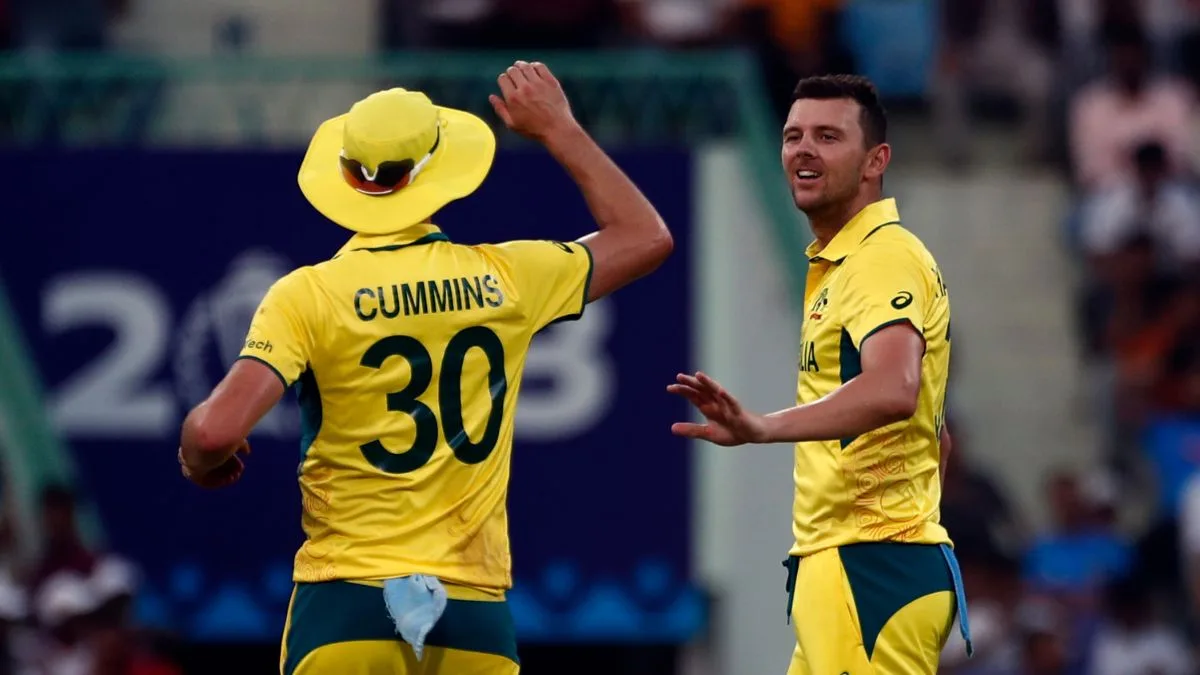
Cummins, Hazlewood out of Pak series but remain in contention for T20 WC

Cummins has been named in Australia’s provisional World Cup squad alongside fellow quick Josh Hazlewood and big-hitting batter Tim David, with all three included subject to proving their fitness.

Statesman News Service | New Delhi |

Australia are prepared to take a calculated risk with Pat Cummins at the upcoming T20 World Cup, keeping the option open to carry the fast-bowling captain through the early stages of the tournament if it allows him to contribute later, similar to the much like the approach taken with Travis Head during the 2023 ODI World Cup.

Cummins has been named in Australia’s provisional World Cup squad alongside fellow quick Josh Hazlewood and big-hitting batter Tim David, with all three included subject to proving their fitness. Cummins has featured only once since recovering from a lumbar stress injury, playing the Ashes Test in Adelaide, while Hazlewood continues his recovery from an Achilles issue and David is nursing a hamstring injury that curtailed his Big Bash League season.

George Bailey, Australia’s chair of selectors, expressed confidence that Hazlewood and David would be ready in time for the tournament and said a further scan for Cummins later this month would be key in determining his availability.

“I don’t think they [Cummins and Hazlewood] will be available for the Pakistan series [three T20Is in January], but I think both should be online [for the World Cup],” Bailey told reporters at the SCG. “Patty might be a bit later; that might be a similar sort of situation to Travis Head in the 50-over World Cup, where there’s an entry point at some point. Hopefully, we can manage and carry a squad until that point. I think Hoff [Hazlewood] should be right by the start, think Tim David should be right by the start.”

Australia’s group-stage fixtures against Ireland, Oman, Sri Lanka and Zimbabwe are all scheduled in Sri Lanka, a factor Bailey acknowledged could offer some flexibility in team combinations if Cummins is given additional recovery time.

“You might get pushed into a corner where you can’t, and you might need to make adjustments in the squad,” Bailey said. “We were close to that having to be the case with Travis. It’s got a fit… but I guess the beauty is potentially Colombo and Kandy, you might be in a position where you can set the team up in different ways.

“We’ve obviously got some good all-round skills there, some good spin options. There are different ways of structuring the team where that might work out pretty naturally.”

The spin group referenced by Bailey includes left-armers Matt Kuhnemann and Cooper Connolly, alongside established performers Adam Zampa and Glenn Maxwell. While Kuhnemann is yet to take a T20I wicket in four appearances and Connolly has just one, the latter’s recent form for the Perth Scorchers has impressed the selectors.

“It’s a nice skill set [left-arm spin] over there, and [there’s] some flexibility of where he can bat,” Bailey said. “So if you do want to throw that into the mix as a secondary spin option, [he] spins the ball the other way, if you’re going to be using your offspin options.

“He’s continued to grow… he’s a good learner. Just loving seeing him get the opportunity to bat quite high for the Scorchers and also getting plenty of overs.”

Bailey also highlighted the value of Connolly and Kuhnemann being able to bowl in the powerplay.“[That] is something that we haven’t traditionally done a lot of,” he said, adding that it allows Australia to better manage Zampa’s overs.

The selectors have, for now, opted against a left-arm pace option, with Xavier Bartlett preferred over Ben Dwarshuis. However, Bailey said Dwarshuis remains “firmly in the mix” should fitness issues arise, particularly with Mitchell Starc retired from T20Is, and Spencer Johnson sidelined.

“It’s ga reat variety, and it’s different… but there still has to be a high skill level there,” Bailey said. “I don’t think you use it just because of the fact it’s a variety, so it’s a bit of a balance.”

Bailey also noted that the squad for the Pakistan T20I series, preceding the World Cup, may be influenced by players involved in the latter stages of the BBL.

AFI announces qualification marks to boost athletics medal tally at 2026 Asian Games

While unveiling the criteria, former president and current AFI spokesperson, Adille Sumariwalla, said athletes have sufficient time to peak at the right moment and secure qualification for the major international competition of the 2026 season.

IANS | New Delhi |

With an eye on improving India’s overall medal tally in track and field at the 2026 Asian Games in Japan, the Athletics Federation of India (AFI) on Saturday announced the qualification standards for the continental multi-sport event. The early announcement of the qualifying standards will help the athletes plan their season to qualify and grab medals in Aichi–Nagoya 2026 later in the year.

While unveiling the criteria, former president and current AFI spokesperson, Adille Sumariwalla, said athletes have sufficient time to peak at the right moment and secure qualification for the major international competition of the 2026 season.

“The athletes have ample time at hand to peak at the right time and book tickets for the Asian Games. The AFI will select at least two eligible athletes in each event,” Sumariwalla said. He added that the final strength of the Indian athletics contingent would be decided by the AFI selection panel.

Sumariwalla, who is also one of the vice-presidents of World Athletics, said the core group of Indian athletes performed well in 2025, which provides positive signals for the upcoming season.

“Indian athletics won 29 medals, including six gold, at the previous edition of the Asian Games held in China in 2022. I am confident that the overall medal tally in athletics will be better at the Asian Games in Japan,” he said.

The AFI spokesperson noted that India’s sixth-place finish in track and field events at the previous Asian Games has been set as the benchmark for the 2026 edition. However, in several events, including the 200m, 400m, 800m, and high hurdles, the qualification standard has been fixed at a fifth-place finish.

“The government, including the Sports Ministry, has been apprised of the AFI qualification marks,” Sumariwalla said. He added that the qualification criteria for events such as the race walk and the marathon will be decided shortly by the federation.

The domestic athletics calendar will begin with the National Cross Country Championships on January 24. The first major track and field meet of the season, the National Senior Athletics Federation Competition, will be held from May 22 to 25 in Bhubaneswar.

The National Inter-State Senior Athletics Championships are scheduled to take place from July 8 to 12, also in Bhubaneswar. Both competitions will serve as key platforms for athletes to achieve the Asian Games qualification marks.

“It is mandatory for all athletes to compete in state meets and at least two regional competitions to be eligible for the main track and field events. Athletes who skip state meets without prior permission will not be eligible for the main competitions.” Sumariwalla said

AAP to take out ‘Rojgar Do, Samajik Nyay Do Padayatra’ from Mirzapur to Sarnath from January 16 to 22: Sanjay Singh

The padayatra will cover an approximately 90-100 kilometre route from Shaheed Udyan in Mirzapur to Sarnath in Kashi-Varanasi.

Statesman News Service | Lucknow |

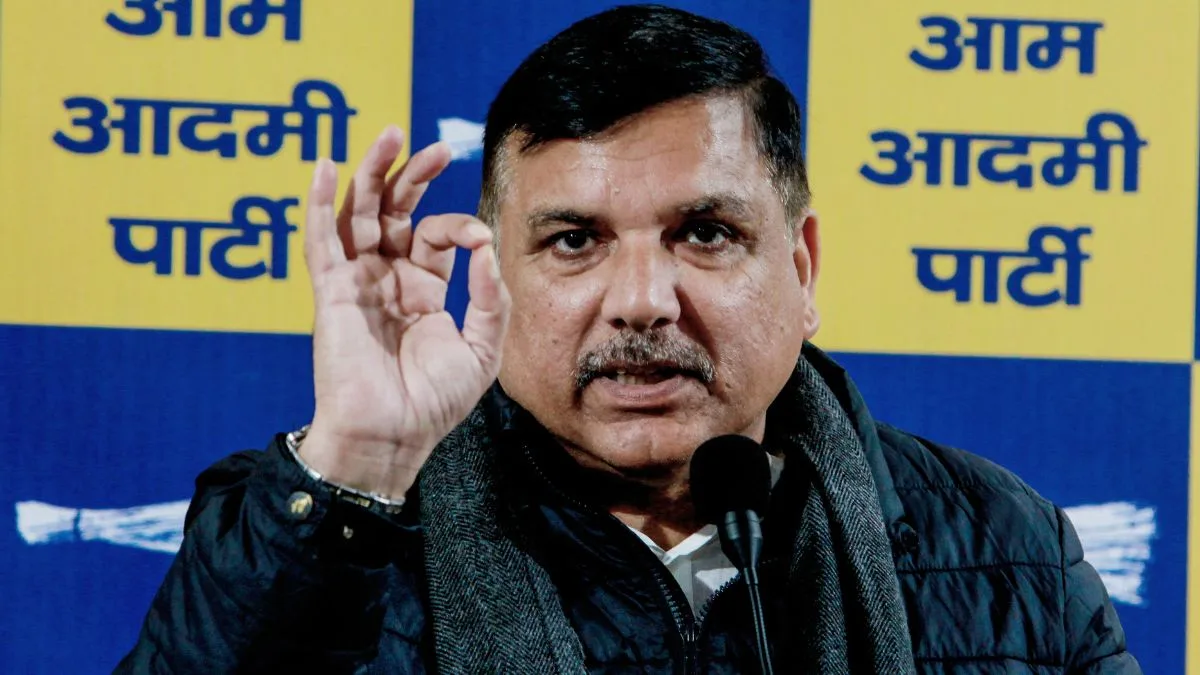
Announcing a decisive fight against unemployment, paper leaks, reservation scams, and increasing social discrimination in Uttar Pradesh, Aam Aadmi Party Uttar Pradesh in-charge and Rajya Sabha MP Sanjay Singh stated that the party will launch the third phase of its ‘Rojgar Do – Samajik Nyay Do Padayatra’ from January 16 to 22.

The padayatra will cover an approximately 90-100 kilometre route from Shaheed Udyan in Mirzapur to Sarnath in Kashi-Varanasi.

He said that the party’s objective is to provide jobs to the youth, constitutional justice to the deprived sections, and make the government accountable to the people.

At a press conference here on Saturday, AAP MP Sanjay Singh said that an organised racket is being run in Uttar Pradesh in the name of employment. “Sometimes paper leaks, sometimes the High Court issues a stay order, and sometimes the government appeals in the Supreme Court. This results in the youth wandering from door to door with files in their hands and dreams in their eyes.”

He said that the future of young people has been ruined by repeated irregularities in examinations for positions such as Lekhpal (revenue officer), Sub-Inspector, Constable, and PCS-J (Provincial Civil Service – Judicial).

Singh alleged that constitutional reservation for OBCs, SCs, and STs in recruitment processes has been systematically undermined. “Whether it’s the 69,000 teacher recruitments, Banda University, Lakhimpur Cooperative Bank, or the Animal Husbandry Department, the right to reservation has been violated everywhere. This reservation is not a gift from the BJP, but a constitutional right, and this right is being trampled upon.” He clarified that social justice is central to the issue, as both jobs and dignity are being snatched away.

He said that incidents of social humiliation have also increased in the state — sometimes an elderly person is humiliated by being forced to drink urine, sometimes a religious preacher’s hair is cut because he belongs to a backward caste, and sometimes a CRPF jawan is prevented from riding a horse. “This has become the picture of Uttar Pradesh, and this padayatra (foot march) will change this very picture.”

Sanjay Singh said that this padayatra will be the voice of every section of society that is fighting for its rights — the weaver community suffering from unemployment, street vendors whose shops have been demolished by bulldozers, ASHA workers, Anganwadi workers, Rozgar Sevaks, Shiksha Mitras, and employees struggling for regularisation and pensions. He appealed to the public to join this movement and put pressure on the government to provide jobs.

He said that the Aam Aadmi Party (AAP) delivers results when it is in power and fights for the people from the streets to Parliament, where it is in the opposition. “A preparatory meeting has already been held in the Kashi region, and we are confident that this third phase will also be historic, just like the first two phases.”

Congress–BJP workers clash in Indore during protest over water contamination tragedy

Police detained at least 45 Congress leaders and workers as a precautionary measure following the clash.

Statesman News Service | Bhopal |

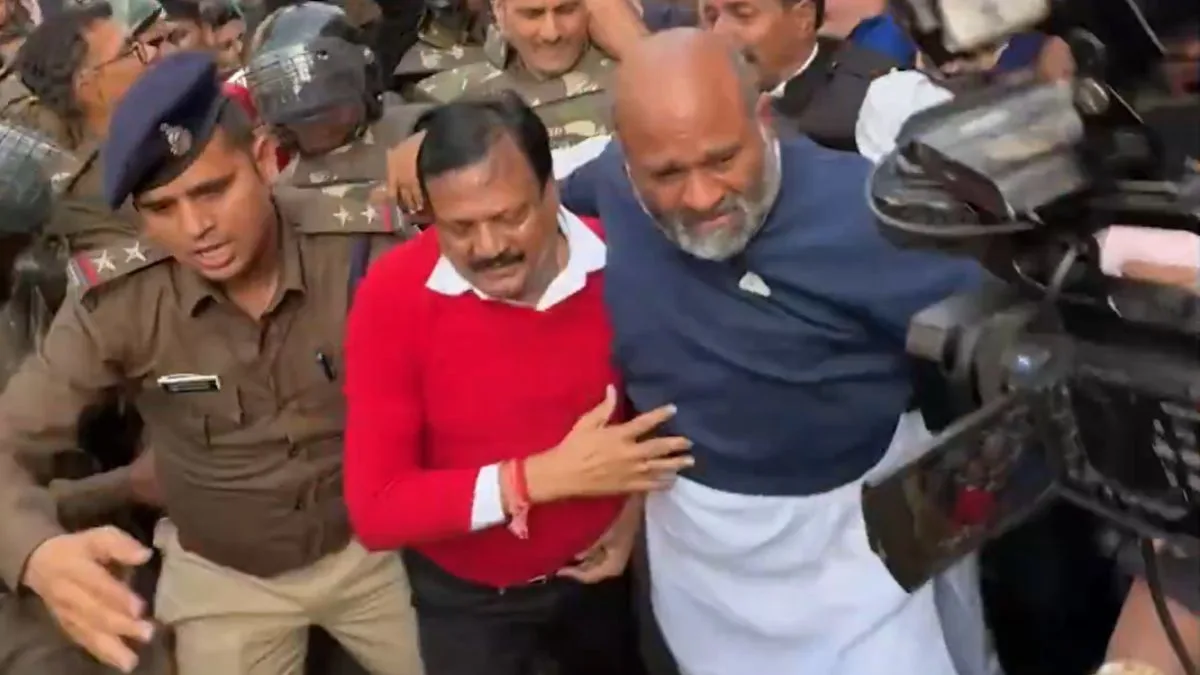
Opposition Congress and ruling BJP leaders and workers clashed in Indore on Saturday during a Congress protest over the drinking water tragedy in the Bhagirathpura locality of the city, which has claimed at least 15 lives so far.

Police detained at least 45 Congress leaders and workers as a precautionary measure following the clash.

The incident occurred when a Congress fact-finding committee, constituted to probe the water contamination tragedy, was heading to Bhagirathpura to meet the affected families.

The committee is led by former state minister Sajjan Singh Verma and includes Congress MLAs Mahesh Parmar and Pratap Grewal.

Sources said BJP workers gathered at the spot, waved black flags at the Congress delegation, and raised slogans asking them to go back. Congress workers responded with slogans of their own, leading to a tense situation.

Workers from the rival parties then clashed, scuffling with each other and hurling slippers.

Amid the commotion, police escorted members of the Congress committee and other party leaders out of Bhagirathpura and took them to the central jail.

According to Indore Deputy Commissioner of Police Rajesh Vyas, 45 people, including 10 women, were detained as a precautionary measure and later released on bail.

The Congress, however, alleged that the police acted at the behest of the ruling BJP and prevented its leaders from meeting the affected families.

Digital arrests, cyber fraud new challenges for judiciary: CJI Surya Kant

He said offences like “digital arrests” and other forms of cyber crimes committed day and night, causing harassment, most particularly to the senior citizens, are the latest and new challenges that the Indian judiciary is facing.

Imran Mojib | Patna |

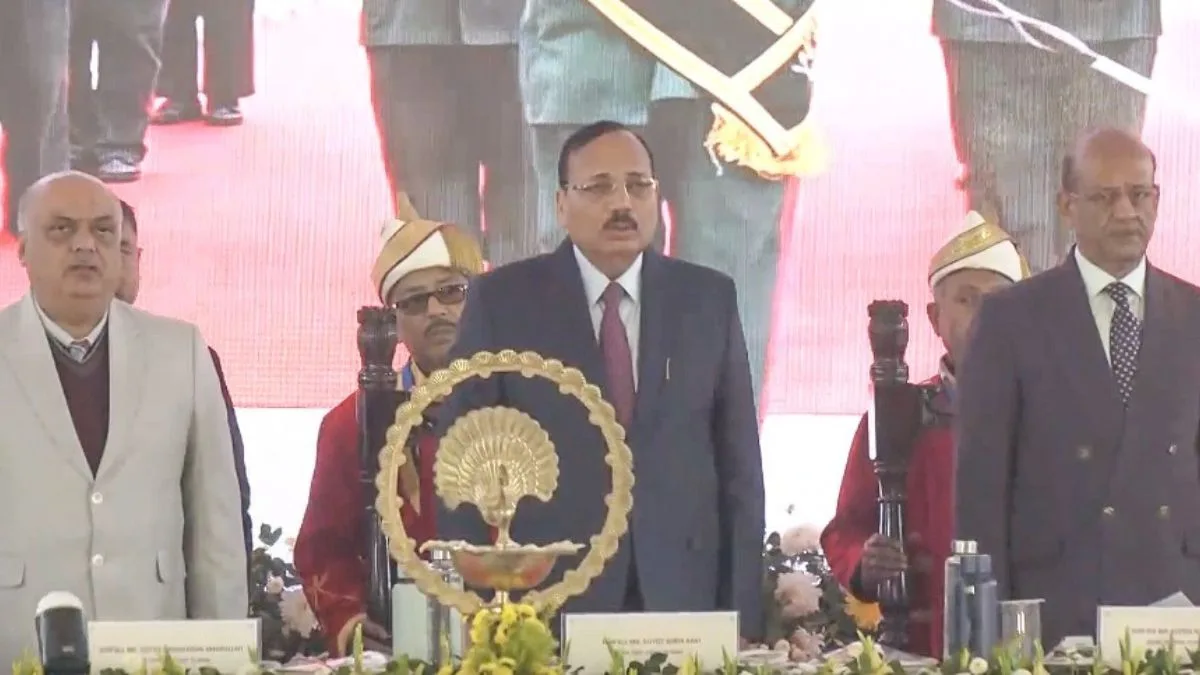
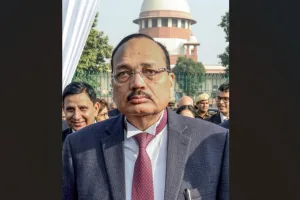
Chief Justice India Justice Surya Kant on Saturday emphasised the need for the judiciary to keep pace with the growing complexities of civil and criminal laws, particularly in view of the rapidly expanding domain of cybercrime.

He said offences like “digital arrests” and other forms of cyber crimes committed day and night, causing harassment, most particularly to the senior citizens, are the latest and new challenges that the Indian judiciary is facing. “Sensitive training and continuous updating of judicial officers to deal with these kinds of modern-day challenges is extremely important,” he added.

Addressing a function at the Patna High Court to mark laying of foundation stones for various projects, he asserted that continuous learning is essential to maintaining judicial relevance and credibility. “Judicial education in a changing legal landscape is an extremely vital component of our day-to-day activity. The judiciary today, let’s acknowledge, operates in an environment of unprecedented change. Courts are increasingly called upon to address disputes arising from technological innovation, economic complexity, social transformation and evolving rights jurisprudence. Public expectations from the justice delivery system are higher than ever. In this context, judicial education can’t remain static or episodic,” he said.

The CJI also called on the judges to remain “intellectually agile, socially aware and ethically grounded”. “Judicial academies thus serve as the institutional mechanism through which this ongoing education is structured and sustained. They provide judges with the tools to interpret the law in a manner that is principled, pragmatic and sensitive to the live realities of the litigants,” he added.

Later, speaking at the convocation ceremony of Chanakya National Law University, Patna, Chief Justice Suryakant said greatness is not determined by birth or position, but by one’s actions.

He told the students that their success is the result of continuous hard work, discipline, and patience. He advised young lawyers to recognise their self-worth and not be afraid of failures. He also mentioned Bihar’s rich intellectual tradition and emphasised the importance of maintaining balance in life.

ECI invites suggestions from citizens to improve ECINet by January 10

“Citizens can now give their suggestions till the 10th of January, 2026,” the ECI said in a statement on Saturday.

Statesman News Service | New Delhi |

The Election Commission of India (ECI) on Saturday invited all citizens of the country to download the ECINet App and give their suggestions to improve the App by using the ‘Submit a Suggestion’ tab on it.

“Citizens can now give their suggestions till the 10th of January, 2026,” the ECI said in a statement on Saturday.

The trial versions of the ECINet App enables better voter services, quicker availability of polling percentage trends, and the publication of Index Cards within 72 hours of the close of polls, an exercise that previously took several weeks or months.

“The app was successfully tried out during the Bihar Assembly Elections 2025 and the bye-elections,” the statement said.

The platform is being continually improved and refined based on the feedback from CEOs, DEOs, EROs, Observers, and field officials. The user suggestions will be examined and the platform will be further updated to make it more user-friendly.

The ECINet platform will officially be launched this month.

ECINet is one of the major initiatives the Commission has taken under the leadership of Chief Election Commissioner Gyanesh Kumar along with Election Commissioners Dr. Sukhbir Singh Sandhu and Dr. Vivek Joshi. Work on the development of the ECINet App started after its announcement on May 4, 2025.

ECINet App is a single unified App for citizens integrating the earlier 40 separate election related Applications/websites such as Voter Helpline App (VHA), cVIGIL, Saksham, Polling Trends (Voter Turnout App), Know Your Candidate (KYC) App, into one interface.

The App can be downloaded on both Google Play store and Apple App Store.

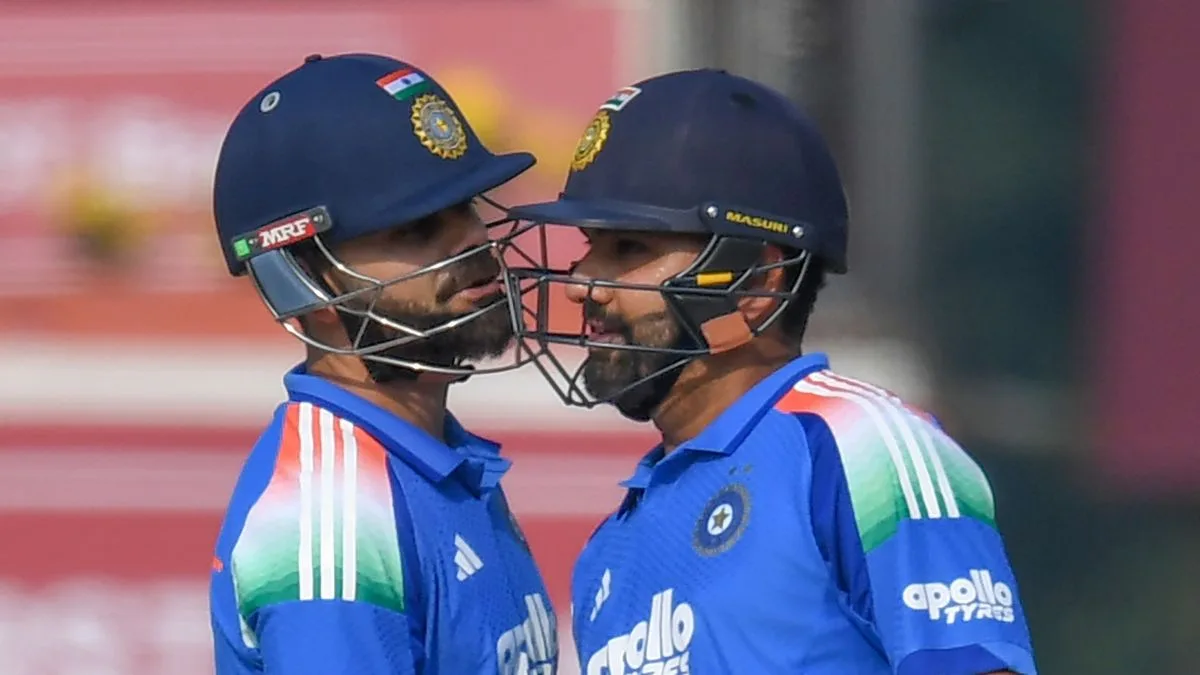
Irfan Pathan urges Rohit, Kohli to stay match-ready with domestic cricket

As the team gradually turns its attention towards the 2027 ODI World Cup, former India all-rounder Irfan Pathan has called on the experienced duo to stay actively engaged in domestic cricket whenever they are not part of international assignments.

Statesman News Service | New Delhi |

India will begin their 2026 season with a home white-ball series against New Zealand, starting with a three-match ODI contest that marks the return of senior batters Rohit Sharma and Virat Kohli in national colours.

As the team gradually turns its attention towards the 2027 ODI World Cup, former India all-rounder Irfan Pathan has called on the experienced duo to stay actively engaged in domestic cricket whenever they are not part of international assignments.

Speaking on JioStar, Pathan highlighted the importance of consistent match exposure for Rohit and Kohli, especially at a stage where both feature primarily in the 50-over format. He stressed that sustained playing time will be crucial as India build momentum towards the next World Cup cycle.

“You definitely want to think about the ICC 2027 ODI World Cup. It is far away, but I just want to see both Rohit and Kohli playing for the longest time, for India and when not playing international cricket, in domestic cricket. They are playing just one format and nothing else, so the more they play, the better it is,” Pathan said.

Pathan also touched upon the expanding leadership responsibilities shouldered by Shubman Gill, who has emerged as a key figure in India’s Test and ODI setups. He acknowledged that captaining the national side at a relatively young age brings added pressure, but felt that such challenges are part of the natural progression of a top-level cricketer.

Recalling advice he received early in his own career, Pathan said, “When I was picked for the first time, at 19 years of age, the great Rahul Dravid said, ‘Irfan, it’s good that you have reached this level, but things will only get difficult from here on.’ Upon asking him, What should I do if things do get difficult? He replied, ‘You will get used to handling it…’ and the same will happen with Shubman Gill.”

Pathan pointed to Gill’s recent growth, particularly during the tour of England, as a sign of his increasing authority within the side. “One good thing that happened on the England tour for Shubman was that his Test average improved, and his authority over the team also increased. Now he also has the responsibility in ODIs and it is a huge opportunity for him to grow,” he added.

Addressing the inevitable comparisons between Gill and Kohli, Pathan said such scrutiny comes with exceptional talent and the legacy of past greats. He expressed confidence that Gill has the skill set to meet the high expectations placed on him.

“He is immensely talented, there is no question about that, and comparisons are inevitable. Virat Kohli was constantly compared to Sachin Tendulkar and was expected to perform at that level. Now that Kohli has reached those heights, Gill is being compared to him. There’s expectations that he must match those standards and score close to 25,000–30,000 runs and he certainly has the ability to do so,” Pathan said.

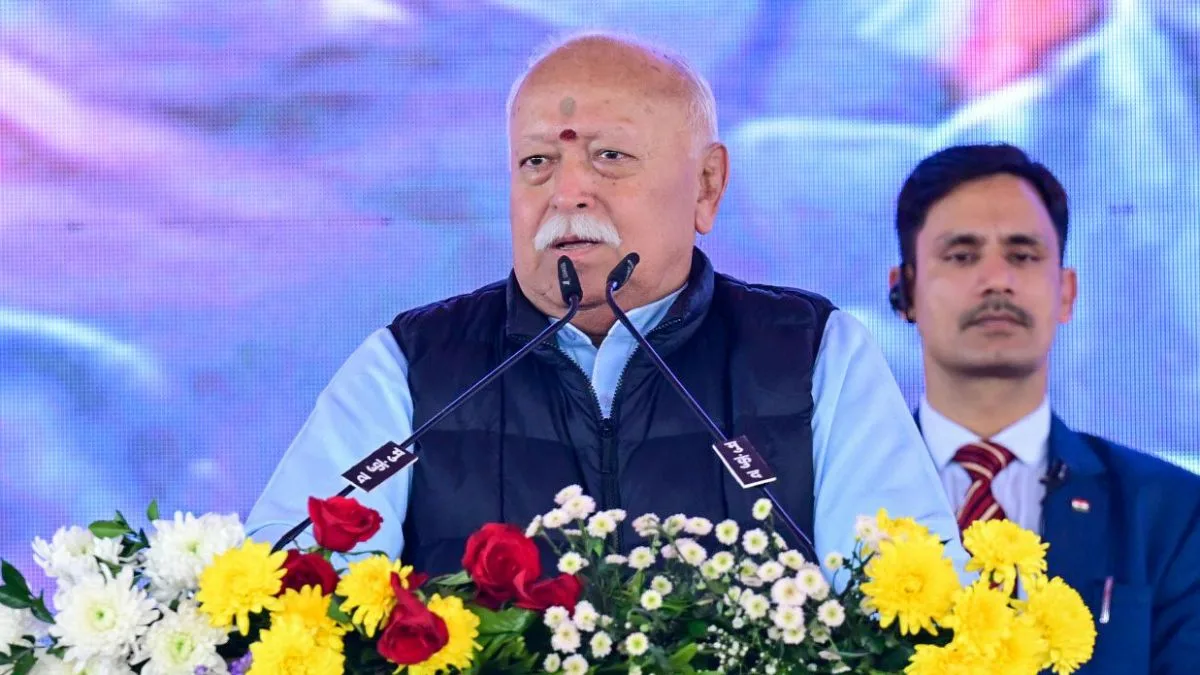
RSS chief Bhagwat calls for support to the last person to end conversions

Addressing a meeting focused on social harmony at Bhopal, Bhagwat called for sustained efforts to eliminate discrimination in society by embracing the most marginalised.

Statesman News Service | Bhopal |

Contending that religious conversions would not end until the weakest sections of society were heard sensitively, Rashtriya Swayamsevak Sangh (RSS) Chief Mohan Bhagwat on Saturday stressed the need to bring even the last person into the mainstream.

Addressing a meeting focused on social harmony at Bhopal, Bhagwat called for sustained efforts to eliminate discrimination in society by embracing the most marginalised. He warned that the society would gain nothing if it failed to stand shoulder-to-shoulder with the weakest sections.

He said conversions would continue unless the last person in society was supported, heard, and respected. “If we do not stand shoulder-to-shoulder with the last person, it will not benefit society or the country, and conversions will not stop,” Bhagwat told the participants of the event.

Praising Pandit Deendayal Upadhyaya for articulating the philosophy of “Integral Humanism” (Ekatma Manavata Vad) with the central tenet of Antyodaya. He with Antyodaya, the RSS leader and ideologue of the Bharatiya Jana Sangh (BJS), the forerunner to the BJP, the RSS Chief, meant the “upliftment of the last person” or “serving the last person in the queue,” focusing on prioritising the welfare of the most marginalized.

As per an RSS statement, Bhagwat said social harmony was intrinsic to Indian society and stressed the need for sustained dialogue and collective effort to strengthen it. Attempts were being made to create divisions by spreading confusion among tribal and other communities, while people living in the subcontinent for thousands of years shared the same DNA.

The RSS chief underlined the need for continuous engagement and mutual understanding and said the strong must support the weak, it added.

Representatives from various social groups and organisations from 16 administrative districts of the RSS’s Madhya Bharat prant participated in the meeting, which was held in two sessions. The meeting ended with a resolution that society would address local issues through collective efforts without waiting for government intervention, with speakers emphasising the goal of strengthening society as a whole, the release said.

UP govt’s constitutes special team of ‘cyber commandos’

These commandos have been trained to prevent cybercrime and fraud by experts from various top institutions across the country, modeled on SPG and NSG commandos.

Statesman News Service | Lucknow |

The Uttar Pradesh government has formed a special team of “Cyber Commandos” to break the back of cybercriminals and curb cybercrime.

These commandos have been trained to prevent cybercrime and fraud by experts from various top institutions across the country, modeled on SPG and NSG commandos.

Just as NSG and SPG commandos are skilled in their field of work, they too are equally skilled in their field of work (preventing cybercrime). Furthermore, these cyber commandos have been equipped with high-tech technology and tools to completely destroy the networks of cyber criminals.

Cyber/CID DG Vinod Kumar Singh stated here on Saturday that Chief Minister Yogi Adityanath had directed necessary steps to effectively curb cybercrime in the state. “In accordance with the Chief Minister’s wishes, a special team of “cyber commandos” has been formed, equipped with state-of-the-art technology. This team comprises a total of 15 police personnel. These cyber commandos will not only curb cybercrime and digital crimes, but will also play a vital role in providing a safe digital environment for ordinary citizens,” he said.

The structure and training of these commandos is modeled after that of SPG and NSG commandos. Just as special forces work for the internal and external security of the country, Cyber Commandos will take on criminals in the digital world.

He explained that the expertise of the country’s prestigious technical and security institutions was utilized in preparing these 15 Cyber Commandos. They were trained by experts from IIT Kanpur, Naya Raipur, Madras, and the National Defence University (RRU), Gujarat. They also received training in modern techniques related to cyber forensics, digital tracing, and online crime investigation from the National Forensic Sciences University (NFSU), Gujarat, and New Delhi, he said.

The Cyber/CID DG stated that in the first phase, 15 select police personnel received specialized training. They were selected based on their technical proficiency, analytical abilities, and field experience. These commandos will subsequently train other police personnel, significantly enhancing the state’s ability to combat cybercrime.

After completing the training, the cyber commandos have been deployed at the police zone and headquarters levels. Its objective is to take prompt and technically competent action as soon as a cyber crime is reported. These commandos will play a special role in cases such as cyber fraud, online fraud, online cyber attacks, social media crimes, data theft, phishing, and digital blackmailing. Cyber commandos are also providing technical training to district and police station-level police personnel to better identify and investigate cyber crimes at the grassroots level.

From a hired house in Daryaganj to the commanding heights of India’s economy

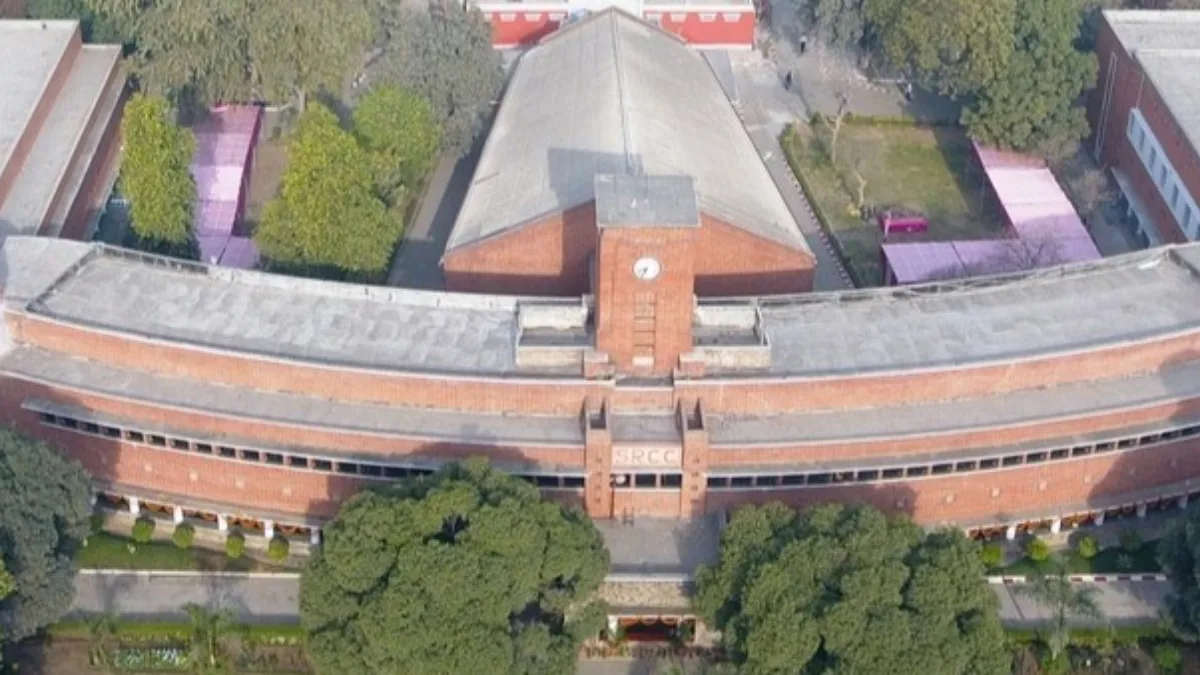
In 1926, an idea took shape with the founding of the Commercial College, operating modestly out of a hired house in Delhi’s Daryaganj, with just 12 students on its rolls. In 1951, it was rechristened the Shri Ram College of Commerce, and three years later, it shifted to its present campus at Delhi University’s North Campus.

UNI | New Delhi |

When Sir Shri Ram, one of India’s early 20th-century most forward-looking industrialists, set up the Commercial Education Trust in 1920, the country was still under colonial rule, its economy an appendage to Great Britain’s, its ambitions restrained by the need to serve the empire.

Shri Ram had the ability to dream of a quietly radical institution that would treat commerce not as a subsidiary skill, but as a national necessity, a discipline capable of producing economic self-reliance.

This was the period when India’s newly emergent leadership was keen to foster economic nationalism and produce a class of entrepreneurs who would set up the new “temples of modern India” – factories, mines, research institutes – which would create a more prosperous India.

Along with his brother-in-law Lala Sher Singh, his friend Lala Diwan Chand, and a small circle of associates, Sir Shri Ram believed that education in trade, finance, and economics could help shape this modern India long before political freedom arrived.

Commerce, in their view, was not merely about profit, it was a vital instrument in building the new India that people wanted to see emerge.

In 1926, that idea took shape with the founding of the Commercial College, operating modestly out of a hired house in Delhi’s Daryaganj, with just 12 students on its rolls. In 1951, it was rechristened the Shri Ram College of Commerce, and three years later, it shifted to its present campus at Delhi University’s North Campus.

The inauguration of the campus by Dr Sarvepalli Radhakrishnan, then Vice-President of India and later President, marked a recognition that commerce education had arrived and was being placed at the heart of India’s intellectual life.

There were no grand buildings, no promise of prestige, a mere idea rooted in discipline, rigour, and relevance to the real economy. A century later, that experiment with a dozen students has evolved into Shri Ram College of Commerce, or SRCC as its students and alumni call it, with more than 3,000 students and nearly 150 academic staff.

Universally regarded as India’s premier institution for commerce and economics, it is increasingly seen as one of the country’s most meaningful contributors to India’s economic leadership.

Over the decades, SRCC has produced a remarkable roster of alumni who have shaped boardrooms, markets, policy corridors, and newsrooms, both in India and abroad.

Arun Jaitley, who would go on to become one of India’s most influential finance ministers, was among its most prominent graduates. So were Anshu Jain, former co-chief executive of Deutsche Bank; Pramod Bhasin, the founder and CEO of Genpact; Amitabh Jhunjhunwala of the Reliance ADAG Group; and Rajat Sharma, the founder of India TV.

Its alumni occupy senior leadership roles across global corporations, at Bharti Airtel, Dalmia Cement, and Deloitte, extending into the worlds of finance and policy.

Ruchir Sharma, now chairman of Rockefeller International, is among its best-known global voices on emerging markets. Judges of the Supreme Court – Arjan Sikri and Rohington Fali Nariman – were also among those who are part of this college’s alumni.

Sanjeev Sanyal, a member of the Prime Minister’s Economic Advisory Council, represents its imprint on contemporary policymaking. Political figures such as Jitin Prasada and Vijay Goel further underscore the institution’s reach beyond economics into governance.

Taken together, they form an influential network that mirrors India’s own economic rise from a controlled economy to a globally celebrated one. That ascent has gathered fresh momentum in recent years.

On Friday, this alumni toasted the success story of their alumni at a glittering function at their alma mater, with Delhi University’s Vice Chancellor Yogesh Singh describing the college a “globally recognised brand” whose contribution cannot be measured just by rankings. “A hundred years is long enough to build institutions, shape generations and influence the journey of a nation. SRCC has done all three,” he said.

India’s emergence as the world’s fourth-largest economy, surpassing long-established industrial powers, has revived attention on the institutions that quietly supplied the country and the world at large with trained minds to lead its growth story.

Universities and colleges, economists and administrators, these are not usually the stars of economic narratives. But without them, growth stories tend to collapse under their own weight.


Railway Minister Vaishnaw inspects newly-designed first-ever Vande Bharat sleeper train

The semi-high-speed train with design speed up to 180 kmph will have 16 coaches, including 11 three-tier AC coaches, 4 two-tier AC coaches, and 1 first-class AC coach, with a total capacity of around 823 passengers.

Statesman News Service | New Delhi |

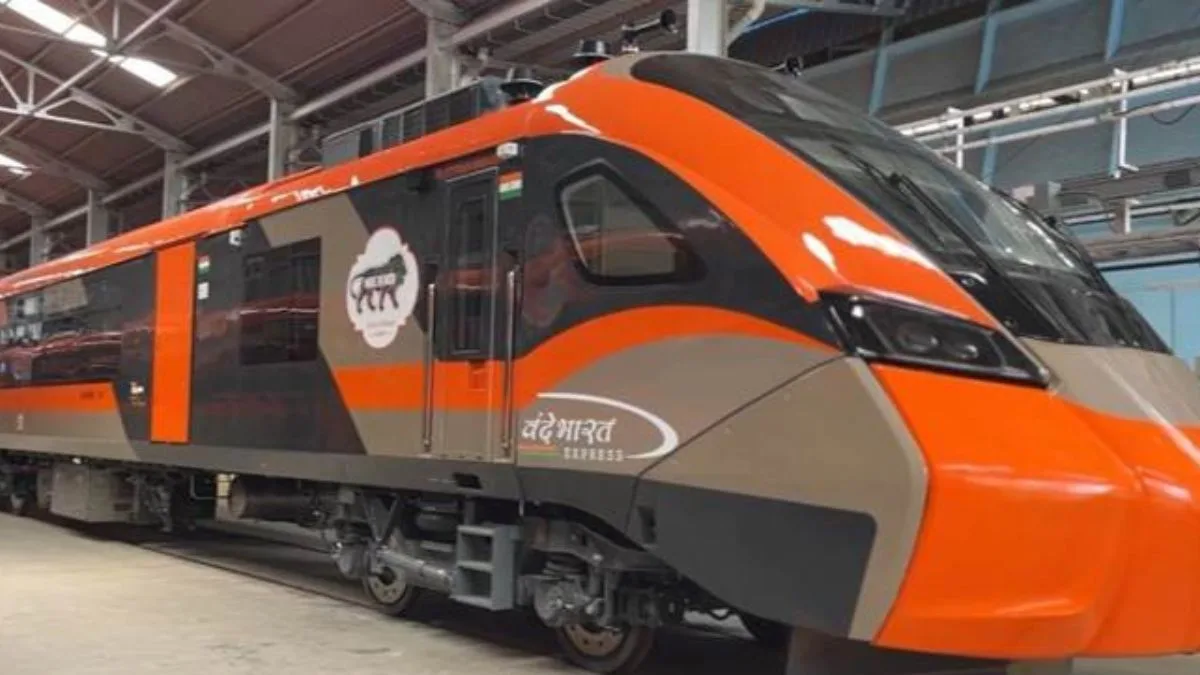
Railway Minister Ashwini Vaishnaw on Saturday inspected the newly-designed first-ever Vande Bharat sleeper train in New Delhi. The train will operate between Guwahati in Assam and Howrah in West Bengal.

The semi-high-speed train with design speed up to 180 kmph will have 16 coaches, including 11 three-tier AC coaches, 4 two-tier AC coaches, and 1 first-class AC coach, with a total capacity of around 823 passengers.

Following inspections, while interacting with media persons here, Vaishnaw said that the fare of this train has been kept reasonable.

He said Vande Bharat sleeper trains are fitted with the KAVACH system, which is an Automatic Train Protection (ATP) system designed to prevent accidents by monitoring speeds, enforcing signals, and automatically applying brakes to stop collisions, overspeeding, and Signal Passing at Danger (SPAD).

“Prime Minister Narendra Modi has a resolve, a vision, to transform the railways completely, and the Vande Sleeper train for overnight journeys is a new effort in that direction. The design of this train is completely new,” the Railway Minister said.

He further said that every aspect has been designed with passenger comfort and safety in mind. “CCTV cameras are pre-fitted, and the Kavach system is also installed. The braking system has been programmed in a completely new way. For passenger comfort, the seats have been designed in a new way,” he added.

He said the first-ever Vande Bharat sleeper train is ready for inauguration after the CRS inspection and subsequent certification. “Two rakes are being shifted to Guwahati and Kolkata. Very soon, in the coming days, the Prime Minister will inaugurate this Vande Bharat sleeper train, ” the Railway Minister informed.

Hearing on claim of ‘existence of ancient Shiv Mandir under Ajmer Dargah’ deferred

The case, filed by chief of outfit Hindu Sena Vishnu Gupta was listed in the Ajmer Civil Court’s cause list on Saturday. However, the hearing could not be held due to “work-boycott” by lawyers.

Statesman News Service | Jaipur |

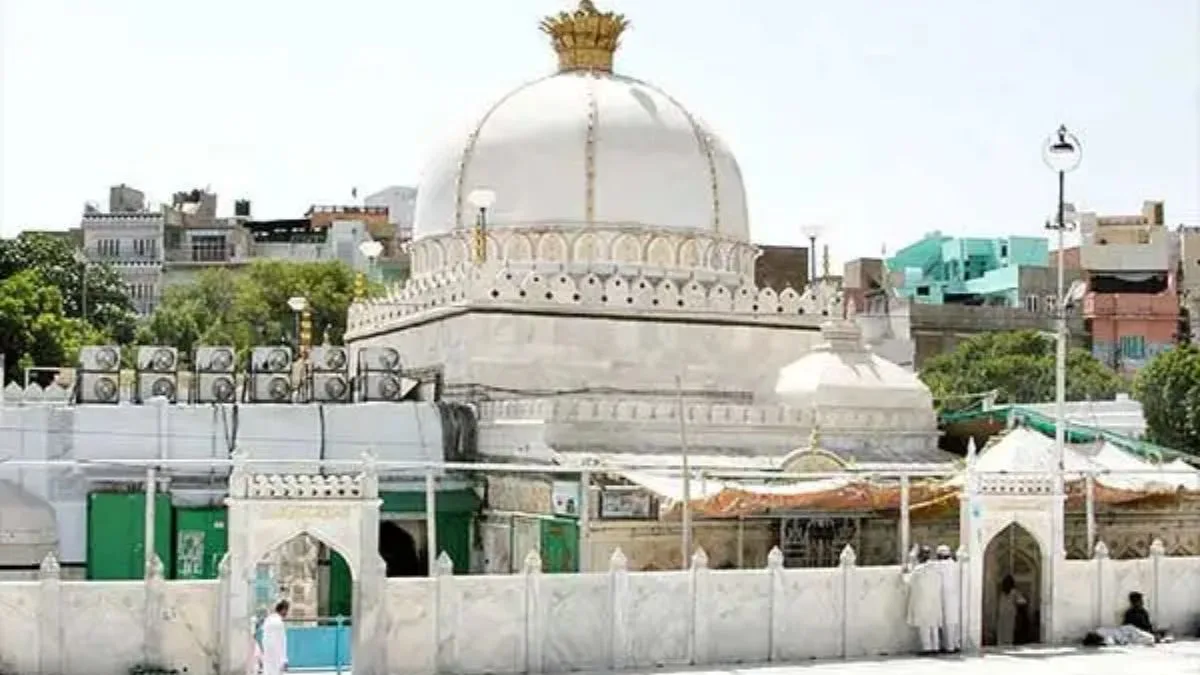
The hearing in the case on the belief that “remains of a Shiv Mandir” beneath the premises of Dargah of Sufi Saint Khwaja Moinuddin Hasan Chisti in Ajmer was deferred until February 21 next month.

The case, filed by chief of outfit Hindu Sena Vishnu Gupta was listed in the Ajmer Civil Court’s cause list on Saturday. However, the hearing could not be held due to “work-boycott” by lawyers.

In his case, Plaintiff Gupta has claimed that there was a Shiv Temple in the Dargah Sharif premises in the ancient era. “Traces — remnants of which are still buried beneath the earth in the Dargah premises,” he claimed and prayed before the court to order for special survey by Archeological Survey of India (ASI) for ascertaining the existence of (claimed) Shiv Temple.

The Anjuman Committee, one of the respondents, has prayed for summary dismissal of the case, calling it a sort of gimmick aimed at garnering cheap publicity.

The organisation has also stated in its application that the case is not maintainable in the light of the Places of Worship Act 1991.

Before proceeding with the hearing in the case, the court is likely to decide on the application pending before it under 7/11 CPC, (Order VII Rule 11 of the Code of Civil Procedure – 1908) – that allows courts to summarily reject a plaint at the outset, if it lacks a valid cause of action, is barred by law, is undervalued, or fails to meet other basic legal requirements, preventing frivolous litigation.

Jalandhar Man killed in Russia-Ukraine war, family alleges forced recruitment

The deceased has been identified as Mandeep Kumar, a resident of the Goraya area.

UNI | Chandigarh |

A 30-year-old man from Jalandhar district of Punjab has died in the ongoing Russia-Ukraine conflict, with his family alleging that he was forcibly recruited into the Russian military after being misled by travel agents.

The deceased has been identified as Mandeep Kumar, a resident of the Goraya area.

According to family members, Mandeep had travelled abroad in search of employment after being assured of job opportunities by agents. He initially left India in September 2023, along with a relative and a few acquaintances, and reached Armenia, where the group reportedly worked for several months. In December 2023, they moved to Russia, after which contact with Mandeep gradually ceased.

Relatives said that while others returned to India, Mandeep remained in Russia under unclear circumstances. The family later learned that he had allegedly been inducted into the Russian army against his will and subsequently lost his life during the conflict.
They also claimed that Mandeep was physically-challenged, raising questions over how he could have been recruited.
Following his disappearance, the family approached local authorities and sought assistance from both state and central governments.

Mandeep’s brother said he also travelled to Russia to gather information and is now seeking answers from the Ministry of External Affairs and Russian authorities.

After months of uncertainty, officials confirmed Mandeep’s death, and his mortal remains have been brought back to India. The family said the body will be taken to Jalandhar for the last rites, as the community mourns the loss and demands accountability in the case.