Logo

Putting the squeeze

The decision to suspend dozens of international humanitarian organisations from operating in Gaza is not just a regulatory adjustment; it is a political statement about who gets to define legitimacy in a war zone.

Statesman News Service | New Delhi |

The decision to suspend dozens of international humanitarian organisations from operating in Gaza is not just a regulatory adjustment; it is a political statement about who gets to define legitimacy in a war zone. By tightening registration rules and enforcing them at a moment of extreme civilian vulnerability, Israel has redrawn the boundaries of humanitarian space in ways that will be felt most acutely by ordinary people in Gaza. At the heart of the controversy lies a fundamental clash between security logic and humanitarian principle. Israel argues that stricter oversight is necessary to prevent militant infiltration and the misuse of aid structures.

In isolation, that concern is not unreasonable in a conflict shaped by asymmetric warfare. Yet humanitarian action operates on neutrality, independence, and trust ~ values that unravel when aid agencies are asked to share sensitive personal data of local staff or conform to politically framed loyalty tests. In such an environment, compliance can endanger lives rather than protect them. The claim that affected organisations contribute only marginally to overall aid volumes is dubious and quite misses the point. Humanitarian work is not a simple matter of tonnage. Aid agencies sustain systems: hospital beds that function every day, water networks that prevent disease outbreaks, nutrition programmes that keep malnourished children alive long enough to recover.

Removing even a fraction of these actors can create cascading failures, especially in a densely populated territory already pushed to the edge. More worrying is the precedent being set. When humanitarian access becomes contingent on political alignment or expansive security vetting, aid risks being transformed from a legal obligation into a discretionary tool of state policy. Accusations against individual organisations, made publicly and without substantiated evidence, further corrode trust and place aid workers at greater risk. In conflicts around the world, the safety of humanitarian staff rests largely on their perceived neutrality. Undermining that perception has consequences far beyond any single theatre of war. There is also a strategic dimension. By narrowing the field of permissible humanitarian actors, Israel assumes greater responsibility for ensuring that aid continues uninterrupted and at scale. That is a heavy burden in a territory facing widespread displacement, fragile health infrastructure, and lingering food insecurity. Any shortfall will not be measured in diplomatic criticism alone but in human suffering that is both visible and preventable.

Ultimately, the question is not whether states have the right to regulate who operates within their borders, but how that right is exercised during humanitarian emergencies. In Gaza, the suspension of aid organisations risks turning regulatory power into a blunt instrument. If humanitarian access continues to shrink, the cost will not be borne by institutions or governments, but by civilians whose survival depends on a fragile web of assistance that is now being deliberately thinned.

Vijay Hazare Trophy Round 6: Shubman Gill, Shreyas Iyer make their first appearances

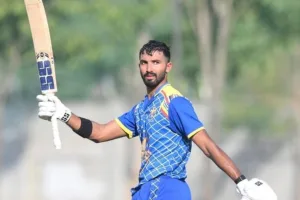
The round is set to draw significant attention with the return of two of India’s most awaited stars, Shubman Gill and Shreyas Iyer, both making their first appearances in the tournament.

Neha Buswal | New Delhi |

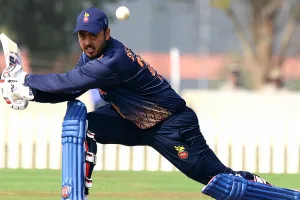
Round 6 of the Vijay Hazare Trophy will be played on Tuesday, January 6, with all matches scheduled to begin at 9:00 AM IST. The round is set to draw significant attention with the return of two of India’s most awaited stars, Shubman Gill and Shreyas Iyer, both making their first appearances in the tournament.

Gill has been named in Punjab’s squad for their Elite Group C clash against Goa. The right-hander was scheduled to feature in Punjab’s previous game but was ruled out due to food poisoning. Having been included in India’s ODI squad for the upcoming series against New Zealand, Gill will be keen to make a strong statement and build momentum ahead of the international assignment.

Meanwhile, Shreyas Iyer is set to make his comeback after recovering from a spleen injury sustained in October last year. The Mumbai batter will turn out for Mumbai against Himachal Pradesh in Elite Group C, marking his first competitive appearance since the injury. Although Iyer has been named vice-captain of India’s ODI squad, his selection is still subject to medical clearance. This match presents a crucial opportunity for him to prove his fitness and form before the international series begins.

Vijay Hazare Trophy Round 6: Toss updates

 Due to heavy fog in the morning, the toss was delayed in the Jaipur matches.

  • Punjab won the toss and elected to field first (40-over contest due to the fog delay).
  • Himachal Pradesh won the toss and elected to bowl first (33 overs per side).
  • Uttarakhand won the toss and elected to field first.
  • Maharashtra won the toss and elected to field first.
  • Bihar opts to field against Manipur (Plate group final)
  • Andhra opts to field against Haryana
  • Kerala opts to field against Pondicherry
  • Baroda opts to bat against J&K
  • Saurashtra opts to field against Services
  • Railways opts to bat against Delhi
  • Vidarbha opts to field against UP
  • Bengal opts to field against Hyderabad
  • Jharkhand opts to field against Madhya Pradesh
  • Tripura opts to field against Tamil Nadu
  • Assam opts to bat against Chandigarh
  • Rajasthan opts to field against Karnataka


Vijay Hazare Trophy Round 6: Matches today

 Elite Group A

  • Kerala vs Puducherry (Ahmedabad)
  • Tamil Nadu vs Tripura (Ahmedabad)
  • Karnataka vs Rajasthan (Ahmedabad)
  • Jharkhand vs Madhya Pradesh (Ahmedabad)

Elite Group B

Matches in Elite Group B are being played in Rajkot and include:

  • Baroda vs Jammu & Kashmir
  • Bengal vs Hyderabad
  • Uttar Pradesh vs Vidarbha
  • Assam vs Chandigarh.

Elite Group C

Elite Group C matches are taking place in Jaipur, featuring:

  • Sikkim vs Uttarakhand
  • Himachal Pradesh vs Mumbai
  • Goa vs Punjab
  • Chhattisgarh vs Maharashtra.

Elite Group D

Alur is hosting the Elite Group D matches, which are:

  • Saurashtra vs Services
  • Delhi vs Railways
  • Andhra vs Haryana
  • Gujarat vs Odisha.

Plate Group Final

The Plate Group Final is between Bihar and Manipur in Ranchi.

Elusive Peace

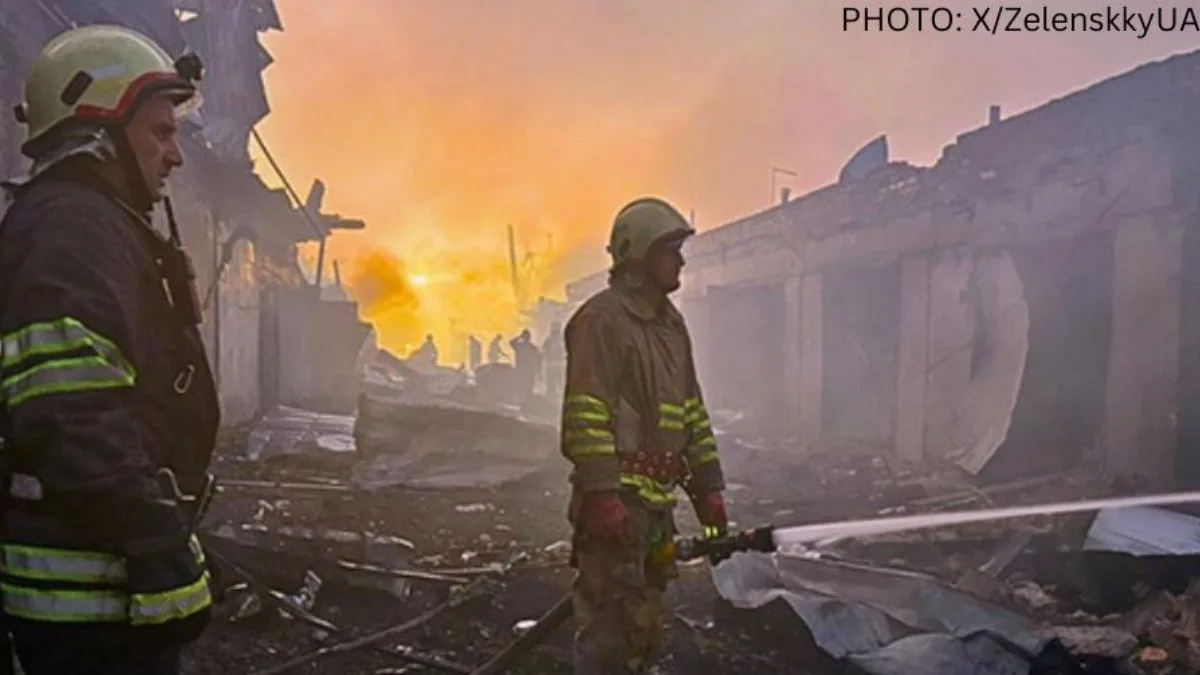
The renewed talk of peace in Ukraine carries an air of exhaustion rather than optimism. After years of attrition, all sides speak the language of negotiation, yet the distance between words and reality remains vast.

Statesman News Service | New Delhi |

The renewed talk of peace in Ukraine carries an air of exhaustion rather than optimism. After years of attrition, all sides speak the language of negotiation, yet the distance between words and reality remains vast. What is often described as a handful of “thorny issues” is, in truth, a set of foundational disagreements about territory, security and legitimacy that cannot be smoothed over by diplomatic sequencing alone. At the heart of the impasse lies eastern Ukraine. Control over Donbas is not simply about lines on a map; it is about law, identity, and the precedent set for future borders.

For Kyiv, surrendering territory would mean legitimising conquest and abandoning citizens who still live under bombardment. For Moscow, partial withdrawal would undercut a war narrative that has been legally and politically locked into place. Any formula that postpones this contradiction rather than resolving it risks freezing the conflict without truly ending it. The debate over the Zaporizhzhia Nuclear Power Plant, Europe’s largest such plant, reinforces this dilemma. Technical solutions ~ joint management, international oversight, revenue-sharing ~ sound plausible in isolation. But nuclear infrastructure is inseparable from sovereignty and trust. Without confidence in intentions, shared control becomes another battleground rather than a bridge.

The plant’s continued shutdown is itself a symbol of paralysis: too dangerous to operate, too valuable to relinquish. External mediation adds urgency but not clarity. US President Donald Trump presents himself as a dealmaker impatient with stalemate, yet speed is a poor substitute for consent. Ukraine’s President Volodymyr Zelenskky cannot accept an agreement that lacks democratic legitimacy or credible security guarantees. Russian President Vladimir Putin, meanwhile, appears to calculate that time, attrition, and military pressure may still yield more than compromise. Each actor is constrained by domestic politics, legal commitments and strategic narratives that make retreat costly. The question of trust looms over every proposal. Accusations, denials, and counterclaims continue even as negotiations advance, suggesting that both sides are preparing for failure as much as success. In such an environment, ceasefires are viewed not as confidence-building measures but as tactical pauses. This mutual suspicion ensures that even small concessions are interpreted as weakness rather than goodwill.

Calls for a popular vote in Ukraine expose the final fault line. A referendum could anchor any settlement in public consent, yet organising one requires a degree of stability that the war itself has eroded. Opponents see this as delay; supporters see it as the only way to prevent a peace that collapses under its own illegitimacy. The uncomfortable truth is that peace is being discussed not because the core issues have softened, but because the costs of continuing the war have become unbearable. Until the fundamental clash between territorial ambition and sovereign consent is addressed, negotiations may deliver a pause ~ but not the peace that Ukrainians, Russians and the wider world desperately seek.

Former Union Minister Suresh Kalmadi passes away at 81 in Pune after prolonged illness

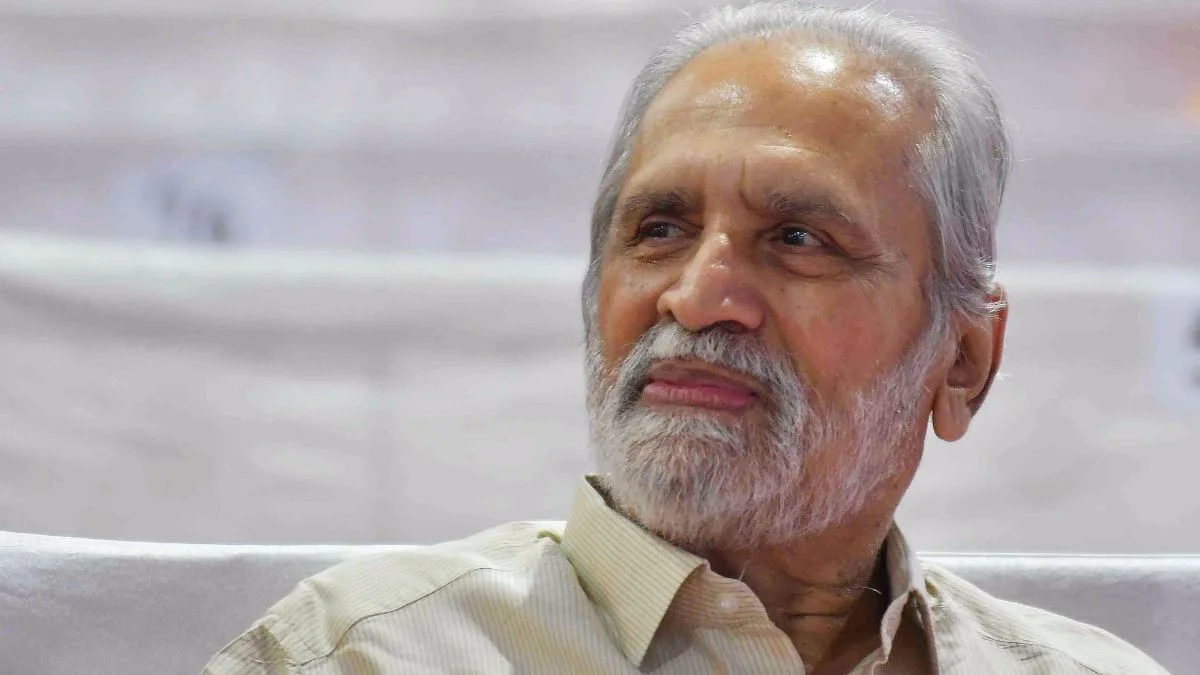
Former Union Minister and senior Congress leader Suresh Kalmadi died in Pune at the age of 81 after a prolonged illness, an official release confirmed.

Statesman News Service | Mumbai |

Senior Congress leader and former Union Minister Suresh Kalmadi passed away early Tuesday morning in Pune. He was 81.

An official statement said Kalmadi died at around 3.30 am after a prolonged illness. He was undergoing treatment at Deenanath Mangeshkar Hospital.

A long-time parliamentarian from Pune, Kalmadi served as Minister of State for Railways. He was also a key figure in Indian sports administration for over a decade.

Last rites to be held in Pune

According to the family, Kalmadi is survived by his wife, a son and daughter-in-law, two daughters, sons-in-law and grandchildren.

His mortal remains will be kept at his Erandwane residence, Kalmadi House, till 2 pm. The cremation will take place at Vaikunth smashanbhumi in Navi Peth at 3.30 pm.

A career spanning politics and sports administration

Born on May 1, 1944, in Madras (now Chennai), Kalmadi had roots in Mangalore and completed his schooling and higher education in Pune. He studied at St Vincent’s High School and Fergusson College before joining the National Defence Academy. He later underwent aviation training at the Air Force Flying College.

Kalmadi entered politics in the early 1980s and went on to represent Maharashtra multiple times in Parliament. He served four terms in the Rajya Sabha and three terms in the Lok Sabha from Pune.

He rose to prominence in sports administration after becoming president of the Indian Olympic Association in 1996. He held the post for several consecutive terms, overseeing India’s participation in major international sporting events.

His public career, however, was overshadowed in later years by corruption cases linked to the 2010 Commonwealth Games. He was arrested by the CBI in 2011 in connection with alleged irregularities in contracts awarded for the Games. Kalmadi denied the charges, calling them politically motivated. Legal proceedings continued for several years.

Despite the controversy, he received the Asian Athletics Association President’s Award in 2015 for his contribution to athletics in Asia.

Crisis of Accountability

The recent blaze at a venerable Parsi temple in Kolkata casts a spotlight on a troubling trend affecting India at large. The chaotic maze of overhead electrical wires, frequently overlooked in maintenance, stands as a principal contributor to fire outbreaks.

S. S. SAXENA | New Delhi |

The recent blaze at a venerable Parsi temple in Kolkata casts a spotlight on a troubling trend affecting India at large. The chaotic maze of overhead electrical wires, frequently overlooked in maintenance, stands as a principal contributor to fire outbreaks. This escalating issue, which brings considerable losses and hazards, has alarmingly become routine. Consider the pattern of tragedies that have scarred our collective memory.

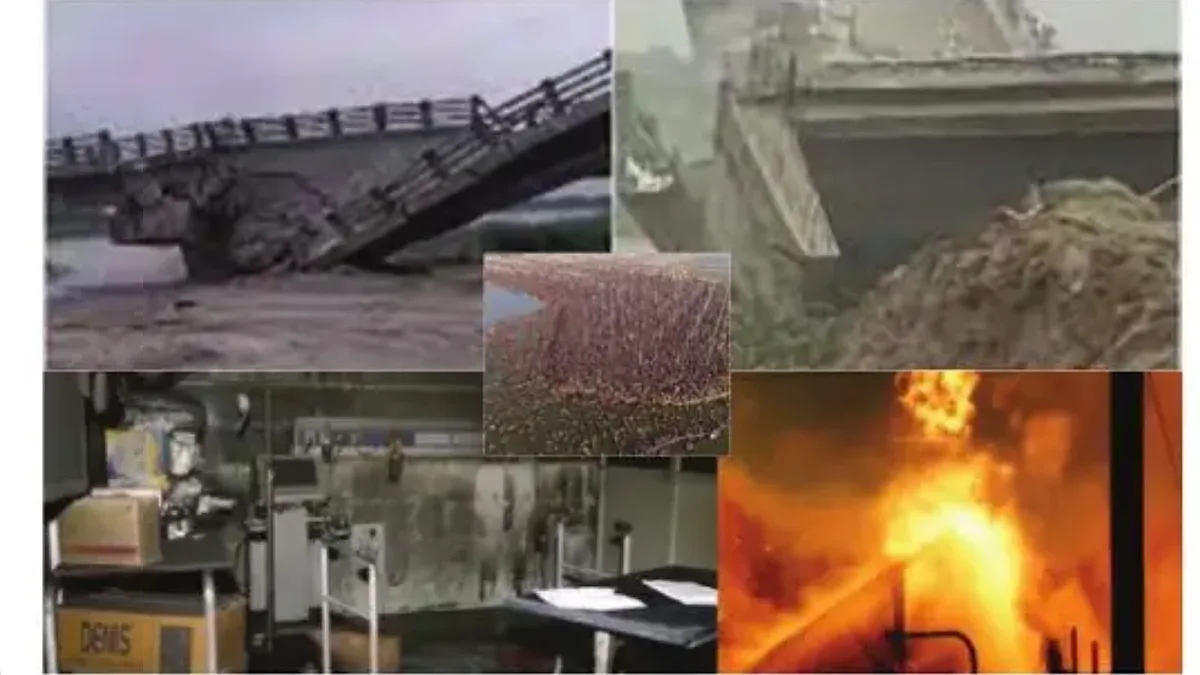
Fatal train crashes, stampedes at religious gatherings, collapsing bridges, fires in hospitals and residential apartments, and air accidents ~ ll expose systemic lapses. Yet rarely do they lead to resignations or structural reforms. The Odisha train tragedy of 2023, which claimed nearly 300 lives, revealed grave lapses in railway maintenance and signalling systems. But no senior official accepted responsibility. The tragedy dissolved into the news cycle, leaving behind grief but no accountability. The same year, a stampede at the Mahakumbh in Prayagraj killed dozens, yet crowd control is still left to chance.

In 2025, a bridge collapsed in Pune, and similar failures across Bihar again demonstrated the hollowness of our safety systems – and the even greater hollowness of our response. These are not isolated incidents; they are symptoms of a deeper malaise. Responsibility is deflected, blame is dispersed, and silence becomes the default response. The consequences are visible everywhere. Open electric panels from Prayagraj to Greater Noida, from Pune to Hyderabad, display a uniform work culture that has no place for safety or perfection. Tangled overhead wiring, normalized in urban landscapes, has caused fatal fires in Delhi, Mumbai, and Kolkata. NCRB data points to thousands of short-circuits that caused fires each year, yet complaints go unheard.

Roads remain potholed and dangerous, even on toll highways. Floods return each monsoon, followed by stock excuses about “unprecedented rain.” Pollution worsens year after year, rivers remain contaminated, and plastic waste chokes cities. Yet no one is held accountable. The irony is that despite paying taxes and tolls, citizens receive neglect in return. The disconnect between voters and governance begins here. We find ourselves at a curious crossroads ~ our achievements celebrated, yet they remain shadowed by a vacuum of accountability. On one side, we applaud spectacular successes: bridges that span the valleys of Kashmir, satellites that circle the earth, a successful landing on the moon, and breakthroughs in aviation, medicine, and astronomy that place us among the world’s leading nations – rightly a source of pride and proof of our resilience and ingenuity.

Yet, on the other side, we remain unresponsive to the most basic civic needs – hygiene, sanitation, pollution control, unclogged cities, reliable healthcare, and safe infrastructure. Between 1977 and 2017, more than 2,130 bridges collapsed across India, each a silent indictment of neglect. This paradox is not merely technical; it is cultural. It reflects a governance model that celebrates spectacle but sidesteps scrutiny, a society that normalizes failure, and a bureaucracy that has perfected deflection. The bureaucracy has designed a unique protection shield where most get away and never get punished. Orders are signed by under secretaries, rarely by those with real decision-making power. Files move endlessly through layers of red tape, filled with notings that buy time but avoid directives. District officers remain inaccessible, entombed in protocol, surrounded by staff, and indifferent to citizen grievances.

Governance is meant to be participative, but citizens face a fortress. Appointments are elusive, complaints unanswered, and accountability unclaimed. Even those entrusted with authority are shackled by fear. Officers live under the constant threat of transfer, suspension, or public humiliation at the whim of political masters. In such a climate, responsibility is not embraced but avoided, for to act decisively is to risk reprisal. This culture of intimidation corrodes governance from within, ensuring that accountability is neither demanded nor delivered. Even Supreme Court directives on police reforms and RTI mandates are ignored. Public interest litigations, once a beacon of citizen empowerment, have lost their edge as courts hesitate to entertain matters they deem executive responsibility. The result is a governance model that resists responsibility at every level. Today, accountability has become elusive in every sphere – political, bureaucratic, judicial, and even in the microcosm of daily life.

The tragedy is not simply that institutions fail, but that failure has been absorbed into our civic culture, eroding the very consciousness required for honest dealing and disciplined governance. Each new disaster is met not with reform but with silence, evasion, or token gestures. The culture of impunity has become pervasive, threatening democratic values and eroding citizen trust. Sadly, the vacuum is not confined to institutions. It pervades daily life, shaping the quality of existence for every citizen. Traffic police stand idle as accidents mount. Wrong side driving, helmetless riders and fatal crashes unfold without consequence. Banks mishandle vital documents like nominations and death certificates, sometimes leaving them unresolved for years.

Hospitals function with absent doctors, where patients wait endlessly and no one answers. Vendors and service providers fail to deliver, without apology or consequence. A tailor promises delivery in three days but takes three weeks. A plumber promises to return tomorrow and never does. A courier delivers a broken item and shrugs. A food delivery arrives cold and late, and the app offers a token refund but no accountability. This erosion of responsibility has seeped into the very culture of daily life. Too often, failure is met with resignation rather than reform, expectations are quietly lowered, and confrontation is avoided. In time, such habits shape a disposition that weakens our collective will. The roots of this malaise lie deep in our social fabric. In a country where rulers are often revered like gods, traits of discipline and responsibility must flow from the top down. But they rarely do.

Children are not taught to admit mistakes. From school onwards, we learn to dodge, to blame, to survive scrutiny. Leaders offer explanations but never apologies. Bureaucracies bury their errors in procedure. The phrase “I was wrong, and I accept the consequences” has vanished from our vocabulary. The absence of accountability has become our national temperament. The first reaction to a wrong is to resist, to justify, to get away. If cornered, there is no remorse ~ only mute resentment. Learning fades into perpetual wrongs. This is not just inefficiency; it is a cultural normalization of irresponsibility. The paradox is stark. We excel in fields that demand precision ~ space exploration, aviation, medicine, astronomy ~ yet falter in everyday responsibilities such as sanitation, pollution control, food safety, infrastructure maintenance, and healthcare.

The roots of this failure lie in two gaps: the absence of education and discipline that nurture responsibility, and the absence of infrastructure designed to respond on its own. Where systems are disciplined and self-correcting, excellence thrives; where they are absent, neglect rules. Without education, responsibility cannot take root. Without autonomous infrastructure, accountability collapses. And without responsibility, democracy tends to grow hollow. To keep our democracy healthy and progressive, accountability must be embraced as a cardinal value. It should be nurtured through education, reflected in infrastructure, and reinforced by citizen participation. Transparency demands clear standards and fair enforcement, while leadership must inspire through example rather than rhetoric. Only then can governance move beyond performance to genuine service. India’s accountability vacuum is not inevitable.

It is a choice we have allowed to persist. To reverse it, we must confront the paradox of our progress and neglect. We must demand responsibility not only from institutions but from ourselves. We must make accountability visible, personal, and non-negotiable. Because a nation that dreams of greatness cannot afford to evade its failures. Ambition is no substitute for ethics. Growth does not absolve decay. To dream of becoming a global leader while neglecting civic trust is to construct a hollow republic ~ visibly rising, invisibly crumbling.

What India needs is a system that works on its own – an infrastructure designed with accountability built into its very fabric. Roads that are inspected and repaired without petitions, power lines that are maintained without tragedies, hospitals that respond without agitation. True progress will come not when citizens beg for redress, but when systems themselves embody responsibility. As Ginger Graham said, “Building a culture in which people take accountability to deliver on promises is hard work. Only when every person is held accountable to themselves, their peers, and their shared goals can the ‘impossible’ become ‘possible’.”

(The writer is a retired Air Commodore, VSM, of the Indian Air Force)

Iran protests death toll rises to 35: What we know so far about arrests, injuries and global fallout

At least 35 people have been killed in protests across Iran, activists say, as demonstrations spread nationwide amid arrests, injuries to security forces and growing international concern.

Statesman News Service | Mumbai |

At least 35 people have died in Iran amid ongoing protests that have spread across much of the country, according to activists tracking the unrest.

The demonstrations, now more than a week old, show no signs of easing. Rights groups say arrests are rising and violence has increased on both sides.

The figures were shared by Human Rights Activists News Agency, a US-based organisation that monitors human rights conditions in Iran. The group has relied on sources inside the country and has provided reliable data during past periods of unrest.

Also Read: Iran protests enter 9th day, spread to more cities amid US intervention warning; India issues advisory

What we know about the casualties and arrests

Activists say those killed include 29 protesters, four children and two members of the security forces. More than 1,200 people have been detained so far.

Protests have been reported in over 250 locations, spanning 27 of Iran’s 31 provinces. The scale makes it one of the largest waves of unrest since 2022.

Iranian state-linked media has given a different picture. Fars news agency reported that around 250 police officers and 45 members of the Basij volunteer force were injured during clashes.

Supreme Leader Ali Khamenei said on Saturday that those involved should be dealt with firmly.

Why the protests matter beyond Iran

The growing death toll has attracted international attention. US President Donald Trump warned Tehran last week against the use of deadly force on demonstrators. His remarks triggered sharp responses from Iranian officials, who threatened retaliation against US forces in the region.

While it remains unclear if Washington plans to act, the comments gained added weight after the US military captured Venezuela’s president over the weekend. Tehran considers Caracas a close ally.

The protests are the most significant since the 2022 demonstrations sparked by the death of Mahsa Amini in police custody. However, activists say the current movement has not yet reached the same intensity or scale.

Economic pressure appears to be a key driver. Iran’s currency collapsed in December after fresh sanctions and the impact of a short conflict with Israel, deepening public anger.

Assessing the true size of the protests remains difficult. There is limited coverage by state media. The travel of journalists is subject to strict controls, and they are at risk of arrest. There is only a brief, unverified glimpse of events on the ground in online videos.

However, unrest persists.

Why Modi government’s VB-GRAM G Act is a governance imperative

India’s journey towards Viksit Bharat @2047 cannot be charted on the strength of urban growth alone. Nearly two-thirds of the country’s population still lives in rural and semi-rural areas, and their productivity, incomes, and resilience will determine whether India’s economic rise is inclusive and sustainable.

TUHIN A. SINHA | New Delhi |

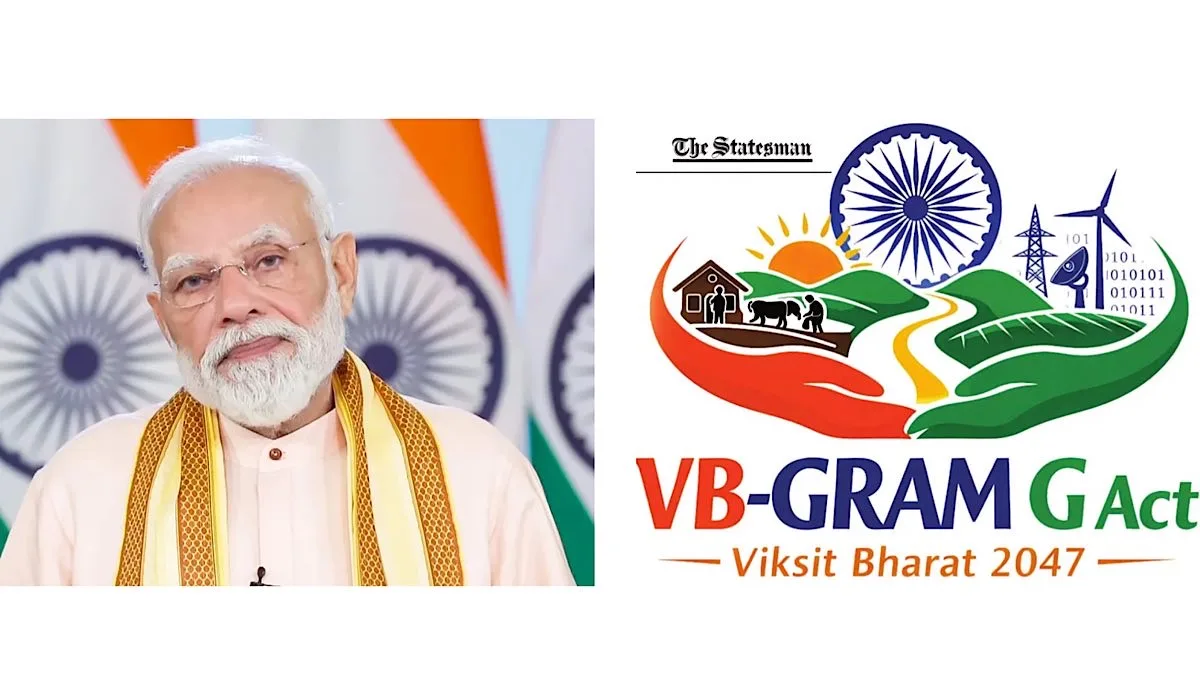
India’s journey towards Viksit Bharat @2047 cannot be charted on the strength of urban growth alone. Nearly two-thirds of the country’s population still lives in rural and semi-rural areas, and their productivity, incomes, and resilience will determine whether India’s economic rise is inclusive and sustainable. It is against this backdrop that the Modi government’s Viksit Bharat – Guarantee for Rozgar and Ajeevika Mission (Gramin), popularly known as the VB-GRAM G Act, 2025, must be understood not as a welfare tweak, but as a governance reset. The new legislation consciously replaces the Mahatma Gandhi National Rural Employment Guarantee Act (MGNREGA), recognising that an instrument designed for the economic realities of 2005 cannot adequately serve the ambitions of a rapidly transforming India in the mid-2020s. What the VB-GRAM G Act attempts is a fundamental re-imagining of rural employment—from a short-term safety net into a durable engine of rural productivity and national growth

Rural employment: From safety net to growth enabler

Rural employment programmes in India have always carried a dual burden. On one hand, they must provide income security to households vulnerable to seasonal distress. On the other hand, they must justify large public expenditure by leaving behind assets that raise long-term rural productivity. MGNREGA’s early years did succeed in cushioning rural distress, particularly after agrarian shocks and droughts. Yet, over time, the programme drifted into a narrow conception of ‘employment for employment’s sake.’ India’s rural economy today is no longer the same as it was two decades ago. Agricultural mechanisation, expanding rural roads, digital penetration, electrification, and rising aspirations have reshaped labour markets. Rural youth increasingly seek continuity of work, skill relevance, and pathways to higher incomes—not merely intermittent wage employment. In this changed scenario, a programme that prioritises headcount over outcomes inevitably loses relevance

Why MGNREGA became sub-optimal

The need for an overhaul was not ideological; it was empirical. Several structural weaknesses steadily eroded MGNREGA’s effectiveness. Asset creation under the programme often remained fragmented and unplanned. Works were sanctioned in isolation—temporary roads without connectivity logic, water structures without hydrological planning, and earthworks that delivered little economic return. These assets rarely integrate into village or district development plans, leaving behind meagre durable value. Governance inadequacies further compounded the problem. Weak verification systems enabled fake job cards, ghost beneficiaries, and inflated muster rolls. Repeated exposure of large-scale irregularities in multiple states revealed how deeply entrenched leakages had become. Social audits, though mandated in law, were frequently reduced to procedural rituals, offering little real accountability. Administrative constraints also played a role. With a tight ceiling on administrative expenditure, implementation depended on overstretched field staff, limiting technical planning, monitoring, and adoption of modern tools. Even core legal guarantees—such as unemployment allowance and compensation for delayed wages—remained largely symbolic because enforcement mechanisms were weak. Perhaps most critically, MGNREGA began distorting local labour markets. By operating even during peak agricultural seasons, it led to labour shortages for farmers, raised input costs, and strained relations between cultivators and workers. What began as a pro-poor intervention increasingly risked becoming economically misaligned.

The vision behind VB-GRAM G

The VB-GRAM G Act is built on a simple but powerful premise: rural employment and rural development must advance together. Instead of treating wage employment as an end in itself, the new law integrates it into a broader development strategy aligned with national infrastructure priorities and the long-term vision of Viksit Bharat. The Act seeks to provide predictable livelihood security while simultaneously strengthening the economic foundations of villages. It positions rural households not as passive recipients of state support, but as active participants in building assets that enhance productivity, resilience, and growth.

A stronger, more relevant employment guarantee

Recognising contemporary livelihood needs, the VB-GRAM G Act enhances the statutory employment guarantee from 100 to 125 days per rural household annually. This expanded assurance reflects rising costs of living and greater income volatility in a diversified rural economy. At the same time, the law introduces agricultural sensitivity absent earlier. States are empowered to declare an ‘Agriculture Pause’ during sowing and harvesting seasons, ensuring that public works do not compete with farm labour demand. Importantly, this pause does not dilute the annual guarantee, striking a careful balance between farmers’ needs and workers’ rights.

Employment that builds the nation

A defining feature of VB-GRAM G is its outcome-driven design. All permissible works are channelled into four clearly defined verticals: water security, core rural infrastructure, livelihood-related infrastructure, and climate resilience and disaster preparedness. This focused architecture ensures that every rupee spent contributes to long-term rural productivity. Water-related works address one of rural India’s most binding constraints, while infrastructure projects strengthen connectivity and market access. Livelihood-linked assets directly support income-generating activities, and climate-resilient works acknowledge the growing frequency of extreme weather events. Employment thus becomes inseparable from nation-building.

Bottom-up planning, digitally integrated

Unlike the fragmented planning of the past, VB-GRAM G mandates integrated, bottom-up development. Planning begins at the Gram Sabha, leading to the formulation of Viksit Gram Panchayat Plans. These are digitally aggregated at higher administrative levels, ensuring alignment with district, state, and national priorities. The use of GIS-based mapping and convergence platforms ensures that work is neither duplicated nor disconnected from larger infrastructure initiatives. Rural employment is thus woven into the broader development fabric rather than operating in isolation.

Technology as law, not choice

One of the most consequential shifts under VB-GRAM G is that technology is no longer optional. It is embedded directly in the statute. Biometric and geo-spatial verification, satellite-based authentication of works, real-time mobile tracking, and AI-enabled fraud analytics together create an end-to-end transparent ecosystem. This architecture dramatically reduces the scope for ghost beneficiaries, fake works, and financial manipulation. Transparency is no longer dependent on administrative goodwill; it is structurally enforced.

Restoring credibility through timely payments

Delayed wages were among the most corrosive failures of MGNREGA, undermining trust in the system. VB-GRAM G addresses this head-on by mandating weekly wage payments, with an outer limit of a fortnight. Automatic compensation for delays is legally enforceable, restoring credibility to the wage guarantee.

Administrative strength and fiscal discipline

The Act raises the administrative expenditure ceiling, acknowledging that effective implementation requires trained personnel, technical expertise, and monitoring capacity. Strong administration is treated as an investment in outcomes, not as overhead. On the fiscal side, VB- GRAM G introduces a predictable funding framework with clear Centre-State sharing norms. While the demand-driven nature of employment remains intact, normative allocations encourage efficiency and accountability. States that exceed allocations must bear additional costs, incentivising prudent planning. Overall, allocations are higher, with states expected to gain significantly compared to recent MGNREGA averages.

Accountability that is enforceable

Governance reforms under VB-GRAM G go beyond intent. Multi-layered oversight bodies, mandatory six-monthly social audits backed by digital evidence, and a time-bound grievance redressal system create real accountability. District-level ombudspersons and clear fixation of responsibility ensure that failures to provide work or wages are no longer cost-free.

Rural India and the Viksit Bharat vision

India’s aspiration to become a developed nation cannot coexist with stagnant rural productivity. Manufacturing growth, infrastructure expansion, food security, and climate resilience all depend on a strong rural base. VB-GRAM G positions rural India as a growth partner, not a laggard. By converting public employment into a propellant for asset creation, resilience, and livelihoods, the Act aligns village-level effort with national economic goals. It recognises that Viksit Bharat will be built not only in industrial corridors and smart cities, but also through empowered gram panchayats and productive rural landscapes. The VB-GRAM G Act, 2025, marks a decisive break from the limitations of the past. It replaces a relief-oriented framework with a development-linked employment mission, embedding transparency, planning, fiscal discipline, and farmer sensitivity into law. In doing so, the Modi government has reframed rural employment as a governance imperative—central to India’s economic trajectory, social stability, and national ambition. In the long arc towards Viksit Bharat @2047, VB-GRAM G stands out as a reform that recognises a simple truth: a developed India is impossible without a developed rural India—and development must be built, not merely funded.

(THE WRITER IS A NATIONAL SPOKESPERSON OF BJP AND AN ACCLAIMED AUTHOR)

Hindu journalist shot dead in Bangladesh as violence against minorities continues

Since December 2025, at least four Hindus have been killed in Bangladesh.

Statesman News Service | New Delhi |

A Hindu journalist was shot dead in Bangladesh’s Jashore district on Monday, as violence against religious minorities continues unabated in the country.

The victim, Rana Pratap, who was the acting editor of a local newspaper, was killed in Kopalia Bazar area of Manirampur sub-district in Jashore at around 6 pm.

According to reports, a group of men called Pratap and lured him out of an ice factory that he ran in addition to his work as a journalist. The assailants then took him into an alley and shot him in the head at close range.

Pratap’s killing comes amid a spate of attacks against Hindus in Bangladesh and days after a Hindu businessman, Khokon Das, was set on fire by a mob.

Since December 2025, at least four Hindus have been killed in Bangladesh. The most recent case prior to Pratap’s murder was that of Khokon Das, a medical shop owner in Shariatpur district. Das was attacked by a mob while returning home on December 31.

The mob allegedly assaulted Das with sharp weapons before setting him on fire. He managed to jump into a nearby pond to survive the attack but sustained severe injuries. He was admitted to the National Burn Institute in Dhaka, where he later succumbed to his injuries on Saturday.

A day before the attack on Das, a Hindu worker, Bajendra Biswas, was shot dead by his colleague in Bhaluka upazila of Mymensingh district.

Bangladesh rejects India’s concerns over minority attacks, calls them ‘exaggerated and motivated’

Earlier, Amrit Mondal was lynched to death by a mob over allegations of extortion. Another particularly brutal incident involved Dipu Chandra Das, a garment factory worker in Mymensingh, who was lynched by a mob over allegations of blasphemy. The mob later reportedly hung his body and set it on fire, raising serious concerns over the safety of religious minorities in the country.

In another incident of violence, a Hindu widow was allegedly raped by local men in Jhenaidah district last week. The 40-year-old woman was also brutally assaulted. She was tied to a tree and her hair was cut by two men who, according to reports, had been following her for several months.

BJP leaders inspect proposed site of PM Modi’s meeting at Singur

In view of the proposed public meeting of Prime Minister Narendra Modi at Singur on 18 January, BJP Hooghly district president Gautam Chatterjee, along with state BJP secretary Dipanjan Guha and several other party leaders, today, inspected multiple plots of land in and around the Gopal Nagar area of Singur.

Statesman News Service | Siliguri |

In view of the proposed public meeting of Prime Minister Narendra Modi at Singur on 18 January, BJP Hooghly district president Gautam Chatterjee, along with state BJP secretary Dipanjan Guha and several other party leaders, today, inspected multiple plots of land in and around the Gopal Nagar area of Singur.

Mr Chatterjee said that the Prime Minister would address a public meeting at Singur and that, besides the abandoned Tata project site, other nearby areas were also being considered as possible venues. “Time is very short. The selected land will have to be cleared and a helipad set up,” he said.

He further alleged that the Trinamul Congress had driven the Tata Group out of Singur and that there was strong public sentiment on the issue. “The TMC has shattered the dreams of the people here. Neither agriculture nor industry has flourished. Our sole purpose in bringing the Prime Minister here is to assure the people of the district that if the BJP comes to power in 2026, it will take the initiative to bring Tata back,” Mr Chatterjee said.

He added that just as the TMC had risen to power from Singur, the ruling party’s downfall would also begin from Singur.

Seer urges PM Modi to visit Gangasagar, witness islands erosion

Amid growing alarm over rapid coastal erosion at Sagar Island, the head of Bharat Sevashram Sangha (BSS) at Sagar, Swami Jitatmananda Maharaj, popularly known as Nemai Maharaj, has appealed to Prime Minister Narendra Modi to visit the sacred Gangasagar pilgrimage site and assess the situation first-hand.
RAJIB CHAKRABORTY | Kolkata |

Amid growing alarm over rapid coastal erosion at Sagar Island, the head of Bharat Sevashram Sangha (BSS) at Sagar, Swami Jitatmananda Maharaj, popularly known as Nemai Maharaj, has appealed to Prime Minister Narendra Modi to visit the sacred Gangasagar pilgrimage site and assess the situation first-hand.

Speaking to The Statesman on Monday, Swami Jitatmananda said the appeal was not limited to inviting the Prime Minister. “Sagar Island is facing an existential crisis. If immediate and effective steps are not taken to stop the sea’s aggression, thousands of residents will be pushed into danger and an ancient Hindu pilgrimage site may be lost forever,” he said. The monk stressed that the Prime Minister’s personal visit could help bring national attention to the gravity of the crisis. “We request the Prime Minister to see with his own eyes how the island is being swallowed by the sea year after year,” he added. According to Swami Jitatmananda, temporary repair work is currently underway to restore damaged embankments along the coast. The state irrigation department, along with the South 24-Parganas district administration, has initiated short-term measures.

However, he warned that such efforts would not be enough without a coordinated initiative between the Centre and the state. “Every year, the sea advances several metres towards Kapil Muni’s ashram. Controlling coastal erosion has now become the biggest challenge,” he said. He acknowledged the state government’s initiative to construct a bridge over the Muriganga river, calling it a long-standing demand and a major gain for the Gangasagar pilgrimage zone. “But if the sea continues its unchecked advance, even this bridge will lose its relevance. Stopping marine erosion is the most urgent priority,” the monk observed.

With the Gangasagar Mela set to begin on 10 January, concerns are mounting over infrastructure and safety. “Lakhs of pilgrims will arrive, but the number of bathing ghats has been reduced due to erosion. Ensuring the safety of Bharat Sevashram Sangha and 32 other ashrams has become a serious concern,” Swami Jitatmananda said. He advocated the construction of a concrete sea wall, similar to the one in Digha, extending over more than three kilometres to protect the sacred coastline.

Meanwhile, the Paschim Banga Nagarik Mancha has stepped up efforts to draw the Centre’s attention to the issue. The organisation has already launched a mass signature campaign and awareness drives across several areas. Its spokesperson and advocate, Chandan Saha, told The Statesman that a dedicated outreach campaign would soon begin from Kolkata, passing through Diamond Harbour to Sagar Island, to mobilise public opinion.

“Sagar Island is intrinsically linked to King Bhagiratha’s penance and the descent of the Ganga to earth. Kapil Muni’s temple here predates the Ramayana. Despite hosting one of the world’s largest religious congregations, Gangasagar Mela is yet to receive national fair status,” Saha said. He added that coastal erosion has already claimed several structures, including parts of Kapil Muni’s ashram, and warned that more land could disappear into the sea. “This is not just about faith; it is about saving a major spiritual and tourism hub of international importance,” he said, noting that the ashram attracts a growing number of foreign tourists as well.

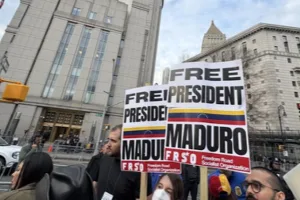
‘I was kidnapped’: Nicolas Maduro pleads ‘not guilty’ during first court hearing in New York

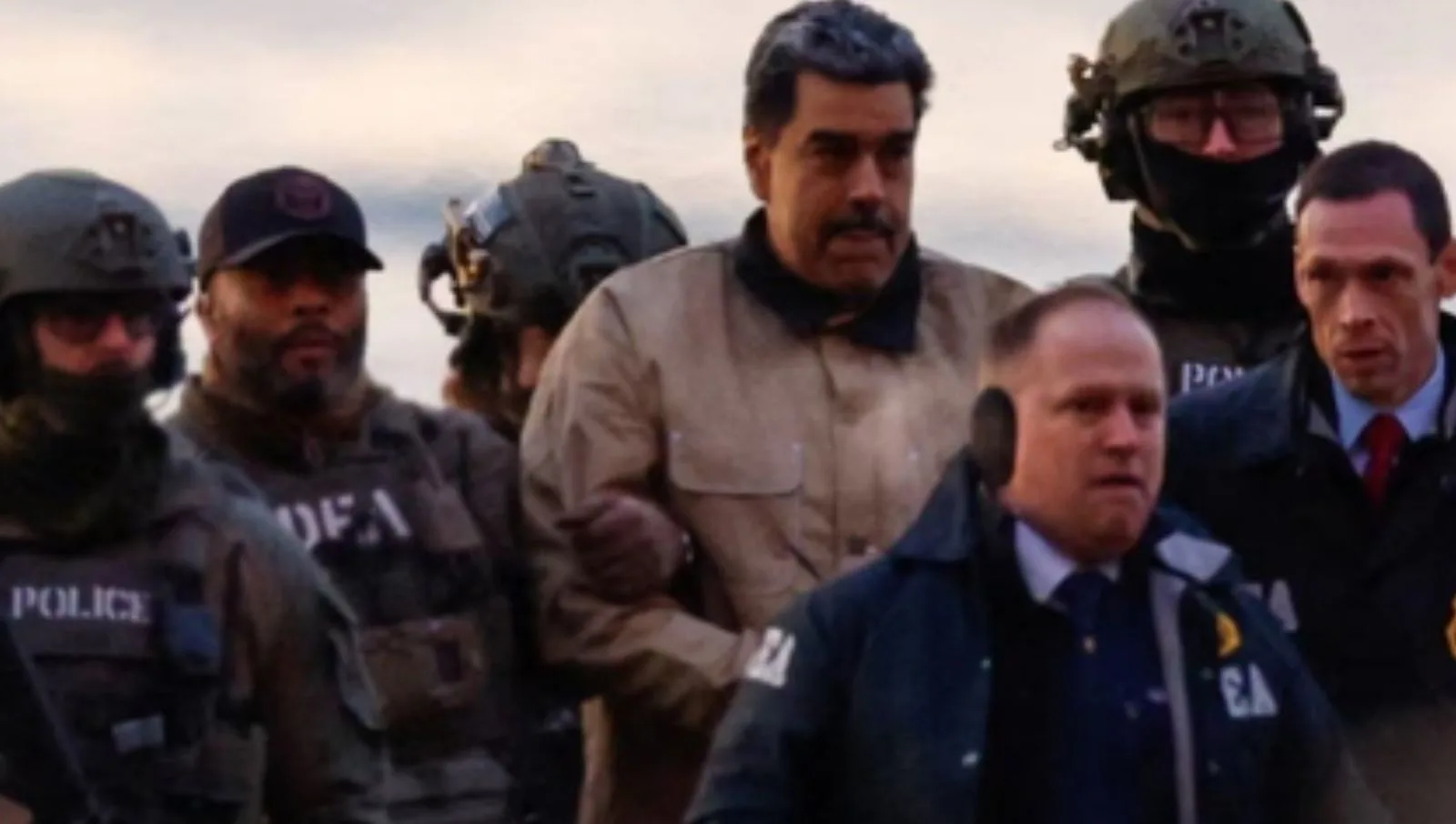
Maduro and his wife Flores were captured by US special forces from their Caracas safe house on Saturday following an unprecedented military operation codenamed “Operation Absolute Resolve”.

Statesman News Service | New Delhi |

Venezuelan leader Nicolás Maduro, who was captured by the United States from his Caracas residence following a military operation, was Monday produced before a New York federal court for an initial hearing.

As the hearing began, federal court Judge Hellerstein asked Maduro to identify himself. In response, he confirmed his identify as Venezuelan leader Nicolas Maduro.

“I’m innocent. I’m not guilty. I am a decent man,” Maduro said when the judge asked for his plea. He also added, “I am kidnapped”.

When the judge turned to his wife Cilia Flores, and asked for her plea, she too responded “not guilty”. “I am completely innocent,” Flores told the judge.

Their lawyers then told the judge about their medical conditions. However, the duo didn’t seek release on bail but their lawyers said that they may do so later.

The court posted the matter for next hearing on March 17.

Earlier in the day, Maduro and his wife Flores were flown to Manhattan by helicopter from the Metropolitan Detention Center (MDC). The couple was later taken to the courthouse by road under heavy security.

The Venezuelan leader and his wife will be represented by court-appointed defence lawyer David Wikstrom. They may also engage private legal counsel at a later stage.

The duo is unlikely to be granted bail and is expected to be remanded to custody.

They face serious charges of narco-terrorism conspiracy for allegedly trafficking tonnes of cocaine into the United States, using Venezuelan military and intelligence networks to protect the shipments. Charges of possession of machine guns and destructive devices, as well as conspiracy to possess them, have also been filed.

Maduro has additionally been charged with money laundering and corruption for allegedly transferring funds obtained through drug trafficking operations. Some of the charges carry the possibility of the death penalty.

Iran, China demand Nicolas Maduro’s release; Rubio says Trump ‘retains optionality’ on occupying Venezuela

Maduro and Flores were reportedly captured by US special forces from a safe house in Caracas on Saturday following an unprecedented military operation codenamed Operation Absolute Resolve.

They were subsequently brought to the United States and indicted in the Southern District of New York on charges of alleged “drug trafficking and narco-terrorism conspiracies.”

According to reports, the US military had been preparing for the highly secretive mission for several months, with CIA operatives deployed to monitor the Venezuelan president’s movements. The intelligence operation reportedly included a mole within the Venezuelan government who helped track Maduro’s daily routines.

The meticulously planned operation was kept under wraps until it was executed. Reports claim the Trump administration did not consult Congress in an effort to avoid leaks and maintain the element of surprise.

Briefing media persons on the operation, US President Donald Trump announced that the United States would “run” Venezuela until a safe transition of power takes place.

‘Nicolas Maduro had his chance — until he didn’t’: White House mocks Venezuelan President’s fiery ‘come and get me’ speech

Abhishek visits Sebaashray 2 camp at Satgachia

Trinamul Congress national general secretary and party’s MP from Diamond Harbour Abhishek Banerjee visited a Sebaashray 2 camp at Satgachia this afternoon.

Statesman News Service | Kolkata |

Trinamul Congress national general secretary and party’s MP from Diamond Harbour Abhishek Banerjee visited a Sebaashray 2 camp at Satgachia this afternoon.

The camps at Satgachia began on 2 January and will continue till 8 January. Sebaashray 2 is the brainchild of Mr Banerjee. Under the initiative, free medical assistance is given to the people, who live in the areas that fall under Diamond Harbour Lok Sabha seat. There are seven Assembly segments.

The camps are held in each Assembly seat for seven days. Camps have already been held at Maheshtala, Metiabruz, Budge Budge, Bishnupur. After Satgachia, camps will be held in Falta and Diamond Harbour. The camps will continue till 28 January. From 24 January to 26 January follow up camps will be held in each Assembly segment.

There was overwhelming response from the people when Mr Banerjee visited the camp set up on the football ground of Satgachia Vidyanagar Multipurpose Higher Secondary School.

Nineteen camps are being held in Satgachia. Mr Banerjee talked to the visitors and ensured every possible medical help. He urged the doctors to take care of a patient, who is suffering from cancer.

Diagnostic tests are conducted free-of-cost and medicines are given free. The doctors refer the critical patients to state-run hospitals and private health care establishments. Already 40 people underwent cataract surgery.

Till date, 1.73 lakh people have visited the camps. Nearly 4,000 people have registered in the Satgachia camp. Out of these 2,315 people were given medicines while 2,478 people underwent diagnostic tests while 11 people were referred to hospitals.

Civic body rolls out hydraulic garbage vehicles to overcome manpower shortage

Amid a politically sensitive retrenchment drive that has triggered sustained agitation by casual workers, the Krishnagar municipality has moved to overhaul its solid waste management system, announcing the induction of hydraulic container vehicles in all 25 wards with the stated aim of eliminating permanent garbage vats across the town.

Biswabrata Goswami | Kolkata |

Amid a politically sensitive retrenchment drive that has triggered sustained agitation by casual workers, the Krishnagar municipality has moved to overhaul its solid waste management system, announcing the induction of hydraulic container vehicles in all 25 wards with the stated aim of eliminating permanent garbage vats across the town.

Municipal administrator Sharadwati Chowdhury on Monday said the decision was part of a larger plan to ensure uninterrupted conservancy services despite the recent downsising of the workforce. “I have ordered 25 hydraulic container vehicles for 25 wards. By this week, 10 vehicles will be delivered and deployed in 10 wards. The remaining 15 will be provided by 20 January,” Ms Chowdhury said. Each ward, she added, would initially be assigned one vehicle, though the municipality plans to procure another 25 vehicles to ensure smoother and faster garbage clearance.

The administrator made it clear that the long-term objective was to move away from the practice of fixed garbage vats within the municipal limits. “We are giving pace to our efforts so that garbage is not dumped anywhere inside the municipal area in the near future. We are looking for a clean town,” she said.

According to municipal sources, each hydraulic container vehicle costs approximately Rs 2.5 lakh. The total expenditure for procuring 50 such vehicles is estimated at Rs 1.25 crore. Officials argued that the investment would not only improve hygiene and public health but also reduce dependence on a large number of manual workers, a point that has become contentious in the wake of the retrenchment.

At present, the Krishnagar municipality has a workforce of around 650 employees in the conservancy department. Ms Chowdhury maintained that the existing manpower was adequate and that there was “no major issue” affecting conservancy services across the town. However, residents in some prominent localities complained that daily garbage lifting had been irregular in recent days.

Responding to these complaints, the administrator said the municipality had put in place a grievance redressal mechanism. “We have advertised a special number to lodge complaints, and anyone can use it. Apart from this, we are trying to resolve issues as quickly as possible,” she said, asserting that lapses, if any, were being addressed promptly.

The administrative push, however, unfolded against the backdrop of continuing unrest among retrenched workers. As many as 356 casual workers, who were recently laid off as part of what the municipality has described as a drive to eliminate “overloaded” and irregular appointments, continued their agitation in front of the municipal office demanding immediate absorption.

Tension flared on Monday morning when a group of agitating workers allegedly attempted to block permanent employees from entering the municipal premises. The situation escalated briefly, prompting intervention by the Kotwali police. A scuffle ensued before the police dispersed the protesters from the main gate and restored access to the building.

Downplaying the impact of the incident, Ms Chowdhury said municipal work had not been disrupted. “There was no influence on the normal functioning of the municipality. All staff managed to enter by 11 am, and normalcy in work was restored,” she said.

The Statesman Vintage and Classic Car Rally turns 55

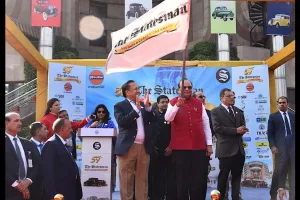
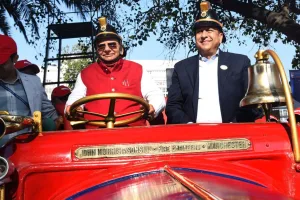
The Statesman hosted the official announcement meet to commemorate the 55th The Statesman Vintage and Classic Car Rally.

Mohul Bhattacharya | Kolkata |

The Statesman hosted the official announcement meet to commemorate the 55th The Statesman Vintage and Classic Car Rally.

The rally will take place in Kolkata, Royal Calcutta Turf Club, Polo Grounds in Hastings. The prestigious rally is the oldest running rally of the country, started in the year 1968, displaying history, the era of heavy motors, and sheer engineering marvel of the past.

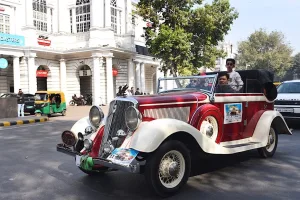
Adding to the occasion, a vintage Fiat car was showcased at the venue as a showstopper attraction, offering a glimpse into the heritage and grandeur synonymous with the iconic rally.

Around 160 vintage and classic cars and 50 two-wheelers are expected to participate, making it a grand celebration of automotive heritage and timeless engineering. The rally will be flagged off at 9.10 a.m. from the RCTC Polo Ground. There will be 52 vintage cars, 35 classic cars, eight Neo-classical cars, seven vintage bikes, and 18 classic bikes at the rally.

The event will feature a spectacular line-up of legendary marques, including Triumph, Studebaker, Chevrolet, Dodge, DeSoto, along with iconic British brands such as Austin, Morris, and MG, reflecting the rich legacy of global motoring history.

Gobinda Mukherjee, Business Head – East India, The Statesman, said: “Now the rally, with its cultural programmes, has gained a lot of traction with the people. All passes are free of cost. The passes will be given till Friday. Prize distribution will commence from 3 p.m. Games, food stalls, and cultural programmes are the added bonuses to this grand fair. No participation fee is charged from the entrants. The objective of the rally is to provide vintage and classic car owners a platform to showcase their prized possessions and keep automotive heritage alive. While car shows are held regularly, The Statesman Vintage and Classic Car Rally remains the oldest rally of its kind in the country.”

Also present at the Press conference were Dr Suman Bhattacharya, Senior Vice-President, Sayed Hasmat Jalal, Consulting Editor, Dainik Statesman, and Nitish Kapoor, head – event and activation, The Statesman, Delhi. The session was moderated by Debashis Das, chief reporter, Dainik Statesman, and Tapaja Chakraborty, sub-editor The Statesman.

Free passes are available from The Statesman Kolkata office during this week from morning 11 a.m. to 6 p.m. till 9 January.

Mr Bhattacharya said: “Today we celebrate a living chronicle of history. Since our first flag off, in 1964, this rally has evolved from a simple gathering of enthusiastic people to a culture of automobile celebration. The Statesman has pioneered a golden age of motoring. Our own judges will be looking for authenticity, restoration and spirit of the age.”

It will be a 30-km rally. Chief Judge, Jitender Pandey along with his entourage of judges, and specialists will be present to judge the cars.

Lieutenant General Ram Chandra Tiwari, General Officer Commanding-in-Chief, Eastern Command, will flag off the cars.

Union minister stresses revival of tea, cinchona sector, workers’ rights protection

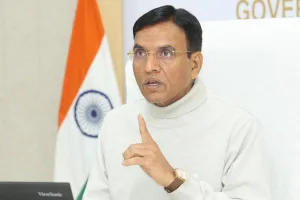
Union minister of labour and employment Mansukh Mandaviya on Sunday held a meeting here with stakeholders from the tea industry and cinchona gardens, underlining the urgent need to take concrete steps to revive and revitalise the sector while safeguarding workers’ rights.

Statesman News Service | Kolkata |

Union minister of labour and employment Mansukh Mandaviya on Sunday held a meeting here with stakeholders from the tea industry and cinchona gardens, underlining the urgent need to take concrete steps to revive and revitalise the sector while safeguarding workers’ rights.

The meeting was organised on the initiative of Darjeeling MP Raju Bista, who facilitated the interaction between the Union minister and industry representatives.

Highlighting long-standing issues in the region, participants pointed out that for decades workers in this historic tea belt ~ India’s first industrial region in the hills ~ have been subjected to outdated, colonial-era labour practices.

Mr Bista alleged that the Trinamul Congress (TMC) government has denied tea garden workers dignified wages, parja patta (land deeds) to their ancestral land, and access to basic facilities. He said thousands of workers continue to suffer due to garden closures, delayed wage payments, and the denial of pensions and statutory benefits.

The Union minister said the government has recently implemented four new labour codes aimed at transforming the lives of tea and cinchona workers in the Darjeeling hills, Terai, and Dooars.

Responding to a demand from workers, Mandaviya assured that a labour court would be set up in Darjeeling at the earliest.

He said the code on wages would directly address long-standing injustices by ensuring fair and dignified wages, timely payments, equal pay for men and women, and by reducing excessive in-kind deductions. He added that the new labour codes mandate that no worker be paid below the national floor wage, which the West Bengal government would also be required to implement.

1 dead, 3 hurt after concrete slab falls on them

One person died while three others were injured after chunks of a dilapidated structure fell on the residents at Park Circus this morning.

Statesman News Service | Kolkata |

One person died while three others were injured after chunks of a dilapidated structure fell on the residents at Park Circus this morning.

The incident occurred at around 3 a.m. when four residents were asleep inside a room and chunks from the crumbling ceiling came crashing on them. Of the four persons sleeping, a 61-year-old woman received critical injuries and died in the incident. On hearing the loud sound, the neighbours rushed to the spot and rescued the occupants of the house and took the injured to the hospital. However, the elderly woman succumbed to her injuries while her grandson, who received injuries on his nose, was released after first-aid.

According to the residents, the occupants have rented the house which was in a poor condition. The neighbours alleged that despite informing the owner of the four-storey building, no measures were taken to repair or maintain the 40-year-old structure.

Party workers must work hard to retain power in 2027: UP BJP President

On his arrival in Gorakhpur, the newly elected BJP state president was accorded a grand welcome by party office-bearers and a large number of workers.

Statesman News Service | Gorakhpur |

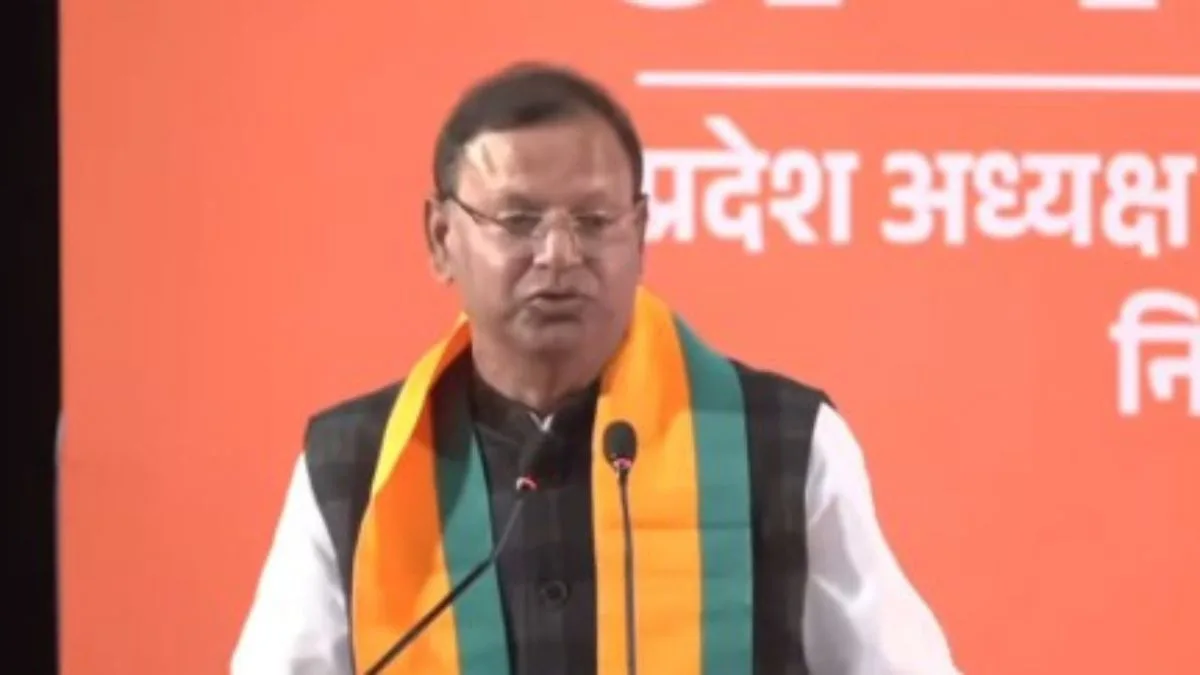
Uttar Pradesh BJP President and Union Minister of State for Finance Pankaj Chaudhary on Monday said that to realise the goal of a developed India by 2047, all party workers must move forward with the resolve to retain the BJP government in the state in the 2027 Assembly elections.

On his arrival in Gorakhpur, the newly elected BJP state president was accorded a grand welcome by party office-bearers and a large number of workers. Overwhelmed by the reception, Chaudhary said party workers were paramount to him.

Addressing a welcome and felicitation ceremony and a meeting of the Gorakhpur region, Chaudhary said he had no words to express his gratitude for the love, affection and warm welcome extended by the workers. He said he felt proud and emotional to be among them.

Recalling his political journey, the BJP state president said the party had made him a councillor in 1989 and Deputy Mayor in 1990, and had fielded him as a Lok Sabha candidate nine times. He added that the party had entrusted him with the responsibility of serving as Union Minister of State for Finance for a second term and has now given him the significant responsibility of leading the BJP in Uttar Pradesh.

Chaudhary said party workers are the strength of the BJP and the organisation is its identity. “It is our responsibility to further strengthen the organisation at the booth level,” he said.

“To realise Prime Minister Narendra Modi’s vision of a developed India, we must ensure a bigger victory for the BJP in the 2027 Assembly elections than in 2017. A strong and prosperous Uttar Pradesh is essential to fulfil the vision of a developed India, and this is possible only under a BJP government,” he said.

The state BJP president said Gorakhpur holds immense religious and political significance. “From this land, Yogi Adityanath has served as Chief Minister for two terms. He has transformed a backward state into a developed one, giving Uttar Pradesh a new identity in the country. Gorakhpur is also home to important religious institutions such as the Guru Gorakhnath Temple and Gita Press,” he said.

Chaudhary added that there was a time when India’s voice was ignored globally, but today, under Prime Minister Modi’s leadership, the world listens to India seriously. He said the Modi government is working to realise Pandit Deendayal Upadhyaya’s vision of Antyodaya, or the upliftment of the poorest of the poor.

Interacting with party workers, Chaudhary said a true worker is one who completes the tasks assigned by the organisation with dedication. He urged workers to actively participate together in the intensive voter revision campaign.