Logo

Ladakh’s Jigmet Chunzen leads India into SAFF women’s futsal history

Chunzen expressed the team’s strong ambition, noting that, this is the first time the championship is being organized, the squad has arrived with a clear objective of winning the tournament.

Statesman News Service | Jammu |

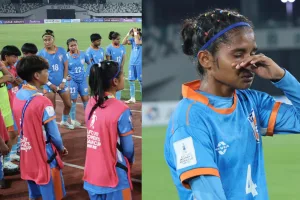
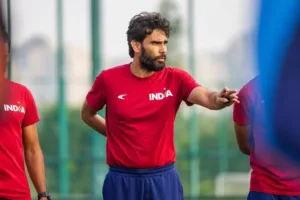
Ladakh’s Jigmet Chunzen is set to make her India debut in the inaugural South Asian Football Federation (SAFF) Women’s Futsal Championship as the team captain. Her participation as the Captain marks a significant milestone, highlighting talent from the cold desert region on a national stage as the team prepares for the tournament in Thailand.

Chunzen expressed the team’s strong ambition, noting that, this is the first time the championship is being organized, the squad has arrived with a clear objective of winning the tournament. Indian team ‘Futsal Tigresses’ will begin their campaign against Maldives on Tuesday (13 January 2026).

Administrative Secretary, Moses Kunzang, Youth Services and Sports, UT Ladakh, extended congratulated Jigmet Chunzen on being named Captain of the Indian team for the inaugural SAFF Women’s Futsal Championship, hailing her achievement as a historic milestone that brings immense pride to the entire region of Ladakh. He hailed her as a trailblazing role model whose historic achievement will inspire the youth of Ladakh to pursue excellence in sports.

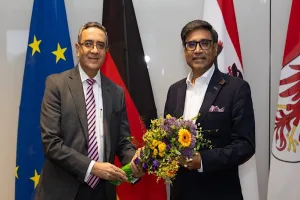
PM Modi, German Chancellor resolve to strengthen defence, security cooperation; condemn terrorism

On his first visit to Asia after assuming office last year, the German Chancellor indicated that the India-EU trade pact could be signed as early as this month.

Ashok Tuteja | New Delhi |

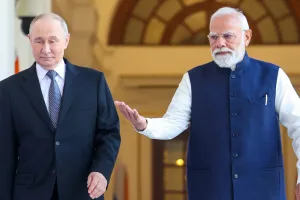
Meeting against the backdrop of the January 3 US action in Venezuela, Prime Minister Narendra Modi and German Chancellor Friedrich Merz on Monday resolved to strengthen defence and security cooperation, unequivocally condemned terrorism, and reiterated their support for an early conclusion of the India-EU Free Trade Agreement (FTA).

In a joint statement issued at the end of talks between the two leaders in Gandhinagar, the two leaders also reaffirmed their commitment to a free and open Indo-Pacific and strong support to the India-Middle East-Europe Economic Corridor (IMEC) and reiterated the urgent need for comprehensive reforms of the UN Security Council through the expansion of permanent and non-permanent categories of membership to reflect contemporary realities.

On his first visit to Asia after assuming office last year, the German Chancellor indicated that the India-EU trade pact could be signed as early as this month. His comments assume significance since the presidents of the European Commission and the European Council will be visiting India later this month as chief guests at the Republic Day parade.

In remarks at a joint press meet with the visiting leader, PM Modi said he had discussed with the German Chancellor the ongoing conflict in Ukraine, the situation in Gaza and regional developments, and the two countries favour a peaceful resolution of all such issues. However, there was no mention of the developments in Venezuela in the remarks made by the two leaders or in the joint statement issued by the two sides.

‘’Close cooperation between the economies of countries like India and Germany is important for all of humanity. The growing trade and investment ties have infused new energy into our strategic partnership. Our bilateral trade has now reached its highest level ever and crossed the USD 50 billion mark,’’ the PM said.

He said India and Germany are jointly advancing new projects in areas such as climate, energy, urban development, and urban mobility. The new mega project in green hydrogen involving companies from both countries will prove to be a game-changer for the energy of the future, he added.

India and Germany signed as many as 19 agreements or MoUs, including those on bilateral defence industrial cooperation, semiconductor ecosystems, critical minerals, investment, education, health, science and technology and sports.

Of particular importance is the Joint Declaration of Intent to develop a Defence Industrial Cooperation Roadmap to promote long-term industry-level collaborations, including technology partnerships and co-production of defence platforms and equipment.

Briefing reporters, Foreign Secretary Vikram Misri confirmed that talks between the two countries on the much-anticipated submarine deal would maintain a positive momentum now that Germany has started facilitating expeditious export clearances of defence equipment.

The joint statement also mentioned that the two leaders condemned terrorism in all its forms and manifestations, including cross-border terrorism, and called for concerted international efforts to combat the menace. They condemned the Pahalgam and Delhi terror incidents.

On bilateral trade, the two leaders welcomed the sustained growth in trade and investment and noted that bilateral trade reached a record high in 2024, with the positive trend continuing through 2025. They were confident that the proposed Indo-EU FTA would facilitate trade flows and inject further momentum into economic relations between the two countries.

Since both India and Germany are bidding for permanent seats on the UN Security Council, the joint statement called for moving forward towards commencing early text-based negotiations at the Inter-Governmental Negotiations (IGN) for reforms in the world body.

Indian nationals, including students, are safe in Iran amid massive anti-government protests: Govt

Foreign Secretary Vikram Misri said that the government is tracking the developments in Iran and the Indian Embassy is in touch with the student and expatriate Indians.

Statesman News Service | New Delhi |

Amid raging anti-government protests in Iran, India on Monday said that all its nationals currently in the Islamic nation are safe and advised them not to venture out in affected areas.

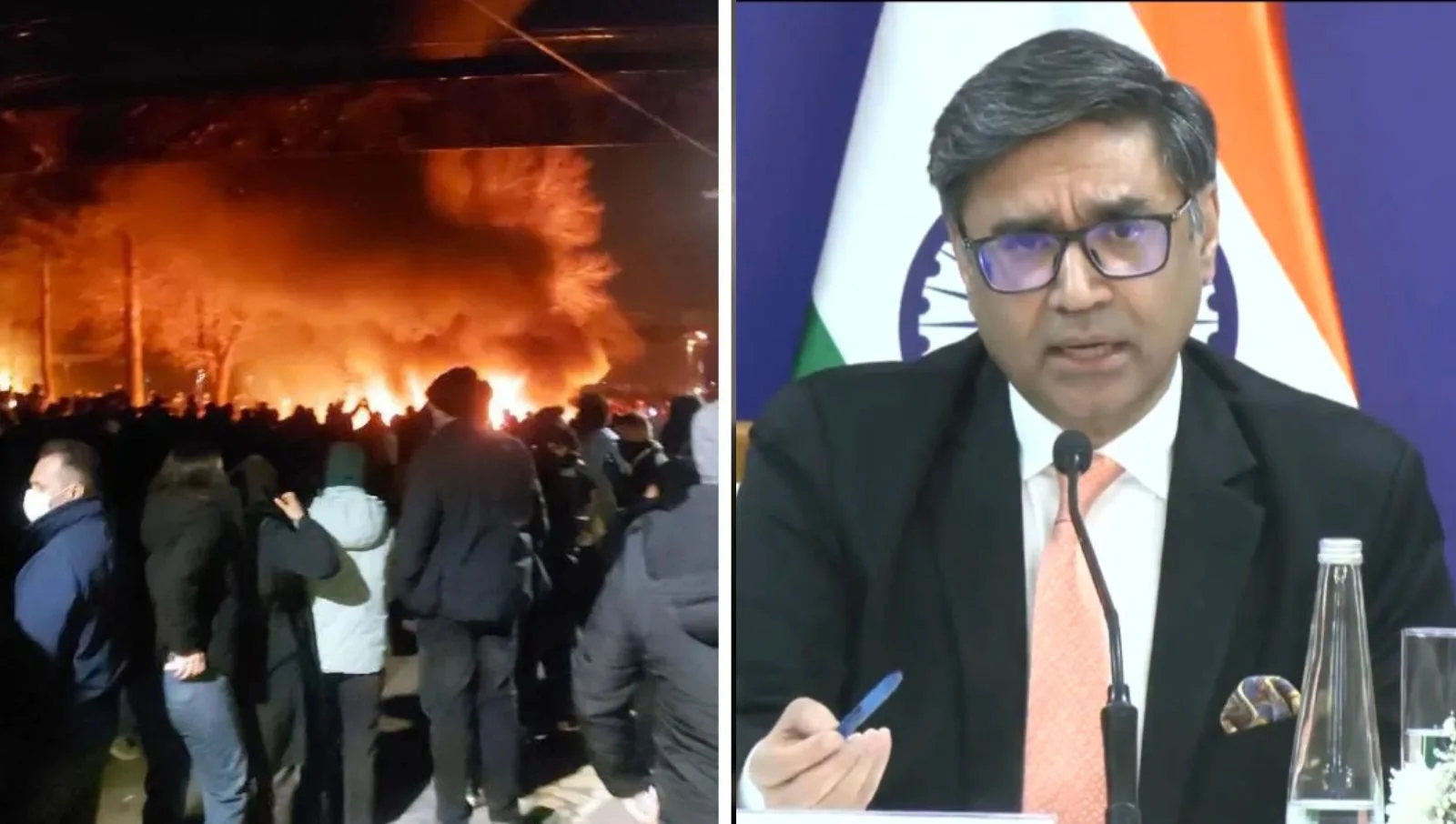
In a media briefing in Delhi, Foreign Secretary Vikram Misri said that the government is tracking the developments in Iran and the Indian Embassy is in touch with the student and expatriate Indians.

“We have a significant community of expatriate Indians and also students from India in Iran. Despite the restrictions in place, our embassy has been able to reach out to the student community and find that they are all doing well and have not faced any difficulties thus far,” Misri said.

He advised that “all of our compatriots there not to venture out or find themselves in the middle of the disturbances.”

His remarks came amid concerns about the safety of Indians residing in Iran, including students in view of the violent anti-government protests.

At least 544 killed as protests spread to all 31 provinces of the country

Iran has been facing intense anti-government protests since December 28 last year. The protests that began as a demonstration by a group of traders against the falling Iranian currency and rising inflation has now spiralled into a mass uprising against the Ayatollah Ali Khamenei-led regime.

Iran protests: Donald Trump says Tehran reached out for talks; internet shutdown continues, 544 deaths reported

The protests have spread to at least 585 locations across the country, in 186 cities, spanning all 31 provinces.

According to the US-based Human Rights Activists News Agency (HRANA), at least 544 protesters have been killed and scores others have been injured in clashes with security forces during the anti-government protests. Internet services remained suspended in many parts of the country since Thursday last week. The Khamenei regime has warned protesters with stringent legal actions, including charges of “death penalty”.

Trump says US considering “some very strong options”

Meanwhile, the United States has warned Iran that it will intervene if the protesters are killed. US President Donald Trump has said that he is considering “some very strong options”. “We’re looking at it very seriously. The military is looking at it, and we’re looking at some very strong options. We’ll make a determination,” he told reporters on board Air Force One on Sunday.

He also claimed that the Iranian leadership has reached out to him seeking to negotiate and that a meeting is being set up.However, he added that the US may have to act before a meeting.

UP govt’s integrated command and control center during Mahakumbh 25 evoked global acclaim

The UP Police was also praised in the country and abroad for making this event safe. Its Integrated Command and Control Center (ICCC) played a key role in making this event safe from land to sky.

Statesman News Service | Lucknow |

Uttar Pradesh Chief Minister Yogi Adityanath’s divine-grand Mahakumbh 25 event, where over 66 crore devotees took a dip of faith in 45 days, evoked appreciation not only in the country but from worldover.

The UP Police was also praised in the country and abroad for making this event safe. Its Integrated Command and Control Center (ICCC) played a key role in making this event safe from land to sky. This center controlled heavy crowds on the ground on one hand, while destroying over 60 lakh cyber attacks on the other.

Chief Minister Yogi Adityanath’s visionary approach to organizing Mahakumbh 25 in Prayagraj received global appreciation and the ICCC honoured with the SKOCH Gold Award. Prayagraj’s Mahakumbh 25 was counted among world’s largest human gatherings, where over 66 crore devotees in 45 days, extraordinary peak-footfall on days like Mauni Amavasya, temporary city spread over thousands of hectares and unprecedented logistics coordination was witnessed. Preparation for this mega event started one year earlier. In this, the Integrated Command and Control Center became the nerve center of “public-first” concern and crisis-management machinery operating on both ground and sky fronts.

Preparations for the Mahakumbh was not “event management” but system-engineering. The preparations started one year earlier from planning to ground implementation. This included table-top exercises, scenario-based testing and digital-twin simulation for crowd-overflow situations, etc. Chief Minister Yogi Adityanath’s clear message was that devotees’ convenience, safe experience, and smooth operation of the fair should happen. For this, cutting-edge technology was deployed for public interest.

In the Mahakumbh, ICCC was designed like a central command hub that remained active 24 hours. It included crowd-management, public-safety, disaster-response, traffic-management and inter-agency coordination to real-time. This system included over 2,750 AI supported cameras, four operational ICCC units, over 400 personnel, 1920 call-center (50 operators every shift), jam-proof wireless grid, ANPR-based vehicle monitoring, VMD display, and AI chatbot “Kumbh Sah’AI’yak” in 11 languages for devotees’ assistance etc. This was the “single-point command” from where QRT dispatch, green-channel activation, railway-bus-stand inflow alert, and multi-departmental information-handover was run with zero-delay target.

Mahakumbh 25 was as big physically as its “digital-footprint” was. This digital dependency made it a high-value target for cyber attackers. Over 60 lakh malicious/suspicious cyber attacks were stopped during the 45-day event, whose IP traced from 25+ countries; attacks included DDoS, ransomware-type activities, DNS poisoning, SQL injection, spoofing, brute force, web-app attacks etc. This success was possible due to timely alerts from central agencies and prompt action by state police/system-integrators. Along with this, technical teams of IIT Kanpur and IIIT Prayagraj played a role in cyber-security assessment and on-ground support. STQC (MeitY) also made notable contributions through testing/quality-check of digital-infrastructure.

IPS Bhanu Bhaskar said active monitoring by 56 “cyber warriors” in Mahakumbh’s tech-deployment ensured “digital Kumbh” along with “digital safety”. Important thing was that cyber-defense was not considered only “IT-issue”, but seen directly connected with crowd-management, emergency-response and public-trust because even one successful defacement/DoS/hacking incident could create misinformation, panic and operational hindrance.
Strength of the ICCC model was more than “technology” – its inter-agency synchronization capability. Cooperation of police, administration, health, disaster-management, traffic, municipal-services, railway-coordination and technical/educational institutions is also important. Same cooperation-architecture was adopted for cyber-security too. Coordination mindset towards best practices like CERT-In government units’ guidelines, CISO-function, dedicated cyber-team and reporting/response-mechanism is visible.

IG Prem Gautam (then IG Range Prayagraj) obtained cooperation from many prestigious institutions/central agencies of the country to deal with potential weaknesses of digital infrastructure and cyber attacks which proved extremely useful. At field-level there was a massive deployment of 60,000+ trained personnel, while in ICCC “human-machine” partnership gave speed and accuracy to operations. Supervision of Mahakumbh ICCC was done by Bhanu Bhaskar (former ADG Prayagraj Zone), who received cooperation from senior officers/team (Tarun Gaba, Police Commissioner Prayagraj, Prem Gautam IG Range Prayagraj, DIG Mahakumbh Vaibhav Krishna). As “officer-in-charge”, Amit Kumar, IPS handled responsibility of operational command and technology-human integration.

Mahakumbh-25’s ICCC model was honored with SKOCH Gold Award 2025 at 105th SKOCH Summit. Then ADG Zone Prayagraj Bhanu Bhaskar was honored with this award by the Skoch committee which was received by then SP ICCC Amit Kumar. This award gives national recognition to UP Police’s tech-driven, citizen-centric initiatives in which ICCC was highlighted as “24×7 nerve centre”.

When technology is guided by compassion, development becomes truly inclusive: CM Yogi

He announced that under the UP AI Mission, Uttar Pradesh will be developed as a national leader in the use of AI in healthcare services.

Statesman News Service | Lucknow |

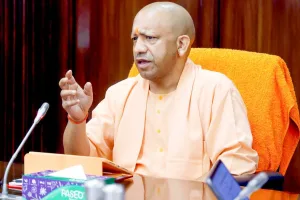
Uttar Pradesh Chief Minister Yogi Adityanath Monday, emphasised that development becomes truly inclusive and the future secure when technology is guided by compassion, policy is driven by innovation, and governance rests on trust.

Addressing the inauguration of a two-day conference on ‘AI in Transforming Healthcare’ here, CM Adityanath said, “Artificial Intelligence (AI) is emerging as a powerful instrument to transform governance from a reactive approach to a proactive one.” He announced that under the UP AI Mission, Uttar Pradesh will be developed as a national leader in the use of AI in healthcare services.

During the inaugural session, the Chief Minister highlighted that AI can significantly enhance the accuracy and effectiveness of health policies. He added, “By enabling real-time data collection and feedback on epidemics and vector-borne diseases, AI can support informed decision-making, stronger policies, and better outcomes.”

He said, “The state government has consistently promoted technological innovation in healthcare. Key initiatives underway include a Medical Device Park, a Pharma Park, a MedTech Centre of Excellence in Lucknow, an AI and Innovation-based Entrepreneurship Centre in Gautam Buddha Nagar, a Centre of Excellence at IIT Kanpur, and the development of Lucknow as an AI City.”

He added that under the UP AI Mission, projects worth approximately Rs 2,000 crore will be implemented in phases over the next three years, positioning Uttar Pradesh at the forefront of AI-driven healthcare in the country.

The Chief Minister noted that over the past 11 years, under the leadership of the Prime Minister, technology has brought tangible change at the grassroots across India. He added, “In Uttar Pradesh, the double-engine government has, over the last eight years, effectively leveraged modern technology to ensure last-mile delivery of policies and welfare schemes. The installation of e-POS machines in 80,000 fair-price shops, the elimination of 30 lakh fake ration cards, and the successful targeting of beneficiaries have reduced complaints related to the public distribution system to zero.”

He added that 1.06 crore families are now receiving pensions for the elderly, destitute women, and persons with disabilities directly into their bank accounts through Direct Benefit Transfer (DBT), ensuring complete transparency and delivery of benefits.

Highlighting improvements in healthcare infrastructure, the Chief Minister said, “The number of medical colleges in the state has increased from 40 before 2017 to 81.”

He recalled that before the COVID-19 pandemic, several districts lacked ICU facilities, oxygen plants, dialysis units, blood banks, and digital diagnostics. Today, these facilities are available across all districts, while virtual ICUs and telemedicine services, initiated during the pandemic, continue to benefit people in remote areas.

Citing the elimination of encephalitis as a major achievement, he said, “A disease that once claimed 1,200–1,500 children’s lives annually has now recorded zero deaths in the state. Uttar Pradesh has also made significant progress in reducing maternal and infant mortality rates and improving institutional deliveries. In the fight against tuberculosis, AI-based tools are being used to identify patients, monitor treatment, and map high-risk areas effectively. Beyond healthcare, AI is also being applied in policing, agriculture, education, and other sectors.”

Concluding his address, the Chief Minister stressed that AI must remain human-driven, not the other way around, and maintaining this balance will be critical in the future. He expressed confidence that the conference would deliver practical solutions, pilot projects, and a time-bound action plan to strengthen healthcare delivery to the last person in the line.

The event was attended by Union Minister Jitin Prasada, Deputy Chief Minister Brajesh Pathak, Minister for IT and Electronics Sunil Sharma, Minister of State Ajit Pal, NITI Aayog Member Dr V K Paul, Additional Chief Secretary (Medical) Amit Kumar Ghosh, and several domain experts.

Ethical and public welfare–oriented healthcare institutions welcome in Haryana: CM

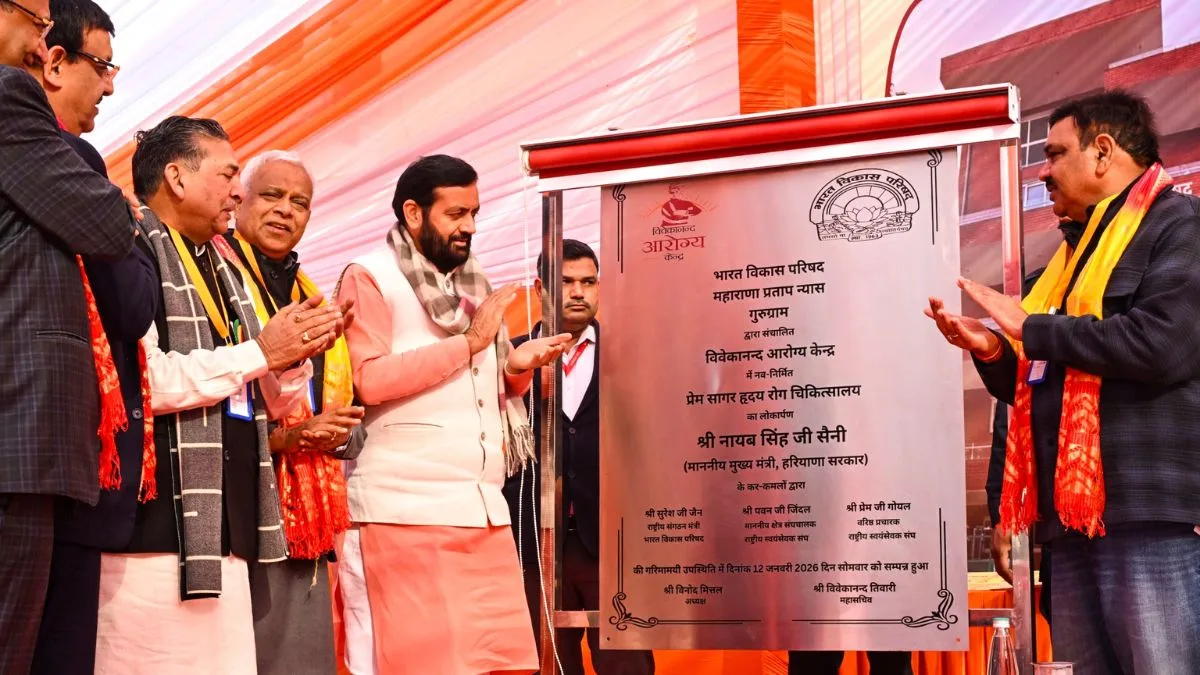
The Chief Minister was addressing the inauguration ceremony of the Prem Sagar Cardiac Hospital at the Vivekanand Arogya Kendra, operated by the Bharat Vikas Parishad Maharana Pratap Trust, Gurugram, on the occasion of Swami Vivekananda Jayanti.

Statesman News Service | Chandigarh |

Haryana Chief Minister Nayab Singh Saini said that all responsible institutions that prioritise ethics, transparency and public welfare while partnering in the state’s healthcare goals are welcome in Haryana. Along with a strong public healthcare framework, the role of the private sector in diagnostics and medical services is also extremely important for citizens.

The Chief Minister was addressing the inauguration ceremony of the Prem Sagar Cardiac Hospital at the Vivekanand Arogya Kendra, operated by the Bharat Vikas Parishad Maharana Pratap Trust, Gurugram, on the occasion of Swami Vivekananda Jayanti. Paying tributes to Swami Vivekananda on his 163rd birth anniversary, the Chief Minister also extended greetings to the people of the state on Lohri, Makar Sankranti and Pongal.

Saini said that the Haryana Government has consistently worked to ensure that every citizen of the state has access to affordable, accessible and effective healthcare services. Institutions like the Vivekanand Arogya Kendra are strengthening these efforts at the grassroots level. Inspired by the Prime Minister’s Fit India message, the state government has expanded modern diagnostic and treatment facilities for the common people. The government has ensured that no poor citizen is deprived of medical treatment due to a lack of funds.

Under the Ayushman Bharat–Chirayu Scheme, 1.34 crore cards have been issued in the state so far, through which claims worth Rs 4,500 crore have been provided for the treatment of about 25 lakh patients. In addition, all senior citizens above 70 years of age are being provided free treatment up to Rs 5 lakh annually under the Ayushman Bharat Scheme. Under this provision, claims amounting to Rs 53.57 crore have been given for the treatment of 26,513 elderly persons so far.

The Chief Minister said that the government is ensuring that government hospitals in every district are equipped with modern medical facilities comparable to those available in private hospitals. In the first phase, such facilities have already been started in 10 district hospitals, while work to develop similar facilities in 12 more district hospitals is currently in progress. The objective is to ensure that quality and accessible treatment is available to common citizens within their own districts.

India’s retail inflation stays below RBI’s lower band for fourth straight month

The year-on-year inflation rate, based on the All India Consumer Price Index (CPI), stood at 1.33%, up slightly from 0.71% in November but still well within the comfort zone.

Statesman News Service | New Delhi |

India’s retail inflation remained below the Reserve Bank of India’s lower tolerance limit for the fourth consecutive month in December 2025, offering continued relief to consumers.

The year-on-year inflation rate, based on the All India Consumer Price Index (CPI), stood at 1.33%, up slightly from 0.71% in November but still well within the comfort zone.

Food prices continued to provide a major cushion, with food inflation staying in negative territory for the seventh straight month.

The Consumer Food Price Index (CFPI) recorded a year-on-year decline of 2.71% in December, compared with -3.91% in November, indicating a moderation in deflation but sustained softness in food prices.

According to the Ministry of Statistics and Programme Implementation (MoSPI), the uptick in headline inflation during December was largely driven by higher prices of personal care items, vegetables, meat and fish, eggs, spices, and pulses.

Inflation rose across both rural and urban areas. Rural headline inflation increased to 0.76% in December from 0.10% in November, while urban inflation climbed more sharply to 2.03%, up from 1.40% a month earlier.

Despite the rise, food inflation remained negative in both segments, at -3.08% in rural areas and -2.09% in urban centres.

Among key components, housing inflation eased marginally to 2.86%, while education and health inflation stood at 3.32% and 3.43%, respectively, showing a slight moderation compared to November. Fuel and light inflation declined to 1.97%, and transport and communication inflation softened to 0.76%.

Modi govt committing the ideological assassination of Mahatma Gandhi: Pramod Tiwari

He said the renaming and changing its form with ‘Viksit Bharat – Guarantee for Employment and Livelihood Mission (Rural)’ (VB GRAM) the essence of MNREGA has been diluted.

Statesman News Service | Varanasi |

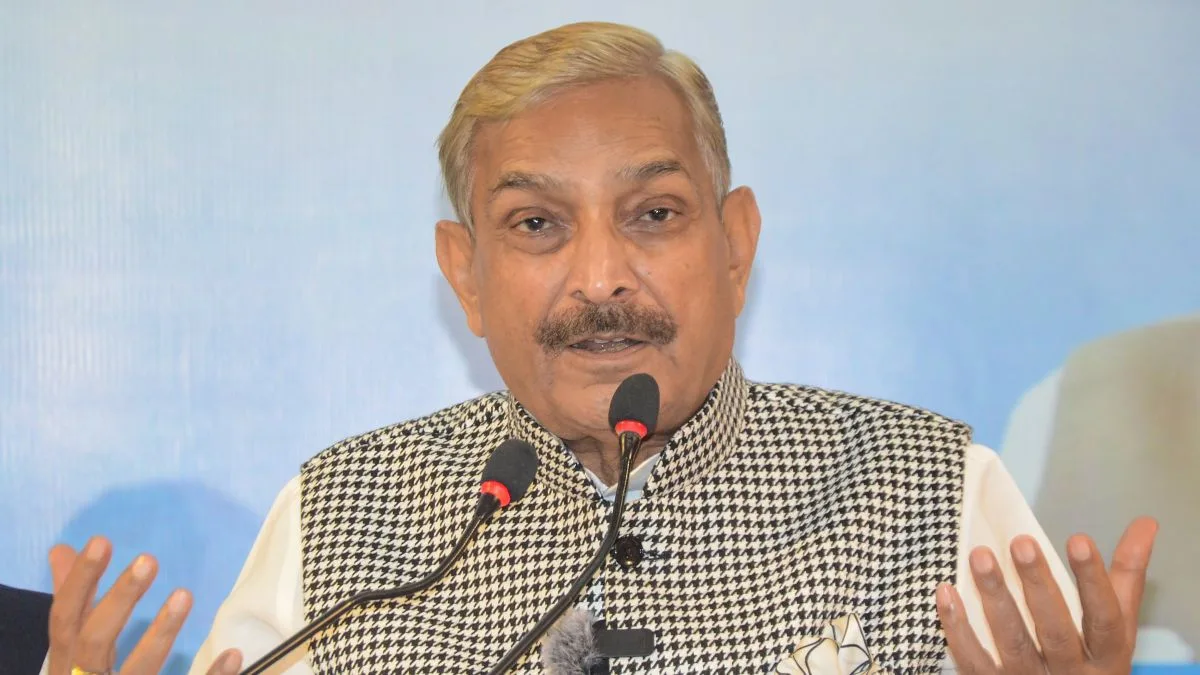
Congress deputy leader in the Rajya Sabha Pramod Tiwari, while criticizing the Modi government on the issue of Mahatma Gandhi National Rural Employment Guarantee Act (MNREGA), alleged Mahatma Gandhi was assassinated on January 30, 1948 but now the Modi government is committing his ideological assassination.

He said the renaming and changing its form with ‘Viksit Bharat – Guarantee for Employment and Livelihood Mission (Rural)’ (VB GRAM) the essence of MNREGA has been diluted.

Addressing a press conference here on Monday, Tiwari said, “I know that my statement may cause controversy. But what I am saying is absolutely correct and true. I am saying this with full responsibility and conviction that the Modi government is committing the ideological assassination of Gandhiji. Godse committed the physical assassination, and now the Modi government wants to erase Mahatma Gandhi’s name and legacy through this scheme.”

He further said, “This is the world’s largest scheme. No other scheme in the world has ever benefited so many people. The work that Godse did, the Modi government is now doing the same. I compare the Modi government to Godse. We will put pressure on the government to withdraw this scheme.”

The Congress party has resolved, “The day we come to power, we will bring back Gandhiji’s name and restore the MNREGA law to its original form. This resolution is being taken in the holy city of Kashi. Just as the black laws related to farmers had to be withdrawn after the movement, the Modi government has brought another black law. The government wants to erase the name of the person who freed the country from slavery, whom we all call the Father of the Nation.”


‘Vaa Vaathiyaar’ new release date out: Legal hurdles cleared, Karthi’s action-comedy to hit theatres on Pongal

‘Vaa Vaathiyaar’, an action-comedy starring Karthi as a corrupt cop who adopts an MGR-inspired alter ego to fight crime, was delayed due to the producer’s pending financial liabilities with investors. The legal hurdle has now been cleared, allowing the film to release.

Statesman News Service | New Delhi |

Just when fans were wondering if Karthi’s ‘Vaa Vaathiyaar’ would quietly disappear into cinema limbo, the film has suddenly made a loud comeback. Like a late Pongal surprise wrapped in banana leaves, the action-comedy is finally stepping into theatres.

After months of uncertainty, legal drama, and hushed whispers, ‘Vaa Vaathiyaar’ now has a brand-new release date.

Also Read: Mardaani 3 trailer: Rani Mukerji takes on child trafficking mafia in her most emotionally charged cop mission yet

‘Vaa Vaathiyaar’ new release date

‘Vaa Vaathiyaar’ was originally supposed to hit screens on December 12, 2025. But plans went off track when the film got stuck due to the producer’s pending financial issues with investors.

The delay was not a short one. The film was pushed indefinitely.

Now, the clouds have finally cleared. The makers have officially announced that Vaa Vaathiyaar will release on January 14, 2026, perfectly timed for Pongal. The announcement came via social media.

Sharing the happy update, the team wrote, “Vaathiyaar Varaar. VaaVaathiyaar. All set for a grand release on January 14.”

According to reports, judicial authorities allowed the film’s rights to be auctioned to help clear the producer’s debts. This move opened the doors for the film’s release, finally allowing it to reach theatres after a long wait.

What is ‘Vaa Vaathiyaar’ all about?

Directed by Nalan Kumarasamy, Vaa Vaathiyaar is an action-comedy with a sharp social edge. Karthi plays DSP Rameshwaran, a corrupt police officer who lives very differently from what his grandfather once dreamed of. His grandfather wanted him to follow the ideals and honesty of legendary leader and actor MGR.

But life takes a strange turn. When crime tightens its grip around him, Rameshwaran adopts an alter ego inspired by MGR himself.

This new identity pushes him to fight corruption and injustice in his own dramatic, unconventional way. The film asks an interesting question: what happens when a flawed man chooses to wear the mask of an ideal?

Star cast and technical crew

Along with Karthi, the film stars Krithi Shetty, Sathyaraj, Rajkiran, Nizhalgal Ravi, Anandaraj, Shilpa Manjunath, and Karunakaran in key roles.

Music and background score are composed by Santhosh Narayanan. George C Williams handles cinematography. Vetre Krishnan is in charge of editing.

What’s next for Karthi?

After ‘Vaa Vaathiyaar’, Karthi will return in ‘Sardar 2’, directed by PS Mithran. The sequel stars SJ Suryah and Malavika Mohanan alongside him.

He is also working on Marshal, with Kalyani Priyadarshan, and has ‘HIT: The Fourth Case’ lined up.

True education is not limited to acquisition of degrees: V-P Radhakrishnan

Addressing the 9th Convocation of Jawaharlal Nehru University in New Delhi, Radhakrishnan congratulated the graduating students and urged them to dedicate their knowledge and skills to the service of the nation.

Statesman News Service | New Delhi |

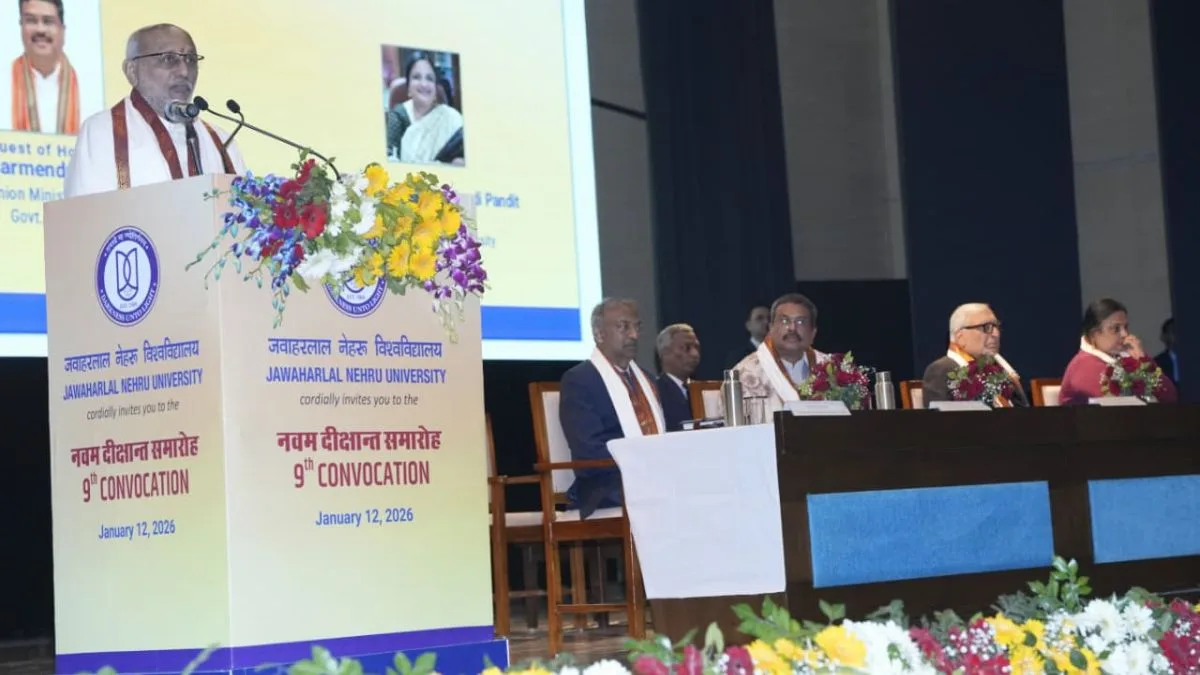
Vice-President C P Radhakrishnan on Monday underlined that true education shapes conduct and character, and is not limited to the acquisition of degrees.

Addressing the 9th Convocation of Jawaharlal Nehru University in New Delhi, Radhakrishnan congratulated the graduating students and urged them to dedicate their knowledge and skills to the service of the nation.

Highlighting India’s civilisational tradition of knowledge, the Vice-President referred to ancient centres of learning such as Nalanda and Takshashila and noted that Indian scriptures and classics, from the Upanishads and the Bhagavad Gita to Kautilya’s Arthashastra and Thiruvalluvar’s Thirukkural, have consistently placed learning at the centre of societal and ethical life.

Recalling the teachings of Swami Vivekananda on his birth anniversary, Radhakrishnan said education must go beyond degrees to build character, strengthen intellect and empower individuals to stand on their own feet.

He emphasised that education and proper training alone would enable India’s youth to realise Prime Minister Narendra Modi’s vision of a Viksit Bharat @2047.

The Vice-President stressed that modern science and traditional values must grow together.

Referring to the democratic ethos of JNU, Radhakrishnan said debate, discussion, dissent, and even confrontation are essential elements of a healthy democracy.

However, he added that such processes must ultimately lead to a conclusion.

Once a decision is taken, the Vice-President emphasised, there must be a collective willingness to cooperate in its implementation to ensure smooth and effective administration.

He appreciated the inclusive atmosphere of JNU and the efforts taken by the University to promote equity and social inclusion in both student admissions and faculty recruitment.

The Vice-President also commended the leadership of the University for expanding its academic engagement into emerging and civilisational fields, including the establishment of new Centres for Hindu, Jain and Buddhist Studies at the School of Sanskrit and Indic Studies.

He also appreciated JNU’s sustained efforts to promote Indian languages through initiatives such as the Special Centre for Tamil Studies and chairs and programmes in Assamese, Odia, Marathi and Kannada, observing that knowledge creation must flourish in mother tongues in line with the spirit of the National Education Policy.

In his concluding remarks, the Vice-President urged graduates to uphold three core responsibilities—intellectual honesty in the pursuit of truth, social inclusion to reduce inequalities, and active contribution to national development.

He called upon them to remain guided by constitutional values and India’s civilisational ethos, and to always respect their parents and teachers. Wishing the students success in their future endeavours, the Vice-President reaffirmed India’s unity and collective resolve to progress together.


Repeated complaints against tainted its Kerala MLA puts Congress on the defensive

Mamkootathil, a young leader, has been the face and mouth of the Congress in Kerala. Now, he has reached the point of being what the police call a habitual offender.

Statesman News Service | Thiruvananthapuram |

After his arrest in a third rape complaint, the CPM-led LDF and BJP have demanded that Congress should ask MLA Rahul Mamkootathil to resign from membership of the lesistaltive assemly.

Responding to the demand, the Congress said it cannot ask a person, who has been expelled from the party, to resign. Even after saying that he has been expelled, the continuous filing of very serious complaints against the MLA, who won with the palm symbol, is putting the Congress on the defensive.

Mamkootathil, a young leader, has been the face and mouth of the Congress in Kerala. Now, he has reached the point of being what the police call a habitual offender. Rahul is facing three similar and serious cases against him — of rape, coerced medical termination of pregnancy, financial extortion, cheating, confidence trickery, illegal detention, and obtaining sexual consent by deceitfully promising marriage. Even as the Congress leaders try to explain that the party used Brahmastra and expelled him, the complaints against the young MLA are becoming a burden for the grand old party.

Opposition leader V D Satheesan said the MLa was suspended from the party as soon as the allegations were raised. He was expelled from the Congress when the complaint was received. Which party in India has taken such a step, he asked.

Even as he was expelled, the Congress did not ask him to resign as an MLA in a commanding tone. It only said that it was appropriate for him to resign as an MLA. The argument was that the party could not order him to resign. The Congress has justified it by saying that those facing similar allegations in the LDF did not resign.

The Opposition is alleging that those protecting Rahul Mamkootathil are still in the Congress. Even when he was suspended from the party and the parliamentary party, they argued about whether he could come to the assembly. When he came, they defended him. Although the complaint he received against Rahul from a woman was immediately handed over to the police, the KPCC president doubted the preparation of the complaint. When Rahul is arrested, those who defended him will have to remain silent in the party. It must be assumed that the accused in three rape cases will not make a comeback to the Congress.


India records highest-ever coal production at 1,047 MT in FY25

The milestone underscores the sector’s role in ensuring energy security as coal continues to supply over half of India’s primary commercial energy needs.

Statesman News Service | New Delhi |

India recorded its highest-ever coal production in 2024–25, with output rising 4.98 per cent year-on-year to 1,047.52 million tonnes (MT), according to the Ministry of Coal’s Year-End Review 2025.

The milestone underscores the sector’s role in ensuring energy security as coal continues to supply over half of India’s primary commercial energy needs.

During calendar year 2025, provisional coal production stood at 1,042.90 MT, while supplies reached 1,016.14 MT, reflecting uninterrupted availability and no reported shortages.

Stocks at domestic coal-based thermal power plants touched 50.31 MT by December 31, sufficient for 21 days of consumption and 17.42 per cent higher than a year earlier, enabling a 54.17 per cent reduction in imported coal blending.

The surge in domestic output helped cut coal imports by 7.9 per cent in 2024–25 to 243.62 MT, yielding foreign exchange savings of about USD 7.93 billion (Rs 60,681.67 crore).

Captive and commercial mines contributed 203.70 MT in CY 2025, a 12.75 per cent increase, while allocation orders were issued for 33 coal mines expected to generate nearly 67,000 jobs and attract investments exceeding Rs 7,430 crore.

Policy reforms featured prominently, including the rollout of CoalSETU, revisions to the SHAKTI linkage policy for greater flexibility, and steps toward establishing coal exchanges following amendments to the MMDR Act.

Digital initiatives such as the Integrated Command and Control Centre (ICCC) and streamlined mine approvals aim to accelerate operations and improve governance.

On sustainability, coal and lignite PSUs planted over 60 lakh saplings across 3,172 hectares in 2025, saved 214.44 million units of electricity annually through efficiency measures, and expanded renewable capacity to 2,076 MW.

Corporate social responsibility spending rose 31 per cent to Rs 885.44 crore, supporting healthcare, education, and livelihood programmes nationwide.

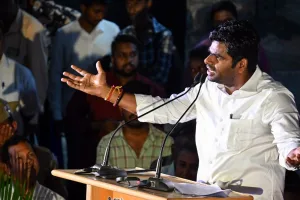
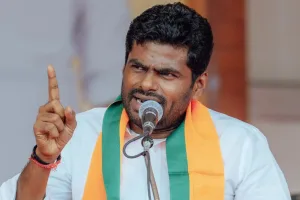
Row over Mumbai identity: Defiant Annamalai dares Thackerays, calling them ‘ignorant’, asserts he will come again

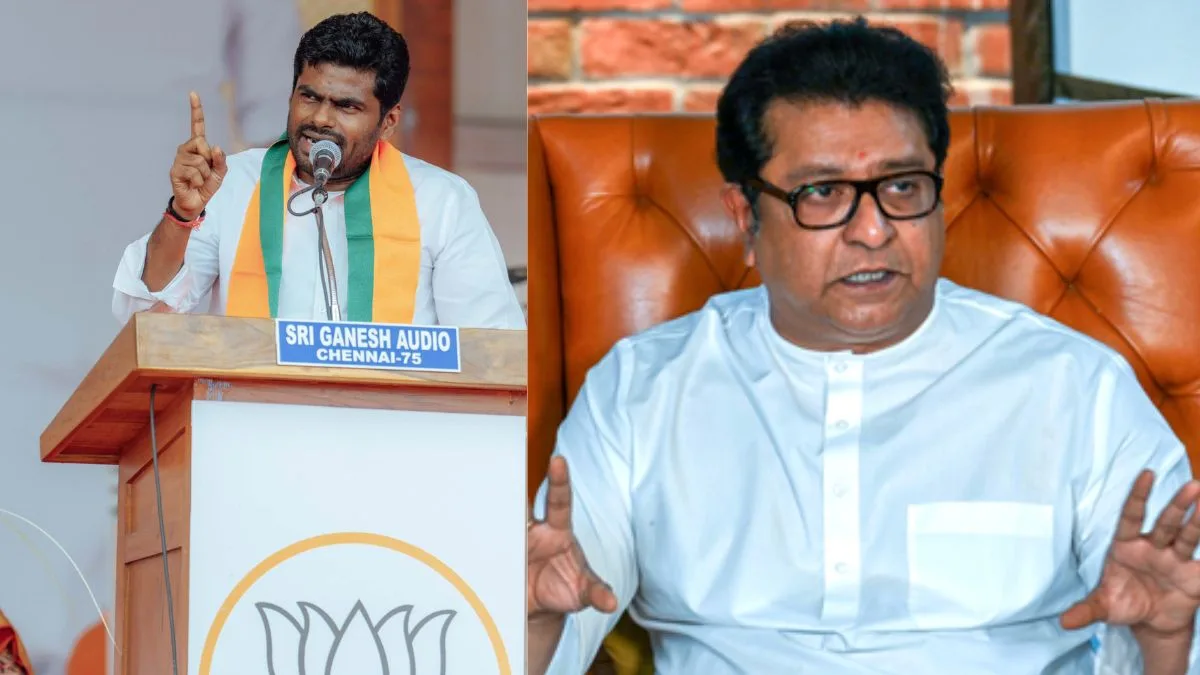
With his remark on Mumbai sparking a political storm, providing a handle to the Shiv Sena (UBT) and the Maharashtra Navnirman Sena (MNS), a defiant IPS-turned BJP leader K Annamalai on Monday threw the gauntlet at the Thackerays daring them to touch him when he visits the city shortly next time.

Statesman News Service | Chennai |

With his remark on Mumbai sparking a political storm, providing a handle to the Shiv Sena (UBT) and the Maharashtra Navnirman Sena (MNS), a defiant IPS-turned BJP leader K Annamalai on Monday threw the gauntlet at the Thackerays daring them to touch him when he visits the city shortly next time.

“No one can prevent me from coming to Mumbai. I am a son of a farmer and I can’t be intimidated. I will come to Mumbai. I am definitely coming. You can’t even touch me. If you could attempt to cut my leg. Had I been afraid of such threats I would have never stepped out of Coimbatore,” an unapologetic Annamalai told the media at the Chennai airport.

“I have grown to a great extent that people like Udhav Thackeray Raj Thackeray are issuing threats at a public meeting organised to target me. Some people, who have no work there, are holding out threats to me and trying to intimidate me,” he said, asking, “Who are the Thackerays to threaten me?”

“My parents are engaged in rearing sheep. They are holding public meetings to target the sons of those who herd cattle,” he quipped.

“If I say Kamaraj (Congress stalwart and late chief minister whose rule is considered the golden era of Tamil Nadu) is one of India’s greatest leaders, does it mean he is no longer a Tamil? Likewise, if I say Mumbai is a world-class city, does it mean Maharashtrrians didn’t build it?” he asked, adding, “These people are ignorant.”

The raging controversy over the BJP leader from Tamil Nadu was the fallout of his statement made during his campaign for the saffron party in the BMC elections, slated for January 15. “Narendra (Modi) Ji at the Centre, Devendra (Fadnavis) Ji at the State and BJP Mayor in the BMC… because Bombay is not a Maharashtra city but an international city,” he had said at his campaign in the Western suburbs of the city which has a considerable Tamil population. His call for a triple-engine circar, was seen as decoupling Mumbai from the rest of Maharashtra and his use of Bombay instead of Mumbai also appeared unpalatable to parties wedded to identity politics.

It provoked the Marathi Manoos and the Udhav faction of the Sena and at a joint rally of the UBT Sena and the MNS, Raj Thackeray directly targeted Annamalai, caricaturing him as a rasmalai. “One ‘rasamalai’ came from Tamil Nadu and asked what is the connection between Mumbai and Maharashtra. What is your connection here? That’s why Balasaheb Thackeray coined the slogan ‘hatao lungi bajao pungi’, which targeted the south Indians, particularly Tamils, in the 1960.

Similarly, swift was the reaction of Shiv Sena (UBT) MP, Sanjay Raut, who said, “I am shocked that Annamalai came from Tamil Nadu to Mumbai and claimed that Mumbai doesn’t belong to Maharashtra.”

argeting Chief Minister Fadnavis and his Deputy Eknath Shinde, heading the Shiv Sena, he questioned their silence over this. “Even after this Fadnavis and Shinde have remained silent. If Shiv Sena is standing for Maharashtra, this insult would not have been tolerated. It is an insult to Maharashtra and Marathi Pride,” he taunted. Going a step further, the Sena (UBT) paper, Saamna, in a write-up allegedly suggested that Annamalai’s legs should be chopped off for this remark.

Coming after the anti-Hindi agitation in Maharashtra, which forced the Fadnavis government to back off its decision, this remak of Annamalai has given enough ammunition to the opposition in the civic polls.

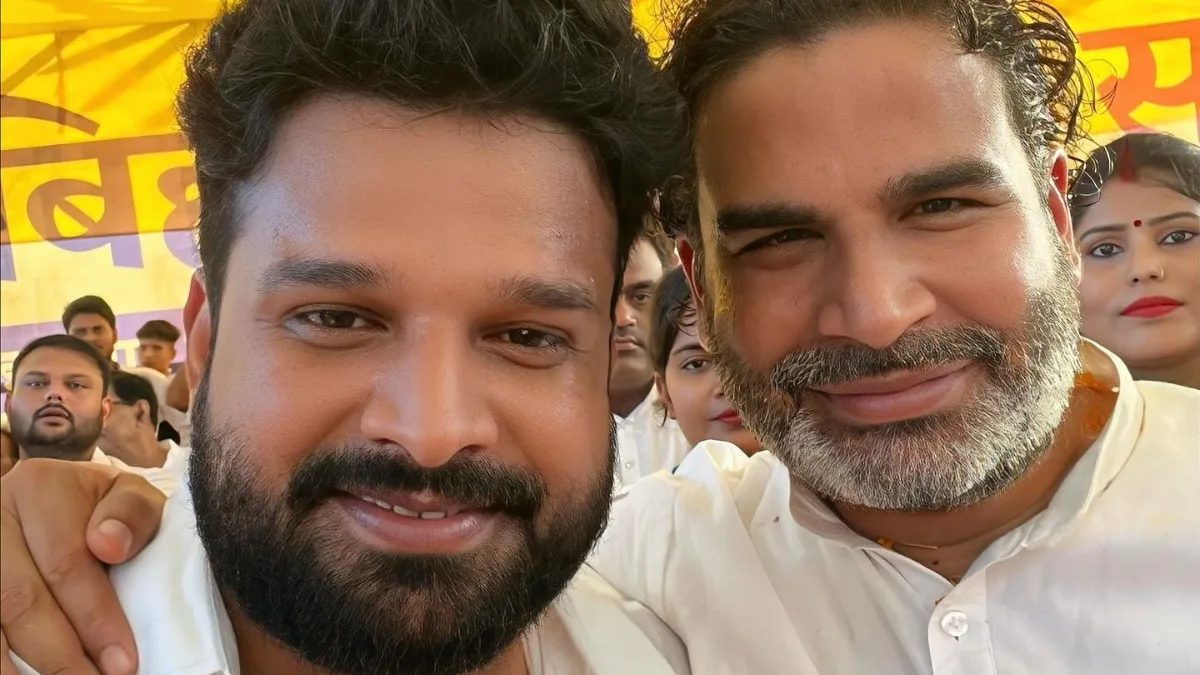
Ritesh Pandey, Bhojpuri singer of ‘Hello Kaun’ fame, exits Prashant Kishor-led Jan Suraaj Party

Bhojpuri singer and youth icon Ritesh Pandey has resigned from Prashant Kishor’s Jan Suraaj Party after contesting the Bihar Assembly election. He says he now wants to serve people through music and social work.

Statesman News Service | New Delhi |

Ritesh Pandey has bid sudden goodbye to politics that has left many in Bihar surprised. The popular Bhojpuri singer has officially quit the Jan Suraaj Party led by Prashant Kishor.

The announcement came on Monday and quickly became a talking point in Bihar’s political and cultural circles.

Ritesh Pandey on quitting Jan Suraaj

Ritesh Pandey shared his decision through a post on X (formerly Twitter). In the message, he explained why he chose to step away from active politics after contesting the Kargahar Assembly seat on a Jan Suraaj Party ticket.

He wrote that he entered politics as a responsible Indian citizen, calling elections a “great festival of democracy.”

Even though the results did not go his way, Pandey said he has no regrets. According to him, he gave his best with honesty and full dedication.

Also Read: Disappointed with our performance; cash transfer to women helped NDA win Bihar: Prashant Kishor’s Jan Suraaj

“This journey taught me a lot”

Looking back, Pandey described his political experience as a strong learning phase. He said the love, trust, and support he received from people during the campaign would always remain his biggest strength.

He admitted that meeting people closely, listening to their problems, and walking through villages during the campaign changed him in many ways. Though he did not win the seat, he felt he gained something more valuable: people’s affection.

Choosing music over party politics

The singer clearly explained why he decided to resign. He said he now wants to serve society through the same work that gave him identity and respect: his music.

Calling himself the son of a simple farmer’s family, Pandey said it was people’s blessings that shaped his journey. He also added that continuing public service with complete honesty becomes difficult while staying tied to a political party. Because of this inner conflict, he felt it was right to step away.

“Therefore, I have decided to resign from the Jan Suraaj Party,” he wrote.

What’s next for Ritesh Pandey?

After his resignation, speculation is already floating. Will he join another party? Or will he completely step away from politics and return fully to music and social work?

For now, Pandey has not given a clear answer.

Ritesh Pandey discography

Ritesh Pandey remains one of the most loved names in Bhojpuri entertainment. Songs like ‘Hello Kaun’, ‘Lehenga Lucknowa’, and ‘Kamariya Dukhta Ae Raja Ji’ made him a household name especially in Bihar and Uttar Pradesh.

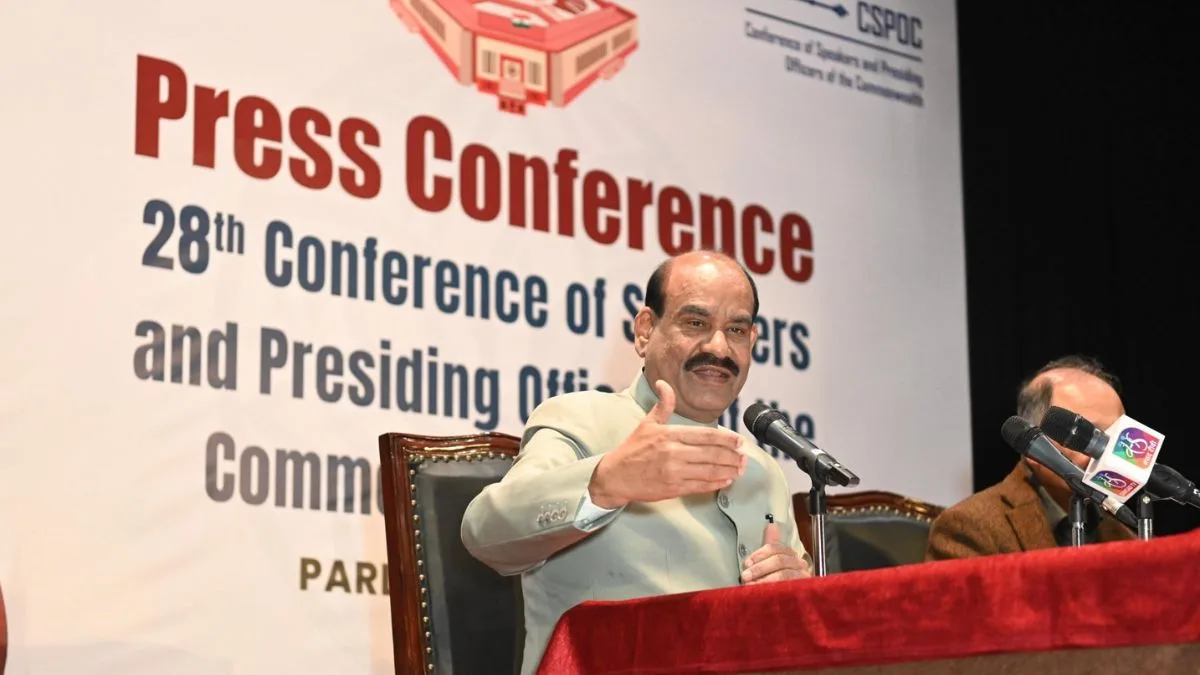
India to Host 28th Commonwealth Speakers’ Conference in 2026, Spotlighting AI and Democracy

Lok Sabha Speaker Om Birla, who will chair the conference, said the meet will focus on how emerging technologies such as artificial intelligence and social media are reshaping the functioning of democratic institutions.

Statesman News Service | New Delhi |

India will host the 28th Conference of Speakers and Presiding Officers of the Commonwealth (CSPOC) from January 14 to 16, 2026, marking one of the largest inter-parliamentary gatherings in the country in recent years, with Prime Minister Narendra Modi set to inaugurate the event at the historic Central Hall of the Samvidhan Sadan on January 15.

Lok Sabha Speaker Om Birla, who will chair the conference, said the meet will focus on how emerging technologies such as artificial intelligence and social media are reshaping the functioning of democratic institutions.

Addressing a press conference on Monday, Birla said the four-day event, including arrivals and post-conference engagements, would bring together Speakers and Presiding Officers from across the Commonwealth to deliberate on strengthening parliamentary democracy in a rapidly changing global environment.

“India is honoured to host the 28th CSPOC at a time when parliaments worldwide are grappling with new challenges and opportunities posed by technology, changing public expectations and concerns relating to the security and well-being of legislators,” Birla said. “The focus this year will be on the application of artificial intelligence and social media in parliamentary functioning, while preserving the core democratic values of transparency, accountability and impartiality.”

Prime Minister Modi will inaugurate the conference on January 15 at 10.30 am and deliver the keynote address. Following the inaugural session, the Prime Minister will interact informally with the Speakers and Presiding Officers of Commonwealth and autonomous parliaments and participate in a group photograph. Modi had earlier inaugurated the 9th G20 Parliamentary Speakers’ Summit (P20) hosted by India in October 2023, the last major inter-parliamentary conference held in the country.

CSPOC, established in 1969 on the initiative of then Speaker of the Canadian House of Commons Lucien Lamoureux, is an independent forum that brings together Speakers and Presiding Officers of the 53 national parliaments of Commonwealth countries. While it has no formal affiliation with the Commonwealth Parliamentary Association (CPA), the Commonwealth Secretariat or the Commonwealth Heads of Government Meeting (CHOGM), its membership mirrors that of the CPA. Canada has provided the secretariat for CSPOC since its inception.

The stated aims of the conference are to uphold impartiality and fairness among Presiding Officers, promote understanding of parliamentary democracy in its various forms, and support the development of strong parliamentary institutions. The conference operates on a two-year cycle, with a full membership conference held every alternate year.

The decision to host the 28th CSPOC in India was taken during the 25th conference in Ottawa in January 2020, in consultation with the Ministry of External Affairs. The formal handover to India took place at the conclusion of the 27th CSPOC in Kampala, Uganda, in January 2024, when Deputy Chairman of the Rajya Sabha Harivansh led the Indian Parliamentary Delegation.

As Chairperson of CSPOC since January 2024, Om Birla will preside over the Standing Committee meeting on January 14 at the Red Fort in Delhi. The Standing Committee, comprising 15 members, oversees CSPOC’s activities. Ahead of the meeting, visiting Speakers and Presiding Officers will be given a guided tour of the Red Fort and attend a light-and-sound programme, followed by a dinner hosted by the Lok Sabha Speaker.

The formal inauguration and plenary sessions will take place at the Central Hall of the Samvidhan Sadan, while workshop sessions will be held in the Lok Sabha Chamber, Rajya Sabha Chamber and the Chamber of Princes.

The conference agenda includes four workshop themes:

AI in Parliament: Balancing innovation, oversight and adaptation

Social media and its impact on parliamentarians

Innovative strategies to enhance public understanding of Parliament and citizen participation beyond voting

Security, health and well-being of Members of Parliament and parliamentary officials

The first two topics will be discussed on January 15, while the remaining sessions will be held on January 16. A special plenary session will focus on “The role of Speakers and Presiding Officers in maintaining strong democratic institutions,” with Birla delivering the keynote address.

Apart from chairing the plenary meetings, the Lok Sabha Speaker will also preside over the Lightning Round, Special Plenary and Closing Plenary sessions.

The CSPOC will be attended by Speakers and Presiding Officers from 53 Commonwealth countries, including 23 bicameral and 30 unicameral parliaments. According to official figures, 59 Speakers and Presiding Officers have confirmed participation so far, taking the total to 61, including India’s Lok Sabha Speaker and the Deputy Chairman of the Rajya Sabha. The overall delegation strength is expected to be around 229, including Secretaries-General, MPs, diplomats and accompanying officials.

Special invitees include Dr Tulia Ackson, President of the Inter-Parliamentary Union, and Dr Christopher Kalila, Chairperson of the Commonwealth Parliamentary Association. Presiding Officers from several semi-autonomous parliaments will attend as observers.

India has hosted CSPOC on three earlier occasions — in 1971, 1986 and 2010. The 2010 conference, held at Vigyan Bhawan, was inaugurated by then Prime Minister Dr Manmohan Singh. With the 2026 edition, India will reaffirm its role as a key convenor of global parliamentary dialogue.

At the conclusion of the conference on January 16, Birla will hand over the chairmanship of CSPOC to Sir Lindsay Hoyle, Speaker of the UK House of Commons.

As part of the CSPOC tradition, a post-conference tour to Jaipur has been organised on January 17–18, showcasing India’s cultural heritage under the government’s “Atithi Devo Bhav” ethos.

With its emphasis on technology, democratic resilience and citizen engagement, the 28th CSPOC is expected to position India at the forefront of global discussions on the future of parliamentary democracy.


Lucknow to host BBFS scouting trials for young football talent on January 18

The trials will be held at the Dilkusha Football Ground, with participants required to report at 9:30 am.

Statesman News Service | Lucknow |

Lucknow is set to become a hub for aspiring young footballers as the Bhaichung Bhutia Football Schools (BBFS) will conduct scouting trials in the city on January 18 to identify promising student-athletes for its Residential Academy.
The trials will be held at the Dilkusha Football Ground, with participants required to report at 9:30 am.

The scouting programme is open to footballers born between 2010 and 2015. Those taking part must carry a valid government-issued identity card for verification and arrive in complete football gear, including jersey, shorts, football boots and mandatory shin guards. Given the high-intensity nature of the session, participants are also advised to bring their own water bottles or hydration packs. Registrations for the trials can be completed online via the Enjogo app, BBFS’s official platform for sports learning and participation.

Bhaichung Bhutia, co-founder of BBFS and former India captain, said the initiative aims to provide young players with an opportunity to chase their football ambitions while continuing their education. He noted that the BBFS Residential Academy focuses on identifying committed student-athletes and nurturing them in an environment that emphasises quality coaching, discipline and holistic development.

Over the years, BBFS has established a nationwide scouting network involving experienced, licensed coaches who track talent across key footballing regions in the country. This structured approach ensures that young players from different backgrounds get the chance to showcase their abilities at a national level.

The BBFS Residential Academy follows an integrated model that combines professional football training with formal schooling in partnership with reputed boarding schools. Designed on the lines of leading global academies, the programme includes year-round technical and tactical training, strength and conditioning, nutrition planning and participation in state and national tournaments.

Each athlete follows a personalised Individual Development Plan, supported by regular mentoring to promote performance, discipline and personal growth.

During the Lucknow trials, senior residential academy coaches will assess players through structured drills and match-play situations, evaluating them on technical, physical, tactical and psychological parameters. Selected players will be offered a pathway into the BBFS Residential Academy, which opens doors to professional clubs, national age-group teams and higher education opportunities.

With Indian football witnessing steady growth and more structured development pathways emerging, BBFS continues to play a significant role in nurturing grassroots talent. Through its residential and non-residential programmes, the organisation remains focused on building a strong foundation for young footballers, balancing sporting excellence with academic progress.

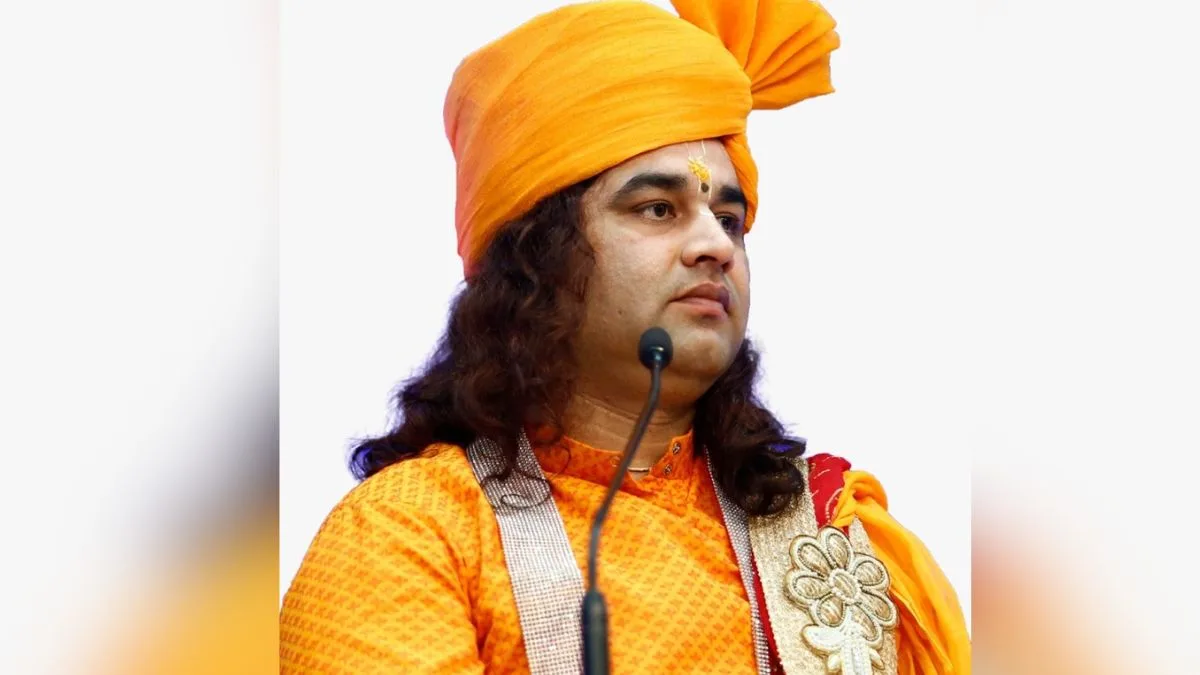
Hindus never want to fight, but self-defense is their right: Devkinandan Thakur

Speaking to the media here on Monday, Devkinandan Thakur said it is not his job to react to the statements of politicians, but he wants to present the truth of Sanatan Dharma.

Statesman News Service | Mathura |

Amidst the ongoing political rhetoric surrounding Sanatan Dharma and Hindutva, a statement has come from storyteller Devkinandan Thakur. He said Hindus are fundamentally non-violent, but when it comes to protecting their existence, family, and religion, taking up arms becomes the last and necessary option.

Speaking to the media here on Monday, Devkinandan Thakur said it is not his job to react to the statements of politicians, but he wants to present the truth of Sanatan Dharma.

He said, “We are the people who believe in the principle of ‘May all be happy. But because of this principle and excessive tolerance, we have lost our existence in regions like Afghanistan, Pakistan, and Bangladesh.” He warned that now followers of Sanatan Dharma are becoming vigilant about their security.

Referring to India’s cultural heritage, the storyteller said that this country belongs to Buddha, but also to war. Giving the examples of Ramayana and Mahabharata, he explained that “war has always been the last resort. Lord Krishna also asked for five villages for peace, but when the limits of injustice were crossed, a great war like the Mahabharata took place.”

Devkinandan Thakur asserted that Hindus have never gone to seize anyone’s land, but if someone touches a Hindu’s cow, mother, or the honor of their sister or daughter, then it is impossible for a Hindu to remain silent.

He said that even their Gods take avatars to protect Dharma. An attack on Hindutva means an attack on all of humanity, because Sanatan Dharma teaches the world the right way to live. Our policy is ‘live and let live,’ but if someone does not let us live, then ‘Dharma protects those who protect Dharma’ is the only path left. He called upon society to awaken to stop the attacks on temples and traditions. Devkinandan Thakur’s statement is rapidly going viral on social media and is being seen as a declaration of unity and self-defense by the Hindu community.