Logo

Supreme Court seeks ECI’s response to TMC MP Derek O’Brien’s plea alleging procedural lapses in West Bengal SIR

Hearing a batch of pleas, a bench led by Chief Justice of India (CJI) Justice Surya Kant posted the matter for further hearing on Monday, January 19.

Statesman News Service | New Delhi |

The Supreme Court on Monday sought the Election Commission of India’s (ECI) response to pleas filed by Trinamool Congress (TMC) MP Derek O’Brien and others, alleging procedural irregularities in the Special Intensive Revision (SIR) of the electoral rolls in West Bengal.

Hearing a batch of pleas, a bench led by Chief Justice of India (CJI) Justice Surya Kant posted the matter for further hearing on Monday, January 19.

During the hearing, senior advocates Kapil Sibal and Kalyan Banerjee—who is also a TMC MP—submitted that the poll panel is adopting “unusual procedures” while conducting the SIR exercise in West Bengal.

They further claimed that the authorities are acting “without any orders” in the poll-bound state during the SIR exercise.

Earlier this month, O’Brien had moved the apex court alleging serious procedural lapses in the SIR process. He contended that the ECI issued instructions to Booth Level Officers (BLOs) and other officials through “informal and extra-statutory channels” such as WhatsApp messages and oral directions, instead of formal written communications.

SIR exercise in Bengal: DMs not to control micro-observers for voter list hearings

“The ECI cannot act arbitrarily, capriciously or dehors the law, nor can it substitute legally prescribed procedures with ad hoc or informal mechanisms,” the plea stated.

The petition further alleged that the SIR exercise “has substantially aggravated the difficulties faced by eligible and bona fide electors, owing to a continuing series of arbitrary and procedurally irregular actions attributable principally to respondent no. 1 (ECI).”

The plea filed by the TMC MP has sought directions from the Supreme Court to the ECI to extend the deadline for the Claims and Objections phase.

It has also urged the apex court to direct the Commission to “forthwith stop issuing instructions for compliance by the BLOs and other officers involved in the SIR exercise through WhatsApp or other such informal channels,” and to declare all such instructions issued so far as illegal.


SIR exercise in Bengal: Booths with ‘zero deceased, duplicate or shifted voters’ drop sharply from 2,208 to 29

BMC polls revive historical clash between Maharashtra and Tamil Nadu

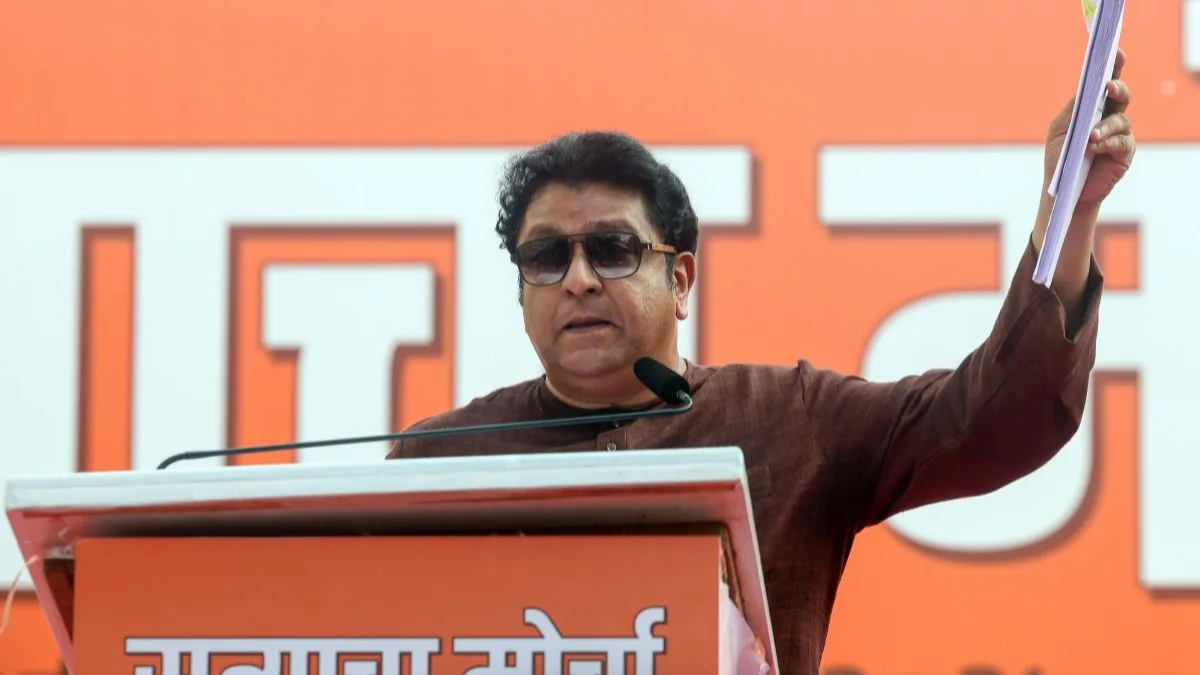
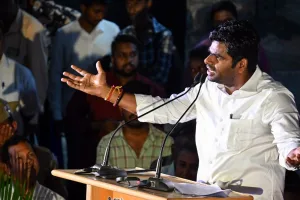
The verbal to-and-fro between Maharashtra Navnirman Sena (MNS) chief Raj Thackeray and former Tamil Nadu BJP president K Annamalai ahead of the high-stakes BMC elections has revived old fault lines over regional identity, migration, and Mumbai’s status as India’s financial capital.

VIBHA SHARMA | New Delhi |

The reason may be a local body’s election—in this case, the Brihanmumbai Municipal Corporation (BMC) in Mumbai—but the polls to the richest municipal corporation have revived a political firestorm over Mumbai identity between leaders of two states—Maharashtra and Tamil Nadu.

The verbal to-and-fro between Maharashtra Navnirman Sena (MNS) chief Raj Thackeray and former Tamil Nadu BJP president K Annamalai ahead of the high-stakes BMC elections has revived old fault lines over regional identity, migration, and Mumbai’s status as India’s financial capital.

The latest flashpoint came with Thackeray’s sharp attack against Annamalai, whom he mocked as “rasmalai” and targeted with the controversial 1960s slogan “Hatao lungi, bajao pungi”—a phrase used to evoke Marathi sentiment against South Indian migrants. This time, it was in response to Annamalai’s campaign in Mumbai’s Tamil-speaking areas, where he described the maximum city as an “international city”.

Arguing that its growth has been shaped by contributions from people across India, he pitched the BJP’s vision of a “triple-engine government” involving the Centre, state, and civic body. Critics, including Thackeray, accused him of undermining Maharashtra’s claim over Mumbai and favouring industrialists over locals.

Though Annamalai clarified that recognising Mumbai’s global status does not diminish Marathi contributions, Raj Thackeray accused Annamalai of diluting Maharashtra’s claim over Mumbai, framing the BMC as a battle to protect Marathi language, land, and livelihoods from “outsiders.” Annamalai, meanwhile, dared Thackeray to stop him from campaigning in Mumbai and accused his family of targeting Tamils for political gain. Recognising Mumbai’s global character did not diminish Marathi contributions, he said, describing the backlash as a badge of honour. “I will come to Mumbai, do what you want,” he said.

BJP leaders backed him, rejecting claims of any conspiracy to separate Mumbai from Maharashtra. Leaders from across the country had the right to campaign anywhere in India, and regional slurs undermine national unity, they added

However, the clash revived memories of the 1960s and 1970s, when Shiv Sena’s “sons of the soil” politics targeted South Indian migrants during periods of economic stress in Mumbai, then Bombay.

After Gujarat and Maharashtra were separated, Mumbai became a focal point of linguistic and regional politics. Founded by Bal Thackeray, the Shiv Sena used slogans like “Hatao lungi, bajao pungi” to mobilise Marathi workers, leading to violence, riots, and forced migration of Tamil families. Election-time rhetoric periodically reignited tensions over migration and economic competition; however, this BMC election is important because it is the first major political battle in Mumbai after the Shiv Sena split.

Mumbai is the strongest base of the erstwhile Shiv Sena, and control of the BMC has always symbolised its power. With two rival Sena factions now competing, the election will reveal which side has more public support. It is also significant because the BMC is India’s richest civic body, controlling massive funds and key city services. The result will influence future alliances, leadership claims, and the broader political direction of Maharashtra.

Cyber security is social responsibility: Nitish Pathak

Most of us have encountered the above-mentioned questions without knowing the fact that we have been conned. Welcome to the world of cybercrime, where the only way to save oneself is to try not to fall prey to the crime itself.

Statesman News Service | New Delhi |

Has a stranger approached you to make a call through your phone? Has someone called you for an OTP for a parcel sent by a random person? Did a distant relative ask for monetary help on popular messaging platforms like WhatsApp?

Most of us have encountered the above-mentioned questions without knowing the fact that we have been conned. Welcome to the world of cybercrime, where the only way to save oneself is to try not to fall prey to the crime itself.

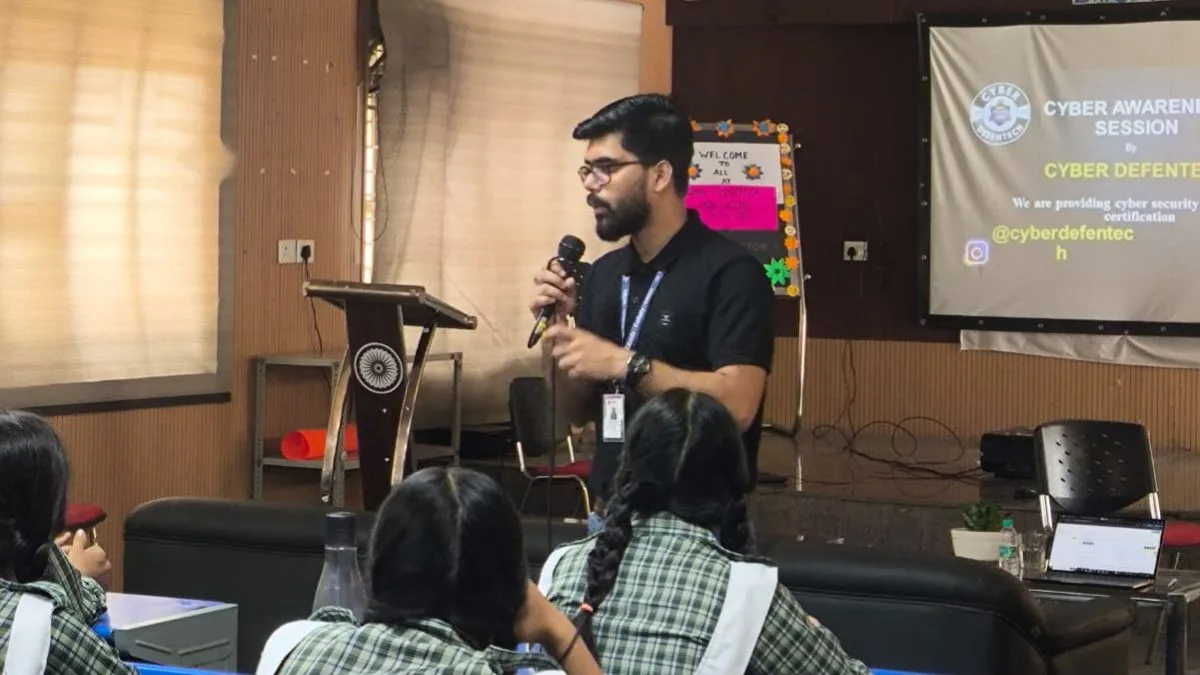
Nitish Pathak, CEO and founder, Cyber Defentech, says the “cobweb of cybercrime’ is so deep that it is very difficult to catch hold of the criminals as their network is multi-layered.

“With increasing dependence on digital platforms for education, banking, communication, and business, cyber threats such as phishing, financial fraud, identity theft, social media hacking, and data breaches have become common. Lack of awareness remains one of the biggest reasons people fall victim to cybercrime,” he told The Statesman in a telephonic conversation.

He emphasized that cybercrime is no longer limited to large corporations. “Today, hackers don’t just target big companies. A school student, a government employee, a defence professional, or a small business owner—anyone can be a victim. Awareness is the first line of defence,” he added.

Pathak conducts free cyber security seminars. He also actively works with government schools, defence institutions, and corporate organizations to educate citizens on how to protect themselves from cyber frauds and other online crime.

“We educate a range of people, from school students, working professionals to defence personnel, on the perils of cybercrime, and how to counter the same. For instance, we teach them something as basic as how hackers hack wifi and router, and how to save one’s data.

“We teach students the art of ‘cyber hygiene’, that is, how to keep one’s digital trail clean and how to get out of dark web. With defence personnel, we talk about the various sophisticated tools available to prevent any cyber attack,” he adds.

Another expert emphasizes that cyber security is also a form of social responsibility.

“Thanks to Modi government’s ‘Digital Mission’, we are rapidly moving to a digital society, where except the rural areas, digital transactions are the new norm today. It is quite natural that some mischievous elements will try to manipulate the loopholes. So, it is our responsibility that we are aware and take all precautions for a safe virtual world,” he says.

Asked about the common mistakes committed by people, Pathak pitches in, “Most of the times, people get conned while taking parcel delivery. The conmen usually send random parcels to their targets on their birthdays. These parcels are usually not sent via trusted names like Amazon, Flipkart or Myntra. Or else, these parcels will have the names with incorrect spellings like ‘Mynntra’, ‘Amazion’ or ‘FlipKaart’.

“What these cyber criminals want is the OTP in your phone so that they can steal your money. So be very patient and particular whenever it comes to OTP— check your vendor and the brand thoroughly,” he adds.

What if someone has fallen in the trap, what should be his next step?

“The first one hour after the crime is the golden hour wherein you need to act. As a preventive measure, try to use IMPS or NEFT for transactions above Rs 5,000 as it can be traced and the transaction can also be stopped within an hour of any crime. This mainly applies to those transactions when you are sending money to someone for the first time,” Pathak adds.

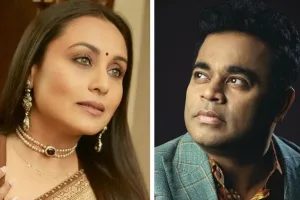
Mardaani 3 trailer: Rani Mukerji takes on child trafficking mafia in her most emotionally charged cop mission yet

Rani Mukerji is back as Shivani Shivaji Roy, diving into a dark race against time to rescue missing girls. The ‘Mardaani 3’ trailer promises a brutal, emotional clash between justice and ruthless evil.

Statesman News Service | New Delhi |

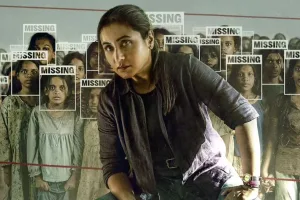
The trailer of Rani Mukerji’s ‘Mardaani 3’ is out. It wastes no time pulling viewers into a dark, disturbing world where young girls vanish without a trace. From the very first frame, you know this is not a gentle watch.

Shivani Shivaji Roy is back and the clock is ticking

The 3-minute-16-second trailer opens with the powerful return of Rani Mukerji as Shivani Shivaji Roy, the fearless police officer who has become the soul of the Mardaani franchise.

This time, she is not just chasing criminals. She is racing against time. Girls are missing. Families are desperate. And the system feels dangerously slow.

Shivani jumps headfirst into the investigation, following clues that lead her into the ugly underbelly of child trafficking. The tension never dips. Every second feels precious, as if one delay could cost another life.

Also Read: Mardaani 3 release date OUT: Yash Raj Films unveils poster featuring Rani Mukerji as cop Shivani Shivaji Roy

A dark network and a chilling villain called ‘Amma’

As the story unfolds, Shivani stumbles upon cruel and powerful force running the show. It’s ‘Amma’. The character sends shivers down the spine. Amma controls ruthless beggar mafia that preys on children using them as tools in heartless business.

Played by Mallika Prasad, Amma is a merciless, cold, dangerously influential character. The trailer hints at fierce mental and physical battle between Shivani and this evil mastermind.

A brutal thriller with a clear warning

Written by Aayush Gupta and directed by Abhiraj Minwala, ‘Mardaani 3’ is production of Aditya Chopra under the Yash Raj Films banner. According to the makers, this chapter promises a fast-paced narrative where every moment matters and danger is always close.

Rani Mukerji has already described the film as an “edge-of-the-seat thriller” that is “dark, deadly, and brutal.”

Special release for a milestone year: Mardaani 3 release date

The makers have also announced that ‘Mardaani 3’ will hit theatres earlier than planned, on January 30, 2026. The release is extra special as it marks 30 years of Rani Mukerji in the film industry.

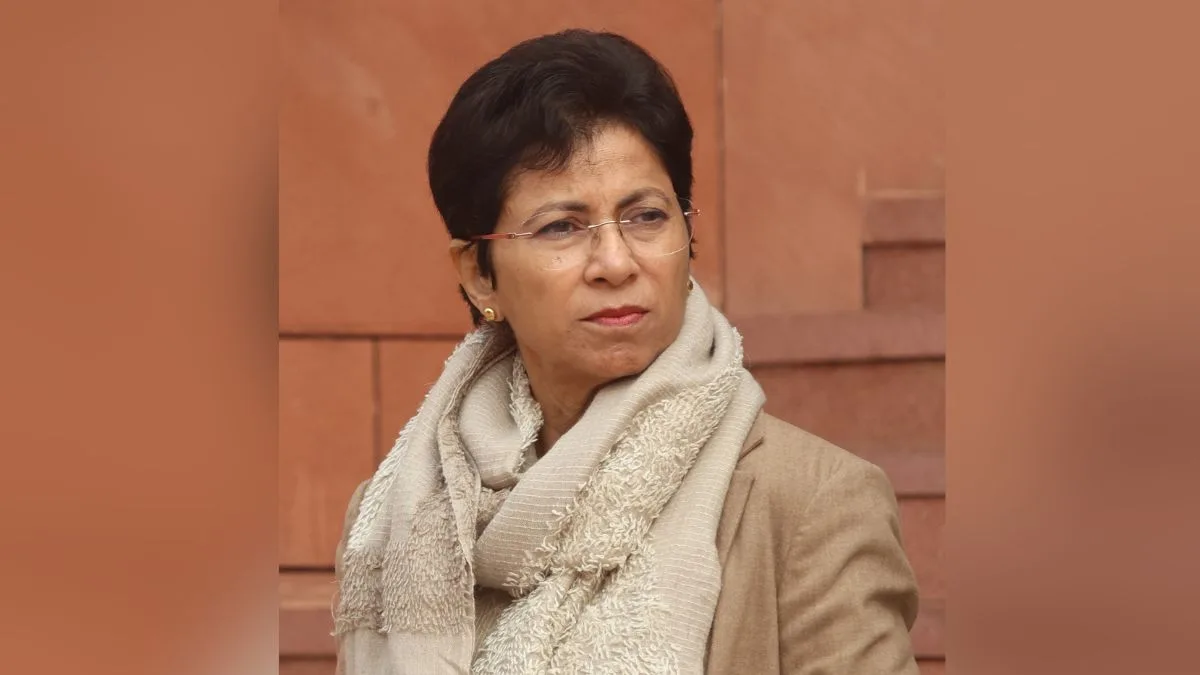
Kumari Selja raises alarm over deteriorating drinking water quality in Haryana, demands immediate govt action

General Secretary of the All India Congress Committee and Sirsa MP Kumari Selja has expressed deep concern over the continuously deteriorating quality of drinking water in Haryana and demanded immediate and concrete action from the government.

Statesman News Service | Chandigarh |

General Secretary of the All India Congress Committee and Sirsa MP Kumari Selja has expressed deep concern over the continuously deteriorating quality of drinking water in Haryana and demanded immediate and concrete action from the government.

In a statement, Kumari Selja said that according to reports from different parts of the state, people in many districts, towns, and colonies of Haryana are deprived of clean drinking water even during the harsh winter season and are being forced to consume contaminated water.

She stated that in several areas, water samples have revealed Total Dissolved Solids (TDS), fluoride, nitrate, and other harmful chemical elements far above the prescribed standards. In many places, water with TDS levels ranging from 600 to 1300 is being supplied, posing a serious threat to public health. Drinking water at public places, waterworks, and residential areas is often unfit for consumption, yet the departments concerned appear to be evading responsibility by shifting blame onto one another, she said.

Expressing concern over contaminated water in villages along the Ghaggar belt in Sirsa district, the MP said that groundwater in villages located along the Ghaggar River is also not potable. Chemical-laden water flowing in the Ghaggar has contaminated groundwater, and this polluted water is contributing to the rise in cancer cases.

Kumari Selja further said that due to contaminated drinking water, diseases related to the stomach, bones, kidneys, and skin are continuously increasing among children, women, and the elderly. Long-term consumption of fluoride- and nitrate-contaminated water leads to severe and permanent health problems. Despite this alarming situation, the government has neither established an effective and permanent water purification system nor ensured alternative supplies of clean drinking water in the affected areas.

She said that for years, claims have been made about providing safe drinking water across the state, but the ground reality remains unchanged. In both rural and urban areas, people are forced to depend on water tankers and private sources, placing an additional financial burden on common citizens. This clearly reflects the serious negligence of the government and the administration.

Kumari Selja demanded that the government immediately ensure the supply of clean drinking water in all affected areas, conduct regular testing of waterworks, tube wells, and public water sources, and provide alternative safe water supplies wherever water fails to meet quality standards. She also demanded that accountability be fixed for the officials and departments responsible for this serious issue so that the people of Haryana can be assured of their fundamental right to clean and safe drinking water.

“There were never issues within family”: Supriya Sule on joining hands with Ajit Pawar’s NCP in Pune civic polls

She questioned the Mahayuti government about the steps taken to curb rising crime in Pune.

ANI | New Delhi |

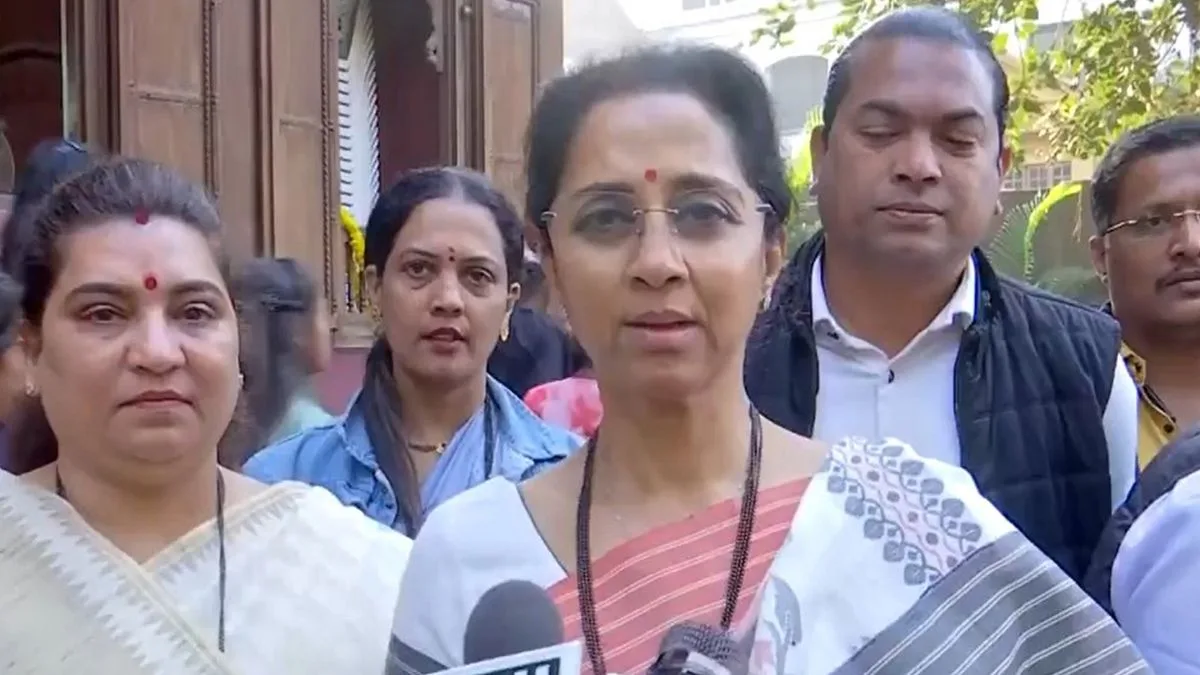
Ahead of the upcoming Pune Municipal Corporation (PMC) elections, Nationalist Congress Party (Sharadchandra Pawar) MP Supriya Sule on Monday said that there has never been any issue within their family.

She questioned the Mahayuti government about the steps taken to curb rising crime in Pune.

“I have written to the Chief Minister many times on rising crimes in Pune, so I want to ask him what he has done about it? There were never issues between the family. We are all here to serve the public,” Sule told reporters here.

Her remarks follow NCP (SP) joining hands with the Ajit Pawar-led NCP for the Pune municipal elections.

She said that her party has released a progressive manifesto.

“We have launched a progressive manifesto. I am confident that people from Pune and PCMC (Pimpri Chinchawad Municipal Corporation) will stand with us,” Sule said.

On Saturday, Shiv Sena (UBT) MP Sanjay Raut said that the ruling Bharatiya Janata Party (BJP) and Nationalist Congress Party (NCP) would have given a ticket to Dawood Ibrahim’s relatives if they had met with him.

While addressing a public rally, he said that the Mahayuti can’t win elections without hooliganism. Raut argued that Pune, once known for its beauty, is known as a “city of goons”.

“Pune was once a very beautiful city, but today it is known as a city of goons. Whether it is the BJP or Ajit Pawar’s party, there is hardly any gang whose relatives have not been given election tickets by these parties. I once said that if these people had met Dawood, they would have given tickets to his brother or relatives, including Chhota Shakeel and Chhota Rajan. These people cannot win elections without hooliganism,” Raut said.

Meanwhile, AIMIM chief Asaduddin Owaisi has pitched for the Muslim community to “develop their own political agency” and vote for a party which will develop organic muslim leadership, instead of parties that have actively opposed a leader from the minority community all the time.

Criticising the Mahayuti and MVA alike, Owaisi said parties like Congress, both factions of NCP, and Shiv Sena have always opposed a Muslim leader.

“It is good, Congress, NCP, Shiv Sena, Shiv Sena (UBT) or BJP are fighting (the polls) together. But when the issue of Ward came up, then everyone said, No no they can’t win, if they win then we will have more headaches. When state elections will come then this will come forward. I want to tell you all that Congress, NCP, Shiv Sena, Shiv Sena (UBT) or BJP, none of them likes the rising of a leader from Muslim minority community. They don’t like it if a leader is born,” the AIMIM chief said in a public rally in Jalna on Sunday.

The State Election Commission in Maharashtra has announced elections to 29 municipal corporations across the state, including the Brihanmumbai Municipal Corporation (BMC), PMC and the Pimpri-Chinchwad Municipal Corporation (PCMC).
Polling will be held on January 15, with counting scheduled for January 16.

When Branding Met Movies: New book launched at World Book Fair explores how cinema transforms into cultural memory

Some films stay alive long after the final scene, shaping memories, fashion, and conversations. ‘When Branding Met Movies’ explores how cinema turns into culture through branding, stars, and storytelling beyond the screen.

Statesman News Service | New Delhi |

When Branding Met Movies: Some films don’t leave us when the theatre lights come back on. They follow us home. They show up in our conversations, our clothes, our playlists, and even our social media captions. Years later, we may forget the story details. But the feeling stays. Why does that happen? Why do some movies turn into movements while others disappear after the weekend box office?

A new book launched in New Delhi believes it has some answers.

Also Read: Industry leaders come together to discuss the future of publishing at CEO speak forum

A book that looks beyond the movie screen

‘When Branding Met Movies’, launched at the World Book Fair, New Delhi, takes a fresh look at cinema. But as a carefully built cultural experience.

Published by the National Book Trust (NBT), the book is written by Chaitanya Prasad, Zoya Ahmad, and Vaishnavie Srinivasan who explore how films live on in public memory long after the end credits roll.

The book asks a simple but powerful question: what really makes a film unforgettable? And the answer, according to the authors, lies in something we often overlook: branding.

Cinema is no longer just about the script

In easy, readable language, the book explains how cinema today is much more than plot, dialogue, and performances. Films now exist in a larger world made up of star images, director identities, production houses, fashion, music, film festivals, posters, trailers, social media buzz.

Using examples from Bollywood, Hollywood, regional cinema, and independent films, the authors show how all these elements come together to create what they call “the magic beyond the script.”

A movie is no longer just watched. It is worn, shared, quoted, and remembered.

The book argues that cinema shapes emotions and cultural identity, turning films into shared memories rather than one-time experiences.

Big names, big ideas at the book launch

The launch was followed by a detailed discussion that brought together voices from government, education, and the film industry. Among those present were C Santhil Rajan, Joint Secretary at the Ministry of Information & Broadcasting; Dr Ajay Nagabhushan, Joint Secretary (Films); Dheeraj Singh, Vice-Chancellor of FTII Pune; filmmakers Utpal Borpujari and Ajay Kumar; Milind Sudhakar Marathe, Chairman of NBT; and Colonel Yuvraj Malik, Director of NBT.

The discussion was less about box office numbers and more about ideas on how cinema should be watched, written about, and understood.

Why writing about cinema matters

One key point that came up repeatedly was the importance of reading about films, not just watching them. Speakers stressed that images and words go together. Writing helps us slow down, think deeper, and see what we might have missed on screen.

They also noted that perspectives from communication and branding add new layers to film discussions. Understanding how a film is presented to the world helps us understand why it connects or fails to.

The panel described cinema as one of the few truly shared cultural spaces in India. In a country full of languages, regions, and beliefs, movies bring people together. Audiences laugh, cry, and emotionally live inside someone else’s story for a few hours.

Special campaign being conducted in 20 accident-prone districts in UP

The Chief Minister informed that a ‘Road Safety Month’ is being organised across the state until January 31.

Statesman News Service | Lucknow |

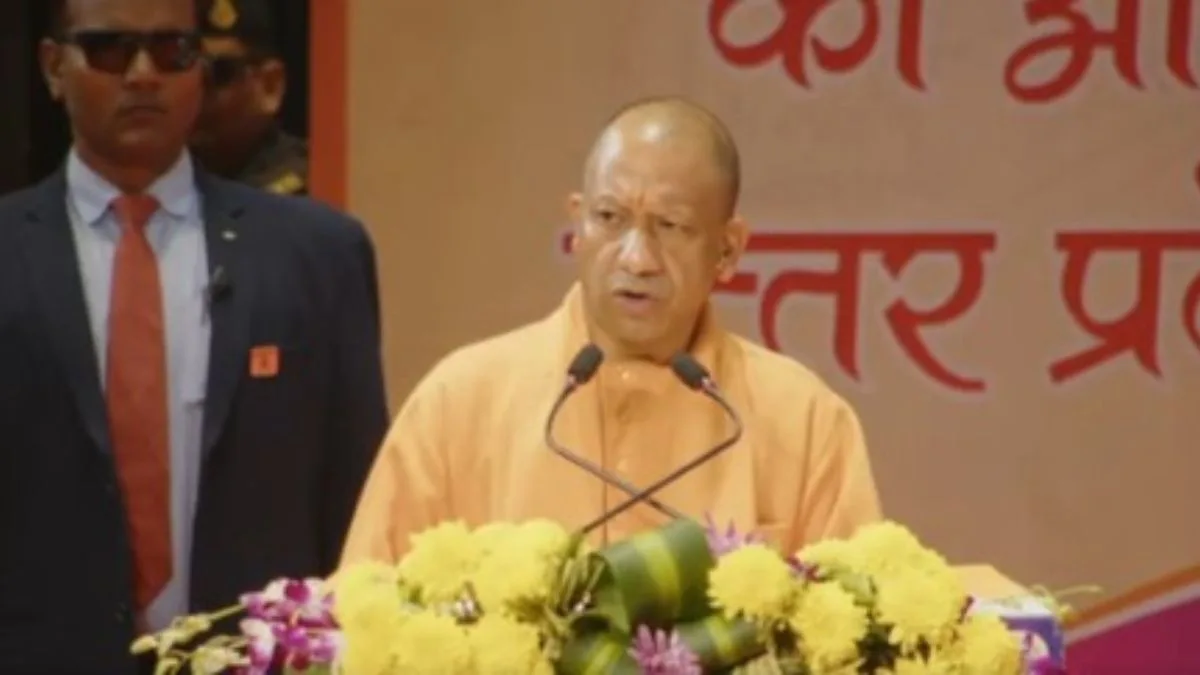
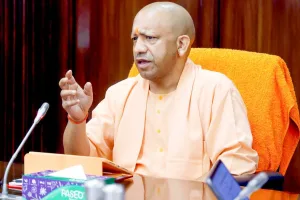
Uttar Pradesh Chief Minister Yogi Adityanath said that a special campaign is being conducted in 20 accident-prone districts of the state. Under this campaign, more than 3,000 locations have been identified across the state where the risk of accidents is high.

The Chief Minister informed that a ‘Road Safety Month’ is being organised across the state until January 31. This campaign is being conducted with the resolve to ensure a safe future for citizens and protect families. Its main objective is to bring about a positive change in the road behaviour of drivers and pedestrians so that the number of deaths due to accidents can be brought down to zero.

This campaign focuses on key areas such as education, enforcement, engineering, and emergency care.

The CM expressed deep concern over road accidents and appealed to the people of the state to strictly follow traffic rules. The Chief Minister, in a message to the people of the state on Monday, said that the loss of life in road accidents is extremely tragic, and every year, thousands of people lose their lives prematurely due to negligence and disregard for rules, bringing immense sorrow to many families.

Chief Minister Adityanath said that the police will strictly enforce the rules to ensure that the state’s roads are safe for everyone, but the cooperation of the general public is equally essential. Using a mobile phone while driving can be fatal not only for oneself but also for the lives of others.

He appealed to people to follow speed limits, not to drive under the influence of alcohol, and to compulsorily wear helmets and seat belts. The Chief Minister urged parents not to allow minor children to drive vehicles and to show special caution and sensitivity towards pedestrians, respecting their rights.

The Chief Minister expressed confidence that the people of the state will honestly follow traffic rules and contribute to making the roads of Uttar Pradesh smooth, safe, and accident-free.

West Bengal govt files caveat in SC over ED raids on I-PAC

The searches were carried out under the Prevention of Money Laundering Act (PMLA) in connection with an alleged multi-crore coal pilferage-linked money laundering case.

UNI | New Delhi |

The West Bengal government has filed a caveat before the Supreme Court in connection with the Enforcement Directorate’s (ED) raids on political consultancy firm Indian Political Action Committee (I-PAC) and its director, Pratik Jain.

By filing the caveat, the state government has requested that no order be passed by the apex court without first allowing it to be heard.
A caveat is filed under law to ensure that the court does not pass any adverse or ex parte order against a party without hearing its side.
The move comes amid a major controversy following searches conducted by the ED on January 8 at multiple premises linked to I-PAC and its director, Pratik Jain, in Kolkata.

The searches were carried out under the Prevention of Money Laundering Act (PMLA) in connection with an alleged multi-crore coal pilferage-linked money laundering case.

The ED also conducted related searches in Delhi and other parts of West Bengal.

According to the ED, Chief Minister Mamata Banerjee allegedly entered one of the raid locations during the search and removed “key” evidence, including physical documents and electronic devices, which the agency claims were taken away from its custody.

The ED has alleged that this amounted to interference in an ongoing investigation.

Chief Minister Mamata Banerjee has strongly denied these allegations and accused the central agency of exceeding its authority and acting with political motives.

On January 9, the ED approached the Calcutta High Court seeking a probe by the Central Bureau of Investigation (CBI) into the alleged obstruction of its search operations.

The agency alleged that the Chief Minister, with the help of state police officers, interfered with the raid at Pratik Jain’s residence and removed incriminating material.

In its petition before the Calcutta High Court, the ED claimed that around Rs 20 crore in hawala funds, allegedly linked to coal pilferage, had been routed to I-PAC.

The agency stated that I-PAC has been working as a political consultant for the Trinamool Congress (TMC) and the West Bengal government since 2021.

The petition claimed that “concrete material” found during the investigation showed that the proceeds of crime were transferred to I-PAC through hawala channels.

The ED further alleged that despite being requested not to interfere, the Chief Minister entered Pratik Jain’s residence on Loudon Road and later the I-PAC office at Salt Lake during the PMLA search.

The agency claimed that digital devices and important documents were “forcibly taken” with the assistance of police personnel and that CM Mamta Banerjee left the premises around 12:15 pm on January 8.

The ED has sought directions for immediate seizure, sealing, and forensic preservation of the digital devices and documents allegedly taken away. It has also requested interim orders restraining access to, deletion, or tampering of the data.

Additionally, the agency alleged that local panch witnesses present during the raid were taken away by state officials and forced to record that the search was conducted peacefully and that nothing incriminating was found.

According to the ED, the witnesses were made to give statements contrary to the facts.

Responding to the allegations, Chief Minister Banerjee accused the ED of acting as a political tool of the BJP and attempting to “steal” her party’s internal strategy.

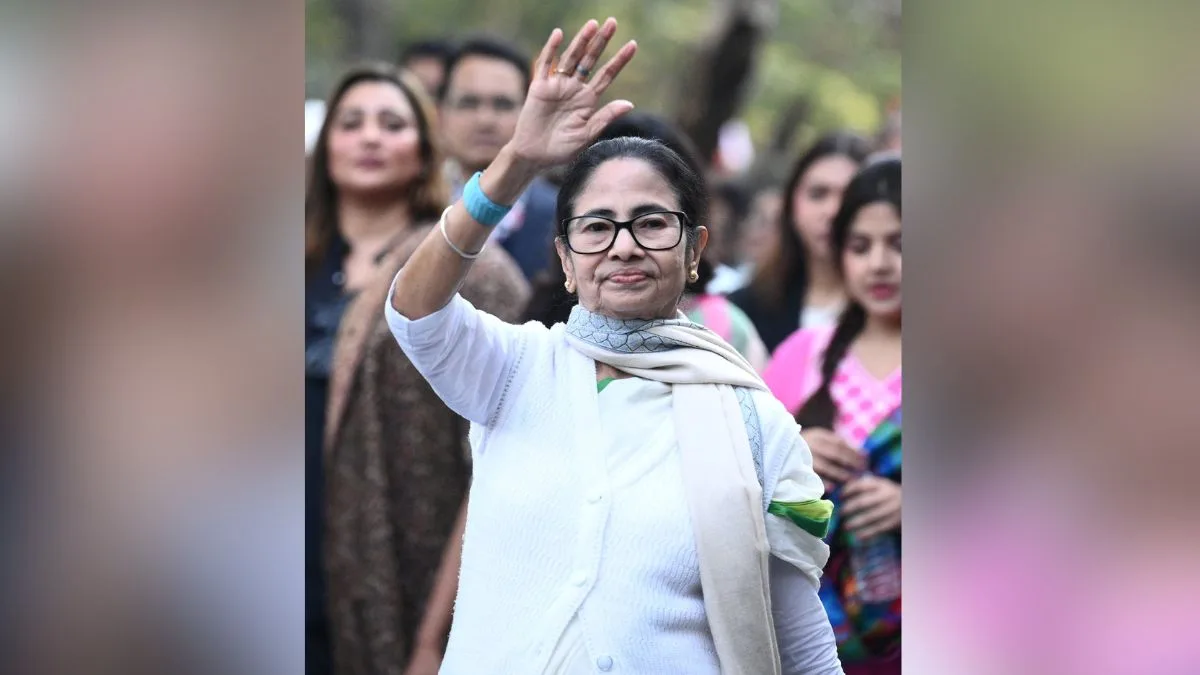
On January 9, she led a 10-km protest march in Kolkata from Jadavpur to Hazra Crossing, asserting that she had not done anything illegal.
“I intervened as the TMC chairperson, not as the chief minister. They came to steal my party data. I will expose everything if needed,” she said while addressing the rally.

Meanwhile, proceedings in the Calcutta High Court took an unusual turn on January 9 when Justice Suvra Ghosh, who was hearing several related petitions, left the courtroom citing excessive crowding.

The Supreme Court has not yet taken up any petition in the matter, but the filing of the caveat indicates that the West Bengal government is preparing to contest any move by the ED before the apex court.

Defence Minister Rajnath Singh lauds successful test of indigenous MPATGM, calls it boost to Aatmanirbhar Bharat

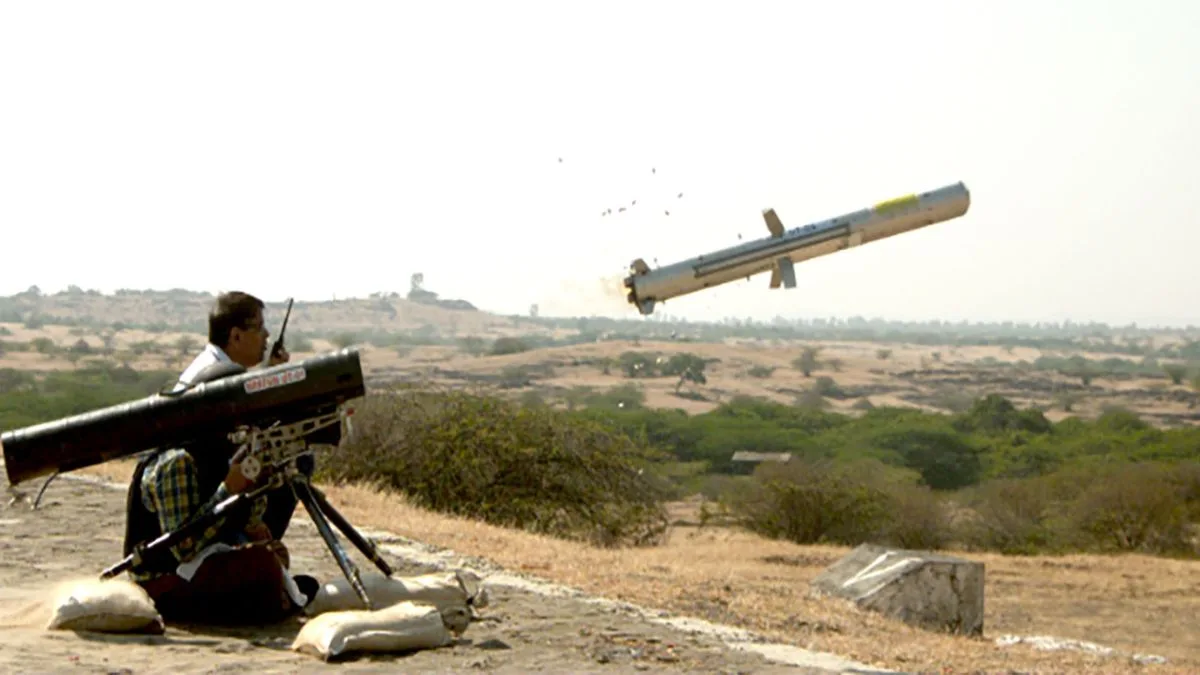
According to a release from Ministry of Defence, Third Generation Fire & Forget Man Portable Anti-Tank Guided Missile (MPATGM) with top attack capability was flight-tested successfully against a moving target in KK Ranges, Ahilya Nagar, Maharashtra by DRDO’s Defence Research & Development Laboratory, Hyderabad on January 11, 2026.

ANI | New Delhi |

Defence Minister Rajnath Singh on Monday congratulated the Defence Research and Development Organisation (DRDO), its industry partners and the defence industry after the successful flight test of the Third Generation Fire & Forget Man Portable Anti-Tank Guided Missile (MPATGM) with top attack capability, describing it as an important step towards Aatmanirbhar Bharat.

In a post on X, RMO India said, “Third Generation Fire & Forget Man Portable Anti-Tank Guided Missile (MPATGM) with top attack capability was flight tested successfully against moving target by the Defence Research and Development Laboratory (DRDL), Hyderabad. Raksha Mantri Shri @rajnathsingh has complimented DRDO, DCPP Partners and Industry for the successful test of Fire & Forget Man Portable Anti-Tank Guided Missile with top attack capability and termed it an important step towards AatmanirbharBharat.”

According to a release from Ministry of Defence, Third Generation Fire & Forget Man Portable Anti-Tank Guided Missile (MPATGM) with top attack capability was flight-tested successfully against a moving target in KK Ranges, Ahilya Nagar, Maharashtra by DRDO’s Defence Research & Development Laboratory, Hyderabad on January 11, 2026.

The indigenously developed MPATGM consists of state-of-the-art indigenous technologies like Imaging Infrared (IIR) Homing Seeker, all electric Control Actuation System, Fire Control System, Tandem Warhead, propulsion system and high performance sighting system, which are developed by DRDO’s sister laboratories namely Research Centre Imarat, Hyderabad, Terminal Ballistics Research Laboratory, Chandigarh, High Energy Materials Research Laboratory, Pune and Instruments Research & Development Establishment, Dehradun.

The Thermal Target System was developed by Defence Laboratory, Jodhpur to simulate the target tank. The IIR seeker is well accomplished with day and night combat operation capability. The warhead is capable of defeating modern main Battle Tanks. Bharat Dynamics Limited and Bharat Electronics Limited are the Development-Cum-Production Partners (DcPP) for the weapon System. The missile can be launched from Tripod or Military Vehicle Launcher, a release said.

Raksha Mantri Rajnath Singh has complimented DRDO, DcPP Partners and the Industry for the successful test. He termed it as an important step towards Aatmanirbhar Bharat.

Congratulating the team, Secretary, Department of Defence R&D and Chairman DRDO Dr Samir V Kamat said that the trial target was successfully conducted, thereby leading the weapon system for induction into the Indian Army, a release added.

BJP Jharkhand releases schedule for state president election

According to an official notification, the election process will be conducted under the directions of the BJP’s national election authority, Dr K Laxman.

Statesman News Service | Ranchi |

The Bharatiya Janata Party’s Jharkhand unit on Monday released the schedule for the election of its state president and members of the party’s National Council as part of the ongoing organisational exercise.

According to an official notification, the election process will be conducted under the directions of the BJP’s national election authority, Dr K Laxman. Union Minister Jual Oram has been appointed as the state election officer for the organisational elections in Jharkhand.

As per the programme, nominations for the post of state president and National Council membership will be filed on January 13 between 12 noon and 2 pm at the BJP state headquarters in Ranchi. Scrutiny of nomination papers will take place from 2 pm to 3 pm the same day, followed by the withdrawal of nominations between 3 pm and 5 pm.

The official declaration of the elected state president and National Council members will be made on January 14 at 2 pm. The notification specifies that voting will be held only if necessary.

The election schedule has been issued by BJP Jharkhand state election officer and MP Pradeep Verma. Copies of the notification have been forwarded to senior leaders at both the national and state levels, including organisational functionaries associated with the election process.

Woman shot dead by husband inside police station in Hardoi

A shocking incident occurred in the Hardoi district of Uttar Pradesh, where a man shot his wife dead inside the premises of a police station on Monday morning.

Statesman News Service | Hardoi |

A shocking incident occurred in the Hardoi district of Uttar Pradesh, where a man shot his wife dead inside the premises of a police station on Monday morning. The incident has raised serious questions about security lapses within the police station.

According to police, the woman, identified as Soni, had eloped with her lover, Surjeet, a resident of Shahjahanpur, five days earlier. After learning about this, her husband, Anoop, filed a complaint at the police station on January 8. Police had been searching for the woman since then and finally recovered her along with her lover on Sunday, bringing her to the police station.

At around 10:45 am on Monday, Soni had just finished her meal at the police mess and stepped outside when her husband arrived. Suddenly, Anoop pulled out a country-made pistol and shot her in the right shoulder. The bullet pierced through her chest. She collapsed on the spot, bleeding profusely.

Hearing the gunshot, police personnel rushed to the scene. On seeing them, the accused tried to flee but was chased and apprehended by the policemen. Senior officers reached the spot soon after the incident and inspected the scene. Orders have been issued to investigate the serious security lapse that allowed the shooting to take place inside the police station.

Superintendent of Police Ashok Meena said, “The woman was recovered by the police on Sunday after going missing five days earlier. She was scheduled for a medical examination on Monday. She was near the police station mess with her relatives when her husband arrived and, unfortunately, shot her. Police personnel immediately intervened, and the accused was apprehended on the spot.”

An inquiry has been ordered into the lapse in security that allowed this incident to take place inside the police station. Further investigation is underway, and strict action will be taken against anyone found responsible, police said.

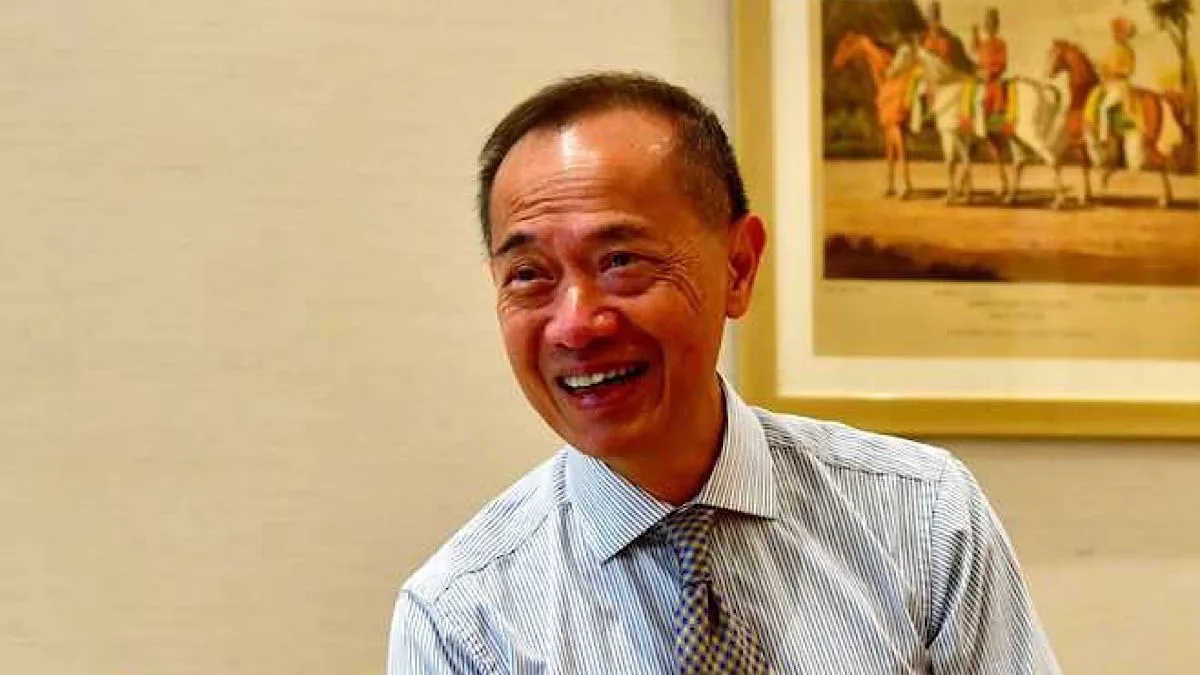
As ‘Donroe doctrine’ hastens a multi-polar world, India, China will stabilise ties; restraint best strategy in South Asia: George Yeo

In an exclusive interview to UNI, Yeo said the reshaping world order would see India, China and Russia emerge as “countervailing forces”, even as the United States retreats to prioritising its near hemisphere and Europe is left to “take care of itself”.

Jayanta Roy Chowdhury & Arti Bali | New Delhi |

As US President Donald Trump’s new ‘Donroe doctrine’ accelerates the fragmentation of the global order into a multi-polar world, India and China are likely to work towards stabilising their relationship, while India’s best long-term strategy in its own neighbourhood lies in restraint, regional accommodation and preventing external powers from exploiting internal divisions, according to former Singapore foreign minister and strategic thinker George Yong-Boon Yeo.

In an exclusive interview to UNI, Yeo said the reshaping world order would see India, China and Russia emerge as “countervailing forces”, even as the United States retreats to prioritising its near hemisphere and Europe is left to “take care of itself”. In such a setting, he argued, India and China, ancient civilisations with a deep mutual awareness, would be compelled by circumstance to steady their ties.

“Trump is fast-forwarding the future… towards multi-polarism,” Yeo said, adding that both India and China “doff their caps” to each other and therefore may well stabilise their relationship despite periodic tensions.

Yeo, who is in the capital to deliver the C.D. Deshmukh Memorial Lecture organised by the India International Centre, pointed out that at one time sections of India’s leadership believed the US would be its “principal ally” against China.

However, recent developments had altered that perception. Referring to the Pahalgam terror attack in Kashmir in April 2025, he noted that instead of backing India, President Trump invited Pakistan’s leadership to Washington within weeks, causing disquiet in New Delhi.

The former foreign minister, said Trump had believed he could “browbeat India” over tariffs, but New Delhi did not yield. Similarly, tariff pressure on China failed when Beijing “played the rare earth card”, forcing Washington to pull back.

“They have an adult relationship… I think India and China will now stabilise their relationship,” Yeo remarked. He added that despite heated rhetoric on social media, the leaderships of both countries had never publicly attacked each other.

He also pointed to Trump’s ambivalent response to China’s military drills around Taiwan, suggesting that China, Taiwan, Japan and India would therefore “keep all options open”.

Turning to South Asia, Yeo argued that India’s strategic interest lay in keeping tensions low and making the Westphalian system of sovereign states work in its favour. South Asia’s political borders, he said, often mask much older social and cultural continuities, making the region vulnerable to manipulation by outside powers.

Recalling a visit to Bangladesh, Yeo noted how people from West Bengal and Bangladesh communicated effortlessly in Bengali, underscoring the “artificial nature” of many post-Partition boundaries.

“The division between Bengal and Bangladesh is artificial, just as the division between the two Punjabs is,” he said, adding that such borders had not erased shared histories or emotional ties.

At the same time, he acknowledged that accumulated mistrust in the region had no easy solutions and that these unresolved tensions constrained India’s strategic autonomy. Major powers, he warned, could exploit South Asia’s divisions to deepen ruptures.

“That is why it is in India’s best interest to try and keep things low,” he said.

Yeo observed that China itself had, over the past two decades, sought to prevent India–Pakistan relations from spiralling out of control, noting that Chinese leaders visiting Pakistan had also made it a point to visit India. Beijing, he added, had remained publicly silent after the most recent India–Pakistan clash.

Speaking on Islamic radicalisation in South Asia and West Asia, Yeo said the region had seen a significant wave, but suggested it may have peaked. Extremist movements, he argued, were often “deliberately fostered” in earlier geopolitical phases through a mix of American strategic objectives, Pakistani facilitation and Saudi funding.

“We see the footprints of big powers in the rise of ISIS and Al-Qaeda,” he said, adding that the situation had since changed as countries like Saudi Arabia and the UAE now viewed extremism as a threat to their own stability.

In Afghanistan, he said, the Taliban’s return had paradoxically led to a degree of moderation driven by necessity rather than ideology. “Extremism will take time to subside, but the crest is over,” he said.

Addressing concerns about Bangladesh, Yeo cautioned against alarmism. “Bengalis have a long intellectual and philosophical tradition. They are not a people inclined towards immoderation,” he said, adding that the country’s economic success, especially women’s participation in the workforce, made prolonged instability unlikely.

Deliberating on Iran, where protests have erupted against the current regime, Yeo urged observers to view developments through a civilisational lens.

While acknowledging popular frustration over political rigidities and economic mismanagement, he said unrest there was also shaped by sustained external pressure, including US and Israeli involvement.

Even so, he cautioned that any regime change would not easily overturn Iran’s deep societal foundations.

Summing up, Yeo said both South Asia and West Asia were shaped less by short-term political shocks than by long historical continuities.

For India, he concluded, the wisest course in an emerging multi-polar world would be to protect itself, keep its neighbourhood stable, and focus on economic growth. “In the end,” he said, “economic might is greater than force.”


SLMG Beverages crosses Rs 8,000 crore, sets sight on Rs 10,000 crore by 2026

SLMG Beverages has ended 2025 on a strong note, crossing the Rs 8,000 crore revenue milestone and consolidating its position as one of India’s largest independent bottlers of Coca-Cola.

Statesman News Service | Lucknow |

SLMG Beverages has ended 2025 on a strong note, crossing the Rs 8,000 crore revenue milestone and consolidating its position as one of India’s largest independent bottlers of Coca-Cola.

Backed by steady demand across beverage categories and a robust operating model, the company expects this growth momentum to continue through 2026, with a clear target of surpassing Rs 10,000 crore in revenues.

The growth has been driven by the phased expansion of manufacturing capacity and a steadily strengthened distribution network. As volumes scale up, SLMG Beverages is evaluating additional investments to ensure production efficiency and smooth logistics during peak demand periods, particularly in the summer months.

Among the key initiatives under consideration is a large integrated manufacturing facility spread across nearly 70 acres.

Currently at the planning stage, the project is intended to support long-term growth rather than address immediate capacity requirements. A formal announcement is expected later in February.

SLMG Beverages’ manufacturing operations are anchored by several large, highly automated plants running multiple product lines. The company currently operates eight bottling plants across Uttar Pradesh (7)and Bihar(1). This footprint enables the company to manage seasonal demand fluctuations while maintaining consistent quality and output.

Commenting on the performance, Joint Managing Director Paritosh Ladhani said here on Monday that crossing the Rs 8,000 crore mark was a defining milestone for the company. He added that the focus going forward would be on strengthening systems, processes and teams to sustainably handle higher volumes over the long term.

The company recently showcased its flagship bottling facility at Trishundi in Amethi, near Lucknow. Spread over around 35 acres, the facility is the largest Coca-Cola bottling plant in Southwest Asia and contributes nearly 25 per cent of SLMG Beverages’ total production.

Commissioned about a year ago, the Trishundi facility houses eight production lines and manufactures major brands including Coca-Cola, Thums Up, Sprite, Fanta, Limca, Maaza, Minute Maid and Kinley. It produces packaged drinking water, carbonated soft drinks, juices, cans and hot-fill products under one roof.

The plant has a production capacity of about 4,600 bottles per minute, with an average output of 2.5 lakh cases per day, rising to nearly 3 lakh cases during peak season. During periods of high demand, around 300 truckloads are dispatched daily.

Equipped with German and Chinese automated lines, the facility uses Advanced PET Bottle technology that extends product shelf life from two months to eight months. The plant employs around 400 permanent and 600 contract workers and is supported by AI-enabled surveillance systems.

Looking ahead, SLMG Beverages confirmed that work is underway on a major greenfield project of around 70 acres, including a state-of-the-art manufacturing plant planned at Buxar in Bihar. The new facility is expected to become operational during January–February 2026, further strengthening the company’s production and distribution capabilities in eastern India.

Reflecting on its investment journey in Uttar Pradesh, SLMG Beverages said the state has emerged as a preferred destination for large manufacturing investments. Uttar Pradesh is among the two states with the longest demographic dividend window, offering sustained market growth and a deep labour pool.

The state’s strong infrastructure—anchored by the country’s longest expressway network, expanding airport connectivity, and improving logistics—has further enhanced its investment appeal. The availability of skilled manpower, supported by an extensive network of Industrial Training Institutes, has been a key advantage.

The company also credited Invest UP, under the leadership of Mr Vijay Kiran Anand, for enabling not only ease of doing business but also speed of doing business through proactive facilitation, coordinated clearances and execution-focused governance.

With beverage consumption rising across India, SLMG Beverages believes 2026 will be a year of measured expansion, driven by disciplined investment, advanced technology, and a continued focus on operational excellence.

Indian banking system sees rapid expansion; credit growth outpaces deposits: SBI Research

India’s banking system has witnessed a sharp post-pandemic revival, with credit growth significantly outpacing deposit mobilisation over the last two decades, according to a new report by SBI Research.

Statesman News Service | New Delhi |

India’s banking system has witnessed a sharp post-pandemic revival, with credit growth significantly outpacing deposit mobilisation over the last two decades, according to a new report by SBI Research.

The study highlights a broad-based expansion in bank balance sheets, rising financial intermediation, and emerging structural risks linked to leverage and unsecured lending.

The report notes that total bank deposits surged to Rs 241.5 lakh crore in FY25 from Rs 18.4 lakh crore in FY05, while advances jumped to Rs 191.2 lakh crore from Rs 11.5 lakh crore during the same period.

The asset size of Indian banks rose from Rs 23.6 lakh crore to over Rs 312 lakh crore, lifting banking assets to nearly 94 per cent of GDP in FY25, up from 77 per cent in FY21.

A key takeaway is the steady rise in the credit-deposit (CD) ratio, which climbed from 69 per cent in FY21 to about 79 per cent in FY25, reflecting stronger credit demand amid relatively slower deposit growth.

SBI Research cautioned that while higher CD ratios signal improved financial deepening, persistently elevated levels could strain liquidity and increase reliance on market-based funding.

Public sector banks (PSBs), after years of declining market share, have begun reclaiming ground in advances, supported by improved capital adequacy and balance sheet repair.

At the same time, private banks have strengthened their low-cost Current Account Savings Account (CASA) deposit base, even as foreign banks saw erosion in CASA ratios.

The report also flags risks from a sharp rise in unsecured lending, which expanded to nearly Rs 47 lakh crore in FY25 from Rs 2 lakh crore in FY05 , now accounting for about a quarter of total advances.

In addition, banks’ exposure to sensitive sectors such as real estate and capital markets has risen to around Rs 50 lakh crore, or 27 per cent of total credit.

Regionally, credit deployment remains uneven. Southern and western states continue to post high CD ratios, often exceeding 90 per cent, while eastern and north-eastern regions lag, indicating persistent gaps in credit absorption and economic development.

It said while India’s banking system is on a stronger footing, maintaining an optimal CD ratio, estimated at 76–80 per cent for domestic banks, will be crucial to balancing growth with financial stability in the years ahead.

Reaching bliss through wisdom is Swami Vivekananda’s greatest message: Akhilesh Yadav

Paying tribute to Swami Vivekananda on his birth anniversary, Samajwadi Party (SP) National President Akhilesh Yadav said Vivekananda’s name itself is a timeless message, as it is a call for inner discernment (‘vivek’) to achieve bliss (‘anand’) and freedom from mental slavery.

Statesman News Service | Lucknow |

Paying tribute to Swami Vivekananda on his birth anniversary, Samajwadi Party (SP) National President Akhilesh Yadav said Vivekananda’s name itself is a timeless message, as it is a call for inner discernment (‘vivek’) to achieve bliss (‘anand’) and freedom from mental slavery.

He said reaching the state of bliss through wisdom is the essence of Swami Vivekananda’s philosophy of life, and this leads humanity towards inner freedom.

Posting on his social media account on Monday, Akhilesh Yadav said that wisdom is not merely a matter of external knowledge but a consciousness that awakens within the conscience. This is only possible when a person does not become a mental slave to the ideas of others and decides between truth and falsehood based on their own wisdom.

The SP president said that Swami Vivekananda’s message inspires people to think and understand for themselves so that society can recognise the hypocrisy, deceit, selfishness, and great lies hidden behind outward appearances, deceptive activities, and the web of words.

He said that Swami Vivekananda’s compassion towards humanity and his message of brotherhood to the entire world are as relevant today as ever. On this occasion, he wished that his guidance would bear even more fruit in society.

Akhilesh Yadav urged people that not external knowledge, but inner wisdom and understanding, should be the guiding light of life, and that more people should follow and become wise.

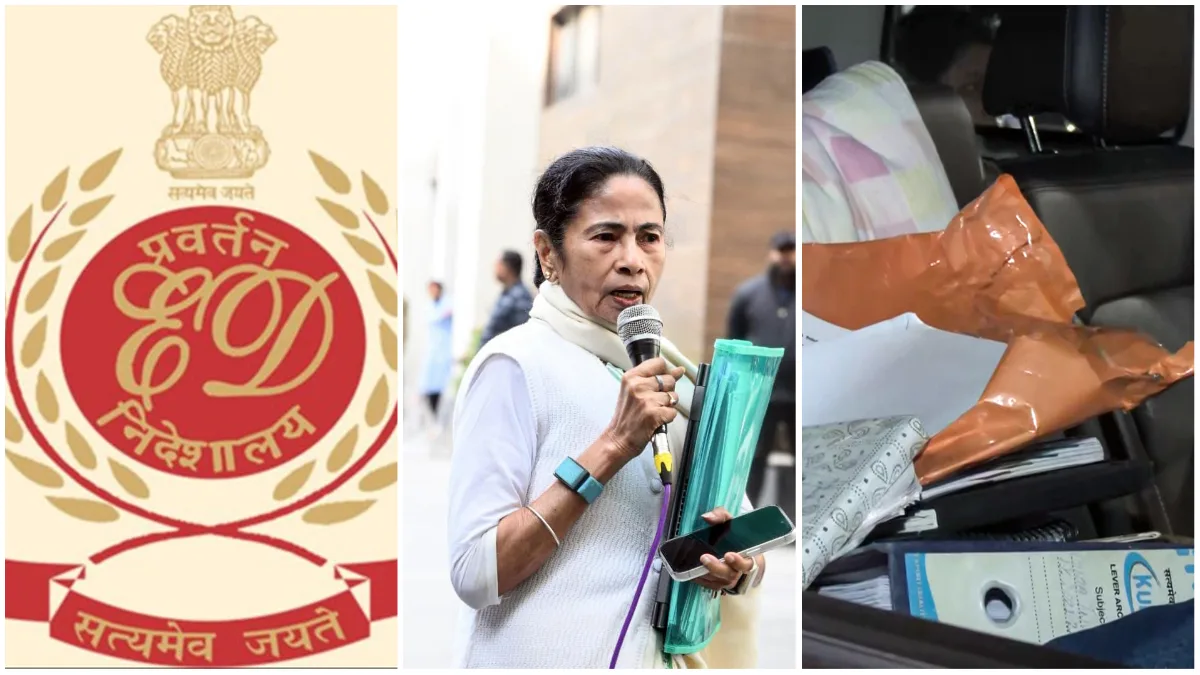
ED moves SC seeking CBI probe against Mamata for obstructing I-PAC raids

The Enforcement Directorate (ED) has moved the Supreme Court seeking a CBI probe against West Bengal Chief Minister Mamata Banerjee for allegedly disrupting an ongoing investigation at the political consultancy firm I-PAC, linked to a coal smuggling case.

Statesman News Service | New Delhi |

The Enforcement Directorate (ED) has moved the Supreme Court seeking a CBI probe against West Bengal Chief Minister Mamata Banerjee for allegedly disrupting an ongoing investigation at the political consultancy firm I-PAC, linked to a coal smuggling case. The plea filed by the Enforcement Directorate in the SC also demands the return of documents and electronic material, which, according to the ED, she had taken from the residential premises of I-PAC’s co-founder Pratik Jain while the raid was underway.

The apex court is yet to hear the matter.

Also, the state machinery has filed a caveat before the Supreme Court, seeking to ensure that no orders are passed without affording the state government a hearing.

ED accuses Mamata of derailing a lawful probe

The central agency has accused Mamata Banerjee of interfering in its search operations at the I-PAC offices in Kolkata. The agency has claimed that the intervention from the state machinery prevented officers from conducting their duties as per law.

According to the ED, her intervention led to ‘a complete derailment of a lawful investigation’ by a statutory authority.

TMC continues to defend I-PAC

The Chief Minister has come in full support of the political consultancy firm and attacked the central agency for conducting search operations at the direction of the BJP-led central government. She called the ED raids at I-PAC ‘a politically motivated’ action.

Mamata Banerjee accused the ED’s Forensic Team of transferring crucial data and taking some hard disks, along with financial and political papers, from the I-PAC office.

TMC Chairperson Mamata Banerjee also led a rally following the ED raid on I-PAC. 

Last week, the All India Trinamool Congress (TMC) had filed a petition before the Calcutta High Court in the matter, seeking directions to restrain the ED from leaking any party-related information. The Division Bench of the High Court will hear the petition on 14 January.