Logo

Nitish Kumar begins 16th statewide outreach tour from Friday

During the yatra, Nitish Kumar will also inaugurate and lay foundation stones for various development projects, aimed at giving a fresh impetus to Bihar’s development journey.

Imran Mojib | Patna |

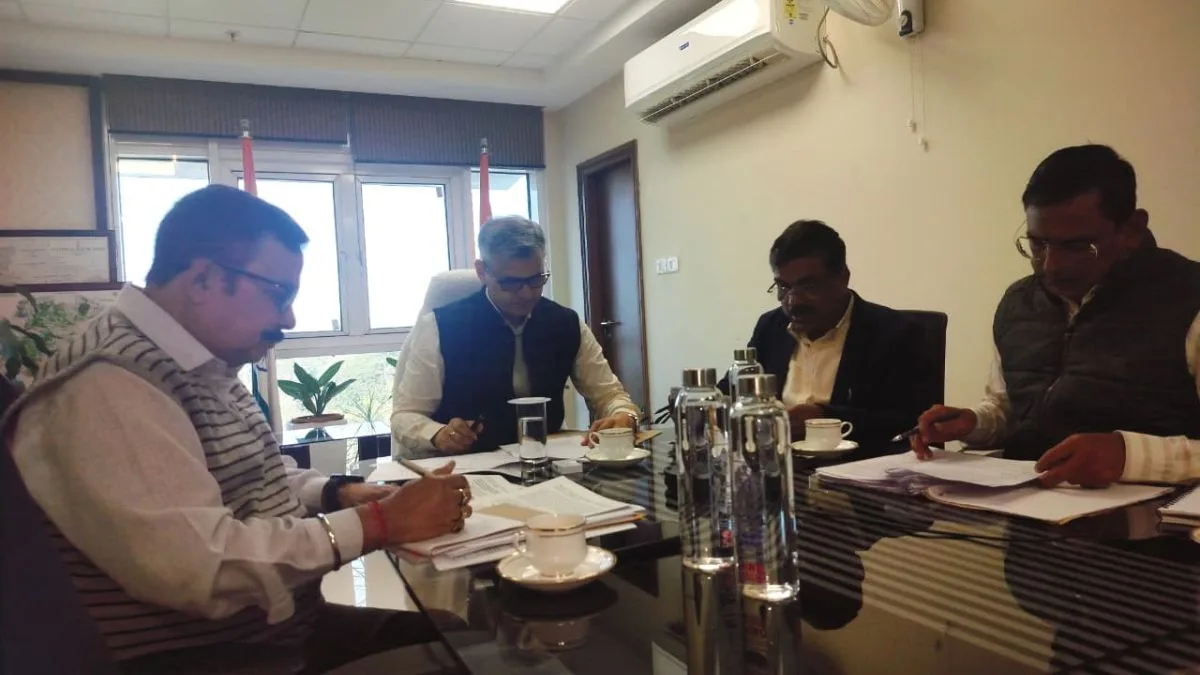
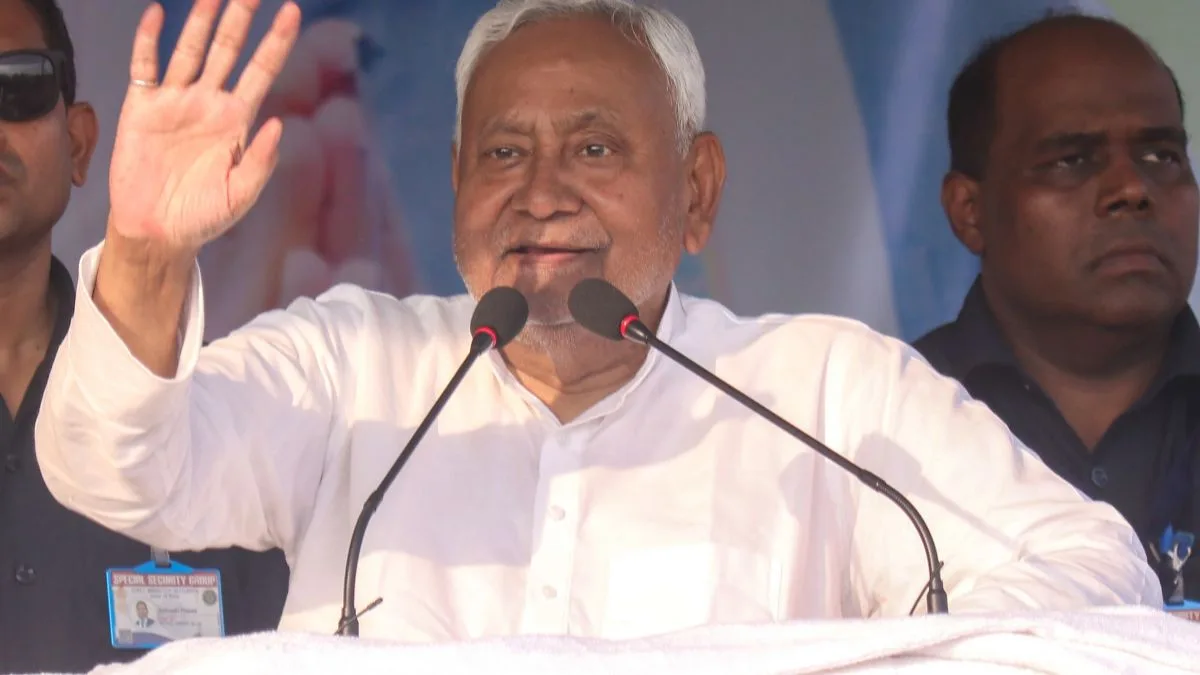
Bihar Chief Minister Nitish Kumar will embark on yet another statewide tour on Friday. During the tour, titled “Samriddhi Yatra” (Prosperity Journey), he will review the pace of development in Bihar, assess the on-ground implementation of new schemes launched under “Saat Nishchay 3” (Seven Resolves 3), and engage directly with the public to better understand their needs.

During the yatra, Nitish Kumar will also inaugurate and lay foundation stones for various development projects, aimed at giving a fresh impetus to Bihar’s development journey.

A key component of the “Samriddhi Yatra” will be direct public engagement.

As per the scheduled programme, the chief minister will participate in “Jan Samvad” (public dialogue) programmes in every district, where he will interact with residents to discuss their problems and gather feedback.

He will also hold in-depth district-level review meetings in each district to evaluate the performance of the local administration and concerned departments. Issues related to law and order will also be discussed during these meetings, which will be attended by senior government officials.

In 2005, Nitish Kumar had first reached out to the people through the “Nyay Yatra” (Justice Journey) to understand public grievances. Since then, he has undertaken 15 statewide journeys and is now set to begin his 16th journey from Friday.

During the previous “Pragati Yatra,” the Chief Minister had launched around 430 development projects at an estimated cost of approximately Rs50,000 crore. Of these, 21 projects have since been completed.

The “Pragati Yatra” had a strong focus on women’s empowerment and the Jeevika scheme. Soon after the yatra, Nitish Kumar had announced the “Mukhyamantri Mahila Rozgar Yojana,” which provides cash assistance of Rs10,000 to women for self-employment. The scheme is believed to have played a significant role in the NDA’s return to power with a historic majority.
‘Iran ready for both war and dialogue,’ says Iranian FM after Trump’s ‘very strong options’ threat over protest killings

He alleged that the nationwide anti-government protests turned “violent and bloody” to give the US an excuse to intervene militarily.

Statesman News Service | New Delhi |

Hours after US President Donald Trump said that he was weighing “some very strong options” against Iran amid raging anti-government protests, Iranian Foreign Minister Abbas Araghchi on Monday expressed Tehran’s readiness for both war and dialogue.

Briefing foreign diplomats in Tehran, Araghchi admitted that the violence spiked over the weekend but also asserted that the situation has now been brought under “total control”.

He alleged that the nationwide anti-government protests turned “violent and bloody” to give the US an excuse to intervene militarily.

He claimed that Trump’s warning motivated “terrorists” to infiltrate the protests and target security forces in an attempt to invite foreign intervention.

“We are ready for war but also for dialogue,” he declared.

His remarks came shortly after US President Donald Trump said that he is considering “some very strong options” against Iran.

Indian nationals, including students, are safe in Iran amid massive anti-government protests: Govt

Speaking to reporters on board Air Force One late on Sunday, Trump said, “We’re looking at it very seriously. The military is looking at it, and we’re looking at some very strong options. We’ll make a determination.”

He also claimed that the Iranian leadership has reached out to him seeking to negotiate and that a meeting is being set up. However, he added that the US may have to act before a meeting.

Earlier on Sunday, Araghchi defended the crackdown on protesters, drawing a parallel to the Minneapolis woman’s shooting by a US Immigration and Customs Enforcement (ICE) agent last week.

“Just the other day, an innocent young woman in the United States—an American citizen and mother of three—was executed by ICE at point-blank range. The U.S. Administration labeled her a “domestic terrorist” while President Trump called it a matter of self-defence; the Department of Homeland Security threatened Americans that “if you lay a finger on a federal officer or agent, you will face the full extent of the law,” Araghchi said.

He continued, “Here in Iran, police officers are being executed by actual terrorists overseen by what Mr Pompeo has openly called Mossad agents. And we have the receipts. Does this look like a “protest” for FREEDOM? Or the exact kind of scenes that the U.S. Administration would NEVER tolerate within its own borders?”

Iran protests: Donald Trump says Tehran reached out for talks; internet shutdown continues, 544 deaths reported

Iran has been facing intense anti-government protests since December 28 last year. The protests that began as a demonstration by a group of traders against the falling Iranian currency and rising inflation have now spiralled into a mass uprising against the Ayatollah Ali Khamenei-led regime.

The protests have spread to at least 585 locations across the country, in 186 cities, spanning all 31 provinces.

According to the US-based Human Rights Activists News Agency (HRANA), at least 544 protesters have been killed, and scores of others have been injured in clashes with security forces during the anti-government protests.

Fish production increased to 197.75 lakh tonnes in FY 2024-25

India is the world’s second-largest fish producer, contributing 8 per cent to global output, ranks second in aquaculture production, leads in shrimp production and export, and is the second-largest producer in capture fisheries.

Statesman News Service | New Delhi |

Fish production has increased to 197.75 lakh tonnes in FY 2024-25 from 95.79 lakh tonnes fish production in FY 2013-14 increasing a significant 106 per cent. Under various schemes and programmes implemented since 2014-15 by the Department of Fisheries, the Government of India (GoI), 74.66 lakh employment opportunities (both direct and indirect) have been generated.

India is the world’s second-largest fish producer, contributing 8 per cent to global output, ranks second in aquaculture production, leads in shrimp production and export, and is the second-largest producer in capture fisheries.

“As a result of various schemes and programmes being implemented in the last decade and well thought policies, there have been significant achievements in the fisheries sector,” the Ministry of Fisheries, Animal Husbandry and Dairying said on Monday.

The average aquaculture productivity has increased to 4.77 tonnes per hectare.

Indian seafood exports have witnessed an impressive growth as we exported 16.98 lakh tons of seafood worth Rs 62,408 crore during 2023-24.

The Ministry further said Group Accidental Insurance coverage was provided to 34.71 lakh fishers with an investment of Rs 27.75 crore.

The Government of India with effect from the financial year 2018-19 has extended the Kisan Credit Card (KCC) facility to fishers and fish farmers to help them to meet their working capital requirements. A total of 4.49 lakh KCCs with a loan amount of Rs 3569.60 crore has been sanctioned, till date to fishers and fish farmers.

Under the Pradhan Mantri Matsya Sampada Yojana, the Department of Fisheries has approved the development of 11 Integrated Aquaparks across various states. The total sanctioned cost for these projects stands at Rs 682.60 crore.

India’s seafood exports touched an all-time high in value during the financial year 2024-25 to Rs 62,408 crore (US$ 7,453.73 million), increasing by 3.11 per cent as compared to Rs 60,523.89 crore (US$ 7381.89 million) in 2023-24.

India exports over 350 seafood products to 130 countries, with aquaculture contributing 62 per cent of export value, India is emerging as a hub for high value, processed seafood.

Odisha govt fast-tracks forest diversion proposals for major infra projects

The meeting chaired by Bhaskar Jyoti Sarma, Principal Secretary of the FE&CC Department focused on the expeditious processing of Forest Diversion Proposals.

Statesman News Service | BHUBANESWAR |

In a strategic move to fast-track national and state-level infrastructure development, the state’s Department of Forest, Environment & Climate Change (FE&CC) on Monday conducted its monthly high-level coordination meeting and undertook a comprehensive review of forest diversion proposals for major infrastructure projects across several vital sectors to ensure steady progress.

The meeting chaired by Bhaskar Jyoti Sarma, Principal Secretary of the FE&CC Department focused on the expeditious processing of Forest Diversion Proposals.

The review aligns with the mandates of the Central and state government, specifically addressing projects monitored under the PRAGATI and PMG platforms to ensure zero procedural delays.

The meeting included a comprehensive review of major projects across several vital sectors to ensure steady progress. The discussion focused on 4G saturation projects led by BSNL and RJIL, as well as critical transport and energy infrastructure managed by Indian Railways, National Highway Authority of India, and Odisha Power Transmission Corporation Limited (OPTCL).

The Principal Secretary also reviewed the status of mineral and industrial projects operated by major entities, including Tata Steel Ltd, Rungta Mines, Dalmia Cement, Mundra Alumina, Vedanta, Kashvi Power & Steel, Trustline Mining, Bhushan Power, and Kundan Goldmines.

Sarma also noted the progress made on these projects over the last month and established a clear path forward for completing the remaining tasks.

He invited the Nodal Officer, senior forest officials and User Agencies to uphold the shared commitment to the timelines established during the review meeting.

He instructed officials to expedite Forest Diversion Proposals by guiding User Agencies through the filing process and ensuring suitable Compensatory Afforestation land is identified in a time bound manner.

ED intensifies coal levy scam probe in Chhattisgarh, attaching assets worth ₹273 crore

The attachment has been carried out under the Prevention of Money Laundering Act (PMLA), 2002, through a Provisional Attachment Order.

Statesman News Service | Raipur |

The Enforcement Directorate (ED) has stepped up offensive in Chhattisgarh’s multi crore coal levy scam, provisionally attaching eight immovable properties worth ₹2.66 crore linked to prime accused Saumya Chaurasia and Nikhil Chandrakar. With this latest action, the cumulative value of assets seized in the case has crossed ₹273 crore, underlining the expanding scale of one of the state’s biggest financial crime probes.

According to the ED’s Raipur Zonal Office, the attached properties, comprising land parcels and residential flats, were acquired using proceeds of crime and deliberately registered in the names of close relatives to mask their true ownership. The attachment has been carried out under the Prevention of Money Laundering Act (PMLA), 2002, through a Provisional Attachment Order.

Investigators have traced the funds to an organised extortion mechanism allegedly active between July 2020 and June 2022, during which coal transporters were forced to pay an illegal levy of ₹25 per tonne. The ED estimates that the syndicate generated nearly ₹540 crore through these collections. The money was allegedly used to bribe officials, finance election-related expenses and build a portfolio of movable and immovable pop out assets.

The money laundering investigation was initiated on the basis of FIR No. 129/2022 registered by Bengaluru Police, a prosecution complaint filed by the Income Tax Department on June 19, 2023, and FIR No. 03/2024 lodged by the EOW/ACB, Raipur, on January 11, 2024. These cases provided substantive evidence of systematic illegal collections linked to coal transportation in Chhattisgarh.

So far, the ED has arrested 11 accused in connection with the scam and filed five prosecution complaints against 35 individuals before the special PMLA court. Officials said the investigation remains active, with further attachments and legal action likely as the agency continues to follow the money trail and identify additional beneficiaries.

Allahabad HC sets February 3 hearing in the Gyanvapi mosque dispute case

The court heard a petition which seeks a scientific survey by the Archaeological Survey of India (ASI) of the ablution area (wazu khana) of the Gyanvapi complex, excluding the Shivling.

Statesman News Service | Prayagraj |

The Allahabad High Court has fixed February 3 as the next date for the hearing in the Gyanvapi mosque dispute case in Varanasi.

The court heard a petition which seeks a scientific survey by the Archaeological Survey of India (ASI) of the ablution area (wazu khana) of the Gyanvapi complex, excluding the Shivling.

The civil revision petition has been filed by Rakhi Singh, a party in the Shringar Gauri case.

The Single bench court of Justice Rohit Ranjan Agarwal was hearing the case.

Rakhi Singh has challenged the Varanasi Civil Court’s decision of October 21, 2023, in the Allahabad High Court.

The Varanasi court had refused to grant permission to the ASI to survey the wazoo khana area of the Gyanvapi mosque.

However , the Supreme Court’s interim order prevents courts from passing any effective interim or final orders, including orders for a survey.

IOA unveils NOEDP, reactivates National Olympic Academy to strengthen Olympic ecosystem

The decisions were finalised during the IOA Executive Council meeting on January 8 and subsequently received unanimous approval from the IOA General House at its Annual General Meeting on January 9, both held in Ahmedabad.

Statesman News Service | New Delhi |

In a bid to strengthen India’s Olympic ecosystem, the Indian Olympic Association (IOA) has launched the National Olympic Education and Development Programme (NOEDP) besides formally reviving the National Olympic Academy (NOA).

The decisions were finalised during the IOA Executive Council meeting on January 8 and subsequently received unanimous approval from the IOA General House at its Annual General Meeting on January 9, both held in Ahmedabad.

According to an official release issued on Monday, the twin initiatives reflect the IOA’s renewed focus on athlete-centric development, Olympic education and institutional strengthening, in alignment with global best practices.

Envisioned as a comprehensive national framework, the NOEDP aims to deliver structured education and development programmes across India’s Olympic ecosystem. The programme will be rolled out in collaboration with National Sports Federations (NSFs) and State Olympic Associations (SOAs), ensuring broad outreach from grassroots to elite levels.

The NOEDP will focus on promoting Olympic values, ethics and education, fostering holistic athlete development with particular emphasis on welfare and post-competition career transition; capacity building for coaches, officials, administrators and support staff; improving governance, leadership and professionalism within sports organisations; and implementing long-term athlete development models aligned with international standards.

As a central pillar of this initiative, the National Olympic Academy has been reactivated to serve as India’s principal centre for Olympic education, research and dialogue. Beyond its academic role, the NOA will work directly with athletes to support their educational needs, leadership development, personal growth and understanding of the Olympic movement alongside their sporting careers.

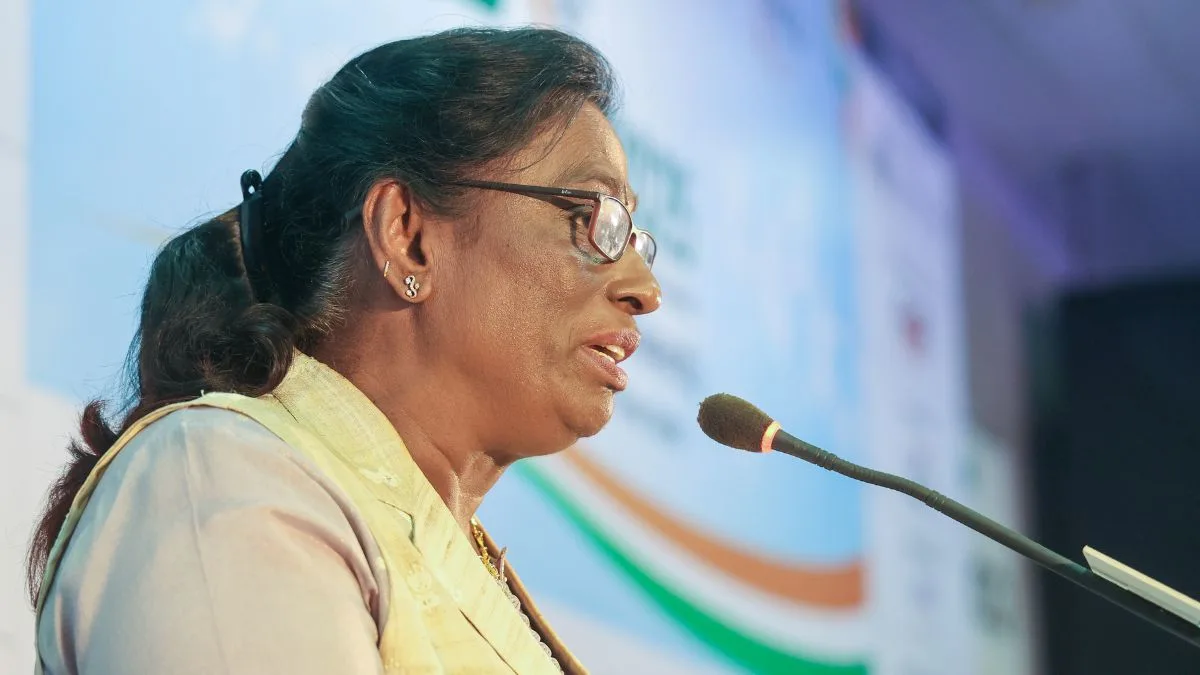
The IOA General House unanimously confirmed IOA chief PT Usha as president of the National Olympic Academy, while Olympic medallist and IOA vice president Gagan Narang was appointed director of the academy.

Under their leadership, the NOA will collaborate closely with the International Olympic Academy in Olympia to ensure India’s Olympic education programmes remain aligned with the Olympic Charter and international norms. The partnership will facilitate joint initiatives, research collaborations, knowledge exchange and participation in global Olympic education forums.

The IOA described the launch of the NOEDP and the revival of the NOA as a landmark moment in building a values-driven, athlete-focused and future-ready Olympic framework for India, one that integrates education, excellence and ethical governance at every level.

Reaffirming its commitment to Prime Minister Narendra Modi’s vision of a Viksit Bharat, the IOA reiterated its dedication to empowering athletes within the Olympic movement and strengthening the institutions that underpin sport across the country.

Revamped PWL season 5 to kick off on January 15

The season will kick off with Punjab Royals facing UP Dominators, setting the stage for an action-packed campaign.

Statesman News Service | New Delhi |

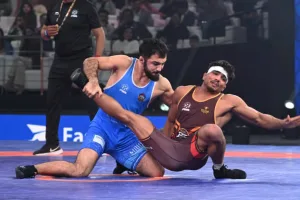
The Pro Wrestling League (PWL) has unveiled the schedule for its fifth season, with the revamped tournament set to be held from January 15 to February 1 at the Noida Indoor Stadium.

The season will kick off with Punjab Royals facing UP Dominators, setting the stage for an action-packed campaign. Returning after a comprehensive restructuring, PWL 2026 will feature six franchises competing in a league-cum-knockout format, bringing together top Indian and international wrestlers.

Delhi Dangal Warriors, Haryana Thunders, Tiigers of Mumbai Dangal, Maharashtra Kesari, Punjab Royals and UP Dominators will contest the title. The league stage will comprise 15 matches spread across 13 match days, with each team playing in a round-robin format.

The top four sides will qualify for the semi-finals on January 30 and 31, ahead of the final on February 1.

The schedule includes back-to-back double-header days on January 16 and 17. On January 16, Maharashtra Kesari will take on Delhi Dangal Warriors from 6:00 PM, followed by a clash between Punjab Royals and Haryana Thunders. The following day, Tiigers of Mumbai Dangal will begin their campaign against UP Dominators at 6:00 PM, before Delhi Dangal Warriors face Haryana Thunders.

Each league tie will feature nine bouts across different weight categories, highlighting a blend of Olympic medallists, world champions, rising Indian talents and leading international wrestlers signed during the record-breaking PWL 2026 auctions.

The final league-stage match will be played on January 29, with Punjab Royals taking on Delhi Dangal Warriors. Rest days have been scheduled on January 22 and 24 to ensure adequate recovery for athletes.

Season 5 will also spotlight star power assembled during the recently concluded auctions, where franchises spent over Rs 11 crore to sign 63 Indian and overseas wrestlers. Olympic champion and four-time world champion Yui Susaki emerged as the most expensive signing in league history after being picked up by Haryana Thunders for Rs 60 lakh.

Among the men, world championship bronze medallist Robert Baran was signed by Maharashtra Kesari for Rd 55 lakh.

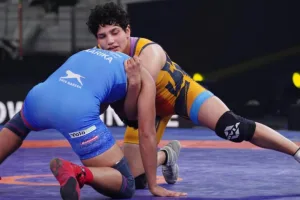
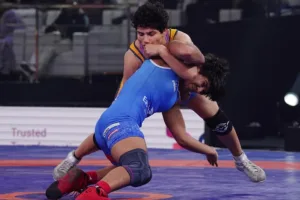
Indian wrestlers are set to play a pivotal role, led by Antim Panghal, who joined UP Dominators for Rs 52 lakh, and reigning U23 world champion Sujeet Kalkal, snapped up by Delhi Dangal Warriors for the same amount. Paris Olympic bronze medallist Aman Sehrawat was signed by Tiigers of Mumbai Dangal for Rs 51 lakh, while Ana Godinez bolstered Punjab Royals’ women’s squad with a Rs 46 lakh deal.

Delhi, not Tamil Nadu: why was Vijay summoned to CBI headquarters in Karur stampede case?

Opposition leaders, especially from DMK, have raised questions over summoning Vijay to Delhi, and hinted at “political motives” behind the move

VIBHA SHARMA | New Delhi |

Tamilaga Vettri Kazhagam (TVK) chief and actor Vijay on Monday appeared before the Central Bureau of Investigation (CBI) in Delhi in connection with the investigation into the Karur stampede case. While a special team questioned him at the agency’s headquarters, some opposition leaders, especially from the ruling DMK, questioned the decision to summon Vijay to Delhi, and called it against federal principles while hinting at “political motives”.

While BJP’s critics saw the Delhi summons as “BJP-led intimidation” of TVK—the newbie that has refused to join either the BJP-AIADMK-led NDA or the DMK-Congress’ INDIA Bloc in poll-bound Tamil Nadu, supporters of the central probe say it was the only way to avoid a local DMK versus TVK political tussle and ensure a fair trial into the deaths of 41 people in the Karur stampede on September 27, 2025.

Questioning was initially expected to occur in Chennai, but it was moved to Delhi to ensure a “neutral environment, free from any political interference,” they say.

Officials add that Vijay was asked to appear for questioning in Delhi, and he complied with the summons and arrived in the capital by a chartered flight to cooperate with the ongoing probe.

“The CBI officially summoned Vijay to appear in person at its New Delhi headquarters on January 12 to record his statement as a witness. The investigation was transferred from state authorities to the CBI by the Supreme Court to ensure an impartial and transparent probe. The apex court also appointed a monitoring committee to oversee the investigation. TVK itself had requested the involvement of a central agency, alleging that a state-led probe would be biased,” they insisted.

The TVK leadership and the DMK’s Tamil Nadu state government have both publicly blamed each other for security lapses.

Notably, the DMK and the BJP-AIADMK-led NDA have both been wooing TVK to join their respective sides. However, the transfer of the Karur stampede investigation to New Delhi resulted in the DMK raising concerns about central interference and intimidation.

Arguing that the investigation should take place near the site of the incident and the victims in Tamil Nadu, senior DMK leaders like T K S Elangovan reportedly also alleged that the BJP-led central government “often uses agencies like the CBI as a washing machine to pressure political opponents” and that the summons were a way to “coerce Vijay to join the NDA”. Some analysts also raised questions, linking the timing and location of the probe to Vijay’s refusal to align with the BJP-led NDA alliance, and suggested “political pressure ahead of the 2026 Tamil Nadu elections”.

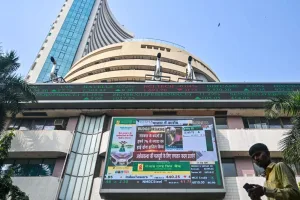
Stock market ends in green in a volatile session

At close, the Sensex was up 301.93 points or 0.36% at 83,878.17, and the Nifty was up 106.95 points or 0.42% at 25,790.25.

Statesman News Service | New Delhi |

The Indian stock market on Monday ended in the green in a volatile session snapping a five-day losing streak.

At close, the Sensex was up 301.93 points or 0.36% at 83,878.17, and the Nifty was up 106.95 points or 0.42% at 25,790.25.

The BSE Midcap index fell 0.41%, while the Smallcap index crashed 0.68%. The overall market capitalisation of BSE-listed firms rose to nearly Rs 469 lakh crore from nearly Rs 468 lakh crore in the previous session.

Rupee traded flat near 90.16 as markets awaited cues from domestic CPI and WPI data this week.

Among the sectors, Nifty Metal grew 2%, Nifty PSU Bank and FMCG saw healthy gains of 0.65% and 0.59%, respectively while Nifty Bank rose 0.34%.

On the losing side were Nifty Media down by 1.55% and Realty down by 1.22%.

The top gainers on Nifty were Coal India (3.39%), Tata Steel (2.75%), and Asian Paints (2.50%).

Those ending as top losers were Infosys (1.02%), Tata Motors Passenger Vehicles (1%), and Bajaj Finance (1%).

Out of 4,485 stocks traded on the BSE, 1,468 advanced, while 2,837 declined.

Some 180 stocks remained unchanged.

Around 82 stocks hit their 52-week highs while as many as 532 stocks hit their 52-week lows on the BSE.

Those on the highs were Alkem Laboratories, Emcure Pharmaceuticals, and Tamilnad Mercantile Bank. ITC, IRCTC, Tube Investments of India, United Breweries (UBL), and Page Industries, were on lows.

Among the banking stocks, IndusInd Bank was the top gainer rising over 2%.

ICICI Bank rose over 1%. SBI, AU Small Finance Bank, Yes Bank and Union Bank of India, Kotak Mahindra Bank and HDFC Bank shares also traded in the green.

As per the data released by the Ministry of Statistics & Programme Implementation (MoSPI), the year-on-year inflation based on Consumer Price Index (CPI) for December, 2025 stands at 1.33% (Provisional) over December, 2024 mainly attributed to increase in inflation of Personal care and effects, Vegetables, Meat and fish, Egg, Spices and Pulses and Products.

Team management wants to groom me as an all-rounder: Harshit Rana

Chasing 301, India lost opener Rohit Sharma early before skipper Shubman Gill (56) and Virat Kohli (93) stitched together a sublime, match-winning partnership of 118 runs for the second wicket.

Statesman News Service | New Delhi |

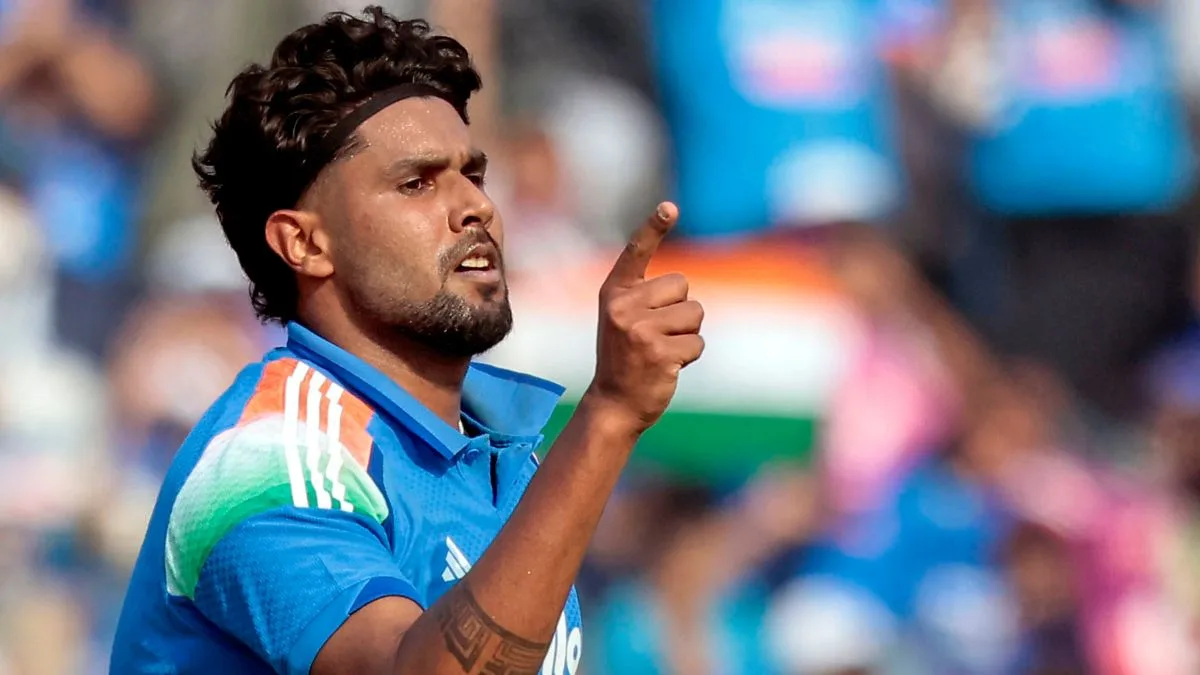
India’s focus on developing multidimensional cricketers was underlined after their four-wicket victory over New Zealand in the opening ODI, with pacer Harshit Rana revealing that the team management wants to “groom him” as an all-rounder and has asked him to improve his batting to eventually slot in at No. 8.

Chasing 301, India lost opener Rohit Sharma early before skipper Shubman Gill (56) and Virat Kohli (93) stitched together a sublime, match-winning partnership of 118 runs for the second wicket. Shreyas Iyer (49), Rana (29) and KL Rahul (29 not out) then ensured India crossed the line comfortably. Notably, Rana was promoted ahead of all-rounder Washington Sundar to bat at No. 7 and played a vital cameo faming 23 balls.

“The team management wants to groom me as an all-rounder and it is my task to keep working on it. I am working on it in the nets as well, and it was a matter of confidence, which KL (Rahul) Bhai helped me with when I went in (to bat). I kept my focus on it and made the runs,” Rana said at the post-match press conference.

“My team wants me to bat at No. 8 as an all-rounder, and whatever time I can give to it in the nets, I focus on that. I believe I can score 30-40 runs for the team lower down the order whenever needed and that’s what the team management believes that I can do as well,” he added.

Earlier, after being asked to bat, New Zealand made a strong start through openers Devon Conway (56) and Henry Nicholls (62), who put on a fluent 117-run stand. Daryl Mitchell then anchored the innings with a well-paced 84, blending caution with aggression. Mohammed Siraj led the Indian bowling effort with figures of 2/40, while Prasidh Krishna and Rana chipped in with two wickets each.

Responding to questions about India’s inability to strike early with the new ball, especially in the absence of pace spearhead Jasprit Bumrah, Rana was quick to defend the bowling unit.

“I don’t know what cricket you are watching. Even today, although we did not secure the early wickets, Siraj bhai bowled exceptionally well. We did not give away a lot of runs either with the new ball.”

“But these things happen; if you do not get wickets early on, then you will get them later, which is what we did. There are different phases in ODI cricket. I felt that the pitch was slow; there wasn’t much bounce either,” he said.

Pradhan interacts with 43 young authors selected under PM-YUVA 3.0

Pradhan said the energy, confidence, and aspirations of the young authors further strengthened his belief in the vision of a Viksit Bharat.

Statesman News Service | New Delhi |

Interacting with 43 young authors selected under the PM-YUVA 3.0 (Prime Minister’s Young Authors Mentorship Scheme), Union Education Minister Dharmendra Pradhan has said the interaction included free-wheeling discussions on culture, technology, the pursuit of knowledge, and the national vision.

Pradhan said the energy, confidence, and aspirations of the young authors further strengthened his belief in the vision of a Viksit Bharat.

During the interactive session, which was held at Pradhanmantri Sangrahalaya here, the selected authors shared brief overviews of the subjects of their forthcoming manuscripts being developed under the six-month mentorship programme.

On the occasion, Pradhan congratulated the young writers on their selection and encouraged them to make the most of the mentorship period to produce meaningful books that would inspire India’s youth to read, write, and engage deeply with knowledge.

He emphasised the importance of access to research material and directed that both physical and digital resources should be facilitated through the National Book Trust (NBT).

Pradhan also stated that the authors should be provided access to resources under the ‘One Nation, One Subscription’ (ONOS) initiative.

To strengthen their academic and research support, he suggested that the selected authors be affiliated with central universities in their respective regions to develop their manuscripts.

Expressing his happiness at interacting with the young authors, Pradhan said that he was delighted to engage with the budding writers selected under PM-YUVA 3.0 and noted that the diversity in the room reflected the diversity of India.

He said the young authors are writing books on the themes of the Contribution of the Indian Diaspora in Nation-building, the Indian Knowledge System, and Makers of Modern India.

The 43 selected authors under the PM-YUVA 3.0 scheme are participating in a national camp being organised during the New Delhi World Book Fair 2026 (10–18 January) at Bharat Mandapam.

The Fair is being organised by the Ministry of Education with the National Book Trust and was inaugurated on 10 January 2026 by the Union Education Minister.

The PM-YUVA 3.0 scheme aims to nurture young writers and promote a culture of reading, writing, and knowledge creation while showcasing India’s intellectual and cultural diversity.
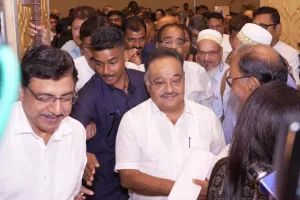
The event was attended by Vineet Joshi, Secretary, Higher Education; Yuvraj Malik, Director, NBT-India; Dr. Priyanka Mishra, CEO, Pradhanmantri Sangrahalaya; Kumar Vikram, Chief Editor and Joint Director, NBT-India; and Ravi K Mishra, Joint Director, Pradhanmantri Sangrahalaya.

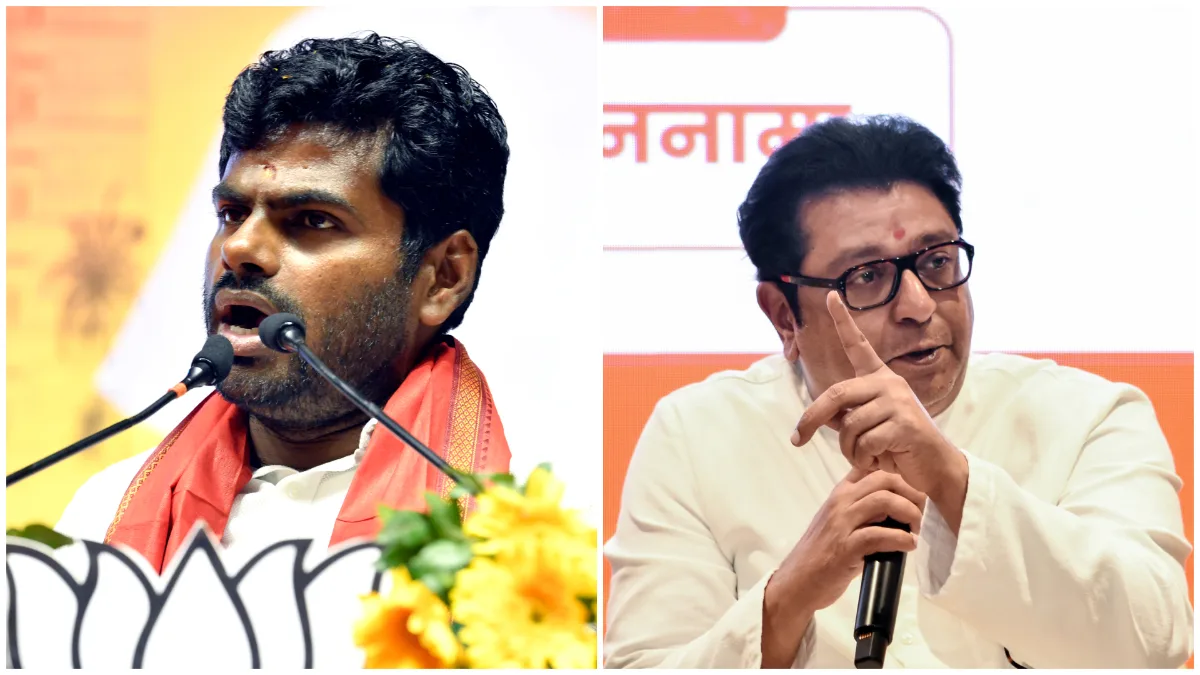
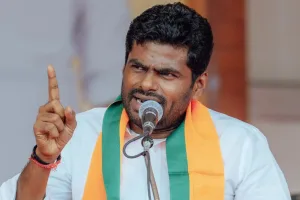
‘I’ll come to Mumbai, try cutting my legs’: Annamalai hits back at Raj Thackeray

The controversy erupted after the BJP leader spoke on Mumbai’s issue, and allegedly suggested that it is “not a Maharashtra city,” during a campaign in Dharavi and Sion Koliwada areas of the city.
Statesman News Service | New Delhi |

The slanging match between Bharatiya Janata Party leader in Tamil Nadu, K Annamalai and Maharashtra Navnirman Sena (MNS) chief Raj Thackeray does not seem to be winding up soon. The major political parties of the state are at loggerheads ahead of the upcoming BMC (Brihanmumbai Municipal Corporation) polls.

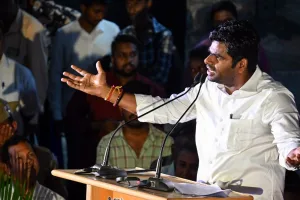
At a press conference in Chennai on Monday, Annamalai slammed Raj Thackeray for allegedly abusing him. “Who are Aaditya Thackeray and Raj Thackeray to threaten me? I am proud to be a farmer’s son. They have organised meetings just to abuse me. I don’t know whether I have become that important,” Annamalai said.

Annamalai dares MNS leader

The controversy erupted after the BJP leader spoke on Mumbai’s issue, and allegedly suggested that it is “not a Maharashtra city,” during a campaign in Dharavi and Sion Koliwada areas of the city.
He also suggested that the city needs a triple-engine government, with a BJP mayor in Mumbai, Chief Minister Devendra Fadnavis in the state, and Prime Minister Narendra Modi at the Centre. He added, “Mumbai is a global metropolis that has a budget of over Rs 40,000 crore. Bengaluru’s budget is Rs 19,000 crore, while Chennai’s is Rs 8,000 crore. You need good people who sit in the administration to manage the finance.”
Amid the controversy, the BJP leader has also alleged that he has received multiple threats. “Some have written that they will cut my legs if I come to Mumbai. I will come to Mumbai–try cutting my legs. If I were afraid of such threats, I would have stayed in my village,” he said.

In response to comments by Raj Thackeray, Annamalai referred to him as “ignorant leader.” He said, “If I say Kamaraj is one of India’s greatest leaders, does it mean he is no longer a Tamil? If I say Mumbai is a world-class city, does it mean Maharashtrians didn’t build it? These people are just ignorant.”

The fight over Mumbai

In a joint UBT-MNS rally in Mumbai, Raj Thackeray had mocked Annamalai and allegedly referred to me as ‘rasmalai.’ “One rasmalai came from Tamil Nadu…what is your connection to here? Hatao lungi bajao pungi,” Raj Thackeray had said. The MNS leader had also questioned Annamalai’s position in the Bharatiya Janata Party.

Shiv Sena (UBT) leader Aaditya Thackeray also joined the war of words today. He said that such statements clearly reflect the party’s intent to “loot” the state. He asserted that the state will not tolerate any insult. He said, “Annamalai is the face of the BJP, which is zero. He could not win there and save their own deposit. It was shown that the next PM will be him only, but actually, they are a Zero that Tamil Nadu has shown… Annamalai has insulted Maharashtra, and the state will not tolerate this. Annamalai and the BJP have insulted Maharashtra,” Thackeray told reporters here in Mumbai.


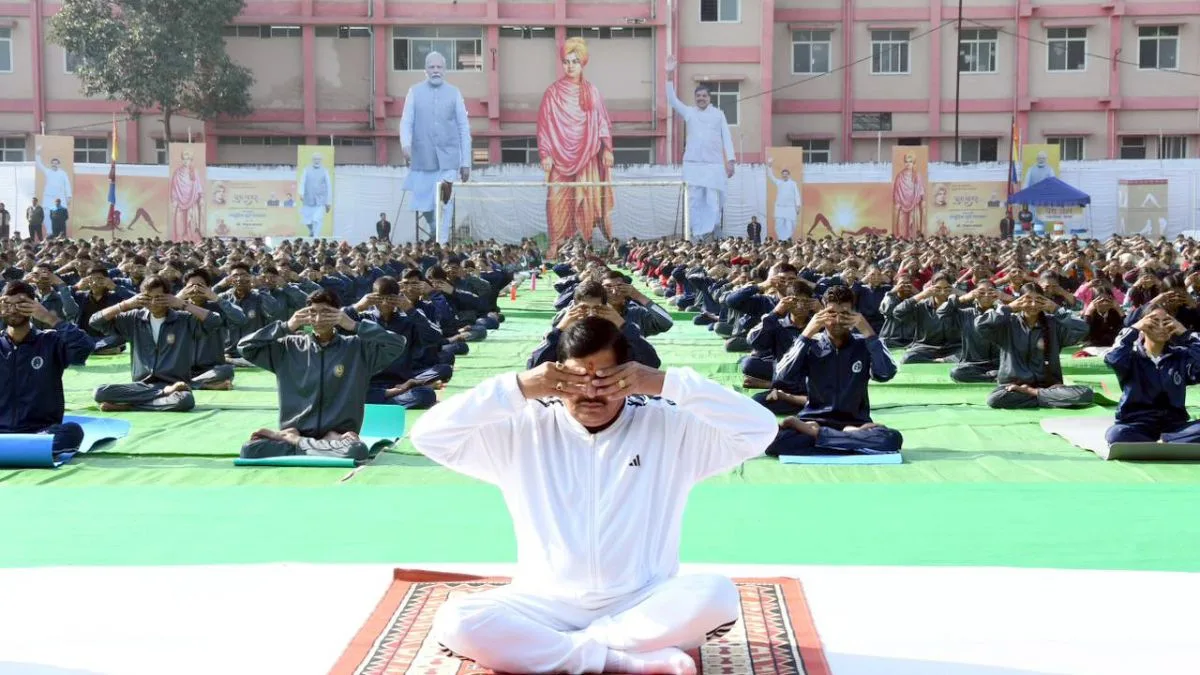
MP CM Dr Mohan Yadav leads Surya Namaskar organised to mark Vivekananda’s birth anniversary

The CM was addressing participants at the state-level Surya Namaskaar event held at the Subhash School in Bhopal on ‘National Youth Day’ to mark the birth anniversary of Swami Vivekananda.

Statesman News Service | Bhopal |

Madhya Pradesh Chief Minister Dr Mohan Yadav on Monday appealed to everyone, particularly the youth, to stay away from all kinds of addictions, avoid junk food, plant trees, devote at least half an hour daily to physical exercise, and play at least one favourite sport.

The CM was addressing participants at the state-level Surya Namaskaar event held at the Subhash School in Bhopal on ‘National Youth Day’ to mark the birth anniversary of Swami Vivekananda.

Dr Yadav noted that Swami Vivekananda infused new energy in the youth of the nation through his thoughts, as he was a great national thinker and was youthful not only in body but also in action.

He said yoga is an integral part of our Indian tradition, and the yogic practices of Surya Namaskar are the essence of our entire life. “Yoga is not merely a physical exercise, but a powerful medium to take our lives from normalcy to excellence. By practicing the 12 yogic postures included in Surya Namaskar daily, we can keep our bodies healthy and live happily.” Dr Yadav emphasized.

Under the guidance of yoga instructors, Chief Minister Dr Yadav performed three rounds of Surya Namaskar, each comprising 12 postures, and various Pranayama asanas along with all the students of Subhash School. He said that yoga has been an inseparable part of our culture for centuries.

The CM said that the Sun God transmits energy by illuminating the entire universe, and all festivals and celebrations in Indian culture begin with the lighting of a lamp, which symbolises the worship of the Sun God. It is through the radiance of the Sun God that life attains meaning and the body becomes filled with energy.

He called upon the people of the state to prepare themselves for building a developed and self-reliant India. He urged innovation and new creation to take the state forward, preservation of the ancient rich culture and heritage, promotion of indigenous products, and encouraging children to read books.

Addressing students, he said they should not limit themselves to their academic curriculum, but also acquaint themselves with the practical aspects of life.

Chief Minister Dr Yadav said self-study is also a powerful means of acquiring knowledge and everyone should practise it. He urged people to stay away permanently from all kinds of addiction and junk food, as junk food leads the body towards degeneration, and should be consumed as little as possible. He appealed to plant trees, devote at least half an hour daily to physical exercise, and play at least one favourite sport.

He also called for sensitivity towards women, children, and the elderly, and emphasized building character along with personality. He advised sharing emotions with family and friends, remaining hopeful rather than discouraged, and using modern technology with full understanding and sensitivity.

The Chief Minister said that Indian culture is based on the altruistic spirit of Vasudhaiva Kutumbakam. He urged everyone to live each moment of life with joy and move forward with the spirit of making life better for humanity, society, nature and oneself, along with others.

During the programme, the historic address delivered by Swami Vivekananda at the World Parliament of Religions in Chicago, USA, was also broadcast.

Ladakh’s winter tourism hit as iconic Chadar Trek put on hold after Zanskar River unfreezes

The trek at a height of 11,000 ft was earlier supposed to begin on 10 January but was postponed by five days and has now been suspended till 20 January following the unfreezing of the Zanskar River, which has rendered the trekking route unsafe, said an official announcement by the Ladakh authorities on Monday.

Statesman News Service | Jammu |

In a setback to Ladakh’s winter tourism, the annual Chadar Trek on the Zanskar River has been suspended till 20 January, as the ice formation on the nearly 105 kms trail is not yet stable due to warmer weather conditions, raising potential safety issues for trekkers.

The trek at a height of 11,000 ft was earlier supposed to begin on 10 January but was postponed by five days and has now been suspended till 20 January following the unfreezing of the Zanskar River, which has rendered the trekking route unsafe, said an official announcement by the Ladakh authorities on Monday.

According to an official public notice by Ghulam Mohammad, Chief Executive Officer, District Disaster Management Authority, Leh, the decision has been taken after a recce team reported hazardous conditions posing a serious risk to human life. “All trekking and allied adventure activities on the Chadar route have been prohibited during the suspension period,” he ordered.

The Chadar Trek or the Zanskar Gorge trek is a winter trail over the frozen Zanskar River, and its suspension has created uncertainty over the iconic trekking activity in which people from across the country and abroad participate.

The authorities have directed tour operators and local stakeholders not to organise, promote, or facilitate any trekking activity during the period of suspension. Tourists and trekkers have been advised to strictly comply with the order.

Chadar is the country’s most challenging trek on the Zanskar River, which freezes in temperatures dropping down to -25 degrees Celsius and brings a larger-than-life experience.

As many as 41 trekkers were trapped in 2020 between the Tibb and Neyraks camps due to the unfreezing of the river and overflowing of water over the ice, and they were rescued in helicopters.

Kohli overtakes Sangakkara to become second-highest run-scorer in international cricket

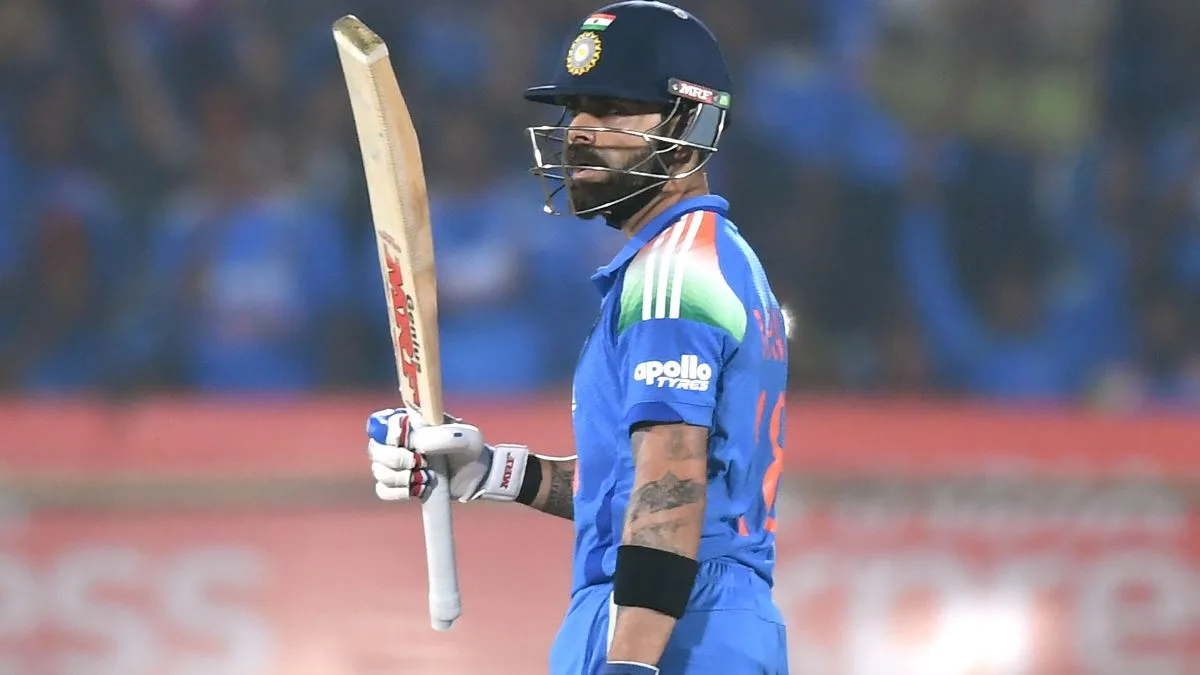
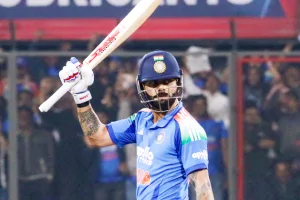
The former India captain reached the landmark during a fluent knock of 93 in the first ODI against New Zealand. His effort extended his remarkable run of form in One Day Internationals.

Statesman News Service | New Delhi |

Virat Kohli climbed to second place on the all-time list of men’s international run-scorers, overtaking Sri Lanka great Kumar Sangakkara and moving closer to the summit occupied by batting maestro Sachin Tendulkar.

The former India captain reached the landmark during a fluent knock of 93 in the first ODI against New Zealand. His effort extended his remarkable run of form in One Day Internationals. The innings, which featured eight boundaries and a six, was his fifth score of fifty or more in as many outings.

Reflecting on the achievement after the match, Kohli said, “If I look back at my whole journey, it’s nothing short of a dream come true. I’ve always mentioned that I’ve always known my abilities. How much ability I had when I came in and I had to work for a lot more to get to the place I’m today and God has blessed me with way too much for me to complain about anything.”

“So I feel nothing but gratitude. I always look back at my whole journey with a lot of grace and a lot of gratitude in my heart and I feel proud about it

“Honestly, the way I’m playing, I’m not thinking about the milestones. If we were batting first, I would have gone harder,” he added.

Set a target of 301, the 37-year-old Kohli anchored India’s chase after an early setback. With Rohit Sharma departing cheaply, he combined with skipper Shubman Gill in a crucial 118-run partnership for the second wicket to steady the innings.

“Well, the basic idea is I bat at No.3,” Kohli said after winning the Player-of-the-Match award for his 93 off 91 balls. “So if the situation is a bit tricky, I back myself to counterattack now rather than just trying to play the situation in because some ball has your name on it.”

“But at the same time, you don’t play outrageous shots. You still stick to your strengths, but you back yourself enough to put the opposition on the back foot,” he said.

Following Gill’s dismissal, Kohli continued to marshal the chase, ensuring India remained on course.

“I just felt like if I push hard now in the first 20 balls, then we can probably string in a partnership straight after a wicket like Rohit’s where the opposition is going to go on the back foot,” he said. “And that actually ended up being the difference in the game.”

The captain was full of praise for the senior batter’s impact and composure at the crease.

“The way he’s (Kohli) striking the ball at the moment makes things look so easy, even on a surface like this where it wasn’t easy to start, he made it look easy,” Gill said after the game.

India eventually sealed a four-wicket victory to take a 1-0 lead in the three-match ODI series. The sides will meet again in the second ODI on January 14 in Rajkot.

Beyond Davos: Why Jharkhand took its stones to the world

As Chief Minister Hemant Soren prepares for engagements in Davos and during an official visit to the United Kingdom, the state has chosen to foreground a narrative that reaches far beyond quarterly growth charts

Shashi Singh | Ranchi |

When Indian states travel to the annual meeting of the World Economic Forum in Davos, the pitch is usually predictable. Investment figures, industrial corridors, ease of doing business. This year, Jharkhand carried something else in its diplomatic briefcase. Stones.

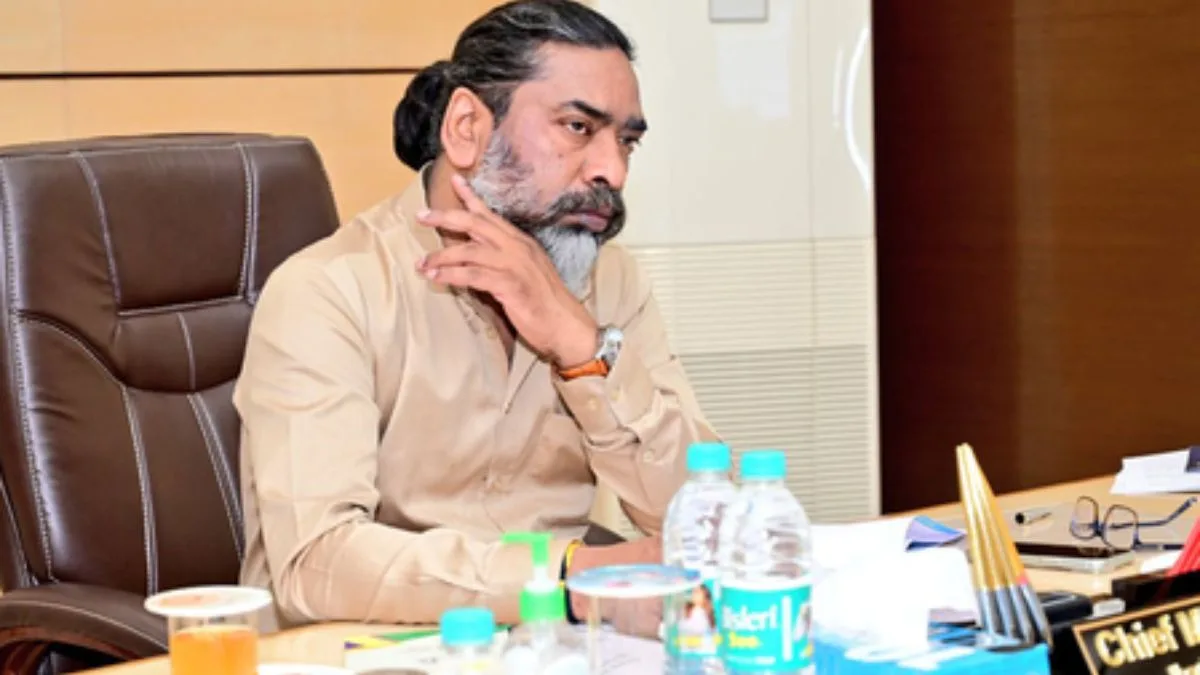
As Chief Minister Hemant Soren prepares for engagements in Davos and during an official visit to the United Kingdom, the state has chosen to foreground a narrative that reaches far beyond quarterly growth charts. It is presenting itself as one of the world’s oldest inhabited cultural landscapes, anchored in living megalithic traditions that still shape community life in its forests and villages.

At the heart of this story lies the Singhbhum Craton, among the earliest stable landmasses on Earth, formed over three billion years ago. On this ancient geological foundation, human societies erected monoliths, stone circles, and memorial slabs long before recorded history. Unlike most megalithic cultures across the world, which survive only as archaeological remnants, Jharkhand’s stone traditions remain alive.

In places such as Chokahatu in Ranchi district, members of the Munda community continue to erect memorial stones for their ancestors. New stones stand beside old ones, creating a layered archive of lineage, memory, and belief that spans centuries. Anthropologists describe it as one of the largest living megalithic landscapes in the Indian subcontinent, a rarity in global heritage studies.

Further north, at Pakari Barwadih in Hazaribagh, rows of monoliths are aligned with the movement of the sun and the equinox. The precision has drawn scholarly attention and invites comparison with Stonehenge, the iconic prehistoric site in southern England. The parallel is not about scale or spectacle, but about a shared human impulse across continents and millennia to mark time, death, and cosmic order in stone.

Jharkhand’s narrative extends beyond megaliths alone. Cave complexes such as Isko, with their ancient rock art, and the fossilised forests of Mandro add further depth, linking planetary time with living cultural practice. Together, they form a rare continuum where geology, archaeology, and contemporary indigenous life coexist within the same geography.

By placing this heritage alongside its economic vision in Davos and in the United Kingdom, Jharkhand is attempting a subtle shift in how states present themselves on global platforms. The message is that long-term development cannot be divorced from cultural continuity or ecological memory. Growth, in this framing, is sustainable only when it respects deep time.

There is also a clear diplomatic logic to the United Kingdom leg of the journey. The emphasis on in situ conservation, ethical preservation, and community custodianship aligns with ongoing India–UK conversations on museum ethics, research exchange, and cultural collaboration. Jharkhand’s megaliths are not locked away in distant institutions. They remain embedded in villages and forests, guarded by the communities that created them.

Whether this cultural pitch translates into sustained global recognition will depend on what follows the speeches. Conservation frameworks, research partnerships, and local protections will matter more than symbolism. But for now, Jharkhand has succeeded in doing something unusual at a forum dominated by finance.

It has reminded the world that before balance sheets and borders, there was land, memory, and stone. And that some stories are not measured in decades, but in millennia.