Logo

India rejects Pakistan’s charge of involvement in violent incidents in Balochistan

Responding to queries, Ministry of External Affairs spokesperson Randhir Jaiswal said, ‘’We categorically reject the baseless allegations made by Pakistan, which are nothing but its usual tactics to deflect attention from its own internal failings.’’

Statesman News Service | New Delhi |

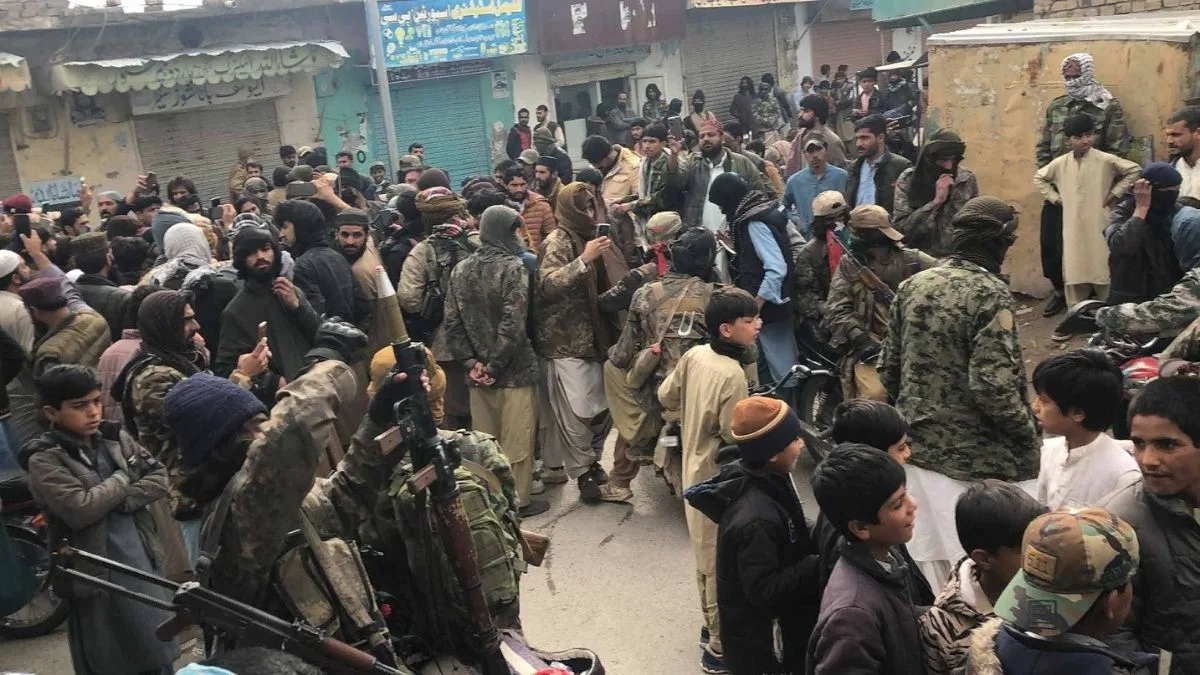
India on Sunday categorically rejected Pakistan’s charge of an Indian involvement in violent incidents in its restive southwestern province of Balochistan, saying Islamabad is trying to deflect attention from the country’s own internal failings.

Responding to queries, Ministry of External Affairs spokesperson Randhir Jaiswal said, ‘’We categorically reject the baseless allegations made by Pakistan, which are nothing but its usual tactics to deflect attention from its own internal failings.’’

The spokesperson said that instead of parroting frivolous claims each time there is a violent incident, Pakistan would do better to focus on addressing long-standing demands of its people in the region. Its record of suppression, brutality and violation of human rights is well known, he added.

The Indian response came after Pakistan’s Interior Minister Mohsin Naqvi accused India of orchestrating a wave of coordinated attacks in Balochistan, saying New Delhi planned the assaults alongside militant groups.

“These were not ordinary terrorists,” Naqvi said. “India is behind these attacks. I can say with confidence that India planned these attacks together with the terrorists.” The Pakistan Army has also made a similar allegation in recent days.

Budget 2026-27: 5 announcements that affect households and taxpayers

Budget 2026-27 makes no sweeping giveaways, but several decisions quietly affect how households handle taxes, healthcare costs, overseas spending and long-term compliance with government systems.

Statesman News Service | Mumbai |

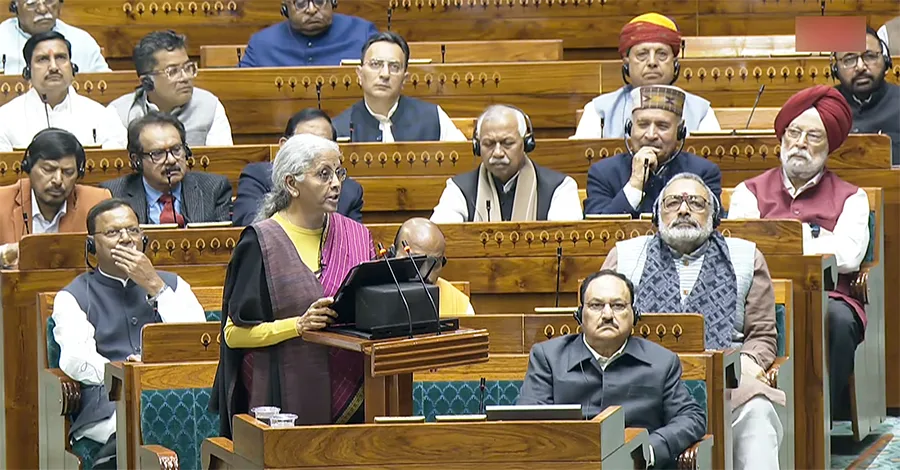
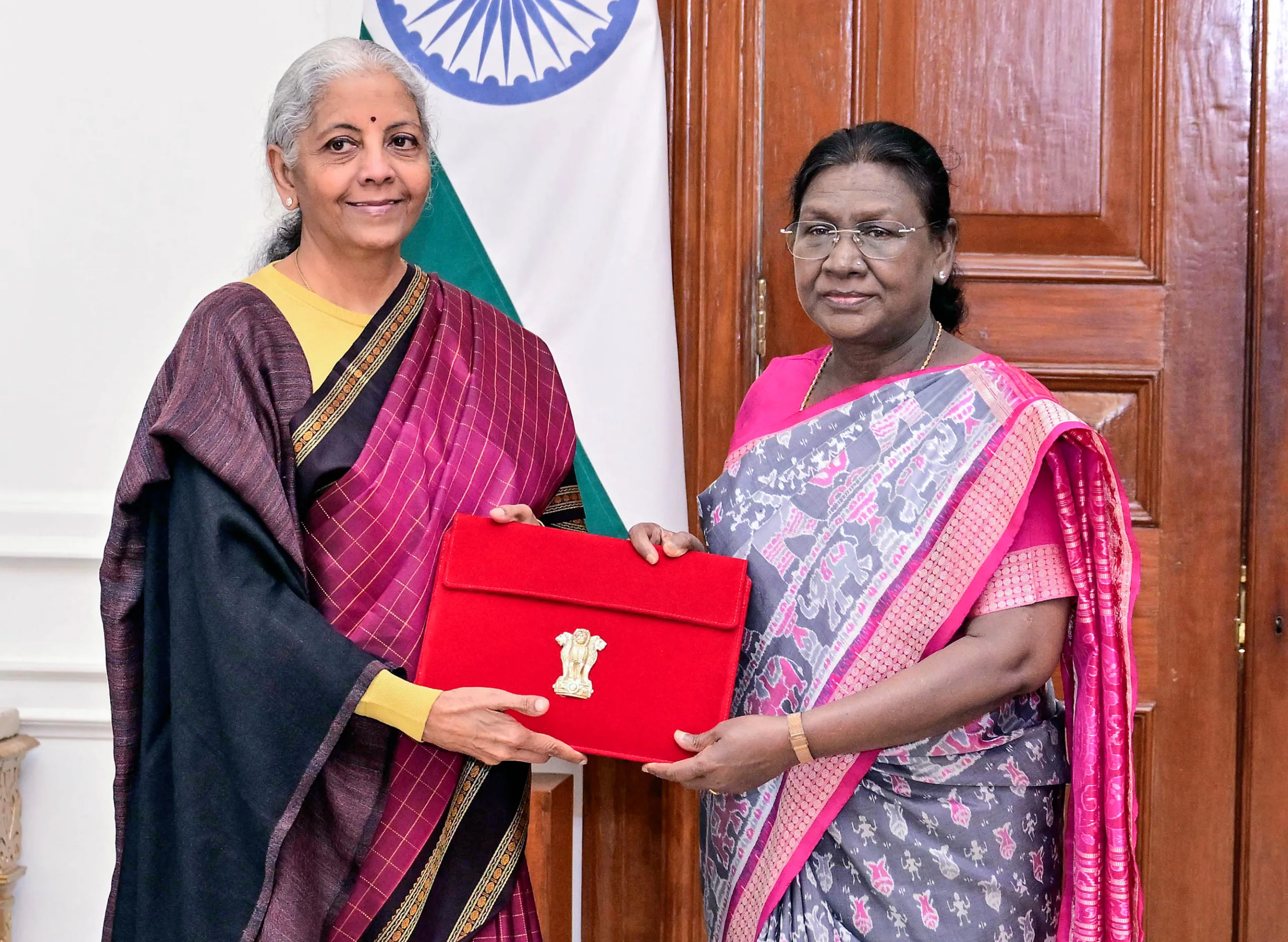
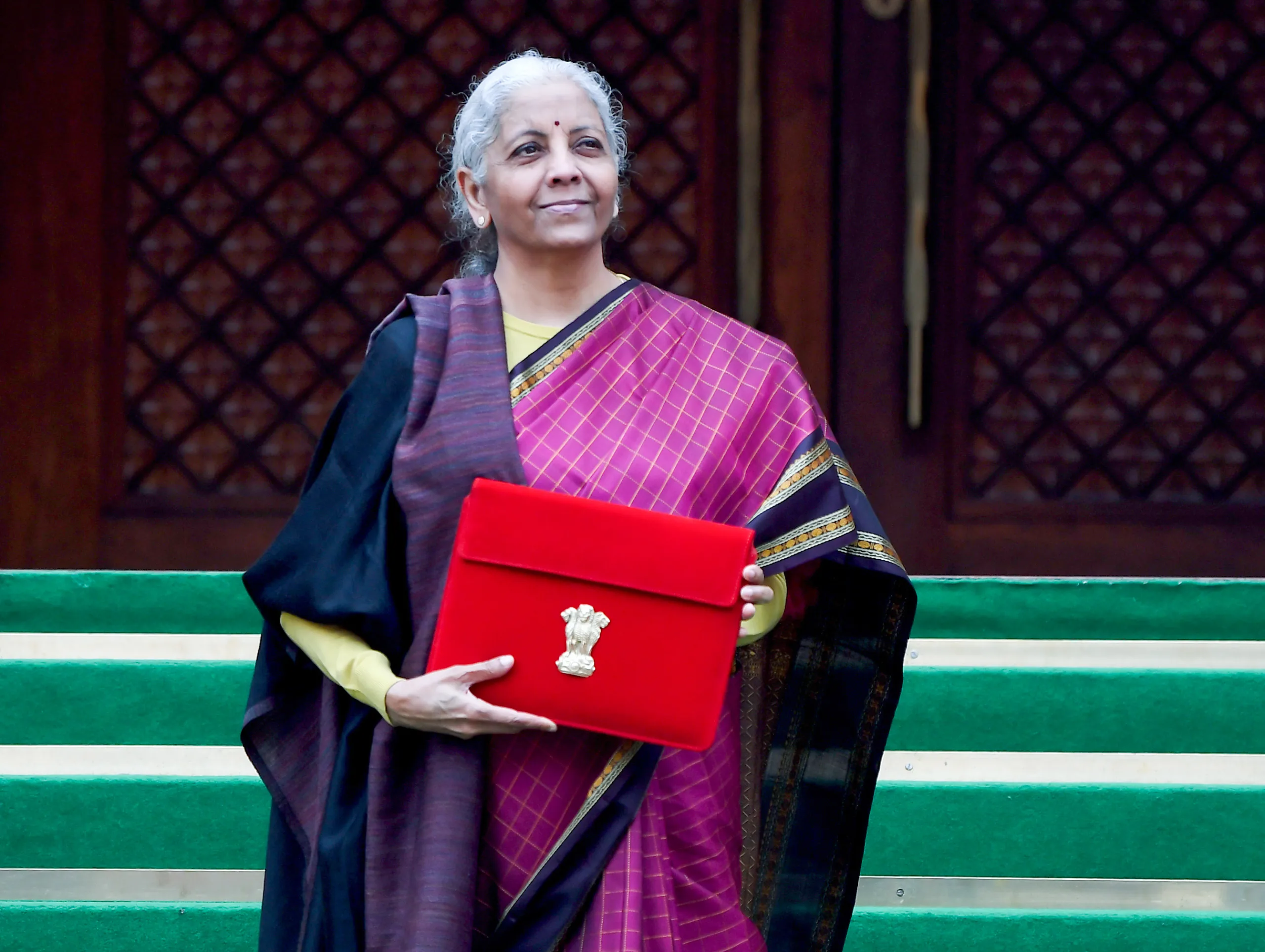
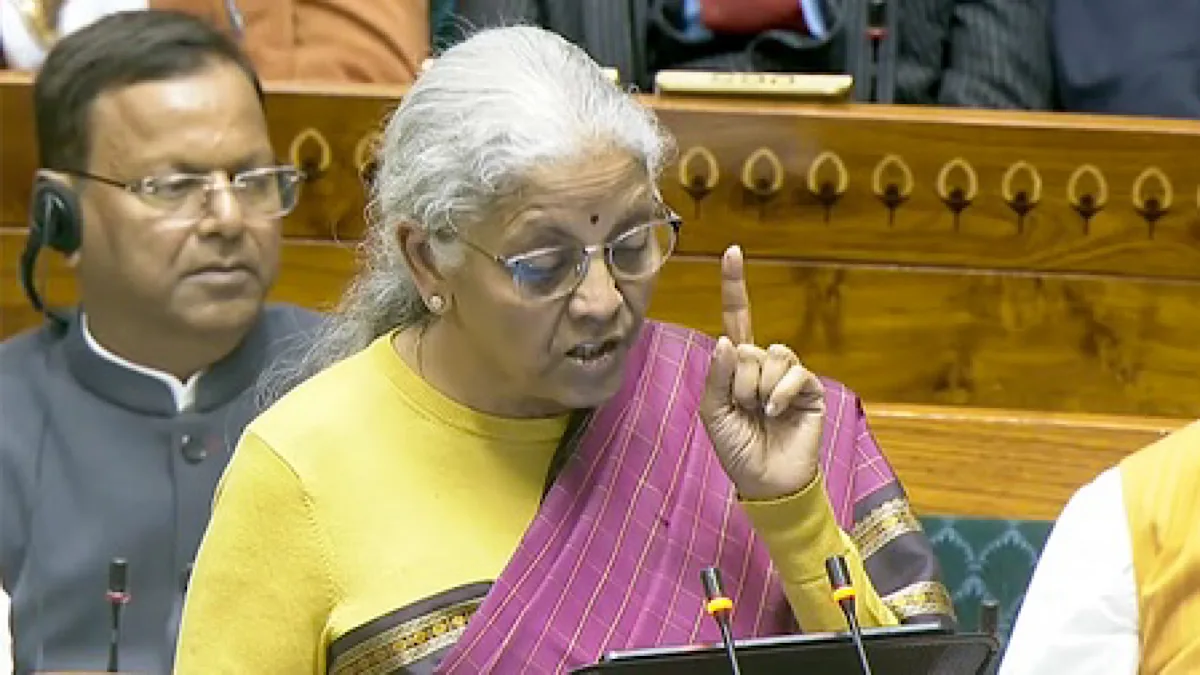
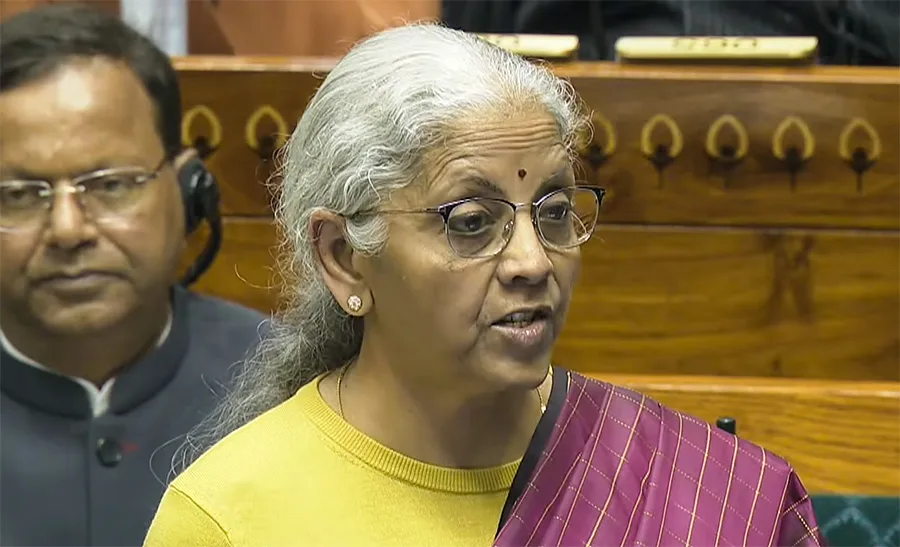
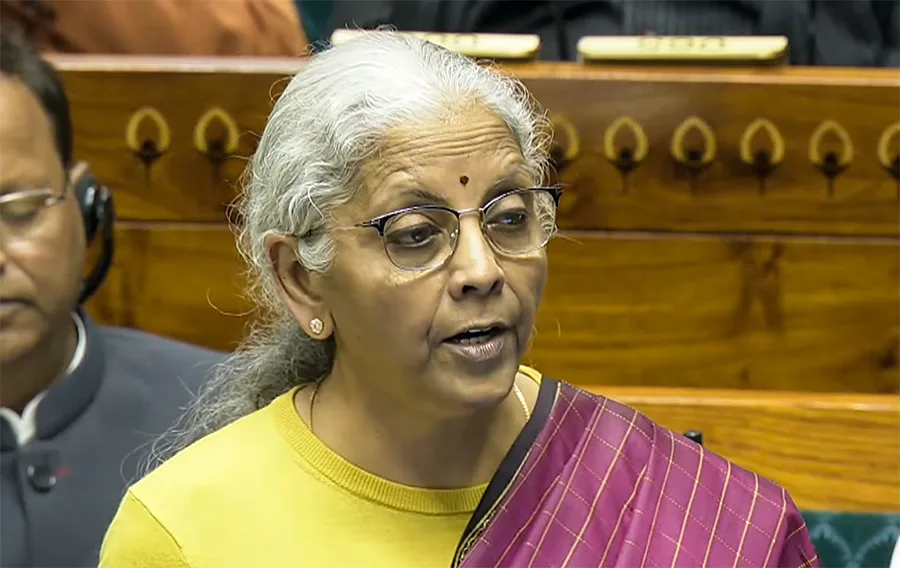
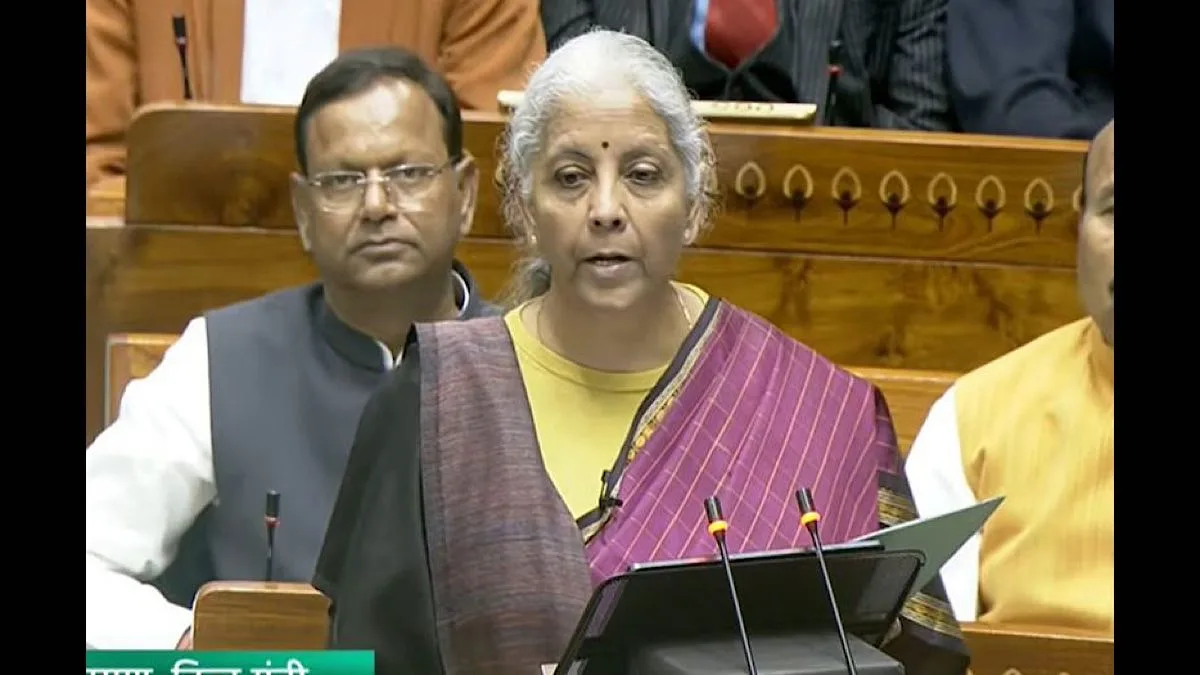
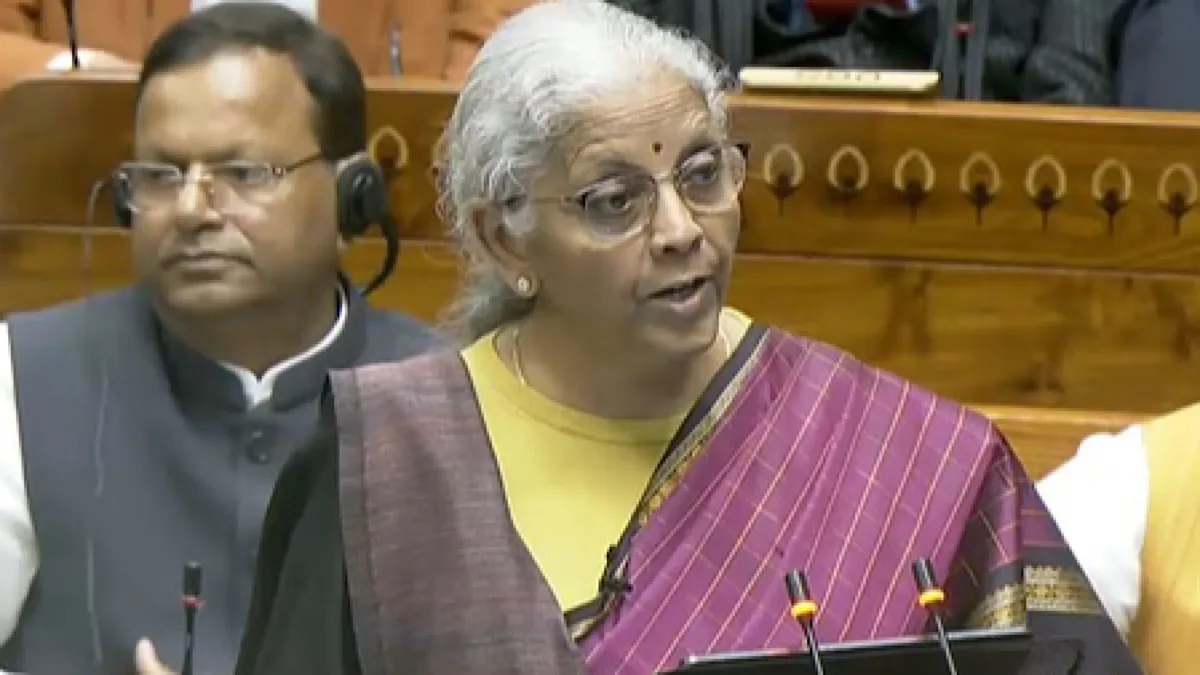
The Union Budget 2026-27, presented by Finance Minister Nirmala Sitharaman on Sunday, is full of ambitious plans and long timelines. Much of it will play out slowly, over years. However, a few decisions stand out because they change how people deal with the system, especially taxes, compliance, and essential expenses.

These are not things you notice every morning. But they matter when you file returns, send money abroad, deal with paperwork, or face a medical emergency. In that sense, they affect most households sooner or later.

Also Read: Union Budget 2026–27 Highlights: High-speed rail corridors, tax reform, boost for India-based data centres

Budget highlights today: What Union Budget 2026-27 means for households

1. Income tax rules are being rewritten

A new Income Tax Act will come into force from April 2026. The government says the rules and forms will be simpler and easier to follow.

For small taxpayers, this could mean fewer mistakes and less dependence on intermediaries. Automated systems will also allow eligible taxpayers to get nil or lower TDS certificates without approaching tax officers.

2. Penalties and prosecution are being softened

Assessment and penalty proceedings will now be combined into a single order. Several technical defaults are being decriminalised.

There is also a clearer path for taxpayers who want to settle disputes. Paying an additional amount may allow cases to be closed, instead of dragging on for years.

3. Critical medicines get customs duty relief

Customs duty has been removed on 17 medicines, including drugs used in cancer treatment. Seven more rare diseases have been added to the list eligible for duty-free personal imports of medicines and special medical food.

This does not affect everyone. But when it does, it matters a great deal.

4. Overseas spending rules ease slightly

TCS on overseas tour packages has been reduced to 2 per cent. The same rate will apply to remittances for education and medical treatment abroad.

For families planning foreign education or healthcare, this lowers the upfront cash outflow.

5. Big bets on future mobility

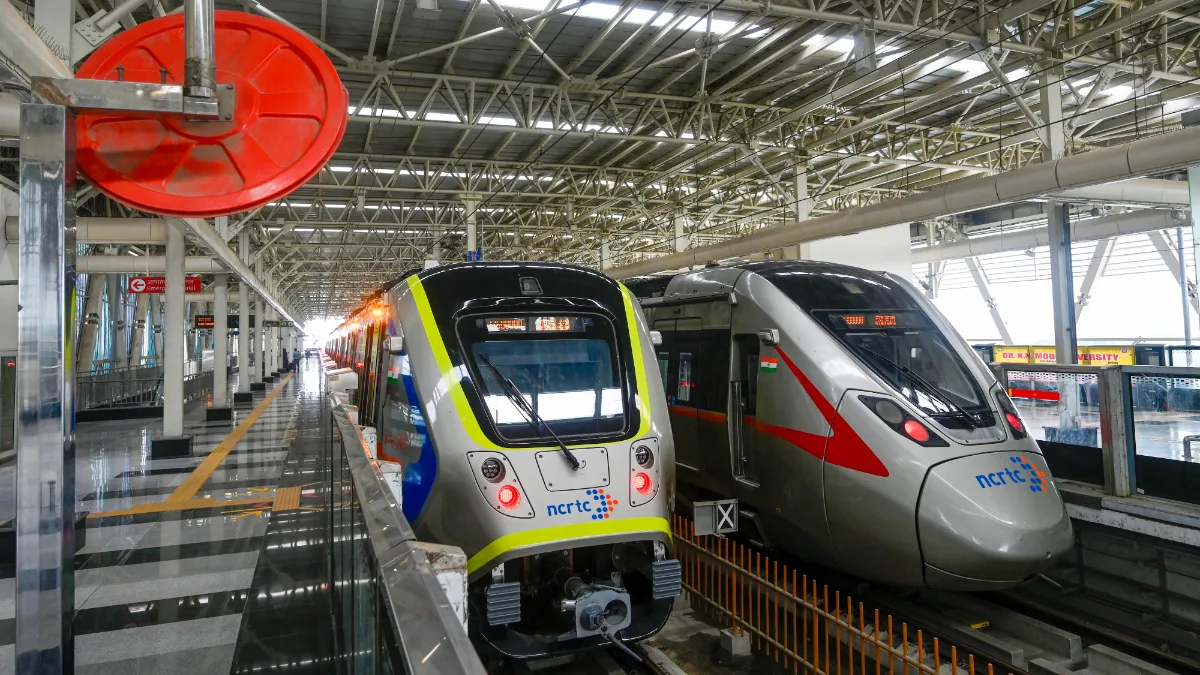
Seven high-speed rail corridors have been announced between major cities. These projects will take time. But they signal how travel for work, study, and family reasons could change over the next decade.

Union Budget 2026: Defence gets highest allocation of Rs 7.85 lakh crore

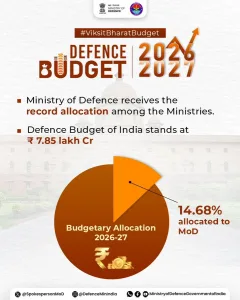
The Union Budget of India has made a provision of Rs 7.85 lakh crore for the Financial Year (FY) 2026-27 for the Ministry of Defence (MoD).

Statesman News Service | New Delhi |

The Union Budget of India has made the highest allocation of Rs 7.85 lakh crore to the Ministry of Defence (MoD) for the Financial Year (FY) 2026-27, accounting for 14.68% of the total Budget. This allocation to the Defence Ministry marks a huge hike from the Rs 6.81 lakh crore defence budget allocated to MoD in the Union Budget 2025-26.

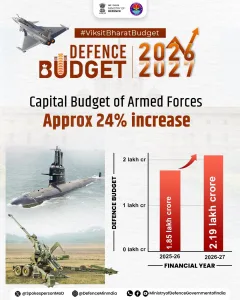
This year, a provision of Rs 2.19 lakh crore has been made for the overall capital expenditure of the Armed Forces. A key highlight of this budget is the strong focus on the modernisation of all three services, which shows an increase of nearly 24 percent over the previous financial year. This significant boost will further enhance our military capabilities and strengthen the preparedness of the Defence Forces for the future.

Rs 1.80 lakh crore was allocated under the Capital Budget of Armed Forces for FY 2025-26. The Defence Services (Revenue) was allocated Rs 3,65,478.98 crore, reflecting a jump of 17.24 per cent. However,  the Defence budget (civil) has been reduced by 0.45 per cent this year as compared to last year’s Rs 28,554.61 crore.

The Ministry of Defence has hailed the Defence Budget 2026-27 as a decisive step toward a technologically advanced and self-reliant future. It posted on X: “Aligned with the vision of Viksit Bharat, Rs 7.85 lakh crore has been allocated to the Ministry of Defence, with a strong focus on modernisation, technological innovation, and streamlined procurement for optimal resource utilisation.”


Notably, in civil and defence aviation, the Finance Minister has announced exemptions from basic customs duty on components and parts required for the manufacture of civilian training and other aircraft. It also proposed duty exemption on raw materials imported for manufacturing aircraft parts used in maintenance, repair and overhaul by defence sector units.

The Union FM Nirmala Sitharaman said, “It is proposed to exempt basic customs duty on raw materials imported for the manufacture of parts of aircraft to be used in maintenance, repair or overhaul requirements by units in the defence sector.”

There are several projects of the Defence Ministry still in the pipeline, including the contracts for the Rafale fighter jets, submarines, and unmanned aerial vehicles.

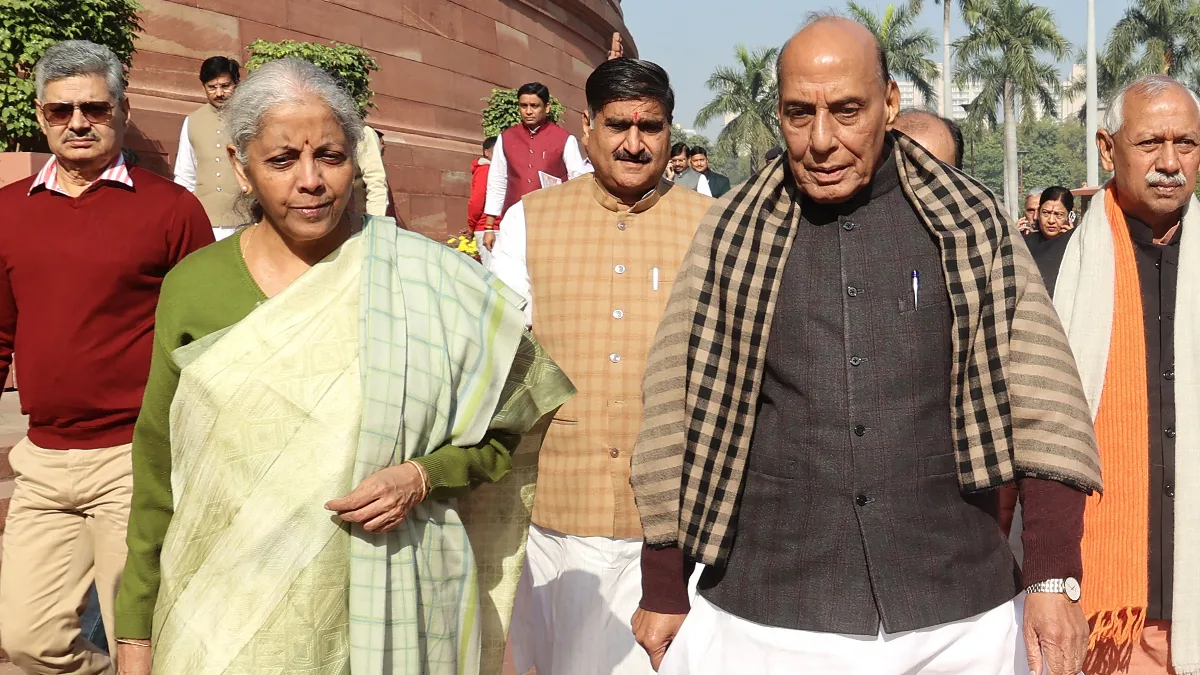
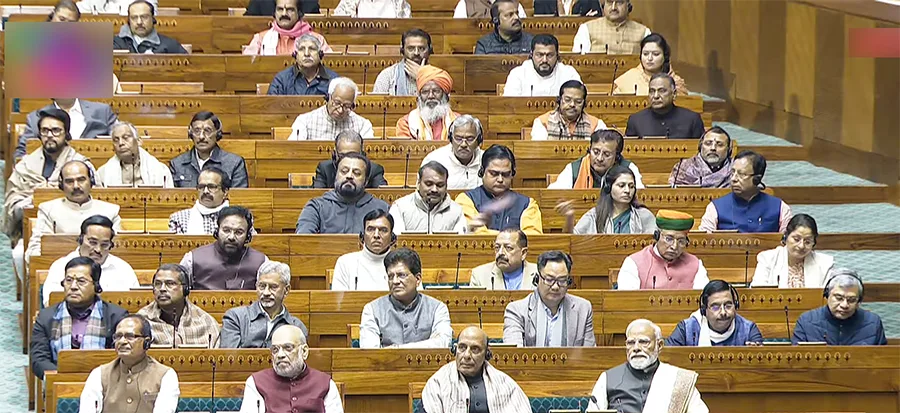
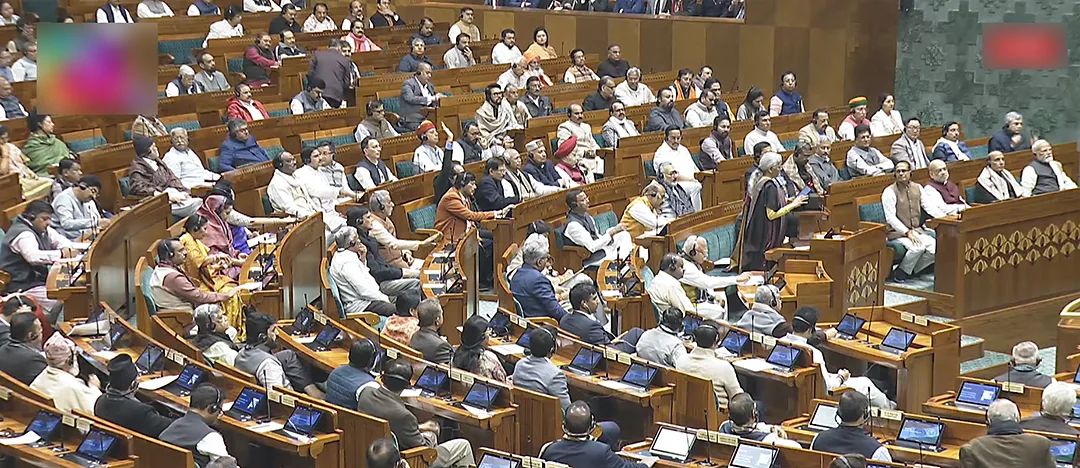
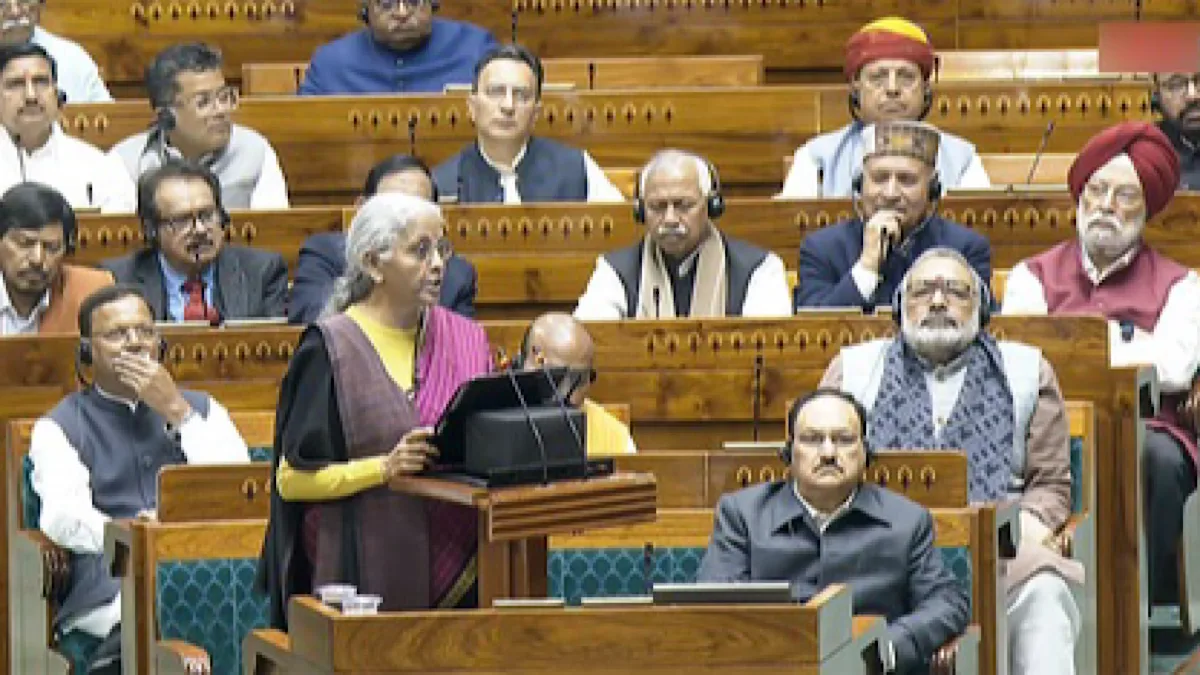
The Union Defence Minister Rajnath Singh was also present in the Lok Sabha during the Union Budget 2026-27 speech delivered by Nirmala Sitharaman. He stated that this budget lives up to the sentiments and expectations of the people.

Rajnath Singh added, “Furthermore, this budget provides a strong foundation for PM Modi’s vision of a self-reliant India and a developed India by 2047, with adequate provisions made for the upliftment of all sections of society. This budget allocates Rs 7.85 lakh crore for the defence sector… This budget, following the historic success of Operation Sindoor, has reinforced our resolve to further strengthen the country’s defence system…. This year, a provision of Rs 2.19 lakh crore has been made for the overall capital expenditure of our armed forces, and the key focus of this budget is the modernisation of our three armed forces. For this, a provision of Rs 1.85 lakh crore has been made… In short, this budget strengthens the balance between security, development, and self-reliance…”

FM pitches simpler, trust-based tax regime with new IT law and sweeping reforms

Finance Minister Nirmala Sitharaman on Sunday unveiled one of the most far-reaching tax reform packages in recent years, signalling a decisive shift towards simplified laws, lower litigation, easier compliance and a stronger alignment of India’s tax system with growth and global competitiveness.

UNI | New Delhi |

Finance Minister Nirmala Sitharaman on Sunday unveiled one of the most far-reaching tax reform packages in recent years, signalling a decisive shift towards simplified laws, lower litigation, easier compliance and a stronger alignment of India’s tax system with growth and global competitiveness.

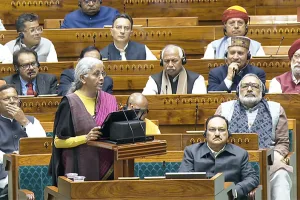
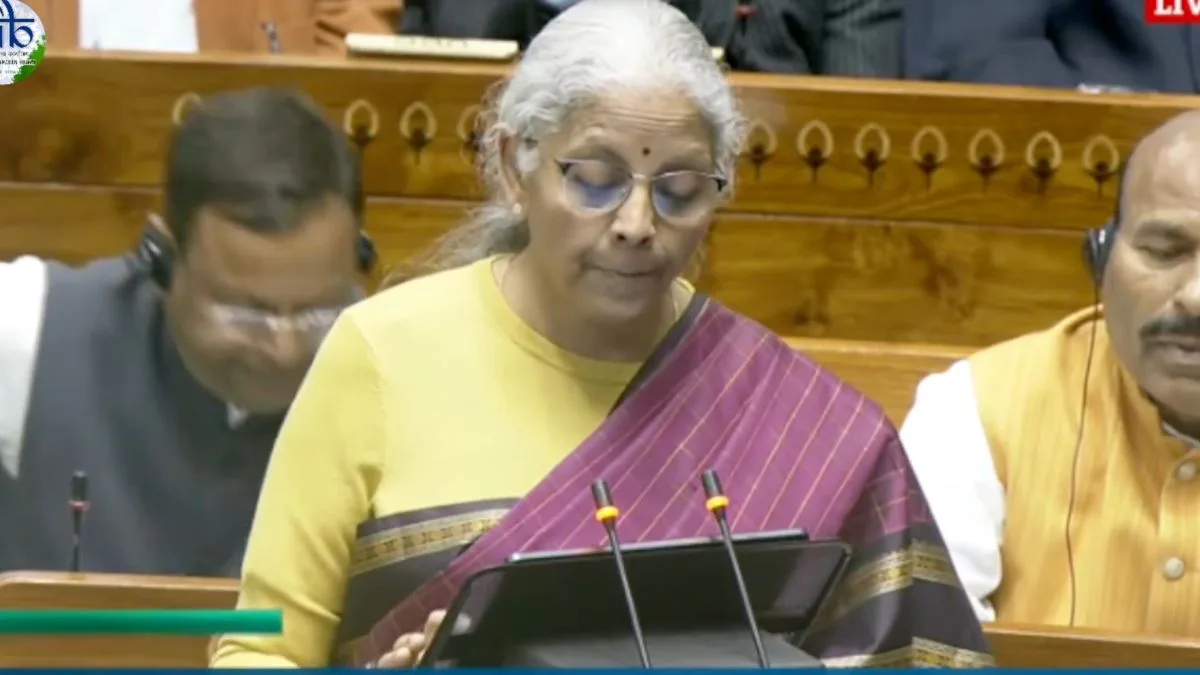
Presenting the Budget for 2026-27 in Parliament on Sunday, Sitharaman said the government’s taxation strategy rests on trust, transparency and technology-driven administration, while balancing revenue needs with ease of living and ease of doing business.
The centrepiece of the direct tax reforms is the replacement of the six-decade-old Income Tax Act. “The comprehensive review of the Income Tax Act, 1961 has been completed in record time and the Income Tax Act, 2025 will come into effect from April 1, 2026,” Sitharaman told Parliament.

She said simplified tax rules and redesigned forms would soon be notified, ensuring that “ordinary citizens can comply without difficulty.”
Several measures were announced to reduce taxpayer hardship. Interest awarded by Motor Accident Claims Tribunals to individuals will be fully exempt from income tax, and TDS on such payments will be removed.

TCS rates on overseas tour packages, education and medical remittances under the Liberalised Remittance Scheme have been sharply reduced to 2 per cent, easing cash flow pressure on families.
To remove ambiguity, manpower supply services will be treated as contractual payments for TDS purposes, attracting lower rates. Small taxpayers will be able to obtain lower or nil TDS certificates through a fully automated, rule-based system without approaching assessing officers.

The government also extended the timeline for revising income tax returns up to March 31 with a nominal fee, while filing deadlines will be staggered to give additional time to non-audit business cases and trusts.
Depositories will now accept Form 15G and 15H centrally, simplifying compliance for investors holding securities across multiple companies. For resident buyers purchasing property from non-residents, TDS will be deposited using PAN-based challans, eliminating the need for TAN.

Addressing long-standing concerns of students, young professionals and relocated NRIs, Sitharaman announced a one-time six-month window to disclose foreign income or assets below a specified threshold.
The scheme allows eligible taxpayers to regularise past omissions by paying due tax and an additional levy, with immunity from prosecution.
“This scheme is intended to address genuine hardships,” she said.
In a major structural change, Minimum Alternate Tax (MAT) will become a final tax from April 1, 2026, with the rate reduced to 14 per cent from 15 per cent.
Accumulated MAT credit up to March 31, 2026 will continue to be available for limited set-off. To curb misuse, buybacks will now be taxed as capital gains for all shareholders, with promoters paying an additional levy.

TCS rates on the sale of specific goods such as scrap, minerals and alcoholic liquor have been rationalised to 2 per cent, while securities transaction tax on futures and options has been raised to curb excessive speculation.
Turning to indirect taxes, Sitharaman said, “My proposals for Customs and Central Excise aim to further simplify the tariff structure, support domestic manufacturing, promote export competitiveness, and correct inversion in duty.”

As part of tariff rationalisation, long-standing customs duty exemptions on items now manufactured domestically or with negligible imports will be phased out.
Effective rates of duty will be incorporated directly into tariff schedules to reduce classification disputes. Export-oriented sectors received targeted support in the budget.
The limit for duty-free imports of inputs used in seafood processing for export has been increased to 3 per cent of previous year export turnover.
Duty-free input benefits available to leather and synthetic footwear exports have been extended to shoe uppers, while the export obligation period for leather and textile exporters has been doubled to one year.

To support energy transition, basic customs duty exemptions on capital goods for manufacturing lithium-ion cells have been extended to battery energy storage systems. Imports of sodium antimonate for solar glass manufacturing will be exempted, while duty exemptions for nuclear power projects have been extended till 2035 for all plants irrespective of capacity.
Critical mineral processing, civil and defence aviation, and consumer electronics manufacturing also received duty relief to strengthen domestic value addition.
Components for civilian and defence aircraft manufacturing and maintenance will be exempt from customs duty, while specified parts used in microwave ovens will receive similar relief.

In a green push, the value of biogas used in blended CNG will be excluded while calculating central excise duty, lowering costs and encouraging cleaner fuel adoption.
Customs procedures will see significant modernisation, with faster clearances for low-risk goods, expansion of AI-based container scanning and rollout of an integrated customs digital platform.

Duty-free treatment has been extended to fish caught by Indian vessels beyond territorial waters, while courier export value caps have been removed to support small exporters and e-commerce sellers.

For international travellers, baggage rules will be revised to reflect present-day travel realities, increasing duty-free allowances and providing greater clarity.
Taken together, the taxation proposals reflect a decisive attempt to modernise India’s tax system, reduce friction and align fiscal policy with growth ambitions.
As Sitharaman concluded, the thrust of the reforms is to move towards a predictable, technology-driven and taxpayer-friendly regime that supports domestic manufacturing, exports and investment while making compliance simpler for citizens and businesses alike.

Union Budget 2026 Highlights: High-speed rail corridors, tax reform, boost for India-based data centres

Budget 2026 highlights include income tax changes, higher infrastructure spending, manufacturing incentives and people-focused schemes, offering a clear snapshot of the government’s priorities for the year ahead.

Statesman News Service | Mumbai |

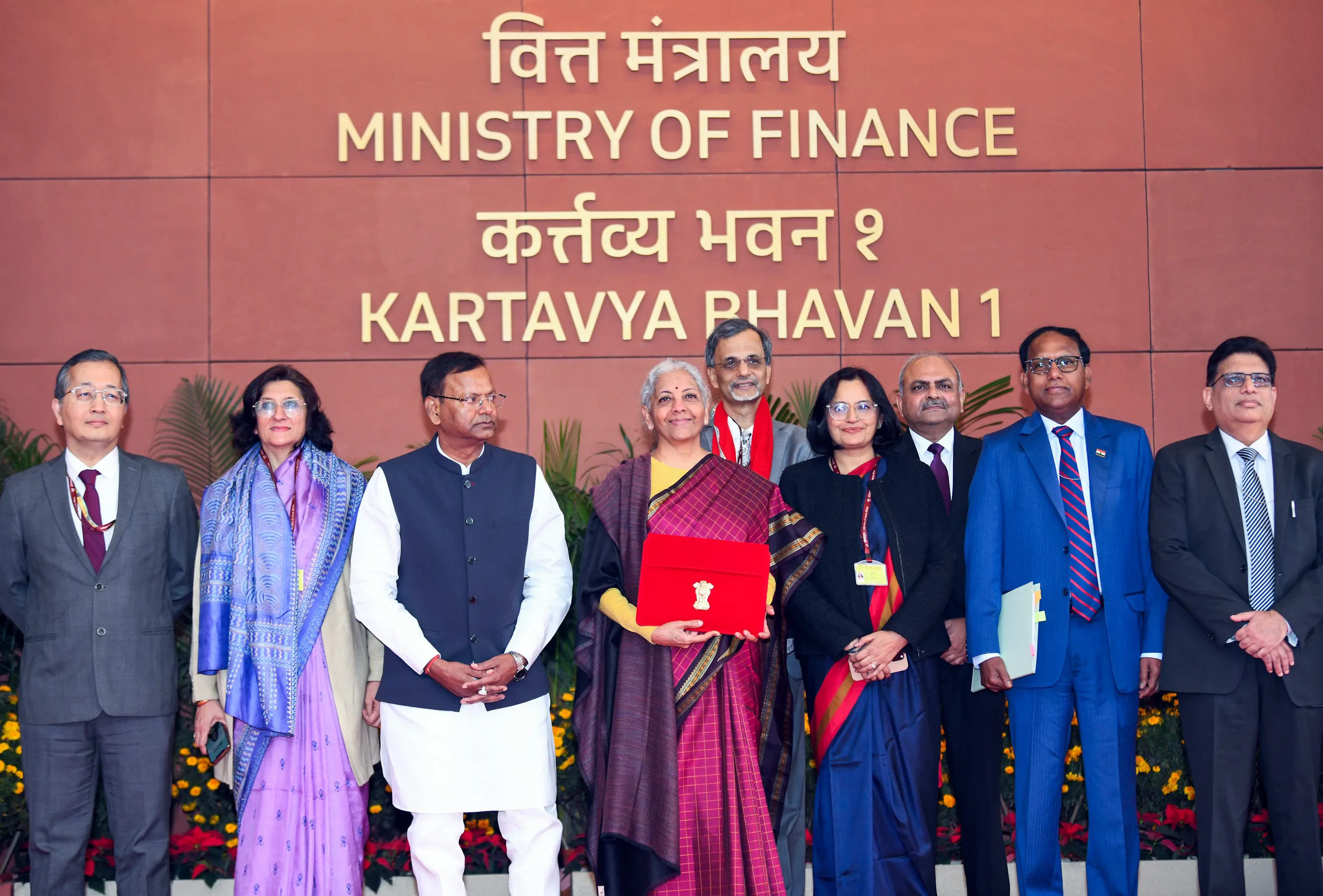
Finance Minister Nirmala Sitharaman on Sunday presented the Union Budget for 2026–27 in Parliament. It is the first Budget prepared at Kartavya Bhawan. And it signals a clear intent: steady growth, simpler rules, and wider participation in India’s development journey.

The Budget is built around three broad ‘kartavayas‘ (duties) the government says will guide its choices this year. The first is to keep the economy growing despite an uncertain global backdrop. The second is to invest in people and equip them to be active participants in that growth. The third is to ensure that development is not uneven, that regions, communities, and sectors are not left behind.

At the same time, the government has signalled that it intends to hold the fiscal line, even as it continues to spend heavily on infrastructure and long-term reforms.

Budget 2026 at a glance: Numbers, priorities and fiscal position

For 2026–27, the government has set total expenditure at Rs 53.5 lakh crore. Non-debt receipts are estimated at Rs 36.5 lakh crore, with the Centre’s net tax collections projected at Rs 28.7 lakh crore.

The fiscal deficit is estimated at 4.3 per cent of GDP, marginally lower than the revised estimate of 4.4 per cent for 2025–26. The debt-to-GDP ratio is expected to ease to 55.6 per cent. Capital expenditure in the revised estimates stands close to Rs 11 lakh crore, reinforcing the government’s investment-led growth strategy.

Key highlights of Union Budget 2026–27

Manufacturing and industry

  • A Rs 10,000 crore Biopharma SHAKTI mission over five years to position India as a global manufacturing hub.
  • Three new pharmaceutical education institutes and upgrades to seven existing ones.
  • Launch of India Semiconductor Mission 2.0 to strengthen equipment, materials and full-stack Indian IP.
  • Electronics components manufacturing outlay raised to Rs 40,000 crore.
  • Rare earth corridors to support mineral-rich states such as Odisha, Andhra Pradesh and Tamil Nadu.
  • Three new chemical parks to be set up through a challenge-based model.

Infrastructure and logistics

  • Public capital expenditure raised to Rs 12.2 lakh crore in 2026–27.
  • An Infrastructure Risk Guarantee Fund to reduce private sector risk during construction.
  • New freight corridors linking eastern and western India.
  • Twenty new national waterways to be made operational over five years.
  • Coastal cargo incentives to increase inland and coastal shipping share to 12 per cent by 2047.
  • Support for seaplane manufacturing and operations to improve regional connectivity.

Cities and mobility

  • Seven high-speed rail corridors announced, including Mumbai–Pune, Delhi–Varanasi and Chennai–Bengaluru.
  • Rs 5,000 crore over five years for each City Economic Region, linked to reforms and outcomes.

People, skills and services

  • A national committee to bridge education, employment and enterprise, with a focus on services.
  • Expansion of allied health education to add one lakh professionals over five years.
  • Five regional medical hubs to boost medical tourism.
  • New institutes for Ayurveda and expansion of veterinary education.
  • Creative economy push through AVGC labs in schools and colleges.
  • One girls’ hostel planned in every district through viability support.

Farmers and rural economy

  • Integrated development of 500 reservoirs and Amrit Sarovars.
  • Focus on high-value crops like coconut, cocoa and cashew.
  • Launch of Bharat-VISTAAR, a multilingual AI platform integrating agri-data and advisory systems.

Mental health and inclusion

  • A second NIMHANS to be set up in north India.
  • Upgrades to mental health institutes in Ranchi and Tezpur.
  • Skill programmes for Divyangjan in IT, hospitality and creative sectors.

Direct tax reforms

  • From April 2026, a new Income Tax Act will come into force. The government says the rules will be simpler, and the forms easier to understand and file for ordinary taxpayers.
  • In a relief for accident victims, any interest awarded by motor accident claims tribunals will no longer be taxed. The full amount will go to the individual, without deductions.
  • For those sending money abroad, the government has cut tax collection at source rates.
  • Overseas tour packages, as well as remittances for education and medical treatment, will now attract lower TCS, easing the immediate cash burden.
  • Automated system for nil or lower TDS certificates for small taxpayers.
  • Extended timelines for revising returns and staggered filing schedules.
  • Decriminalisation of select compliance defaults and rationalised penalties.

Also Read: Budget 2026–27: What changes for accident compensation, foreign travel and education costs

Boost for IT and global investment

  • IT, ITeS and contract R&D to be treated under one category with a common safe harbour margin.
  • Higher thresholds and faster pricing agreements for IT services.
  • Tax holidays for foreign cloud service providers using Indian data centres.
  • MAT exemption for non-residents paying tax on a presumptive basis.

Indirect tax and customs reforms

  • Duty exemptions for critical minerals, clean energy, nuclear projects and defence aviation.
  • Import duties on goods meant for personal use have been cut, and a range of medicines will no longer attract customs duty.
  • At the border, the government wants clearances to move faster and with fewer surprises, using digital systems and risk-based AI checks instead of routine physical inspections.
  • For small exporters, particularly those selling online, the scrapping of the value cap on courier exports could make it simpler to ship products abroad.
  • Customs duty relief has been announced for 17 medicines, including drugs used in cancer treatment, aimed at lowering costs for patients and improving access to critical therapies.

This Budget stays away from splashy giveaways. Instead, it places its faith in slower, structural changes, such as simpler taxes, sustained infrastructure spending, stronger manufacturing capacity and steady investment in people.

Budget: Govt to push nuclear energy, critical minerals to power India’s energy transition

Finance Minister Nirmala Sitharaman on Sunday announced a series of measures to strengthen India’s nuclear energy programme and secure access to critical minerals, outlining them as key pillars of the country’s long-term energy transition and manufacturing strategy in the union Budget for 2026-27.

UNI | New Delhi |

Finance Minister Nirmala Sitharaman on Sunday announced a series of measures to strengthen India’s nuclear energy programme and secure access to critical minerals, outlining them as key pillars of the country’s long-term energy transition and manufacturing strategy in the union Budget for 2026-27.

These include amendments to the Atomic Energy Act and the Civil Liability for Nuclear Damage Act, duty exemptions on critical mineral imports, a policy on recovery of tailings from critical mineral mines, and a Rs 20,000 crore Nuclear Energy Mission to develop Small Modular Reactors.

In her budget speech, Sitharaman said the government will introduce a policy for the recovery of critical minerals from mine tailings, an initiative aimed at improving resource efficiency and reducing import dependence.
Recalling measures announced in the July 2024 Budget, the finance minister noted that basic customs duty (BCD) had been fully exempted on 25 critical minerals not available domestically, while duties on two other minerals were reduced to boost their processing, particularly by micro, small and medium enterprises (MSMEs). Building on this, she announced a fresh round of exemptions.
“I now propose to fully exempt cobalt powder and waste, scrap of lithium-ion batteries, lead, zinc and 12 more critical minerals,” Sitharaman said. The move, she added, would help secure the availability of key inputs for domestic manufacturing.
On the energy front, the finance minister underscored the importance of nuclear power in India’s clean energy roadmap. She said the development of at least 100 gigawatts (GW) of nuclear energy capacity by 2047 is essential to meet the country’s energy transition goals.
To encourage private sector participation, Sitharaman announced that the government will take up amendments to the Atomic Energy Act and the Civil Liability for Nuclear Damage Act. These changes are expected to facilitate greater investment and collaboration in the nuclear sector.

The budget also proposed the launch of a Nuclear Energy Mission focused on research and development of Small Modular Reactors (SMRs), with an outlay of rs 20,000 crore. Under the mission, at least five indigenously developed SMRs are targeted to be operational by 2033.
The combined push on critical minerals and nuclear energy reflects the government’s strategy to strengthen supply chains, support clean energy goals and position India as a global manufacturing hub in the coming decades.

Foreign individuals can now buy Indian stocks directly: Sitharaman

In a landmark policy shift announced during the union Budget 2026 presentation, Finance Minister Nirmala Sitharaman on Sunday said that individual persons residing outside India will be permitted to invest directly in Indian equities through the Portfolio Investment Scheme.

UNI | New Delhi |

In a landmark policy shift announced during the union Budget 2026 presentation, Finance Minister Nirmala Sitharaman on Sunday said that individual persons residing outside India will be permitted to invest directly in Indian equities through the Portfolio Investment Scheme.

The individual investment limit will be raised from 5 percent to 10 percent, while the aggregate cap for all such foreign individual investors is proposed to increase from 10 percent to 24 percent. This move is aimed at broadening foreign participation in Indian capital markets and deepening investment engagement with global investors.

Sitharaman said the changes would enable serious foreign individual investors to take more meaningful stakes in Indian companies, potentially improving price discovery, deepening shareholding, and supporting long-term capital formation in the country.
Analysts said the measure signals India’s intent to integrate domestic markets more closely with global capital flows and could complement other structural reforms announced in the budget.

Experts and government insiders indicated that the move is part of a broader strategy to strengthen market infrastructure. A market-making framework for corporate bonds and a review of the Foreign Exchange Management framework are expected to further enhance liquidity and investor confidence.

Market experts welcomed the move but noted it comes amid sustained foreign investor outflows from Indian equities, driven by global uncertainties and high valuations. Domestic institutional investors have meanwhile expanded their shareholding base, reflecting rising participation by Indian investors even as foreign involvement has moderated.

While easing portfolio investment limits could restore confidence among overseas investors, some analysts cautioned that structural tax issues, including India’s source-based capital gains taxation framework, may continue to deter certain foreign capital.
The Budget 2026 announcement is seen as a key step in attracting long-term foreign investment while balancing fiscal prudence and financial ecosystem reforms.

Photo

  • img
  • img
  • img
  • img
  • img
  • img
  • img
  • img
  • img
  • img
  • img
  • img
  • img
  • img

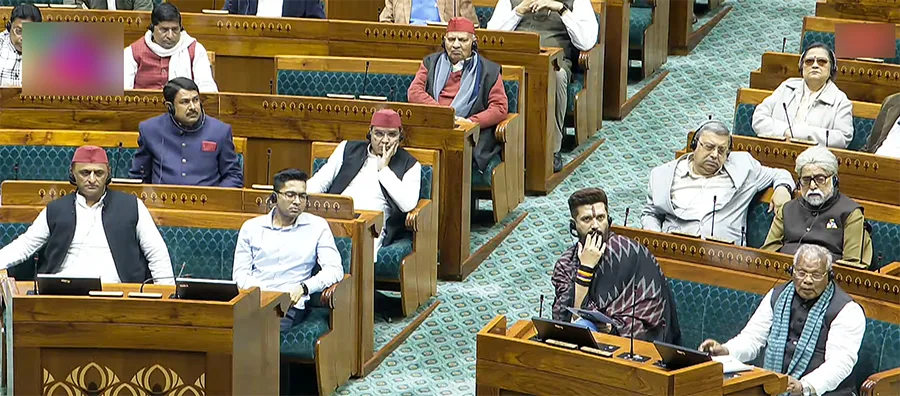
Union Budget 2026: Glimpses from Parliament

Union Budget 2026: Glimpses from Parliament

MORE Photo STORIES

Sitharaman sets FY27 Capex at Rs 12.2 lakh crore, boosts infra drive

Finance Minister Nirmala Sitharaman, in her ninth Budget speech, announced a sharp increase in capital expenditure for the Financial Year 2027, raising it to Rs 12.2 lakh crore, a figure that would have seemed aspirational a decade ago, when public capital expenditure barely crossed Rs 2 lakh crore.

UNI | New Delhi |

Finance Minister Nirmala Sitharaman, in her ninth Budget speech, announced a sharp increase in capital expenditure for the Financial Year 2027, raising it to Rs 12.2 lakh crore, a figure that would have seemed aspirational a decade ago, when public capital expenditure barely crossed Rs 2 lakh crore.

Capital expenditure, the lifeblood of long-term economic infrastructure including roads, railways, ports, power projects, urban infrastructure—is not merely a number on a sheet. It determines the pace at which jobs are created, productivity rises, and economic growth takes root. Sitharaman noted that this allocation has jumped from Rs 11.21 lakh crore in the previous fiscal to Rs 12.2 lakh crore, claiming that the government seeks to “continue the momentum.”

Sectors such as steel, cement, power and transportation are expected to see immediate benefits, analysts say. Divam Sharma, Co-Founder of Green Portfolio PMS, added that “robust double-digit growth signals a strong policy focus on infrastructure development.” Yet, as anyone who has tracked India’s infrastructure cycles knows, announcements are easier than execution.
Sitharaman emphasised Tier II and Tier III cities, promising continued investment in urban centres with populations over 5 lakh. Over the past decade, instruments like Infrastructure Investment Trusts and Real Estate Investment Trusts have been introduced to fund these initiatives, but whether they have transformed the ground reality is still a question for auditors and commuters alike.

Beyond roads and rails, the Finance Minister announced rare earth corridors linking Odisha, Kerala, Andhra Pradesh, and Tamil Nadu, a strategic nod to electric vehicles, renewable energy, and defence technology. The intent is clear: reduce import dependence and position India as a manufacturing hub in critical sectors.
Market watchers pointed out that the fiscal roadmap for FY27 is expected to balance the capex push with fiscal prudence, with projections suggesting the fiscal deficit could be maintained around 4.2‑4.4 per cent of GDP as the government seeks to gradually consolidate public finances.

Rating agencies and bankers have emphasised the importance of continued high public investment to crowd in private sector activity, even as some caution that execution challenges in project implementation remain.
The broader budget presentation also outlined plans to support strategic initiatives such as dedicated freight corridors and other major infrastructure programmes, signalling that capital investment will remain at the forefront of the government’s policy priorities in the coming year.

Economists said the FY27 capex push comes against the backdrop of efforts to enhance India’s competitiveness, improve logistics efficiency and accelerate project implementation timelines, with increased allocations likely to bolster long-term economic growth.
Sitharaman also stressed technology, artificial intelligence, and a strong financial sector as tools to sustain macroeconomic stability. Yet, the question lingers—can these lofty goals match execution capacity on the ground? Analysts remain cautiously optimistic, noting that capex alone cannot substitute for systemic reforms and timely project delivery.
In short, the Budget projects ambition and scale. Whether the promise of Rs 12.2 lakh crore translates into tangible change, or remains another line in the annals of Budget speeches, will unfold in the months to come.

Budget 2026: Everything you need to know about Buddhist circuits and green tourism in the North-East

Budget 2026 lays out plans to develop Buddhist circuits across six North-Eastern states, boosting pilgrimage tourism and preserving heritage. Learn how 4,000 electric buses will make travel greener and easier. Read the full explainer now.

Statesman News Service | New Delhi |

Hold onto your travel diaries because India’s North-East is about to get major makeover! In Budget 2026, Finance Minister Nirmala Sitharaman unveiled a plan that is part spiritual, part green, 100% exciting for anyone who loves culture, travel, Instagram-worthy landscapes.

The North-East long celebrated for its serene mountains, colourful festivals, deep-rooted Buddhist traditions is being positioned as India’s next big pilgrimage hotspot.

Also Read: Union Budget 2026-27: Animation, visual effects, gaming, comics push targets 2 million jobs in Orange Economy | What this means

The region is getting a full-blown Buddhist tourism upgrade spanning six states: Arunachal Pradesh, Sikkim, Assam, Manipur, Mizoram, Tripura.

About the Buddhist circuit

The headline grabber? A new scheme to develop Buddhist circuits across these North-Eastern states. Sitharaman described the region as a “civilisational confluence of Theravada and Mahayana, or Vajrayana, traditions”.

The plan isn’t just about pretty temples for photo ops (though there will be plenty). It’s about creating holistic pilgrimage experience.

Here’s what’s on the menu:

– Preservation of temples and monasteries

– Pilgrimage interpretation centres

– Improved connectivity with better access roads and travel infrastructure

– Upgraded amenities for visitors, ensuring comfortable stays and smooth travel throughout the year.

4,000 electric buses: Green wheels on the east

But wait. There is more! Sitharaman didn’t stop at temples and monasteries. The North-East is also getting 4,000 electric buses aimed at making travel cleaner, quieter, and more efficient.

Think of it as the eco-friendly twist on a pilgrimage. Reduced emissions at heritage and eco-sensitive zones. Less traffic congestion at high-footfall tourist spots. Smoother last-mile connectivity helping tourists reach even the hidden gems without burning fossil fuels.

Beyond the North-East: Tourism gets a broader push

Budget 2026 isn’t just focusing on monasteries and electric buses. Sitharaman also spoke about integrated tourism development across the country, including:

Five new tourism destinations in five Purvodaya states, part of a larger plan to energize regional economies.
East Coast Industrial Corridor, with Durgapur, West Bengal, acting as a well-connected node linking trade, travel, and tourism.

Tourism’s role in India’s economy

The news comes on the heels of the Economic Survey 2025-26, which highlighted tourism’s contribution of 5.22% to India’s GDP in FY24, almost back to pre-pandemic levels. But the survey also issued a friendly warning: the sector’s full potential depends on how effectively states and local authorities implement these plans.

Also Read: Budget 2026-27: Customs duty relief for cancer, diabetes, rare disease medicines | What this means for patients

Sitharaman offers tax holiday until 2047 for foreign cloud companies

Finance Minister Nirmala Sitharaman on Sunday outlined a landmark tax incentive for global technology firms in her presentation of the union Budget 2026‑27, aimed at positioning India as a premier global hub for cloud computing and digital infrastructure.

UNI | New Delhi |

Finance Minister Nirmala Sitharaman on Sunday outlined a landmark tax incentive for global technology firms in her presentation of the union Budget 2026‑27, aimed at positioning India as a premier global hub for cloud computing and digital infrastructure.

Under the proposals, the government will grant a tax holiday until the year 2047 to foreign companies that provide cloud services globally from data centres based in India, marking one of the most significant overseas investment incentives in recent memory. This benefit will apply on the condition that services are routed through Indian reseller entities, encouraging local integration of global technology operations.

In addition to the extended tax break, the Budget proposes a 15 per cent safe harbour provision on costs for cases where foreign cloud service providers co‑provide data services with related Indian entities. This mechanism is expected to reduce tax disputes and simplify compliance for multinational groups operating through Indian affiliates.
Industry associations such as Nasscom had earlier called for clearer tax guidelines and a more supportive regime for cloud and data infrastructure to spur investment and innovation. Their pre‑Budget advocacy highlighted the need for regulatory clarity, especially regarding the taxation of foreign cloud firms leveraging Indian data centres, to build confidence among global investors.

Policy experts and tax advisors have also underlined broader challenges in the sector. They note that uncertainties around permanent establishment (PE) and significant economic presence (SEP) rules have previously deterred some foreign players, and have urged clarification to align international tax practices with India’s digital growth ambitions.
Market analysts say the tax holiday could significantly enhance India’s attractiveness as a destination for hyperscale cloud investments and support the rapid expansion of the domestic data centre ecosystem, which industry forecasts suggest will grow strongly in the coming years. Government moves to foster data infrastructure investment come amid wider global competition for cloud capacity and digital innovation.

Union Budget 2026-27: Nirmala Sitharaman highlights Aatmanirbharta, Growth and reforms

Presenting the union Budget 2026-27, union Finance Minister Nirmala Sitharaman said that keeping “Aatmanirbharta” as a “lodestar”, India has built “domestic manufacturing capacity”, strengthened “energy security”, and reduced “critical import dependencies”.

UNI | New Delhi |

Presenting the union Budget 2026-27, union Finance Minister Nirmala Sitharaman said that keeping “Aatmanirbharta” as a “lodestar”, India has built “domestic manufacturing capacity”, strengthened “energy security”, and reduced “critical import dependencies”.

Acknowledging that the country faces an external environment where “trade” and “multilateralism” are under pressure, and access to resources and supply chains is disrupted, she noted that new technologies are transforming production systems while increasing demands on water, energy, and critical minerals.

She highlighted that India will continue to take confident steps towards a Viksit Bharat, balancing ambition with inclusion, while remaining deeply integrated with global markets, exporting more, and attracting “stable long-term investment”.

She said, “Since we assumed office 12 years ago, the country’s economic trajectory has been marked by “stability”, “fiscal discipline’, “sustained growth’, and “moderate inflation”. This is the result of “conscious choices” we have made even in times of “uncertainty” and “disruptions”.”

Union FM Sitharaman added, “Keeping “Aatmanirbharta” as a “lodestar”, we have built “domestic manufacturing capacity”, “energy security” and reduced “critical import dependencies”. Simultaneously, we have ensured that citizens benefit from every action of the Government, undertaking reforms to support “employment generation”, “agricultural productivity”, “household purchasing power”, and “universal services” to people. These measures have delivered a high growth rate of around “7%” and helped us make substantial strides in “poverty reduction” and improvement in the “lives of our people”.”

With “Aatmanirbharta” as a guide, India boosts “manufacturing”, “energy security”, “jobs”, and “growth”, achieving “7% GDP growth” and “poverty reduction”.

She further said, “We have pursued far-reaching structural reforms, maintaining fiscal prudence and monetary stability”, while continuing a strong thrust on “public investment”, keeping “self-reliance” as a “pillar”. We have built “domestic manufacturing capacity, energy security, and reduced “critical import dependencies.”

To accelerate and sustain economic growth, Sitharaman outlined interventions in six key areas that includes scaling up manufacturing in 7 strategic sectors, rejuvenating legacy industrial sectors, creating champion MSMEs, delivering a push for infra while ensuring long-term security and stability, and developing city economic regions.

She said that given that this is the first Budget prepared in Kartavya Bhavan, the government is inspired by three kartavyas.

First kartavya is to accelerate and sustain economic growth by enhancing productivity and competitiveness and building resilience to volatile global dynamics.

Second kartavya is to fulfill the aspirations of our people and build their capacity, making them strong partners in India’s path to prosperity.

Third kartavya, aligned with the vision of Sabka Saath Sabka Vikas, is to ensure that every family, community, region and sector has access to resources, amenities and opportunities for meaningful participation.”

Union Budget: Rs 20,000 cr for Carbon capture, new initiatives to boost Infrastructure, strategic manufacturing

The union Finance Minister proposed an outlay of Rs 20,000 crore over the next five years for Carbon Capture Utilization and Storage (CCUS) technologies to scale up and achieve higher readiness levels in end-use applications.

UNI | New Delhi |

The union Finance Minister proposed an outlay of Rs 20,000 crore over the next five years for Carbon Capture Utilization and Storage (CCUS) technologies to scale up and achieve higher readiness levels in end-use applications.

Presenting the proposal during her ninth consecutive Budget speech in Parliament, Sitharaman said that in line with several initiatives for large-scale enhancement of public infrastructure, the Government will continue to focus on developing infrastructure in cities with populations over five lakh, particularly Tier II and Tier III cities, which have expanded to become important growth centres.
To further scale up manufacturing in strategic and frontier sectors, the Finance Minister also proposed the launch of Biopharma SHAKTI, India Semiconductor Mission (ISM) 2.0, the Electronics Components Manufacturing Scheme, and dedicated Rare Earth Corridors in Odisha and Kerala.

Sitharaman announced the creation of a rare earth minerals corridor covering Tamil Nadu, Odisha, Andhra Pradesh and Kerala, underscoring the strategic importance of strengthening India’s critical minerals supply chain and building domestic capabilities in high-technology sectors.

Sitharaman said the corridor would focus on exploration, processing and value addition of rare earth elements, which are essential for electronics, renewable energy, electric mobility and defence manufacturing.
The announcement comes amid stepped-up efforts by India to strengthen its rare earth resources and build a complete domestic value chain to reduce dependence on imports.
The experts say that India’s growing demand for rare earth elements is closely linked to the rise of new technologies, noting their critical role in magnets used for electric vehicles, wind turbines and advanced manufacturing.

They also said that the import dependence has become increasingly difficult due to global supply constraints and export restrictions by major producing countries, highlighting the need to develop the entire value chain domestically.
In this context, the central government recently approved the Scheme to Promote Manufacturing of Sintered Rare Earth Permanent Magnets with a financial outlay of ₹7,280 crore. The scheme aims to establish 6,000 metric tonnes per annum of integrated rare earth permanent magnet manufacturing capacity in India, covering the full chain from rare earth oxides to finished magnets.

Officials said the initiative is intended to enhance self-reliance in a critical input for electric vehicles, renewable energy systems, electronics, aerospace and defence, and to position India as a key player in the global permanent magnet market. The scheme also aligns with national objectives such as Atmanirbhar Bharat, resilient supply chains for strategic sectors and the Net Zero 2070 vision.

Presenting the Budget in Lok Sabha, Sitharaman said the government’s core strategy continues to be anchored in Aatmanirbharta, with large-scale public investment and structural reforms driving growth. “Keeping Aatmanirbharta as a lodestar, we have built domestic manufacturing capacity, energy security and reduced critical import dependencies,” she said.

Making a major infrastructure announcement, the Finance Minister said the government will build seven high-speed corridors as part of its plan to accelerate logistics, manufacturing and regional development. “The main focus is to develop economic cities,” Sitharaman said, underlining the government’s intent to cluster industry, infrastructure and urbanisation for faster growth.

Budget 2026–27: What changes for accident compensation, foreign travel and education costs

Union Budget 2026-27 proposes tax exemptions on accident compensation, lower overseas levies and clearer rules aimed at easing compliance for individual taxpayers.

Statesman News Service | Mumbai |

Union Finance Minister Nirmala Sitharaman on Sunday announced a set of tax changes in the Union Budget 2026-27 that seek to make the system easier to navigate and lighter on individual taxpayers.

Presenting the Budget in Parliament, Sitharaman said the government’s priority is to simplify income tax rules and reduce friction for citizens. The proposals focus on personal relief, overseas spending, and clearer compliance norms.

Also Read: Union Budget LIVE: 7 high-speed rail corridors, customs duty exemption for cancer drugs, tax holiday for India-based data centres

Relief for accident victims and overseas spending

One of the most significant changes concerns compensation awarded by Motor Accident Claims Tribunals.

Sitharaman announced that interest paid to a natural person on such compensation will no longer attract income tax. Any tax deduction at source linked to this interest will also be removed.

“Any interest awarded by the Motor Accident Claims Tribunal to a natural person will be exempt from income tax and any TDS from this account will be done away with,” she said.

The move ensures that accident victims and their families receive the full benefit of compensation, without deductions reducing the final amount.

The Budget also lowers the tax burden on foreign travel. The tax collection at source on overseas tour programme packages will be reduced to 2 per cent. At present, rates range between 5 per cent and 20 per cent.

The Finance Minister said the reduced rate will apply without any spending threshold, making the process simpler for travellers.

Families sending money abroad for education or medical treatment will also see relief. Under the Liberalised Remittance Scheme, the TCS rate for these purposes will be brought down from 5 per cent to 2 per cent.

“I propose to reduce TCS rate for pursuing education and for medical purposes under the Liberalized Remittance Scheme, popularly known as LRS,” Sitharaman said.

Clearer rules, immunity for small foreign assets

The Budget also addresses long-standing confusion around tax deduction at source on manpower services.

Sitharaman said such services will be clearly included under payments to contractors for TDS purposes. The applicable rate will be either 1 per cent or 2 per cent, depending on the case. The aim is to reduce disputes and provide certainty to businesses.

In another relief measure, small taxpayers with limited foreign holdings have been given protection from prosecution.

Individuals who failed to disclose non-immovable foreign assets valued at less than Rs 20 lakh will be granted immunity. The provision will apply retrospectively from October 1, 2024.

The Finance Minister also said the Income Tax Act, 2025, will take effect from April 1, 2026. Simpler rules and new tax forms will follow, with time for taxpayers to get used to the changes.

IND vs PAK U19 World Cup: India beat Pakistan by 58 runs, qualify for U19 World Cup Semis

Pakistan won the toss and elected to bowl first. The winner is likely to seal the final semi-final berth alongside Australia, England and Afghanistan.

Neha Buswal | New Delhi |

India U19 registered a commanding 58-run victory over Pakistan U19 in their crucial Super Six clash at the ICC Under-19 World Cup 2026 at the Queens Sports Club, Bulawayo, on Sunday to seal a semi-final spot, while Pakistan were eliminated from the tournament.

After Pakistan captain Farhan Yousaf won the toss and elected to bowl first, India were bowled out for 252 in 49.5 overs, powered by Vedant Trivedi’s fighting 68 off 98 balls and a vital late push through an eighth-wicket stand of 50 between Kanishk Chouhan (35 off 29) and Khilan Patel (21 off 15).

India began steadily with openers Vaibhav Sooryavanshi and Aaron George adding 24/0 in three overs, before Mohammad Sayyam provided the breakthrough by dismissing Sooryavanshi for 30 off 22 balls (five fours, one six) in the eighth over, and then struck again in the same over to remove skipper Ayush Mhatre for a two-ball duck, leaving India reeling at 47/2.

The slide continued as pacer Abdul Subhan cleaned up George for 16 off 25 balls, with India reaching 49/3 after 10 overs. Trivedi then rebuilt the innings alongside Vihaan Malhotra (21 off 43) as India crawled back to 85/3 by the 17th over and 94/3 in 20 overs, before Ahmed Hussain broke their 62-run partnership by dismissing Malhotra in the 24th over.

Trivedi reached his fifty in 74 balls as India moved to 140/4 in 30 overs, but Pakistan kept chipping away, Ali Hassan Baloch removed Abhigyan Kundu (16 off 27), and Momin Qamar dismissed Trivedi in the 41st over to stall momentum again.

India crossed the 200-run mark in the 44th over, and the late stand between Chouhan and Khilan ensured the total went past 250. For Pakistan, Abdul Subhan (3/33) was the standout, while Sayyam (2/69), Ali Hassan Baloch (1/19), Ahmed Hussain (1/33), Momin Qamar (1/41) and Ali Raza (1/56) also picked up wickets.

Chasing 253, Pakistan were bowled out for 194 in 48.2 overs, with Usman Khan (66 off 92 balls, seven fours) and wicketkeeper-batter Hamza Zahoor (42 off 49 balls, eight fours) fighting a losing battle.

India’s bowling attack delivered a clinical effort as captain Ayush Mhatre (3/21) and Khilan Patel (3/35) claimed three wickets each, while RS Ambrish (1/26), Henil Patel (1/30), Kanishk Chouhan (1/30) and Vihaan Malhotra (1/15) chipped in with a wicket apiece. Kanishk Chouhan was named Player of the Match.

India U19 vs Pakistan U19: Toss Update

Toss: Pakistan U19 won the toss
Decision: Elected to bowl first

At the toss, Indian captain Ayush Mhatre said the team is confident and ready to bat first, announcing that Deepesh Devendran replaces Udhav Mohan in the playing 11.

“We were looking to bat first. Boys are doing really well. We are confident enough. The boys are playing really well. It’s a sunny day. First three matches, it was raining, there was some difficulties. Last two matches, good weather and it’s really helped us. One change. Udhav Mohan misses out, Deepesh comes in,” Mhatre said at the toss.

Farhan Yousaf said at the toss:
“Slight moisture, our bowling department will do well. It’s a new ground, we’ve prepared well. Not much difference in the two venues. Bowlers and fielders have done well. I believe in my unit. First focus is to play a good game, not worry about margins. One change: Ali Hassan in, Shayan out,” said Pakistan skipper Farhan Yousaf.


India U19 vs Pakistan U19 Match Details

Tournament: ICC Under-19 World Cup 2026 (Super Six – Match 12)
Match: India U19 vs Pakistan U19
Venue: Queens Sports Club, Bulawayo, Zimbabwe
Date: February 1, 2026
Start Time: 1:00 PM IST (9:30 AM local time)

Where to Watch India U19 vs Pakistan U19

Live Streaming: ICC’s official digital platforms / broadcasters (as per region)
Live Updates: Available on sports websites and live score platforms

India U19 vs Pakistan U19 World Cup:  Playing XI

India U19 XI

Ayush Mhatre (c), Vaibhav Sooryavanshi, Abhigyan Kundu (wk), Vihaan Malhotra, Aaron George, Vedant Trivedi, Kanishk Chouhan, RS Ambrish, Khilan Patel, Henil Patel, Udhav Mohan

Pakistan U19 XI

Farhan Yousaf (c), Hamza Zahoor (wk), Sameer Minhas, Usman Khan, Ahmed Hussain, Huzaifa Ahsan, Mohammad Shayan, Abdul Subhan, Momin Qamar, Mohammad Sayyam, Ali Raza

Recent Head-to-Head

Last meeting: U19 Asia Cup Final (Dec 21, 2025) – Pakistan won by 191 runs

U19 World Cup head-to-head: tied 5-5

Budget 2026-27: Customs duty relief for cancer, diabetes, rare disease medicines | What this means for patients

The Union Budget 2026-27 exempts customs duty on 17 essential cancer drugs and medicines for seven rare diseases, making treatments more affordable. Learn how these changes can reduce your medical expenses and make life-saving medicines easier to access.

Statesman News Service | New Delhi |

In Union Budget 2026-27, the government quietly dropped some news that could make a very loud difference in people’s lives, especially for cancer patients and families struggling with long-term medical bills.

Finance Minister Nirmala Sitharaman has announced major customs duty relief on cancer medicines and drugs used for rare diseases. In plain words, many life-saving medicines are about to get cheaper.

Also Read: Union Budget 2026-27: Animation, visual effects, gaming, comics push targets 2 million jobs in Orange Economy | What this means

Cancer drugs get a customs duty holiday

The biggest headline first. The government has exempted basic customs duty on 17 essential cancer drugs and medicines. These are drugs that patients often depend on for chemotherapy, targeted therapy, long-term cancer care.

Until now, imported medicines attracted customs duties making already expensive treatments even harder to afford. By removing this duty, government aims to reduce cost of treatment for cancer patients across the country.

This move is being seen as targeted relief, focused, specific, and urgently needed.

Seven more rare diseases added to duty-free list

Cancer treatment doesn’t stop at chemotherapy. Many patients also require special medicines, nutrition supplements, food for medical purposes that are not always available locally.

In addition, government expanded support by adding seven more rare diseases to list eligible for customs duty exemption on personal imports. This includes drugs, medicines and food for Special Medical Purposes (FSMP).

For families importing specialised therapies from abroad, this change could mean saving thousands, sometimes lakhs, of rupees.

Quiet push for “ease of living”?

While announcing these changes, Finance Minister Sitharaman framed them under a larger idea: ease of Living. The logic is simple. If everyday essentials, health care, personal imports become cheaper, life becomes a little less stressful.

To support this, the government also decided to rationalise the customs duty structure for goods imported for personal use. This means fewer confusing slabs and lower rates overall.

What gets cheaper after Budget 2026?

Now to the question everyone asks after every budget: So what actually gets cheaper?

Here’s the list that matters:

– Cancer medicines (17 essential drugs)
– Medicines for seven rare diseases
– Diabetes medicines
– Medicines for autoimmune diseases

For patients dealing with chronic illness, this could mean long-term savings and easier access to treatment.

Sitharaman announces rare earth minerals corridor for four states

Finance Minister Nirmala Sitharaman on Sunday announced the creation of a rare earth minerals corridor covering Tamil Nadu, Odisha, Andhra Pradesh and Kerala, underscoring the strategic importance of strengthening India’s critical minerals supply chain and building domestic capabilities in high-technology sectors.

UNI | New Delhi |

Finance Minister Nirmala Sitharaman on Sunday announced the creation of a rare earth minerals corridor covering Tamil Nadu, Odisha, Andhra Pradesh and Kerala, underscoring the strategic importance of strengthening India’s critical minerals supply chain and building domestic capabilities in high-technology sectors.

Presenting the proposal during her ninth consecutive Budget speech in Parliament, Sitharaman said the corridor would focus on exploration, processing and value addition of rare earth elements, which are essential for electronics, renewable energy, electric mobility and defence manufacturing.

The announcement comes amid stepped-up efforts by India to strengthen its rare earth resources and build a complete domestic value chain to reduce dependence on imports.

The experts say that India’s growing demand for rare earth elements is closely linked to the rise of new technologies, noting their critical role in magnets used for electric vehicles, wind turbines and advanced manufacturing.

They also said that the import dependence has become increasingly difficult due to global supply constraints and export restrictions by major producing countries, highlighting the need to develop the entire value chain domestically.

In this context, the central government recently approved the Scheme to Promote Manufacturing of Sintered Rare Earth Permanent Magnets with a financial outlay of ₹7,280 crore. The scheme aims to establish 6,000 metric tonnes per annum of integrated rare earth permanent magnet manufacturing capacity in India, covering the full chain from rare earth oxides to finished magnets.

Officials said the initiative is intended to enhance self-reliance in a critical input for electric vehicles, renewable energy systems, electronics, aerospace and defence, and to position India as a key player in the global permanent magnet market. The scheme also aligns with national objectives such as Atmanirbhar Bharat, resilient supply chains for strategic sectors and the Net Zero 2070 vision.

Under the scheme, capacity will be distributed among up to five beneficiaries through a global competitive bidding process, with sales-linked incentives of ₹6,450 crore over five years and a capital subsidy of ₹750 crore to support the establishment of advanced manufacturing facilities. The programme will be implemented over seven years, including a two-year gestation period followed by five years of incentive-linked production.

India has a substantial base of rare earth resources, particularly monazite deposits across coastal and inland regions in states such as Andhra Pradesh, Odisha, Tamil Nadu and Kerala, which provide the raw material for downstream industries including permanent magnet manufacturing. However, domestic production of rare earth permanent magnets remains limited, with imports meeting a significant portion of demand.

Forward projections indicate that India’s consumption of rare earth permanent magnets is expected to double by 2030, driven by growth in electric mobility, renewable energy deployment, electronics manufacturing and strategic applications, officials said.

The proposed rare earth minerals corridor, along with the permanent magnet manufacturing scheme, is expected to complement the National Critical Minerals Mission and recent mining reforms, strengthening India’s end-to-end critical minerals value chain from exploration and mining to processing and advanced manufacturing.

Officials said these measures would attract investment, generate employment and position mineral-rich coastal states, particularly Tamil Nadu, Odisha, Andhra Pradesh and Kerala, as key hubs in India’s emerging critical minerals ecosystem.