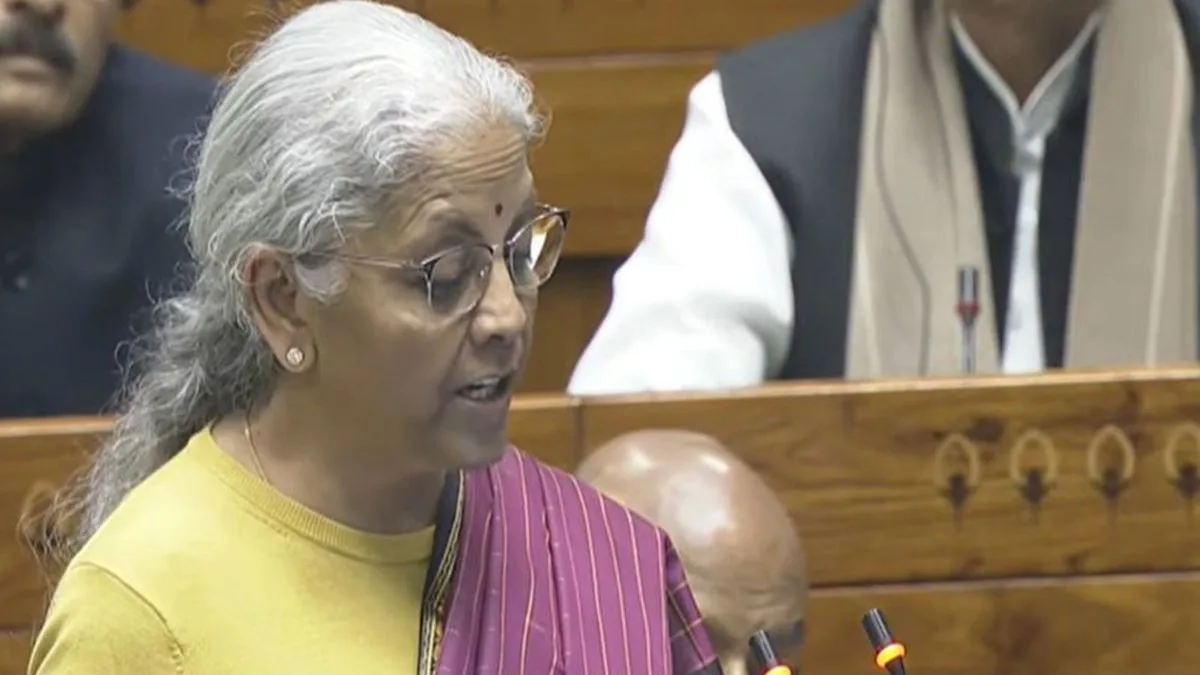
The Union Budget 2026 has placed women’s education and entrepreneurship at the centre of the government’s higher education push. As part of her presentation of the budget in Parliament, Nirmala Sitharaman announced a girls’ hostel would be built in every district of the country. She also announced the launch of community-owned ‘She MARTS’ to support women-led enterprises.
The measures aim to improve access to higher education for women, especially in science and technology fields, while helping women move from small livelihoods to formal business ownership.
Advertisement
Also Read: Budget 2026–27 LIVE: Fiscal deficit seen at 4.3%; Modi govt allocates Rs 1.4 lakh cr to states
Girls’ hostel in every district to support higher education
While outlining proposals for increased investment in higher education, the Finance Minister said the government plans to set up new institutes, university townships, girls’ hostels, and telescope infrastructure.
“I propose multiple steps towards setting up new institutes, university townships, girls’ hostels, and telescope infrastructure facilities in the investment in the higher education sector. A girls’ hostel will be built in every district of the country,” she said.
Sitharaman flagged the specific challenges faced by women students in STEM institutions, where long hours of study and laboratory work often make access to safe accommodation difficult.
“In higher education, STEM institutions and prolonged hours of study and laboratory work pose some challenges for girl students. Through our scheme, one girls’ hostel will be established in every district to promote astrophysics and astronomy via immersive experiences,” she said.
According to the Finance Minister, the hostels are intended to provide safe and accessible housing for women pursuing advanced studies, which could improve enrolment and reduce dropouts in specialised scientific disciplines.
She MARTS to help women shift from livelihoods to enterprises
The Budget also introduced ‘She MARTS’—self-help entrepreneur marts designed as community-owned retail outlets. The initiative builds on the Lakpati Didi programme, which focuses on strengthening women’s incomes through self-help groups.
“Building on the success of the Lakpati Didi program, the government plans to help women move from credit-linked livelihoods to becoming enterprise owners. Self-help entrepreneur marts will be established as community-owned retail outlets within cluster-level federations, supported through enhanced and innovative financing, enabling women to take the next step in entrepreneurship,” Sitharaman said.
The She MARTS model is expected to improve market access and branding for women entrepreneurs, while creating more sustainable income opportunities at the grassroots level.
Beyond these announcements, the Finance Minister outlined six broad focus areas of the Budget. These include expanding manufacturing in strategic sectors, reviving traditional industries, creating strong MSMEs, accelerating infrastructure development, ensuring long-term economic stability, and developing city-based economic regions.
As part of statutory requirements, Sitharaman also tabled two statements under the Fiscal Responsibility and Budget Management Act, 2003—the Medium-term Fiscal Policy-cum-Fiscal Policy Strategy Statement and the Macro-Economic Framework Statement.
The Budget session of Parliament will run for 30 sittings across 65 days and conclude on April 2. Both Houses will adjourn for a recess on February 13 and reconvene on March 9 to allow Standing Committees to examine the Demands for Grants of various ministries and departments.