Logo

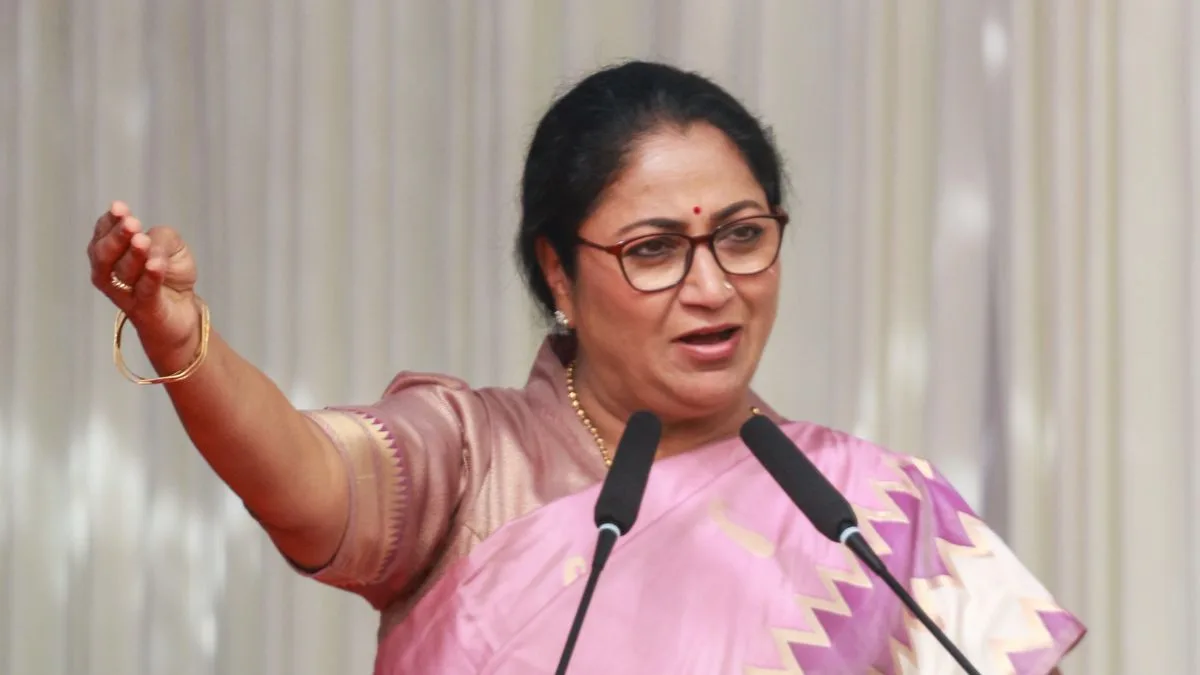
Chandrima tables vote on accounts, Proposes Rs 4,06,084.17 crore for 2026-27

The recipients of Lakshimir Bhandar will get Rs 500 more per month from February while the state government employees, school and college teachers will get 4 per cent dearness allowance (DA).
Statesman News Service | Kolkata |

The recipients of Lakshimir Bhandar will get Rs 500 more per month from February while the state government employees, school and college teachers will get 4 per cent dearness allowance (DA).

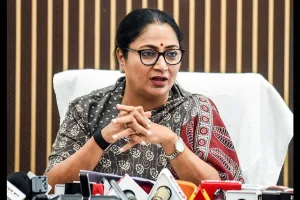
This was announced by Chandrima Bhattacharya, state minister for finance while tabling the vote on accounts in the West Bengal Assembly this afternoon.

For 2026-27 the Budget proposals stands at Rs 4,06,084.17 crore.

She also announced that 1.72 crore people have been brought out of poverty.

The women belonging to the general caste will get Rs 1,500 per month under Laksahmir Bhandar scheme while those belonging to SC and ST categories will get Rs 1,700 per month.

The state government has introduced a scheme for unemployed youths, who have passed Madhyamik or equivalent examination. The scheme, called Banglar Yuba Sathi, will give the unemployed youths Rs 1,500 per month. It will be launched on 15 August. The youths between 21 years and 40 years can apply for the scheme.

Bhattacharya said the agricultural workers will get Rs 4,000 annually payable in two instalments. One instalment will be given during the Rabi season and the other one during the Kharif season.

The youths, between the ages 21 and 40, who have cleared Class X, will get Rs 1,500 per month till they get a job.

The state government has proposed to waive the charges to be paid by the marginal farmers for using tube wells installed by the state government.

The state government has decided to enhance the tariff of the state health scheme giving benefits to the pension holders. It has been proposed to enhance the financial support by 75 per cent if the medical bill crosses Rs 2 lakh in empanelled hospitals. The remuneration for the civic volunteers, ASHA and Anganwadi workers have been increased by Rs 1,000 per month from 1 April.

Coming down heavily on the BJP, Mrs Bhattacharya said the saffron camp has deprived Bengal by not clearing its dues. It has not given a single paisa to set up rural houses, drinking water to rural areas to the workers engaged in 100 days work. The state government is committed to serve the poor irrespective of the support by the centre. “Despite step-motherly attitude towards the state government, it is carrying out more than 65 welfare schemes due to the able leadership of Mamata Banerjee. She makes the planning perfectly and this has helped the state government to carry on with its projects.”

Mrs Bhattacharya said the state government has taken a comprehensive scheme to prevent erosion on the embankment of river Ganga in Malda and Murshidabad.

The state government will set up five industrial clusters and is going to be the industrial hub particularly steel and cement in near future. She said in the IT sector, the state is doing well and it has become an important investment destination. The financial health of the state has become sound due to the pro industry policies taken up by the state government.

‘A government of brutality is in power in Bengal’: PM Modi in RS

The Prime Minister said, “A government of brutality is functioning in Bengal.” Along with the Trinamool Congress, he targeted the Congress party stating, “The term ‘constitution’ does not suit them; they have not hesitated to insult the indigenous President.”

MEENAKSHI BHATTACHARYA | New Delhi |

A day after West Bengal Chief Minister Mamata Banerjee fiercely criticised the Election Commission of India (ECI) during the Supreme Court hearing, Prime Minister Narendra Modi, unable to refrain from commenting in the Lok Sabha, took a jab at the state government in the Rajya Sabha On Wednesday.

The Prime Minister said, “A government of brutality is functioning in Bengal.” Along with the Trinamool Congress, he targeted the Congress party stating, “The term ‘constitution’ does not suit them; they have not hesitated to insult the indigenous President.”

“The second quarter of ‘Vikshit Bharat’ is poised to be very significant; we have reached a crucial chapter. Here, we will not give up but will move forward. This is the best time for India’s progress. In various developed countries around the world, the population of elderly individuals is increasing. In India, however, the number of young people is on the rise. Our youth possesses everything from numbers to the willpower needed to succeed,” he said.

Pointing out that the world is currently growing through various crises, he said, “India has become a beacon of hope for the globe.”

In another context, the Prime Minister remarked, “At the time of independence, India was the 6th largest economy, and the Congress had elevated it to the 11th position. Now, the country is progressing towards becoming the third largest economy in the world.”

Referring to India’s financial agreements with various countries, he noted that “India is a global friend to many nations, and the world is now speaking of the ‘Global South’. Economically, India has emerged as one of the strongest voices of the Global South.”

Criticising the Trinamool Congress, the Prime Minister stated, “Trinamool MPs have made numerous statements in Parliament; before offering us advice, they should reflect on their own situation. The condition in Bengal has deteriorated to the extent possible, and your time has been equally dismal, plunging the future of the people there into darkness. You understand nothing beyond the comfort of being in power. Even developed nations are expelling illegal immigrants, while here, assistance is being provided to them. The Trinamool is exerting pressure on the judiciary. These illegal immigrants are taking away job opportunities from the youth, and those responsible for this will not be forgiven by the young men and women of this country. The land of the poor is being seized, and women have no security. I reiterate, before you offer us advice, bring about a change in the situation of your own state.”

Today, during a session devoid of Opposition, the Prime Minister criticised the Congress party, stating, “From the speech of the Congress Prime Minister at the Red Fort, it is evident that they lacked foresight and willpower.”

“After coming to power, we have spent a considerable amount of time rectifying the mistakes of the Congress. However, the country now operates according to policies, and we are on the path of reform and transformation. The nation is now aboard the reform express, and we have made numerous changes in policies. India is now capable of competing on a global scale. Currently, business organisations hold us in much higher regard than before,” he said.

Prime Minister Narendra Modi commenced his response speech to the President’s speech in the Rajya Sabha, at which point there were loud slogans from the opposition members throughout the House. Nevertheless, amidst the tumultuous atmosphere, Modi began his address. He directed a pointed remark at the Congress leader and senior member Mallikarjun Kharge regarding the slogans being raised. In a sarcastic tone, he reminded him of his age, stating, “You can chant slogans while being seated. I noticed some individuals are already becoming exhausted. However, remember, you too will have to respond to the Country.”

He said, “MSMEs are a vital component of the economy; even if we do not manufacture aircraft, we produce parts for them. The world has acknowledged this transformation in India. There is widespread appreciation for the European Union’s trade deals, which will benefit the youth in both urban and rural areas of the country. The global market has opened up for them, and the nation stands with you. The world is ready to welcome you. There are immense opportunities ahead for India’s professionals.”

Metro rail opens platform screen door model room at Central Park depot

Aiming to improve passenger safety, the Kolkata Metro Railway today inaugurated a Platform Screen Door(PSD) Model Room at Central Park depot campus. The model room was inaugurated by the General Manager of city metro, SS Mishra along with the principal heads of various.

Statesman News Service | Kolkata |

Aiming to improve passenger safety, the Kolkata Metro Railway today inaugurated a Platform Screen Door(PSD) Model Room at Central Park depot campus. The model room was inaugurated by the General Manager of city metro, SS Mishra along with the principal heads of various.

According to the city Metro, the model PSD room is aimed to upscale the knowledge by imparting hands-on training of the system through exhibits and physical simulations practices to the front line and maintenance staff of Green Line. This hands-on training will help to improve the preventive and on-demand maintenance practices. This will also improve response time thereby enhancing the reliability of the PSD system. This is ultimately anticipated to benefit the passengers’ safety and improve travel experiences, according to Kolkata Metro Railway.

11 undergoing eye surgery as Sebaashray follow up

Though the Sebaashray camps in Diamond Harbour have come to an end, people being serviced through the camps still continues, with 11 people undergoing eye surgery.

Statesman News Service | Kolkata |

Though the Sebaashray camps in Diamond Harbour have come to an end, people being serviced through the camps still continues, with 11 people undergoing eye surgery.

Abhishek Banerjee, national general secretary of Trinamul Congress and MP from Diamond Harbour in his X handle wrote “In Diamond Harbour though this chapter of Sebaashray has come to an end, our sacred mission of healing presses onward with unyielding resolve.”

Eleven people were referred to Renuka Eye Institute and all of them went for cataract surgery. They are all keeping well.

Mr Banerjee further tweeted: “Our pledge to good health for every soul remains etched in stone, an unbreakable vow to uplift, to heal and to unite. Together, let us carry this mission forward, illuminating Bengal’s path with empathy and equity.”

Sebaashray camps, one of its kind in the country, was an initiative to provide free medical assistance to the people living in the areas that fall under the Diamond Harbour Lok Sabha seat. Health camps were set up in all the seven Assembly segments. They were Maheshtala, Metiabruz, Budge Budge, Bishnupur, Falta, Satgachia and Diamond harbour. Camps were held for seven days at each constituency. Again follow up camps were held in each constituency. Mr Banerjee had visited the model camps. The visitors were given medicine free of cost. Diagnostic tests were conducted free and in case of emergency they were referred to private or state run hospitals.

Sebaashray camps were first held in 2024 and taking the cue from its success Sebaashray 2 camps were held.

Sabaashray camps have also been held in Nandigram in East Midnapore. The people of the area requested Mr Banerjee to hold the camps. Mr Suvendu Adhikari is the MLA from Nandigram. Mr Banerjee had visited Nandigram and inaugurated the camps.

Amit Shah to review naxal situation in three-day visit to Chhattisgarh from February 7-9

As Chhattisgarh remains one of the most sensitive states affected by Naxal violence, particularly in the Bastar region, the visit assumes significance in view of the Centre’s intensified anti-Naxal operations.

ANI | New Delhi |

Union Home Minister Amit Shah will review the prevailing Naxal situation during his three-day visit to Chhattisgarh from February 7 to 9, in what is being seen as a crucial step towards the Centre’s target of eliminating Naxalism or Left Wing Extremism (LWE) by March 31, 2026.
Shah will arrive in Raipur on the evening of February 7 and hold a meeting with senior officials to assess the overall administrative and security preparedness in the state.

As Chhattisgarh remains one of the most sensitive states affected by Naxal violence, particularly in the Bastar region, the visit assumes significance in view of the Centre’s intensified anti-Naxal operations.

On February 8, the Home Minister will chair a high-level security review meeting on Left Wing Extremism in Raipur. Senior officials from the Ministry of Home Affairs, state government, police and the central armed police forces are expected to participate. The meeting will review the progress of ongoing anti-Naxal operations, inter-agency coordination, intelligence sharing and development initiatives in affected districts.

The Centre has significantly stepped up operations against Naxal groups in recent years, resulting in a steady decline in violence, casualties and the geographical spread of LWE. The government has repeatedly underlined its dual strategy of strong security action coupled with accelerated development in affected areas, including improved road connectivity, mobile networks, banking access and welfare delivery.

Shah has set a clear target of eliminating Naxalism from the country by March 31, 2026. He has asserted on multiple occasions that Naxalism, which has hindered development and claimed thousands of lives over decades, is in its final phase. The upcoming review meeting is expected to assess progress towards achieving this deadline and chalk out the final roadmap.

Later on February 8, Shah will attend a national conclave titled ‘Chhattisgarh @ 25: Shifting the Lens’, organised by Organiser weekly magazine (Bharat Prakashan) in Raipur.

On February 9, the Minister will travel to Jagdalpur in Bastar to attend the closing ceremony of the Bastar Pandum Mahotsav – 2026, a major cultural festival showcasing the rich tribal heritage of the region.

The visit underscores the Centre’s focus on restoring lasting peace, accelerating development and achieving a decisive end to Naxalism within the set timeline.

As per the MHA, the resolute implementation of the ‘National Policy and Action Plan 2015’ has resulted in a consistent decline in violence and contraction of geographical spread.

The ministry said the LWE, which has been a serious challenge to the internal security of the nation, has been significantly curbed in recent times and has been confined to only a few pockets.

A data collated by the MHA mentions that the number of LWE-affected districts has reduced from 126 in 2018 to only eight in December 2025, with only three districts now remaining Most LWE Affected.

The LWE perpetrated violence incidents have come down from a high of 1,936 in 2010 by 88 per cent to 234 in 2025.

Resultant deaths of civilians and security forces have also come down from a high of 1,005 in 2010 by 90 per cent to 100 in 2025. In 2025, security forces neutralised 364 Naxals, arrested 1,022 and facilitated 2,337 surrenders. The number of Police Stations reporting LWE-related violence has significantly reduced from 465 Police Stations in 2010 to 119 Police Stations in the year 2025.

As the security situation is improving and more districts are getting freed from Left Wing Extremism, the government has emphasised sustained socio-economic transformation of these regions. In this context, a new category of districts was introduced in 2024, namely legacy and thrust districts. Though these districts are no longer LWE affected but, support to the States for these districts will continue for consolidating the gains and preventing relapse.

At present, 30 districts fall under this category, and the measures being undertaken are aimed at ensuring long-term stability and inclusive growth in these regions.

As part of its strategy to establish dominance over Naxalism, with the Centre setting March 2026 as the deadline to eliminate the menace, the Central Reserve Police Force (CRPF)–one of the principal forces tasked with countering Left Wing Extremism–has set up a total of 229 Forward Operating Bases (FOBs) across six key Naxal-affected states from 2019 to till date.

The FOBs have been a key component of the government’s security strategy to counter LWE in Naxal-affected regions. These bases are established by central armed police forces, including the CRPF and its specialised units, in remote, forested and insurgency-prone areas that were earlier considered strongholds of Naxal groups.

Out of the total 229 Forward Operating Bases (FOBs), the highest number–59–have been established so far this year, followed by 40 in 2024, 27 in 2023, 48 in 2022, 29 in 2021, 18 in 2020 and eight in 2019. These FOBs have been set up across Chhattisgarh, Odisha, Maharashtra, Madhya Pradesh, Jharkhand and Telangana.

Of the 59 FOBs established this year, Chhattisgarh accounts for the maximum with 32 bases, followed by Jharkhand and Madhya Pradesh with nine each, Maharashtra and Odisha with four each, and one in Telangana.

‘No such meeting or visit took place’: MEA dismisses reports claiming NSA Doval met US Secy Rubio last year

His remarks come after a media report alleged that NSA Doval visited the United States in September 2025 to hold talks for improving strained ties between India and US.

Statesman News Service | New Delhi |

The Ministry of External Affairs on Thursday today dismissed reports claiming that National Security Advisor (NSA) Ajit Doval held a meeting with US Secretary of State Marco Rubio last year amid trade talks between the two countries.

Clarifying all queries related to such reports, MEA spokesperson Randhir Jaiswal stated, “Regarding the report by Bloomberg, there is absolutely no basis for that report. No such meeting or no such visit has taken place.”

He was addressing the weekly media briefing in New Delhi.

His remarks come after a media report alleged that NSA Doval visited the United States in September 2025 to hold talks for improving strained ties between India and US.

The media report further claimed that India had conveyed to the United States that it is willing to wait to finalise a trade deal until the official term of the US President Donald Trump ends. MEA has denied all claims.

In the same briefing, MEA Spokesperson responded to the media queries on the India-US trade deal.

He mentioned about the call that was held between PM Modi and US President Trump two days back, saying that the Prime Minister noted that made in India products will now be exported to United States at a reduced tariff of 18% and thanked President Trump for the reduction in reciprocal tariff, during the call.

He added, “This trade agreement will give a major boost to our exports to the United States. It will be a major boost to the labour-intensive industries here in India, create new job opportunities, growth and prosperity for our people.”

Notably, External Affairs Minister S Jaishankar met and held talks with US Secretary of State Marco Rubio earlier today during his visit to Washington.

He confirmed that the historic India-US trade deal is in the final stages of detail, with completion expected very soon.

In a post on X, the EAM said, “Concluded a productive and positive visit to the US. Thank Secretary Rubio for his warm hospitality. The historic India-US trade deal is in the final stages of detailing that will be completed very soon. It opens up a new phase in our bilateral ties, with vast possibilities for the relationship. Our critical mineral cooperation is also advancing rapidly. Expect engagement on strategic issues, defence and energy in the coming days. Overall, a strong momentum is evident.”
US Ambassador to India, Sergio Gor today said that Jaishankar’s talks with the US Secretary of State Marco Rubio and the United States Secretary of the Treasury, Scott Bessent, represented “limitless potential.”

Scholar André Béteille passes away at 91

Born on 30 September, 1934, in Chandannagore, West Bengal, Béteille grew up in a culturally diverse, middle-class household ~ his mother was Bengali and his father French ~ an early exposure that perhaps sensitised him to questions of identity and social difference.

Biswabrata Goswami | Kolkata |

India lost one of its most luminous social thinkers on Tuesday with the passing of world-renowned sociologist and social anthropologist André Béteille, whose lifelong engagement with caste, class and power reshaped the understanding of inequality in modern societies. Béteille died at his Delhi residence on 3 February at the age of 91, leaving behind a rich intellectual legacy rooted in rigorous fieldwork, ethical scholarship and an unwavering commitment to academic humility.

Born on 30 September, 1934, in Chandannagore, West Bengal, Béteille grew up in a culturally diverse, middle-class household ~ his mother was Bengali and his father French ~ an early exposure that perhaps sensitised him to questions of identity and social difference. His formal training began at the University of Calcutta, where he studied anthropology under legendary scholars such as Nirmal Kumar Bose and Tarak Chandra Das, who profoundly shaped his empirical and humanistic approach to social research.

Béteille later completed his doctoral studies under the supervision of the eminent sociologist MN Srinivas and went on to join the celebrated department of sociology at Delhi University, where generations of students encountered a rare blend of intellectual rigour and moral clarity in the classroom. It was during this phase that he produced his most influential work on caste, class and power—research that earned him global recognition.

At the heart of Béteille’s intellectual journey lay a persistent concern with inequality ~ its causes, its manifestations, and the moral challenge it posed to human societies. His scholarship was animated by a deeper normative question: how might societies move closer to equality and dismantle entrenched forms of discrimination?

Béteille’s connection with academic institutions across the country was marked by warmth and intellectual generosity. Recalling his visit to Vidyasagar University in 2004, Professor Abhijit Guha, former professor of anthropology at the university, remembered the scholar’s presence at a convocation ceremony and an informal adda with faculty members. “From him, we learnt how to become scholars and teachers with humility and compassion,” Guha said.

Maharashtra ZP, Panchayat Samiti polls: Campaign ends, voting on Feb 7

Voting will take place on Saturday from 7.30 a.m. to 5.30 p.m., and the counting of votes will be held on Monday, February 9.

IANS | Mumbai |

The campaign for the elections to the 12 Zilla Parishads and 125 Panchayat Samitis across the state ended on Thursday.

Voting will take place on Saturday from 7.30 a.m. to 5.30 p.m., and the counting of votes will be held on Monday, February 9.

With the campaign period over, political parties and candidates are now prohibited from publishing or broadcasting advertisements through print, electronic, or social media.

Elections are being held for 12 Zilla Parishads and 125 Panchayat Samitis in the following districts: Raigad, Ratnagiri, Sindhudurg, Pune, Satara, Sangli, Solapur, Kolhapur, Chhatrapati Sambhajinagar, Parbhani, Dharashiv, and Latur.

Since Zilla Parishad and Panchayat Samiti elections are held simultaneously, every voter is expected to cast two votes: one for the Zilla Parishad electoral division and one for the Panchayat Samiti electoral college.

A total of 25,482 polling stations have been set up.

To facilitate the process, 51,537 control units and 1,10,329 ballot units (EVMs) have been made available.

The State Election Commission (SEC) is using the Assembly constituency voter lists prepared by the Election Commission of India.

The lists existing as of July 1, 2025, are being used.

While the SEC cannot add or delete names, potential duplicate names have been marked with a double star (**).

The State Election Commission has launched the ‘Matadhikar’ mobile app, available on the Google Play Store, to help voters find their names, polling stations, and candidate information.

Voters can also search using their full name or EPIC (Voter ID) number on the website: https://mahasecvoterlist.in/

At the polling stations, senior citizens, persons with disabilities, women with infants, and pregnant women will be given priority.

Temporary ramps and wheelchairs will be provided where permanent ramps are unavailable.

Electricity, drinking water, shade, and toilets will be available at all centres.

Polling stations where the female voter population is high will be managed entirely by women officers and police personnel. These are designated as “Pink Polling Booths”.

Around 1.28 lakh election officials have been deployed, including 125 Returning Officers and 125 Assistant Returning Officers.

The BJP hopes to repeat its performance in the recently held elections to the nagar parishads, nagar panchayats, and municipal corporations, where it emerged at the top slot, while the Eknath Shinde-led Shiv Sena is confident of increasing its presence in these elections.

On the other hand, the NCP expects to ride on the sympathy wave following the sudden and untimely death of former deputy chief minister and party president late Ajit Pawar.

Incidentally, the Sharad Pawar-led NCP is contesting these polls in an alliance with the NCP.

The Congress and Shiv Sena (UBT) are contesting independently, as the opposition has not been able to work out a united front against the BJP-led Mahayuti.

Congress to go solo in 2026 West Bengal Assembly polls

The decision was taken at a meeting of the Congress Working Committee in New Delhi on Thursday.

IANS | Kolkata |

The Congress, on Thursday, officially announced that it will contest independently in all the 294 Assembly constituencies in West Bengal in the forthcoming Assembly elections in the state scheduled this year, without going for any kind of seat-sharing arrangement either with the CPI(M)-led Left Front or the Trinamool Congress.

The decision was taken at a meeting of the Congress Working Committee in New Delhi on Thursday.

The party’s representatives from West Bengal were the current state Congress president Suvankar Sarkar, former state Congress president and former five-time Lok Sabha member Adhir Ranjan Chowdhury, and the sole Congress Lok Sabha member from West Bengal, Isha Khan Chowdhury.

After the meeting at the residence of the Congress’s national president, Mallikarjun Kharge, in the national capital, Congress general secretary and the party’s in-charge for West Bengal, Ghulam Ahmad Mir, announced the decision of the AICC to contest the forthcoming Assembly elections in the state independently without having any alliance with any other political force.

Besides Kharge and Mir, other national-level Congress leaders present at the meeting included the Leader of the Opposition in the Lok Sabha, Rahul Gandhi, and K.C. Venugopal, among others.

“Our past experiences on alliance or seat-sharing arrangements in West Bengal weakened the grassroots-level party workers in the state to a great extent. After discussions with everyone, including the state Congress leaders, it has been decided that the Congress will contest from all 294 Assembly constituencies in West Bengal independently. Poll preparations will start keeping this in mind,” Mir said.

Adhir Ranjan Chowdhury, who was keen on an alliance with the CPI(M)-led Left Front from the beginning, said that going solo was the decision of the party high command.

“We will be contesting independently this time as decided by the party’s high command,” he said.

Political observers feel that a smooth seat-sharing arrangement for the 2026 West Bengal Assembly polls had become inconceivable from the beginning.

“The two main architects of the seat-sharing arrangement between the Left Front and the Congress since 2016 were former CPI(M) general secretary late Sitaram Yechury and former state Congress president in West Bengal and former five-time Lok Sabha member Adhir Ranjan Chowdhury.

“Now, after the demise of Yechury, there is not a single national leader in the CPI(M)’s central leadership who will be vocal in convincing the party’s central leadership for an arrangement with the Congress.

“The same thing is applicable in the case of the Congress after Chowdhury was out of the party’s major decision-making ambit,” a city-based political observer said.

WEBEL-Oracle Partnership to build future-ready digital talent in Bengal

West Bengal Electronics Industry Development Corporation Limited (WEBEL), a state government enterprise, yesterday reaffirmed its strategic collaboration with Oracle to train 15,000 students and professionals by 2029 in cutting-edge digital technologies free of cost.

Statesman News Service | Kolkata |

West Bengal Electronics Industry Development Corporation Limited (WEBEL), a state government enterprise, yesterday reaffirmed its strategic collaboration with Oracle to train 15,000 students and professionals by 2029 in cutting-edge digital technologies free of cost. The initiative focuses on high-impact domains such as artificial intelligence (AI), cloud computing, cybersecurity, and data science, strengthening West Bengal’s position as a hub for future-ready digital talent.

The programme was formally launched in presence of Babul Supriyo, minister, department of IT & electronics. Also present were Shubhanjan Das, Secretary, IT & Electronics, Sumant Sahay, managing director, WEBEL and Shailender Kumar, Senior VP – Regional Managing Director, India and NetSuite Japac, Oracle.

Welcoming Oracle to the state’s digital skilling ecosystem, minister Babul Supriyo stated that the initiative is envisioned as a “finishing school” for students and young professionals, equipping them with industry-aligned competencies and helping fulfil the evolving manpower needs of the technology sector and what makes me most happy is that all these courses are being offered Free Of Cost.”

Representatives from leading academic institutions and industry bodies attended the event, including delegations from University of Calcutta, St. Xavier’s University, Maulana Abul Kalam Azad University of Technology (MAKAUT), Techno India University, Indian Chamber of Commerce (ICC), NASSCOM, Bengal Chamber of Commerce and Industry (BCCI) along with senior professionals from the IT industry ecosystem.

In his remarks, Shailendra Singh, India head, Oracle, emphasised Oracle’s commitment to enabling technology education and workforce readiness. He noted that expanding capabilities in AI and cloud technologies through structured training and certification pathways will help learners bridge the gap between academic knowledge and industry requirements, and that Oracle is dedicated to working with government and institutional stakeholders to accelerate digital skills development at scale.

Shubhanjan Das, Secretary, IT & Electronics, underscored the importance of public-private partnerships in creating scalable skilling infrastructure and enhancing employability in high-growth technology domains.This curriculum is in tune with industry standards and is upgraded every quarter.”

Sumant Sahay, MD, WEBEL, said that the collaboration reflects WEBEL’s commitment to building a sustainable digital talent pipeline for West Bengal by integrating global-standard training frameworks with local institutional ecosystems.

Under this initiative, Oracle will provide structured digital learning, industry-aligned certification pathways, and advanced technology training through its global education platforms, enabling students and professionals to acquire competencies in next-generation technologies effectively.

India, Malaysia working on further enhancing bilateral trade: MEA ahead of PM’s Kuala Lumpur visit

Addressing a special briefing here, MEA Secretary (East) P Kumaran said PM Modi will visit Kuala Lumpur on February 7 and 8 at the invitation of Malaysian Prime Minister Anwar Ibrahim.

Statesman News Service | New Delhi |

Ahead of Prime Minister Narendra Modi’s upcoming visit to Kuala Lumpur, the Ministry of External Affairs (MEA) on Thursday said India and Malaysia are working towards further enhancing bilateral trade in a balanced and sustainable manner.

Addressing a special briefing here, MEA Secretary (East) P Kumaran said PM Modi will visit Kuala Lumpur on February 7 and 8 at the invitation of Malaysian Prime Minister Anwar Ibrahim.

India and Malaysia are also discussing a joint review of the India-Malaysia Comprehensive Economic Cooperation Agreement, Kumaran said.

“Our countries are working towards further enhancing our bilateral trade in a balanced and sustainable manner… The two countries are also discussing a joint review of the India-Malaysia Comprehensive Economic Cooperation Agreement. The PM will address the Indian community in Malaysia, which numbers around 2.9 million,” the MEA official said.

He said both sides will review progress on the India-Malaysia Comprehensive Strategic Partnership.

“The visit will also provide an opportunity to enhance our engagement with the ASEAN region… The PM will hold bilateral discussions with the Prime Minister of Malaysia. They will review progress on the India-Malaysia Comprehensive Strategic Partnership, particularly in priority areas of cooperation, including trade, investment, defence, security, semiconductors, digital technologies, renewable energy, education, healthcare, and people-to-people exchanges. The 10th meeting of the India-Malaysia CEO’s forum is also scheduled in Kuala Lumpur on the sidelines of the visit. Our PM will also interact with leading Malaysian CEOs from key sectors,” he said.

“Upon invitation by the Prime Minister of Malaysia, Anwar Ibrahim, Prime Minister Narendra Modi is scheduled to visit Kuala Lumpur on 7th and 8th February… Our PM had earlier visited Malaysia in 2015. During that visit, India-Malaysia bilateral relations were elevated to enhance the strategic partnership… The forthcoming visit comes within 1.5 years of the elevation of our bilateral ties to a comprehensive strategic partnership during the state visit to PM Amwar Ibrahim in August 2024, and reflects India’s strong commitment to our relations with Malaysia,” he said.

Malda Muslims reject Lakshmir Bhandar, switch from TMC to AIMIM

Reacting to the development in the Muslim-dominated Malda district, senior BJP leader and former state party president Dilip Ghosh said Muslims must decide whether they wish to stand with development or align themselves with corruption, and whether they want peace or continued violence and bloodshed.

Statesman News Service | Kolkata |

Even as the state government has announced an increase in the allowance under the Lakshmir Bhandar scheme, a section of Muslim residents in Malda has rejected the welfare benefit, demanding instead education and employment for the young men of their families. In a significant political development, several women, along with men, quit the Trinamul Congress and joined the AIMIM in the district on Thursday.

Reacting to the development in the Muslim-dominated Malda district, senior BJP leader and former state party president Dilip Ghosh said Muslims must decide whether they wish to stand with development or align themselves with corruption, and whether they want peace or continued violence and bloodshed.

“As long as the TMC government remains in power, these things will continue. Corruption, killings and riots will persist, and Muslims will suffer the most,” Mr Ghosh said.

“Even after this, if they still want to keep this government in power, it is their choice. In a democracy, everyone has the right to decide,” he added.

The switching-over programme from the TMC to the AIMIM was held in the Paranpur-Mirzapur area under the Ratua Assembly constituency in Malda district. The programme was led by AIMIM Ratua-I Block president Jahangir Sheikh, who formally inducted the new members by handing over party flags.

Women who joined the AIMIM said they were not interested in Lakshmir Bhandar, but wanted education and employment opportunities for their sons. They alleged that the lack of jobs in the state was forcing young men to migrate to other states for work, where many had met with accidents and even lost their lives. They said their demand for jobs for the youth prompted them to leave the Trinamul Congress.

Commenting on the state Budget, Mr Ghosh said there were no expectations from the government.

“What value does a budget have when a government runs its ‘household’ on borrowed money?” he asked.

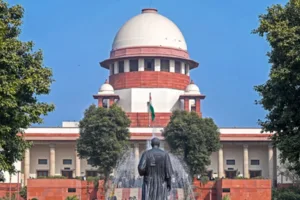
SC frowns upon ‘acting DGP’ practice, empowers UPSC to flag delays by states

A Bench comprising Chief Justice Surya Kant and Justice Joymalya Bagchi observed that repeated delays in forwarding proposals to the Union Public Service Commission (UPSC) for appointment of full-time DGPs not only violate the directions issued in Prakash Singh v. Union of India but also deprive eligible senior officers of fair consideration.

Parmod Kumar | New Delhi |

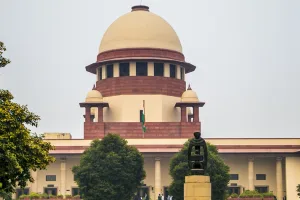
The Supreme Court on Thursday came down heavily on the growing practice of state governments appointing “acting” Directors General of Police instead of initiating the process for selecting a regular police chief in accordance with its binding guidelines issued in 2006.

A Bench comprising Chief Justice Surya Kant and Justice Joymalya Bagchi observed that repeated delays in forwarding proposals to the Union Public Service Commission (UPSC) for appointment of full-time DGPs not only violate the directions issued in Prakash Singh v. Union of India but also deprive eligible senior officers of fair consideration.

The Court noted that several States avoid timely compliance with the prescribed procedure and instead continue with interim arrangements by appointing acting DGPs, undermining institutional integrity and merit-based selection.

To address this systemic lapse, the Bench authorised the UPSC to proactively seek timely proposals from State governments whenever vacancies for DGPs arise. It further permitted the Commission to approach the Supreme Court if any State fails to act.

“We authorise the UPSC to write to the States to send timely proposals for recommendations of respective DGPs whenever such occasions arise. When such proposals are not sent, we direct the UPSC to move an application in the Prakash Singh case. It goes without saying that necessary consequences including accountability of the concerned States will be taken up,” the Court ordered.

Under the Supreme Court’s guidelines issued in Prakash Singh case also known as police reform case on September 22, 2006, a State government is required to appoint its DGP from a panel of three senior-most eligible officers shortlisted by the UPSC.

The directions were issued today while hearing an appeal arising from a Telangana High Court order that had directed the UPSC to process a belated proposal sent by the State for appointment of its DGP.

The UPSC objected to the High Court’s direction, pointing out that the previous DGP, Anurag Sharma, retired in 2017, and the State had failed to forward any proposal for nearly eight years. Although Telangana eventually sent a proposal with names of eligible senior ranking IPS officers in April 2025, the Commission declined to act on it, citing the prolonged delay and seeking clarity from the Supreme Court.

The UPSC also submitted that Telangana was not an isolated case and that several States routinely resort to such delay tactics.

Agreeing with the concern, the Supreme Court observed that such inaction had adversely impacted the careers of many senior officers who have since retired without ever being considered for the top post. At the same time, the Bench noted that refusing to process delayed proposals would only end up benefiting defaulting States.

Accordingly, the Court directed the UPSC to proceed with the selection process for Telangana’s DGP, stating “We hold without hesitation that the State should make recommendations for the DGP at the earliest… The zones of consideration will be on the eligibility of officers who fall under such a zone and will be on the basis of inter se merit. Commission is granted four weeks’ time to do the needful,” the Court ordered.


Sabarimala gold theft case: Court grants bail to prime accused Unnikrishnan Potty

Potty was granted bail in the case pertaining to the alleged theft of gold from the door frames of the sanctum sanctorum of the temple after the SIT failed to file its charge sheet within 90 days of his arrest.

Statesman News Service | Thiruvananthapuram |

In a setback to the Special Investigation Team (SIT), probing the Sabarimala gold heist case, the Kollam Vigilance Court on Thursday granted statutory bail to prime accused Unnikrishnan Potty in the second case registered against him.

Potty was granted bail in the case pertaining to the alleged theft of gold from the door frames of the sanctum sanctorum of the temple after the SIT failed to file its charge sheet within 90 days of his arrest. Earlier, the court had granted him bail in the dwarapalaka idols case as well on similar grounds.

Considering the gravity of the offence, the court imposed strict conditions on bail. Potty has been barred from entering Pathanamthitta district, directed to surrender his passport, and restrained from influencing witnesses. He has also been prohibited from leaving the state without permission.

Potty, who has been in custody for months, is released from the Thiruvananthapuram special sub jail on Thursday evening. With this, Potty becomes the fourth accused to secure bail in the case

Ahead of Potty, three of his co-accused had obtained statutory bail. Former Sabarimala administrative officer Murari Babu, former Sabarimala executive officer Sudeesh Kumar, and former administrative officer S Sreekumar had secured bail earlier.

Potty is accused of conspiring to execute the pilferage of gold from Sabarimala artefacts under the pretext of carrying out maintenance works in Chennai.

MCD seals water-polluting jeans dyeing unit in Najafgarh

“As per the directions of Sumit Kumar, Deputy Commissioner, Najafgarh Zone, a team from Najafgarh Zone conducted an inspection in areas under its jurisdiction,” the civic body said in a statement.

Statesman News Service | New Delhi |

The Najafgarh zone of the Municipal Corporation of Delhi (MCD) sealed a water polluting jeans dyeing factory in Issapur ward on Thursday.

“As per the directions of Sumit Kumar, Deputy Commissioner, Najafgarh Zone, a team from Najafgarh Zone conducted an inspection in areas under its jurisdiction,” the civic body said in a statement.

During the inspection, a water-polluting unit — a jeans dyeing factory — was found operating in violation of norms. The unit, having an area of more than 2000 square metres, was located near Radha Krishna Vatika, between Mitraon Village and Surehra Village in Issapur Ward. The unit was found running at the time of inspection.

Accordingly, the said polluting unit was sealed on the spot by the MCD team.

The Deputy Commissioner, Najafgarh Zone, has directed that surveys and inspections are being conducted on a daily basis across the zone. Strict action will be taken against any other polluting units found operating in violation of environmental norms.

Cristiano Ronaldo set to end Saudi Pro League absence, likely to feature against Al-Ittihad

Despite the controversy, Cristiano Ronaldo trained with the squad this week and shared images on social media wearing Al-Nassr colours.

Statesman News Service | New Delhi |

Portugal great and Al-Nassr captain Cristiano Ronaldo is reportedly set to bring an end to his Saudi Pro League absence and return to action against Al-Ittihad in a high-profile clash on Friday, according to a report by Goal.com.

The update comes after the five-time Ballon d’Or winner was left out of the recent derby against Al-Riyadh, amid growing frustration over how transfer funds are being allocated among clubs in Saudi Arabia. Earlier, ESPN had reported that Ronaldo was prepared to sit out a second straight league game, unhappy with the Saudi Public Investment Fund’s (PIF) handling of investment and squad building at Al-Nassr.

Ronaldo did not feature in Al-Nassr’s narrow 1-0 victory over Al-Riyadh on Monday, with sources suggesting his absence was a form of protest against what he perceived as limited backing for his club, while rivals Al-Hilal continued to strengthen aggressively.

According to ESPN, the Portuguese star was particularly displeased by the attempted move involving Karim Benzema, believing that allowing high-profile transfers to benefit Al-Hilal would tilt the title race unfairly in their favour.

Despite the controversy, Ronaldo trained with the squad this week and shared images on social media wearing Al-Nassr colours. However, notably, the club’s official X handle only posted training photos of head coach Jorge Jesus and other players, with Ronaldo absent from those visuals.

Al-Nassr currently sit second in the league standings with 46 points, just one behind leaders Al-Hilal, and will face sixth-placed Al-Ittihad on Friday. Off the pitch, tensions have been simmering at the club, with sporting director Simão Coutinho and CEO José Semedo recently suspended by the PIF, a development that reportedly further angered Ronaldo and slowed down potential signings due to tightened spending.

In contrast, Al-Hilal are believed to have received a significant financial boost from Prince Alwaleed bin Talal Al Saud, one of the club’s key benefactors. Sources told ESPN that several of Al-Hilal’s recent signings, including Benzema, were funded by Alwaleed, who owns 25 per cent of the club, with the remaining stake held by the PIF.

While Ronaldo remains frustrated with the broader situation and is still chasing his first major trophy with Al-Nassr, sources indicate that he has offers from clubs in Europe and the United States. However, the 39-year-old is reluctant to make a move that could disrupt his preparation for the FIFA World Cup.

With the Saudi Pro League keen to retain one of its biggest global icons, Al-Nassr and the PIF have reportedly assured Ronaldo of major investment plans in the upcoming summer window, with Portugal teammate and Manchester United midfielder Bruno Fernandes among the high-profile names being discussed.

Parth Pawar eyes Sharad Pawar’s Rajya Sabha MP seat for a six-year term

According to sources, Parth Pawar is not keen to contest the Rajya Sabha MP seat from which his mother Sunetra Pawar resigned before she was sworn in because this would give him only a “partial” term in the Rajya Sabha.

Statesman News Service | Mumbai |

The late Deputy CM Ajit Pawar’s son Parth Pawar is keen on Sharad Pawar’s Rajya Sabha MP seat, which is likely to become vacant by April 2026, and he is not keen to contest his mother Sunetra Pawar’s Rajya Sabha seat, party sources said.

According to sources, Parth Pawar is not keen to contest the Rajya Sabha MP seat from which his mother Sunetra Pawar resigned before she was sworn in because this would give him only a “partial” term in the Rajya Sabha.

However, Parth Pawar is keen on a “full term” of six years in the Rajya Sabha, and this is possible only if he contests Sharad Pawar’s Rajya Sabha MP seat, whose term will end by April 2026, sources said.

According to sources, Sharad Pawar and the late Ajit Pawar’s sons, Parth Pawar and Jay Pawar, held a long, closed-door meeting at the Vidya Pratishthan premises in Baramati on Wednesday.

The meeting discussed the construction of a memorial for Ajit Pawar, but Parth’s desire to enter the Rajya Sabha ended up becoming the main focus of the discussion, sources said.

Seven Rajya Sabha seats from Maharashtra are due to fall vacant in April 2026. These Rajya Sabha seats include seats held by Sharad Pawar, NCP MP Fauzia Khan, RPI (A) chief Ramdas Athawale, BJP’s Dhairyasheel Patil and Bhagwat Karad, Congress MP Rajni Patil, as well as the Uddhav Thackeray-led Shiv Sena’s Priyanka Chaturvedi.

Of all these seats, Parth is interested in Sharad Pawar’s seat because it could give him a full six-year term as a Rajya Sabha MP, sources said.

However, Rajya Sabha elections in Maharashtra will depend on the strength of parties in the Maharashtra state assembly.

With 288 MLAs and 7 available seats, each candidate will need 37 votes to win the election. According to the current assembly, the BJP has 135 MLAs, the Shiv Sena has 57, and the NCP has 41. This makes it possible for the ruling coalition to win several seats. The Ajit Pawar-led NCP is believed to have a sufficient number of seats to elect an independent candidate, which could strengthen Parth Pawar’s chances, if he receives the support of the party leadership, sources said.