Logo

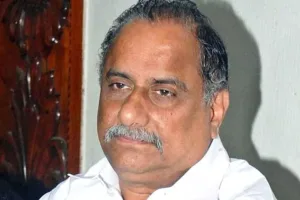
DGCA flags repetitive defects in 377 aircraft in the year 2025: Union MoS Murlidhar Mohol

The Directorate General of Civil Aviation (DGCA) carried out an extensive range of safety audits, inspections and surveillance checks across the aviation sector in 2025, the Minister of State for Civil Aviation, Murlidhar Mohol, informed the Lok Sabha on Thursday.

ANI | New Delhi |

The Directorate General of Civil Aviation (DGCA) carried out an extensive range of safety audits, inspections and surveillance checks across the aviation sector in 2025, the Minister of State for Civil Aviation, Murlidhar Mohol, informed the Lok Sabha on Thursday.

In a written reply in Lok Sabha, Mohol said that as part of planned surveillance activities during the year, the aviation regulator conducted 3,890 surveillance inspections and 56 regulatory audits. In addition, 84 surveillance checks of foreign aircraft (SOFA) were undertaken, along with 492 ramp checks to ensure compliance with safety and operational standards.

Responding to queries about recurring technical or operational deficiencies, the Minister said that since January 2025, a total of 377 aircraft have been identified with recurring defects. These aircraft were part of a combined fleet of 754 aircraft operated by various scheduled airlines. Airline-wise details of these findings, as on February 3, have been provided separately in an annexure, he added.

In addition to planned activities, the DGCA conducted numerous unplanned surveillance measures. These included 874 spot checks and 550 night surveillance checks, aimed at monitoring airline operations and maintenance practices without prior notice.
Regarding manpower shortages at the DGCA, the government said the number of sanctioned technical posts has been significantly increased. In 2022, the DGCA had 637 sanctioned technical posts. To address future requirements and strengthen regulatory oversight, the restructuring exercise has raised the number of sanctioned technical posts to 1,063.

The government also highlighted steps taken to strengthen real-time monitoring and enforcement mechanisms. The DGCA has issued Surveillance and Enforcement Division Circular No. 1/2025, dated July 7, 2025, mandating the use of the eGCA portal for all surveillance activities. The portal is to be used for issuance and closure of Deficiency Reporting Forms (CA-2001) as well as enforcement orders.

Replying to a question on air connectivity, the Minister said that as per the Winter Schedule 2025, no scheduled domestic airline has proposed to operate flights to or from Singrauli Airport.

The detailed surveillance procedures followed by the DGCA are laid down in the DGCA Surveillance Procedure Manual, which is available on the regulator’s official website, the Minister added.

‘Speedy’ Maharashtra grinds to halt, 32-hour gridlock shakes expressway: Shiv Sena(UBT) in ‘Saamana’

The Shiv Sena Uddhav Balasaheb Thackeray (UBT) on Friday criticised the BJP-led Mahayuti government, asserting that the Chief Minister had proclaimed on Republic Day that Maharashtra “will not stop” and will become “more dynamic.”

IANS | New Delhi |

The Shiv Sena Uddhav Balasaheb Thackeray (UBT) on Friday criticised the BJP-led Mahayuti government, asserting that the Chief Minister had proclaimed on Republic Day that Maharashtra “will not stop” and will become “more dynamic.” However, the actual situation on the Mumbai-Pune Expressway presents a contrasting narrative, as an extraordinary 32-hour traffic ordeal has effectively “cut the string” of the government’s ambitious assertions.

The Thackeray camp in the party’s mouthpiece ‘Saamana’ claimed that the Mumbai-Pune Expressway, once considered a “rosy dream” for drivers, has transitioned into a “thorny truth”. “What was meant to be a swift and comfortable journey is now defined by the constant fear of being stranded. As the government continues to drum up support for new mega-highways like the Samruddhi and Shaktipeeth, the current state of the expressway remains a tragic irony of a supposedly ‘speedy’ Maharashtra,” it said.

Referring to the traffic jam after a gas tanker overturned on the highway on Tuesday, the Thackeray camp highlighted a stark contrast between the administration’s rhetoric and the functional reality of state infrastructure. It also challenged the state government’s claims regarding infrastructure and development.

According to the editorial, the government appeared “helpless”, with no effective alternative routes or solutions to quickly rescue stranded citizens. Massive queues of vehicles stretched for 30 kilometres on both sides of the expressway, and thousands of citizens were stranded without access to food or water.

The editorial further said that the ordeal did not end with the tanker. Just as the initial congestion began to clear, a cement container broke down in the middle of the road between Talegaon and Malavali on Thursday. This second incident paralysed Mumbai-bound traffic for several more hours, marking a second consecutive day of misery for commuters.

“While leaders boast about projects like the ‘Atal Setu’, the ‘Missing Link’ and the Navi Mumbai International Airport, they appear helpless in managing existing vital arteries. Although the expressway was a visionary project initiated by the Shiv Sena chief decades ago, the government has failed to plan for the massive surge in vehicle volume seen over the last 25 years,” said the Thackeray camp.

The Thackeray camp likened the Chief Minister’s recent orders to relevant agencies to “locking the stable door after the horse has bolted”.

RBI keeps repo rate unchanged, maintains ‘neutral stance’ amid benign inflation

The Reserve Bank of India’s Monetary Policy Committee (MPC) on Friday unanimously decided to keep the key policy repo rate unchanged at 5.25 per cent, citing resilient domestic growth, a benign inflation outlook and rising global uncertainties.

UNI | New Delhi |

The Reserve Bank of India’s Monetary Policy Committee (MPC) on Friday unanimously decided to keep the key policy repo rate unchanged at 5.25 per cent, citing resilient domestic growth, a benign inflation outlook and rising global uncertainties.

The decision was taken at the MPC’s 59th meeting held from February 4-6, under the chairmanship of RBI Governor Sanjay Malhotra.

Consequently, the standing deposit facility (SDF) rate remains at 5.00 per cent, while the marginal standing facility (MSF) rate and the Bank Rate continue at 5.50 per cent. The MPC also opted to retain its neutral policy stance, indicating a calibrated approach going forward.

The central bank noted that the global economy showed notable resilience during 2025, supported by front-loaded trade activity, fiscal stimulus and accommodative monetary policies across major economies.

However, rising geopolitical tensions, fiscal pressures and divergence in monetary policies continue to inject volatility into global financial markets.

On the domestic front, India’s real GDP growth for 2025-26 is estimated at 7.4 per cent, according to the First Advance Estimates. Growth has been largely driven by robust private consumption and fixed investment, even as net external demand remained a drag due to higher imports.

On the supply side, real gross value added (GVA) is projected to grow at 7.3 per cent, supported by buoyant services activity, a resilient agriculture sector and signs of revival in manufacturing.

Looking ahead, the RBI expects domestic demand to remain strong, aided by healthy rabi prospects, GST rationalisation, monetary easing and a benign inflation environment. Investment activity is likely to maintain momentum on the back of high capacity utilisation, robust credit growth and the government’s continued thrust on capital expenditure.

The MPC also highlighted that merchandise exports could benefit from the prospective India–US trade deal, while recent trade agreements with the European Union, New Zealand and Oman are expected to diversify exports and strengthen the external sector.

Taking these factors into account, the RBI revised its real GDP growth projections for the first two quarters of 2026-27 upwards to 6.9 per cent and 7.0 per cent, respectively, with risks evenly balanced.

On inflation, headline CPI remained exceptionally low at 0.7 per cent in November and 1.3 per cent in December 2025. Food prices continued to remain in deflation, while fuel inflation stayed moderate. Core inflation also remained benign despite an increase in precious metal prices. Excluding gold, core inflation stood at 2.6 per cent in December.
The near-term inflation outlook remains favourable, supported by healthy food supply conditions, adequate buffer stocks and stable core inflation.

However, the RBI cautioned that geopolitical tensions, volatile energy prices and adverse weather events pose upside risks. CPI inflation for 2025-26 has been projected at 2.1 per cent, with Q4 inflation expected to rise to 3.2 per cent due to unfavourable base effects. For Q1 and Q2 of 2026-27, inflation is projected at 4.0 per cent and 4.2 per cent, respectively.

Explaining the rationale behind the policy decision, the MPC said that while external headwinds have intensified, the overall domestic growth and inflation outlook remains positive. Most members agreed that the current policy rate is appropriate, though one member, Prof. Ram Singh, reiterated his preference for a shift from a neutral to an accommodative stance.

The RBI said future policy actions would be guided by evolving macroeconomic conditions and data from the new GDP and CPI series, based on 2024 as the base year. The minutes of the MPC meeting will be released on February 20, 2026, while the next policy meeting is scheduled for April 6–8, 2026.

Lily Allen opens up about her struggle with materialism after addiction recovery

Lily Allen reveals how shopping and designer purchases replaced substance abuse as a coping mechanism in her recovery journey.

Statesman News Service | New Delhi |

Lily Allen has spoken candidly about how her relationship with addiction didn’t end with sobriety, it simply changed shape. The singer and actor revealed that after years of struggling with drugs and alcohol, she now finds herself battling a dependence on material possessions.

Also Read: Drew Barrymore says she’d never date a man in his 20s: ‘It just feels wrong’

A new form of addiction

Speaking in a recent interview with Elle, the 40-year-old described shopping as a new way of escaping herself, admitting that she often turns to spending when discomfort sets in.

“If I have an addiction, it’s to material things”

Allen explained that addiction, for her, has always been rooted in avoidance rather than excess alone. “It’s a need to escape myself,” she said, adding that substances once dulled that feeling, and now shopping plays a similar role.

“And alcohol and drugs numb you to that. So does sex, food, spending money, conflict,” she said. “If I have an addiction, it’s to material things.”

Guilt, money and self-worth

The singer also reflected on her complicated relationship with wealth, admitting she doesn’t always feel deserving of the money she earns. That discomfort, she said, pushes her to spend rather than save.

“I don’t believe that I am worthy of the things that I have in the world or the money that I make,” Allen shared. “So part of me tries to get rid of it.”

Designer purchases, she added, offer an oddly satisfying solution, one that feeds both impulse and guilt at the same time.

Living on the edge — by choice

Among her recent splurges is a Porsche 911 Carrera, alongside a painting and an emerald ring. While the purchase made her feel “a bit silly,” Allen admitted she has always wanted the car and doesn’t enjoy feeling too comfortable

“There’s something about the idea of running out of money that drives me,” she said, acknowledging that the thrill of financial risk gives her a sense of momentum, even if it isn’t healthy.

Recognising what isn’t healthy

When asked whether she feels happier living on the edge, Allen answered honestly. “Yes, but that’s not healthy,” she said, adding that feeling whole and secure would mean believing she deserves stability, something she’s still working towards.

“If I felt like a complete, whole, full person, I’d think I was worthy of a nice house, paying off my mortgage, and doing the weekly shop,” she explained.

Passing on the joy, not the baggage

Despite her conflicted feelings, Allen admits she loves beautiful things and has built up a significant fashion collection over the years. She hopes to one day pass those pieces on to her daughters, Ethel, 14, and Marnie, 13.

The revelation comes shortly after Allen shared that she narrowly avoided a serious accident last month when a lorry forced her new Porsche off the road, a moment that served as a sharp reminder of how quickly things can change.

Also Read: Halle Berry on ageing, menopause and Hollywood: ‘I refuse to be erased

Budget Session: Lok Sabha adjourned till Monday amid Opposition uproar

Stalemate continued in the Lok Sabha on Friday in the backdrop of a fresh procedural dispute raised by the Congress over how the Motion of Thanks on the President’s Address was adopted yesterday.

Kamna Arora |

The Lok Sabha, which was scheduled to hold a general discussion on the Union Budget 2026–27 on Friday, could not do so amid repeated adjournments and opposition protests. The stalemate continued in the lower house in the backdrop of a fresh procedural dispute raised by the Congress over how the Motion of Thanks on the President’s Address was adopted yesterday.

The House assembled at 11 am for government business, starting with Question Hour, but had to be adjourned amid continuing opposition protests. Amid the din, Lok Sabha Speaker Om Birla warned the opposition MPs and said, “If you want to end the dignity of the House, then the House cannot function in such a situation.”

The Speaker then adjourned the Lok Sabha proceedings first till 12 noon and then till 11 am on February 9 (Monday) amid continuing uproar from the opposition.

Earlier, Congress MP and Public Accounts Committee chairperson KC Venugopal wrote to the Speaker alleging “serious procedural irregularities” in the adoption of the Motion of Thanks on the President’s address, claiming violations of parliamentary rules.

Why Congress is questioning the Motion of Thanks process

The issue centres on how the Motion of Thanks was taken up and cleared in the Lok Sabha on February 5, 2026. The motion was passed without Prime Minister Narendra Modi replying to the debate, even as the House witnessed repeated disruptions and adjournments through the day. Opposition members, led by the Congress, protested throughout the proceedings, and the Prime Minister was not present in the House when the motion was finally put to vote.

In his letter to the Speaker, Venugopal cited Rule 20 of the Rules of Procedure, stating that “as per Rule 20 of the Rules, it is mandatory for the Hon’ble Prime Minister to explain the position of the Government at the end of the discussion on the Motion of Thanks.” He added that “in the present case, neither did the Hon’ble Prime Minister reply to the debate nor was the House informed about his inability to do so,” which, he said, “clearly amounts to a violation of the provisions of Rule 20.”

Venugopal also referred to established parliamentary practice, noting that “a debate is normally concluded with the reply of the concerned Minister.” He pointed out that in exceptional situations, “a motion under Rule 362 is required to be moved by a Member” to formally close the debate without such a reply.

According to him, “no such motion under Rule 362 was moved,” and instead, “at around 12 o’clock, the Motion of Thanks was abruptly put before the House, thereby bringing the debate to a close without following the prescribed procedure.” He said this “constitutes a violation of Rule 362.”

The Congress MP urged the Speaker to “kindly inform the House about the authenticity of the procedure followed” concerning the PM’s reply under Rule 20 and the closure of the debate under Rule 362.

Bills, papers and Private Members’ Business on Friday’s agenda

Apart from the Budget discussion, several Union ministers were scheduled to lay papers on the table today, including representatives from the Ministries of Health and Family Welfare, Defence, External Affairs, Law and Justice, and Ports, Shipping and Waterways.

From 3.30 pm onwards, the Lok Sabha was due to take up Private Members’ Business. The list included the introduction of several Private Members’ Bills, among them Constitution Amendment Bills and proposed changes to the Representation of the People Act.

Other Bills related to the welfare of students, senior citizens, farmers, women, fishermen, and workers, along with proposals touching on artificial intelligence, healthcare, education, the environment, labour reforms, digital platforms, and social security.

Disruptions over Rahul Gandhi remarks and India-China standoff debate

The Budget Session has seen repeated stoppages as opposition MPs, including Congress members, staged protests over a separate flashpoint involving Leader of Opposition Rahul Gandhi. The row began during a discussion when Gandhi raised the issue of the 2020 India-China standoff, but was not allowed to quote from the unpublished memoir of former Army chief General MM Naravane, triggering continued disruptions in the House.

In the Rajya Sabha, Prime Minister Narendra Modi Thursday, spoke on the Motion of Thanks to the President’s address and turned his fire on the Congress, referring to a controversy around a “traitor” remark aimed at BJP MP Ravneet Singh Bittu.

Taking aim at the Congress leadership, Modi said the comment showed the party’s “arrogance at its peak” and described it as an insult to the Sikh community. He alleged that Bittu was singled out because he is Sikh, and called the remark an affront to Sikh Gurus and Sikh values.

What lies ahead in the Budget Session

The Budget Session has 30 sittings scheduled over 65 days and is set to end on April 2. Both Houses will break for recess on February 13 and return on March 9, when Standing Committees will take up the Demands for Grants of various ministries and departments for scrutiny.

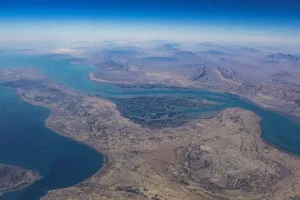
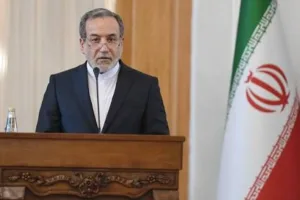
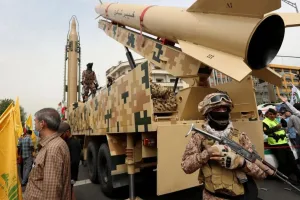
‘Leave now’: US Embassy urges Americans to exit Iran as tensions rise ahead of Oman talks

The US Embassy has urged American citizens to leave Iran immediately, citing security risks and travel disruptions, as Washington prepares fresh talks with Tehran in Oman.

Statesman News Service | Mumbai |

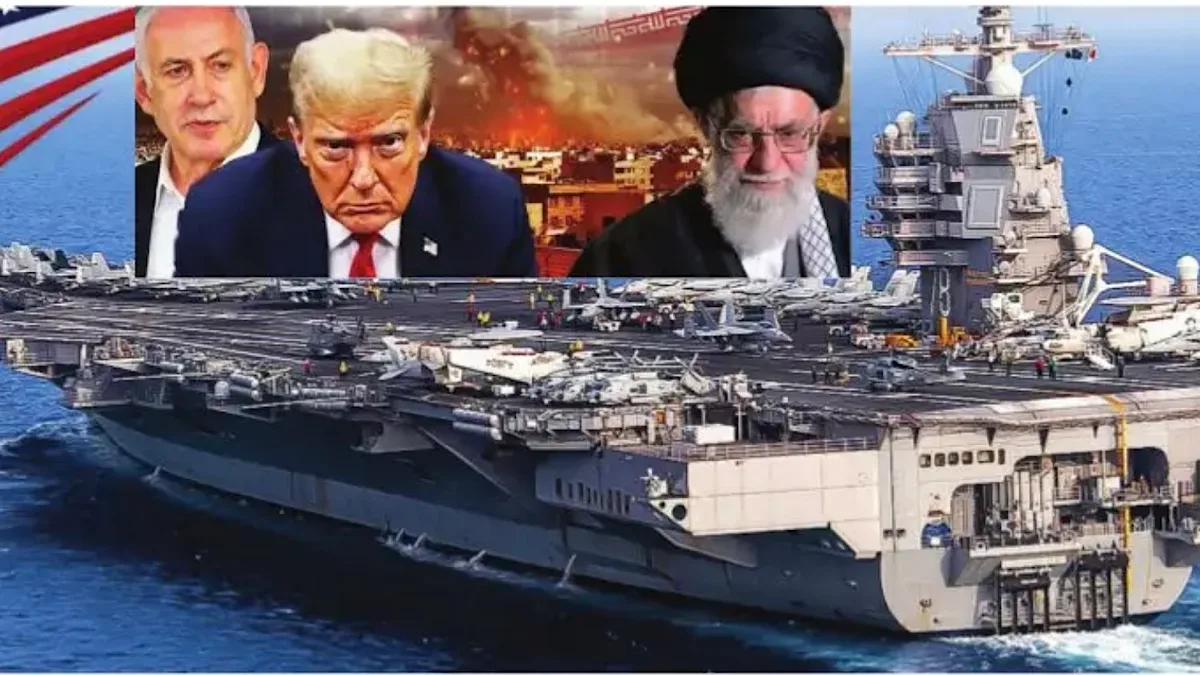
The virtual US Embassy in Iran has issued a stark advisory urging American citizens to “leave Iran immediately”, citing rising security risks, communication blackouts, and widespread travel disruptions. The warning comes as the White House confirmed fresh US–Iran talks in Oman, underscoring heightened regional sensitivities.

In a detailed advisory released on Friday, the US Embassy said Iran is witnessing “increased security measures, road closures,” disruptions to public transport, and repeated internet shutdowns. “Airlines continue to limit or cancel flights to and from Iran,” the advisory noted, adding that access to mobile, landline, and national internet networks remains restricted.

The embassy cautioned that US citizens should be prepared for prolonged communication outages, plan alternative ways to stay in touch, and, if it is safe, consider leaving Iran by land routes through neighbouring countries.

Why the US Embassy has issued the warning now

“Leave Iran now. Have a plan for departing Iran that does not rely on U.S. government help,” the advisory said, warning that flight cancellations could occur without notice. Americans unable to depart were advised to stay indoors in secure locations and stock essential supplies such as food, water, and medicines.

The embassy also urged US nationals to avoid demonstrations, keep a low profile, closely follow local news, and be ready to change plans at short notice. Citizens were asked to keep phones charged, remain in contact with family and enrol in the Smart Traveler Enrollment Program (STEP) for security updates.

Special caution was issued for US–Iranian dual nationals. The advisory said Iran does not recognise dual nationality and treats such individuals solely as Iranian citizens. “U.S. nationals are at significant risk of questioning, arrest, and detention in Iran,” it said, adding that showing a US passport or links to the United States could be enough to trigger detention. Dual nationals were instructed to exit Iran using Iranian passports.

The embassy also noted that the US government cannot guarantee safety for citizens choosing to leave via land routes and advised travellers to proceed only if they believe it is safe.

Exit routes available to US citizens from Iran

According to the advisory, the Armenia land border at Agarak/Norduz is currently open. US citizens entering Armenia from Iran require a valid US passport and can stay visa-free for up to 180 days.

Land crossings into Turkiye, including Gurbulak/Bazargan, Kapikoy/Razi and Esendere/Serow, are also open. Americans entering Turkiye can stay visa-free for up to 90 days.

The advisory said Turkmenistan has open land borders, but US citizens need special authorisation from the Turkmen government, facilitated through the US Embassy in Ashgabat. Azerbaijan’s land borders remain closed to routine traffic, and entry requires prior approval, with potentially long waiting periods.

US citizens were explicitly advised not to travel to Afghanistan, Iraq or the Pakistan–Iran border region.

The advisory reiterated that the US has no diplomatic or consular relations with Iran, with the Swiss government acting as the protecting power for US interests in Tehran.

US–Iran talks in Oman as Washington pushes ‘zero nuclear capability’

The warning to Americans comes as the White House confirmed that fresh talks between the United States and Iran will be held in Oman, amid Washington’s insistence that Tehran accept “zero nuclear capability”.

White House Press Secretary Karoline Leavitt said Special Envoy Steve Witkoff and Jared Kushner would travel to Oman for the discussions, which were earlier expected to be held in Turkey before being shifted.

Framing the talks as part of President Donald Trump’s broader approach, Leavitt said diplomacy remained the administration’s first choice, but underlined a hard line on Iran’s nuclear programme. “Zero nuclear capability is something he’s been very explicit about,” she said, adding that Trump wanted to see if a deal was possible.

She also issued a warning to Tehran, saying the president had “many options at his disposal aside from diplomacy”, while stressing that Trump remained open to talks.

Oman has historically served as a discreet diplomatic channel between Washington and Tehran, particularly during periods when formal negotiations stalled elsewhere.

Manipur tense as protests over Kuki-Zo MLAs joining govt turn violent in Churachandpur; 5 injured

Clashes erupted in Manipur’s Churachandpur district as protests against Kuki-Zo MLAs joining the BJP-led government turned violent, leaving several injured and the area on edge.

Statesman News Service | New Delhi |

Fresh violence broke out in Manipur’s Churachandpur district on Thursday evening as protests against Kuki-Zo MLAs joining the BJP-led state government escalated into clashes with security forces, leaving at least five people injured and the situation highly tense.

The unrest erupted around 6 pm at Tuibong Main Market and Tuibong Bazaar areas, where hundreds of protesters, mostly youths, gathered to oppose the swearing-in of BJP MLA Nemcha Kipgen as Deputy Chief Minister and the anticipated induction of LM Khaute and Ngursanglur Sanate into the government. Demonstrators attempted to push security personnel back to their barracks, torched discarded materials and tyres, and raised slogans against the new political developments.

Security forces intervened to disperse the crowd, but the situation quickly spiralled. Protesters resorted to heavy stone-pelting, forcing central and state forces to respond with baton charges and tear gas shells. At least five protesters sustained minor injuries, police officials said, while additional forces were rushed to the trouble-hit areas to prevent further escalation.

Why protests erupted in Churachandpur

Tensions in Churachandpur had been building since Wednesday evening after Nemcha Kipgen, who hails from Kangpokpi district, virtually took oath as Deputy Chief Minister from Manipur Bhavan in New Delhi. Protesters said anger had intensified after reports that three Kuki-Zo MLAs were taking part in the formation of the Manipur government.

According to sources, resentment within sections of the Kuki-Zo community stems from the prolonged ethnic violence in the state. Community members allege that Kuki-Zo people have suffered heavily, with hundreds killed in earlier incidents and widespread destruction of property and churches.

Security response and current situation

Officials from the Assam Rifles, including the Commander of the 27 Sector, were deployed to defuse the situation, though initial attempts to calm protesters were unsuccessful. Security forces briefly pulled back while maintaining positions, even as protesters continued to press forward. Tear gas shells were later fired to disperse the crowd, and clashes were continuing at the time of the latest reports.

Senior security officials have rushed to Churachandpur to oversee efforts to restore normalcy. Authorities said the situation remains tense, with security forces still deployed across sensitive areas.

Political fallout within the Kuki-Zo community

The Kuki-Zo Council (KZC), the apex body of the Kuki-Zo tribal community, on Thursday announced a social boycott of all Kuki-Zo MLAs who participated in the formation of the Manipur government.

Of the ten Kuki-Zo MLAs in the state, three – Nemcha Kipgen, LM Khaute and Ngursanglur Sanate – have so far been involved in the government formation process. Seven of the ten belong to the BJP, while the remaining three are affiliated with local Kuki-Zo organisations.

Several Kuki-Zo organisations have also called for a shutdown in Churachandpur district on Friday and announced plans to hold demonstrations in Kuki-Zo tribal-inhabited areas of other districts.

More details are awaited.

CPI-M pushes for broader opposition unity as Cong opts to go solo in polls

A day when the Congress officially announced its decision to contest the West Bengal Assembly elections on its own, the CPI-M said that it was still keen on forging a broader front of forces opposed to both the Trinamul Congress and the BJP, even as the prospects of a pre-poll understanding with the Congress appeared uncertain.

Statesman News Service | Kolkata |

A day when the Congress officially announced its decision to contest the West Bengal Assembly elections on its own, the CPI-M said that it was still keen on forging a broader front of forces opposed to both the Trinamul Congress and the BJP, even as the prospects of a pre-poll understanding with the Congress appeared uncertain.

“The Left is keeping its channels of communication open to all the political groups that are against the ruling Trinamul Congress and opposition BJP,” CPM state general secretary Mohammed Salim told in a press conference on Thursday.

The revelation of the party’s central committee member came on a day when the Congress high command has formally announced that Congress will contest all the 294 seats in West Bengal alone, keeping very little room for negotiations.

On the question of the Congress joining any such platform, Salim said the party’s state leadership had indicated that the final decision would emerge from consultations at the grassroots level.

He, however, acknowledged that there had been no meaningful progress so far on either a formal alliance or seat-sharing arrangement ahead of the Assembly polls scheduled in about three months.

The Left parties had fought the 2021 Assembly elections in alliance with the Congress and the Indian Secular Front, but the experiment failed to yield results, with all Left and Congress candidates losing and only the ISF managing to win a single seat.

Responding to queries about whether the name of suspended Trinamul Congress MLA Humayun Kabir, who has floated the Janata Unnayan Party, figured in discussions at the CPI-M’s recent state committee meeting, Salim said the party did not centre its organisational or electoral deliberations on individuals.

His clarification came amid speculation of a possible understanding after he was seen meeting Kabir at a New Town hotel last week.

“The nature of the discussion was exploratory. We wanted to know his (Kabir’s) plans and objectives particularly after the controversy surrounding the laying of a foundation stone for a mosque in Murshidabad district,” he added.

Welcoming the Supreme Court’s directive asking the West Bengal government to clear 25 per cent of the dearness allowance dues to its employees for the period between 2008 and 2019, the CPM leader said: “This is a huge relief for nearly 20 lakh government staff. The ruling reaffirmed that DA was a statutory entitlement and not a matter of discretion.”

Taking a dig at the Mamata Banerjee government, Salim said its repeated claims of financial distress stood exposed, and questioned what had happened to the revenue figures often highlighted by the state administration.

Injecting caste into the campus

Before diving into the raging UGC controversy gripping the nation, I would like to share a personal note as a teacher-one that I often repeat to my students.

MIHIR BHOLEY | New Delhi |

Before diving into the raging UGC controversy gripping the nation, I would like to share a personal note as a teacher-one that I often repeat to my students. Discrimination usually stems from envy or prejudice. People hate seeing others outshine them. But here’s the exception: a parent beams with pride when their child surges ahead, and a teacher feels the same glow watching his students excel. In that “defeat,” they spot their own victory, forged through their nurturing role.

Their shadow lingers in those triumphs. I know countless teachers like me who’ve shaped students like their own kids, regardless of caste or community share this pride. In a bustling classroom or years as a research mentor, students become just that: students. No caste label. They bond with you over your knowledge and dedication, not your caste background. Contrast this with the so-called campus discrimination horror stories. They are still not as rampant as made out to be nor do they justify the UGC’s one-sided, risky “equity promotion” law – a powder keg for misuse. UGC seems to have bulldozed this without campus-wide consultations-ignoring teachers, students, VCs, and stakeholders who could have flagged the lop sides early on. No town halls, no feedback loops, just top-down diktat has made it controversial. On campus students make friends and rivals, they spat and yet collaborate with each other often without caste considerations.

That is how healthy societies form. Now imagine the scenario post-UGC regulations. A fresh 12th-pass kid, buzzing with excitement of learning new subjects and skills, ready to experiment and fail, finds “Equal Opportunity Centers” and “Equity Squads” more prevalent than innovation centres or “Equity Committees” more visible than cultural clubs or sports committees. Can his personality bloom in the shadow of fear? Will he vibe freely with peers, his faculty, or campus folk? Amid prowling Equity Squads and 24×7 Hotlines, can he hone questioning, creative and critical thinking – the skills to uplift himself and society? The UGC guides and boosts higher education, free thought, and research, backed by India’s top academics. How can one expect it to make regulations that breed fear, stifle teaching and dissuade scholarship? Do we want our campuses to turn into police states? Seems UGC has rushed this without giving sufficient thought.

Sadly, post-independence, our higher education fell prey to left-wing class-war narratives. Literature, history, politics, sociology – all painted Indian society as a vast canvas of oppressors and oppressed, erasing all models of harmony between people of different castes and communities. Theories like Manuvaad, Brahminism, patriarchy and feminism first exploded on elite campuses. Then they became widespread. Campuses echoed with offensive and hateful slogans like “Tilak-Taraazu aur Talwar”, branding everybody in the general category as quintessential oppressors who deserve to be booted out. Leftist ideologues hailed it as progressive free speech–a must for breaking imaginary upper caste tyranny.

This divisive poison seems to have triumphed again: UGC’s regulation endorses the same left binary, pitting castes against each other. Once it comes into action it will empower grievance-mongers, fracture student unions, and revive day-to-day conflicts under the banner of justice. Will our institutions be able to handle it? On the contrary, to fulfil the dream of ‘Vikasit Bharat’ our campuses needed to go “caste-neutral”. They should be empowered to shield all against bias, hate-mongering caste politics. This demands ironclad zones where nobody, with zero exceptions, is discriminated against on caste or community lines. An inclusive and harmonious academic environment should be allowed to flourish. That’s vital for free thinking and quality research. Sadly, UGC’s regulation presumes general-category students and teachers guilty of casteism and discrimination – echoing the oppressor-oppressed tale leftists peddled for decades.

Will this weaken casteism or augment it further? Everyone, prejudices aside, must ponder seriously. The UGC’s 2026 Equity Regulation boasts of wiping out caste bias-but it’s a Trojan horse inviting chaos. Prime peril: rampant misuse via false accusations. General-category students and faculty now live in dread of baseless complaints from rivals over grades, project credits, or personal grudges, twisted into “caste discrimination”. Petty academic beefs could explode into career-wrecking probes, with accusers facing zero blowback. Besides, mandatory equity committees and EOCs will swamp small colleges in paperwork, pulling focus from classrooms to endless investigations. Quality teaching is likely to be buried under complaint piles.

Harsh penalties will demotivate faculty and students. UGC grant blackouts or derecognition could bankrupt modest institutes, widening the urban-rural education gap. Chilling surveillance will stifle free speech. 24×7 monitoring and reports will breed self-censorship. Consequently, professors will dodge tough debates while students will fear their question may be interpreted as offensive. Eventually, innovation will die; echo chambers will thrive. Reverse discrimination will brew on campuses. Worse, this regulation flouts Article 14’s right to equality before law. General-category professors, students, and staff get zero safeguards against witch-hunts-no presumption of innocence, no burden of proof on accusers. Motivated, malicious complaints are likely to swell as there is no deterrence of penalty or punitive action for motivated and false accusations.

It’s a one-way street: the “oppressed” wield unchecked power, while others cower defenseless. Eventually courts will have to strike down this lopsided farce. Unfortunately, these one-sided inclusivity traps will breed fresh inequalities. But all is not lost. The ball is now in the government’s court. It’s a government which is empathetic towards all sections of society as it follows the goal of “Sabka Saath, Sabka Vikas.” One is confident it will listen to the legitimate concerns and help every student and campus bloom its best. It will not allow the cherished ‘Viksit Bharat’ dream of the nation to derail due to such manageable glitches.

(The writer is a former Principal Faculty of National Institute of Design and an acclaimed author.)

Minneapolis leads the resistance to Trump

Last month, businesses, schools, and workplaces across Minnesota in the USA closed in two general strikes to protest President Donald Trump’s violent immigration crackdown in the Minneapolis-St. Paul area, as well as the killings of Renee Good and Alex Pretti by Federal Immigration and Customs Enforcement agents.

KRISHNAN SRINIVASAN | New Delhi |

Last month, businesses, schools, and workplaces across Minnesota in the USA closed in two general strikes to protest President Donald Trump’s violent immigration crackdown in the Minneapolis-St. Paul area, as well as the killings of Renee Good and Alex Pretti by Federal Immigration and Customs Enforcement agents. Against backgrounds of massive, nonviolent marches in frigid temperatures through central Minneapolis, the strikes marked an extraordinary example of resistance to the authoritarian behavior of the Washington administration. This resistance was an action deeply rooted in the political culture of the Twin Cities and the now largely forgotten history of the general strike as a tactic for social action and protest in the United States.

Although common in Europe, the last general strike in the United States occurred nearly 80 years ago, in 1946, during the period of labour unrest following World War II. During the first half of the 20th century, however, the general strike was a frequent form of social activism, normally centered around the labor movement. The largest general strikes in US history occurred in Seattle in 1919, in support of striking shipyard workers, and in Oakland, California in 1934, after police shot and killed striking longshoremen. Minneapolis also experienced a series of general strikes in 1934, an event that shaped the city’s political identity and tradition that provided a powerful platform for resistance to the Trump administration and its officials. In 1934 the Brotherhood of Teamsters struck for recognition of their union and increased wages. The Teamsters formed an alliance with other unions, organizing demonstrations and self-help efforts (many by women) that included medical care, provision of food and outreach to the unemployed.

The alliance shut down the city’s industrial core and achieved the union’s goals, although the police killed two unarmed strikers. Labour organizations in the Twin Cities surged in the aftermath of the general strike, while the Minnesota Democratic Farmer-Labor party emerged as a progressive version of the national Democratic party. Liberal stalwarts such as Hubert Humphrey, Walter Mondale and Paul Wellstone were products of this tradition. The general strike produced a social attitude in the Twin Cities that still emphasizes community self-reliance, support for neighbours, immigrants, and grassroots organizations. Therefore, Trump’s officials could not have chosen a better location if they wished to incite scenes of protest and conflict. General strikes in the last century usually revolved around labour conflicts in a particular city.

Violence normally came from the local police, and occasionally state-controlled national guard or private security forces, but not directly from the federal government’s representatives. But like the current crisis in Minnesota, these events had a national context and often a connection to the president. The role and rights of labour, for example, remained unsettled during the first half of the century, and until the New Deal (Franklin Roosevelt’s reforms of the 1930s), presidents almost always took the side of management in suppressing unions. For example, the 1919 Seattle general strike followed the Woodrow Wilson administration’s criminalization of dissent during World War I which preceded an aggressive campaign authoritarian suppression, as fearing Bolshevik involvement in any general strike and following a series of anarchist bombings, the Wilson administration conducted raids against labour and leftist organizations and arrested their members, many of whom were immigrants.

In US history, local activism and conflict cannot usually be separated from the actions of the president and such is the case in the Twin Cities. Trump’s policies are driving protests. In that sense, Minneapolis’ general strike was different from its predecessors, and was not a conflict between labour and business. Many small and medium-sized businesses actively participated in the shut-down, and local and state leaders sided with the protestors. It was not primarily an attempt to win changes in federal policy but an expression of solidarity. Although Trump’s targeting of immigrants and killing of citizens echo the authoritarianism of Wilson, the difference is that Trump actively sought and created the conditions for conflict in Minnesota.

Yet, along with that sense of shared struggle, the strike reflected discontent felt by those frustrated with the Trump administration’s abuses and violence through the past year, and anger at the administration’s treatment of minorities and immigrants, regardless of their legal status. It may be a signal as well, to the Trump administration and its supporters, that pushing more will lead to a fundamental fracturing of the country that may not be reconcilable. It also sent a message to those who have sought accommodation: by submitting to the president’s dictates, the university leaders who have capitulated to his demands, and to those who have observed the crisis but remained unmoved to protest.

While the general strike thus represents a fear that the country has been broken beyond repair, it can also be construed as an expression of hope that, just as an exploitative capitalist order could be transformed in the 20th Century, racist authoritarianism might be rolled back in the current one. It reflects optimism that those who still do not recognize the administration’s abuse of the constitution and undermining American democracy might yet shift away from the course of authoritarian destruction in which it is currently headed.

(The writer is India’s former foreign secretary.)

Borrowing more

India’s household balance sheet is sending mixed signals. On paper, financial savings have begun to recover after touching multi-decade lows.

Statesman News Service | New Delhi |

India’s household balance sheet is sending mixed signals. On paper, financial savings have begun to recover after touching multi-decade lows. Yet beneath this improvement lies a more troubling reality: families are borrowing more than ever just to keep daily life afloat. The coexistence of rising savings and rising debt is not a statistical anomaly ~ it reflects an economy where income growth is failing to keep pace with the cost of living.

Over the past few years, household borrowing has shifted decisively away from asset creation. Loans once taken largely for homes or long-term investment are increasingly being used for routine consumption. This change matters because consumption-led borrowing offers no future income stream to service the debt. It merely postpones financial stress rather than resolving it. The root of the problem lies in the labour market.

Employment growth, particularly in formal white-collar segments, has slowed significantly since the pandemic. Even where jobs exist, wage increases have struggled to match inflation. Official price indices may suggest moderate inflation, but the lived experience of urban households tells a different story. Costs of education, transport, healthcare, housing, and everyday services have risen far faster than headline numbers capture. For many middle-income families, the monthly budget now stretches thinner each year. As incomes lag expenses, borrowing becomes a coping mechanism. Short-tenure personal loans, buy-now-pay-later schemes and unsecured credit have stepped into the gap left by stagnant wages. What makes this trend concerning is not just the scale of borrowing, but the declining credit quality of borrowers.

A growing share of loans is flowing to households with limited repayment buffers, increasing the risk of defaults during even minor economic shocks. The pressure is not confined to borrowers alone. Financial institutions are beginning to see early signs of strain, with rising loan slippages and write-offs in segments linked to retail credit. While the banking system remains stable for now, persistent stress in household finances could gradually transmit risk upward, particularly if economic growth weakens or employment conditions deteriorate. A behavioural shift is also at play. Digital connectivity and social media have transformed consumption expectations. Aspirational lifestyles are no longer distant images associated with the wealthy; they appear daily on mobile screens across income levels. This visibility has altered spending psychology, blurring the line between wants and necessities.

Consumption increasingly reflects perceived social norms rather than financial capacity, encouraging households to smooth lifestyles through debt. The danger lies in mistaking debt-fuelled consumption for economic resilience. When spending is supported by borrowing instead of rising incomes, growth becomes fragile. Households lose their ability to absorb shocks, whether from medical emergencies, job losses, or interest rate increases. Addressing this challenge requires more than urging families to save more. Sustainable relief will come only from improving job creation, strengthening real wage growth, and aligning inflation measurement more closely with actual household spending patterns. Without these corrections, India risks building its consumption story on credit rather than confidence ~ a foundation that cannot hold indefinitely

Pariksha Pe Charcha 2026: PM Modi urges students to trust their study patterns, manage stress

Prime Minister Narendra Modi interacted with students during Pariksha Pe Charcha 2026, offering practical advice on exams, study habits, stress management and personal growth.

Statesman News Service | New Delhi |

Prime Minister Narendra Modi on Friday interacted with students from across the country during Pariksha Pe Charcha 2026, urging them to stay confident in their own study methods, manage time wisely and not let exam pressure overwhelm them.

The interaction took place with students in Coimbatore, Raipur, Devmogra, Guwahati and at 7, Lok Kalyan Marg in Delhi. During the chat, students asked questions related to academics, mental health, and personal growth, as well as how to handle expectations during exams.

Responding to a question from a student in Gujarat about different study patterns, the Prime Minister said there is no single right way to learn and warned against blindly copying others. “Even after I became Prime Minister, people still keep suggesting to me what to do and how to do it. If you see, at lunch or dinner at your home, everybody has a different pattern. Some people start with vegetables, some with rotis, some mix all of it. But you must be following your pattern, not copying them, right?” he said.

He added that suggestions should be listened to carefully but applied only if they make sense to the individual. “First thing, you should believe in your study pattern. Listen carefully to suggestions and check if it is required or not. Just like in PPC, I have changed my pattern now and extended it to the states.”

‘Teachers should not rush students’: PM Modi on learning speed

On a question from a student named Ayush about maintaining speed in studies, PM Modi said teachers play a key role in ensuring students are not pushed too fast. “Maintaining speed is something teachers should deal with. They should not go ahead of students. The way farmers treat their fields, similarly, a student’s brain should be nurtured,” he said.

The interaction also saw lighter moments. When the Prime Minister asked students how they were coping with the cold weather, they replied, “In the excitement of meeting you, we forgot everything.”

PM Modi later felicitated students with traditional Assamese handwoven scarves and spoke about their cultural value. “This is something that represents women’s empowerment, as women in Assam design and make it at their homes. It gives a very special kind of pride, so I decided to give this to the students today,” he said.

Students described the interaction as special and motivating. Tenzin Choiky, a student from Arunachal Pradesh, said, “I live in a remote border town area and rarely get such opportunities. This was the first such opportunity I received, it was so special, and I was so excited.”

In another informal exchange, a student told the Prime Minister that her birthday falls on the same date as his, prompting a warm and animated response that drew smiles from those present.

Pariksha Pe Charcha is held every year ahead of board examinations and allows students to interact directly with the Prime Minister on issues related to studies, stress and aspirations.

Broken Redactions

The latest mass disclosure of documents linked to Jeffrey Epstein was supposed to answer a long-standing public demand: sunlight, finally, on a case that has come to symbolise elite impunity and institutional failure.

Statesman News Service | New Delhi |

The latest mass disclosure of documents linked to Jeffrey Epstein was supposed to answer a long-standing public demand: sunlight, finally, on a case that has come to symbolise elite impunity and institutional failure. Instead, the release has exposed a different and deeply troubling weakness ~ how easily the machinery of transparency can become a second instrument of harm when it forgets who it is meant to protect. At the heart of the controversy is not the principle of disclosure itself.

Few would argue that a case of this magnitude should remain sealed forever, especially when questions about networks, enablers and missed chances for accountability still linger. But transparency is not a moral absolute; it is a tool. Like any tool, it can be used carefully or carelessly. In this instance, the carelessness has been devastating. Survivors found their identities, contact details, and even images circulating because redactions failed. For people who had already endured exploitation, the state’s promise of protection dissolved in a few keystrokes. The damage is not abstract. Exposure in such cases carries real risks: harassment, threats, social stigma, and the reopening of psychological wounds that many have spent years trying to close.

When officials describe these failures as “technical or human error,” they may be offering an explanation, but they are not offering comfort. The phrase quietly admits that the system designed to safeguard victims was not built with enough redundancy, skepticism, or humility about its own fallibility. The purpose of releasing these records was to strengthen public trust. Yet the result has been the opposite for those most directly affected. For survivors, the message received is brutally simple: even now, even after everything, their safety is still negotiable. This episode also reveals a persistent tension in modern governance. We live in an age that equates data dumps with accountability, volume with virtue.

But justice is not measured in terabytes. It is measured in whether institutions can hold two obligations at once: the public’s right to know and victims’ right not to be harmed again. When those obligations collide, the burden should fall on the state to design processes that err on the side of protection, not speed or spectacle. The controversy has also distracted from the larger, unresolved questions that made these files important in the first place. Who failed, and how?

Which safeguards were ignored, and by whom? What systemic weaknesses allowed a serial abuser to operate for so long while clasping hands with power? Instead of clarifying these issues, the flawed release has shifted the spotlight onto bureaucratic negligence and crisis management. In the end, this is not an argument against disclosure. It is an argument for mature disclosure: slow, audited, and built around the people most likely to be hurt by mistakes. If transparency becomes another way for the vulnerable to pay the price of institutional error, then it stops being a virtue and starts looking like a performance.

Russia-Ukraine talks in UAE end with prisoner exchange, wider peace remains out of reach

Russia and Ukraine ended their latest UAE-hosted talks with a major prisoner exchange, but failed to bridge differences on territory, ceasefire terms and long-term security guarantees.

Statesman News Service | Mumbai |

The second round of US-mediated talks between Russia and Ukraine concluded in the UAE on Thursday with an agreement on a large-scale prisoner exchange, even as the two sides failed to narrow differences on fundamental issues such as territory, a ceasefire, and long-term security arrangements.

The discussions, held in Abu Dhabi, involved delegations from the United States, Russia, and Ukraine and focused on easing humanitarian concerns amid the continuing war. While the prisoner swap was finalised and implemented soon after, the talks did not produce any joint political or security statement, reflecting the lack of progress on broader peace terms.

According to Ukraine, the talks were initially conducted in a trilateral format before moving to group-level consultations. Ukraine’s National Security and Defence Council Secretary Rustem Umerov said the Ukrainian delegation was pushing for a “dignified and lasting peace”, though he did not spell out specific outcomes of the negotiations, Xinhua news agency reported.

Prisoner exchange agreed, but peace terms still distant

US President’s Special Envoy Steve Witkoff described the discussions as “specific and constructive”, saying representatives of the three countries had reached a consensus on a prisoner exchange. He cautioned, however, that much more work would be needed to move towards a comprehensive settlement of the conflict.

Soon after the talks ended, Russia and Ukraine carried out their first large-scale prisoner exchange in nearly five months, with 157 detainees returned by each side. Ukrainian President Volodymyr Zelensky said those freed included both military personnel and civilians.

Earlier, the United Arab Emirates’ Ministry of Foreign Affairs welcomed the cooperation between Moscow and Kyiv on the exchange, saying it underscored the UAE’s role as a trusted mediator working to reduce tensions and encourage dialogue between the two sides.

Despite the humanitarian breakthrough, no timeline was announced for the next round of negotiations, underlining the uncertainty surrounding the peace process. Zelensky said later on Thursday that further talks involving delegations from the US and Russia were expected soon, adding that the next meetings were likely to be held in the United States.

Realistic and achievable?

The Union Budget 2026–27 outlines a reform-oriented and investment-led growth strategy within a framework of fiscal consolidation.

DILIP DATTA and ARPITA SAHA | New Delhi |

The Union Budget 2026–27 outlines a reform-oriented and investment-led growth strategy within a framework of fiscal consolidation. Presented on the auspicious occasion of Magha Purnima and the birth anniversary of Guru Ravidas, the Finance Minister highlighted that this is the first Budget prepared in Kartavya Bhawan and is guided by three foundational Kartavya. The first Kartavya seeks to accelerate and sustain economic growth by enhancing productivity, competitiveness, and building resilience amid a volatile global environment.

The second Kartavya focuses on fulfilling people’s aspirations by strengthening their capacities and enabling them to participate actively in India’s development process. The third Kartavya, aligned with the vision of Sabka Saath, Sabka Vikas, underscores inclusive access to resources, opportunities, and basic amenities across regions, sectors, and social groups. Collectively, these principles reflect the government’s stated commitment to high-growth, inclusive, and resilient economic development. However, while budget speeches articulate policy intent and developmental priorities, the credibility of a budget ultimately hinges on whether its fiscal projections are realistic and achievable in light of historical trends and prevailing macroeconomic conditions.

This raises a fundamental question: Are the figures presented in the Union Budget 2026–27 grounded in fiscal reality, or do they rest on optimistic assumptions that may not materialise? To examine this issue, trend and variance analyses were conducted using data from 2020-21 to 2025-26. These methods help identify structural patterns in revenue, expenditure, and deficits, and form the basis for deriving realistic projections for the current year. The estimates generated through this empirical exercise are then compared with the figures presented in the Union Budget. Trend analysis shows that the Centre’s net tax revenue (NTR) as a percentage of GDP increased from 6.34 per cent in 2020-21 to 7.94 per cent in 2025-26, with a mean value of 7.95 per cent.

Non-tax revenue, however, fluctuated considerably, ranging from a low of 0.92 per cent in 2020-21 to a high of 1.63 per cent in 2025-26, with a mean value of 1.36 per cent. As a result, total revenue receipts (TRR) averaged 9.43 per cent of GDP during the period, while total capital receipts (TCR) averaged 5.95 per cent. This implies that capital receipts amounted to nearly 63 per cent of total revenue receipts. A closer look reveals that debt receipts consistently accounted for about 93 per cent of total capital receipts, indicating a sustained and heavy reliance on borrowings to finance the capital account of the Union Government.

During the pandemic year 2020-21, debt receipts constituted nearly 60 per cent of total receipts, reflecting extraordinary borrowing in response to the Covid-19 shock. Although this share moderated gradually with revenue recovery, it remained elevated at around 45 per cent in 2024-25 and 2025-26 (Budget Estimates), underscoring the structural nature of borrowing dependence. Interest payments as a proportion of revenue expenditure rose from 26 per cent in 2020-21 to 32 per cent in 2025-26. However, higher incremental growth rate of revenue expenditure compared to that of interest payment is a clear symptom of declining debt servicing capacity (DSC) and interest servicing capacity (ISC).

This masks a deeper concern ~ a steady decline in debt servicing capacity (DSC) and interest servicing capacity (ISC). DSC, which measures the government’s ability to service liabilities from its revenue base, declined from around 40 per cent in 2020-21 to nearly 32 per cent by 2025-26. Similarly, ISC, which reflects the ability to meet interest obligations from interest receipts, also exhibited a declining trend. These indicators point to weakening fiscal resilience. Revenue expenditure averaged about 13 per cent of GDP, while capital expenditure increased from 2 per cent to nearly 4 per cent of GDP, with a mean of 3 per cent.

Although the rise in capital expenditure is a positive structural shift, trend analysis shows that both the fiscal deficit and revenue deficit remained persistently high, averaging around 5.7 per cent and 3 per cent of GDP, respectively. A particularly worrying finding is that the average year-on-year growth rate of GDP has remained lower than the growth rate of total expenditure. When expenditure consistently outpaces income, the gap is inevitably financed through additional borrowing, increasing fiscal vulnerability and potentially impairing economic sovereignty. This is an alarming situation. Variance analysis presents a mixed picture. Revenue receipts exhibit a favourable variance, indicating improved tax mobilisation.

Capital receipts, however, show an adverse variance due to shortfalls in non-debt capital receipts, further reinforcing reliance on borrowings. On the expenditure side, total expenditure records an adverse variance, largely driven by higher revenue expenditure, especially interest payments and other committed liabilities. Another area of concern is the Centre’s efficiency in collecting interest on loans extended. The Efficiency Index for Interest Collection (EIIC) – measured as interest received as a percentage of the average outstanding loan stock – has shown a declining trend over the past five years, pointing to weakening recovery performance. Based on empirical trends, the projections for key components of the Union Budget 2026–27 differ significantly from realistic estimates derived through trend analysis.

This assessment is based on a more conservative and realistic assumption of around 7 per cent GDP growth, in contrast to the approximately 10 per cent nominal GDP growth implicitly assumed in the Union Budget 2026–27. Given this divergence, both the revenue deficit and fiscal deficit are likely to exceed the levels projected in the Budget. Financing these higher deficits would require either increased market borrowings or expenditure compression in critical sectors such as education, health, infrastructure, and agriculture ~ each carrying adverse long-term consequences. To conclude, macroeconomic analysis indicates that the Government of India continues to operate under significant fiscal constraints, with borrowing remaining an important component of public finance. Persistently high fiscal and revenue deficits, along with pressures on debt and interest servicing capacities, underline the challenges of maintaining long-term fiscal sustainability.
These risks, if left unaddressed, could potentially heighten inflationary pressures and fiscal vulnerability. At the same time, the Union Budget 2026–27 represents a conscious and calibrated attempt to address these concerns. The Budget signals a renewed commitment to fiscal consolidation and expenditure rationalisation, while preserving the growth impulse through a sustained emphasis on capital formation. Structural measures such as the proposed new Income Tax Act aimed at simplifying compliance, the expansion of high-value manufacturing initiatives including Biopharma SHAKTI and India Semiconductor Mission 2.0, enhanced support for MSMEs, and increased investment in high-speed rail and national waterways are expected to strengthen productive capacity, crowd in private investment, and gradually broaden the tax base.

Higher allocations for healthcare and agriculture further reflect an effort to balance growth objectives with inclusivity and social resilience. Given that many of these initiatives are structural in nature and yield returns over the medium to long term, their full macroeconomic impact will unfold gradually. If effectively implemented, they have the potential to raise productivity, support sustained GDP growth, and improve the Centre’s fiscal capacity over time. In this context, while the fiscal projections of the Union Budget 2026-27 may appear ambitious in the near term, the policy direction embedded in the Budget provides a credible pathway towards strengthening macroeconomic fundamentals and mitigating longer-term fiscal risks.

(The writers are, respectively, Director & CEO, and Research Associate at Sayantan Consultants Pvt. Ltd., Kolkata)

“Yuvraj of Congress, with ‘shaatir dimaag’ called Sikh MP a traitor…his arrogance is at its peak”: PM Modi hits out at Rahul Gandhi

Speaking during the debate in the Upper House, PM Modi referred to the incident involving the Leader of Opposition in the Lok Sabha, Rahul Gandhi, who called Ravneet Bittu a “traitor” outside Parliament after the latter quit the Congress and joined the BJP ahead of the 2024 Lok Sabha elections.

ANI | New Delhi |

Prime Minister Narendra Modi on Thursday launched a sharp attack on the Congress in the Rajya Sabha, taking aim at the party’s “Yuvraj’ over a controversial “traitor” remark made against BJP MP Ravneet Singh Bittu, calling it an insult to the Sikh community and a reflection of Congress’ “arrogance at its peak.”

Speaking during the debate in the Upper House, PM Modi referred to the incident involving the Leader of Opposition in the Lok Sabha, Rahul Gandhi, who called Ravneet Bittu a “traitor” outside Parliament after the latter quit the Congress and joined the BJP ahead of the 2024 Lok Sabha elections.

“What happened yesterday — the ‘Yuvraj’ of Congress, who has a ‘shaatir dimaag’ called a member of this House a traitor. His arrogance is at its peak. He did not call others who left Congress traitors, but he said it to this MP because he is a Sikh. This is an insult to Sikhs, an insult to the Gurus. This shows the hatred Congress carries,” PM Modi said.

The Prime Minister questioned how a political shift could justify branding someone anti-national. “Just because someone changed ideology, he becomes a traitor? This is not a small word. How can the country tolerate a citizen being called a traitor?” he asked, adding that such behaviour would only push Congress further into decline. “Such people will sink Congress,” PM Modi added.

The row erupted after Rahul Gandhi and Union Minister of State for Railways Ravneet Singh Bittu had a verbal exchange near the Makar Dwar of Parliament. Gandhi said, “Here is a traitor walking right by. Look at the face,” and later added, “Hello, brother, my traitor friend. Don’t worry, you will come back.” Bittu refused to shake hands and shot back, calling Gandhi “Desh ke dushman.”

PM Modi further broadened his attack on the Congress, accusing it of betraying farmers, delaying development and lacking the will to implement projects.

“Congress’ working style has been — delay, obstruct, confuse. They only know the jeep and mule model,” he said, referring to outdated decision-making.

The Prime Minister said his government was correcting the damage left behind. “Our considerable energy is going into washing away the image of their era. They left the country in the same condition, and now we are moving forward on policy. The world is trusting India because today the country has boarded the Reform Express,” he told the House.

Highlighting farmer welfare, PM Modi said Congress ignored small farmers despite India having nearly 10 crore cultivators with less than two hectares of land. “We felt their pain, understood the ground realities and brought PM Kisan Samman Nidhi. In a short time, we have transferred ₹4 lakh crore directly into farmers’ accounts,” he said.

On infrastructure, PM Modi cited long-pending projects that were completed under his tenure. Referring to the Sardar Sarovar project on the Narmada, he said, “Sardar Patel envisioned it, Nehru laid the foundation stone, and I inaugurated it decades later. This is the state of Congress — they imagine but cannot implement.” He also pointed to the Bogibeel Bridge in Assam, delayed for years but completed under the Pragati initiative, benefiting the Northeast region.

Expanding his criticism to the other Opposition parties as well, PM Modi said parties like Congress, TMC, DMK and the Left had decades in power but failed to improve citizens’ lives. “They only worked to fill their own pockets. Today they talk about deals with pride, but earlier the country remembered them for deals like Bofors,” he said.

Concluding his remarks, PM Modi asserted that India’s strength lies in its people. “We believe 140 crore Indians are 140 crore solutions. Congress thinks the people themselves are the problem. No matter how many challenges there are, we have the solutions within us,” he said.

Centre, Nagaland Govt & ENPO sign agreement for Frontier Nagaland Territorial Authority: Shah

The initial expenditure for the establishment of the authority and annual budget will be provided by the Ministry of Home Affairs, Shah assured the ENPO during the talks.

UNI | New Delhi |

Home Minister Amit Shah on Thursday said the centre, Nagaland and Eastern Nagaland People’s Organisation have signed a deal to set up a Frontier Nagaland Territorial Authority to ensure eastern Nagaland’s growth and development.

The initial expenditure for the establishment of the authority and annual budget will be provided by the Ministry of Home Affairs, Shah assured the ENPO during the talks.

Shah who was speaking on the occasion of an agreement signed between the centre, Nagaland government and the Eastern Nagaland Peoples Organisation (ENPO) for creation of Frontier Nagaland Territorial Authority in the state, said that that this marks a historic day going ahead in the direction of a dispute-free North- Eastern region.

He added that the agreement is a vital step towards his vision of having a violence free North East. The Minister said that this agreement brings a peaceful closure to a long standing issue.

“Congratulations to all the Eastern Nagaland residents, the ENPO, Nagaland CM, cabinet, as today in the direction of resolving all the issues, we have moved a step ahead, and now there will be no obstacle in the path of development of Eastern Nagaland,” he said.

“This marks a step forward in the direction of having a developed North East,” Shah added.

Shah said during the 2021- 22 assembly elections, he had asked the ENPO representatives to come and meet him, as they had plans to boycott the polls. He had then spoken to them assuring that the PM Modi-led government “believed in finding a solution to every issue”, and had asked them to remain part of the democratic process.

At the current juncture, he expressed satisfaction thatthe long standing issue has been brought to a logical conclusion.

“Earlier, when I had spoken to Nagaland chief minister Neiphiu Rio, he had said that all demands of the ENPO will be heard with an open mind, discussed and also be accepted,” Shah said.

“I thank Rio, as Nagaland government and the cabinet and also the two MPs who have brought the negotiation to a logical end, which is a big thing, and apart from one or two issues, all other matters have been addressed,” Shah added.

Shah said that till date, the government has signed 12 peace accords and other important agreements that include the NLFT (SD) peace agreement, Bodo peace accord, Adivasi Peace Accord and the Karbi-Anglong Peace Accord.

Meanwhile, Nagaland Chief Minister Neiphiu Rio also expressed hope and belief that this agreement will address the aspirations of Eastern Nagaland and also the state at large. “I congratulate our brothers and sisters of Eastern Nagaland on this landmark achievement,” Rio said.