Logo

White House removes Trump post with racist footage of Obamas

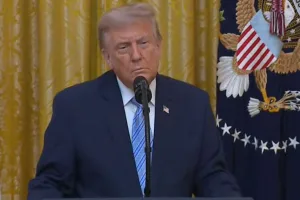
The White House on Friday removed an election-conspiracy video shared by President Donald Trump on social media that included racist footage depicting former President Barack Obama and former first lady Michelle Obama as apes.
UNI | New Delhi |

The White House on Friday removed an election-conspiracy video shared by President Donald Trump on social media that included racist footage depicting former President Barack Obama and former first lady Michelle Obama as apes.

A White House official said a staffer “erroneously made the post,” which has been taken down.
The statement came after serious backlash, including from GOP Sen. Tim Scott, the only Black Republican in the Senate, who called the post racist and said Trump should remove it.
“Praying it was fake because it’s the most racist thing I’ve seen out of this White House. The President should remove it,” the South Carolina Republican, who’s also the chair of the Senate GOP campaign committee, wrote on X.

The White House had earlier defended the post and downplayed the response to the video, calling it “fake outrage.”
White House press secretary Karoline Leavitt had said earlier Friday that the footage was part of an “internet meme video” that depicted the president as “King of the Jungle” and Democrats as characters from the Lion King.
“Please stop the fake outrage and report on something today that actually matters to the American public,” Leavitt had said in her earlier statement, in response to questions about the post.

The video, which is just over a minute long, promoted false claims that the 2020 presidential election was rigged against Trump.
Toward the end of the video was a roughly two-second clip that shows the Obamas’ heads edited onto the bodies of primates, with the song “The Lion Sleeps Tonight” playing.

Dear Oscars, we’re more than just a vibe

There’s something deeply frustrating about watching Indian films dazzle global audiences, dominate festival circuits, make it to prestigious lineups across Cannes, Berlin, Toronto, Sundance, and then fall flat at the Oscars.

Chaitanya K. Prasad | Kolkata |

There’s something deeply frustrating about watching Indian films dazzle global audiences, dominate festival circuits, make it to prestigious lineups across Cannes, Berlin, Toronto, Sundance, and then fall flat at the Oscars. It’s not because we lack great cinema. Far from it. Some of the finest, most emotionally layered, visually stunning, and narratively powerful films are being made right here. But when the time comes to show up on the biggest award stage, we either don’t make the cut or get token recognition for a song or a moment that barely scratches the surface of what Indian cinema truly is. NaatuNaatu winning was brilliant, yes, but that can’t be the bar we keep celebrating. It feels like the world loves to cheer for our rhythm but not always for our soul.

Take Homebound, for example. A beautiful, deeply intimate film that had all the ingredients for global acclaim. And yet, it was ignored. Snubbed. Quietly pushed aside in the Oscar conversation. And the worst part? This isn’t new. It’s a pattern. The kind of international acknowledgment Indian cinema gets still seems limited to what fits a certain expectation, colour, chaos, celebration, maybe a bit of suffering. Anything that demands a more nuanced gaze? Too often, it’s met with silence.

But the real question isn’t just why this happens. The real question is: What are we doing wrong in how we position ourselves? Because make no mistake, it’s not always about merit. The Oscars aren’t just about good cinema. They’re about visibility, perception, lobbying, timing, and sustained presence. The films that win aren’t always the best; they’re the best positioned. And we haven’t cracked that code. Not yet.

International film festivals and the Oscars operate on two completely different operating systems. Festivals are about curation. They’re driven by programmers and juries who are actively looking for fresh voices, new grammar, untold stories. There’s a hunger there to discover something authentic. That’s why you’ll often find Indian indie and regional films doing well in these spaces; they’re raw, rooted, daring. But the Oscars? That’s not discovery. That’s campaigning. That’s a full-blown industry with publicists, screenings, whispers in trade rooms, coverage in Variety and Deadline, strategic releases, and emotionally smart marketing. The Academy is a massive machine. And to enter it, you need more than just a good film. You need a roadmap.

What hurts even more is how India treats its Oscar strategy. One film. Once a year. That’s it. A single submission carrying the weight of an entire country’s cinematic expression. We’ve got thousands of films being made in over 20 languages every year, but when it comes to the Oscars, we’re down to a single entry. That one film is expected to represent the full spectrum of Indian storytelling, from folklore to urban realism, from high-concept myth to kitchen-sink drama. It’s unfair to the film and to the country.

Other nations don’t do this. They create an ecosystem. Korea didn’t win an Oscar out of nowhere with Parasite. They’d been building towards it for years, establishing auteurs, creating curiosity, showing up in festival circuits, releasing films with global appeal. So when Parasite arrived, it didn’t feel like an outsider; it felt inevitable. In contrast, Indian films often arrive like visitors, not residents. We don’t stay long enough in the global imagination. We don’t play the long game.

And yes, let’s address the elephant in the room: bias. It exists. The West still sees Indian cinema through the lens of stereotype, musicals, poverty, family drama, exotic lands, and arranged marriages. There’s a subconscious slot Indian stories are placed in, and when we show up with something that breaks the mould, a queer love story, a quiet meditation on grief, a gritty psychological drama, it doesn’t always register. But bias isn’t the only villain here. Sometimes, we just don’t make ourselves legible to the system. We expect recognition without fully entering the conversation.

This is where our own festivals come in. Indian film festivals need to stop being only about glitter and gala screenings. They should act as springboards for international positioning. We need to use IFFI, MAMI, and others as launchpads, not just to show off what we’ve made, but to build global strategies. Connect our filmmakers to international programmers, give them access to festival publicists, and train them in the art of building a global presence. The real job of a festival isn’t just to celebrate cinema, it’s to carry it forward into the world.

We also need to stop relying only on official channels for global placement. One government submission can’t carry the weight. Instead, multiple films can and should be campaigned independently across different Oscar categories, Best International Feature, yes, but also Documentary, Animation, Screenplay, and even Short Film. Let’s flood the space with our talent. Let’s stop asking permission and start taking up space. The National Film Award juries may rethink their approach to the canvas of global cinema in the light of movies competing in the feature and non-feature categories.

At the heart of it all, we need a mindset shift. We have already arrived as a cinematic powerhouse. We don’t need to prove we belong; we do. What we need now is a strategy. Continuity. And self-belief. We need to invest in storytelling, but also in story-framing. We need to believe that our cinema, whether it’s a Tamil neo-noir, a Marathi courtroom drama, a Khasi-language coming-of-age story, or a Kashmiri political thriller, deserves to be on the world stage, not as an anomaly, but as a regular, recurring voice.

We’re no longer the exotic outsider knocking on the gates. We are the culture that shaped global music, global cuisine, global fashion, and yes, global cinema too. The Oscars will catch up. But first, we have to show up like we belong. Not for a song. Not for a season. But for the long haul.

(The author is a Commentator and Writer on Cinema, Branding, Media Management and Geo-Strategic Communication. Co-Authored the book “When Branding Met The Movies” published by National Book Trust recently. (Views are personal.)

Inputs provided by Zoya Ahmad and Vaishnavie Srinivasan

To Hold a Mountain Review: A mother and daughter take on NATO, nature, and patriarchy all at once

Gara and her daughter Nada stand strong against NATO plans that threaten their mountain home, showing that courage and care are not just for men. ‘To Hold a Mountain’ is a moving story of female strength, family bonds, and the fight to protect nature.

Bibhu Luitel | New Delhi |

It’s not every day a documentary arrives that makes you want to pack a backpack, run barefoot across hills, and never return to your modern city life. But ‘To Hold a Mountain’, directed by Biljana Tutorov and Petar Glomazić, has that uncanny effect.

From the very first frame, we meet Mileva “Gara” Jovanović, who introduces herself not with a resume or a philosophy but with pride. “I’m the daughter of Sinjajevina.” Those words hint at a life so intertwined with the land it feels like the mountain itself is breathing through her.

Set in remote Montenegro highlands, ‘To Hold a Mountain’ is less a political documentary than deeply personal saga. It unfurls over seven years of filming, chronicling Gara’s life and coming-of-age of her teenage daughter, Nada Stanišić.

Also Read: Hold Onto Me Review: Father-daughter bonds forged in loss, laughter, and sunlit waves of Cyprus

But don’t mistake the film’s personal focus for a lack of stakes. Theirs is a quiet fight against forces as imposing as NATO military ambitions, as insidious as patriarchal violence, and as relentless as time itself.

By the time the world premiere hit the 2026 Sundance Film Festival’s World Cinema Documentary Competition, audiences were already captivated.

Mountains, memory, maternal threads

At the heart of the film is a story of family that is both tender and tragic. Nada’s mother, Mika, was brutally killed when Nada was very young, leaving the child in the care of her aunt, Gara. The tragedy could have broken them both, but Tutorov and Glomazić focus not on despair but on resilience.

Through the lenses of their cameras, they craft portrait of maternal devotion that stretches beyond biology. This binds generations together in web of memory, care, shared labour.

Gara becomes a guardian not only of her niece’s safety but of the mountain itself which faces an existential threat. NATO’s 2017 plan to convert parts of Sinjajevina into military training ground could have permanently altered the ecosystem, displaced families, disrupted centuries of pastoral life.

The film captures the intersection of these battles, the personal and the political, as naturally intertwined, much like the streams and rocks of the land itself.

Everyday heroism in the highlands

One of the most remarkable qualities of ‘To Hold a Mountain’ is how it presents resistance. It’s not all shouting megaphones or dramatic street protests though those moments exist. Instead the film finds heroism in mundane.

Milking cows before dawn, huddling under duvets to ward off the mountain chill, rescuing newborn calf that has been trampled by its panicked mother; these small acts are laden with courage. They are forms of resistance.

Also Read: American Doctor Review: Bombed wards, broken lives, and the doctors who refuse to quit in Gaza

Gara’s resilience is palpable. Her hands swollen from years of labour move deftly across cows, goats, cheese-making tools. Her calmness under pressure, the kind that only comes from knowing the land as intimately as she knows herself, is mesmerising.

When she does take the rare step into public confrontation appearing on local TV or addressing her community, she is composed yet impassioned advocating for protection of her home with dignity that feels earned.

Nada: The next generation

Nada, teenager at the center of this story, offers quiet counterpoint to her aunt’s unwavering presence. She is contemplative, soft-spoken, connected to rhythms of the mountain. Yet the film allows us to sense her dreams reaching beyond the pastureland.

Tutorov and Glomazić capture this intergenerational tension beautifully. Gara hopes Nada will always return to Sinjajevina. Nada naturally begins to imagine larger world. Their unspoken understanding, intimacy forged through years of shared hardship and affection, gives the film tender emotional core.

In scenes where mother and daughter wrestle over blankets to stay warm, or search frantically for a newly birthed calf, there is a rhythm of life and survival that transcends dialogue. We watch, we breathe, and we feel the quiet majesty of living in complete synchrony with the land.

Resistance wears many faces

While helicopters occasionally circle overhead, the real fight in ‘To Hold a Mountain’ is often silent. Gara’s activism appearing on talk shows, addressing her community, and organising fellow shepherds, is important, but it’s framed within the larger story of persistence.

Resistance, as the film demonstrates, can simply mean staying. It can mean refusing to relinquish your home to forces that see it only as a resource or a tactical advantage.

Not all forms of protest are loud. Sometimes the quietest gestures carry heaviest weight. It can be tending your animals, preserving your traditions, educating next generation about their heritage.

Intergenerational wisdom and feminist resonance

‘To Hold a Mountain’ is a feminist fable. Gara’s protection extends beyond her niece to broader community of women who have endured patriarchal violence. Her strength shows up in care she provides not only for Nada and animals but for land itself.

The film traces the legacies of abuse, loss, endurance. Yet it never allows despair to dominate. There is resilience. There is agency.

Perhaps the most enduring impression of ‘To Hold a Mountain’ is its celebration of temporal ecological rhythms. Snowfalls, spring blooms, summer pasturework, autumn harvests are chronicled with reverence.

Also Read: Barbara Forever Review: Love, politics, lesbian iconography that made Barbara Hammer a cinematic revolutionary

The film’s editing led by George Cragg allows for these rhythms to breathe, using long takes when intimacy demands and sharp cuts when narrative focus is required.

In doing so, the documentary transforms ordinary labour into visual poem. Milking, herding, cheese-making, and even moments of rest become acts of devotion; not only to family and community but to land that sustains them.

Personal is political

While backdrop of NATO’s military ambitions provides urgency, ‘To Hold a Mountain’ refrains from becoming a political manifesto. The filmmakers present facts, document protest, and highlight threats, but always through the lens of human experience.

The audience sees the consequences of policy decisions in eyes of those who live them daily. A young girl watching cows struggle, a woman debating on television, pasture threatened by development – all of it.

This subtlety ensures that the film remains accessible, emotionally resonant, relatable.

The film allows the audience to become voyeurs not in a prurient sense. But this happens in the sense of sharing in life rarely seen. Watching Gara tuck Nada in, help her with chores, reflect on past losses is to witness love in its purest, most resilient form. Ah!

Also Read: Josephine Review: This is what trauma looks like before it has a name

Even mundane moments like shared meal, trek to rescue calf are imbued with emotional weight. This approach shows the documentary’s central thesis that personal is political, that survival is as much about love and care as it is about activism.

Audiences encounter a land that has remained mostly untouched where traditions endure, where human and non-human life are intertwined.

‘To Hold a Mountain’ is revolutionary, quietly. It transforms intimate domestic life into a canvas for exploring resilience, conservation, and feminist courage.

The film is a paean to maternal devotion, a meditation on environmental stewardship, and a nod to the quiet heroism of women who protect both life and legacy.

Raw bananas are more than a kitchen staple, Acharya Balkrishna reveals their hidden healing magic

Acharya Balkrishna reveals the surprising health benefits of raw banana curry. Packed with vitamins and gentle on the stomach, this humble green fruit is a true kitchen superhero.

Statesman News Service | New Delhi |

Move over ripe bananas! Acharya Balkrishna, Ayurveda expert and face of herbal wellness, recently took to Facebook to shine spotlight on humble but mighty kitchen star: the raw bananas.

Yes, that green, firm fruit sitting quietly on your counter is packed with nutrients that your body will thank you for.

A vitamin-packed powerhouse

According to Balkrishna, raw bananas are not just a filler in your curry. They are rich source of vitamins and minerals. From keeping your immunity strong to supporting overall energy levels, this green wonder works quietly. But powerfully.

Unlike their sweet yellow cousins, raw bananas deliver punch of nutrients without sugar rush. That makes them perfect for daily meals.

Your gut’s new best friend

Here’s where it gets interesting: raw banana curry is not just tasty, it’s also incredibly gentle on your digestive system. Acharya Balkrishna highlights that eating raw banana dishes can help ease digestive troubles like diarrhea and dysentery.

Packed with fiber and natural compounds, this green gem helps regulate digestion, keeping your tummy happy and healthy.

Also Read: The brain’s best friend? Acharya Balkrishna explains why akhrot or walnuts deserve daily attention

Cooking tip: Keep it light

Of course, you don’t want to lose all the goodness in a sea of oil. Balkrishna advises making banana curries with as little oil as possible. This way, the dish stays light, healthy, and preserves the natural nutrients that make raw bananas such a powerhouse.

Simple tempering with a dash of spices is enough to bring out the flavor while keeping it super healthy.

Why you should add it to your menu

Raw banana curries are versatile, easy to make, and perfect for anyone looking to eat nutritious meals without overloading on fats or sugar. They can be a star side dish or even a main course when paired with roti or rice.

Plus, thanks to their digestive benefits, they’re a great choice for anyone recovering from stomach issues or looking to improve gut health naturally.

So next time you spot those green bananas at the market, don’t pass them by. According to Acharya Balkrishna, they’re more than just a cooking ingredient. They’re a health booster in disguise.

India successfully test-fires Intermediate Range Ballistic Missile Agni-3

The launch was conducted under the supervision of the Strategic Forces Command as part of a routine training exercise to validate the operational and technical preparedness of the missile system.

Statesman News Service | New Delhi | Updated :

India today successfully test-fired the Intermediate Range Ballistic Missile ‘Agni-3’  from the Integrated Test Range at Chandipur in Odisha.

The launch was conducted under the supervision of the Strategic Forces Command as part of a routine training exercise to validate the operational and technical preparedness of the missile system.

According to an official release from the Ministry of Defence, the test fulfilled all the objectives of the mission. The Ministry also confirmed that all parameters were successfully validated during the test fire.

About the ballistic missile

Developed by the Defence Research and Development Organisation (DRDO), the Agni-Three is a two-stage, solid-fuelled ballistic missile with a strike range exceeding three thousand kilometres. The missile is capable of carrying both conventional and nuclear warheads.
It serves as an integral element in the credible minimum deterrence strategy of the country. The ballistic missile Agni-III has been inducted into the Strategic Forces Command since 2011.
The successful test highlights India’s continued focus on strengthening its strategic deterrence and maintaining high levels of operational readiness.

Taylor Swift drops ‘Opalite’ music video full of retro ads, celebrity cameos, and glittery chaos | All about it

Taylor Swift drops the star-studded ‘Opalite’ music video, complete with a pet rock, Domhnall Gleeson, Lewis Capaldi, and retro 90s vibes. The video turns a joke from The Graham Norton Show into glittery, celebrity-filled chaos.

Statesman News Service | New Delhi |

If you thought Taylor Swift couldn’t get any weirder or wilder, think again. The pop queen has just dropped the music video for “Opalite,” the second single off her latest mega-album, ‘The Life of a Showgirl’. And yes, it features a pet rock, celebrity cameos galore, and enough 90s nostalgia to make you want a scrunchie and a cassette player.

The video is currently a Spotify and Apple Music exclusive, but trust us, you’re going to want to watch it.


View this post on Instagram


A post shared by Taylor Swift (@taylorswift)

A 90s commercial comes to life

“Opalite” opens like a retro cleaning spray ad straight out of your childhood TV. Think neon colors, over-the-top smiles, and promises that sound too good to be true.

The fictional product, Opalite, claims to “magically transform your problems into your paradise” and works on friendships, couples, pets, and co-workers.

Enter Swift, who unboxes her brand-new BFF, a pet rock. Yes, a rock. But don’t roll your eyes just yet. Swift and her rocky companion craft friendship bracelets, belt out karaoke tunes, and even hit the local bars together.

Basically, this is peak Swift. Whimsical, quirky, and slightly absurd in the best way.

Cameos that keep you guessing

Soon, the screen fills with familiar faces. And it turns out, the entire lineup is a callback to Swift’s October appearance on The Graham Norton Show.

Greta Lee appears as a budding singer-songwriter on MTV. Jodie Turner-Smith hosts a hilariously intense exercise show. Domhnall Gleeson…well, he’s in a bizarrely abusive relationship with his pet cactus.

Gleeson’s cactus drama leads him to order Opalite. When he sprays his prickly companion, Swift magically appears in his house. Cue the romantic montage. Cheesy mall photo shoots, public displays of affection, and a blossoming love story, with Lewis Capaldi snapping pics like a true pop-star paparazzo.

Even The Graham Norton Show’s Graham Norton pops up as an Opalite salesman, while Murphy appears as a poster ad seen by Swift and Gleeson in the mall. The meta-humour never quits. The video ends with a glittery dance competition featuring Swift and Gleeson in mint-green-and-orange tracksuits followed by a credits scene showing all the stars back on the talk show.

From a joke to a video idea

Taylor shared the behind-the-scenes story on X (formerly Twitter), and it’s as sweet as it is chaotic. She recalled joking with Gleeson during the show and suddenly thinking, “What if he starred in a music video?”

A week later, Gleeson received the script, and Swift thought it would be wild if all the show guests and Graham himself joined in.

Her words: “Like a school group project but for adults… To my delight, everyone made the effort to time travel back to the 90s with us.”

Exclusive first, YouTube later

True to her “Showgirl” rollout strategy, Swift teased the video with a countdown on her website. Fans eagerly waited until Friday for the premiere on Apple Music and Spotify Premium, where it remains exclusive until February 8, when it hits YouTube.

“Opalite” has been a hit since the album dropped. It debuted at No. 2 on the Billboard Hot 100 in its first week and, after 17 weeks, is still holding strong at No. 10.

Travis Kelce connection

For those wondering, Swift has said “Opalite” is actually her fiance Travis Kelce’s favourite song. The story behind the track is as playful as the video.

“I had written down the word ‘opalite’ because I learned it’s a manmade opal. Opal can be manmade just like diamonds, and Travis’ birthstone is opal. I’ve always loved that stone and thought it was a cool metaphor. Happiness can be manmade, too.”

So yes, Swift found a way to turn a personal love story into a glittering, goofy, and genuinely fun music video.

A showgirl era juggernaut

The Life of a Showgirl has already broken records. It sold 2.7 million copies on its first day, surpassing even Adele’s 25 for the most-consumed album in Billboard 200 history. Lead single “The Fate of Ophelia” hit No. 1 on the Hot 100, spending ten non-consecutive weeks at the top. With “Opalite” following close behind, Swift shows no signs of slowing down.

The “Showgirl” era has been full of surprises: theatrical music videos, star-studded cameos, and a creative strategy that blends nostalgia, pop culture, and personal storytelling. Fans can expect more inventive visuals, chart-topping hits, and playful chaos in the weeks to come.

Why should you watch “Opalite”

From a pet rock BFF to Domhnall Gleeson dating a cactus, to Lewis Capaldi as a mall photographer, “Opalite” is pure, unfiltered Taylor Swift energy. It’s funny, weird, glittery, and utterly memorable. The kind of music video that will be dissected, GIFed, and memed for months.

And for Swifties, it’s a golden moment that Taylor can take the smallest idea, a joke on a talk show, and turn it into pop culture gold.

So grab your streaming subscription, pour yourself some nostalgia, and prepare to watch Taylor Swift and a pet rock steal your heart.

Also Read: Year-Ender 2025: Records broken, Eras ended, and Taylor Swift found forever

Meghalaya coal mine tragedy: Death toll rises to 25

Officials also confirmed that two other persons, who had sustained serious injuries in the explosion and the subsequent fire at the illegal mine, later died while undergoing treatment

IANS | New Delhi |

The death toll in the coal mine explosion at Mynsyngat in the Thangsko area of Meghalaya’s East Jaintia Hills district rose to 25 on Friday as search and rescue operations continued, officials said.

Superintendent of Police, East Khasi Hills district, Vikash Kumar said, “During the ongoing operation, rescue teams recovered four more bodies from inside the mine. In a further setback, one injured person who was undergoing treatment at the North Eastern Indira Gandhi Regional Institute of Health and Medical Sciences (NEIGRIHMS), Shillong, succumbed to his injuries.”

Officials also confirmed that two other persons, who had sustained serious injuries in the explosion and the subsequent fire at the illegal mine, later died while undergoing treatment. Their bodies were brought by family members to Civil Hospital, Khliehriat, and Civil Hospital, Jowai, respectively.

With these latest fatalities, the total number of deaths in the incident has risen to 25.

Of the recovered deceased, 17 bodies have been identified so far and handed over to their relatives after completion of all necessary legal and medico-legal formalities, officials added.

Meanwhile, in connection with the incident, police have registered a suo motu FIR at Khliehriat Police Station under Case No. 14/2026 under Sections 105, 118(2) and 3(5) of the Bharatiya Nyaya Sanhita (BNS), read with Sections 21 and 21(1) of the Mines and Minerals (Development and Regulation) Act and Section 3 of the Explosive Substances Act.

So far, two accused have been arrested in the case. They have been identified as Forme Chyrmang (36), son of late Kom Dkhar, a resident of Jalaphet Pordung, and Shamehi War (42), son of Wiseman Syrti, a resident of Sutnga Pohwailong, both from East Jaintia Hills district.

Both were produced before a competent court and remanded to three days of police custody for further interrogation.

Efforts are underway to identify and apprehend other persons involved in the illegal mining operation.

Search, investigation and other legal proceedings are continuing, while district authorities and police remain on high alert in the area.

The incident has once again highlighted the dangers associated with illegal coal mining in the district, where such activities continue despite a long-standing ban.

Four Jain pilgrims found hanging at dharamshala in Bihar’s Rajgir

They had come to Rajgir on 31 January and stayed at the Digambar Jain dharamshala in Rajgir. The dharamshala staff last saw them in the premises on 2 February.

Statesman News Service | Patna |

The suspicious death of four Jain pilgrims in Rajgir, Bihar, has sent a shockwave, as the tourists’ bodies were found on Friday hanging in a room locked from inside.

They had come to Rajgir on 31 January and stayed at the Digambar Jain dharamshala in Rajgir. The dharamshala staff last saw them in the premises on 2 February.

On Friday, the dharamshala management alerted the police after a strong foul smell was noticed coming from Room No. 6AB. When the police opened the room, all the bodies were found hanging inside the room.

The deceased include two men and two women. All of them had come from Bengaluru to visit Bihar.

According to the Aadhaar card submitted at the dharamshala, one of the tourists was identified as AR Nag Prasad. Efforts are underway to identify the remaining three. According to reports, all four pilgrims had reached Bihar after visiting Nepal.

Station in-charge Raman Kumar Singh said that the bodies of the deceased have been sent for postmortem examination. The exact cause and time of death will be determined only after the report is received.

Meanwhile, the entire area has been cordoned off and the room has been sealed. A Forensic Science Laboratory (FSL) team has also been called in to collect evidence.

Police are investigating this horrifying incident from multiple angles, including the possibility of mass suicide, internal disputes, a conspiracy, or other factors.

Thousands of tourists, mainly Jain pilgrims, visit Rajgir daily, which is a premier, ancient Jain pilgrimage site significant as the birthplace of the 20th Tirthankara, Lord Munisuvrata, and a place where Lord Mahavira spent 14 rainy seasons. The peaceful town also houses several other ancient, revered Jain temples.

Kalyani University reiterates commitment to gender-safe campuses

Reaffirming the centrality of gender justice and dignity within academic spaces, the University of Kalyani on Thursday organised an awareness programme on Gender Sensitisation and Prevention of Sexual Harassment of Women at Higher Education Institutions at its campus.

Statesman News Service | Kolkata |

Reaffirming the centrality of gender justice and dignity within academic spaces, the University of Kalyani on Thursday organised an awareness programme on Gender Sensitisation and Prevention of Sexual Harassment of Women at Higher Education Institutions at its campus.

The initiative, organised by the University’s Internal Complaints Committee (ICC), sought to deepen understanding of gender equality, respectful institutional culture, and the legal safeguards available to women in higher education.

The programme was inaugurated by Prof. Kallol Paul, Vice-Chancellor of the University of Kalyani, who underscored the need for sustained gender sensitisation within universities. In his inaugural address, Prof. Paul reiterated the University’s commitment to fostering a safe, inclusive, and dignified environment for students, faculty, and staff, emphasising that academic excellence must be accompanied by ethical responsibility and social awareness.

Dr Nandita Banerjee Dhawan of the School of Women’s Studies, Jadavpur University, spoke on the broader dimensions of gender sensitisation, focusing on power relations within academic spaces. She stressed the importance of continuous education, critical engagement, and institutional accountability in building gender-just universities.

The programme saw active participation from faculty members, non-teaching staff, research scholars, and students. An interactive session following the lectures enabled participants to engage in dialogue, seek clarifications on rights and responsibilities, and gain a clearer understanding of grievance redressal mechanisms.

In her welcome address, Prof. Nita Bandyopadhyay, presiding officer of the internal complaints committee, stated that the University of Kalyani is reaffirming its resolve to promote gender equity and prevent sexual harassment through regular awareness programmes and institutional interventions.

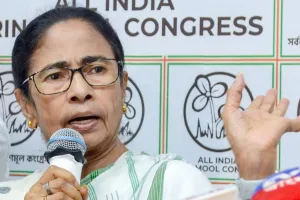
Budget is testament that our government has a human face: Chandrima

The humane and sincere attempt to uplift the living condition of the economically challenged people by the Chief Minister Mamata Banerjee have helped elevate more than one crore people living below the poverty line, state finance minister Chandrima Bhattacharya said today.

Statesman News Service | Kolkata |

The humane and sincere attempt to uplift the living condition of the economically challenged people by the Chief Minister Mamata Banerjee have helped elevate more than one crore people living below the poverty line, state finance minister Chandrima Bhattacharya said today.

Addressing the Press this afternoon, Mrs Bhattacharya said due to the sustained effort by Miss Banerjee over the past 15 years, 1.72 crore people living below the poverty line have been brought out of the slab. This, she said, has been possible due to the far-sightedness of the Chief Minister. As per the Periodic Labour Force Survey (PLFS) data, conducted by the Centre, the unemployment rate among people aged 15 years and above has declined by around 45.65 per cent from 2017-18 to 2023-24.

West Bengal is number one in agricultural production in the entire country. Around 9 crore people have been brought under the Khadya Sathi scheme. Under Swasthya Sathi, 2.45 crore families have been enrolled, covering almost the entire population of the state, she said.

Under the Banglar Bari scheme, around 32 lakh houses have been provided to families, and since the inception of the scheme, over 1 crore houses have been given. Under Rastashree-Pathashree, more than 2.20 lakh kilometres of roads have been constructed despite deprivation by the Centre, and an additional 30,000 km of roads are currently under construction.

West Bengal is number one in the MSME sector. Women working in this sector have a repayment rate of over 99 per cent, and the quality of their work is extremely high. The credit for this goes to CM Mamata Banerjee. While the Centre speaks of Lakhpati Didi, women in West Bengal are already financially empowered.

“Our government has a human face and while preparing the Budget for 2026-27, the interest of all sections of people has been taken into consideration. Ours is a welfare state and we cannot ignore the common people,” she said.

Mrs Bhattacharya said the financial assistance under Lakshmir Bhandar has been enhanced keeping in mind women empowerment. “There are people who call it as a dole without understanding the ground reality. This has helped women to live with dignity as they do not have to ask for financial assistance from the male members of the family,” she said, adding, “From February, women belonging to the general caste will get Rs 1,500 while those belonging to the SC and ST caste will get Rs 1,700.” It may be recalled that Nobel Laureate Professor Abhijit Vinayak Banerjee has supported Lakshmir Bhandar as it has helped to rejuvenate the rural economy. Under the Swasthya Sathi scheme more than 2.45 crore families have been covered.

She said that the remuneration of ASHA and ICDA workers have been enhanced by Rs 1,000. They will get six months maternity leave and in case of death, their next of kin will get Rs 5 lakh. “These are central projects where the state government gives 40 per cent of the remuneration. But no step has ever been taken by the Centre to look after them,” she remarked.

The minister said Yuba Sathi and Yuvashree are two different schemes. The Opposition alleged in the Assembly that youth do not receive money under Yuvashree, but Rs 180 crore has already been disbursed under the scheme since its launch in 2013, benefiting around 12 lakh people, or roughly one lakh beneficiaries every year. Yuvashree has no time limit, whereas Yuba Sathi has a five-year time limit. Scholarships or educational stipends do not disqualify someone from Yuba Sathi, but receiving any other allowance does. Anyone receiving benefits under Yuvashree is not eligible for Yuba Sathi. Girls receiving scholarships, however, can avail Yuba Sathi.

Partha Bhowmik, Trinamul Congress MP alleged that after coming to power in Bihar, the BJP has stopped giving Rs 10,000 to the women which they gave before the election. Now, the BJP has called the amount as loan and asked its beneficiaries to repay the money, he alleged.

Punjab: Police and BKU members clash after protest turns volatile on Barnala–Bathinda highway

A clash erupted between police and members of the Bharatiya Kisan union (BKU) Ekta Ugrahan on the Barnala-Bathinda National Highway in Punjab on Friday, after BKU members participating in the protest organised by the farmers’ group reportedly tried to enter the city.  

Statesman News Service | New Delhi |

A clash erupted between police and members of the Bharatiya Kisan Union (BKU) Ekta Ugrahan on the Barnala-Bathinda National Highway in Punjab on Friday, after BKU members participating in the protest organised by the farmers’ group reportedly tried to enter the city.

The farmers were demonstrating against criminal cases filed against two of their colleagues at the Bathinda and Rampura police stations. They are demanding the immediate withdrawal of the legal proceedings against BKU members.

The protest was called by Joginder Singh Ugrahan, BKU Ekta Ugrahan state president, and included a call to gherao the Deputy Commissioner’s office in Barnala.

As a precautionary measure, Punjab Police blocked entry points into Bathinda city. When the agitating farmers breached layers of security and broke barricades to continue their march, police lathicharged and used tear gas shells to prevent Bharatiya Kisan Union protesting members from entering the city.

Police had deployed security personnel in Bathinda and the surrounding districts to ensure law and order while farmers hold protest. Also, high-tech checkpoints were installed at Tapa Mandi.

Bathinda SSP Jyoti Yadav Bains confirmed that approximately 1500 personnel were deployed in the region to prevent any incidents of violence.

Bathinda DIG Harjeet Singh confirmed that farmers had blocked the road in the area earlier today. However, he said that the situation is under control at present.

He said, “A large number of farmers had gathered on the highway, causing traffic congestion, and we had to manage their protest. They have several demands, which they have presented to the DC. There are still some farmers here, but we are now reopening the road to traffic.”

After the clash, the leaders of the farmers’ group alleged that the state administration used high-handed tactics against a peaceful democratic protest.

RG Kar graft case: CBI court’s arrest warrant against former deputy superintendent

Former Deputy Superintendent (Non-Medical) of RG Kar Medical College and Hospital, Akhtar Ali, landed in deeper trouble today as a special CBI court in Alipore issued a warrant of arrest against him in connection with the financial irregularities case linked to the institution.

Statesman News Service | Kolkata |

Former Deputy Superintendent (Non-Medical) of RG Kar Medical College and Hospital, Akhtar Ali, landed in deeper trouble today as a special CBI court in Alipore issued a warrant of arrest against him in connection with the financial irregularities case linked to the institution.

According to sources, the warrant was issued after Akhtar failed to appear before the court despite being directed to do so in the ongoing CBI probe into alleged financial corruption at RG Kar Medical College. Akhtar was scheduled to be present before the court on Friday, but he remained absent. His counsel informed the court that Akhtar was unwell and undergoing treatment at a private hospital, adding that doctors had advised him complete bed rest.

However, the court was not convinced by the explanation. During the hearing, it was pointed out that Akhtar had moved the Calcutta High Court on 4 February seeking anticipatory bail in the same case, an application that was subsequently rejected. The special court observed that the plea of illness appeared unsubstantiated in the given circumstances.

The CBI counsel strongly opposed the claim, arguing that Akhtar was deliberately avoiding court proceedings under the pretext of illness. Accepting the submission, the special court judge issued a warrant of arrest against him.

Significantly, Akhtar Ali was the first to level allegations of financial irregularities against former RG Kar Medical College principal Sandip Ghosh. Acting on the directions of the high court, the CBI’s anti-corruption branch had registered an FIR against Ghosh, leading to a formal investigation into alleged financial misconduct during his tenure. However, during the course of the investigation, the focus shifted to Akhtar himself, with the CBI making what it described as “explosive” allegations against him.

The central agency has claimed that Akhtar received money from various private firms in exchange for awarding tenders, with the funds allegedly routed through his wife’s bank account. The agency has also alleged that expenses for Akhtar’s foreign travels were borne by different companies. The investigation is continuing, and CBI officials have indicated that further action may follow as the probe progresses.

Rising reliance on technology brings cybersecurity, deepfake and misinformation risks: President Murmu

While underscoring the positive impact of technology on innovation and economic growth, she said platforms like the Black Swan Summit provide an opportunity to explore ways to leverage technology for skilling, employment generation and accelerating digital and financial transformation.

Statesman News Service | BHUBANESWAR |

President Droupadi Murmu on Friday cautioned that the rapidly increasing dependence on technology poses serious challenges, including cybersecurity threats, deepfakes and misinformation, even as technological innovations continue to drive growth and transformation.

Addressing the Black Swan Summit India, organised by the Odisha government in collaboration with the Global Finance and Technology Network, the President said technological change is occurring at an unprecedented pace, often outstripping the ability of systems, skills and business models to adapt.

While underscoring the positive impact of technology on innovation and economic growth, she said platforms like the Black Swan Summit provide an opportunity to explore ways to leverage technology for skilling, employment generation and accelerating digital and financial transformation.

Referring to India’s fintech revolution over the past decade, President Murmu noted that direct benefit transfers and digital payments have become commonplace among farmers, small traders and women. “For them, fintech is not a technical term but a lifeline,” she said.

She emphasised that India’s fintech journey should also be seen as a story of gender justice, stressing the need to view women not merely as end users but as leaders, professionals and entrepreneurs in the digital ecosystem. Every new platform or policy, she said, must be evaluated on whether it enables women’s active participation.

The President cautioned that fintech alone does not guarantee inclusion, as many people in remote, tribal and rural areas still lack digital literacy. Skilling such communities is essential to make fintech a true engine of inclusion, employment and entrepreneurship.

Highlighting the misuse of technology in financial frauds, she called for greater public awareness and vigilance. She cited government initiatives such as the Indian Cyber Crime Coordination Centre and the Citizen Financial Cyber Fraud Reporting and Management System, and urged that digital and financial literacy be included in school curricula to build early awareness of both the benefits and risks of technology.

Sealdah division plans major overhaul of Dum Dum station

When Binoy Kumar sets out for work from his village at Goyalbati in Habra, he keeps his fingers crossed to be able to reach office on time.

Statesman News Service | Kolkata |

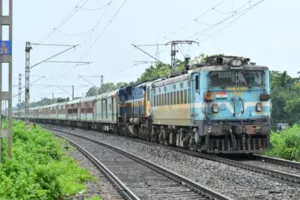
When Binoy Kumar sets out for work from his village at Goyalbati in Habra, he keeps his fingers crossed to be able to reach office on time. A journey in the local train from Habra station to Sealdah and then to his workplace at Ballygunge has been a crucial part of his daily life for years. However, train delays around Dum Dum station resulting in reporting late for work sometimes makes his day tough.

Similar are the grievances of his fellow passengers. “Quite often, the train just stands still for several minutes around Dum Dum station. In such situations, we are unaware when we would be able to reach the destination. Such delays hamper the day’s work and we are at a loss in office,” said a regular commuter of the route and co-passenger of Binoy.

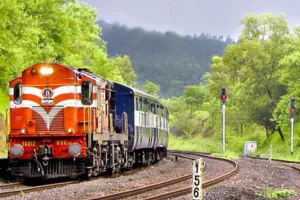
Taking cognisance of such delays, the Sealdah Division is working on plans of a major overhaul at Dum Dum which is considered as one of the hindrances in enhancing train punctuality, increase in train operations or even capacity strengthening. “At Dum Dum, trains are operated from various directions like Dankuni, Bangao, Barasat and so on. But the evacuation sometimes resulted in two or three trains being halted at Dum Dum Cantonment and the approaching routes of Dum Dum Junction,” explained an official.

To overcome this problem, the divisional railway authorities have adopted a crucial upgrade of Dum Dum. To begin with, the signalling system is being upgraded. Dum Dum station has gone through yard remodelling works but the signal upgrade which had some compliances from the office of the commissioner of railway safety, is awaiting approval. Once the much-awaited nod from the CRS is received, Dum Dum would have improved the signalling system. As learnt from official sources, the entire section is being upgraded to an automatic system.

Plans are also underway to increase the capacity of operating trains at Dum Dum. “After the upgrade work is completed at Dum Dum, we would be able to operate two trains at a time instead of one. “If a train is coming from Baranagar towards Dum Dum, we would be able to take trains from Belgharia also simultaneously,” elaborated the railway official. “We are working on a way out, where the two trains could be operated at a gap of 120 metres without having any chances of collision,” he added. With this, trains awaiting a go ahead at Dum Dum Cantonment or Baranagar, would be able enter Dum Dum station faster and the capacity would be enhanced and shunting operations would become quicker.

ECL, West Burdwan join hands to promote sustainable mine closure

Eastern Coalfields Limited (ECL), a subsidiary of Coal India Limited, has reaffirmed its commitment to sustainable development and social well-being.

Statesman News Service | Kolkata |

Eastern Coalfields Limited (ECL), a subsidiary of Coal India Limited, has reaffirmed its commitment to sustainable development and social well-being. A high-level meeting was held today between Mr Girish Gopinathan Nair, Director (Technical/Project & Planning), ECL, and Mr Ponnambalam S., District Magistrate, Paschim Bardhaman, to deliberate on ECL’s mine closure plan with a strong focus on community development and livelihood generation.

The discussions centred on sustainable mining practices and the repurposing of mined-out land in line with the mandate of the Government of India, with an emphasis on integrating mine closure activities with long-term socio-economic development of the affected communities.

The meeting was attended by Nitu Shukla, Additional District Magistrate (ZP), Aranya Banerjee, Additional District Magistrate (Land Reforms), along with other district administration officials and block-level revenue officers.

ECL was represented by several senior officials and representatives from the CSR department. The discussions highlighted the importance of aligning mine closure initiatives with sustainable livelihood opportunities and community welfare.

Special emphasis was laid on livelihood generation, environmental restoration and the creation of sustainable community assets to ensure that post-mining landscapes contribute positively to local well-being. Referring to the prevailing water scarcity in the district, the District Magistrate stressed the need for effective and judicious utilisation of available water resources within excavated mining areas for domestic as well as agricultural purposes, aimed at improving the quality of life of local residents.

In accordance with the mine closure guidelines, the District Magistrate, West Burdwan, constituted an advisory committee to guide and monitor the implementation of mine closure plans and associated community development initiatives. The committee will play a pivotal role in ensuring participatory planning, transparency and alignment with local developmental priorities.

Speaking on the occasion, the Director (Technical/Project & Planning), ECL, reiterated the company’s commitment to a collaborative approach with the district administration to transform mine closure activities into opportunities for inclusive growth, environmental stewardship and enhanced quality of life for communities, reinforcing ECL’s dedication to responsible mining and sustainable social development.

VS Achuthanandan’s family likely to decline Padma Vibhushan, will abide by CPM stand

CPM General Secretary M A Baby on Friday said the party’s stand is that Achuthanandan’s family should not accept the award and that the family would take a decision in accordance with the party line.

Statesman News Service | Thiruvananthapuram |

Strong indications have emerged that the family of late CPM stalwart and former Kerala Chief Minister V S Achuthanandan is likely to decline the Padma Vibhushan conferred on him posthumously, in line with the Communist Party of India (Marxist) position on accepting official honours.

CPM General Secretary M A Baby on Friday said the party’s stand is that Achuthanandan’s family should not accept the award and that the family would take a decision in accordance with the party line. Clarifying the apparent ambiguity, Baby remarked that if VS were alive, he would not have accepted the honour.

While the announcement of the Padma Vibhushan was initially welcomed by the party’s state leadership and the family, describing it as recognition of Achuthanandan’s lifelong service to society, the party’s central position has since become decisive.

VS’s son, V A Arun Kumar, had earlier said the family would go by the party’s decision. In a social media post on Thursday, Arun confirmed that the Union Home Ministry had formally informed them of the award and said the family regarded it as an honour to his father’s contributions. However, he noted that the CPM has a clear ideological stand against accepting such state honours.

“As a communist, my father always adhered to party principles. The family will stand by the party’s decision and his ideals,” Arun wrote, adding that the respect VS commands in people’s hearts is greater than any official honour.

The CPM is yet to issue a formal resolution on the matter, but the party leadership’s position has made it increasingly clear that the Padma Vibhushan will not be accepted.

State Budget sparks war of words between TMC, BJP in Siliguri

A war of words has erupted between the ruling Trinamul Congress (TMC) and the Bharatiya Janata Party (BJP) over the West Bengal Budget, with welfare schemes such as Lakshmir Bhandar and the newly-announced Yuba Sathi project becoming key flashpoints ahead of the forthcoming Assembly elections.

Statesman News Service | Kolkata |

A war of words has erupted between the ruling Trinamul Congress (TMC) and the Bharatiya Janata Party (BJP) over the West Bengal Budget, with welfare schemes such as Lakshmir Bhandar and the newly-announced Yuba Sathi project becoming key flashpoints ahead of the forthcoming Assembly elections.

Trinamul leaders have begun projecting the Budget as a people-oriented document, particularly after several women welcomed the Rs 500 increase in the Lakshmir Bhandar allowance. The Opposition, however, has criticised the Budget as election-centric, accusing the ruling party of what it termed “dole politics”.

Amid the criticism, TMC leaders in Siliguri convened a press conference to defend the Budget. Addressing the Media on Friday, Siliguri Mayor Goutam Deb said the Opposition’s allegations were misleading.

“While the Opposition has dismissed the Budget as mere dole politics, I would like to clarify that the present TMC-led government has maintained fiscal responsibility and budgetary management norms, keeping the interests of the poor, especially women, at the centre of its policies,” Mr Deb said. He added that responsible fiscal management enables the state to borrow from the market to sustain welfare programmes, noting that the government is currently running 94 such beneficiary schemes.

Mr Deb further claimed that the state government has already repaid loans worth Rs 2.56 lakh crore, along with interest, borrowed from the market in the Left regime.

Highlighting the proposed Yuba Sathi scheme, the Mayor said the government has acknowledged unemployment among youths aged between 21 and 40 years. “An allowance of Rs 1,500 per month will assist young people in their efforts towards self-employment and other livelihood activities,” he said.

Reacting to the Budget, BJP leader and Siliguri MLA Shankar Ghosh raised concerns over the absence of any enhancement in old-age pension. “Once beneficiaries of the Lakshmir Bhandar scheme turn 60, they are automatically enrolled for old-age pension. While the Lakshmir Bhandar allowance has been increased by Rs 500, there has been no corresponding increase in old-age pension—at least nothing to that effect was mentioned in the Budget speech. I sincerely request the finance minister to look into this matter,” Mr Ghosh said.

The political sparring also extended to infrastructure promises, particularly following recent announcements by railway minister Ashwini Vaishnaw regarding a proposed high-speed rail corridor linking Siliguri and Varanasi. The announcement has generated positive sentiment in parts of North Bengal ahead of the polls.

However, Mr Deb dismissed the bullet train announcement as an “election gimmick”. “There was no specific proposal for a bullet train when the railway budget was presented in Parliament. The announcement came later, based on a general proposal for high-speed trains,” he said. Drawing comparisons with the Mumbai–Ahmedabad bullet train project, Mr Deb added, “That project was initiated nearly a decade ago and is still incomplete. Though it is officially slated for completion by 2027, it may eventually be finished around 2029, just ahead of the Lok Sabha elections. There was no specific budgetary allocation for the Siliguri bullet train, making the announcement politically motivated.”

On the other hand, Darjeeling MP Raju Bista launched a sharp attack on the state budget, terming it a “Kamikaze Budget” that would accelerate the economic decline of West Bengal. “With an eye on the upcoming elections, the Mamata Banerjee government has prioritised short-term welfare handouts over long-term fiscal stability and economic growth,” Mr Bista said.

“The choice before Bengal’s youth is clear. The TMC offers monthly cash handouts of Rs 1,500, while the BJP will initiate recruitment for 10 lakh vacant government posts within six months of coming to power. The future of the State hinges on this decision,” he added.

Mr Bista also alleged regional imbalance and appeasement politics in the Budget. “While Rs 5,713.61 crore has been allocated for minority affairs and madarsa education, only Rs 920.13 crore has been earmarked for north Bengal, which comprises eight districts and nearly three crore people. Industry, commerce and enterprises have received just Rs 1,483.97 crore,” he said.

Further criticising the fiscal position, Mr Bista pointed out that despite projecting a Gross State Domestic Product (GSDP) of Rs 21.48 lakh crore, the Budget conceals a fiscal deficit of Rs 62,424 crore and a revenue deficit of Rs 21,759 crore. “These figures add to the chronic fiscal stress imposed on West Bengal during the last 15 years of TMC rule,” he claimed.

Countering Mr Deb’s remarks, Mr Bista, who is also a BJP national spokesperson, highlighted rising fiscal deficits and borrowing. “In the last five years alone, the fiscal deficit has increased from Rs 49,966 crore in FY 2022-23 to Rs 67,824 crore in FY 2025-26 (revised estimates), with a projected deficit of Rs 62,424 crore for FY 2026-27,” he said.

“To bridge this gap, the state has resorted to aggressive market borrowing ~ Rs 90,654 crore in FY 2024-25, Rs 1,03,843 crore in FY 2025–26 (RE), and a proposed Rs 1,05,387 crore in FY 2026-27. With a total Budget size of around Rs 4.06 lakh crore, over 25 per cent of expenditure is being funded through debt, pushing the state towards deeper financial distress,” Mr Bista added.