Logo

Both LDF and UDF obstructing development of Kerala: Nitin Nabin

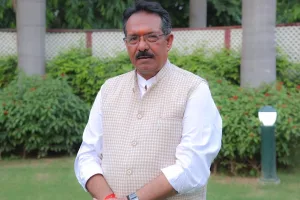
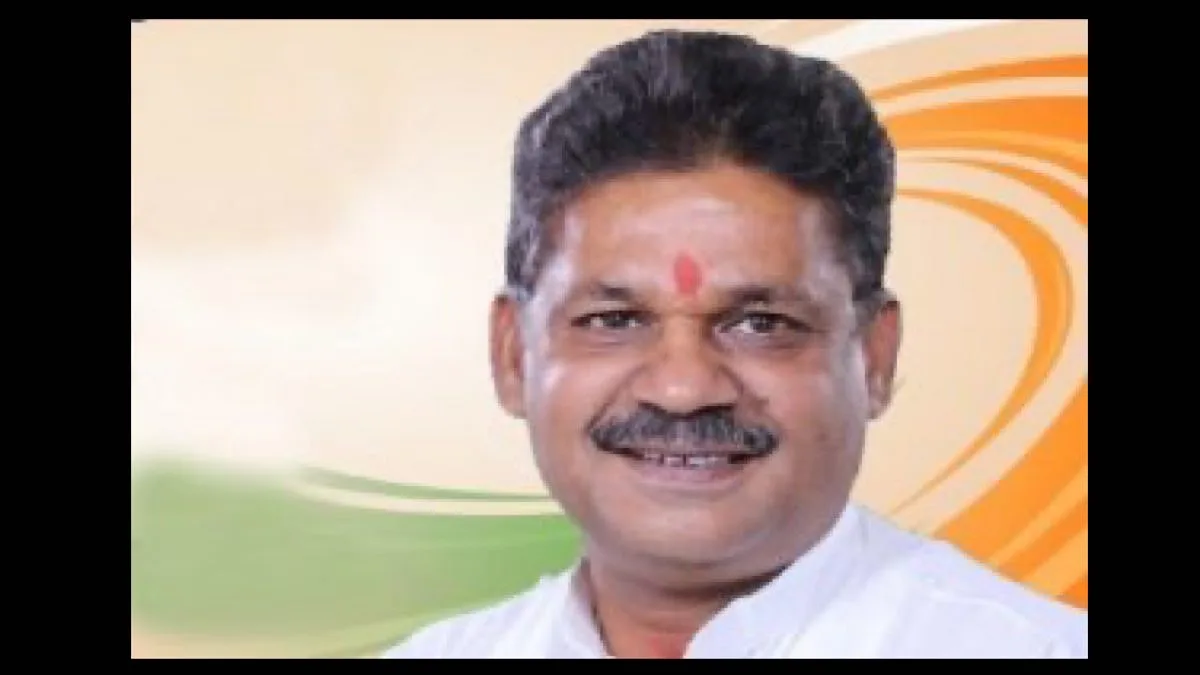
“If we approach the people by openly exposing the corruption and appeasement of both the fronts, it is certain that they will accept the BJP with open hands,” said Nitin Nabin, who arrived in the state on his first visit after taking over as BJP national president.

Statesman News Service | Thiruvananthapuram |

BJP national president Nitin Nabin on Friday said both the CPM-led LDF and Congress-led UDF have been alternately ruling Kerala and destroying the beautiful state. Both these fronts have been running the governments mired in corruption.

Addressing the booth-level party office-bearers of the Alappuzha and Ernakulam district at Ankamaly, Nitin Nabin said both the LDF and UDF governments, which have been ruling the state alternatively for the last 68 years, failed to take the state towards the path of development. “They have been obstructing the development of Kerala for years,” he contended.

“If we approach the people by openly exposing the corruption and appeasement of both the fronts, it is certain that they will accept the BJP with open hands,” said Nitin Nabin, who arrived in the state on his first visit after taking over as BJP national president.

He said that the UDF and the LDF have become anti-Sanadhana Dharma. The UDF is working in alliance with the Jamaat-e-Islami and the Muslim League. “We have seen that the DMK, a constituent in the INDI alliance, is disrespecting Sanadhana Dharma. It was the Congress that went to the Supreme Court against the existence of Ram Sethu and the existence of the Ram Temple,” he alleged.
In Kerala, both the fronts are trying to destroy Sabarimala temple , he concluded.
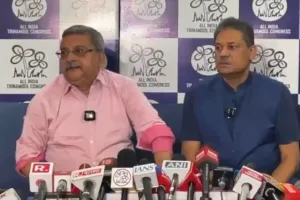
Union Budget: TMC stresses reopening of CPSEs in Durgapur

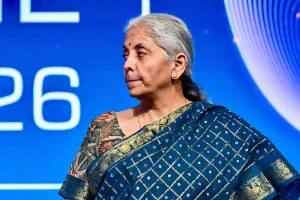
Five days after finance minister Nirmala Sitharaman presented the Union Budget, the Trinamul Congress (TMC) has officially reacted to the announcement of a new industrial corridor in Durgapur along with improved road connectivity.

DEBAJYOTI CHAKRABORTY | Kolkata |

Five days after finance minister Nirmala Sitharaman presented the Union Budget, the Trinamul Congress (TMC) has officially reacted to the announcement of a new industrial corridor in Durgapur along with improved road connectivity.

Narendra Nath Chakraborty, MLA from Pandaveswar and president of the West Burdwan district Trinamul Congress, said in Durgapur today that merely announcing an industrial corridor would not generate new employment opportunities for the youth. He questioned the absence of any announcement regarding the reopening of closed Central Public Sector Enterprises (CPSEs) in Durgapur, particularly Hindustan Fertiliser Corporation Limited (HFCL) and MAMC Industries.

“If the Centre is genuinely interested in the redevelopment of Durgapur, it must undertake expansion projects and reopen closed CPSEs such as HFCL, Bharat Ophthalmic Glass Limited (BOGL) and MAMC Limited. Without reopening these giant factories, new employment cannot be generated,” he said.

Mr Chakraborty added that the TMC government has repeatedly requested the Centre to reopen these closed factories or alternatively hand them back to the state government so that new industries can be set up on the vast unused factory and township land.

He further alleged that Surendrajit Singh Ahluwalia, who represented the Burdwan–Durgapur Lok Sabha constituency for five years, did nothing to revive the closed CPSEs. In contrast, TMC MP Kirti Jha Azad had raised the issue several times on the floor of Parliament, demanding the reopening of HFCL in Durgapur.

Incidentally, the West Bengal Industrial Development Corporation (WBIDC) has conducted a survey through the district magistrate of West Burdwan to assess the quantum of land available from closed CPSEs lying abandoned in the Asansol Sadar and Durgapur subdivisions of the district.

Speaking to The Statesman, state law, judiciary and labour minister Moloy Ghatak said the West Bengal government has sent several letters to the Centre seeking transfer of these vast land parcels so that private investors can be invited to set up industries. “However, nothing has happened so far. Our Chief Minister also took an initiative to upgrade Kazi Nazrul Islam Airport at Andal into an international airport. The former Chief Secretary had written several times to the civil aviation ministry, but there has been no response,” Mr Ghatak said.

Accordingly, a status report was prepared last year on around 2,100 acres of land belonging to seven closed CPSEs ~ Hindustan Cables Limited (HCL), Rupnarayanpur; Cycle Corporation of India, Sen Raleigh; Hindustan Fertiliser Corporation Limited (HFCL), Durgapur; MAMC (Mining and Allied Machinery Corporation), Durgapur; Bharat Ophthalmic Glass Limited (BOGL); Kesoram Rayon Industries, Kulti; and Hindustan Pilkington Glass Factory, Asansol ~ together covering a total area of 2,095.42 acres. The report has been handed over to the WBIDC.

Meanwhile, the WBIDC has already initiated steps to develop an industrial park on 193 acres of land belonging to the closed Dhakeswari Cotton Mill in Burnpur. Once one of the most prominent cotton mills in Asia, the mill was shut down long ago and remained idle for years. In 2022, the Mamata Banerjee government approved the takeover of this land parcel in Burnpur, West Burdwan district, for the development of an industrial park.

Jio tops 5G speed charts in Brahmapur with 333 Mbps: TRAI drive test

Jio’s 5G network superiority was evident from the fact that its 5G download speed was more than double that of its nearest competitor.

Statesman News Service | BHUBANESWAR |

Odisha’s leading digital service provider, Reliance Jio, proved its 5G network dominance as it delivered the highest 333.47 Mbps 5G download speed at busy hotspots across Brahmapur city, in the latest independent drive test (IDT) results, published by Telecom Regulatory Authority of India (TRAI).

Jio’s 5G network superiority was evident from the fact that its 5G download speed was more than double that of its nearest competitor.

TRAI evaluated real-world conditions at multiple busy hotspots across Brahmapur city, including Berhampur New Bus Stand, District Collector Office Brahmapur, Govt Science College Chhatrapur, MKCG Medical College Brahmapur, Municipal Corporation Office Brahmapur, Rock Garden Brahmapur, RTO Office Chhatrapur, Shree Maa Budhi Thakurani Temple in Brahmapur City, to reflect the stationary user experience. In the tests, Jio triumphed with the highest 5G download speed of 333.47 Mbps, followed by Airtel with 148.09 Mbps.

The tests, part of TRAI’s routine Quality of Service (QoS) assessments, were conducted between December 16 and 18, 2025, across Brahmapur city and adjoining areas, covering a 360 kms Brahmapur city drive test, a 4.1 km walk test, and 8 hotspot locations.

Leading another key network performance indicator, Jio recorded exemplary low latency of 24.71 milliseconds, nearly 50 percent less than competitors, reinforcing its network superiority for seamless video calls and gaming experience.

Jio also topped with the highest overall download speed, double that of the nearest competitor in the tests conducted by TRAI in Brahmapur city and adjoining areas, including the picturesque Gopalpur sea beach and the crowded Brahmapur Railway station. Reliance Jio proved its network dominance, delivering the highest overall data download speed of 242.83 Mbps, followed by Airtel with 106.15 Mbps, VIL with 20.31 Mbps, and BSNL with 10.55 Mbps. Jio also maintained a robust overall upload speed of 17.54 Mbps.

The detailed Independent Drive tests were conducted under the supervision of the TRAI Regional Office, Hyderabad, to capture real-world network performance across diverse usage environments- Urban Zones, Institutional Hotspots, rural residential areas, etc.

As per TRAI, the assessment in Brahmapur city included the areas nearby Ralaba, Golanthara, Girisola, Chikiti, Bendalia, Pathara, Chhatrapur, Arjyapalli, Ganjam, Humma, Khandadiuli, Purusottampur, Kabisuryanagar, Baragam, Burupada, Sheragada, Pattapur, Digapahandi, etc. A walk test was conducted at the Brahmapur Railway Station and the Gopalpur Sea Beach.

Vashishth assumes charge as principal secretary SSEPD Department

Senior bureaucrat Suresh Kumar Vashishth on Friday assumed charge as the Principal Secretary of the Department of Social Security and Empowerment of Persons with Disabilities.

Statesman News Service | BHUBANESWAR |

Senior bureaucrat Suresh Kumar Vashishth on Friday assumed charge as the Principal Secretary of the Department of Social Security and Empowerment of Persons with Disabilities.

After assuming the charge, he was welcomed by Departmental Director Ms. Parul Patawari, Special Secretary Ms. Rajani Jani, Financial Advisor and Special Secretary Jayashree Tripathy, Additional Secretaries, Deepak Routrai and Sonia Behera, along with other senior officers and staff.

Vashishth later emphasized the need to streamline departmental activities and sought the cooperation of all officers for the effective implementation of welfare-oriented schemes aimed at empowerment and entitlements of persons with disabilities and senior citizens.

Siraj replaces injured Rana in ICC T20 WC squad

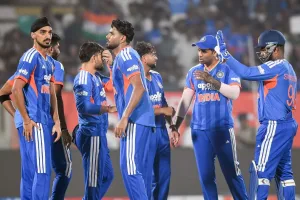
Star pacer Mohammed Siraj has been named as a replacement for Harshit Rana, who was ruled out of the ICC Men’s T20 World Cup 2026 after sustaining a knee injury during a warm-up match against South Africa in Navi Mumbai on February 4.

Statesman News Service | New Delhi |

Star pacer Mohammed Siraj has been named as a replacement for Harshit Rana, who was ruled out of the ICC Men’s T20 World Cup 2026 after sustaining a knee injury during a warm-up match against South Africa in Navi Mumbai on February 4.

The Board of Control for Cricket in India (BCCI) confirmed the development on Wednesday, stating that Rana was assessed by specialists and subsequently declared unfit to take part in the tournament. “Following consultations with a specialist and subsequent scans, the BCCI medical team deemed him unfit to participate in the tournament. The team management wishes him a speedy recovery,” the board said in a statement.

Earlier in the day, skipper Suryakumar Yadav had indicated that the early signs weren’t encouraging but didn’t rule him out. “He is not ruled out yet. He’s being assessed by the physios. But I think, today we’ll know what’s going to happen. But it doesn’t look good, it’s not that great,” he said.

Minutes after the BCCI confirmed the replacement, the ICC’s Event Technical Committee also approved Siraj’s inclusion in the Indian squad.

“Fast bowler Mohammad Siraj, who has played 45 Tests, 50 ODIs and 16 T20Is, was named as a replacement after Harshit Rana was ruled out with an injury to his right knee sustained during the warm-up game against South Africa on 4 February,” the ICC said.

“As per tournament regulations, any replacement player must receive clearance from the Event Technical Committee before being officially added to the squad.
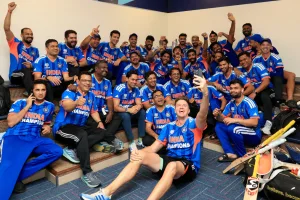
Siraj’s inclusion adds experience to India’s pace attack as the defending champions prepare for the remainder of their T20 World Cup campaign.

India’s updated squad: Suryakumar Yadav (C), Abhishek Sharma, Sanju Samson (WK), Ishan Kishan (WK), Tilak Varma, Hardik Pandya, Shivam Dube, Axar Patel (VC), Rinku Singh, Jasprit Bumrah, Arshdeep Singh, Kuldeep Yadav, Varun Chakaravarthy, Washington Sundar, Mohd. Siraj

Madhyamik candidate faints during examination, resumes exam from hospital

A Madhyamik examinee fainted while writing her history examination at Rajhati Bandar High School today.

Statesman News Service | Kolkata |

A Madhyamik examinee fainted while writing her history examination at Rajhati Bandar High School today.

Nandini Bor, a student of Harishchok High School, collapsed with shivering during the examination. A lady police officer on duty at the centre was immediately informed and she was rushed to Khanakul Gramin Hospital. The officer-in-charge of Khanakul police station, Samir Mukherjee also reached the hospital, said sources.

After receiving treatment for some time, Nandini regained consciousness, felt better and expressed her wish to resume the examination. Prompt arrangements were made by the Khanakul OC and the headmaster of Rajhati Bandar High School. With an oxygen mask on her face, Nandini resumed writing her History examination from the hospital bed. Extra time was also allotted to enable her to complete the paper.

Dr Mithu Mukherjee of Khanakul Hospital said that Nandini was administered oxygen and given initial treatment. “After some time, she regained consciousness and felt better. At present, we are not aware of any previous health issues,” the doctor said.

Nandini’s mother, Ruma Bor, thanked the police and the headmaster of the examination centre for their prompt action, care and concern, which enabled her daughter to complete the examination.

IIFM to set up second campus in north Bengal, focus on climate change

In a significant boost to forest governance and environmental education, the Indian Institute of Forest Management (IIFM), an autonomous institution under the central government, is set to establish its second campus in West Bengal, at Kurseong in the Darjeeling hills.

RAJIB CHAKRABORTY | Kolkata |

In a significant boost to forest governance and environmental education, the Indian Institute of Forest Management (IIFM), an autonomous institution under the central government, is set to establish its second campus in West Bengal, at Kurseong in the Darjeeling hills.

The institute plans to roll out MBA and specialised programmes in forest conservation and livelihoods from 2026. The Kurseong campus will focus on some of India’s most pressing ecological challenges ~ climate change, human-wildlife conflict, forest-dependent livelihoods, the Forest Rights Act (FRA) 2006, and issues related to eviction and conservation. These themes, officials said, are central to balancing development with environmental protection and expanding India’s forest cover. Professor Yogesh Kumar Dubey, Chief Executive Officer of IIFM, said the Kurseong institute would train future forest managers and policy professionals capable of responding to complex socio-ecological realities.

“The objective is to equip students with management skills rooted in conservation ethics and community engagement, enabling them to contribute meaningfully to sustainable forest governance,” he said. The proposed campus is being developed on land that once housed a Christian missionary centre. The property was later acquired by the central government, which has initiated the process to transform it into a modern, state-of-the-art academic facility. The IIFM is also setting up its third campus at Mayurbhanj in Odisha on around 200 acres of land. According to Prof Dubey, the expansion aligns with the Union government’s wildlife protection and forest conservation policies. “These campuses will act as advanced training hubs, preparing students for leadership roles in forestry, conservation management, and allied services, including the Indian Forest Service,” he added.

The expansion comes amid sustained criticism from opposition political parties and environmental groups, who have accused governments of allowing industrial projects in wildlife habitats and large-scale diversion of forest land. Against this backdrop, the establishment of two new forest management institutes is being projected as a commitment to science-based conservation and sustainable development.

The IIFM Bhopal, the institute’s flagship campus spread over nearly 300 acres, has already gained international recognition. Recently, it hosted a transformative three-day training workshop on “Business Development Planning for Forest Fringe Villages,” attended by nearly 150 Indian Forest Service officers from across the country, including West Bengal. The programme aimed to help officers transition from traditional regulatory roles to becoming “green economy architects.”

Architect Anant Raje designed the campus to blend seamlessly with nature, maintaining open spaces and ecological balance. In West Bengal, particularly in the Dooars and Sundarbans regions, innovative measures such as drone surveillance for elephant movement and special transport arrangements for students during examinations underscore the growing intersection of conservation and daily life.

ER’s Howrah Division initiates long-pending railway underpass at Rishra

The assurance given by Eastern Railway’s Howrah Division to Rishra Municipality Chairman Vijay Sagar Mishra regarding the completion of the long-pending railway underpass at Rishra within the current financial year has brought great relief and happiness to the residents of the town.

Statesman News Service |

The assurance given by Eastern Railway’s Howrah Division to Rishra Municipality Chairman Vijay Sagar Mishra regarding the completion of the long-pending railway underpass at Rishra within the current financial year has brought great relief and happiness to the residents of the town. The underpass work has already been initiated.

An underpass at the Rishra railway level crossing gate has long been an urgent requirement to address severe traffic congestion caused by frequent and prolonged closures of the railway gate. Commuters are often forced to wait for 10 to 20 minutes for trains to pass, resulting in massive traffic snarls and leaving little space even for pedestrians.

The construction of the underpass is expected not only to ease traffic congestion but also to provide significant convenience to schoolchildren, elderly residents and daily commuters. It will also help reduce accidents that occur while crossing the railway tracks. The project, however, had been delayed for various reasons.

Residents of Rishra had grown frustrated and disappointed due to the prolonged wait and repeated delays, but the assurance from the railways to complete the underpass within this financial year has come as a great relief.

Rishra Municipality Chairman Vijay Sagar Mishra said that people face immense difficulties while commuting between the eastern and western parts of the town, and the demand for an underpass has been long-standing. He further mentioned that Chief Minister Mamata Banerjee, during her tenure as railway minister in 2009, had approved an underpass at Rishra Gate No. 3 and a flyover at Gate No. 4. However, several technical and administrative hurdles later delayed the execution of the underpass project.

Mr Mishra added that Mr Vishal Kapoor, Divisional Railway Manager (DRM) of Eastern Railway’s Howrah Division, has assured that the underpass work will be completed within the current financial year. There are also plans to revamp the Rishra railway platforms to provide improved passenger amenities.

Singur, Haripal women celebrate hike in Lakshmir Bhandar amount

Women from Singur and Haripal were overwhelmed with joy after learning about the enhancement of the Lakshmir Bhandar allowance.

Statesman News Service | Hooghly |

Women from Singur and Haripal were overwhelmed with joy after learning about the enhancement of the Lakshmir Bhandar allowance.

Under the revised structure, women in the general category will now receive Rs 1,500 per month, up from Rs 1,000, while SC/ST and similarly categorised women will receive Rs 1,700 per month, increased from Rs 1,200.

Women from Singur and Haripal had played a major role during the historic Singur Andolan. Thousands of women, under the leadership of Becharam Manna and Dr Karabi Manna, had taken to the streets protesting against alleged atrocities and brutality of the then Left Front government. Large number of women from these areas also joined Chief Minister Mamata Banerjee during her 26-day hunger strike under the open sky.

Soon after the announcement of the enhanced Lakshmir Bhandar amount, women in Singur and Haripal poured out of their homes carrying metal utensils and ladles, celebrating with green abir and smearing green colour.

Women including Jhilik Das, Mousami Koley, Papri Chatterjee, Sadhana Singha Roy, Chitra Basu, Lipika Nag, Shravani Ghosh and Shudha Maity said that Mamata Banerjee is compassionate and kind-hearted and understands the struggles of women in running a household. They said the enhanced Lakshmi Bhandar amount has brought great relief and will help them expand their small businesses.

Many women said that after completing household chores, they engage in cottage industries such as making paper packets, bamboo and coconut fibre products, and leaf-based items. The increased allowance, they said, would help them produce more goods, earn higher profits and better meet their families’ daily needs.

BJP Intellectual Cell in Chandigarh explains Union Budget’s link to national vision

Held at Rajasthan Bhawan, the session was convened by Dr Monica B Sood, Convenor of the Intellectual Cell, BJP Chandigarh, along with the cell’s core team. BJP Chandigarh President Jitender Pal Malhotra attended the event as the chief guest.

Statesman News Service | Chandigarh |

In an effort to bridge the gap between policy-making and public understanding, the Intellectual Cell of BJP Chandigarh on Friday organised a panel discussion titled “Union Budget 2026: From Economic Policy to National Policy”, highlighting how the latest Union Budget aligns economic reforms with India’s long-term national priorities.

Held at Rajasthan Bhawan, the session was convened by Dr Monica B Sood, Convenor of the Intellectual Cell, BJP Chandigarh, along with the cell’s core team. BJP Chandigarh President Jitender Pal Malhotra attended the event as the chief guest.

Addressing the media on the sidelines, Dr Sood said the programme was part of the Bharatiya Janata Party’s nationwide outreach to demystify the Union Budget for the common citizen. “The objective was to explain key budgetary provisions in simple terms and show how people-centric allocations can generate employment, promote self-reliance and accelerate inclusive economic growth,” she said.

Speakers during the discussion underlined that Union Budget 2026–27 places strong emphasis on technology-driven growth, innovation, employment generation and national self-reliance. Dr Sood observed that global power equations are rapidly evolving, with future competition centred on semiconductors and data rather than traditional energy resources.

She added that artificial intelligence would shape the future of defence, education, agriculture, healthcare and medicine. In line with this vision, the Budget has provided for the establishment of 15,000 advanced technology laboratories across the country to train students in AI, robotics, data science, gaming technologies and quantum computing. Special focus has also been placed on STEM education for girls, along with hostels in every district to ensure equitable access to advanced technical education.

The panel discussion was moderated by Pooja Nayar, Advocate and Chairperson, TiE Women, TiE Chandigarh. The panellists included Dr Dharinder Tayal, academician and entrepreneur; CMA Rakesh Bhalla, financial expert; Naveen Kumar Soni, CA and LLB; and Puneet Verma, President, TiE Chandigarh.

Infrastructure development and connectivity also featured prominently in the discussions. Panellists noted that the proposed seven high-speed rail corridors and the operationalisation of 20 national waterways would significantly reduce logistics costs, improve connectivity for Tier-II and Tier-III cities, and boost trade, tourism and employment. The rise in defence exports under the Make in India initiative and the growing emphasis on defence self-reliance as a driver of GDP growth were also highlighted.

The Budget’s push for start-ups and MSMEs drew particular attention. With an allocation of ₹10,000 crore to strengthen MSMEs and SMEs, the Budget aims to spur youth entrepreneurship and job creation. Dr Sood pointed out that under the Prime Minister’s Start-up Mission, nearly 1.4 lakh start-ups are launched annually, collectively generating substantial employment.

Healthcare reforms were another key focus area. Dr Sood highlighted the removal of import duties on critical life-saving drugs to make essential medicines more affordable. She also referred to the establishment of three AIIMS-level Ayurveda institutions and special funding under the Bio-Shakti Mission to promote domestic pharmaceutical manufacturing.

Responding to queries, Dr Sood said Union Budget 2026–27 should be seen as a long-term roadmap rather than a short-term fiscal exercise, aligned with Prime Minister Narendra Modi’s vision of transforming India into a global economic powerhouse. She urged citizens to deepen their understanding of finance, technology and taxation, noting that India’s economic progress is increasingly drawing global attention.

Sooryavanshi’s historic 175 powers India to record sixth U-19 World Cup title

Sooryavanshi’s blistering innings propelled India to a mammoth 411 for 9, a total that proved far beyond England despite a spirited chase.

Tridib Baparnash | New Delhi |

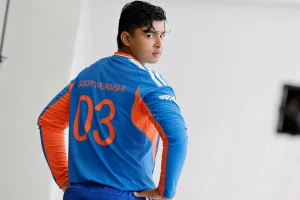
Teenage batting sensation Vaibhav Sooryavanshi produced one of the greatest knocks in Under-19 World Cup history, smashing a breathtaking 175 off just 80 balls to power India to a record-extending sixth ICC U-19 World Cup title with a commanding 100-run win over England at the Harare Sports Club on Friday.

Sooryavanshi’s blistering innings propelled India to a mammoth 411 for 9, a total that proved far beyond England despite a spirited chase. The 15-year-old rewrote the record books with an exhibition of fearless power-hitting on the biggest stage.


Chasing the daunting target, England began positively with opener Ben Dawkins scoring a fluent fifty, while Thomas Rew and Ben Mayes chipped in with brisk cameos. However, sustained pressure triggered a middle-order collapse as England slipped from 174 for 3 to 177 for 7. Caleb Falconer fought valiantly with a rapid 115 off 67 balls, but the required rate proved insurmountable as England were eventually bowled out for 311.

 Earlier, Sooryavanshi brought up his century off just 55 balls — the second-fastest hundred in Under-19 World Cup history. He surpassed Pakistan’s Qasim Akram (63 balls vs Sri Lanka in 2022), with only Australia’s Will Malajczuk (51 balls vs Japan earlier in the tournament) ahead of him.

In the process, the Bihar-born prodigy became the fastest Indian to score a century in Under-19 World Cup history, eclipsing Raj Angad Bawa’s 69-ball effort against Uganda in 2022. He also became only the third Indian to score a century in an Under-19 World Cup final.

Displaying remarkable composure and aggression, Sooryavanshi raced to his half-century in just 32 balls and needed only 23 more deliveries to complete his next fifty. His innings, laced with 15 fours and 15 sixes, came at a staggering strike rate of 218.75.

The 175 is now the highest individual score in an Under-19 World Cup final, surpassing Unmukt Chand’s 111 not out against Australia in the 2012 final. It is also the highest score by an Indian in the tournament’s history, going past Raj Bawa’s 162 not out against Uganda in 2022. Overall, it stands as the ninth-highest individual score in Youth ODI history, with Ambati Rayudu’s 177 not out against England in 2002 the only higher score by an Indian.

Sooryavanshi also set new benchmarks in power-hitting, finishing with a record 15 sixes — the most ever in a Youth ODI and an Under-19 World Cup innings. He surpassed Dewald Brevis’ record for most sixes in a single Under-19 World Cup edition, ending the tournament with an astonishing 30 sixes.

He anchored India’s dominance through vital partnerships, adding 142 runs for the second wicket with captain Ayush Mhatre (53) and a further 89 with Vedant Trivedi (32). Sooryavanshi was eventually dismissed in the 26th over, having delivered a knock that will be etched in Under-19 World Cup folklore.

The final capped off a stellar campaign for Sooryavanshi, who finished as India’s leading run-scorer with 264 runs at an average of 44 and a strike rate of 147.49.

Among the other contributors were wicketkeeper-batter Abhigyan Kundu (40), Kanishk Chouhan (37 not out) and Vihaan Malhotra (30).

Yogi inaugurates Inter College building in Yamkeshwar, stresses value-based education

On this occasion, the Chief Minister said, “Material development is not the ultimate goal of life, but it is only a means to fulfil necessities. Real and meaningful development is that which progresses while preserving its own civilisation, culture and spiritual values.”

Statesman News Service | Lucknow |

Uttar Pradesh Chief Minister Yogi Adityanath on Friday inaugurated the newly constructed building of the Inter College located in Yamkeshwar, Pauri Garhwal, during his visit to Uttarakhand.

On this occasion, the Chief Minister said, “Material development is not the ultimate goal of life, but it is only a means to fulfil necessities. Real and meaningful development is that which progresses while preserving its own civilisation, culture and spiritual values.”

“Educational institutions will have to prepare themselves with this thinking so that schools do not remain limited to textbook knowledge alone, but become centres of values, skills and life building,” he said.

During the programme, the Chief Minister also honoured meritorious students of the school by giving them awards.

The Chief Minister also added, “This grand educational building has now been dedicated to the students and teachers. Very soon, all basic facilities, including necessary furniture, will also be provided here.”

The Chief Minister added, “Uttarakhand has entered its silver jubilee year of establishment and this period is not limited to material achievements alone, but is an opportunity to touch new heights of development while preserving cultural and spiritual values. Development cannot be one-dimensional; if civilisation and culture are not preserved, then material progress will also prove meaningless”.

Referring to the leadership of Prime Minister Narendra Modi, the Chief Minister said that the National Education Policy 2020 promotes this thinking that schools should not only be limited to book knowledge, but also become centres of skill development and holistic personality development.

Sharing his experience, the Chief Minister said, “When this Inter College was established in 1965, there was neither electricity, nor roads, nor modern facilities. Today, electricity, drinking water, roads and better connectivity are available in every village.”

The Chief Minister said, “Uttarakhand is Devbhoomi. The youth of this place defend the borders of the country and play an effective role in every field. The water that flows from the Himalayas makes the entire northern Indian land fertile and contributes to the country’s food security. The government wants to develop strong infrastructure at every level, but its proper use is a collective social responsibility.”

BATC 2026: India’s campaign ends at QFs as women lose to China and men go down against Korea

Having qualified second in Group C behind Japan, India depended on their singles strength against Korea in the men’s quarterfinal in the absence of Satwiksairaj Rankireddy and Lakshya Sen

IANS | New Delhi |

India’s challenge in the Badminton Asia Team Championships being played at Qingdao, China, came to an end after the men went down 1-3 against Korea while the women lost 0-3 against favourites China in the quarterfinals on Friday.

Having qualified second in Group C behind Japan, India depended on their singles strength against Korea in the men’s quarterfinal in the absence of Satwiksairaj Rankireddy and Lakshya Sen. And it looked like their strategy paid off when Ayush Shetty earned three match points in the first singles against Yoo Tae Bin in the decider. But the former world junior bronze medalist failed to convert those three and despite saving three match points himself and earning one more, the Indian ultimately suffered a 18-21, 21-14, 26-24 reversal in an hour and 24 minutes.

Korea extended their lead with Song Hyun Cho and Kim Won Ho beating the Indian scratch combination of Hariharan Amsakarunan and Chirag Shetty 21-11, 21-13.

Former world number 1 Kidambi Srikanth kept India’s hopes alive with a 21-15, 21-16 win over Choi Ji Hoon but Korea wrapped the match in the second doubles with Jin Yong and Ki Dong Ju defeating Pruthvi K Roy and K Sai Pratheek 21-11, 21-16.

Earlier, defending champions India could not match the strength of the formidable Chinese women’s team in the absence of PV Sindhu. World no. 10 Gao Fang Jie started their march towards the semifinals with a 21-9, 21-9 win over Tanvi Sharma in the first singles.

India’s top doubles combination of Treesa Jolly and Gayatri Gopichand earned a game point in the opening game against world no. 4 pairing of Jia Yi Fan and Zhang Shu Xian but went down 24-22, 21-18.

Rakshita Sree then raised hopes of a fight back when she bagged the opening game against Xu Wen Jing but could not sustain the momentum and lost 14-21, 21-15, 21-17.

Result:

Women: India lost to China 0-3

(Tanvi Sharma lost to Gao Fang Jie 9-21, 9-21; Treesa Jolly/Gayatri Gopichand lost to Jia Yi Fan/Zhang Shu Xian 22-24, 18-21; Rakshitha Sree lost to Xu Wen Jing 21-14, 15-21, 17-21

Men: India lost to Korea 1-3

(Ayush Shetty lost to Yoo Tae Bin 21-18, 14-21, 24-26; Hariharan Amsakarunan/Chirag Shetty lost to Song Hyun Cho/Kim Won Ho 11-21, 13-21; Kidambi Srikanth bt Choi Ji Hoon 21-15, 21-16; Pruthvi K Roy/K Sai Pratheek lost to Jin Yong/Ki Dong Ju 11-21, 16-21)

‘Godaan’ declared tax-free in UP; film promotes cow protection

This decision, taken under the leadership of Chief Minister Yogi Adityanath, underscores the government’s policy of prioritizing cow protection, socially and administratively.

Statesman News Service | Lucknow |

The Uttar Pradesh government has made ‘Godaan’ tax-free in the state. Based on cow protection, the film, produced and directed by Vinod Chaudhary, was released in theaters across the country on Friday.

This decision, taken under the leadership of Chief Minister Yogi Adityanath, underscores the government’s policy of prioritizing cow protection, socially and administratively. The government believes that the film will spread the message of cow protection to a wider audience and help connect the general public with the seriousness of this issue.

The tax exemption in UP will lead to lower ticket prices for viewers, allowing more people to see the film. Upon assuming office, Chief Minister Yogi Adityanath initiated swift action against cow smugglers, leading to the arrest of a large number of them. Clear instructions were given to the administrative machinery to ensure strict action in cases of cow slaughter and smuggling.

The Chief Minister’s affection for cows and his commitment to cow protection is evident from the fact that more than 7,500 cow shelters have been built in the state in the last nine years. Furthermore, more than 1.2 million stray cows have been protected. To make cow service and protection more effective, cow protection committees have been formed in every district. The District Magistrate and Senior Superintendent of Police of each district have been appointed as nodal officers.

The producer-director of ‘Godaan’, a film centered on the protection of cows, their importance in Indian culture, and a scientific perspective based on Panchagavya (five products of the cow), had previously met with Yogi Adityanath. This approximately two-hour film depicts the religious, social, and practical importance of the cow.

Army Chief reviews counter-terror operations in Jammu region

He was briefed on the counter-terrorism grid and appreciated the synergy in joint operations between the security forces, officials said.

Statesman News Service | Jammu |

Army Chief General Upendra Dwivedi on Friday visited the White Knight Corps at Nagrota near here to review the prevailing security situation and assess operational preparedness in the region.

He was briefed on the counter-terrorism grid and appreciated the synergy in joint operations between the security forces, officials said.

The Army Chief commended the efforts of all stakeholders and emphasised the need for vigilance and a people-centric approach while conducting operations in the region.

He also expressed confidence in the leadership and troops of White Knight Corps in safeguarding peace and security in the region.

The Army Chief’s visit comes amid a massive operation launched by security forces to flush out Pakistani terrorists hiding in the mountain areas of Kishtwar, Doda, Udhampur, and Kathua districts in the Jammu division.

Three heavily armed Pakistani terrorists were neutralised by security forces on Wednesday in Udhampur and Kathua districts.

SC flags alarming drop in NEET-PG cut-offs, seeks Centre’s explanation

“This is about standards. The question is whether those standards are being compromised,” the Court remarked, noting that the issue pertains to postgraduate medical courses where all aspirants are already qualified doctors.

Parmod Kumar | New Delhi |

The Supreme Court on Friday expressed serious concern over the steep reduction in qualifying percentile cut-offs for NEET Postgraduate medical admissions, observing that the move raises fundamental questions about the standards of postgraduate medical education.

A Bench comprising Justice Pamidighantam Sri Narasimha and Justice Alok Aradhe sought a detailed affidavit from the Centre while hearing a public interest litigation challenging the decision to lower the cut-off marks for NEET-PG admissions during the third round of counselling.

“This is about standards. The question is whether those standards are being compromised,” the Court remarked, noting that the issue pertains to postgraduate medical courses where all aspirants are already qualified doctors.

The Court’s concern was triggered after it was informed that the qualifying cut-off for the general category was reduced from 276 marks to 103, while for SC, ST and OBC candidates it was lowered from 235 marks to a negative score of minus 40.

Reacting sharply, the Bench observed, “We were stunned to see why this method was adopted. These are all regular doctors.”

In response, counsel for the authorities submitted that the relaxation was intended to ensure that no postgraduate medical seat remained vacant. The National Board of Examinations in Medical Sciences (NBEMS), in a notification dated January 13, stated that the reduction was carried out on the directions of the Union Ministry of Health and Family Welfare.

Challenging the notification, the petitioners argued that the move permits candidates with no demonstrable merit to become eligible for postgraduate admissions, rendering the decision arbitrary and unconstitutional under Articles 14 and 21. They warned that diluting minimum standards at the postgraduate level institutionalises sub-standard competence and poses a direct risk to patient safety and public health.

Senior Advocate Gopal Sankaranarayanan, appearing for the petitioners, contended that relaxation of qualifying standards is permissible only in exceptional circumstances and to a limited extent. Citing the Preeti Srivastava judgment, he stressed that higher standards must apply at higher levels of education.

Taking note of the submissions, the Court directed the Centre to file a detailed affidavit justifying the rationale behind the drastic reduction in cut-off percentiles.

Naidu, Jagan spar over Tirupati laddu

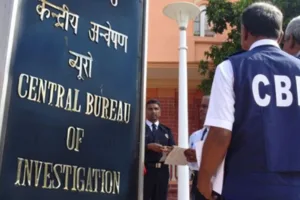
Accusing the chief minister of speaking “lies”, Reddy said only the facts mentioned in the court-monitored CBI report will prevail, which clearly stated that there was no animal fat in the ghee.

Statesman News Service | Hyderabad |

While Andhra Pradesh Chief Minister N Chandrababu Naidu has alleged that Tirupati laddus were made using ghee adulterated with chemicals used to clean bathrooms during the YSRCP rule, his political rival, YS Jagan Mohan Reddy, slammed him, saying the one-man commission appointed by the TDP-led NDA government in the state to go into the issue was essentially a cover-up that would not stand scrutiny.

Accusing the chief minister of speaking “lies”, Reddy said only the facts mentioned in the court-monitored CBI report will prevail, which clearly stated that there was no animal fat in the ghee.

Addressing a meeting in Kalugotla village in Kurnool, Naidu accused the previous YSRCP regime of knowingly permitting adulteration. Speaking on the sidelines of Pattadar passbook distribution programme, he said, “Ghee made out of bathroom cleaning chemicals was used in laddus by them.”

Initially, Naidu had accused the YSRCP government of using animal fat to make the laddus. However, he was charged with lying and weaponising faith by YSRCP chief YS Jagan Mohan Reddy.

The former chief minister on Friday visited Ibrahimpatnam to meet party leader Jogi Ramesh, whose house was attacked by TDP supporters over the controversial issue. Reddy said that, contrary to the lies spread by Chandrababu Naidu, the CBI clearly stated in its chargesheet that no animal fat was found in the ghee used to prepare the laddus for prasadam.

He added that the chargesheet, backed by reports from two Central laboratories, did not mention the names of anyone associated with YSRCP and categorically stated that the four tankers of ghee rejected by TTD during Chandrababu Naidu’s term had returned from another company.

Reddy also slammed the Naidu government, saying the template of arson and attack on the residences of YSRCP leaders was the same and accused TDP supporters of working with police to carry out the attacks. “We will expose the jungle raj of the coalition government at all available forums,” said the former chief minister.

He accused Naidu, his son Nara Lokesh and JSP leader Pawan Kalyan of using God for selfish political gains. “Chandrababu Naidu and his propaganda machinery are trying to cover up and pick up holes in the CBI report by appointing a one-man commission.