Logo

TN issues statewide bird flu alert after crow deaths; public advised to take strict precautions

The Directorate of Public Health and Preventive Medicine (DPH) simultaneously released a public health communication urging residents to remain alert and follow safety protocols.

IANS | Chennai |

Amid reports of large-scale crow deaths and growing fears over a possible outbreak of avian influenza, the Department of Animal Husbandry, Dairying and Fisheries has issued a comprehensive advisory detailing biosecurity and precautionary measures to prevent the spread of bird flu among poultry, wild birds and humans.

The Directorate of Public Health and Preventive Medicine (DPH) simultaneously released a public health communication urging residents to remain alert and follow safety protocols.

Health officials advised people to seek immediate medical attention if they develop flu-like symptoms such as cough, cold, fever or breathing difficulty, particularly those who may have been exposed to birds.

The advisory specifically cautioned slaughterhouse workers, poultry handlers and individuals who come into contact with sick or dead birds to exercise extra care. Members of the public have been asked to promptly report any unusual bird deaths or clusters of illness to the animal husbandry department.

Animal husbandry authorities have directed field staff and veterinary teams to intensify surveillance across districts to detect sudden sickness or mortality among crows, other wild birds and domestic poultry.

Veterinary personnel have also been instructed not to conduct post-mortem examinations of birds in open areas. Instead, carcasses must be sent to designated Regional Disease Diagnostic Laboratories for testing.

To prevent the spread of infection through scavengers or environmental contamination, officials said dead birds must either be incinerated or buried deep. The public has been strictly warned against touching bird carcasses with bare hands. If handling is unavoidable, gloves should be used and hands must be washed thoroughly afterward.

Mudumalai Tiger Reserve Deputy Director M.G. Ganesan confirmed that wildlife divisions have been placed on high alert to closely monitor bird populations in forest regions. Poultry farms across the State have been advised to restrict visitor access and strengthen farm-level biosecurity.

The department has also called for an extensive Information, Education and Communication (IEC) campaign to spread awareness about the symptoms and risks of avian influenza. Special monitoring has been initiated at live bird markets and wet markets, while movement of poultry and related products is being regulated in border areas.

District administrations have been directed to review preparedness levels and ensure adequate equipment and response mechanisms are in place to tackle any potential outbreak swiftly.

Sara Arjun says ‘Euphoria’ came to her when life felt uncertain yet full of possibility

Sara Arjun opens up about how Euphoria found her during a turning point in her life and why the film holds deep personal meaning.

Statesman News Service | New Delhi |

Young actress Sara Arjun has described her upcoming Telugu film Euphoria as a project that entered her life during a deeply transformative phase. According to the actress, the film found her at a time when nothing felt stable, yet possibilities felt endless.

Following the film’s premiere, Sara took to Instagram to share a heartfelt note reflecting on her emotional connection with the story and the people behind it.

Also Read: YRF responds to viral claims linking ‘Mardaani 3’ promo to missing girls in Delhi, denies any involvement

‘Some stories don’t just choose you’

In her post, Sara spoke about how Euphoria stayed with her beyond the shoot, calling it one of those rare projects that quietly reshape you.

“Some stories don’t just choose you, they stay with you long after the moment passes,” she wrote. “This film found me at a time when nothing felt certain, yet everything felt possible.”


View this post on Instagram


A post shared by Sara Arjun (@saraarjunn)

Gratitude to the makers

The actress expressed her appreciation for filmmaker Gunasekhar and producer Neelima Guna for believing in the film’s vision and telling the story with sincerity.

Thanking the makers, she wrote that their trust allowed something “real to be felt and seen,” adding that it takes courage to tell such stories honestly.

Family, freedom and trust

Sara also acknowledged the role her family, especially her father who has played in her journey so far. She credited him for offering constant support while also giving her the freedom to choose her own path.

“That trust has shaped me more than you know,” she shared, describing how it continues to guide her decisions as an actor and individual.

A role that challenged her emotionally

Calling Euphoria an important milestone, Sara revealed that the film pushed her out of her comfort zone in the most meaningful way.

“This film made me uncomfortable emotionally,” she said, adding that the experience helped her grow. She expressed hope that the story resonates with audiences and connects with them on a deeper level.

“To me, this is a very important story… idi okka special film,” she wrote.

About ‘Euphoria’

In Euphoria, Sara plays Chaitra, a troubled teenager navigating complex emotional and social challenges. The Telugu social thriller delves into themes such as drug abuse and youth crime, drawing inspiration from real-life incidents.
The film also stars Bhumika Chawla and Gautham Menon in key roles.

What’s next for Sara Arjun

Sara will next be seen in Dhurandhar: The Revenge, the second installment of the Dhurandhar franchise, which is scheduled for a theatrical release on March 19, 2026.

The high-octane film features an ensemble cast including Ranveer Singh, R. Madhavan, Akshaye Khanna, Sanjay Dutt and Arjun Rampal.

Inside the ‘Dhurandhar’ universe

Serving as the first part of a two-film series, Dhurandhar revolves around a covert counter-terrorism mission. The story follows an undercover Indian intelligence agent who infiltrates criminal syndicates and political networks in Karachi to dismantle a terror operation aimed at India.

The narrative draws loose inspiration from several real-life geopolitical events in South Asia, including the IC-814 hijacking, the 2001 Parliament attack, the 2008 Mumbai terror attacks, and developments linked to Pakistan’s Operation Lyari.

Also Read: To Hold a Mountain Review: A mother and daughter take on NATO, nature, and patriarchy all at once

Meerut Police file FIR against YouTuber Shadab Jakati over woman’s allegations of confinement, assault

Meerut Police have registered a case against YouTuber Shadab Jakati after a woman collaborator accused him of confinement and assault. The influencer has denied all charges.

Statesman News Service | Mumbai |

Police in Meerut have registered a criminal case against well-known YouTuber and social media influencer Shadab Jakati following allegations of wrongful confinement and physical exploitation by a woman who had earlier collaborated with him on social media reels. The case has been filed at Inchauli Police Station, and police say efforts are underway to trace the accused.

According to the complaint, the woman alleged that she was offered work and later subjected to physical exploitation. She also accused Jakati’s wife of assaulting and threatening her when she said she would approach the police. The complainant further claimed that Jakati threatened to have her husband killed.

What the woman has alleged in her complaint

In her statement to the police, the woman said she began working with Jakati after being offered opportunities to appear in social media videos. She alleged that over time, he pressured her to portray the role of his wife in every reel, something she objected to. The complaint also mentions wrongful confinement and physical abuse.

Police sources said the FIR was registered based on the woman’s statement and that the matter is being investigated under serious sections of law.

Previous allegations and emerging pattern

This is not the first time Jakati’s name has surfaced in a controversy. Only a few days earlier, the husband of another woman had accused him of assault and issuing threats. Police have not yet indicated whether the two matters are being examined together.

Shadab Jakati denies charges, calls it a conspiracy

Following the registration of the FIR, Shadab Jakati released a video statement on social media denying all allegations. He claimed the woman had approached him seeking help, saying she worked as a labourer, had a child, and could not afford the child’s education.

Jakati said he supported her by paying six months’ school fees, providing books, arranging courses, and helping with ration and financial aid. He added that members of his team and local shopkeepers could confirm the assistance he provided.

He maintained that he never touched the woman and that she never stayed at his house overnight, stating that CCTV cameras were installed at his residence. Terming the allegations a conspiracy, Jakati said he welcomes a fair investigation and would accept responsibility if any evidence is found against him.

Police officials said the case is under investigation, and further action will depend on the evidence collected. No arrests have been reported so far.

Ola, Uber, Rapido strike today: Nationwide breakdown hits app-based transport services on February 7

Ola, Uber and Rapido drivers are observing a nationwide strike today, February 7, protesting falling incomes and delays in notifying minimum base fares under Aggregator Guidelines.

Statesman News Service | Mumbai |

App-based transport workers linked to platforms such as Ola, Uber, Rapido, Porter and others are observing a nationwide “breakdown” on Saturday, February 7, protesting falling incomes and what unions describe as worsening exploitation in the sector.

The all-India action has been called by the Telangana Gig and Platform Workers Union (TGPWU) and the Indian Federation of App Based Transport Workers (IFAT). The unions said drivers are participating by cancelling ride requests or switching off their ride-hailing apps, a move that could affect services across several cities.

Is Ola and Uber strike today?

Yes. Unions said drivers associated with Ola, Uber, Rapido, and other platforms are switching off apps or cancelling trips as part of a nationwide ‘breakdown’ on Saturday.

The protest, they said, has been triggered by the failure of the Central and state governments to notify minimum base fares under the Motor Vehicle Aggregator Guidelines, 2025, allowing aggregator companies to continue fixing fares unilaterally.

Why app-based drivers are protesting on February 7

Shaik Salahuddin, TGPWU founder President and IFAT co-founder and National General Secretary, said that despite the existence of the Aggregator Guidelines, aggregator companies continue to determine fares on their own, pushing workers into unsustainable working conditions.

He said the ‘breakdown’ is meant to highlight falling incomes and worsening exploitation faced by app-based transport workers due to delays in implementing fare protections mandated under the 2025 guidelines.

Key demands raised by Ola, Uber and Rapido drivers

Among the key demands is the immediate notification of minimum base fares for app-based transport services, to be finalised in consultation with recognised worker unions, as required under the Aggregator Guidelines, 2025.

The unions have also demanded a strict prohibition on the use of private (non-commercial) vehicles for commercial passenger and goods transport. Alternatively, they have called for mandatory conversion of such vehicles into the commercial category, in line with the Motor Vehicles Act and the Aggregator Guidelines, 2025.

Impact across cities and scale of participation

While the protest is nationwide, the unions said the extent of disruption may vary locally across major cities such as Mumbai, Bengaluru and Pune.

Salahuddin said Telangana alone has around 2.5 lakh autorickshaw drivers, 1.5 lakh cab drivers and about 50,000 Porter drivers operating on app-based platforms.

Earlier communication with governments

The TGPWU had earlier written to Union Minister for Road Transport and Highways Nitin Gadkari, Telangana Transport Minister Ponnam Prabhakar and other officials, informing them of the decision to observe an All-India ‘breakdown’.

In the letter, the union demanded immediate notification of minimum base fares by the Central and state governments for app-based transport services, including autos, cabs, bike taxis and other aggregator-based services, to be finalised in consultation with recognised driver and worker unions.

The unions have urged the Central and state governments to initiate immediate dialogue with worker representatives to ensure fair, lawful and sustainable regulation of the app-based transport sector.

PM Modi embarks on Malaysia visit to deepen ‘comprehensive strategic partnership’

Prime Minister Narendra Modi has begun a two-day visit to Malaysia to deepen defence, security and economic ties under the comprehensive strategic partnership.

IANS | New Delhi |

Prime Minister Narendra Modi on Saturday said that his visit to Malaysia will aim to deepen the defence and security ties between the two nations and will further enhance the economic and innovation partnership.

PM Modi embarked on a two-day visit to Malaysia at the invitation of his counterpart, Anwar Ibrahim, on Saturday. This is his third visit to the Southeast Asian nation, and the first after the elevation of the India-Malaysia bilateral relationship to a ‘Comprehensive Strategic Partnership’ in August 2024.

In his departure statement, the Prime Minister said, “The historic ties between India and Malaysia have seen steadfast progress in recent years. I look forward to my discussions with Prime Minister Anwar Ibrahim and further enhancing our Comprehensive Strategic Partnership.”

“We will aim to deepen our defence and security ties, enhance our economic and innovation partnership, and expand our collaboration into new domains,” he said.

PM Modi also expressed his eagerness to meet the Indian diaspora in Malaysia, calling it a “living bridge” between the two nations.

“Numbering nearly three million, they represent one of the largest Indian diasporas in the world. Their immense contribution to Malaysia’s progress and their role as a living bridge between our two nations provides a strong foundation to our historic friendship,” he added.

PM Modi will hold bilateral discussions with his Malaysian counterpart and will also interact with members of the Indian community, as well as industry and business representatives, according to the Ministry of External Affairs (MEA).

The 10th India-Malaysia CEO Forum is also scheduled to be held coinciding with the visit of the Prime Minister.

“India and Malaysia share long-standing bonds of friendship, based on historical, civilisational and cultural connections. The relationship is further strengthened by the presence of a 2.9 million-strong Indian diaspora in Malaysia, the third largest in the world,” read a statement issued by the MEA.

“The India-Malaysia relationship is multi-faceted and growing. The forthcoming visit of the Prime Minister serves as an opportunity for both leaders to review the entire gamut of bilateral cooperation, ranging from trade and investment, defence, security and maritime cooperation, to digital and financial technology, energy, healthcare, education, culture, tourism, people-to-people ties; as well as to set the path for future engagement for mutual benefit,” it added.

Donald Trump renews Iran national emergency, introduces tariffs on countries trading with Tehran

President Trump has renewed the US national emergency on Iran, unveiling a new tariff regime targeting countries that trade with Tehran as part of a renewed maximum pressure strategy.

IANS | New Delhi |

US President Donald Trump signed an executive order renewing the national emergency on Iran and creating a new tariff system targeting countries that buy goods or services from Tehran.

The White House said the order is designed to protect US national security, foreign policy, and the economy. It allows the United States to impose additional tariffs on imports from any country that “directly or indirectly purchases, imports, or otherwise acquires any goods or services from Iran.”

The White House said the move is part of a broader effort to confront Iran’s actions abroad. It cited Tehran’s pursuit of nuclear capabilities, its ballistic missile program, support for terrorism, and activities that destabilise the Middle East.

In a fact sheet, the White House described Iran as the world’s leading state sponsor of terrorism. The fact sheet said Tehran supports proxy groups and militias across the region, including forces that have killed and wounded Americans and that continue to target US troops, partners, and allies.

The administration also pointed to Iran’s internal conditions. It said the regime has spent national resources on nuclear and missile programs while the country’s infrastructure and population struggle.

The White House accused Iran of severe repression at home. It said the regime has killed protesters, denied basic human rights and used violence to maintain power. It also accused Tehran of spreading extremism and undermining efforts aimed at peace and regional stability.

The administration said these actions amount to a continuing and extraordinary threat to the United States. It said that the threat requires a sustained and intensified response to protect Americans and US interests.

The executive order reinforces President Trump’s long-standing position that Iran must not be allowed to obtain a nuclear weapon. The White House said he has made that pledge repeatedly, both during his first term and during his campaign.

According to the fact sheet, the President is building on actions taken during his earlier presidency. Those included withdrawing the United States from the Iran nuclear deal, restoring what the administration calls maximum pressure and designating Iran’s Islamic Revolutionary Guard Corps as a Foreign Terrorist Organisation.

The White House said that after returning to office, Trump again restored maximum pressure on Iran. The goal, it said, is to deny Tehran any path to a nuclear weapon and to counter its influence beyond its borders.

The administration also referred to military steps taken last year. It said that in June, after Iran refused to reach a deal with Washington, President Trump authorised an operation that destroyed Iran’s nuclear facilities and significantly set back its nuclear ambitions.

The fact sheet said the President has recently deployed a large US military force to the region. It said Iran was urged to negotiate a fair deal that would exclude nuclear weapons or face stronger consequences.

The White House framed the Iran order as part of a wider strategy toward governments it considers hostile. It cited recent actions against Venezuela’s Nicolas Maduro and new tariffs imposed on countries that provide oil to Cuba.

The administration said those steps are meant to send a clear message. Dictators and state sponsors of terrorism, it said, will be held to account. The executive order takes effect early Friday.

India-US interim trade framework: PM Modi hails deal as ‘great news’, Congress flags tariff concessions

India and the US have agreed on a framework for an interim trade agreement, cutting US tariffs to 18 per cent and opening new export opportunities while protecting key agricultural sectors.

Statesman News Service | New Delhi |

India and the United States have announced a framework for an interim trade agreement that will lower US tariffs on Indian goods to 18 per cent, a move Prime Minister Narendra Modi on Saturday said would deepen bilateral ties and boost jobs, exports and manufacturing at home.

Welcoming the announcement, PM Modi said the framework reflected the “growing depth, trust and dynamism” of the India-US partnership and would strengthen the ‘Make in India’ programme by opening new opportunities for farmers, start-ups, MSMEs, and fishermen. The agreement, finalised between India and Washington, comes amid ongoing negotiations for a broader Bilateral Trade Agreement (BTA) and signals a push to stabilise trade flows and supply chains.

What the interim trade framework means for India and the US

Posting on X, PM Modi described the development as “great news for India and USA” and thanked US President Donald Trump for his “personal commitment to robust ties” between the two countries. He said the framework would generate large-scale employment for women and young people while deepening investment and technology partnerships.

Union Commerce and Industry Minister Piyush Goyal said the agreement would help India and the US stay focused on expanding economic cooperation and sustainable growth. According to him, the framework opens access to a USD 30 trillion market for Indian exporters, especially MSMEs, farmers and fishermen, and could create lakhs of new jobs.

Under the framework, the US will reduce reciprocal tariffs on Indian-origin goods to 18 per cent across key sectors such as textiles and apparel, plastic and rubber products, leather and footwear, home décor, artisanal products, organic chemicals, and select machinery. Tariffs will also be cut to zero on a range of items, including gems and diamonds, generic pharmaceuticals, and aircraft parts, enhancing India’s export competitiveness.

India is set to receive exemptions under Section 232 on aircraft parts, a preferential tariff rate quota on automotive parts and negotiated outcomes on generic pharmaceuticals. Washington will also remove duties imposed earlier on certain Indian aircraft and aircraft parts under national security-related proclamations linked to aluminium, steel and copper imports.

Also Read: India-US interim trade framework explained in 10 points; Washington scraps extra 25% tariff

Safeguards for agriculture, next steps in BTA talks

Goyal said the framework protects India’s sensitive agricultural and dairy sectors, with tariffs maintained on products such as rice, soya, poultry, maize, wheat, milk, cheese, certain vegetables, ethanol (fuel), tobacco, and meat to safeguard farmers’ interests and rural livelihoods.

A joint statement issued earlier said that subject to the successful conclusion of the interim agreement, the two sides would work towards removing tariffs on a wider range of goods and addressing non-tariff barriers affecting bilateral trade. Both countries also committed to enhancing cooperation on standards, conformity assessments and supply chain resilience, and to strengthening economic security alignment.

Union Finance Minister Nirmala Sitharaman welcomed the framework, reiterating India’s commitment to negotiating the broader BTA. She said the interim agreement marked a step towards reciprocal and mutually beneficial trade.

However, the announcement has drawn political scrutiny. Congress leader Manish Tewari questioned the wording of the joint statement, arguing that references to eliminating or reducing tariffs on all US industrial goods and a wide range of agricultural products warranted a full parliamentary discussion due to their potential implications.

“This merits a full-fledged discussion in Parliament on what exactly has been agreed to by the Government of India, for it has seemingly portentous implications given the huge unilateral concessions across multiple tariff lines that already have been given by India in the Finance Bill of 2026.”

Both sides have said they will promptly implement the framework and work towards finalising the interim agreement, with the stated aim of concluding a comprehensive Bilateral Trade Agreement in line with the agreed roadmap.

Remembering Hindi cinema’s first singing star Suraiya

When Suraiya passed away on 31 January 2004, the nation was stunned into silence. There are many immensely gifted singers, and there are many immensely gifted stars

Subhash K Jha | Kolkata |

When Suraiya passed away on 31 January 2004, the nation was stunned into silence. There are many immensely gifted singers, and there are many immensely gifted stars. But no individual combined the two seemingly incompatible worlds in such a magical web of melody and histrionics. If Suraiya was a very accomplished singer, she was also one of the most popular and acclaimed actresses of her time. Almost all her songs were self-sung on screen. That again made her unique. In a world where actresses soon came to project beauty on screen through predominantly one voice, the voice of Lata Mangeshkar, Suraiya was her own person. Stately, coy and compelling. If Suraiya remained untouched by the sweeping sonority of the Nightingale’s voice, it was because she created her own idyllic world of spiritual synthesis between body and soul in one persona.

And look at the breathtaking lineup of songs that Suraiya sang to everlasting fame….From Ek tu ho ek main hoon in Kanoon in 1943 to Yeh kaisi ajab dastaan ho gayi in Rustom Sohrab in 1963…Suraiya Jamal Sheikh ka kamal remains bemisal!

Suraiya exuded an uncultivated sophistication conveying an aura of stardom. Everyone in the film industry recognised her sleek car. She would go home after her shootings in the evenings and then come for recordings in the morning. In her heydays in the 1950s, she was simply dressed in a light-coloured salwar-kameez often with a blue dupatta…Suraiya went into voluntary retirement from singing and acting. After a long gap in 1983, when Nurjehan visited India, Suraiya shocked the industry with her garish appearance in a flashy sari with lots of ornaments.

Suraiya had a very endearing habit. She would laugh ostensibly for no reason at all, sometimes in the middle of a take. She hardly did playback singing for others. She was a very refined actress. Truly gifted…Her acting was subtle and sensitive. She always looked dignified and cultured. She was incapable of seeming faltu on screen.

Born in Lahore, Suraiya made her debut as a child artiste in Taj Mahal. She was launched as a grownup singing-dancing star in 1944 in Hamari Baat…and the hits just flowed! A sublime voice, perfect diction, effortless rendering…But she still insisted she was no singer.

Suraiya was a lonely heart till the end. She insisted she was no great shakes as an actress. She had an immense regard for other people’s feelings. In the later part of her life, she chose solitude. As a singer, she could imbue a sense of pride and dignity into the most common words, and she did all of this without being the least aware of her power.

Ravishingly reticent, Suraiya represents an era when grace and grandeur could be expressed in song form without a trace of pomposity. There was no one quite like Suraiya. Her performances on screen were perfectly matched by her singing. In Mehboob Khan’s 1946 blockbuster Anmol Ghadi, Suraiya’s vocal and on-screen performance were pitched against the indomitable Nurjehan. Suraiya sailed through with numbers like Socha tha kya ho gaya, Man leta hai angdai and Main dil mein dard basaa laai.

She was indeed the diva of the ditty before the term ‘diva’ was invented. It wasn’t just the singing that took our breath away. The melodies were done up in a way that suggests a deep-rooted connection between ‘sight’ and sound. For Suraiya, it wasn’t only about getting the sound right. It was also about sounding right.

(The writer is a veteran film critic and journalist)

Sullivan’s Crossing: Where the paths of a doctor and a lawyer crisscross

Many summers ago, when I was a boy, I remember how fascinated I was reading Mills and Boon romances.

Gautaman Bhaskaran | Kolkata |

Many summers ago, when I was a boy, I remember how fascinated I was reading Mills and Boon romances. Its series of novels featuring doctors and nurses, and often set in Cape Town or Johannesburg, were so addictive that I could not rest till I had turned every page. Lately, if Mills and Boon stories are not as innocently captivating, love stories on screen – big or small – have not been that as well. So, when Netflix came out with Sullivan’s Crossing Season Three, it seemed refreshing. Filmed in and around the Canadian city of Halifax, with picturesque scenes of the countryside, it has been helmed by Chris Grismer, Winnifred Jong, April Mullen, Martin Wood, and Jonathan Wright. A tranquil series with a nice plot, Sullivan’s Crossing has 10 episodes – a trifle too many, I would think.

The tale of a neurosurgeon, Maggie Sullivan (Morgan Kohan), depicts how she comes away from Boston to Sullivan’s Crossing, a small town in Canada, after having been accused of negligence that cost the life of a teenager. Her father, Sully (Scott Patterson), owns a campground there, and their relationship wavers between affection and irritation.

As a young kid, Maggie was dragged away by her mother to America, which the older woman felt was a land of opportunity. Well, true, for Maggie becomes a renowned neurosurgeon. After a while, fed up with the hustle and bustle of city life, she lands in Sullivan’s Crossing. Maggie’s old best pal, Sydney Shandon (Lindura), also lands up there.

What finally attracts Maggie to the place is Cal Jones (Chad Michael Murray), a lawyer who has also drifted from the complexities of urban existence. The plot is predictable. We all know how love stories end, but to be fair, the makers have filled the narrative with anxiety and excitement. As for instance, when a young man slips and falls off a cliff, the marvellous way he is rescued and eventually saved by Maggie and her friends. This is pulse-pounding and executed with great finesse.

The writer is an author and movie critic. Views are personal.

The curious resurrection of Bollywood brainrot

There is something quietly revealing about the way nostalgia functions for Gen Z. It now arrives compressed, aestheticised, and instantly consumable.

Rudrani Chatterjee | Kolkata |

There is something quietly revealing about the way nostalgia functions for Gen Z. It now arrives compressed, aestheticised, and instantly consumable. A Rio de Janeiro filter, a grainy visual, a familiar Shah Rukh Khan melody ~ all working together to produce an emotional climate that feels safe to enter and easy to exit. This version of nostalgia fits seamlessly into daily scrolling, offering momentary relief in a landscape otherwise marked by informational excess and moral ambiguity.

The contemporary world demands constant contextualisation. Every image is freighted with politics, every opinion audited for correctness, every pleasure quietly interrogated for its moral cost. Intellectualisation becomes instinctive, almost compulsory, a reflex sharpened by years of exposure to crisis presented without pause or priority. Over time, this density begins to feel punitive. Thought ceases to liberate and begins to encumber. In response, a counter-appetite takes shape, one oriented towards cognitive rest, emotional immediacy, and forms of cultural intake that refuse complexity without apology.

Brainrot emerges as a response to this saturation, almost as a coping mechanism. In its embrace of redundancy, repetition, and surface-level gratification, brainrot offers a temporary release from analytical demand ~ a brief interlude in which the mind is allowed to idle. Likewise, Bollywood brainrot finds form in this moment, as Gen Z leans into its emotional maximalism, gravitating towards a cinema that simply exaggerates and moves on. Often read as the afterlife of what previous generations marked as ‘feel-good films,’ brainrot reorients comfort itself, privileging memeability over narrative. In this altered field of attention, a range of films make their comeback into mainstream discourse.

Few films illustrate this resurrection better than Farah Khan’s Tees Maar Khan. Released to scathing reviews and an unceremonious box-office collapse, it was once held up as a stand-in for everything gone wrong. Today, it moves through the feed with renewed affection, clipped into reels, revived as a fondly shared joke. Farah Khan’s cinematic logic consistently favours intensity over coherence. Om Shanti Om articulates this logic more explicitly, using reincarnation and revenge to stage Bollywood itself as archive, fantasy, and emotional touchstone, representing a cinema comfortable with its own surfeit wherein melodrama is pushed to the edge of parody.

The genre, however, finds its most disciplined practitioners in the Priyadarshan–Akshay Kumar duo. Their films operate on a principle of escalating absurdity, where misunderstanding compounds, performances remain pitched high, and plot functions largely as an excuse. Across the indomitable Hera Pheri franchise, Bhagam Bhag, Bhool Bhulaiyaa, De Dana Dan, and the likes, the films settle into mem1
3..0 e factories, sustained by recall, rhythmic chaos, and an animated pride in their own ridiculousness.

Akshay Kumar’s collaboration with Anees Bazmee in Welcome also distils this impulse into near-perfect density, packing an improbable number of meme templates into a single film. Kumar’s invocations of “miracle, miracle,” Anil Kapoor and Nana Patekar performing menace as farce, Paresh Rawal’s calibrated hysteria, and Feroz Khan’s unmistakable gravitas collectively produce a comedy that refuses exhaustion.

What is worth noting is how rarely this alchemy survives contemporary attempts at replication. Recent efforts to recreate the tone, rhythm, or irreverence of these 2000s cult classics often arrive overdesigned, overly self-conscious, and drained of spontaneity. While early entries in Bhool Bhulaiyaa or Welcome continue to live on as cultural shorthand, their sequels struggle to imprint themselves at all. What is missing is not scale or energy but ease. Brainrot demands an absence of self-monitoring; it is effective only when effortless. This clearly defines why many recent creative takes founded on scripts engineered for virality have collapsed under the weight of their own anticipation and rendered forgettable.

The metropolitan Gen Z’s renewed affection towards this particular category of content subtly rearranges the grammar of class. Films, songs, and comedic registers once coded as ‘mass’ now circulate without the social penalties that earlier accompanied their consumption. The embarrassment once attached to enjoying ‘chatpate gaane’ or masala movies dissolves into a collective echo, as what was earlier disavowed as lowbrow is reclaimed without irony. This shift can be best understood as a post-structural reconfiguration of aesthetic judgment. Where earlier engagements with mass culture required either defence or distance, the present-day dynamic thins out both.

This confident reclamation of the slapstick and the ‘cringe’ is less a rebellion than a structural outcome of social media’s democratisation of tastes. Algorithmic spaces dissolve hierarchies by privileging circulation over evaluation, neutralising inherited distinctions. The result is an environment of unpretentious consumption, where the average Gen Z intellectual no longer feels compelled to resist the pull of a barely comprehensible Himesh Reshammiya melody, only to seem above the room.

Light pollution and sunlight on demand

We are all aware of sound pollution, yet we remain largely unaware or indifferent to the growing menace of light pollution.

SUPRAKASH CHANDRA ROY | New Delhi |

We are all aware of sound pollution, yet we remain largely unaware or indifferent to the growing menace of light pollution. Sound pollution disrupts the natural environment, while light pollution intrudes upon natural darkness. At night, while we lie in bed, unwanted light trespasses into the room from streetlights, illuminated buildings, and glaring advertisements outside. This intrusion disturbs our sleep, undermines our health, and robs us of the restorative calm of night.

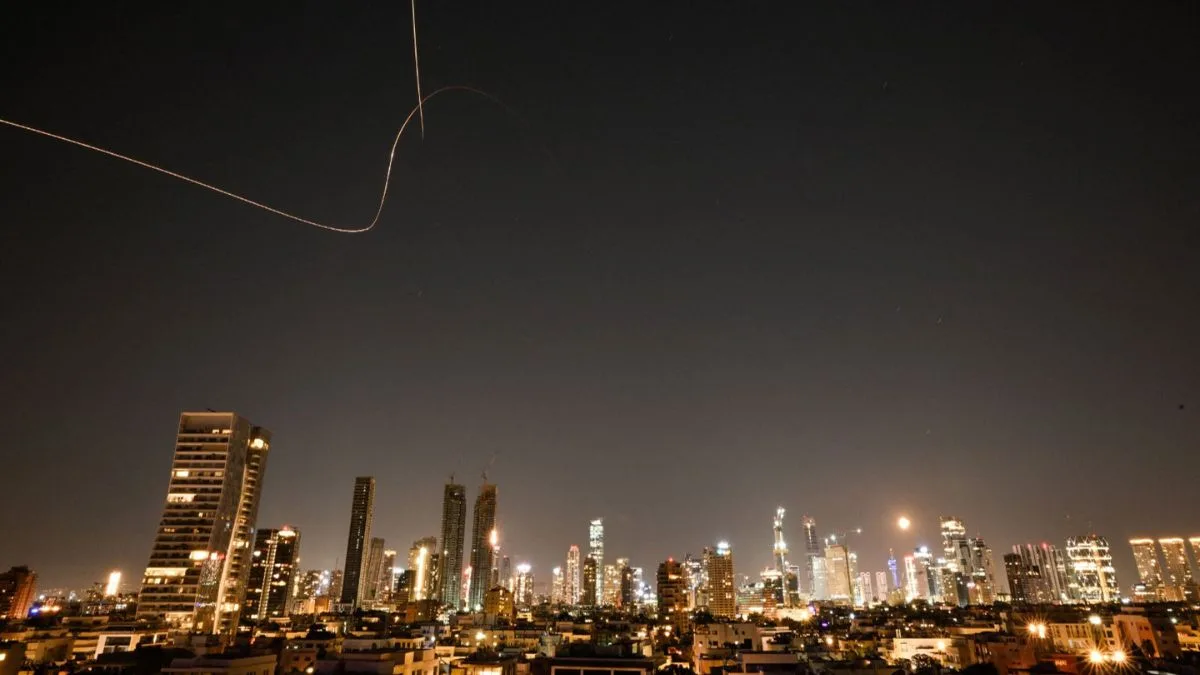
More profoundly, it obscures the stars, veiling the night sky from human gaze. Today, light pollution is no longer confined only to the Earth; it is encroaching on space itself. The surge in space exploration has led to the deployment of thousands of satellites in Earth’s outer orbits. Since 2018, Elon Musk’s SpaceX has launched nearly 1,700 Starlink satellites into low Earth orbit, with plans to add another 30,000 over the next decade. British company OneWeb has already placed about 150 satellites in orbit and intends to launch 6,000 more, while Amazon has announced plans for an additional 3,000.

If this unchecked proliferation continues, a time may come when true darkness will vanish from our skies. The first Starlink launch in May 2019 revealed streaks of light across the sky-a phenomenon unseen before. Astronomers now face obstructed views, as reflected light from these satellites interferes with observations. Mega-constellations – vast networks of satellites working in concert – reshape our collective vision of the stars. Unlike terrestrial pollutants, these satellites cannot be removed once deployed. It has been found that a single mega-constellation produces up to 19 parallel streaks across the sky. As they orbit Earth, sunlight reflects off their surfaces, scattering into the atmosphere, intensifying sky brightness.

This human-made ‘night glow’ complicates astronomical observations. Preliminary estimates suggest that this artificial ‘night glow’ has increased the brightness of night skies globally by about 10 per cent, compared with the natural skyglow measured in the 1960s. The consequences extend beyond human curiosity. Since the entire world – and indeed the Universe – is interconnected, no living creature escapes the effect of polluted skies. Migratory species are particularly affected by light pollution, which can result in them losing access to their migratory route.

Australia’s fauna has long faced this crisis since before the introduction of mega-constellations. With more skyglow and light pollution, positive outcomes for native fauna and migratory species diminish. Ironically, scientists have designed a method to harness light pollution for the benefit of humanity. The Sun is always present in the sky. But it remains hidden from us at nightfall when a portion of the Earth turns away from the sun’s rays. Could we devise a mechanism to use sunrays to deliver sunlight after sunset? One ambitious idea proposes reflecting sunlight to the Earth using mirrors mounted on satellites. A US start-up, Reflect Orbital, plans to produce the same by reflecting sunlight to the Earth even after sunset.

Reflect Orbital’s satellites would use mirrors to send light onto a patch of Earth, in the same way a watch face bounces sunlight to produce a spot of light on the wall. The reflected sunlight from the watch is intense when the distance of the wall is shorter; the spot becomes larger and dimmer as the distance to the wall increases. This is because the Sun is not a point of light but spans half a degree in angle in the sky. That’s why a beam of sunlight reflected off a flat mirror spreads out at an angle of half a degree. Even a curved mirror or a lens can’t focus the sunlight into a tighter spot due to the distance and the half-degree angle of the Sun in the sky.

To achieve meaningful illumination, reflectors must be much larger than a watch. Reflect Orbital’s satellites would orbit about 625 km above the ground and be equipped with mirrors 54 metres across. Scientists have calculated that for a satellite reflecting sunlight over a distance of roughly 800 km, considering that a 625km-high satellite would not always be directly overhead but beaming the sunlight at an angle, the illuminated patch of ground would be at least 7 km across. For a single 54 metre satellite, the estimated reflected sunlight is 15000 times fainter than the midday Sun, but this is still far brighter than the full moon. Sunlight at midday is approximately 400,000 times more intense than light from a full moon.

The Reflect Orbital tested its concept with a balloon experiment before moving into space. A flat square mirror, roughly 2.5 metres across, was carried on a hot air balloon. The mirror directed a beam of light down to solar panels and sensors. At a distance of 242 metres, the reflected beam delivered 516 watts of light per square metre, compared to 1000 watts per square metre with the midday sun. Although the amount is half of that the midday sun produced, it is enough to be useful. As mentioned before, if the satellites were 800 km from the area of interest on Earth, the reflector would need to be 6.5 km by 6.5 km, or 42 square kilometres across. Further experimentation with such a huge mirror using balloons is not a practical proposition. Reflect Orbital’s current plan aims to generate 200 watts per square metre, or 20 per cent of the midday sunlight.

If a single 54-metre satellite is 15,000 times fainter than the midday Sun, to produce 20 per cent of the midday Sun’s light, it would need 3,000 such satellites. That’s a lot of satellites needed to illuminate just one region. There are other critical issues also involving technical and ecological challenges. Companies are trying to figure out methods to reduce night glow. OneWeb decided to launch fewer satellites than proposed earlier to reduce overall pollution, and designed them to be stationed at a higher altitude, which enables them to cover a larger area with reduced skyglow.

Use of an antireflective coating on the surface is another option to reduce the reflected sunlight by about 50 per cent. Whether this bold project will remain simply speculative or eventually ‘see the light of day’ is uncertain. Yet, regardless of its outcome, it underscores humanity’s audacious attempts to use sunlight on demand, reshaping the natural rhythms of night and day.

(The writer, an author, was Editor-in-Chief of the journal Science and Culture for about two decades.)

‘I don’t know what will happen with me’: Pappu Yadav arrested in 1995 case after Patna residence drama

Purnea MP Pappu Yadav was arrested in Patna in connection with a 1995 case after failing to appear in court and was later hospitalised citing health concerns.

Statesman News Service | Mumbai |

Independent MP from Purnea, Pappu Yadav, was arrested by Patna Police on Friday in connection with a case dating back to 1995, following dramatic scenes at his residence in the Bihar capital. Soon after being taken into custody, Yadav was admitted to the hospital citing health concerns.

The arrest comes after Yadav allegedly failed to appear before a court despite being summoned in an ongoing trial linked to the Gardanibagh police station. Police say the arrest was carried out under multiple provisions of the old Indian Penal Code, now replaced by the Bharatiya Nyaya Sanhita (BNS). The development has triggered political attention due to the age of the case and the MP’s claims of a threat to his life.

Yadav, who appeared visibly unwell while speaking to reporters, said he was unsure about what would happen to him or where he was being taken. “I am not well… I don’t know what will happen with me,” he said, shortly before being moved for medical examination.

What happened at Pappu Yadav’s Patna residence

The arrest followed tense moments at Yadav’s residence in Patna, where police personnel arrived to take him into custody. Ahead of the arrest, the MP told ANI that he feared for his safety and insisted he should be produced directly before the court rather than taken to a police station.

Yadav also questioned the manner in which the police arrived, claiming that officers were in civil clothes and that he initially feared for his life. He repeatedly cited the age of the case and asked why he was being arrested now, nearly three decades later.

“I have doubt that these people might have killed me. I will go straight to the Court. I will not go to the police station. If they want, they can house arrest me. The Court has called me. Police reached here in civil uniform like criminals. I thought they had come to kill me. Is this a criminal’s house? There was a case registered around 35 years ago, and the police came to arrest me in connection with that case,” Pappu Yadav said.

Police explain arrest, cite non-appearance in court

Patna SP (City) Bhanu Pratap Singh said the arrest was linked to Yadav’s failure to appear in court during the ongoing trial. He clarified that the case was originally registered in 1995 under the Indian Penal Code, which has since been replaced by the Bharatiya Nyaya Sanhita.

“This is a 1995 case which was under the old IPC, now replaced by the BNS (Bharatiya Nyaya Sanhita), involving sections 419, 420, 468, 448, 506, and 120B. The arrest is being made under these sections. This case concerns the Gardanibagh police station. The trial was ongoing in court, and the MP was supposed to appear, but he did not appear on the scheduled date. Therefore, he is being arrested,” Singh told reporters.

He added that Yadav’s medical needs were being taken care of and that his caretaker was accompanying him.

Hospitalisation and next steps

Following the arrest, Yadav was first admitted to the Indira Gandhi Institute of Medical Sciences due to health concerns. At the time of writing, he was being shifted to Patna Medical College and Hospital for further medical examination.

Officials confirmed that after completion of medical formalities, the MP would be taken to the police station as part of standard procedure. Further details in the case are awaited.

‘Deals make India competitive’

Rajeev Juneja is the President of the PHD Chamber of Commerce and Industry (PHDCCI). Juneja is a first- generation entrepreneur with experience in the pharmaceutical industry and is the Vice – Chairman and Managing Director of Mankind Pharma, a leading pharmaceutical company.

Nikhil Vyas | New Delhi |

Rajeev Juneja is the President of the PHD Chamber of Commerce and Industry (PHDCCI). Juneja is a first- generation entrepreneur with experience in the pharmaceutical industry and is the Vice – Chairman and Managing Director of Mankind Pharma, a leading pharmaceutical company.

Over the years, Juneja has passionately led diverse functional areas of the business and has applied his expertise to deliver high-quality pharmaceuticals and affordable medicines. He has been the recipient of several awards, such as the ‘Entrepreneur of the Year’ and ‘Best Design in Healthcare’. Mankind Pharma Limited also won the ‘Best Pharma OTC Company of the Year’ in 2018. In an exclusive interview with Nikhil Vyas, Juneja spoke about the Indo-US trade deal, deals with the European Union (EU) and the United Kingdom (UK), and the latest General Budget. Excerpts of the interview:

Q: What is your first comment on the Indo-US trade deal? How did the deal fructify?

A: The India-United States trade deal represents a strategic shift from uncertainty towards well-designed economic engagement. The current deal is targeted towards tariff rationalisation, supply-chain cooperation, and market access in select sectors. From India’s perspective, the deal signals intent to integrate more deeply with the technology ecosystem. The agreement’s significance lies more in predictability by reducing uncertainty around duties, regulatory cooperation, and dispute management to improve the investment climate. Tariff disputes stretched beyond anybody’s benefit. India will gain particularly in labour-intensive product exports.

Q: Has India compromised on agriculture and dairy?

A: The Government of India’s statement after the India-US tariff deal is clear: we will support farmers and dairy farmers come what may. The Ministry of Commerce and Industry has clarified that agriculture and dairy are sensitive sectors for India. Tariffs have been selective and carefully designed, and key agricultural products are kept out of the agreement altogether. Overall, the statement should be read as a clear signal that trade liberalisation will not come at the cost of farmers’ incomes and that the government will step in with policy and financial support whenever needed. While marginal adjustments may exist, they do not change the underlying protection. This approach is well aligned with India’s long-standing position in multilateral and bilateral trade negotiations on agriculture.

Q: Do you think the slashing of tariffs on Indian products will make our products cheaper in the American market as compared to those produced in other South Asia and Southeast Asian nations?

A: Tariff reductions will improve the price competitiveness of Indian goods in the US market. Products with high tariff elasticity – such as textiles, gems and jewellery, and certain engineering goods – are likely to see clearer gains. Lower landed costs will improve margins and allow price reductions relative to competitors. Take the case of textiles and apparel. Textiles and apparel emerge as a clear winner. Indian exports in cotton garments, home textiles, and made-ups will face moderate US tariffs and will be competitive with suppliers from Bangladesh, Vietnam, and Cambodia. India’s advantage lies in integrated cotton supply chains.

Q: How will the deal impact India’s overall economy, industry sector, and markets?

A: At the macro level, the deal’s immediate GDP impact is likely to be modest, but given its importance in the medium to long term, it signals stability and openness, which will support investment sentiment. Industrially, the agreement encourages diversification toward higher-value manufacturing and strategic sectors. Overall, the deal strengthens medium-term growth drivers rather than delivering short-term macro acceleration.

Q: What difference do you find in the deal with the United States and the one signed with the European Union (EU)?

A: The US deal is sector-specific, while the agreement with the European Union is broader and more rules-based in the form of a free trade agreement. The EU deal emphasises sustainability standards, regulatory harmonisation, and labour norms. In contrast, the US approach prioritises supply chain security and strategic alignment. The EU deal offers wider market access, while the US deal is narrower but faster to implement.

Q: Do you think the deals with the US and the EU will also help India become a competitive market vis-à-vis China?

A: Together, deals with the US and EU can enhance India’s positioning as an alternative manufacturing and sourcing hub relative to China, what is called the China +1 strategy. Preferential access and strategic alignment reduce trade friction and improve investor confidence. Collectively, the US and EU deals narrow the gap by improving India’s access to demand markets. In summary, the deals improve India’s relative positioning against China, particularly as a diversified alternative.

Q: What will you say about the trade deal India signed with the United Kingdom (UK) last year?

A: The trade deal with the United Kingdom is commercially meaningful, particularly for services, skilled mobility, and consumer goods. It reflects historical trade complementarities and provides Indian exporters with preferential access to a high-income market. Sector-specific benefits-especially for SMEs and services – are notable. Key beneficiary sectors include textiles and apparel, where tariff reductions improve price competitiveness for Indian garments, home textiles, and fashion products in the UK market. India competes with suppliers from Bangladesh, Turkey, and Southeast Asia, and preferential access helps narrow cost differentials. Automobiles and auto components are another important gainer. Lower duties on Indian-made vehicles, two-wheelers, and components enhance export opportunities.

Q: How do you look at the latest Budget presented by the Finance Minister?

A: The latest Union Budget reflects fiscal consolidation with targeted support for capital expenditure. Its emphasis is on infrastructure, manufacturing incentives, and macro stability rather than broad consumption stimulus. The approach prioritises medium-term growth over short-term populism.

Q: How does the Budget help business and industry?

A : Continued government investment in highways, railways, ports, airports, logistics corridors, and power infrastructure reduces logistics and transaction costs for firms. Lower freight costs, faster turnaround times, and improved connectivity directly benefit manufacturing, construction, steel, cement , capital goods, and logistics-intensive industries. Ongoing support for sector-specific incentive frameworks, including production-linked approaches, encourage scale expansion , technology adoption, and integration into global value chains. Sectors such as electronics, pharmaceuticals, renewable energy equipment , chemicals , and advanced manufacturing will benefit from policy certainty, which is critical for long-term capital investments. Credit-guarantee mechanisms, formalisation of digital lending, and improvements in banking and non-banking credit flows help ease working-capital constraints and help MSMEs in the medium to long term. Selective rationalisation of customs duties on raw materials and intermediate goods will help lower input costs and support domestic value addition. In terms of ease of doing business, digitisation, simplified compliance, faster approvals, and regulatory streamlining will lead to improved operational efficiency.

Q: The general perception is that the Budget is not inspiring and does not have anything substantial for the common man. What is your comment?

A: The Union Budget looks at the multiplier effects of schemes through capex on key infrastructure capacity building on income and employment. A quick-fix budget is never beneficial to the common man, as it erodes long-term prospects of sustained growth. The budget laid out a sustained capex-led approach aligning with the objective of Viksit Bharat.

Feisty Fighter

In an era when Indian politics increasingly feels scripted and predictable, there are still moments that disrupt the routine and force a rethink about democratic engagement.

Statesman News Service | New Delhi |

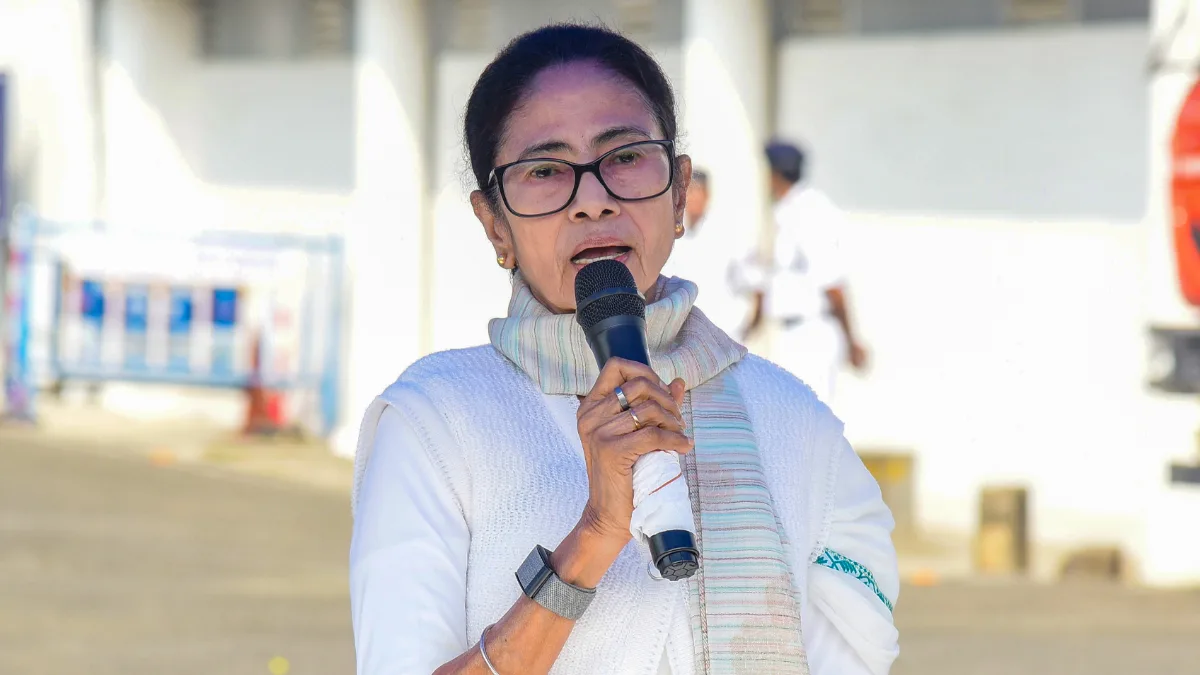
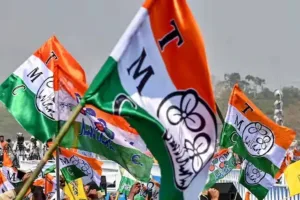
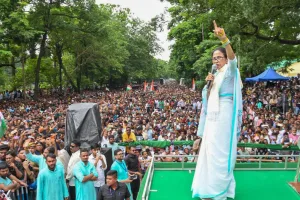
In an era when Indian politics increasingly feels scripted and predictable, there are still moments that disrupt the routine and force a rethink about democratic engagement. The recent spectacle of West Bengal Chief Minister Mamata Banerjee standing before the Supreme Court to argue her own case in the controversy over the Special Intensive Revision (SIR) of electoral rolls is one such moment.

It was not just a political gesture; it was a statement about how power, institutions, and citizenship are being contested today. A sitting Chief Minister personally pleading before the apex court is a first in India. In doing so, Ms Banerjee did not merely defend her government’s position; she framed the issue as one of democratic rights. The concern, as she put it, was that large numbers of voters could be excluded over technical discrepancies ~ spelling variations, documentation gaps, or name changes ~ through a process that was being rushed and unevenly applied. Her argument was simple but pointed: the right to vote cannot be reduced to a clerical exercise, especially in a country where identity documents often lag behind lived realities. The SIR dispute has, therefore, become more than a procedural quarrel. It touches a deeper anxiety about how institutions function in a politically charged environment.

When voter lists are revised at scale and speed, the margin for error widens ~ and errors in this domain are not neutral. They shape who counts, and who does not. By taking the fight to the Supreme Court herself, Banerjee chose confrontation over quiet negotiation, and visibility over discretion. To her critics, this is consistent with a combative style that often blurs the line between governance and spectacle. They will point to administrative shortcomings, to an abrasive political culture in the state, and to a tendency to personalise institutional disputes. These criticisms are not frivolous. West Bengal’s politics, like that of many states, carries the weight of unresolved governance challenges. Yet it is also impossible to ignore what this moment says about the wider political climate. Over the past decade, many Indian liberals have shifted from resistance to accommodation. Institutions that were once seen as arenas of contest are now often discussed in tones of weary fatalism. It is against this backdrop that Mamata Banerjee’s courtroom appearance acquires symbolic force.

She is not admired because she is flawless, or because her administration is beyond reproach. She is noticed because she refuses to accept resignation as a political strategy. Whether taking on a dominant party at the Centre or questioning the procedures of powerful institutions, she continues to act as if political outcomes are still negotiable. For a democracy that risks slipping into procedural quietism, that insistence matters. It reminds us that politics is not only about managing power, but about contesting it ~ sometimes noisily, sometimes awkwardly, but always in public view. In a time when many have lowered their expectations, the refusal to do so is itself a political statement.

Love punished

The quiet lanes of Umri village in Uttar Pradesh have become the setting for a familiar Indian tragedy: two young people, Kajal and Mohammad Arman, killed not by strangers, but by the idea that love can be a crime.

Statesman News Service | New Delhi |

The quiet lanes of Umri village in Uttar Pradesh have become the setting for a familiar Indian tragedy: two young people, Kajal and Mohammad Arman, killed not by strangers, but by the idea that love can be a crime. Their deaths are being described as an “honour” killing, but the phrase itself is a distortion. There is no honour in murder – only fear, control, and the brutal enforcement of social boundaries that many pretend no longer exist. What makes Umri unsettling is not that it is uniquely conservative, but that it is ordinary.
By most accounts, Hindus and Muslims here lived without daily friction. And yet, when an interfaith relationship crossed an invisible boundary, the response was not negotiation, mediation, or even quiet coercion, but violence. This is precisely why such crimes should worry us more than riots or political flashpoints: they happen in the intimate spaces of homes and families, where law and society are supposed to offer the greatest protection. India’s legal position is clear. Adults have the constitutional right to choose their partners. Courts have repeated this, and governments have been instructed to provide protection to couples under threat.

On paper, the republic is unambiguous. In practice, the gap between law and life remains wide. The persistence of “honour” crimes shows that social permission often matters more than legal permission, especially in rural and semi-rural settings where community approval can outweigh the fear of punishment. Official statistics barely scratch the surface. Many such killings are recorded as ordinary homicides, domestic disputes, or disappearances. The motive is blurred, sometimes deliberately. This statistical fog has consequences: what is not clearly counted is not clearly confronted. The result is a cycle where each case is treated as an isolated horror rather than as part of a structural problem rooted in caste, religion, patriarchy, and family control over women’s choices.

also exposes another uncomfortable truth: the conflict is not only between communities, but within families. The violence is often justified as protection of reputation, as if a family’s social standing is more valuable than a daughter’s life. In this logic, women’s autonomy becomes a threat that must be neutralised, and men who cross prescribed boundaries become targets rather than fellow citizens with rights. Supporters of the status quo sometimes argue that social change must be gradual. But there is a difference between gradual change and tolerated brutality. When two people are beaten to death and buried for choosing each other, the issue is no longer cultural sensitivity.

It is the failure of the state and society to draw a non-negotiable line. The silence that now hangs over Umri is not just grief. It is a reminder that many villages and towns live with similar unspoken rules. Breaking them can be fatal. Until personal choice in love and marriage is defended not only by courts but by communities themselves, such killings will keep returning – quietly, predictably, and with devastating regularity

Calibrating finances

The Report of the 16th Finance Commission (FC) containing recommendations on the devolution of Central taxes and grants to states was tabled in Parliament on Budget day.

GOVIND BHATTACHARJEE | New Delhi |

The Report of the 16th Finance Commission (FC) containing recommendations on the devolution of Central taxes and grants to states was tabled in Parliament on Budget day. Not many changes were expected from the FC, which mostly continues on predictable lines. The last time a major change was introduced in the scheme of fiscal transfers was by the 14th FC (2015-20), which increased the share of states by 10 per cent to 42 per cent of the net proceeds of all taxes in the divisible pool comprising all central taxes sans cesses and surcharge, with consequent reduction in grants.

Vertical devolution by both the 15th and 16th FCs have practically remained unchanged since then at 41 per cent, the remaining 1 per cent accounting for J&K which was then a state but now is an UT whose share goes to the Union government. As regards horizontal devolution that determines the inter-se share of individual states, the FC divides the resources based on the three principles of equity, equalisation and efficiency. The last two FCs added a fourth: environment. But efficiency always takes a back seat, and all FCs preferred equalisation over efficiency ~ the 14th FC completely ignored it, while the 15th FC gave tax effort, a measure of fiscal efficiency, a meagre 2.5 per cent weight in determining the shares of individual states.

To the credit of the 16th FC, it brought back the focus on efficiency, while the preference for equalisation remains. The 15th FC caused a lot of resentment for southern states, which lost their shares when the government changed the population base in the terms of reference for the 15th FC from 1971 to 2011, for determining the states’ shares in devolution. Population has always been an important parameter used by all FCs along with area, which addresses equity. Southern states, and some others as well, have stabilised their population and achieved a total fertility rate (TFR) much below the replacement level of 2.1, and they rightly felt they were being penalised for attaining this, while the shares of the Hindi-belt states went up.

The 16th FC has, for the first time, introduced a new efficiency parameter, replacing the earlier tax effort, in the form of a state’s contribution to the national GDP, assigning 10 per cent weightage to it. However, these contributions would show wide variation across states, especially at the top and bottom ends, which would cause huge differences in devolutions to the obvious disadvantage of poorer states. To moderate these differences, the FC modified this parameter by defining a state’s share as the ratio of the square root of its GSDP to the sum of the square roots of GSDPs of all states, which would moderate the shares of the higher income states.

However, even in this tampered form, it would benefit the southern states and compensate them for their loss of population share. Other criteria in the formula for horizontal devolution remain more or less the same, with some redefinitions and adjustments in weights assigned to respective parameters to make the transfer formula seem more rational than the 15th FC’s. While the weightage on a state’s share of the 2011 population has increased from 15 per cent recommended by the 15th FC to 17.5 per cent, the weightage on the share of a state’s area has decreased from 15 to 10 per cent now.

Weightage of the equalizing parameter, income distance, i.e. the distance of per capita income of a state from the average of the three highest per capita income states has been reduced marginally from 45 to 42.5 per cent and outweighs any other parameter by a huge margin. The 16th FC has also expanded the definition of the lone parameter on ecology and environment, i.e. forest cover. The earlier FCs considered only the medium and dense forest covers with higher canopy densities; the 16th FC has now included open forests with a lesser canopy density of 10-40 per cent to determine the total forest cover. Additionally, it has also rewarded states for increasing their shares of forest areas between 2015 and 2023.

The share of a state is now calculated by assigning 80 per cent weightage to its share in the national forest cover and 20 per cent weightage to its share in this increase. Thus calculated, this share is then given an overall 10 per cent weightage in the horizontal devolution formula, the same as earlier. Demographic performance, introduced by the 15th FC to compensate the southern states for their loss due to the change of the population base, was defined by the inverse of TFR. But the 15th FC scaled it up by the 1971 population, which benefited the Hindi belt states unduly, which was an aberration.

The 16th FC has rejected the concept of using the inverse of Total Fertility Rate as a performance indicator, arguing instead that the states which have stabilised their populations ~ like the southern states and also others ~ are now staring at the prospect of ageing populations without enough workers to support them which will affect their future growth, and hence felt that the reward for lower population through TFR needed to be phased out. Thus, it has redefined demographic performance as the inverse of population growth rates between 1971 and 2011 and reduced the weightage to this parameter from 12.5 to 10 per cent. The net result of these changes introduced in the devolution formula is that save Tamil Nadu, all other southern states would now receive a larger share of the devolution, as would Maharashtra, Gujarat, Haryana and Punjab.

All Hindi belt states except Jharkhand would see their shares in the total devolution go down and so would be the case with West Bengal, Odisha, and all north eastern states except Assam and Mizoram. But for both groups, the changes would only be marginal. As regards grants, the 16th FC has provided no grants other than grants for local bodies, abandoning the practice adopted by earlier FCs to compensate states for their post-devolution revenue deficits and other sector-specific grants and state-specific grants given to some states. It expects the states to balance their revenue accounts by bringing more fiscal discipline and mobilizing more resources. As regards local bodies, it had provided total grants of Rs 7.91 lakh crore for the rural and urban local bodies (60 per cent to RLBs and 40 per cent to ULBs), much higher than Rs 4.36 crore provided by the 15th FC.

A part of these grants ~ 20 per cent ~ is linked to the performance of ULBs and RLBs in improving their revenues and the constitution of State FCs by the states. For disaster management, an issue that was flagged to it, it recommended a total amount of Rs 2 lakh crore at the state level and Rs 79,000 crore at the national level, to be financed by the states (NEH states 10 per cent and others 25 per cent) and the rest by the Centre. The FC has strongly advocated against the use of off-budget borrowings practised by several states, urging them to reform their power sector by privatising DISCOMs and to close their loss-making PSUs. It has red-flagged the issue of fiscally unsustainable subsidies ~ especially the unconditional cash transfers (UCT) or freebies, which are claiming increasing shares of states’ revenue expenditure (RE) and pushing many states’ revenue accounts deep into the red.

UCTs for all states have multiplied unchecked from Rs 73,000 crore in FY19 to over Rs 4 lakh crore in FY26, growing at an alarming rate of almost 29 per cent annually. States are increasingly resorting to such electoral gimmicks, and the number of states spending over 10 per cent of RE on UCTs has gone up from only one (Telangana) in FY19 to nine by FY26, led by Chhattisgarh, Telangana, Andhra Pradesh, West Bengal, Karnataka and Madhya Pradesh; all these states except Telangana and Madhya Pradesh, had deficits in their revenue accounts in FY24. Majority of the states are financing their UCTs by either borrowing or cutting capital outlay, compromising growth. But perhaps realising its own limitations, the 16th FC only made some general recommendations for states to control their UCTs. The recommendation of setting up an independent Fiscal Council to bring in greater discipline in public finances made by the previous FCs is also singularly absent in its report

(The writer is a commentator, author and academic. Opinions expressed are personal)

India-US interim trade framework explained in 10 points; Washington scraps extra 25% tariff

India and the US announced an interim trade framework as Washington revoked the additional 25 per cent tariff on Indian imports, resetting tariffs and advancing bilateral trade talks.

Statesman News Service | New Delhi |

India and the United States on Friday unveiled a framework for an interim trade agreement, alongside a major tariff rollback by Washington that removes the additional 25 per cent duty imposed on Indian imports last year.

The decision follows commitments by New Delhi on energy sourcing, defence cooperation and broader alignment with US national security concerns, as both sides move ahead with negotiations on a full-fledged India-US Bilateral Trade Agreement (BTA) launched in February 2025 by US President Donald J Trump and Prime Minister Narendra Modi.

The White House confirmed that the additional tariff, imposed in August 2025 over India’s purchase of Russian oil, will be terminated with effect from 12:01 am Eastern Standard Time on February 7, 2026.

Why the tariff rollback matters

The US administration said the decision came after a review of fresh information and recommendations from senior officials, noting that India had committed to stop directly or indirectly importing Russian Federation oil and to increase purchases of US energy products.

The White House also cited India’s agreement to expand defence cooperation with the US over the next 10 years as a key factor behind the move.

“After considering the information and recommendations these officials have provided to me, among other things, I have determined that India has taken significant steps to address the national emergency,” the executive order said. It further called the tariff modification “necessary and appropriate”.

The order states that refunds of duties already collected will be processed under US law and standard Customs and Border Protection procedures. Washington also said it would continue to monitor India’s compliance and may reconsider the tariff if Russian oil imports resume.

India-US interim trade framework: Key points

  1. The US will apply a reciprocal tariff of 18 per cent on Indian-origin goods, covering sectors such as home decor, leather and footwear, apparel, plastics and rubber, artisanal products, textiles, organic chemicals, and select machinery.
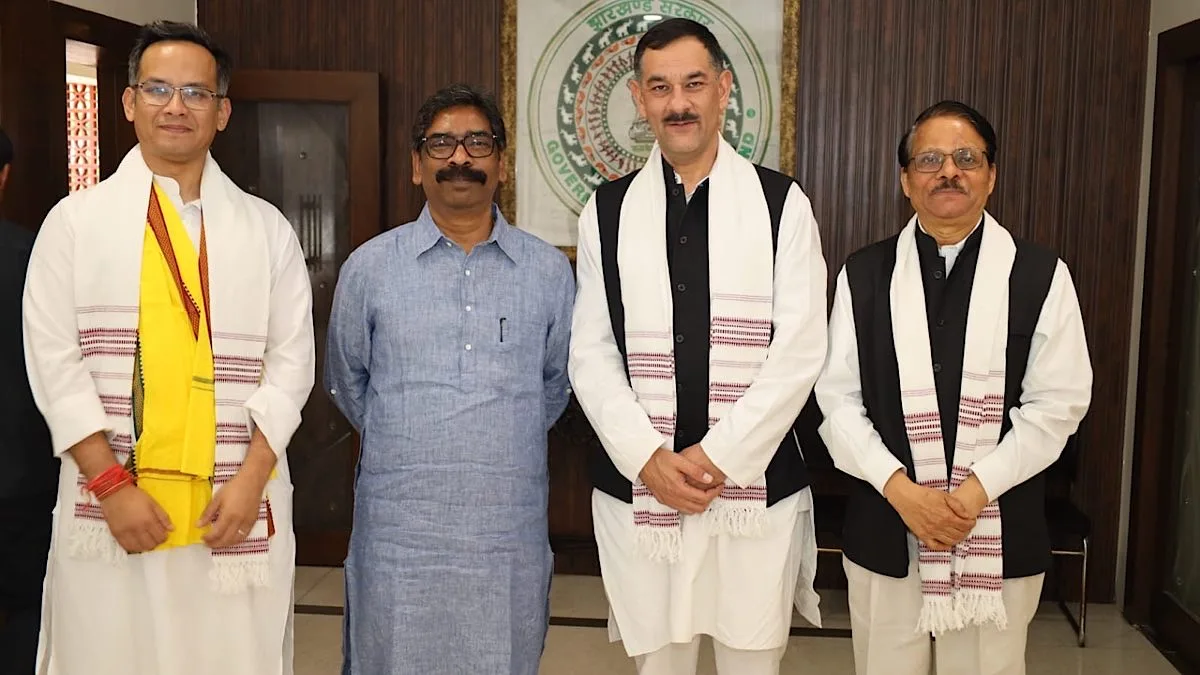
  2. Once the interim agreement is finalised, many Indian goods will enter the US without tariffs. This includes gems and diamonds, generic medicines, and aircraft parts.
  3. The framework provides for the removal of US tariffs on certain Indian aircraft and aircraft parts imposed under national security-related proclamations on steel, aluminium, and copper.
  4. India will get a special, lower-tariff quota for exporting automotive parts to the US, in line with American national security rules.
  5. India will eliminate or reduce tariffs on all US industrial goods and a broad range of food and agricultural products, including soybean oil, red sorghum for animal feed, tree nuts, fresh and processed fruits, dried distillers’ grains, wine and spirits.
  6. India has agreed to ease long-standing hurdles faced by US goods such as medical devices, ICT products, and food and farm items. It will also review US or international standards in these sectors within six months.
  7. Both sides will put clear rules in place to ensure the trade benefits go mainly to India and the US, and not to third countries routing goods through them.
  8. The two countries will work more closely on supply chains, check sensitive investments, tighten export controls, and deal with unfair trade practices by other nations.
  9. India plans to buy about USD 500 billion worth of US goods over the next five years, including energy, technology products, aircraft and aircraft parts, precious metals and coking coal.
  10. India and the US will also increase trade in technology products, such as equipment used in data centres, and aim to put clearer digital trade rules in place under the BTA.

Framework opens USD 30 trillion market: Goyal

Union Commerce Minister Piyush Goyal welcomed the framework, saying it would open access to a USD 30 trillion market for Indian exporters, with particular benefits for farmers, fishermen, and MSMEs.

“Under the decisive leadership of PM Narendra Modi, India has reached a framework for an Interim Agreement with the US,” Goyal said in a post on X, adding that increased exports would create “lakhs of new job opportunities for our women and youth”.

He said the framework safeguards India’s farmers and rural livelihoods by fully protecting sensitive agricultural and dairy products, including rice, wheat, maize, milk, poultry, soy, fuel ethanol, cheese, tobacco, certain vegetables and meat.

Russia oil angle and global response

Earlier, the Kremlin said India was free to source oil from any supplier.

“India has always purchased these products from other countries. Therefore, we see nothing new here,” Kremlin spokesperson Dmitry Peskov said.

Both India and the US said they would move quickly to implement the framework and work toward finalising the interim agreement, with the stated aim of concluding a comprehensive Bilateral Trade Agreement under the agreed roadmap.