Logo

BCCI announces Rs 7.5 crore reward for U19 World Cup champions

India clinched a record-extending sixth ICC Under-19 Men’s Cricket World Cup crown after thrashing England by 100 runs in the final at the Harare Sports Club on Friday.

Statesman News Service | New Delhi |

The Board of Control for Cricket in India (BCCI) has announced a total cash reward of Rs 7.5 crore for the Indian Under-19 Men’s Cricket World Cup-winning team, along with the technical staff and the selection committee, following their dominant title triumph in Zimbabwe.

India clinched a record-extending sixth ICC Under-19 Men’s Cricket World Cup crown after thrashing England by 100 runs in the final at the Harare Sports Club on Friday. The emphatic victory underlined India’s sustained excellence at the age-group level and further strengthened their position as the most successful side in the tournament’s history.

“BCCI secretary Devajit Saikia announces a cash award of Rs 7.5 crore for the victorious India U19 team, along with the coaching and support staff and the Junior Cricket Committee, following their glorious unbeaten campaign that culminated in India’s sixth ICC U19 World Cup title in Zimbabwe,” the BCCI social media handle read.

India’s triumph was powered by a breathtaking batting display in the final, headlined by 15-year-old sensation Vaibhav Sooryavanshi. The opener smashed a staggering 175 off just 80 balls, laced with 15 fours and 15 sixes, to register the highest individual score ever recorded in an Under-19 World Cup final. Captain Ayush Mhatre (53) and wicketkeeper Abhigyan Kundu (40) provided vital support as India posted a massive 411 for nine.

England began their chase on a positive note, but a collapse in the middle overs derailed their pursuit. Caleb Falconer’s valiant 115 proved to be a lone stand as India’s bowlers tightened the screws to seal a comprehensive 100-run victory.

The title triumph also completed a rare double for Indian cricket, with the country currently holding both the ICC Under-19 Men’s and Women’s World Cup titles, underlining the depth and strength of its grassroots system.

Earlier, Saikia congratulated the young champions and hailed the systems that continue to fuel India’s success at the age-group level. “This outstanding achievement is a testament to the strength of a robust system built on long-term player development, competitive domestic structures, quality coaching programmes supported by dedicated technical staff and a strong talent identification process.”

“Age-group cricket remains a key priority, and the BCCI will continue to invest in and strengthen these foundations for the future. Well done, boys! The nation is immensely proud of you,” he added.

Former India head coach Ravi Shastri also lauded the Under-19 side, highlighting not just the result but the composure shown throughout the tournament.

“Watching this India Under-19 side lift the World Cup was special. Not just because they won, but because of how they went about it, composed, aware of the moment, and willing to take responsibility when it mattered most.

“These boys handled pressure like seasoned pros and played for each other every step of the way. That tells you a lot about their character. Talent will get you noticed, but temperament is what takes you forward, and this group has plenty of both. Enjoy this win. Savour it. And remember, this is just the first chapter. Indian cricket will be hearing these names for a long time,” Shastri shared on social media.

Islamabad mosque blast exposes Pakistan’s internal security fault lines as India is blamed

The Islamabad mosque blast has revived concerns over ISKP and intelligence failures, even as Pakistan quickly blamed India and Afghanistan without completing an initial probe.

Statesman News Service | New Delhi |

More than 30 people were killed and around 160 injured after a blast hit devotees during Friday prayers at a mosque in Islamabad’s Tarlai Kalan area, triggering a swift response from Pakistan that blamed India and Afghanistan within hours of the attack.

The explosion took place at the Khadja Tul Kubra Mosque, where worshippers had gathered for prayers. Even before a preliminary probe could begin, Pakistan’s Defence Minister Khwaja Asif accused the Afghan Taliban and India of being behind the strike. Pakistan, however, did not acknowledge any intelligence failure or examine the possibility that terror groups it has nurtured over the years may have turned against it.

Also Read: Protests in Kashmir over Islamabad blast targeting Shia worshippers

ISKP or TTP suspected, no claim of responsibility so far

An assessment by Indian agencies suggests that the attack could be the work of either the Tehreek-e-Taliban Pakistan (TTP) or the Islamic State Khorasan Province (ISKP). Both groups, however, have not claimed responsibility for the blast.

Officials said the pattern of the attack and the targeting of Shia devotees point towards the involvement of extremist groups known for sectarian violence. At the same time, agencies do not rule out the possibility that the incident may have been used as a diversion to shift focus from losses suffered by Pakistani security forces in Balochistan.

Indian officials have questioned why Pakistan was quick to blame India and Afghanistan while remaining silent on intelligence lapses. An official noted that they are not speaking about the intelligence failure, and one has to understand if this miss was deliberate or not.

Mounting pressure on Pakistan’s security establishment

The Pakistan establishment, whose de facto head is Field Marshal Asim Munir, has faced repeated setbacks in recent months. These began with India’s Operation Sindoor and have since expanded into conflicts with multiple groups.

Pakistan is currently battling the Balochistan Liberation Army (BLA), the TTP and the Afghan Taliban. In addition, protests have intensified in Pakistan-occupied Kashmir (PoK), where intelligence officials say the situation is increasingly volatile and could escalate further.

If the Islamabad attack is eventually traced to ISKP, officials believe it would indicate that the Inter-Services Intelligence (ISI)’s strategy has backfired. ISKP has historically distrusted the Pakistan establishment and, like the TTP, seeks to establish rule under Sharia law.

Failed tactical alignment and its fallout

The ISI had briefly attempted to rope in ISKP fighters to operate alongside Lashkar-e-Taiba against the Afghan Taliban and the TTP. According to officials, this approach collapsed as ISKP once again demonstrated that it could not be relied upon.

ISKP had agreed to the arrangement due to its hostility towards the Afghan Taliban and in the expectation that Pakistan would support its campaign. That support, however, did not materialise. Moreover, sections of the Islamic State, particularly those linked to Syria and Iraq, opposed any alliance with Pakistan, arguing that ISKP’s core objectives were being diluted.

An official said it was too early to conclusively state whether ISKP carried out the attack, but added that the blast bore several of the group’s known operational signatures.

Narrative-building amid internal security concerns

Analysts cited in the assessment said the quick attribution of blame by Munir reflected an attempt to divert attention from multiple internal challenges, including Balochistan and rising unrest in PoK, while pushing a narrative against India and the Afghan Taliban.

The attack comes at a time when Pakistan has allowed Jaish-e-Mohammad to hold radical rallies and has sought to provoke sentiment in Pakistan-occupied Kashmir. Officials said the approach appeared aimed at creating unrest and attributing it to India.

In the process, Pakistan failed to assess its own internal security vulnerabilities, with the blast in a densely populated urban area underscoring the scale of the challenge, experts said.

Iran, US ‘indirect’ talks in Oman end on positive note with both sides agreeing to continue

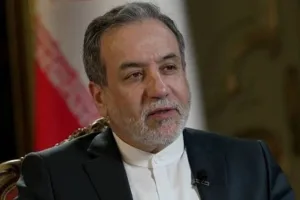
Iranian Foreign Minister Abbas Araghchi said the talks were a good beginning, and the continuation depended on the capitals.

Ramesh Bhan | New Delhi |

Iran and the United States concluded their day of negotiations in Oman on Friday evening with both sides agreeing to continue the talks.
The new round of indirect nuclear negotiations between Tehran and Washington in Muscat ended on Friday afternoon. The talks could continue in the coming days, the Iranian TV said.

Iranian Foreign Minister Abbas Araghchi said the talks were a good beginning, and the continuation depended on the capitals.

Iran’s MEHR News Agency (MNA) quoted Araghchi as saying, “There was agreement on the continuation of the talks, the manner and date will be determined later.”

“It was agreed to continue the talks, but the time, place and manner will be decided in the capitals.”

‘’Several rounds of meetings were held today, our points of view and concerns were conveyed, and the issues were discussed in a very good atmosphere. Overall, it was a good start, but its continuation depends on consultations in the capitals,” Araghchi said.

“We had intensive and long talks. Several meetings were held indirectly from 10 am to 6 pm,” he said, according to MNA.

The Iranian Foreign Minister, who arrived in Oman earlier Friday morning for the crucial talks, said before the talks that Iran will engage in good faith and enter diplomacy with open eyes and a steady memory of the past year.

Immediately after arriving in Oman, Araghchi said commitments need to be honoured, and equal standing, mutual respect and mutual interest are not rhetoric but a must and pillars of a durable government.

‘’Iran enters diplomacy with open eyes and a steady memory of the past year. We engage in good faith and stand firm on our rights.

Commitments need to be honoured. Equal standing, mutual respect and mutual interest are not rhetoric—they are a must and the pillars of a durable agreement,’’ Araghchi said on X.

He also warned against any US excessive demands. Referring to Iran’s approach of using diplomacy to safeguard national interests, Araghchi emphasised full readiness to defend the country’s sovereignty and national security against any excessive demands or acts of adventurism.

The US delegation included Steve Witkoff, the US President’s Special Envoy for the Middle East, and Jared Kushner, Donald Trump’s son-in-law and Advisor. The US delegation had arrived in Oman a few hours before the Iranian delegation.

Araghchi is accompanied by Majid Takht-Ravanchi, Deputy for Political Affairs; Esmaeil Baghaei, Foreign Ministry Spokesperson and Hamid Ghanbari and other officials.

The Oman Foreign Ministry said these consultations focused on creating the proper conditions for the resumption of diplomatic and technical negotiations, while emphasising their importance given the parties’ interest in the success of these talks to achieve lasting security and stability.

The Omani Foreign Minister also reaffirmed his country’s commitment to continuing its support for dialogue and bridging the viewpoints of the parties. He declared Oman’s readiness to cooperate with various partners to reach agreed-upon political solutions aligned with the desired goals and expectations.

Araghchi’s comments follow the US Advisory to its nationals in Iran to ‘’leave Iran now.’’

The Advisory said US citizens should plan alternative means of communication and, if safe to do so, consider departing Iran by land to Armenia or Turkey.

“Flight cancellations and disruptions are possible with little warning. Check directly with your airlines for updates. If you cannot leave, find a secure location within your residence or another safe building. Have a supply of food, water, medications, and other essential items. Avoid demonstrations, keep a low profile, and stay aware of your surroundings,” the advisory said.

Iran’s official news agency IRNA said Araghchi had met with his Omani counterpart Sayyid Badr bin Hamad al-Busaidi in Muscat ahead of a serious round of ‘’indirect talks’’ with the United States. During the meeting, the two sides reviewed the Iran-US nuclear negotiations.

Referring to Iran’s approach of employing diplomacy to secure Iran’s national interests, while maintaining full readiness to defend the country’s sovereignty and national security against any excessive demands and adventurism, Araghchi expressed appreciation for Oman’s hosting and its benevolent efforts (good offices) in this regard.

The Foreign Ministry of Oman said on X “Within the framework of the Sultanate of Oman hosting negotiations related to the Iranian nuclear file,’’ the Omani Foreign Minister held separate consultations with the Iranian and American delegations on creating the proper conditions for the resumption of diplomatic and technical negotiations, while emphasizing their importance given the parties’ interest in the success of these talks to achieve lasting security and stability. China has affirmed its support for Iran in defending its interests.

China’s Foreign Ministry said Beijing “supports Iran in safeguarding its sovereignty, security, national dignity, and legitimate rights and interests”.

Kremlin also welcomed the Oman talks. “We welcome the talks. We would like these talks to be productive and lead to de-escalation of tensions in the region,” Russian Presidential Spokesman Dmitry Peskov said.

While today’s specific sessions have ended, the broader diplomatic process remains active. Following the session, Witkoff began consultations with Oman’s Foreign Minister, who is acting as the primary mediator.

These remain indirect talks. Reports said Iran presented a “preliminary plan” focused on managing current tensions and nuclear issues.
However, significant friction remains as the U.S. seeks a broader agreement covering ballistic missiles and regional proxies, while Iran insists on a narrow focus only on the nuclear program.

Iranian State media had previously indicated that these sessions are considered the “first stage” of a longer diplomatic effort aimed at preventing further military escalation following the June 2025 conflict.

Protests in Kashmir over Islamabad blast targeting Shia worshippers

The protests were held in Chainabal Pattan in Baramulla, Imambara Zadibal and Harwan in Srinagar, and Inderkote–Sumbal in Bandipora.
Protesters raised strong anti-Pakistan slogans and condemned the attack on worshippers.

UNI | New Delhi |

Protests erupted in several Shia dominated areas of Kashmir on Friday night after a blast at a Shia mosque in Islamabad, Pakistan, killed at least 31 people and injured dozens, officials said.

The protests were held in Chainabal Pattan in Baramulla, Imambara Zadibal and Harwan in Srinagar, and Inderkote–Sumbal in Bandipora.
Protesters raised strong anti-Pakistan slogans and condemned the attack on worshippers.

The powerful explosion struck the Khadija Tul Kubra mosque in Islamabad during Friday prayers.

The protesters denounced the killing of civilians and expressed solidarity with the victims, calling for an end to sectarian violence.

The demonstrations remained largely peaceful, with gatherings dispersing late into the night.

Six killed as speeding container runs over passengers on Yamuna Expressway in Mathura

The accident occurred around 2:45 am near milestone 88 in the Surir police station area.

UNI | New Delhi |

At least six passengers were killed and one critically injured after a speeding container truck ran over them on the Yamuna Expressway in Mathura early Saturday morning.

The accident occurred around 2:45 am near milestone 88 in the Surir police station area. According to officials, the bus was traveling from Noida to Farrukhabad when some passengers asked the driver to stop for a bathroom break. Instead of stopping at a designated green zone, the driver halted the bus on the roadside.

Several passengers got off the bus and were standing near the bus when a high-speed container approaching from behind ran over them.
The deceased have been identified as Sonu, a resident of Sarwa Katra in Auraiya; Devesh from Alawal in Basti; Aslam from Ganesh Ka Purwa in Kannauj; and Santosh from Prem Nagar in Delhi. The identities of two other victims are yet to be confirmed.

One passenger, Amar Dubey, a resident of Bela in Auraiya, sustained serious injuries and is currently undergoing treatment at a hospital. His condition remains critical.

Surir Station House Officer Ajay Kumar said that traffic on the expressway was temporarily disrupted following the accident, but was restored after relief and rescue operations were completed. “The situation is now normal, and further investigation into the incident is underway,” he said.

The Police have initiated an investigation to determine responsibility for the accident.

Rasha Thadani revisits Raveena Tandon’s 90s stardom in heartfelt throwback post

Rasha Thadani shares rare throwback photos of Raveena Tandon, celebrating her mother’s iconic early years in cinema.

Statesman News Service | New Delhi |

Rasha Thadani recently surprised fans with a heart-warming throwback as she revisited her mother Raveena Tandon’s younger years in cinema.

The actress shared a series of unseen pictures that captured Raveena during the early phase of her Bollywood journey, effortless, radiant and unmistakably star-like.

Also Read: Sara Arjun says ‘Euphoria’ came to her when life felt uncertain yet full of possibility

Celebrating a 90s icon

The photographs highlighted the charm and screen presence that helped Raveena become one of the most recognisable faces of the 1990s.

Adding the perfect touch to the post, Rasha paired the images with the hit track Akhiyon Se Goli Maare from the 1998 film Dulhe Raja, instantly transporting fans back to peak 90s Bollywood.

Keeping the caption simple yet sweet, Rasha captioned the post with just one word: “Mom.”


View this post on Instagram


A post shared by Rasha Thadani (@rashathadani)

Raveena’s loving response

Raveena Tandon was quick to respond, flooding the comment section with affection. “Cookiiiieeee,” she wrote, along with a string of heart emojis, a moment that melted fans online.

A look back at ‘Dulhe Raja’

Directed by Harmesh Malhotra, Dulhe Raja starred Govinda and Raveena Tandon in lead roles, alongside veterans like Kader Khan, Johnny Lever, Prem Chopra and Asrani.

The comedy went on to become the seventh highest-grossing Hindi film of 1998 and has since earned cult status, remaining one of Bollywood’s most loved comedy classics.

Rasha Thadani’s journey so far

Rasha made her Bollywood debut last year with Azaad, directed by Abhishek Kapoor. The film featured Ajay Devgn and Diana Penty, along with debutant Aaman Devgan.

Set in 1920s India, the story followed a young stable boy whose bond with a spirited horse unfolds against the backdrop of rebellion and colonial oppression, turning his personal dream into a larger journey of courage and awakening.

What’s next for the actor

Rasha will be seen in Laikey Laikaa opposite Abhay Verma. Directed by Saurabh Gupta, the film is described as a dark love story set in a gritty world, exploring intense emotions, pain and danger.

She is also gearing up for her Telugu cinema debut with filmmaker Ajay Bhupathi. Tentatively titled #AB4, the project is presented by Ashwin Dutt and produced by Gemini Kiran under the Chandamama Kathalu Pictures banner.

Stepping into Telugu cinema

Sharing her excitement on Instagram, Rasha wrote about embarking on this new chapter with gratitude and enthusiasm, calling it a fresh beginning and expressing excitement about connecting with Telugu audiences.


View this post on Instagram


A post shared by Rasha Thadani (@rashathadani)

Also Read: Rajpal Yadav case: Court slams actor for repeated delays in ₹50 lakh cheque bounce settlement, denies extension

Delhi-NCR warms up; air quality stays in ‘poor’ category

Daytime temperatures in the national Capital have been steadily climbing under clear and sunny conditions.

IANS | New Delhi |

Delhi-NCR witnessed a gradual rise in temperatures as residents woke up to bright sunshine on Saturday, even as the region’s air quality continued to remain in the ‘poor’ category.

Daytime temperatures in the national Capital have been steadily climbing under clear and sunny conditions.

Earlier on Friday, Delhi recorded a maximum temperature that was 1.5 degrees Celsius above the seasonal average, indicating the beginning of a slow transition in weather patterns, according to data released by the India Meteorological Department (IMD).

The weather department has predicted that similar conditions will prevail on Saturday as well. Wind speeds are expected to range between 15 and 25 kilometres per hour during the day.

The maximum temperature is likely to remain between 23 and 25 degrees Celsius, while the minimum temperature is expected to range between 9 and 11 degrees Celsius.

The IMD also indicated that haze during the early hours of the morning is likely to continue, but it is expected to gradually dissipate as the day progresses, allowing bright sunshine to dominate weather conditions once again.

Despite the pleasant daytime weather, air quality across Delhi remained a concern, with the overall Air Quality Index (AQI) recorded at 260, which falls under the ‘poor’ category.

Burari recorded an AQI of 202, Anand Vihar reported 260, Chandni Chowk recorded 232, DTU registered 204, Dwarka Sector-8 measured 243, ITO recorded 223, and Okhla Phase-2 reported an AQI of 228, among other areas reflecting deteriorating air quality levels.

Meanwhile, in a move aimed at transforming urban mobility in the national Capital, the Delhi government has constituted a task force to draft a Bill proposing the creation of a Delhi Unified Metropolitan Transport Authority (DUMTA), along with establishing a dedicated Delhi Urban Transport Fund (DUTF).

According to a statement issued by Chief Minister Rekha Gupta’s office, the proposed legislation aims to streamline, integrate and coordinate Delhi’s currently fragmented transport network under a unified planning and governance framework.

The initiative is being seen as a significant step towards achieving the government’s broader vision of building a modern, efficient, people-centric and environmentally sustainable transport system for the national Capital.
TN issues statewide bird flu alert after crow deaths; public advised to take strict precautions

The Directorate of Public Health and Preventive Medicine (DPH) simultaneously released a public health communication urging residents to remain alert and follow safety protocols.

IANS | Chennai |

Amid reports of large-scale crow deaths and growing fears over a possible outbreak of avian influenza, the Department of Animal Husbandry, Dairying and Fisheries has issued a comprehensive advisory detailing biosecurity and precautionary measures to prevent the spread of bird flu among poultry, wild birds and humans.

The Directorate of Public Health and Preventive Medicine (DPH) simultaneously released a public health communication urging residents to remain alert and follow safety protocols.

Health officials advised people to seek immediate medical attention if they develop flu-like symptoms such as cough, cold, fever or breathing difficulty, particularly those who may have been exposed to birds.

The advisory specifically cautioned slaughterhouse workers, poultry handlers and individuals who come into contact with sick or dead birds to exercise extra care. Members of the public have been asked to promptly report any unusual bird deaths or clusters of illness to the animal husbandry department.

Animal husbandry authorities have directed field staff and veterinary teams to intensify surveillance across districts to detect sudden sickness or mortality among crows, other wild birds and domestic poultry.

Veterinary personnel have also been instructed not to conduct post-mortem examinations of birds in open areas. Instead, carcasses must be sent to designated Regional Disease Diagnostic Laboratories for testing.

To prevent the spread of infection through scavengers or environmental contamination, officials said dead birds must either be incinerated or buried deep. The public has been strictly warned against touching bird carcasses with bare hands. If handling is unavoidable, gloves should be used and hands must be washed thoroughly afterward.

Mudumalai Tiger Reserve Deputy Director M.G. Ganesan confirmed that wildlife divisions have been placed on high alert to closely monitor bird populations in forest regions. Poultry farms across the State have been advised to restrict visitor access and strengthen farm-level biosecurity.

The department has also called for an extensive Information, Education and Communication (IEC) campaign to spread awareness about the symptoms and risks of avian influenza. Special monitoring has been initiated at live bird markets and wet markets, while movement of poultry and related products is being regulated in border areas.

District administrations have been directed to review preparedness levels and ensure adequate equipment and response mechanisms are in place to tackle any potential outbreak swiftly.

Sara Arjun says ‘Euphoria’ came to her when life felt uncertain yet full of possibility

Sara Arjun opens up about how Euphoria found her during a turning point in her life and why the film holds deep personal meaning.

Statesman News Service | New Delhi |

Young actress Sara Arjun has described her upcoming Telugu film Euphoria as a project that entered her life during a deeply transformative phase. According to the actress, the film found her at a time when nothing felt stable, yet possibilities felt endless.

Following the film’s premiere, Sara took to Instagram to share a heartfelt note reflecting on her emotional connection with the story and the people behind it.

Also Read: YRF responds to viral claims linking ‘Mardaani 3’ promo to missing girls in Delhi, denies any involvement

‘Some stories don’t just choose you’

In her post, Sara spoke about how Euphoria stayed with her beyond the shoot, calling it one of those rare projects that quietly reshape you.

“Some stories don’t just choose you, they stay with you long after the moment passes,” she wrote. “This film found me at a time when nothing felt certain, yet everything felt possible.”


View this post on Instagram


A post shared by Sara Arjun (@saraarjunn)

Gratitude to the makers

The actress expressed her appreciation for filmmaker Gunasekhar and producer Neelima Guna for believing in the film’s vision and telling the story with sincerity.

Thanking the makers, she wrote that their trust allowed something “real to be felt and seen,” adding that it takes courage to tell such stories honestly.

Family, freedom and trust

Sara also acknowledged the role her family, especially her father who has played in her journey so far. She credited him for offering constant support while also giving her the freedom to choose her own path.

“That trust has shaped me more than you know,” she shared, describing how it continues to guide her decisions as an actor and individual.

A role that challenged her emotionally

Calling Euphoria an important milestone, Sara revealed that the film pushed her out of her comfort zone in the most meaningful way.

“This film made me uncomfortable emotionally,” she said, adding that the experience helped her grow. She expressed hope that the story resonates with audiences and connects with them on a deeper level.
“To me, this is a very important story… idi okka special film,” she wrote.
About ‘Euphoria’

In Euphoria, Sara plays Chaitra, a troubled teenager navigating complex emotional and social challenges. The Telugu social thriller delves into themes such as drug abuse and youth crime, drawing inspiration from real-life incidents.
The film also stars Bhumika Chawla and Gautham Menon in key roles.

What’s next for Sara Arjun

Sara will next be seen in Dhurandhar: The Revenge, the second installment of the Dhurandhar franchise, which is scheduled for a theatrical release on March 19, 2026.

The high-octane film features an ensemble cast including Ranveer Singh, R. Madhavan, Akshaye Khanna, Sanjay Dutt and Arjun Rampal.

Inside the ‘Dhurandhar’ universe

Serving as the first part of a two-film series, Dhurandhar revolves around a covert counter-terrorism mission. The story follows an undercover Indian intelligence agent who infiltrates criminal syndicates and political networks in Karachi to dismantle a terror operation aimed at India.

The narrative draws loose inspiration from several real-life geopolitical events in South Asia, including the IC-814 hijacking, the 2001 Parliament attack, the 2008 Mumbai terror attacks, and developments linked to Pakistan’s Operation Lyari.

Also Read: To Hold a Mountain Review: A mother and daughter take on NATO, nature, and patriarchy all at once

Meerut Police file FIR against YouTuber Shadab Jakati over woman’s allegations of confinement, assault

Meerut Police have registered a case against YouTuber Shadab Jakati after a woman collaborator accused him of confinement and assault. The influencer has denied all charges.

Statesman News Service | Mumbai |

Police in Meerut have registered a criminal case against well-known YouTuber and social media influencer Shadab Jakati following allegations of wrongful confinement and physical exploitation by a woman who had earlier collaborated with him on social media reels. The case has been filed at Inchauli Police Station, and police say efforts are underway to trace the accused.

According to the complaint, the woman alleged that she was offered work and later subjected to physical exploitation. She also accused Jakati’s wife of assaulting and threatening her when she said she would approach the police. The complainant further claimed that Jakati threatened to have her husband killed.

What the woman has alleged in her complaint

In her statement to the police, the woman said she began working with Jakati after being offered opportunities to appear in social media videos. She alleged that over time, he pressured her to portray the role of his wife in every reel, something she objected to. The complaint also mentions wrongful confinement and physical abuse.

Police sources said the FIR was registered based on the woman’s statement and that the matter is being investigated under serious sections of law.

Previous allegations and emerging pattern

This is not the first time Jakati’s name has surfaced in a controversy. Only a few days earlier, the husband of another woman had accused him of assault and issuing threats. Police have not yet indicated whether the two matters are being examined together.

Shadab Jakati denies charges, calls it a conspiracy

Following the registration of the FIR, Shadab Jakati released a video statement on social media denying all allegations. He claimed the woman had approached him seeking help, saying she worked as a labourer, had a child, and could not afford the child’s education.

Jakati said he supported her by paying six months’ school fees, providing books, arranging courses, and helping with ration and financial aid. He added that members of his team and local shopkeepers could confirm the assistance he provided.

He maintained that he never touched the woman and that she never stayed at his house overnight, stating that CCTV cameras were installed at his residence. Terming the allegations a conspiracy, Jakati said he welcomes a fair investigation and would accept responsibility if any evidence is found against him.

Police officials said the case is under investigation, and further action will depend on the evidence collected. No arrests have been reported so far.

Ola, Uber, Rapido strike today: Nationwide breakdown hits app-based transport services on February 7

Ola, Uber and Rapido drivers are observing a nationwide strike today, February 7, protesting falling incomes and delays in notifying minimum base fares under Aggregator Guidelines.

Statesman News Service | Mumbai |

App-based transport workers linked to platforms such as Ola, Uber, Rapido, Porter and others are observing a nationwide “breakdown” on Saturday, February 7, protesting falling incomes and what unions describe as worsening exploitation in the sector.

The all-India action has been called by the Telangana Gig and Platform Workers Union (TGPWU) and the Indian Federation of App Based Transport Workers (IFAT). The unions said drivers are participating by cancelling ride requests or switching off their ride-hailing apps, a move that could affect services across several cities.

Is Ola and Uber strike today?

Yes. Unions said drivers associated with Ola, Uber, Rapido, and other platforms are switching off apps or cancelling trips as part of a nationwide ‘breakdown’ on Saturday.

The protest, they said, has been triggered by the failure of the Central and state governments to notify minimum base fares under the Motor Vehicle Aggregator Guidelines, 2025, allowing aggregator companies to continue fixing fares unilaterally.

Why app-based drivers are protesting on February 7

Shaik Salahuddin, TGPWU founder President and IFAT co-founder and National General Secretary, said that despite the existence of the Aggregator Guidelines, aggregator companies continue to determine fares on their own, pushing workers into unsustainable working conditions.

He said the ‘breakdown’ is meant to highlight falling incomes and worsening exploitation faced by app-based transport workers due to delays in implementing fare protections mandated under the 2025 guidelines.

Key demands raised by Ola, Uber and Rapido drivers

Among the key demands is the immediate notification of minimum base fares for app-based transport services, to be finalised in consultation with recognised worker unions, as required under the Aggregator Guidelines, 2025.

The unions have also demanded a strict prohibition on the use of private (non-commercial) vehicles for commercial passenger and goods transport. Alternatively, they have called for mandatory conversion of such vehicles into the commercial category, in line with the Motor Vehicles Act and the Aggregator Guidelines, 2025.

Impact across cities and scale of participation

While the protest is nationwide, the unions said the extent of disruption may vary locally across major cities such as Mumbai, Bengaluru and Pune.

Salahuddin said Telangana alone has around 2.5 lakh autorickshaw drivers, 1.5 lakh cab drivers and about 50,000 Porter drivers operating on app-based platforms.

Earlier communication with governments

The TGPWU had earlier written to Union Minister for Road Transport and Highways Nitin Gadkari, Telangana Transport Minister Ponnam Prabhakar and other officials, informing them of the decision to observe an All-India ‘breakdown’.

In the letter, the union demanded immediate notification of minimum base fares by the Central and state governments for app-based transport services, including autos, cabs, bike taxis and other aggregator-based services, to be finalised in consultation with recognised driver and worker unions.

The unions have urged the Central and state governments to initiate immediate dialogue with worker representatives to ensure fair, lawful and sustainable regulation of the app-based transport sector.

PM Modi embarks on Malaysia visit to deepen ‘comprehensive strategic partnership’

Prime Minister Narendra Modi has begun a two-day visit to Malaysia to deepen defence, security and economic ties under the comprehensive strategic partnership.

IANS | New Delhi |

Prime Minister Narendra Modi on Saturday said that his visit to Malaysia will aim to deepen the defence and security ties between the two nations and will further enhance the economic and innovation partnership.

PM Modi embarked on a two-day visit to Malaysia at the invitation of his counterpart, Anwar Ibrahim, on Saturday. This is his third visit to the Southeast Asian nation, and the first after the elevation of the India-Malaysia bilateral relationship to a ‘Comprehensive Strategic Partnership’ in August 2024.

In his departure statement, the Prime Minister said, “The historic ties between India and Malaysia have seen steadfast progress in recent years. I look forward to my discussions with Prime Minister Anwar Ibrahim and further enhancing our Comprehensive Strategic Partnership.”

“We will aim to deepen our defence and security ties, enhance our economic and innovation partnership, and expand our collaboration into new domains,” he said.

PM Modi also expressed his eagerness to meet the Indian diaspora in Malaysia, calling it a “living bridge” between the two nations.

“Numbering nearly three million, they represent one of the largest Indian diasporas in the world. Their immense contribution to Malaysia’s progress and their role as a living bridge between our two nations provides a strong foundation to our historic friendship,” he added.

PM Modi will hold bilateral discussions with his Malaysian counterpart and will also interact with members of the Indian community, as well as industry and business representatives, according to the Ministry of External Affairs (MEA).

The 10th India-Malaysia CEO Forum is also scheduled to be held coinciding with the visit of the Prime Minister.

“India and Malaysia share long-standing bonds of friendship, based on historical, civilisational and cultural connections. The relationship is further strengthened by the presence of a 2.9 million-strong Indian diaspora in Malaysia, the third largest in the world,” read a statement issued by the MEA.

“The India-Malaysia relationship is multi-faceted and growing. The forthcoming visit of the Prime Minister serves as an opportunity for both leaders to review the entire gamut of bilateral cooperation, ranging from trade and investment, defence, security and maritime cooperation, to digital and financial technology, energy, healthcare, education, culture, tourism, people-to-people ties; as well as to set the path for future engagement for mutual benefit,” it added.

Donald Trump renews Iran national emergency, introduces tariffs on countries trading with Tehran

President Trump has renewed the US national emergency on Iran, unveiling a new tariff regime targeting countries that trade with Tehran as part of a renewed maximum pressure strategy.

IANS | New Delhi |

US President Donald Trump signed an executive order renewing the national emergency on Iran and creating a new tariff system targeting countries that buy goods or services from Tehran.

The White House said the order is designed to protect US national security, foreign policy, and the economy. It allows the United States to impose additional tariffs on imports from any country that “directly or indirectly purchases, imports, or otherwise acquires any goods or services from Iran.”

The White House said the move is part of a broader effort to confront Iran’s actions abroad. It cited Tehran’s pursuit of nuclear capabilities, its ballistic missile program, support for terrorism, and activities that destabilise the Middle East.

In a fact sheet, the White House described Iran as the world’s leading state sponsor of terrorism. The fact sheet said Tehran supports proxy groups and militias across the region, including forces that have killed and wounded Americans and that continue to target US troops, partners, and allies.

The administration also pointed to Iran’s internal conditions. It said the regime has spent national resources on nuclear and missile programs while the country’s infrastructure and population struggle.

The White House accused Iran of severe repression at home. It said the regime has killed protesters, denied basic human rights and used violence to maintain power. It also accused Tehran of spreading extremism and undermining efforts aimed at peace and regional stability.

The administration said these actions amount to a continuing and extraordinary threat to the United States. It said that the threat requires a sustained and intensified response to protect Americans and US interests.

The executive order reinforces President Trump’s long-standing position that Iran must not be allowed to obtain a nuclear weapon. The White House said he has made that pledge repeatedly, both during his first term and during his campaign.

According to the fact sheet, the President is building on actions taken during his earlier presidency. Those included withdrawing the United States from the Iran nuclear deal, restoring what the administration calls maximum pressure and designating Iran’s Islamic Revolutionary Guard Corps as a Foreign Terrorist Organisation.

The White House said that after returning to office, Trump again restored maximum pressure on Iran. The goal, it said, is to deny Tehran any path to a nuclear weapon and to counter its influence beyond its borders.

The administration also referred to military steps taken last year. It said that in June, after Iran refused to reach a deal with Washington, President Trump authorised an operation that destroyed Iran’s nuclear facilities and significantly set back its nuclear ambitions.

The fact sheet said the President has recently deployed a large US military force to the region. It said Iran was urged to negotiate a fair deal that would exclude nuclear weapons or face stronger consequences.

The White House framed the Iran order as part of a wider strategy toward governments it considers hostile. It cited recent actions against Venezuela’s Nicolas Maduro and new tariffs imposed on countries that provide oil to Cuba.

The administration said those steps are meant to send a clear message. Dictators and state sponsors of terrorism, it said, will be held to account. The executive order takes effect early Friday.

India-US interim trade framework: PM Modi hails deal as ‘great news’, Congress flags tariff concessions

India and the US have agreed on a framework for an interim trade agreement, cutting US tariffs to 18 per cent and opening new export opportunities while protecting key agricultural sectors.

Statesman News Service | New Delhi |

India and the United States have announced a framework for an interim trade agreement that will lower US tariffs on Indian goods to 18 per cent, a move Prime Minister Narendra Modi on Saturday said would deepen bilateral ties and boost jobs, exports and manufacturing at home.

Welcoming the announcement, PM Modi said the framework reflected the “growing depth, trust and dynamism” of the India-US partnership and would strengthen the ‘Make in India’ programme by opening new opportunities for farmers, start-ups, MSMEs, and fishermen. The agreement, finalised between India and Washington, comes amid ongoing negotiations for a broader Bilateral Trade Agreement (BTA) and signals a push to stabilise trade flows and supply chains.

What the interim trade framework means for India and the US

Posting on X, PM Modi described the development as “great news for India and USA” and thanked US President Donald Trump for his “personal commitment to robust ties” between the two countries. He said the framework would generate large-scale employment for women and young people while deepening investment and technology partnerships.

Union Commerce and Industry Minister Piyush Goyal said the agreement would help India and the US stay focused on expanding economic cooperation and sustainable growth. According to him, the framework opens access to a USD 30 trillion market for Indian exporters, especially MSMEs, farmers and fishermen, and could create lakhs of new jobs.

Under the framework, the US will reduce reciprocal tariffs on Indian-origin goods to 18 per cent across key sectors such as textiles and apparel, plastic and rubber products, leather and footwear, home décor, artisanal products, organic chemicals, and select machinery. Tariffs will also be cut to zero on a range of items, including gems and diamonds, generic pharmaceuticals, and aircraft parts, enhancing India’s export competitiveness.

India is set to receive exemptions under Section 232 on aircraft parts, a preferential tariff rate quota on automotive parts and negotiated outcomes on generic pharmaceuticals. Washington will also remove duties imposed earlier on certain Indian aircraft and aircraft parts under national security-related proclamations linked to aluminium, steel and copper imports.

Also Read: India-US interim trade framework explained in 10 points; Washington scraps extra 25% tariff

Safeguards for agriculture, next steps in BTA talks

Goyal said the framework protects India’s sensitive agricultural and dairy sectors, with tariffs maintained on products such as rice, soya, poultry, maize, wheat, milk, cheese, certain vegetables, ethanol (fuel), tobacco, and meat to safeguard farmers’ interests and rural livelihoods.

A joint statement issued earlier said that subject to the successful conclusion of the interim agreement, the two sides would work towards removing tariffs on a wider range of goods and addressing non-tariff barriers affecting bilateral trade. Both countries also committed to enhancing cooperation on standards, conformity assessments and supply chain resilience, and to strengthening economic security alignment.

Union Finance Minister Nirmala Sitharaman welcomed the framework, reiterating India’s commitment to negotiating the broader BTA. She said the interim agreement marked a step towards reciprocal and mutually beneficial trade.

However, the announcement has drawn political scrutiny. Congress leader Manish Tewari questioned the wording of the joint statement, arguing that references to eliminating or reducing tariffs on all US industrial goods and a wide range of agricultural products warranted a full parliamentary discussion due to their potential implications.

“This merits a full-fledged discussion in Parliament on what exactly has been agreed to by the Government of India, for it has seemingly portentous implications given the huge unilateral concessions across multiple tariff lines that already have been given by India in the Finance Bill of 2026.”

Both sides have said they will promptly implement the framework and work towards finalising the interim agreement, with the stated aim of concluding a comprehensive Bilateral Trade Agreement in line with the agreed roadmap.

Remembering Hindi cinema’s first singing star Suraiya

When Suraiya passed away on 31 January 2004, the nation was stunned into silence. There are many immensely gifted singers, and there are many immensely gifted stars

Subhash K Jha | Kolkata |

When Suraiya passed away on 31 January 2004, the nation was stunned into silence. There are many immensely gifted singers, and there are many immensely gifted stars. But no individual combined the two seemingly incompatible worlds in such a magical web of melody and histrionics. If Suraiya was a very accomplished singer, she was also one of the most popular and acclaimed actresses of her time. Almost all her songs were self-sung on screen. That again made her unique. In a world where actresses soon came to project beauty on screen through predominantly one voice, the voice of Lata Mangeshkar, Suraiya was her own person. Stately, coy and compelling. If Suraiya remained untouched by the sweeping sonority of the Nightingale’s voice, it was because she created her own idyllic world of spiritual synthesis between body and soul in one persona.

And look at the breathtaking lineup of songs that Suraiya sang to everlasting fame….From Ek tu ho ek main hoon in Kanoon in 1943 to Yeh kaisi ajab dastaan ho gayi in Rustom Sohrab in 1963…Suraiya Jamal Sheikh ka kamal remains bemisal!

Suraiya exuded an uncultivated sophistication conveying an aura of stardom. Everyone in the film industry recognised her sleek car. She would go home after her shootings in the evenings and then come for recordings in the morning. In her heydays in the 1950s, she was simply dressed in a light-coloured salwar-kameez often with a blue dupatta…Suraiya went into voluntary retirement from singing and acting. After a long gap in 1983, when Nurjehan visited India, Suraiya shocked the industry with her garish appearance in a flashy sari with lots of ornaments.

Suraiya had a very endearing habit. She would laugh ostensibly for no reason at all, sometimes in the middle of a take. She hardly did playback singing for others. She was a very refined actress. Truly gifted…Her acting was subtle and sensitive. She always looked dignified and cultured. She was incapable of seeming faltu on screen.

Born in Lahore, Suraiya made her debut as a child artiste in Taj Mahal. She was launched as a grownup singing-dancing star in 1944 in Hamari Baat…and the hits just flowed! A sublime voice, perfect diction, effortless rendering…But she still insisted she was no singer.

Suraiya was a lonely heart till the end. She insisted she was no great shakes as an actress. She had an immense regard for other people’s feelings. In the later part of her life, she chose solitude. As a singer, she could imbue a sense of pride and dignity into the most common words, and she did all of this without being the least aware of her power.

Ravishingly reticent, Suraiya represents an era when grace and grandeur could be expressed in song form without a trace of pomposity. There was no one quite like Suraiya. Her performances on screen were perfectly matched by her singing. In Mehboob Khan’s 1946 blockbuster Anmol Ghadi, Suraiya’s vocal and on-screen performance were pitched against the indomitable Nurjehan. Suraiya sailed through with numbers like Socha tha kya ho gaya, Man leta hai angdai and Main dil mein dard basaa laai.

She was indeed the diva of the ditty before the term ‘diva’ was invented. It wasn’t just the singing that took our breath away. The melodies were done up in a way that suggests a deep-rooted connection between ‘sight’ and sound. For Suraiya, it wasn’t only about getting the sound right. It was also about sounding right.

(The writer is a veteran film critic and journalist)

Sullivan’s Crossing: Where the paths of a doctor and a lawyer crisscross

Many summers ago, when I was a boy, I remember how fascinated I was reading Mills and Boon romances.

Gautaman Bhaskaran | Kolkata |

Many summers ago, when I was a boy, I remember how fascinated I was reading Mills and Boon romances. Its series of novels featuring doctors and nurses, and often set in Cape Town or Johannesburg, were so addictive that I could not rest till I had turned every page. Lately, if Mills and Boon stories are not as innocently captivating, love stories on screen – big or small – have not been that as well. So, when Netflix came out with Sullivan’s Crossing Season Three, it seemed refreshing. Filmed in and around the Canadian city of Halifax, with picturesque scenes of the countryside, it has been helmed by Chris Grismer, Winnifred Jong, April Mullen, Martin Wood, and Jonathan Wright. A tranquil series with a nice plot, Sullivan’s Crossing has 10 episodes – a trifle too many, I would think.

The tale of a neurosurgeon, Maggie Sullivan (Morgan Kohan), depicts how she comes away from Boston to Sullivan’s Crossing, a small town in Canada, after having been accused of negligence that cost the life of a teenager. Her father, Sully (Scott Patterson), owns a campground there, and their relationship wavers between affection and irritation.

As a young kid, Maggie was dragged away by her mother to America, which the older woman felt was a land of opportunity. Well, true, for Maggie becomes a renowned neurosurgeon. After a while, fed up with the hustle and bustle of city life, she lands in Sullivan’s Crossing. Maggie’s old best pal, Sydney Shandon (Lindura), also lands up there.

What finally attracts Maggie to the place is Cal Jones (Chad Michael Murray), a lawyer who has also drifted from the complexities of urban existence. The plot is predictable. We all know how love stories end, but to be fair, the makers have filled the narrative with anxiety and excitement. As for instance, when a young man slips and falls off a cliff, the marvellous way he is rescued and eventually saved by Maggie and her friends. This is pulse-pounding and executed with great finesse.

The writer is an author and movie critic. Views are personal.

The curious resurrection of Bollywood brainrot

There is something quietly revealing about the way nostalgia functions for Gen Z. It now arrives compressed, aestheticised, and instantly consumable.

Rudrani Chatterjee | Kolkata |

There is something quietly revealing about the way nostalgia functions for Gen Z. It now arrives compressed, aestheticised, and instantly consumable. A Rio de Janeiro filter, a grainy visual, a familiar Shah Rukh Khan melody ~ all working together to produce an emotional climate that feels safe to enter and easy to exit. This version of nostalgia fits seamlessly into daily scrolling, offering momentary relief in a landscape otherwise marked by informational excess and moral ambiguity.

The contemporary world demands constant contextualisation. Every image is freighted with politics, every opinion audited for correctness, every pleasure quietly interrogated for its moral cost. Intellectualisation becomes instinctive, almost compulsory, a reflex sharpened by years of exposure to crisis presented without pause or priority. Over time, this density begins to feel punitive. Thought ceases to liberate and begins to encumber. In response, a counter-appetite takes shape, one oriented towards cognitive rest, emotional immediacy, and forms of cultural intake that refuse complexity without apology.

Brainrot emerges as a response to this saturation, almost as a coping mechanism. In its embrace of redundancy, repetition, and surface-level gratification, brainrot offers a temporary release from analytical demand ~ a brief interlude in which the mind is allowed to idle. Likewise, Bollywood brainrot finds form in this moment, as Gen Z leans into its emotional maximalism, gravitating towards a cinema that simply exaggerates and moves on. Often read as the afterlife of what previous generations marked as ‘feel-good films,’ brainrot reorients comfort itself, privileging memeability over narrative. In this altered field of attention, a range of films make their comeback into mainstream discourse.

Few films illustrate this resurrection better than Farah Khan’s Tees Maar Khan. Released to scathing reviews and an unceremonious box-office collapse, it was once held up as a stand-in for everything gone wrong. Today, it moves through the feed with renewed affection, clipped into reels, revived as a fondly shared joke. Farah Khan’s cinematic logic consistently favours intensity over coherence. Om Shanti Om articulates this logic more explicitly, using reincarnation and revenge to stage Bollywood itself as archive, fantasy, and emotional touchstone, representing a cinema comfortable with its own surfeit wherein melodrama is pushed to the edge of parody.

The genre, however, finds its most disciplined practitioners in the Priyadarshan–Akshay Kumar duo. Their films operate on a principle of escalating absurdity, where misunderstanding compounds, performances remain pitched high, and plot functions largely as an excuse. Across the indomitable Hera Pheri franchise, Bhagam Bhag, Bhool Bhulaiyaa, De Dana Dan, and the likes, the films settle into mem1
3..0 e factories, sustained by recall, rhythmic chaos, and an animated pride in their own ridiculousness.

Akshay Kumar’s collaboration with Anees Bazmee in Welcome also distils this impulse into near-perfect density, packing an improbable number of meme templates into a single film. Kumar’s invocations of “miracle, miracle,” Anil Kapoor and Nana Patekar performing menace as farce, Paresh Rawal’s calibrated hysteria, and Feroz Khan’s unmistakable gravitas collectively produce a comedy that refuses exhaustion.

What is worth noting is how rarely this alchemy survives contemporary attempts at replication. Recent efforts to recreate the tone, rhythm, or irreverence of these 2000s cult classics often arrive overdesigned, overly self-conscious, and drained of spontaneity. While early entries in Bhool Bhulaiyaa or Welcome continue to live on as cultural shorthand, their sequels struggle to imprint themselves at all. What is missing is not scale or energy but ease. Brainrot demands an absence of self-monitoring; it is effective only when effortless. This clearly defines why many recent creative takes founded on scripts engineered for virality have collapsed under the weight of their own anticipation and rendered forgettable.

The metropolitan Gen Z’s renewed affection towards this particular category of content subtly rearranges the grammar of class. Films, songs, and comedic registers once coded as ‘mass’ now circulate without the social penalties that earlier accompanied their consumption. The embarrassment once attached to enjoying ‘chatpate gaane’ or masala movies dissolves into a collective echo, as what was earlier disavowed as lowbrow is reclaimed without irony. This shift can be best understood as a post-structural reconfiguration of aesthetic judgment. Where earlier engagements with mass culture required either defence or distance, the present-day dynamic thins out both.

This confident reclamation of the slapstick and the ‘cringe’ is less a rebellion than a structural outcome of social media’s democratisation of tastes. Algorithmic spaces dissolve hierarchies by privileging circulation over evaluation, neutralising inherited distinctions. The result is an environment of unpretentious consumption, where the average Gen Z intellectual no longer feels compelled to resist the pull of a barely comprehensible Himesh Reshammiya melody, only to seem above the room.