Logo

‘Deals are not one-sided,’ people of the country are questioning the BJP: Akhilesh Yadav

“The people of the country want to know what is the deep secret behind the compulsion to surrender India’s interests,” he questioned.

Statesman News Service | Lucknow |

Samajwadi Party (SP) National President Akhilesh Yadav Saturday launched a scathing attack on the BJP, saying that the people of the country are clearly asking the saffron party about the Indo-US trade deal as “Deals are never one-sided”.

“The people of the country want to know what is the deep secret behind the compulsion to surrender India’s interests,” he questioned.

Making these remarks in a post shared on his social media account, he questioned whether the BJP has any concrete safety net or protection plan to save the country’s farmers, shopkeepers, and industries, or if it only has hollow words and empty promises.

He said that today, the people of the country want to know what is the deep secret behind the compulsion to surrender India’s interests.

The SP president asked whether this entire matter is a one-sided deal, like “made there, delivered here,” in which the country’s interests are being ignored. He questioned whether the BJP government was simply forced to sign on the “dotted line” in the name of a deal.

Akhilesh Yadav said that the BJP government should clarify to the people of the country who is benefiting from these alleged agreements and what the common citizens, farmers, traders, and the industrial sector have gained.

He alleged that the BJP’s policies have been limited to propaganda and showmanship instead of serving the national interest.

President Murmu opens Bastar Pandum 2026

The President was received at Maa Danteshwari Airport by Governor Ramen Deka and Chief Minister Vishnu Deo Sai.

Statesman News Service | Raipur/Jagdalpur |

President Droupadi Murmu arrived in Jagdalpur on Saturday to inaugurate Bastar Pandum 2026, a three-day tribal cultural festival that showcases the indigenous heritage of Bastar. The event is being held at the historic Lalbagh Ground and will continue until February 9.

The President was received at Maa Danteshwari Airport by Governor Ramen Deka and Chief Minister Vishnu Deo Sai. Deputy Chief Minister Vijay Sharma, Union Minister of State Tokhan Sahu, Forest Minister Kedar Kashyap, along with local MLA and state BJP president Kiran Deo and senior administrative and police officials, were present at the reception.

Organised by the Department of Culture, Government of Chhattisgarh, Bastar Pandum formally commenced, with the Governor presiding over the inaugural ceremony. The Chief Minister, Union Ministers, Deputy Chief Ministers and senior cabinet colleagues attended the opening.

Widely regarded as the cultural confluence of Bastar’s tribal society, Bastar Pandum brings together traditional practices rooted in folk art, ritual life and ancestral knowledge. This year’s festival features presentations across 12 cultural disciplines, including tribal dances, folk songs, theatre, traditional musical instruments, costumes, ornaments, crafts and indigenous paintings.

The event also showcases local cuisines, traditional beverages, regional literature and forest based medicinal practices, offering a comprehensive view of Bastar’s living traditions. Officials said the festival is designed to strengthen cultural pride within tribal communities while creating wider national awareness of Bastar’s heritage.
The administration has made elaborate arrangements to ensure the smooth conduct of the festival. Security, crowd management and logistical support have been strengthened in view of the high-profile inauguration.

With Bastar Pandum 2026 underway, the festival is being seen as a reaffirmation of the region’s cultural identity and a platform that places tribal heritage firmly within India’s broader cultural narrative.

Security forces tear down Maoist monument in Bastar’s Kutul, tightening grip on Naxal stronghold

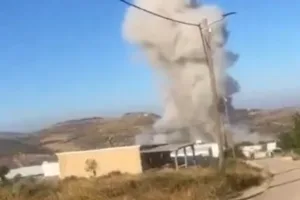
Security forces dismantled a Maoist monument in Chhattisgarh’s Narayanpur district during an anti-Naxal operation, signalling intensified efforts to weaken insurgent influence in Bastar.

Statesman News Service | Mumbai |

Security forces on Saturday demolished a large Maoist monument in Chhattisgarh’s Narayanpur district, dealing a symbolic blow to Naxalite presence in the insurgency-affected Bastar region. The action was carried out by Narayanpur Police along with personnel of the Indo-Tibetan Border Police (ITBP) in Farsgaon village of the Kutul area, a zone long identified as a core centre of illegal Maoist activity.

The operation was conducted as part of the ongoing Maad Bachao (Save Maad) campaign, which is a joint initiative of the Centre and the Chhattisgarh government. It is aimed at eliminating Left-Wing Extremism and pushing towards a Naxal-free Bastar through sustained security action and development outreach.

Maoist monument razed during area domination exercise

Police officials said a joint security team had moved into Kutul, Farsgaon and nearby interior pockets for area domination and anti-Naxal operations when the monument was spotted. The structure stood in Farsgaon village, which falls under the jurisdiction of the Kohkameta police station and the Kutul Police Assistance Centre.

Using heavy earthmoving machinery, including a jumbo excavator, the forces dismantled the monument on the spot. Such structures, officials said, are typically raised by Maoists to glorify slain cadres, reinforce ideological influence, and intimidate residents in remote tribal villages.

The demolition is part of a broader push to weaken Maoist symbolism and presence in Abujhmad, which is the dense forested belt that has for decades served as a stronghold for Naxalite groups.

Alongside security operations, authorities are expanding permanent security camps, fast-tracking road and bridge construction, and extending welfare schemes to villages that remained cut off for years due to insurgent violence. Officials said the combined push on security and development is slowly changing ground realities, with more villagers coming forward to share information and refusing to cooperate with Maoist extortion or recruitment efforts.

In recent months, the Maad Bachao campaign has gathered momentum, reflected in a series of arms recoveries, surrenders by cadres, and the expansion of security camps deeper into interior pockets.

Police officials said removing such monuments is not just about dismantling physical structures but about breaking fear and clearing the path for healthcare, education, governance, and economic opportunities in regions that were once inaccessible.

The latest operation, they added, reflects the government’s resolve to loosen the Maoists’ grip on Narayanpur and neighbouring districts and bring tribal communities firmly into the mainstream.

Islamabad mosque blast: Bomber identified as Peshawar resident who ‘travelled to Afghanistan for training’

Authorities probing the Islamabad mosque blast have identified the suicide bomber as a Peshawar resident who travelled to Afghanistan for training, as investigators trace wider militant links.

Statesman News Service | New Delhi |

Pakistani authorities have identified the suicide bomber behind the deadly attack at Islamabad’s Imambargah Khadijah al-Kubra as a resident of Peshawar who allegedly received militant training in Afghanistan, officials said on Saturday, as investigators continued to piece together the planning and execution of the assault that killed at least 31 people during Friday prayers.

The suspect, identified as Yasir Khan Yasir, was not an Afghan national but had travelled to Afghanistan multiple times and spent nearly five months there before returning to Pakistan, according to preliminary findings cited by The Express Tribune. Officials said the identification was made through forensic analysis of the bomber’s remains.

Minister of State for Interior Talal Chaudhry confirmed that the attacker’s identity had been established through forensic evidence recovered after the blast. “He is not an Afghan citizen, but forensic examination of the remaining parts of his body has provided information about how many times he had travelled to Afghanistan,” he said.

Also Read: Islamabad mosque blast exposes Pakistan’s internal security fault lines as India is blamed

What investigators know so far about the attacker

Sources associated with the investigation said Yasir Khan was influenced by the Salafi school of thought and is believed to have undergone militant training during his stay across the border. According to officials, he received training at the Mansoor Istashhadi training centre in Afghanistan’s northeastern Kunar province.

“He received training at the Mansoor Istashhadi training centre in Afghanistan’s northeastern Kunar province and travelled to and from the country multiple times,” sources told The Express Tribune.

Investigators are also examining possible links between the suspect and the Islamic State Khorasan Province (ISKP). However, officials stressed that the inquiry remains at a preliminary stage and that no final conclusions have been drawn so far.

Authorities said efforts are underway to trace the wider network that may have enabled the attack, including identifying handlers, logistical facilitators, and any domestic or cross-border support that could have played a role.

Deadly blast during Friday prayers

The explosion occurred at the Khadija Tul Kubra mosque in Islamabad’s Tarlai Kalan area during Friday prayers, killing at least 31 people and injuring 169 others, according to Pakistani officials.

Eyewitnesses told local media that gunfire was heard moments before the explosion, after which the suicide bomber detonated explosives amid a large gathering of worshippers inside the mosque.

Hospitals across the capital were placed on emergency footing as rescue teams rushed the injured to medical facilities. Several victims were reported to be in critical condition.

Political reactions and regional implications

Pakistan was quick to attribute the attack to external forces. However, innocent people of the rogue nation have time and again borne the burden of homegrown terrorism.

The international community condemned the bombing and called for a thorough and transparent investigation. Diplomatic sources said that while the incident has not led to immediate escalation, it underscores the fragile security environment in South Asia.

India strongly denounced the suicide bombing at the Shia mosque in Islamabad, offering condolences to the victims’ families. New Delhi also rejected Pakistan’s allegations as “baseless,” describing them as an attempt to divert attention from Pakistan’s internal challenges.

Photo

  • img
  • img
  • img
  • img
  • img
  • img
  • img
  • img
  • img
  • img
  • img
  • img
  • img
  • img
  • img

India U-19 lift ICC World Cup 2026 Trophy for the 6th time: A celebration in pictures

India U-19 lift ICC World Cup 2026 Trophy for the 6th time: A celebration in pictures

MORE Photo STORIES

Sonia Gandhi calls revision plea ‘frivolous and politically motivated’, seeks its dismissal

In a reply filed through counsel before the Court of Special Judge (CBI) Vishal Gogne, she has contested the allegations relating to her alleged inclusion in the electoral rolls prior to acquiring Indian citizenship and sought dismissal of the revision petition.

ANI | New Delhi |

Congress Leader Sonia Gandhi has opposed the criminal revision petition filed against her in the Rouse Avenue Court, stating in her reply that the plea is based on incorrect, misleading and speculative facts and is “wholly misconceived, frivolous, politically motivated and an abuse of the process of law.”

In a reply filed through counsel before the Court of Special Judge (CBI) Vishal Gogne, she has contested the allegations relating to her alleged inclusion in the electoral rolls prior to acquiring Indian citizenship and sought dismissal of the revision petition.

The response adds that the complainant has made serious accusations in a reckless manner based on assumptions, media reports and personal presumptions rather than authentic records. It states that no specific document has been identified as having been forged or falsified and that the allegations lack material particulars.

Sonia Gandhi’s reply further maintains that matters relating to citizenship fall exclusively within the domain of the Central Government, while preparation and maintenance of electoral rolls is the statutory responsibility of the Election Commission of India. It contends that criminal courts cannot assume jurisdiction over such issues by entertaining private complaints, as this would amount to interference in the electoral process.

The response also disputes claims that her name was re-entered in the electoral roll on the basis of any application or forged documentation. It states that the complainant has failed to place on record any authentic application or supporting record allegedly used for inclusion in the voter list, nor has any attempt been shown to obtain such documents through lawful means.

Denying further allegations, the reply rejects presumptions that fabricated government identity documents were used to obtain registration or that she cast a vote in the 1980 general election. It describes such claims as baseless assertions made without evidence.

The response also questions the reliance placed on old media reports, stating that such material does not carry legal recognition and cannot form the basis of criminal proceedings. It contends that the complainant is attempting to revive a controversy from 1980-83 after more than four decades without any foundational documentary proof, making the allegations stale and legally untenable.

Legal objections have also been raised regarding the maintainability of the complaint. The reply states that mandatory statutory requirements under the BNSS were not complied with, including proper filing of a valid affidavit, and therefore, the court lacks jurisdiction to entertain the complaint.

The revision petition has been filed by advocate Vikas Tripathi, challenging the Magistrate Court’s September 2025 order, which had dismissed his earlier complaint at the threshold. The Magistrate had observed that issues relating to citizenship and electoral rolls fall within the jurisdiction of the Central Government and the Election Commission of India and cannot be adjudicated through a criminal complaint.

Sonia Gandhi’s reply, filed through advocates Tarannum Cheema, Kanishka Singh, Akash Singh and Akshay Nagarajan, seeks dismissal of the revision petition on the ground that it is based on conjectures, stale references and lacks any essential factual foundation.

BJP nominates Ritu Tawde as Mahayuti candidate for post of Mumbai Mayor

Meanwhile, former mayor Kishori Pednekar of the Uddhav Thackeray-led Shiv Sena and likely candidate for Mumbai mayor’s post said, “We accept the calculations of numbers and have accepted them.

Statesman News Service | Mumbai |

The BJP officially named its corporator Ritu Tawde as the Mahayuti alliance candidate for the post of Mumbai Mayor on Saturday, while the Eknath Shinde-led Shiv Sena nominated corporator Sanjay Ghadi for the post of Deputy Mayor.

Meanwhile, former mayor Kishori Pednekar of the Uddhav Thackeray-led Shiv Sena and likely candidate for Mumbai mayor’s post said, “We accept the calculations of numbers and have accepted them. Finally, the BJP had to accept a Marathi person who is a Hindu. We will raise questions as the opposition without succumbing to any pressure.”

“The battle that was going on in 2022. Even in that struggle, the tree of the Marathi people planted by Balasaheb Thackeray is standing tall. Who is using the mandate received in Balasaheb’s name for what? The people have seen it. Our fight has always been for the identity of the Marathi people, and it will continue,” Kishori Pednekar said.

Meanwhile, BJP mayoral candidate Ritu Tawde said, “We are sure that my victory in the elections on the 11th will be certain. After 44 years, the BJP has come to power in the municipal corporation. More than 50 corporators of the opposition have not been elected. We are going to break their 25-year rule of corruption. In the hall, all the corporators come together to serve Mumbai’s development; we will discuss those issues. Mumbaikars will see a different change in Mumbai”.

The election for the Mumbai mayor’s post will take place on Wednesday, February 11. The selection of the mayoral category is based on a lottery system introduced after the 74th Constitutional Amendment, which mandates rotational reservation of leadership posts in local bodies. Under the Mumbai Municipal Corporation Act, the mayor’s post rotates among Scheduled Castes, Scheduled Tribes, Other Backward Classes, women (both reserved and open), and the general category.

The election is scheduled to take place at Mantralaya (the State Secretariat) in Mumbai, and it will be overseen by the Minister or Secretary of the Urban Development Department.

The election process will begin with the preparation of chits based on “eligible categories” based on historical rotation. For instance, if the previous term was ‘open,’ that category may be excluded or de-prioritised in order to ensure that another community group gets an opportunity.

This will be followed by a public draw, when all “categories” written on pieces of paper are folded and placed in a glass jar or box. Traditionally, a child is then called to pick a chit from the jar to ensure that the chit is picked in a totally random manner.

The “category” written on the selected chit becomes the official “reservation” for the mayoral term. For example, if such a lottery system dictates which corporators can contest the election for the Mayor of Mumbai post. If the post is reserved for a scheduled caste (ST) woman, only an elected corporator who meets both these criteria (has to be a woman and a scheduled caste) can run for election.

After the draw of chits is completed, an official gazette notification is issued by the Urban Development Department. Thereafter, the Municipal Commissioner will call a special meeting of the 227 elected corporators, and finally, these corporators will elect the Mayor of Mumbai from among eligible candidates through a show of hands, requiring a simple majority of 114 votes or hands raised.

Repair efforts underway at Bholari base hit during Operation Sindoor

Geo-intelligence and OSINT analyst Damien Symon shared comparative before-and-after images of the site on X, stating that visible structural changes point to ongoing restoration activity at the airbase facility that was damaged during the May conflict between the two nuclear nations.

Parwinder Sandhu | New Delhi |

Pakistan has seemingly commenced restoration efforts at Bholari Airbase almost nine months after an aircraft hangar was hit in May 2025 during Operation Sindoor, as new imagery reveals partial removal of the structure’s damaged roof.

Geo-intelligence and OSINT analyst Damien Symon shared comparative before-and-after images of the site on X, stating that visible structural changes point to ongoing restoration activity at the airbase facility that was damaged during the May conflict between the two nuclear nations.

“Nearly nine months after an aircraft hangar was struck, during the May 2025 India-Pak conflict at Bholari Airbase, Pakistan, repair activity now appears to be underway with recent imagery showing the hangar roof partially removed.”

Bholari Airbase in Sindh province, located under 100 miles from the port city of Karachi, was among several key military installations targeted by India during Operation Sindoor in May 2025.

The base, commissioned in December 2017, is considered one of Pakistan’s more modern operational air facilities. It is known to host the Pakistan Air Force’s 19 Squadron along with an Operational Conversion Unit (OCU), both of which operate F-16A/B Block 15 ADF fighter aircraft.

The reported strike took place on the night of May 9–10, 2025, as part of India’s retaliatory action following attempted missile attacks by Pakistan on Indian military sites.

Imagery captured by commercial satellite providers and reviewed by geo-intelligence analysts indicated extensive structural damage to a large aircraft hangar at Bholari.

Visual analysis pointed to a wide breach in the roof of the structure, consistent with a high-impact strike. IAF sources had stated that air-launched BrahMos supersonic cruise missiles were used in the strikes.

At the time of the strike, multiple Western-origin fighter aircraft, along with a Saab 2000 airborne early warning and control (AEW&C) platform, were present at the base. Other airbases that were hit during the operation include Nur Khan, Sargodha, Rafiqui, Murid, Chaklala, Rahim Yar Khan and Chunian.

Casualties linked to the strike were acknowledged by Sindh Chief Minister Murad Ali Shah, who told the media that several air force personnel had been killed in the attack.

“Look at what is happening in Sindh. There are seven martyrs in Sindh. In the attack that took place in Bolari, six officers and technicians from the Air Force were martyred. The first martyr who happened in Sindh was Bakhtar Lagari, who was martyred in Ghatki,” Shah had said while interacting with the media.

‘Namaste Trump’ won, ‘Howdy Modi’ lost: Congress’s Ramesh says India-US trade deal only in America’s interest

Congress leader Jairam Ramesh said the details of the trade deal were still sketchy, but one thing was clear that India can no longer purchase oil from Russia if it had to evade US penalties.

Statesman News Service | New Delhi |

As India and the United States issued a joint statement on the recently finalised bilateral trade deal, opposition parties have expressed concerns over the changing dynamics in India-Russia trade relations.
Senior Congress MP and former union minister Jairam Ramesh took a jibe and said ‘Namaste Trump’ had won and ‘Howdy Modi’ had lost, referring to two events that were held in India and the US during the leaders’ bilateral visits.

Ramesh said the details on the trade deal were still sketchy but one thing was very clear that India can no longer purchase oil from Russia if it had to evade US penalties.

“Namaste Trump jeete, Howdy Modi haare. The joint statement, which has been issued, is not very detailed, but whatever information we could collect makes five things very clear. First, we will not purchase Russian oil, and if we do, a fine will be imposed on us in the form of 25 per cent tariffs,” the Congress leader told news agency ANI.

“Second, we will either reduce or remove import duty on agricultural imports from the US. Our imports from the US will increase by three times every year. This means our trade with the US, which is in surplus, will become a deficit. Fourth, there is no mention on IT and services sector. Fifth, export duty on Indian products is increasing,” he added.

Ramesh asserted that the trade deal announced by Trump and Modi is only in America’s interests. He added that everything will become clear once the complete details of the deal emerge.

Aam Aadmi Party MP Sanjay Singh also suggested that India cannot trust the US and give up on a friend like Russia.

“The US has always betrayed you, and Russia has supported you at that time. The American and Indian finance ministers have issued a joint statement. It says that they have auctioned off farmers’ interests. India is the world’s largest coal producer, but you will buy it from the US? We will have to find out who are the businessmen benefiting from this,” Singh said.

Details of India-US Interim Agreement on Trade

The remarks came as India and the US released a joint statement on the Interim Agreement on Trade. Union Minister for Commerce and Industry, Piyush Goyal, will be addressing a press conference as well later today on the India-US Joint Statement on the interim free trade deal.

As per the joint statement, India will eliminate or reduce tariffs on all US industrial goods and a wide range of American food and agricultural products, including dried distillers’ grains (DDGs), red sorghum for animal feed, tree nuts, fresh and processed fruit, soybean oil, wine and spirits, and additional products.

The United States, on its part, will apply a reciprocal tariff rate of 18 percent on originating goods of India, including textile and apparel, leather and footwear, plastic and rubber, organic chemicals, home décor, artisanal products, and certain machinery. Post the successful conclusion of the Interim Agreement, the US will also remove the reciprocal tariff on a wide range of goods including generic pharmaceuticals, gems and diamonds, and aircraft parts.

The US will also remove tariffs on certain aircraft and aircraft parts of India imposed to eliminate threats to national security.

He was 15 minutes from home: Inside the Janakpuri pit death that has Delhi asking questions

A 25-year-old biker’s death after falling into an uncovered pit in Janakpuri has led to suspensions, an FIR and renewed questions over road safety norms in Delhi.

Statesman News Service | New Delhi |

The Delhi Police on Saturday arrested subcontractor Rajesh Prajapati in connection with the death of 25-year-old Kamal Dhyani, who died after falling into an uncovered pit while riding his motorcycle in west Delhi’s Janakpuri on February 5, as mounting evidence pointed to serious safety lapses at the road work site.

The arrest comes a day after multiple officers were suspended and an FIR flagged the absence of barricades, warning signs, reflectors and lighting at the Delhi Jal Board (DJB) project site where the accident took place. The case has triggered public anger and political sparring over accountability for hazardous construction practices in residential areas.

The victim, Kamal Dhyani, was returning home late Thursday night when he allegedly rode into an open pit at an ongoing Delhi Jal Board (DJB) project site near the B3B Block in Janakpuri. He was found dead inside the pit on Friday morning.

Residents living near the site said the area was poorly secured and dangerously dark. “Our house is just in front, in Janta Flats. We have to come here three to four times a day. There were no barricades on this side, only two on the other side. The green sheet you can see wasn’t there earlier. Nothing was properly installed. There was no warning for anyone. The area remains dark, which is the biggest issue,” a local resident told news agency IANS.

Kamal, a resident of Kailashpuri, had left his office in Rohini to celebrate his parents’ wedding anniversary but never reached home. According to his friend, he had spoken to Kamal shortly before the incident and was told he was just 15 minutes away.

How the incident unfolded

When Kamal failed to return, his family alerted the police and launched a night-long search. Police teams attempted to trace his movements using mobile tower data and CCTV footage, but no breakthrough was achieved for several hours.

The search ended around 8 am on Friday when a woman alerted the police about a body lying inside a pit in the area. Police personnel rushed to the spot and found Kamal’s body inside a nearly 15-foot-deep pit, with his motorcycle lying nearby.

According to the FIR, the pit, which was dug in the middle of a public road as part of road work, had no warning signs, reflectors, barricades or proper lighting. No security guard had been deployed at the site. The FIR also notes that the pit measured about 20 feet in length, 13 feet in width and around 14 feet in depth.

Kamal was pulled out of the pit with the help of the fire brigade and taken to Deen Dayal Upadhyay Hospital in a PCR vehicle, where doctors declared him brought dead.

Government response and suspensions

Delhi Home Minister Ashish Sood, who visited the site on Saturday, said all officers responsible for the incident had been suspended and that no one would be spared.

“All the departments conducted a joint inspection. We have directed the departments, and I am here to ensure that the road runs smoothly with minimum inconvenience to the public. All the officers responsible for the incident have been suspended. The police have also registered an FIR, and an investigation is underway. We will not spare anyone responsible. We want to tell the public that if an incident occurred despite all our efforts, we are also hurt, and the Chief Minister is monitoring the situation,” Sood told ANI.

Earlier, Delhi PWD Minister Parvesh Verma had termed the death “tragic” and announced strict action, including suspensions and a detailed probe to fix responsibility.

Political blame game intensifies

The incident has also triggered a political row, with the Aam Aadmi Party accusing the police and the BJP-led Delhi government of attempting to shift blame onto the victim.

AAP Delhi president Saurabh Bharadwaj demanded the suspension of Police Commissioner Satish Golchha, alleging a cover-up. “The police and the Delhi BJP government made every effort yesterday to place the blame for Kamal Dhyani’s death on Kamal Dhyani himself. They wanted to show that there was barricading everywhere,” Bharadwaj said.

He also questioned why Kamal’s phone location, which he claimed was known to the police, was not shared earlier. “If they had shared it at night, he could have been saved. The police have not made the CCTV footage of the incident public,” he added.

Family, friends question safety claims

Kamal’s friend Altaf Alam, speaking to ANI, rejected official claims about barricading at the site. “The way was open; they covered it yesterday to hide their misdeeds. Delhi PWD Minister Parvesh Verma said that barricades have been installed every 100 metres. They are showing us sympathy. All arrangements were made to celebrate the anniversary of his parents,” he said.

Local residents echoed these concerns, alleging gross negligence at the DJB worksite and warning that poorly marked construction zones pose a serious risk to commuters, especially at night.

Questions over construction safety norms

The death has renewed scrutiny of safety practices at road and utility works across Delhi, particularly in residential areas with poor lighting. Residents and family members have demanded accountability, saying preventable lapses continue to claim lives unless stricter enforcement is ensured.

Delhi Police have rejected allegations of inaction, stating that officers remained with the family through the night and made continuous efforts to trace Kamal’s movements. An investigation is ongoing.

Sunil Thapa dies at 68 in Kathmandu: Ratey Kaila fame and ‘Mary Kom’ coach role defined his cross-border career

Veteran Nepali actor Sunil Thapa, best known as Ratey Kaila from ‘Chino’ and for playing Mary Kom’s coach in the Bollywood biopic, has died at 68 after a heart attack. A towering figure across Nepali, Hindi, and Bhojpuri cinema, his passing has left the film industry in deep mourning.

Statesman News Service | New Delhi |

If you grew up watching Nepali films, you didn’t just watch villains, you ‘felt’ them. And no villain stayed with audiences like Ratey Kaila. That unforgettable character from ‘Chino’ belonged to veteran actor Sunil Thapa, who passed away at the age of 68 leaving Nepali cinema quieter. He is popular amongst Hindi cinegoers as Mary Kom’s coach from the biopic. Thapa died on Friday morning in Kathmandu while receiving treatment at Norvic Hospital, Thapathali, after his health suddenly worsened.

From Bollywood beginnings to a Nepali icon

Sunil Thapa began his acting career in Bollywood making his debut with the classic Hindi film ‘Ek Duje Ke Liye’ in 1981 alongside Kamal Haasan. He followed this with roles in films like ‘Aaj Ki Awaaz’ (1982) and ‘Manav Hatya’ (1986) where he played Police Constable Bajirao Kale.

During the late 1980s and early 1990s, he appeared in several Hindi films. These included ‘Manu The Great’, ‘Albela’, ‘Naseebwaala’, ‘Bandhu’ where he played an inspector. These roles helped him build solid foundation in Indian cinema.

How ‘Chino’ changed everything

In 1989, Sunil Thapa played Ratey Kaila in the Nepali film ‘Chino’. That role changed his life, and the definition of a villain in Nepali films.

Ratey Kaila wasn’t just evil. He was layered, intense, and frighteningly real.

Over the decades, he appeared in more than 300 Nepali films, redefining what a character actor could achieve.

Sunil Thapa acted in more than 300 Nepali films. His notable works include ‘Deuki’, ‘Prabhisha’, ‘Thuldai’, ‘Aago’, ‘Tan Ta Sarai Bigris Ni Badri’, ‘Yo Maya Ko Sagar’ (as Pitambar), ‘Jetho Kancho’ (as Birkhe Saau), ‘Basanta Ritu’ (as Ranveer Singh), ‘Karma Yoodha’ (as Dharanidhar).

A career that crossed languages and borders

Apart from Nepali and Hindi films, he also worked in Tamil, Bhojpuri, and Telugu cinema.

In 2014, Indian audiences noticed him again in ‘Mary Kom’, where he played M. Narjit Singh. The performance earned him a Filmfare Award nomination bringing him recognition beyond Nepal.

His later works included Bhojpuri films like ‘Sarkar Raj’, ‘Border’, ‘Nirahua Chalal London’, ‘Sher-E-Hindustan’, as well as the Telugu film ‘Mirai’ in 2025.

Sunil Thapa also became household name on Nepali television. From 2006 to 2017, he played Sher Singh Mama in popular Nepali TV series ‘Meri Bassai’. This role showed his comic timing and warmth.

Since 2019, he had been appearing in the TV series ‘Dear Jindagi’.

How people are remembering him

The Facebook page of Sikkim Chief Minister Prem Singh Tamang (Golay) shared a condolence message on Sunil Thapa’s passing.

Raju Bista, BJP Loksabha MP from Darjeeling, took to X (formerly Twitter) to remember the legendary actor whose acting career was a bridge between Nepali and Indian cinema.

Many other actors, filmmakers, fans are also remembering Sunil Thapa by revisiting and sharing tributes to his iconic roles.

Also Read: SP Venkatesh, creator of timeless Malayalam film scores and hits like ‘Devasuram’, passes away at 70

India–US interim trade deal: Who gains as tariffs ease

The long-anticipated interim trade agreement between India and the United States has finally come into force, delivering a cautious but politically significant de-escalation of bilateral trade tensions and reopening a pathway toward a more ambitious Bilateral Trade Agreement (BTA) later this year.

Jayanta Roy Chowdhury | New Delhi |

The long-anticipated interim trade agreement between India and the United States has finally come into force, delivering a cautious but politically significant de-escalation of bilateral trade tensions and reopening a pathway toward a more ambitious Bilateral Trade Agreement (BTA) later this year.

As announced earlier by US President Donald Trump, the interim arrangement arrived at on Friday late night provides that the United States will levy a lower tariff rate of 18 per cent on a wide range of Indian-origin goods, including textiles and apparel, leather and footwear, plastics and rubber, organic chemicals, home décor, artisanal products and select machinery.

While the tariff level stops short of a full rollback, analysts and industry bodies see it as a meaningful reduction from earlier, more restrictive regimes. “We have managed to protect core agricultural interests while de-escalating the trade tensions as they should be done … but more work needs to be done by both sides,” said Pinak R Chakravarty, former Secretary, Economic Relations in the Ministry of External Affairs.

At first glance, New Delhi’s messaging around the interim India–United States trade agreement has focused on reassurance. Commerce Minister Piyush Goyal has emphasised that the deal “completely protects” India’s most politically sensitive agricultural and dairy sectors.

The assertion is in part aimed at domestic audiences for whom market access in maize, wheat, rice, dairy, poultry, and allied products remains a red line and in part for the global strategic audience to underline that farm trade remains India’s most sensitive veto point in trade negotiations.

India’s give-aways have as yet not been clearly revealed, but while lower tariffs on most US exports will be brought in according to sources, “core sector interests remain protected.” However, high-end farm products and processed food ranging from vegetables, fruits, wines, and processed food items will be allowed entry at highly competitive duty rates. As will high end automobiles and machinery, including defence and nuclear project-related manufactures.

From India’s point of view, tariffs on certain high-value Indian export categories, generic pharmaceuticals, gems and diamonds, and aircraft parts, are slated for removal, subject to the successful implementation and finalisation of the interim pact.

The United States will also withdraw national security-related duties earlier imposed on Indian aircraft and aircraft components under steel, aluminium and copper-related measures. This would be good news for GE, Boeing and a number of aircraft and defence producers who have or are planning to set up bases in India.

The immediate gains are expected to be sector-specific rather than economy-wide, but they span both labour-intensive and high-technology segments. “The deal can be considered a beginning. There will be more discussions and more haggling on tariff rates. However, the non-tariff barriers that India had at some stage brought in, are being dismantled,” said Prof Biswajit Dhar, former WTO Chair at the Indian Institute of Foreign Trade.

Indian generic drug manufacturers stand to benefit from improved access to the US market, potentially reinforcing India’s role as a key supplier of affordable medicines. The gems and jewellery sector, particularly India’s cutting and polishing industry, could see increased margins and higher export volumes despite stronger price competitiveness that has set in, in that sector.

The removal of tariffs on aircraft and aircraft parts is seen as a boost for India’s emerging aerospace ecosystem, including manufacturing, maintenance, repair and overhaul (MRO) operations, and component suppliers.

For textiles and apparel exporters, the lower reciprocal tariff rate enhances competitiveness in the US market, especially in labour-intensive categories facing stiff competition from other low-cost producers such as Vietnam, Cambodia, Turkey and Bangladesh.

Engineering goods, including industrial machinery and auto components, electric vehicle component makers, are also expected to gain from reduced trade friction, while organic chemicals, plastics and rubber products benefit from improved pricing and market access.

While the interim agreement does not resolve all outstanding trade issues, both governments have reiterated their commitment to pursue a comprehensive BTA covering goods, services, digital trade, investment cooperation and supply chain resilience.

Implementation of the revised tariffs is set to begin promptly, with operational guidelines to be issued by relevant authorities.

Analysts believe that the interim pact ”is not liberalisation in the classical sense. Rather, it reflects a recalibration”. Their assertion is that India has shown its willingness to trade regulatory flexibility in selected sectors for tariff relief and strategic alignment with its largest trading partner. “This is realpolitics,” admitted Dhar.

For now, the deal offers Indian exporters a degree of tariff certainty at a time of global trade volatility. More importantly, it signals renewed political will on both sides to anchor the India–US economic relationship in a more predictable and rules-based framework, even as negotiations on the final agreement continue.

Hearing deadline nears for electoral roll revision; extension likely in 15 Bengal seats

These constituencies are largely spread across three election districts—minority-dominated Malda, coastal South 24 Parganas, and Kolkata (North).

UNI | Kolkata |

With the window for disposing of claims and objections to West Bengal’s draft electoral rolls closing on Saturday, election officials are weighing short extensions in about 15 Assembly constituencies where the process is yet to be wrapped up.

These constituencies are largely spread across three election districts—minority-dominated Malda, coastal South 24 Parganas, and Kolkata (North).

Officials said the District Electoral Officers (DEOs) from these areas have already submitted formal proposals seeking additional time, placing their requests before Chief Electoral Officer (CEO) Manoj Kumar Agarwal.

A senior official in the CEO’s office indicated that the final decision would depend on the pace of hearings until Saturday.

Based on the ground situation, the CEO is expected to forward his recommendation to the Election Commission of India (ECI) in New Delhi for approving brief extensions, possibly for a couple of days.

Meanwhile, the revision exercise has flagged a substantial number of voters for removal.

By Friday evening, more than four lakh names had been marked for deletion from the final electoral roll after the individuals concerned failed to appear before hearing officers despite repeated notices.

Officials said around 50,000 of these fall under the category of “unmapped” voters, those who could not establish any verifiable connection with the 2002 voters’ list, either through self-mapping or progeny-based mapping.

Nearly another 3.5 lakh cases involve “logical discrepancies,” where inconsistencies were detected in family linkage data during the progeny-mapping process.

The ongoing scrutiny follows the publication of the draft rolls in December, when as many as 58.2 lakh names were struck off after being identified as belonging to deceased persons, shifted voters, or duplicate entries.

The exact scale of deletions will be known once the final electoral rolls are released on February 14.

After the final list is published, a full Bench of the Election Commission is slated to visit West Bengal to review the situation on the ground.
Poll dates for the Assembly elections, due later this year, are expected to be announced thereafter.

Separately, the controversy surrounding the Special Intensive Revision (SIR) is set to come up before a three-judge Bench of the Supreme Court on Monday.

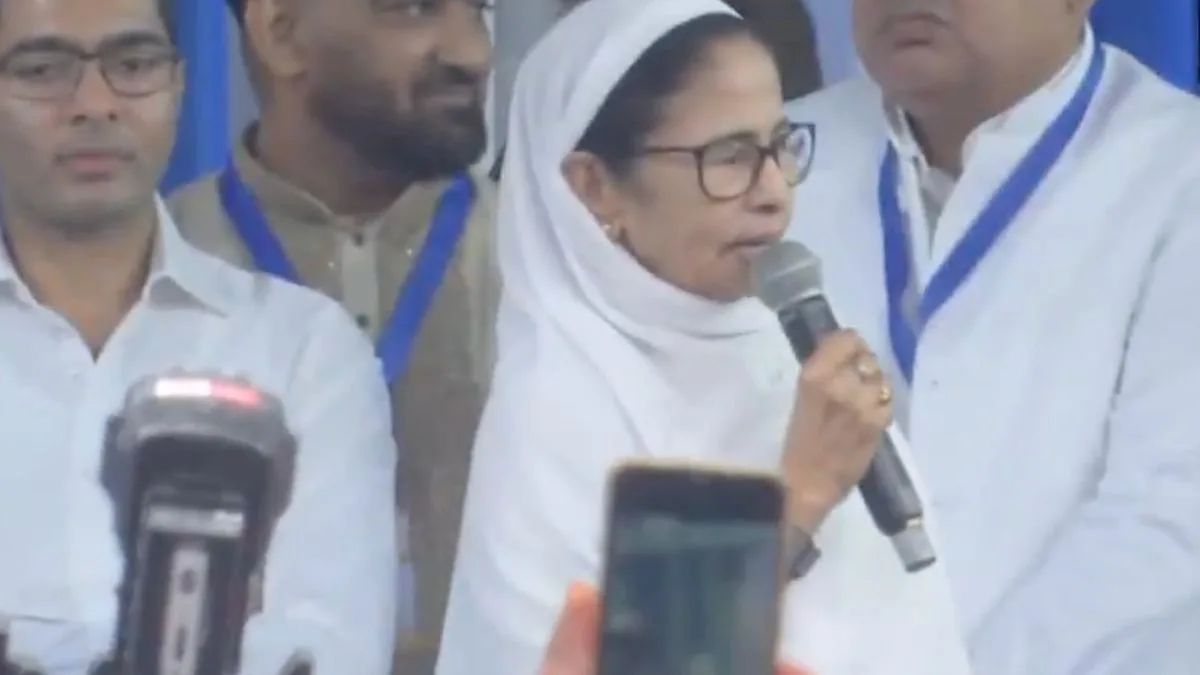
Chief Minister Mamata Banerjee is likely to again present her arguments, as she did during the previous hearing on February 4.

BCCI announces Rs 7.5 crore reward for U19 World Cup champions

India clinched a record-extending sixth ICC Under-19 Men’s Cricket World Cup crown after thrashing England by 100 runs in the final at the Harare Sports Club on Friday.

Statesman News Service | New Delhi |

The Board of Control for Cricket in India (BCCI) has announced a total cash reward of Rs 7.5 crore for the Indian Under-19 Men’s Cricket World Cup-winning team, along with the technical staff and the selection committee, following their dominant title triumph in Zimbabwe.

India clinched a record-extending sixth ICC Under-19 Men’s Cricket World Cup crown after thrashing England by 100 runs in the final at the Harare Sports Club on Friday. The emphatic victory underlined India’s sustained excellence at the age-group level and further strengthened their position as the most successful side in the tournament’s history.

“BCCI secretary Devajit Saikia announces a cash award of Rs 7.5 crore for the victorious India U19 team, along with the coaching and support staff and the Junior Cricket Committee, following their glorious unbeaten campaign that culminated in India’s sixth ICC U19 World Cup title in Zimbabwe,” the BCCI social media handle read.

India’s triumph was powered by a breathtaking batting display in the final, headlined by 15-year-old sensation Vaibhav Sooryavanshi. The opener smashed a staggering 175 off just 80 balls, laced with 15 fours and 15 sixes, to register the highest individual score ever recorded in an Under-19 World Cup final. Captain Ayush Mhatre (53) and wicketkeeper Abhigyan Kundu (40) provided vital support as India posted a massive 411 for nine.

England began their chase on a positive note, but a collapse in the middle overs derailed their pursuit. Caleb Falconer’s valiant 115 proved to be a lone stand as India’s bowlers tightened the screws to seal a comprehensive 100-run victory.

The title triumph also completed a rare double for Indian cricket, with the country currently holding both the ICC Under-19 Men’s and Women’s World Cup titles, underlining the depth and strength of its grassroots system.

Earlier, Saikia congratulated the young champions and hailed the systems that continue to fuel India’s success at the age-group level. “This outstanding achievement is a testament to the strength of a robust system built on long-term player development, competitive domestic structures, quality coaching programmes supported by dedicated technical staff and a strong talent identification process.”

“Age-group cricket remains a key priority, and the BCCI will continue to invest in and strengthen these foundations for the future. Well done, boys! The nation is immensely proud of you,” he added.

Former India head coach Ravi Shastri also lauded the Under-19 side, highlighting not just the result but the composure shown throughout the tournament.

“Watching this India Under-19 side lift the World Cup was special. Not just because they won, but because of how they went about it, composed, aware of the moment, and willing to take responsibility when it mattered most.

“These boys handled pressure like seasoned pros and played for each other every step of the way. That tells you a lot about their character. Talent will get you noticed, but temperament is what takes you forward, and this group has plenty of both. Enjoy this win. Savour it. And remember, this is just the first chapter. Indian cricket will be hearing these names for a long time,” Shastri shared on social media.

Islamabad mosque blast exposes Pakistan’s internal security fault lines as India is blamed

The Islamabad mosque blast has revived concerns over ISKP and intelligence failures, even as Pakistan quickly blamed India and Afghanistan without completing an initial probe.

Statesman News Service | New Delhi |

More than 30 people were killed and around 160 injured after a blast hit devotees during Friday prayers at a mosque in Islamabad’s Tarlai Kalan area, triggering a swift response from Pakistan that blamed India and Afghanistan within hours of the attack.

The explosion took place at the Khadja Tul Kubra Mosque, where worshippers had gathered for prayers. Even before a preliminary probe could begin, Pakistan’s Defence Minister Khwaja Asif accused the Afghan Taliban and India of being behind the strike. Pakistan, however, did not acknowledge any intelligence failure or examine the possibility that terror groups it has nurtured over the years may have turned against it.

Also Read: Protests in Kashmir over Islamabad blast targeting Shia worshippers

ISKP or TTP suspected, no claim of responsibility so far

An assessment by Indian agencies suggests that the attack could be the work of either the Tehreek-e-Taliban Pakistan (TTP) or the Islamic State Khorasan Province (ISKP). Both groups, however, have not claimed responsibility for the blast.

Officials said the pattern of the attack and the targeting of Shia devotees point towards the involvement of extremist groups known for sectarian violence. At the same time, agencies do not rule out the possibility that the incident may have been used as a diversion to shift focus from losses suffered by Pakistani security forces in Balochistan.

Indian officials have questioned why Pakistan was quick to blame India and Afghanistan while remaining silent on intelligence lapses. An official noted that they are not speaking about the intelligence failure, and one has to understand if this miss was deliberate or not.

Mounting pressure on Pakistan’s security establishment

The Pakistan establishment, whose de facto head is Field Marshal Asim Munir, has faced repeated setbacks in recent months. These began with India’s Operation Sindoor and have since expanded into conflicts with multiple groups.

Pakistan is currently battling the Balochistan Liberation Army (BLA), the TTP and the Afghan Taliban. In addition, protests have intensified in Pakistan-occupied Kashmir (PoK), where intelligence officials say the situation is increasingly volatile and could escalate further.

If the Islamabad attack is eventually traced to ISKP, officials believe it would indicate that the Inter-Services Intelligence (ISI)’s strategy has backfired. ISKP has historically distrusted the Pakistan establishment and, like the TTP, seeks to establish rule under Sharia law.

Failed tactical alignment and its fallout

The ISI had briefly attempted to rope in ISKP fighters to operate alongside Lashkar-e-Taiba against the Afghan Taliban and the TTP. According to officials, this approach collapsed as ISKP once again demonstrated that it could not be relied upon.

ISKP had agreed to the arrangement due to its hostility towards the Afghan Taliban and in the expectation that Pakistan would support its campaign. That support, however, did not materialise. Moreover, sections of the Islamic State, particularly those linked to Syria and Iraq, opposed any alliance with Pakistan, arguing that ISKP’s core objectives were being diluted.

An official said it was too early to conclusively state whether ISKP carried out the attack, but added that the blast bore several of the group’s known operational signatures.

Narrative-building amid internal security concerns

Analysts cited in the assessment said the quick attribution of blame by Munir reflected an attempt to divert attention from multiple internal challenges, including Balochistan and rising unrest in PoK, while pushing a narrative against India and the Afghan Taliban.

The attack comes at a time when Pakistan has allowed Jaish-e-Mohammad to hold radical rallies and has sought to provoke sentiment in Pakistan-occupied Kashmir. Officials said the approach appeared aimed at creating unrest and attributing it to India.

In the process, Pakistan failed to assess its own internal security vulnerabilities, with the blast in a densely populated urban area underscoring the scale of the challenge, experts said.

Iran, US ‘indirect’ talks in Oman end on positive note with both sides agreeing to continue

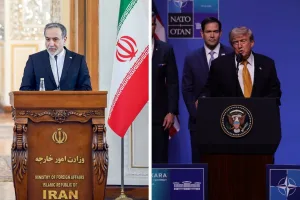
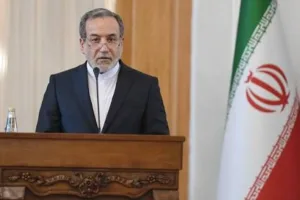
Iranian Foreign Minister Abbas Araghchi said the talks were a good beginning, and the continuation depended on the capitals.

Ramesh Bhan | New Delhi |

Iran and the United States concluded their day of negotiations in Oman on Friday evening with both sides agreeing to continue the talks.
The new round of indirect nuclear negotiations between Tehran and Washington in Muscat ended on Friday afternoon. The talks could continue in the coming days, the Iranian TV said.

Iranian Foreign Minister Abbas Araghchi said the talks were a good beginning, and the continuation depended on the capitals.

Iran’s MEHR News Agency (MNA) quoted Araghchi as saying, “There was agreement on the continuation of the talks, the manner and date will be determined later.”

“It was agreed to continue the talks, but the time, place and manner will be decided in the capitals.”

‘’Several rounds of meetings were held today, our points of view and concerns were conveyed, and the issues were discussed in a very good atmosphere. Overall, it was a good start, but its continuation depends on consultations in the capitals,” Araghchi said.

“We had intensive and long talks. Several meetings were held indirectly from 10 am to 6 pm,” he said, according to MNA.

The Iranian Foreign Minister, who arrived in Oman earlier Friday morning for the crucial talks, said before the talks that Iran will engage in good faith and enter diplomacy with open eyes and a steady memory of the past year.

Immediately after arriving in Oman, Araghchi said commitments need to be honoured, and equal standing, mutual respect and mutual interest are not rhetoric but a must and pillars of a durable government.

‘’Iran enters diplomacy with open eyes and a steady memory of the past year. We engage in good faith and stand firm on our rights.

Commitments need to be honoured. Equal standing, mutual respect and mutual interest are not rhetoric—they are a must and the pillars of a durable agreement,’’ Araghchi said on X.

He also warned against any US excessive demands. Referring to Iran’s approach of using diplomacy to safeguard national interests, Araghchi emphasised full readiness to defend the country’s sovereignty and national security against any excessive demands or acts of adventurism.

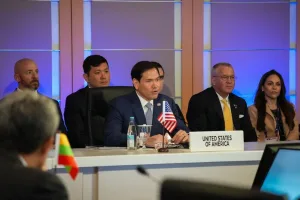
The US delegation included Steve Witkoff, the US President’s Special Envoy for the Middle East, and Jared Kushner, Donald Trump’s son-in-law and Advisor. The US delegation had arrived in Oman a few hours before the Iranian delegation.

Araghchi is accompanied by Majid Takht-Ravanchi, Deputy for Political Affairs; Esmaeil Baghaei, Foreign Ministry Spokesperson and Hamid Ghanbari and other officials.

The Oman Foreign Ministry said these consultations focused on creating the proper conditions for the resumption of diplomatic and technical negotiations, while emphasising their importance given the parties’ interest in the success of these talks to achieve lasting security and stability.

The Omani Foreign Minister also reaffirmed his country’s commitment to continuing its support for dialogue and bridging the viewpoints of the parties. He declared Oman’s readiness to cooperate with various partners to reach agreed-upon political solutions aligned with the desired goals and expectations.

Araghchi’s comments follow the US Advisory to its nationals in Iran to ‘’leave Iran now.’’

The Advisory said US citizens should plan alternative means of communication and, if safe to do so, consider departing Iran by land to Armenia or Turkey.

“Flight cancellations and disruptions are possible with little warning. Check directly with your airlines for updates. If you cannot leave, find a secure location within your residence or another safe building. Have a supply of food, water, medications, and other essential items. Avoid demonstrations, keep a low profile, and stay aware of your surroundings,” the advisory said.

Iran’s official news agency IRNA said Araghchi had met with his Omani counterpart Sayyid Badr bin Hamad al-Busaidi in Muscat ahead of a serious round of ‘’indirect talks’’ with the United States. During the meeting, the two sides reviewed the Iran-US nuclear negotiations.

Referring to Iran’s approach of employing diplomacy to secure Iran’s national interests, while maintaining full readiness to defend the country’s sovereignty and national security against any excessive demands and adventurism, Araghchi expressed appreciation for Oman’s hosting and its benevolent efforts (good offices) in this regard.

The Foreign Ministry of Oman said on X “Within the framework of the Sultanate of Oman hosting negotiations related to the Iranian nuclear file,’’ the Omani Foreign Minister held separate consultations with the Iranian and American delegations on creating the proper conditions for the resumption of diplomatic and technical negotiations, while emphasizing their importance given the parties’ interest in the success of these talks to achieve lasting security and stability. China has affirmed its support for Iran in defending its interests.

China’s Foreign Ministry said Beijing “supports Iran in safeguarding its sovereignty, security, national dignity, and legitimate rights and interests”.

Kremlin also welcomed the Oman talks. “We welcome the talks. We would like these talks to be productive and lead to de-escalation of tensions in the region,” Russian Presidential Spokesman Dmitry Peskov said.

While today’s specific sessions have ended, the broader diplomatic process remains active. Following the session, Witkoff began consultations with Oman’s Foreign Minister, who is acting as the primary mediator.

These remain indirect talks. Reports said Iran presented a “preliminary plan” focused on managing current tensions and nuclear issues.
However, significant friction remains as the U.S. seeks a broader agreement covering ballistic missiles and regional proxies, while Iran insists on a narrow focus only on the nuclear program.

Iranian State media had previously indicated that these sessions are considered the “first stage” of a longer diplomatic effort aimed at preventing further military escalation following the June 2025 conflict.

Protests in Kashmir over Islamabad blast targeting Shia worshippers

The protests were held in Chainabal Pattan in Baramulla, Imambara Zadibal and Harwan in Srinagar, and Inderkote–Sumbal in Bandipora.
Protesters raised strong anti-Pakistan slogans and condemned the attack on worshippers.

UNI | New Delhi |

Protests erupted in several Shia dominated areas of Kashmir on Friday night after a blast at a Shia mosque in Islamabad, Pakistan, killed at least 31 people and injured dozens, officials said.

The protests were held in Chainabal Pattan in Baramulla, Imambara Zadibal and Harwan in Srinagar, and Inderkote–Sumbal in Bandipora.
Protesters raised strong anti-Pakistan slogans and condemned the attack on worshippers.

The powerful explosion struck the Khadija Tul Kubra mosque in Islamabad during Friday prayers.

The protesters denounced the killing of civilians and expressed solidarity with the victims, calling for an end to sectarian violence.

The demonstrations remained largely peaceful, with gatherings dispersing late into the night.