Logo

Congress condemns ‘forced eviction’ of UNI office and misconduct with women journalists

Uttarakhand Congress President stated that under the pretext of enforcing a court order, the police’s decision to visit the UNI office late in the evening constitutes a violation of human values.

Sumitabh | Dehradun |

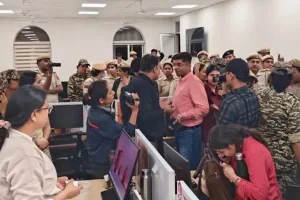
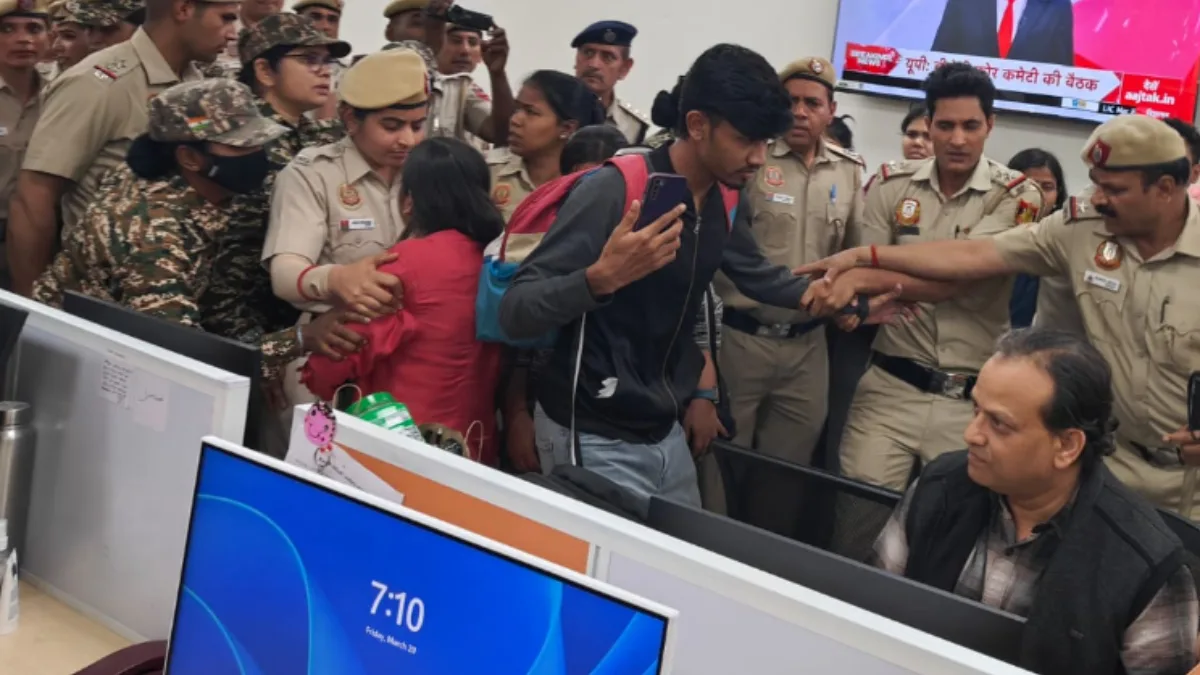
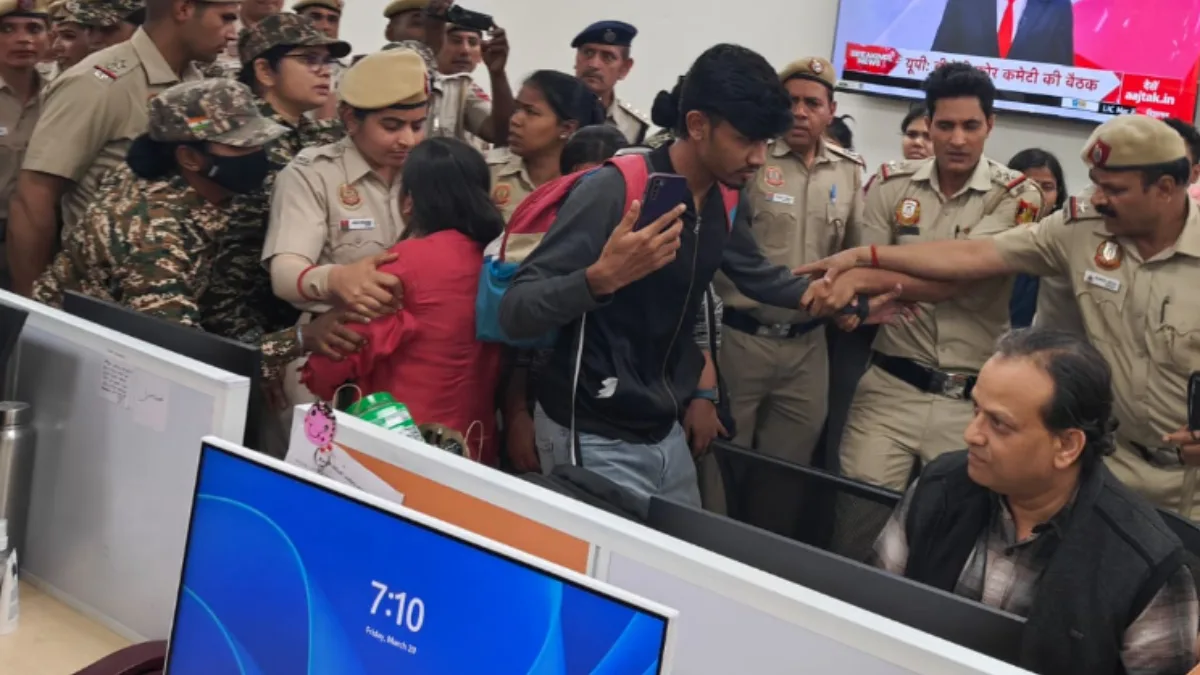
The Uttarakhand State Congress has condemned the incident that occurred late Friday evening at the national headquarters of UNI and UNI Varta, the country’s oldest multilingual news agency, located on Rafi Marg in New Delhi, where a large police contingent arrived and sealed the premises without any prior intimation, while also engaging in misconduct towards female journalists.

State President Ganesh Godiyal termed the incident undemocratic, characterizing it as both dictatorial and unfortunate. He stated that, under the pretext of enforcing a court order, the police’s decision to visit the UNI office late in the evening constitutes a violation of human values. Furthermore, he noted that preventing journalists from even retrieving their personal belongings and physically manhandling a female journalist runs contrary to all ethical norms. He asserted that the current government is making continuous attempts to stifle the voice of the media.

Former Congress Secretary Mahesh Joshi condemned the police for forcibly entering the UNI office and resorting to the use of force. He described this action as an assault on the freedom of the media, often referred to as the fourth pillar of democracy. He pointed out that since the matter was still sub judice (under judicial consideration), and even following the court’s verdict, there remained other legal avenues that were actively being explored. Under such circumstances, he argued, a forcible eviction carried out at the behest of the government is entirely unjustifiable.

The party’s outgoing State Spokesperson, Sheeshpal Singh Bisht, strongly denounced the incident, alleging that the current Central Government is determined—by any means necessary,to hand over this news agency (widely regarded as a source of national pride) to its corporate allies, Adani and Ambani, just as it has done with various other institutions. He claimed that this explains why the government became rattled after the Adani Group’s bid was rejected by the Company Tribunal, with the contract subsequently being awarded to the ‘Statements Group’, leading to the cancellation of the UNI premises’ allotment. He characterized this entire episode as a direct assault on the independent media.
LoP flags underutilisation of bulletproof vehicles in Jharkhand

Leader of Opposition Babulal Marandi has written to Chief Minister Hemant Soren alleging underutilisation of recently procured bulletproof vehicles meant for VIP security and movement.

Statesman News Service | Ranchi |

Leader of Opposition Babulal Marandi has written to Chief Minister Hemant Soren alleging underutilisation of recently procured bulletproof vehicles meant for VIP security and movement.

In a letter dated March 21, Marandi said the state Home Department had purchased 17 bulletproof vehicles in late 2024 for use by the Chief Minister, former chief ministers, the Governor and other dignitaries.

He said three vehicles have been allocated to the Chief Minister and two to Raj Bhavan, while the remaining vehicles are with the headquarters.

Marandi claimed that only a few of these vehicles are currently being used for VIP movement, while others remain idle.

He said prolonged non-use could lead to deterioration and result in wastage of public funds.

The BJP leader also pointed out that vehicles allotted to former chief ministers are over a decade old and have covered around two lakh kilometres, often leading to breakdowns.

He suggested that the unused vehicles be allocated to senior officials, including the Chief Secretary, the Director General of Police, the Home Secretary and the Cabinet Secretary, to ensure their utilisation.

India return to Belfast after 19 years for two T20Is against Ireland

Reigning world champions India will take on Ireland in a two-match T20 International series in June, with the fixtures scheduled for June 26 and June 28 in Belfast.

Statesman News Service | New Delhi |

Reigning world champions India will take on Ireland in a two-match T20 International series in June, with the fixtures scheduled for June 26 and June 28 in Belfast. The series will serve as a preparatory assignment for India ahead of their white-ball tour of England. Both matches will be played in Belfast, marking India’s return to the venue for the first time since 2007.

“Team India (Senior Men) will travel to Ireland for a two-match T20I series in June 2026. Having toured Ireland three times in the past eight years (2018, 2022 and 2023), this tour will mark India’s return to Belfast for the first time since 2007,” BCCI secretary Devajit Saikia said in a statement.

The announcement from the Board of Control for Cricket in India came shortly after Ireland’s director of high performance Graham West confirmed the series while also revealing that veteran Paul Stirling had stepped down as Ireland’s T20I captain.

India are set to host Afghanistan for a one-off Test and a three-match ODI series that will conclude on June 20, before travelling to England for five T20 Internationals and three ODIs from July 1 to July 19.

In recent years, India have toured Ireland three times — in 2018, 2022 and 2023 — with all matches held at Malahide near Dublin drawing strong crowds.

West had earlier indicated that the India series forms part of Ireland’s plans for the upcoming summer, which also includes a one-off Test against New Zealand and five ODIs against Afghanistan.

India have a strong record in T20Is against Ireland, having played seven matches and winning six, while one game was abandoned due to rain. India’s only previous international match in Belfast came in an ODI, which they won by nine wickets in a rain-affected contest. Batting first, Ireland had posted 193 in 50 overs, with Niall O’Brien scoring a half-century.

Stirling steps down as T20I captain

Stirling stepped down as Ireland’s T20I captain on Thursday after his campaign at the ICC Men’s T20 World Cup 2026 was cut short by a knee injury sustained during a group-stage match against Australia. Wicketkeeper-batter Lorcan Tucker took over the captaincy duties for the remainder of the tournament.

Stirling will, however, continue to lead Ireland in the ODI format as the team builds towards the ICC Cricket World Cup 2027, scheduled to be held in South Africa, Zimbabwe and Namibia.

During his tenure as T20I captain, Stirling led Ireland in 48 matches, registering 20 wins and 26 losses, while two games ended without a result. Under his leadership, Ireland featured in the T20 World Cups in 2024 and 2026, though the team exited in the group stage on both occasions.

Stirling is also Ireland’s most-capped player in T20 Internationals, having appeared in 163 matches. The right-handed batter is the country’s leading run-scorer in the format with 3,895 runs.

6.5 kg heroin seized near Indo-Pak border in Fazilka; BSF–Punjab Police foil smuggling bid

Alert BSF troops fired several rounds to prevent the breach, followed by a thorough joint search operation that led to the recovery, he added.

Statesman News Service | New Delhi |

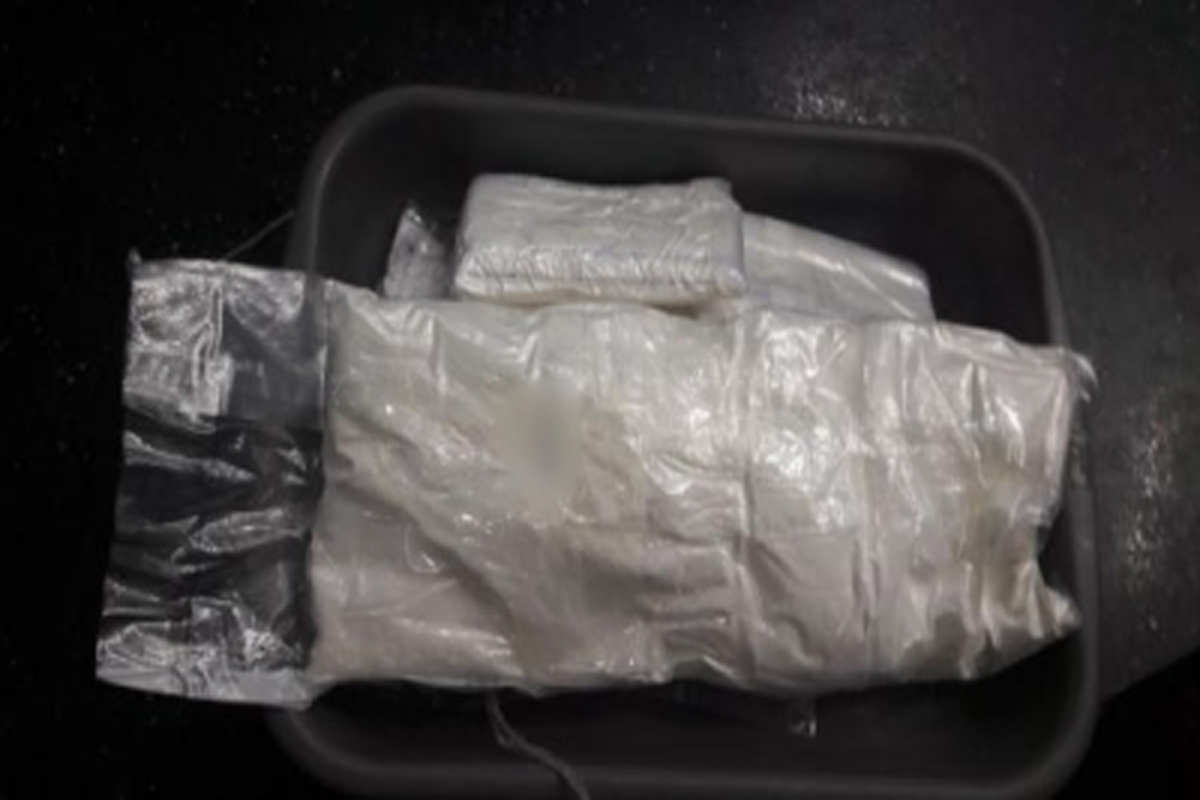
In a major breakthrough in the ongoing drive to make Punjab a drug-free state, as per the directions of Chief Minister Bhagwant Singh Mann, Counter Intelligence (CI) Ferozepur, in close coordination with the Border Security Force (BSF), has foiled a cross-border smuggling attempt and recovered 6.5 kg of heroin near Border Outpost (BOP) GG-2 at village Mahtam Nagar in Fazilka.

Director General of Police (DGP) Punjab Gaurav Yadav here on Saturday said that preliminary investigations have revealed that Pakistan-based smugglers crossed the zero line and operated close to the border fence, attempting to exploit darkness to push narcotics into Indian territory.

Alert BSF troops fired several rounds to prevent the breach, followed by a thorough joint search operation that led to the recovery, he added.

Sharing operational details, AIG CI Ferozepur Gursewak Singh said that, acting on reliable inputs, police teams along with BSF Fazilka planned a special ambush early on Saturday morning and executed a joint, well-coordinated operation in the area of village Mahtam Nagar.

Pakistani smugglers attempted to push the consignment, but BSF personnel responded promptly and successfully thwarted the attempt. He added that the operation resulted in a substantial recovery of narcotics from the spot.

The AIG said that further investigation is underway to trace local operatives and unravel the entire smuggling network.

In this regard, a case FIR No. 7 dated 21-03-2026 has been registered under Sections 21-C and 29 of the NDPS Act at Police Station SSOC Fazilka.

India achieves one billion tonne coal production

This significant milestone underscores India’s growing self-reliance in the energy sector and its commitment to ensuring uninterrupted fuel supply to key industries, an official press release said on Saturday.

Statesman News Service | New Delhi |

With the sustained and coordinated efforts across the coal sector and the invaluable contribution of all stakeholders, India has successfully achieved the landmark of one billion tonne (BT) coal production on March 20 for the second year in a row.

This significant milestone underscores India’s growing self-reliance in the energy sector and its commitment to ensuring uninterrupted fuel supply to key industries, an official press release said on Saturday.

This enhanced and sustained coal production level has enabled the country to effectively meet rising energy demands while supporting the power sector in maintaining record-high coal stock levels at coal-based thermal power plants.

The achievement reflects robust planning, efficient execution, and strengthened coordination across the coal value chain, thereby contributing meaningfully to the nation’s economic growth trajectory.

The Ministry of Coal continues to remain steadfast in its commitment to fostering a stable, transparent, and performance-driven ecosystem.

Through proactive policy interventions, rigorous performance monitoring, and close engagement with stakeholders, the Ministry is ensuring reliable coal availability and seamless operations across sectors, the release added.

It said that aligned with the national vision of “Viksit Bharat 2047,” these efforts reinforce the government’s resolve to build a resilient energy framework, enhance domestic production capabilities, and drive sustainable economic development.

Manhandling of journalists at UNI ‘inhumane’, ‘gross violation of constitutional rights’: Bahukhandi, Press Club of India

Bahukhandi stated that the Press Club of India (PCI) has strongly condemned this incident and has demanded that immediate action be taken against the perpetrators.

Sumitabh | New Delhi |

In a dramatic display of force, a large contingent of police stormed the United News of India (UNI) office at Rafi Marg in New Delhi yesterday, forcibly removing journalists and handling one of India’s oldest news agencies as if it were a crime scene.

The manhandling of journalists that took place within the premises of the UNI office is clearly not only inhumane but also constitutes a direct violation of the constitutional right to work, asserted Prem Bahukhandi, an Executive Member of the Press Club of India, and Dhirendra Pratap, Central President of the Uttarakhand State Agitators’ Struggle Committee and a former Minister of State, during a conversation with UNI Varta.

Citing journalist colleagues present at the scene, they reported that several staff members, including female journalists, were forcibly removed from their workplace and were not even permitted to retrieve their personal belongings. Most concerning is the fact that, before the incident, the journalists had received no directive from the management to vacate the premises; yet this action was executed in haste, seemingly to appease a “local tycoon.”


Bahukhandi stated that the conduct of the police toward journalists on duty, following a court order related to a land dispute, is deeply disturbing. He further informed that the Press Club of India (PCI) has strongly condemned this incident and has demanded that immediate action be taken against the perpetrators.

Gujarat clears PPA With Tata Power to restart 4 GW Mundra plant

Tata Power has announced that the Government of Gujarat has approved a supplementary Power Purchase Agreement (PPA) to revive operations at its 4-gigawatt Mundra thermal power plant, operated by its subsidiary Coastal Gujarat Power.

Statesman News Service | Mumbai |

Tata Power has announced that the Government of Gujarat has approved a supplementary Power Purchase Agreement (PPA) to revive operations at its 4-gigawatt Mundra thermal power plant, operated by its subsidiary Coastal Gujarat Power.

The approval by the state cabinet has been formalised through a government order. Following regulatory clearances, the agreement will be signed between Tata Power and Gujarat Urja Vikas Nigam Limited.

Under the revised PPA, Tata Power will resume long-term electricity supply to Gujarat. The company expects to operate the Mundra plant at full capacity soon and recover losses estimated at around ₹1,000 crore.

Tata Power also indicated that similar supplementary PPAs are expected to be signed shortly with other procuring states, including Maharashtra, Rajasthan, Punjab and Haryana.

Earlier, the company had concluded discussions with the Gujarat government in February. During a post-earnings call, CEO & MD Praveer Sinha had indicated that talks with other states would follow to facilitate resumption of operations.

A key feature of the updated agreement is the provision allowing pass-through of coal costs, an issue that had earlier led to financial stress after the power ministry withdrew emergency compensation under Section 11 due to rising fuel prices.

The Mundra plant, located in Mundra, primarily uses imported low-sulphur coal from Indonesia. Operations were halted last year after increased import costs—driven by export duties imposed by Indonesia—could not be passed on under the earlier PPAs, leading to disputes with procuring states.

After nearly four years of negotiations, the new agreement paves the way for the plant’s restart following an eight-month shutdown.

The Mundra facility is strategically significant for Tata Power, contributing nearly one-fourth of its total generation capacity of 16 GW and supplying electricity to multiple states, including Rajasthan, Maharashtra, Haryana, and Punjab.

Delhi CM Rekha Gupta meets PM Modi, discusses national capital’s development agenda

The meeting focused on accelerating Delhi’s overall growth, strengthening civic infrastructure, and addressing public aspirations.

Statesman News Service | New Delhi |

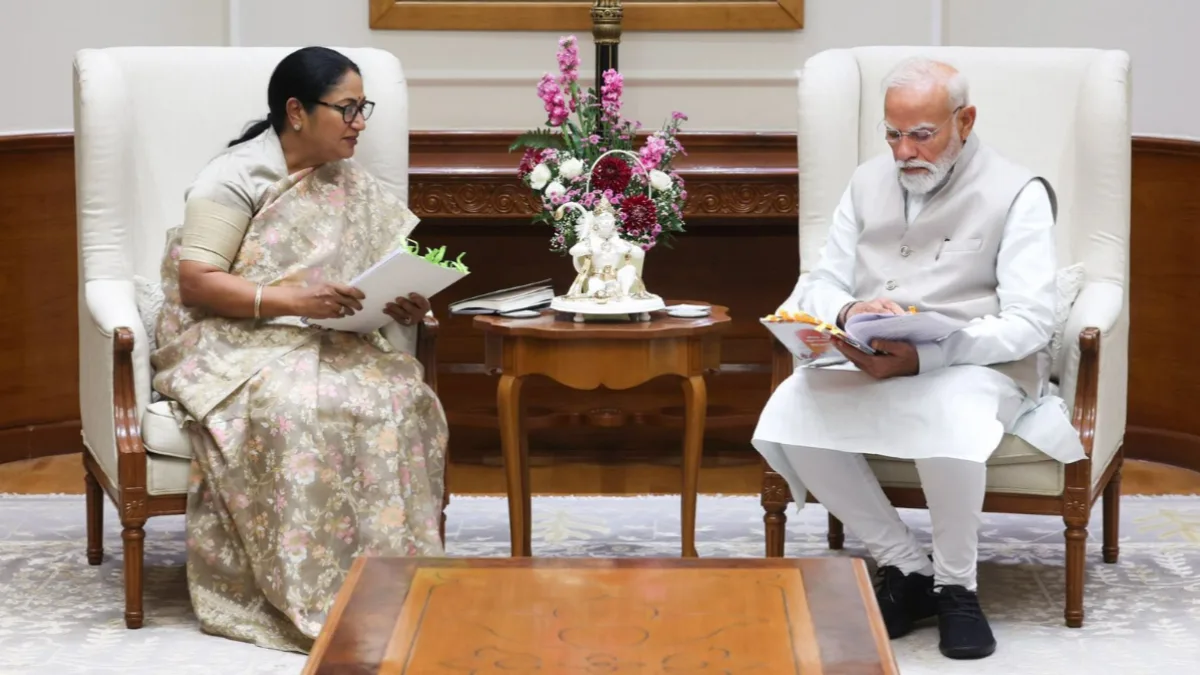
Delhi Chief Minister Rekha Gupta met Prime Minister Narendra Modi on Saturday and held detailed discussions on the capital city’s all-round development, including infrastructure expansion and governance priorities.

The meeting focused on accelerating Delhi’s overall growth, strengthening civic infrastructure, and addressing public aspirations.

The Chief Minister highlighted the importance of coordinated efforts to improve service delivery and urban development in the national capital.

Gupta said the Prime Minister’s leadership continues to guide and motivate the Delhi government’s policy direction and implementation efforts. She expressed confidence that with continued support from the Centre, the government aims to drive progress, enhance prosperity, and ensure effective governance.

The Chief Minister also thanked the Prime Minister for his time and guidance, describing the interaction as constructive and encouraging.


As the war winds down, Indian firms looking to buy Iran oil

According to estimates, about 130-170 million barrels of Iranian crude are at sea, mostly in the Indian Ocean, but also in the Mediterranean and South China Sea.

Jayanta Roy Chowdhury | New Delhi |

In the dying moments of the Iran-US war, Indian refiners are believed to be looking at buying Iranian oil through a combination of rupee payments, partial deferred accounting and even barter, which could later help rebuild Iran’s civilian infrastructure now that the US administration has given a 30-day sanctions waiver for the purchase of Iranian oil already at sea. Top sources in Indian refining firms said they were looking at “quick purchases” of Iranian crude, much of which is on the high seas in ships that are idling in the Indian Ocean.

“We have a long tradition since the 1990s of buying Iranian oil … it’s natural that we should be among the first to try and corner stores from there,” said Sandeep Johri, a commodities trader. At its peak, Iran supplied roughly 10 to 15 per cent of India’s crude. The appeal was not merely geopolitical or price-wise; it was geological. “Iranian crude grades suit Indian refineries,” averred Johri.

According to estimates, about 130-170 million barrels of Iranian crude are at sea, mostly in the Indian Ocean, but also in the Mediterranean and South China Sea.

The American waiver announced Friday applies to oil loaded on or before March 20, on ships, including sanctioned tankers. They must, however, be offloaded at the receiving port by April 19.

When Western sanctions against Tehran tightened between 2010 and 2012, targeting Iran’s financial arteries, the problem for India was not access to crude but the means to pay for it.

“So we invented ways, including Rupee purchases, which were used by the Iranians to pay for rice, tea and other food stocks and machinery which they bought from us,” said top commerce ministry officials.

At that time, India devised a split-payment mechanism. Indian refiners deposited roughly 45 per cent of their dues in rupees into accounts held by Iranian banks within India, most notably through UCO Bank, a state-run lender with minimal exposure to the American financial system and, therefore, less vulnerable to secondary sanctions. This was the money that was used for purchases from India.
The remaining 55 per cent was deferred and held in escrow accounts. When geopolitics allowed it, this money was converted into hard currencies like dollars or Euros and taken by Iran, with the payments routed through third countries such as the UAE or Turkey.

The two countries even formalised a new rupee-based payment framework in late 2018, once again relying on UCO Bank as the conduit.”An expanded rupee-based system, perhaps broader in scope, tied to a wider basket of Indian exports, will probably be the way forward for refineries like Reliance or Indian Oil if they go for such deals to look at,” said Johri.

Officials hinted barters could also be considered in the longer run by paying for oil through Indian project spending in repairing oil and port infrastructure.”Civilian infrastructure, which has been devastated in both Iran and Gulf countries, will have to be rebuilt. We want to encourage Indian project exporters and engineering companies to be ready for work once peace returns,” they said.

PM Modi calls Iran’s President Pezeshkian; condemns attacks on critical infra, pushes for safe shipping routes

The Prime Minister strongly condemned recent attacks targeting critical infrastructure in the region, noting that such incidents pose a serious threat to regional stability.

Statesman News Service | New Delhi |

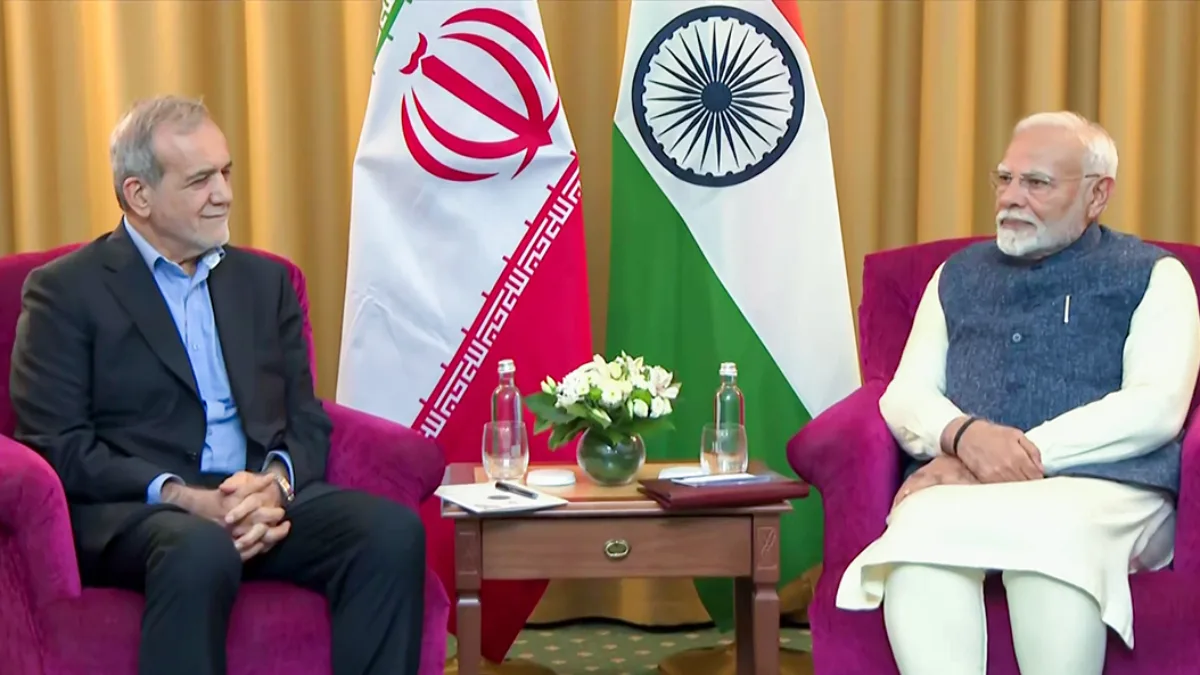
Prime Minister Narendra Modi on Saturday held a telephonic conversation with Iranian President Masoud Pezeshkian, extending greetings on the occasions of Eid and Nowruz while underlining the need for peace and stability in West Asia.
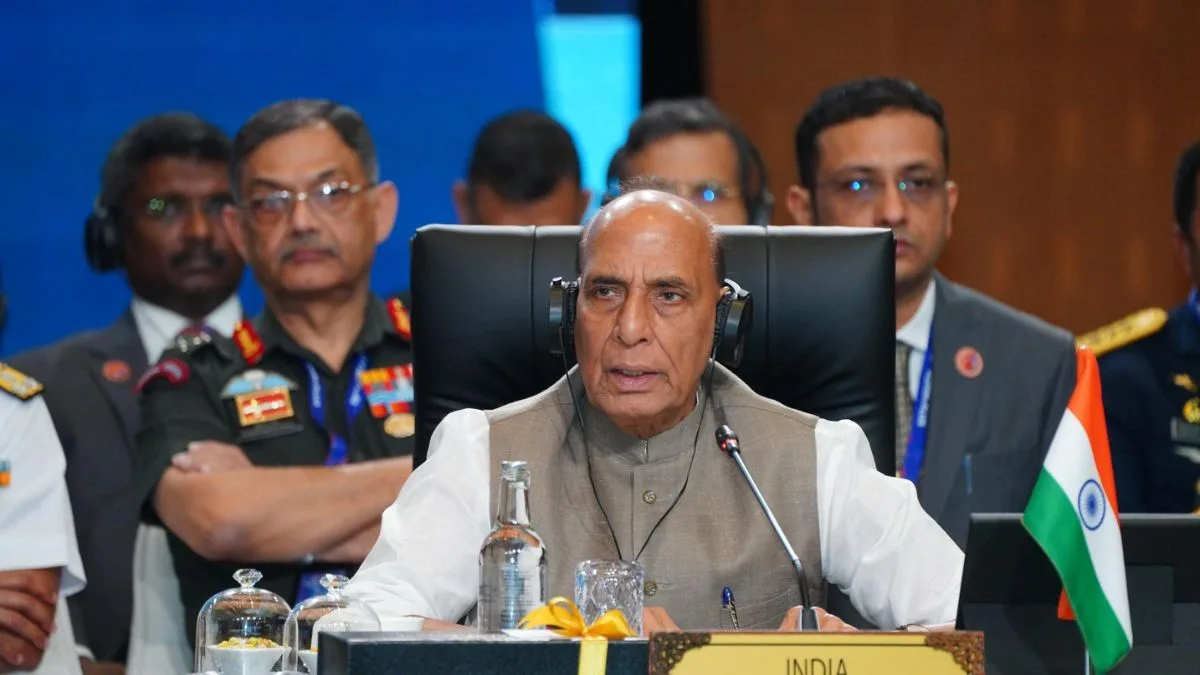
During the conversation, Modi conveyed his wishes for Eid and the Persian New Year, Nowruz, expressing hope that the festive season would usher in “peace, stability and prosperity” across the West Asian region, which has been witnessing heightened geopolitical tensions.

The Prime Minister appreciated Iran’s continued cooperation in ensuring the safety and security of Indian nationals residing in the country. Both leaders acknowledged the importance of maintaining close coordination on issues affecting citizens and regional stability.

Condemned attacks on critical infrastructure

The Prime Minister strongly condemned recent attacks targeting critical infrastructure in the region, noting that such incidents pose a serious threat to regional stability. He also highlighted the broader implications for global trade, stressing that disruptions could impact international supply chains already under strain due to ongoing conflicts.

Emphasis on maritime security

PM Modi reiterated India’s consistent position on the importance of safeguarding freedom of navigation, stressing that key shipping routes must remain open and secure. The issue assumes significance in light of concerns over maritime disruptions in strategic corridors, including routes linked to the Strait of Hormuz.

The conversation reflects ongoing diplomatic engagement between New Delhi and Tehran amid evolving security challenges in West Asia, with India balancing its strategic and economic interests in the region.

‘Modern-day warfare transcends borders, citizens must be prepared’: Defence Minister Rajnath Singh

He said threats now span economic, digital, energy and even food security domains, underlining the need for a comprehensive national preparedness strategy.

Statesman News Service | New Delhi |

Defence Minister Rajnath Singh on Saturday highlighted the changing character of modern warfare, stating that national security today extends far beyond traditional battlefields. Addressing an event virtually, he said threats now span economic, digital, energy and even food security domains, underlining the need for a comprehensive national preparedness strategy.

According to a press release issued by the Ministry of Defence, he highlighted the importance of a strong military backed by citizens prepared to stand united in defence of the nation.

“Present-day warfare transcends borders, with national security encompassing economic, digital, energy, and even food security,” said Rajnath Singh

Strong military needs backing of prepared citizens

In his virtual address during the Raising Day celebrations and Diamond Jubilee of Sainik School, Ghorakhal in Uttarakhand, Singh stressed that a robust military must be supported by alert and resilient citizens.

He noted that conflicts are no longer limited to physical combat, as nations can be weakened through cyber attacks, information warfare, and disruptions in space and economic systems. Emphasising the government’s efforts under Prime Minister Narendra Modi, he said steps are being taken to equip armed forces with advanced technologies, while citizens, especially the youth, must cultivate discipline, mental toughness and clarity to respond to emerging threats.

His remarks come amid the ongoing tensions involving the United States, Israel and Iran, where conventional military actions are increasingly accompanied by cyber operations, drone warfare and strategic disruptions to energy routes. The evolving conflict underscores how modern warfare is no longer confined to borders but impacts global supply chains, maritime security and economic stability.

Youth key to nation-building and future security

The Defence Minister also underlined the importance of youth in strengthening national security. Referring to the concept of VUCA (Volatile, Uncertain, Complex and Ambiguous), he urged students to adopt a redefined approach with Vision, Understanding, Courage and Adaptability to tackle modern challenges.

He highlighted government initiatives to expand opportunities for young people, including the establishment of 100 new Sainik Schools under the Public-Private Partnership model.

Singh further noted that the National Cadet Corps (NCC) has expanded its intake capacity from 17 lakh to 20 lakh cadets, widening participation in nation-building activities. He also described the inclusion of girls in Sainik Schools as a “historic and revolutionary” step, saying it strengthens ‘Nari Shakti’ and paves the way for greater representation of women in defence and other sectors.


Closed-door hearing in Rahul Gandhi citizenship case as Centre cites ‘highly confidential’ records

The High Court has taken a procedural step in a politically sensitive case, bringing the Centre into the proceedings as questions over citizenship claims move forward.

Statesman News Service | New Delhi |

The Allahabad High Court on Thursday directed the petitioner in a case questioning Congress leader Rahul Gandhi’s citizenship to include the Central government as a party in the proceedings.

The case was heard by a single bench of Justice Rajiv Singh, which allowed the request after reviewing submissions from both sides.

It’s still at a very early stage, as the court hasn’t even decided yet if it will take up the petition.

Hearing held in chamber over ‘confidential’ records

At the start of the hearing, senior advocate SB Pandey, appearing for the Centre, urged the court to shift proceedings out of open court, citing the sensitive nature of documents received from the Ministry of Home Affairs.

The judge agreed and shifted the hearing to his chamber.

Officials from the Home Ministry, including Under Secretary Vivek Mishra and Assistant Section Officer Pranav Rai, came to court with the documents. After examining them, the court returned the documents.

What the petition alleges

The plea has been filed by S Vignesh Shishir, a BJP worker from Karnataka, who has challenged a January 28, 2026, order of a Lucknow court that had declined his request to register an FIR against Gandhi.

The petitioner has alleged that Rahul Gandhi holds dual citizenship and has sought a detailed investigation, along with the registration of a case under various legal provisions.

The court, however, declined the petitioner’s request to treat the matter as “part heard”, noting that it is still at the admission stage.

The next hearing is scheduled for April 6.

Mathura vigilante death: Hit by cow smugglers or accident? Protests erupt, probe underway

A fatal incident involving a cow protection activist has triggered tension in Mathura, with police investigating conflicting accounts and stepping up security after protests.

Statesman News Service | New Delhi |

A cow protection activist died in Uttar Pradesh’s Mathura district after being hit by a vehicle during a late-night incident, with police now saying it appears to be a road accident and not linked to cattle smuggling.

The deceased, Chandrashekhar, locally known as “Farsa Wale Baba”, was part of a group that had stopped a vehicle for checking in the Kosi Kalan area, officials said.

The incident has led to tension on the ground, with protests and a brief law-and-order situation reported before police brought things under control.

Conflicting accounts on what happened

Early accounts said Chandrashekhar had gone after a truck he believed was carrying cattle when a vehicle hit him during the chase. One suspect was detained, while others fled.

However, police later clarified that the incident was likely an accident. According to Mathura Police, Chandrashekhar had stopped a vehicle on suspicion when another truck coming from Rajasthan hit him due to low visibility caused by dense fog, leading to fatal injuries.

Police said both vehicles involved have been examined, and no evidence of cattle smuggling has been found. The vehicle initially stopped was carrying grocery items, while the other truck was loaded with wires.

The driver of the Rajasthan truck and his associate were also injured and are undergoing treatment.

Protests, stone-pelting after death

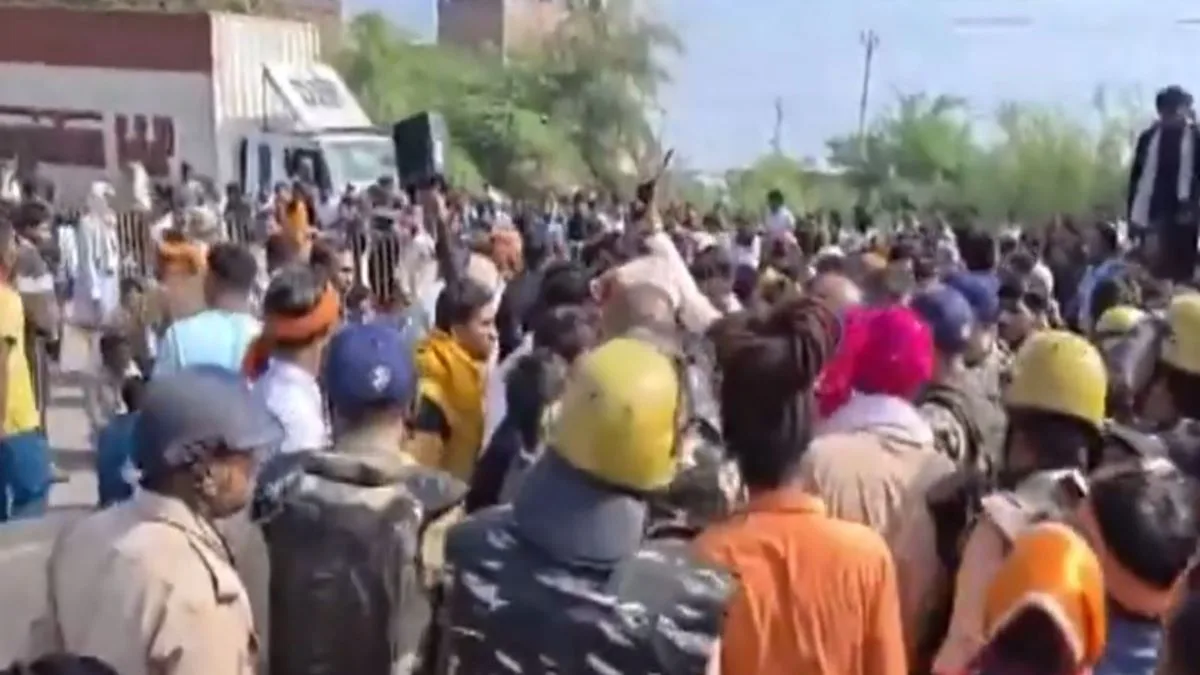
After his death, locals gathered at the spot and blocked the road, demanding action. Tempers rose, some people threw stones at the police, and officers used tear gas to clear the crowd.

Police said “people created chaos and traffic jam, stone pelting took place” during the protests.

Police say things have since calmed down, with extra personnel deployed in the area to keep the situation under control.

UP CM orders strict action

Uttar Pradesh Chief Minister Yogi Adityanath has taken cognisance of the incident and directed officials to ensure strict action.

“The accused will not be spared under any circumstances,” he said, adding that action will be based on verified facts.

Officials have urged people to remain calm, reiterating that the incident appears to be an accident. Further investigation is underway to establish the complete sequence of events.

Punjab minister Laljit Singh Bhullar resigns after official’s suicide; allegations of harassment surface

A senior official’s death has triggered a political storm in Punjab, leading to a minister’s resignation and a government-ordered probe into the allegations surrounding the case.

Statesman News Service | New Delhi |

Punjab Transport Minister Laljit Singh Bhullar resigned on Saturday after a political storm over the death of a senior state official, who is alleged to have named the minister before taking his own life.

Chief Minister Bhagwant Mann accepted the resignation and ordered an inquiry into the circumstances surrounding the death of Gagandeep Singh Randhawa, a District Manager with the Punjab Warehousing Corporation.

The move comes amid growing pressure on the government, with opposition parties demanding action and raising serious questions about the handling of the case.

Allegations surface, probe ordered

Officials said the Chief Secretary has been asked to conduct a detailed inquiry, including any possible role of the minister. The Chief Minister said the government would not tolerate any negligence in the matter.

Randhawa, who was posted in Amritsar and also handling additional responsibilities, allegedly died by suicide after consuming poison. A purported video statement linked to him has surfaced, in which the minister’s name is mentioned.

The allegations have not been independently verified.

Opposition demands action

Shiromani Akali Dal leader Bikram Singh Majithia alleged that Randhawa was under pressure in connection with a tender and was forced to admit to taking a bribe. He claimed the official was assaulted and threatened, and called for an independent probe, including a CBI investigation.

“A young life lost in Amritsar amid grave allegations of torture linked to AAP minister Laljit Singh Bhullar.”

“Gagandeep Singh Randhawa, District Manager, Warehouse Corporation Amritsar, died by suicide after consuming Celphos. Resident of Ranjit Avenue, was handling Amritsar duties with additional charge of Patti.”

“Alleged he was forced to admit accepting a Rs 10 lakh bribe. Claimed pressure to award a tender to the minister’s aide, said he chose a legitimate bidder instead. Alleged he was called to the minister’s place, assaulted, and attempts were made to record a video. Raises serious questions on Laljit Singh Bhullar and the conduct of those in power. Accountability questions now extend to Chief Minister @BhagwantMann and @AamAadmiParty leadership, including @ArvindKejriwal,” Majithia said.

Congress leader Sukhpal Singh Khaira also demanded a criminal case against Bhullar, alleging harassment and misuse of power.

Both leaders referred to a video purportedly recorded by Randhawa before his death.

In the spirit of democracy: How ‘randomly’ EC assigns EVMs

As election preparations pick up, the EC has completed a key step in assigning voting machines – a process designed to keep polling fair and free from manipulation.

Statesman News Service | New Delhi |

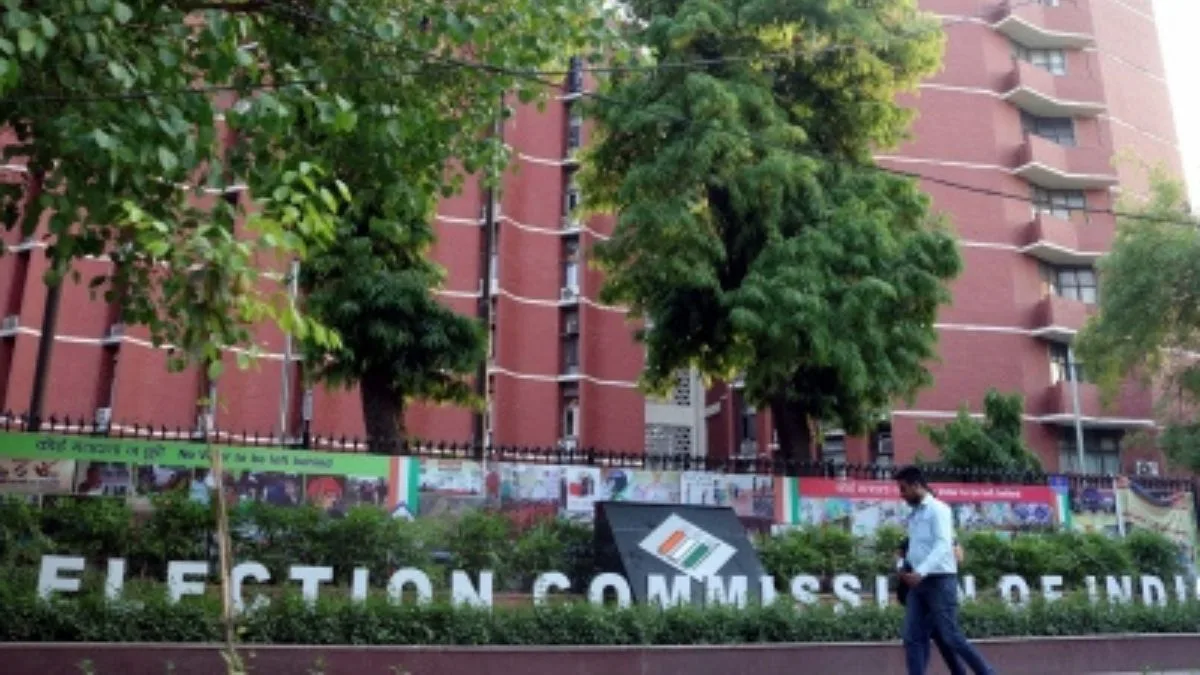
The Election Commission of India (ECI) has completed the first round of randomisation of Electronic Voting Machines (EVMs) and VVPATs for the upcoming Assembly elections in Assam, Kerala and Puducherry.

But what exactly does “randomisation” mean, and why is it significant?

What is EVM randomisation

EVM randomisation is a process designed to ensure that no one knows in advance which machine will be used at which polling booth. The idea is simple: remove any scope for human interference and make the system tamper-proof.

The process happens in two stages using specialised software.

First, machines are randomly assigned from district warehouses to different Assembly constituencies. Then, in the second stage, they are again randomly allocated from constituencies to individual polling stations.

Because this allocation keeps changing and is done through a system, it becomes nearly impossible to predict where a particular machine will be deployed. Political party representatives are present during the process to maintain transparency.

Election Commission of India press note on first randomisation of EVMs and VVPATs for 2026 assembly elections
The Election Commission of India’s press note announcing completion of the first randomisation of EVMs and VVPATs for Assembly polls in Assam, Kerala and Puducherry.

What has been completed so far

According to the ECI, the first stage of this process has now been completed by District Election Officers across all poll-bound regions, but only after the machines cleared the mandatory First Level Checking (FLC).

The exercise was carried out through the EVM Management System (EMS) in the presence of representatives from recognised political parties.

Lists of the machines allocated in this round have already been shared with party representatives at the district level.

The ECI said the machines will now be stored in designated strong rooms under supervision.

Once the final list of candidates is ready, details of both stages of randomisation will be shared with all contesting candidates to ensure full transparency.

The same process has also been completed for bypolls in Goa, Karnataka, Nagaland and Tripura, where voting is scheduled for April 9.

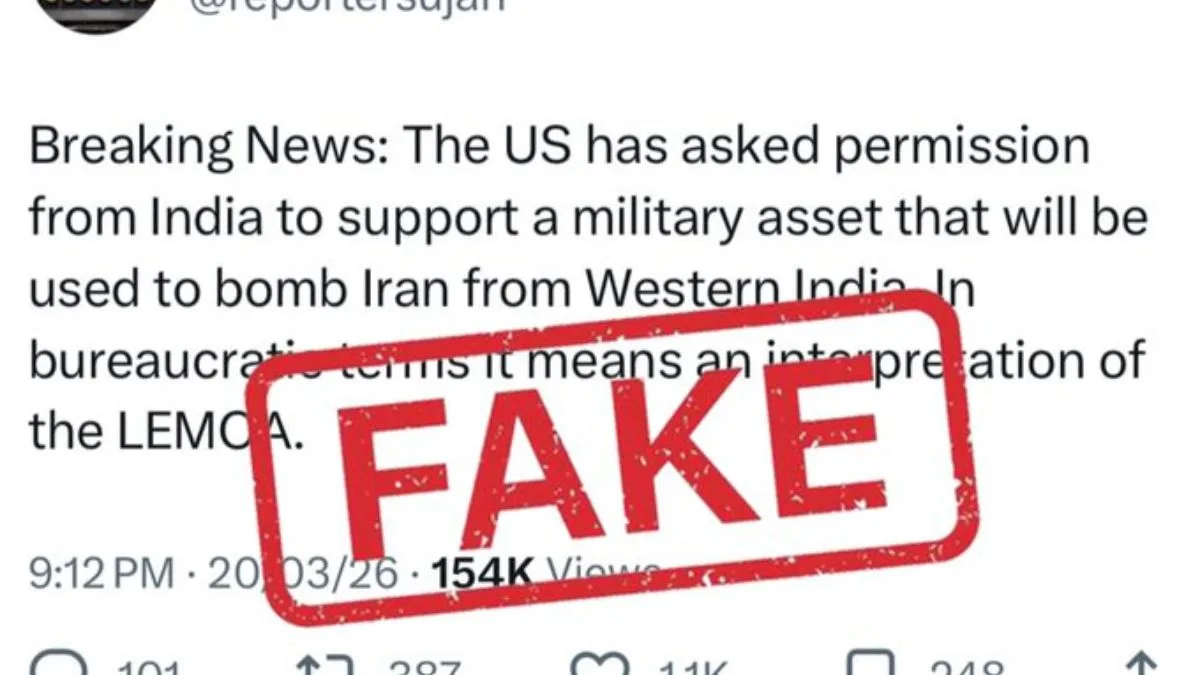
Did the US ask India to attack Iran? Govt sets the record straight

The government has stepped in to counter viral misinformation linking India to US military action, clarifying its position amid rising geopolitical tensions and online speculation.

Statesman News Service | New Delhi |

The Centre on Saturday dismissed as “baseless” social media claims that the United States had sought India’s permission to launch strikes on Iran using Indian territory.

In a statement posted on X, the Ministry of External Affairs (MEA) urged people not to fall for misinformation, especially at a time of heightened tensions in West Asia. “Please stay alert against such false and baseless claims and posts on social media!,” the ministry said.

The clarification comes amid a flood of online posts suggesting that Washington had approached New Delhi under a bilateral military pact, a claim the government said had no factual basis.

What LEMOA actually allows

The Logistics Exchange Memorandum of Agreement (LEMOA), signed between India and the US in 2016, is limited to logistical support such as refuelling and maintenance. It does not allow either country to use the other’s territory for offensive military operations.

The government has previously issued similar denials when speculation surfaced about US forces using Indian ports or airspace.

Why the claim spread

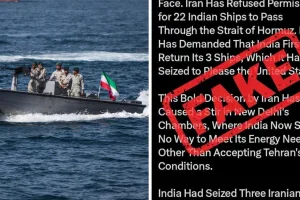
The rumours gained traction after reports of US military action near the region, including an incident involving an Iranian vessel close to Sri Lanka, which triggered speculation about India’s possible role.

New Delhi has firmly ruled out any involvement, making it clear that Indian facilities were not used in any such operation.

This comes as tensions in West Asia have been steadily rising since late February, after US and Israeli strikes triggered a wave of retaliation from Iran across the region.

Meanwhile, the United States has sought access to British bases for operations linked to the conflict, a request that London has agreed to under limited terms, while maintaining it does not want to be drawn deeper into the war.

Endgame or optics? Trump signals exit even as Iran war escalates

Washington signals a possible wind-down of its military campaign against Iran, even as fresh strikes and missile activity suggest the conflict is far from over.

Statesman News Service | New Delhi |

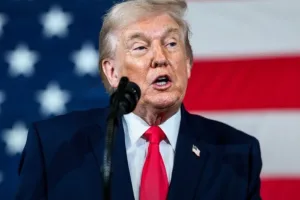
US President Donald Trump on Friday (local time) said Washington may soon wind down its military operations against Iran, claiming that key objectives of the campaign are close to being achieved.

In a post on Truth Social, Trump outlined five broad goals of the ongoing offensive, including crippling Iran’s missile systems, dismantling its defence industry, and preventing it from developing nuclear capability.

The remarks come even as fighting continues across the region, with fresh strikes, missile launches, and rising military activity keeping tensions high.

‘We are close’: Trump lists war goals

Trump said US operations had focused on weakening Iran’s military capacity across land, air and sea, while ensuring the security of key allies in West Asia, including Israel, Saudi Arabia, the UAE and Qatar.

“We are getting very close to meeting our objectives as we consider winding down our great Military efforts in the Middle East with respect to the Terrorist Regime of Iran: (1) Completely degrading Iranian Missile Capability, Launchers, and everything else pertaining to them. (2) Destroying Iran’s Defense Industrial Base. (3) Eliminating their Navy and Air Force, including Anti Aircraft Weaponry. (4) Never allowing Iran to get even close to Nuclear Capability, and always being in a position where the U.S.A. can quickly and powerfully react to such a situation, should it take place. (5) Protecting, at the highest level, our Middle Eastern Allies, including Israel, Saudi Arabia, Qatar, the United Arab Emirates, Bahrain, Kuwait, and others,” Trump said.

He also suggested that the responsibility for securing the Strait of Hormuz should eventually shift to other nations that depend on the route, though the US could assist if needed.

“The Hormuz Strait will have to be guarded and policed, as necessary, by other Nations who use it — The United States does not! If asked, we will help these Countries in their Hormuz efforts, but it shouldn’t be necessary once Iran’s threat is eradicated. Importantly, it will be an easy Military Operation for them,” he added.

Strikes continue despite talk of winding down

Even as Trump spoke of a possible drawdown, US Central Command released visuals of recent strikes targeting Iranian assets, including a drone production facility in Esfahan linked to Shahed drones.

According to updates from US officials, thousands of targets have been hit as part of “Operation Epic Fury”, including command centres, missile systems and military infrastructure.

Officials also said more than 120 Iranian naval vessels, including submarines, have been damaged or destroyed.

Iran, meanwhile, hit back. According to a Wall Street Journal report citing US officials, two intermediate-range ballistic missiles were fired towards the US-UK base at Diego Garcia in the Indian Ocean.

One of them didn’t make it through and failed mid-air. A US warship tried to intercept the second, but it’s still not clear if that attempt worked.

The attempted strike is notable for its distance, roughly 4,000 km, raising questions about the true range of Iran’s missile capabilities.

No ceasefire yet

Despite signalling progress in the campaign, Trump made it clear that Washington is not looking to pause operations.

“You don’t do a ceasefire when you’re literally obliterating the other side,” he said while speaking outside the White House.

The conflict, which began with US and Israeli strikes in late February, has since expanded across multiple fronts, with both sides continuing to escalate military actions.